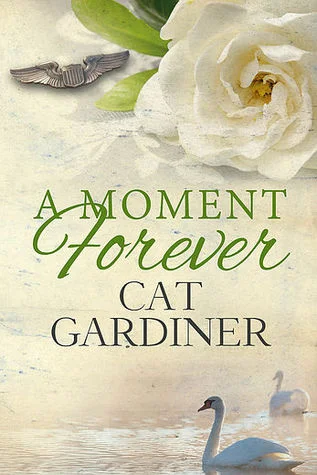
Book Blast: A Moment Forever by Cat Gardiner

In every footlocker, hope chest, and heart full of secrets there is a story waiting to be discovered and told.

In the summer of 1992, a young writer is bequeathed the abandoned home of a great-uncle she never knew. The house has a romantic history and is unlike any home she has ever seen. Juliana Martel felt as though she stepped into a time capsule—a snapshot of 1942. The epic romance—and heartache—of the former occupant unfold through reading his wartime letters found in the attic, compelling her on a quest to construct the man. His life, as well as his sweetheart’s, during the Second World War were as mysterious as his disappearance in 1950.

Carrying her own pain inflicted by the abandonment of her mother and unexpected death of her father, Juliana embarks on a journalist’s dream to find her great-uncle and the woman he once loved. Enlisting the reluctant assistance of a man whose family is closely related to the secrets, she uncovers the carefully hidden events of her great-uncle’s and others’ lives – and will ultimately change her own with their discovery.

This story of undying love, born amidst the darkest era in modern history, unfolded on the breathtaking Gold Coast of Long Island in 1942. A Jewish, Army Air Forces pilot and an enchanting society debutante—young lovers—deception—and a moment in time that lasted forever.

A Moment Forever is an evocative journey that will resonate with you long after you close the book. Romance, heartache, and the power of love, atonement, and forgiveness transform lives long after the horrors and scars of the Second World War have ended.

Excerpt

The closed door to the attic appeared innocuous, but like the pleasant personas and expressions many people conveyed, Juliana felt it was a dead giveaway that something terrible hid behind it. She was, after all, an example of that. Her deepest wounds, she believed, were cleverly masked behind her jovial expressions and happy demeanor, but she didn’t realize that the signs were evident in her near anorexic figure.

However, on this late afternoon, she felt open and liberated after surviving the luncheon with her mother. She had bared her inner feelings and animosity then came home to clean the vintage kitchen. Feeling renewed, she went to the grocer around the corner because her white Frigidaire looked as hollow as she had felt these last eleven years. Strangely, she was in the mood to cook a cheeseburger.

From the top of the staircase, Juliana could still hear the record player from the parlor. Melancholy tunes by the Ink Spots and Ella Fitzgerald filled the entire house. She hoped it would carry up into the attic, thinking the soulful music would transport her back to the era and mindset of William when he had last locked the garret.

Yes, it was locked and after an hour of searching the house high and low, she finally found the key inside a small box in one of the dresser drawers. Beside the brass skeleton key sat a gold signet ring with engraving upon the face: propellers and wings surrounded a small diamond at its center. The inscription along the inside of the band read, “With Love, Mom and Dad.”

“Here it goes,” Juliana said before holding her breath and nervously turning the key. She felt on the verge of a full-blown panic attack.

The door creaked like all the others in the house and her heart rate sped up as it had time and again in the course of this home’s unveiling.

Once the door was fully open, she pulled the slender cord hanging against the wall, illuminating the narrow passage by the bare light bulb fixture.

Each step up the steep staircase issued a groan from the hardened planks beneath every footfall of her black Converse sneakers until she stood at the top, fiercely gripping onto the simple banister. She looked around the large, dark room before taking the final step into the unknown, mysterious, and yet-to-be-discovered past of her great-uncle. After working herself up to it for the last two days, Juliana had been expecting something ominous and frightening in the attic, yet instead she felt a sense of peace coupled with sadness. Her thoughts traveled to her father, and her emotions became even more pronounced. Her eyes welled with tears at the morose tranquility the attic emanated.

Essentially, but for a couple of trunks and a few boxes neatly placed upon a shelf, the attic was empty, having lain undisturbed and unfilled since its purchase in December of 1942.

If these walls could talk, they would tell her how William had slid his footlocker under the eave after placing the last of its contents within and how he had waited one full year before doing so. They would tell his grand-niece how he waited until the very last minute to place the newspaper over the windows. Once beige strips of masking tape were now an aged, burnished orange. The empty space staring back at the modern-day interloper represented the very reason for William’s departure.

Although expecting the worst in the attic, she wasn’t prepared for the emptiness. She had imagined cobwebs extending from box to box and odd pieces of furniture and tools that had long outgrown their usefulness. She thought the attic would surely be filled with scary dolls and broken strollers, perhaps a rocking chair or an eerie mirror, maybe even some Dorian Gray-type painting and faded photographs. Expecting an antique cemetery of sorts filled with memories, stories, and voices of the past residents who had once lived at 300 Bradford Road, she was surprised by the vacant space before her.

The startling emptiness of the room confirmed to her that no happy memories had ever been created in this house. The house never became a home, had never filled with children’s laughter or generations of family dating back to its initial construction. No household item ever had the luxury of being used enough to justify its disregard, saving and eventual storing on the third floor. It was clear to Juliana that Primrose Cottage was only a place where William laid his head, not his heart. True life had never infused these walls. The attic led her to believe he had been a bachelor—never married, never had children, never sharing his life, let alone this house, with anyone. The starkness of the attic revealed the loneliness of the man at the time of his departure.

amazon

About the Author

Born and bred in New York City, Cat Gardiner is a girl in love with the romance of an era once known as the Silent Generation, now referred to as the Greatest Generation. A member of the National League of American Pen Women, Romance Writers of America, and Tampa Area Romance Authors, she and her husband adore exploring the 1940s Home Front experience as living historians, wishing for a time machine to transport them back seventy years.

She loves to pull out her vintage frocks and attend U.S.O dances, swing clubs, and re-enactment camps as part of her research, believing that everyone should have an understanding of The 1940s Experience™.

Inspired by those everyday young adults who changed the fate of the world, she writes about them, taking the reader on a romantic journey. Cat’s WWII-era novels always begin in her beloved Big Apple and surround you with the sights and sounds of a generation.

She is also the author of four Jane Austen-inspired contemporary novels, however, her greatest love is writing 20th Century Historical Fiction, WWII-era Romance. A Moment Forever is her debut novel in that genre.

For more information please visit Cat Gardiner’s website. You can also connect with her on FacebookTwitterPinterest, and Goodreads.

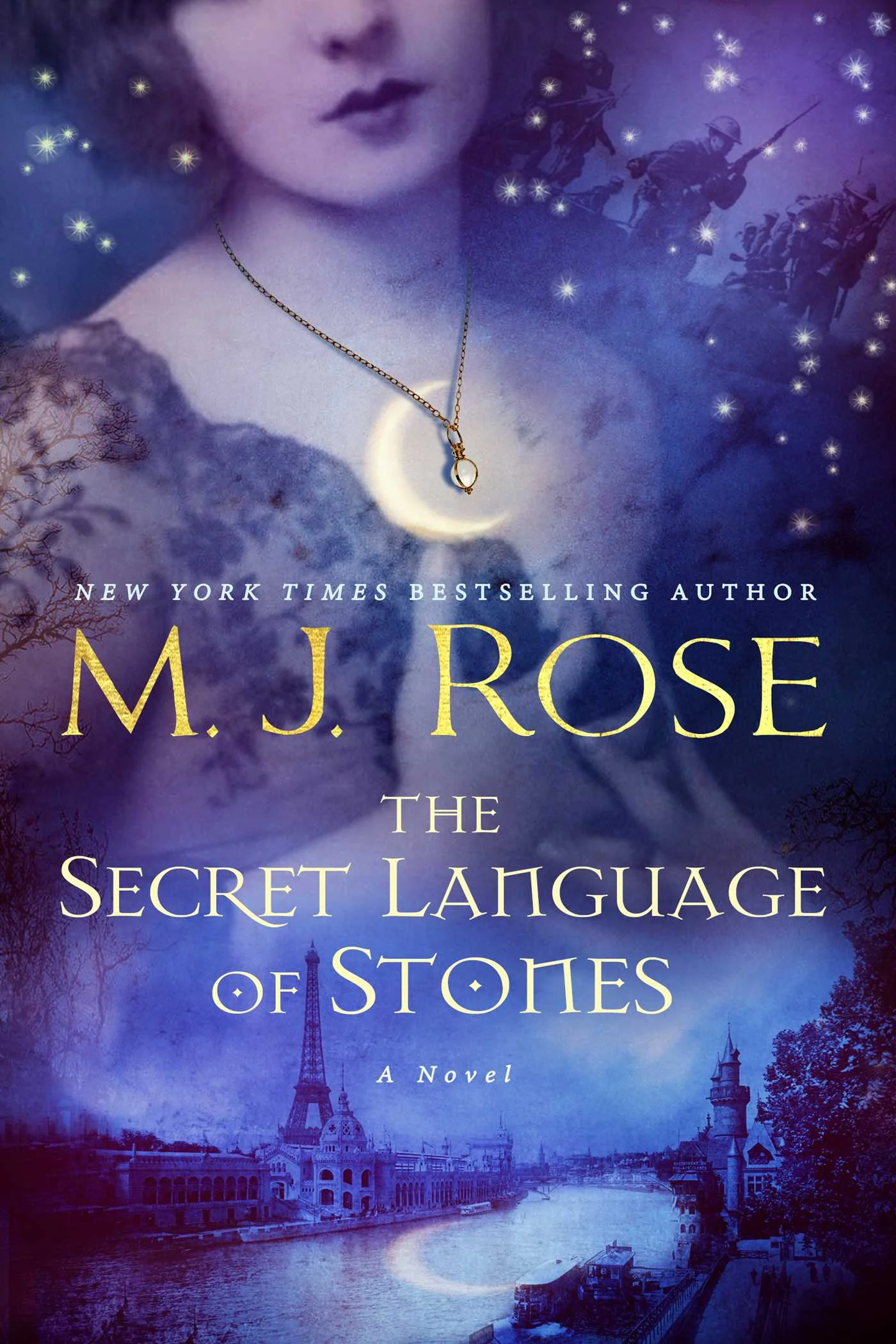
Excerpt Reveal: The Secret Language of Stones by M.J. Rose

As World War I rages and the Romanov dynasty reaches its sudden, brutal end, a young jewelry maker discovers love, passion, and her own healing powers in this rich and romantic ghost story, the perfect follow-up to M.J. Rose’s “brilliantly crafted” (Providence Journal) novel The Witch of Painted Sorrows.

Nestled within Paris’s historic Palais Royal is a jewelry store unlike any other. La Fantasie Russie is owned by Pavel Orloff, protégé to the famous Faberge, and is known by the city’s fashion elite as the place to find the rarest of gemstones and the most unique designs. But war has transformed Paris from a city of style and romance to a place of fear and mourning. In the summer of 1918, places where lovers used to walk, widows now wander alone.

So it is from La Fantasie Russie’s workshop that young, ambitious Opaline Duplessi now spends her time making trench watches for soldiers at the front, as well as mourning jewelry for the mothers, wives, and lovers of those who have fallen. People say that Opaline’s creations are magical. But magic is a word Opaline would rather not use. The concept is too closely associated with her mother Sandrine, who practices the dark arts passed down from their ancestor La Lune, one of sixteenth century Paris’s most famous courtesans.

But Opaline does have a rare gift even she can’t deny, a form of lithomancy that allows her to translate the energy emanating from stones. Certain gemstones, combined with a personal item, such as a lock of hair, enable her to receive messages from beyond the grave. In her mind, she is no mystic, but merely a messenger, giving voice to soldiers who died before they were able to properly express themselves to loved ones. Until one day, one of these fallen soldiers communicates a message—directly to her.

So begins a dangerous journey that will take Opaline into the darkest corners of wartime Paris and across the English Channel, where the exiled Romanov dowager empress is waiting to discover the fate of her family. Full of romance, seduction, and a love so powerful it reaches beyond the grave, The Secret Language of Stones is yet another “spellbindingly haunting” (Suspense magazine), “entrancing read that will long be savored” (Library Journal, starred review).

Excerpt

Chapter 1

July 19, 1918

“Are you Opaline?” the woman asked before she even stepped all the way into the workshop. From the anxious and distraught tone of her voice, I guessed she hadn’t come to talk about commissioning a bracelet for her aunt or having her daughter’s pearls restrung.

Though not a soldier, this woman was one of the Great War’s wounded, here to engage in the dark arts in the hopes of finding solace. Was it her son or her brother, husband, or lover’s fate that drove her to seek me out?

France had lost more than one million men, and there were battles yet to be fought. We’d suffered the second largest loss of any country in any war in history. No one in Paris remained untouched by tragedy.

What a terrible four years we’d endured. The Germans had placed La Grosse Bertha, a huge cannon, on the border between Picardy and Champagne. More powerful than any weapon ever built, she proved able to send shells 120 kilometers and reach us in Paris.

Since the war began, Bertha had shot more than 325 shells into our city. By the summer of 1918, two hundred civilians had died, and almost a thousand more were hurt. We lived in a state of anticipation and readiness. We were on the front too, as much at risk as our soldiers.

The last four months had been devastating. On March 11, the Vincennes Cemetery in the eastern inner suburbs was hit and hundreds of families lost their dead all over again when marble tombs and granite gravestones shattered. Bombs continued falling into the night. Buildings all over the city were demolished; craters appeared in the streets.

Three weeks later, more devastation. The worst Paris had suffered yet. On Good Friday, during a mass at the Saint-Gervais and Saint-Protais Church, a shell hit and the whole roof collapsed on the congregation. Eighty-eight people were killed; another sixtyeight were wounded. And all over Paris many, many more suffered psychological damage. We became more worried, ever more afraid. What was next? When would it happen? We couldn’t know. All we could do was wait.

In April there were more shellings. And again in May. One hit a hotel in the 13th arrondissement, and because Bertha’s visits were silent, without warning, sleeping guests were killed in their beds.

By the middle of July, there was still no end in sight.

That warm afternoon, while the rain drizzled down, I steeled myself for the expression of grief to match what I’d heard in the customer’s voice. I shut off my soldering machine and put my work aside before I looked up.

Turning soldiers’ wristwatches into trench watches is how I have been contributing to the war effort since arriving in Paris three years ago. History repeats itself, they say, and in my case it’s true. In 1894, my mother ran away from her first husband in New York City and came to Paris. And twenty-one years later, I ran away from my mother in Cannes and came to Paris.

In trying to protect me from the encroaching war and to distract me from the malaise I’d been suffering since my closest friend had been killed, my parents decided to send me to America. No amount of protest, tantrums, bargaining, or begging would change their minds. They were shipping me off to live with family in Boston and to study at Radcliffe, where my uncle taught history.

At ten AM on Wednesday, February 11, 1915 my parents and I arrived at the dock in Cherbourg. French ocean liners had all been acquisitioned for the war, so I was booked on the USMS New York to travel across the sea. A frenetic scene greeted me. Most of the travelers were leaving France out of fear, and the atmosphere was thick with sadness and worry. Faces were drawn, eyes red with crying, as we prepared to board the big hulking ship waiting to transport us away from the terrible war that claimed more and more lives every day.

While my father arranged for a porter to carry my trunk, my mother handed me a last-minute gift, a book from the feel of it, then took me in her arms to kiss me good-bye. I breathed in her familiar scent, knowing it might be a long time until I smelled that particular mixture of L’Etoile’s Rouge perfume and the Roger et Gallet poudre de riz she always used to dust her face and décolletage. As she held me and pressed her crimson-stained lips to my cheek, I reached up behind her and carefully unhooked one of the half dozen ropes of cabochon ruby beads slung around her neck.

I let the necklace slip inside my glove, the stones warm as they slid down and settled into my cupped palm.

My mother often told me the story about how, in Paris in 1894, soon after she’d arrived and they’d met, my father helped her secretly pawn some of her grandmother’s treasures to buy art supplies so she could attend École des Beaux-Arts.

Knowing I too might need extra money, I decided to avail myself of some insurance. My mother owned so many strands of those blood-red beads, certainly my transgression would go unnoticed for a long time.

Disentangling herself, my mother dabbed at her eyes with a black handkerchief trimmed in red lace. Like the rubies she always wore, her handkerchiefs were one of her trademarks. Her many eccentricities exacerbated the legends swirling around “La Belle Lune,” as the press called her.

“Mon chou, I will miss you. Write often and don’t get into trouble. It’s one thing to break my rules, but listen to your aunt Laura. All right?”

When my father’s turn came, he took me in his arms and exacted another kind of promise. “You will stay safe, yes?” He let go, but only for a moment before pulling me back to plant another kiss on the top of my head and add a coda to his good-bye. “Stay safe,” he repeated, “and please, forgive yourself for what happened with Timur. You couldn’t know what the future would bring. Enjoy your adventure, chérie.”

I nodded as tears tickled my eyes. Always sensitive to me, my father knew how much my guilt weighed on me. My charming and handsome papa always found just the right words to say to me to make me feel special. I didn’t care that I was about to deceive my mother, but I hated that I was going to disappoint my father.

During the winters of 1913 and 1914, my parents’ friends’ son Timur Orloff lived with us in Cannes. He ran a small boutique inside the Carlton Hotel, where, in high season, the hotel rented out space to a select few high-end retailers in order to cater to the celebrities, royalty, and nobility who flocked to the Riviera.

Our families first met when Anna Orloff bought one of my mother’s paintings, and Monsieur Orloff hired my father to design his jewelry store in Paris. A friendship developed that eventually led to my parents offering to house Timur. We quickly became the best of friends, sharing a passion for art and a love of design.

Creating jewelry had been my obsession ever since I’d found my first piece of emerald sea glass at the beach and tried to use string and glue to fashion it into a ring. My father declared jewelry design the perfect profession for the child of a painter and an architect—an ideal way to marry the sense of color and light I’d inherited from my mother and the ability to visualize and design in three dimensions that I’d inherited from him.

My mother was disappointed I wasn’t following in her footsteps and studying painting but agreed jewelry design offered a fine alternative. I knew my choice appealed to the rebel in her. The field hadn’t yet welcomed women, and my mother, who had broken down quite a few barriers as a female artist and eschewed convention as much as plain white handkerchiefs, was pleased that, like her, I would be challenging the status quo.

When I’d graduated lycée, I convinced my parents to let me apprentice with a local jeweler, and Timur often stopped by Roucher’s shop at the end of the day to collect me and walk me home.

Given our ages, his twenty to my seventeen, it wasn’t surprising our closeness turned physical, and we spent many hours hiding in the shadows of the rocks on the beach as twilight deepened, kissing and exploring each other’s body. The heady intimacy was exciting. The passion, transforming. My sense of taste became exaggerated. My sense of smell became more attenuated. The stones I worked with in the shop began to shimmer with a deeper intensity, and my ability to hear their music became fine-tuned.

The changes were as frightening as they were exhilarating. As the passions increased my powers, I worried I was becoming like my mother. And yet my fear didn’t make me turn from Timur. The pleasure was too great. My attraction was fueled by curiosity rather than love. Not so for him. And even though I knew Timur was a romantic, I never guessed at the depths of what he felt.

War broke out during the summer of 1914, and in October, Timur wrote he was leaving for the front to fight for France. Just two weeks after he’d left, I received a poetic letter filled with longing.

Dearest Opaline,

We never talked about what we mean to each other before I left and I find myself in this miserable place, with so little comfort and so much uncertainty. Not the least of which is how you feel about me. I close my eyes and you are there. I think of the past two years and all my important memories include you. I imagine tomorrow’s memories and want to share those with you as well. Here where it’s bleak and barren, thoughts of you keep my heart warm. Do you love me the way I love you? No, I don’t think so, not yet . . . but might you? All I ask is please, don’t fall in love with anyone else while I am gone. Tell me you will wait for me, at least just to give me a chance?

I’d been made uncomfortable by his admission. Handsome and talented, he’d treated me as if I were one of the fine gems he sold. I’d enjoyed his attention and affection, but I didn’t think I was in love. Not the way I imagined love.

And so I wrote a flippant response. Teasing him the way I always did, I accused him of allowing the war to turn him into even more of a romantic. I shouldn’t have. Instead, I should have given him the promise he asked for. Once he came back, I could have set him straight. Then at least, while he remained away, he would have had hope.

Instead, he’d died with only my mockery ringing in his head.

My father was right: I couldn’t have known the future. But I still couldn’t excuse myself for my thoughtless past.

The USMS New York’s sonorous horn blasted three times, and all around us people said their last good-byes. Reluctantly, my father let go of me.

“I’d like you to leave once I’m on board,” I told my parents. “Otherwise, I’ll stand there watching you and I’ll start to cry.”

“Agreed,” my father said. “It would be too hard for us as well.”

Once I’d walked up the gangplank and joined the other passengers at the railing, I searched the crowd, found my parents, and waved.

My mother fluttered her handkerchief. My father blew me a kiss. Then, as promised, they turned and began to walk away. The moment their backs were to me, I ran from the railing, found a porter, pressed some francs into his hand, and asked him to take my luggage from the hold and see me to a taxi.

I would not be sailing to America. I was traveling on a train to Paris. Once ensconced in the cab, I told the driver to transport me to the station. After maneuvering out of the parking space, he joined the crush of cars leaving the port. Moving at a snail’s pace, we drove right past my parents, who were strolling back to the hotel where we’d stayed the night before.

Sliding down in my seat, I hoped they wouldn’t see me, but I’d underestimated my mother’s keen eye.

“Opaline? Opaline?”

Hearing her shout, I rose and peeked out the window. For a moment, they just stood frozen, shocked expressions on their faces. Then my father broke into a run.

“Hurry!” I called out to the driver. “Please.”

At first I thought my father might catch up to the car, but the traffic cleared and my driver accelerated. As we sped away, I saw my father come to a stop and just stand in the road, cars zigzagging all around him as he tried to catch his breath and make sense of what he’d just seen.

Just as we turned the corner, my mother reached his side. He took her arm. I saw an expression of resignation settle on his face. Anger animated hers. I think she knew exactly where I was going. Not because she was clairvoyant, which she was, of course, but because we were alike in so many ways, and if history was about to repeat itself, she wanted me to learn about my powers from her.

I’d been ambivalent about exploring my ability to receive messages that were inaudible and invisible to others—messages that came to me through stones—but I knew if the day came that I was ready, I’d need someone other than her to guide me.

Years ago, when she was closer to my age, my mother’s journey to Paris had begun with her meeting La Lune, a spirit who’d kept herself alive for almost three centuries while waiting for a descendant strong enough to host her. My mother embraced La Lune’s spirit and allowed the witch to take over. But because Sandrine was my mother, I hadn’t been given an option. I’d been born with the witch’s powers running through my veins.

Once my mother made her choice to let La Lune in, she never questioned how she used her abilities. She justified her actions as long as they were for good. Or what she believed was good. But I’d seen her make decisions I thought were morally wrong. So when I was ready to learn about my own talents, I knew it had to be without my mother’s influence. My journey needed to be my own.

“I’m sorry, but I plan to stay in Paris and work for the war effort,” I told my mother when I telephoned home the following day to tell my parents I’d arrived at my great-grandmother’s house.

When my mother first moved to Paris, my great-grandmother tried but failed to hide the La Lune heritage from her. Once my mother discovered it, Grand-mère tried to convince my mother that learning the dark arts would be her undoing. My mother rejected her advice. When Grand-mère’s horror at Sandrine’s possession by La Lune was mistaken for madness, she was put in a sanatorium. Eventually my mother used magick to help restore Grand-mère to health. Part of her healing spell slowed down my great-grandmother’s aging process so in 1918, more than two decades later, she looked and acted like a woman in her sixties, not one approaching ninety.

Grand-mère was one of Paris’s great courtesans. A leftover from the Belle Époque, she remained ensconced in her splendid mansion, still entertaining, still running her salon. Only now she employed women younger than herself to provide the services she once had performed.

“But I don’t want you in Paris,” my mother argued. “Of all places, Opaline, Paris is the most dangerous for you to be on your own and . . .”

The rest of her sentence was swallowed by a burst of crackling. In 1905, we’d been one of the first families to have a telephone. A decade later almost all businesses and half the households in France had one, but transmission could still be spotty.

“What did you say?” I asked.

“It’s too dangerous for you in Paris.”

I didn’t ask what she meant, assuming she referred to how often the Germans were bombarding Paris. But now I know she wasn’t thinking of the war at all but rather of my untrained talents and the temptations and dangers awaiting me in the city where she’d faced her own demons.

I didn’t listen to her entreaties. No, out of a combination of guilt over Timur’s death and patriotism, my mind was set. I was committed to living in Paris and working for the war effort. Only cowards went to America.

I’d known I couldn’t drive ambulances like other girls; I was disastrous behind the wheel. And from having three younger siblings, I knew nursing wasn’t a possibility—I couldn’t abide the sight of blood whenever Delphine, Sebastian, or Jadine got a cut.

Two months after Timur died, his mother, Anna Orloff, who had been like an aunt to me since I’d turned thirteen, wrote to say that, like so many French businesses, her husband’s jewelry shop had lost most of its jewelers to the army. With her stepson, Grigori, and her youngest son, Leo, fighting for France, she and Monsieur needed help in the shop.

Later, Anna told me she’d sensed I needed to be with her in Paris. She had always known things about me no one else had. Like my mother, Anna was involved in the occult, one reason she had been attracted to my mother’s artwork in the first place. For that alone, I should have eschewed her interest in me. After all, my mother’s use of magick to cure or cause ills, attract or repel people, as well as read minds and sometimes change them, still disturbed me. Too often I’d seen her blur the line between dark and light, pure and corrupt, with ease and without regret. That her choices disturbed me angered her.

Between her paintings, which took her away from my brother and sisters and me, and her involvement with the dark arts, I’d developed two minds about living in the occult world my mother inhabited with such ease.

Yet I was drawn to Anna for her warmth and sensitive nature— so different from my mother’s elaborate and eccentric one. Because I’d seen Anna be so patient with her sons’ and my siblings’ fears, I thought she’d be just as patient with mine. I imagined she could be the lamp to shine a light on the darkness I’d inherited and teach me control so I wouldn’t accidentally traverse the lines my mother crossed so boldly.

Undaunted, I’d fled from the dock in Cherbourg to Paris, and for more than three years I’d been ensconced in Orloff’s gem of a store, learning from a master jeweler.

To teach me his craft, Monsieur had me work on a variety of pieces, but my main job involved soldering thin bars of gold or silver to create cages that would guard the glass on soldiers’ watch faces.

To some, what I did might have seemed a paltry effort, but in the field, at the front, men didn’t have the luxury of stopping to pull out a pocket watch, open it, and study the hour or the minute. They needed immediate information and had to wear watches on their wrists. And war isn’t kind to wristwatches. A sliver of shrapnel can crack the crystal. A whack on a rock as you crawl through a dugout can shatter the face. Soldiers required timepieces they could count on to be efficient and sturdy enough to withstand the rigors of combat.

Monsieur Orloff taught me how to execute the open crosshatched grates that fit over the watch crystal through which the soldiers could read the hour and the minute. While I worked, I liked to think I projected time for them. But the thought did little to lift my spirits. It was their lives that needed protecting. France had lost so many, and still the war dragged on. So as I fused the cages, I attempted to imbue the metal with an armor of protective magick. Something helpful to do with my inheritance. Something I should have known how to do. After all, I am one of the Daughters of La Lune.

But as I discovered, the magick seemed to only make its way into the lockets I designed for the wives and mothers, sisters and lovers of soldiers already killed in battle. The very word “locket” contains everything one needs to know about my pieces. It stems from old French “loquet,” which means “miniature lock.” Since the 1670s, “locket” has been used to describe a keepsake charm or brooch with a personal memento, such as a portrait or a curl of hair, sealed inside, sometimes concealed by a false front.

My lockets always contained secrets. They were made of crystal, engraved with phrases and numbers, and filled with objects that had once belonged to the deceased soldiers. Encased in gold, these talismans hung on chains or leather. Of all the work I did, I found that it wasn’t the watches but the solace my lockets gave that proved to be my greatest gift to the war effort.

amazon
barnes and noble

Praise for the book

 A dazzling mix of history, mystery and mystical arts . . . Rose's paranormal historical bewitches from start to finish. Her amazing ability to make her story line believable and her extraordinary protagonist relatable result in an unforgettable psychic thriller." (Library Journal (Starred review))

"An exciting mix of adventure, intrigue, and romance in this thrilling historical tale." (Booklist)

“Haunting, spellbinding, captivating; Rose's story of the power of love and redemption is masterful. More than a romance or ghost story, this is a tale of a young woman learning to embrace her unique qualities...So carefully crafted and beautifully written, readers will believe in the magical possibilities of love transcending time.”  (RT Magazine (Top Pick))

“Rose follows up The Witch of Painted Sorrows (2015) with Sandrine’s daughter’s story, set against the tragic yet exquisite canvases of Paris, the Great War, and the Russian Revolution, and offers fascinating historical tidbits in the midst of bright, imaginative storytelling and complex, supernatural worldbuilding. A compelling, heart-wrenching, creative, and intricate read.”  (Kirkus Reviews)

About M.J. Rose

New York Times Bestseller, M.J. Rose grew up in New York City mostly in the labyrinthine galleries of the Metropolitan Museum, the dark tunnels and lush gardens of Central Park and reading her mother's favorite books before she was allowed. She believes mystery and magic are all around us but we are too often too busy to notice... books that exaggerate mystery and magic draw attention to it and remind us to look for it and revel in it.

Rose's work has appeared in many magazines including Oprah Magazine and she has been featured in the New York Times, Newsweek, WSJ, Time, USA Today and on the Today Show, and NPR radio. Rose graduated from Syracuse University, spent the '80s in advertising, has a commercial in the Museum of Modern Art in NYC and since 2005 has run the first marketing company for authors - Authorbuzz.com

The television series PAST LIFE, was based on Rose's novels in the Reincarnationist series. She is one of the founding board members of International Thriller Writers and currently serves, with Lee Child, as the organization's co-president.

Rose lives in CT with her husband the musician and composer, Doug Scofield, and their very spoiled and often photographed dog, Winka.

Website TwitterFacebook | Author Goodreads Novel Goodreads | Newsletter | Pinterest

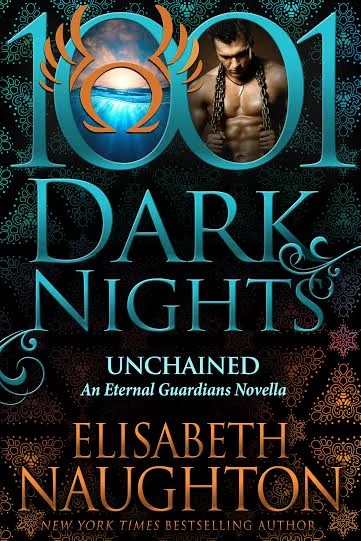
Excerpt: Unchained by Elisabeth Naughton

PROMETHEUS – One of the keenest Titans to ever walk the earth. Until, that is, his weakness for the human race resulted in his imprisonment.

For thousands of years, Prometheus’s only certainty was his daily torture at Zeus’s hand. Now, unchained by the Eternal Guardians, he spends his days in solitude, trying to forget the past. He’s vowed no allegiance in the war between mortal and immortal, but when a beautiful maiden seeks him out and begs for his help, he’s once again powerless to say no. Soon, Prometheus is drawn into the very conflict he swore to avoid, and, to save the maiden’s life, he must choose sides. But she has a secret of her own, and if Prometheus doesn’t discover what she’s hiding in time, the world won’t simply find itself embroiled in a battle between good and evil, it will fall in total domination to Prometheus’s greatest enemy.

Excerpt

Her eyes were hypnotic, her voice sultry and so damn erotic he could go on listening to her talk about anything. Somehow he pulled his attention away from her perfect breasts and looked deep into her emerald eyes. “What realm? Tell me where you are flesh and blood at all times so I can find you.”

“That would break the rules. And if we are to see each other again, I can’t break them. As for what I want, though...” Her breaths grew shallow as she drew even closer and her gaze dropped to his lips. “I think this want burning inside me is the same one that brought you to this place.”

Her hand landed against the back of the chaise, and she angled her face up toward his. The heat of her body surrounded him, consumed him, infused him with need. He lifted his hand to her neck, felt the soft, silken flesh beneath his fingers, and was powerless to hold back.

His mouth lowered to hers as if they were magnets, drawn together by a force neither could resist. Her supple lips brushed his...warm, sweet, tender yet intoxicating at the same time. He had an overwhelming urge to take her, to claim her, to make her his own, but he didn’t want to do anything to spook her, and he was still so confused about what and who she was. So he kissed her slowly. Slid his fingers into her sleek hair. Held back from the passion he wanted to release.

She sighed against him. Brought one hand up to rest against his chest. Warmth circled the spot, shot sparks of electricity straight into his groin. Sliding his tongue along the seam of her lips, he coaxed her to open, to let him in, to give him a taste of what he’d been dreaming about for far too long.

She drew back quickly, breaking their kiss before he was ready. His hand dropped to her thigh as she looked to her right.

He didn’t care about whatever animal outside the gazebo had distracted her. He only wanted more. He reached for her. “Keia.”

“He’s back.” She pushed to her feet before he could kiss her again. Her gaze stayed locked on something to her right. “What is he doing back so soon?”

“He who?” A little of Prometheus’s lust faded when he saw the worry rushing over her features. He stood and reached for her. “Keia?”

She glanced his way. But this time he didn’t see heat in her gemlike eyes. He saw fear. True fear. “He’s not alone. I have to go.”

amazon

About Elisabeth Naughton

Elisabeth Naughton is a New York Times and USA Today bestselling author. From Elisabeth: “I was never one of those people who knew they wanted to be an author at the age of six. I didn’t have imaginary friends. I didn’t write stories in my journal or entertain my relatives by firelight after Thanksgiving dinner. For the most part, I was just a normal, everyday kid. I liked to read, but I wasn’t exceptional at it. And when my teachers complimented me on my writing abilities, I brushed them off. I did, however, always have a penchant for the unique and absurd. And as my mother told me all throughout my childhood, I should have been an actress—I was a drama queen before my time.Visit Elisabeth Naughton’s website.

Connect: Website | Facebook | Twitter | Author Goodreads | Novella Goodreads

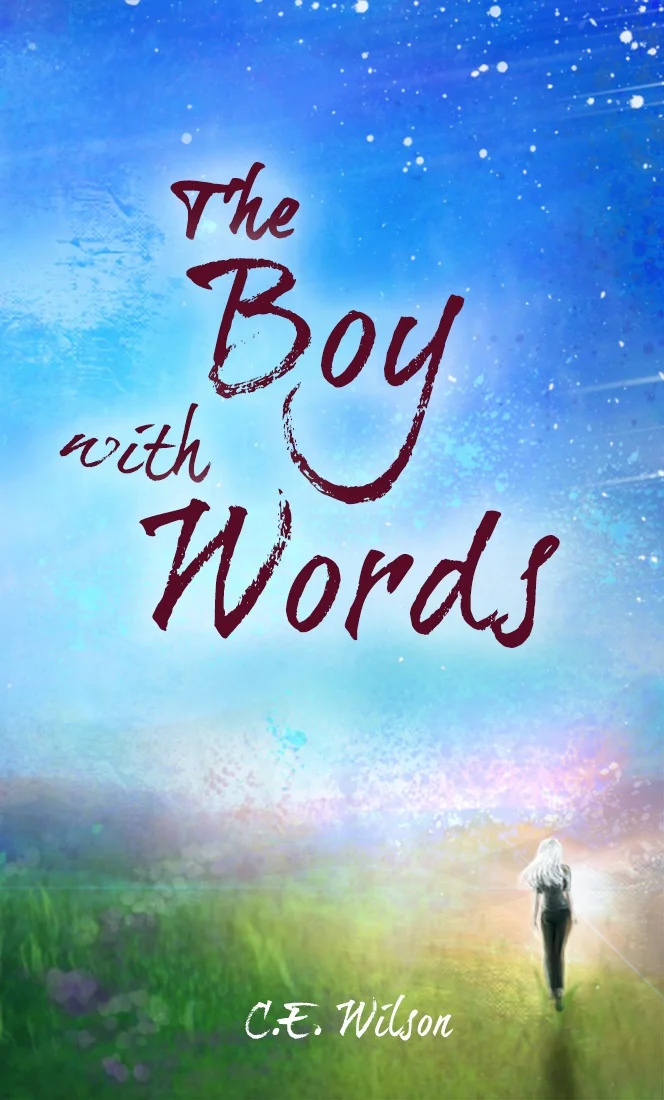
Spotlight: The Boy with Words by C.E. Wilson

Genre: YA Fantasy
Release Date: April 23rd 2016

White Frost has only ever known the darkness. Everything outside of her closed society is The Unknown – a strange and dangerous place accessible to only a chosen few. White’s only glimpse of the world beyond comes from her beloved cousin in the form of mysterious collections of words that hint at astonishing wonders. When an accident upends her simple existence, she’s given an unlikely chance to see the truth for herself. What she finds is greater and more terrible than she could have imagined, and before long she is forced to make the most important choice of her life: does she accept her safe, limited world that she’s known or take a desperate gamble in a world not meant for her with the Boy with Words?

amazon

About the Author

C.E. Wilson is currently living in Pittsburgh, Pennsylvania with her husband, beautiful daughter, a chubby beagle and two cats. They are all the loves of her life. When she’s not writing young adult fantasy novels, she enjoys writing short stories on her Deviant Art page. She loves to write stories involving giants and little people (also known as GT) and she can't decide what she loves more: horror movies or shoujo manga. She has a bachelor's degree in English Education so she has a soft spot for older literature authors including John Milton, William Shakespeare, and stories such as Paradise Lost and Beowolf. On a side note, nothing helps her to write more than drinking good beer and watching The Twilight Zone.

Connect: TwitterFacebookGoodreads

Exclusive Excerpt: Secretly Hers by Jamie Beck

Release Date: June 21, 2016
Genre: Contemporary Romance
Publisher: Montlake Romance

On her thirty-first birthday, hopeless romantic Kelsey Callihan has all but given up on happily ever afters, which is why she agrees to a risqué proposition from Sterling Canyon’s notorious playboy, backcountry skier Trip Lexington. After all, every girl needs a little fun, and with Trip, there are no mixed signals or risks of a broken heart. And if his tips can help her land a husband in the process, all the better.

Trip couldn’t be happier with his secret, no-strings fling with sweet and sexy Kelsey until she calls it quits after meeting a man she believes could share her dream of marriage and family. His jealousy turns to outrage when he discovers that the man is his estranged half brother and lifelong rival.

Now Trip must decide whether the fire in his gut is due to sibling rivalry or something much more dangerous…like love.

Exclusive Excerpt

“Why is your mind always in the gutter?” 

“It’s fun in there.” Trip lazily leaned back in his chair, which he’d turned to face hers, stretching one leg forward until his foot nearly touched hers, like the snake in the Garden of Eden. “In fact, I think you should join me for a while before you wind up married and bored.” 

“Bored?” Kelsey cocked her head, annoyed. “Why would I be bored?” 

“Because everyone who gets married ends up bored. One person—forever?” He tossed aside the eraser he’d been tapping on the desk. “Good God, I’m bored even thinking about it.” 

“Naturally you’re bored. You can’t even be with the same woman for a whole weekend.” His unrepentant shrug prompted her to lean forward. “You may be proud of that fact, but it tells me you only have a few moves and no imagination.” 

His cocky expression transformed to heated indignity and then something … else. He hooked his foot around the leg of her chair and yanked it toward his own. After planting his hands on the arms of her chair and caging her with his body, he murmured, “Honey, you can’t throw down a challenge like that unless you’re willing to let me prove you wrong.” 

Before she could respond, he unclipped her hair and ran his fingers through her curls. Every hair on her body vibrated in anticipation as his gaze dropped to her mouth. 

Bewildered. Excited. Confused. A little terrified. The conflicted emotions coursed through her veins, making the one at the base of her neck throb so hard she thought it might burst. 

“Tri—“ she began, but he silenced her with a breathtaking kiss. Firm, a little rough,
a whole lotta hot. She didn’t want his kiss, or at least she hadn’t been angling for one, and yet its carnal power swept her away. 

He groaned, making her heart thunder. In a fluid movement, he lifted her as if she weighed no more than a Styrofoam cup, plunking her bottom onto the desk. Settling his hips between her legs, he dragged her to the edge of the desk, using his hands to coax her legs around his waist. He crushed her against his body while hungrily kissing her mouth, jaw, and neck. 

Whatever happened in the future, she could no longer make wisecracks about his skill. Her entire body burned like she’d been thrown in front of a bonfire. 

His hands were everywhere—seeking, touching, kneading—turning her on way more than she could handle. Granted, it had been a while since she’d been with a man, but the way he overpowered her, took what he wanted, and knew what to do with it, well, it unleashed yearning buried deep inside, which took hold like some kind of drug. 

He broke the kiss to catch his breath, then immediately pressed his mouth to her neck. She gasped as he pulled her closer to his body. 

This could not happen. Not here and now. Not with Trip, of all men. 

amazon
barnes and noble

About The Author

Jamie Beck is a former attorney with a passion for inventing stories about love and redemption. In addition to writing novels, she also pens articles on behalf of a local nonprofit organization dedicated to empowering youth and strengthening families. Fortunately, when she isn’t tapping away at the keyboard, she is a grateful wife and mother to a very patient, supportive family.

Connect with Jamie: Website | Facebook | Twitter | Goodreads

Spotlight: Man of Action by Janie Crouch

He was a man of action—especially when it came to protecting his new undercover partner… 

At nineteen, Andrea Gordon's life was forever changed. After proving herself instrumental in a bank hostage crisis, she became one of Omega Sector's top agents. Four years later, her skill at reading people is unrivaled—until she meets fellow profiler Brandon Han. Paired together to track a serial killer who has been targeting at-risk women, the two become entangled beyond the case. Their mutual attraction deepens as they get closer to the truth. But when Andrea's own sordid past surfaces, they will both be forced to question everything about the assignment…and each other. 

This whole thing was a terrible idea. Going back to Buckeye? Terrible. Going back with the likes of Brandon Han? Even worse. The plane hit some turbulence at thirty-five thousand feet, as if nodding in agreement with Andrea’s conclusion.

Brandon didn’t want to work with her on the case. He’d made that abundantly clear in Steve’s office. She wanted to assume it was her fault, that he knew about her shortcomings and lack of education as an Omega consultant, but forced herself to stop. He’d mentioned liking to work alone. She could understand that, too. Andrea liked working alone, but for different reasons.

Brandon’s irritation had been pretty tangible when she’d sat down next to him at the airport. It had just grown as they waited for their flight, first when she’d mentioned him being complicated, then when they were both looking through the case files.

By the time they got on the plane, about an hour after their scheduled departure time, Brandon was hardly even talking to her. He was mad—she had no idea why—and she was awkward—as usual around someone she was so attracted to. Good times.

Andrea tried to pretend she was reading the files when he handed them to her, but she wasn’t. She knew better than to even try. Her dyslexia made reading simple books difficult, although she had learned some exercises to help with that. But reading handwritten notes and case files often written in different fonts and sizes—that pretty much just led to a headache and frustration.

She’d had an extra hour at her apartment so she’d used the special software on her computer to scan a few pages so they could be converted into audio clips. She’d found that listening worked much better for her than trying to read. Unfortunately she hadn’t had enough time to scan all the files as she normally would.

Listening to the files on audio clips had just made Brandon more irritated. Andrea had no idea what to do about that, so she ignored it. She would listen to the clips she had, then spend this evening—all night if she had to—reading through the files in her room, when she was alone and it was quiet. She refused to go into that meeting with the local police tomorrow unprepared.

She didn’t want to go back there at all. If it wasn’t for Steve asking her to go, Andrea wouldn’t have done it, serial killer or not.

Maybe they wouldn’t run into anyone she knew. Or maybe the people in Buckeye wouldn’t recognize her. She’d gone to great lengths to look nothing like the girl who had worked at Jaguar’s. Her blond hair was shorter, cut in a flattering bob; her makeup was tasteful. She’d learned how to dress and present herself in a professional manner.

She doubted her own aunt and uncle would recognize her. Not that she planned to drop in on them. She hadn’t seen them since the last time her uncle, in a drunken stupor again, had awakened her with a backhand that had sent her sprawling from her bed to the floor when she was seventeen. Another punch had sent her hurling into a glass table. She’d gotten away from him and hidden that night, wrapping her cut arm in a T-shirt.
The next morning she’d told her aunt, who’d looked the other way again during all the commotion, that she was going to school.

Andrea hadn’t gone to school. And she hadn’t gone back home. Ever again.

She hadn’t gone far, just to the other side of the town she’d only ever known as home, but they hadn’t come looking for her. Had probably been relieved that she’d left.

So yeah, no joyous homecoming in Buckeye.

amazon
barnes and noble

About the Author

Nominated for the 2014 & 2015 Romantic Times Reviewer's Choice Award, and a finalist in multiple other Romance literary awards, Janie Crouch loves to read – almost exclusively romance – and has been doing so since middle school. She cut her teeth on Harlequin (Mills & Boon) Romances when she lived in Wales, UK as a preteen, then moved on to a passion for romantic suspense as an adult.

Janie recently relocated with her husband and four children to Germany (due to her husband's job as support for the U.S. Military), after living in Virginia for nearly 20 years.  When she’s not listening to the voices in her head (and even when she is), she enjoys traveling, long-distance running, movie-watching, knitting and adventure (obstacle) racing.

She teaches online communication classes for an American college part time, and writes full time. Most of all, she loves to laugh and smile and count her blessings. And her blessings are many.

Connect:  Website | Facebook | Twitter | Goodreads