Spotlight: The Cast by Danielle Steel

#1 New York Times bestselling author Danielle Steel follows a talented and creative woman as she launches her first television series, helping to recruit an unforgettable cast that will bring a dramatic family saga to the screen.

Kait Whittier has built her magazine column into a hugely respected read followed by fans across the country. She loves her work and adores her grown children, treasuring the time they spend together. But after two marriages, she prefers to avoid the complications and uncertainties of a new love.

Then, after a chance meeting with Zack Winter, a television producer visiting Manhattan from Los Angeles, everything changes. Inspired by the true story of her own indomitable grandmother, Kait creates the storyline for a TV series. And when she shares her work with Zack, he is impressed and decides to make this his next big-budget project.

Within weeks, Kait is plunged into a colorful world of actors and industry pros who will bring her vision to life. A cool, competent director. An eccentric young screenwriter. A world-famous actress coping with private tragedy. A reclusive grande dame from Hollywood’s Golden Age. A sizzling starlet whose ego outstrips her abilities. L.A.’s latest “bad boy” actor, whose affairs are setting the city on fire. An unknown ingénue with outsized talent. And a rugged, legendary leading man. As secrets are shared, the cast becomes a second family for Kait. But in the midst of this charmed year, she is suddenly forced to confront the greatest challenge a mother could ever know.

The strength of women—across generations and among friends, colleagues, and family—takes center stage in this irresistible novel, as all-too-real people find the courage to persevere in life’s drama of heartbreak and joy.

Buy on Amazon | Barnes and Noble

About the Author

Danielle Steel has been hailed as one of the world’s most popular authors, with over 650 million copies of her novels sold. Her many international bestsellers include Past Perfect, Fairytale, The Right Time, The Duchess, Against All Odds, Dangerous Games, The Mistress, and other highly acclaimed novels. She is also the author of His Bright Light, the story of her son Nick Traina’s life and death; A Gift of Hope, a memoir of her work with the homeless; Pure Joy, about the dogs she and her family have loved; and the children’s books Pretty Minnie in Paris and Pretty Minnie in Hollywood.

Spotlight: Cottage by the Sea by Debbie Macomber

A seaside town and its eclectic community help one young woman reclaim the light after darkness in a brand-new novel from #1 New York Times bestselling author Debbie Macomber.

Annie Marlow has been through the worst. Rocked by tragedy, she heads to the one place that makes her happy: Oceanside in the Pacific Northwest, the destination of many family vacations when Annie was a teenager.
   
Once there, Annie begins to restore her broken spirit, thanks, in part, to the folks she meets: a local painter, Keaton, whose large frame is equal to his big heart—and who helps Annie fix up her rental cottage by the sea; Mellie, the reclusive, prickly landlord Annie is determined to befriend; and Britt, a teenager with a terrible secret. But it is Keaton to whom Annie feels most drawn. His quiet, peaceful nature offers her both comfort and reprieve from her grief, and the two begin to grow closer.

Then events threaten to undo the idyll Annie has longed for. And when the opportunity of a lifetime lands in her lap, she is torn between the excitement of a new journey toward success and the safe and secure arms of the haven—and the man—she’s come to call home.

In this heartwarming tale, Annie finds that the surest way to fix what is damaged within is to help others rise above their pain and find a way to heal.

Excerpt

CHAPTER 1

Annie Marlow hated to disappoint her parents, but she simply wasn’t going to fly home to Seattle for Thanksgiving. She’d already made the arrangements for Christmas and it was too late to change everything now. She had plans.

Working as a physician assistant, Annie didn’t get many four-day weekends, and Trevor was cooking a turkey and had invited her over for the day. Steph would be there, too, and they were both anxious to meet a cute young doctor who had recently joined the clinic at another site.

What her mother really wanted, Annie realized, was a family photo for the Christmas card her parents routinely sent out each year. For all she cared, they could photoshop her in. There wasn’t any need for her to change her plans, especially now, less than a week before Thanksgiving.

Gabby, her cousin, was flying to Los Angeles to join them. Giving up time with Gabby for a Christmas-card photo? Not happening. Besides, Annie had a new pair of four-inch designer heels and a dress she intended to use for a girls’ night out on the town.

Her mother tried again, laying on the guilt. “Annie, please?”

“Mom, you can’t change everything at the last minute like this.” She glanced at the time and inwardly groaned. Much more of this conversation and she’d be late meeting Steph for their yoga class.

“Your brother is coming with Kelly and the baby.”

This was her mom’s best inducement? Her brother? The favored son? She had already seen Mike and his family twice this year. “He was planning to be there for Christmas, too, remember.” Mike was the one who needed to change everything around. It was unfair that she should rearrange her entire life to suit her brother’s schedule.

“We haven’t been together as a family since August.”

Pressing the phone to her ear, Annie became impatient as her mother continued speaking.

“You haven’t seen the baby in a while. Did you know Bella is walking already?”

“I’ll see Bella when I drive up this Christmas. I’ll make sure to stop in Portland on my way through,” Annie protested. “Mom, please. We’ve been through this already.”

Her phone dinged, indicating she had a text message. Putting her phone on speaker, she checked the text to see that Steph had sent her a selfie. Her friend was gorgeous, with her purple-tinged hair. She’d made a pouty face and looked like she was kissing through the phone.

Annie laughed.

“Annie? Are you laughing at me?”

“No, sorry, Mom,” she said, squelching her amusement. “Steph just sent me a text.”

“I’d so hoped you would change your mind.”

“Sorry, Mom, really I wish I could, but I simply can’t.” Well, she could, but not without ruining her own plans. “You won’t miss me,” she said, trying to soothe her mother’s disappointment. “You’ll be involved with Kelly and the baby, and Dad will spend all of his time with Mike.” Bella would command all their attention; they cherished this first grandchild. To be fair, Bella was adorable. It was hard to believe she was walking already.

“Promise me you won’t change your mind about Christmas, then, will you?” her mother asked. Annie had been given the chance to work last Christmas, and with money so tight, she’d jumped at the chance at double-time. Her parents had no idea what the cost of living was like in southern California, and how hard it was to make ends meet.

“I’ll be home for Christmas, Mom, I promise.” She hated it when her mother doubted her. One time, one measly time when she didn’t get home for the holidays, and her mother refused to forgive her.

“I’m sorry to harp on you,” her mother said. “It’s a disappointment is all.”

“I know. I’m sorry, too, but Gabby and I have the entire weekend planned. If I’d known sooner I could have made other arrangements, but it’s too late now. It’s only a few weeks and I’ll be home for Christmas. I have my own life, you know.”

Her mother’s frustrated sigh came through the line. “Don’t be like that, honey.”

“Like what?”

“Stubborn,” her mother countered. “Family is what’s important. I know you have a lot going on, but your father and I are getting up in age. We won’t be around forever, you know.”

Annie couldn’t believe her mother. This was a new low when it came to making her feel bad, reminding Annie that at some point in the future her parents would die. It was ridiculous, seeing that they were both healthy and in the prime of their lives. Biting down on her lower lip, she resisted the urge to tell her mom that she was being absurd.

Her mother seemed to sense that she’d gone too far with the guilt. “I have an idea,” she quickly rebounded. “Invite Trevor.”

What her mother didn’t understand was that she wasn’t romantically interested in Trevor. She’d happened to mention his name a time or two, and she had yet to hear the end of it ever since then. Inviting him to Seattle would only perpetuate the idea that they were involved. He was a friend, and besides, Steph had set her sights on him. There’d never been any sparks between him and Annie. She liked him, though, and he was fun to hang out with. It didn’t hurt that he was a terrific dancer and being on the floor with him generated her a lot of attention.

“You like him, right?”

“He’s a friend, Mom, nothing more. Besides, you’re forgetting about Gabby. She’s already purchased her ticket. I’m picking her up at LAX early Wednesday afternoon.” Annie had already mentioned her cousin’s visit a dozen times or more.

“Oh right.”

Her mother had yet to recognize how unreasonable she was being. “I’m genuinely sorry to disappoint you, Mom, but this whole family Thanksgiving just isn’t going to work this year.”

“Okay, honey, I understand. We’ll miss you.”

“Mom, I really need to go.”

“Okay. Just one more thing. I wasn’t going to tell you since I thought you’d be home for Thanksgiving, because I wanted to surprise you.”

Time was ticking away. Grabbing her yoga mat and her bag, Annie headed for the front door of her condo.

“Dad and I remodeled the kitchen. We bought all new appliances and countertops. You won’t recognize it!” Her parents loved their home and had saved thirty years to build it. It was on a hillside that overlooked Puget Sound. The views were stunning. Her parents had purchased the property years earlier and then diligently saved and sacrificed to build the home of their dreams.

“That’s great, Mom. I’ll see it at Christmas. Love you.”

“Love you, too.”

“Before you go, your dad wants to say hi.”

“He’s not going to pressure me about Thanksgiving, is he?”

“No, silly.” She must have handed off the phone because the next voice Annie heard was her father’s.

“How’s my daughter, the doctor?” her father asked. He’d wanted Annie to continue on to medical school.

“I’m not a doctor, Dad.” Annie had grown tired of school. The breakup with her college boyfriend had devastated her, and she’d been eager to be done. Instead of continuing school to get a medical degree, she’d opted to become a physician assistant.

“Someday,” her dad said. He never seemed to lose a chance to remind Annie of her dream of working in medicine. What he didn’t understand nor seem to appreciate was that she did work in medicine, just not as a physician.

They spoke, and Annie found herself glancing at the time. “Dad, I’d love to chat more, but I’m meeting a friend.”

“Bye, sweetheart.”

“Bye, Dad.”

Annie pulled into the gym at the last minute and found Steph impatiently waiting outside. Together they rushed into their class. Afterward, Annie felt worlds better, relaxed and in good spirits.

They stopped for a smoothie at the juice bar, and while Steph wasn’t looking, Annie snapped a selfie of the two of them and tweeted it.

“Let me see, let me see,” Steph protested and then laughed. “You’re bad.”

“Hey, we both look great.”

“Is it Gram-worthy?”

Annie laughed. “Looks like it to me,” she confirmed, and posted the photo on Instagram, so Gabby would see it. She couldn’t wait for Gabby to arrive on Wednesday; Annie had looked forward to cousin time for weeks. The two were close in age and had been best friends nearly their entire lives. Gabby had recently ended a six-month relationship, and Annie intended to do everything she could to make her forget Geoff, starting off with a pre-Thanksgiving party with friends from the clinic at a popular night spot.

Thanksgiving morning, Annie woke with a killer hangover. Her head felt like someone was inside swinging a sledgehammer, and her mouth was as dry as an Arizona riverbed. The incessant ringing of her phone, which was sitting on the nightstand by her bed, made it even worse. Caller ID showed that it was her aunt Sherry, Gabby’s mother. Why, in the name of all that was decent, was she calling Annie at this time of the morning? Gabby had checked in with her mom when she landed. She was more than ready to hand the phone off to her cousin, who rolled over and grumbled at the interruption.

“Hello,” Annie barely managed to say, holding her hand firmly against her forehead, hoping that this would appease the tiny men inside her brain, so they’d stop hammering.

“Annie.” Aunt Sherry’s voice was breathless, as if someone had knocked the wind out of her. “Oh Annie . . . Annie.”

Sitting up in her bed at the sound of tears in her aunt’s voice, Annie asked, “Aunt Sherry, do you need Gabby? She’s here.”

“No . . . no. I need to tell you.”

“Tell me what?”

A gasping sob escaped her aunt.

Annie tensed and keeping her voice steady and low, asked, “Are you okay, Aunt Sherry?” Seeing how serious the conversation was sounding, Annie put the call on speaker for Gabby to listen in.

By this time, her cousin had sat up and was rubbing the sleep from her eyes. The two exchanged looks and Annie shrugged, unable to decipher what was happening.

“Do you . . . Do you . . . television . . . Is it on?” her aunt asked, barely getting the words out.

“No. Aunt Sherry, for the love of heaven, just tell me what’s happened.” As Annie spoke, she reached for the remote and turned on the television, switching channels to the twenty-four-hour news station. She tuned in, and the first thing that popped onto the screen was a Thanksgiving Day advertisement from Macy’s, which told her nothing.

Instead of answering, her aunt started sobbing. “It’s horrible, Annie. I . . . I don’t even know how . . . I don’t know . . . how to tell you.”

As a physician assistant, Annie had often dealt with people in crisis mode. “Take a deep breath, count to five, then take another breath, and start at the beginning,” she advised her aunt in a calm, soothing voice. Her immediate suspicion was that something had happened to Lyle, the man her aunt had been dating for the last fifteen years. That didn’t make sense, though. She would have called Gabby if that had been the case.

“I’m . . . trying.” Aunt Sherry counted softly, out loud, and sucked in another breath, just as Annie had recommended. “Your mom . . . and dad . . .”

Annie tensed. “My mom and dad?”

“They . . . invited me to breakfast.”

Her mother had always made a big deal about breakfast on Thanksgiving, inviting family and friends over.

“I . . . wanted to see . . . the baby . . . Bella.” Her words were staccatolike between sobs; she was having trouble even getting the words out.

“Aunt Sherry,” Annie said softly. “Has something happened to my parents?”

Her aunt ignored the question. “When I got . . . close . . . just . . . two blocks away . . .” She continued in the same jerky speech. “The police . . . they . . . stopped me.”

“The police?” Annie repeated, her mind whirling. “What were the police doing there?”

“They . . . had . . . It was barricaded.”

“A barricade?” Annie hated that she sounded like an echo, but her aunt wasn’t making a whole lot of sense.

“It’s . . . been raining . . . and raining.”

“Well, that happens in Seattle quite a bit.” Annie impatiently added, “Especially around this time of year.” The Seattle area was known for its rainfall, which was another reason Annie chose to live in California.

“Annie,” her aunt said, sobbing hysterically, while sucking in deep breaths between her words. “You . . . You . . . don’t understand, the entire hillside . . . is gone. It . . . simply . . . gave way, taking . . . taking everything with . . . it.”

Gabby gasped at the news.

Annie slowly rose out of her bed, standing with one hand pressing against her forehead while the other pressed the phone to her ear. “Are you telling me Mom and Dad’s house slid off the hillside?”

“Yes,” Aunt Sherry said and gasped. “Their house . . . and . . . twenty . . . other homes.”

Annie froze and glanced at the television screen. Breaking news had just interrupted the newscast. A helicopter was flying over the water, identified on the screen below as Puget Sound. A single home was breaking apart in the mud-caked waters below the helicopter and sinking into the water.

“Mom and Dad?” Annie pleaded, as her heart pounded at the seriousness of what had happened. “Did they get out?”

“I . . . I don’t know . . . I don’t know how they could have. Everyone said it happened so fast, and so early . . .”

Annie fell back onto her bed, her legs shaking so hard they wouldn’t hold her up any longer. Her entire body began to tremble. “How early this morning?”

“The officer said . . . it happened around four . . . They think . . . most everyone was still in bed. No . . . notice. No . . . warning.”

The tightness in Annie’s chest made it impossible to speak. It was highly likely that her entire family had just been wiped out in a mudslide.

Her mother.

Her father.

Her brother.

Her sister-in-law.

And her baby niece.

Annie’s mind couldn’t absorb what she was hearing and seeing on the television. Her aunt’s sobs echoed in her ear and seemed to be reverberating against the walls of her head.

“Annie?” her aunt sobbed. “Are . . . Are you there? Say . . . something.”

“I’m here,” Annie managed to whisper. She inhaled and followed her own advice, counting to five and then breathing in again, hoping the technique would calm the rising sense of panic that threatened to overcome her. “I . . . I need . . . I’ll get there as soon as I can.”

“Good. Have Gabby . . . make . . . Have her do . . . the flight arrangements.”

“I will.” How calm she sounded, Annie thought to herself, but her voice wasn’t her own. It seemed to come from across the room somewhere. Her cousin placed her arms around her, hugging her closely. “Find out what you can before I get there.”

“I’ll . . . do what . . . I’ll see what I can learn.”

“There must be survivors,” Annie insisted, doing her best to think positively, convinced her parents had somehow found a way to escape. She had to believe they were alive, because anything else would be impossible to accept.

“I’ll do . . . what I can. I promise, but . . .”

“But what?” Annie demanded, her voice gaining in strength.

“But . . . Annie . . . there’s little hope for survivors. I’m so sorry, so very sorry.”

Excerpted from Cottage by the Sea by Debbie Macomber. Copyright © 2018 by Debbie Macomber. All rights reserved. No part of this excerpt may be reproduced or reprinted without permission in writing from the publisher.

Buy on Amazon | Barnes and Noble

About the Author

Debbie Macomber, the author of Sweet Tomorrows, A Girl’s Guide to Moving On, Last One Home, Silver Linings, Love Letters, Mr. Miracle, Blossom Street Brides, and Rose Harbor in Bloom, is a leading voice in women’s fiction. Ten of her novels have reached #1 on the New York Times bestseller lists, and five of her beloved Christmas novels have been hit movies on the Hallmark Channel, including Mrs. Miracle and Mr. Miracle. Hallmark Channel also produced the original series Debbie Macomber’s Cedar Cove, based on Macomber’s Cedar Cove books. She has more than 200 million copies of her books in print worldwide.


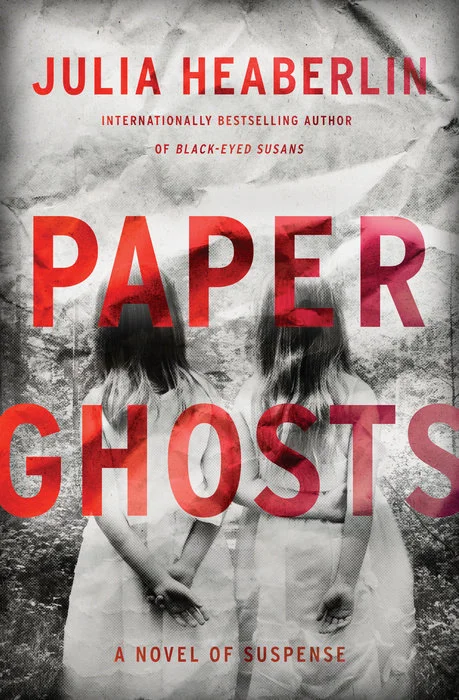
Spotlight: Paper Ghosts by Julia Heaberlin

A Texas map marked with three red dots like drops of blood. A serial killer who claims to have dementia. A mysterious young woman who wants answers. What could go wrong?

An obsessive young woman has been waiting half her life—since she was twelve years old—for this moment. She has planned. Researched. Trained. Imagined every scenario. Now she is almost certain the man who kidnapped and murdered her sister sits in the passenger seat beside her.
 
Carl Louis Feldman is a documentary photographer who may or may not have dementia—and may or may not be a serial killer. The young woman claims to be his long-lost daughter. He doesn’t believe her. He claims no memory of murdering girls across Texas, in a string of places where he shot eerie pictures. She doesn’t believe him.
 
Determined to find the truth, she lures him out of a halfway house and proposes a dangerous idea: a ten-day road trip, just the two of them, to examine cold cases linked to his haunting photographs.
 
Is he a liar or a broken old man? Is he a pathological con artist? Or is she? In Paper Ghosts, Julia Heaberlin once again swerves the serial killer genre in a new direction. You won’t see the final, terrifying twist spinning your way until the very last mile.

Excerpt

Chapter 1

“Who the hell are you?”

I slide my queen one space closer to his king. “You know who I am.”

He swipes his right arm, the one that still fully cooperates, across the board. A single, swift movement. Pieces fly, bounce off the carpet, rattle into corners fuzzed with dust from a past decade. I don’t flinch, something I’m practiced at. Neither does the only other occupant of the room, a deaf woman knitting an infinite patch of blue. Or green or gold or pink. It could be any color.

She doesn’t have needles. Her hands work the air methodically while her invisible work piles up like an accordion. A wedding veil sits crookedly on the silvery threads struggling out of her scalp. The second hand on a plastic clock above her head jerks.

I’ve wanted to rip that clock off the wall on every visit. Time for the people in this house is meaningless. No need to travel beyond the triple-locked front door or wonder who or what made the three long white scratches that run down its wood veneer. No good reason to think about the people who never visit you or the horrible things you’ve done. So what if you can’t remember that you never liked dark bananas or the canned laughter of I Love Lucy but now you eat one while watching the other?

I wonder what Carl is thinking. Maybe about how he’d like to kill me. I’m twenty-four, in the age range. White. Slender. People say I look like my sister. The difference is, she was lit from the inside. Dramatic. Gutsy. A performer. People drifted to her. Loved her. Carl drifted to her, and snatched her life.

Maybe he thinks I am my sister come back to haunt him.

I am the understudy, Carl. A shell of her, loaded with dynamite, set on revenge. The nervous one in the wings about to jump onstage. You and I, we will be co-stars.

I am also a perfect stranger every time I come here, or he’s lying. Each time, he claims to forget my name. He won’t answer when I ask why, in June, he is wearing a Christmas tie leering with Grinch faces, or tell me where he bought his leaden, ancient boots, or the prettiest place he remembers they last took him. Boots always remind me of vistas. Of standing firm and steady on a dangerous precipice while beauty unfolds for miles before your eyes.

He’s unimpressed by any of my random musings on boots, or the Walt Whitman and John Grisham I read him by the only sunny window in this house, or the series of jokes about talking cows that I tell while we take walks around the neighborhood. Things any loved one would do. This afternoon at IHOP, I watched him drown his pancakes in strawberry syrup and knife them into a precise patchwork of bites. I wanted to ask, Does the syrup remind you of blood?

He’s trying to make me think his eyes are glimpses into a dark solar system where he retreats, alone, but I won’t be fooled. I wonder what he sees in mine. Anything familiar?

He’s a hell of an actor, according to old court testimony.

Right now, with a harmless bit of violence, he’s reminding me that he’s still strong. Relevant. I already know. I’ve studied him carefully. Weighed the risks. Searched his room while he was in the shower and found his secret stash hidden in a battered suitcase under the bed—the red rubber exercise band that keeps up that knotty little bulge on his right forearm, and the ten-pound free weights. The sharpened pocketknife and the silver lighter with the engraved N, tucked into the zipper pocket along the back with a single cigarette.

The 8X10 photograph, pressed carefully flat, under the lining. It could be 1920, or two years ago. Carl the photographer, whose Time Travel book of surreal images once hit the bestseller list, specializes in timeless. The corners of the paper are soft, and there’s a white crease in the middle that cuts the girl in two. She’s standing on a barren rusty landscape that’s probably never sucked up a drop of rain.

A tiny silver key charm nestles in her throat. The same key that I know hangs out of sight, somewhere in the graying curl of his chest hair. I saw it once, when it slipped out of his shirt and dangled over the chessboard. Is she one of his victim’s, too?

Old serial killers who roam free have to land somewhere, of course. I’ve thought about this a lot. They must get tired. Decide to pamper roses or grandchildren. Break hips and suffer heart attacks. Go impotent. Run out of money. Don’t see the car coming. Put guns to their heads.

The killers who publicly beat the system, and the unseen monsters who are never caught and slip around like silent, pulsing background music. Screeching oboes and pounding drums. Only a few ever hear their soundtrack, right at the very end, and then it’s too late.

It took a long, long time to find the man I believe killed my sister. Years. Dozens of interviews. Hundreds of suspects. Thousands of documents. Reading, stalking, stealing. It’s been a singular, no-holds-barred obsession since I was twelve and my sister’s bike didn’t make it the three miles in broad daylight from our house to her summer babysitting job. It was morning.

Two sweet little boys, Oscar and Teddy Parker, were waiting for her on the other end. Hard to believe, but they are in high school now. Several months ago, their mother found my address and mailed Oscar’s college application essay with a note saying she hoped she was right to send it.

I wasn’t sure. I didn’t unfold the piece of paper right away. I had no idea what it would say—I just knew that my sister was the subject. I tucked it in the frame of my bathroom mirror. I didn’t like thinking of her life as something to be critiqued and rated by college admissions personnel.

It took me a month to work up the courage. Nothing, Oscar wrote, was ever the same. I was only five, but her disappearance changed everything. I wore the friendship bracelet we made together until the threads wore through and it fell off. No babysitter ever lived up to her. If I’m honest, no girl ever has. No assurance will make me feel safe again, yet I think of her every time I need to be brave. She’s the reason I want to major in criminal justice.

I’d always thought of how deeply my sister’s death affected my family. Me. Even my physical body never felt the same, as if every cell was chemically changed, forever tweaked to high alert.

I’d never once thought of the pain of the two little boys who begged her to read Harry Potter because she was so good at the voices. When Mrs. Parker called at 9:22 a.m. to ask why Rachel hadn’t shown up, I was getting out the flour to make chocolate chip cookies.

My parents, both accountants, had left for work fifteen minutes before. I was twelve, charged with cleaning the house and making dinner in the summer. It was a normal day in a normal house.

Is Rachel sick? Mrs. Parker had asked on the phone. She wasn’t mad, I remember, just concerned. Does she have a fever?

An accident, I thought immediately. A car ran into her bike. She’s unconscious somewhere. The canister fell out of my hands onto the floor, scattering its powder across the black tile.

No one cleaned it up for a long time. In the chaos that followed, people tracked flour all over our house, footprints that stayed for weeks. Months later, there was still the light whisper of them. It was like Rachel was there with us, walking around as a ghost.

Now that I’m finally here with Carl, making my move, I wonder for the last time if I should call it all off. I’ve told no one of my plan to steal him out of this place and find the truth.

It wouldn’t be the first promise I’ve broken to myself. The girl in his suitcase, with the tiny key to nothing, seemed to be begging me with her eyes to leave and not look back.

I don’t want to think about what Carl could still do with two good hands.

The air conditioner clunks on. A lukewarm breeze is blowing out of the vent in the ceiling. The wedding veil drifts, a cobweb caressing a wrinkled cheek.

I kneel down to pick up the chess pieces and disappear under the card table.

“Who the hell are you?” He’s shouting now, pounding the card table so it jars the top of my head. His boot shoots out, and he presses down purposefully on my hand until it hurts. I jerk my fingers back, refuse to cry out, open my fist to the lowliest piece on the board. A pawn, of course.

“I’m your daughter,” I lie.

It’s the only logical way to get him in my custody.

Who the hell are you?

2

Ten visits in, I set my plan in motion. Carl is still adamant I’m not his daughter, but he’s remembering my name now, at least the pseudonym I gave him. I casually suggest that we take a little vacation. A couple of weeks, I promise him. A breather. We can get to know each other better. You can have a break from this claustrophobic prison.

“If I go, will you let me use a pen?” he asks. “Mrs. T has banned me from pens. She figures I might stick one in somebody’s throat.”

“And that would be a damn mess for me to clean up,” Mrs. T confirms from the doorway to the kitchen. Her “jiggling Polish behind,” as Carl calls it, always shows up silently and perfectly timed.

But it was Mrs. T who took him in thirteen months ago. Hers was the only halfway house of old felons that would say yes to a possible serial killer with dementia after a Waco cop found him rambling the highway.

The famous documentary and fine-art photographer Carl Louis Feldman, suspected of stalking young women and stealing them for years, said he couldn’t remember his own name. It took fingerprints and a sample of DNA to do that. A local hospital guessed a diagnosis of early onset dementia and sent him back out into the world.

Because even if he was “damn-sure-fire a sick Ted Bundy with a camera and a Ford pickup truck,” as a prosecutor once pounded out to a Texas jury, the state just didn’t care anymore.

He was declared not guilty in that missing girl case—the only one he was tried for, the only one with a bit of incriminating DNA evidence. Two days of deliberating, and the jury said he was good to go. And go he did, hiding out for years like a brown recluse in some dark corner while I patted my foot impatiently until he crawled out.

Who knew I’d end up here—crammed so tightly on a sagging couch with my sister’s killer and a woman who knits imaginary things that we can feel each other’s heat. The wedding veil is missing today, but her fingers are flying in frantic rhythm like there’s a whip at her back.

The other occupants of the house are scattered in the kitchen, the bedrooms, the bathrooms—away from the soundtrack of the TV, which starts the day at 6 a.m. The relentless, high-pitched buzz from deep inside its guts lives in my head for hours after I leave.

Carl rips his eyes from the screen in front of us, a Discovery Channel special. We have just learned about a tarantula that can exist for two years without eating.

Carl twists toward me, the bone of his knee purposely jutting into my thigh. I imagine that same knee holding Rachel down. I’m suddenly glad, for her sake, that the woman beside me is deaf and, for my sake, that her dangerously sharp needles are imaginary.

Carl’s hand drifts up. Mrs. T is gone. He’s going to touch me. I’m going to let him. Whatever he wants. Whatever it takes.

He slides the rough pads of his middle and index fingers lightly down my cheek while I stare ahead at the hairy spider on TV, now warring with a lizard.

Carl traces my chin, my ear. He drifts to my neck. When he reaches the hollow place beside my windpipe, he presses his two fingers into my flesh harder than he needs to.

“Bump, bump,” he says. “Bump, bump. That’s your carotid.”

I nod, swallowing hard. I know intimately about the carotid artery from reading hundreds of medical examiner reports. Its three layers—the intima, media, and adventitia. How the two carotids in the neck carry ninety percent of the blood to the brain. The TV shows aren’t lying. A ruthless jab to one of them can cause death in bare minutes.

Carl keeps his fingers glued to my throat even when there’s a rapid knock on the front door. Two shrill rings of the bell.

I bend down for my purse so Carl is forced to pull his hand back. So I can catch my breath and smooth out the loathing and humiliation on my face that I hope he hasn’t seen. My fingers scramble in my purse. I hear the creak of floorboards, the swish of Mrs. T’s skirt, the noisy clanks as she opens the myriad latches on the front door.

When I sit back up, the visitor is stepping over the threshold, a dark-haired teenager named Lolita with a rose tattoo etched on the delicate underside of her wrist. Lolita visits every Wednesday—the granddaughter of one of Mrs. T’s boarders. She has done a good job of trying to forget that her grandfather once set a house fire with six people inside. He’s docile now. Only out of prison because no one died.

I’ve noticed that Lolita keeps her head down around Carl. Today is no exception. As usual, she’s wearing a scarf stamped with pink and white snails. One time, the scarf was tied around her ponytail, another, scrunched through her belt loops. Today it dangles loosely around her neck. I overheard her tell Mrs. T that the scarf was a Christmas gift from her grandfather. She wears it to help him remember who she is.

Mrs. T and Lolita drift out of the room, chattering, without speaking to us. I hand Carl the pen from my purse, a favorite one with the ink that glides like blue oil.

“As requested,” I say. “So you will come?” I sound a little more pleading and hopeful than I’d like. Maybe more like a daughter. Maybe that’s good.
He jams the pen in the waist of his jeans, baring the intimate flash of black hair below his belly button. My heartbeat punches against my throat, harder even than when he pressed his fingers there.

Excerpted from Paper Ghosts by Julia Heaberlin. Copyright © 2018 by Julia Heaberlin. All rights reserved. No part of this excerpt may be reproduced or reprinted without permission in writing from the publisher.

Buy on Amazon | Barnes and Noble

About the Author

Julia Heaberlin is the author of the critically acclaimed Black-Eyed Susans, a USA Today and Times (U.K.) bestseller. Her psychological thrillers, including Playing Dead and Lie Still, have been sold in more than fifteen countries. Heaberlin is also an award-winning journalist who has worked at the Fort Worth Star-Telegram, The Detroit News, and The Dallas Morning News. She grew up in Texas and lives with her family near Dallas/Fort Worth, where she is at work on her next novel.

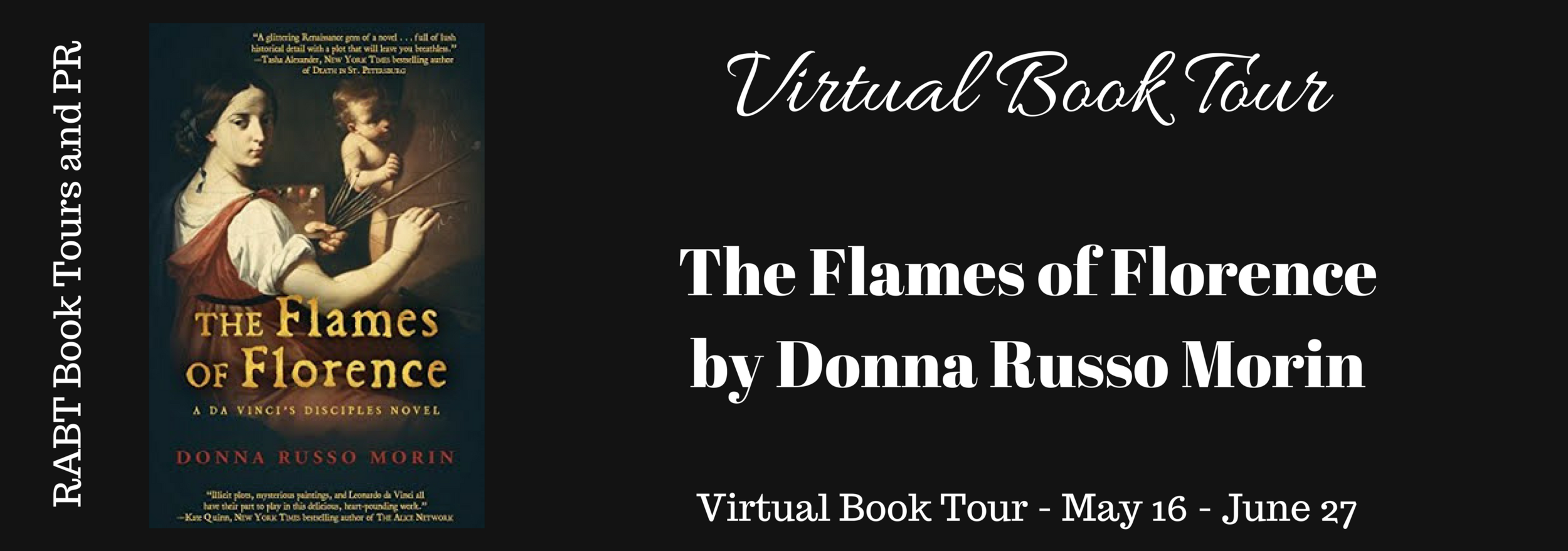
Spotlight: Flames of Florence by by Donna Russo Morin

Lorenzo de Medici is dead, and his son Piero has brought war and famine upon the city of Florence. Yet, the glory that is Renaissance artistry grows more magnificent, as does the work of the women known as Da Vinci's Disciples. Now they face their most dangerous challenge, one shrouded in the cloak of a monk.

From the ashes of war, Friar Girolamo Savonarola rises. Some call him a savior and a prophet, a man willing to overthrow tyrannical rulers and corrupt clergy, the Borgia Pope among them. Fra Girolamo is determined to remold Florence from an avaricious, secular culture to a paragon of Christian virtues.

Many call Savonarola a delusional heretic, incapable of anything but self-serving fanaticism. When he sets out to destroy all secular art forms, Da Vinci's Disciples call him an enemy … but not all of them.

Excerpt

Chapter One

Isabetta and Gianetta walked to the mercato as they did most days. Both understood the depth of kindness Andreano and Mattea had shown them, taking them in as they had done. For Gianetta, her cousin’s kindness went far deeper, for he accepted his role as her guardian without hesitation. They returned such kindness, though in a small manner, by making for the markets early each morning, to buy the freshest fruit and vegetables the farmers delivered to the city. As a widow, Isabetta walked about as she pleased, no chaperone necessary, nor a veil upon her head. Gianetta, a young unmarried woman, could never be seen out of doors without her veil, not a terrible hardship with its embroidered lace sprinkledminutely by small jewels.

“I hope there is some fresh lamb,” Gianetta chirped. “We havenot been able to find any in quite some time.”

“That would be nice,” Isabetta agreed.

Both women struggled to speak of inconsequential things. Life had been far too full of serious conversations; at times, the mind needed the triviality of life for it to feel real.

“And perhaps—ahia!” Gianetta’s scream pierced the still morning air.

Isabetta spun, seeing the three boys—all robed in white—rushing away from them, one holding Gianetta’s veil in her hand—strands and roots of her hair still within the teeth of itsc omb—having yanked it from her head. With swiftness of foot, Isabetta caught up to them, ran before them, and stopped.

“May we help you, signora?” the oldest of the three, perhaps as old as twelve or thirteen, asked of her.

Her lip curled as she fell on them hard.

“How dare you!” she spat at them.

The boys looked the very portrait of innocent incomprehension.

“We do nothing more than our job.”

“Your job?” Isabetta’s head rocked back and forth as she scoffed at them. “It is your job to accost young women?”

“No, signora,” another replied, a golden haired child no more than ten. “We are to remove all…all…” his eyes rolled up in hishead as he searched for the words, “…all vain glories from the streets of Florence.”

“Vain glories? What nonsense is this?”

“As I said, signora,” the first spoke again, taking a step toward her. If he hoped it would make her take a step back, he was disappointed.

“We do our job. Nothing more and nothing less.”

“And this is what your master tells you to do?”

The boy puffed up his chest. “Sì, signora.”

Isabetta longed to slap the smirk from his face. Instead, she leaned over and leaned down, her head only inches from the oldest.

“Tell your master, Isabetta Fioravanti believes he is deranged and dangerous.”

The boy twitched beneath his pristine robe, his agitation and anger longing for release. His hands fisted by his side as his eyes narrowed to slits.

“Go on, boy,” Isabetta goaded, “if you dare. Look in my eye and ask yourself if I could not slap you raw.” She held up a hand. “No, not could I, but would I?”

Their gazes locked together in battle, neither giving way.

“Come,” the smallest of the boys pulled upon his cohort.

“ Come, Alberto.”

Alberto, as he was, began to step away, stepping backward from them.

“Grazie, signora,” he bowed to Isabetta, “for the gift of your name.”

He need not say more, nor did she.

Only when they were out of sight did Isabetta return to

Gianetta’s side, examining her head, finding pinpricks of blood on her scalp.

“Do you feel well enough for the mercato?” Isabetta asked of her.

Gianetta nodded her stinging head, covered it as best she could with her small lace handkerchief retrieved from her waist purse, and they began to walk once more.

“You act rashly,” Gianetta chastised her.

“That man is a rash,” Isabetta responded, “and I believe we have just caught it.”

Gianetta grabbed her arm. “You and I?”

Isabetta shook her head. “No. Florence.”

Buy on Amazon | Barnes and Noble

About the Author

Donna Russo Morin’s passion for the written word began when she was a child, took on a feminist edge as she grew through the sixties, and blossomed into a distinctive style of action-filled historical fiction at a defining moment in her life. As a second-generation American of full Italian descent, Donna combined her historical research with her genealogical studies, finding that her birth name (Russo) and her family roots are traceable to ninth century Florence…the very city in which the Da Vinci’s Disciples trilogy is set.

Donna Russo (Morin) is the internationally published author of six multi-award-winning historical novels including PORTRAIT OF A CONSPIRACY: Da Vinci’s Disciples Book One (a finalist in Foreword Reviews BEST BOOK OF THE YEAR), and THE COMPETITION: Da Vinci’s Disciples Book Two (EDITOR’S CHOICE, Historical Novel Society Review). The final book in her Da Vinci’s Disciples trilogy, THE FLAMES OF FLORENCE, releases May 8, 2018. Also this summer, my novel, inspired by our own home state, GILDED SUMMERS: A Novel of Newport’s Gilded Age will also release this summer. Her other titles include The King’s Agent, recipient of a starred review in Publishers Weekly, The Courtier’s Secret, The Secret of the Glass, and To Serve a King.

A 25-year professional editor/story consultant, her work spans more than 40 manuscripts.  She holds a BA in Communications and an A.A. in English Literature.  Donna teaches writing courses at her state’s most prestigious adult learning center, online for Writer’s Digest University, and has presented at national and academic conferences for over ten years.  In addition to her writing, Donna has worked as a model and an actor with appearances in Showtime’s Brotherhood and Martin Scorsese’s The Departed. Currently under contract to a consortium of international producers, Donna has added screenwriting to her professional acumen.

Her sons—Devon, an opera singer; and Dylan, a chef—are still, and always will be, her greatest works. 

Connect: Website | Facebook | Twitter:@DonnaRussoMorin  | Pinterest | Goodreads | Instagram: @donnarm.telleroftales

Spotlight: Motherhood by Sheila Heti

From the author of How Should a Person Be? (“one of the most talked-about books of the year”—Time Magazine) and the New York Times Bestseller Women in Clothes comes a daring novel about whether to have children.

In Motherhood, Sheila Heti asks what is gained and what is lost when a woman becomes a mother, treating the most consequential decision of early adulthood with the candor, originality, and humor that have won Heti international acclaim and made How Should A Person Be? required reading for a generation.

In her late thirties, when her friends are asking when they will become mothers, the narrator of Heti’s intimate and urgent novel considers whether she will do so at all. In a narrative spanning several years, casting among the influence of her peers, partner, and her duties to her forbearers, she struggles to make a wise and moral choice. After seeking guidance from philosophy, her body, mysticism, and chance, she discovers her answer much closer to home.

Motherhood is a courageous, keenly felt, and starkly original novel that will surely spark lively conversations about womanhood, parenthood, and about how—and for whom—to live.

Buy on Amazon | Barnes and Noble

About the Author

Sheila Heti is the author of several books of fiction and nonfiction, including How Should a Person Be? which was a New York Times Notable Book and was named a best book of the year by The New Yorker. She is co-editor of the New York Times bestseller Women in Clothes, and is the former Interviews Editor for The Believer magazine. Her work has been published in The New York Times, The London Review of Books, The Paris Review, McSweeney's, Harper's, and n+1.

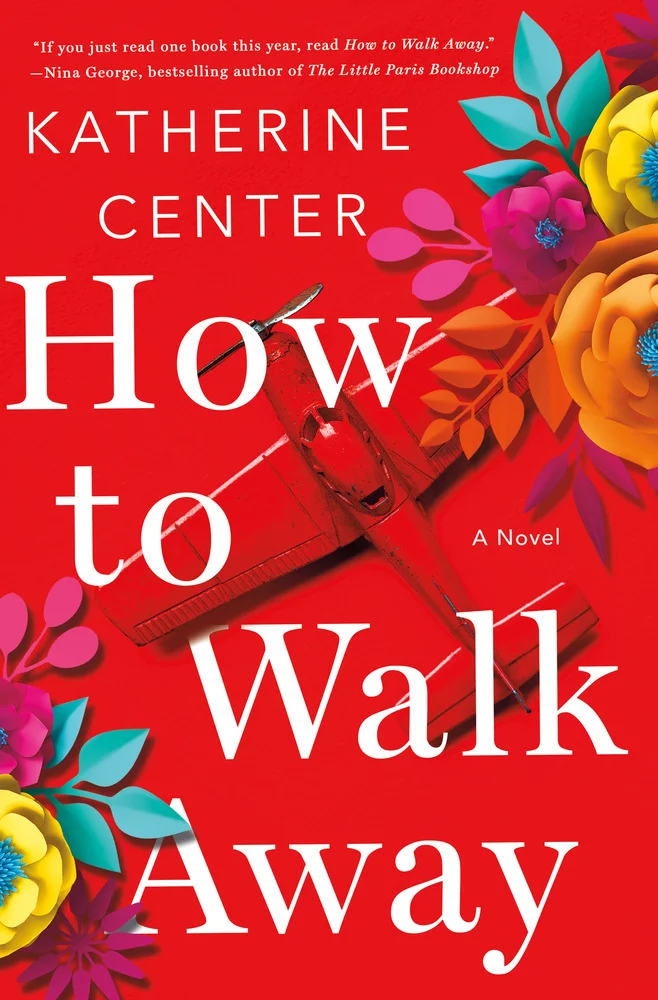
Spotlight: How to Walk Away by Katherine Center

From the author of Happiness for Beginners comes an unforgettable love story about finding joy even in the darkest of circumstances.

Margaret Jacobsen is just about to step into the bright future she’s worked for so hard and so long: a new dream job, a fiancé she adores, and the promise of a picture-perfect life just around the corner. Then, suddenly, on what should have been one of the happiest days of her life, everything she worked for is taken away in a brief, tumultuous moment.

In the hospital and forced to face the possibility that nothing will ever be the same again, Maggie must confront the unthinkable. First there is her fiancé, Chip, who wallows in self-pity while simultaneously expecting to be forgiven. Then, there's her sister Kit, who shows up after pulling a three-year vanishing act. Finally, there's Ian, her physical therapist, the one the nurses said was too tough for her. Ian, who won't let her give in to her pity, and who sees her like no one has seen her before. Sometimes the last thing you want is the one thing you need. Sometimes we all need someone to catch us when we fall. And sometimes love can find us in the least likely place we would ever expect.

How to Walk Away is Katherine Center at her very best—a masterpiece of a novel that is both hopeful and hilarious; truthful and wise; tender and brave.

Buy on Amazon | Barnes and Noble

About the Author

Katherine Center is the author of several novels about love and family: The Bright Side of Disaster, Everyone Is Beautiful, Get Lucky, and The Lost Husband. Her books and essays have appeared in Redbook, People, USA Today, Vanity Fair, and Real Simple—as well as the anthologies Because I Love Her, CRUSH, and My Parents Were Awesome. Katherine is a graduate of Vassar College and the University of Houston's Creative Writing Program. She lives in Houston with her husband and two sweet children.