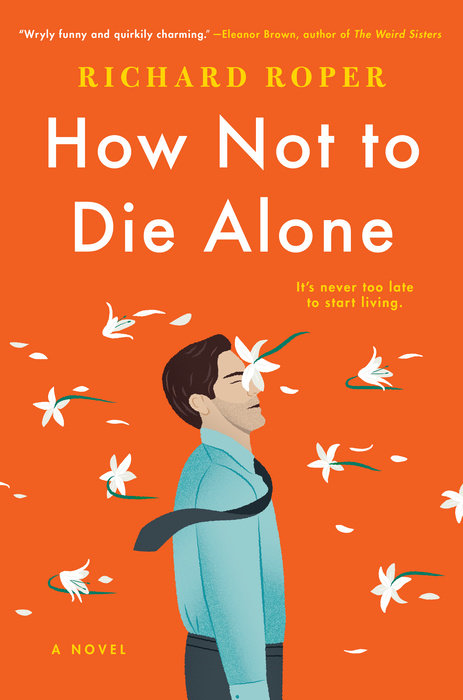
Smart, darkly funny, and life-affirming, How Not to Die Alone is the bighearted debut novel we all need, for fans of Eleanor Oliphant is Completely Fine, it’s a story about love, loneliness, and the importance of taking a chance when we feel we have the most to lose.
Sometimes you need to risk everything . . . to find your something.
Andrew’s been feeling stuck.
For years he’s worked a thankless public health job, searching for the next of kin of those who die alone. Luckily, he goes home to a loving family every night. At least, that’s what his coworkers believe.
Then he meets Peggy.
A misunderstanding has left Andrew trapped in his own white lie and his lonely apartment. When new employee Peggy breezes into the office like a breath of fresh air, she makes Andrew feel truly alive for the first time in decades.
Could there be more to life than this?
But telling Peggy the truth could mean losing everything. For twenty years, Andrew has worked to keep his heart safe, forgetting one important thing: how to live. Maybe it’s time for him to start.
Excerpt
- Chapter 1 -
Andrew looked at the coffin and tried to remember who was inside it. It was a man-he was sure of that. But, horrifyingly, the name escaped him. He thought he'd narrowed it down to either John or James, but Jake had just made a late bid for consideration. It was inevitable, he supposed, that this had happened. He'd been to so many of these funerals it was bound to at some point, but that didn't stop him from feeling an angry stab of self-loathing.
If he could just remember the name before the vicar said it, that would be something. There was no order of service, but maybe he could check his work phone. Would that be cheating? Probably. Besides, it would have been a tricky enough maneuver to get away with in a church full of mourners, but it was nearly impossible when the only other person there apart from him was the vicar. Ordinarily, the funeral director would have been there as well, but he had e-mailed earlier to say he was too ill to make it.
Unnervingly, the vicar, who was only a few feet away from Andrew, had barely broken eye contact since he'd started the service. Andrew hadn't dealt with him before. He was boyish and spoke with a nervous tremor that was amplified unforgivingly by the echoey church. Andrew couldn't tell if this was down to nerves. He tried out a reassuring smile, but it didn't seem to help. Would a thumbs-up be inappropriate? He decided against it.
He looked over at the coffin again. Maybe he was a Jake, though the man had been seventy-eight when he died, and you didn't really get many septuagenarian Jakes. At least not yet. It was going to be strange in fifty years' time when all the nursing homes would be full of Jakes and Waynes, Tinkerbells and Appletisers, with faded tribal tattoos that roughly translated as "Roadworks for next fifty yards" faded on their lower backs.
Jesus, concentrate, he admonished himself. The whole point of his being there was to bear respectful witness to the poor soul departing on their final journey, to provide some company in lieu of any family or friends. Dignity-that was his watchword.
Unfortunately, dignity was something that had been in short supply for the John or James or Jake. According to the coroner's report, he had died on the toilet while reading a book about buzzards. To add insult to injury, Andrew later discovered firsthand that it wasn't even a very good book about buzzards. Admittedly he was no expert, but he wasn't sure the author-who even from the few passages Andrew had read came across as remarkably grumpy-should have dedicated a whole page to badmouthing kestrels. The deceased had folded the corner of this particular page down as a crude placeholder, so perhaps he'd been in agreement. As Andrew had peeled off his latex gloves he'd made a mental note to insult a kestrel-or indeed any member of the falcon family-the next time he saw one, as a tribute of sorts.
Other than a few more bird books, the house was devoid of anything that gave clues to the man's personality. There were no records or films to be found, nor pictures on the walls or photographs on the windowsills. The only idiosyncrasy was the bafflingly large number of Fruit 'n Fibre boxes in the kitchen cupboards. So aside from the fact that he was a keen ornithologist with a top-notch digestive system, it was impossible to guess what sort of person John or James or Jake had been.
Andrew had been as diligent as ever with the property inspection. He'd searched the house (a curious mock-Tudor bungalow that sat defiantly as an incongruous interlude on the terraced street) until he was sure he'd not missed something that suggested the man had any family he was still in touch with. He'd knocked on the neighbors' doors but they'd been either indifferent to or unaware of the man's existence, or the fact it was over.
The vicar segued unsurely into a bit of Jesus-y material, and Andrew knew from experience that the service was coming to a close. He had to remember this person's name, as a point of principle. He really tried his best, even when there was no one else there, to be a model mourner-to be as respectful as if there were hundreds of devastated family members in attendance. He'd even started removing his watch before entering the church because it felt like the deceased's final journey should be exempt from the indifference of a ticking second hand.
The vicar was definitely on the home stretch now. Andrew was just going to have to make a decision.
John, he decided. He was definitely John.
"And while we believe that John-"
Yes!
"-struggled to some extent in his final years, and sadly departed the world without family or friends by his side, we can take comfort that, with God waiting with open arms, full of love and kindness, this journey shall be the last he makes alone."
Andrew tended not to stick around after the funerals. On the few occasions he had, heÕd ended up having to make awkward conversation with funeral directors or last-minute rubberneckers. It was remarkable how many of the latter you would get, hanging around outside, farting out inane platitudes. Andrew was well practiced at slipping away so as to avoid such encounters, but today heÕd briefly been distracted by a sign on the church noticeboard advertising the troublingly jaunty ÒMidsummer Madness Fete!Ó when he felt someone tapping him on the shoulder with the insistence of an impatient woodpecker. It was the vicar. He looked even younger close up, with his baby-blue eyes and blond curtains parted neatly in the middle, as if his mum might have done it for him.
"Hey, it's Andrew, isn't it? You're from the council, right?"
"That's right," Andrew said.
"No luck finding any family then?"
Andrew shook his head.
"Shame, that. Real shame."
The vicar seemed agitated, as if he were holding on to a secret that he desperately wanted to impart.
"Can I ask you something?" he said.
"Yes," Andrew said, quickly deciding on an excuse for why he couldn't attend "Midsummer Madness!"
"How did you find that?" the vicar said.
"Do you mean . . . the funeral?" Andrew said, pulling at a bit of loose thread on his coat.
"Yeah. Well, more specifically my part in it all. Because, full disclosure, it was my first. I was quite relieved to be starting with this one, to be honest, because there wasn't anybody here so it sort of felt like a bit of a practice run. Hopefully now I'm fully prepared for when there's a proper one with a church full of friends and family, not just a guy from the council. No offense," he added, putting a hand on Andrew's arm. Andrew did his best not to recoil. He hated it when people did that. He wished he had some sort of squidlike defense that meant he could shoot ink into their eyes.
"So yeah," the vicar said. "How'd you think I did?"
What do you want me to say? Andrew thought. Well, you didn't knock the coffin over or accidentally call the deceased "Mr. Hitler," so ten out of ten I'd say.
"You did very well," he said.
"Ah, great, thanks, mate," the vicar said, looking at him with renewed intensity. "I really appreciate that."
He held out his hand. Andrew shook it and went to let go, but the vicar carried on.
"Anyway, I better be off," Andrew said.
"Yes, yes of course," said the vicar, finally letting go.
Andrew started off down the path, breathing a sigh of relief at escaping without further interrogation.
"See you soon I hope," the vicar called after him.
- Chapter 2 -
The funerals had been given various prefixes over the years-"public health," "contract," "welfare," "Section 46"-but none of the attempted rebrands would ever replace the original. When Andrew had come across the expression "pauper's funeral" he'd found it quite evocative; romantic, even, in a Dickensian sort of way. It made him think of someone a hundred and fifty years ago in a remote village-all mud and clucking chickens-succumbing to a spectacular case of syphilis, dying at the fine old age of twenty-seven and being bundled merrily into a pit to regenerate the land. In practice, what he experienced was depressingly clinical. The funerals were now a legal obligation for councils across the UK, designed for those who'd slipped through the cracks-their death perhaps only noticed because of the smell of their body decomposing, or an unpaid bill. (It had been on several occasions now where Andrew had found that the deceased had enough money in a bank account for direct debits to cover utility bills for months after their death, meaning the house was kept warm enough to speed up their body's decomposition. After the fifth harrowing instance of this, he'd considered mentioning it in the "Any other comments" section on his annual job satisfaction survey. In the end he went with asking if they could have another kettle in the shared kitchen.)
Another phrase he had become well acquainted with was "The Nine O'Clock Trot." His boss, Cameron, had explained its origin to him while violently piercing the film on a microwavable biryani. "If you die alone"-stab, stab, stab-"you're most likely buried alone too"-stab, stab, stab-"so the church can get the funeral out of the way at nine o'clock, safe in the knowledge that every train could be canceled"-stab-"every motorway gridlocked"-stab-"and it wouldn't make a difference." A final stab. "Because nobody's on their way."
In the previous year Andrew had arranged twenty-five of these funerals (his highest annual total yet). He'd attended all of them, too, though he wasn't technically required to do so. It was, he told himself, a small but meaningful gesture for someone to be there who wasn't legally obligated. But increasingly he found himself watching the simple, unvarnished coffins being lowered into the ground in a specially designated yet unmarked plot, knowing they would be uncovered three or four more times as other coffins were fitted in like a macabre game of Tetris, and think that his presence counted for nothing.
As Andrew sat on the bus to the office, he inspected his tie and shoes, both of which had seen better days. There was a persistent stain on his tie, origin unknown, that wouldnÕt budge. His shoes were well polished but starting to look worn. Too many nicks from churchyard gravel, too many times the leather had strained where heÕd curled his toes at a vicarÕs verbal stumble. He really should replace both, come payday.
Now that the funeral was over, he took a moment to mentally file away John (surname Sturrock, he discovered, having turned on his phone). As ever, he tried to resist the temptation to obsess over how John had ended up in such a desperate position. Was there really no niece or godson he was on Christmas-card terms with? Or an old school friend who called, even just on his birthday? But it was a slippery slope. He had to stay as objective as possible, for his own sake, if only to be mentally strong enough to deal with the next poor person who ended up like this. The bus stopped at a red light. By the time it went green Andrew had made himself say a final good-bye.
He arrived at the office and returned Cameron's enthusiastic wave with a more muted acknowledgment of his own. As he slumped into his well-weathered seat, which had molded itself to his form over the years, he let out a now sadly familiar grunt. He'd thought having only just turned forty-two he'd have a few more years before he began accompanying minor physical tasks by making odd noises, but it seemed to be the universe's gentle way of telling him that he was now officially heading toward middle age. He only imagined before too long he'd wake up and immediately begin his day bemoaning how easy school exams were these days and bulk-buying cream chinos.
He waited for his computer to boot up and watched out of the corner of his eye as his colleague Keith demolished a hunk of chocolate cake and methodically sucked smears of icing from his stubby little fingers.
"Good one, was it?" Keith said, not taking his eyes off his screen, which Andrew knew was most likely showing a gallery of actresses who'd had the temerity to age, or something small and furry on a skateboard.
"It was okay," Andrew said.
"Any rubberneckers?" came a voice from behind him.
Andrew flinched. He hadn't seen Meredith take her seat.
"No," he said, not bothering to turn around. "Just me and the vicar. It was his very first funeral, apparently."
"Bloody hell, what a way to pop your cherry," Meredith said.
"Better that than a room full of weepers, to be fair," Keith said, with one final suck of his little finger. "You'd be shitting piss, wouldn't you?"
The office phone rang and the three of them sat there not answering it. Andrew was about to bite but Keith's frustration got the better of him first.
"Hello, Death Administration. Yep. Sure. Yep. Right."
Andrew reached for his earphones and pulled up his Ella Fitzgerald playlist (he had only very recently discovered Spotify, much to Keith's delight, who'd spent a month afterward calling Andrew "Granddad"). He felt like starting with a classic-something reassuring. He decided on "Summertime." But he was only three bars in before he looked up to see Keith standing in front of him, belly flab poking through a gap between shirt buttons.
"Helloooo. Anybody there?"
Andrew removed his earphones.
"That was the coroner. We've got a fresh one. Well, not a fresh body obviously-they reckon he'd been dead a good few weeks. No obvious next of kin and the neighbors never spoke to him. Body's been moved so they want a property inspection a-sap."
"Right."
Keith picked at a scab on his elbow. "Tomorrow all right for you?"
Andrew checked his diary.
"I can do first thing."
"Blimey, you're keen," Keith said, waddling back to his desk. And you're a slice of ham that's been left out in the sun, Andrew thought. He went to put his earphones back in, but at that moment Cameron emerged from his office and clapped his hands together to get their attention.
"Team meeting, chaps," he announced. "And yes, yes, don't you worry-the current Mrs. Cameron has provided cake, as per. Shall we hit the break-out space?"
The three of them responded with the enthusiasm a chicken might if it were asked to wear a prosciutto bikini and run into a fox's den. The "break-out space" consisted of a knee-high table flanked by two sofas that smelled unaccountably of sulfur. Cameron had floated the idea of adding beanbags, but this had been ignored, as were his suggestions of desk-swap Tuesdays, a negativity jar ("It's a swear jar but for negativity!") and a team park run. ("I'm busy," Keith had yawned. "But I haven't told you which day it's on," Cameron said, his smile faltering like a flame in a draft.) Undeterred by their complete lack of enthusiasm, Cameron's most recent suggestion had been a suggestion box. This, too, had been ignored.
Excerpted from How Not to Die Alone by Richard Roper. Copyright © 2019 by Richard Roper. All rights reserved. No part of this excerpt may be reproduced or reprinted without permission in writing from the publisher.
Buy on Amazon | Barnes and Noble | Audible
About the Author
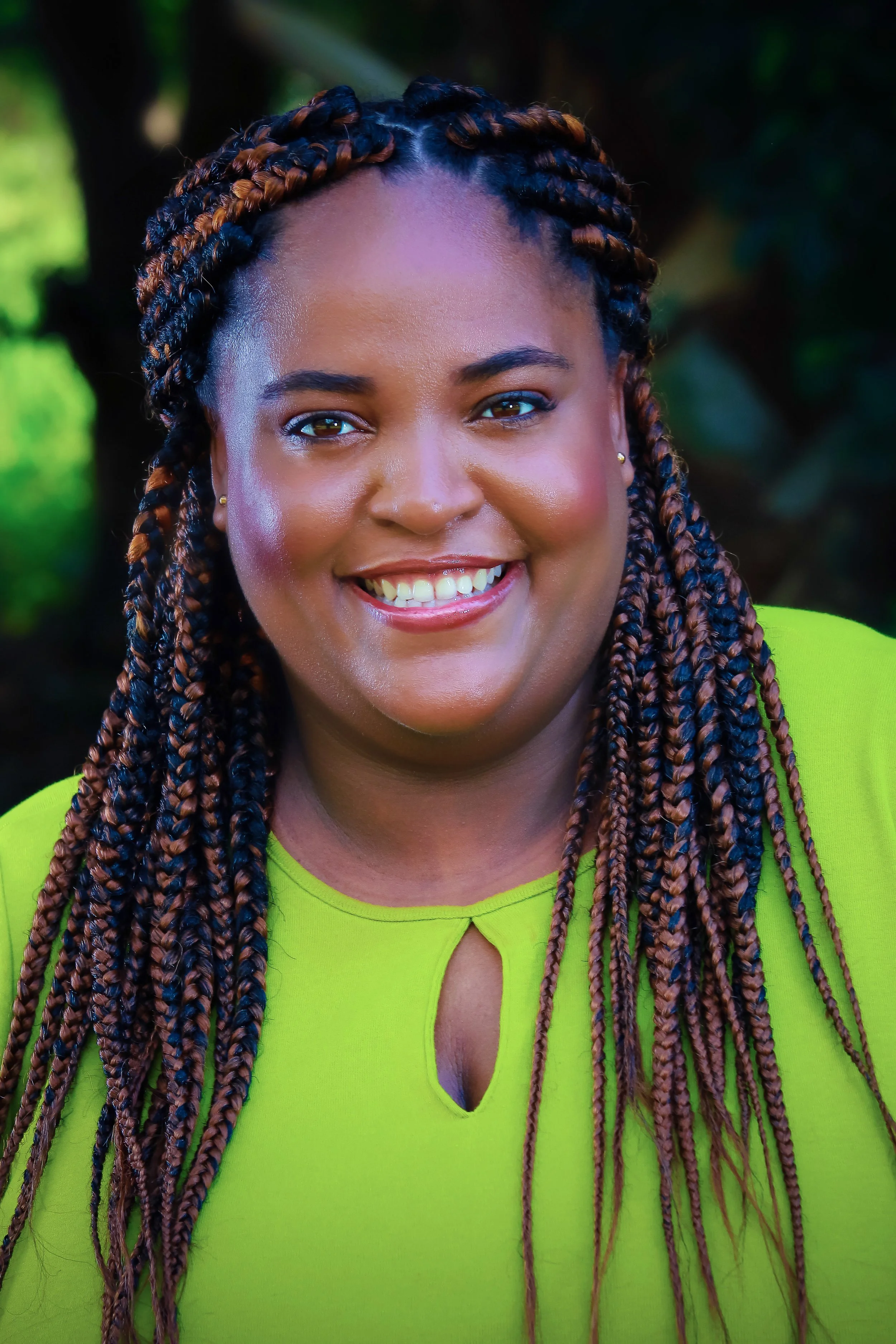
Richard Roper is a non-fiction editor at Headline, where he works with authors such as James Acaster, Joel Dommett, Andrew O’Neill, and Frank Turner. How Not to Die Alone is inspired by an article he read about people whose job it is to follow up after people die alone. It is his debut novel.