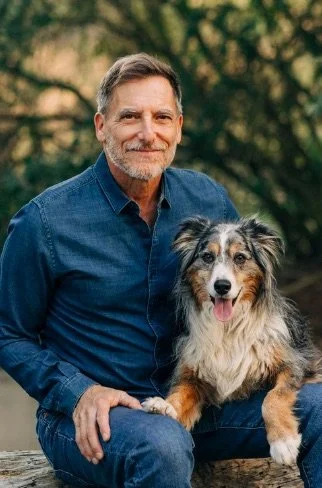
Q&A with Kenneth Zak, author of The Poet's Secret

What inspired you to write The Poet’s Secret?

At the time I wrote The Poet’s Secret, I was on a personal pilgrimage. I essentially took a three­year sabbatical, sort of an adult “time out,” and embarked on a new path. I dedicated myself to explore the meaning of life and love and particularly the arc of passion. I became consumed by the idea of living in the present, honoring the “now” as the only real moment in time, the only authentic eternity, which allowed me to both disconnect and connect like never before and let go of the constructs of past and future as fictions created by the mind. I gained a new appreciation for relatively brief moments and encounters as having potentially profound effects. I was living abroad, reading, writing, surfing and slowing down my existence. 

The tale that became The Poet’s Secret was conceived in a hovel perched atop a one­table taverna in the hillside village of Avdou, just a scooter ride from the blue waters of the Aegean Sea on the island of Crete. I was sequestered alone, halfway around the world from my home, and recovering from a life, and a relationship, that had left me hollow, or at least I thought at the time. But it turned out words kept flowing out of me, first in raw, chunky verse that faintly resembled poetry and then in images and scenes that bore an even fainter resemblance to a novel. For months I wrote, swam in healing waters and disappeared into this remote, antiquated Greek village. I had never done anything like that before, but at the time it was the only existence that made any sense.

So many miracles happened during those months. I experienced a cleansing, a healing and an awakening, and I began to perceive light and water and imagery and words and the souls around me like never before. I eventually returned to California, and then traveled to Bali, Mexico, Costa Rica, Thailand, Cambodia and South America, following the sea and surf with laptop in hand and continuing to write. The backstory to writing The Poet’s Secret is a story in itself.

How did you select the locations for the novel?

It was tempting to set the bulk of the novel in Greece, a country I adore. However, as the story evolved the compass for the island setting spun toward the West Indies, and the story’s life raft washed ashore on the fictional island of Mataki. I was fortunate to spend a good part of my sabbatical on tropical islands and coastal villages that certainly informed the setting. As for the early campus setting, I based it on a fictionalized version of my beloved alma mater, The Ohio State University.

What was your particular process in terms of plot, outlining and character?

I essentially began the novel with two scenes that were haunting me. First, I had a reclusive poet on a remote island cliff about to attempt suicide. Second, I had a bookish young woman captured within the confines of the great romances of literature. I really had no idea about their connection, if any, but those two images would not let go of me. As I began to write, the concept of the woman yearning for what nearly kills the poet began to take hold.

The process was fairly organic. I let the characters breathe and lead me into the story. I wasn’t even sure whose story it was until shortly after the first draft. Once the closing scene appeared to me I realized that it was really Elia’s story. I then just had to navigate getting there. While I did not develop any formal outline, I downloaded scenes as they appeared, stockpiled them and later wove them in when they seemed to make sense. It was a bit like swimming across a sea, not sure which direction land might be but hoping that if I kept going I would eventually find my way.

Stumbling, a bit blindly, through this creative process was both exasperating and exhilarating. As I was working on revisions, I attended several writers’ conferences that stressed the necessity of thorough plotting, which made me feel a tad vulnerable. I later read an interview about Michael Ondaatje’s process in writing The English Patient and realized I was in good company.

The novel is filled with excerpts of poetry, which came first, the poetry or the narrative arc?

Most of the poetry was written before any narrative took form. The poetry came in often painful and soul­searching flourishes, and then was revised over time. There is a line in The Poet’s Secret where Dean Baltutis refers to the poet’s inspiration being “survival.” That is precisely how it felt at times. I also wanted to combine both poetry and prose into one novel and attempt to slow down the reader a bit at the beginning of each chapter to contemplate and absorb the poetry, to be in that moment so to speak, before continuing on the narrative journey.

What in particular surprised you about the process of writing The Poet’s Secret?

I didn’t want to force plot twists or preconceived outcomes. I let the characters find the story. I let go of expectations and trusted the story to evolve. Tapping into this creative process was freeing, exhilarating and challenging, sort of like jumping off a cliff into the sea for the first time. I had never done anything quite like it, but this particular process for me felt authentic. I certainly was surprised how well the early drafts of the poetry and manuscript were received, which bolstered my confidence to pursue the project through publication.

Water imagery is abundant throughout the novel, what is the particular connection for you with water and particularly with respect to this novel?

I was thrown onto a swim team at age 8 even before I passed beginners swim lessons (I was terrible at the back float). But water soon became my life and in many ways my salvation. Throughout my youth I swam, played water polo, lifeguarded and hung around Lake Erie in northeastern Ohio. Somehow, I didn’t even see an ocean until I was 18. But I recall climbing out of the backseat of a Datsun 210 hatchback (or what they claimed to be a backseat) after driving for twenty­two hours to Ft. Lauderdale for spring break and telling my college buddies to just pick me up in a few hours. I was mesmerized. I sprinted into the Atlantic Ocean and swam and bodysurfed until dark. Today, I surf or swim almost every day. I feel like I am about eighty percent water, the remaining twenty percent made up mostly of curiosity and mischief.

Much of the water in the universe is said to be a byproduct of star formation. I’m no scientist, but I like the way that sounds. Because when I look up at the night stars it feels a lot like gazing west an hour before the sun dips into the sea, at least at my secret little spot by the water. Flickering diamonds scatter everywhere along the surface, and if I squint just right, I forget the sea is even there. Instead, it looks like a galaxy of stars shimmering right into me, washing across my heart, reflecting off my smile and filling me with the belief that I can just float away into the universe. So I often do.

Spiritually, water often represents purification and healing. To me, water represents so many things, perhaps most importantly love and life and the sacred feminine. I once nearly died underwater while surfing in Uluwatu, a place few have ever heard of and even fewer have visited. But I know on so many occasions water has saved me, water has healed me, and water has reset my compass when I have been spinning in some uncontrollable vortex. So for me, my life and my love seem to be tied to returning to the great aquatic source, again and again, maybe just to fill the chasm that still exists in me, and maybe to some degree still exists in all of us.

I have been fortunate to swim with sea turtles and dolphins in the wild on many occasions. When I stare into the eyes of a sea turtle or a dolphin I cannot help but believe that they understand this great aquatic connection, a connection beyond humanity, beyond species, beyond even the stars. So when I am writing about passion, heartbreak, healing, life and love, it is only natural for me to write in a particularly aquatic language and style.

Where is your favorite place to write?

My favorite place to write is on that squeaky metal spring cot in that hovel above Mihalis’ taverna in Avdou, Crete. After that, any place as long as I have my noise cancellation headphones. I’ve written and revised all over from kitchen tables to airplanes.

How long have you been writing?

I’ve been writing over thirty years now in one form or another. I wrote a bit of poetry in high school and then did a bunch of required writing in my legal profession. It was sometime after law school that I penned my first novel (unpublished), and then about ten years ago when the idea for The Poet’s Secret first took flight. I also have some published short fiction and poetry.

Who are some of your favorite authors?

Pablo Neruda, Gabriel Garcia Marquez, Haruki Murakami, Carlos Ruiz Zafon, Paulo Coehlo, Milan Kundera, John Steinbeck, Michael Ondaatje, Jorge Luis Borges, Rumi, A.S. Byatt, Carl Safina, Tom Spanbauer and so many more.

How did those authors influence your work?

My favorite authors inspire, entertain, challenge and provoke me. I don’t try to write or emulate any particular style. But when I read the opening of Cannery Row time stops.

How did you become affiliated with the Romance Writers of America?

Someone recommended I send an early draft of The Poet’s Secret to the RWA. While The Poet’s Secret is by no means a traditional genre romance, it was selected an RWA Golden Heart Finalist in romantic suspense. I was the only male nominated that year (attending the national conference and award ceremony is another story altogether). When my face went up on the Jumbotron in front of thousands of mostly female authors at the award ceremony it was a bit unnerving. Writing anything can be fraught with self­doubt. The RWA could not have been more welcoming and supportive and certainly gave me a bolt of confidence to continue writing and revising, as did the nominee class from that year, the appropriately named Unsinkables.

How did your professional career as an attorney influence your writing and how do you balance the two careers?

I think practicing law actually spurred my interest in creative writing. While I was in private practice, I felt constrained by the form restrictions requisite within the legal profession. I also felt a lot of legal writing often served more to obfuscate than illuminate and writing poetry and fiction allowed me the freedom to explore and express myself in a different medium. The Poet’s Secret is not “another lawyer’s courtroom thriller” in any respect, nor am I particularly drawn to that genre since I’ve lived it. Nonetheless, my legal career (now as General Counsel for a large private brokerage company) is both fascinating and challenging. I draw some inspiration from the poet Wallace Stevens who for years continued his vibrant writing career while an executive for an insurance company. As far as balance goes, my evenings and weekends are spent around the keyboard as much as possible.

Tell us about your involvement with 1% for the Planet and The Surfrider Foundation.

Perhaps only a poet would give away money before it is even earned, but that is what I felt compelled to do given my love of the ocean and conservation causes. In addition to ocean swimming, free diving and water polo, I have been an avid surfer for nearly two decades and have surfed around the world. Subtle conservation themes are laced through The Poet’s Secret, but my love of the ocean and our planet is anything but subtle. I hope to leave this world and particularly our oceans better than I found them. Penju Publishing’s membership with 1% For the Planet and my pledged donations to The Surfrider Foundation are an effort to spread awareness, give back and pay it forward.

For more about the author please visit www.kennethzak.com
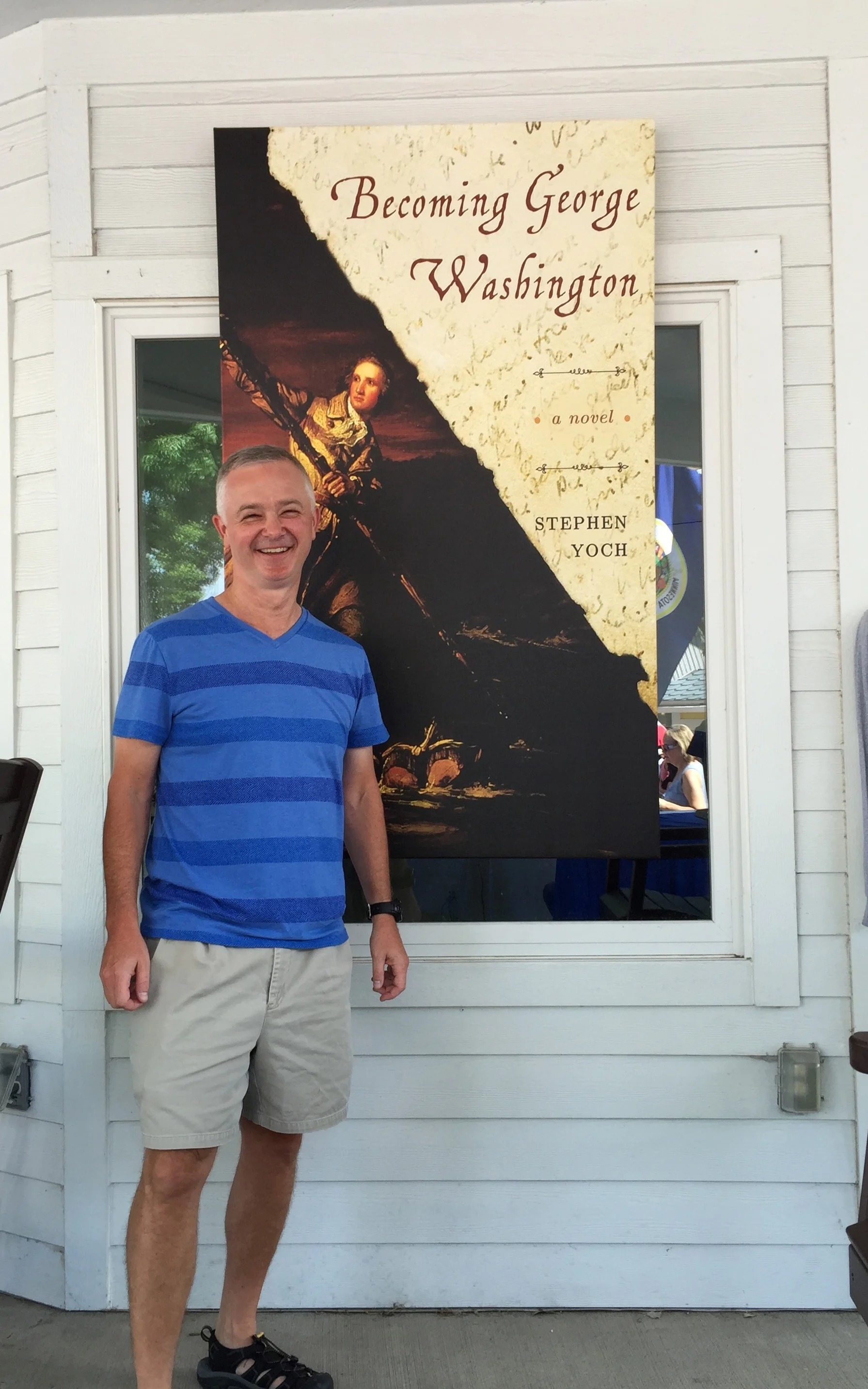
Why Did I Choose to Write a Book about George Washington? by Stephen Yoch

SHORT ANSWER: George Washington has always been my favorite founding father and the story of his young life is as interesting as it is unknown.

LONG ANSWER: I have no special connection with either George Washington or Virginia, but I’ve always been fascinated with the Revolutionary period. A discussion of our founding fathers must, in my view, begin with George Washington because: 

First, as much as anyone in the Revolution, Washington risked everything by dedicating himself to the cause. One of the wealthiest men in Virginia and the general in charge of the Continental Army, he would have dangled on a British rope had the Revolution failed. 

Second, while far from a tactical genius, he understood the strategic situation. He recognized that the survival of his army was the best hope for prevailing in the Revolution. His long-term strategic approach of keeping his army together and avoiding defeat was essential.

Third, unlike many of his peers, Washington chose to repeatedly defer to the authority of Congress and managed to avoid overt political battles with the nascent legislative body. 

Fourth, Washington surrendered his sword as virtually no one else in history had done. Victorious generals always made themselves dictators and seldom deferred to the public will. Instead, Washington electrified the world when he returned to Mount Vernon at the end of the war. 

Fifth, Washington established the entire framework of the U.S. government. The Constitution is a loose and ill-defined document, which does not provide detail for the administration and building of a government. Nevertheless, over an eight-year period, Washington organized all the major departments of government, moved the capital, and established a functional democracy. In fact, while rivals Jefferson and Hamilton could agree on little, both agreed that George Washington was a great leader. 

Finally, even though he was unanimously elected president of the United States twice, Washington cemented his place in history by endorsing a peaceful transition of government, and willingly returned, again, to his beloved Mount Vernon.

So Washington is a remarkable man, but why this particular story of Washington?

The answer is simple: virtually no one knows about young Washington, yet almost all of his accomplishments in later life are traceable directly to his youth and his experiences in the French and Indian War. It is these formative years that transformed a fatherless and insecure boy into the man who would be the logical choice to lead the Revolutionary Army and the new democratic government. The opportunity to tell this story and humanize Washington is the starting point for the books I’ll be writing on the Revolutionary Period.

About the Author -- Steve doesn’t golf or fish, and is a below average hunter, but his love of history and writing compelled him to pick up his pen and tell the little known stories behind the men that made American history.  After years of extensive research, Steve wrote his first book on young George Washington.

Steve lives in a suburb north of St. Paul, Minnesota with his supportive wife and two fantastic teenage sons. He graduated with honors from Boston College and the University of Minnesota Law School. He has enjoyed the last 20 years practicing law in the Twin Cities helping individuals and businesses solve complex problems.

About the Book

Becoming George Washington tells the largely unknown story of how an insecure fatherless boy rises to become our indispensable founding father. A far cry from the powdered haired General or President discussed in most Washington biographies, this book reveals young Washington as an “action hero” at the epicenter of the French & Indian War.

Becoming George Washington follows Washington through repeated harrowing battles as well as witnessing his success– and failure– leading an army in the field. The book also explores George’s complex relationships with his difficult mother and caring brothers.

Notably, the book contains an affair between George and Sally Fairfax. While highly controversial, the liaison is supported by documentation, including letters written by George.

Becoming George Washington includes detailed author’s notes providing sources and commentary on events so the reader may know and understand the real story.

Find out more – including excerpts at: www.becominggeorgewashington.com

Buy on Amazon
Buy on barnes and noble

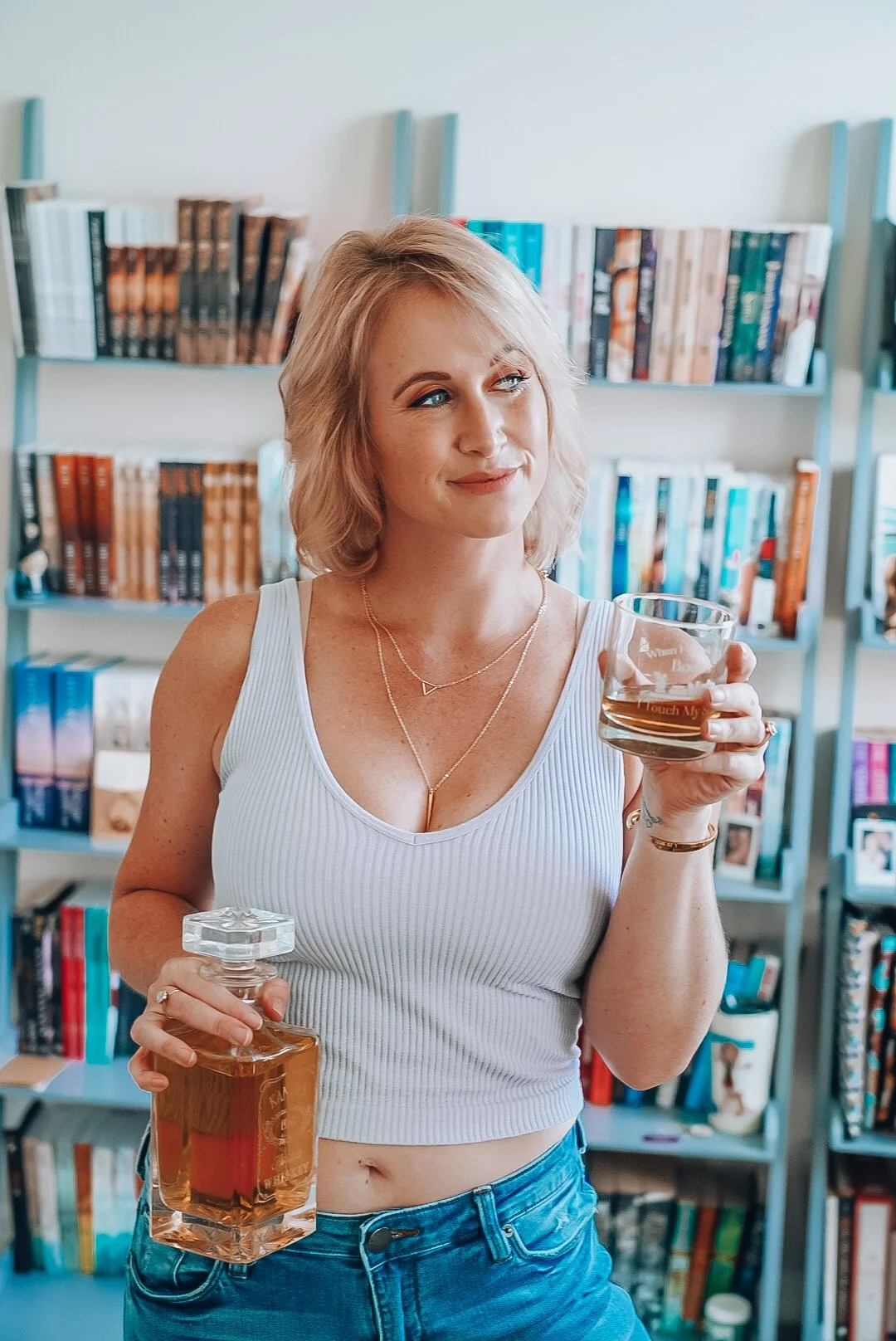
How I Went From A Single Gal To A 'Wif' (75 Percent Of A Wife) To A Wife by Jamillah Lamb
I recently celebrated my 13th wedding anniversary. I cannot believe that the time has flown by so quickly and been so joyful. As I walked down the aisle 10 years ago, I never would have predicted that years later, my husband and I would be business partners – producing Off-Broadway theater no less! – spending 24 hours, seven days a week together and loving it.

As I reflect back on my marriage with my wonderful husband David, I chuckle at the fact that during those first few years, I refused to be called a "wife". I mean "girlfriend" and "fiancée" were fine. But "wife"... whoa, that was a loaded term and I was not accepting it.

I moved out of my parents' home at 18 and got married at age 30. So in between I had plenty of "me" time, plenty of time to explore and be an independent single gal. I lived in three different cities, including a jaunt across the country to the west coast.

I loved having my independence. After growing up with slightly strict, okay very strict (I didn't even have my first date until I was the ripe old age of 21) parents, I was ready to make my own rules. I was ready to be on my own and in control. But what did this mean? I had no clue.

I knew that I could decide what I wanted to wear. I could decide what to cook (or not cook for dinner -- hence the gaining of 10 post-college pounds, since the only action my stove saw was the underside of the pizza box as it rested on top). I could decide what movie to see, what car to buy, what apartment to rent. But it also meant I had to decide what car to buy, what apartment to rent and what movie to see (sometimes by myself). The transition from being told what to do to deciding what to do for myself was hard but rewarding. I needed to learn what I liked, and that my opinion mattered.

In my first few relationships I was struggling as much with wanting to be in control as with wanting to have my fantasy boyfriend. In the process, I went a little overboard sometimes. I either gave too much of myself (I bought one of my early boyfriends about five Valentine's gifts while I later found out he only considered us dating and barely wished me Happy Valentine's Day) or too little (on the other hand, I nearly took off the head of a guy on our first date because he bought my subway token and put it in the slot for me. I thought, "does this guy think that I can't buy my own token?!").

As I matured, I came to realize that our struggle for control is not with another person, but within ourselves. I learned to push myself so that I could garner more confidence. I remember the first time I went to a movie by myself; I probably had on dark shades, a sunhat and a scarf, just in case anyone saw me. Now that I am married with a 4-year-old, I would text the world I am going to the movies by myself, "Wooo hoooo!" if I could.

Luckily, David escaped some of my earlier attempts at finding myself and finding balance, but not completely. The first few years of our marriage I REFUSED to be a called a wife. I mean I loved my husband and I loved being married, but I did not want to be called a wife. Why? I had rigid ideas in my head about what the term "wife" meant. A wife for me meant a woman who cooked and cleaned for her man -- and as my matron of honor said at my wedding, "I don't know why anyone bought any dishes, because Jamillah is not cooking". A wife was a secondary complement to the man. A wife had no other identity. I mean what happened to my name... now I am just wife. I don't think so. Now let me say that none of this had anything to do with my husband. He never once imposed a role on me... he knew before we got married that I couldn't cook. My ideas all had to do with my past. I was taking the role I saw my mother play and rebelling against it and allowing my past make me fearful of my future. 

It took some time, but once I realized this, I realized that I had the control within me and no one could change who I was or my worth by calling me a wife. I came to understand what my aunt meant when she told me a few weeks after my wedding "Be a good wife." She meant be that person who makes him happy and who he can rely on. And doing that doesn't mean giving up any part of me.

Even though I am shy by nature, I am grateful that being in theater has forced David and I to share our love publicly and emboldened so many audience members to ask us how we managed to spend all of our time together without killing each other!

Unwittingly becoming relationship advisors to so many people has encouraged us to constantly look at the lessons of our love and given us the courage to finally share what we've learned. I don't say I am the champion of love, but I will say without hesitation that I am a cheerleader for love!

So with three cheers, here are three tips that have helped me have love and happiness:

1. Let my past be my past. Always be present in this relationship (don't let old hurts from the past negatively influence your present relationship).
2. Let him care about you.
3. Keep it simple (and silly). Keep comedy in their life. Happy husband, good loving.

About the Authors

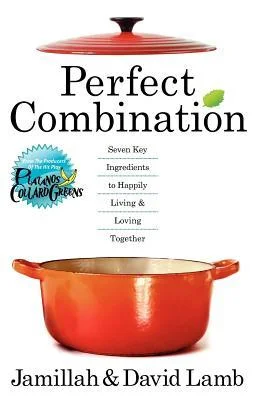
David and Jamillah Lamb are the creative and dynamic couple that founded Between The Lines Productions, Inc. to fulfill their co-mission: to spread inspiration, joy, and love through the power of theater and other media. They are also co-authors of the acclaimed Perfect Combination: Seven Key Ingredients to Happily Living & Loving Together.

As they’ve taken each step of their unique journey, they’ve become a trusted source for answering the questions like: What is Love? What is Romance? What is Marriage?

They didn’t wake up one day, and ‘poof’, they were instant relationship gurus. That might be how it happens in romance novels and romance movies, but that’s not the story of their romance. Their expertise grew out of everyday living and a desire to teach each other the lessons of love, the joys and trials of marriage, and the beauty of a romance. They are dedicated to giving other couples an honest, no-holds barred look at their struggles, their hurts, their triumphs, and their love.

His Story:

David was born in Queens, NY and raised in public housing in Astoria, Queens. He attended Woodrow Wilson School of Public and International Affairs at Princeton University and New York University School of Law. The successful playwright of the hit off-Broadway play Platanos Y Collard Greens, David has found the love of his life in Jamillah.

Despite knowing he had found the right person, David struggled to lower his guard and put aside his tendency to be suspicious of women. Before Jamillah, David would often find himself breaking up with girlfriends rather than risk being hurt by rejection. Recognizing he had found a “kind heart and sweet spirit” in Jamillah, he made the decision “to grow up and grow into feeling what love felt like.” As the relationship has deepened, he’s learned other lessons. He now smiles at his typically male (let’s be honest!) expectation that Jamillah be able to read his mind.

The ability of love and romance to conquer hurts and overcome hardships is a theme that runs through David’s books and plays. He loves being a business, marriage, and parenting partner with Jamillah.

Her Story:

Jamillah grew up in Chicago in the same neighborhood as First Lady Michelle Obama. She earned a Bachelor’s degree in Economics from Wesleyan University and then a Masters degree in Public Policy from Harvard University. A former Vice-President at Citibank, Jamillah uses her education and experience in the daily operations of their business.

Just like David, Jamillah had baggage of her own to overcome. Raised in a strict environment with high expectations, she struggled to lighten up. She put men she met before David “through the ringer,” worrying that allowing someone to care for her meant being less independent. As she learned to overcome her fears and become more trusting, she came up against other challenges. Becoming a family with the birth of their daughter Kaira was not a straight path. The journey to this incredible blessing was filled with adversity and pain, but also the support of David.

Jamillah made one of her most important life decisions in 2005. At that time, Jamillah was a VP at Citibank, while also helping get David’s first play off the ground. The play had been going well for a couple of years, but it was still a big leap of faith when she made the decision to leave a comfortable corporate job to work on their business full-time. Through ups and downs, and the typical financial worries of growing a business, Jamillah has never regretted her decision. The choice has allowed them to be together day in and day out doing creative, passionate work together

For more information about Perfect Combination: 7 Key Ingredients to Happily Living and Loving Together, check out Jamillah and David's website www.acoupleoflambs.com.


New York Times Best-sellers List: Is that Author's Ultimate Goal? by Laura Templeton

Today, I’d like to chat about the New York Times Bestseller List and how it’s viewed by authors and readers. For me, the list has always been the holy grail. I’m inspired by authors who achieve it, awed by ones who dominate it. While making the list is not something that either of my books has attained, it remains something I’d love to someday add to my resume. But as I’ve learned more about the publishing industry, my perception about this revered list has changed. Here’s why.

In my pre-author days, I thought that, quite simply, the NYT list highlighted the most popular, best selling books in the country. In reality, the way the list is compiled is fairly complex. I’m not going to go into details here, but if you’re interested in reading more you can check out this post by Heather Maclean: 

http://heather-maclean.com/how-the-new-york-times-bestseller-list-works/ 

Suffice it to say that the list merely highlights the best selling books in certain locations for a specific one-week period. So, if an author has steady sales over months, she or he still may not hit the NYT list. On the flip side, a title could enjoy an early surge and make the list, even when sales over the long run prove lackluster. 

So, let’s agree that the NYT list—despite its appeal—shouldn’t be the only measure of an author’s success. To maintain a writing routine, we need to develop other motivations—things that will keep us writing through good times and bad. I’m a goal setter by nature, so this has been fairly easy for me. But if you’re just starting out as a writer, you’ll want to spend some time reflecting on your own goals and how and when you want to accomplish them. What will keep you motivated on the journey? How will you measure your own success? Here are some possible options that might not put you on the NYT list but that have their own, often sweet, rewards. Because, after all, writing is not just for the pros.

1. Writing as a hobby.

Maybe you just enjoy making up stories and writing them down. Or keeping a diary. Or maintaining a blog for no reason other than the sheer enjoyment of it. There’s nothing wrong with writing for fun. Writing is an amazingly cathartic experience, too. So, if you’re going through a rough patch in your life, writing can clear your head and help you gain some wisdom and perspective. If you write as a hobby, you may never let anyone else read your work. Or perhaps you share it only with a few loved ones. As a blogger, you may have a dedicated cadre of followers. But the key is that you aren’t in it for the money. The NYT list is not in your future. But peace of mind and the joy that comes from doing something you love may be reward enough for your efforts. And one day, who knows, you may decide to go a step further and pursue a career as a writer.

2. Writing memoir or family histories.

Perhaps you’ve had some interesting or challenging experiences you want to capture. Or you’ve spent your life listening to your parents, grandparents, or close friends tell fascinating stories that you’d like to preserve. Many researchers claim that stories make us who we are—they shape our perceptions of ourselves, others, and the events we encounter. They can even help us cope with the challenges life throws our way. When you write to preserve stories, you’re acting, in a small way, as a historian. Self publishing a family history and passing it out at your next family reunion, or offering it as a holiday gift, might bring a great deal of enjoyment to a number of people you care about. My husband was recently told by a cousin about a book like this. It was written years ago, by an individual in the small Texas community where his father grew up. It has all sorts of interesting personal facts about his father’s family that he never knew. I’m sure the author is long gone from this world, but I wish I could tell him how much his little community-history book is still being enjoyed!

3. Writing as a ministry or mission.

Are you passionate about something—a philosophy, religious or political beliefs, a particular lifestyle? Often people turn to writing because they feel strongly about something and they want to share their knowledge. I’ve been to business meetings where speakers freely offer up their expertise, including a book they’ve self published, in order to augment their teachings —how to successfully grow a small business, how to build a website, etc. Not everyone who publishes a book plans to make money off it. Some people are happy to share their ideas and tips with others in a professional format.
 
4. Publishing for the love of it.

Not all writers make a lot of money. There. I said it. I once had a coworker argue this point with me. He was convinced that if a book was in Barnes and Noble, the author had made a ton of money on it. Hmmm. I’m here to say not so. There are authors who write good books—great books—and never get anywhere near the NYT Bestseller List. Not only that, they may not even make enough to quit or cut back their day jobs. Yet they keep writing. They find an audience and write to them. Consistently. Why? Because they love to write. They love to see their books in print. And meet with readers online and in person. And talk about books. For them, the thrill of holding their words—either in digital or print form—in their hands and knowing someone paid them for it and that people are reading it is reward enough. 

As a reader, I learned a long time ago that many rich, wonderful books can be found outside the bestseller lists. So, next time you’re looking for a good read, give a new author a try. Read blogs—like this one—for some ideas. Or spend a rainy afternoon at your local bookstore or library. There are so many wonderful authors to discover, but you will never find them if you limit yourself to what the NYT presents each week.  So, keep reading ... and, if you’re so inclined, writing. And maybe one day in the future we’ll find each other on the bestseller list!

About the Author

For more information on Laura, connect with her via WebsiteTwitter | Facebook 

One of my earliest memories is of being read to by my mother, who was an avid reader herself, and of going with her to visit our local library. I loved—and still love—libraries, where I can find books by my favorite authors and discover new ones. For me, the library is the closest I’m apt to get to a time machine—past, present, and future all catalogued, dusted, and placed within easy reach.

I had an early and enduring love of mysteries, thanks to the shelf of blue-bound Hardy Boys books left over from my older brothers, and Arthurian legends, due to the fact that I grew up in a subdivision named Camelot on a street called King Arthur’s Court. From the Hardy Boys, I moved on to Nancy Drew and Trixie Belden and plans one day to start my own detective agency. The fact that I was scared of the dark was surmountable, I thought. I was an optimist.

Today, I am not a private detective, though I am still an optimist. When I’m not writing fiction, I work for a laboratory equipment manufacturer, solving mysteries of another sort, mostly during daylight hours—which is fortunate since I’m still afraid of the dark. I enjoy reading and discussing books, both fiction and engaging nonfiction. I garden, walk, kayak and ice skate near Athens, Georgia, and love everything about my beautiful state except for the mosquitoes.

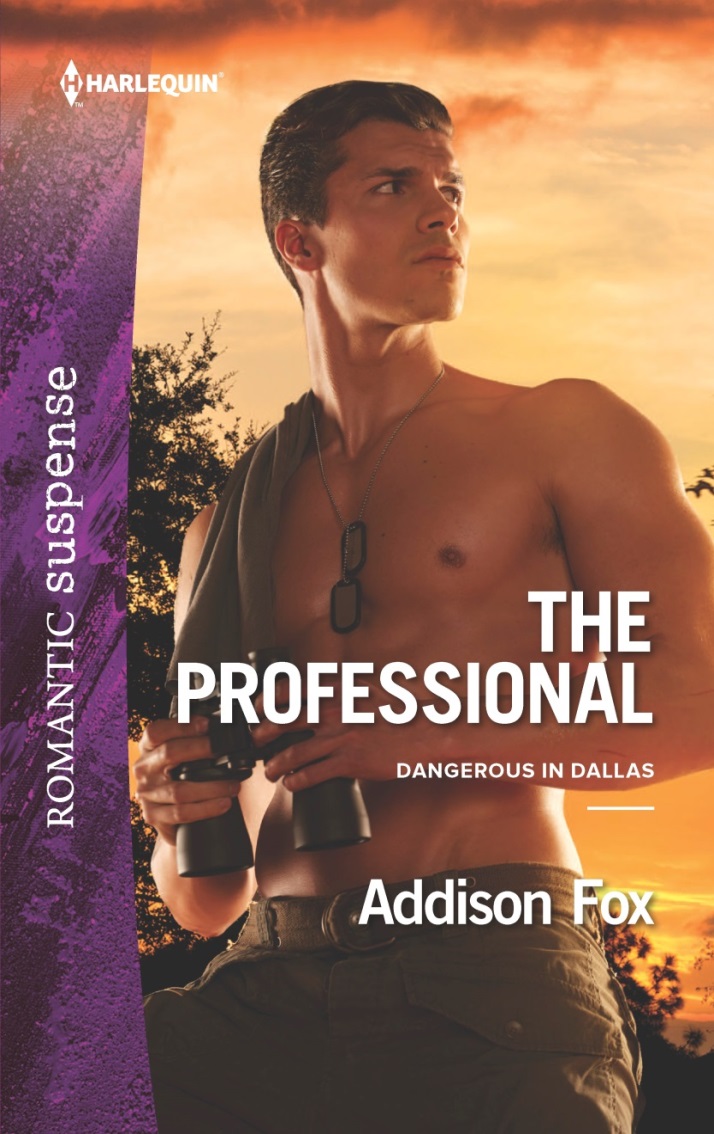
Q&A with Addison Fox, author of The Professional

Can you bring us up to speed with the characters in The Professional?

The Professional is the third book of four in my Dangerous in Dallas series for Harlequin Romantic Suspense. The Dallas Design District is an up and coming area of the city, full of history and a lot of really neat old buildings/loft spaces/warehouse spaces. The District has gone through significant change in the past ten years (in real life!) and I’ve always thought it would be an awesome place to set a book or series.

Cassidy Tate, Lilah Castle and Violet Richardson own a wedding firm, Elegance and Lace. Cassidy designs wedding dresses, Lilah cakes and Violet is the business mind behind their boutique.

In the first book of the series, the women discover gems hidden in the floor of their shop, which kicks off a series of incidents. By the time we get to Violet’s book the danger has escalated significantly and at the start of the book Violet is kidnapped from a wedding Elegance and Lace is putting on at a downtown hotel.

Available at Barnes and Noble and Amazon

Available at Barnes and Noble and Amazon

What has the experience been like writing the Dangerous in Dallas series?

I have had an absolute blast writing this series. I’ve lived in Dallas for the majority of the past 18 years and it’s a city I love and have seen grow so much over the past two decades. 

I used to work at an advertising agency in the Design District and I fell in love with the area. It’s got a great mix of bohemian chic and up and coming businesses and it felt exactly like the place three enterprising women would open a wedding boutique.

Oh…and don’t forget the very attractive men who own an architectural firm down the street….

What makes Dallas, Texas a great place to fall in love?

Dallas is a young, vibrant city. The weather is great pretty much year-round and there are a ton of things to do, both inside and outside. Our downtown has gone through a wonderful renaissance over the past decade as well and restaurants, parks & trails, museums and the arts really proliferate in the city. (a.k.a. – lots of great date places!!)

What is one thing that you absolutely need while writing? 

Hot tea! I’m a coffee drinker in the morning but switch to tea by early afternoon and love to have a hot cup beside me.

Which sexy actor would you choose to play Max Baldwin?

I always love this question!!

Max is a big man – very broad and solid. He’s not easily ruffled and can handle himself in any situation. Build-wise he’s got a Nathan Fillion look or Russell Crowe when he was in Gladiator. I also think Chris Hemsworth is pretty perfect in everything he does and I have no doubt he’d play Max with the right mix of former soldier, softie-at-heart and slightly grumpy edge.

What was the first romance novel that you ever read?

I devoured teen romances like they were going out of style but the first adult romance I read was Night Into Day by Sandra Canfield. It was a Harlequin Superromance title in the late 80s and I still have a copy. I LOVED this book – he’s a quarterback about to retire from professional football and she’s got rheumatoid arthritis. The book is warm, sensitive and totally sexy and I absolutely fell in love with the genre!

Without giving away too much, what’s your favorite scene in The Professional?

I loved writing this book and really loved these characters. There’s a scene that takes place on a train that I enjoyed writing, both because it’s sexy and sensual and because we really see them grow in their perspectives of each other.

Max and Violet have a very push/pull sort of relationship where one is always sort of irritating the other. The train scene forced them into close proximity and I loved watching how they softened around each other.

What’s the best response you’ve ever received from a fan?

I truly don’t have one single experience, rather, I am always so touched when someone takes the time to tell me they enjoyed my work. I feel that’s such an honor and privilege as a writer and something I’m deeply grateful for.

Do you have any author conferences or book signings in the near future?

This coming weekend (10/4) I’m taking part in an event in the Dallas area called “Buns and Roses” – it’s an event for a local literacy organization. I’ve been a part of the event for the past 7 years and love the afternoon. It’s a tea and talk and then a book signing afterward. The best part – all monies raised go to adult literacy!

What are you working on next?

I just turned in the last book in the Dangerous in Dallas series – The Royal Spy’s Redemption. There’s a pretty big cliff hanger at the end of The Professional and one of Violet’s good friends, Gabriella, ends up spending time in very close proximity with an MI-5 agent who’s come to Dallas to investigate the jewels that were discovered in the floor of Elegance and Lace. 

We meet Knox and Gabriella in The Professional and I thoroughly enjoyed watching the sparks fly between these two – AND finally solving the mystery of the gemstones.

ADDISON FOX can't remember a time when words weren't a part of her life. In addition to being an avid reader, she loves writing novels about strong-willed and exciting heroes and heroines—individuals who are meant for each other and who deserve their happily ever after.

After she makes them work for it, of course! Addison lives in Dallas.

Find Addison on her website | Facebook | Twitter: @AddisonFox


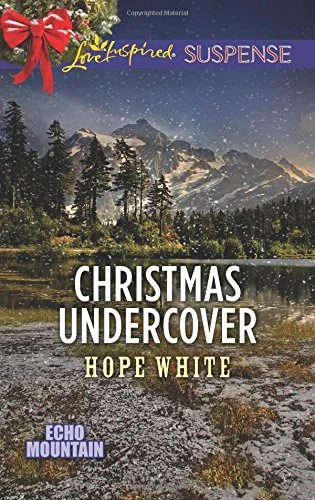
Q&A with Hope White, author of Christmas Undercover

Can you bring us up to speed with the characters in Christmas Undercover?

Sure!  Will Rankin is a widower and father of two young girls.  He struggles with shame, feeling like he failed his wife because she shut him out during the last months of her battle with cancer.  Will is also frustrated by her parents, who are critical of his parenting style. While out on a hike to clear his head, Will runs into FBI agent Sara Vaughn who defied her boss’s order to take time off.  Instead she goes rogue and pursues suspected criminals in the rugged Cascade Mountains.  She witnesses two of the suspects shoot their business partner and she becomes a target.  In her attempt to escape danger she falls down a mountainside and is found the next morning by Will.  Injured and paranoid, Sara thinks he’s an assassin hired to kill her and she threatens him with a gun!  Not a great way to start a relationship.

What’s your fondest Christmas memory?

Book available at Barnes and Noble and Amazon

Book available at Barnes and Noble and Amazon

When my boys were little and they opened their Christmas presents—a toy electric guitar for my oldest (then 6) and Power Rangers action figures for my youngest (then 3).  Their faces lit up with such joy!  That expression of total abandon on both of their faces is permanently etched into my mind.  Well, that and the sound of my son wailing on his guitar throughout the day.   

The book is dedicated to a member of the Seattle PD to thank him for answering your many questions. What new information did you learn?

Actually, my source at the Seattle PD has taught me so much through our email exchanges regarding police procedure over the years.  In this case I learned that members of other law enforcement agencies do not get a free pass if they cross the line.  For instance, when Sara (FBI) shot the bad guy who was beating up Will, the local cops wouldn’t just look the other way (even if the deceased were a criminal).  She had to be interrogated about the incident, just like anyone else.  Charges were not brought because there was a witness, but still, it was not rubber-stamped by the local PD.

What is one thing that you absolutely need while writing? 

I’d have to say I absolutely need two things:  tea and music.  I’m a tea freak—love green, white and herbals—and energizing music.  The music stimulates something in my brain that gives the signal, “time to write!”  It also drowns out the barking cat (yes, he barks) and ringing phone (why do I still have this land line?).  Lately I’ve been listening to the Lindsey Stirling station on Pandora for inspiration.  In the past I’ve created playlists for my books featuring bands like U2, Enation, Snow Patrol, and Lady Antebellum.

Which actors would you choose to fan cast Sara Vaughn and Will Rankin?

Nathan Fillion would make a GREAT Will Rankin, inspired by Nathan’s role as Rick Castle on the Castle TV show (ABC).  Both onscreen on off, Nathan seems like a playful guy who’d be such a good father to young girls.  I’d then cast Stana Katic, aka Kate Beckett from Castle, as Sara Vaughn because Sara is determined and focused, yet damaged.  She doesn’t let anything get in the way of solving the crime! 

What was the first romance novel that you ever read?

Back in middle school I wasn’t much of a reader.  I think an undiagnosed learning disability made it hard for me to enjoy reading.  Then my school librarian gave me a few Victoria Holt and Mary Stewart books and something clicked.  The first romance I read was “The Pride of the Peacock” by Victoria Holt.  It had everything: arranged marriage, forbidden romance, mystery and suspense.  The perfect choice!

Without giving away too much, what’s your favorite scene in Christmas Undercover?

Oh, that would have to be the scene in Will’s house when he and Sara find themselves under the mistletoe.  The girls giggle from their partially open bedroom door down the hall, waiting to see if Daddy kisses Miss Sara.  It’s such a tender, romantic and incredibly normal scene amidst the chaos of a criminal investigation.

What’s the best response you’ve ever received from a fan?

A letter from a thirteen-year-old girl who referred to me as, “the greatest writer ever!”  This meant so much, and no not because she called me great, but because I remember the awkwardness of being thirteen.  The fact that my book affected her and motivated her to write me a letter—a real letter not an e-mail—was awesome.

Do you have any author conferences or book signings in the near future?

Not at this time because I’m working on the next two books in the Echo Mountain series.  However, I will be teaching a continuing education class titled “From Concept to Publication” at Bellevue College in Bellevue, Washington starting September 29 (http://bit.ly/1Nka2Xb).  I’m very excited to share what I’ve learned about writing over the past 15 years with students.

What are you working on next?

I’m writing the next book in the Echo Mountain series that features Police Chief Nate Walsh and Property Manager Cassie McBride.  Cassie finds herself in a world of trouble when she discovers a dead body in a rental cabin she’s prepping for incoming guests.  When she sees a stranger coming toward the house carrying a shovel, she thinks he’s the killer and runs for safety, but not before he spots her.  Will Chief Walsh be able to protect Cassie from the mysterious threat, especially when it seems to be shadowing her every move?  

HOPE WHITE began her career as a reporter and feature writer for newspapers and magazines before discovering her passion for writing fiction. When not at the computer Hope is usually off hiking one of the many trails by her house, taking in a movie, or enjoying a cup of tea with friends. Hope lives in the Pacific Northwest with her hero husband, two sons, and way too many pets.

Connect with Hope via her Website | Facebook