Spotlight: When Snowflakes Fall by Tara Wyatt

Sometimes the heart needs a little Christmas magic.

When Dr. Christie Harmon up and moved to Cheyenne, Wyoming to escape a vicious scandal, she expected a quiet, lonely Christmas on-call as a pediatrician at the local hospital. But when she’s treating a little boy with a bump on the head, she doesn’t expect his dad to be so distractingly handsome…or single.

In the wake of his ex-wife’s abandonment five years ago, Luke Grayson has been focused on raising his son Ethan. The scars from the split run deep, and Luke hasn’t trusted another woman to come into their lives. But there’s something about the sweet—and sexy—Christie that has him wondering if something’s been missing.

Can new love help lonely hearts find a way? After all, Christmas is a time for magic…

About the Author

Tara Wyatt is a contemporary romance and romantic suspense author. Known for her humor and steamy love scenes, Tara’s writing has won several awards, including the Unpublished Winter Rose, the Linda Howard Award of Excellence, and the Heart of the West. A librarian by day and romance writer by night, Tara lives in Hamilton, Ontario with the world's cutest dog and a husband who makes all of her heroes look like chumps.

Connect: Website | Twitter

Spotlight: The Legendary Lord by Valerie Bowman

THE MAKING OF A LEGEND…

When Christian Forester, Viscount Berkeley, flees the stuffy ballrooms of London for his Scottish hunting lodge, the last thing he expects to find ensconced before his fire is an incredibly beautiful woman. But the plight of lovely young Sarah Highgate, who has run away from an unwanted betrothal, inspires an eminently practical exchange. He’ll safeguard her reputation with the ton while she advises him how to best attract a proper bride…

As the undisputed belle of the season, Sarah has enchanted plenty of suitors. Still, she isn’t interested in marriage, especially not to the pompous bore her father has chosen for her. But her hasty escape seems reckless now that she’s estranged from her family and has no one to count on besides Christian. Turning the luckless lord into such a catch has another unplanned consequence for Sarah: Has he run away with her heart?

The Legendary Lord is the sixth installment of Valerie Bowman's Regency-set Playful Brides series.

About the Author

Valerie Bowman is an award-winning author who writes Regency-set historical romance novels aka Racy Regency Romps! Since her debut in 2012, Valerie's books have received starred reviews from Publisher's Weekly, Booklist, and Kirkus. She's been an RT Reviewers' Choice nominee for Best First Historical Romance and Best Historical Romance Love and Laughter. Two of her books have been nominated for the Kirkus Prize for fiction and New York Times bestselling author Lisa Kleypas calls them, "Too delightful to miss!"Valerie has a B.A. in English Language and Literature with a minor in history from Smith College. By day, she is a technical editor at a computer software company. By night, she combines her love of writing, history, and romance to craft stories about people falling in love.Originally from Rantoul, Illinois, Valerie lives in Jacksonville, Florida with her family including her two rascally dogs. When she's not writing, she keeps busy reading, traveling, or vacillating between watching crazy reality TV or PBS.

Connect: Website | Facebook | Twitter | Pinterest | Goodreads | Google +

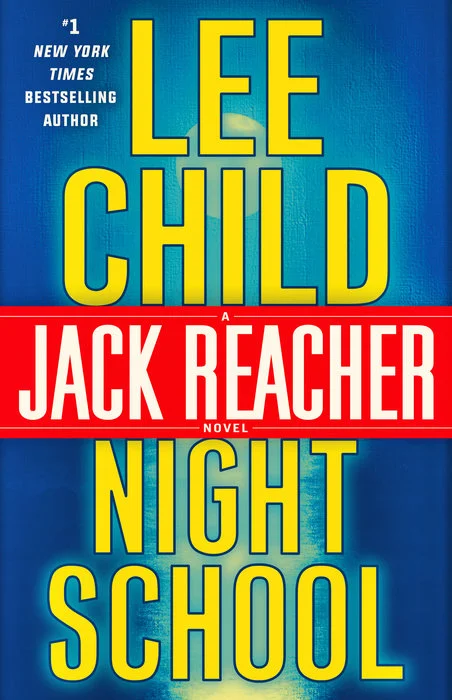
Spotlight: Night School by Lee Child

The incomparable hero of Jack Reacher: Never Go Back takes readers to school in his most explosive novel yet. After eleven straight global #1 bestsellers, discover the thrillers that The New York Times calls “utterly addictive.”
 
It’s 1996, and Reacher is still in the army. In the morning they give him a medal, and in the afternoon they send him back to school. That night he’s off the grid. Out of sight, out of mind.
 
Two other men are in the classroom—an FBI agent and a CIA analyst. Each is a first-rate operator, each is fresh off a big win, and each is wondering what the hell they are doing there.
 
Then they find out: A Jihadist sleeper cell in Hamburg, Germany, has received an unexpected visitor—a Saudi courier, seeking safe haven while waiting to rendezvous with persons unknown. A CIA asset, undercover inside the cell, has overheard the courier whisper a chilling message: “The American wants a hundred million dollars.”
 
For what? And who from? Reacher and his two new friends are told to find the American. Reacher recruits the best soldier he has ever worked with: Sergeant Frances Neagley. Their mission heats up in more ways than one, while always keeping their eyes on the prize: If they don’t get their man, the world will suffer an epic act of terrorism.
 
From Langley to Hamburg, Jalalabad to Kiev, Night School moves like a bullet through a treacherous landscape of double crosses, faked identities, and new and terrible enemies, as Reacher maneuvers inside the game and outside the law.

Excerpt

Chapter 1

In the morning they gave Reacher a medal, and in the afternoon they sent him back to school. The medal was another Legion of Merit. His second. It was a handsome item, enameled in white, with a ribbon halfway between purple and red. Army Regulation 600-­8-­22 authorized its award for exceptionally meritorious conduct in the performance of outstanding services to the United States in a key position of responsibility. Which was a bar Reacher felt he had cleared, technically. But he figured the real reason he was getting it was the same reason he had gotten it before. It was a transaction. A contractual token. Take the bauble and keep your mouth shut about what we asked you to do for it. Which Reacher would have anyway. It was nothing to boast about. The Balkans, some police work, a search for two local men with wartime secrets to keep, both soon identified, and located, and visited, and shot in the head. All part of the peace process. Interests were served, and the region calmed down a little. Two weeks of his life. Four rounds expended. No big deal.

Army Regulation 600-­8-­22 was surprisingly vague about exactly how medals should be handed out. It said only that decorations were to be presented with an appropriate air of formality and with fitting ceremony. Which usually meant a large room with gilt furniture and a bunch of flags. And an officer senior in rank to the recipient. Reacher was a major, with twelve years in, but other awards were being given out that morning, including three to a trio of colonels and two to a pair of one-­star generals, so the big cheese on deck was a three-­star from the Pentagon, who Reacher knew from many years before, when the guy had been a CID battalion commander working out of Fort Myer. A thinker. Certainly enough of a thinker to figure out why an MP major was getting a Legion of Merit. He had a look in his eye. Part wry, and part seal-­the-­deal serious. Take the bauble and keep your mouth shut. Maybe in the past the guy had done the same thing himself. Maybe more than once. He had a whole fruit salad of ribbons on the left chest of his Class-­A coat. Including two Legions of Merit.
The appropriately formal room was deep inside Fort Belvoir in Virginia. Which was close to the Pentagon, which was convenient for the three-­star. Convenient for Reacher too, because it was about equally close to Rock Creek, where he had been marking time since he got back. Not so convenient for the other officers, who had flown in from Germany.

The appropriately formal room was deep inside Fort Belvoir in Virginia. Which was close to the Pentagon, which was convenient for the three-­star. Convenient for Reacher too, because it was about equally close to Rock Creek, where he had been marking time since he got back. Not so convenient for the other officers, who had flown in from Germany.

There was some milling around, and some small talk, and some shaking of hands, and then everyone went quiet and lined up and stood to attention, and salutes were exchanged, and medals were variously pinned or draped on, and then there was more milling around and small talk and shaking of hands. Reacher edged toward the door, keen to get out, but the three-­star caught him before he made it. The guy shook his hand and kept hold of his elbow, and said, “I hear you’re getting new orders.”

Reacher said, “No one told me. Not yet. Where did you hear that?”

“My top sergeant. They all talk to each other. U.S. Army NCOs have the world’s most efficient grapevine. It always amazes me.”

“Where do they say I’m going?”

“They don’t know for sure. But not far. Within driving distance, anyway. Apparently the motor pool got a requisition.”

“When am I supposed to find out?”

“Sometime today.”

“Thank you,” Reacher said. “Good to know.”

The three-­star let go of his elbow, and Reacher edged onward, to the door, and through it, and out to a corridor, where a sergeant first-­class skidded to a halt and saluted. He was out of breath, like he had run a long way. From a distant part of the installation, maybe, where the real work was done.

The guy said, “Sir, with General Garber’s compliments, he requests that you stop by his office at your earliest convenience.”

Reacher said, “Where am I going, soldier?”

“Driving distance,” the guy said. “But around here, that could be a lot of different things.”

Garber’s office was in the Pentagon, so Reacher caught a ride with two captains who lived at Belvoir but had afternoon shifts in the B-­Ring. Garber had a walled-­off room all his own, two rings in, two floors up, guarded by a sergeant at a desk outside the door. Who stood up and led Reacher inside, and announced his name, like an old-­time butler in a movie. Then the guy sidestepped and began his retreat, but Garber stopped him and said, “Sergeant, I’d like you to stay.”

So the guy did, standing easy, feet planted on the shiny linoleum.

A witness.

Garber said, “Take a seat, Reacher.”

Reacher did, on a visitor chair with tubular legs, which sagged under his weight and tipped him backward, as if a strong wind was blowing.

Garber said, “You have new orders.”

Reacher said, “What and where?”

“You’re going back to school.”

Reacher said nothing.

Garber said, “Disappointed?”

Hence the witness, Reacher supposed. Not a private conversation. Best behavior. He said, “As always, general, I’m happy to go where the army sends me.”

“You don’t sound happy. But you should. Career development is a wonderful thing.”

“Which school?”

“Details are being delivered to your office as we speak.”

“How long will I be gone?”

“That depends on how hard you work. As long as it takes, I guess.”

Reacher got a bus in the Pentagon parking lot and rode two stops to the base of the hill below the Rock Creek HQ. He walked up the slope and went straight to his office. There was a slim file centered on his desk. His name was on it, and some numbers, and a course title: Impact of Recent Forensic Innovation on Inter-­Agency Cooperation. Inside were sheets of paper, still warm from the Xerox machine, including a formal notice of temporary detachment to a location that seemed to be a leased facility in a corporate park in McLean, Virginia. He was to report there before five o’clock that afternoon. Civilian dress was to be worn. Residential quarters would be on-­site. A personal vehicle would be provided. No driver.

Reacher tucked the file under his arm and walked out of the building. No one watched him go. He was of no interest to anyone. Not anymore. He was a disappointment. An anticlimax. The NCO grapevine had held its breath, and all it had gotten was a meaningless course with a bullshit title. Not exciting at all. So now he was a non-­person. Out of circulation. Out of sight, out of mind. Like a ballplayer on the disabled list. A month from then someone might suddenly remember him for a second, and wonder when he was coming back, or if, and then forget him again just as quickly.

The desk sergeant inside the door glanced up, and glanced away, bored.

Reacher had very few civilian clothes, and some of them weren’t really civilian. His off-­duty pants were Marine Corps khakis about thirty years old. He knew a guy who knew a guy who worked in a warehouse, where he claimed there was a bale of old stuff wrongly delivered back when LBJ was still president, and then never squared away again afterward. And apparently the point of the story was that old Marine pants looked just like new Ralph Lauren pants. Not that Reacher cared what pants looked like. But five bucks was an attractive price. And the pants were fine. Unworn, never issued, stiffly folded, a little musty, but good for another thirty years at least.

His off-­duty T-shirts were no more civilian, being old army items, gone pale and thin with washing. Only his jacket was definitively non-­military. It was a tan denim Levi’s item, totally authentic in every respect, including the label, but sewn by an old girlfriend’s mother, in a basement in Seoul.

He changed and packed the rest of his stuff into a duffel and a suit carrier, which he heaved out to the curb, where a black Chevy Caprice was parked. He guessed it was an old MP black-­and-­white, now retired, with the decals peeled off, and the holes for the light bar and the antennas all sealed up with rubber plugs. The key was in. The seat was worn. But the engine started, and the transmission worked, and the brakes were fine. Reacher swung the thing around like a battleship maneuvering, and headed out toward McLean, Virginia, with the windows down and the radio playing.

The corporate park was one of many, all of them the same, brown and beige, discreet typefaces, neat lawns, some evergreen planting, low two-­ and three-­building campuses spreading outward across empty land, servicing folks who hid behind bland and modest names and tinted glass in their office windows. Reacher found the right place by the street number, and pulled in past a knee-­high sign that said Educational Solutions Incorporated, in a typeface so plain it looked childish.

Parked at the door were two more Chevy Caprices. One was black and one was navy blue. They were both newer than Reacher’s. And they were both properly civilian, in that they didn’t have rubber plugs and brush-­painted doors. They were government sedans, no doubt about it, clean and shiny, each one with two more antennas than a person needed for listening to the ball game. But the extra two antennas were not the same in both cases. The black car had short needles and the blue car had longer whips, in a different configuration. On a different wavelength. Two separate organizations.

Inter-­Agency Cooperation.

Reacher parked alongside, and left his bags in the car. He went in the door, to an empty lobby, which had durable gray carpet underfoot and green potted ferns here and there against the walls. There was a door marked Office. And a door marked Classroom. Which Reacher opened. There was a green chalkboard at the head of the room, and twenty college desks, in four rows of five, each one with a little ledge on the right, for paper and pencil.

Sitting on two of the desks were two guys, both in suits. One suit was black, and one suit was navy blue. Like the cars. Both guys were looking straight ahead, like they had been talking, but had run out of things to say. They were about Reacher’s own age. The one in the black suit was pale with dark hair worn dangerously long for a guy with a government car. The one in the blue suit was pale with colorless hair buzzed short. Like an astronaut. Built like an astronaut, too, or a gymnast not long out of the game.

Reacher stepped in, and they both turned to look.

The dark haired guy said, “Who are you?”

Reacher said, “That depends on who you are.”

“Your identity depends on mine?”

“Whether I tell you or not. Are those your cars outside?”

“Is that significant?”

“Suggestive.”

“How?”

“Because they’re different.”

“Yes,” the guy said. “Those are our cars. And yes, you’re in a classroom with two different representatives of two different government agencies. At cooperation school. Where they’re going to teach us all about how to get along with other organizations. Please don’t tell me you’re from one of them.”

“Military police,” Reacher said. “But don’t worry. I’m sure by five o’clock we’ll have plenty of civilized people here. You can give up on me and get along with them instead.”

The guy with the buzz cut looked up and said, “No, I think we’re it. I think we’re the whole ball game. There are only three bedrooms made up. I took a look around.”

Reacher said, “What kind of a government school has three students only? I never heard of that before.”

“Maybe we’re faculty. Maybe the students live elsewhere.”

The guy with the dark hair said, “Yes, that would make more sense.”

Excerpted from Night School by Lee Child. Copyright © 2016 by Lee Child. All rights reserved. No part of this excerpt may be reproduced or reprinted without permission in writing from the publisher.


About the Author

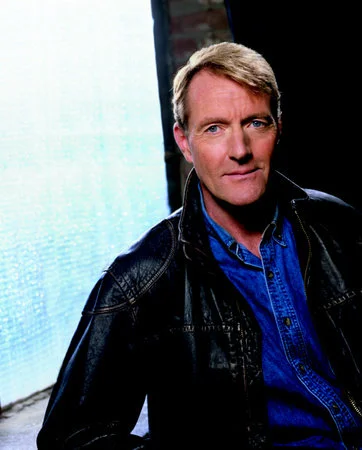
Lee Child is the author of twenty New York Times bestselling Jack Reacher thrillers, eleven of which have reached the #1 position. All have been optioned for major motion pictures—including Jack Reacher (based on One Shot) and Jack Reacher: Never Go Back. Foreign rights in the Reacher series have sold in almost a hundred territories. A native of England and a former television director, Lee Child lives in New York City.

Spotlight: Conclave by Robert Harris

The best-selling author of Enigma and Fatherland turns to today’s Vatican in a ripped-from-the-headlines novel, and gives us his most ambitious, page-turning thriller yet–where the power of God is nearly equaled by the ambition of men. 

The pope is dead. Behind the locked doors of the Sistine Chapel, one hundred and eighteen cardinals from all over the globe will cast their votes in the world’s most secretive election. They are holy men. But they have ambition. And they have rivals. Over the next seventy-two hours one of them will become the most powerful spiritual figure on Earth.

About the Author

Robert Harris is the author of nine bestselling novels: Fatherland, Enigma, Archangel, Pompeii, Imperium, The Ghost Writer, Conspirata, The Fear Index, and An Officer and a Spy. Several of his books have been adapted to film, most recently The Ghost Writer, directed by Roman Polanski. His work has been translated into thirty-seven languages. He lives in the village of Kintbury, England, with his wife, Gill Hornby.

Connect: Website

Spotlight: ECHO Campaign by Taylor Brooke

Genre: YA/Older Teen Urban Science Fiction
Release date: November 1st 2016
Limitless Publishing

Brooklyn Harper’s worst nightmare has become her reality. She has been captured by Isolation…

Trapped in a white-walled labyrinth by Juneau Malloy, Brooklyn is faced with the horrors of Isolation’s finest training yet. The skills she learned as an Omen Operative in Camp Number Eleven are put to the test in the form of brutal assessments of her strength, skills, and fortitude. Confused and disheartened, Brooklyn and the group of renegade Omens prepare for whatever trials Isolation has in store for them.

Juneau has caged her once again, but Brooklyn is far from broken… 

When Brooklyn finds out her best friend Gabriel is alive, she goes on a violent rampage in search of her, but instead earns herself a stint in solitary confinement. Juneau attempts to tame Brooklyn through grueling exercises before offering her one radical choice. Brooklyn must hand over her freedom in order to spare her friends. She’ll become a showpiece Juneau will auction off to the highest bidder for her skills in assassination, defense, and combat.

There must be a way out, and the renegade Omens have to find it… 

Brooklyn has no intention of becoming Juneau’s latest achievement. During a mind-warping training simulation, Brooklyn uncovers Isolation’s greatest secret and their darkest mistake. Juneau Malloy has created something far more sinister than the Omens, and it’s ready to eat the world alive. 

As the battle with Isolation intensifies, Brooklyn is faced with her most dangerous choice yet…

Save her friends—or save humanity.

Excerpt

Limbic Simulation Phase One—Proceed with Caution—Number 178

Music fluttered through the speakers of a room unlike any other Brooklyn had seen at the facility. Tapestries hung from the ceiling, stitched with patterns of the solar system. Grand images of suns and moons and stars were placed upon the walls in the form of quilts, rugs, and blankets. Above them was a line of thin candles cradled in iron sconces. Light from their flames cast long shadows across the ceiling and darkened the bright threading of the obscure cloths.

She didn’t recognize the song, but the gentle cries from a cello filled the room with a sense of calm that Brooklyn wasn’t comfortable with. The Limbic Simulation was a fear exercise, a way for Juneau to gauge their control over primal instincts. Whether flight would overcome the urge to fight or vice versa. Sweet chocolate and brown sugar filled her nostrils, the smell of baking cookies. Brooklyn inhaled as much of it as she could.

As long as she kept her wits about her she could enjoy the small moment of peace presented to her. The candlelight, the pleasant smell, even the interesting tapestries made Brooklyn want to curl up on the floor and stay in that room. Maybe she would. Maybe she would ignore whatever monsters Juneau and his team had cooked up, and stay in this moment until it was taken from her by force, like everything else.

A solid wooden door, carved with intricate swirling patterns and a gold doorknob was across from her. She listened carefully, and beyond the popping of the candles wicks, she heard a faint tapping, like fingernails against the other side of the door. She glanced over her shoulder to the docking station, wondering briefly if it would be worth it to turn around and not cooperate. To walk out of the room and back into the white hallway where Michelle and Gabriel probably waited for her.

The tapping turned into scratching, like cat claws in the center of the wooden door.

Brooklyn rolled her shoulders and stretched out all her fingers, cracking them against the side of her legs. Whatever was behind that door, it was going to die. That was what she told herself as she took long strides past the pretty hanging quilts, swallowed a last gulp of cookie scented air, and swung the door open.

On the ground was Amber—a clone of her. It writhed with a hand wrapped around the deep wound on its throat. Blood soaked its shirt and its bulged eyes pleaded with Brooklyn for help. Its other hand, slick with syrupy blood, scrambled over Brooklyn’s boot.

“Not supposed to happen like this,” it croaked. “He’s out of containment.”

Brooklyn lifted her foot and crushed the clones hand beneath her heel. “Who?”

“Stop the sim…stop…”

The clone’s voice faded and the life in its eyes dimmed. Brooklyn listened to its heart simmer out one beat at a time.

Its crimson blood was the brightest thing in the room, harsh against the eggshell walls, and dark as it soaked the light mauve carpet. She stepped away from the body, well aware of the pair of eyes glued to her from across the room. Brooklyn kept her body poised for an attack. Cloaked by a slanted shadow in the corner of the near empty room stood another clone, one she’d prepared herself to see.

Porter’s clone watched her, hunter and hunted,, but Brooklyn stood her ground. She met his gaze, rationalizing the jarring bit of panic that flew through her. The sight of one of their clones would always cause her nerves to jump, wouldn’t it? This was no different.

Her initial thought was to flee, which surprised her, and the following urge was to wait. She saw his bare feet tap against the carpet. Her nostrils flared for a hint of emotion. Nothing. No fear, sadness, excitement, nothing but stagnant air.

“Look at you,” the clone said. A peculiar grin moved across its face, tongue darting out to wet its lips. “Now I can see it. You’re beautiful.”

Brooklyn bristled but stayed quiet.

“I’ve wondered for quite some time why he likes you. You’re stubborn, irrational, explosive even, yet he chose to chase you. I see it now. I see it clearer than ever before.”

Unwarranted heat rushed into Brooklyn’s cheeks. She straightened her back and curled her fingers into fists. A pain suddenly spiked in her lower abdomen, searing, achy knots. This clone was unlike any she’d encountered, and the thought made her violently uneasy.

“Porter and I—we’re brothers. I feel connected to him more than to my own father. Perhaps it was his visibility, his life, his accomplishments. Maybe it was my own jealousy of him that built the bridge between us, I don’t know. The only thing I do know for certain, Brooklyn Leona Harper, is that I did not know envy until you. You…”

It slithered from the shadows, and like Porter, it had pools of whiskey for eyes. His intense gaze pushed into her like a dagger. Her voice crawled away, hidden in the back of her throat. He moved slowly like an ancient predator, a scaled, winding dragon taking inventory of its meal.

“You are a star nursery, giving birth to clusters of energy and fire and unrelenting anger. I can feel it burning the deepest parts of me, and now, in your presence, I understand his love for you better than I understand myself. The thought of taming a force like you, being sucked into your gravity, it thrills me.”

Brooklyn wanted to back up but her legs wouldn’t budge. She tried to reign in her runaway heartbeat, to squash the irrational fear that was hollowing out her courage. The clone took another step, its nostrils flaring as it leaned toward her face and inhaled. Its lips tightened, and when it let the breath go Brooklyn could see the delicate curve of its cupids bow quiver.

“You,” it breached the space between them, cheek brushing against Brooklyn’s face as it whispered against her ear, “You are a force, a goddess among simple creatures.”

The fear buried inside her launched into her throat and Brooklyn lashed out, shoving the clone backward. She raised her fist, aiming it directly at its jaw.

Its long fingers gripped her hand, catching the punch before she could land it. Her wrist crumbled. Her eyes watered. She felt all the strength in her body push toward the surface, but it was no use. The clone, stronger than anything she’d encountered before, slammed her smaller frame against the wall. It held her arms above her head, fingers latched around her wrists, its other hand snatching her jaw like a bear trap.

“We could take it all,” the clone’s mouth moved against her temple, lips scorching a trail down to her chin. “You and I, we could lead them all. Start over. There are enough of us.”

“What are you?” Brooklyn whimpered, kicking her feet against its shins.

Her strength was nothing against Porter’s clone. Her fear evolved into dismay, and then into hysteria. She thrashed. Her breath was hard to catch as the heated press of the clone’s body held her to the wall like she weighed nothing.

The hand wrapped around her jaw moved down to grip her waist, and the clone laughed, eyes leaving burns on her wherever they settled. It closed the space between them, taking her lips in a searing kiss. She recoiled and slammed her teeth into its lip until she tasted blood.

Shouts came from every direction. First she heard the clone, its voice hot against her mouth, licking blood off her lips, “My brother is a lucky man, Brooklyn. You are incredible.”

Next Brooklyn was falling, her body a heap, shaking on the floor.

Michelle burst through the door, a mobile radio in her hand. “Asset 0 is out of containment!”

About the Author

Taylor Brooke is the author of the upcoming sci-fi adventure trilogy The Isolation Series. She started out as a freelance makeup artist, and quickly discovered her love of elves, zombies, mermaids, kaiju, and monsters of all kinds. After receiving eight professional certifications in special effects makeup, working on countless projects, and fleshing out a multitude of fantastical creatures, she turned her imagination back to her one true love- books. Taylor has had a knack for writing since she was a little girl, and received recognition for her skills throughout grade school and junior college. When she’s not nestled in a blanket typing away on her laptop, she can be found haunting the local bookstore with a cup of steaming hot tea in her hands, scanning the shelves for new reads, or hiking one of the many mountains that surround her home in Oregon.

Connect: WebsiteGoodreadsTwitter


Spotlight: Roma Amor: A Novel of Caligula's Rome by Sherry Christie

Marcus Carinna hears a voice whisper, “Your turn,” as he rides past his family tomb. An unseen presence also startles the Germanic priestess Aurima, whom he is bringing to Rome. But hardheaded Romans scoff at ghosts, and Marcus can’t believe it’s a warning from his brother, who killed himself three years earlier.

37 AD: To great acclaim, 25-year-old Caligula Caesar has become Rome’s new master. No one is more pleased than Senator Titus Carinna, who helped him succeed to the throne. It’s a shame the Senator’s older son–Caligula’s closest friend–committed suicide after being charged with treason. But that still leaves Marcus, his second son.

Headstrong and hot-tempered, Marcus would rather prove his courage by leading legions against Rome’s enemies than take his brother’s place. Yet when his father orders him to befriend Caligula, he has no choice.

Caught in a web of deceit, conspiracy, and betrayal, he will uncover a secret that threatens his family, the woman he desires, even his life… and may bring chaos to the young Roman Empire.

Excerpt from ROMA AMOR: A NOVEL OF CALIGULA’S ROME
© 2016 by Sherry Christie

Marcus Carinna is a guest at a barbarian feast . . . .
    Flavus scowled at his son. “Heriberhto has kingly blood from both his grandfathers.” He wiped grease off his face with the back of his hand. “I raised him to be what his father was not: a man whose nobility is . . . what is the word for hardening a sword?” 
    Italicus spat out gristle. “Tempering.” 
    “Whose nobility is tempered by loyalty to Rome.” Flavus turned more fully to fix his eye on me. “Useless to resist the might of Rome. Cherusci”—he swept his beef bone in an arc around the tables—“and Bastarnae and Marcomanni and Batavi and . . . and all the others here, they know it.” 
    Something furry brushed my shins under the table. Italicus kicked it away. I drank more ale. Two men were throwing knives at a roast goose crammed like a greasy hat over a statue of Mercury. Where was Heriberhto? Was he with Aurima? What was happening out in the darkness? 
    Flavus tore into the meat again, chewed, swallowed. “She is a firebrand, true. But Heriberhto will tame her. As his wife, she will cause no uprisings.” He passed wind noisily. 
    Away from the brightness of the bonfire, there were secluded spots among the greenery where a man might take a girl. Where a maiden who had lost her freedom might willingly give her last treasure to the Great Traitor’s son. 
    By Mithras’s Dog, I was not her father! If anyone should guard her virtue, it was her uncle Maelo, now shouting over his ale at the next table. 
    I cursed. Whether it was duty or obsession, I could not let her surrender her virginity. I pushed down on the shoulders of father and son to hoist myself off the crowded bench. Stepping back, I stumbled on another dog that had settled unnoticed behind me.
    Laughter as raucous as ravens’ honks rose over the clamor. “Strong ale, eh?” Flavus chortled. “I brew it myself.” 
    Something made me look up just then, perhaps a nudge in the ribs from Fortuna. Aurima was striding into the courtyard.
*
At first she was ignored in the hubbub. Flavus yelled drunkenly at a fellow who had slipped in a puddle and soaked his breeches. Some men farther away were bellowing out a song, pounding their knife hilts on the table. 
    Italicus was still sober enough to notice. “Why is the priestess here?” 
    She stalked toward us with long masculine strides that whipped her skirts around her ankles. A few of the men hailed her, but the anger in her bearing silenced them. When she halted, they gaped at her. 
    Not I. It was desire that darkened my thoughts, not fear. 
    She was so close that when she fisted her hands on her hips, I saw the gooseflesh on her bare arms. Her coppery hair bristled in the damp like frazzled rope, its thousand tiny ends lit with fireglow. 
    Flavus remembered he was her host. “Daughter of Ammisia,” he said in a blurred voice. “What is wrong?” With an attempt at jocularity he added, “If you cannot deal with it, I am not sure what we men can do.” 
    “‘Men’?” Aurima’s glare savaged them. “I see cattle. Cattle who let themselves be driven wherever Rome wishes.” She jerked her chin at me. “He says come here, go there, do this, do that—and you obey!” Her voice dropped. “I, the sister’s daughter’s daughter of the great king Marbodo, call you cowards. I call you slaves, who sell the freedom of your children to Rome!” 
    Flavus spoke to her in Germanic. Aurima retorted, “It is you I insult, you gelded ox! And I speak Latin so those from the far lands will understand what I say.” She glowered around at them, from Bastarnae of the upper Danube to Batavi from the Rhine mouth. “The gods weep to see you in such a place.” 
    She seized the evergreen boughs spiraling around the nearest column. They cascaded down into her hair, onto her dark-green stola, and around her feet. Strewn with sprays of fir, firelight glittering on her contorted face, she stretched her hands to the swollen sky. “Hear me, Austro, She who brings life, and mighty Tiwaz, Father and giver of law! I have fought for my people’s freedom. Am I not as brave as these around me? Or am I braver than they? For I would sooner die than deliver my brother’s wife to be banished, or my sister’s daughter to be sold!” 
    Though she spoke now in the harsh sibilance of her own language, I somehow understood. Dazzled, I could hardly breathe for the violence of my lust.
    “Maelo,” someone croaked. 
    Maelo said nothing. He would not stop her. 
    Her hands settled upon her head and began to rend her hair, tearing it from its plait until it seethed around her face in a chaotic mane. In a cracking voice she cried, “From this day, Tiwaz the Just, do I curse all those who have betrayed me.” She took a deep breath to pronounce the oath. 
    “No,” I shouted. I leaped up onto the bench and then upon the table. Drinking horns and cups reeled around my feet. “In Caesar’s name, I forbid it.” 
    There was a dumbfounded stillness. 
    I glared down at her. Her curse on my vexillation had cost me my scouts and nearly a hundred good soldiers. I would not allow her to damn these men who might be needed in the northern campaign. “I forbid it,” I said again. 
    In a voice as low as thunder she said, “Then I put my curse on you, Marcus Carinna.” 
    A worm of unease squirmed inside me, but I gazed back into her face. I was a soldier of Mithras, not to be cowed by a barbarian spell. I even smiled at her. Oh, I was to pay dearly for that smile. 
    Flavus at last found his wits. “I cannot believe . . . Will someone fetch Thusnelda? . . . Of course Aurima does not . . .” He got up, stumbled over someone’s foot, and pitched against a table. Steadying himself, he spluttered, “Foolish girl . . . needs a firm hand . . . Thusnelda! . . . Italicus, fetch your aunt.” 
    Italicus rose, shaking his head, and shambled out of the courtyard. Then the others got up with a grinding of benches and table legs and departed, group by group. Last to leave were Maelo and the Marcomanni, muttering in consternation. Aurima pursued them with her mad glare, until all were gone but Flavus. 
    I jumped down and straightened my disheveled clothing. My back was to her, but I saw Dio’s fear as he looked past me. “Superstitious idiot,” I growled. And as Thusnelda came in with her hair all undone, I went out of the courtyard too, leaving Aurima alone with Harman’s widow and Harman’s brother. 

About the Author

After earning a Phi Beta Kappa creative award in college for an early draft about a nobly born charioteer, Sherry Christie spent many years of research and revision developing ROMA AMOR into the story about fathers and sons that it wanted to be. It’s a joy to immerse myself in the lives of first-century Romans–and a distinct change from my day job as a . In addition to writing, Sherry is a professional copywriter. She lives on the coast of Maine with a native-born Viking and two cats.

For more information, please visit Sherry Christie’s website. You can also connect with her on Twitter, and Goodreads.