Q&A with Sue Hinkin, The Snake Handler’s Wife
/
What was the first spark for The Snake Handlers Wife? A character, a setting, or a question you couldn’t let go of?
The question as always is one of human behavior, and in this book, behavior in cults. What would motivate someone to give up their independence, sense of self, and completely turn their wellbeing over to a sycophant to be followed without question? In these turbulent political and cultural times, that question has raised its head again.
The title alone carries weight and tension. At what point did you know this would be the book’s name, what did it represent to you now?
I struggled with the name for months. The Snake Handler’s Wife felt good early on, but there are many other books with the so-and-sos daughter or wife. I didn’t want to be derivative. But in the end, it felt like the most accurate depiction of the story. The deep and varied symbolism of snakes through cultures and eras was also hard to resist.
How did you balance telling an intimate personal story while exploring broader themes of faith, belief and control?
Broad themes always seem to boil down to personal stories. Human experience and the resulting emotions are well examined in fiction--that’s one of the things that makes it so impactful.
The ranch setting is isolated, beautiful, and dangerous. How did the landscape influence the tone of the novel?
I lived in the Santa Monica Mountains for some time and was captivated by its wildness, beauty, danger, and the feeling of oneness with nature I felt everyday even though it was only a short distance from one of the largest metropolitan areas in the country. At dusk, I’d look down my canyon toward the ocean as residents turned on their porch lights--I felt like I was seeing the Chumash kindling their campfires.
Your protagonist lives in a world shaped by both devotion and fear. How did you approach writing her internal conflict with empathy rather than judgment?
The Golden Rule, aka empathy, is the basis of everything positive in both real life and fiction. It is, however, a really tough one to follow. The reader will ultimately make their own judgements based on their ability to step into the shoes of the characters.
How did you approach writing a cult leader who feels believable rather than exaggerated? Did you research snake handling religions or cult dynamics while writing this story?
I did a lot of research on these topics. Cult leaders seem to have a very predicable personality so I held true to those qualities in Mark Wenter. I always build in a humanizing backstory for my protagonists as well. Yes, I researched snake handling congregations and learned a whole lot about rattlesnakes.
Animals play a powerful role in the story. What did they symbolize for you, innocence, warning or something else entirely?
Non-human animals often seem like the best of us sentient beings. Motivations are clear, predicable, and without malice. It’s very grounding to live among critters.
What scene was the most emotionally difficult to write and why?
The scene when Jaime almost bleeds to death due to a ruptured ectopic pregnancy and is saved by Heath and Lucy, was the most challenging to write. We live in a time when women’s healthcare is at risk. This ectopic crisis was also the event that eventually caused Jaime to realize if she had been with the cult that weekend, she would have died. She wanted to live.
Did writing The Snake Handler’s Wife change the way you think about resilience or choice?
We all try to make the best choices we can in life. When we make inevitable mistakes, or growth opportunities as I call them, take the lesson to heart and go forth armed with better understanding. Bea, Lucy, and Jaime, all show this resilience.
If readers take away one lesson from Lucy’s journey, what do you hope it is?
If someone claims to know God’s Truth in all things, as did Pastor Wenter in this book, put on your critical thinking hat and step away.
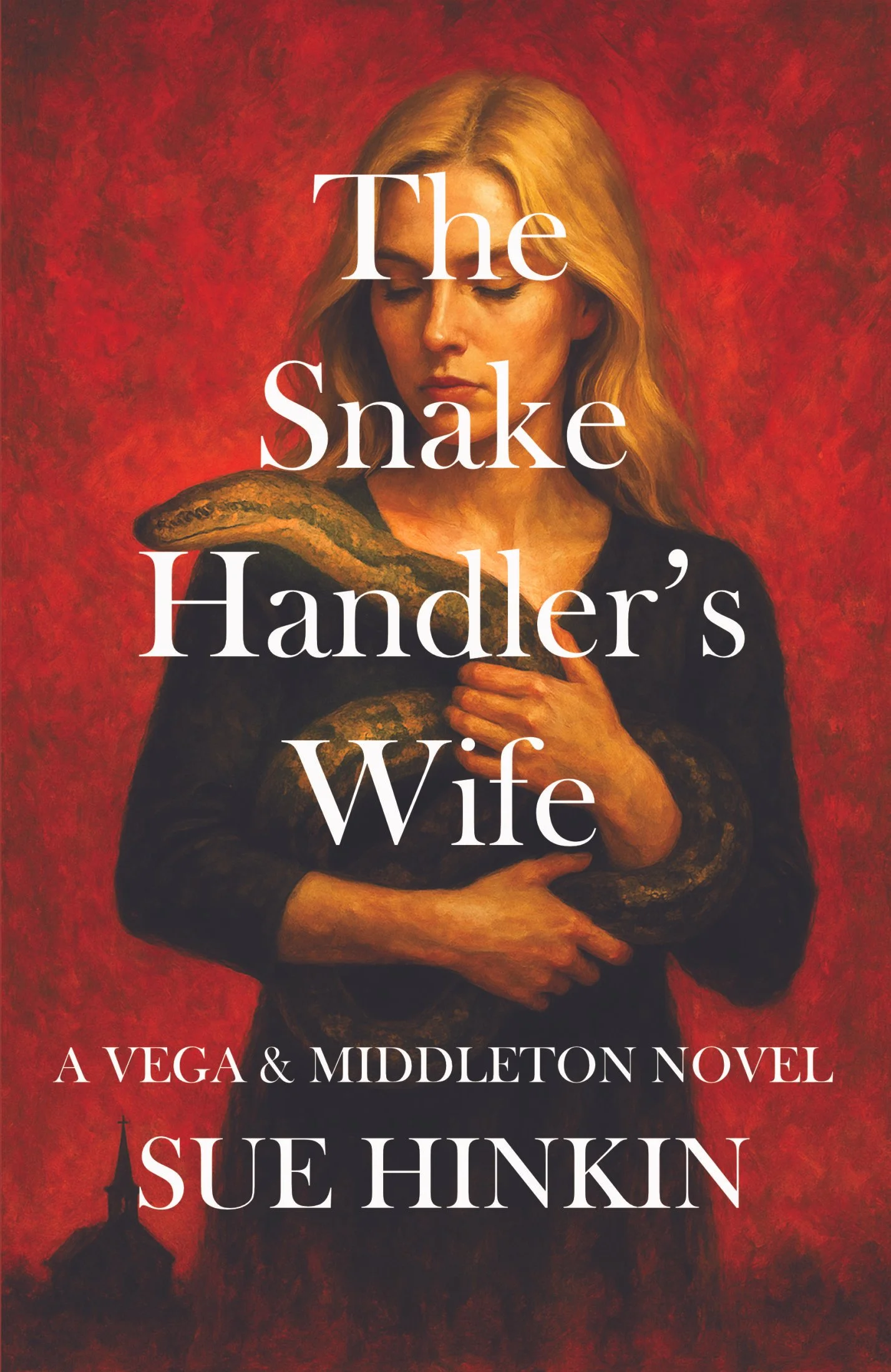
About The Snake Handler’s Wife:
When Lucy’s life partner, war reporter Michael Burleson, suddenly leaves the U.S. to take a job re-establishing the cable news network office in Iraq, Lucy is alone with their four-year-old son Henry on her isolated Malibu Ranch. Michael’s sweet but unstable, recovering addict daughter, shows up looking to meet her baby half-brother and establish a relationship with Lucy. Despite Michael’s warnings, Lucy wants to re-kindle family ties and hires the girl to help care for Henry when Lucy is working. Weird things begin to happen at the ranch—her beloved horse is bitten by a rattle snake not native to the region, the animal enclosures are vandalized, and a loaded gun is found next to Henry’s swing set. Lucy doesn’t know that the daughter has fallen under the spell of a sexy, snake-handling cult leader who wants to get rid of Lucy, take her ranch and her son.
Grab your copy on Amazon Kindle | Audible | Paperback | Bookshop.org