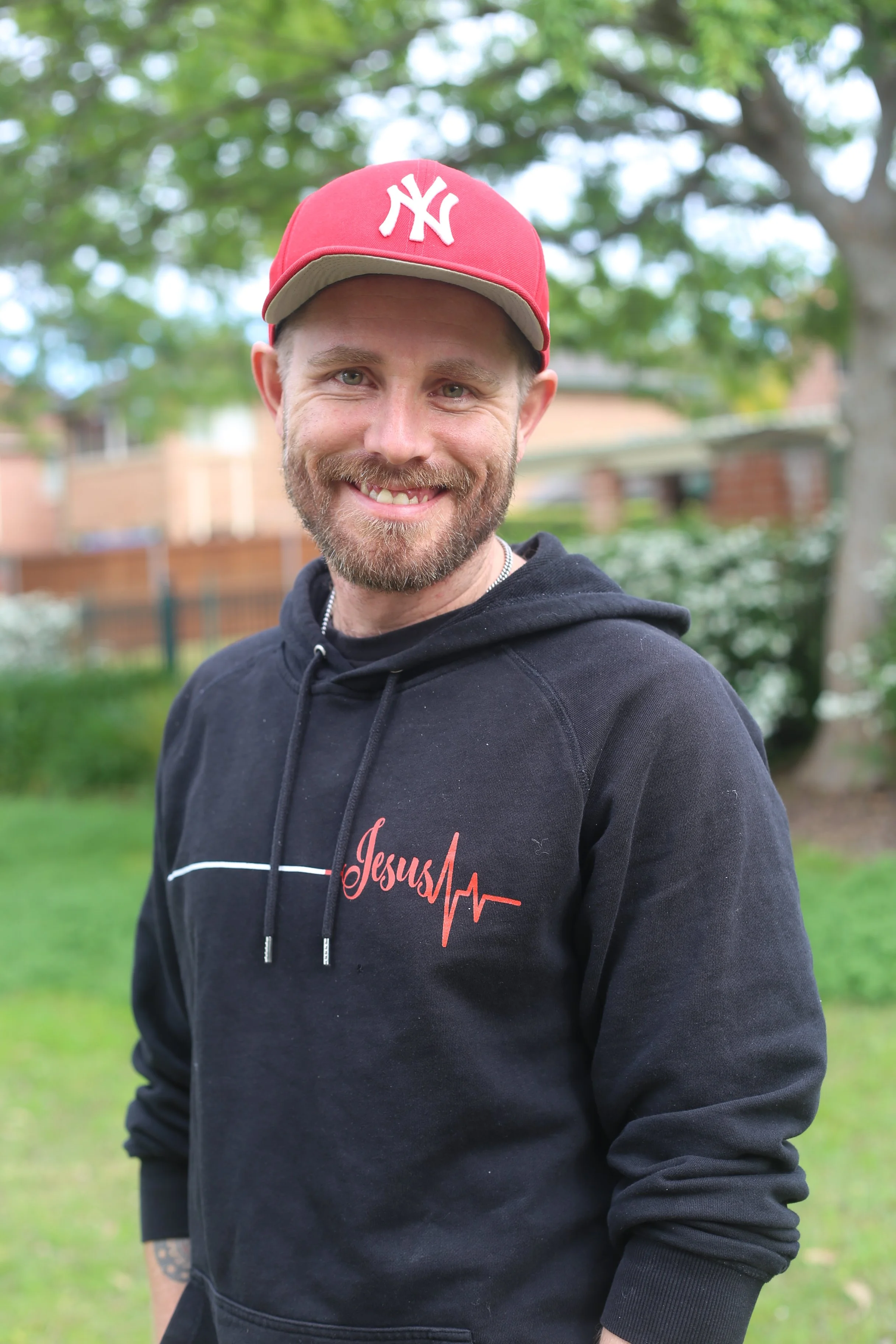
Spotlight: Woodstake by Darin S Cape and illustrated by Felipe Kroll

Woodstake is a wickedly clever spin on the Dracula legend set during the iconic Woodstock festival of 1969. When a vampire descends on the summer of love, a generation of hippies must survive three days of peace, music and blood in this darkly funny, genre-bending thrill ride. A razor-sharp blend of satire, horror, and ‘60s nostalgia, “Woodstake” is a must-read for fans of classic rock, genre mashups, and blood-soaked fun.

Buy on Amazon | Bookshop.org

About the Author

Founded by SHAWN HAINSWORTH, SHP Comics launched in 2021 as an independent publisher aiming to deliver daring, intelligent, genre-bending comics and graphic novels. Hainsworth began his creative life as an award-winning experimental filmmaker before telling stories on the page under the pseudonym Darin S. Cape. The publisher, author and producer lives in Western Massachusetts with his wife, two kids and a hound dog mix. Learn more at shpcomics.com, and follow SHP on Facebook: @shpcomics and Instagram: @shpcomics.

Spotlight: Nocturne by Tricia D. Wagner

Publication date: April 14th 2026

Genres: Fantasy, Young Adult

In NOCTURNE, sixteen-year-old Livi learns the truth of who she is—a Siren, her people known only to legends. She must learn to master her powers of influence, strength, and destruction to stop a warmongering Admiral from drafting her best friends, capturing and killing her people, and decimating her homeland of Nocturne.

Excerpt

Livi stood before the tavern’s bleak threshold, its heavy door cobbled of wrecked ships.

She peered through its ragged window, quieting the wiser part of her, an inner voice calling for her to turn back. And truly, she was stunned that she’d mustered the daring to try this.

There were dozens of men here—sailors all brooding over their flagons, many looking to be harboring grudges. 

The tavern’s splintery walls were studded with trophies—toothy payaras, dry in their death throes, tacked beneath golden portraits of infamous Korps Mariner ships and their dread captains. 

The men frequenting this sand-dusted, fish-pongy tavern—The Orphic, were the sun-beaten sailors and damaged soldiers of Merritaine, mercenaries and relieved fighters who’d reached the shore of old age still breathing. 

No one dared step a toe in The Orphic unless he bore epic tales—bloody acts of acclaim on the baleful blue seas. 

Many here had killed. Some for honorable causes in noble wars, yes. But they’d killed.

For all their savagery, though, they were brave. 

Livi had heard enough stories to understand them as uniformly dauntless and skilled. If anyone could help her skip Merritaine’s coast and reach Nocturne, he’d be drinking here.

Through the brume of pipe smoke, she measured each face for hints of affability. Or at least for traces of good humor—signs that someone might consider her offer. If she could just single out one sailor more approachable than not, perhaps she could move to him unnoticed.

But that wouldn’t happen. Women scarcely set foot here, and sixteen-year-old girls certainly didn’t. 

A few of the sailors came across as jovial—but even they harbored an undercurrent of trouble in their looks, their ease striking like a gusty southerly bathing the seaside, forecasting a typhoon’s assault. 

The afternoon seemed all at once to grow late, a shaft of misted sunlight sluicing through the windows and casting the place in watery relief. 

In fixing on that panorama of ocean, Livi could almost see Nocturne’s peaks in the deep west, its moonstone shores marbled with the shadowy ash given by its volcanic chain. 

Those heights, she had to reach. For it was said that Nocturne’s high places were hived with sea caves—chambers shining with waters rumored to have healing properties. 

Some believed those springs could stave off even death.

Livi eased from her jacket a small jar of pearls, each perfect, as plump as a blueberry—these a mere sampling of the trove she’d collected. They ought to be more than enough to buy passage to Nocturne from someone here bearing the skill, and the gall, and the ship, and the time to set sail for the Isles, along with some assurance that he could ferry her through storms, over waters where lurked sharks and killer whales and squids that tore up boats, and finally beyond the dread Maelstroms.

Livi had imagined this moment many times—making her bold approach in The Orphic, striking a deal. She’d imagined that arriving at this brink would feel like the onset of her escape. 

But in finally standing here, readying to approach men alleged to be the most barbarous in Merritaine, the idea seemed beyond reckless. 

Célian, her best friend—maybe more—would be sick at the thought of her here. And truly, in darkening this threshold, she felt she was skimming the rim of the Maelstroms, those great whirlpools unceasing in their churning, twisting what strayed near straight down in a tempest, claiming ships and seafarers alike as a part of themselves. 

The bright Merrow Ocean glinting in, though, delivered some steadfastness. For at the sight of its rolling, Livi could gather a sense of what it might feel like, teaming with someone here, cruising on his scabrous ship to the treacherous west.

A man seated at the tavern’s back corner stood out a touch. 

He looked a decade younger than the rest, and he had all his limbs, which was saying something. He seemed not resentful, or affable, or angry—just somber. His solemnity made it clear that he wanted to be left to himself.

But it also lent an impression of patience. Maybe he’d listen.

She edged open the tavern’s door and crept in. She eased behind a column in the entryway and held still.

She’d have to get to the somber man quick. If she drew too much attention, the barkeep—a tall man, his eyes sharp to check all the action, his manner busy and swift with his bottles—would cast her out before she could lay down one word of her offer. 

Or worse—he’d let the men handle the disruption.

Livi stepped from the shade, into the amber light of the tavern.

Buy on Amazon | Bookshop.org

About the Author

As a young reader, writers were like gods and goddesses to now author Tricia D. Wagner. She never could have imagined weaving tales like her favorite storytellers, until a fateful April dinner conversation with her husband about a lecture he attended got her mind whirling. By the end of that summer, she’d written 400,000 words: a speculative fiction trilogy. Wagner felt as if she’d emerged from a cocoon as some new sort of creature. She was hooked.

It was important to Tricia to sharpen her skills, and she immersed herself in workshops, guides, and writing communities, learning from editors how to hone her craft. She did this for years, and the result is her newly released novella The Strider and the Regulus, two independently published novelettes, four soon-to-be published novellas, and five as yet unpublished novels. She found writing to be a method for becoming the person she felt she was born to be. Wagner finds that writing inspires her to be a better person, truer to herself. 

The ideas and substance of Tricia’s writing comes from a very deep place that is strongly stimulated by setting. Often, when she has completed a story, she feels as if she’s been to her story world, whether it’s on the map or not. She likes to believe all the places she writes about exist somewhere, somehow.

In writing her stories, Wagner was surprised and delighted to discover how real the characters become to an author; that for many writers, their characters end up as their most treasured friends. She loves to delve into them to mine their natures, secrets, and desires—to tell their stories with the legitimacy they deserve. In studying her characters, she finds she has the opportunity to shape herself, inching closer to the person she wants to become.

Wagner believes revision is magical in its power to make a good book great, and early drafts are only the beginning of a story’s journey. Any idea can wind up a good story, but with reflection and time and improvement, it can become art. Once Wagner completes a revision project, it feels miraculous how many fresh approaches have manifested and how much truer the story feels.

Wagner hopes her readers feel enchanted when they read her stories; that after completing one, it seems they’re drifting out from under a spell. This is exactly how she feels when she finishes writing a story. She hopes to that her writing might expand their minds, spirits, and worlds a bit, and she hope they fall in love with her characters and are moved by her artistry of language. 

When she isn’t writing poignant works of literary fiction, Wagner is a Director of Adult Education – ESL Programs at a community college, a job and staff that she loves. In her spare time she enjoys refining her writing craft to discover new angles and landscapes that might enrich her writing palette. One such example is a recent course she took in learning to read ancient Egyptian hieroglyphs, something that’s sure to end up in a story at some point. Wagner lives in Rockford, Illinois, with her husband and three darling cats.

Connect:

https://x.com/WagnerAuthor

https://www.triciawagner.com/

https://www.facebook.com/TriciaDWagnerAuthor

https://www.instagram.com/triciadwagnerauthor/

https://www.goodreads.com/author/show/16522263.Tricia_D_Wagner

Spotlight: The Counterfeit by Ralph DeFalco

In the near future, China wins the Pacific War that leaves the United States vanquished and bankrupted.

Beijing is plotting to make a puppet of the next US President, in command of a corrupt and hypocritical government that has created two Americas: one of ease, affluence, and influence; and one where people struggle to survive.

Now paroled military officers and ordinary Americans are beginning to fight back.

Their plan is to put a spy into the highest reaches of government.

Philip Nolan agrees to infiltrate the Internal Security Division--America's Gestapo--and replace his look-alike brother as the head of a vast secret police network built to intimidate, arrest, and imprison the government's critics.

Nolan risks capture, torture, and death as he works undercover to aid the rising Resistance.

This is a gripping dystopian thriller that explores the themes of loyalty, identity, and the struggle for freedom in a world where truth is a rare commodity and courage is the ultimate weapon.

Excerpt

Chapter 4

On the Streets of Chicago

Nolan put the palms of his hands on the gangway wall and let his head sag into his folded arms for a long while. He was tired, and he felt it deep down. He gathered himself and stood stiff and erect. He rolled his shoulders to ease the pain in his neck and back, then turned again to the street and walked mechanically.

His thoughts drifted to the suspension of his parole. This year, in the summer, maybe fall, he could start. At the latest, he would be ready to bicycle into Canada and seek asylum by next spring. He knew he could be ready. Then he pushed those thoughts aside. Once more he was on his guard.

Nolan lifted his head and scanned the street. Something wasn’t right. He felt as if he were being watched; not just watched but followed, and if he were being followed, he dared not make any sign that he knew it. Not until he had the advantage of position, a place he knew well enough from which to fight or run. This thug would not be another desperate parolee he could talk around.

Nolan listened behind him for the echo of footfalls and heard nothing. He searched for a patch of sun so he might see a moving shadow and saw nothing. He glanced to his left and caught a reflection in the darkened store window across the street. A hooded figure. Long, heavy coat. Hands in pockets. Tall. A man keeping to the shadows and thirty-five, forty yards behind. Quiet.

Nolan knew where he was. Two years of long rambling walks had made him familiar with every street, every intersection, every building. The next corner would take him to an alcove if he turned left. A large space once open to both crossing streets had been partially walled off. He turned left and pressed himself against the wall. He would take down the shadow man as he passed by.

Nolan slipped the knife from its hidden pocket, wrapped his fingers around the handle, and eased the blade free of his sleeve. The shadow man passed and hesitated. Nolan stepped forward. In one smooth motion he took the man from behind and spun him into the wall. Nolan shoved the full weight of his body onto his left forearm, jammed it into the man’s chest, and swiftly brought the tip of the knife up to the soft flesh of the exposed neck. The man threw back his head instinctively.

Nolan gasped.

The man’s hood had fallen away, and a thick scarf had come loose in the violence of Nolan’s attack. Now he stared at half a face. No ear, scattered tufts of hair on the seared left side of the head, a milky unseeing eye, and raw pink and white burn-scar tissue ran from the temple, down the cheek and jawline, to the throat he held at knifepoint. Nolan lowered the blade and stepped away.

The hood flew back up, and a thin, scarred hand reached for the tangled scarf.

“Too ugly to rape?” she asked in a voice that failed to hide her fear in sarcasm.

He swallowed hard and stared at her. “I’m not a rapist,” he snarled. “You were hiding. You followed me.”

She hid her ruined face with one hand and turned her good eye toward him. “You pulled a knife on me.”

He slipped the knife back into his sleeve. “Why were you following me?”

“I wasn’t,” she said through clenched teeth. “It’s not like that.”

“Then what’s it like? I might have killed you.”

She pulled the tangled scarf over the side of her face. “If you must know, you were headed the same way I go. I saw no harm in just walking behind you. Can I go now?”

She leaned back against the wall and folded her arms across her chest. “I saw—no that’s not right—I mostly heard what happened back there.”

“Back where?” Nolan demanded.

“In the gangway. I was hiding in the doorway next to it, facing the street. I heard everything you said to those two men. You were shouting. I didn’t think anybody still felt that way. Not after all that has happened, and—”

“And what?” Nolan asked. But his voice had softened. It all fit together. 

“And I thought if there were trouble, if I needed help, you… you would help me.”

Nolan stared at her. She stared back.

“It’s been so pleasant to meet you,” she finally said. “We must do this again sometime.”

Nolan shook his head. “Let’s just walk together. You said you were headed the same way. So where is that?”

“Forty East Grand,” she said. “I am in residence in the Homewood Suites.”

This excerpt is from Ralph DeFalco’s new novel, “The Counterfeit.” Reprinted with permission from Lost Coast Press.

Buy on Amazon Kindle | Hardcover | Paperback | Bookshop.org

About the Author

Ralph DeFalco is a historian, writer, and national security intelligence professional with a career that spanned five decades and five continents. Retired from a 25-year career in the rank of Captain in the U.S. Navy, he also served as a civilian intelligence professional on the Pentagon staff of the Director of Naval Intelligence. He is a distinguished graduate and former faculty member of the National Intelligence University. He graduated, with highest distinction, from the U.S. Naval War College and later served as Fleet Professor on the college’s faculty. DeFalco writes about history, world affairs, national security intelligence, strategy and policy, and geopolitics. His essays, articles, commentaries, and reviews have appeared in a variety of publications and online. His current work is online at Law & Liberty

When he is not writing, DeFalco will be tooling around Amelia Island, FL, in his 1976 Cadillac Eldorado convertible, or on cruise ships where he is a featured speaker presenting the maritime history of ports of call or his insights on world affairs.

Spotlight: The Analyst and the All-Star by Mel Walker

AVAILABLE IN KINDLE UNLIMITED 

She knows the stats. He knows the game. Together, they're about to rewrite the rules of love.

Daria Holloway is the baseball world’s best-kept secret. By day, she’s an overlooked analyst in a male-dominated world that refuses to hear her voice. By night, she is "The Oracle"—an anonymous blogger whose predictions are gospel to the very men who ignore her in the daylight.

Enter Isiah "Crush" Crawford, the All-Star of a rival team who is as famous for his intensity as his talent. He's complicated, private, and the one sports figure Daria knows she must stay far away from. But when his career stumbles, the cheering crowds turn into a suffocating cage. He doesn’t need a fan; he needs someone who sees beyond the superhero cape to the man beneath it.

When Daria risks her anonymity to help Isiah find his swing, a forbidden romance ignites. But as Isiah battles his demons and Daria fights for her place at the table, they realize the hardest pitch to hit isn't a fastball—it's the curveball life throws when you fall in love.

Sometimes love means stepping out of the shadows and into the spotlight.

A heart-stopping sports romance about finding your voice, ambition, recognition, breaking the rules, and finding someone who sees the real you - dreams, fears, and all.

Buy on Amazon Kindle | Paperback | Bookshop.org

Meet Mel Walker

Mel Walker is an award-winning contemporary romance author who brings a distinctive male perspective to small-town love stories. His emotionally rich narratives have earned multiple accolades, including the RRAW Man of Action Award and EMMA Award for Best Contemporary Romance. Mel was the 2023 RWA National Conference Opening Night Keynote Speaker. A native New Yorker who finds inspiration in urban cycling and Mets games, His authentic storytelling and genuine approach have earned him a devoted readership seeking romance with heart and soul.

To find out about Mel Walker’s upcoming releases sign up for his newsletter https://authormelwalker.myflodesk.com/nlsignup

To learn more about Mel Walker & his books, visit here!

Connect with Mel Walker: https://www.authormelwalker.com/newsletter 

Spotlight: The Purpose of Getting Lost by Tracy Smith

The Purpose of Getting Lost is a reflective memoir about identity, belonging, and the courage to question the life you’ve carefully built. As Tracy Smith enters midlife—navigating the end of a long marriage, children growing up, and a growing sense of disconnection—she realizes she has spent years performing for expectations rather than listening to herself.

Through solo travel across more than thirty countries, Tracy doesn’t search for reinvention or escape, but for clarity. In unfamiliar places and quiet moments in between, she begins to notice her patterns, longings, and the stories she’s lived by—some worth keeping, others ready to be released.

Told with honesty, warmth, and insight, The Purpose of Getting Lost explores what it means to stop waiting to belong and start building a sense of home from the inside out. It’s a book for anyone who has ever felt out of place, questioned who they are becoming, or sensed that getting lost might be an essential part of finding their way.

Excerpt

I was looking for something before I even had the words to know what it was I was looking for. Most of us start searching before we recognize the question driving us—the question that drives every journey. Mine was this: Where do I belong? 

It wasn’t a question I could answer from my couch in Chicago. So I went looking for answers—and found them in movement. I danced in mosh pits in Doha and sank in quicksand in the Amazon. I drank rice wine with the Hmong and laughed with strangers. I swam naked in the Caribbean and got lost in the streets of Reykjavík. 

The geography shifted, relationships rose and fell, and my body broke and healed. Through it all, belonging never announced itself—it only whispered. Not after the divorce that left me untethered, the kids who were growing up and away, or the friendships that faded when I stopped playing the part. 

For most of my life, I’d looked for belonging in other people—in marriage, in motherhood, in the opinions of friends and family who always seemed just out of reach. I bent myself into shapes I thought would make me acceptable. I smiled when I wanted to scream. I stayed when I wanted to run. 

What I’ve learned is that belonging isn’t something we wait for. It’s something we build—from the inside out.

Buy on Amazon Kindle | Paperback | Bookshop.org

About the Author

Tracy Smith, Ph.D. is a writer exploring the intersection of travel, identity, and belonging. Her work focuses on the small, often uncelebrated moments when women begin choosing themselves—sometimes quietly, sometimes far from home.

Through personal narrative and place-based storytelling, Tracy examines what happens when certainty loosens, expectations fall away, and life is allowed to remain unresolved. Her writing is less about escape and more about attention: noticing how freedom, acceptance, risk, and community take shape in everyday lives across cultures and landscapes.

She is the author of The Purpose of Getting Lost and the creator of The Geography of Connection, an ongoing project that follows these themes through travel, essays, and lived experience. Tracy’s work speaks to readers navigating reinvention, midlife change, and the courage it takes to live without a neat ending.

Connect:

Substack: https://substack.com/@tracysmithauthor

Website: https://tracysmithauthor.com/

Spotlight: The Siren of Paris by David LeRoy

Publisher: Independent

Pages: 352

Genre: Historical Fiction/Magical Realism 

Formats: Paperback, Kindle, Audiobook, FREE with Kindle Unlimited

Journey through the dark, violent, and haunting landscape of World War II in Paris and beyond – Take on a harrowing tour through the depths of human depravity, exploring themes of love, loss, guilt, and redemption in this gripping historical tale.

Marc Tolbert, a young French-born man from a prominent American family, takes off to Paris for a fresh start after a breakup in 1939. Pursuing his dreams of attending a prestigious Parisian art school, he soon makes friends with some of history's most notable figures, including Sylvia Beach and William Bullitt. Falling in love with an art model from one of his classes, he is blinded to the escalating violence around them as the war inches closer to the City of Lights.

What started as an adventure quickly becomes a nightmare as the war worsens, and Marc is faced with choices that will change his life forever.

When he finally faces the reality that he must leave Paris, fate deals him a cruel hand. Surviving the sinking of the RMS Lancastria, Marc is haunted by the deaths of his friends and the regret of not leaving sooner.

Returning to Paris, Marc is drawn into the resistance movement, risking everything to help those trapped behind enemy lines. But after being betrayed, he is captured and sent away to face the horrors of war and the guilt of his past mistakes.

The Siren of Paris is a powerful and emotional story that will keep you on the edge of your seat. With its compelling plot-driven narrative, vivid scenes, and intense action, this novel will transport you to the heart of war-torn Paris and leave you contemplating the weight of human choices and their impact on others. Whether you're a fan of historical fiction, war stories, or symbolic themes, this novel will captivate and intrigue you from start to finish.

Excerpt

September, 1967—Saint-Nazaire, France

“May the Lord be with you,” the priest’s voice rang out to all gathered at Marc’s graveside. It was September 1967.

The cloaked man stood taller than all others gathered, self-luminous with the hood of his smock pulled over his head. In his right hand he held a staff with a round clock mounted on top.

Marc stood beyond the gathering, gazing back upon his grave. He saw his only sister, Elda, surrounded by all his other friends from France. The body of his soul beamed a reddish-golden light, as he anticipated the final moment he would leave in peace. He strained to see the face of the priest obscured from view under the hood.

“And also with you,” Marc whispered, looking toward the release from his life.

“Let us pray,” the priest said softly. With a rush, the first eleven souls appeared around him. They had come from the graveyards of Angoulins-sur-Mer, Les Fortes, Saint-Charles-de-Percy, Saint-Clément-des-Baleines, Saint-Palais-sur-Mer, Chatelaillon- Plage, Saint-Sever, Traize, Brest, Saint-Hilaire-de-Talmont and Saint Pancras. They wore drab olive-green uniforms, kit bags ready for war. They were soaked to the bone. Only a few had boots. The dial on the clock stopped as a moment of Marc’s life flashed before him.

“I no longer want to see you, Marc. It is finished.  It's over,” Veronica stood shivering outside his dorm room.  Winter, 1939. He dropped out of medical school after that. He decided to run. Marc’s soul turned a dark red. The pain came back, searing.

“O God, we pray you lead us to truth, deliver us all from violence, battle, and murder, and from dying suddenly and unprepared,” the priest said as he glanced up from under his hood, then down again before Marc could catch his face.

Twenty-two more souls gathered by the grave. They came from the graveyards of Bretignolles-sur-Mer, L’Aiguillon-sur-Mer, Port-Joinville, Les Sables-d’Olonne, Nantes Pont du Cens, Sainte Marie, Yves, Piriac-sur-Mer, Olonne-sur-Mer, Coulac and Charroux. Among the soldiers stood one woman dressed as a nurse, a Belgian boy and little girl, all with no name

Again, the clock stopped. Another memory surfaced. 

“I can watch out for myself, you know. I am not small anymore. You should go,” Elda was only eight years old at the time. Marc could see she blamed herself. His soul constricted. The hands of the clock moved again. His light turned blue.

“O God, we pray for those who suffer in silence with guilt, and for those who suffer with shame, regret, and remorse.”

“I've seen enough,” Marc cried out to the priest. Thirty-three souls arrived from the graveyards of La Couarde-sur-Mer, La Turballe, Saint-Denis-D’oléron, Sainte-Marie-de-Ré, Olonnes, Bouin, Saint-Gilles-Croix-de-Vie, Aytré and Barbatre. The clock stopped.

“One-way ticket, first class, June 14, crossing on the Normandie, please.” Marc’s soul recoiled from this moment. He knew why he had left. The hands on the clock resumed. His light turned a dark purple.

“Please, let this go, it is just the past,” Marc called out to keeper of the clock. The staff remained steady.

“O God, our time is in your hands. Look upon us with favor as we, your servants, begin another year of life.”

Sixty-five souls appeared in a flash from the graveyards of Le Bois-Plage-en-Ré, Château-d’Olonne, Saint-Hilaire-de-Riez, Ile d’Yeu, Beauvoir-sur-Mer, Saint-Georges-D’oléron, Ars-en-Ré, La-Barre-de-Mont, Dolus, Saint-Trojan, L’Épine, La Plaine-sur-Mer, Noirmoutier-en-l’Ile, L’Herbaudiere, and Le Clion-sur-Mer. Again Marc felt the weight of time pulling him backward.

“Happy birthday, young man. Better get a move on it. You have a ship to catch today,” his mother handed him his hat the morning he left for France. The words pierced him. She drank herself to death from worry in the spring of ’42.

“Why must you show me this? Is this my judgment?” he cried again. His light turned dark green. The clock bearer looked up briefly from under his hood. The clock began to move.

“O God, whose glory fills the whole of creation: Preserve and protect those who travel from every danger and bring them in safety to their journeys’ end,” the priest intoned.

233 souls, men, women, children and soldiers from the graveyards of Saint-Nazaire-sur-Charentes, Les Moutiers-en-Retz, Prefailles and La Baule-Escoublac gathered around Marc. Time compressed. The clock slowed to a stop. Dread replaced fear.

“When you get to Paris, let Ambassador Bullitt know you are in town. He would be glad to see you. We were classmates back in college before the war.” His father pulled the car up to the French Line Pier. The image flickered before Marc in the fading light. His father never took art school seriously. The pain of these last words to him before a heart attack killed him in ’44 brought Marc to his knees. Two eyes peered from under the hood as Marc’s face twisted in anguish. The clock dial started to spin.

“O God, we pray for those who have died. May your love and light keep them eternally yours in peace and life without end.” Everyone who had gathered whispered a name. Marc swallowed hard. 370 souls gathered from the graveyards of La Bernerie-en-Retz and Pornic to join the other souls. The clock stopped.

“You should have left Paris, Marc, and never returned,” she said before the Gestapo officer read the charges. Marc groaned under the weight of this most painful moment, feeling regret and shame. His light turned dark as obsidian and the clock began to run.

“Make this stop. I have forgiven her,” he pleaded. The priest removed his hood and bared his face.  Marc recognized him instantly: the betrayed priest he had known during the war. Yves. 

O God, the Father of all, who commanded us to love our enemies: Lead us both from hatred and revenge and, in your good time, enable us all, who are known unto you to stand before you in eternal peace,” the priest looked directly at Marc. The words ripped through him in shock waves, fracturing him on his side three times, and once down the middle. The clock stopped spinning. Marc noticed that the second hand now moved steadily forward with temporal time.

An unknown number rose from the sea, the beaches, and ditches to join the 859. Marc, overwhelmed, stared in disbelief at the priest’s face before him. With all his strength, he strained to whisper, “Why?”

“Why, you ask?" the priest voice thundered through the sky in a quick response. "Your marker reads ‘Known unto God!’ That is why,” Yves voice reverberated back to Marc, his face staring back in shock.  “Those are souls who died without last rites, final confession, or do not even realize that they are dead, just waiting in limbo until they can be found,” Yves said, his voice booming and vibrating with a strange undulation as he raised his eyes towards the assembly that had gathered.  

“I am the soul collector of the lost and forgotten of this war.  This is my calling.  Behold the assembly of those ‘Known Unto God,’” Yves said, his voice clear, natural and crisp. His form glowed as he raised his arms towards the assembly that rose high into the sky, looking back upon Marc and the Priest.  He struck his staff once on the ground.  

“I will not treat you any differently than I have any one of them who now lie in wait until the time arrives to stand before the Lord,” Yves said as he stood in the center of a Dodecagon of souls of number unknown. He rapped his staff a second time on the ground.  Marc's eyes snapped into focus on the staff with a nausea of anticipation.  

“The life review is to examine your conscience for sin and prepare for your final confession,” Yves said with a stoic glare.  Marc glanced at the clock on the staff to read the time. Yves struck the staff a third time. A shockwave emerged from the clock traveling in all four directions. “The clock is now set," he said, "May the Lord Be with you.”  

The clock reached June 18, 1939, eight thirty at night. A fear greater than the judgment of hell filled Marc, as he realized he would now watch his life during the war all over again.

***

 June 18, 1939—East Bound Atlantic Ocean

The S.S. Normandie’s bow parted the sea as she carried her passengers toward France that Sunday. Marc dressed for dinner in his finest tuxedo. Before taking the last dinner at sea, he entered the chapel of the ship for his evening prayers.

“And may you, my Father in heaven, keep my family in your protection. I pray for my mother, Lynette, my father, Eldon, and my little sister, Elda. Amen,” Marc knelt alone in the chapel. He made the sign of the cross as he rose to leave for dinner.

– Excerpted from The Siren of Paris by David LeRoy, David Dribble Publishing, 2012. Reprinted with permission.

Buy on Amazon Kindle | Audible | Paperback | Bookshop.org

About the Author

David LeRoy is an author and avid explorer of the intersection of philosophy, psychology, and art. His debut novel, The Siren of Paris, is a poignant work that emerged from personal family research he undertook in 2010 to locate missing persons of WWII.

LeRoy's fluency in French and two-year sojourn in France afforded him unique insights into the French culture he deftly weaves into his literary work. With a Bachelor of Arts in Philosophy and Religion, an MBA from California State University Sacramento, and an MSc. Applied Data Science from Paris, France, LeRoy is a polymath with diverse interests and an insatiable curiosity for knowledge.

He currently resides in California, where he continues to write and pursue his creative passions.

Connect with him on social media at:

Facebook: https://www.facebook.com/thesirenofparis

Goodreads: https://www.goodreads.com/book/show/14760740-the-siren-of-paris?ac=1&from_search=true&qid=v6UbhLIMmb&rank=1