From Grimm to Golden Books: Writing Myself Out of the Fairy Tale
/
When I started writing my memoir I had no idea how important fairy tales and children’s books would be to my telling of my story.
I relate to the classic children’s chapter books Pollyanna and The Little Colonel, but the stories that stimulated my childhood imagination were fairy tales. In Scrap, I describe the red fairy tale book that my father rescued from a school dumpster and gave to me. The book was an anthology with stories by the Grimm Brothers, Charles Perrault, and Hans Christian Andersen.
From the pens of the German Brothers Grimm were the inspirational “The Elves and the Shoemaker” and the horrifying “The Juniper Tree.” The hope chest stored in my bedroom when I was very young reminded me of the decapitating chest (yes, in a fairy tale) in the latter story. Also from the horror genre of fairy tales was the French Perrault tale, “Bluebeard,” a story replicated in my own life by my father’s admonitions about staying away from the bomb shelter in our basement.
In an episode in Scrap, I felt humiliated in front of my friends by something my father did and became hysterical. I heard my mother’s refrain in my head, labelling me as (Andersen’s) “The Princess and the Pea” as she often did when she felt I was taking something to heart. I resented that name because it trivialized my emotions.
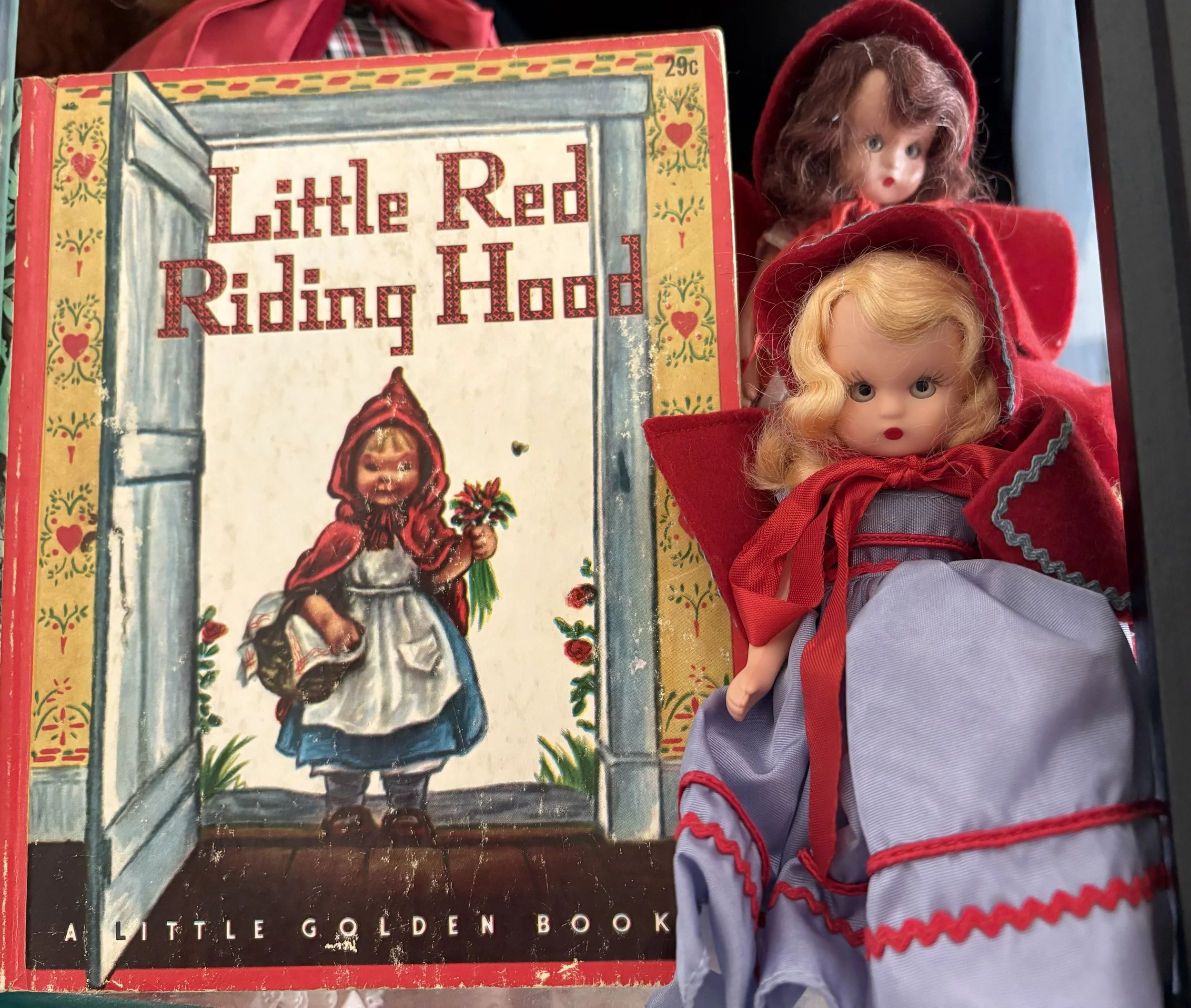
The fairy tale that most informs Scrap and the relationship I had with my father was Little Red Riding Hood. The version that I knew was outside the red book and, instead, was in the form of the Little Golden Book version. This tale is not as brutal as the Grimm and Perrault versions are. In Grimm’s version, “Little Red Cap,” the huntsman rescues the girl and her grandmother, then kills the wolf by filling him with heavy stones. In the Perrault story, the wolf eats the girl. The Golden Book version has a happy ending for Red and her grandmother, although I will admit not so for the wolf who is killed by the huntsman.
In the version of Little Red that I concocted in my head, the wolf hid inside of my father and only showed himself when my father became red-faced and angry. That’s when his big wolf teeth would pop out: “the wolf teeth inside him are shifty and unpredictable” (p. 12). When that happened, Little Red needed to look out! That I was Little Red was obvious to me as I felt small and innocent and helpless. In fact, this comparison with the story is so ingrained in me that I wrote a chapbook of poetry called Our Wolves exploring the fairy tale. Many of the poems are based on my own story.
In writing Scrap: Salvaging a Family I’ve been able to exorcise the wolf from my psyche. And by putting the wolf away, I’ve been able to walk away from my role as Little Red.