Where I Wandered by Eleanor Lerman
/
When I was in elementary school, my teacher handed out a poem that had been copied onto a sheet of paper. The poem was “The Road Not Taken” by Robert Frost, which ends with these famous lines:
“Two roads diverged in a wood, and I—I took the one less traveled by,And that has made all the difference.”
We discussed the poem, answering the teacher’s questions about what we thought might happen if there were two roads ahead of you and you chose to take the one that fewer people traveled. We probably spent an hour or so with Robert Frost and then turned our attention to other things. I didn’t know it then, but as time and the years went on, those few lines became a kind of touchstone for me. At the time my class read that poem I was just one of a group of nice Jewish girls in my Bronx neighborhood who had no intention of doing anything other than taking the same road that everyone else took—that is, until mother died of cancer when I was thirteen and everything changed. I remember very little about that time because my father, who had no idea of how to cope with raising my younger brother and me all by himself, went out and found a new mother for us within a couple of months and told us to forget about the old one. He hid her pictures and any other traces of her in our apartment. Scared, confused, and with no idea of how to do anything but what we were told, my brother and I followed his instructions until, years later, we began to have conversations that eventually loosened our father’s hold on us and slowly let the shadowy memories we had of our mother back into our lives.
But in the early days after my mother’s death I had to return to school, which is when I had my first lesson about how it feels to be different. I was the only kid in my class with a dead mother and so I stood out among my friends, who all lived in normal, two-parent households. One of the most important things a young girl wants is to be like everyone else in her group but now I was different, and that made me feel ashamed. I didn’t want to stand out in any way, but I had no choice about what had happened and that made me angry. As time went on though, I began to actually lean into my new identity as the angry girl. The thought in my head was something like, You think I’m different? Well, I’ll show you what being different really means.
For me, that meant following the music I heard on the radio—which had morphed from gentle pop songs into rock and roll—down to Greenwich Village, where I wandered around by myself. I think my father was still too dazed to even notice I was gone most nights, while I learned to dress myself like a vagabond with long black hair, kohl-rimmed eyes, and bell-bottom jeans. In the Village, everybody was different and so I fit in. I roamed around from the hippie haunts on West Fourth Street to MacDougal Street to the then-hidden addresses of the gay clubs further downtown. I was neither this nor that; I learned it didn’t matter to anyone in this new world who you were or what lonely road had led you there. Come join us, everyone said, from boys in bands to drag queens roller skating down Christopher Street, and join I did. Home felt so dangerous and crazy that the further away I got from it, the safer I felt.
The reason my home life seemed dangerous to me was because soon after my father’s marriage to the new mother, she began to exhibit mental health issues—depression, anger, and an inability to provide any sense of normalcy at home. For example, much of the time no one bothered to make dinner for us so my brother and I ate a lot of macaroni and cheese or remnants of the school lunch that we brought home. Also, the new mother was always angry with me because I wouldn’t include my new stepsister, Jackie, in whatever I was doing. Jackie was two years younger than me and teenagers don’t generally take their little sister with them, even if they’re doing nice, normal teenager things, which I clearly wasn’t. And, after the first year or two that we all lived together, Jackie wasn’t behaving like a normal person, anyway.
I now understand that she had developed schizophrenia (an illness that can often appear during puberty), and though I didn’t know what to call it at that time, I could see that there was something very wrong with her. She was violent, she talked to demons, she drew crazy pictures on the living room walls, she ripped up her clothes, either refused to eat or else ate until she gained nearly one hundred pounds. My stepmother wouldn’t let anyone erase the pictures Jackie drew on the living room walls (which were things like huge, staring eyes or big, blank faces) because she said this was Jackie’s art and her way of expressing herself. She also insisted that Jackie’s problems were caused by low blood sugar, exacerbated by the fact that I wasn’t being nice to her. Very soon, I was making plans to get out of that house.
Meanwhile, my anger was getting to the point where it was taking over my life. I was angry at my mother for leaving me, angry at my father for bringing the new mother and her dangerous daughter into our lives, angry at everything and everybody—except my brother, who I wasn’t supposed to talk to anymore unless we included our stepsister, which was impossible unless we wanted to include the demons, too. (We didn’t.) To make matters worse, we moved from the Bronx to what was then a dying beach town at the edge of Queens. My home life became more and more chaotic; there were nights when my stepsister would be walking around with a knife, threatening her mother while the two of them screamed at each other. I was hiding in the basement of our new house, watching Star Trek and wishing I could explore the stars with Mr. Spock; my brother was locked in his room filling out the paperwork to get loans for colleges in a far-away state. My father’s solution to the madness in his household was to appear in the living room and ask us all to join him in his bedroom to watch “Wheel of Fortune,” and that’s what we did. My stepsister put down the knife for half an hour. My stepmother rested her screaming voice. My brother and I crept out of our lairs and sat on the bed with the rest of them, ready to bolt at the first sign of trouble. It was these nights that taught me how to avoid reality and pretend everything is fine. Fine, fine, fine.
I left when I was eighteen. As I was walking down the hallway that night with a bag of clothes and my notebook full of the poems I had begun to write, my father, seeing that I was going out and remembering that he was supposed to try to exert some sort of control over me, asked where I was going. “I’m leaving,” I said. He then asked when I would be back. “Never,” I told him. And I was gone.
I went back to the only place that had felt like home to me since my mother died: the Village. I had already found a job there, managing a workshop that made parts for harpsichords. The job came with an apartment upstairs, which meant I was living a life that would not be possible in New York City today, because where would an eighteen-year-old who barely graduated high school find a job that also came with a small apartment that rented for a few hundred dollars a month? Apparently, fate moved in with me too, because our neighbors, who lived in an old carriage house on a cobbled lane behind our building, had to walk through the workshop to get their mail—and that was how I met Harrison Starr and his wife Sandy. Harrison was a film producer and Sandy was an art historian. There was a blackboard in the workshop where I was supposed to make a list of parts we needed to order for the harpsichords, but instead, I wrote poems on it. Harrison would stop to read the poems and one day, he suggested that I try to get them published. That had never occurred to me—it seemed impossible, like something real writers did—but because Harrison encouraged me, I sent the poems to Wesleyan University Press and in 1973, when I was twenty-one, they published my first collection of poetry, Armed Love. Because of the unexpected notoriety that book brought me, and because Harrison and Sandy invited me into their lives and introduced me to their friends, a wide circle of artists and writers who were all extraordinarily kind to me, I began to believe it was actually possible to become something more than a lonely, angry young woman scribbling poems on a blackboard.
When he was sixteen, my brother left home to go to college in Massachusetts and we re-started what became our lifelong conversations about our broken family. He was the one who called me on a weekday afternoon and told me to turn on the television, where I saw my father and stepmother on a national talk show. My father was wearing a maroon suit with coffee stains on it; my stepmother was wearing a lot of makeup and had a beauty parlor hairdo. They were pleading for help to find my stepsister, who had run away from home. At one point, my stepmother held up a candy wrapper she claimed to have found in the bedroom I had shared with my stepsister, insisting this was proof that her daughter must have been abducted by people who made her eat chocolate, which had affected her blood sugar level and thus made her pliable enough to let them spirit her away.
Time went on. I left the workshop. Harrison and Sandy moved to California. I got a job as an editor for a philanthropic foundation. My brother was living in Washington, D.C. and I stayed in New York, but we kept on talking. Our conversations were more about work now: he was a journalist who also became the producer of America’s Most Wanted for many years and the co-author of numerous non-fiction books and articles. Along with my day job as an editor, I had gone on to write a number of novels, along with collections of short stories and poetry. On the surface, everything was going well—but behind the scenes, my mother’s death was like a bomb that continued to explode in my mind over and over again. While I had become very good at pretending to be a normal person, I really wasn’t. No matter what kind of success I had as a writer, no matter what awards I won or praise I received, I couldn’t feel that any of it actually applied to me, the me that was still lost, still wandering down some lonely road wishing I could find my mother. I didn’t remember her, I didn’t remember her voice, I could hardly remember any time she had embraced me, or told me she loved me, and without these things I felt unmoored from my own life. Nothing and no one felt safe to me. And the older I got, the worse these feelings became. How could I still feel that I needed my mommy? It was embarrassing. It was as bad as walking into the classroom as The Only Child With A Dead Mommy, and I didn’t know how to make myself feel better.
When I was in my forties, my stepmother died. A few years later, my father died. They had been in separate nursing facilities for some time—my father because he had serious health problems; my stepmother because she had dementia and had become dangerous to herself and everyone around her. My brother and I had divided up the chore of taking care of these two people: he dealt with my stepmother, I managed my father’s journey from one nursing home to another and then finally, to the hospital where he died. Almost up until he had to go into a nursing home, my father was still carrying out the task my stepmother had assigned him, which was to visit morgues and view the bodies of dead girls who fit the description of my missing stepsister. He never found her, nor did the police or any of the private detectives my parents hired, and to this day we have no idea what happened to that poor girl. (There’s another story to be told here—much too long and complicated for this brief essay—about the near-impossibility of getting help for people afflicted with mental illness and the tragic effects that failure has on families.)
After both my father and stepmother were gone, the conversations between my brother and I turned back to our childhood because we were both still struggling to deal with the effects that not only our mother’s death but also the breakup of our extended family had on us. Before my mother died, two sets of aunts and uncles along with my six cousins and my grandmother all lived in the same Bronx tenement. But one of my uncles—my mother’s brother—blamed my father for my mother’s death because he felt that my father had not found the right doctors to treat her. Eventually, everyone moved away and though my brother remained close with all of them, I did not. I was too angry at everybody to try to preserve those relationships and too young to imagine the effect that losing these people who I had loved and who I saw every day of my life would have on me. It was as if along with my mother, the rest of my family had simply disappeared.
Anyway. The time came when only one of our aunts was still alive. My brother arranged for me to see her to talk about my mother. My aunt said that the only thing my mother cared about when she knew that she was dying was my brother and me. Over and over again she kept asking, “Who will take care of my children?” I guess she knew my father wasn’t a good candidate for that job.
When I was on the train going home that day, I kept thinking of my mother worrying about who would take care of my brother and me. I called him and told him about this and he said, “You know the answer to that, and mommy must have, too. We were always like Hansel and Gretel, wandering through the dark forest, hand in hand. We took care of each other. We took care of ourselves.”
Somehow, just hearing him say that helped me a lot. Somehow, that made a connection between my mother and me that I had needed for the longest time. Before she had gotten sick, my mother bought me a typewriter, a little gray manual that must have been a big expense for a woman who had to run the household on very little money. In the year before my mother died, I wrote an endless number of stories on that typewriter (in particular, I remember a Major Work about a horse named Champion) and my mother gave me a manilla envelope to keep my stories in. I still have the typewriter and the envelope full of stories which, someday, I intend to read again. (In particular, I want to find out how far along I got in the Major Work.) When I realized that giving me the typewriter meant that my mother must have understood who I really was and that I was going to be a writer, helped me with what I have finally begun to do—feel grief, real, heart-wrenching grief about my mother’s death. It’s taken fifty years to get there, but at least I can feel it now, so much so that in my new collection of poetry,* an entire section of the book is devoted to an exploration of grief, especially the grief of losing my mother. It was cathartic to write those poems and to think of her while I was writing. It was probably the first time since she died that I let myself feel how much I miss her.

All these years later, my brother and I still talk about my mother and what happened to our family after she died. It helps immensely that we can serve as witnesses for each other, able to testify about how hard it was to pull ourselves out of harm’s way after we lost our mother and learn to make rewarding lives for ourselves. As a journalist, my brother’s job is to tell the truth. Mine is to tell stories. This story, however, is all true. My mother’s name was Lillian. She was born in Boston in 1920 and died in New York City in 1965 when she was forty-four (one month shy of her forty-fifth birthday). I hope she isn’t still worrying about us. The road less traveled was hard to navigate in the beginning but it’s gotten easier as time goes on because Hansel and Gretel know where they’re going now. As most stories promise, they’re going to find their way home.
*Oleander Marriage (Mayapple Press 2025)
About the Author
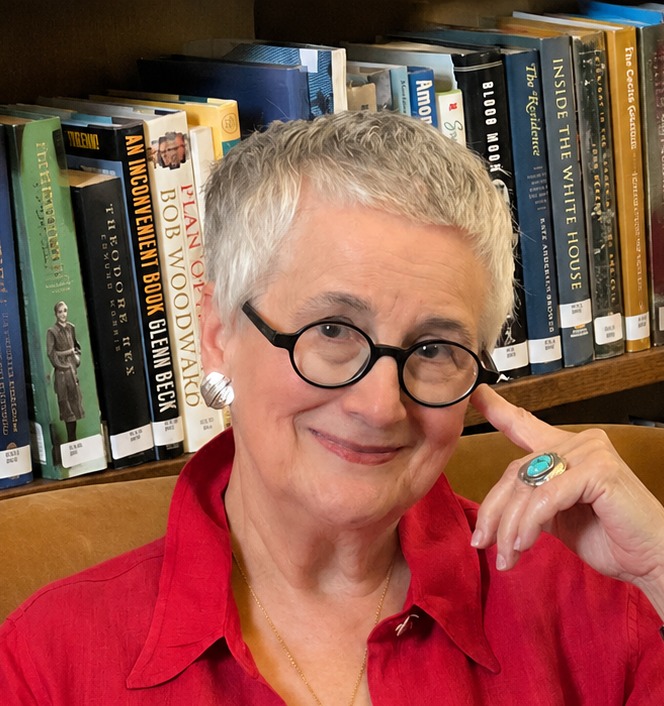
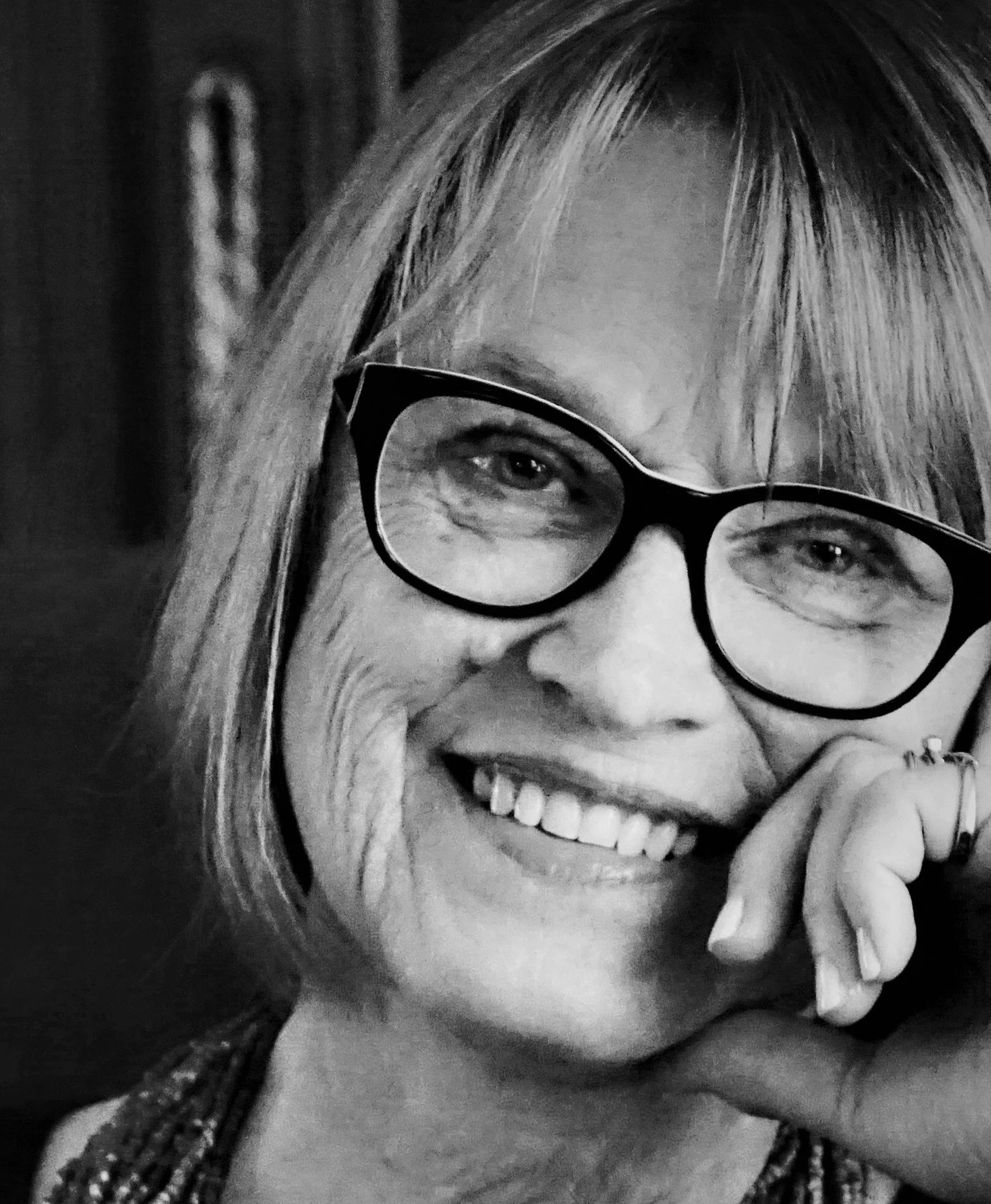
During a career that now spans over fifty years, Eleanor Lerman has published numerous award-winning collections of poetry, short stories, and novels. One of the youngest people ever to be named a finalist for the National Book Award in Poetry, she also won the inaugural Juniper Prize from the University of Massachusetts Press and the Lenore Marshall Poetry Prize from the American Academy of Poets, among other accolades. In addition, her novels have been recognized with numerous awards including the John W. Campbell Award for Best Book of Science Fiction and being shortlisted for The Chautauqua Prize; recent awards for her short fiction have included being named a finalist for the Missouri Review Perkoff Prize. She has also received a Guggenheim Fellowship for poetry as well as fellowships from the National Endowment for the Arts for poetry and the New York Foundation for the Arts for fiction. Her most recent work, Slim Blue Universe (Mayapple Press 2023) was named a finalist for the Eric Hoffer Medal Provocateur, awarded to “the best on the frontier of poetry—the experimental, the innovative, the daring and stunning, the impromptu in technique and voice.” In 2026, She Writes Press will publish King the Wonder Dog and Other Stories, her collection of new short stories. Find her online at eleanorlerman.com and on Facebook (facebook.com/eleanor.lerman).