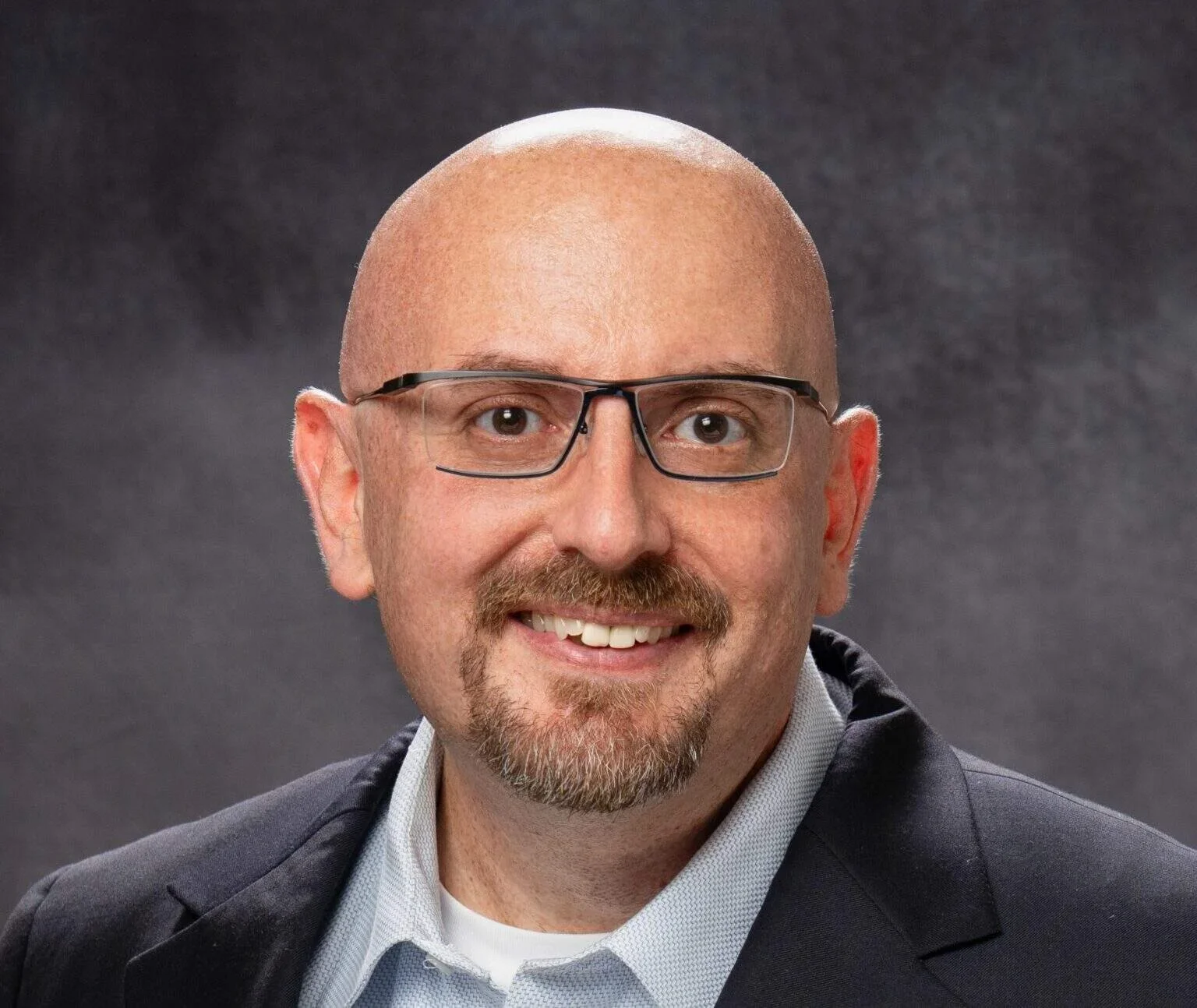
Q&A with Rob Tonkin
/
What inspired you to choose the title, and how does that label reflect your journey and the people you encountered throughout your life?
The title is bold, and "the proverbial they" say the title is how people discover a book. As someone who had a career in marketing before I became an author, I can tell you that is definitely a part of it! It also represents a version of myself that I’ve since moved beyond. But "asshole" is a word with a ton of different meanings. For me, it’s a metaphor for how people can treat one another—sometimes unknowingly, sometimes with malice, and often just as a learned behavior.
Two good people raised me, but their treatment of me left a lot to be desired. The betrayals, abandonment, and neglect I experienced, I consider to be asshole behavior. And then I was sexually abused by people I worked for—people who were, without a doubt, assholes. Assholes seemed to be everywhere in my life, and over time, I absorbed it all and became one myself. The book is about how I fell, and what it took for me to rise. It’s not just a history of assholes, but more of a common thread running through the narrative. Ultimately, this book is a mirror for anyone who’s wrestled with masks, the need for approval, and that deep hunger to feel like you are enough.
You describe growing up with privilege but lacking emotional connection. How did that tension between success and emotional isolation inform your early choices?
That tension really gave me the push I needed to become independent and build a life of my own. But in the process, I missed out on a lot of my childhood. As a kid, I lacked the emotional intelligence to navigate the chaos around me, so I found ways to survive. After a while, all the bumps and excitement started to feel normal. I was like an animal constantly in fight-or-flight mode. The tension came from this constant push and pull between pain and redemption. I was drawn to the polished cliques and the glitz of the entertainment industry, yet in the book, I share all the cracks I saw in that shiny facade, both while I was living it and after the dust settled.
You worked with huge names like The Black Eyed Peas, blink-182, and One Direction. From the outside, it looks glamorous—what was it really like behind the scenes? At what point did you realize the glamour didn’t match reality—and how did that realization impact your personal identity?
Most people I met in the entertainment industry were probably dealing with some level of a dysfunctional childhood, just like me. Because of that, the environment felt strangely comfortable. Getting screamed at didn’t bother me the way it might bother others. For years, I was completely unaware, just seeking validation from people higher up in the pecking order. Meeting bands was a rush, like any other compulsion or addiction that makes you feel good—at least for a little while. The bigger the talent, the better the rush. It started with local bands and then had to be national acts to get that same feeling of accomplishment. And then bigger and bigger names to bring the same sensation. Eventually, all of it wore off, and it mattered very little.
For those who think the backstage of concerts is a non-stop party, that's not true. But public figures do have an unfair advantage and are treated like VIPs by almost everyone. Being in their entourage gave me access to similar perks. Some of those were amazing and incredibly fun, but like fireworks, they were fleeting.
How did the mentorship and early abuse you mention shape your work patterns and emotional responses in adulthood?
It most affected my ability to trust other people. I lived from a place of being a victim, and I was attracted to that weakness in my relationships. It also gave me the fuel I needed to manipulate and control situations to get what I wanted.
Looking back as an adult, do you feel if young Rob talked with his dad about the abuse, would that have changed the trajectory of your relationship?
I honestly don’t know. I can imagine my father’s reaction might have made the situation worse. I never told my parents about the sexual abuse I experienced in the late 70s. My father was so conservative that it was impossible to predict what he’d do, and I feared something much worse than simple anger, like total humiliation. I feared he would blame me, or forbid me from working at the radio station and pursuing my dreams, maybe berate me, or use it against me to control me.
I was also afraid he would react in an overly pragmatic way, pulling out a legal pad to get the facts, devoid of emotion, maybe even involving law enforcement. Or, possibly even worse, that he would react with uncontrollable, nervous laughter, as if the pain I was sharing was too absurd to process. I even thought it was possible he would just turn into a silent statue, completely unresponsive. Because of these fears and the lack of a close relationship, that job and my dream of being somebody in the entertainment world became my lifeline, my entire survival system.
Your memoir balanced moments of humor, brutally honest and grit. How did you strike a balance between vulnerability and humor in recounting deeply personal—and painful—experiences? Did it reopen wounds that you healed?
There are definitely some fears that come with sharing a story as raw as mine. I didn’t set out to be witty or to make readers cry. For me, vulnerability has a secret power, and I used that to weave together the words of each wild story. The entire experience of writing the book was both painful and relieving. I revisited many emotional wounds stored deep in my body and mind, which ultimately led to a cathartic feeling, much like the story arc itself.
How did you navigate deciding which stories to include—and which to omit—to create a coherent, emotionally impactful memoir?
The first draft included everything—and I mean everything—totaling nearly 200,000 words. I had the help of a skilled journalist and editor whom I’ve known for years, which meant we were comfortable enough to disagree on things as much as we agreed. They helped me sort through that mountain of stories and text to shape the narrative. But I also kept editing as I went, losing count of the iterations. I rearranged parts and cut entire stories or segments that made the manuscript feel slow. I wanted to make sure each chapter could stand on its own while still having smooth transitions to keep the reader engaged. Then I added more life to scenes with vivid descriptions, levity, and dialogue.
I didn't have a specific reader in mind, but I knew I wanted concise chapters because that’s how I enjoy reading books. So they kept getting shorter, and I kept adding more of them. There’s a satisfaction that comes with finishing a few chapters or a whole section in a short time, and that became my goal—to give readers the same pleasure I find in a gripping page-turner.
Who do you most hope reads your memoir, and what would you want them to feel or learn from your story of trauma, industry culture, and transformation?
There isn’t one specific person I have in mind. I hope my book offers hope to those who believe they’re doomed to a miserable life. My journey is proof that the “defective programming” I received as a kid can be reprogrammed. It’s not easy, and I don’t know any shortcuts. Many readers have asked me for a blueprint, but that’s the core issue—no one, not a skilled therapist or an intellectual, can tell another person how to fix themselves. Everyone has to find their own way to change, their own recipe for reprogramming. I hope my book can be a catalyst for that.
As for industry culture, our society places too much importance on public figures. They make mistakes just like everyone else. Cancel culture is a complex issue, and it’s difficult to separate a person’s genius or the adoration they receive from their monstrous deeds. When it comes to my own transformation, that’s all I can control and be responsible for. I hope people can see that my damaged parts and bad decisions are not just excuses, but components of who I am. Forgiveness supports my self-love; in that sense, my story isn’t unique, but what would satisfy me in sharing it is if reading it helps others.
Now that you’ve shared your truth in this memoir, what’s next for you—personally or professionally?
I am indeed writing more. What that looks like is still unclear right now, but I have several ideas in development. One of the reasons I chose to publish this book instead of keeping it as a keepsake for my friends and family was to explore the unknown opportunities that might arise from releasing it into the wider world.
If younger Rob could hear this memoir someday, what do you hope he’d understand—or forgive—in himself?
The grief and shame that come from trauma include mistrust, a distorted self-image, and the loneliness of despair and isolation. I hope he would understand and forgive the poor reactions I had to these and other feelings—the reactions that came from those deep wounds.
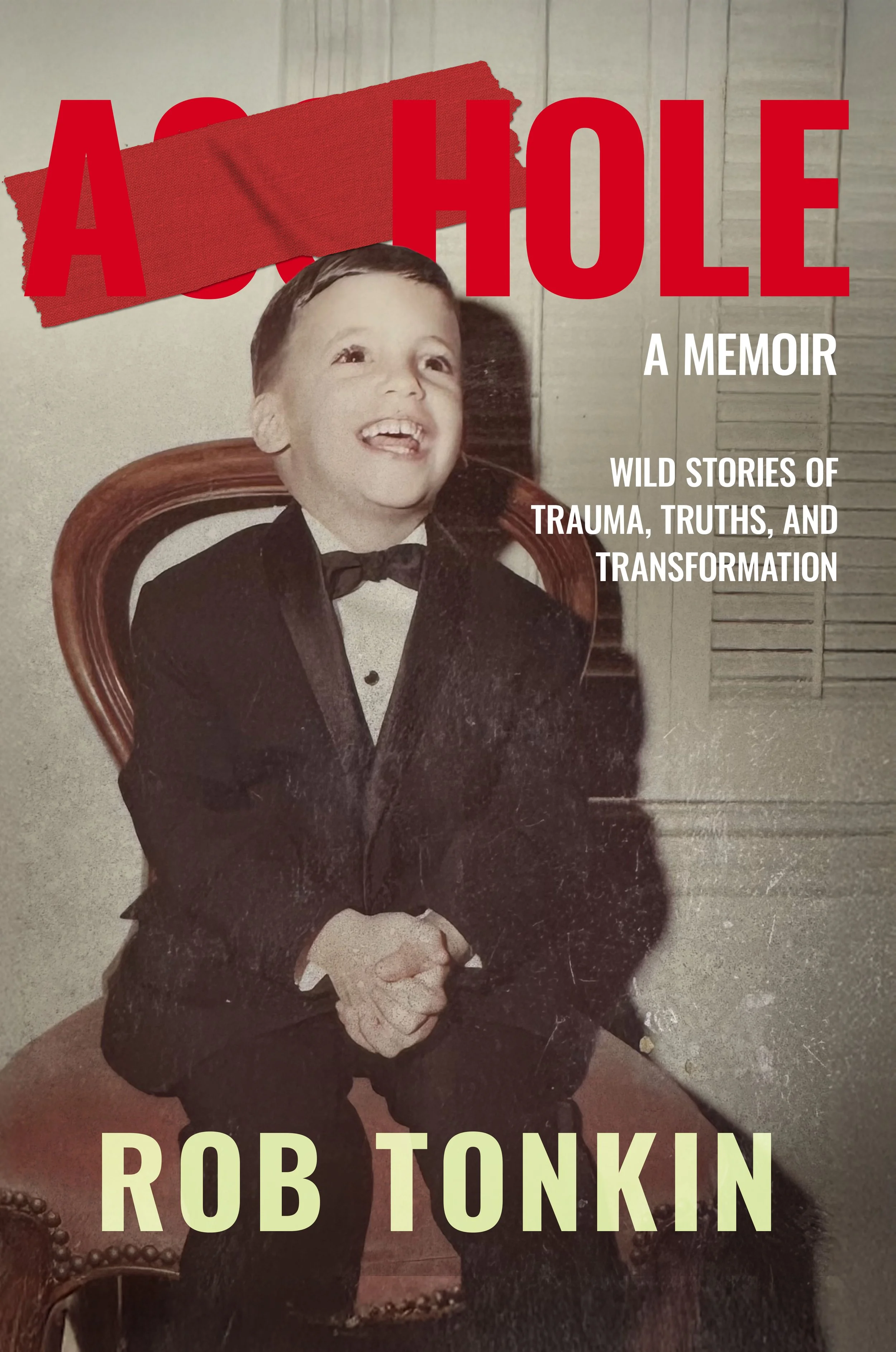
About the book:
What if the life you built—the success, the status, the wealth—was just a carefully crafted illusion hiding the truth you refused to face?
In this unflinchingly honest memoir, a man born into privilege but starved of emotional connection takes readers on a California journey through ambition, excess, and the painful search for self-worth. Raised in a dysfunctional household, he spent his childhood yearning for love and validation, only to chase approval in all the wrong places—first in the cool cliques of his youth, then in the seductive but empty world of entertainment.
From rubbing shoulders with Hollywood icons to battling imposter syndrome, self-destruction, and the weight of his own unhealed wounds, he learned the hard way that no amount of wealth or popularity could mend a fractured soul. But through disciplined effort, self-reflection, reckoning with past mistakes, and embracing the uncomfortable truths about himself, he discovered something greater than success: authenticity.
Told with sharp wit, brutal honesty, and a hard-earned sense of redemption, this memoir is a gripping testament to the resilience of the human spirit.
If you’ve ever questioned your own worth, chased the wrong dreams, had someone call you an asshole, or wondered if true change is possible—this story will stay with you long after the final page.
Get your copy on Amazon | Bookshop.org