Spotlight: The Gamble, Sweet Dreams, and Lady Luck by Kristen Ashley

THE GAMBLE

Life isn't meant to be perfect. It's meant to be lived . . .

Nina Sheridan thought she'd found the perfect man who would become the perfect husband. She was wrong. When Nina realizes the man she planned to grow old with doesn't know her at all, it's time to rethink her idea of perfect. And what better place to get her life in order than a remote Colorado mountain town halfway around the world?

Gnaw Bone, Colorado, may not be flashy or cosmopolitan, but it's got a brand of hospitality all its own. Nina isn't entirely sure she's ready to trade the life she thought she wanted in England for cozy evenings in her mountain retreat, and she definitely isn't sure she's ready to handle the connection she feels to the owner of her rental house, Max Holden . . .

Nina didn't come to Colorado to find love, but even the best-laid plans can go awry. Now, if Nina can let go of her past, Max-and a future in Gnaw Bone-might just be the perfect second chance she's been waiting for.

Buy on Amazon | Barnes and Noble

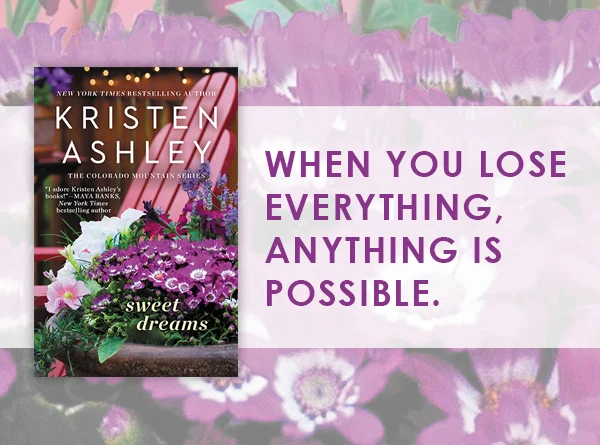
SWEET DREAMS

When you lose everything, anything is possible.

Lauren Grahame needs a whole new life. A simpler life. After leaving her cheating husband, she moves to Carnal, Colorado, takes a job as a waitress, and realizes she might have finally found the hometown she'd been searching for. Except things are about to get a lot more complicated . . .

Lauren's fresh start does not include her growing feelings for her boss, Tate Jackson. She'll take the new friends, the new job, not to mention the incredible banana bread from the local coffee shop, but love is not on the agenda.

However, the people of Carnal know chemistry when they see it, and they're not about to let Tate and Lauren miss their chance.

Buy on Amazon | Barnes and Noble

LADY LUCK

All you need is a little luck.

Lexie Berry has had nothing but bad luck. You name it, Lexie has probably survived it-or worse. But there's only so much bad luck a girl can take, and now one promise is all that stands between her and a brand-new life.

When that promise brings her to Carnal, Colorado, Lexie isn't sure the rough, yet strangely charming, town is for her. But there's something Carnal has that might just make staying around worth it . . . and that's Ty Walker.

For five years, Ty was imprisoned for a crime he didn't commit. Now he wants revenge on the people who framed him. Lexie knows there's a difference between vengeance and justice, and she'll do everything she can to make sure Ty gets the latter. And with the good people of Carnal on their side, Lexie and Ty might finally find their luck is changing for the better.

Buy on Amazon | Barnes and Noble

About the Author

Kristen Ashley grew up in Brownsburg, Indiana, and has lived in Denver, Colorado, and the West Country of England. Thus she has been blessed to have friends and family around the globe. Her posse is loopy (to say the least) but loopy is good when you want to write.

Kristen was raised in a house with a large and multigenerational family. They lived on a very small farm in a small town in the heartland, and Kristen grew up listening to the strains of Glenn Miller, The Everly Brothers, REO Speedwagon, and Whitesnake.

Needless to say, growing up in a house full of music and love was a good way to grow up.

And as she keeps growing up, it keeps getting better.

Connect: Website | Facebook | Twitter

Giveaway

Enter to win 1 of 5 sets of The Gamble, Sweet Dreams, and Lady Luck! http://bit.ly/2r26Avw

Spotlight: Alpha at Home by DJ Bryce

Maximus has always known two things: He was destined to be the Bravo of his Pack and he's in love with Gilliam Matthews. The problem is, Gilliam was raised knowing she was destined to be mated to the Alpha, who is Maximus's best friend. 

Although they've kept each other at arms length, you can't escape fate. When it becomes clear that Gilly is Max's mate, and not Mateo's, they will all have to come to terms with the way this will impact, not just their lives, but the pack's future. 

Alpha at Home is the first in an all new series about men who may not be brothers by blood, but are brothers of the heart. And the realization that, regardless of how the Matthews siblings have been raised, sometimes you have to follow your heart, even if it's leading you down the hardest path.

Buy on Amazon

About the Author

Author DJ Bryce loves her men tall, dark, and Alpha. She can often be found relaxing with a cup of coffee, a handful of RedVines, and a dirty book, with her three dogs snoozing happily at her feet. 
She's a lover of The Walking Dead, Romantic Comedies, and writing sexy shifters. 
For information on her new releases, promotions, and her favorite PNR reads, sign up for her newsletter: http://eepurl.com/clmyu5

Connect: Facebook | Twitter

Read an exclusive excerpt from The First Word by Isley Robson

To stay sane, Andie Tilly must keep her mind on her work. Her job as a pediatric occupational therapist is the perfect distraction from the unspeakable tragedy she experienced as a child. But when she meets alternative-energy magnate Rhys Griffiths and his autistic toddler, Will, she quickly realizes her heart will never be the same. Especially when her name becomes Will’s first word.

After accepting a position as a live-in therapist for Will, Andie steels herself against the appeal of the disconcertingly attractive—and attracted—Rhys. But their chemistry can no longer be denied, and their heated affair seems destined for happily ever after. A destiny Andie’s terrified to embrace.

When Andie’s guilt, Rhys’s awkwardness, and the abrupt appearance of an erratic ex threaten to dismantle their delicately blooming relationship, they must decide if love is worth the challenge. Can Andie and Rhys find their way back to each other? Or will the demons of the past simply prove too strong?

Exclusive Feature: The First Word by Isley Robson

Rhys paced into the foyer. Where was she? He stalked across the gleaming expanse of marble and flung the front door open. And there, almost nose to nose with him, stood a figure on the threshold, poised to knock. 

He took in the flash of emphatic hazel eyes, and the perfect symmetry of dramatic winged brows set against pale, fine-grained skin. Her face was delicate, heart shaped, and framed by a lush cascade of dark hair. The reality of this woman was so different from the image he’d conjured that it felt like an ambush. She was striking. Beautiful, by anyone’s definition. 

“Oh, I’m sorry.” She took a step back and offered her hand. “You must be Mr. Griffiths. I’m Andie Tilly.” 

“Yes, I suppose you are.” Rhys realized the words were inappropriate as soon as they passed his lips, but there was no biting them back. It was a dilemma he often faced when meeting new people. Overcome by the barrage of sensory input in those first few moments, he could become unmoored and lose his way in conversation. 

With Andie Tilly, the problem was magnified tenfold. His gaze skated over her soft pink mouth—full but unsmiling—and the elegant stem of her neck. Eyes. Lips. Skin. Throat. Each feature vied for his focus, like the scattered pieces of a puzzle he had yet to solve. 

Too late, he noticed that he’d grasped her hand and neglected to let it go. He gave himself a swift mental kick and released his grip. Sometimes it seemed his entire history with the opposite sex was nothing more than a series of pratfalls brought on by a kind of interpersonal dyslexia. Time and time again, he’d failed to read the cues. 

Now, for Will’s sake, he’d given up trying. He could no longer risk the damage. It was a good thing this woman was only here for a job. 

She was stalled on the doorstep, waiting for an invitation, so he waved her inside. Well padded in a bulky winter jacket, she slipped by him and into the foyer with an elegant economy of movement. A frigid blast of New England air followed her in, but the chill dissolved in a warm ripple of sensation where her sleeve brushed his chest. 

Shrugging her jacket into his waiting hands, she stood there in hip-skimming jeans and a simple T-shirt, exuding a fresh, lemony scent and an unassuming grace. 

“Where’s Tom?” he asked, groping for a conversational anchor. 

She shot him a searching look. Her eyes were mesmerizing, their shape as cleanly etched as an Egyptian hieroglyph. Against the flawless backdrop of her skin, they sent potent signals. Anxiety. And something more profound. 

“He’s in the car, taking a call. He said I should come in. I hope I didn’t disturb you.” 

“Not at all,” he said, working to collect himself. “I was expecting you, of course.” 

He guided her through the glittering, formal foyer, careful to maintain a pleasantly neutral expression. But as he ushered her into the den, his focus unintentionally riveted to the subtle swing of her denim-clad hips, he was forced to acknowledge that he was indeed disturbed. More disturbed than he cared to admit. Not least by his toddler son’s staggeringly good taste in women. 

“I confess I was curious to meet you,” Andie said as he showed her to the cluster of leather club chairs grouped by the fireplace. “Your son really made an impression on me.” 

“The feeling seems to be mutual.” He gestured for her to take a seat. “Which makes me even more curious to get to know you.” 

She gave an uncomfortable smile, polite but locked down, her gaze skittering away as she settled herself into the leather upholstery. 

Rhys was too restless to claim a seat for himself. “Tell me how you did it,” he prompted. “How you got through to him.” 

“There’s no secret to it,” she demurred. “I interacted with Will the same way I would with any client. It’s just—” 

“Yes?” Rhys pressed. 

She dipped her gaze and drew a deep breath. 

“This might sound strange,” she confided, “but I understand kids like Will. I know what it’s like not to feel at home in your own skin. To experience the world as an unforgiving place. Not in the exact same way they do, of course. But I get it, and I want to help. Maybe he could sense that.” 

Rhys stilled, his pulse pounding at his temples. 

“That doesn’t sound strange at all,” he said, his voice raw. He cleared his throat. “But I have to admit I’m pretty ignorant about what you occupational therapists actually do. Will strikes me as a little young to have an occupation.” 

“Don’t worry.” Andie’s posture loosened a fraction as the flicker of a smile played across her lips. “Occupational therapy isn’t about putting Will to work.” 

“Well, that’s a relief. I was a little worried about finding a business suit for him that would work with the diaper.” 

Buy on Amazon | Barnes and Noble

About the Author

Isley Robson is a word lover who, when not reading, spends her time writing about colorful characters and the people who love them. After earning a degree from the University of Technology Sydney, she moved to the Boston area to continue her studies and eventually took a job in corporate communications. Through it all, she continued writing and has now won a variety of romantic-fiction awards, including the Orange Rose 2015, the Fire and Ice 2015, the Catherine 2014, the Laurie 2014, and Show Me the Spark 2013. Her debut novel, The First Word, is book one in The Visionaries series.

Robson lives in New England with her writer husband, two children, and two dogs. For more information, visit her at www.isleyrobson.com or on Twitter @isleyrobson.

Read an excerpt from I'm Not in the Band by Amber Garza

I like Kassidy Milton. There, I said it. She’s funny, beautiful—even though she doesn’t know it—and my favorite kind of weird. But I can’t tell if she’s into me or just trying to get close to me for a chance with my famous twin brother instead. I mean, it has to be me. I am the better-looking one. 

But Kassidy has some demons, and she’s not good at letting people in. That happens when you’ve been hurt by someone close to you. I can relate. Trust is a funny thing; it’s hard to gain but easy to lose. I might just learn that the hard way.       

Disclaimer: This Entangled Teen Crush book includes a snarky heroine, a swoon-worthy hero, crazy best friends, your favorite music, and lots of feels.

Excerpt

“Hey.” He pushes off the van and takes a few steps toward me.

We’re so close I can smell traces of soap and mint toothpaste. “Hey,” I respond. Way to be original, Kass.

“You made it.” He rubs the back of his neck with his hand.

I laugh without meaning to. “Well, I didn’t really have a choice. It is the first day of school, and I do go here now…” The words trail off as I realize I’m being rude.

His cheeks redden. “Yeah, I guess that was a stupid thing to say. I just meant that you made it early…to meet me…” Shaking his head, he says, “Man, I’m usually so smooth.”

My head spins. I’m not the type of girl that makes guys nervous. Sophie and Kate make guys nervous. I make them comfortable. It’s why I get friend-zoned so early on. I can’t tell you how many times I’ve liked a guy, thinking they liked me, only to find out later that they had a crush on Kate or one of my other friends, and they were using me to get close to them because I was the approachable one.

“Hopefully you’re smoother than this when you spit,” I joke, remembering last night’s text. My pulse skitters beneath my flesh. I’m not usually flirty.

“Oh. Right.” He laughs, running a hand through his hair.

“You’re not chickening out, are you?” Raising an eyebrow, I cross my arms over my chest. What has gotten into me?

“Never. I just need a minute to prepare.” He rolls his shoulders, stretching his neck from side to side as if preparing for a race. “Okay. Okay. I think I got it.” Bouncing his head up and down, he starts. “Uh uh, yo. First day of school, chilling with Kassidy. If I was allergic to hot girls, then I would sneeze. My name is Archer, my rhymes are fire. We can go on a date, if you so desire.”

My face flames. Is he serious? His teasing smile makes it impossible to tell.

“Give me one more minute?” he asks. “I…um…have been kind of wanting to do something all night, and I’ve finally worked up the courage. And…um…I’m kinda worried if I don’t do it now, I won’t.” I swallow hard as he angles his face, moving it closer to mine. “Kassidy, is it okay if I kiss you?” Hot air fans over my lips, smelling like mint and soda. I’ve only been kissed two times before, and neither went well. But this will be different. This is Archer, and the closer his face comes to mine, the more my body hums with anticipation. Holding my breath, I nod.

His hands slide farther along my cheeks, his fingers slipping under my hair. Then his lips lightly brush mine. Once. Twice. Quickly, like a soft drumbeat. Reaching out, I grip him around the waist, afraid I might fall. Drawing back, he meets my gaze. My mouth feels dry, as if I’m eating a mouthful of cotton. My chest rises and falls with each breath, and I nervously lick my lips, anticipating his next move. When he brings his face toward mine again, I close my eyes and part my lips. This time his mouth presses down more firmly, his lips soft and warm.

At first I’m paying attention to every movement, trying to match it. But it doesn’t take long to lose myself. I’m weightless, no longer tethered to the ground. My toes skim the clouds, my fingertips brush the stars. The frigid air whisks over my skin, causing me to shiver. It’s a satisfying shiver, deep in my bones. When our lips detach, I blink repeatedly bringing myself back to earth.

I’ve never experienced a kiss like this before. It was amazing.

And I can’t wait to do it again.

“It’s not that big of a deal. Really.”

“Oh, I think it’s a really big deal.” He moves closer, his hand curving around my waist, his body sliding against mine.

“You do?” I get the feeling we’re not talking about the same thing.

“Our first date. Our first dance.” His lips hover mine. “Our first kiss. To me that’s a very big deal.”

Ah, yes. I prefer this topic of conversation. My lips burn with longing. Closing my eyes, I wait for his mouth to cover mine.

“Ross Devlin and Kassidy Milton are now friends! What?” Tiffany’s shrill voice rings out in the hallway. My chest tightens as Archer draws back. Tiffany stares down at the phone in her hand, her mouth gaping open. Then she stomps away from us angrily.

Archer’s brows are furrowed. “What was that about?”

My stomach sinks. He didn’t know. And now I have to be the one to tell him. “Um…your brother and I sorta became Facebook friends. But like I said, it’s not a big deal.”

“That’s what you were talking about?” His jaw tightens. “That’s why everyone keeps staring at us? I assumed it was because of the pictures I posted of our date.”

“That would make a lot more sense,” I mutter under my breath.

“Not really.” He frowns. “A date with me isn’t really news. Friending a celebrity is.”

“But isn’t half the school friends with him?”

“Yeah, but they knew him before he was famous.” He runs a hand through his hair. “And he’s selective with who he’ll friend on social media.”

The statement feels heavy, weighted, and my knees buckle under it. “Are you…” I work up the courage to finish the question. “Bothered by this?”

He doesn’t answer right away. I hold my breath.

Finally, he shrugs. “I just didn’t realize you wanted to be his friend.”

I exhale. “Of course, I am. I want to be friends with everyone who’s important to you.”

“So this is about me, not him?”

It feels like a trick question.

Buy on Amazon | Barnes and Noble

About Amber Garza

Amber Garza currently lives in California with her amazing husband, and two hilarious children who provide her with enough material to keep her writing for years.

Connect: Website | Twitter | Facebook | Goodreads

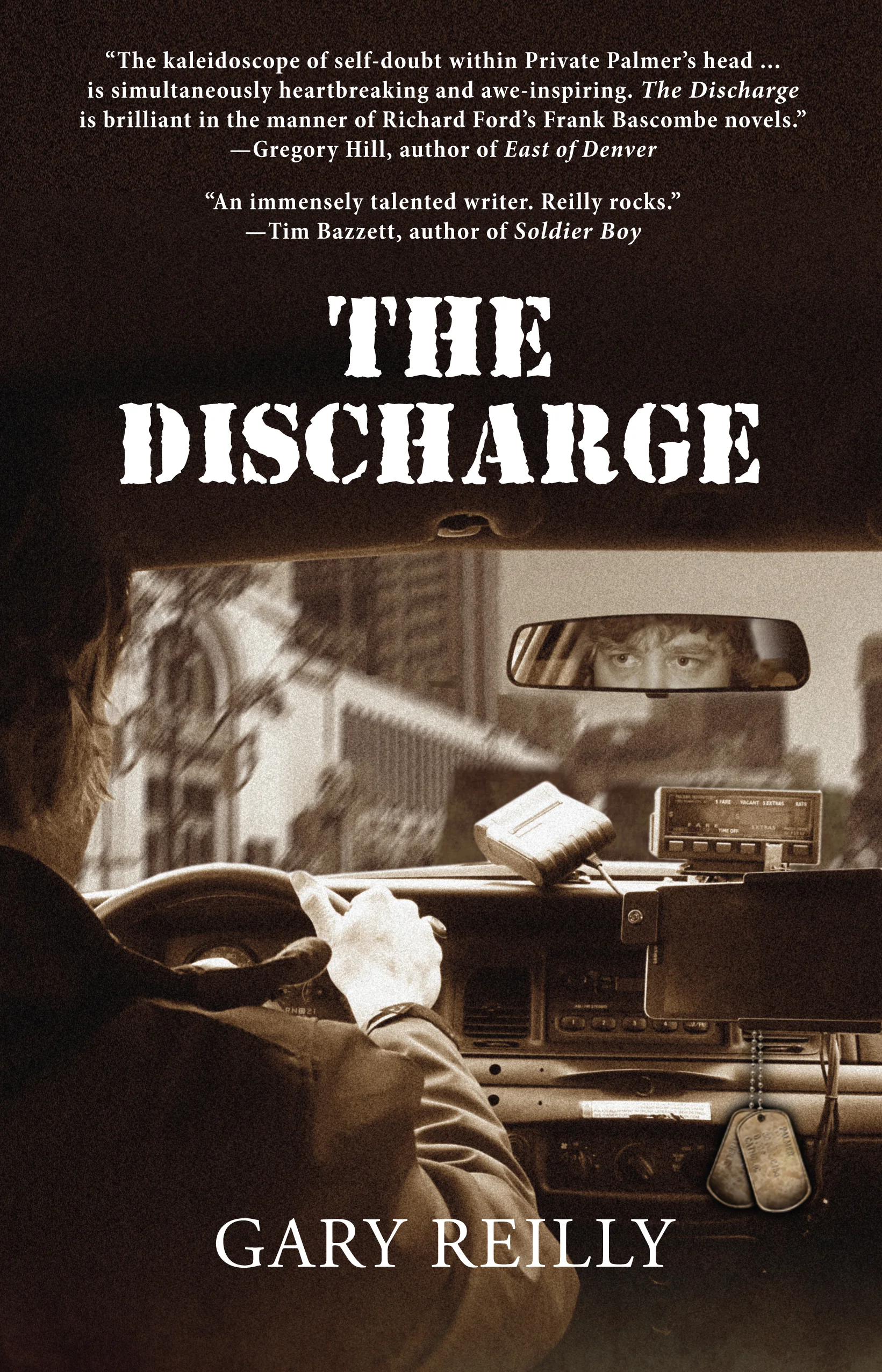
Read an excerpt from The Discharge by Gary Reilly

The Discharge is the third novel in Gary Reilly’s trilogy chronicling the life and times of Private Palmer as he returns from the U.S. Army to civilian life after a tour of duty in Vietnam. It is a largely autobiographical series based on his own two years of service, 1969-1971, which included a year in Southeast Asia.

In the first book, The Enlisted Men’s Club, Palmer is stationed as an MP trainee at the Presidio in San Francisco, awaiting deployment orders. Palmer is wracked with doubt and anxiety. A tortured relationship with a young lady off base and cheap beer at the EM club offer escape and temporary relief.

The Detachment is the second in the series. This novel covers Palmer’s twelve months in Vietnam as a Military Policeman. In the beginning, he endures through drink and drugs and prostitutes but comes to a turning point when he faces his challenges fully sober.

Now, in The Discharge, Palmer is back in the United States. But he’s adrift. Palmer tries to reconnect with a changed world. From San Francisco to Hollywood to Denver and, finally, behind the wheel of a taxi, Palmer seeks to find his place.

Excerpt

From Part 3: Winter

1

Now that he had a source of income, Palmer decided it was time he moved out of his basement apartment. He had lived there for a year after he had broken up with his last girlfriend, and it was the place where he had endured the worst of the bad dreams of his life. They were not the frightening dreams of childhood, of arms reaching out of the darkness to grab an ankle, they were dreams of anguish, contrasted with dreams of peculiar joy. He had rarely dreamed about Vietnam after he'd come home from the war, yet during the past six months he had begun having dreams where he found himself back on the army compound where he had served as a clerk/typist.

The architecture of the compound was a bit different, in the way that most familiar places are skewed in dreams, but was enough like his old duty station that he knew where he was and what was expected of him, that he would be required to spend another year in Vietnam. He stormed angrily around the compound in these dreams, exasperated that he had to do it all over again, that he had to re-experience that oppressive sense of dread that had enveloped him like a suffocating blanket during his tour twenty years ago. But oddly enough he never sought out a battalion clerk or an officer in these dreams, to explain that he had already served his year and that he was under no legal obligation to do it again. He simply accepted it as he had once accepted his real tour. He would awaken from these dreams drained from frustration, yet not especially relieved to be awake.

One night he dreamed that he was dead. The cemetery where his body was interred, the landscape itself, was made of stone. There were no lawns, no acres of empty space, only tombs rising no more than waist high and crowded together like a city which stretched into the dream distance. His tomb was right next to a large motionless body of water which extended in the opposite direction, describing a curved horizon. This tombscape was engraved with random, meandering, narrow paths, so that the living could walk among the graves. The low walls of these paths had embossed carvings of skulls, bones, and random intricate interlocking designs. He himself was dead, was a ghost floating above his tomb in a pleasant state of mind that was almost physical in its intensity, was unlike anything he had ever experienced in waking life. He drifted here and there among the tombstones, and was aware of one other ghostly presence but felt no fear or even any particular need to communicate with it. Living visitors were walking among the tombstones, families of the deceased. He felt no compulsion to draw close to them, to listen in on their conversations. He felt no particular need to do anything at all. Far across the body of water was the glow of what he thought must be a city. He neither knew nor cared, and when he awoke from this most peculiar of dreams, he kept his eyes closed and clung to its sweet ambiance as long as he could.

Whenever he dropped a passenger off in an unfamiliar neighborhood, Palmer took note of any For Rent signs he might see planted behind window glass. He would study the house or apartment building and try to imagine himself living there. He wanted some place where he could stay for a long time, a place from which he would not feel the need to flee for at least a year. He did not want to live in the suburbs, nor on Capitol Hill which had been taken over by punk rockers in the way that the heart of the city had been overrun by hippies when he had been a teenager. And he did not want to live so far away from the cab company that he would find it complicated to get there if his heap ever broke down and he had to take a bus. He did not know where he wanted to live, only that he had to get out of that awful basement apartment as soon as possible. He had the money now. This job seemed to be working.

It had not worked very well the first few shifts. He had made all the mistakes that Pemberton had warned him about, and had invented a few of his own. One day he failed to tighten the radiator cap after checking the water level, so that the water evaporated, the engine overheated and seized up, and the cab had to be towed back to the company at a cost of twenty-five dollars to Palmer, upon whom the mechanics placed the blame after discovering the loose radiator cap.

On another day he picked up a man at a bar, and then made the mistake of letting the man go into an apartment complex unescorted to "get the money." The man never came out.

On his first day of driving Palmer had earned a total of five dollars, even though he worked the maximum twelve hours. His very first fare from the airport was a cowboy who had left his truck over the weekend in the parking lot of a girls' school a few blocks from Stapleton, so that the fare was not fifteen dollars as Palmer had expected for his first trip ever out of the airport, but three dollars.

He quickly drove back to the airport and pulled up in the cab line, but not so quickly that he could outrace the sense of futility that had begun to overwhelm him. From the very outset of cab driving, from the get-go, things were not working out the way he had hoped. He was old enough to know that there was no justice in the universe, but it seemed that the odds ought to occasionally go his way through sheer caprice.

He came home that night with a fleeting sense of horror that this job was not only not going to work, it could not even be considered real. Where was that wad of long green which had made an obscene bulge in Pemberton's breast pocket? But then how many times in his life had he discovered that there was more to learning than watching someone else do it. Imitation. That word had subtle meanings that he had never appreciated until he tried doing things. Fake. Fraud. Authenticity was like a missing ingredient that he could never quite corner, capture, put to any use. If cab driving didn't work out, then he didn't know what he was going to do. But there was nothing to do except keep on trying, because the alternatives, of which there were many, were unthinkable. He had to make this work, and before winter came, he did.

On the day of the first snowfall of the season, Palmer was netting an average of sixty dollars a shift for twelve hours of driving, the same pay scale most teenagers got for flipping burgers, minus the supervision of a cranky manager, a foreman, a boss. He had enough money in the bank to begin looking in earnest for a new place to live, first and last month's rent, cleaning deposit, all the crap of paranoid landlords, although he did not realistically expect to live in a place where such things were a major concern to the live-in managers who collected rent for absentee owners. He in fact expected to live in the neighborhood of the punks and the college students going to school nights and working shit jobs in the daytime. He expected to end up on Capitol Hill.

Whenever he drove through that part of town and saw the young people in their tattered blue jeans and rock haircuts and drug jackets, he was reminded that he was forty-two years old and would not fit in, that to these young minds the Beatles were as obsolete as Tommy Dorsey had been to his own generation. Still, he contemplated the For Rent signs in the grimy windows of the buildings in that part of town as if he were looking for a room that resembled his youth.

The first snowfall was light, left only a dust of white powder on the streets, did not stick and was blown aside by the tires of passing cars. A niggling fear sprouted in Palmer's gut at this first sign of what might turn out to be an obstacle to his success. How many times in the past had he seen only cabs moving along the streets in heavy snowstorms? Up to now he had always arranged his life so that when the snow arrived and the parked cars at curbs began resembling the skyline of the Rockies he would never have to leave his apartment. Fifteen years earlier he had been fired from a job he didn't like. It primarily involved delivering carpets. Like giant redwoods those carpets were, rubber-backed and woven of artificial fibers, they made his legs bow when he and the driver trundled up sidewalks and entered the homes of pleased women who fretted as he let the monstrous weight drop on hardwood floors. It was like carrying a sofa bed on one shoulder. He did not go to work because he imagined himself slipping on an icy sidewalk, breaking a leg, a pelvis, manufacturing a hernia, all for a dollar above the minimum wage. His girlfriend had answered the phone when it rang that morning and said Palmer was too sick to come to work. His boss told her to tell Palmer not to bother coming back at all. Palmer was thirty-two years old, and the world was filled with pissed bosses.

One morning after dropping off a fare on Capitol Hill, Palmer drove past a For Rent sign planted discreetly on the large front porch of a three-story apartment building. The placard was black, the letters bright red, a sign you'd buy in a hardware store or a Woolworths. The sign caught his eye only because he became attuned to spotting obscure signs after he had begun what was turning into a rather desultory search.

The apartment was in a neighborhood which was old but not run-down. People in their late twenties and early thirties would live here, residents who held mid-level jobs—clerks, nurses, shipping-and-receiving. He backed the cab up quickly with the renegade attitude of freedom from rules that comes from driving a cab, and parked at the curb in front of the building.

Unlike the other buildings nearby with their flat tar-topped roofs, this one had a gabled roof plastered with green shingles, with one window looking out from what he assumed was an attic. The second floor had a pair of French doors that opened onto a massive stone balcony which hid the front door of the first floor in shadow. He got out and approached the sign, looked for the rent price which was sometimes scribbled in pencil on these cheap advertisements, but there was nothing to indicate how much it would cost him to live in this place which he felt drawn to. He knew the history of these places, knew that they had been the homes of wealthy families during the nineteenth century, the buildings gone to seed in a modern world, broken up into small apartments with jury-rigged bathrooms and kitchens the size of closets. He went up to the front door and looked at a row of doorbells molded in brass. He punched the bell adjacent to the word "Manager" inscribed in blue plastic tape.

He heard footsteps approaching on a carpeted hall floor, imagined a sprightly matron, or a man who had retired from the military and was supplementing his pension with this kind of work, but was surprised when a kid who could not have been more than twenty opened the door. Fringe of dark brown beard on his chin, dark bright eyes, he was wearing a T-shirt and cut-off jeans, tennis shoes, looked like a college student. Palmer was so surprised at encountering someone who was not old that he felt as if he were speaking to an equal and not someone twenty-two years younger than himself.

"I saw your for-rent sign," Palmer said. "Is the apartment still available?"

"I was just heading out for a class at the free university but I could show you the place real quick," the kid said. He had a rapid, chortling voice, and fingered his chin as he spoke. He led Palmer up a staircase that grew narrower as it rose higher. Up to the second floor and then up another staircase that was even tighter, and which took a right turn near the top. Three more steps and there was a door flush against a wall. Palmer tried to imagine how a sofa bed might be delivered to this apartment. The manager produced a chain of keys, opened the door, led him inside.

The layout of most apartments could be grasped in an instant, so whenever Palmer walked in he knew where everything was and whether or not he liked it. But when he entered this place he found himself in a small foyer with doorways leading off in different directions. The manager opened one door and said something about it being a storage room, although it was carpeted and had a window which let in strong light. The room looked as if it could serve as a nursery. They moved into the living room, which was high ceilinged and wide. This took them to the kitchen, and then into the bathroom with a tub, no shower, and Palmer began to get the sense that the place was sprawling. The small kitchen had six windows, had a door which led to the outside. The manager explained that the kitchen had been added on years ago. It was a kind of box.

Palmer went to a window and looked down. The room extended out over a dirt parking lot below. A steep fire-escape led from the door down to the scatter of parked cars owned by other tenants.

"Let me show you the bedroom," the manager said, and Palmer followed him back through the living room and into a long room facing the street, a narrow room with a low ceiling shaped like an A-frame. It was the attic he had seen from outside. There was a non-functioning fireplace in this space, was a small alcove off to the side with a desk in it, and another alcove where a shelf of books might be set up.

"How much is the rent?" Palmer asked only because he had to, because he was dazzled by this aerie, and knew from past experience that the price would be too high.

"Two-forty a month," the young man replied, the chortle disappearing now that they were discussing financial matters. "I know that sounds cheap, but the thing is, the owners want steady renters who are gonna stick around for a long time. They don't want someone who's just gonna throw a mattress on the floor and eat out of tin cans. If you're interested in renting the place, they'll want to know about your background and what kind of work you do and all that."

He didn't seem to be trying to discourage Palmer. Palmer sensed that the kid did not dislike him, that his being a tenant would be acceptable to this manager whose job it was to pass first judgment on the strangers who came to his door, an occupation similar to being a cab driver, but with its own unique intensities.

"I can bring you a deposit later today," Palmer said. "I can bring cash if you want."

"That would be good," the kid said, the chortle returning to his voice. "Cash up front always makes a good impression on the owner."

When Palmer got back into his cab he felt an excitement and a craving he had not known in years. He wanted that apartment, could not imagine anything as great as living in that crow's nest in the sky. He went to get the deposit money out of his bank, and as he drove, half-listening to the calls being offered on the radio, he considered just what he would write in the one-page resume about himself that the manager had suggested he produce as soon as possible.

"I left home at the age of eighteen," he said aloud to the voice of the dispatcher flowing ceaselessly out of the speaker, "and got a job delivering furniture. I was eventually drafted into the army. I served one year in Vietnam and returned home where I entered college on the GI Bill. I earned a Bachelor of Arts Degree in English. After that I held a variety of jobs . . ."

This first part was easy to voice impromptu because it had the quality of a short story in which there is only so much room to describe what happened but very little space for in-depth explanations, whys, wherefores, justifications, apologies, excuses. When he got as far as leaving the drunken Eden of academia and taking his place in the real world, the mental pen with which he wrote all first drafts faltered. Most of the jobs he had held had been meaningless shit, and a few were actually painful to remember. There seemed nothing he had done since college worth mentioning in a resume, and as he approached the bank he realized that the biographical information he was obliged to write for the owner of the apartment building might end up taking the shape—like the taxi cemetery behind the cab company—of a motley collection of rather badly dented truths.

Buy on Amazon | Barnes and Noble

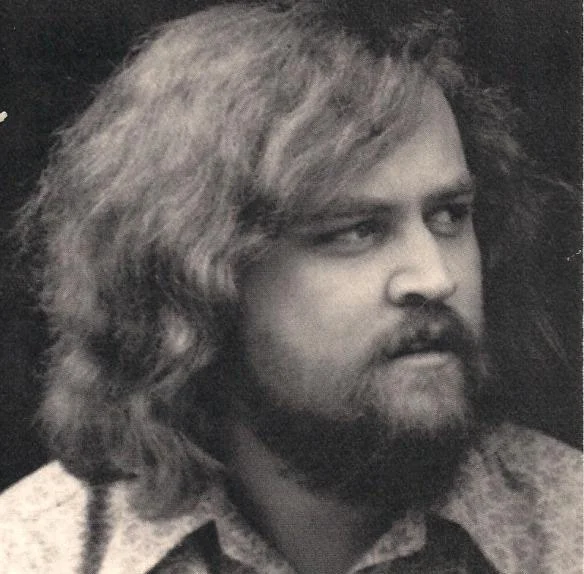
About Gary Reilly

Gary Reilly was a natural and prolific writer. But he lacked the self-promotion gene. His efforts to publish his work were sporadic and perfunctory, at best. When he died in 2011, he left behind upwards of 25 unpublished novels, the Vietnam trilogy being among the first he had written.
Running Meter Press, founded by two of his close friends, has made a mission of bringing Gary’s work to print. So far, besides this trilogy, RMP has published eight of ten novels in his Asphalt Warrior series. These are the comic tales of a Denver cab driver named Murph, a bohemian philosopher and aficionado of “Gilligan’s Island” whose primary mantra is: “Never get involved in lives of my passengers.” But, of course, he does exactly that.

Three of the titles in The Asphalt Warrior series were finalists for the Colorado Book Award. Two years in a row, Gary’s novels were featured as the best fiction of the year on NPR’s Saturday Morning Edition with Scott Simon. And Gary’s second Vietnam novel, The Detachment, drew high praise from such fine writers as Ron Carlson, Stewart O’Nan, and John Mort. A book reviewer for Vietnam Veterans of America, David Willson, raved about it, too.

There is a fascinating overlap in the serious story of Private Palmer’s return to Denver and the quixotic meanderings of Murph. It is the taxicab. One picks up where the other leaves off. Readers familiar with The Asphalt Warrior series will find a satisfying transition in the final chapters of The Discharge.

And they will better know Gary Reilly the writer and Gary Reilly the man.

Connect: Facebook | Twitter | Instagram | Website

Read an excerpt from Protected by Love by Jennifer Ryan

It was more than another blind date . . .

It was DEA Agent Caden Cooke’s third chance to impress beautiful chef Mia Martin. He’d already stood her up twice, and was shocked she was even giving him another chance. For Caden, taking down the bad guys is important, but Mia’s made it clear there’s no excuse for his bad behavior. So he’s vowed to make it worth her while with an apology he’s cooked up just for her. 

From the moment they meet, it’s clear this isn’t just another fix up. The sparks flying between them are undeniable; the tension is electric. Then, suddenly, the best moments of their lives turn treacherous when a drug dealer set on revenge puts their lives in danger. And Mia and Caden quickly realize they will do anything to protect the other—and live for the love neither of them expected.

Excerpt

He really wanted to kiss her.

“You’re worried about work.”

He scanned the quiet street and the light traffic this time of night. He didn’t think Marco stupid enough to stay in the city. Too many cops out looking for him. He wondered if someone was watching his place, waiting for him to come home.

“Work is always on my mind, but right now, there’s only one thing I’m thinking about.” He closed the distance between them and slipped his free hand around her back, the ends of her hair brushing his hand, and pulled her close. He stared down into her surprised eyes and smiled. “You promised me a good-night kiss.”

Her hand came up and rested on his chest. “Yes, I did. I’m a woman of my word.”

“I’m counting on that.”

He leaned down. She rose up to meet him in the middle. Their lips touched, and fire shot through him with a swift need that burned and consumed every thought in his head but one: Hold on to her. He pulled her closer, changed the angle of the kiss, and took it deeper, sweeping his tongue across her soft lips and diving deep when she sighed and let him in.

Buy on Amazon | Barnes and Noble

About the Author

Jennifer Ryan is the New York Times & USA Today bestselling author of The Hunted series and the McBride series. She writes romantic suspense and contemporary small-town romances, featuring strong men and equally resilient women. Her stories are filled with love, friendship, and the happily-ever-after we all hope to find. Jennifer lives in the San Fransisco Bay Area with her husband, three children.

When she isn’t writing a book, she’s reading one. Her obsession with both is often revealed in the state of her home and in how late dinner is to the table. When she finally leaves those fictional worlds, you’ll find her in the garden, playing in the dirt and daydreaming about people who live only in her head, until she puts them on paper.

Connect:  WEBSITE | FACEBOOK | TWITTER | GOODREADS