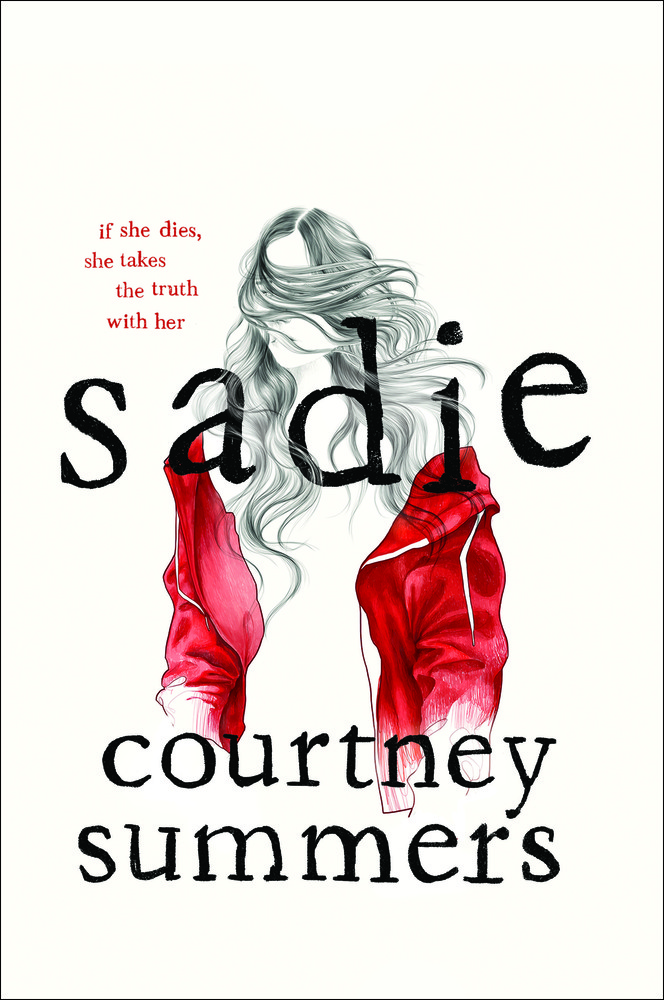
Spotlight: SADIE by Courtney Summers

A gripping novel about the depth of a sister's love; poised to be the next book you won't be able to stop talking about.

A missing girl on a journey of revenge and a Serial—like podcast following the clues she's left behind.

Sadie hasn't had an easy life. Growing up on her own, she's been raising her sister Mattie in an isolated small town, trying her best to provide a normal life and keep their heads above water.

But when Mattie is found dead, Sadie's entire world crumbles. After a somewhat botched police investigation, Sadie is determined to bring her sister's killer to justice and hits the road following a few meager clues to find him.

When West McCray—a radio personality working on a segment about small, forgotten towns in America—overhears Sadie's story at a local gas station, he becomes obsessed with finding the missing girl. He starts his own podcast as he tracks Sadie's journey, trying to figure out what happened, hoping to find her before it's too late.

Courtney Summers has written the breakout book of her career. Sadie is propulsive and harrowing and will keep you riveted until the last page.

Buy on Amazon | Barnes and Noble

About the Author

Courtney Summers is the author of young adult novels including Fall for Anything, Some Girls Are, and Cracked Up to Be. She lives and writes in Canada, where she divides her time between a piano, a camera, and a word-processing program when she’s not planning for the impending zombie apocalypse.

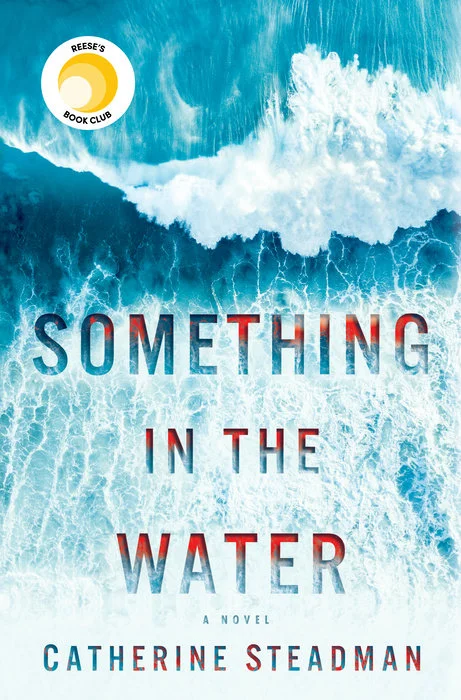
Spotlight: Something in the Water by Cathering Steadman

 A shocking discovery on a honeymoon in paradise changes the lives of a picture-perfect couple in this taut psychological thriller debut—for readers of Ruth Ware, Paula Hawkins, and Shari Lapena.

“A psychological thriller that captivated me from page one. What unfolds makes for a wild, page-turning ride! It’s the perfect beach read!”—Reese Witherspoon (Reese’s Book Club x Hello Sunshine book pick)

If you could make one simple choice that would change your life forever, would you?
 
Erin is a documentary filmmaker on the brink of a professional breakthrough, Mark a handsome investment banker with big plans. Passionately in love, they embark on a dream honeymoon to the tropical island of Bora Bora, where they enjoy the sun, the sand, and each other. Then, while scuba diving in the crystal blue sea, they find something in the water. . . .
 
Could the life of your dreams be the stuff of nightmares?
 
Suddenly the newlyweds must make a dangerous choice: to speak out or to protect their secret. After all, if no one else knows, who would be hurt? Their decision will trigger a devastating chain of events. . . .
 
Have you ever wondered how long it takes to dig a grave?
 
Wonder no longer. Catherine Steadman’s enthralling voice shines throughout this spellbinding debut novel. With piercing insight and fascinating twists, Something in the Water challenges the reader to confront the hopes we desperately cling to, the ideals we’re tempted to abandon, and the perfect lies we tell ourselves.

Excerpt

1

Saturday, October 1

The Grave

Have you ever wondered how long it takes to dig a grave? Wonder no longer. It takes an age. However long you think it takes, double that.

I’m sure you’ve seen it in movies: the hero, gun to his head perhaps, as he sweats and grunts his way deeper and deeper into the earth until he’s standing six feet down in his own grave. Or the two hapless crooks who argue and quip in the hilarious madcap chaos as they shovel frantically, dirt flying skyward with cartoonish ease.

It’s not like that. It’s hard. Nothing about it is easy. The ground is solid and heavy and slow. It’s so fucking hard.

And it’s boring. And long. And it has to be done.

The stress, the adrenaline, the desperate animal need to do it, sustains you for about twenty minutes. Then you crash.

Your muscles yawn against the bones in your arms and legs. Skin to bone, bone to skin. Your heart aches from the aftermath of the adrenal shock, your blood sugar drops, you hit the wall. A full-­body hit. But you know, you know with crystal clarity, that high or low, exhausted or not, that hole’s getting dug.

Then you kick into another gear. It’s that halfway point in a marathon when the novelty has worn off and you’ve just got to finish the joyless bloody thing. You’ve invested; you’re all in. You’ve told all your friends you’d do it, you made them pledge donations to some charity or other, one you have only a vague passing connection to. They guiltily promised more money than they really wanted to give, feeling obligated because of some bike ride or other they might have done at university, the details of which they bore you with every time they get drunk. I’m still talking about the marathon, stick with me. And then you went out every evening, on your own, shins throbbing, headphones in, building up miles, for this. So that you can fight yourself, fight with your body, right there, in that moment, in that stark moment, and see who wins. And no one but you is watching. And no one but you really cares. It’s just you and yourself trying to survive. That is what digging a grave feels like, like the music has stopped but you can’t stop dancing. Because if you stop dancing, you die.

So you keep digging. You do it, because the alternative is far worse than digging a never-­ending fucking hole in the hard compacted soil with a shovel you found in some old man’s shed.

As you dig you see colors drift across your eyes: phosphenes caused by metabolic stimulation of neurons in the visual cortex due to low oxygenation and low glucose. Your ears roar with blood: low blood pressure caused by dehydration and overexertion. But your thoughts? Your thoughts skim across the still pool of your consciousness, only occasionally glancing the surface. Gone before you can grasp them. Your mind is completely blank. The central nervous system treats this overexertion as a fight-­or-­flight situation; exercise-­induced neurogenesis, along with that ever-­popular sports mag favorite, “exercise-­induced endorphin release,” acts to both inhibit your brain and protect it from the sustained pain and stress of what you are doing.

Exhaustion is a fantastic emotional leveler. Running or digging.

Around the forty-­five-­minute mark I decide six feet is an unrealistic depth for this grave. I will not manage to dig down to six feet. I’m five foot six. How would I even climb out? I would literally have dug myself into a hole.

According to a 2014 YouGov survey, five foot six is the ideal height for a British woman. Apparently that is the height that the average British man would prefer his partner to be. So, lucky me. Lucky Mark. God, I wish Mark were here.

So if I’m not digging six feet under, how far under? How deep is deep enough?

Bodies tend to get found because of poor burial. I don’t want that to happen. I really don’t. That would definitely not be the outcome I’m after. And a poor burial, like a poor anything else really, comes down to three things:

1. Lack of time

2. Lack of initiative

3. Lack of care

In terms of time: I have three to six hours to do this. Three hours is my conservative estimate. Six hours is the daylight I have left. I have time.

I believe I have initiative; two brains are better than one. I hope. I just need to work through this step by step.

And number three: care? God, do I care. I care. More than I have ever cared in my entire life.

|||

Three feet is the minimum depth recommended by the ICCM (Institute of Cemetery and Crematorium Management). I know this because I Googled it. I Googled it before I started digging. See, initiative. Care. I squatted down next to the body, wet leaves and mud malty underfoot, and I Googled how to bury a body. I Googled this on the body’s burner phone. If they do find the body . . . they won’t find the body . . . and manage to retrieve the data . . . they won’t retrieve the data . . . then this search history is going to make fantastic reading.

Two full hours in, I stop digging. The hole is just over three feet deep. I don’t have a tape measure, but I remember that three feet is around crotch height. The height of the highest jump I managed on the horse-­riding vacation I took before I left for university twelve years ago. An eighteenth-­birthday present. Weird what sticks in the memory, isn’t it? But here I am, waist-­deep in a grave, remembering a gymkhana. I got second prize, by the way. I was very happy with it.

Anyway, I’ve dug approximately three feet deep, two feet wide, six feet long. Yes, that took two hours.

To reiterate: digging a grave is very hard.

Just to put this into perspective for you, this hole, my two-­hour hole, is: 3 ft x 2 ft x 6 ft, which is 36 cubic feet of soil, which is 1 cubic meter of soil, which is 1.5 tons of soil. And that—­that—­is the weight of a hatchback car or a fully grown beluga whale or the average hippopotamus. I have moved the equivalent of that up and slightly to the left of where it was before. And this grave is only three feet deep.

I look across the mud at the mound and slowly hoist myself out, forearms trembling under my own weight. The body lies across from me under a torn tarpaulin, its brilliant cobalt a slash of color against the brown forest floor. I’d found it abandoned, hanging like a veil from a branch, back toward the layby, in quiet communion with an abandoned fridge. The fridge’s small freezer-­box door creaking calmly in the breeze. Dumped.

There’s something so sad about abandoned objects, isn’t there? Desolate. But kind of beautiful. I suppose, in a sense, I’ve come to abandon a body.

The fridge has been here a while—­I know this because I saw it from the car window as we drove past here three months ago, and nobody has come for it yet. We were on our way back to London from Norfolk, Mark and I, after celebrating our anniversary, and here the fridge still is months later. Odd to think so much has happened—­to me, to us—­in that time, but nothing has changed here. As if this spot were adrift from time, a holding area. It has that feel. Perhaps no one has been here since the fridge owner was here, and God knows how long ago that might have been. The fridge looks distinctly seventies—­you know, in that bricky way. Bricky, Kubricky. A monolith in a damp English wood. Obsolete. Three months it’s been here at least and no collection, no men from the dump. No one comes here, that’s clear. Except us. No council workers, no disgruntled locals to write letters to the council, no early morning dog walkers to stumble across my quarry. This was the safest place I could think of. So here we are. It will take a while for it all to settle, the soil. But I think the fridge and I have enough time.

I look it over, the crumpled-­tarp mound. Underneath lie flesh, skin, bone, teeth. Three and a half hours dead.

I wonder if he’s still warm. My husband. Warm to the touch. I Google it. Either way, I don’t want the shock.

Okay.

Okay, the arms and legs should be cold to the touch but the main body will still be warm. Okay then.

I take a long, full exhalation.

Okay, here we go. . . .

I stop. Wait.

I don’t know why, but I clear his burner phone’s search history. It’s pointless, I know; the phone’s untraceable and after a couple of hours in the damp October ground it won’t work anyway. But then, maybe it will. I place the burner back in his coat pocket and slip his personal iPhone out of his chest pocket. It’s on airplane mode.

I look through the photo library. Us. Tears well and then streak in two hot dribbles down my face.

I fully remove the tarp, exposing everything it conceals. I wipe the phone for prints, return it to its warm chest pocket, and brace my knees to drag.

I’m not a bad person. Or maybe I am. Maybe you should decide?

But I should definitely explain. And to explain I need to go back. Back to that anniversary morning, three months ago.
Excerpted from Something in the Water by Catherine Steadman. Copyright © 2018 by Catherine Steadman. All rights reserved. No part of this excerpt may be reproduced or reprinted without permission in writing from the publisher.

Buy on Amazon | Barnes and Noble

About the Author

Catherine Steadman is an actress and writer based in North London, UK. She has appeared in leading roles on British television as well as on stage in the West End. In 2016 she was nominated for a Laurence Olivier Award for Best Actress in a Supporting Role for her performance in Oppenheimer. She is best known in the United States for her role as Mabel Lane Fox in Downton Abbey. She grew up in the New Forest, UK, and lives with a small dog and an average-sized man. Something in the Water is her first novel.

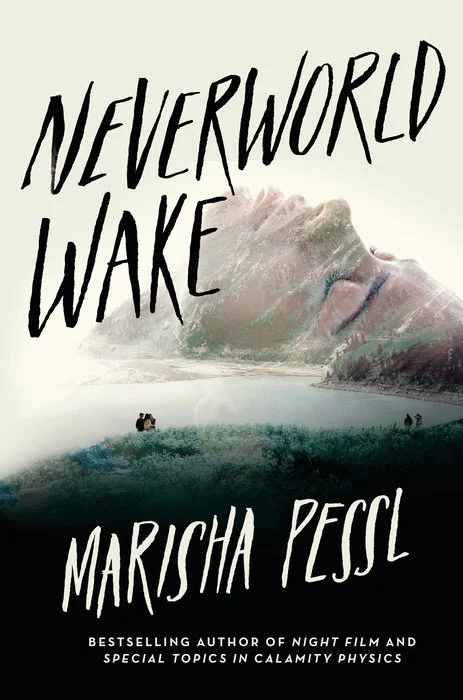
Spotlight: Neverworld Wake by Marisha Pessl

Five friends. Only one can survive the Neverworld Wake. Who would you choose?

From the acclaimed New York Times bestselling author of Special Topics in Calamity Physics and Night Film comes an absorbing psychological suspense thriller in which fears are physical and memories come alive.

“A thriller that will grip readers from the start.” –Hypable

Once upon a time, back at Darrow-Harker School, Beatrice Hartley and her five best friends were the cool kids, the beautiful ones. Then the shocking death of Jim–their creative genius and Beatrice’s boyfriend–changed everything.

One year after graduation, Beatrice is returning to Wincroft–the seaside estate where they spent so many nights sharing secrets, crushes, plans to change the world–hoping she’ll get to the bottom of the dark questions gnawing at her about Jim’s death.

But as the night plays out in a haze of stilted jokes and unfathomable silence, Beatrice senses she’s never going to know what really happened. 

Then a mysterious man knocks on the door. Blithely, he announces the impossible: time for them has become stuck, snagged on a splinter that can only be removed if the former friends make the harshest of decisions. 

Now Beatrice has one last shot at answers . . . and at life.

And so begins the Neverworld Wake.

Excerpt

I hadn’t spoken to Whitley Lansing--or any of them--in over a year.

When her text arrived after my last final, it felt inevitable, like a comet tearing through the night sky, hinting of fate.

Too long. WTF. #notcool. Sorry. My Tourette’s again. How was your freshman year? Amazing? Awful?

Seriously. We miss you.

Breaking the silence bc the gang is heading to Wincroft for my bday. The Linda will be in Mallorca & ESS Burt is getting married in St. Bart’s for the 3rd time. (Vegan yogi.) So it’s ours for the weekend. Like yesteryear.

Can you come? What do you say Bumblebee?

Carpe noctem.

Seize the night.

She was the only girl I knew who surveyed everybody like a leather-clad Dior model and rattled off Latin like it was her native language.

“How was your exam?” my mom asked when she picked me up.

“I confused Socrates with Plato and ran out of time during the essay,” I said, pulling on my seat belt.

“I’m sure you did great.” She smiled, a careful look. “Anything else we need to do?”

I shook my head.

My dad and I had already cleared out my dorm room. I’d returned my textbooks to the student union to get the 30 percent off for next year. My roommate had been a girl from New Haven named Casey who’d gone home to see her boyfriend every weekend. I’d barely seen her since orientation.

The end of my freshman year at Emerson College had just come and gone with the indifferent silence usually reserved for a going-out-of-business sale at a mini-mall.

“Something dark’s a-brewin’,” Jim would have told me.

I had no plans all summer, except to work alongside my parents at the Captain’s Crow.

The Captain’s Crow--the Crow, it’s called by locals--is the seaside cafe and ice cream parlor my family owns in Watch Hill, Rhode Island, the tiny coastal village where I grew up.

Watch Hill, Rhode Island. Population: You Know Everyone.

My great-grandfather Burn Hartley opened the parlor in 1885, when Watch Hill was little more than a craggy hamlet where whaling captains came to shake off their sea legs and hold their children for the first time before taking off again for the Atlantic’s Great Unknowns. Burn’s framed pencil portrait hangs over the entrance, revealing him to have the mad glare of some dead genius writer, or a world explorer who never came home from the Arctic. The truth is, though, he could barely read, preferred familiar faces to strange ones and dry land to the sea. All he ever did was run our little dockside restaurant his whole life, and perfect the recipe for the best clam chowder in the world.

All summer I scooped ice cream for tan teenagers in flip-flops and pastel sweaters. They came and went in big skittish groups like schools of fish. I made cheeseburgers and tuna melts, coleslaw and milk shakes. I swept away sand dusting the black-and-white-checkered floor. I threw out napkins, ketchup packets, salt packets, over‑21 wristbands, Del’s Frozen Lemonade cups, deep-sea fishing party boat brochures. I put lost cell phones beside the register so they could be easily found when the panic-stricken owners came barging inside: “I lost my . . . Oh . . . thank you, you’re the best!” I cleaned up the torn blue tickets from the 1893 saltwater carousel, located just a few doors down by the beach, which featured faded faceless mermaids to ride, not horses. Watch Hill’s greatest claim to fame was that Eleanor Roosevelt had been photographed riding a redhead with a turquoise tail sidesaddle. (It was a town joke how put out she looked in the shot, how uncomfortable and buried alive under her plate-tectonic layers of ruffled skirt.)

I cleaned the barbecue sauce off the garbage cans, the melted Wreck Rummage off the tables (Wreck Rummage was every kid’s favorite ice cream flavor, a mash‑up of cookie dough, walnuts, cake batter, and dark chocolate nuggets). I Cloroxed and Fantasticked and Mr. Cleaned the windows and counters and doorknobs. I dusted the brine off the mussels and the clams, polishing every one like a gemstone dealer obsessively inspecting emeralds. Most days I rose at five and went with my dad to pick out the day’s seafood when the fishing boats came in, inspecting crab legs and fluke, oysters and bass, running my hands over their tapping legs and claws, barnacles and iridescent bellies. I composed song lyrics for a soundtrack to a made‑up movie called Lola Anderson’s Highway Robbery, drawing words, rhymes, faces, and hands on napkins and take-out menus, tossing them in the trash before anyone saw them. I attended grief support group for adolescents at the North Stonington Community Center. There was only one other kid in attendance, a silent boy named Turks whose dad had died from ALS. After two meetings he never returned, leaving me alone with the counselor, a jittery woman named Deb who wore pantsuits and wielded a three-inch-thick book called Grief Management for Young People.

“ ‘The purpose of this exercise is to construct a positive meaning around the lost relationship,’ ” she read from chapter seven, handing me a Goodbye Letter worksheet. “ ‘On this page, write a note to your lost loved one, detailing fond memories, hopes, and any final questions.’ ”

Slapping a chewed pen that read tabeego island resorts on my desk, she left. I could hear her on the phone out in the hall, arguing with someone named Barry, asking him why he didn’t come home last night.

I drew a screeching hawk on the Goodbye Letter, with lyrics to a made‑up Japanese animated film about a forgotten thought called Lost in a Head.

Then I slipped out the fire exit and never went back.

I taught Sleepy Sam (giant yawn of a teenager from England visiting his American dad) how to make clam cakes and the perfect grilled cheese. Grill on medium, butter, four minutes a side, six slices of Vermont sharp cheddar, two of fontina. For July Fourth, he invited me to a party at a friend of a friend’s. To his shock, I actually showed. I stood by a floor lamp with a warm beer, listening to talk about guitar lessons and Zach Galifianakis, trying to find the right moment to escape.

“That, by the way, is Bee,” said Sleepy Sam. “She does actually speak, I swear.”

I didn’t mention Whitley’s text to anyone, though it was always in the back of my mind.

It was the brand-new way-too-extravagant dress I’d bought but never taken out of the bag. I just left it there in the back of my closet, folded in tissue paper with the receipt, the tags still on, with intention of returning it.

Yet there was still the remote possibility I’d find the courage to put it on.

I knew the weekend of her birthday like I knew my own: August 30.

It was a Friday. The big event of the day had been the appearance of a stray dog wandering Main Street. It had no tags and the haunted look of a prisoner of war. He was gray, shaggy, and startled with every attempt to pet him. A honk sent him skidding into the garbage cans behind the Captain’s Crow.

“See that yellow salt-bed mud on his back paws? That’s from the west side of Nickybogg Creek,” announced Officer Locke, thrilled to have a mystery on his hands, his first of the year.

That stray dog had been the talk all that day--what to do with him, where he’d been--and it was only much later that I found my mind going back to that dog drifting into town out of the blue. I wondered if he was some kind of sign, a warning that something terrible was coming, that I should not take the much-exalted and mysterious Road Less Traveled, but the one well trod, wide-open, and brightly lit, the road I knew.

By then it was too late. The sun had set. Sleepy Sam was gone. I’d overturned the cafe chairs and put them on the tables. I’d hauled out the trash. And anyway, that flew in the face of human nature. No one ever heeded a warning sign when it came.

Excerpted from Neverworld Wake by Marisha Pessl. Copyright © 2018 by Marisha Pessl. All rights reserved. No part of this excerpt may be reproduced or reprinted without permission in writing from the publisher.

Buy on Amazon | Barnes and Noble

About the Author

Marisha Pessl is the author of Night Film and Special Topics in Calamity Physics, which won the John Sargent Sr. First Novel Prize (now the Center for Fiction’s Flaherty-Dunnan First Novel Prize) and was selected as one of the 10 Best Books of the Year by The New York Times Book Review. Pessl grew up in Asheville, North Carolina, and currently resides in New York City.

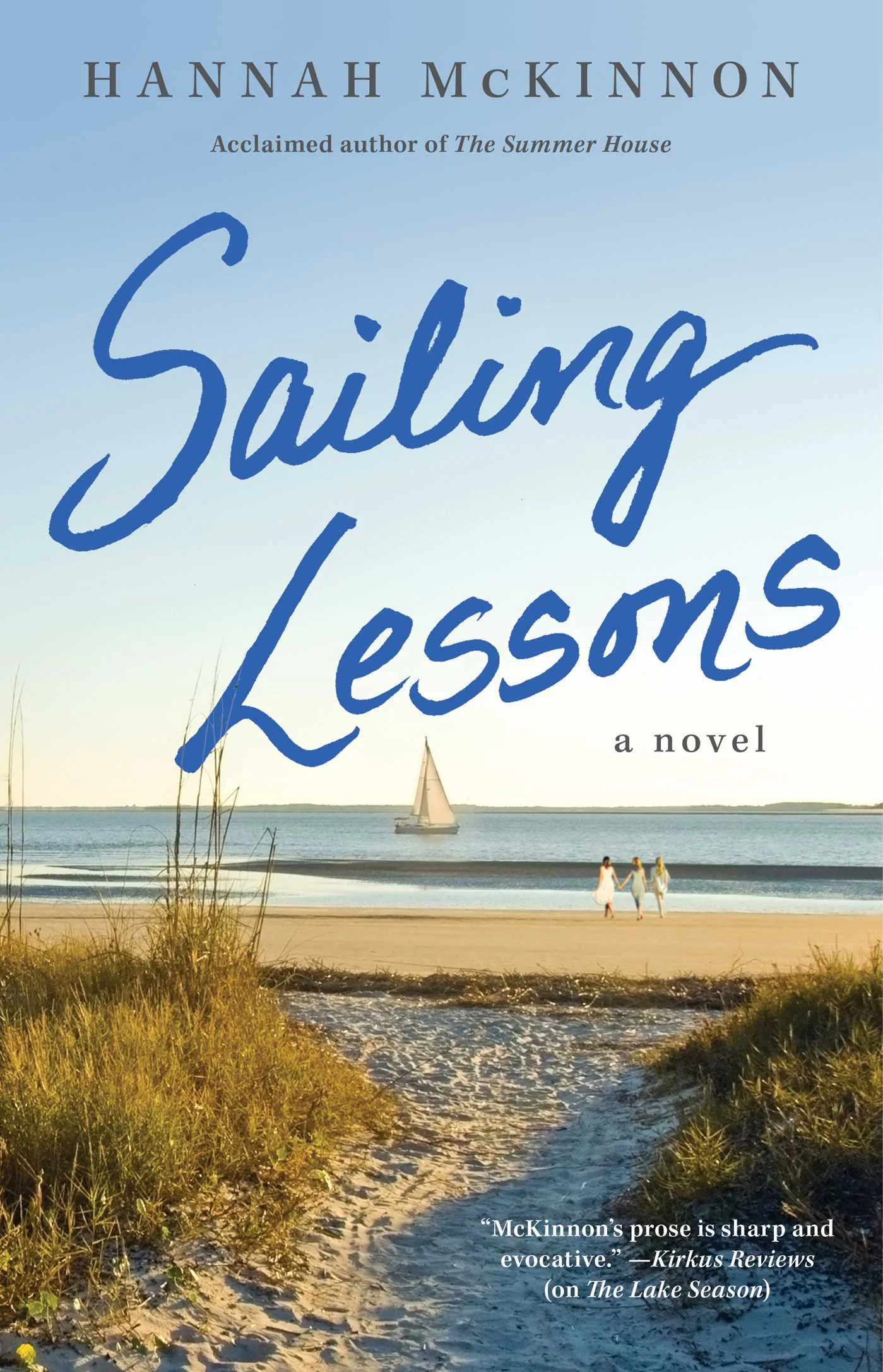
Spotlight: Sailing Lessons by Hannah McKinnon

On the shores of Cape Cod, the Bailey sisters reunite with their long-lost father for a summer of hope and forgiveness in this heartfelt novel from the author of the “sharp and evocative” (Kirkus Reviews) Mystic Summer, The Lake Season, and The Summer House, sure to appeal to “fans of Elin Hilderbrand” (Booklist).

Wrenn Bailey has lived all her life on Cape Cod with her mother Lindy, older sister Shannon, and younger sister Piper. Growing up, life was dictated by the seasons with sleepy gray winters where only the locals stayed on, followed by the sharp influx and colorful bustle of summer tourists who swept up the elbow of the Cape and infiltrated their small paradise.

But it wasn’t just the tourists who interrupted Wrenn’s formative years; her father—brilliant but troubled photographer Caleb—has long made a habit of drifting in and out of his girls’ lives. Until the one summer he left the Cape and did not return again.

Now, almost twenty years later, Caleb has come back one last time, suffering from pancreatic cancer and seeking absolution. Wrenn and her sisters each respond differently to their father’s return, determined to find closure. But that means returning to the past and revisiting old wounds—wounds that cause the tightknit Bailey women to confront their own wishes and wants, and admit to their own wrong-doings over the years. In a place that brings both great comfort and great pain, the Bailey sisters experience a summer on the Cape that promises not only hard endings, but perhaps, hopeful new beginnings.

Buy on Amazon | Barnes and Noble

About the Author

Hannah McKinnon is the author of Lighthouse Beach, The Lake Season, Mystic Summer, and The Summer House. She graduated from Connecticut College and the University of South Australia. She lives in Fairfield County, Connecticut, with her family, a flock of chickens, and two rescue dogs.

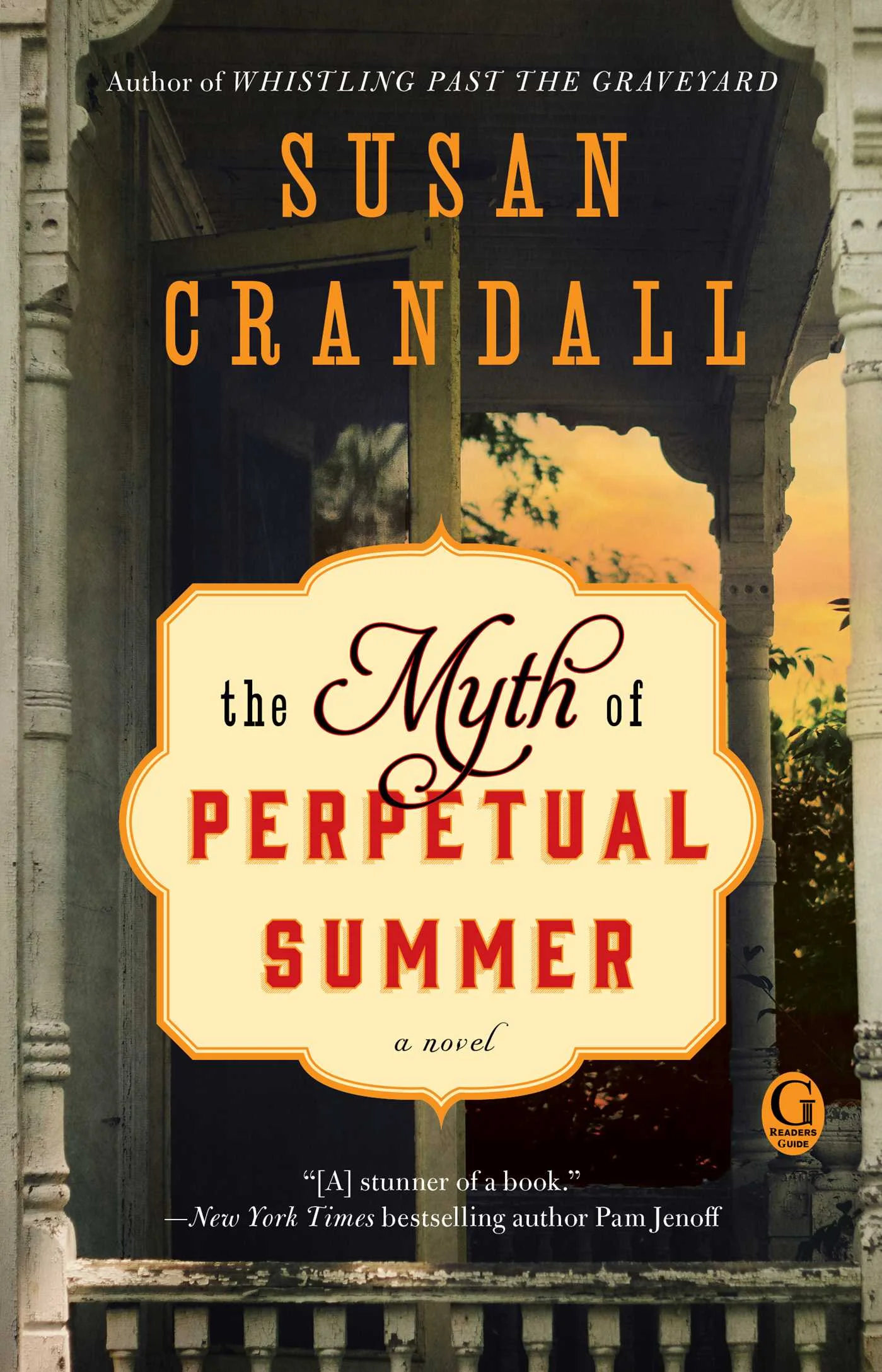
Spotlight: The Myth of Perpetual Summer by Susan Crandall

From the national bestselling author of Whistling Past the Graveyard comes a moving coming-of-age tale set in the tumultuous sixties that harkens to both Ordinary Grace and The Secret Life of Bees.

Tallulah James’s parents’ volatile relationship, erratic behavior, and hands-off approach to child rearing set tongues to wagging in their staid Mississippi town, complicating her already uncertain life. She takes the responsibility of shielding her family’s reputation and raising her younger twin siblings onto her youthful shoulders.

If not for the emotional constants of her older brother, Griff, and her old guard Southern grandmother, she would be lost. When betrayal and death arrive hand in hand, she takes to the road, headed to what turns out to be the not-so-promised land of Southern California. The dysfunction of her childhood still echoes throughout her scattered family, sending her brother on a disastrous path and drawing her home again. There she uncovers the secrets and lies that set her family on the road to destruction.

Buy on Amazon | Barnes and Noble

About the Author

Susan Crandall is a critically acclaimed author of women’s fiction, romance, and suspense. She has written several award-winning novels including her first book, Back Roads, which won the RITA award for best first book, as well as Whistling Past the Graveyard, which won the SIBA 2014 Book Award for Fiction. Susan lives in Noblesville, Indiana, with her family.

Spotlight: The Ever After by Sarah Pekkanen

In this intricate and enthralling domestic drama, perfect for fans of Big Little Lies and The Affair, the internationally bestselling author of the “gossipy page-turner” (Glamour) The Perfect Neighbors goes deep into a marriage in crisis, peeling back layers of secrets to discover where the relationship veered off course—and whether it is worth saving.

Josie and Frank Moore are happy…at least Josie thinks they are. As parents of two young girls in the Chicago suburbs, their days can be both busy and monotonous, and sometimes Josie wonders how she became a harried fortysomething mother rather than the driven career woman she once was. But Frank is a phenomenal father, he’s handsome and charismatic, and he still looks at his wife like she’s the beautiful woman he married more than a decade ago. Josie isn’t just happy—she’s lucky.

Until one Saturday morning when Josie borrows her husband’s phone to make a quick call—and sees nine words that shatter her world.

Now Josie feels as if she is standing at the edge of a sharp precipice. As she looks back at pivotal moments in the relationship she believed would last forever, she is also plunging ahead, surprising everyone (especially herself) with how far she will go to uncover the extent of her husband’s devastating secret.

With her “conversational writing style and a knack for making readers care about her characters” (The Washington Post) bestselling author Sarah Pekkanen paints a vivid, kaleidoscopic portrait of a marriage before and during a crisis—and of a woman who fears that the biggest secret of all may be the one she’s hiding from herself.

Buy on Amazon | Barnes and Noble

About the Author

Sarah Pekkanen is the bestselling author of The Ever After, The Opposite of Me, Skipping a Beat, These Girls, The Best of Us, Catching Air, Things You Won’t Say, and The Perfect Neighbors. Her work has been published in People, The Washington Post, and USA TODAY, among other publications. She lives with her family in Chevy Chase, Maryland.