Spotlight: The Boy by Tami Hoag

An unfathomable loss or an unthinkable crime? #1 New York Times bestselling author Tami Hoag keeps you guessing in her most harrowing thriller yet.

A panic-stricken woman runs in the dead of night, battered and bloodied, desperate to find help…

When Detective Nick Fourcade enters the home of Genevieve Gauthier outside the sleepy town of Bayou Breaux, Louisiana, the bloody crime scene that awaits him is both the most brutal and the most confusing he’s ever seen. Genevieve’s seven-year-old son, P.J., has been murdered by an alleged intruder, yet Genevieve is alive and well, a witness inexplicably left behind to tell the tale. There is no evidence of forced entry, not a clue that points to a motive. Meanwhile, Nick’s wife, Detective Annie Broussard, sits in the emergency room with the grieving Genevieve. A mother herself, Annie understands the emotional devastation this woman is going through, but as a detective she’s troubled by a story that makes little sense. Who would murder a child and leave the only witness behind?

When the very next day P.J.’s sometimes babysitter, thirteen-year-old Nora Florette, is reported missing, the town is up in arms, fearing a maniac is preying on their children. With pressure mounting from a tough, no-nonsense new sheriff, the media, and the parents of Bayou Breaux, Nick and Annie dig deep into the dual mysteries. But sifting through Genevieve Gauthier’s tangled web of lovers and sorting through a cast of local lowlifes brings more questions than answers. Is someone from Genevieve’s past or present responsible for the death of her son? Is the missing teenager, Nora, a victim, or something worse? Then fingerprints at the scene change everything when they come back to a convicted criminal: Genevieve herself.

The spotlight falls heavily on the grieving mother who is both victim and accused. Could she have killed her own child to free herself of the burden of motherhood, or is the loss of her beloved boy pushing her to the edge of insanity? Could she have something to do with the disappearance of Nora Florette, or is the troubled teenager the key to the murder? How far will Nick and Annie have to go to uncover the dark truth of the boy?

Buy on Amazon | Barnes and Noble

About the Author

Tami Hoag is the #1 international bestselling author of more than thirty books. There are more than forty million copies of her books in print in more than thirty languages. Renowned for combining thrilling plots with character-driven suspense, Hoag first hit the New York Times bestseller list with Night Sins, and each of her books since has been a bestseller. She lives in Florida.

Spotlight: Past Tense (Jack Reacher Series #23) by Lee Child

Family secrets come back to haunt Jack Reacher in this electrifying thriller from #1 New York Times bestselling author Lee Child, “a superb craftsman of suspense” (Entertainment Weekly).

Jack Reacher hits the pavement and sticks out his thumb. He plans to follow the sun on an epic trip across America, from Maine to California. He doesn’t get far. On a country road deep in the New England woods, he sees a sign to a place he has never been: the town where his father was born. He thinks, What’s one extra day? He takes the detour.

At the same moment, in the same isolated area, a car breaks down. Two young Canadians had been on their way to New York City to sell a treasure. Now they’re stranded at a lonely motel in the middle of nowhere. The owners seem almost too friendly. It’s a strange place, but it’s all there is.

The next morning, in the city clerk’s office, Reacher asks about the old family home. He’s told no one named Reacher ever lived in town. He’s always known his father left and never returned, but now Reacher wonders, Was he ever there in the first place?

As Reacher explores his father’s life, and as the Canadians face lethal dangers, strands of different stories begin to merge. Then Reacher makes a shocking discovery: The present can be tough, but the past can be tense . . . and deadly.

Excerpt

Chapter 1

Jack Reacher caught the last of the summer sun in a small town on the coast of Maine, and then, like the birds in the sky above him, he began his long migration south. But not, he thought, straight down the coast. Not like the orioles and the buntings and the phoebes and the warblers and the ruby-­throated hummingbirds. Instead he decided on a diagonal route, south and west, from the top right-­hand corner of the country to the bottom left, maybe through Syracuse, and Cincinnati, and St. Louis, and Oklahoma City, and Albuquerque, and onward all the way to San Diego. Which for an army guy like Reacher was a little too full of Navy people, but which was otherwise a fine spot to start the winter.

It would be an epic road trip, and one he hadn’t made in years.

He was looking forward to it.

He didn’t get far.

He walked inland a mile or so and came to a county road and stuck out his thumb. He was a tall man, more than six feet five in his shoes, heavily built, all bone and muscle, not particularly good looking, never very well dressed, usually a little unkempt. Not an overwhelmingly appealing proposition. As always most drivers slowed and took a look and then kept on going. The first car prepared to take a chance on him came along after forty minutes. It was a year-­old Subaru wagon, driven by a lean middle-­aged guy in pleated chino pants and a crisp khaki shirt. Dressed by his wife, Reacher thought. The guy had a wedding ring. But under the fine fabrics was a workingman’s body. A thick neck and large red knuckles. The slightly surprised and somewhat reluctant boss of something, Reacher thought. The kind of guy who starts out digging post holes and ends up owning a fencing company.

Which turned out to be a good guess. Initial conversation established the guy had started out with nothing to his name but his daddy’s old framing hammer, and had ended up owning a construction company, responsible for forty working people, and the hopes and dreams of a whole bunch of clients. He finished his story with a little facial shrug, part Yankee modesty, part genuine perplexity. As in, how did that happen? Attention to detail, Reacher thought. This was a very organized guy, full of notions and nostrums and maxims and cast-­iron beliefs, one of which was that at the end of summer it was better to stay away from both Route One and I-­95, and in fact to get out of Maine altogether as fast as possible, which meant soon and sideways, on Route Two, straight west into New Hampshire. To a place just south of Berlin, where the guy knew a bunch of back roads that would get them down to Boston faster than any other way. Which was where the guy was going, for a meeting about marble countertops. Reacher was happy. Nothing wrong with Boston as a starting point. Nothing at all. From there it was a straight shot to Syracuse. After which Cincinnati was easy, via Rochester and Buffalo and Cleveland. Maybe even via Akron, Ohio. Reacher had been in worse places. Mostly in the service.

They didn’t get to Boston.

The guy got a call on his cell, after fifty-­some minutes heading south on the aforementioned New Hampshire back roads. Which were exactly as advertised. Reacher had to admit the guy’s plan was solid. There was no traffic at all. No jams, no delays. They were bowling along, doing sixty miles an hour, dead easy. Until the phone rang. It was hooked up to the car radio, and a name came up on the navigation screen, with a thumbnail photograph as a visual aid, in this case of a red-­faced man wearing a hard hat and carrying a clipboard. Some kind of a foreman on a job site. The guy at the wheel touched a button and phone hiss filled the car, from all the speakers, like surround sound.

The guy at the wheel spoke to the windshield pillar and said, “This better be good news.”

It wasn’t. It was something to do with an inspector from a municipal buildings department, and a metal flue liner above a fireplace in an entrance lobby, which was properly insulated, exactly up to code, except that couldn’t be proved visually without tearing down the stonework, which was by that point already three stories high, nearly done, with the masons booked on a new job starting the next week, or alternatively without ripping out the custom walnut millwork in the dining room on the other side of the chimney, or the millwork in the closet above, which was rosewood and even more complicated, but the inspector was being a hardass about it and needed to see for himself.

The guy at the wheel glanced at Reacher and said, “Which inspector is it?”

The guy on the phone said, “The new one.”

“Does he know he gets a turkey at Thanksgiving?”

“I told him we’re all on the same side here.”

The guy at the wheel glanced at Reacher again, as if seeking permission, or offering an apology, or both, and then he faced front again and said, “Did you offer him money?”

“Five hundred. He wouldn’t take it.”

Then the cell signal ran out. The sound went garbled, like a robot drowning in a swimming pool, and then it went dead. The screen said it was searching.

The car rolled on.

Reacher said, “Why would a person want a fireplace in an entrance lobby?”

The guy at the wheel said, “It’s welcoming.”

“I think historically it was designed to repel. It was defensive. Like the campfire burning in the mouth of the cave. It was intended to keep predators at bay.”

“I have to go back,” the guy said. “I’m sorry.”

He slowed the car and pulled over on the gravel. All alone, on the back roads. No other traffic. The screen said it was still searching for a signal.

“I’m going to have to let you out here,” the guy said. “Is that OK?”

“No problem,” Reacher said. “You got me part of the way. For which I thank you very much.”

“You’re welcome.”

“Whose is the rosewood closet?”

“His.”

“Cut a big hole in it and show the inspector. Then give the client five commonsense reasons why he should install a wall safe. Because this is a guy who wants a wall safe. Maybe he doesn’t know it yet, but a guy who wants a fireplace in his entrance lobby wants a wall safe in his bedroom closet. That’s for damn sure. Human nature. You’ll make a profit. You can charge him for the time it takes to cut the hole.”

“Are you in this business, too?”

“I was a military cop.”

The guy said, “Huh.”

Reacher opened the door and climbed out, and closed the door again behind him, and walked far enough away to give the guy space to swing the Subaru around, gravel shoulder to gravel shoulder, across the whole width of the road, and then to take off back the way he had come. All of which the guy did, with a brief gesture Reacher took to be a rueful good-­luck wave. Then he got smaller and smaller in the distance, and Reacher turned back and continued walking, south, the way he was headed. Wherever possible he liked to maintain forward momentum. The road he was on was a two-­lane, wide enough, well maintained, curved here and there, a little up and down. But no kind of a problem for a modern car. The Subaru had been doing sixty. Yet there was no traffic. None at all. Nothing coming, either way. Total silence. Just a sigh of wind in the trees, and the faint buzz of heat coming up off the blacktop.

Reacher walked on.

Two miles later the road he was on curved gently left, and a new road of equal size and appearance split off to the right. Not exactly a turn. More like an equal choice. A classic Y-­shaped junction. Twitch the wheel left, or twitch the wheel right. Your call. Both options ran out of sight through trees so mighty in places they made a tunnel.

There was a road sign.

A tilted arrow to the left was labeled Portsmouth, and a tilted arrow to the right was labeled Laconia. But the right-­hand option was written in smaller writing, and it had a smaller arrow, as if Laconia was less important than Portsmouth. A mere byway, despite its road being the same size.

Laconia, New Hampshire.

A name Reacher knew. He had seen it on all kinds of historic family paperwork, and he had heard it mentioned from time to time. It was his late father’s place of birth, and where he was raised, until he escaped at age seventeen to join the Marines. Such was the vague family legend. Escaped from what had not been specified. But he never went back. Not once. Reacher himself had been born more than fifteen years later, by which time Laconia was a dead detail of the long-­ago past, as remote as the Dakota Territory, where it was said some earlier ancestor had lived and worked. No one in the family ever went to either place. No visits. The grandparents died young and were rarely mentioned. There were apparently no aunts or uncles or cousins or any other kind of distant relatives. Which was statistically unlikely, and suggested a rift of some kind. But no one other than his father had any real information, and no one ever made any real attempt to get any from him. Certain things were not discussed in Marine families. Much later as a captain in the army Reacher’s brother Joe was posted north and said something about maybe trying to find the old family homestead, but nothing ever came of it. Probably Reacher himself had said the same kind of thing, from time to time. He had never been there either.

Left or right. His call.

Portsmouth was better. It had highways and traffic and buses. It was a straight shot to Boston. San Diego beckoned. The Northeast was about to get cold.

But what was one extra day?

He stepped right, and chose the fork in the road that led to Laconia.

At that same late-­afternoon moment, nearly thirty miles away, heading south on a different back road, was a worn-­out Honda Civic, driven by a twenty-­five-­year-­old man named Shorty Fleck. Next to him in the passenger seat was a twenty-­five-­year-­old woman named Patty Sundstrom. They were boyfriend and girlfriend, both born and raised in Saint Leonard, which was a small faraway town in New Brunswick, Canada. Not much happened there. The biggest news in living memory was ten years previously, when a truck carrying twelve million bees overturned on a curve. The local paper reported with pride that the accident was the first of its kind in New Brunswick. Patty worked in a sawmill. She was the granddaughter of a guy from Minnesota who had slipped north half a century earlier, to beat the draft for Vietnam. Shorty was a potato farmer. His family had been in Canada forever. And he wasn’t particularly short. Maybe he had been once, as a kid. But now he figured he was what any eyewitness would call an average-­looking guy.

They were trying to make it non-­stop from Saint Leonard to New York City. Which by any standard was a hardcore drive. But they saw a big advantage in doing it. They had something to sell in the city, and saving a night in a hotel would maximize their profit. They had planned out their route, looping west to avoid the summer people heading home from the beaches, using back roads, Patty’s blunt finger on a map, her gaze ranging ahead for turns and signs. They had timed it out on paper, and figured it was a feasible course of action.

Except they had gotten a later start than they would have liked, due a little bit to general disorganization, but mostly due to the Honda’s aging battery not liking the newly crisp autumnal temperatures blowing in from the direction of Prince Edward Island. The delay put them in a long line at the U.S. border, and then the Honda started over­heating, and needed nursing along below fifty miles an hour for an extended spell.

They were tired.

And hungry, and thirsty, and in need of the bathroom, and late, and behind schedule. And frustrated. The Honda was overheating again. The needle was kissing the red. There was a grinding noise under the hood. Maybe the oil was low. No way of telling. All the dashboard lights had been on continuously for the last two and a half years.

Shorty asked, “What’s up ahead?”

Patty said, “Nothing.”

Her fingertip was on a wandering red line, which was labeled with a three-­digit number, and which was shown running north to south through a jagged shape shaded pale green. A forested area. Which matched what was out the window. The trees crowded in, still and dark, laden down with heavy end-­of-­summer leaves. The map showed tiny red spider-­web lines here and there, like the veins in an old lady’s leg, which were presumably all tracks to somewhere, but nowhere big. Nowhere likely to have a mechanic or a lube shop or radiator water. The best bet was about thirty minutes ahead, some ways east of south, a town with its name printed not too small and semi-­bold, which meant it had to have at least a gas station. It was called Laconia.

Excerpted from Past Tense by Lee Child. Copyright © 2018 by Lee Child. All rights reserved. No part of this excerpt may be reproduced or reprinted without permission in writing from the publisher.

Buy on Amazon | Barnes and Noble

About the Author

Lee Child is the author of twenty-two New York Times bestselling Jack Reacher thrillers, with thirteen having reached the #1 position, and the #1 bestselling complete Jack Reacher story collection, No Middle Name. All his novels have been optioned for major motion pictures—including Jack Reacher (based on One Shot) and Jack Reacher: Never Go Back. Foreign rights in the Reacher series have sold in one hundred territories. A native of England and a former television director, Lee Child lives in New York City.

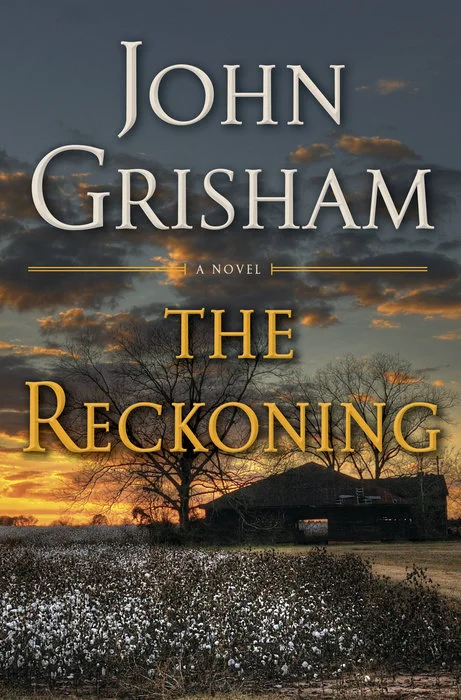
Spotlight: The Reckoning by John Grisham

John Grisham’s The Reckoning is the master storyteller’s most powerful, surprising, and accomplished novel yet
 
 October 1946, Clanton, Mississippi

Pete Banning was Clanton, Mississippi’s favorite son—a decorated World War II hero, the patriarch of a prominent family, a farmer, father, neighbor, and a faithful member of the Methodist church. Then one cool October morning he rose early, drove into town, walked into the church, and calmly shot and killed his pastor and friend, the Reverend Dexter Bell. As if the murder weren’t shocking enough, it was even more baffling that Pete’s only statement about it—to the sheriff, to his lawyers, to the judge, to the jury, and to his family—was: “I have nothing to say.” He was not afraid of death and was willing to take his motive to the grave.
            In a major novel unlike anything he has written before, John Grisham takes us on an incredible journey, from the Jim Crow South to the jungles of the Philippines during World War II; from an insane asylum filled with secrets to the Clanton courtroom where Pete’s defense attorney tries desperately to save him. 
            Reminiscent of the finest tradition of Southern Gothic storytelling, The Reckoning would not be complete without Grisham’s signature layers of legal suspense, and he delivers on every page.

Buy on Amazon | Barnes and Noble

About the Author

John Grisham is the author of thirty novels, one work of nonfiction, a collection of stories, and six novels for young readers.

Spotlight: A Doubtful Inheritance by Tedd Todd

Looking through Ted’s camera from a different angle…

9th August 2018 - Melbourne: In 1941, Ted Todd’s father was taken as part of an alliance between Hungary and Nazi Germany during WW2. Like most able bodied young Jewish men in Hungary at this time, he was drafted into the Jewish Labour Service to perform forced labour during the Holocaust. A large percentage of these men were sent with the Hungarian Second Army to the occupied territories of the Soviet Union and subjected to grinding brutality on the front. Some 80% never returned home, falling prey to battle, disease, Soviet captivity or murder at hands of Hungarian soldiers. Ted’s father was one of these men.

During this time his mother, who was an incredible survivor not only looked after her family in Budapest Jewish ghetto, but she managed to bribe their way off the train to Auschwitz on three separate occasions. Many years later these extraordinary tales of survival have been passed down by Ted to his family and in turn have led to the creation of his astonishing book which has been inspired by these events. The book entitled, “A Doubtful Inheritance”, falls under a new genre which Ted calls an ‘autobiofiction’. He describes this as blend of true events, overlaid with a heavy dollop of imaginary plotline.

The book follows the story of a man called Tim who is over 50, divorced, and very unhappy. Tim has spent his life searching for something missing in his psyche and on a whim decides to participate in a workshop on self-awareness. There he comes face to face with this obsession about the traumatic disappearance of his beloved father Lajos during WW2. What follows is a sweeping, multi-layered tale about Tim’s search for a rich inheritance and his lost sense of self and meaning. The action of the book crosses the globe as it moves through history, from a WW2 Siberian POW camp through to a present-day Budapest, Vienna, Argentina and Australia.

Ted says, “This was an incredibly difficult book to write and is inspired by some of the terrible things that my family in
Budapest experienced during the Second World War. The best way to describe how these events have influenced the book is

to say that everything in the book that is sad is true… and all of the happy elements are fiction. I hope to leave this novel as a legacy for my children and for their children so that they don’t forget where their ancestors came from and what they went through to get here.”

A Doubtful Inheritance provides a deep insight into not only one of darkest periods in human history but also to the entirely relatable journey of a man trying to find his own sense of self after the loss of his father. This novel was also part of Ted’s work for his PhD in literature/writing at Swinburne University in 2014.

This book will appeal to men and women who are lovers of history as well as those who enjoy stories about the trials and tribulations of life.

Buy on Amazon | Barnes and Noble

About the Author

Ted Todd was born in Hungary in 1941. After the Holocaust and the following Stalinist years, he escaped Hungary with his mother and younger brother in 1956 after the Hungarian revolution. He currently lives in Melbourne where in 1970 he established a well-known retail chain, Ted’s Camera stores. Since the sale of the business, Ted has facilitated sales and marketing workshops and consultancies at the Australian Institute of Management and other venues, operated other businesses, and has concurrently facilitated ‘Human Relationships’ courses for the past 33 years.

Ted was married for 25 years and is now divorced with three children and eight grandchildren.

In more recent times Ted returned to tertiary studies, attaining a B.A. and a Grad. Dip. in Human Relationships Education, and a Ph.D. in Literature/Creative Writing.

Now Dr. Ted he has written several books, including The Secrets of Successful Selling on sales, marketing and
communications, 50 something male (a work of fiction), The Software of the Personality and more.

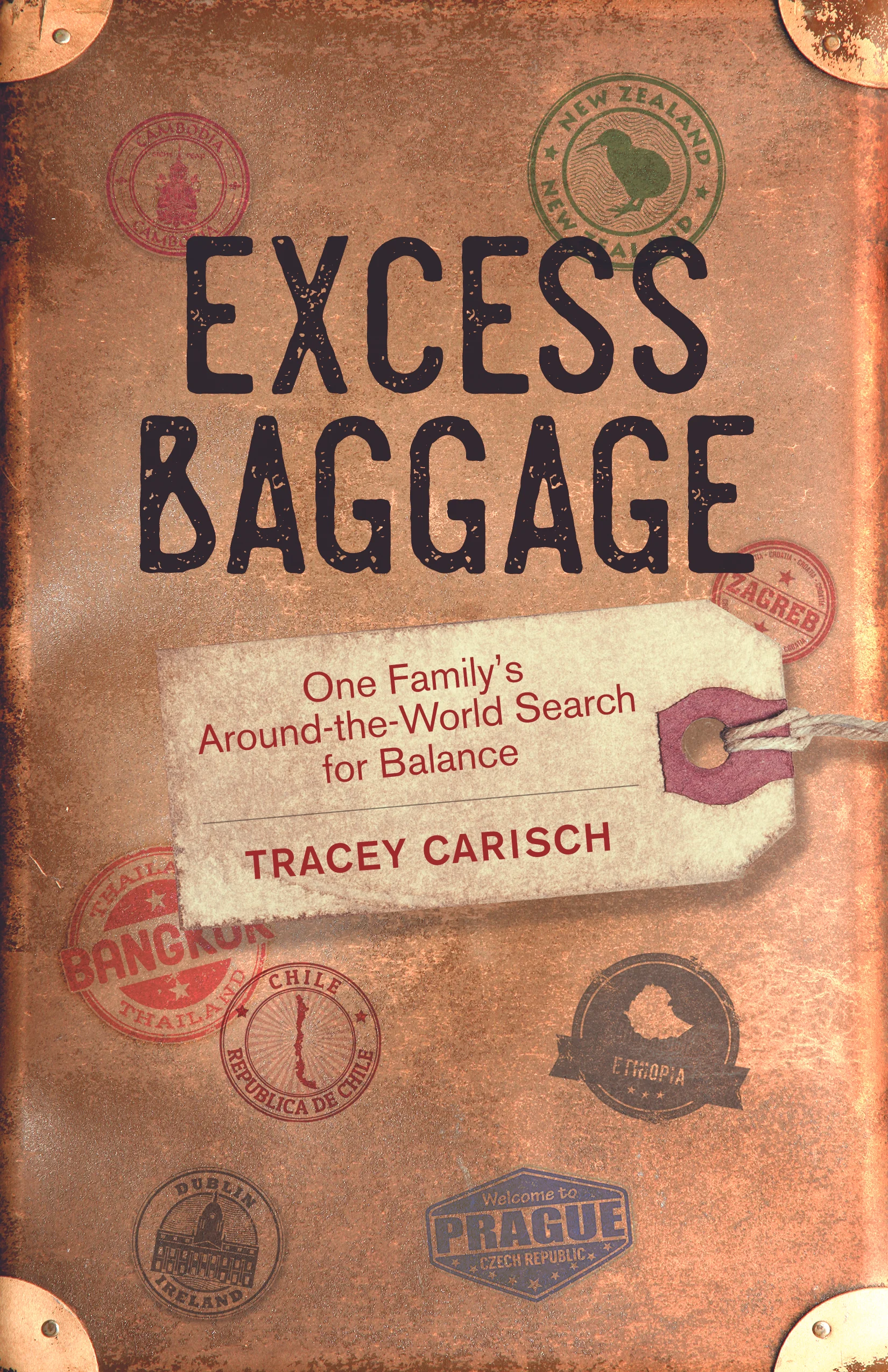
Spotlight: Excess Baggage: One Family's Around the World Search for Balance by Tracey Carisch

Tracey Carisch thought she had it all. As a wife, mother, and successful executive, she seemed to be living the modern American dream. But one night, a panic attack sent her tumbling into a midlife crisis and questioning everything. That’s when she and her husband made a decision that shocked their family and friends: they sold everything they owned, pulled their three young daughters out of school, and became a family of wandering globetrotters.

Loaded with hilarious mishaps as well as deeply meaningful revelations, Excess Baggage chronicles the Carisch family’s extraordinary eighteen-month adventure across six continents, bringing to mind the spiritual journey of Eat Pray Love and the comical mishaps of National Lampoon’s Vacation.

Through Tracey’s insightful, funny, and poignant narrative, the reader will discover the life lessons of an around-the-world journey without leaving home.

Excerpt

A highlight of our time in Norway was our trek up to Preikestolen, a flat, pillared cliff rising almost half a mile above the waters of the magnificent Lysefjord canyon. The three-hour hike up to the top was a testament to our girls’ physical endurance as well as Brian’s paternal motivational skills, which basically involved ignoring all the whining and walking thirty yards ahead of the rest of us. Despite the arduous morning required to reach it, our time on Preikestolen proved to be a breathtaking experience. Of course, for me, this was due to both the gorgeous view and the fact that air was forcefully ripped from my lungs each time one of the girls made what I considered to be a careless move that could result in her fall to a watery death. Such moves included: Running, hopping, walking, reaching for a sandwich, and turning one’s head quickly. 

Somewhere around my tenth dramatic gasp, it finally occurred to me that my children aren’t lemmings and actually do possess a self-preservation instinct. I was able to put the 2000-foot sheer drop out of my mind (sort of) and enjoy the calm beauty of the experience. A warm breeze floated up the cliff’s face as I stood looking out over the deep gorge cutting through to the ocean. The sky and the water mirrored the same shade of brilliant topaz blue, and between them ran the rich, warm marbled browns of the canyon walls. I tried to imagine what the land looked like millions of years ago, before a sheet of slow-moving ice irreversibly transformed the landscape, turning it from a gentle green slope into a majestic sculpture of stone and water. Slight changes, imperceptible from one day to the next, had accumulated over time to create something extraordinary. 

I took a deep breath of fresh, clean air and felt a wish form inside me—the wish that this journey would be the colossal force changing our family forever. 

My shocking discovery in the first weeks of this trip (besides the $17 chicken breast at a Norwegian grocery store) was the realization that our family didn’t get along very well. At all. Our new mode of 24-7 togetherness revealed how little of it we’d had back home, where most of our waking hours had been spent separated from one another at work, school, or one of those many kid activities we rushed around to. For the first time, the girls weren’t spending their days in their own classrooms, and Brian and I weren’t heading off to our respective offices. There were no playdates or sports practices or parties with friends. It was just the five of us. Together. All. The. Time. As a result, we were getting precipitously close to strangling one another…

Buy on Amazon | Barnes and Noble

About the Author

Tracey Carisch is a leadership consultant, professional speaker, and author of the book Excess Baggage: One Family’s Around the World Search for Balance. In 2014, her travel blog, www.100WaysToChangeTheWorld.com, chronicled her family’s around-the-world, nomadic journey and gained a widespread international following.

Tracey graduated from Indiana University’s Kelley School of Business and began her career as a consultant with an international consulting firm, where she advanced to a leadership position within the organization’s professional education team. She received her MBA from the University of Utah in 2002 and soon began her own independent consulting business, specializing in organizational effectiveness and project management.

Her facilitation work with business-education partnerships led to a prominent position in the STEM education initiative. Tracey served as the Managing Director of the STEM Innovation Hub, collaborating with stakeholders from school systems, nonprofits, businesses, universities and government agencies to pioneer ground-breaking workforce development programs. This role engaged Tracey in the areas of education research and early learning neurology as she worked alongside pedagogical and andragogical experts to develop successful K-12 teaching strategies and adult learning initiatives.

Since returning to the United States, Tracey has expanded her leadership development career to include motivational speaking. Her presentations blend the breathtaking imagery of travel photography with important themes for parents, children, educators, and business leaders. By incorporating leadership best practices and conflict management concepts, Tracey’s talks inspire audiences while also leaving them equipped with successful practices for setting intentions and improving relationships.

Connect: Website

Spotlight: Good Luck with That by Kristan Higgins

New York Times bestselling author Kristan Higgins is beloved for her heartfelt novels filled with humor and wisdom. Now, she tackles an issue every woman deals with: body image and self-acceptance.

Emerson, Georgia, and Marley have been best friends ever since they met at a weight-loss camp as teens. When Emerson tragically passes away, she leaves one final wish for her best friends: to conquer the fears they still carry as adults. 

For each of them, that means something different. For Marley, it’s coming to terms with the survivor’s guilt she’s carried around since her twin sister’s death, which has left her blind to the real chance for romance in her life. For Georgia, it’s about learning to stop trying to live up to her mother’s and brother’s ridiculous standards, and learning to accept the love her ex-husband has tried to give her. 

But as Marley and Georgia grow stronger, the real meaning of Emerson’s dying wish becomes truly clear: more than anything, she wanted her friends to love themselves. 

A novel of compassion and insight, Good Luck With That tells the story of two women who learn to embrace themselves just the way they are.

Excerpt

(Georgia)

 “Tickle.”

“Tag.”

“Tank.”

“Tatiana!” said Tatiana, and I smiled at her.

We were doing letter and sound recognition, a component of the language and literacy part of nursery school.

Right now, we were trying to get every kid to name a word that started with T without any other chatter, which would reinforce their focusing skills as well as literacy. So far, our record was five words in a row, which was pretty good, given that everyone here was only four and had the attention span of a gnat.

“Theater,” said Silvi.

Lissie, my assistant teacher, shot me a glance. Silvi was advanced, already reading. I felt a flash of pride for Clara, followed by the increasingly familiar buzz of nerves whenever anything related to Rafael entered my consciousness. For nearly five years, I’d done a damn good job of keeping him out of my head.

“Turd,” said Geronimo, and the kids dissolved into giggles.

“He said ‘turd’! He said ‘turd’! Turd!” they shrieked. Axel got up and ran in a circle, a victory lap of sorts. Khaleesi started to cry, since she hated all things bowel-related, and Lissie comforted her.

“We got up to six ‘T’ words! That’s a new record, so good work,” I said. “And, Geronimo, you’re very funny, but let’s keep bathroom talk for bathrooms and when you have to go, okay, sweetheart?” I glanced at the clock. “Great job, everyone. And look at the clock! It’s time to clean up.”

“Clean up, clean up, everybody clean up,” the kids sang. We had a song for everything.

I directed the kids—Khaleesi and Cash could put the stuffed animals away, Silvi and Wren could bring the paintbrushes to the sink, Dash and Roland would put pink reminder slips in everyone’s cubby about bringing in special cuddle friends on Friday. Nash and Primrose reshelved books. I helped kids find their lunch boxes, gave out hugs, checked to see if paintings were dry enough to be taken home.

Then, at 2:00 on the dot, Lissie opened the door to let the parents in to get their kids. Donna, the teacher in room 2, let her kids out early every day . . . she was one year away from retirement and really over teaching. The hallway was mobbed with kids and parents, and for a second, I didn’t see him.

Then Silvi shouted, “Uncle Rafe!” and he knelt down, opening his arms as she ran to him.

My body reacted before my brain—knees softened, my left leg wobbling, the instant heat in my stomach rising through my chest and neck into my face, my hands buzzing with adrenaline.

He was here.

Clara had put him on the authorized-pickup list. I’d known this day was coming, but now that it was upon me, I couldn’t seem to . . . to . . . what was the question again?

Rafe picked up his niece, kissed her on the cheek. “Hello, sweet girl,” he said, smiling.

Then he looked at me, and his eyes . . . I couldn’t believe I’d gone so long without seeing those eyes, so dark and beautiful, either the happiest or saddest eyes in the entire world, depending on his mood.

They were happy right now. Because of Silvi, of course.

He was clean-shaven now, and it made him look younger. My heart felt weak and thin.

“Georgia,” he said, and my stomach squeezed. His accent always made my name sound lush and delicious.

“Hello, Rafe,” I managed. “It’s good to see you.”

He was more beautiful than ever. Every one of his features was just a little big—nose, mouth, eyes. Generous. His hair was shorter. No more ponytail, and he looked . . . perfect. But for some reason, his short hair and lack of a beard made me want to cry a little, because . . . well, because I hadn’t known.

“Miss Georgia, Miss Georgia, I can’t find my sock!” said Geronimo, who liked to strip down naked in the bathroom. And thank God, because it gave me an excuse to stop staring at my ex. I took Geronimo by the hand and led him to the bathroom, my heart banging. Never in my life was I so glad to close a door.

I took in a breath, then picked up the errant sock, which was lying under the sink. “Here you go, honey. Remember what we said about keeping your clothes on in here? Just pull down your pants next time, okay?”

“Okay. I love you,” he said, throwing his arms around my neck.

Maybe if I’d been a preschool teacher when Rafe and I were married, we would’ve made it.

Don’t start, my brain said. You blew it. He asked for a divorce and you couldn’t say yes fast enough.

I put on Geronimo’s sock, tied his shoes and had him wash his hands. “That’s my boy,” I said, ruffling his hair.

“We’re best friends,” he told me.

“It’s nice to have so many best friends, isn’t it?” I asked. Couldn’t have him thinking he was my favorite, even if he was in my top five.

When I came out, Geronimo’s dad was waiting. “How was my boy today?”

“He was excellent, as usual,” I said. “And very creative.”

“I said ‘turd,’ Daddy! It starts with ‘T’!”

The dad laughed. “I guess it does. Thanks, Georgia. See you tomorrow.”

“Bye, gentlemen. Have a great afternoon.”

Silvi was giving her uncle the tour. “This is where we paint. This is where we read books. I have this book at home. I have this one, too. Read me this one, Uncle Rafe.”

“Silvi, let me talk to Miss Georgia a moment, sweetheart. We are old friends, did you know that?”

My heart rate tripled.

“You are?” Silvi asked. “That’s a pleasant surprise!”

I couldn’t help a smile. Silvi’s vocabulary was rock ’n’ roll.

“We are.” His hand rested on her head. “Can you look at a book by yourself for a moment, sweet one?”

“Silvi loves books, don’t you, honey?” Which he probably knew, being her uncle and all that.

“Yes, I do,” she said. “I can read some by myself.”

My hands were shaking, so I stuck them in the pockets of my denim jumper (which was just as sexy as it sounded).

Rafe came over and stood in front of me, and my heart wasn’t just pounding now, but thrumming. The poker in my stomach twisted again and again.

“Small world,” I said, my voice quiet.

“Yes. How have you been, Georgia?”

“Great. Fine. I’m preschool teacher now.”

“So I heard.” A dark eyebrow lifted.

“I heard you have a new restaurant. Um . . . Cherish told me. My stepmother? Remember her?”

“Of course I remember her.”

“Sure. Why wouldn’t you? I mean, how many people are named Cherish, right? Let alone exotic dancer stepmoms, right? Anyway, she said that . . . that she went to your restaurant. And it was good.”

Rafe didn’t answer for a minute. Why would he? I was babbling like an idiot. I tried to look at him and failed.

“Silvi says she loves school,” he said finally. “Thank you for that. The move, it was a little difficult for her.”

“She’s doing great here.” I drew in a shaky breath. “How are you, Rafael?” Forced myself to look at him.

His expression was neutral. I had no idea what mine was. “I’m doing very well, thank you,” he said. “I hope it will not be too awkward, us seeing each other from time to time.”

Awkward? Not at all. Agonizing, that was a better word.

“No. It’s fine. Don’t worry about me! I’m . . . I’m great. With this, I mean. It’s lovely to see you again. Lovely to have Silvi. That’s what I meant.”

He just kept looking at me.

“Are you seeing anyone?” I asked, then jerked back a little because I hadn’t meant to ask.

“Yes,” he said. “I am.”

Of course he was. “And is she . . . is she nice?” Is she beautiful? Is she kind? Is she thin? Do you love her?

My ex-husband didn’t answer immediately. The silence swelled. Then he said, “I would rather not discuss her. But yes. She is nice.”

I nodded, my face burning. “Well. Congratulations on the new restaurant.”

“Thank you.”

“Uncle Rafe?”

This time, the voice was deeper. We both turned, and there was Mason.

“No,” Rafe said, his eyes widening in surprise. “It cannot be. Mason? Oh, madre de Dios, Mason! Where is the boy? You are a young man now! Come! Give me a hug!”

There it was, that magical ease and warmth he had with people. Mason obeyed happily, and I swallowed against the wedge in my throat.

Mason had been our ring bearer.

The two of them were chatting away like long-lost friends, which I guessed they were.

That was the shitty thing about divorce. You lost that whole other family, that whole world. Rafe had been so good for Mason, his gentle brand of masculinity a much better role model than Hunter’s seething, omnipresent hostility.

Maybe if Rafe had been in the picture, Mason wouldn’t have done what he did this past April.

“Mason, please, come meet my niece, Silvi. She is a student here.”

“Cool. Hey, little kid. I’m Mason.”

“I’m not little. I’m almost a big sister,” Silvi said.

“Oh, gotcha. Sorry.” Mason grinned at us.

“I forgive you,” she said sweetly.

“Silvi, we should go,” Rafe said. “I have to work tonight, and I want to take you to the park and perhaps for some ice cream, what do you say?”

“I say yes!” Silvi got up, hugged my legs, then grabbed her uncle’s hand. “Bye, Miss Georgia,” she sang out.

“It was good to see you,” Rafe said. Probably a lie.

Then they were gone.

Excerpted from Good Luck with That by Kristan Higgins. Copyright © 2018 by Kristan Higgins. All rights reserved. No part of this excerpt may be reproduced or reprinted without permission in writing from the publisher.

Buy on Amazon | Barnes and Noble

About the Author

Kristan Higgins is the New York Times and USA Today bestselling author of nearly twenty novels, which have been translated into more than two dozen languages and have sold millions of copies worldwide. She lives in Connecticut with her husband, two children and dogs. If you want to know when Kristan’s next book will be out and hear news of her appearances, subscribe to her mailing list at www.kristanhiggins.com.