Spotlight: American Cookie: The Snaps, Drops, Jumbles, Tea Cakes, Bars & Brownies That We Have Loved for Generations by Anne Byrn

From the beloved author of the bestselling Cake Mix Doctor series and American Cake comes a delicious tour of America’s favorite treats, cookies, and candies. 

Each of America’s little bites—cookies, candies, wafers, brittles—tells a big story, and each speaks volumes about what was going on in America when the recipes were created. In American Cookie, the New York Times bestselling author and Cake Mix Doctor Anne Byrn takes us on a journey through America’s baking history. And just like she did in American Cake, she provides an incredibly detailed historical background alongside each recipe. Because the little bites we love are more than just baked goods—they’re representations of different times in our history.

Early colonists brought sugar cookies, Italian fig cookies, African benne wafers, and German gingerbread cookies. Each of the 100 recipes, from Katharine Hepburn Brownies and Democratic Tea Cakes to saltwater taffy and peanut brittle, comes with a lesson that’s both informative and enchanting.

Excerpt

Chapter 1 Drop Cookies Past & Present

Dropping cookie dough onto pans has been an act of love throughout history. This chapter of favorite drop cookie recipes brings together kitchen favorites from all regions, spans the centuries, and satisfies every craving. These cookies might be familiar to you or yet to be discovered. And they range from simple to sinful, from no-frills to special occasion, from ginger-spiced to fruit-studded to just about the best chocolate chip cookie on this planet.

I begin with the ginger-spiced Grandma Hartman’s Molasses Cookies and the fabled Joe Froggers and follow with sugar cookies like the old Dutch Tea Cookies and a slightly more modern Cousin Irene’s Sugar Cookies. Then come chocolate cookies, oats, peanut butter, and those cookies crammed with nuts, fruits, and goodies—some people call them “kitchen sink,” but in Texas they call them “cowboys.” 

Throughout history we have baked drop cookies with what we had on hand. These cookies have varied from a recipe more than they have followed it. And their magic comes not from chemistry and getting all the measurements just right but in their ability to pull together effortlessly at the last minute and taste great! 

The earliest drop cookies were mostly likely spoonfuls of sweetened, beaten egg whites dropped onto hot cast-iron pans and placed in the oven. Or they were drops of pound cake or fruitcake batter baked in small portions to save time and feed many. The earliest cookies in this chapter weren’t even called cookies when people first baked them. They were known as snickerdoodles, wafers, drops, kisses, or rocks. As the pans changed, the ovens improved, and more ingredients became accessible and available, cookies as we know them were born. Drop cookies remain popular because they are dead-easy to bake by any of us—grandmothers, moms, dads, even first-time cooks. 

What you get today with a drop cookie is the same as it was years ago—a modest cookie that symbolizes childhood, simpler times, seasonal ingredients, and a last-minute desire to bake something for those you love.
 
Grandma Hartman’s Molasses Cookies
Mary Rebecca Ogburn Hartman was born in 1915 in Kenmare, North Dakota. Her family was Amish, and they moved to Gettysburg, Pennsylvania, when she was a teenager. Here Mary Rebecca would marry, raise five children, farm the land, and live as a Mennonite. This cookie was one of the treasures from her kitchen, says great-granddaughter Stephanie Golding. “Bean Grandma”—as her great-grandchildren called her because she and “Bean Grandpa” were always tending to their green beans in the garden—was a gifted cook. “As a young girl, I can still remember going over to her house in the summer and getting a whiff of what she was cooking or baking. . . . They didn’t have air-conditioning,” Golding says, “so the smells burst through the windows and open doors.” 

In the middle of the kitchen was a table, and Golding remembers sitting at that table, “with my eye level being barely over the table top,” and watching Bean Grandma move back and forth between the refrigerator and stove baking these molasses cookies. Golding says the combination of warm weather and the salty, sweet cookies left a permanent imprint in her mind. 

I first tasted this molasses cookie at the Josephine restaurant opening in Nashville. Golding and her husband, Brent, who live in Columbia, a small south-central Pennsylvania town in the heart of Amish country, were living in Nashville at the time and helped open the restaurant. Everyone in the Josephine kitchen loved Golding’s family cookie recipe so much that they gave away cookies and the recipe on opening nights. 

This recipe explains why cookies have been an important contribution to American family life. It has a story that continues to unfold with new generations of cookie bakers, and it works today as it did yesterday because it’s easy to bake with what you have on hand. You just roll balls of dough in granulated sugar and flatten them with the bottom of a glass on a pan before baking. Bean Grandma let her cookies cool 2 minutes before serving—I hope you can wait that long! 

PREP: 20 to 25 minutes
CHILL: 1 to 2 hours
BAKE: 7 to 9 minutes
MAKES: About 4 dozen (2 1/2" to 3") cookies

1 1/4 cups granulated sugar, divided use
3/4 cup vegetable shortening (see Baking Tips) or 1/2 cup (1 stick) unsalted butter, at room temperature
1/4 cup molasses or sorghum
1 large egg
2 cups all-purpose flour
2 teaspoons baking soda
1 teaspoon ground cinnamon
1/2 teaspoon ground ginger
1/2 teaspoon salt 

1. Place 1 cup of the sugar and the shortening or soft butter in a large mixing bowl. Beat with an electric mixer on medium speed until creamy, about 2 minutes. Add the molasses and egg, and beat on low until just combined. 

2. In a separate bowl, sift together the flour, baking soda, cinnamon, ginger, and salt. Fold into the creamed mixture, and mix on low speed until just combined, 30 seconds. Remove the beaters, cover the bowl with plastic wrap, and chill for 1 to 2 hours. 

3. Place a rack in the center of the oven, and preheat the oven to 350°F. 

4. Remove the dough from the refrigerator. Drop the dough in 1" pieces onto ungreased baking sheets. Space each piece about 3" apart. Roll the pieces in the remaining 1/4 cup granulated sugar to form balls. Flatten the cookies with the bottom of a juice glass. Place the pan in the oven. 

5. Bake the cookies until lightly browned around the edges, 7 to 9 minutes. (Grandma Hartman would pull her cookies out of the oven between 6 1/2 and 7 1/2 minutes, just to make sure. She liked the cookies to be soft when they came out of the oven. But you can bake them slightly longer.) Remove the cookies with a metal spatula and transfer to a wire rack to cool for 2 minutes before serving. Repeat with the remaining dough. Store the cookies in an airtight container. 
BAKING TIPS: The Hartman family says the recipe tastes best with Crisco shortening and Grandma’s molasses with the green label. This makes these cookies uniquely Grandma Hartman’s, although you can certainly use butter instead of shortening and substitute sorghum for the molasses, as they did at Josephine restaurant on opening nights.
 
Joe Froggers
This soft and memorable cookie born in Marblehead, Massachusetts, after the Revolutionary War was called a Joe Frogger. It was supposedly named for a freed slave named Joseph Brown who ran a tavern called Black Joe’s on the edge of a millpond with his wife, Lucretia. The tavern was the scene of much revelry, according to Smithsonian researcher Julia Blakely, and known for its ginger cookie baked in an iron skillet. This cookie was unlike other ginger cookies of its time because it was large and fat—almost pancake-like, and laden with rum, a plentiful ingredient in early New England. Ginger has long been valued as a stomach settler, and local fishermen who went out to sea in search of cod took along Joe Froggers to ward off seasickness. 

Another story behind the moniker of this old cookie stated that Joe Froggers were named for the fat frogs and lily pads present in the pond behind Joe’s tavern. And another is that the name is a corruption of the term “Joe Flogger.” According to Blakely, this is what fishermen called their provisions while at sea. 

Regardless, these cookies are delicious and easy to bake. And they stay fresh for a week because the rum keeps them moist and flavorful. Adding rum to this cookie dough wasn’t new—so-called “tavern biscuits” in early 19th-century American cookbooks called for a little brandy, sweet wine, or rum. 

PREP: 15 to 20 minutes
CHILL: 3 hours or overnight
BAKE: 9 to 11 minutes
MAKES: 20 to 22 (2 1/2" to 3") cookies
 
Shortening for prepping the pans
2 cups all-purpose flour (see Baking Tip) 
1 teaspoon ground ginger
1/2 teaspoon salt
1/4 teaspoon ground cloves
1/4 teaspoon ground nutmeg
1/4 teaspoon ground allspice
1/2 cup unsulfured molasses
1/2 teaspoon baking soda
5 tablespoons unsalted butter, at room temperature
1/2 cup granulated sugar
1/2 cup dark rum 

1. Place the flour, ginger, salt, cloves, nutmeg, and allspice in a medium-size bowl and sift or whisk to combine well. Set aside. Pour the molasses into a measuring cup, and stir in the baking soda to combine. Set aside. 

2. Place the soft butter and sugar in a large bowl, and beat with an electric mixer on medium speed until creamy and fluffy, about 1 minute. Pour in the molasses and soda mixture and blend on low. Add the rum and blend on low until combined. Remove the beaters.

3. Stir the flour mixture 1/2 cup at a time into the butter mixture with a wooden spoon until smooth. Cover the bowl with plastic wrap and place in the refrigerator at least 3 hours. 

4. Place a rack in the center of the oven, and preheat the oven to 375°F. Pinch off large pieces of dough and drop them, spaced 6 to a pan, on lightly greased baking sheets. Press down on each piece until it is 3" in diameter and about 1/3" thick. Place a pan in the oven. 

5. Bake the cookies until they slightly deepen in color and are set in texture, 9 to 11 minutes. Immediately transfer the cookies to a wire rack to cool. Let the baking sheet cool to room temperature, then repeat with the remaining dough. 

6. Store the cookies in an airtight container for up to a week. 

BAKING TIP: You can bake these cookies with unbleached or bleached flour. The latter results in slightly softer cookies. 

Chill Dough for Easy Rolling
When making Joe Froggers, allow enough time to chill the dough—3 hours in advance, or overnight—so the cookies don’t spread as much while baking.

Excerpted from American Cookie by Anne Byrn. Copyright © 2018 by Anne Byrn. All rights reserved. No part of this excerpt may be reproduced or reprinted without permission in writing from the publisher.

Buy on Amazon | Barnes and Noble

About the Author

Anne Byrn is the bestselling author of American Cake and the Cake Mix Doctor and Dinner Doctor cookbook series. Formerly a food editor at The Atlanta Journal-Constitution and a graduate of the La Varenne École de Cuisine in Paris, Byrn lives with her family in Nashville, Tennessee.
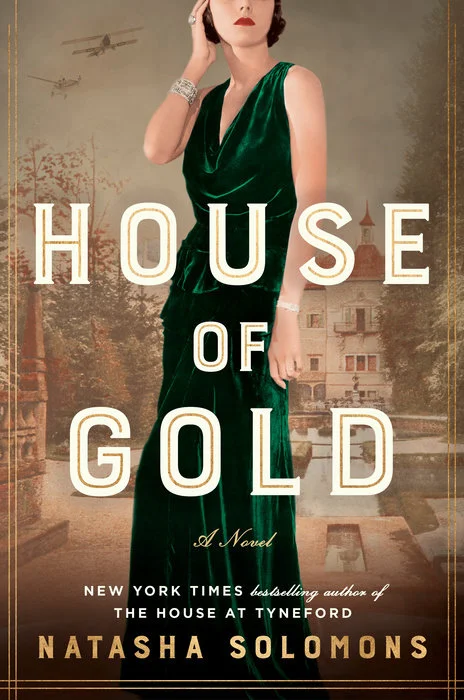
Spotlight: House of Gold by Natasha Solomons

From the New York Times bestselling author of The House at Tyneford, an epic family saga about a headstrong Austrian heiress who will be forced to choose between the family she’s made and the family that made her at the outbreak of World War I.

Vienna, 1911. Greta Goldbaum has always dreamed of being free to choose her own life’s path, but the Goldbaum family, one of the wealthiest in the world, has different expectations. United across Europe, Goldbaum men are bankers, while Goldbaum women marry Goldbaum men to produce Goldbaum children. Jewish and perpetual outsiders, they know that though power lies in wealth, strength lies in family.

So Greta moves to England to wed Albert, a distant cousin. Defiant and lonely, she longs for connection and a place to call her own. When Albert’s mother gives Greta a garden, things begin to change. Perhaps she and Albert will find a way to each other. 

But just as she begins to taste an unexpected happiness, war is looming and even the influential Goldaums can’t alter its course. For the first time in two hundred years, the family will find themselves on opposing sides and Greta will have to choose: the family she’s created or the one she was forced to leave behind.

A sweeping family saga from a beloved and New York Times bestselling author, House of Gold is Natasha Solomons’s most dazzling and moving novel yet.

Excerpt

1911

A man's status can be judged by the number of his bedding plants- ten thousand for a squire, twenty thousand for a baronet, thirty thousand for an earl and fifty thousand for a duke, but sixty thousand for a Goldbaum.

Often-quoted saying

Vienna, April

The Goldbaum Palace was made of stone, not gold. Children walking along the Heugasse, buttoned smartly into their coats and hand in hand with Nanny or Mutti, were invariably disappointed. They'd been promised a palace belonging to the prince of the Jews, spun out of ivory and gold and presumably studded with jewels, and here instead was simply a vast house built of ordinary white stone. Though it was the very finest limestone in the whole of Austria, and had been transported from the Alps to Vienna along a railway line constructed thanks to a loan from the Goldbaum Bank, and hauled by an engine and train owned by the Goldbaum Railway Company, painted resplendently in the family colors of blue and gold and adorned with the family crest: five goldfinches alighting on a sycamore branch. (Wits liked to refer to the coat of arms as "the birds in the money tree.") Inside, the great hall was gilded from the wainscot to the highest point of the domed roof, so that even on gloomy days the light it reflected brimmed with sunshine. Such was the power and wealth of the Goldbaums that on dull days, it was said, they hired the sun, just for themselves.

At night every window was lit with electric light and the house shone out like a great ocean liner buoyed along the Vienna streets. Sometimes at the grandest parties they released hundreds of goldfinches into the hall, so that they warbled and fluttered above the guests. (The birds were accompanied by an extra two dozen maids whose sole task for the evening was to wipe up the tiny spatters of bird shit the moment they appeared on the marble floor; there were limits, it appeared, even to the power of the Goldbaums.) All the same, little happened in the capital and beyond without their say-so, and even less without their knowing it. The emperor himself despised and endured the Goldbaums like inclement weather. There was nothing that could be done. They owned his debt.

The palace on Heugasse was merely the expression of their influence. The real source of their wealth was a small, unobtrusive building on the Ringstrasse. Behind the black door lay the House of Gold: the Austrian branch of the family bank. The Goldbaum men were bankers, while the Goldbaum women married Goldbaum men and produced Goldbaum children. Yet the family didn't consider themselves solely a dynasty of bankers, but also a dynasty of collectors.

The Goldbaums liked to collect beautiful things: exquisite Louis XIV furniture; paintings by Rembrandt, da Vinci and Vermeer; and then the great manors, ch‰teaux and castles to put them in. They collected jewelry, FabergŽ eggs, automobiles, racehorses-and the obligations of prime ministers. Greta Goldbaum followed in the family tradition. She collected trouble. This was the trait that Otto Goldbaum most valued in his sister. Before her arrival, his mother had visited the nursery, wallowing in state on a chair reserved especially for this purpose, and, with the assistance of his favorite nanny, explained that in a few weeks' time he would be joined by a little brother or sister. They sipped hot chocolate from a miniature china tea service adorned with the family crest in twenty-four-karat gold, and nibbled tiny slices of Sachertorte dabbed with swirls of blue and pink, ordered especially from the grand hotel. Otto listened in silence, watching with considerable suspicion the rise and fall of the baroness's vast belly. And yet when, four weeks later, Greta appeared in the nursery with her own fleet of starched nursemaids, he was not put out in the least. For the first time in his three years Otto had an ally. Greta certainly seemed to belong more fully to him than to the parents who lived downstairs. The baroness was considered an extremely dedicated mother by visiting the new baby almost every day, while Otto was still summoned to luncheon with the baron and baroness at least twice each week. He listened to the cries and gurgles of his sister through the walls and, when the nurses slept, crept in to lie on the floor of her night nursery. He did this so often that the nurses gave up either berating him or carrying him back to his own bed and set up a little cot for Otto beside her crib.

Greta was not a favorite with the nurses. They could never make her look smart for Mama during her visits. Her hair would not lie flat, like Otto's, but popped up around her head in disordered curls. The rubbed patch at the back, like a monk's round tonsure, did not grow back until she was nearly two. She usually had a cold. As she grew older the maids delighted in telling her, "If you weren't a Goldbaum, you'd be given a proper hiding." Greta told Otto in that case she was frightfully glad she was a Goldbaum, but she felt terribly sorry for all the children who weren't, as it seemed that they must spend much of their time being beaten for petty crimes (melting soap on the nursery fire to make modeling clay; hiding unwanted food at the back of the toy cupboard until it was found weeks later, festering; removing the saddle from the rocking horse and fixing it to Papa's favorite bloodhound and riding the dog around the tulip beds). Greta was frequently sent to bed with nothing to eat but bread and milk. None of this mattered. She had Otto.

His character ran counter to his sister's. Where Greta was impulsive, Otto was careful. She talked and he listened. His hair was perfectly smooth, his part immaculately combed. Where Greta was in constant motion, Otto possessed a stillness that often unsettled his contemporaries, although he did not consider himself quiet, since his thoughts were so loud, his mind always restless and busy. It took Otto time to reach a decision, but once he had done so, he acted decisively. He was of average height and slim, but he fenced and boxed with skill, taking pleasure in the exercise and in anticipating his opponent's game. He considered both pursuits to contain the perfect blend of brutality and elegance.

As Greta grew, so did the trouble. She borrowed Otto's clothes and disappeared for a picnic beside the river, where she was discovered sharing a cigarillo with a pair of lieutenants. She persuaded Otto to take her to the university so that she could listen to one of the astronomy lectures he attended. Otto decided that she looked like a bird of paradise roosting among the thrushes, in her bright blue coat and hat, sitting amid a hundred men in brown and gray suits. He asked her if she liked the lecture. "Adored it. Didn't understand a word." Greta went every day for a week, saying it helped her sleep magnificently. She secured clandestine lessons on the trumpet and became rather good, before the baroness discovered her and put a stop to it. Piano, harp or, at a push, the violin was deemed sufficiently demure. Wind instruments were far too louche; all that work with the embouchure. The very word made the baroness blush. Otto developed a spontaneous interest in the trumpet. Another tutor was procured. Otto surreptitiously shared his lessons with his sister and pretended the practice was his. Greta, however, lost interest. Trumpet voluntaries were only fun when they were illicit. Otto accepted that one of his tasks in life was to help his sister out of mischief. For twenty years this had been a source of pride and pleasure to him, and of only occasional exasperation.

If anyone had asked Greta if she wanted to marry Albert Goldbaum, she would have said no, certainly not. But no one did ask. Not even her mother. They asked her all sorts of other things. Which blooms would she like in her bouquet? Roses or lilies? Did she want ten bridesmaids or twelve? Greta replied that she was quite indifferent to the number of bridesmaids. Her only stipulation was an assortment of footmen carrying white umbrellas. Her mother paused for a moment. ÒSupposing it doesnÕt rain?Ó ÒOf course it will rain,Ó Greta replied, ÒIÕm going to England.Ó

Greta knew that Baroness Emmeline was tormented by the prospect of appearing inappropriately attired. Three cloaks were to be made to match Greta's wedding dress: one of Arctic fur, one of the finest lamb's wool and another of silk and lace. The baroness insisted that a lady must always have a choice and be prepared for the unexpected, in matters pertaining to the wardrobe at the very least. She invariably traveled with at least three pairs of spare shoes in the trunk of the automobile: a pair of stout leather boots, should the weather turn; a pair of elegant shoes to change into afterward; and a pair of satin slippers, just in case. In case of what, Greta never could ascertain.

She offered no further opinion on the wedding preparations. She acquiesced to every suggestion with such pointed apathy that the baroness ceased to consult her. This suited Greta perfectly. She visited her friends and drank coffee, and changed the subject if any of them were tactless enough to raise the topic of her looming nuptials. The wedding was an unpleasantness to be endured, and for a while it was sufficiently far away that she could pretend it was not happening at all. It stalked her, though, through her dreams. Her fear was indistinct and sinister, something nameless to be dreaded. Only it did have a name. Albert.

"He probably doesn't want to marry you, either," said Johanna Schwartzschild one morning as they sat in the orangery, taking coffee and sweets, some weeks before the wedding. "Perhaps he's in love with someone else. Either way, he might just not fancy it."

Greta set down her cup of coffee in surprise and stared at Johanna, who started to color, perhaps wondering if she'd pushed it a little far and this was why she was not one of the twelve bridesmaids. But Greta was not offended, simply intrigued. Up until then she'd considered only her feelings on the matter, and had taken all the reluctance and resentment as her own. Of course it wasn't pleasant to think that someone else was considering the prospect of marrying you with horror and revulsion, but, she reasoned, it wasn't personal. Albert didn't dislike her; he couldn't. He didn't know her. But poor Albert probably didn't think much of marrying some stranger simply because she was his first cousin twice removed and had the right surname. Now he became, in her mind, "Poor Albert" and she began to think of him almost fondly. She rang the bell. A maidservant appeared.

"More coffee, FrŠulein?"

"No, thank you, Helga. Tell my mother that I've changed my mind. I don't want roses or lilies. I would like gardenias for my bouquet."

For the first time since her mother had summoned her to her dressing room and informed her that she was to marry Albert and move to England, Greta began to read English novels once again. Her English conversation lessons had still taken place for three hours each morning with the apologetic and sweaty-palmed Mr. Neville-Jones, but in a silent and futile gesture of displeasure sheÕd set aside English literature for French and Italian. Now, softening toward Poor Albert, she penned herself a firm reading list. Dickens she enjoyed immensely. The hustle and stink of London sounded enchanting, compared to the museum hush and desiccated formality of Vienna. On the other hand, Jane Austen she couldnÕt get along with at all. There were far too many young ladies far too eager to get married. Mr. Darcy sounded like a bore, and Mr. Bingley worse. She hoped that Poor Albert was nothing like either of them.

Then she discovered Jane Eyre. Oh, the thrill of being a governess and being entirely dependent on oneself. The danger and wonder of being alone in the world. Jane Eyre might have been a governess dreaming of becoming a bride, but Greta Goldbaum was the bride dreaming of becoming a governess.

As Greta walked through the park arm in arm with Otto she saw that the crocuses were erupting beneath the aspen trees, regiments of purple and shining yellow in imperial shades, like thousands of miniature soldiers. There were only tiny patches of snow remaining, shoveled into wet heaps the color of sodden newspapers.

A fluttering notice pinned to a tree caught her eye and she paused to read it. Greta liked these notes. The trees in the park were full of them, like a species of white bird. They were messages from another world-the ordinary one, where people struggled and drank schnapps straight from the bottle, and ate schnitzel and sausage for supper, and owned an ordinary number of trousers. (Greta estimated this number to be something between three and fifty pairs.) The notices on the trees were for lost dogs, rooms to rent, or ladies of low regard advertising their services. The most desperate were the most intriguing: a violinist offering lessons in exchange for a decent meal and a bucket of coal.

To Greta, it was the ordinary and mundane that contained the sheen of glamour. The aura of her name followed her everywhere like a gleaming shadow; she could never escape from its glow. People who were not kind in general were invariably kind to her, or so she was frequently informed by her friends. She suspected that her view of the world was distorted, as if everything she consumed was sprinkled liberally with sugar. She longed to taste life unsweetened.

It was better for Otto, she thought, a little resentfully. His misadventures weren't merely tolerated but encouraged. He'd been permitted to spend six entire months at the Imperial Observatory on the border with Russia, where the winds gusting through the great forests were chilled with the enemy's breath. He'd seen not only stars and comet tails, but Cossacks riding through the plains separating the two great empires, the handkerchiefs covering their faces red and blue in the moonlight. Or so she presumed; Otto had been disappointingly vague on the details in his letters home. There had been far too much about the mathematics of observational stars, and far too little about bandits and Cossacks, or the legendary eastern Jews who thrived in the border swamps and had long red beards, flaming out like Moses's burning bush.

Everything had become imbued with sudden meaning: the silver coffeepot and pats of butter stamped with tiny birds were no longer merely objects, but ciphers. Earlier Greta had remained as the maid arranged the baronessÕs hair-something sheÕd not done since she was a child, watching the maid brush and brush the long silvering hair, sleek as the tail of a weasel. Then it was wound round and round, pinned neatly into a smooth wheel. The ivory brush sat on the dressing table and Greta looked at it, knowing that the days of such intimacy were nearly over. When she left the baroness to her coffee, she felt a pang of unexpected tenderness.

Excerpted from House of Gold by Natasha Solomons. Copyright © 2018 by Natasha Solomons. All rights reserved. No part of this excerpt may be reproduced or reprinted without permission in writing from the publisher.

Buy on Amazon | Barnes and Noble

About the Author

A screenwriter and novelist, Natasha Solomons lives in Dorset, England, with her husband and young son. She is the New York Times bestselling author of The House at Tyneford, The Gallery of Vanished Husbands, and The Song of Hartgrove Hall.

Sale Blitz: Three Sisters Catering by Bethany Lopez

Today we are sharing an incredible FREEBIE title from Bethany Lopez. For a very limited time, you can get A Pinch of Salt for FREE! Check out the links for the book below, along with other books in the Three Sisters Catering series.

Don't miss the next book, A Splash of Vanilla, coming November 5th!

A PINCH OF SALT is FREE (for a limited time!):

Amazon | iBooks | Kobo | Nook | Smashwords


Check out the A Pinch of Salt Pinterest Board!

PURCHASE THE OTHER BOOKS IN THE SERIES

Purchase A TOUCH OF CINNAMON Now

Amazon | iBooks | Kobo | Nook | Smashwords


Pre-order A SPLASH OF VANILLA (releases November 5)

Amazon | iBooks | Kobo | Nook | Smashwords


AUTHOR INFORMATION:

A1nt0F1SfnL._UX250_

Award-Winning Author Bethany Lopez began self-publishing in June 2011. She's a lover of all things romance: books, movies, music, and life, and she incorporates that into the books she writes. When she isn't reading or writing, she loves spending time with her husband and children, traveling whenever possible. Some of her favorite things are: Kristen Ashley Books, coffee in the morning, and In N Out burgers.

AUTHOR LINKS:

Sign up for Bethany's Newsletter

Website | Twitter | Facebook | Goodreads | Pinterest | Amazon

InkSlinger-Blogger banner-New

Spotlight: Cowboy Charm School by Margaret Brownley

When Texas Ranger Brett Tucker accidentally derails a wedding,

he’s determined to bring the estranged couple back together...

but he never dreamed he’d start falling for the bride!

Texas Ranger Brett Tucker hates to break up a wedding, but the groom—notorious criminal Frank Foster—is a danger to any woman. So he busts into the church, guns blazing...only to find he has the wrong man.

STOP THAT WEDDING!

Bride-to-be Kate Denver is appalled by her fiancé’s over-the-top reaction to the innocent mistake and calls off the wedding—for good. Guilt-ridden, Brett’s desperate to get them back on track. But the more time he spends with Kate, the harder he falls…and the more he yearns to prove that he’s her true match in every way.

Excerpt

Brett’s courting advice is bound for success— if only he can keep his own feelings out of the way.

The music stopped and a man with a sweeping mustache clapped his hands and yelled in a leather-lunged voice, “Time to change partners, folks!”

Shuffling feet and swirling skirts followed the command as everyone rushed around to partner up with someone new. It took some fancy footwork on Brett’s part to reach Kate’s side before anyone else did. He only hoped that Foster played his part the way they’d practiced.  

“May I?” he asked, holding out his hand.

Kate hesitated. Her big blue eyes said yes, but something held her back. No doubt she was worried that Foster’s jealous streak would flare up and he would make a scene.

Brett cleared his throat. Come on Foster. This is your big moment. Do it the way we practiced.  It took much in the way of visual prodding and clearing of his throat before Foster finally got the hint.

“Sure, go ahead,” he said, looking like he’d bit into a lemon. It wasn’t how they’d practice it, but at least Foster got some of it right.

Leading Kate away, Brett glanced over his shoulder at Foster. “Whistle,” he mouthed. Instead of showing his jealousy or acting it out, Foster was supposed to whistle. If his tuneless whistles didn’t chase the green-eyed monster away, nothing would.  

Facing Kate, it suddenly seemed imperative to recall his purpose in asking her to dance. It was the only way he could think to prove to her that Foster had conquered his jealousy or, at least, was trying to.

Brett slipped his arm around her tiny waist and closed his fingers over her dainty soft hand. She draped her arm over his shoulder and rewarded him with a brilliant smile that made him tingle inside.

Though he was a good head taller than Kate, they seemed perfectly matched as he circled the dance floor effortlessly with her in his arms. His heart pounded, but fortunately the music muffled the sound. So, this was how it felt to float on air.

Brett could almost feel Foster’s visual daggers as he steered Kate around the other couples. Foster’s pursed lips and red face suggested he was whistling up a storm, and the strange looks directed his way seemed to confirm it. Hoping Kate hadn’t noticed, he led her in such a way as to block Foster from view.

“I’m surprised Frank didn’t object to me dancing with you,” she said. “He

doesn’t usually like me dancing with anyone but him. He can be so jealous at time.”

Brett gazed into her starry eyes. If she didn’t stop looking so utterly fetching, he’d give Foster plenty to be jealous about.  

Now was the time to say something positive on Foster’s behalf, but he couldn’t think much past the present moment.

“As a young child, he was bounced from family to family,” she continued, relieving him of having to jump to Foster’s defense. “He never had a real home until he came here to Haywire. And even then, he grew up without a mother. Mr. Foster didn’t remarry until Frank was in his late teens.” Her eyes softened into pools of appeal. “A background like that would make anyone feel anxious. That’s why he’s…”

“Afraid of losing you?”

She moistened her lips, calling attention to her pretty pink mouth. “Something like that.”

Catching himself staring, Brett cleared this throat and gazed over her head. He forced himself to concentrate on the fiddler, the refreshment table, the other dancers. Anything to keep from drowning in the depth of her blue eyes.

“Horehound will help,” she said. “Or perhaps you’d prefer peppermint? For your throat, I mean.”

His gaze locked with hers. “My throat?”

“I noticed back there, that you kept clearing your throat and coughing.”

“Oh, that. Yes, you’re right. Maybe some…hard candy would help.”

She smiled up at him. “You can pick up a bag when you stop by the shop tomorrow for the list.”

His mind went blank for a moment until he recalled the list of customers she’d promised him. “I’d be much obliged.”  He spun her around and then pulled her back. Holding her close, he felt her stiffen in his arms.

“Something the matter?” he asked.

“It’s Frank,” she said. “Look! He’s all red in the face.”

Brett followed her gaze. Foster’s overwrought whistling had turned his face as red as an overripe tomato.

Her face lined with worry, she pulled away. “I better see what’s wrong.”

Before he could stop her, she rushed to Foster’s side, whose arms, Brett told himself, she belonged. Not a thing was wrong with his throat, but he sure in blazes was worried about the condition of his heart.

Buy on Amazon | Barnes and Noble

Cover Reveal: Be What Love Is by Ellie Malouff

Be What Love Is

by Ellie Malouff Publication Date: October 1, 2018 Genres: Adult, Contemporary, Romance

Preorder: Amazon | iBooks | Barnes & Noble | Kobo

Ellie Malouff returns with a smashing standalone contemporary romance novel that was named a finalist for the 2018 Stiletto Contest and 2018 Molly Contest. On October 1, travel across the Atlantic with Cara Montgomery when she inherits an English estate with a devilishly handsome Brit. Reid Lewis is handsome, successful, and every bit the English gentleman. Years spent in England’s finest boarding schools will do that. Cara Montgomery is a California girl through and through, even if she was born across the pond. As a struggling graduate student, she works part-time at a coffee house, slinging espresso for San Diego’s caffeine addicted. When these two strangers are named the sole beneficiaries of a substantial English estate that rivals Pemberley, their worlds collide and tensions flare. They couldn’t be more different. Cara’s got a flair for Mexican food, books, and leggings. Reid is as posh as they come and a regular on the black-tie gala scene. Against Reid’s better judgment, he agrees to stay and play house with Cara so she can search not only for keepsakes from her childhood but for the family secrets that have been hidden from her all her life. Spending the summer together in a Somerset mansion isn’t what either of them had in mind, but it has its perks, especially when the person you want beyond reason is living under the same roof.

About Ellie Malouff

Ellie Malouff has been dreaming up stories for as long as she can remember. As an avid reader, she loves getting lost in books and decided one day to give a little back to the literary world with her own contribution. When she’s not writing, you can find her parked on the couch in Colorado with her husband, kids, and cats. She loves traveling to Ireland whenever she gets the chance.

Website | Facebook | Twitter | Instagram | Pinterest Newsletter Goodreads | Amazon | Book + Main

a Rafflecopter giveaway

Cover Reveal: Magic Man by Ashley Hastings

Magic Man

by Ashley Hastings Publication Date: September 10, 2018 Genres: Adult, Contemporary, Romance

Trauma. Two broken souls. And a chance at love they didn’t see coming. Millie is a single mom who doesn’t have the time – or the trust – to date. After experiencing a violent assault as a teen, she’s determined to move on and stay focused on what’s important. But when she meets the mysterious Maxwell, Millie starts to rethink her priorities. Maxwell is her enigmatic boss who always seems to know exactly what Millie’s thinking. No stranger to trauma himself, he’s spent his entire life alone. Until he meets his new employee, Millie. With one look, Maxwell knows she and her daughter are his one chance at happiness. Driven and determined, he wants to give Millie everything she ever wanted, along with the love she didn’t know she needed. Millie will have to choose between the safe world she has created and the chance to build a new life with the man of her dreams. But can she trust Maxwell with her heart or is he running a scam? Can two individuals overcome their traumatic pasts and find love? Don’t miss Magic Man by Ashley Hastings. If you like steamy romance with a dash of darkness, then this book will have you staying up late to finish reading Maxwell and Millie’s love story.


About Ashley Hastings

Ashley Hastings lives with a menagerie of animals, and one day aspires to be a crazy, old cat lady. She has a starter set of three cats right now. Ashley likes to take long walks each day while she dreams about what her characters will do in the future, and is already hard at work on her next novel.

Website | Facebook | Goodreads | Newsletter | Twitter | Instagram | Pinterest | Tumblr | AmazonFacebook Group

a Rafflecopter giveaway