Read an excerpt: From the Baroness's Diary III by Cristiane Serruya

I’ve been trying to get away from one man, I didn’t think I’d end up with three.

I flee my abusive husband and travel to Italy to find Salvatore Di Luca, my long-lost love.

But the moment I set foot in Sicily, my life takes an unexpected turn: I meet Enzo, a dominant, broken-hearted man, and we connect at first sight. I couldn’t have imagined he is Salvatore’s elder brother and that they have a younger brother, Angelo, who thinks he is damaged for life. 

It’s more than a trip. It’s a life-time journey.

All three of them want me and I want to heal their tortured souls and broken hearts. Before I even realize what is happening, we are entangled. Yet I am still married and the darkness of my past comes crashing down on us sooner rather than later, threatening more than our happiness.

But I won’t go down without a fight—and neither will my Harem—because my journey won’t be complete until forever belongs to the four of us. 

If you are a fan of a romantic Reverse Harem Romance, you will love this scandalous, refreshing, and, of course, incredibly sexy story which involves three alpha Italian knights who will do anything for their baroness—oops, their Principessa. Buy this quick-blush, perfect bedside read by USA Today bestselling author Cristiane Serruya now!

Please note that this book might covers sensitive topics to some readers.

Excerpt

I am beside myself by all the beauty out here in the Italian countryside.

Not just the vineyards, I must say. The sea, too, and the sun. The light here is different. And oh. The men. Oh, the men.

But I am getting ahead of myself.

Oui, the villa by the sea is very, very nice, though I don’t get to see around much yet.

The house, clearly centuries old, is comfortable and cozy and everything an Italian villa should be. I find myself sighing with longing as I gaze up at the beautiful house, pressed between a backdrop of bright blue sky and an infinite turquoise sea.

But what really awakens the longing inside me is still to come.

We walk in through the back door into a large farmhouse kitchen.

I sense the air of unmistakable masculinity that intoxicates my senses before I see the two men dwarfing a…mini table?

And it’s all I see: Salvatore’s brothers.

Because they don’t even have to be introduced, their sizes are so similar, though one is dark and has his back to me, and the other is fair and much younger.

But the largest is unequivocally the same: broad shoulders, large chest and back, and muscular arms.

“Cara,” Salvatore says, dropping my bag at his feet. “I’d like you to meet my baby brother, Angelo.”

Angelo’s big, somewhat innocent, baby-blue eyes grow bigger at the sight of me and I freeze on the spot. Non, n’est ce pas possible. What are the odds of the young man I had seen masturbating on the ferry being Salvatore’s younger brother?

After asking his oldest brother something in Italian and getting what I think is a mocking answer with a mocking laugh, he stands from the table.

I thought at first they were sitting at a mini table, but it doesn’t take me long to realize the table isn’t mini. Non, he just makes it look that way because he is so big.

“Piacere.” Because it is really a pleasure, though I’d rather have met him under other circumstances.

But shouldering his way past me, muttering something harsh to Salvatore, he leaves the room, banging the door shut for good measure.

For some reason it knocks the air out of my lungs when he dismisses me so easily.

Does he know I am married? Does he know about my past with his brother and disapproves of it?

But then the other brother stands. Slowly, unfolding his even taller body from his seated position. And then he turns and smiles at me.

And, oh, I have to use all my years of hard training in the convent to remain standing, because I feel faint.

He reaches out a hand and grasps mine in his.

A jolt runs through me and my smile dies on my lips.

“Principessa.”

Buy on Amazon | Barnes and Noble

Get your hands on the first ten chapters of FROM THE BARONESS’S DIARY III and some delicious recipes from Cristiane Serruya here: https://dl.bookfunnel.com/wlyoym3hw6

Want to catch up on some of Chloe’s earlier adventures for free? FROM THE BARONESS'S DIARY: THE EROTIC ESCAPES OF BARON BEARDLEY'S WIFE is free for a limited time!

An erotic, funny tale of a young woman in search of love.

At the tender age of 18, Lady Chloé de La Fleur was married off to 40 year-old Baron Beardley, a wealthy English peer, and taken away from the whirlwind of Paris and London societies to live in a forsaken manor way out of Warwickshire.

Young, beautiful, and voluptuous, the Baroness finds that in Beardley Manor innocent flirtations can become erotic sex escapades.

And soon Lady Chloe’s diary pages are filled with her adventures—and misadventures!

If you are a fan of the romantic Misadventures Series and Calendar Girl, you will love this scandalous, refreshing, and, of course, incredibly sexy romance. The Erotic Escapades of Baron Beardley's Wife is the first installment of The Diaries Series, a quick-blush, perfect bedside read collection by USA Today bestselling author Cristiane Serruya!

About Cristiane Serruya

USA TODAY and Amazon bestselling romance author Cristiane Serruya—or just Cris—is Brazilian and lives in Rio de Janeiro, with her husband, two teenage daughters, and Loki, her Shetland Sheepdog. She has studied in England, France, Italy, and Switzerland and graduated in Law, with a Master’s in Business Law and a BA in Fine Arts. In 2012, she published her first romance, and is proud of the awards her novels have received. She still works as a lawyer, but writing has become an essential part of her life, and a fulfilling adventure, as it allows her to make friends all over the world. 

Connect: Twitter | Instagram | BookBub | Facebook | Pinterest

Spotlight: The Return Home by Jen Talty

The Return Home
Jen Talty
Publication date: September 6th 2018
Genres: Adult, Contemporary, Romance

Major, Dylan Sarich, knows only one thing: Delta Force. He has dedicated his life to the Army and his country and can’t imagine doing anything else.

Until the unthinkable happens.

During a top-secret operation, Dylan is nearly sent home in a body bag with the rest of his team. With his wounds still fresh and on extended medical leave, Dylan returns to his hometown in Jupiter, Florida to heal his body. However no amount of physical therapy will destroy the demons lurking deep in Dylan’s soul.

Dr. Kinsley Maren is an expert in PTSD and brain trauma. When her neighbor comes to her, begging for help with her son, Kinsley can’t say no, especially when she meets Dylan. She’s certain she can break through the anger and help restore his confidence and mend his broken heart. Only she never expected he’d steal hers.

Goodreads / Amazon

Are you a book blogger?
Request a review copy here!

EXCERPT:

Dylan eased himself back in the luxurious sofa in the Vanderlins’ vast family room that had to be the size of his mother’s double-wide. He let out a long breath, wondering why he felt so bitter all of a sudden. He never went without as a kid. Sure, his parents didn’t buy him a brand-new car the day he turned sixteen, but they did teach him the value of a dollar, the importance of a good work ethic, and how to stand on his own two feet.

The Vanderlins’ had done the same, they just could also give their kids their own pool, a view of the Intracoastal and the ocean, along with fancy schools.

Well, fuck, Dylan had gone to West Point. That was quite the accomplishment, and Mia and her family weren’t a bunch of rich assholes who treated those with less like they were beneath them. They were good people who didn’t deserve Dylan’s foul mood.

“Let’s get all these munchkins in the tub,” Dylan’s mother said as she chased down Kayla, Ramey’s daughter who had the energy of the sun and tenacity of a lion protecting her cubs. The kid had no fear and a giant-size confidence in a pint-size body.

“Grandma. Get me!” Tyler, Nick’s oldest, exclaimed as he tried to catch up, but to no avail. While he also had boatloads of energy, he had a timid side to him and a soft heart, which was going to get him in trouble with the ladies.

“Do I have to take a bath with them?” Abigail said, clinging to Logan’s pant leg. “Can’t I have a shower? I’m a big girl now. Not a baby.”

Dylan bit back a smile. Nothing like listening to children try to reason with their parents.

“I’m no baby,” Kayla said, stopping dead in her tracks in the middle of the open family room, swiping her blond curls from her face.

“You’re my baby girl,” Ramey said from his spot on the floor.

Kayla rolled her eyes, pushing out a long breath.

“You’re so in trouble with that one. The female version of Ramey,” Dylan said with a laugh.

“But better looking like her mama,” Ramey said, reaching out and grabbing Kayla, tossing her to the floor and tickling her belly while she giggled.

“Daddy!” Abigail fisted her little hand and sent it crashing into his shin. “I want to take a shower.”

“You love Nana’s big tub. Now go with Grandma. Nana is setting up the big television in Mommy and Daddy’s room for you all to watch Nemo,” Logan said.

“Fine,” Abigail said, pointing her little, pudgy finger up at her father. “But only if I get popcorn.”

Dylan put his hand over his mouth, trying to wipe the smile off his face, but damn it felt good to feel lighthearted about something.

“Don’t talk sass to your father, young lady,” Mia said, coming in from the kitchen and scooping the little girl up in her arms. “I’ll help your mom.” Mia kissed Logan on the cheek. “Tequila and Leandra have the two babies upstairs. We’ll leave you boys to catch up.”

Nick waltzed in with a bottle of wine and four glasses. He held them up in the air. “I think this family has turned me into a wine snob.”

Logan took the glasses, setting them on the coffee table. “You know, that bottle doesn’t cost more than thirty dollars. My father-in-law has an entire cellar full of inexpensive wine and that’s his favorite.”

“I don’t think I ever even tried wine until you and Mia got back together.” Nick plopped himself on the sofa. “And now I think I prefer it over beer half the time.”

“It’s called being a mature grown-up,” Dylan said before he burst out laughing, then coughing as he clutched at his side. “Shit,” he muttered. “That fucking hurts.” He breathed slowly and not very deeply. The last x-ray showed his ribs were close to being healed, but not close enough.

“You okay?” Nick rested his arm on Dylan’s shoulder.

Ramey and Logan had both moved closer, sitting on the floor in front of the coffee table.

“Do I look like I’m okay?”

“You’re a bigger baby than any one of those toddlers,” Ramey said in a teasing tone. “Every time you got hurt as a kid, you’d ball like a little girl.”

“That’s funny coming from you since when you thought you broke your arm, you screamed like a dying cow, and it was only a sprain.” Logan finished pouring the wine, making sure the glasses were filled and the bottle empty. “Here’s to one for all, and all for one.”

Dylan clinked his glass with each of his brothers. “I’ve got your back.”

His brothers repeated the mantra. A deafening silence filled the room. Dylan sipped his wine, his thoughts going back to his father. Images of his childhood flashed across his mind. Running and playing in the street with his brothers. His father and Logan teaching him how to swing a baseball bat. His father and Nick teaching him how to shoot a gun. And he and Ramey building a picnic table for their neighbors under the watchful eyes of their father.

But it always came back to their last fishing trip.

The last time his brothers had seen their father alive.

The next day, Dylan watched his father take his last breath.

Logan swirled his glass. “Dad hated wine.”

“But he drank it for Mom,” Nick said. “Every anniversary and every birthday, he’d bring her a bottle.”

“And daisies,” Dylan added.

“He’d harass the hell out of us for actually enjoying this bottle.” Ramey took a big swig. He enjoyed wine, but he drank it like he was doing shots. “I can hear him say, ya’ll are a bunch of wusses. Real men drink Crown.”

“God, I hate that stuff.” Logan shook his head. “I remember right before I went off to college, Dad gave me a shot. I thought I was going to puke right there.”

“I’ve got news for you,” their mother said, waltzing into the room with another bottle and a glass for herself. “He hated that shit too.”

“Such language, Mom. Really. My poor innocent ears.” Ramey held out his glass, while his mother went about filling everyone’s before snuggling on the sofa between Nick and Dylan.

“Ramey, you’re about as innocent as Logan is funny.” His mother patted Nick’s leg.

“Hey. Thanks a lot, Mom,” Nick said.

“If he hated it so much, why did he drink it?” Logan asked, rubbing his chin. “I just always remember there was a bottle in the house, and oh boy, when Grandpa came to visit, they’d stay up drinking that swill all night.”

“That’s where you’re wrong. His father loved that stuff, and it was just your dad trying to bond with him. Your dad pretty much only liked his beer.”

“You’re joking,” Dylan said, staring at his mother with his jaw gaping open. They spoke of their father often when they were all together, but their mother rarely gave up any stories other than the usual tales.

“Nope.” His mother shook her head. “So, when your grandpa died, your father decided he should at least continue with the tradition and tried to get Logan to drink that crap.”

“He gave me and Joanne a bottle of it on our wedding day,” Nick said. There had been a time when Nick couldn’t even utter his late wife’s name.

Dylan tapped his chest. His heart beating faster. He loved his family. Loved being with his brothers, but as always, shortly after he arrived, he began counting the moments until his next deployment.

Only this time, he didn’t know when that would be.

“He wanted to carry on what his father had started.”

“I read Tyler The Little Engine That Could every chance I get,” Nick said with a sigh. “Dad loved that story.”

“That he did. Almost as much as he did fishing.” His mother finished her drink and stood. “It’s nice to have all my boys in one place again.”

“It’s good to be home.” Dylan reached up and took his mother’s hand and kissed it. “I mean that.”

“I know you do. I also know the second you get the thumbs up, you’ll be in the back of a C-130 transport plane on to your next assignment.” She bent over and pressed her lips on his forehead. “But until then, I’m going to have my boys together as much as I can.”

Author Bio:

Jen Talty is an award-winning author of Romantic Suspense. Dark Water hit #10 in Barnes and Noble and her books have been in the top 50 on Amazon. Jennifer grew up in Rochester, New York. She recently retired from being a full-time hockey mom as her children hung up their skates. She and her husband still live in Rochester while her children travel globe. Jen was the co-founder of Cool Gus Publishing with NY Times Bestselling Author Bob Mayer. For more information about Jen Talty please visit: jentalty.com.

Website / Goodreads / Facebook / Twitter


GIVEAWAY!
a Rafflecopter giveaway

XBTBanner1

Spotlight: The Silence of the Girls by Pat Barker

From the Booker Prize-winning author of the Regeneration trilogy comes a monumental new masterpiece, set in the midst of literature’s most famous war. Pat Barker turns her attention to the timeless legend of The Iliad, as experienced by the captured women living in the Greek camp in the final weeks of the Trojan War.

The ancient city of Troy has withstood a decade under siege of the powerful Greek army, who continue to wage bloody war over a stolen woman–Helen. In the Greek camp, another woman watches and waits for the war’s outcome: Briseis. She was queen of one of Troy’s neighboring kingdoms, until Achilles, Greece’s greatest warrior, sacked her city and murdered her husband and brothers. Briseis becomes Achilles’s concubine, a prize of battle, and must adjust quickly in order to survive a radically different life, as one of the many conquered women who serve the Greek army. 

When Agamemnon, the brutal political leader of the Greek forces, demands Briseis for himself, she finds herself caught between the two most powerful of the Greeks. Achilles refuses to fight in protest, and the Greeks begin to lose ground to their Trojan opponents. Keenly observant and cooly unflinching about the daily horrors of war, Briseis finds herself in an unprecedented position to observe the two men driving the Greek forces in what will become their final confrontation, deciding the fate, not only of Briseis’s people, but also of the ancient world at large.

Briseis is just one among thousands of women living behind the scenes in this war–the slaves and prostitutes, the nurses, the women who lay out the dead–all of them erased by history. With breathtaking historical detail and luminous prose, Pat Barker brings the teeming world of the Greek camp to vivid life. She offers nuanced, complex portraits of characters and stories familiar from mythology, which, seen from Briseis’s perspective, are rife with newfound revelations. Barker’s latest builds on her decades-long study of war and its impact on individual lives–and it is nothing short of magnificent.

Excerpt

1

Great Achilles. Brilliant Achilles, shining Achilles, godlike Achilles . . . How the epithets pile up. We never called him any of those things; we called him “the butcher.”

Swift-­footed Achilles. Now there’s an interesting one. More than anything else, more than brilliance, more than greatness, his speed defined him. There’s a story that he once chased the god Apollo all over the plains of Troy. Cornered at last, Apollo is supposed to have said: “You can’t kill me, I’m immortal.” “Ah, yes,” Achilles replied. “But we both know if you weren’t immortal, you’d be dead.”

Nobody was ever allowed the last word; not even a god.

——————

I heard him before I saw him: his battle cry ringing round the walls of Lyrnessus.

We women—hildren too, of course—ad been told to go to the citadel, taking a change of clothes and as much food and drink as we could carry. Like all respectable married women, I rarely left my house—hough admittedly in my case the house was a palace—o to be walking down the street in broad daylight felt like a holiday. Almost. Under the laughter and cheering and shouted jokes, I think we were all afraid. I know I was. We all knew the men were being pushed back—he fighting that had once been on the beach and around the harbour was now directly under the gates. We could hear shouts, cries, the clash of swords on shields—nd we knew what awaited us if the city fell. And yet the danger didn’t feel real—ot to me at any rate, and I doubt if the others were any closer to grasping it. How was it possible for these high walls that had protected us all our lives to fall?

Down all the narrow lanes of the city, small groups of women carrying babies or holding children by the hand were converging on the main square. Fierce sunlight, a scouring wind and the citadel’s black shadow reaching out to take us in. Blinded for a moment, I stumbled, moving from bright light into the dark. The common women and slaves were herded together into the basement while members of royal and aristocratic families occupied the top floor. All the way up the twisting staircase we went, barely able to get a foothold on the narrow steps, round and round and round until at last we came out, abruptly, into a big, bare room. Arrows of light from the slit windows lay at intervals across the floor, leaving the corners of the room in shadow. Slowly, we looked around, selecting places to sit and spread our belongings and start trying to create some semblance of a home.

At first, it felt cool but then, as the sun rose higher, it became hot and stuffy. Airless. Within a few hours, the smells of sweaty bodies, of milk, ­baby-­shit and menstrual blood, had become almost unbearable. Babies and toddlers grew fretful in the heat. Mothers laid the youngest children on sheets and fanned them while their older ­brothers and sisters ran around, overexcited, not really under­standing what was going on. A couple of boys—en or eleven years old, too young to fight—ccupied the top of the stairs and pretended to drive back the invaders. The women kept looking at each other, ­dry-­mouthed, not talking much, as outside the shouts and cries grew louder and a great hammering on the gates began. Again, and again, that battle cry rang out, as inhuman as the howling of a wolf. For once, women with sons envied those with daughters, because girls would be allowed to live. Boys, if anywhere near fighting age, were routinely slaughtered. Even pregnant women were sometimes killed, speared through the belly on the off chance their child would be a boy. I noticed Ismene, who was four months pregnant with my husband’s child, pressing her hands hard into her stomach, trying to convince herself the pregnancy didn’t show.

In the past few days, I’d often seen her looking at me—smene, who’d once been so careful never to meet my eyes—nd her expression had said, more clearly than any words: It’s your turn now. Let’s see how you like it. It hurt, that brash, unblinking stare. I came from a family where slaves were treated kindly and when my father gave me in marriage to Mynes, the king, I carried on the tradition in my own home. I’d been kind to Ismene—r I thought I had, but perhaps no kindness was possible between owner and slave, only varying degrees of brutality? I looked across the room at Ismene and thought: Yes, you’re right. My turn now.

Nobody was talking of defeat, though we all expected it. Oh, except for one old woman, my husband’s ­great-­aunt, who insisted this falling back to the gate was a mere tactical ploy. Mynes was just playing them along, she said, leading them blindfolded into a trap. We were going to win, chase the marauding Greeks into the sea—nd I think perhaps some of the younger women believed her. But then that war cry came again, and again, each time closer, and we all knew who it was, though nobody said his name.

The air was heavy with the foreknowledge of what we would have to face. Mothers put their arms round girls who were growing up fast but not yet ripe for marriage. Girls as young as nine and ten would not be spared. Ritsa leant across to me. “Well, at least we’re not virgins.” She was grinning as she said it, revealing gaps in her teeth caused by long years of childbearing—nd no living child to show for it. I nodded and forced a smile, but said nothing.

I was worried about my ­mother‑­in‑­law, who’d chosen to stay behind in the palace rather than be carried to the citadel on a litter—orried, and exasperated with myself for being worried, for if our situations had been reversed she would certainly not have cared about me. She’d been ill for a year with a disease that swelled her belly and stripped the flesh from her bones. Finally, I decided I had to go to her, at least check she had enough water and food. Ritsa would have gone with me—he was already on her feet—ut I shook my head. “I won’t be gone a minute,” I said.

Outside, I took a deep breath. Even at that moment, with the world about to explode and cascade down around my ears, I felt the relief of breathing untainted air. Dusty and hot—t scorched the back of my throat—ut still smelling fresh after the foetid atmosphere of the upstairs room. The quickest route to the palace was straight across the main square, but I could see arrows scattered in the dust and even as I watched one soared over the walls and stuck, quivering, in a pile of dirt. No, better not risk it. I ran down a side street so narrow the houses towering over me let in scarcely any light. Reaching the palace walls, I entered through a side gate that must have been left unlocked when the servants fled. Horses whickered from the stables on my right. I crossed the courtyard and ran quickly along a passage that led into the main hall.

It seemed strange to me, the huge, lofty room with Mynes’s throne at the far end. I’d first entered this room on my marriage day, carried from my father’s house on a litter, after dark, surrounded by men holding blazing torches. Mynes, with his mother, Queen Maire, by his side, had been waiting to greet me. His father had died the year before, he had no brothers and it was vital for him to get an heir. So he was being married, far younger than men expect to marry, though no doubt he’d already worked his way round the palace women and thrown in a few stable lads for relish along the way. What a disappointment I must have been when, finally, I climbed down from the litter and stood, trembling, as the maids removed my mantle and veils: a skinny little thing, all hair and eyes and scarcely a curve in sight. Poor Mynes. His idea of female beauty was a woman so fat if you slapped her backside in the morning she’d still be jiggling when you got back home for dinner. But he did his best, every night for months, toiling between my ­less-­than-­voluptuous thighs as willingly as a carthorse in the shafts, but when no pregnancy resulted he quickly became bored and reverted to his first love: a woman who worked in the kitchens and who, with a slave’s subtle mixture of fondness and aggression, had taken him into her bed when he was only twelve years old.

Even on that first day, I looked at Queen Maire and knew I had a fight on my hands. Only it was not just one fight, it was a whole bloody war. By the time I was eighteen I was the veteran of many long and bitter campaigns. Mynes seemed entirely unaware of the tension, but then in my experience men are curiously blind to aggression in women. They’re the warriors, with their helmets and armour, their swords and spears, and they don’t seem to see our battles—r they prefer not to. Perhaps if they realized we’re not the gentle creatures they take us for their own peace of mind would be disturbed?

If I’d had a baby— son—verything would have changed, but at the end of a year I was still wearing my girdle defiantly tight until at last Maire, made desperate by her longing for a grandchild, pointed at my slim waist and openly jeered. I don’t know what would have happened if she hadn’t become ill. She’d already selected a concubine from one of the ruling families; a girl who, although not lawfully married, would have become queen in all but name. But then, Maire’s own belly began to grow. She was still just young enough for there to be ripples of scandal. Whose is it? everybody was asking. She never left the palace except to pray at her husband’s tomb! But then she began to turn yellow and lose weight and kept to her own rooms most of the time. Without her to drive them, the negotiations over the ­sixteen-­year-­old concubine faltered and died. This was my opportunity, the first I’d had, and I seized it. Soon, all the palace officials who’d been loyal to her were answering to me. And the palace was no worse run than it had been when she was in power. More efficiently, if anything.

I stood in the centre of the hall, remembering these things and the palace that was normally so full of noise—oices, clattering pans, running feet—tretched out all around me as quiet as a tomb. Oh, I could still hear the clash of battle from outside the city walls but, rather like the intermittent humming of a bee on a summer’s evening, the sound seemed merely to intensify the silence.

I’d have liked to stay there in the hall or, even better, go out into the inner courtyard and sit under my favourite tree, but I knew Ritsa would be worrying about me and so I went slowly up the stairs and along the main corridor to my ­mother‑­in‑­law’s room. The door creaked as I opened it. The room was in ­semi-­darkness; Maire kept the blinds closed, whether because the light hurt her eyes or because she wished to hide her changed appearance from the world, I didn’t know. She had been a very beautiful woman—nd I’d noticed a few weeks before that the precious bronze mirror that had formed part of her dowry was nowhere to be seen.

A movement on the bed. A pale face turned towards me in the gloom.

“Who is it?”

“Briseis.”

Immediately, the face turned away. That wasn’t the name she’d been hoping for. She’d become rather fond of Ismene, who was supposed to be carrying Mynes’s baby—nd probably was, though given the lives slaves lead it’s not always possible to know who a child’s father is. But in these last few desperate weeks and months that child had become Maire’s hope. Yes, Ismene was a slave, but slaves can be freed, and if the child were to be a boy . . .

I went further into the room. “Do you have everything you need?”

“Yes.” Not thinking about it, just wanting me to go.

“Enough water?”

She glanced at her bedside table. I went round the bed and picked up the jug, which was almost full. I poured her a large cup then went to refill the jug from a bowl of water in the corner furthest from the door. Warm, stale water with a film of dust on the top. I plunged the jug deep and took it across to the bed. Four sharp slits of light lay across the ­red-­and-­purple rug beneath my feet, bright enough to hurt my eyes, though the bed was in ­near-­darkness.

She was struggling to sit up. I held the cup to her lips and she drank greedily, her wasted throat jerking with every gulp. After a while, she raised her head and I thought she’d had enough, but she made a little mew of protest when I tried to take the cup away. When at last she’d finished, she wiped her mouth delicately on a corner of her veil. I could feel her resenting me because I’d witnessed her thirst, her helplessness.

I straightened the pillows behind her head. As she bent forward her spine was shockingly visible under the pallid skin. You lift spines like that out of cooked fish. I lowered her gently onto the pillows and she let out a sigh of contentment. I smoothed the sheets, every fold of linen releasing smells of old age, illness . . . Urine too. I was angry. I’d hated this woman so fiercely for so long—nd not without cause. I’d come into her house as a ­fourteen-­year-­old girl, a girl with no mother to guide her. She could’ve been kind to me and she wasn’t; she could’ve helped me find my feet and she didn’t. I had no reason to love her, but what made me angry at that moment was that in allowing herself to dwindle until she was nothing more than a heap of creased flesh and jutting bone, she’d left me with so very little to hate. Yes, I’d won, but it was a hollow victory—nd not just because Achilles was hammering on the gate.

“There is something you could do for me.” Her voice was high, clear and cold. “You see that chest?”

I could, though only just. An oblong of heavy, carved oak, squatting on its own shadow at the foot of the bed.

“I need you to get something.”

Raising the heavy lid, I released a fusty smell of feathers and stale herbs. “What am I looking for?”

“There’s a knife. No, not on the top—nderneath . . . Can you see it?”

I turned to look at her. She stared straight back at me, not blinking, not lowering her gaze.

The knife was tucked in between the third and fourth layer of bedclothes. I drew it from the sheath and the sharp blade winked wickedly up at me. This was far from being the small, ornamental knife I’d been expecting to find, the kind rich woman use to cut their meat. It was the length of a man’s ceremonial dagger and must surely have belonged to her husband. I carried it across to her and placed it in her hands. She looked down at it, fingering the encrusted jewels on the hilt. I wondered for a moment if she was going to ask me to kill her and how I would feel if she did, but no, she sighed and set the knife to one side.

Easing herself a little higher in the bed, she said, “Have you heard anything? Do you know what’s happening?” 

“No. I know they’re close to the gates.” I could pity her then, an old woman – because illness had made her old – dreading to be told her son was dead. “If I do hear anything, of course I’ll let you know…”

She nodded, dismissing me. When I got to the door I paused with my hand on the latch and looked back, but she’d already turned away.

Excerpted from The Silence of the Girls by Pat Barker. Copyright © 2018 by Pat Barker. All rights reserved. No part of this excerpt may be reproduced or reprinted without permission in writing from the publisher.

Buy on Amazon | Barnes and Noble

About the Author

Pat Barker is most recently the author of the novels Toby’s Room and Life Class, as well as the highly acclaimed Regeneration Trilogy: Regeneration; The Eye in the Door, winner of the Guardian Fiction Prize; and The Ghost Road, winner of the Booker Prize; as well as seven other novels. She lives in the north of England.


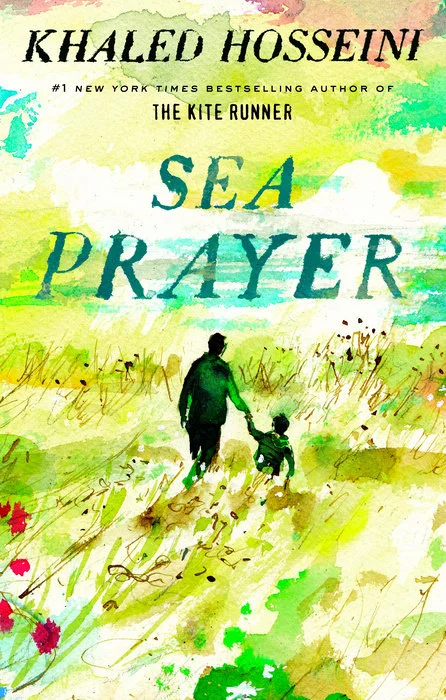
Spotlight: Sea Prayer by Khaled Hosseini

The #1 New York Times-bestselling author of The Kite Runner, A Thousand Splendid Suns, and And the Mountains Echoed responds to the heartbreak of the current refugee crisis with this deeply moving, beautifully illustrated short work of fiction for people of all ages, all over the world. 

A short, powerful, illustrated book written by beloved novelist Khaled Hosseini in response to the current refugee crisis, Sea Prayer is composed in the form of a letter, from a father to his son, on the eve of their journey. Watching over his sleeping son, the father reflects on the dangerous sea-crossing that lies before them. It is also a vivid portrait of their life in Homs, Syria, before the war, and of that city’s swift transformation from a home into a deadly war zone. 

Impelled to write this story by the haunting image of young Alan Kurdi, the three-year-old Syrian boy whose body washed upon the beach in Turkey in September 2015, Hosseini hopes to pay tribute to the millions of families, like Kurdi’s, who have been splintered and forced from home by war and persecution, and he will donate author proceeds from this book to the UNHCR (the UN Refugee Agency) and The Khaled Hosseini Foundation to help fund lifesaving relief efforts to help refugees around the globe. 

Khaled Hosseini is one of the most widely read writers in the world, with more than fifty-five million copies of his novels sold worldwide in more than seventy countries. Hosseini is also a Goodwill Envoy to the UNHCR, and the founder of The Khaled Hosseini Foundation, a nonprofit that provides humanitarian assistance to the people of Afghanistan.

Buy on Amazon | Barnes and Noble

About the Author

Khaled Hosseini was born in Kabul, Afghanistan, and moved to the United States in 1980. He is the author of the New York Times bestsellers The Kite Runner, A Thousand Splendid Suns, and And the Mountains Echoed. Hosseini is also a U.S. Goodwill Envoy to the UNHCR, the UN Refugee Agency, and the founder of The Khaled Hosseini Foundation, a nonprofit that provides humanitarian assistance to the people of Afghanistan.

Spotlight: American Cookie: The Snaps, Drops, Jumbles, Tea Cakes, Bars & Brownies That We Have Loved for Generations by Anne Byrn

From the beloved author of the bestselling Cake Mix Doctor series and American Cake comes a delicious tour of America’s favorite treats, cookies, and candies. 

Each of America’s little bites—cookies, candies, wafers, brittles—tells a big story, and each speaks volumes about what was going on in America when the recipes were created. In American Cookie, the New York Times bestselling author and Cake Mix Doctor Anne Byrn takes us on a journey through America’s baking history. And just like she did in American Cake, she provides an incredibly detailed historical background alongside each recipe. Because the little bites we love are more than just baked goods—they’re representations of different times in our history.

Early colonists brought sugar cookies, Italian fig cookies, African benne wafers, and German gingerbread cookies. Each of the 100 recipes, from Katharine Hepburn Brownies and Democratic Tea Cakes to saltwater taffy and peanut brittle, comes with a lesson that’s both informative and enchanting.

Excerpt

Chapter 1 Drop Cookies Past & Present

Dropping cookie dough onto pans has been an act of love throughout history. This chapter of favorite drop cookie recipes brings together kitchen favorites from all regions, spans the centuries, and satisfies every craving. These cookies might be familiar to you or yet to be discovered. And they range from simple to sinful, from no-frills to special occasion, from ginger-spiced to fruit-studded to just about the best chocolate chip cookie on this planet.

I begin with the ginger-spiced Grandma Hartman’s Molasses Cookies and the fabled Joe Froggers and follow with sugar cookies like the old Dutch Tea Cookies and a slightly more modern Cousin Irene’s Sugar Cookies. Then come chocolate cookies, oats, peanut butter, and those cookies crammed with nuts, fruits, and goodies—some people call them “kitchen sink,” but in Texas they call them “cowboys.” 

Throughout history we have baked drop cookies with what we had on hand. These cookies have varied from a recipe more than they have followed it. And their magic comes not from chemistry and getting all the measurements just right but in their ability to pull together effortlessly at the last minute and taste great! 

The earliest drop cookies were mostly likely spoonfuls of sweetened, beaten egg whites dropped onto hot cast-iron pans and placed in the oven. Or they were drops of pound cake or fruitcake batter baked in small portions to save time and feed many. The earliest cookies in this chapter weren’t even called cookies when people first baked them. They were known as snickerdoodles, wafers, drops, kisses, or rocks. As the pans changed, the ovens improved, and more ingredients became accessible and available, cookies as we know them were born. Drop cookies remain popular because they are dead-easy to bake by any of us—grandmothers, moms, dads, even first-time cooks. 

What you get today with a drop cookie is the same as it was years ago—a modest cookie that symbolizes childhood, simpler times, seasonal ingredients, and a last-minute desire to bake something for those you love.
 
Grandma Hartman’s Molasses Cookies
Mary Rebecca Ogburn Hartman was born in 1915 in Kenmare, North Dakota. Her family was Amish, and they moved to Gettysburg, Pennsylvania, when she was a teenager. Here Mary Rebecca would marry, raise five children, farm the land, and live as a Mennonite. This cookie was one of the treasures from her kitchen, says great-granddaughter Stephanie Golding. “Bean Grandma”—as her great-grandchildren called her because she and “Bean Grandpa” were always tending to their green beans in the garden—was a gifted cook. “As a young girl, I can still remember going over to her house in the summer and getting a whiff of what she was cooking or baking. . . . They didn’t have air-conditioning,” Golding says, “so the smells burst through the windows and open doors.” 

In the middle of the kitchen was a table, and Golding remembers sitting at that table, “with my eye level being barely over the table top,” and watching Bean Grandma move back and forth between the refrigerator and stove baking these molasses cookies. Golding says the combination of warm weather and the salty, sweet cookies left a permanent imprint in her mind. 

I first tasted this molasses cookie at the Josephine restaurant opening in Nashville. Golding and her husband, Brent, who live in Columbia, a small south-central Pennsylvania town in the heart of Amish country, were living in Nashville at the time and helped open the restaurant. Everyone in the Josephine kitchen loved Golding’s family cookie recipe so much that they gave away cookies and the recipe on opening nights. 

This recipe explains why cookies have been an important contribution to American family life. It has a story that continues to unfold with new generations of cookie bakers, and it works today as it did yesterday because it’s easy to bake with what you have on hand. You just roll balls of dough in granulated sugar and flatten them with the bottom of a glass on a pan before baking. Bean Grandma let her cookies cool 2 minutes before serving—I hope you can wait that long! 

PREP: 20 to 25 minutes
CHILL: 1 to 2 hours
BAKE: 7 to 9 minutes
MAKES: About 4 dozen (2 1/2" to 3") cookies

1 1/4 cups granulated sugar, divided use
3/4 cup vegetable shortening (see Baking Tips) or 1/2 cup (1 stick) unsalted butter, at room temperature
1/4 cup molasses or sorghum
1 large egg
2 cups all-purpose flour
2 teaspoons baking soda
1 teaspoon ground cinnamon
1/2 teaspoon ground ginger
1/2 teaspoon salt 

1. Place 1 cup of the sugar and the shortening or soft butter in a large mixing bowl. Beat with an electric mixer on medium speed until creamy, about 2 minutes. Add the molasses and egg, and beat on low until just combined. 

2. In a separate bowl, sift together the flour, baking soda, cinnamon, ginger, and salt. Fold into the creamed mixture, and mix on low speed until just combined, 30 seconds. Remove the beaters, cover the bowl with plastic wrap, and chill for 1 to 2 hours. 

3. Place a rack in the center of the oven, and preheat the oven to 350°F. 

4. Remove the dough from the refrigerator. Drop the dough in 1" pieces onto ungreased baking sheets. Space each piece about 3" apart. Roll the pieces in the remaining 1/4 cup granulated sugar to form balls. Flatten the cookies with the bottom of a juice glass. Place the pan in the oven. 

5. Bake the cookies until lightly browned around the edges, 7 to 9 minutes. (Grandma Hartman would pull her cookies out of the oven between 6 1/2 and 7 1/2 minutes, just to make sure. She liked the cookies to be soft when they came out of the oven. But you can bake them slightly longer.) Remove the cookies with a metal spatula and transfer to a wire rack to cool for 2 minutes before serving. Repeat with the remaining dough. Store the cookies in an airtight container. 
BAKING TIPS: The Hartman family says the recipe tastes best with Crisco shortening and Grandma’s molasses with the green label. This makes these cookies uniquely Grandma Hartman’s, although you can certainly use butter instead of shortening and substitute sorghum for the molasses, as they did at Josephine restaurant on opening nights.
 
Joe Froggers
This soft and memorable cookie born in Marblehead, Massachusetts, after the Revolutionary War was called a Joe Frogger. It was supposedly named for a freed slave named Joseph Brown who ran a tavern called Black Joe’s on the edge of a millpond with his wife, Lucretia. The tavern was the scene of much revelry, according to Smithsonian researcher Julia Blakely, and known for its ginger cookie baked in an iron skillet. This cookie was unlike other ginger cookies of its time because it was large and fat—almost pancake-like, and laden with rum, a plentiful ingredient in early New England. Ginger has long been valued as a stomach settler, and local fishermen who went out to sea in search of cod took along Joe Froggers to ward off seasickness. 

Another story behind the moniker of this old cookie stated that Joe Froggers were named for the fat frogs and lily pads present in the pond behind Joe’s tavern. And another is that the name is a corruption of the term “Joe Flogger.” According to Blakely, this is what fishermen called their provisions while at sea. 

Regardless, these cookies are delicious and easy to bake. And they stay fresh for a week because the rum keeps them moist and flavorful. Adding rum to this cookie dough wasn’t new—so-called “tavern biscuits” in early 19th-century American cookbooks called for a little brandy, sweet wine, or rum. 

PREP: 15 to 20 minutes
CHILL: 3 hours or overnight
BAKE: 9 to 11 minutes
MAKES: 20 to 22 (2 1/2" to 3") cookies
 
Shortening for prepping the pans
2 cups all-purpose flour (see Baking Tip) 
1 teaspoon ground ginger
1/2 teaspoon salt
1/4 teaspoon ground cloves
1/4 teaspoon ground nutmeg
1/4 teaspoon ground allspice
1/2 cup unsulfured molasses
1/2 teaspoon baking soda
5 tablespoons unsalted butter, at room temperature
1/2 cup granulated sugar
1/2 cup dark rum 

1. Place the flour, ginger, salt, cloves, nutmeg, and allspice in a medium-size bowl and sift or whisk to combine well. Set aside. Pour the molasses into a measuring cup, and stir in the baking soda to combine. Set aside. 

2. Place the soft butter and sugar in a large bowl, and beat with an electric mixer on medium speed until creamy and fluffy, about 1 minute. Pour in the molasses and soda mixture and blend on low. Add the rum and blend on low until combined. Remove the beaters.

3. Stir the flour mixture 1/2 cup at a time into the butter mixture with a wooden spoon until smooth. Cover the bowl with plastic wrap and place in the refrigerator at least 3 hours. 

4. Place a rack in the center of the oven, and preheat the oven to 375°F. Pinch off large pieces of dough and drop them, spaced 6 to a pan, on lightly greased baking sheets. Press down on each piece until it is 3" in diameter and about 1/3" thick. Place a pan in the oven. 

5. Bake the cookies until they slightly deepen in color and are set in texture, 9 to 11 minutes. Immediately transfer the cookies to a wire rack to cool. Let the baking sheet cool to room temperature, then repeat with the remaining dough. 

6. Store the cookies in an airtight container for up to a week. 

BAKING TIP: You can bake these cookies with unbleached or bleached flour. The latter results in slightly softer cookies. 

Chill Dough for Easy Rolling
When making Joe Froggers, allow enough time to chill the dough—3 hours in advance, or overnight—so the cookies don’t spread as much while baking.

Excerpted from American Cookie by Anne Byrn. Copyright © 2018 by Anne Byrn. All rights reserved. No part of this excerpt may be reproduced or reprinted without permission in writing from the publisher.

Buy on Amazon | Barnes and Noble

About the Author

Anne Byrn is the bestselling author of American Cake and the Cake Mix Doctor and Dinner Doctor cookbook series. Formerly a food editor at The Atlanta Journal-Constitution and a graduate of the La Varenne École de Cuisine in Paris, Byrn lives with her family in Nashville, Tennessee.

Spotlight: House of Gold by Natasha Solomons

From the New York Times bestselling author of The House at Tyneford, an epic family saga about a headstrong Austrian heiress who will be forced to choose between the family she’s made and the family that made her at the outbreak of World War I.

Vienna, 1911. Greta Goldbaum has always dreamed of being free to choose her own life’s path, but the Goldbaum family, one of the wealthiest in the world, has different expectations. United across Europe, Goldbaum men are bankers, while Goldbaum women marry Goldbaum men to produce Goldbaum children. Jewish and perpetual outsiders, they know that though power lies in wealth, strength lies in family.

So Greta moves to England to wed Albert, a distant cousin. Defiant and lonely, she longs for connection and a place to call her own. When Albert’s mother gives Greta a garden, things begin to change. Perhaps she and Albert will find a way to each other. 

But just as she begins to taste an unexpected happiness, war is looming and even the influential Goldaums can’t alter its course. For the first time in two hundred years, the family will find themselves on opposing sides and Greta will have to choose: the family she’s created or the one she was forced to leave behind.

A sweeping family saga from a beloved and New York Times bestselling author, House of Gold is Natasha Solomons’s most dazzling and moving novel yet.

Excerpt

1911

A man's status can be judged by the number of his bedding plants- ten thousand for a squire, twenty thousand for a baronet, thirty thousand for an earl and fifty thousand for a duke, but sixty thousand for a Goldbaum.

Often-quoted saying

Vienna, April

The Goldbaum Palace was made of stone, not gold. Children walking along the Heugasse, buttoned smartly into their coats and hand in hand with Nanny or Mutti, were invariably disappointed. They'd been promised a palace belonging to the prince of the Jews, spun out of ivory and gold and presumably studded with jewels, and here instead was simply a vast house built of ordinary white stone. Though it was the very finest limestone in the whole of Austria, and had been transported from the Alps to Vienna along a railway line constructed thanks to a loan from the Goldbaum Bank, and hauled by an engine and train owned by the Goldbaum Railway Company, painted resplendently in the family colors of blue and gold and adorned with the family crest: five goldfinches alighting on a sycamore branch. (Wits liked to refer to the coat of arms as "the birds in the money tree.") Inside, the great hall was gilded from the wainscot to the highest point of the domed roof, so that even on gloomy days the light it reflected brimmed with sunshine. Such was the power and wealth of the Goldbaums that on dull days, it was said, they hired the sun, just for themselves.

At night every window was lit with electric light and the house shone out like a great ocean liner buoyed along the Vienna streets. Sometimes at the grandest parties they released hundreds of goldfinches into the hall, so that they warbled and fluttered above the guests. (The birds were accompanied by an extra two dozen maids whose sole task for the evening was to wipe up the tiny spatters of bird shit the moment they appeared on the marble floor; there were limits, it appeared, even to the power of the Goldbaums.) All the same, little happened in the capital and beyond without their say-so, and even less without their knowing it. The emperor himself despised and endured the Goldbaums like inclement weather. There was nothing that could be done. They owned his debt.

The palace on Heugasse was merely the expression of their influence. The real source of their wealth was a small, unobtrusive building on the Ringstrasse. Behind the black door lay the House of Gold: the Austrian branch of the family bank. The Goldbaum men were bankers, while the Goldbaum women married Goldbaum men and produced Goldbaum children. Yet the family didn't consider themselves solely a dynasty of bankers, but also a dynasty of collectors.

The Goldbaums liked to collect beautiful things: exquisite Louis XIV furniture; paintings by Rembrandt, da Vinci and Vermeer; and then the great manors, ch‰teaux and castles to put them in. They collected jewelry, FabergŽ eggs, automobiles, racehorses-and the obligations of prime ministers. Greta Goldbaum followed in the family tradition. She collected trouble. This was the trait that Otto Goldbaum most valued in his sister. Before her arrival, his mother had visited the nursery, wallowing in state on a chair reserved especially for this purpose, and, with the assistance of his favorite nanny, explained that in a few weeks' time he would be joined by a little brother or sister. They sipped hot chocolate from a miniature china tea service adorned with the family crest in twenty-four-karat gold, and nibbled tiny slices of Sachertorte dabbed with swirls of blue and pink, ordered especially from the grand hotel. Otto listened in silence, watching with considerable suspicion the rise and fall of the baroness's vast belly. And yet when, four weeks later, Greta appeared in the nursery with her own fleet of starched nursemaids, he was not put out in the least. For the first time in his three years Otto had an ally. Greta certainly seemed to belong more fully to him than to the parents who lived downstairs. The baroness was considered an extremely dedicated mother by visiting the new baby almost every day, while Otto was still summoned to luncheon with the baron and baroness at least twice each week. He listened to the cries and gurgles of his sister through the walls and, when the nurses slept, crept in to lie on the floor of her night nursery. He did this so often that the nurses gave up either berating him or carrying him back to his own bed and set up a little cot for Otto beside her crib.

Greta was not a favorite with the nurses. They could never make her look smart for Mama during her visits. Her hair would not lie flat, like Otto's, but popped up around her head in disordered curls. The rubbed patch at the back, like a monk's round tonsure, did not grow back until she was nearly two. She usually had a cold. As she grew older the maids delighted in telling her, "If you weren't a Goldbaum, you'd be given a proper hiding." Greta told Otto in that case she was frightfully glad she was a Goldbaum, but she felt terribly sorry for all the children who weren't, as it seemed that they must spend much of their time being beaten for petty crimes (melting soap on the nursery fire to make modeling clay; hiding unwanted food at the back of the toy cupboard until it was found weeks later, festering; removing the saddle from the rocking horse and fixing it to Papa's favorite bloodhound and riding the dog around the tulip beds). Greta was frequently sent to bed with nothing to eat but bread and milk. None of this mattered. She had Otto.

His character ran counter to his sister's. Where Greta was impulsive, Otto was careful. She talked and he listened. His hair was perfectly smooth, his part immaculately combed. Where Greta was in constant motion, Otto possessed a stillness that often unsettled his contemporaries, although he did not consider himself quiet, since his thoughts were so loud, his mind always restless and busy. It took Otto time to reach a decision, but once he had done so, he acted decisively. He was of average height and slim, but he fenced and boxed with skill, taking pleasure in the exercise and in anticipating his opponent's game. He considered both pursuits to contain the perfect blend of brutality and elegance.

As Greta grew, so did the trouble. She borrowed Otto's clothes and disappeared for a picnic beside the river, where she was discovered sharing a cigarillo with a pair of lieutenants. She persuaded Otto to take her to the university so that she could listen to one of the astronomy lectures he attended. Otto decided that she looked like a bird of paradise roosting among the thrushes, in her bright blue coat and hat, sitting amid a hundred men in brown and gray suits. He asked her if she liked the lecture. "Adored it. Didn't understand a word." Greta went every day for a week, saying it helped her sleep magnificently. She secured clandestine lessons on the trumpet and became rather good, before the baroness discovered her and put a stop to it. Piano, harp or, at a push, the violin was deemed sufficiently demure. Wind instruments were far too louche; all that work with the embouchure. The very word made the baroness blush. Otto developed a spontaneous interest in the trumpet. Another tutor was procured. Otto surreptitiously shared his lessons with his sister and pretended the practice was his. Greta, however, lost interest. Trumpet voluntaries were only fun when they were illicit. Otto accepted that one of his tasks in life was to help his sister out of mischief. For twenty years this had been a source of pride and pleasure to him, and of only occasional exasperation.

If anyone had asked Greta if she wanted to marry Albert Goldbaum, she would have said no, certainly not. But no one did ask. Not even her mother. They asked her all sorts of other things. Which blooms would she like in her bouquet? Roses or lilies? Did she want ten bridesmaids or twelve? Greta replied that she was quite indifferent to the number of bridesmaids. Her only stipulation was an assortment of footmen carrying white umbrellas. Her mother paused for a moment. ÒSupposing it doesnÕt rain?Ó ÒOf course it will rain,Ó Greta replied, ÒIÕm going to England.Ó

Greta knew that Baroness Emmeline was tormented by the prospect of appearing inappropriately attired. Three cloaks were to be made to match Greta's wedding dress: one of Arctic fur, one of the finest lamb's wool and another of silk and lace. The baroness insisted that a lady must always have a choice and be prepared for the unexpected, in matters pertaining to the wardrobe at the very least. She invariably traveled with at least three pairs of spare shoes in the trunk of the automobile: a pair of stout leather boots, should the weather turn; a pair of elegant shoes to change into afterward; and a pair of satin slippers, just in case. In case of what, Greta never could ascertain.

She offered no further opinion on the wedding preparations. She acquiesced to every suggestion with such pointed apathy that the baroness ceased to consult her. This suited Greta perfectly. She visited her friends and drank coffee, and changed the subject if any of them were tactless enough to raise the topic of her looming nuptials. The wedding was an unpleasantness to be endured, and for a while it was sufficiently far away that she could pretend it was not happening at all. It stalked her, though, through her dreams. Her fear was indistinct and sinister, something nameless to be dreaded. Only it did have a name. Albert.

"He probably doesn't want to marry you, either," said Johanna Schwartzschild one morning as they sat in the orangery, taking coffee and sweets, some weeks before the wedding. "Perhaps he's in love with someone else. Either way, he might just not fancy it."

Greta set down her cup of coffee in surprise and stared at Johanna, who started to color, perhaps wondering if she'd pushed it a little far and this was why she was not one of the twelve bridesmaids. But Greta was not offended, simply intrigued. Up until then she'd considered only her feelings on the matter, and had taken all the reluctance and resentment as her own. Of course it wasn't pleasant to think that someone else was considering the prospect of marrying you with horror and revulsion, but, she reasoned, it wasn't personal. Albert didn't dislike her; he couldn't. He didn't know her. But poor Albert probably didn't think much of marrying some stranger simply because she was his first cousin twice removed and had the right surname. Now he became, in her mind, "Poor Albert" and she began to think of him almost fondly. She rang the bell. A maidservant appeared.

"More coffee, FrŠulein?"

"No, thank you, Helga. Tell my mother that I've changed my mind. I don't want roses or lilies. I would like gardenias for my bouquet."

For the first time since her mother had summoned her to her dressing room and informed her that she was to marry Albert and move to England, Greta began to read English novels once again. Her English conversation lessons had still taken place for three hours each morning with the apologetic and sweaty-palmed Mr. Neville-Jones, but in a silent and futile gesture of displeasure sheÕd set aside English literature for French and Italian. Now, softening toward Poor Albert, she penned herself a firm reading list. Dickens she enjoyed immensely. The hustle and stink of London sounded enchanting, compared to the museum hush and desiccated formality of Vienna. On the other hand, Jane Austen she couldnÕt get along with at all. There were far too many young ladies far too eager to get married. Mr. Darcy sounded like a bore, and Mr. Bingley worse. She hoped that Poor Albert was nothing like either of them.

Then she discovered Jane Eyre. Oh, the thrill of being a governess and being entirely dependent on oneself. The danger and wonder of being alone in the world. Jane Eyre might have been a governess dreaming of becoming a bride, but Greta Goldbaum was the bride dreaming of becoming a governess.

As Greta walked through the park arm in arm with Otto she saw that the crocuses were erupting beneath the aspen trees, regiments of purple and shining yellow in imperial shades, like thousands of miniature soldiers. There were only tiny patches of snow remaining, shoveled into wet heaps the color of sodden newspapers.

A fluttering notice pinned to a tree caught her eye and she paused to read it. Greta liked these notes. The trees in the park were full of them, like a species of white bird. They were messages from another world-the ordinary one, where people struggled and drank schnapps straight from the bottle, and ate schnitzel and sausage for supper, and owned an ordinary number of trousers. (Greta estimated this number to be something between three and fifty pairs.) The notices on the trees were for lost dogs, rooms to rent, or ladies of low regard advertising their services. The most desperate were the most intriguing: a violinist offering lessons in exchange for a decent meal and a bucket of coal.

To Greta, it was the ordinary and mundane that contained the sheen of glamour. The aura of her name followed her everywhere like a gleaming shadow; she could never escape from its glow. People who were not kind in general were invariably kind to her, or so she was frequently informed by her friends. She suspected that her view of the world was distorted, as if everything she consumed was sprinkled liberally with sugar. She longed to taste life unsweetened.

It was better for Otto, she thought, a little resentfully. His misadventures weren't merely tolerated but encouraged. He'd been permitted to spend six entire months at the Imperial Observatory on the border with Russia, where the winds gusting through the great forests were chilled with the enemy's breath. He'd seen not only stars and comet tails, but Cossacks riding through the plains separating the two great empires, the handkerchiefs covering their faces red and blue in the moonlight. Or so she presumed; Otto had been disappointingly vague on the details in his letters home. There had been far too much about the mathematics of observational stars, and far too little about bandits and Cossacks, or the legendary eastern Jews who thrived in the border swamps and had long red beards, flaming out like Moses's burning bush.

Everything had become imbued with sudden meaning: the silver coffeepot and pats of butter stamped with tiny birds were no longer merely objects, but ciphers. Earlier Greta had remained as the maid arranged the baronessÕs hair-something sheÕd not done since she was a child, watching the maid brush and brush the long silvering hair, sleek as the tail of a weasel. Then it was wound round and round, pinned neatly into a smooth wheel. The ivory brush sat on the dressing table and Greta looked at it, knowing that the days of such intimacy were nearly over. When she left the baroness to her coffee, she felt a pang of unexpected tenderness.

Excerpted from House of Gold by Natasha Solomons. Copyright © 2018 by Natasha Solomons. All rights reserved. No part of this excerpt may be reproduced or reprinted without permission in writing from the publisher.

Buy on Amazon | Barnes and Noble

About the Author

A screenwriter and novelist, Natasha Solomons lives in Dorset, England, with her husband and young son. She is the New York Times bestselling author of The House at Tyneford, The Gallery of Vanished Husbands, and The Song of Hartgrove Hall.