Spotlight: The Peacock Emporium by Jojo Moyes

From the #1 New York Times bestselling author, Jojo Moyes, the story of a young woman who finds new meaning in life after opening an eclectic shop and comes to terms with the secrets of her past 

In the sixties, Athene Forster was the most glamorous girl of her generation. Nicknamed the Last Deb, she was also beautiful, spoiled, and out of control. When she agreed to marry the gorgeous young heir Douglas Fairley-Hulme, her parents breathed a sigh of relief. But within two years, rumors had begun to circulate about Athene’s affair with a young salesman.

Thirty-five years later, Suzanna Peacock is struggling with her notorious mother’s legacy. The only place Suzanna finds comfort is in The Peacock Emporium, the beautiful coffee bar and shop she opens that soon enchants her little town. There she makes perhaps the first real friends of her life, including Alejandro, a male midwife, escaping his own ghosts in Argentina.

The specter of her mother still haunts Suzanna. But only by confronting both her family and her innermost self will she finally reckon with the past–and discover that the key to her history, and her happiness, may have been in front of her all along.

Excerpt

1

Buenos Aires, 2001: The Day I Delivered My First Baby

It was the third time in a week that the air-conditioning had gone out at the Hospital de Clinicas, and the heat was so heavy that the nurses had taken to holding battery-operated plastic fans over the intensive-care patients in an effort to keep them cool. Three hundred had come in a box, a present from a grateful stroke survivor in the import-export business, one of the few users of the state hospital who still felt dollar-rich enough to give things away.

The blue plastic fans, however, had turned out to be almost as reliable as his promises of further drugs and medical equipment. All over the hospital, as the air dripped with the noisy heat of a Buenos Aires summer, you could hear the sudden "ÁHija di puta!" of the nurses-even the normally devout ones-as they had to beat them back into life.

I didn't notice the heat. I was trembling with my own cool fear, that of a newly qualified midwife who has just been told they will be delivering their first baby. Beatriz, the senior midwife who had overseen my training, announced this with a deceptively casual air and a hard slap on my shoulders as she went off to see whether she could steal any food from the geriatric ward to feed one of her new mothers. "They're in Two," she said, gesturing to the delivery room. "Multigravida, three children already, but this one doesn't want to come out. Can't say I blame it, can you?" She laughed humorlessly, and shoved me toward the door. "I'll be back in a few minutes." Then, as she saw me hovering by the door, hearing the muffled wails of pain inside, said, "Go on, Turco, there's only one end it can come out, you know."

I walked into the delivery room with the sound of the other midwives' laughter still in my ears.

I had planned to introduce myself with some authority, to reassure myself as well as my patient, but the woman was kneeling on the floor pushing at her husband's face with a white-knuckled hand, and mooing like a cow, so I thought a handshake inappropriate.

"She needs some drugs, please, Doctor," said the father, as best he could through the palm against his chin. His voice, I realized, held the deference with which I addressed my hospital superiors.

"Oh, sweet Jesus, why so long? Why so long?" She was crying to herself, rocking backward and forward on her haunches. Her T-shirt was drenched with sweat, and her hair, scraped back into a ponytail, was wet enough to reveal pale lines of scalp.

"Our last two came very quickly," he said, stroking her hair. "I don't understand why this one won't come."

I took the notes from the end of the bed. She had been in labor almost eighteen hours: a long time for a first baby, let alone a fourth. I fought the urge to shout for Beatriz. Instead I stared at the notes, attempting to look knowledgeable, and tried mentally to recite my way through medical checklists to the sound of the woman's keening. Downstairs, in the street, someone was playing loud music in their car: the insistent synthesized beat of cumbia. I thought about closing the windows, but the idea of that dark little room becoming even hotter was unbearable. "Can you help me get her on the bed?" I asked her husband when I could stare at the notes no longer.

When we had hoisted her up, I took her blood pressure and, as she grabbed at my hair, timed her contractions and felt her stomach. Her skin was feverish and slippery. The baby's head was fully engaged. I asked her husband about her previous history, and found no clues. I looked at the door and wished for Beatriz. "Nothing to worry about," I said, wiping my face, and hoped that there wasn't.

It was then that I saw the other couple, standing almost motionless in the corner of the room by the window. They did not look like the normal visitors to a state hospital: they would have been more suited, in their bright, expensive clothes, to the Swiss hospital on the other side of the plaza. The woman's hair, which was expensively colored, was pulled back into an elegant chignon, but her makeup had not survived the sweltering 104-degree heat, and had settled in lines and pools around her eyes, and was now sliding down her shining face. She held her husband's arm and stared intently at the scene in front of them. "Does she need drugs?" she said, turning to me. "Eric could get her drugs."

She looked too young to be the woman's mother, I thought absently. "We're too far along for drugs," I said, trying to sound confident.

They were all looking at me expectantly. There was no sign of Beatriz.

"I'll just give her a quick examination," I said. No one looked like they were going to stop me, so I was left with no option but to do one.

I placed the pregnant woman's heels against her buttocks and let her knees drop. Then I waited until her next contraction and, as gently as I could, felt around the rim of the cervix. This could be painful in advanced labor, but she was so tired by then that she barely moaned. I stood there for a minute, trying to make sense of it. She was fully dilated, yet I couldn't feel the baby's head. Suddenly I felt a little leap of excitement. I gave them all a reassuring smile and moved to the instrument cupboard, hoping that what I was seeking had not yet been looted by another department. But there it was-like a small, steel crochet hook: my magic wand. I held it in my palm, feeling a kind of euphoria at what was about to happen-about what I was about to make happen.

The air was rent by another wail from the woman on the bed. I was a little afraid to do this unsupervised, but I knew it was not fair to wait any longer. And now that the fetal heartbeat monitor no longer worked, I had no way of knowing if the baby was in distress.

"Keep her still, please," I said to the husband and, timing carefully between contractions, reached in with the hook and nicked a tiny hole in the extra set of waters that I'd realized were blocking the baby's progress. Even above the woman's moans, and the traffic outside, I heard the beautiful tiny popping sound as the soft membrane conceded to me. Suddenly there was a gush of fluid and the woman was sitting up and saying, with some surprise and not a little urgency, "I need to push."

After that I don't remember much clearly. I remember seeing the soft, shocking thatch of dark hair, then grabbing the woman's hand and placing it there so that she could be encouraged by it too. I remember instructing her to push, and that when the baby began to emerge I was shouting as loudly as I had when I went to football matches with my father, with relief and shock and joy. And I remember the sight of that beautiful girl as she slithered into my hands, the marbled blue of her skin turning a rapid pink, like a chameleon's, before she let out a welcome lusty cry of outrage at her delayed entry into the world.

And, to my shame, I remember that I had to turn my head because, as I clipped the cord and laid her on her mother's chest, I realized that I had begun to cry, and I did not want Beatriz to give the other midwives something else to laugh about.

Beatriz appeared at my shoulder, mopping at her brow, and gestured behind her. "When you're done," she said quietly, "I'm going to nip upstairs and see if I can find Dr. Cardenas. She has lost a lot of blood, and I don't want her to move until he's taken a look." I hardly heard her, and she knew it. She kicked my ankle. "Not bad, Ale," she said, grinning. It was the first time she had called me by my real name. "Next time you might even remember to weigh the baby."

I was about to respond in kind, but I became aware that the atmosphere in the room had changed. Beatriz did too, and halted in her tracks. Where normally there was the enraptured cooing of the new mother, the soft murmur of admiring relatives, there was only a quiet pleading: "Diego, no, no, Diego, please . . ."

The smartly dressed couple had moved beside the bed. The blond woman, I noticed, was trembling, a peculiar half-smile on her face, her hand reaching tentatively toward the baby.

The mother was clutching the child to her chest, her eyes closed, murmuring to her husband, "Diego, no, no, I cannot do this."

Her husband was stroking her face. "Luisa, we agreed. You know we agreed. We cannot afford to feed our children, let alone another."

She would not open her eyes, and her bony hands were wrapped around the overwashed hospital shawl. "Things will get better, Diego. You will get more work. Please, amor, please, no-"

Diego's face crumpled. He reached over and began, slowly, to pry his wife's fingers off the baby, one by one. She was wailing now: "No. No, Diego, please!'"

The joy of the birth had evaporated, and I felt sick in the pit of my stomach as I realized what was happening. I made to intervene, but Beatriz, with an unusually grim expression on her face, stayed me with a tiny shake of her head. "Third one this year," she muttered.

Diego had managed to take the baby. He held her tight to his chest without looking at her, and then, his own eyes closed, held her away from him. The blond woman had stepped forward. "We will love her so much," she said, her reedy upper-class accent trembling with her own tears. "We have waited so long . . ."

The mother became wild now, tried to climb from the bed, and Beatriz leaped over and held her down. "She mustn't move," she said, her voice sharpened by her own unwilling complicity. "It's very important that you don't let her move until the consultant is here."

Diego wrapped his arms around his wife. It was hard to tell whether he was comforting her or imprisoning her. "They will give her everything, Luisa, and the money will help us feed our children. You have to think of Paola, of Salvador . . . Think of how things have been-"

"My baby!'" screamed the mother, unhearing, clawing at her husband's face, impotent against Beatriz's apologetic bulk. "You cannot take her." Her fingernails left a bloodied welt, but I don't think he noticed. I stood by the sink as the couple backed toward the door, my ears filled with the raw sound of a pain I have never forgotten.

And to this day I cannot remember any beauty in the first baby I brought into this world. I remember only the cries of that mother, the expression of grief etched on her face, a grief I knew, even with my lack of experience, that would never be relieved. And I remember that blond woman, traumatized, yet determined as she crept away, saying quietly: "She will be loved."

A hundred times she must have said it, although no one was listening.

"She will be loved."

2

Framlington Hall, Norfolk, 1963

The train had made six unscheduled stops between Norwich and Framlington, and the infinite glacial blue sky was darkening, although it wasn't even teatime. Several times Vivi had watched the guards jump down with their shovels to scrape another snowdrift from the tracks, and her impatience at the delay was now offset by a perverse satisfaction.

"I hope whoever's picking us up has snow chains on," she said, her breath clouding the carriage window so that she had to smear a viewing hole with her gloved finger. "I don't fancy pushing a car through that."

"You wouldn't have to push," said Douglas, from behind his newspaper. "The men'll push."

"It'd be terribly slippery."

"In boots like yours, yes."

Vivi looked down at her new Courrges footwear, quietly pleased that he had noticed. Completely unsuitable for the weather, her mother had said, adding sadly to Vivi's father that there was "absolutely no telling her" at the moment. Vivi, usually compliant in all things, had been uncharacteristically determined in her refusal to wear Wellingtons. It was the first ball she had been to unchaperoned, and she was not going to arrive looking like a twelve-year-old. It had not been their only battle: her hair, an elaborate confection of bubble curls swept up on her crown, left no room for a good woolen hat, and her mother was in an agony of indecision as to whether her hard work in setting it had been worth the risk of her only daughter venturing into the worst winter weather on record with only a scarf tied around her head.

"I'll be fine," she lied. "Warm as toast." She offered up silent thanks that Douglas couldn't tell she was wearing long johns under her skirt.

They had been on the train almost two hours now, an hour of that without heating: the guard had told them that the heater in their carriage had given up the ghost even before the cold spell. They had planned to travel up with Frederica Marshall's mother in her car, but Frederica had come down with glandular fever (not for nothing, Vivi's mother observed drily, was it called the "kissing disease") and so, reluctantly, their parents had let them travel up alone on the train instead, with many dire warnings about the importance of Douglas "looking after" her. Over the years, Douglas had been instructed many times to look after Vivi-but the prospect of Vivi alone at one of the social events of the year had apparently given this a weighty resonance.

"Did you mind me traveling with you, D?" she said, with an attempt at coquettishness.

"Don't be daft." Douglas had not yet forgiven his father for refusing to let him borrow his Vauxhall Victor.

"I simply don't know why my parents won't let me travel alone. They're so old-fashioned . . ."

She'd be all right with Douglas, her father had said, reassuringly. He's as good as an older brother. In her despairing heart, Vivi had known he was right.

She placed one booted foot on the seat next to Douglas. He was wearing a thick wool overcoat, and his shoes, like most men's, bore a pale tidemark of slush. "Everyone who's anyone is going tonight, apparently," she said. "Lots of people who wanted invites couldn't get them."

Excerpted from The Peacock Emporium by Jojo Moyes. Copyright © 2019 by Jojo Moyes. All rights reserved. No part of this excerpt may be reproduced or reprinted without permission in writing from the publisher.

Buy on Amazon | Barnes and Noble

About the Author

Jojo Moyes is the #1 New York Times bestselling author of After You, Me Before You, The Horse Dancer, Paris for One and Other Stories, One Plus One, The Girl You Left Behind, The Last Letter from Your Lover, Silver Bay, and The Ship of Brides. She lives with her husband and three children in Essex, England.

Spotlight: Wunderland by Jennifer Cody Epstein

An intimate portrait of a friendship severed by history, and a sweeping saga of wartime, motherhood, and legacy by an award-winning novelist
 
East Village, 1989
Things had never been easy between Ava Fisher and her estranged mother Ilse. Too many questions hovered between them: Who was Ava’s father? Where had Ilse been during the war? Why had she left her only child in a German orphanage during the war’s final months? But now Ilse’s ashes have arrived from Germany, and with them, a trove of unsent letters addressed to someone else unknown to Ava: Renate Bauer, a childhood friend. As her mother’s letters unfurl a dark past, Ava spirals deep into the shocking history of a woman she never truly knew. 

Berlin, 1933

As the Nazi party tightens its grip on the city, Ilse and Renate find their friendship under siege—and Ilse’s increasing involvement in the Hitler Youth movement leaves them on opposing sides of the gathering storm. Then the Nuremburg Laws force Renate to confront a long-buried past, and a catastrophic betrayal is set in motion…

An unflinching exploration of Nazi Germany and its legacy, Wunderland is a at once a powerful portrait of an unspeakable crime history and a page-turning contemplation of womanhood, wartime, and just how far we might go in order to belong.

Excerpt

1. Ava

1989

She sits in a sea of tangled sheets and blankets, amid the white crests of packing peanuts and age-curled pages of letters pried from their envelopes with increasing feverishness. The bed is solid: the same heavy oaken headboard, same stained, sloping mattress upon which she has slept and breastfed and read and sketched for more than a decade; the one place she comes to truly be at rest. And yet at this moment, she’s somehow both floating off it and falling right through it, is both untethered and sinking like a stone.

Perching her reading glasses atop her head, Ava Fischer clasps her knees to her chest. Her face tight and hot with tears shed, dried, and shed again, she tosses the last of the letters onto the bed. Surveying the sun-challenged domain that serves as both drawing studio and master bedroom, she finds herself amazed that it looks exactly as it did a little over an hour earlier, while in the same amount of time her entire world has been gutted, brusquely turned on its head. And yet the illustration she’s been working on still sits atop her drafting table, anchored at one corner by an untouched plate of marmalade toast and another by a cold coffee mug inscribed with Drink Me. A few peanuts that escaped in her initial frenzy of unpacking the box still lie strewn on the shag carpet, air-puffed stars in eccentric and porous constellations against a worn, dun-colored sky.

But it’s the bed that holds the full evidence of Ava’s emotional undoing. The bed, with its wrinkled sheets and mismatched cushions, its dusty bedskirt and moth-eaten coverlet, its stale tobacco tang that somehow lingers on four full years after she stopped smoking. The bed, with the now-empty Luftpost carton her daughter had signed for earlier and carried in to Ava with mild curiosity (It’s from Bremen. Isn’t that where you grew up?).

The bed upon which Ava had then waited for what felt like hours, box in her lap, for Sophie to leave to meet her friends. Upon finally hearing her daughter’s plastic-soled flats patter down three flights of stairs before exiting onto Second Avenue, she’d dropped the package long enough to lunge toward the window to watch the fourteen-year-old stroll off, her hands in the pockets of her checked menswear vest, Walkman headphones glinting silver in the sun.

The bed, where she’d read the lawyer’s curtly formal note less with shock than a sinking sense of acceptance:

Sehr geehrte Frau von Fischer:

As your mother’s lawyer and designated executor of her estate, I regret to inform you that your mother--Ilse Maria von Fischer--passed away on the twelfth of April, after a long battle with uterine cancer.

In accordance with her wishes, I enclose her remains for your disposal and request that you confirm delivery by fax or phone at the numbers listed on our letterhead. Once we have your confirmation we will be able to release the remainder of your inheritance, roughly 71,000 marks. If you do not confirm receipt in person, I’ve been instructed to donate this amount to The Blue Card, a charity of your late mother’s choosing.

I also include some letters that your mother asked be forwarded to you, and request that you confirm receipt of these as well.

With condolences and best regards:

Bernard Frankel, LLP

Leaning stiffly against the headboard, Ava again forces herself to make these impossible-seeming connections: between the idea of remains and the Tupperware-style container she’d pulled from beneath the peanuts an hour earlier. Between Mama--that inevitably fraught and painful thought--and the gritty powder Ava had discovered upon prying off the container’s lid. It hadn’t smelled like Ilse, that disquietingly familiar blend of facial soap, 4711 cologne, and faint perspiration. It certainly hadn’t looked like her; in Ava’s mind’s eye her mother was eternally milk-skinned and muscular, golden-haired and silver-eyed. Above all, overwhelmingly dense.

And yet staring into the ashy depths, she’d registered the truth of the lawyer’s assertion: this was now quite literally all that was left of Ilse von Fischer, the evasive, icy parent who had abandoned Ava physically during the war and emotionally in its wake; who’d left her in this very apartment twelve years earlier, while Sophie wailed from her crib. And while it saddened Ava to realize that the woman herself no longer walked and breathed, in the end it hadn’t really shocked her; for Ava, Ilse had effectively ceased to exist the moment she walked out the door that hot summer of 1977. Yes, for a few years there’d been the occasional long-distance call that Ava cut short after hearing Ilse’s curt Hallo. There’d been the slow trickle of cards and letters and the occasional small package, all of which Ava returned to Bremen unopened. But once Sophie grew old enough to answer the phone and read the return addresses on envelopes, Ava changed their number and sent a telegraphed ultimatum through Western Union:

Kontaktiere uns nicht (halt) du bist jetzt tot (halt)

Do not contact (stop) for us you are dead (stop)

No, it wasn’t so much Ilse’s physical remnants that had launched her into this vertiginous shock. It was the words she had left behind: detailed, careful accounts sealed into over a dozen envelopes. I also include some letters that your mother asked be forwarded to you, the lawyer had written, almost in a casual aside. Could he have known all that they encompassed: the crushing truths and bereft confessions? Though to be sure, some of these had merely confirmed Ava’s own long-held suspicions. I actually began writing you, one divulged, from an old jail in Heidelberg, where the Americans had hoped to de-Nazify me.

Entnazifizieren! She’d blinked at that unfamiliar and faintly absurd verb (as though moral rot could be extracted like a burst appendix!). But her shiver had been less one of surprise than vindication. Everyone joined, Ilse would say, shrugging, but Ava had always sensed a darker story shadowing this particular deflection.

Tossing the lawyer’s note aside, Ava once more takes in her epistolary inheritance. Yellowing with age and of various thicknesses, the letters lie strewn over the coverlet. None of them seemingly sent; all of them addressed to the same woman:

Renate Bauer

163 Eldridge St

New York, New York 10002

USA

It’s the first time Ava has encountered this name: Renate Bauer. But that Ilse wrote the woman obsessively is clear: the letters are all in her old-fashioned, slightly Gothic hand. And the return address is quite definitively the Schwachhausen row house that Ava still dreams of in startling detail: the lemon yellow her mother had painted Ava’s bedroom wall as a child. The green chipped mug in which they’d kept their two toothbrushes. The dark circular stain on the wooden desk in Ilse’s bedroom, the legacy of some slopped coffee, wine, or water.

Reaching for the nearest one--dated August 1976--Ava smooths the two thin sheets against the wrinkled linen of her pajama pants, catching a whiff of must and mothballs, a whispered vanilla hint. Like the others, this one is written in the informal “Du” form, with capitals omitted as her mother would have done for a close friend:

My dearest Reni!

Last night I had a dream. It began the day that we first met in middle school; when you--late as always--rushed into me on your way into our classroom and dropped the books you were carrying. Strange, how so much from more recent years has become vague for me. And yet I still recall small details of our first encounter with such clarity: the golden brown of your eyes. The red bow in your hair. The worn book I handed back to you, with the comment that for some reason I’d only read the sequel, but had loved it.

Then, somehow, it was later--much, much later, and I was walking down Unter den Linden, by the newsstands and the U-Bahn station, on the route we always took coming back to your house after school. I had the book, and I knew that returning it (not to you but to Franz for some reason) was of utmost, nearly crushing importance. The street was clean and gray and so crowded I could barely breathe. But it was also completely silent. I was aware of feeling very alone, and very worried that I wouldn’t accomplish my task.

Then I saw you only a few meters ahead, hurrying in the opposite direction. You were wearing your green coat and your little black hat, and Franz had on one of those tweed newsboys he used to favor. I felt such enormous joy and relief! I tried to catch up to you but the crowd kept pushing, pushing against me, pushing me back. I tried to call out to you, but though you seemed close enough you didn’t hear me. The two of you just kept walking. And eventually, you both disappeared.

I woke up in tears, but also strangely resigned. I don’t know much about dreams—certainly not as much as your mother did (I still remember talking with her for hours about what ours were, what they meant). But it seemed to me that this one was perhaps a sign that it was finally time to realize the truth: that while I continually fantasize about reaching out to you and Franz, perhaps even coming to New York and hand-delivering my letters to you, the truth is that for the moment at least I lack the courage to even drop them into the post. I should therefore probably just stop writing them altogether. Indeed, if I were a less obstinate person I likely would have stopped a long time ago.

But we both know how I hold on to things.

Reni. If there were just one thing in all these writings I could communicate to you, it would be this: that if I could go back and change everything, I would. Everything. I would even change the fact of my own existence, my own birth, if it meant that I could undo what was done—to you, and to your family. That I can’t is a fact that pains me every single day.

In the end, perhaps that is my true prison.

Ilse

Ava shuts her eyes. For a moment the old panic threatens: the suffocating certainty that the ceiling and walls are about to collapse, choking out all air and light. To counter the attack, she summons the comforting image suggested by her last therapist: the golden Montauk shoreline, captured breezily in midsummer.

But what comes instead is another beachside memory entirely.

In it Ava is perhaps six, on a rare mother-daughter outing to Großer Wannsee shortly after their postwar reunion. The sand is wet and grainy, the day bone-bright and raw in the way very early spring days can be. At some point Ava sees Ilse striding walking away from her briskly, her braid-wrapped head a shrinking spot of brightness in the chill morning light. The sight pries open a black, panicked hole in Ava’s center: Come back, she wails. Don’t leave me. Leaping to her bare feet, she charges after the retreating figure—only to feel a pair of strong arms sweep her up from behind. For a moment she writhes and kicks before recognizing the still-familiar form, the sturdy torso and round breasts pressed into her small back.

Dummes Mädchen, murmurs Ilse, who has been behind her the whole time. What on earth is the matter with you now?

The recollection carries the heft and hurt of a physical blow. What pulls her from it is a sudden pounding on the door, violent enough to rattle the ancient air conditioner in its frame.

“Mom!” Sophie shouts, with that spontaneous and implacable outrage peculiar to teenaged girls. “I totally forgot I promised to bring Erica back her Lou Reed sweatshirt. Did you wash it? You said you were going to wash it.”

Sophie? Why was she back? And how had she gotten in without Ava hearing her?

After a moment of blank paralysis she leaps to her knees and begins scrabbling the letters together. “Just a moment,” she calls, thinking: Scheisse, Scheisse, Sophie. Her daughter fully believes that Ilse has been dead now for over a decade. What am I going to tell her?

“Mom! Do you have it?” The doorknob chatters in its fixture. “Oh my God—why is this locked?”

“Hold on! Just hold on a minute!” A desperate look around the unkempt bedroom: the sweatshirt’s nowhere in sight.

Shoving the urn inside the box, Ava showers it with a handful of peanuts and sweeps the letters into an untidy pile beside it. Then she makes her way to the door, her knees as weak as a New York City Marathon runner’s, her heart beating like a living creature in her mouth.

“Mom! Jesus!” (Bang-bang-bang.) “Erica’s waiting! What the hell is going on in there?”

“Nothing,” says Ava shakily.

And with a deep breath, she reaches for the doorknob.

Excerpted from Wunderland by Jennifer Cody Epstein. Copyright © 2019 by Jennifer Cody Epstein. All rights reserved. No part of this excerpt may be reproduced or reprinted without permission in writing from the publisher.

Buy on Amazon | Barnes and Noble

About the Author

JENNIFER CODY EPSTEIN is the author of the international bestseller The Painter from Shanghai, and The Gods of Heavenly Punishment, and winner of the 2013 Asian Pacific Association of Librarians Honor award for outstanding fiction. She has written for The Wall Street Journal, VogueSelf, Mademoiselle, and many others. She has an MFA in fiction from Columbia University and an MA in international affairs from the Johns Hopkins School of Advanced International Studies. She lives in Brooklyn with her husband and two daughters.

Spotlight: The Highest of Hopes by Susan Anne Mason

For Years She Searched for Somewhere to Belong.

But is She Looking in the Right Place?

After her beloved grandfather's death, Emmaline Moore is shocked to discover that her deceased father is actually alive in Canada. Having no other family, Emma decides she must find him, and so embarks on a journey across the ocean, accompanied by her best friend Jonathan. Unfortunately, Randall Moore and his family aren't thrilled by her arrival, fearing her sudden appearance will hinder his chance at becoming mayor of Toronto in 1919. Despite everything, Emma remains determined to gain their affection.

Jonathan Rowe has secretly loved Emma for years and hopes that during their trip he can win her heart. Concerned that Randall might reject her, Jonathan is ready to console Emma and bring her home. But when she informs him that she has no intention of returning to England, Jonathan fears he'll lose her forever. Is there any way to convince her that the love she seeks could be right in front of her?

Buy on Amazon | Barnes and Noble

About the Author

Susan Anne Mason's debut historical novel, Irish Meadows, won the Fiction from the Heartland contest from the Mid-American Romance Authors Chapter of RWA. Also a member of ACFW, Susan lives outside of Toronto, Ontario, with her husband and two children. She can be found online at www.susanannemason.net.

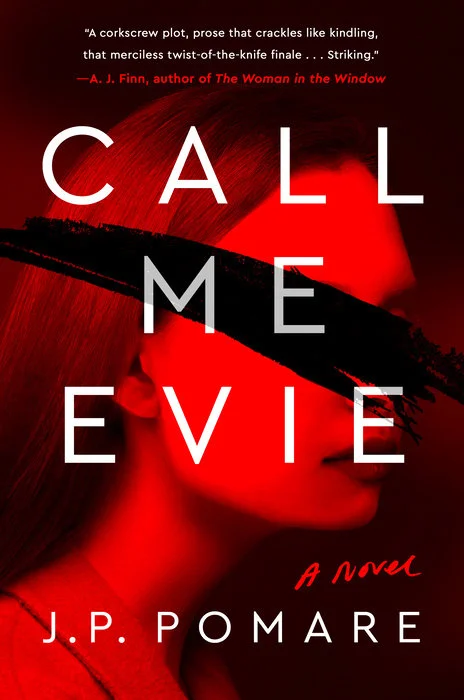
Spotlight: Call Me Evie by JP Pomare

A seventeen-year-old struggles to remember the tragic night that changed her life forever in this twist-filled debut novel of psychological suspense for fans of Sharp Objects and The Last Time I Lied.

Evie and her uncle Jim have just moved to an isolated cabin in a remote beach town–a far cry from their hometown of Melbourne. But Evie isn’t her real name. And Jim isn’t really her uncle.

Jim tells Evie she did something terrible back home, that he’s hiding her to protect her. But Evie can’t remember anything about that night–for all she knows, he’s lying. As fragments of her memory return, she starts to wonder if Jim is really her savior…or her captor.

In a riveting novel that fearlessly plumbs the darkest recesses of the mind, J.P. Pomare explores the fragility of memory and the potential in everyone to hide the truth–even from themselves.

Excerpt

After

One

The green first-aid kit is open, with rolls of bandages, eye drops, butterfly stitches spilling out over the vanity like entrails. In my hand are the tiny pointed scissors. Before my eyes, they open and close and open and close. I can hear him coming up the hall. The door creaks.

"Jesus," he says. He palms his forehead.

I stop breathing.

"Put those down, Kate."

I toss them beside the sink and sit back on the stool with my arms folded.

His eyes roam over the floor tiles, the clumps of dark hair. "It's a real mess." He stands for a moment, before reaching in under the sink and pulling out the hair clippers. He plugs them in at the wall, and they purr to life in his hand. "Be still."

Blood throbs in my chest. The clippers sing closer. When the steel thrums against my forehead, I scramble up from the stool. My feet slip on the hair, and I steady myself against the door.

"Kate," he says. The clippers die in his hand.

I turn and run. The bathroom door whips closed behind me. I sprint up the hall and through the kitchen, sidestepping the island. It's only when he shouts that I realize how close he is. "Stop right now!" Never run, but it's too late.

I lunge for the front door, opening it inward. I twist through the gap and try to pull it closed but his fingers grip the edge, whitening.

I haven't thought this through. I haven't thought at all. Goose bumps rise all over my body. The towel slips from around my torso and pools on the concrete. Pulling with all my strength, I turn my head back and look about me. I could scream. Would anyone hear? The door is opening. If I ran would I make the road? What then?

"Let go of this door," he says, a sort of stillness on the surface of his voice. "You are only making it worse."

Squeezing every cell in my body, I wrench, imagining his fingers crushed against the frame, clipping off at the tips.

"Please," I say. My voice sounds so pathetic and high, I hardly recognize it. "Just let me go."

The handle slips from between my fingers. My body thumps against the concrete.

"Shit, watch your head," he says, rushing forward, cradling my skull in his hands. "What the fuck were you thinking? Look at you." His face hovers over mine. The concrete saps the heat from my skin. "Come on. Inside now."

"No," I say. "I want to go home."

He looks up toward the road, then back at me. The big wire-framed glasses have slipped down his nose and his cheeks glow red. His teeth are yellow; his voice is low and mean. "If you want to act like a child, I'll treat you like one." He snatches my head back by the remaining hair. The sound is cotton ripping in my skull. An electric shock shoots down my spine, poking between every vertebra to my hips and down the bones of each leg. I scrabble for purchase as he drags me with one hand knotted in my hair, the other under my shoulder. The concrete turns the skin over on one knee. Even though I know I shouldn't, I let out a scream.

I hear the sound first. A gunshot suddenness and my cheek is hot and numb. I look up and he's staring at his hand.

"I . . . ," he begins. His face is still red but the anger is draining. He exhales. "Just stop."

Size is important; the smaller I become, the less he can hurt me. "I'm sorry." My voice is a wind chime. "I was scared."

A tear of blood rolls down my shin, carving a path among the goose bumps. He crouches. Hauling me up, he folds me over his shoulder. Like that he carries my weak and trembling body back inside to the bathroom.

"That was a stupid thing to do, all right? Where were you planning on running off to like that in the middle of the day? They could be anywhere. They could be watching us right now."

I'm back on the stool and now when the clippers start, he positions his lean, muscled body between the door and me. I can feel the naked patch in my hair like a burn. The clippers are whirring again; he brings them up my neck. Vrrthonk. The steel teeth gnaw, catching a thatch of hair and jerking my head. Hair brushes my neck. It falls over my scarred thighs to the floor. He thumps the clippers against his palm, blows on them.

"It's too thick," he says.

I stare at the towel veiling the mirror. If I could reach it, pull it away, I would see that it's not real. I would know it's not happening. He runs the clippers through again, this time peeling the hair away from my scalp. A ribbon of it falls apart and strands stick to the dampness of my cheek. He flicks his wrist to whip the cord away. The molars at the back of my mouth are numb. I try to relax my jaw but I can't.

"Be still."

Arms first, then legs, then stomach, but my chest will not become still. It rattles, and within it my heart is the flickering pulse of a bird held in the hand. Can a heart give up? Slow down, seize its valves, and close like a fist?

"It's almost finished, darling. Please."

Vrrrthonk. The clippers tangle, clutch my hair like a fist, and pull. The skin of my thighs goes white beneath the grip of my fingers. This bathroom is smaller than the one at home. It's tacky and dated. This entire house is claustrophobic. Where the fuck are we? I could scream it and yet the headache looms, sharpening its teeth. And one thought rises through it all: He hit me.

Stepping back with one hand on his hip, he examines me.

"It will be fine." My voice is desperate.

"No, it's patchy, it's a mess. You look like a starved dog."

I squeeze my eyes closed and see a teenage girl. She's sitting on the edge of a bed. Then she slips to the floor, where she comes to rest. Her legs are tucked beneath her. Over her nose is a saddle of freckles. She rises with the boneless grace of a dandelion, tilts her head, smiles. It's the video of me. I'm reminded of why I ended up here.

I try to stand but his hand is heavy on my shoulder. It squeezes. I sit back down, tip my head forward, and close my eyes.

He takes most of what's left of my hair in his fist and picks up the scissors. "Almost finished. Just don't move for one more minute." As my hair falls around me, I imagine the scissors puncturing his trachea, lodging between a pair of vertebrae in his neck. These thoughts come and go as quickly as a sneeze. I remind myself of a time when I loved this man and feel sick with it.

"Oh," he says, letting the word uncoil like smoke from his mouth. "What have we done?"

In the shower, I'm still trembling with adrenaline as I watch the water chase the blood and nicks of hair down the drain. Up in the corners long-legged spiders dance webs on the avocado-green panels. The water pressure is weak and sprays with a panicked hum. Soon the water is cool, and when I shut it off I can hear the pipes shudder in the walls. I dry myself and pull the towel away from the mirror, standing before it. An invisible fist thumps my chest as, for the first time, I see myself.

You can never know the shape of your skull, not until you have peeled the hair away. Even then the skin, the shadows and light, marks and spots, can obscure the bone that lies beneath. Seeing it isn't enough because as with anything, what you see is not necessarily all there is. I almost don't trust my eyes. It's possible the cord stretching to my brain is knotted, or my brain may have a short-circuited connection or snapped synapse. I see only my skull. Closing my eyes, I squeeze a single tear out. I try to forget but the skin remembers, the fingertips remember. When I touch my shorn head I gasp. The thin layer of skin wrapping the bone cage of my brain is so soft and smooth, like the pink foot of a newborn. I can feel the shape, the planes and the curvature. But of course it's what lies within that is most important of all.

I think: What I know about the human skull, I learned because of him.

Before

Two

This is my first memory. I am in the bath at the old house, the house down in Portsea. Mum was sick and we had a nanny who would drift about the house, laying out my clothes for the day, ferrying me to childcare, spreading raspberry jam over my toast and deftly cutting away the crusts. Her name was Eloise. She was the first woman I wanted to be like.

I recall snippets of her time in the house and her abrupt dismissal. I recall Dad passing her in the kitchen, his hand grazing her spine. I remember all the time I spent nestled against her chest as she read to me on the couch while Mum was sick. And, of course, I remember that bath.

Dad would eventually organize to have the hot-water cylinder replaced, but back then the bath would only reach ankle-depth before the hot water ran out. Extreme emotions-rage, bliss, grief, ecstasy, agony-are amber; they preserve memories whole. I remember every detail of that time. I remember the gold locket that dangled from Eloise's neck as she bent to shut off the tap. I remember the cloying scent of the lemon bubbles.

"In you get," Eloise said, her voice sweet and light.

"It's still cold and empty."

She frowned and flattened the front of her blouse. "You don't need to stay in for long, Kate."

"I don't want to get in. It's too cold."

"Come on," she said. "Arms up." She pulled off my top, but when she went to pull off my shorts I held on to them and dropped to my knees.

"No."

"Kate, please. It'll only be for five minutes."

I let her undress me. She picked me up, deposited me in the water, then I screamed.

"Kate," she said with an owlish lean of the head. "That's enough."

I splashed water over the edge of the bath onto the floor as she left the room, then to stop my shivering I wrapped my arms around myself. When she returned, Eloise slipped and had to grab at the sink to keep from falling. She clicked her tongue. "You've got water everywhere."

"It's cold."

"Do you want to get out?"

"No," I said. "Just make it warmer."

"There's no more hot water, Kate. We can't make it warmer."

"Dad makes it warmer."

"Well, I don't see how," she said. She was on her knees now, dragging a towel over the floor tiles.

"Dad heats the water up in a pot."

From her position on the floor she looked up at me. I splashed water at her. "Make it warmer!" I said. "Make it warmer!" My voice had become a shrieking demand.

She winced. "Okay, okay," she said.

She left the room again.

It seemed a very long time before Eloise returned, carrying a large steel pot. Steam drifted in her wake as she strode across the room and set it down on the wooden seat beside the bath.

"Okay, Kate, move your legs away so I can pour a little in." I drew my legs up to my chest and Eloise poured. A gust of steam rose as the hot water rushed beneath me. It was too hot but it quickly cooled. Eloise set the pot back on the seat. "Better now?"

"I'm still cold."

She tested the water with her hand. "You'll be fine. That's warm enough." She tucked a loose strand of hair behind my ear. "Can you just sit for a few minutes? I have to get your dinner on."

Leaving the door open, she walked away up the hall.

The water was still too cold.

"Eloise!" I called.

No response.

"Eloise!"

Still nothing.

Gripping the edge of the bath, I stood and reached for the handles of the pot. It was heavy, almost too heavy for me to lift. Stepping backward, I dragged it over the lip of the bath. The water rocked within. The edge came to rest against my stomach. It seared. I fell back and a scream ripped from my throat as the pot tipped over my legs. I screamed and screamed as, beneath the surface of the water, blisters bubbled on my thighs.

Then Eloise was there, her hand covering her mouth, her eyes wide. She pulled me from the bath but the pain didn't stop. The screaming didn't stop. I thought it never would. A howl escaped that may have lasted seconds or minutes or hours. Hands holding me under flowing water. I couldn't distinguish hot from cold. A long throat-scorching vowel of pain. This is my first memory.

Part Two

Out of Its Misery

In the past month, how often have you been upset or scared by something that happened unexpectedly?

0. never; 1. rarely; 2. sometimes; 3. often; 4. all the time

After

Three

He is in the kitchen, thumping about. I've decided to call him Jim. The grinding of the juicer fills the house as the first piece of beetroot churns through. The carrots go in next, then small stringy mushrooms, a pair of Brazil nuts. The spout coughs out a foaming blood-rich concoction. When the juicer thunks to a stop, the classical music coming from the small stereo in the lounge can be heard again. He has made toasted sandwiches, crusts removed and cut into triangles. His glasses are on the island. I try them on but the world through them doesn't change. The lenses are just glass.

"Go on, darling," he says. "Eat."

I'm surprised by how my body responds, how quickly I wolf down the sandwiches. It's as though I haven't eaten in weeks.

"How do you feel?" he asks.

"I'm okay."

"You're doing really well."

"My hair," I say, looking up at him.

He sucks his lips, standing so close that I can see the tiny constellations of blood vessels in his cheeks, the pores of his nose.

"It'll grow."

He stirs a scoop of white powder through the juice and brings it over to me. I block my nose and take a long sip. The taste is earthy and bitter. I cough.

Excerpted from Call Me Evie by JP Pomare. Copyright © 2019 by JP Pomare. All rights reserved. No part of this excerpt may be reproduced or reprinted without permission in writing from the publisher.

Buy on Amazon | Barnes and Noble

About the Author

26-year-old JP Pomare has been short- and long-listed for a number of writing prizes, including the KYD Unpublished Manuscript PrizeEllen Kemp Memorial PrizeSheila Malady Prize, and The Kingi Mckinnon Scholarship. He produces a literary podcast called On Writing, for which he has interviewed bestselling authors including Joyce Carol Oates and E. Lockhart. Call Me Evie, his first novel, will be published by Hachette Australia, Little Brown/Sphere in the UK, and Putnam in North America. Pomare lives with his wife in Melbourne, Australia.

Spotlight: Two Weeks by Karen Kingsbury

From #1 New York Times bestselling author Karen Kingsbury comes a heart-wrenching and redemptive new story in the Baxter Family series about a couple desperately waiting to bring their adopted child home and a young mother about to make the biggest decision of her life.

Cole Blake, son of Landon and Ashley Baxter Blake, is months away from going off to college and taking the first steps towards his dream—a career in medicine. But as he starts his final semester of high school he meets Elise, a mysterious new girl who captures his attention—and heart—from day one.

Elise has her heart set on mending her wild ways and rediscovering the good girl she used to be. But not long after the semester starts, she discovers she’s pregnant. Eighteen and alone, she shares her secret with Cole. Undaunted by the news, and in love for the first time in his life, Cole is determined to support Elise—even if it means skipping college, marrying her, and raising another man’s baby.

When Elise decides to place her baby up for adoption, she is matched with Aaron and Lucy Williams, who moved to Bloomington, Indiana to escape seven painful years of infertility.

But as Elise’s due date draws near, she becomes focused on one truth: she has two weeks to change her mind about the adoption. With Cole keeping vigil and Lucy and Aaron waiting to welcome their new baby, Elise makes an unexpected decision—one that changes everyone’s plans.

Tender and deeply moving, Two Weeks is a story about love, faith, and what it really means to be a family.

Buy on Amazon | Barnes and Noble

About the Author

Karen Kingsbury, #1 New York Times bestselling novelist, is America’s favorite inspirational storyteller, with more than twenty-five million copies of her award-winning books in print. Her last dozen titles have topped bestseller lists and many of her novels are under development as major motion pictures. Her Baxter Family books are being developed into a TV series slated to debut fall 2019. Karen is also an adjunct professor of writing at Liberty University. She and her husband, Donald, live in Tennessee near four of their adult children.

Spotlight: Worth Fighting For by Amanda Kelley

Today we have the release blitz for Amanda Kelley’s Worth Fighting For! Check it out and be sure to grab your copy today!

About Worth Fighting For:

Nothing in Kellen O’Connell’s life has come easy. He knows better than anyone that if you want something, you better fight for it.

When he finds himself drawn to a feisty kindergarten teacher, he realizes he’s going to have to fight harder than ever if he wants to know her secrets.

On the outside, Ali Crawford has it all. The perfect job. Great friends. A wonderful family. But she has demons, just like everyone else. There are things she’s never given a voice to, and they are relentlessly chipping away at her conscience.

Will she have the courage to trust the magnetic, if not annoyingly infuriating, Kellen with her past? Or will she let it ruin the best thing she’s ever known, as it turns her into someone she doesn’t even recognize?

If they can learn to trust each other, they might just find something worth fighting for.

*Intended for readers 18 years of age and up due to mature content.

Exclusive Excerpt:

While the kids were held captive by one of the men donning a heavy tan fire suit, Ali felt someone come stand beside her. She glanced to her right and found Kellen. He seemed much bigger, standing shoulder-to-shoulder with her, than he had the other day. Ali wouldn’t consider herself short, and he still had at least six inches on her.

“You doin’ okay?” he whispered, keeping his eyes trained forward.

“Aces. Why do you ask?”

“Oh, I don’t know. Could have something to do with the pale skin and choppy breathing. Or maybe it’s the way you’re swaying on your feet.”

Crap.

She hadn’t thought it was so noticeable.

She caught the eye of one of her students who’d turned to talk to the boy next to him and motioned for him to be quiet and pay attention before she whispered back, barely moving her lips, “Occupational hazard. I’m fine.”

“Of course you are, but why don’t you have a seat before you fall over?”

Ali gritted her teeth. More than a little annoyed that he’d noticed. Annoyed that she felt like crap. Annoyed that he’d ordered her around. And annoyed that the pills were barely keeping her on her feet. “I said, I’m fine.”

“Whatever you say, Ali Cat.”

“Excuse me? Did you just call me an alley cat?”

When he didn’t respond, she glanced up at him and found him completely relaxed, calmly watching the firemen who began taking questions from the kids.

That only annoyed her further.

“You know, in polite society, people don’t go around pointing out how crappy someone else looks.”

“And, if you’d retract your claws a little, you’d realize I never said you looked crappy. I was simply asking if you were feeling okay.”

Double crap.

Ali closed her eyes.

He was right, and she was being a bitch again.

She had ninety more minutes before she could head home and quarantine herself—and her bitchiness—in a hot bath where she couldn’t infect anyone else.

But there was something she needed to do first.

“I’m sorry.”

“Accepted,” Kellen easily returned.

“No, not just for today,” she continued. “For last week in front of the diner. I was snippy that day, too, and you didn’t deserve it then any more than you deserve it now.”

“Has everyone been graced with your sunny demeanor lately, or am I just that lucky?”

She huffed out a surprised laugh. “You’ve been luckier than most.”

“Any particular reason?”

None that she was going to share. “Luck of the draw, I guess.”

“Fair enough.”

“And I appreciate your concern. Thank you for checking on me.”

See, I can be nice.

Buy on Amazon | Barnes and Noble

About the Author:

Amanda was raised in a small town in Wyoming where she met and married her high school sweetheart. Today, they live in Northern Colorado where she is lucky enough to be a stay-at-home mom to two incredible sons. When she is not attempting to write awesome love stories, she spends her days as a chauffeur, alarm clock, maid, nurse, chef, counselor, cheerleader, referee, finder of shoes and homework, giver of hugs, and pet whisperer. And she wouldn’t have it any other way.

Connect with Amanda: Facebook | Instagram | Amazon | Goodreads