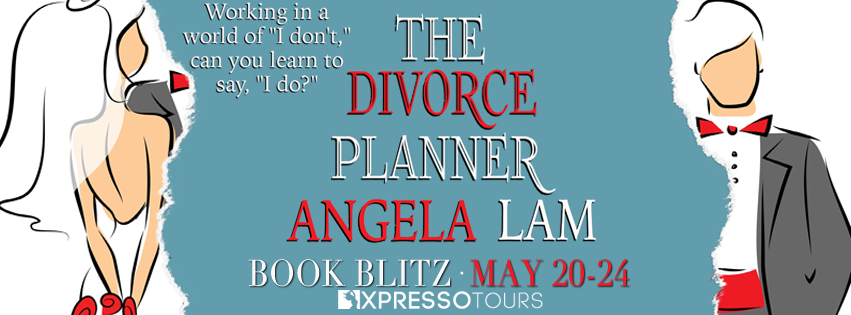
Spotlight: The Divorce Planner by Angela Lam

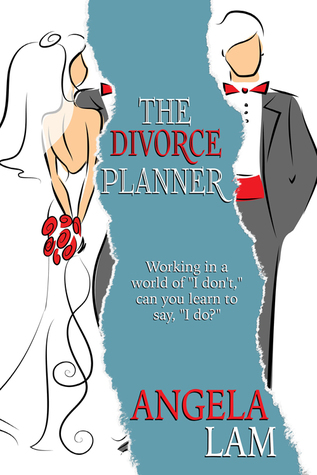
The Divorce Planner
Angela Lam
Published by: The Wild Rose Press
Publication date: May 20th 2019
Genres: Adult, Contemporary, Romance

When her daughter suggests Darcy Madison attend her ex-husband’s wedding, Darcy enlists the help of her colleague, divorce attorney Victor Costello, to pose as her dashing young date. But when Victor proposes to Darcy at the reception, Darcy forgets they are pretending and says, “Yes!” Between her false engagement to Victor and her daughter’s suggestion to have a double wedding, Darcy falls even further in the fantasy of being a blushing midlife bride. The longer the masquerade continues, the more Darcy starts to wonder what is love and can it last forever in a world where divorce is the only language she knows?

Goodreads / Amazon / Barnes & Noble / iBooks / Kobo

EXCERPT:

“Are you leaving?” He stood.

“Yes.” A flash of disappointment descended over her shoulders. “I think I’ll go.”

“Let me walk you to your car.”

“But you’ll miss the live auction and the dancing.”

He offered his arm. “I’d rather spend the time with you.”

A touch of kinship united them.

She wove her arm through his. How delightful to find someone who enjoyed her company as much as she enjoyed his.

Matching strides, they walked around the tables of guests. A few people stopped them to comment on how cute a couple they made.

She blushed from the compliments.

He nudged open the double doors.

A gust of cool summer air blasted against her face. She shivered.

He tugged her closer. “Would you like my jacket?”

“No, thank you. I’m parked over there.” She waved toward the left.

They strode over to an ancient sports sedan.

Darcy unlocked her door and tossed her clutch inside. As she turned to say good night, she trembled with anticipation. Would he kiss her again?

Standing in silence, he gazed into her eyes.

A flicker of desire lapped at her feet and licked up into her belly. She had never seen eyes so big, so bold, and so beautiful. Oh, why wouldn’t he kiss her?

Author Bio:

Angela is a San Francisco Bay Area native.

She studied journalism at Northwestern University as a Cherub scholar. She received her B.A. in English and Creative Writing from Sonoma State University.

Her nonfiction articles on real estate, lending, and finance can be found online at SFGate.com. Her short stories, essays, and poetry are published in a number of magazines, newspapers, and anthologies, including The Dollar Stretcher, Foliate Oak , Kenwood Press, The Phoenix, Potpourri, The Sun, The Writer, and Women’s Voices.

When she is not writing, she is either painting, reading, running, or spending time with her family and friends.

Website / Goodreads / Facebook / Twitter


GIVEAWAY!
a Rafflecopter giveaway

XBTBanner1

Spotlight: Realm by Alexandrea Weis

Realm
Alexandrea Weis
Published by: Vesuvian Books
Publication date: May 14th 2019
Genres: Historical, Young Adult

Based on a true story.

When her homeland is conquered by the mighty Alexander the Great, Roxana—the daughter of a mere chieftain—is torn from her simple life and thrown into a world of war and intrigue.

Terrified, the sixteen-year-old girl of renowned beauty is brought before the greatest ruler the world has ever known. Her life is in his hands; her future his to decide.

Without formal education or noble blood, Roxana is chosen by the Greek conqueror to be his bride. Soon she comes to know profound happiness and unyielding desire in her warrior’s arms.

However, being the king’s consort comes at a heavy price. To survive her husband’s treacherous kingdom, she must endure continuous warfare, deadly plots, jealous rivals, victory-hungry generals, and the stigma of being a barbarian. Persian blood will keep her from claiming the grandest title of all—queen—but her reign will seal the fate of an empire.

History tells his story. This is hers.

Goodreads / Amazon / Barnes & Noble / Apple Books / Kobo


Author Bio:

Alexandrea Weis, RN-CS, PhD, is a multi-award-winning author of over twenty-seven novels, a screenwriter, ICU Nurse, and historian who was born and raised in the French Quarter of New Orleans. Having grown up in the motion picture industry as the daughter of a director, she learned to tell stories from a different perspective and began writing at the age of eight. Infusing the rich tapestry of her hometown into her novels, she believes that creating vivid characters makes a story moving and memorable. A member of the Horror Writers Association and International Thriller Writers Association, Weis writes mystery, suspense, thrillers, horror, crime fiction, and romance. She lives with her husband and pets in New Orleans where she is a permitted/certified wildlife rehabber with the Louisiana Wildlife and Fisheries and rescues orphaned and injured animals.

Website / Goodreads / Facebook / Twitter


GIVEAWAY!
a Rafflecopter giveaway

XBTBanner1

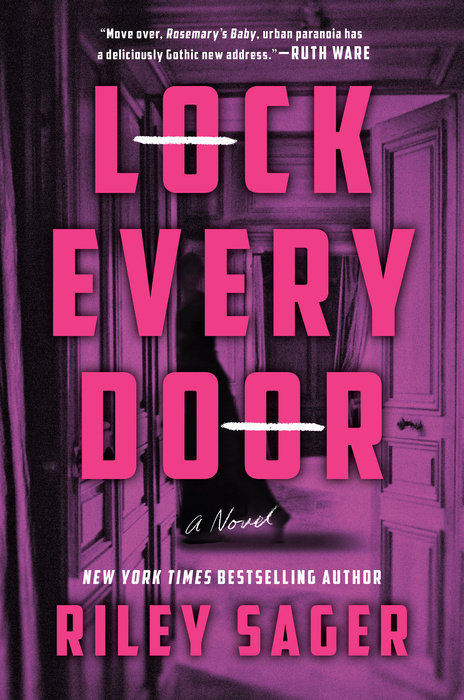
Spotlight: Lock Every Door by Riley Sager

The next heart-pounding thriller from New York Times bestselling author Riley Sager follows a young woman whose new job apartment sitting in one of New York’s oldest and most glamorous buildings may cost more than it pays.

No visitors. No nights spent away from the apartment. No disturbing the other residents, all of whom are rich or famous or both. These are the only rules for Jules Larsen’s new job as an apartment sitter at the Bartholomew, one of Manhattan’s most high-profile and mysterious buildings. Recently heartbroken and just plain broke, Jules is taken in by the splendor of her surroundings and accepts the terms, ready to leave her past life behind.

As she gets to know the residents and staff of the Bartholomew, Jules finds herself drawn to fellow apartment sitter Ingrid, who comfortingly reminds her of the sister she lost eight years ago. When Ingrid confides that the Bartholomew is not what it seems and the dark history hidden beneath its gleaming facade is starting to frighten her, Jules brushes it off as a harmless ghost story . . . until the next day, when Ingrid disappears.

Searching for the truth about Ingrid’s disappearance, Jules digs deeper into the Bartholomew’s sordid past and into the secrets kept within its walls. What she discovers pits Jules against the clock as she races to unmask a killer, expose the building’s hidden past, and escape the Bartholomew before her temporary status becomes permanent.

Excerpt

1

The elevator resembles a birdcage. The tall, ornate kind-all thin bars and gilded exterior. I even think of birds as I step inside. Exotic and bright and lush.

Everything I'm not.

But the woman next to me certainly fits the bill with her blue Chanel suit, blond updo, perfectly manicured hands weighed down by several rings. She might be in her fifties. Maybe older. Botox has made her face tight and gleaming. Her voice is champagne bright and just as bubbly. She even has an elegant name-Leslie Evelyn.

Because this is technically a job interview, I also wear a suit.

Black.

Not Chanel.

My shoes are from Payless. The brown hair brushing my shoulders is on the ragged side. Normally, I would have gone to Supercuts for a trim, but even that's now out of my price range.

I nod with feigned interest as Leslie Evelyn says, "The elevator is original, of course. As is the main staircase. Not much in the lobby has changed since this place opened in 1919. That's the great thing about these older buildings-they were built to last."

And, apparently, to force people to invade each other's personal space. Leslie and I stand shoulder to shoulder in the surprisingly small elevator car. But what it lacks in size it makes up for in style. There's red carpet on the floor and gold leaf on the ceiling. On three sides, oak-paneled walls rise to waist height, where they're replaced by a series of narrow windows.

The elevator car has two doors-one with wire-thin bars that closes by itself plus a crisscross grate Leslie slides into place before tapping the button for the top floor. Then we're off, rising slowly but surely into one of Manhattan's most storied addresses.

Had I known the apartment was in this building, I never would have responded to the ad. I would have considered it a waste of time. I'm not a Leslie Evelyn, who carries a caramel-colored attachŽ case and looks so at ease in a place like this. I'm Jules Larsen, the product of a Pennsylvania coal town with less than five hundred dollars in my checking account.

I do not belong here.

But the ad didn't mention an address. It simply announced the need for an apartment sitter and provided a phone number to call if interested. I was. I did. Leslie Evelyn answered and gave me an interview time and an address. Lower seventies, Upper West Side. Yet I didn't truly know what I was getting myself into until I stood outside the building, triple-checking the address to make sure I was in the right place.

The Bartholomew.

Right behind the Dakota and the twin-spired San Remo as one of Manhattan's most recognizable apartment buildings. Part of that is due to its narrowness. Compared with those other legends of New York real estate, the Bartholomew is a mere wisp of a thing-a sliver of stone rising thirteen stories over Central Park West. In a neighborhood of behemoths, the Bartholomew stands out by being the opposite. It's small, intricate, memorable.

But the main reason for the building's fame are its gargoyles. The classic kind with bat wings and devil horns. They're everywhere, those stone beasts, from the pair that sit over the arched front door to the ones crouched on each corner of the slanted roof. More inhabit the building's facade, placed in short rows on every other floor. They sit on marble outcroppings, arms raised to ledges above, as if they alone are keeping the Bartholomew upright. It gives the building a Gothic, cathedral-like appearance that's prompted a similarly religious nickname-St. Bart's.

Over the years, the Bartholomew and its gargoyles have graced a thousand photographs. I've seen it on postcards, in ads, as a backdrop for fashion shoots. It's been in the movies. And on TV. And on the cover of a best-selling novel published in the eighties called Heart of a Dreamer, which is how I first learned about it. Jane had a copy and would often read it aloud to me as I lay sprawled across her twin bed.

The book tells the fanciful tale of a twenty-year-old orphan named Ginny who, through a twist of fate and the benevolence of a grandmother she never knew, finds herself living at the Bartholomew. Ginny navigates her posh new surroundings in a series of increasingly elaborate party dresses while juggling several suitors. It's fluff, to be sure, but the wonderful kind. The kind that makes a young girl dream of finding romance on Manhattan's teeming streets.

As Jane would read, I'd stare at the book's cover, which shows an across-the-street view of the Bartholomew. There were no buildings like that where we grew up. It was just row houses and storefronts with sooty windows, their glumness broken only by the occasional school or house of worship. Although we had never been there, Manhattan intrigued Jane and me. So did the idea of living in a place like the Bartholomew, which was worlds away from the tidy duplex we shared with our parents.

"Someday," Jane often said between chapters. "Someday I'm going to live there."

"And I'll visit," I'd always pipe up.

Jane would then stroke my hair. "Visit? You'll be living there with me, Julie-girl."

None of those childhood fantasies came true, of course. They never do. Maybe for the Leslie Evelyns of the world, perhaps. But not for Jane. And definitely not for me. This elevator ride is as close as I'm going to get.

The elevator shaft is tucked into a nook of the staircase, which winds upward through the center of the building. I can see it through the elevator windows as we rise. Between each floor is ten steps, a landing, then ten more steps.

On one of the landings, an elderly man wheezes his way down the stairs with the help of an exhausted-looking woman in purple scrubs. She waits patiently, gripping the man's arm as he pauses to catch his breath. Although they pretend not to be paying attention as the elevator passes, I catch them taking a quick look just before the next floor blocks them from view.

"Residential units are located on eleven floors, starting with the second," Leslie says. "The ground floor contains staff offices and employee-only areas, plus our maintenance department. Storage facilities are in the basement. There are four units on each floor. Two in the front. Two in the back."

We pass another floor, the elevator slow but steady. On this level, a woman about Leslie's age waits for the return trip. Dressed in leggings, UGGs, and a bulky white sweater, she walks an impossibly tiny dog on a studded leash. She gives Leslie a polite wave while staring at me from behind oversize sunglasses. In that brief moment when we're face-to-face, I recognize the woman. She's an actress. At least, she used to be. It's been ten years since I last saw her on that soap opera I watched with my mother during summer break.

"Is that-"

Leslie stops me with a raised hand. "We never discuss residents. It's one of the unspoken rules here. The Bartholomew prides itself on discretion. The people who live here want to feel comfortable within its walls."

"But celebrities do live here?"

"Not really," Leslie says. "Which is fine by us. The last thing we want are paparazzi waiting outside. Or, God forbid, something as awful as what happened at the Dakota. Our residents tend to be quietly wealthy. They like their privacy. A good many of them use dummy corporations to buy their apartments so their purchase doesn't become public record."

The elevator comes to a rattling stop at the top of the stairs, and Leslie says, "Here we are. Twelfth floor."

She yanks open the grate and steps out, her heels clicking on the floor's black-and-white subway tile.

The hallway walls are burgundy, with sconces placed at regular intervals. We pass two unmarked doors before the hall dead-ends at a wide wall that contains two more doors. Unlike the others, these are marked.

12A and 12B.

"I thought there were four units on each floor," I say.

"There are," Leslie says. "Except this one. The twelfth floor is special."

I glance back at the unmarked doors behind us. "Then what are those?"

"Storage areas. Access to the roof. Nothing exciting." She reaches into her attachŽ to retrieve a set of keys, which she uses to unlock 12A. "Here's where the real excitement is."

The door swings open, and Leslie steps aside, revealing a tiny and tasteful foyer. There's a coatrack, a gilded mirror, and a table containing a lamp, a vase, a small bowl to hold keys. My gaze moves past the foyer, into the apartment proper, and to a window spaced directly opposite the door. Outside is one of the most stunning views I've ever seen.

Central Park.

Late fall.

Amber sun slanting across orange-gold leaves.

All of it from a bird's-eye view of one hundred fifty feet.

The window providing the view stretches from floor to ceiling in a formal sitting room on the other side of a hallway. I cross the hall on legs made wobbly by vertigo and head to the window, stopping when my nose is an inch from the glass. Straight ahead are Central Park Lake and the graceful span of Bow Bridge. Beyond them, in the distance, are snippets of Bethesda Terrace and the Loeb Boathouse. To the right is the Sheep Meadow, its expanse of green speckled with the forms of people basking in the autumn sun. Belvedere Castle sits to the left, backdropped by the stately gray stone of the Metropolitan Museum of Art.

I take in the view, slightly breathless.

I've seen it before in my mind's eye as I read Heart of a Dreamer. This is the exact view Ginny had from her apartment in the book. Meadow to the south. Castle to the north. Bow Bridge dead center-a bull's-eye for all her wildest dreams.

For a brief moment, it's my reality. In spite of all the shit I've gone through. Maybe even because of it. Being here has the feel of fate somehow intervening, even as I'm again struck by that all-consuming thought-I do not belong here.

"I'm sorry," I say as I pry myself away from the window. "I think there's been a huge misunderstanding."

There are many ways Leslie Evelyn and I could have gotten our wires crossed. The ad on Craigslist could have contained the wrong number. Or I might have made a mistake in dialing. When Leslie answered, the call was so brief that confusion was inevitable. I thought she was looking for an apartment sitter. She thought I was looking for an apartment. Now here we are, Leslie tilting her head to give me a confused look and me in awe of a view that, let's face it, was never intended to be seen by someone like me.

"You don't like the apartment?" Leslie says.

"I love it." I indulge in another quick peek out the window. I can't help myself. "But I'm not looking for an apartment. I mean, I am, but I could save every penny until I'm a hundred and I still wouldn't be able to afford this place."

"The apartment isn't available yet," Leslie says. "It just needs someone to occupy it for the next three months."

"There's no way someone would willingly pay me to live here. Even for three months."

"You're wrong there. That's exactly what we want."

Leslie gestures to a sofa in the center of the room. Upholstered in crimson velvet, it looks more expensive than my first car. I sit tentatively, afraid one careless motion could ruin the whole thing. Leslie takes a seat in a matching easy chair opposite the sofa. Between us is a mahogany coffee table on which rests a potted orchid, its petals white and pristine.

Now that I'm no longer distracted by the view, I see how the entire sitting room is done up in reds and wood tones. It's comfortable, if a bit stuffy. Grandfather clock ticking away in the corner. Velvet curtains and wooden shutters at the windows. Brass telescope on a wooden tripod, aimed not at the heavens but on Central Park.

The wallpaper is a red floral pattern-an ornate expanse of petals spread open like fans and overlapping in elaborate combinations. At the ceiling are matching strips of crown molding, the plaster blossoming into curlicues at the corners.

"Here's the situation," Leslie says. "Another rule at the Bartholomew is that no unit can stay empty for more than a month. It's an old rule and, some would say, a strange one. But those of us who live here agree that an occupied building is a happy one. Some of the places around here? They're half-empty most of the time. Sure, people might own the apartments, but they're rarely in them. And it shows. Walk into some of them and you feel like you're in a museum. Or, worse, a church. Then there's security to think about. If word gets out that a place in the Bartholomew is going to be empty for a few months, there's no telling who might try to break in."

Hence that simple ad buried among all the other Help Wanteds. I had wondered why it was so vague.

"So you're looking for a guard?"

"We're looking for a resident," Leslie says. "Another person to breathe life into the building. Take this place, for example. The owner recently passed away. She was a widow. Had no children of her own. Just some greedy nieces and nephews in London currently fighting over who should get the place. Until that gets resolved, this apartment will sit vacant. With only two units on this floor, think how empty it will feel."

"Why don't the nieces and nephews just sublet?"

"That's not allowed here. For the same reasons I mentioned earlier. There's nothing stopping someone from subletting a place and then doing God-knows-what to it."

I nod, suddenly understanding. "By paying someone to stay here, you're making sure they don't do anything to the apartment."

"Exactly," Leslie says. "Think of it as an insurance policy. One that pays quite nicely, I might add. In the case of 12A, the family of the late owner is offering four thousand dollars a month."

My hands, which until now had been placed primly on my lap, drop to my sides.

Four grand a month.

To live here.

The pay is so staggering that it feels like the crimson sofa beneath me has dropped away, leaving me hovering a foot above the floor.

I try to gather my thoughts, struggling to do the very basic math. That's twelve thousand dollars for three months. More than enough to tide me over while I put my life back together.

Excerpted from Lock Every Door by Riley Sager. Copyright © 2019 by Riley Sager. All rights reserved. No part of this excerpt may be reproduced or reprinted without permission in writing from the publisher.

Buy on Amazon | Barnes and Noble

About the Author

The Last Time I Lied is the second thriller from Riley Sager, the pseudonym of an author who lives in Princeton, New Jersey. Riley’s first novel, Final Girls, was a national and international bestseller that has been published in more than two dozen countries.

Spotlight: The Perfect Wife by JP Delaney

Abbie awakens in a daze with no memory of who she is or how she landed in this unsettling condition. The man by her side claims to be her husband. He’s a titan of the tech world, the founder of one of Silicon Valley’s most innovative start-ups. He tells Abbie that she is a gifted artist, an avid surfer, a loving mother to their young son, and the perfect wife. He says she had a terrible accident five years ago and that, through a huge technological breakthrough, she has been brought back from the abyss.

She is a miracle of science.

But as Abbie pieces together memories of her marriage, she begins questioning her husband’s motives—and his version of events. Can she trust him when he says he wants them to be together forever? And what really happened to Abbie half a decade ago?

Beware the man who calls you . . .

Buy on Amazon | Barnes and Noble

About the Author

JP Delaney is a pseudonym for a writer who has previously written bestselling fiction under other names. Delaney is the author of the New York Times bestseller The Girl Before, which is being brought to the screen by Academy Award winners Ron Howard and Brian Grazer’s Imagine Entertainment.

Spotlight: Broken Bone China (Tea Shop Series #20) by Laura Childs

Theodosia Browning serves tea and solves crimes in Charleston, a city steeped in tradition and treachery in the latest Tea Shop Mystery from New York Times bestselling author Laura Childs.

It is Sunday afternoon, and Theodosia and Drayton are catering a formal tea at a hot-air balloon rally. The view aloft is not only stunning, they are also surrounded by a dozen other colorful hot-air balloons. But as the sky turns gray and the clouds start to boil up, a strange object zooms out of nowhere. It is a drone, and it appears to be buzzing around the balloons, checking them out.

As Theodosia and Drayton watch, the drone, hovering like some angry, mechanized insect, deliberately crashes into the balloon next to them. An enormous, fiery explosion erupts, and everyone watches in horror as the balloon plummets to the earth, killing all three of its passengers.

Sirens scream, first responders arrive, and Theodosia is interviewed by the police. During the interview she learns that one of the downed occupants was Don Kingsley, the CEO of a local software company, SyncSoft. Not only do the police suspect Kingsley as the primary target, they learn that he possessed a rare Revolutionary War Union Jack flag that several people were rabidly bidding on.

Intrigued, Theodosia begins her own investigation. Was it the CEO’s soon-to-be ex-wife, who is restoring an enormous mansion at no expense? The CEO’s personal assistant, who also functioned as curator of his prized collection of Americana? Two rival antiques’ dealers known for dirty dealing? Or was the killer the fiancée of one of Theodosia’s dear friends, who turns out to be an employee—and whistle-blower—at SyncSoft?

Excerpt

1

Red and yellow flames belched from propane burners, inflating the hot-air balloon to heroic proportions and propelling it skyward. High above the grassy flats of Charleston's Hampton Park, the balloon joined a half dozen others as they bumped along on gentle currents, looking like a supersized drift of colorful soap bubbles.

"This is amazing," Theodosia cried out to Drayton as the wind blew her auburn hair into long streamers. "Almost as good as sailing or jumping a horse." Her blue eyes sparkled with merriment, and a smile lit up her face as she reveled in her first-ever balloon ride.

With her fine complexion, natural endowment of hair, and pleasing features, Theodosia Browning was the apotheosis of what Lord Byron might have described as an English beauty in one of his novels. She was, however, modest to a fault and would have blushed at the very thought.

"Is this not the coolest thing you've ever done?" Theodosia asked as blips of exhilaration filled her heart.

"No, it's terrifying," Drayton Conneley responded. He'd wedged himself into the corner of their wicker basket, teeth gritted, knuckles white, as he hung on for dear life. "When you talked me into serving afternoon tea for the Top Flight Balloon Club, I had no idea you'd twist my arm and make me go for an actual ride."

"It's good to live a little dangerously," Theodosia said. As the proprietor of the Indigo Tea Shop on Church Street, she was often tapped to host weekend tea parties. This one in Hampton Park, smack-dab in the middle of Charleston, South Carolina, was no different. Except that after pouring tea and serving her trademark cream scones and crab salad tea sandwiches, Theodosia had been offered a hot-air balloon ride. Gratis. And, really, who in their right mind would turn down a wild adventure like that! Certainly not Theodosia. To an outside eye, she might appear tea-shop-demure, but she possessed the bold soul of an adrenaline junkie.

"I'm afraid the weather's beginning to shift," Drayton said. "Perhaps we should cut our ride short?" The sky, which had been pigeon egg blue just twenty minutes ago, now had a few gray clouds scudding across it.

"Wind's kicking up, too," said Rafe Meyer, their FAA certified pilot. He opened the blast valve one more time, shooting a fiery tongue high into the balloon's interior. "This will keep us at altitude along with the other balloons. But we should probably think about landing in another fifteen minutes or so. Weather conditions do look like they might deteriorate."

"Five minutes would be better," Drayton said under his breath. As Theodosia's resident tea sommelier and self-appointed arbiter of taste, he was definitely not a devotee of adventure sports. Sixty-something, genteel, with a serious addiction to tweed jackets and bow ties, Drayton's idea of high adventure was sitting in a wing chair in front of his fireplace, sipping a glass of ruby port, and reading a Joseph Conrad novel.

"Take a look at that patchwork balloon over there. You see how it's descending ever so gently?" Theodosia said. "You don't have a thing to worry about. When we hit the ground you won't even feel a bump."

But Drayton was squinting over the side of their gondola at something else. "What on earth is that whirligig thing?" he asked.

Theodosia was still reveling in her bird's-eye view and the hypnotic whoosh from the propane burner, so she wasn't exactly giving Drayton her full attention.

"What? What are you talking about?" she finally asked.

"I'm puzzled about the small, silver object that appears to be flying in our direction."

Theodosia could barely pry her eyes away from the delicious banquet of scenery and greenery, history and antiquity, that spilled out below her. Crooked, narrow streets. Elegant grande dame homes lining the Battery. The azure sweep of Charleston Harbor. The dozens of churches that poked their steeples skyw

But as Theodosia turned, she, too, caught a flash of something bright and shiny buzzing its way toward them. Her first impression was that it looked like some kind of mechanized seagull. Something you might see in a stop-action cartoon. Only, instead of dipping and diving and surfing the wind, the object was zooming right at them.

"I think it's a drone. Someone must have put up a drone," Theodosia said. She watched with growing curiosity as it headed their way, coming closer and closer. The drone swooped upward and then dipped down, doing a fancy series of aerial maneuvers. Finally, it zoomed in and hovered alongside their basket for a long moment. Strangely, the drone appeared to be making up its mind about something. Then it peeled away.

"What's the drone for? Some kind of TV news thing?" Drayton asked. "You know, 'Film at eleven'?"

"I don't think it's a commercial drone. Probably someone who's filming the balloons for fun." Theodosia's attention slowly shifted to the weather as she scanned the sky to the east, in the direction of the Atlantic Ocean. A few more clouds had rolled in, turning the horizon into a dim blot. Hopefully, there wasn't a storm brewing.

"Such a strange, buzzing thing," Drayton said, unable to unkink the knot of worry that had formed in his head. His hands gripped the side of the wicker basket even tighter. "Like some kind of giant, nasty hornet. Just having it circle around like that gave me the heebie-jeebies."

"There's really nothing to worry . . ." Theodosia began. Then she practically choked back her words as she watched the little drone lift straight up like a miniature helicopter or Harrier jet. Up, up, up it rose until it was flying level with the red-and-white balloon that hovered just ahead of them but at a slightly higher altitude.

"Now the drone has edged precipitously close to that balloon," Drayton said as he continued to gaze upward. "That can't be good."

"No, it's not." Alarmed now, Theodosia tapped their pilot on the shoulder and, when he turned, she pointed wordlessly at the drone that now hovered some forty feet above them.

The pilot glanced up and frowned, his expression telling her all she needed to know. "That shouldn't be there," he said.

"It's strange. Almost as if the drone is checking out each of the balloons," Drayton said. "Peeking in the baskets to see who the passengers are."

"Because it has a camera," Theodosia said slowly. She glanced down toward terra firma, wondering who in the crowd below them might be manipulating the drone-and why were they doing so? Was it for fun or a joke or maybe some kind of daredevil promotional film? But the balloon she was riding in was flying way too high to make out anything meaningful.

"I think the object is flying away," Drayton said. "Good riddance."

But the drone didn't fly away.

Instead, it circled back around, hovered for a few moments, revved its engine to an almost supersonic speed, and flew directly into the red-and-white balloon.

RIP. ZSSST. WHOMP!

A burst of brilliant light, bright as an atomic bomb, lit the sky.

"No!" Drayton cried out.

Theodosia threw up an arm to shield her eyes and then watched in horror as the red-and-white balloon was ripped wide open, top to bottom, like a hapless fish being gutted.

Tongues of ugly red and purple flames roiled and twisted, practically drowning out the screams of the hapless passengers. Then the gigantic balloon exploded in a hellish conflagration, sizzling and popping and wobbling for a few long seconds. Finally, the whole thing began to slowly collapse inward as the fireball deflated.

"Dear Lord, it's the Hindenburg all over again," Drayton said in a hoarse whisper.

Against the darkening sky, the burning balloon and dangling basket looked like some sort of Hollywood special effect. Then, almost in slow motion, the entire rig tumbled from the sky like a faulty rocket dropping out of orbit.

Screams rent the air-maybe from the dying passengers, certainly from the horrified observers on the ground.

Hearts in their throats, eyes unable to resist this gruesome sight, Theodosia and Drayton continued to watch the sickening spectacle unfold.

"What a catastrophe!" Drayton cried out. "Will anyone survive?"

Theodosia whispered a quick prayer. She didn't think so.

The burning balloon roared and rumbled as it continued its downward plunge, unleashing a blizzard of blistered nylon, hot metal, and exploding propane. Ash and sparks fluttered everywhere; the sound was like a blast furnace. Then, in a final ghastly incendiary burst, the balloon and its seared basket smashed down on top of Theodosia's tea table. Tongues of flame spewed out as bone china teacups were crushed. A pink-and-green teapot exploded like a bomb.

And lives were surely lost.

2

Almost as a climactic final act, the heavens opened up and a fierce rain hammered down.

"Hang on, this is going to be a hard landing," the pilot yelled to Theodosia and Drayton.

Grim-faced and stunned, they dropped as fast as the pilot and the laws of physics would allow. Then, like an out-of-control elevator, they slammed into the earth with a bone-jouncing, filling-rattling thud.

Even before Theodosia hopped from their half-toppled basket, she was overwhelmed by the terrible scene that awaited them. Her tea table was an enormous pile of burning debris, panicked bystanders were screaming and crying, dozens of tables and chairs had been upended, and clouds of dark, acrid smoke were spreading everywhere. And bodies. Theodosia didn't see any at the moment, but she knew there had to be bodies. No one could survive this.

"This is just unbelievable," she said to Drayton.

"Senseless," Drayton said, shaking his head. "Tragic." Gazing around, he saw that several onlookers had also been injured by falling debris.

Anger and outrage bubbled inside Theodosia. She tilted her head back to hastily scan the skies overhead, searching for the drone. But the drone, the cause of all this misery, had seemingly disappeared. Like a supersonic fighter jet on a stealth bombing mission. Or had the drone crashed and burned somewhere as well?

And where was the drone's operator? Theodosia wondered. Who on earth had been manipulating the controls and caused this accident? But as the still-flaming debris sent up an acrid stink, a tendril of fear touched her heart. Or had it been deliberate?

To make matters worse, low hanging clouds had cut visibility to a minimum, and the storm's onslaught was whipping everything into a frenzy. Trees thrashed, lines for the hot-air balloons that were hastily descending were hopelessly tangled, and a couple of metal folding chairs had turned into nasty, flying missiles.

"How many people?" a uniformed police officer shouted to Theodosia as he ran toward her. He was heading for the crash site, a radio clutched in his hand. "Did you see it happen? How many people in the explosion?"

"Two, I think," Theodosia shouted. Her jaw felt leaden, like it was wired shut. "No, wait. Maybe three people, counting the pilot."

The officer skidded to a halt next to her, touched a hand to his cheek, and muttered, "Dear Lord." Then he was on his radio, his voice rising in panic as he called for first responders. Police, ambulances, firefighters, whatever help he could muster as fast as possible.

Unfortunately, KTSC-TV, Channel 8, arrived first. The white van emblazoned with the red TV8 logo and supporting a satellite dish on top careened across the grass at an ungodly speed, rocking to a stop directly in front of Theodosia and Drayton. Dale Dickerson, one of TV8's roving reporters jumped out, looking perfectly attired and blow combed, even in the pouring rain. Dickerson nodded to himself when he recognized Theodosia and immediately stuck a microphone in her face.

"Tell us what you saw," Dickerson said.

"It was awful," Theodosia said. She could barely comprehend the magnitude of what had just happened.

"Tell us how you felt when you saw the hot-air balloon catch fire and come crashing down," Dickerson said.

Theodosia lifted a hand and pushed the microphone away. This wasn't right. People had been killed. "No," she said. "I'm not doing this. I can't."

"The station will want this footage for the five and six o'clock news," Dickerson said, as if he was offering a huge incentive.

Theodosia couldn't care less. "No. Go pester someone else."

Dickerson gave a hopeful glance in Drayton's direction, then caught the look of utter disdain on Drayton's face.

"Whatever," Dickerson said, rushing off.

Police cruisers, ambulances, and fire trucks arrived, adding to the mayhem. A young man, his face pale as a ghost, sprinted past them. He skidded to a stop a few feet away, both arms extended, and spun around full tilt on the soggy grass. Then he ran back toward them, clearly in a blind panic.

"Whoa." Theodosia reached out and snagged his jacket sleeve. "Slow down. Take it easy."

"Did you see it? Did you see Mr. Kingsley's balloon get hit?" the young man screamed at her.

"Is that who was in the balloon?" Theodosia asked. "A man named Kingsley?" She knew the police would need to know these names.

"Who else was with him?" Drayton asked.

"It was . . . it was . . ." The young man suddenly fell to his knees and dropped his head, as if he were bracing for a plane crash.

"Take a deep breath," Theodosia said. She leaned down and put a hand on the young man's shoulder. He was hyperventilating so badly she feared he might give himself a stroke.

"Yeah, okay," the young man said as he struggled to his feet. "But who's . . . who's going to tell Mrs. Kingsley?" he asked with a sorrowful moan.

Theodosia grabbed his shoulders and gave him a small shake to try to rouse him from his confused state. "Who are you?" she asked.

"I'm . . . I'm Charles Townsend."

"Do you work for Mr. Kingsley?" Drayton asked.

Townsend bobbed his head. "I'm Mr. Kingsley's private secretary."

"Oh dear," Drayton said.

"You need to pull yourself together and identify yourself to those police officers over there," Theodosia said. "Tell them who exactly was in the hot-air balloon that crashed."

But Townsend seemed rooted in place, his expression a mixture of sorrow and distress. "And what are we going to do about the flag?" he whispered.

"I don't think he's tracking all that well," Drayton said in a low voice.

"No, he's not," Theodosia said. "I think I'd better . . ." She spoke louder and more forcefully now. "You'd better come with me, Mr. Townsend." She took him gently by the arm. "We're going to get you some help."

Theodosia led Charles Townsend over to the nearest ambulance and tapped a blue-coated EMT on his shoulder. "Excuse me?"

The EMT, a young African-American man whose name tag read t. russel, turned around to face her. "Yes?"

"This young man was a witness to the crash," Theodosia said. "And he's right on the fine edge of hysteria. Could you give him some oxygen or even something stronger to help him calm down?"

Excerpted from Broken Bone China by Laura Childs. Copyright © 2019 by Laura Childs. All rights reserved. No part of this excerpt may be reproduced or reprinted without permission in writing from the publisher.

Buy on Amazon | Barnes and Noble

About the Author

Laura Childs is the New York Times bestselling author of the Tea Shop Mysteries, the Scrapbooking Mysteries, and the Cackleberry Club Mysteries. In her previous life she was CEO of her own marketing firm, authored several screenplays, and produced a reality TV show. She is married to Dr. Bob, a professor of Chinese art history, enjoys travel, and has two Shar-Peis.

Spotlight: The Second-Worst Restaurant in France (Paul Stuart Series #2) by Alexander McCall Smith

In this delightful sequel to the best-selling comedic novel My Italian Bulldozer, Paul Stuart’s travels taie him to a French village, where the local restaurant’s haute cuisine leaves a lot to be desired.

Renowned Scottish cookbook writer Paul Stuart is hard at work on his new book, The Philosophy of Food, but complicated domestic circumstances, and two clingy cats, are making that difficult.

So when Paul’s cousin Chloe suggests that he join her at the house she’s rented in the French countryside, he jumps at the chance. The two quickly befriend the locals, including their twin-sister landladies, who also own the infamous local restaurant known to be the second-worst eatery in all of France. During their stay, the restaurant’s sole waitress gives birth mid-dinner service and the maitre d’ storms off after fighting with the head chef. Paul is soon drafted to improve the gastronomy of the village, which Chloe, ever on the hunt for her next romance, busies herself with distracting the handsome but incompetent chef. Could he be husband number six?

With all this local drama to deal with, Paul finds it next to impossible to focus on his writing, and that’s before he learns that Chloe’s past is far more complicated than he’d ever imagined. Paul will have to call upon al his experience—with food and with people—to bring order back to the village. And he may just learn something about family—and about himself— along the way.

Excerpt

1. Remarkable Cousin Chloe

It was one of Paul Stuart’s friends who said to him, “I can’t stress this enough, you know: breathing is important. Really important.”

“I’d already worked that out,” Paul replied.

“Oh, I know it sounds obvious . . .”

It does, thought Paul.

“But people forget. And they just breathe—you know, like this.”

Paul waited.

“Whereas,” his friend continued, “you should breathe like this.”

In, out . . .

“I thought I already was,” said Paul. “In, out. Like that?”

“Deeper. And hold the breath in for a while. Like this.”

There was silence. Then the friend said, “And while you hold it in, think. That’s the important thing. Concentrate your thoughts. Think of the present, Paul. The right now. The actual.”

“I’m thinking.”

“Good. You need to be mindful, Paul. Mindful. In. Think. Out. Still thinking.”

And he should also close his eyes from time to time, the friend said, and think about where he was and what he was doing, rather than about where he was going to be, and what he was going to be doing. And it was for this reason then that Paul, well--known food writer, celebrated cook, and a kind but slightly accident-prone man, now closed his eyes and took a deep breath.

He smelled coffee, and this was, he thought, a mindful sort of smell. In front of him, in the real world, was a freshly made, piping-hot cup of Brazilian coffee, its aroma drifting up to him on little wisps of steam. He loved the smell of that; a dark smell, a chocolate smell, but without chocolate’s note of sweetness. The smell of coffee, really; that, he decided, was the way he would describe it. He opened his eyes, and gazed out of the window.

He thought—as he took a deep breath—Should I go? He knew that was not mindful. He needed to think again, not about what he should do in the future, but about what he was doing now. But still the same question came back. Should I go to France? Should I call Chloe right now and tell her: no France?

He exhaled. He could still smell the coffee, which was now.

***

It was late spring in Scotland and life was undoubtedly good—as was the view. From where he was sitting, in the kitchen of his flat, Paul could see in the distance, kissed by sunlight, the castle that dominated the city. Beneath it, the roofs and spires of the Old Town, with, here and there, those odd architectural spikes for which Edinburgh was so well known, sticking up as if to proclaim Scotland’s ancient motto Nemo me impune lacessit—Nobody challenges me with impunity. Spikes placed on the tops of buildings, prickly thistles, the sharp-tipped antlers of Highland deer: these all played a major part in the iconography of Scotland, Paul thought; but so did the hills, those gentle, feminine hills; so did the waterfalls, and the light, and the cold blue sea; so did this city, that was like an opera set, on which at any moment somebody might fling open a window and start to sing.

Paul lived—in a part-time way, as he put it—with his girl­friend, Gloria, who was also the editor of his books, and with her two Siamese cats. It was living with somebody in a part-time way because Gloria kept her own flat on the other side of town, and still spent much of the day there. That was where her office was, where her mail was delivered, and where most of her clothes—a disorganised wardrobe, a riot of colour—were kept. It would have been easier, of course, if they had co-habited fully, but Gloria simply could not face sorting out the detritus of the years she had spent in that particular flat. It was just all too complicated; much sim­pler to leave things as they were. Besides, the arrangement gave both of them space, and space, she felt, was what every relationship—with anyone at all—required.

Paul and Gloria got on well. It had never been one of those passionate affairs, in which two people, in mutual intoxication, filled their waking moments with thoughts of one another. “It’s not like that, with us,” Gloria had said to a friend. “It’s different with Paul; it really is. We’re not like two love-struck kids, gazing into one another’s eyes. We’re . . .”
“Mature adults?” supplied her friend.

“Exactly.”

“Oh, well,” said the friend.

It had its moments, though, and neither Paul or Gloria wanted or expected much more out of it. They were friends, as well as lovers, and that, they had both decided, was a good state to be in. To be a lover was easy enough; to be a friend required rather more. To be both was something not given to everyone.

There were disagreements, though—areas where a differ­ent view was taken of something that might not have been of great importance in itself, but was capable of disturbing the otherwise tranquil waters of their domestic relationship. Such as cats, and it was of these cats that Paul was thinking as he looked out from his kitchen window that morning.

Gloria was the owner of two Siamese cats, Hamish and Mrs. Macdonald. They were sleek, self-satisfied creatures, cut­tingly arrogant and effortlessly handsome in a way in which lesser cats were not. They had light blue eyes that stared at you with a somewhat off-putting intensity. They had silky coats of a shade that a Belgian chocolatier might have taken years to perfect. They were vocal in a way that only Siamese cats can be, voicing their opinion in long-drawn-out cat-sounds that seemed to demand an instant response. They had sev­eral recognisable yowls: what Paul called an asking yowl; what he described as a complaining yowl; and finally, and more seri­ously, a warning yowl. The cats lived in Gloria’s flat, among the books, papers and colourful clothing. They had cat beds hooked onto radiators, and timed, battery-operated cat feed­ers that opened at set hours to reveal supplies of salmon and tuna within. They had everything, it seemed to Paul, that any cat could possibly want. And yet they always seemed to expect more. These cats, he said to himself, would never understand the virtue of moderation. Do not want too much did not apply to cats.

“How fond are you of those cats of yours?” he asked Glo­ria one evening.

This brought a surprised response. “What a question. Really, Paul! It’s like asking a parent if she likes her children . . . or almost.”

Paul did his best to explain. “Don’t take this the wrong way, but those cats seem almost indifferent to you—or so it seems to me. The way they look at you . . .”

He now realised just how far he had strayed into sensi­tive territory. “Indifferent?” said Gloria, her tone now one of decided reproof. “Hamish and Mrs. Macdonald are not indif­ferent to me. How could you say such a thing?”

“I’m sorry, it’s just the way they . . . Maybe that’s the way cats are. I don’t know much about these creatures.”

Again, he was cut short. “Hamish and Mrs. Macdonald are both very fond of me,” said Gloria firmly. “In fact, they love me—actually love me.” She intercepted Paul’s look of incre­dulity. “No, don’t be cynical. I’m absolutely sure of that. In fact, I positively bask in the love of my cats.”

Paul had thought she might be speaking ironically, but now realised his mistake. Discretion might have prompted him to leave the matter there, but he persisted.

“I’m not sure that cats love humans,” he mused. “Dogs do, of course.”

Gloria shook her head. “Dogs . . .” she began.

“All right then, dogs,” Paul interjected. “How about dogs? Dogs will sacrifice their lives for their owners, if necessary. You know how it is—they’ll jump into rivers to save a drowning child—tackle an armed burglar—that sort of thing. Whereas cats . . .” He looked up at the ceiling. “Is there any recorded instance of a cat doing anything unselfish? Feline altruism?” This, he felt, was the clinching argument. “An oxymoron?”

Gloria stared at him reproachfully.

“You see,” Paul went on, “I have a theory that cats are per­fect psychopaths.” He had just thought of it, but it seemed to make sense.

Gloria looked doubtful. “You’re making this up, Paul.”

He smiled. She was right—but so, he felt, was his theory.

“If you want to understand the psychopathic personality, look at a cat. They never experience guilt—unlike dogs, who look so guilty if they do anything wrong.”

Gloria sniffed. “It might be that you don’t understand cats, Paul. Cats are not . . .” She searched for the right word. “They’re not obvious.”

“Obvious?”

“Yes. You mentioned dogs, so let’s go back to them. They wear their heart on their sleeve. All that grinning and barking and slobbering.” She gave a shudder.

“Whereas cats?”

Gloria was in no doubt. “Cats are effortlessly cool. Cats, one might say, have it.”

Paul knew that it existed, but was uncertain as to what it was. “I think we’re going to have to disagree,” he said. “Perhaps the world is divided into dog and cat factions, just as it is into those who like chocolate and those who like strawberries.”

Gloria laughed. “Really? There are many—millions, I suspect—who adore both chocolates and strawberries. There are people who eat those strawberries covered with chocolate.”

Paul thought about the taste wheel in one of his kitchen encyclopaedias; chocolate was earthy while strawberries were fruity, and he was sure that they were on different segments of the wheel. “Let me tell you, Gloria, strawberry and choco­late do not go together. They just don’t.”

“Yes, they do,” said Gloria. “I like them.”

“I won’t argue,” said Paul.

She brightened. “Which reminds me . . . Taste, aesthet­ics, philosophy . . . The offer for the new book: Have you decided yet?”

As Paul’s freelance editor, Gloria’s job was to edit the highly successful books that he wrote on a wide range of culinary subjects. She had nothing to do with contractual matters, but she had an obvious interest in his keeping up the sup­ply of the manuscripts she would read and knock into shape. Paul wrote well but tended to use long sentences that Gloria would have to chop into two, or sometimes even three parts. She also arranged his illustrations, consulting picture librar­ians or engaging food photographers to ensure that Paul’s reputation for lusciously presented books be preserved.

Paul was happy to abandon the subject of cats. He felt that he had somehow argued himself into an unwanted corner. He was not anti-cat—far from it—he was just being realistic about them. Cats were fine, but there was no getting away from their fundamental attitude. That was it, he thought: cats had attitude, whereas dogs . . . He stopped himself. It was time to address the offer for the new book.

He found that it was unnecessary to think for very long. Of course, he would accept. It was an extremely generous offer by any standards, the only drawback being that they wanted him to have the book ready within six months. Yet that was not impossible: he had already worked out what he wanted to say, and it would be refreshing to move away from his usual series—Paul Stewart’s Tuscan Table being the latest title—and deal with something as broad and exciting as the philosophy of food. Paul had taken a philosophy course at university, but it was an introductory course that had spent far too much time on Hume, he felt, and had left many other philosophers untouched. Yet there was a clear role for the enthusiastic amateur, presumably even in philosophy, which was, after all, about things of concern to ordinary people as much as to experts. If he were to write about the philosophy of food it would be a personal statement, written from the heart as much as from the mind. The writing of it would not be a chore; rather, it would be a celebration, a meditation, an act of homage to a subject—food and its preparation—that had engaged him from the age of twelve. Unlike some of the chefs he wrote about, Paul was modest, but he felt that this book would be a good one. All he had to do, of course, was to write it.

Excerpted from The Second-Worst Restaurant in France by Alexander McCall Smith. Copyright © 2019 by Alexander McCall Smith. All rights reserved. No part of this excerpt may be reproduced or reprinted without permission in writing from the publisher.

Buy on Amazon | Barnes and Noble

About the Author

ALEXANDER McCALL SMITH is the author of the No. 1 Ladies’ Detective Agency novels and a number of other series and stand-alone books. His works have been translated into more than forty languages and have been best sellers throughout the world. He lives in Scotland.