Spotlight: The Grace Kelly Dress by Brenda Janowitz

Two years after Grace Kelly’s royal wedding, her iconic dress is still all the rage in Paris—and one replica, and the secrets it carries, will inspire three generations of women to forge their own paths in life and in love.

Paris, 1958: Rose, a seamstress at a fashionable atelier, has been entrusted with sewing a Grace Kelly—look-alike gown for a wealthy bride-to-be. But when, against better judgment, she finds herself falling in love with the bride’s handsome brother, Rose must make an impossible choice, one that could put all she’s worked for at risk: love, security and of course, the dress.

Sixty years later, tech CEO Rachel, who goes by the childhood nickname “Rocky,” has inherited the dress for her upcoming wedding in New York City. But there’s just one problem: Rocky doesn’t want to wear it. A family heirloom dating back to the 1950s, the dress just isn’t her. Rocky knows this admission will break her mother Joan’s heart. But what she doesn’t know is why Joan insists on the dress—or the heartbreaking secret that changed her mother’s life decades before, as she herself prepared to wear it.

As the lives of these three women come together in surprising ways, the revelation of the dress’s history collides with long-buried family heartaches. And in the lead-up to Rocky’s wedding, they’ll have to confront the past before they can embrace the beautiful possibilities of the future.

Excerpt

The mother of the bride, as a bride herselfLong Island, 1982

She loved the dress. She loved the veil that went with it, too, though she wasn’t sure if it could be salvaged. It was showing signs of age, its edges curling and tinged with brown. But that wouldn’t dull her excitement.

Today was the day she would be trying on her mother’s wedding dress. Even though Joanie had tried it on countless times as a child—it was a favorite rainy-day activity with her mother—today felt different. She was engaged, just like she’d dreamed about ever since she could remember. When she tried the dress on this time, it was for keeps. She was completely in love with the dress.

“Let me help you get it on,” Joanie’s mother said, her French accent coming through. It was always more pronounced when she was feeling emotional. With her American friends, Joanie noticed, her mother always tried to sound “American,” softening her accent and using American expressions. But when they were alone, she could be herself. Let her guard down. Joanie knew exactly who her mother was, and she loved her for it.

Her mother handed Joanie a pair of white cotton gloves and then put on her own set. The first step in trying the dress on, always, so that the oils in their hands wouldn’t defile the fabric. She laid the large box on her bed and nodded her head at her husband, her signal to give them privacy. The door closed to Joanie’s childhood bedroom, and she and her mother were alone.

The white cotton gloves were cool and smooth on her skin. Joanie opened the box slowly. So slowly. It was sealed with a special plastic that was supposed to keep it airtight so that the dress would not oxidize and turn yellow. She and her mother laughed as they struggled to set the dress free. The last time she tried the dress on was the summer before her sister died. It was after Michele’s death that her mother brought the dress into the city so that it might be cleaned properly and preserved for just this day. At the time, Joanie hadn’t understood the connection between her sister’s sudden death and her mother’s tight grip on family heirlooms, but now, a year into her psychology degree at NYC University, she understood. It was so hard to hold on to things that were important to you, things that mattered, and preserving her wedding dress, this memory, was her mother’s way of taking control of something. It was something she could save.

The dress was just as beautiful as she’d remembered. Crafted from rose point lace, the same lace used on Grace Kelly’s iconic wedding dress, it was delicate and classic and chic and a million other things Joanie couldn’t even articulate.

“Go on,” her mother said, holding the first part of the dress—the bodice with the attached underbodice, skirt support, and slip—out for her to take. As a child, it had thrilled Joanie to no end that the wedding dress her mother wore was actually made up of four separate pieces. It was like a secret that a bride could have on her special day, something that no one else knew.

“I couldn’t,” Joanie said, hands at her side. Knowing how carefully preserved the dress had been, what the dress had meant to her mother, it was hard for Joanie to touch it. She didn’t want to get it dirty, sully its memory. “It’s just so beautiful.”

“It’s yours now,” her mother said, smiling warmly. “The dress belongs to you. Put it on.”

Joanie kicked off her ballerina flats, and her mother helped her ease the bodice on. Joanie stood at attention as her mother snapped the skirt into place, and wrapped the cummerbund around her waist. Joanie held her hands high above her head, not wanting to get in the way of her mother’s expert hands, hands that knew exactly where to go, fingers that knew exactly what to do.

“You ready in there, Birdie?” her father yelled from the hallway, impatient, his French accent just as strong as the day he left France. Joanie always loved how her father had a special nickname for her mother. When they first married, he would call her mother GracieBird, a nickname of Grace Kelly’s, because of the Grace Kelly–inspired wedding gown she wore on their wedding day. Eventually, it was shortened to Bird, and then over time, it became Birdie. What would Joanie’s fiancé call her?

Joanie inspected her reflection in the mirror. Her shoulder-length blond hair, recently permed, looked messy. Her pink eye shadow, which had always seemed so grown-up on her sister, made her appear tired and puffy-eyed. But the dress? The dress was perfect.

Her mother opened the door slowly, and her father’s face came into view. His expression softened as he saw his daughter in the wedding dress. She walked out into the hallway, towards him, and she could see a tear forming in the corner of his eye.

She turned to her mother, about to tell her that Daddy was crying, when she saw that her mother, too, had teared up. Joanie couldn’t help it—seeing her mother and father cry, she began to cry as well. She could never keep a dry eye when someone else was crying, least of all her parents, ex-pats from Europe who hardly ever cried.

Michele’s presence floated in the air like a haze, but no one would say it. No one dared mention that she would have worn the dress first. Should have worn the dress first.

“And look at us,” her mother said, her hands reaching out and grabbing for her husband and daughter. “All of us crying like little babies.”

All three embraced—carefully, of course, so as not to ruin the dress.

Her father kissed the top of her head. “Give us a twirl.”

Joanie obliged. The dress moved gracefully as she spun. Joanie curtsied, and her father gently took her hand and kissed it.

“I know what you’re thinking,” her mother said, her voice a song.

“What?” Joanie asked absentmindedly, while staring at her reflection in the mirror. She knew the first thing she’d change—the sleeves. The dress needed big, voluminous sleeves, just like Princess Diana had worn on her wedding day.

“Or I should say who you’re thinking about,” her mother said, a gentle tease.

“Who?” Joanie asked, under her breath, twirling from side to side in front of the mirror, watching the dress move.

“Your fiancé,” her mother said, furrowing her brow. “Remember him?”

“For sure,” Joanie said, spinning around to face her mother. “My fiancé. Yes. I knew that. And, yes. I was.” But the truth was, she had completely forgotten.

Excerpted from The Grace Kelly Dress by Brenda Janowitz. Copyright © 2020 by Brenda Janowitz. Published by Graydon House Books. 

Buy on Amazon | Audible | Barnes and Noble

About the Author

Brenda Janowitz is the author of five novels, including The Dinner Party and Recipe for a Happy Life. She is the Books Correspondent for PopSugar. Brenda's work has also appeared in The New York Times, USA Today, The Washington Post, Salon, Redbook, and the New York Post. She lives in New York.

Connect:

Author website: http://www.brendajanowitz.com/

Facebook: @BrendaJanowitz

Twitter: @BrendaJanowitz

Instagram: @brendajanowitzwriter

GoodReads: https://www.goodreads.com/author/show/241404.Brenda_Janowitz

Spotlight: The Henna Artist by Alka Joshi

After fleeing an arranged marriage as a fifteen year old to an abusive older man, Lakshmi Shastri steals away alone from her rural village to Jaipur. Here, against odds, she carves out a living for herself as a henna artist, and friend and confidante to wealthy, upper caste women. Surviving by her wits and talents, she shares her knowledge and keeps their secrets in a delicate balancing act amid the changing 1950s social mores brought about by Indian Independence. Vulnerable to opinion and innuedo, at any point her intentions might be misunderstood, and she could fall prey to a damaged reputation or worse. Still Lakshmi manages to save to build a house with the dream of bringing her aging parents here to live with her and redeem herself in their eyes. Then one day her ex-husband arrives in town seeking her out with a girl in tow, a sister she did not know she had. Her sister is both passionate and reckless by nature, and all of a sudden the caution that Lakshmi has carefully cultivated is threatened, along with her livelihood. But she preseveres, and in doing so manages to lift up the others around her with her success.

Lakshmi's tenacity and spirit see her join the ranks of other brave women of historical fiction, such as Farough Farrokhzad in Jasmin Darznik's Song of a Captive Bird.With gorgeous prose and urgent themes, the novel will captivate readers of Shobha Rao's Girls Burn Brighter, and those who seek a narrative both compelling and necessary.

Excerpt

Prologue

September 1955

Ajar, State of Uttar Pradesh, India

Her feet step lightly on the hard earth, calloused soles insensible to the tiny pebbles and caked mud along the riverbank. On her head she balances a mutki, the same earthenware jug she uses to carry water from the well every day. Today, instead of water, the girl is carrying everything she owns: a second petticoat and blouse, her mother’s wedding sari, The Tales of Krishna her father used to read to her—the pages fabric-soft from years of handling—and the letter that arrived from Jaipur earlier this morning.

When she hears the voices of the village women in the distance, the girl hesitates. The gossip-eaters are chatting, telling stories, laughing, as they wash saris, vests, petticoats and dhotis. But when they spot her, she knows they will stop to stare or spit at the ground, imploring God to protect them from the Bad Luck Girl. She reminds herself of the letter, safe inside the mutki, and thinks: Let them. It will be the last time.

Yesterday, the women were haranguing the Headman: why is the Bad Luck Girl still living in the schoolteacher’s hut when we need it for the new schoolmaster? Afraid to make a sound for fear they would come inside and pull her out by her hair, the girl had remained perfectly still within the four mud walls. There was no one to protect her now. Last week, her mother’s body had been burned along with the bones of other dead animals, the funeral pyre of the poor. Her father, the former schoolteacher, had abandoned them six months ago, and, shortly after, he drowned in a shallow pool of water along the riverbank, so drunk he likely hadn’t felt the sting of death.

Every day for the past week, the girl had lay in wait on the outskirts of the village for the postman, who cycled in sporadically from the neighboring village. This morning, as soon as she spotted him, she darted out from her hiding place, startling him, and asked if there were any letters for her family. He had frowned and bit his cheek, his rheumy eyes considering her through his thick glasses. She could tell he felt sorry for her, but he was also peeved—she was asking for something only the Headman should receive. But she held his gaze without blinking. When he finally handed over the thick onionskin envelope addressed to her parents, he did so hastily, avoiding her eyes and pedaling away as quickly as he could. 

Now, standing tall, her shoulders back, she strolls past the women at the riverbank. They glare at her. She can feel her heart flutter wildly in her breast, but she passes, straight as sugar cane, mutki on her head, as if she is going to the farmers well, two miles farther from the village, the only well she is allowed to use.

The gossip-eaters no longer whisper but shout to one another: There goes the Bad Luck Girl! The year she was born, locusts ate the wheat! Her older sister deserted her husband, never to be seen again! Shameless! That same year her mother went blind! And her father turned to drink! Disgraceful! Even the girl’s coloring is suspect. Only Angreji-walli have blue eyes. Does she even belong to us? To this village? 

The girl has often wondered about this older sister they talk about. The one whose face she sees only as a shadow in her dreams, whose existence her parents have never acknowledged. The gossip-eaters say she left the village thirteen years ago. Why? Where did she go? How did she escape a place where the gossip-eaters watch your every move? Did she leave in the dead of night when the cows and goats were asleep? They say she stole money, but no one in the village has any money. How did she feed herself? Some say she dressed as a man so she wouldn’t be stopped on the road. Others say she ran off with a circus boy and was living as a nautch girl, dancing in the Pleasure District miles away in Agra. 

Three days ago, old man Munchi with the game leg—her only friend in the village—warned her that if she didn’t vacate her hut, the Headman would insist she marry a widowed farmer or demand she leave the village. 

There is nothing here for you now,” Munchiji had said. But how could she leave—a thirteen-year-old orphan girl with no family or money? 

Munchiji said, “Have courage, bheti.” He told her where to find her brother-in-law, the husband her older sister had abandoned all those years ago, in a nearby  village. Perhaps he could help her find her sister. 

Why can’t I stay with you?” she had asked.

 “It would not be proper,” the old man replied gently. He made his living painting images on the skeletons of peepal leaves. To console her, he’d given her a painting. Angry, she’d almost thrown it back at him until she saw that the image was of Lord Krishna, feeding a mango to his consort Radha, her namesake. It was the most beautiful gift she had ever received.

Radha slows as she approaches the village threshing ground. Four yoked bulls walk in circles around a large flat stone, grinding wheat. Prem, who cares for the bulls, is sitting with his back against the hut, asleep. Quietly, she hurries past him to the narrow path that leads to Ganesh-ji’s temple. The shrine has a slender opening and, inside, a statue of Lord Ganesh. Gifts are arranged around the Elephant God’s feet: a young coconut, marigolds, a small pot of ghee, slices of mango. A cone of sandalwood incense releases a languid curl of smoke.

The girl lays Munchiji’s painting of Krishna in front of Ganesh-ji, the Remover of All Obstacles, and begs him to remove the curse of The Bad Luck Girl.

By the time she reaches her brother-in-law’s village ten miles to the West, it is late afternoon and the sun has moved closer to the horizon. She is sweating through her cotton blouse. Her feet and ankles are dusty; her mouth dry. 

She is cautious, entering the village. She crouches in shrubs and hides behind trees. She knows an alone girl will not be treated kindly. She searches for a man who looks like the one Munchiji described.

She sees him. There. Squatting under the banyan tree, facing her. Her brother-in-law.

He has thick, oily, coal-black hair. A long, bumpy scar snakes from his bottom lip to his chin. He is not young but neither is he old. His bush-shirt is spotted with curry and his dhoti is stained with dust. 

Then she notices the woman squatting in the dirt in front of the man. She is supporting her elbow with one hand, her forearm dangling at an unnatural angle. Her head is completely covered with her pallu, and she is talking to the man in a quiet whisper. Radha watches, wondering if her brother-in-law has taken another wife. 

She picks up a small stone and throws it at him. She misses. The second time, she hits him in the thigh, but he merely flicks his hand, as if swatting away an insect. He is listening intently to the woman. Radha throws more pebbles, managing to hit him several times. At last, he lifts his head and looks around him. 

Radha steps into the clearing so he can see her.

His eyes widen, as if he is looking at a ghost. He says, “Lakshmi?”

Excerpted from The Henna Artist by Alka Joshi, Copyright © 2020 by Alka Joshi. Published by MIRA Books.

Buy on Amazon | Audible | Barnes and Noble

About the Author

Alka Joshi is a graduate of Stanford University and received her M.F.A. from the California College of the Arts. She has worked as an advertising copywriter, a marketing consultant, and an illustrator. Alka was born in India, in the state of Rajasthan. Her family came to the United States when she was nine, and she now lives on California's Monterey Peninsula with her husband and two misbehaving pups. The Henna Artist is her first novel. Visit her website and blog at thehennaartist.com

Connect:

Author Website: https://thehennaartist.com/

TWITTER:

FB: @alkajoshi2019

Insta: @thealkajoshi

Goodreads: https://www.goodreads.com/author/show/18257842.Alka_Joshi

Spotlight: Tactical Crime Division Series

Perfect for fans of Criminal Minds and Blacklist...

Uncover the lives and loves of the FBI elite as they take on the toughest assignments. This is a new four-book miniseries featuring an ensemble cast of characters spread across 4 books, featuring 4 urgent cases, with one stellar team of crime solving experts. 

The Tactical Crime Division—TCD—is a specialized unit of the FBI. Because of the growing concerns and need for ever increasing response time to criminal events, the FBI created a specialized tech and tactical team combing specialists from several active divisions that include: weapons, crime scene investigation, protection, negotiation and IT. 

Each title can be read as a standalone novel, featuring a unique hard to solve crime case.

Book trailer: https://www.youtube.com/watch?v=aGQTOGlXW-c 

Book #1: 48 Hour Lockdown by Carla Cassidy (on-sale March 17, 2020)

Book description: The Tactical Crime Division—TCD—is a specialized unit of the FBI.They handle the toughest cases in the most remote locations. When TCD learns of a school invasion turned lockdown, every agent is ready to engage. With children in jeopardy, the stakes couldn’t be higher. But it becomes personal for hostage negotiator agent Evan Duran when he learns Annalise Taylor is one of the captives holed up with the students in a school for the gifted. He’ll need every resource available at TCD and every ounce of his expertise to turn this disastrous situation into a rescue mission—and if he succeeds, maybe reunite with the woman he never stopped loving.

About Carla Cassidy: Carla Cassidy is a New York Times bestselling author who has written more than 125 novels for Harlequin Books. She is listed on the Romance Writer's of America Honor Roll and has won numerous awards. Carla believes the only thing better than curling up with a good book to read is sitting down at the computer with a good story to write.

Buy on::


Book #2: Secret Investigation by Elizabeth Heiter (on-sale April 21, 2020)

Book description: In the wake of a tragedy, the Tactical Crime Division is the first call. When ironclad body armor inexplicably fails and soldiers perish, the Tactical Crime Division jumps into action. Agent and former ranger Davis Rogers asks to go undercover to find the traitor responsible for the death of one of his friends, and Petrov Armor CEO Leila Petrov is happy to provide access to her company…especially once she discovers she’s being framed. But will their joint efforts be enough to uncover the truth?

About Elizabeth Heiter: Publishers Weekly bestselling and award-winning author ELIZABETH HEITER likes her suspense to feature strong heroines, chilling villains, psychological twists and a little romance. Her research has taken her into the minds of serial killers, through murder investigations, and onto the FBI Academy’s shooting range. Her novels have been published in more than a dozen countries and translated into eight languages. Visit her at www.elizabethheiter.com

Buy on:


Book #3: Midnight Abduction by Nichole Severn (on-sale May 19, 2020)

Book description: For the Tactical Crime Division, no case is left cold. When Benning Reeves’s twins are kidnapped, the frantic father knows who can help: the Tactical Crime Division and Ana Ramirez. Even though Ana once shattered Benning’s heart, the special agent is the only one he can trust. But Ana is still tormented by the unresolved case that brought them together years before—a case somehow entangled with Benning’s children. It’s up to the TCD and Ana to discover why…before it’s too late.

About Nichole Severn: Nichole Severn writes romantic suspense with strong heroines, heroes who dare challenge them, and a hell of a lot of guns. When she’s not writing, she’s injuring herself running and practicing yoga.

Buy on:


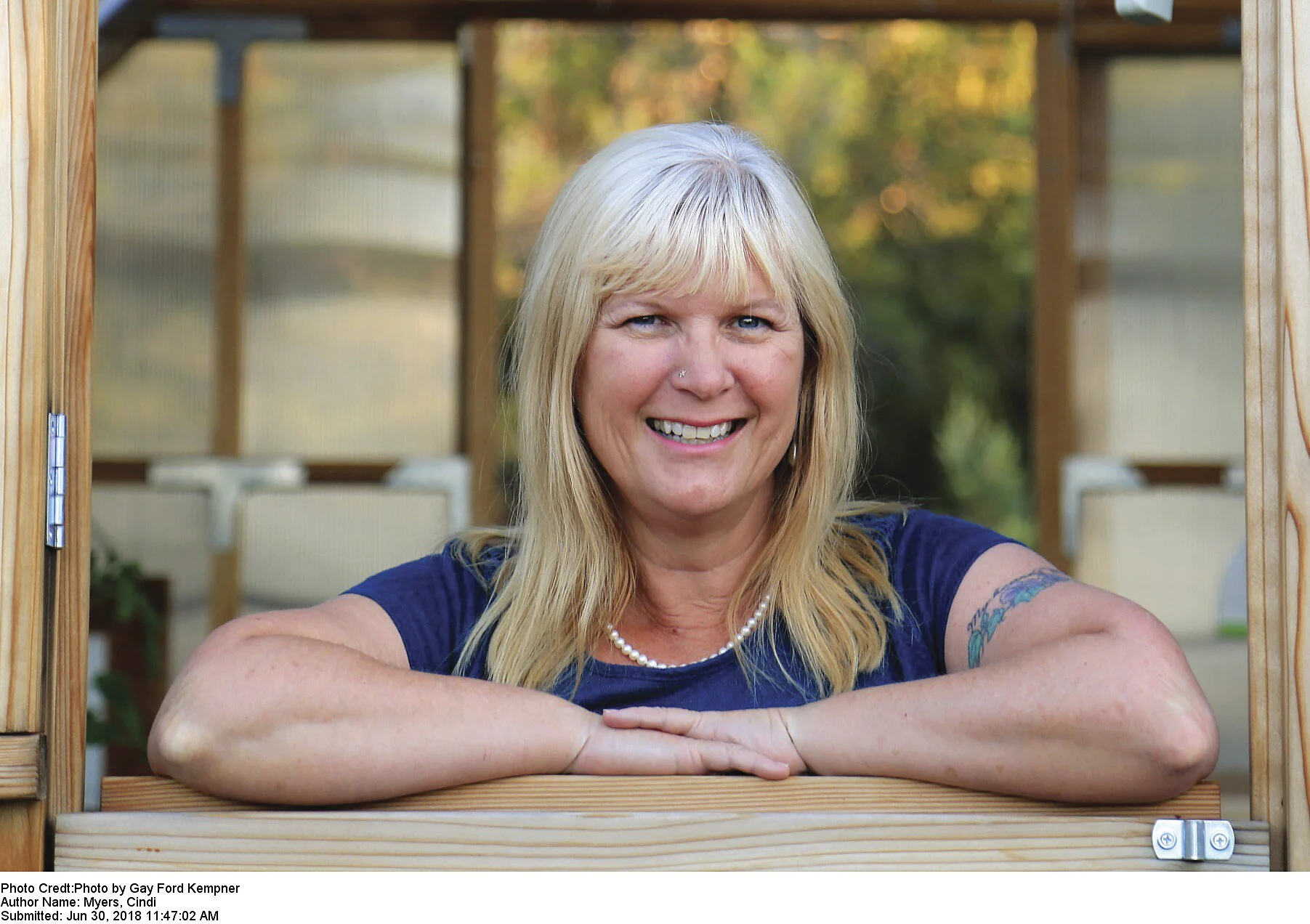
Book #4: Running Out of Time by Cindi Myers (on-sale June 16, 2020)

Book description: When a terrorist is on the loose, the Tactical Crime Division is on the case. To find out who poisoned medications, two of TCD’s agents are tapped to go undercover posing as a married couple and infiltrate the company. But as soon as Jace Cantrell and Laura Smith arrive at Stroud Pharmaceuticals, someone ups the ante by planting explosives in their midst. Turns out that the small-town family business is hiding a million secrets. Could they unknowingly be protecting a vengeful killer?

About Cindi Myers: Cindy Myers became one of the most popular people in eighth grade when she and her best friend wrote a torrid historical romance and passed the manuscript around among friends. Fame was short-lived, alas; the English teacher confiscated the manuscript. Since then, Cindy has written more than 50 published novels. Her historical and contemporary romances and women’s fiction have garnered praise from reviewers and readers alike.

Buy on:

Spotlight: Keep Forever by Alexa Kingaard

Keep Forever
Alexa Kingaard
Published by: Acorn Publishing
Publication date: March 28th 2020
Genres: Historical Romance, Women’s Fiction

“Unlike some war stories that focus on intense, harsh and graphic depictions of post-combat trauma, this tale unfolds gently, like an Edna Ferber novel, spread across many decades, detailing the impact this soldier’s illness has on an entire family, including children and grandchildren. KEEP FOREVER is a wonderful, emotionally satisfying read that I highly recommend. ”
GARY SEIGEL, author of “Haskell Himself”

Paul O’Brien’s idyllic childhood in Southern California comes to a halt when his mother dies in the summer before his senior year of high school and a very different persona of his father emerges – isolating himself inside the house, turning to alcohol for comfort, and barely noticing his only child. Simultaneously, the war in Vietnam is sending shock waves around the world and young men from one coast to the other are being called upon to serve. Paul enlists in the Marines before receiving his draft notice.

Elizabeth Sutton is eager to gain some independence from her father’s old fashioned notions and looking forward to her first year in high school. At fifteen years old, tragedy strikes with the loss of both parents in an auto accident, turning her childhood into one of responsibility and worry overnight. The four siblings are scattered when her nine-year-old twin sisters are sent to live with their Aunt and Uncle on Nantucket Island, and Elizabeth is left behind in Boston with their grandmother. Her older brother, Sam, enlists in the Marines, eager to join the conflict a world away as opposed to dealing with the one unfolding at home.

A bond develops between Paul and Sam in Vietnam, and both are injured in a bloody battle that costs Sam his right hand and sets the stage for a lifetime of nightmares and sleepless nights for Paul. Matched by similar tragedies at a young age, Elizabeth and Paul’s first introduction by Sam upon their return from Vietnam is the beginning of friendship and love that survives five decades.

After marrying, welcoming their first child, and inheriting a small beach house, the couple adapts to their new surroundings, but distant memories of Vietnam continue to haunt Paul. In an era when veterans refuse to speak of their pain and the government denies that thousands of soldiers are coming home irreparably damaged, he is left to deal with the challenge of caring for his loved ones amidst his his erratic flashback episodes and moods. As their lives unravel from the lingering effects of PTSD, Elizabeth learns to accept the burden that Paul brought home, and together they make their own memories to keep forever.

Inspired
By
A True Story

Goodreads / Amazon / Barnes & Noble / iBooks / Kobo

EXCERPT:

“Anything you can give me for this headache?” Paul clenched his teeth, hoping to reduce the lightning bolts behind his eyes. He tried to remember how delicious it felt to be pain-free.

“We’ll get you something.” Dr. Shapiro turned to his nurse. “I’m ordering a mild sedative for Paul so we can remove the shrapnel. When we’re done, find him a spot in the ward and—”

Paul interrupted. “I have a friend who was wounded. I think he was on the chopper with me. Do you know if Sam Sutton is here?” He looked at the doctor for reassurance.

Dr. Shapiro knew who Paul was talking about. He laid a hand on Paul’s arm. “He just got out of surgery. I’ll see if I can get him a bed next to you once the anesthesia has worn off.”

“Will he be okay?”

“Yes, we treated his hand.” That’s all Doctor Shapiro would share with Paul. He stood up and moved to the next patient in line. Paul struggled to prop himself against the wall, comforted only by a small pillow for his head and a thin blanket to minimize the shaking he couldn’t repress. He surveyed the scene that unfolded before him and waited for Sam to join him. The room was filled with muffled groans from dozens of young men, many in critical condition with life-threatening injuries, mutilated limbs, and grotesque facial wounds that replaced the once handsome, strong, vigorous appearance of youth. Some

screamed in agony as young nurses did their best to scrub lacerations and change dressings, while others lay silent with nothing more than a vacant, faraway look.

Paul watched a trim and confident nurse, her chestnut hair securely pulled away from her face in a tight bun that showed off her high cheek bones and almond-shaped eyes—rich, like the color of chocolate. She wrapped the final piece of clean gauze around the head of a distressed young soldier and whispered something in his ear. Whatever she had said appeared to relieve his agitation as a slight smile crossed his face and he surrendered his broken body to sleep.

The nurse walked over to Paul, pulled up a chair, and introduced herself. “Hello. My name’s Diane. Feeling okay? Any pain? It’s almost time for another dose of medication.” Amidst all the suffering, she smiled and waited for Paul’s response.

“Hey, hi, I mean hello, Diane. My name’s Paul. Waiting for my friend, Sam Sutton. Doc said they would bring him out soon. Ya know if his hand’s okay?” He hoped Diane might have more information about Sam’s condition, but she politely excused herself as she rushed to meet two medics entering with Sam, still groggy from surgery. They inched closer to Paul and the empty cot next to his. Diane’s gentle hand guided the corpsmen as they lifted Sam from the stretcher to make his transition to his bed as comfortable as possible.

Paul gasped aloud. He couldn’t help it. There was no way to silence the sound that rose from his throat when he saw his friend beside him, his right hand thick with bandages, wrapped as if to protect something that was no longer there. Paul slowly brought his hands to his face and felt the layers of soft bandages, only his eyes, nose, and mouth exposed. His head pulsated and his face felt tight and swollen. With crystal clarity, his mind flashed back to the instant when his life, when Sam’s life, were forever changed. His body tensed with the memory—the sounds, the heat, the explosions, the cries for help, and the smell of death all around them. He choked back tears and resolved to remain stoic and grateful that his wounds would soon be invisible. Unlike Sam, he had escaped a lifetime of disfigurement and the constant reminder of his brush with death.

Diane hovered over Sam as he stirred. She had played this part too many times the last nine months, soothing traumatized young men, convincing them that everything

would be just fine, even though it was not always the truth. She knew he would need a voice of reassurance when he realized where he was and the severity of his injuries. Sam’s eyelids fluttered. He tried to focus on his surroundings and take in the foul odor and musty smell of the tent, lined from one end to the other with broken bodies. The stench of disinfectant, humidity, and soiled linens stuck to the canvas walls of the makeshift hospital like glue, and he swallowed hard to prevent the nausea from taking hold of his body. Sam rolled his head to one side and looked at Paul, who appeared composed, determined, and calm.

“You made it, buddy. We made it,” whispered Paul.

Author Bio:

ALEXA KINGAARD was born in San Diego, CA and has lived most of her life in the area. She currently resides in Carlsbad and is the mother of a son and daughter who continue to be her biggest fans and cheerleaders.

Her debut novel, KEEP FOREVER, was inspired by her late ex-husband who batted the residual effects of the Vietnam War for decades after his return. The burden he brought home is shared by combat veterans of all conflicts, and her fictional account highlights the collateral damage encountered by family members and loved ones living with PTSD in their midst.

Her second novel, MY NAME IS ROSE, departs from her personal experiences and focuses on the collective memories of her generation. She loves writing about nostalgia and the human condition, the common denominator of our lives.

Website / Goodreads / Facebook / Twitter / Instagram


GIVEAWAY!
a Rafflecopter giveaway

XBTBanner1

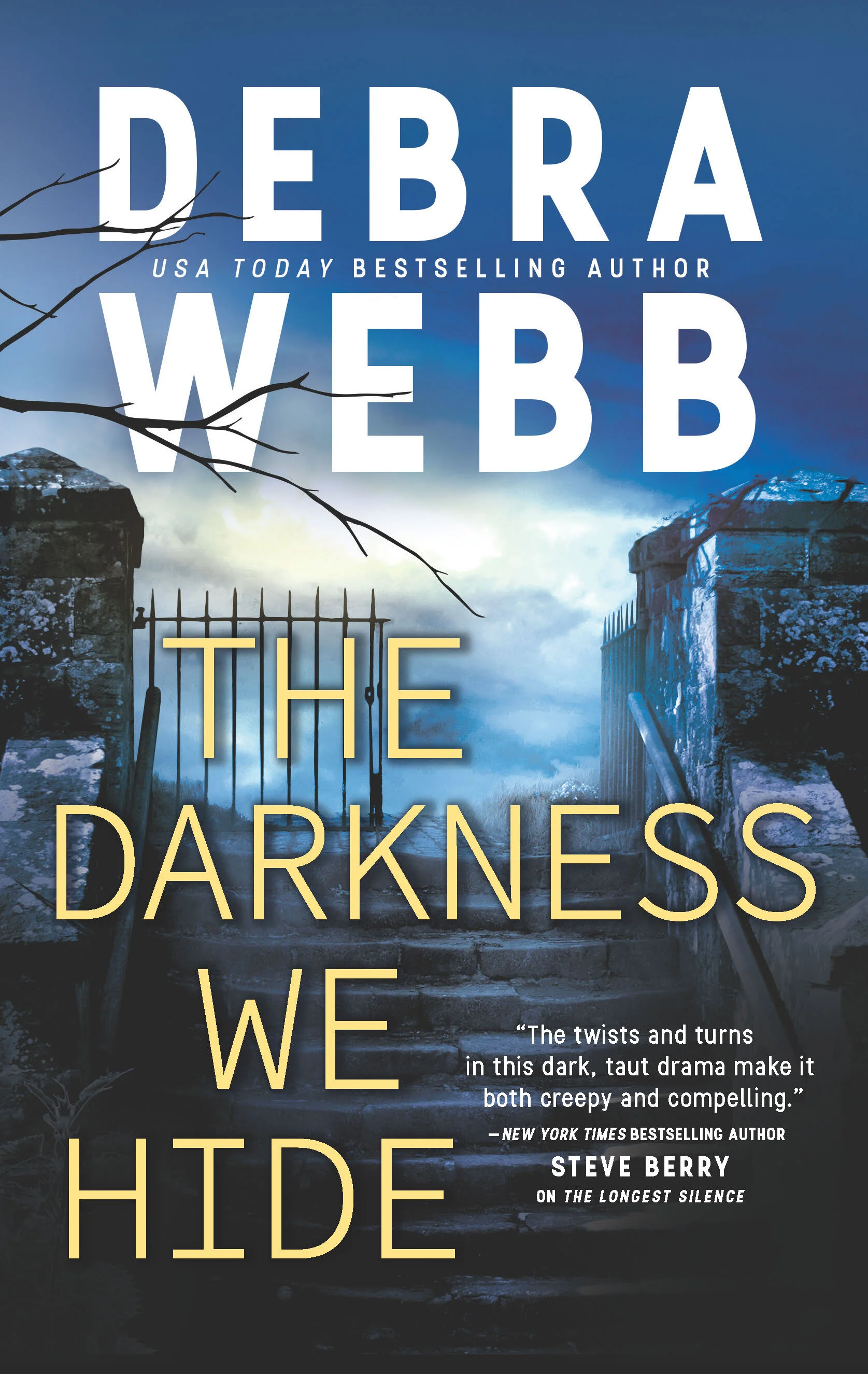
Spotlight: The Darkness We Hide by Debra Webb

In the thrilling conclusion to The Undertaker’s Daughter series, THE DARKNESS WE HIDE, Doctor Rowan Dupont has been staring death in the face for so long, she’s willing to meet it for the secrets it holds. Death has followed her back to her hometown of Winchester, Tennessee, ten months ago, cloaking the walls of her family’s Victorian funeral home like a shroud. In investigating the mysterious deaths of her loved ones, Rowan has unearthed enough family secrets to bury everything she’d previously thought true. But each shocking discovery has only led to more bodies and more questions; the rabbit hole is deeper than she ever imagined.

Despite settling into a comfortable life with Police Chief Billy Brannigan, Rowan knows dangerous serial killer Julian Addington is still out there. She can’t let her guard down now. Not when she’s this close to ending it once and for all. But with a storm brewing on the horizon, she’ll get only one shot before the impending darkness takes hold, threatening to wipe away every truth she’s uncovered—and everything she holds dear.

Excerpt

One

Winchester, Tennessee

Monday, March 9, 7:35 a.m.

Rowan DuPont parked on the southeast side of the downtown square. The county courthouse sat smack in the middle of Winchester with streets forming a grid around it. Shops, including a vintage movie theater, revitalized over the past few years by local artisans lined the sidewalks. Something Rowan loved most about her hometown were the beautiful old trees that still stood above all else. So often the trees were the first things to go when towns received a face-lift. Not in Winchester. The entire square had been refreshed and the majestic old trees still stood.

This morning the promise of spring was impossible to miss. Blooms and leaves sprouted from every bare limb. This was her favorite time of year. A new beginning. Anything could happen.

Rowan sighed. Funny how being back in Winchester had come to mean so much to her these past several months. As a teenager she couldn’t wait to get away from home. Growing up in a funeral home had made her different from the other kids. She was the daughter of the undertaker, a curiosity. At twelve tragedy had struck and she’d lost her twin sister and her mother within months of each other. The painful events had driven her to the very edge. By the time she finished high school, she was beyond ready for a change of scenery. Despite having spent more than twenty years living in the big city hiding from the memories of home and a dozen of those two decades working with Nashville’s Metro Police Department—in Homicide, no less—she had been forced to see that there was no running away. No hiding from the secrets of her past.

There were too many secrets, too many lies, to be ignored.

Yet, despite all that had happened the first eighteen years of her life, she was immensely glad to be back home.

If only the most painful part of her time in Nashville—serial killer Julian Addington—hadn’t followed her home and wreaked havoc those first months after her return.

Rowan took a breath and emerged from her SUV. The morning air was brisk and fresh. More glimpses of spring’s impending arrival showed in pots overflowing with tulips, daffodils and crocuses. Those same early bloomers dotted the landscape beds all around the square. It was a new year and she was very grateful to have the previous year behind her.

She might not be able to change the past, but she could forge a different future and she intended to do exactly that.

Closing the door, she smiled as she thought of the way Billy had winked at her as he’d left this morning. He’d settled that cowboy hat onto his handsome head, flashed that sexy smile and winked, leaving her heart fluttering. Four months ago he’d moved into the funeral home with her. The one-hundred-fifty-year-old three-story house didn’t feel nearly so lonely now. She and Billy had been friends most of their lives and, in truth, she had been attracted to him since she was thirteen or fourteen. But she’d never expected a romantic relationship to evolve. Billy Brannigan was a hometown hero. The chief of police and probably the most eligible bachelor in all of Franklin County. He could have his pick of any of the single women around town. Rowan hadn’t expected to be his choice.

She had always been too work-oriented to bother with long-term relationships. Too busy for dating on a regular basis.

Billy had made her want long-term. He made her believe anything was possible, even moving beyond her tragic past.

The whole town was speculating on when the wedding invitations would go out. Rowan hadn’t even considered the possibility. This place where she and Billy were was comfortable. It felt good. Particularly since fate had given them a break the past four months. No trouble beyond the regular, everyday sort. No calls or notes from Julian. No unexplained bodies turning up. And no serial killers had appeared looking for Rowan.

Life was strangely calm and oddly normal.

She would never say as much to Billy, but it was just a little terrifying. The worry that any day, any moment, the next bad thing would happen stalked her every waking moment. Somehow she managed to keep that worry on the back burner. But it was there, waiting for an opportunity to seep into her present.

“Not today,” she said aloud.

Today was important. She and Burt Johnston, the county coroner, had breakfast on Monday mornings. She locked her vehicle and started for the sidewalk. The Corner Diner was a lunch staple in Winchester. Had been since the end of the Great Depression. Attorneys and judges who had court often frequented the place for lunch. Most anyone who was someone in the area could be found at the diner. More deals and gossip happened here than in the mayor’s office.

But breakfast with the coroner wasn’t the only event that made this day so important.

Today she intended to offer her assistant, Charlotte Kinsley, a promotion and a part-ownership in the funeral home. Since there were no more DuPonts—Rowan had no children and couldn’t say if that would ever happen—she needed to bring someone into the family business. Someone younger who could carry on the DuPont legacy.

Rowan paused outside the diner. The iron bench that sat beneath the plate glass window was empty. Surprise furrowed her brow. Burt usually waited there for her. She surveyed the cars lining the sidewalks as far as the eye could see. No sign of Burt’s. He was never late but there was always a first time. After all, he wasn’t exactly a young man anymore.

She sank down onto the bench, dug her cell phone from her bag and sent him a text. She was the one who generally kept him waiting and he never once complained. She certainly wasn’t going to do so. His car was a little on the vintage side as well. Maybe he had car trouble this morning. Worry gnawed at her. A dead battery or a flat tire. Surely he would have called her.

“Morning, Rowan.”

She glanced up, smiling automatically. Lance Kirby, one of the attorneys who was not fortunate enough to have an office on the square. The ones who had been around a lifetime held on to that highly sought-after real estate. The others, like Kirby, waited patiently for someone to retire or to die. Meanwhile they showed up for coffee in this highly visible location bright and early every morning.

“Good morning, Lance.”

Kirby was a couple of years older than her. He’d lived in Winchester his entire life other than the years he spent at college and law school. He was divorced and had three kids. He’d asked Rowan out to dinner on several occasions. She hoped he didn’t ask again this morning. Coming up with an excuse to turn him down was becoming tedious. Surely he was aware that she and Billy were a couple now.

The idea startled her a little. This was the first time in her life that she was half of a couple in the truest sense of the word.

“If you’re waiting for Burt, he’s parked around back. Every spot around the square was taken before seven this morning.” Kirby reached for the door. “People have come early hoping for a chance to get into the Winters trial. Everyone wants to hear the story on that family.”

Rowan had been reading about the trial for weeks in the Winchester Gazette. “That explains why I had to circle around for a while before I found a spot.” She’d forgotten about the small parking area in the back alley behind the diner. “Thanks for telling me. I was worried he’d stood me up.”

Kirby laughed. “I don’t think any man still breathing would stand you up, Rowan.”

She glanced at her cell phone as if it had vibrated. “Oops. I have to take this.”

The instant she set the phone to her ear, Kirby went on inside the diner, the bell over the door jingling to announce his entrance.

Thank goodness.

For appearances’ sake she kept the phone to her ear a half a minute, then put it away. To pass the time she counted the yellow daffodils brimming in the rock planter built around the tree at the edge of the sidewalk. Those lovely yellow flowers were coming up all around the funeral home, too. Her mother had loved gardening. Early-spring blooms were already bursting all over the yard. Maybe her mother had hoped to chase away some of the gloom associated with living in a funeral home.

Since her father’s death, Rowan had hired a gardener. Somehow her father had managed to keep her mother’s extensive gardens alive and thriving for all those years. Rowan did not have a green thumb at all. She had killed every plant she’d ever tried to nurture. She was not going to be the one who dropped the ball on the family garden.

She glanced up then down the sidewalk. Still no sign of Burt. With a sigh, she pushed to her feet. Maybe he was on the phone, which would explain why he hadn’t answered her text. Rather than keep waiting, she cut through the narrow side alley to the small rear parking lot. With his taillights facing the back of the diner, Burt’s white sedan was nosed up to the bank that faced North Jefferson Street.

Rowan quickened her pace and walked up to the driver’s side of his car. Burt sat behind the steering wheel, staring out the windshield.

For a moment Rowan waited for him to glance over and see her but he didn’t move. Whether it was the lax expression on his face or some deep-rooted instinct, she abruptly understood that he was dead.

She tugged at the door handle. Thankfully it opened. Her heart pounding, she bent down. No matter that her brain was telling her he was already gone, she asked, “Burt, you okay?”

Her fingers went instantly to his carotid artery.

Nothing.

Rowan snatched her cell from her bag and called 911. She requested an ambulance and the chief of police, then she laid the phone on the ground and reached into the car and pulled Burt from his seat. She grunted with the effort of stretching him out on the pavement. On her knees next to him, she pressed her ear to his chest. No heartbeat. She held her cheek close to his lips. No breath.

Rowan started CPR.

The voice from the speaker of her cell phone confirmed that the ambulance was en route. She informed the dispatcher that she’d started CPR.

Rowan continued the compressions, her eyes burning with emotion. Burt was her friend. She had been gone from Winchester for a very long time and he had made her feel as if she’d never left. She did not want him to die. Other than Billy, he was the person she felt closest to. The voice of logic reminded her that Burt was just two months shy of his eightieth birthday.

She ignored the voice and focused on the chest compressions. “Come on, Burt. Don’t you die on me.”

Facial color was still good. Skin was still warm. He couldn’t have been in this condition for long. Hope attempted to make an appearance. But it was short-lived. Even a few minutes could be too many.

Damn it!

The approaching sirens drove home the realization that this was all too real.

Buy on Amazon | Audible | Barnes and Noble

About the Author

Debra Webb is the award-winning, USA Today bestselling author of more than 130 novels, including reader favorites the Faces of Evil, the Colby Agency, and the Shades of Death series. With more than four million books sold in numerous languages and countries, Debra's love of storytelling goes back to her childhood on a farm in Alabama. Visit Debra at www.DebraWebb.com or write to her at PO Box 176, Madison, AL 35758.

Connect:

Author Website

Twitter: @DebraWebbAuthor

Instagram: @DebraEWebb

Facebook: @DebraWebbAuthor

Goodreads

Spotlight: The Better Man by Len Webster

🔥🔥 HOT NEW RELEASE 🔥🔥

Athlete? Friend?Lover? #WHOISTHEBETTERMAN? Find out now! The Better Man by Len Webster is Live!

Savannah Peters thought she kept her one forbidden lover and their soft touches and midnight whispers entangled in the bed sheets of their past. Their secret relationship tarnished by his lies and betrayal.

The basketball star was toxic, and Savannah was … in love.

A dangerous, disappointing combination she had to escape.

Years after Savannah walked away, he returns, pleading for one more chance.

A chance she questions—especially when she sits under beautiful constellations with a man who gives her what her ex couldn’t.

Better.

After the stars burn out, Savannah will learn that one man is a painful lesson, and the other might just be the one …

But who will be the better man?

Add #thebetterman to your TBR: http://bit.ly/2mdmm5Q

Excerpt

She heard another knock as she rubbed her eyes and made her way down the hall. Savannah had just fallen asleep after a long day. Ignoring her better judgment to look through the peephole, she unlocked the door and opened it, flinching at the sight of her late-night visitor. 

He can’t be here.

Not now.

“W—”

He didn’t let her finish as he grasped her face in his palms and pulled her lips to his. He stole her next breath and replaced it with his need.

It had been so long since he last touched her.

Last looked at her with undeniable desire.

He walked them inside and kicked the door closed, causing the loud sound to echo. She pulled away from his rough kisses to hear if they had woken anyone. Panting, he turned her face to meet his eyes.

“Is Alex home?”

Savannah licked her lips and shook her head. “No, but you can’t be here right now. I told you—”

“Just fucking kiss me, Savannah.” He ran his thumb along her bottom lip. “Stop fighting this.”

Three words that broke her.

She would stop.

Because desperation diluted her thoughts and rationality. 

She grabbed his hips and brought him to her. Savannah did what he asked. She stopped fighting him. Gave up months ago but her pride had stalled this.

This passion and heat.

This connection she couldn’t quite quit.

He was a drug.

And she was the addict in remorse and not remission. 

Buy on Amazon | Barnes and Noble

About the Author

Avid English Breakfast tea sipper and romance author, Len Webster spends most of her days writing, saying good morning to her dogs with kisses or trying to explain how the internet renamed her to Leonard Webster. 

The cities of the world might have inspired her, but her entire being is content and at home in a gorgeous, small pinned dot on the map of Melbourne, Australia where every beat, crack, and scar of her heart has influenced the way she tells her stories. 

Away from the tea leaves and written words, Len can be found immersed in the food and culture of brand new cities on #TheLenFoodTour or forgetting that her framed Bachelor of Business and Commerce from Monash University still awaits its place on the hook on her wall—sorry, Mum!

Connect:

Facebook reader group: https://www.facebook.com/groups/thelenatics

Facebook: https://www.facebook.com/lennwebster

Instagram: http://instagram.com/lennwebster

Twitter: https://twitter.com/lennwebster

Goodreads: https://www.goodreads.com/author/show/7502135.Len_Webster

Amazon: https://www.amazon.com/Len-Webster/e/B00HIFA2GM

BookBub: https://www.bookbub.com/authors/len-webster

Newsletter: http://eepurl.com/bJGWe5

Giveaway

To celebrate the release of The Better Man, one lucky winner will receive:

  • A signed paperback copy of The Better Man.

  • A red daisy Marc Jacobs watch.

  • A constellation tablet case.

Head to Len’s Facebook page to enter: 

https://www.facebook.com/lenn.webster9