Cover Reveal: The Silent Daughter by Claire Amarti

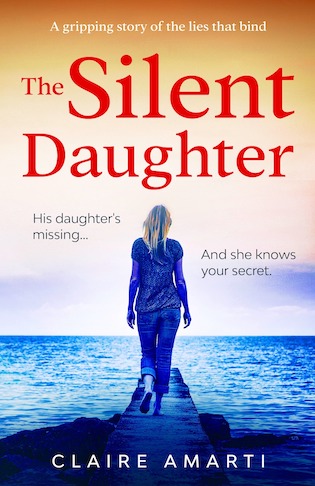
The Silent Daughter
Claire Amarti
Publication date: May 7th 2020
Genres: Adult, Psychological, Suspense

Schoolgirl missing, the ticker reads, and the camera cuts to a girl’s face. Blonde hair waterfalling over her shoulders, serious eyes, lips a little parted like she’s about to speak. That’s when I realize I’ve been holding my breath, because the gasp when I inhale almost chokes me.

Sadie Kelly has lost her job. Until last month, she was a teacher at Horton College – the same high school she went to ten years ago along with her best friend, Fiona. But Fiona died in an accident on their graduation night, in circumstances Sadie’s spent the last ten years trying to forget, and since then nothing’s been the same.

Now Sadie’s back where she grew up, jobless, and living temporarily with Fiona’s mother. But when she hears that Devon Hundley, a Horton schoolgirl, has gone missing, everything changes. Devon’s the daughter of Philip Hundley, a man Sadie knows all too well, and Sadie can’t stop thinking about the last time she saw Devon. It was the day Sadie left Horton for good, and heard Devon murmur four little words as she walked away. Four words Sadie prayed she had misheard:

I know your secret.

A gripping page-turner for fans of Kerry Lonsdale, Diane Chamberlain, and Liane Moriarty.

Add to Goodreads


Author Bio:

I’m an author who writes suspense stories about ordinary women – women like the ones we all know and love – who find out that their ordinary lives may not be quite so ordinary after all! My hope is that you will root for them, fear for them, and find yourself holding your breath when the action starts to get a little hairy!

When I’m not doing writing, I can be found strolling the streets of Brooklyn, New York City, my adopted home, dodging pigeons and traffic. I moved here a little over eight years ago – I hail from Ireland originally – and never looked back. To me there’s nothing more wonderful than that feeling of finding – or making! – a new home, that mixture of excitement at finding a place in the world, and the comfort of being able to come back to it time and again. That’s what reading feels like for me… and for you too I suspect! It’s also the same joy I get from writing. I hope my books can become a kind of home for you too: a place where you can trust that you’ll find a wonderful adventure, and then land safe and sound at the end of it all, ready to do it all again another day!

Website


XBTBanner1

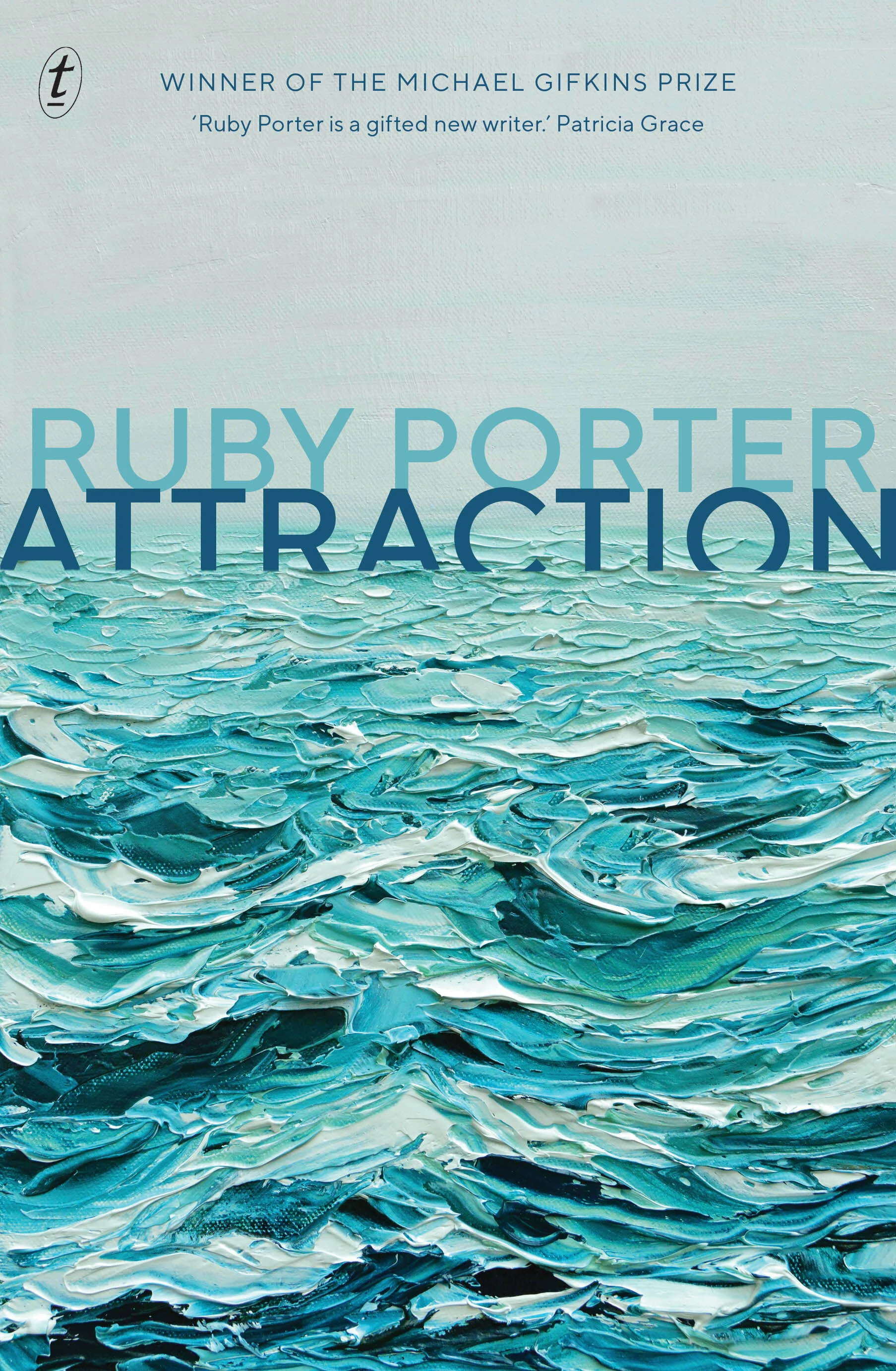
Spotlight: Attraction by Ruby Porter

Genre: Women’s Fiction 

The present reckons with the past in Attraction, Ruby Porter’s atmospheric debut novel.

Three women are on a road trip, navigating the motorways of the North Island, their relationships with one another and New Zealand’s colonial history. Our narrator doesn’t know where she stands with Ilana, her not-quite girlfriend. She has a complex history with her best friend, Ashi. She’s haunted by the memory of her emotionally abusive ex-boyfriend. And her period’s now weeks late.

Attraction is a meditative novel of connection, inheritance and the stories we tell ourselves. In lyrical fragments, Porter explores what it means to be and to belong, to create and to destroy.

Excerpt

That kind of drowning feeling. The air is all around your face, if you could only breathe it. Ilana said, —The first breath you take again always hurts.

She is an experienced drowner and I am just starting out.

—This wave, she says. Yelling, —Come, no, here by me.

She gets it right. Knows exactly where to stand for the wave to pick her up and throw her. Carry her. She can surf some right back to the shallows. I keep getting hurled below. See the Gisborne sun rippling through all that green. And I’m not sure whether I’ve opened my eyes underwater, or if I never had a chance to shut them.

Ilana grabs my arm but I duck when the wave comes.

Then she tells me about the first time, when she was seven.

Her mum’s dinghy capsized and whenever she came up for breath she hit the hull instead. She says the sea was holding her down, not ready to let her go. And then it turned and it pushed her up, shot her face first, full of air. She’s the one who keeps pulling me up today.

When I look at her, I think: the ocean will never again be so in place. It shudders and slurps and turns—no two molecules will be together for long. No two molecules will find each other again. Or at least, it’s unlikely.

Then Ashi joins us.

Ashi doesn’t catch as many waves as Ilana, but she catches some. I keep surfacing to see them tumbling into the spray together. Sometimes, Ilana puts her hand on Ashi’s arm as they wade back out deep.

—What is it? Ilana says to me.

Water is furling itself on the horizon, creeping forward.

—Stay here, she says. —It’s a big one.

I’m sucked in before it’s even broken. This time I can hardly see. The ocean floor has been tossed into the wave—I blend with the sand and the seaweed and the dappled sun. Then I feel the break, and know I’m being pushed deeper.

For me it isn’t slowed down, like Ilana said, but sped up. A flash of light, greeny brown, something above the surface. The whir. The spin. The sea gasping, in and out, one giant lung that expands and compresses. When you’re beneath it, the ocean is the only thing that breathes.

Get Your Copy Today: 

Amazon | B&N | Kobo | Text Publishing | Mightyape | The Nile | Fishpond | Book Depository | Booktopia 

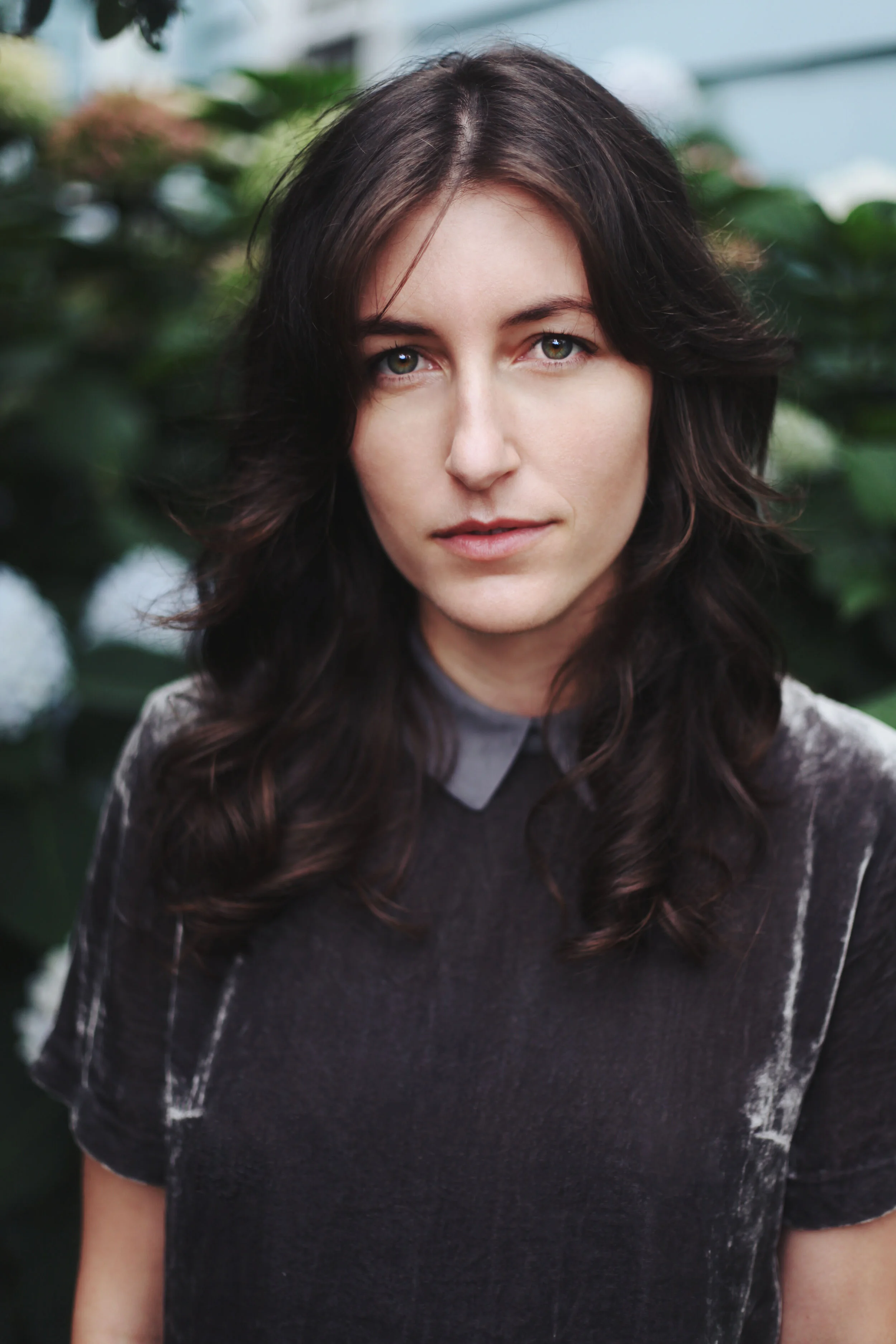
About Ruby Porter: 

Ruby Porter is a prose-writer, poet and artist. She tutors creative writing at universities and high schools. Ruby was the winner of the Wallace Foundation Short Fiction Award in 2017, and the inaugural winner of the Michael Gifkins Prize in 2018, with her debut novel Attraction. Attraction was written during her Masters of Creative Writing at the University of Auckland under supervisor Paula Morris, and published in May by Melbourne-based Text Publishing. It is distributed throughout Australia and New Zealand.

Connect with Ruby: Goodreads | Twitter | Instagram 

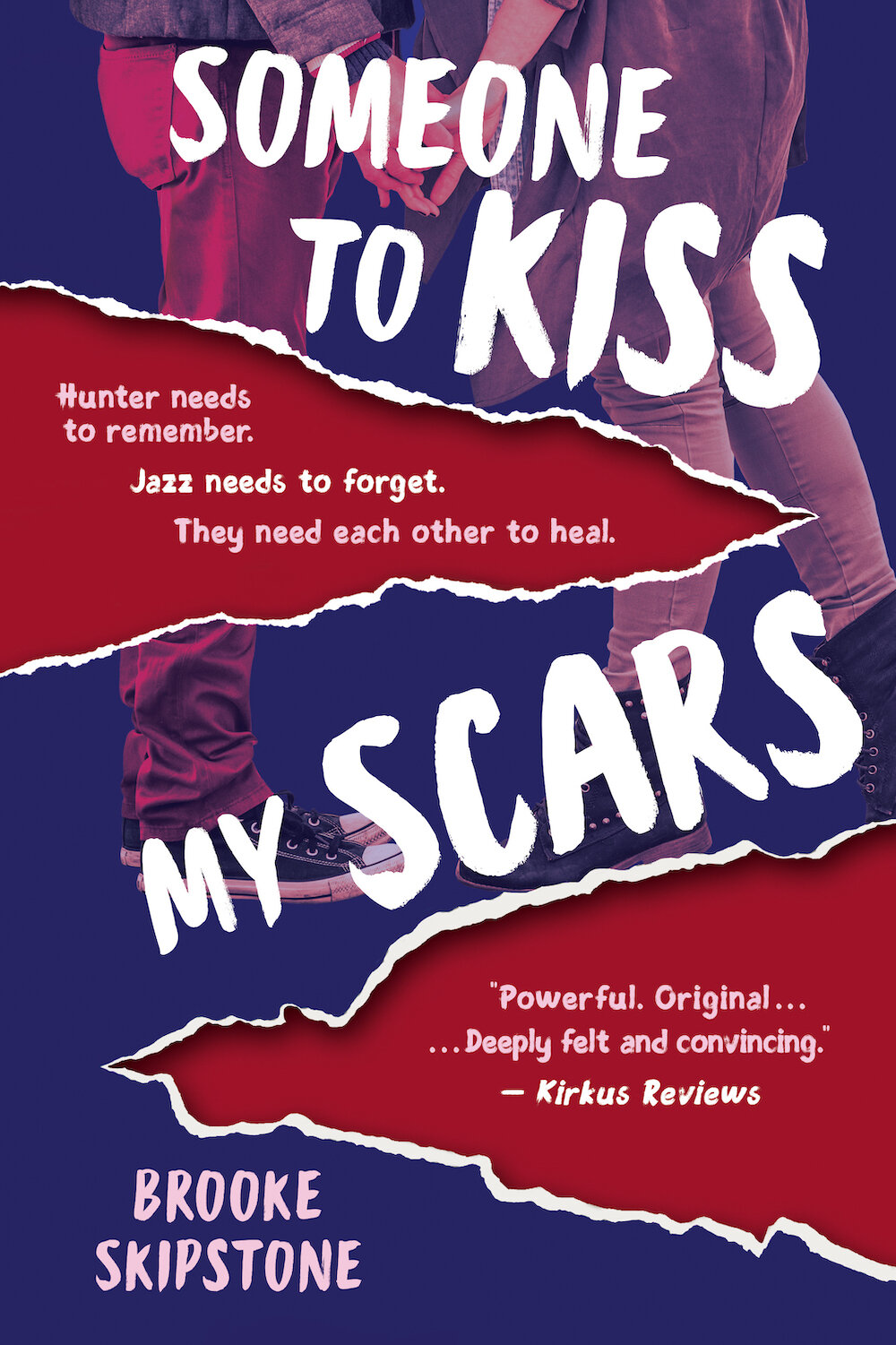
Spotlight: Someone To Kiss My Scars by Brooke Skipstone

Publication date: October 17th 2019
Genres: Thriller, Young Adult

Synopsis:

Hunter needs to remember. Jazz needs to forget. They need each other to heal in this teen thriller of survivor love.

Hunter’s past is a mystery to him, erased by a doctor at the direction of his father. But memories of the secret trauma begin to surface when Hunter sees other people’s memories–visions invading his mind with stories of abuse, teen self-mutilation, rape, and forbidden sex.

His best friend Jazz has dark and disturbing memories of her own that she hides behind her sass and wit. Hunter discovers he can rescue the victims, even though he risks adding their suffering to his own.

Hunter and Jazz kiss each other’s scars and form a bond of empathy no two teens should ever need.

Excerpt

Chapter Four

Jazz waited for Hunter inside the front doors of the K - 12 school, home to 150 students from the small town of Clear Creek and ten miles in either direction on the nearby highway. Her big boots stomped on the metal grating just inside the door as she paced, wondering what was keeping him. Her flatworms had regenerated their heads and tails and still remembered what she had taught them prior to decapitation. Memory can exist outside the brain! How cool was that? She couldn’t wait to tell him.

“Girl, you need to get to class,” said Patty, the secretary, in her loud, thick drawl. She was a large woman with a big smile, born in Texas, who lined her eyes in dark blue, wore big hoop earrings and gaudy silver necklaces. Today she wore jeans, boots, and a bright yellow top with white fringe and turquoise pieces sewn into the fabric. She loved the kids, and most loved her back, including Jazz.

“I need to show something to Hunter. It’s so cool!”

“Mr. Roberts approved you being out of his class?”

“He knows. He said it was OK.” 

She had advanced to the state science fair a month ago and now wanted desperately to go to the international fair next year, her last chance before graduation. Maybe she could win a scholarship or some money for college. Mr. Roberts, her science teacher, had given her a corner of the school lab to run her experiments even through the summer. She’d been hired as extra maintenance help at the school, so she would have access to the building through August.

Jazz straightened up and put her hands on the glass door as she saw his truck roll into the parking lot.

Jazz watched Hunter park his truck and run toward the front door. As usual he looked flustered and a little clumsy when he ran, but God was he cute! She loved his long, floppy hair, his thick eyebrows over his dark brown eyes. And his mouth was gorgeous—so full and soft. He was the only guy in school who didn’t think she was weird for loving science and who smiled at her like he meant it. He was her only real friend. Before he came in August, the only people who cared about her were the teachers and Patty.

Just as he reached for the entry bell, Jazz pushed the front door open.

“Hey, Hunter!” She knew from the heat she felt in her cheeks she was blushing behind her big smile.

“Hey, Jazz. Sorry I’m late. I know you wanted me here early.”

“It’s OK. I have something to show you.” She grabbed his arm.

“I’ve got to get to class,” he said, panting.

“Patty said she’d give you a pass. C’mon!” Jazz pulled him down the hallway.

“I said no such thing!” yelled Patty as the two kids ran past her.

“You know you will!” shouted Jazz over her shoulder.

Jazz dragged him down the hall to the science wing, opened the lab door, and walked to the far side of the room near the fume hood and a short lab table against the wall—her domain. One of the fluorescent tubes flickered on the ceiling. She looked up and shook her head. “That won’t do. Can’t have another variable in here. I’ll talk to Mr. Roberts later to have this fixed.”

She carefully removed a cover from a small shelving unit to reveal a series of petri dishes containing small brown worms. “Ta da!” said Jazz.

Each dish lay inside colored tape strips, labeled with names and dates. A clipboard with the color-code key hung from a hook.

Hunter bent closer. “Worms? Did you make them?” He wrinkled his nose.

“Kinda. I trained them with food and bright lights until they remembered what to do in different environments to find their food. So if those memories were stored in their brain, which is similar to ours, you would think that if their heads were amputated, the new regenerated brain wouldn’t remember their training. But they did!” She threw out her hands in excitement.

“Yeah?”

“Yeah! As a group they didn’t do quite as well as the trained, uncut controls, which were not decapitated, but the ones that regrew their heads did as well as those which regrew their tails. And both groups of regenerated worms found their food faster than an untrained group. ”

“Meaning what?”

“Meaning memory is not confined to their brains!” She lifted up onto her toes and felt warmth radiating throughout her body. “If it were, the ones that grew new brains wouldn’t remember the training. Don’t you see? So many people think memories are stored in the brain, but they may be stored in other parts of the body or outside it.” 

“At least in worms. What about in humans?”

“Could be the same. I haven’t figured out an experiment for them yet.” She moved closer and straightened the collar on his shirt. “But I’m looking for volunteers to help me.” She touched his nose with her finger. “How about you?”

“Sure. Unless you plan to chop something off me.”

She moved closer, enjoying the tease, locking her eyes onto his. “First, I train you, then I chop.” She picked up a ruler off a table next to her and slapped it into her hand. “Do you respond better to punishment or reward?” She walked toward him, shaking the ruler. “I used bright lights and raw liver on the worms.”

He backed away, chuckling. “So which one of those is the reward?”

“The liver, obviously. But for you . . .” She thought of so many things she wouldn’t dare say to him. “How about fresh chocolate chip cookies after school? I could come by your place.”

“Cool. I’d like that.”

He was so much fun. “When are you going to show me more stories about the Tremarians? I haven’t read any for a while.”

A pained look crossed his face. “I had to start writing something else.”

“You had  to? Why?”

“I’ll explain later. How about when you bring the cookies?”

“OK.” She noticed his frown and felt a chill. “Are you all right?”

“Sure. Well, not really.”

“What’s wrong?” She almost reached out for his hand, but pulled back and clasped her hands against her chest.

“I realized this morning I never asked you about the things you didn’t want to remember. When we first talked. In the gym months ago. I told you I wanted to remember my past, and you said there were things you wanted to forget. What are they? And I’m sorry for not asking you before now.”

She felt her eyes widen and her heart race. How could you remember that?  “So many things, Hunter, but none of them involve you.” 

His shoulders slumped. 

Jazz felt a rush of fear. Had she offended him? “What made you think of that now? I mean, I love that you care enough to ask, but what brought that up?”

Hunter bit his lip and frowned. “I haven’t had much sleep. I tried to find something from my past in my dad’s room, but the few things I found meant nothing to me. And I think he’s lying to me about . . . why we came here.” His chin quivered.

She moved closer to him, unable this time to resist, and reached for his hands. He tensed, causing her to pause. “Do you mind?”

“No.”

She held both of his hands and felt them quivering within her own. “I’m your friend, Hunter. Something’s going on with you, and I want to help.” She looked into his brown eyes and saw them twitch. “Why don’t you come to my house for lunch today? I’ve got some leftover spaghetti and meatballs.”

He looked at their hands touching and smiled slightly. “That would be great. I forgot to bring anything to eat today. Lucky this school allows us to go home for lunch.”

“Good.” She squeezed his hands then let them go. “You better get to class.”

“Yeah, thanks.” He turned to leave and opened the door then looked back. “So what’s the brain for if not to store memories?”

“It’s a receiver and transmitter, like a TV set. A signal comes in, and a movie memory plays in your head.”

His eyes widened as he just stared at her with his mouth open. 

“Are you OK?”

“Yeah. Gotta go.” He left the room.

She thought he would be excited or awed about her conclusion, but he seemed terrified. Why did he have  to write something else? Something was going on inside Hunter’s head. She’d sensed it since they first met. He said he couldn’t remember his past, yet he often seemed haunted.

She knew what nightmares the past could bring.

Buy on Amazon | Audible

About the Author
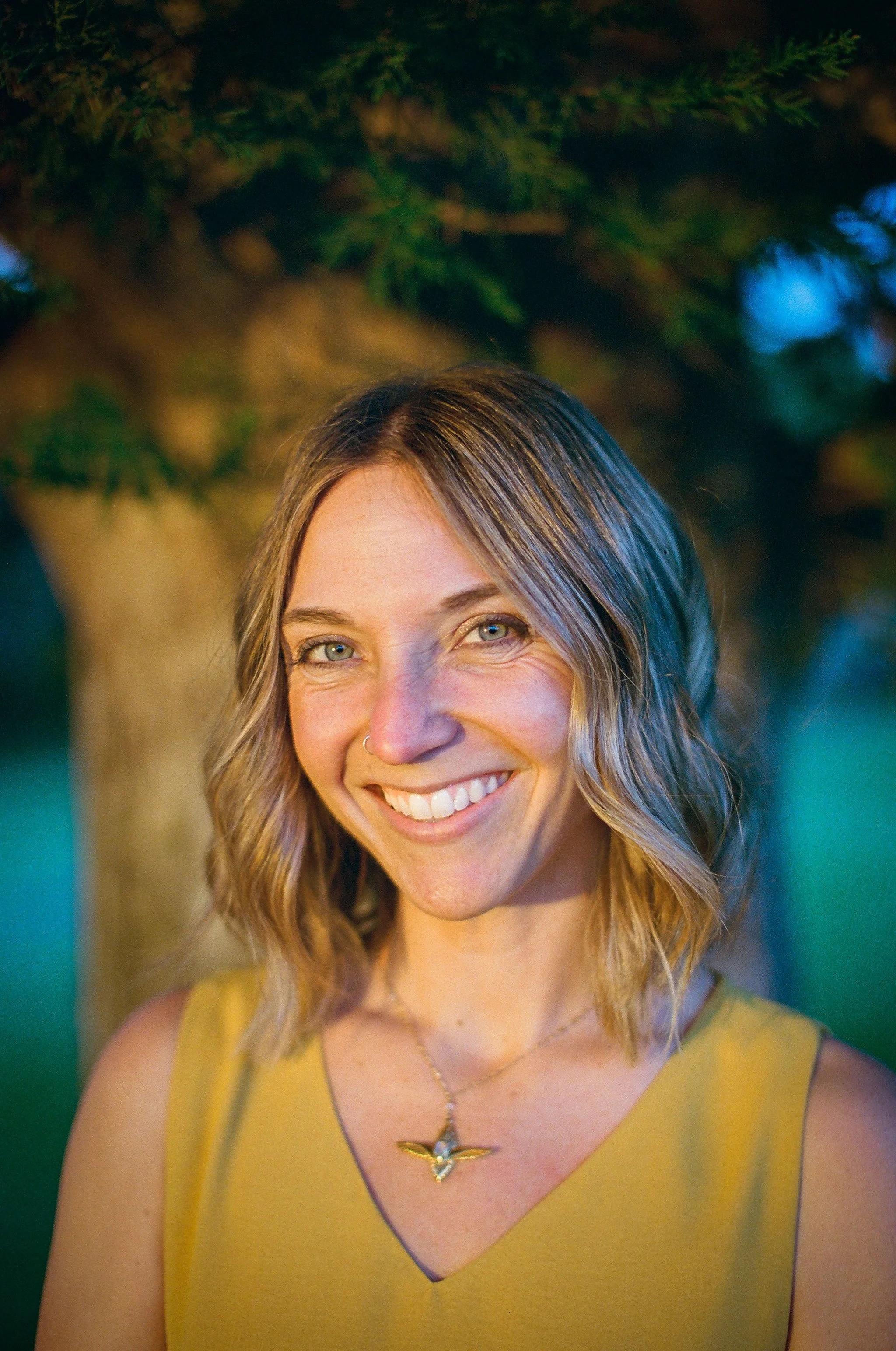
Brooke Skipstone lives in Alaska, where she watches the mountains change colors with the seasons from her balcony. Where she feels the constant rush toward winter as the sunlight wanes for six months of the year, seven minutes each day, bringing crushing cold that lingers even as the sun climbs again. Where the burst of life during summer is urgent under twenty-four-hour daylight, lush and decadent. Where fish swim hundreds of miles up rivers past bear claws and nets and wheels and lines of rubber-clad combat fishers, arriving humped and ragged, dying as they spawn. Where danger from the land and its animals exhilarates the senses, forcing her to appreciate the difference between life and death. Where the edge between is sometimes too alluring. Visit www.brookeskipstone.com

Connect:

https://www.brookeskipstone.com/

https://www.instagram.com/brookeskipstone/

https://www.goodreads.com/author/show/19167898.Brooke_Skipstone

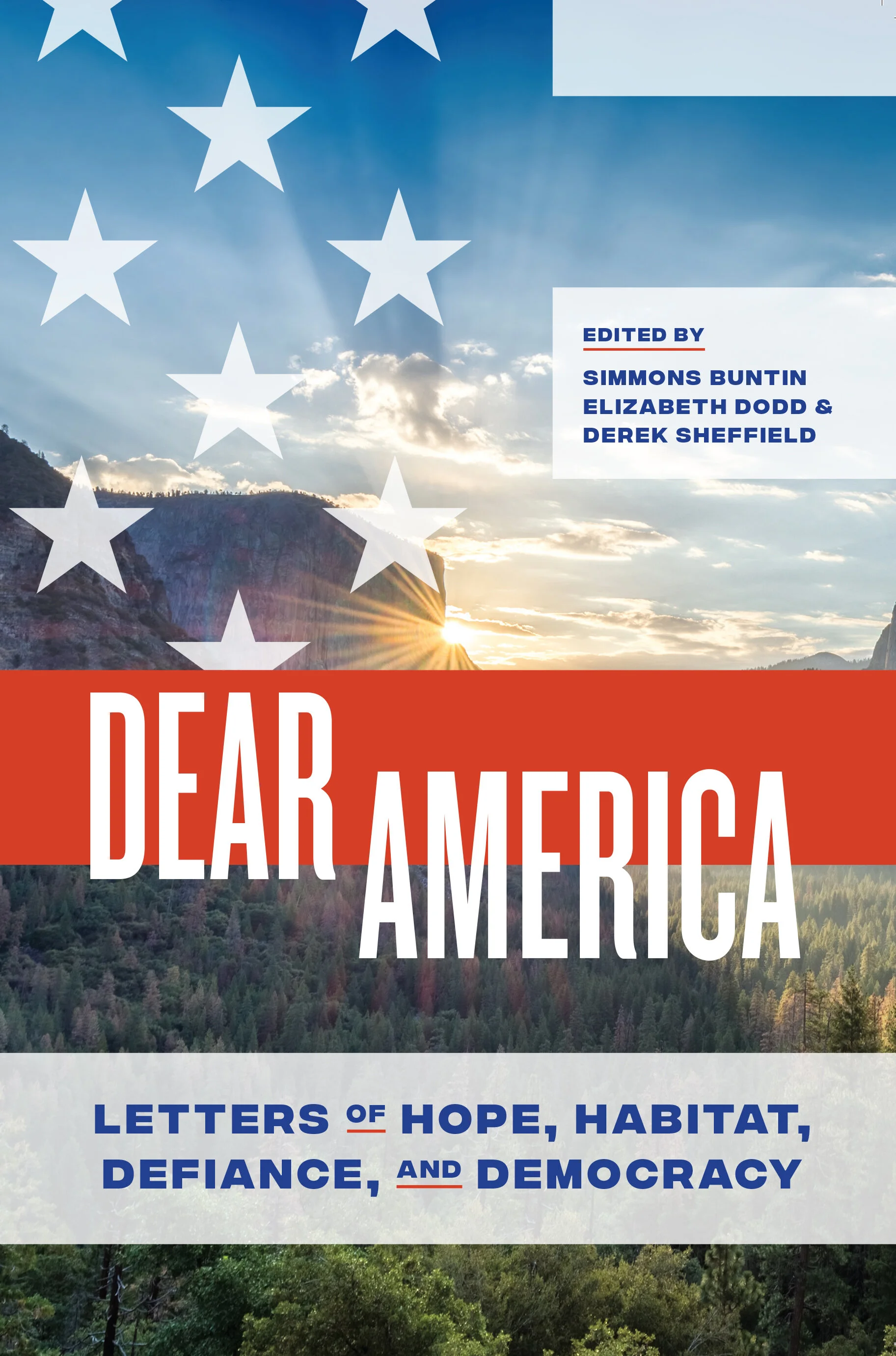
Spotlight: Dear America: Letters of Hope, Habitat, Defiance, and Democracy by Simmons Buntin (Editor), Elizabeth Dodd (Editor) and Derek Sheffield (Editor)

America is at a crossroads. Can we find a common ground?

An eclectic anthology of passionate letters to America during a time when politics and perspectives collide

Since the 2106 presidential election, America has been barrelling headfirst toward a crossroads. Conflicting political and social perspectives reflect a need to collectively define our moral imperatives, clarify cultural values, and inspire meaningful change. In that patriotic spirit, hundreds of writers, poets, artists, scientists, and political and community leaders have come together sharing their impassioned letters to America in a project envisioned and published by the online journal Terrain.org—the “Letters to America” series.

More than 130 works, all calls to action for common ground and conflict resolution with a focus on the environment and social justice, are collected in Dear America. Taken as a whole, the work is a diverse clarion call of literary reactions to the nation’s challenges as we approach future political elections (especially the one coming this November).

The book includes impassioned letters from experts, artists, and leaders such as Seth Abramson, Ellen Bass, Jericho Brown, Francisco Cantú, Kurt Caswell, Victoria Chang, Camille T. Dungy, Tarfia Faizullah, Blas Falconer, Attorney General Bob Ferguson, David Gessner, Katrina Goldsaito, Kimiko Hahn, Brenda Hillman, Jane Hirschfield, Linda Hogan, Pam Houston, Robin Wall Kimmerer, Karen An-hwei Lee, Christopher Merrill, Kathryn Miles, Kathleen Dean Moore, Aimee Nezhukumatathil, Naomi Shihab Nye, Elena Passarello, Dean Rader, Scott Russell Sanders, Lauret Savoy, Gary Soto, Pete Souza, Kim Stafford, Sandra Steingraber, Arthur Sze, Scott Warren, Debbie Weingarten, Christian Wiman, Robert Wrigley, and others.

“The voices in this essential anthology are anything but silent. Indeed, they are voices of hope, habitat, defiance, and, most importantly, democracy. Lend your ears, and then your own voice.” — Simmons Buntin, editor

Dear America encourages readers to come to a common resolution about the environment and social injustice going on in America through words of literature and art.

 Excerpt

California wildfires, climate change

Science Under Fire

Anita Desikan

Dear America,

Long before I became a scientist, I worked behind the counter of a pharmacy in San Diego. It was fall 2007, and the Witch Creek Fire had erupted across the region. Fanned by the powerful Santa Ana winds, the fire forced hundreds of thousands of people to evacuate their homes. I worked close to one of the affected regions, and on the day after the city ordered mass evacuations, one of the first customers I served told me their house had burned down—and their medications with it. Another told me they had evacuated and could not return home—they only had the clothes on their backs. Over and over I heard similar stories. I nearly broke into tears. But I took comfort helping fill their prescriptions, providing them with a needed service.

In San Diego, it is not earthquakes that we fear but fires. It was once a well-established fact that fire season occurred only in late summer or fall. But climate change has shifted that. Wildfires are now a yearlong potential horror, and they grow increasingly destructive. Every year, more people lose their homes; more people breathe in that terrible concoction of soot that leaves you gasping, wheezing, out of breath. The higher frequency of catastrophic wildfires in California has certainly been noticed by insurance companies, which are starting to hike prices or cancel homeowners insurance outright.

As a public health researcher with a keen interest in air pollution, science policy, and environmental justice, one of the most impactful lessons I have learned is that science has the power to improve both public health and the environment. When the best available science is incorporated into policymaking, it can deliver powerful benefits to the health and safety of our people and environment. So it was with a certain amount of horror that I witnessed the Trump administration turn its antiscience political machinations toward California’s incessant wildfire threat.

At first, the administration only wanted to spin wildfire tragedies as a way to bolster Trump’s own agenda. In August 2018 the Carr and Mendocino fires raged across Northern California—some of the worst wildfires ever experienced by the state. In the middle of this crisis, rath-er than speaking words of condolence, President Trump tweeted a message of hate toward environmental safeguards, blaming them for the severity of the fire by allegedly restricting access to water for firefighting purposes. And in this “tweet-to-policy” administration, Commerce Secretary Wilbur Ross decided to take the president up on his words. Ross ordered the National Oceanic and Atmospheric Administration (noaa) to sideline water-management procedures supported by the best available science. Specifically, NOAA’s Fisheries division was ordered to go against its own mission statement of regulating activities that might harm threatened or endangered aquatic species like salmon and instead divert water for firefighting efforts. Reality was thrown asunder—firefighters and state officials kept declaring in no uncertain terms that the state of California has enough water to fight these fires and the pain and suffering of my fellow Californians were milked in orderto declare war on endangered fish species like the Chinook salmon. In November 2018 the Camp Fire struck, ravaging the town of Paradise and causing over a thousand people to go missing. This time Trump placed the blame solely on California’s poor forest management (in actuality, the U.S. government owns and manages a majority of California’s forests) and threatened to cut off federal funding for firefighting efforts altogether.

But here’s a part of the story you may not know: in December of that year, Trump quietly issued an executive order that once again challenged the science underlying the wildfire threat. Apparently, the Trump administration believes that the best way to fix California’s wildfire problem is through logging. No joke. The executive order declared that, in order to prevent future wildfires like those that had struck California, the Department of Interior and the Department of Agriculture must harvest more than four billion board feet of timber that will then be put up for sale—an increase of 31 percent from 2017. While it is true that

increased logging may help quell a small percentage of the fires that occur near homes, it can do little to halt large-scale wildfires or stop thefires that are fueled by nonloggable but flammable plants, like chaparralshrub brush. It is hard to foresee with certainty the ecological impacts of the increase in logging, as it is dependent on how federal agencies implement the executive order. However, since market conditions of timber sales are required to be considered during the process, the most robust scientific evidence on how to safely and sustainably reduce trees that pose a fire hazard risk has the real possibility of being sidelined in favor of timber sales.

These actions by the Trump administration are downright dangerous because they mask the real problem at hand: climate change. Scientific research tells us that climate change acts as a threat multiplier by decreasing rainfall and increasing the temperature in the western United States (i.e., it can make California into a tinderbox). Since 1972, wildfires in California have grown 500 percent larger thanks mostly to climate change. In essence, global warming acts like a dose response curve—for every degree of warming, larger and more frequent fires will result. Scientists and political officials from across the West have urged federal officials to adopt evidence-based measures to reduce the threat of wildfires, including cutting greenhouse gas emissions linked to climate change. But the Trump administration pursues few if any actions to prevent climate change, and the Union of Concerned Scientists, where I work now, has documented numerous cases in which federal scientists were directly censored or felt no choice but to censor themselves on the topic of climate change.

I became a public health researcher to use science to find evidence-based ways to improve the lives of others. I can’t help but think back to that day at the pharmacy when I listened to my neighbors’ stories about the wildfire that had threatened or consumed their homes. I believe that they, like all Americans, would have wanted proven, science-based policies in place that could have reduced the threat of fires.I doubt they would have supported policies that take away water from endangered fish or cut down large swaths of the forest as distractions from the very real existence of climate change. This is why I find the administration’s denials—and silencing—of the science so unsettling. We rely on science because it is the best method we have available to protect the health and safety of people, and of this land we call our home.

 Sincerely,

Anita Desikan

Buy on Amazon | Barnes and Noble

About the Editors

Terrain.org is a nonprofit literary magazine published online since 1997 that searches for the interface—the integration—among the built and natural environments that might be called the soul of place. The works published by Terrain.org ultimately examine the physical realm around us, and how those environments influence us and each other physically, mentally, emotionally, and spiritually.

Simmons Buntin, is editor-in-chief of Terrain.org He has authored 2 books of poetry, Riverfall,and  Bloom, and also Unsprawl: Remixing Spaces as Places (co-authored with Ken Pirie). He has published poetry, essays, and technical articles in publications as varied as Edible Baja Arizona, North American Review, Kyoto Journal, and Bulletin of Science, Technology, and Society. He has a master’s degree in urban and regional planning from the University of Colorado, Denver, and an MFA in creative writing from the University of Arizona. Simmons lives in Tucson, Arizona.

Elizabeth Dodd is a poet and nonfiction writer. Her newest book, Horizon’s Lens: My Time on the Turning World, was published by the University of Nebraska Press in 2012. For over two decades she has lived in eastern Kansas in the Flint Hills region, where she is an award-winning professor of creative writing and literature at Kansas State University.

Derek Sheffield has presented widely at conferences around the West on the interaction between science and poetry. His own work often explores this topic and has appeared in Orion, Wilderness, Poetry, The Georgia Review, The Southern Review, Ecotone, Alaska Quarterly Review, and Southern Humanities Review, and several anthologies, including New Poets of the American West, The Ecopoetry Anthology, Nature and Environmental Writing: A Guide and Anthology, and The World Is Charged: Poetic Engagements with Gerard Manley Hopkins. Since 2003, he has been a professor of English at Wenatchee Valley College in central Washington.

Connect:

Facebook:  @terrainorg

Instagram:  @terrain_org

Twitter: @terrainorg

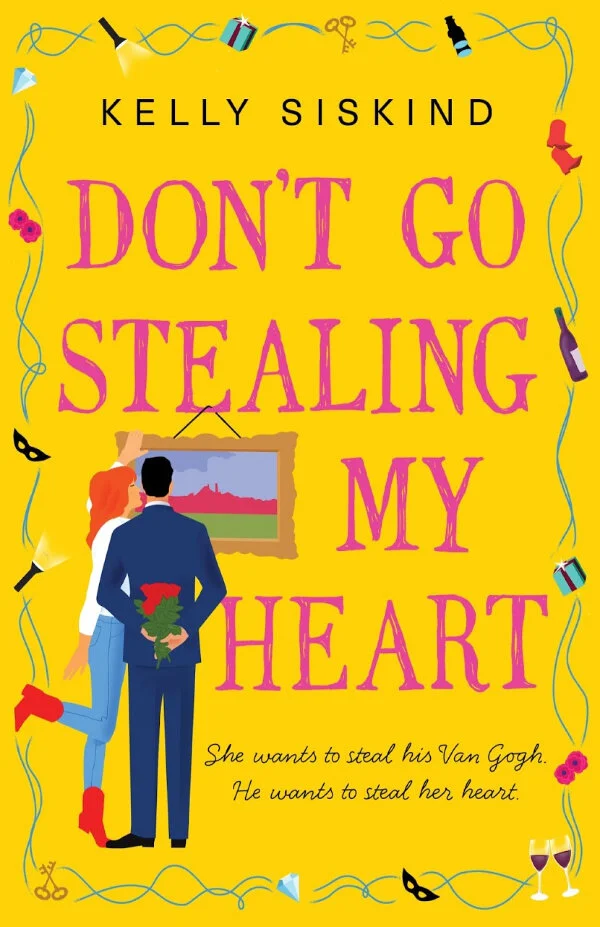
Spotlight: Don't Go Stealing My Heart by Kelly Siskind

She wants to steal his Van Gogh. He wants to steal her heart.

Some people would call Clementine Abernathy a criminal. She considers herself a modern day Robin Hood, who steals from the rich and gives to the poor. Not exactly on the up-and-up, but she knows what it's like to lose everything. Her latest heist involves swiping a priceless Van Gogh from its owner, who's supposed to be an egotistical trust-fund brat.

Turns out Jack David is a sexy, kind-hearted man...and Clementine is in trouble. Falling for her mark would make her the World's Dumbest Conwoman, but Jack is charmingly persistent, always singing sweet songs in her ear.

And that earth-shattering kiss? She never stood a chance.

Now she's imagining a fresh start with this dashing man, but that means telling Jack about her past. And other nefarious sorts are after the same painting. Too soon, Clementine learns what it means to risk it all for love.

Buy on Amazon | Barnes and Noble

About the Author
A small-town girl at heart, Kelly moved from the city to enjoy the charm of northern Ontario. When she’s not out hiking with her husband or home devouring books, you can find her, notepad in hand, scribbling down one of the many plot bunnies bouncing around in her head.

Her novels have been published internationally.

Website: https://www.kellysiskind.com/

Facebook: https://www.facebook.com/authorKellySiskind/

Twitter: https://twitter.com/KellySiskind

Instagram: https://www.instagram.com/kellysiskind/

Goodreads: https://bit.ly/3alcDxS 

Pinterest: https://www.pinterest.ca/kellysiskind/

Amazon: https://amzn.to/34SkWjq

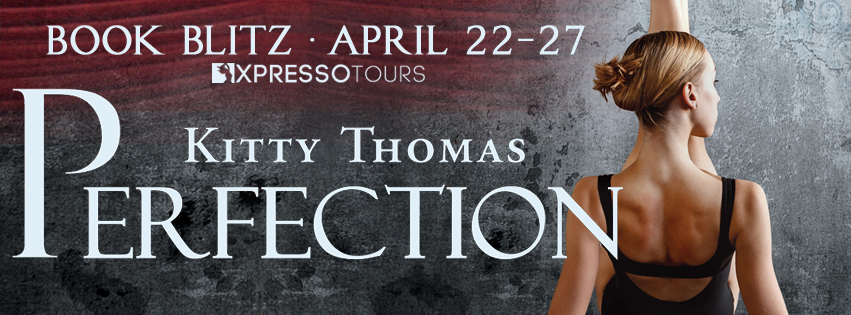
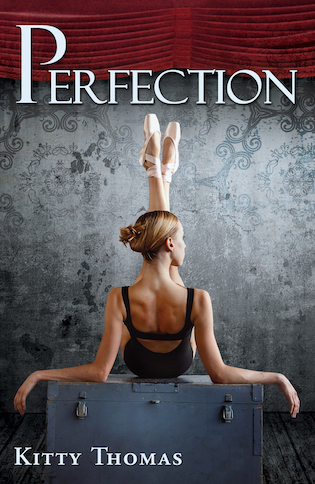
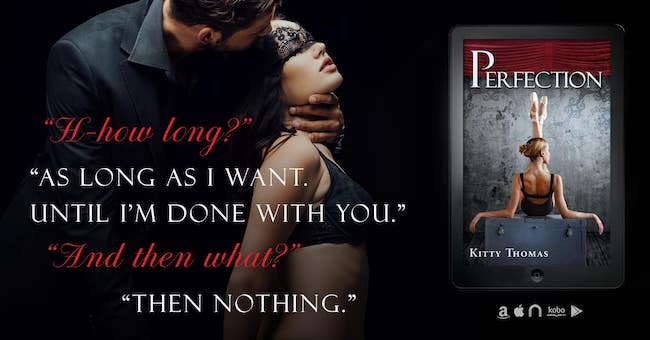
Spotlight: Perfection by Kitty Thomas

Perfection
Kitty Thomas
Publication date: April 8th 2020
Genres: Adult, Contemporary, Dark Romance, Romance

Everyone thought I was married to the perfect man. But if Conall Walsh were perfect, I wouldn’t have killed him.

I thought I got away with it until I received an anonymous note at the ballet company I dance for:

You were a very bad girl. If you don’t want me to report what I know about last night, meet me at the old opera house after rehearsal. I will tell you the price of my silence when you arrive. If you speak of this or bring anyone with you… no deal.

But his price isn’t money. It’s me.

THIS IS A STANDALONE contemporary dark romance.

Goodreads / Amazon / Barnes & Noble / iBooks / Kobo / Google Play

EXCERPT:

SCENE ONE:

There’s a crackling sound and then a booming male voice magnified over a speaker.

“I neither need nor want your money, Ms. Lane” It’s a smooth, rich baritone. But I can’t tell if the voice belongs to someone old or young. And I don’t recognize it.

“Do you know he beat me? He threatened to kill me. What was I supposed to do? He practically owned this city. Do you know how much power he had? What other choice did I have?” I shout into the mostly empty theater.

“Do you know how much power I have?” he counters.

Obviously a lot if he can get into this building and have electricity running in it. “I don’t deserve prison,” I say.

“Murder is a serious crime.” His tone is similar to the one you’d hear in the principal’s office after being caught vandalizing a dumpster behind the school.

“Please…” I feel the hysteria bubbling over as my gaze continues to dart around the cavernous theater, trying to find where he’s hiding, what perch he observes me from. “Please…” I say again… “You said you’d tell me your price. How much? Please. I’ll pay you anything.”

“No, Ms. Lane. Not money. I have plenty of that. The price of my silence is your obedience.”

The stillness that follows this announcement is so complete you could hear a pin drop on the black dance tarp. What the hell does that mean?

“Empty out your dance bag in the center of the stage and spread out all the contents,” he says.

I freeze at that. There’s a gun in my dance bag. I’m not that stupid, that I’d just go meet some mysterious blackmailer without going home to get a weapon first. I mean, come on.

“I want to remind you that we aren’t in a 1940’s noir film. I have a phone on me at all times, and I will use it to report you if you hesitate again.”

I take a deep breath. My hands are visibly shaking as I empty out the dance bag, arranging the contents, carefully concealing the gun in a dance sweater.

“What are you hiding from me?” the voice asks again.

I look around the otherwise empty theater, trying desperately to find the source of that voice.

“N-nothing!”

“Do you want to go to prison, Cassia?”

His use of my first name startles me. It feels too familiar in spite of everything.

The voice continues. “No. Lies. I want to see what you’re hiding.”

I don’t know how I thought I would get away with this. Did I think he’d just show up and confront me in some straight forward face-to-face way? Did I think he’d let me see him? Did I think I’d have a clear shot, and he’d just stand politely still while I put a bullet in him?

What the hell was I thinking?

“Last chance to save yourself,” he says, his patience running out.

I feel like I’ll hyperventilate as I unwrap the gun from the sweater and lay it out on the brightly lit stage. I flinch and look around me as if he’ll somehow swoop down, materialize on top of me, and rip me apart for daring to try to defend myself.

He chuckles. “Were you planning to build a body count? Gotten a taste for it, have you?”

“N-no,” I stammer.

“No, Sir,” he corrects. “I expect a basic level of formality and etiquette when we’re in this space together.”

Everything inside me freezes at this. When we’re in this space together.


Author Bio:
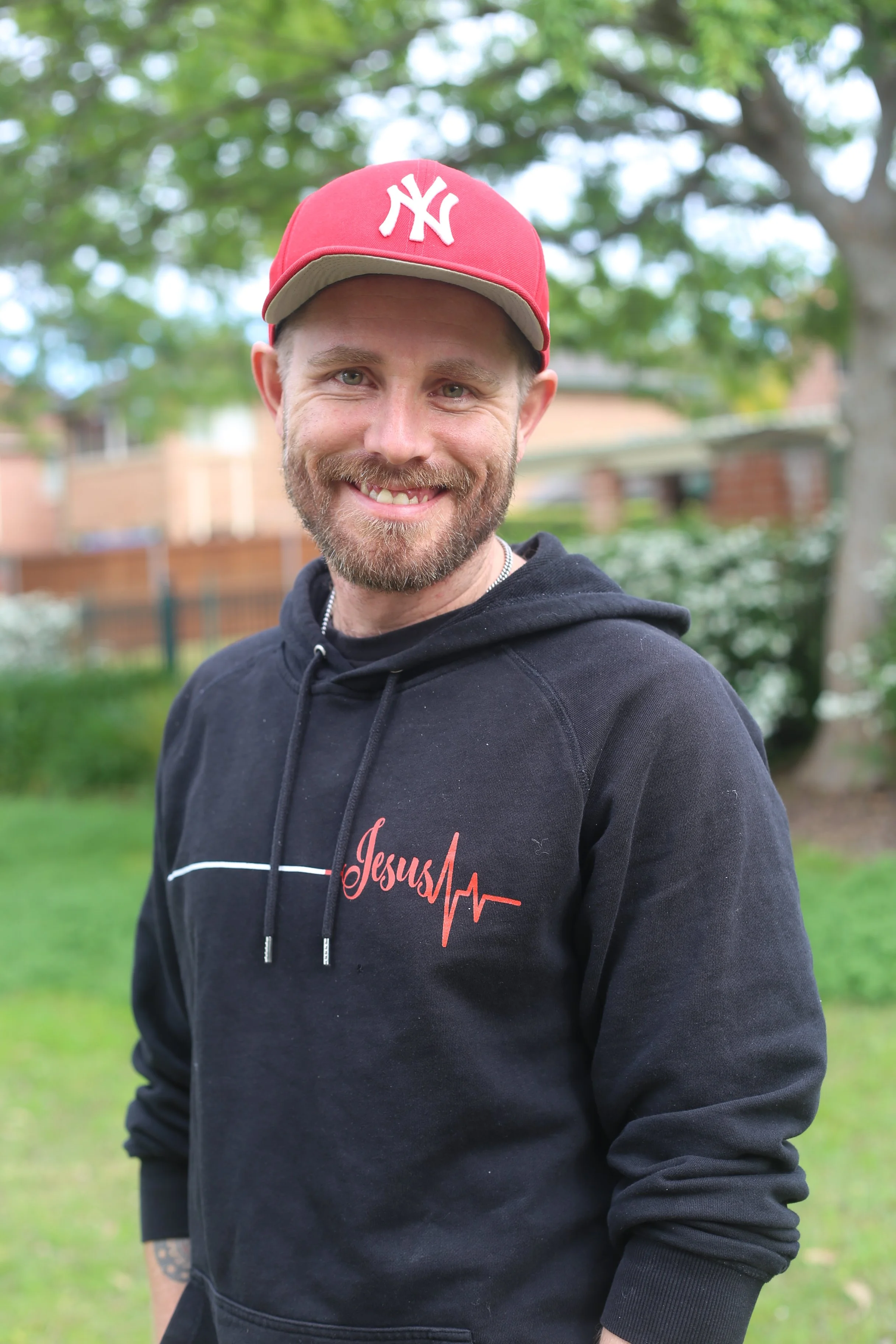
KITTY THOMAS writes dark stories that play with power and have unconventional HEAs. She began publishing in early 2010 with her bestselling COMFORT FOOD and is considered one of the original authors of the dark romance subgenre.
To find out FIRST when a new book comes out, subscribe to Kitty's New Release List: KITTYTHOMAS.COM

Website / Goodreads / Twitter / Book+Main Bites / Bookbub


GIVEAWAY!
a Rafflecopter giveaway

XBTBanner1