Spotlight: The Last of the Seven: A Novel of World War II by Steven Hartov
/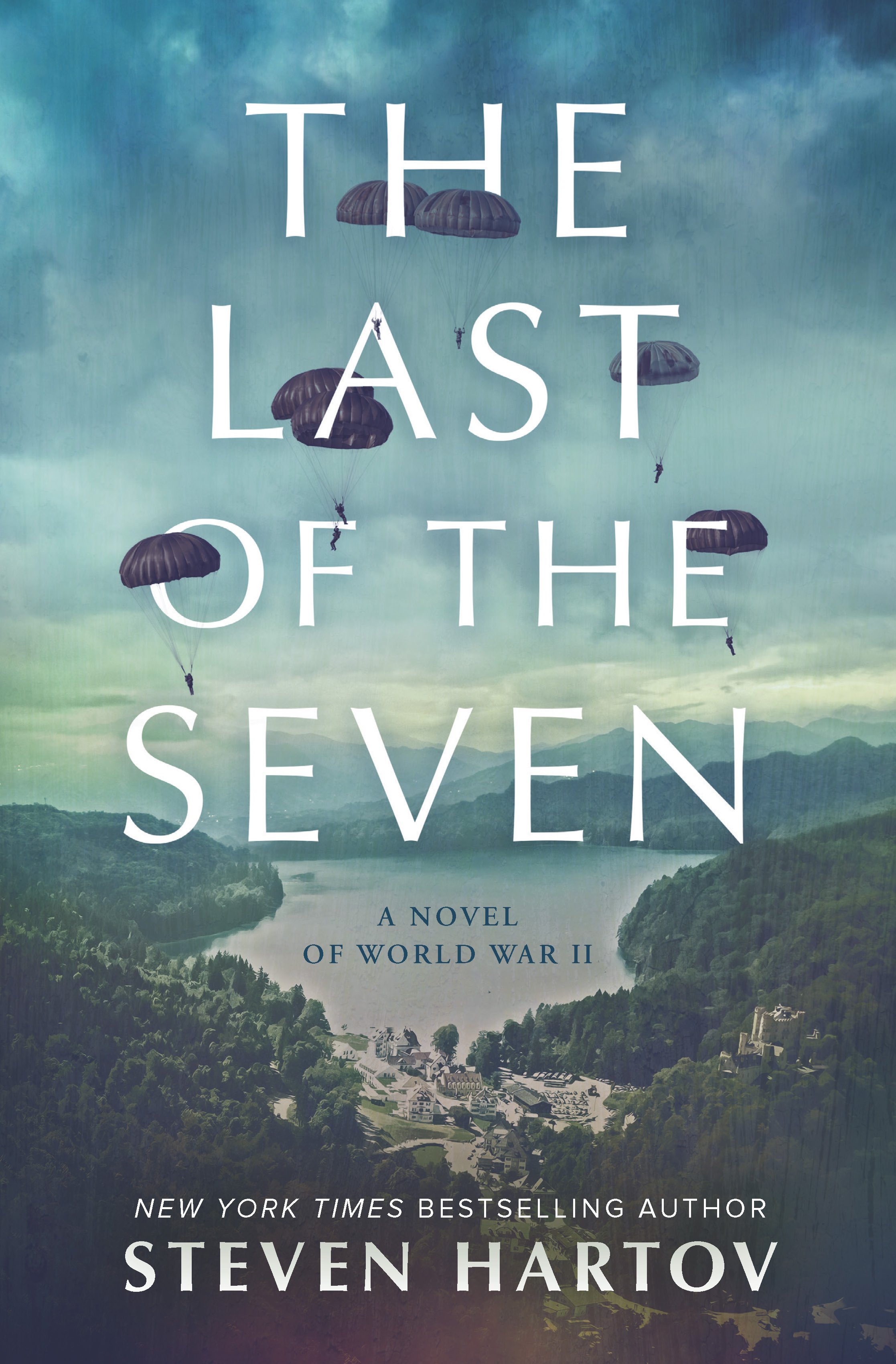
A spellbinding novel of World War II based on the little-known history of the “X Troop” – a team of European Jews who escaped the Continent only to join the British Army and return home to exact their revenge on Hitler's military.
A lone soldier wearing a German uniform stumbles into a British military camp in the North African desert with an incredible story to tell. He is the only survivor of an undercover operation meant to infiltrate a Nazi base, trading on the soldiers’ perfect fluency in German. For this man is not British born but instead a German Jew seeking revenge for the deaths of his family back home in Berlin.
As the Allies advance into Europe, the young lieutenant is brought to Sicily to recover, where he’s recruited by a British major to join to newly formed “X Troop,” a commando unit composed of German and Austrian Jews, training for a top-secret mission at a nearby camp in the Sicilian hills. They are all “lost boys,” driven not by patriotism but by vengeance.
Drawing on meticulous research into this unique group of soldiers, The Seventh Commando is a lyrical, propulsive historical novel perfect for readers of Mark Sullivan, Robert Harris, and Alan Furst.
Excerpt
CHAPTER ONE
North Africa, Spring 1943
In the Sahara, the sun could make a man bleed.
It was hard to believe at first, especially if you’d ever trekked a frigid winter landscape somewhere, boots slogging through alpine snow, limbs shivering and aching bone deep. It was a challenge to imagine it, such a murderous sun, when December memory recalled teeth chattering like a Morse code key, toes and fingers numbed and raw, eyebrows stiff with frost, till all at once that blessed star emerged from charcoal clouds to save the day.
The sun was a holy thing then. The breath of God on your frozen face.
Ah, but in the vastness of that empty desert, when spring fell prey to cruel summer, when the cloudless sky was nothing but a silver mirror, the sand an iron griddle, and there was not a tree or cave or cactus to throw a shadow’s sliver. Nowhere to run from the sun. It was then that heaven’s jewel became a hunting thing, its furnace eye unblinking, merciless, and pounding.
You could shade your skull with a cap, drape your blistered neck with burlap, but still you had to see your path as your squinting eyes filled with flies who’d found the only liquid in the land. The lancing light bounced off the dunes to slowly broil your face, lips turned plaster white and split, and the oils of your nose and cheeks fried patches there like poultry on a spit. And then, the crow’s-feet wrinkles at the corners of your bleary vision turned to brittle parchment, until at last they cracked, and the most unnatural happened…
The man across the dunes was weeping tears of brine and blood. But they were not of sorrow or self-pity, for all of his emotions had hollowed out so many weeks ago. They were simply the last vestiges of all the fluid he had left, squeezed from the ducts by that relentless sun.
He was small there in the distance, and nearly weightless now, though from the way he moved it seemed he wore a yoke of iron. He was no more than an upthrust child’s thumb against the umber sands, shimmering in the steaming light of the fata morgana, an illusion where horizon met the sky.
He wore a Bedouin burnoose, tight about his oily blond curls and rough against his bristled jaw. His German staff sergeant’s tunic was girded with white salt lines of evaporated sweat, a single bandolier of ammunition, and the lanyard of a camel skin water bladder, now shriveled like an ancient’s scrotum, nothing left. One Feldwebel rank was on his collar, his Afrika Korps palm-tree shoulder patch was bleached into a ghost, and in one pocket were two lizard tails he’d chewed from time to time, though all the meat was spent. The right waist of his tunic was punched through with a bullet hole, its fringes black with dried blood, and in the left thigh of his trousers was another one just like it, the reason for his crooked limp.
In his dangling right hand, below a ragged sleeve, he clutched a German MP40 Schmeisser machine pistol, barrel down, its leather strap dragging through the sand. His left hand held nothing, the nut-brown fingers capped with broken nails with which he’d tried and failed to dig some water from the heart of a dying oasis. His breaths rattled like an asthmatic’s, yet he came on, another half an hour, another mile.
A pair of British soldiers from Montgomery’s Eighth Army watched him. They knelt behind a berm of sandbags, Tommy helmets buckled tight, sleeves rolled up and neat, shorts revealing sun-browned thighs above knee socks and tanker’s boots. They were alone, the western guards of a garrison south of Medenine, Tunisia, and they raised their bayoneted Enfield rifles to bear down on the stranger, like twins who often read each other’s minds.
At twenty feet the German sergeant stopped, unmoving, only breathing. The Cockney Tommy on the left aimed the rifle at his chest.
“Drop the bloody Schmeisser.”
The German jolted, as if surprised to hear a voice aside from his own mutterings to himself, unsure if these two Brits were real or cruel mirage. Yet he obeyed, as after all he knew it didn’t matter. The machine pistol was choked with grit and only the first shell would have fired. He opened his fingers and let the gun slip, like the hand of a dying lover, and it fell to the sand and was still.
The Tommy on the right said, “Hände hoch.” Hands up. He was a Scot and it came out as “Handerr hook.”
The German tried, but he couldn’t raise his arms higher than his waist, and his leather palms fluttered there above the sand like a maestro urging his musicians to play the passage pianissimo. His cracked lips formed a trembling “O,” though no sound emerged, and he mouthed Water, and then again—a goldfish with its face pressed to the glass of an aquarium. The Scot, keeping his Enfield trained, pulled a tin canteen from his battle harness.
“Don’t go near him, Robbie,” warned the Tommy on the left.
The Scot pitched the water bottle, cricket-style, where it pinged against a rock before the German’s boots. But the man could hardly bend his wounded leg and leaned in half a fencer’s lunge, snatching the canteen two-handed. He unscrewed the cap and brought it, shaking, to his mouth, and raised his face to heaven as the water gushed into his swollen gullet and dribbled from his filthy beard. His body trembled, and he looked at the two men and said, in nearly perfect British English, “I am not a German.”
The Tommies glanced at one another, then back at their intruder.
“You don’t say, Klaus?” the Cockney said to him.
“Looks like a bleedin’ Jerry to me, Harry,” the Scot growled to his partner.
“He’s bleedin’ all right, mate,” said Harry sideways. “Got a couple of nicks.”
“Nicks?” Robbie snorted. “Coupla hefty caliber holes. Can hardly see `em for the flies.”
Cockney Harry craned his neck to peer beyond the German’s head.
“You all alone, mate?”
“Six others,” the German managed in a brittle whisper.
“Don’t see ’em.”
“All dead.”
“Right,” said Robbie. “And where’d ye come from then?”
The German dropped the canteen. His fingers wouldn’t hold it.
“Borj el-Khadra, by way of Tobruk.”
“Bollocks,” Harry spat. “That’s three hundred miles.” He thrust his buckled chin above the sea of endless dunes. “Across that.”
For a long moment, the trio regarded one another like drunkards sizing up opponents for a brawl. The Tommies watched the German’s hands, for they hadn’t searched him yet, while for his part he struggled to stay upright. Cockney Harry gestured at Robbie the Scot, but only with his head.
“Fire the Very pistol, Robbie. Green flare, not red. Let’s have the captain up here for a chat.”
Aside from Robbie’s flare, which arced into the silver sky and fell to earth somewhere, the trio stayed immobile until at last a throaty engine loomed. A four-wheeled open command car appeared from the north, its peeling fuselage bristling with petrol jerrycans, pickaxes, and Bren light machine guns snouted at the sky. It spewed a cloud of dust as it hove to and an officer dismounted, his captain’s cap stained with sweat, Webley pistol lanyarded to a holster. His left hand tapped a swagger stick against his muscled calf while his right fingers smoothed a short mustache. His large driver followed close, hefting a Thompson submachine gun.
The captain ambled up and stopped, his bloodshot eyes squinting at the strange tableau. Robbie the Scot turned and dipped his helmet brim, but Harry kept his rifle trained, and there were no salutes.
“What’s all this then, lads?” the captain said.
“Captured us an Afrika Korps infiltrator, sir,” said Harry.
“Sneaky desert serpent,” Robbie sneered.
“Good show then.” The captain nodded and scanned the prisoner head to foot. “Right. Summon a firing party.”
Harry turned and looked at his commander.
“Execution, sir?”
“Affirmative, Corporal.” The captain flicked his stick toward a distant rise. “And let’s stake his corpse on that hill. Perhaps it shall keep the other vultures at bay.”
“Yessir,” said the captain’s driver, and he turned back for the car to muster up a firing squad.
The captain wasn’t barbarous, but more than worn and weary, and his men were not quite sure if he was serious or bluffing. In the past few weeks, despite the routing of the Germans in the westward push for Tunisia, spies of every kind had probed his lines, including one Bedouin woman. They were often followed by marauding Stuka fighter-bombers. He’d lost four men, most painfully his major whom he’d buried and replaced, and had a fifth now dying in a tent, legless and weeping for his mother. So much, he thought, for Erwin Rommel’s “Krieg ohne Hass,” war without hate.
“I am not a German.” The intruder spoke again, and his voice spasmed with the effort.
The captain raised his chin. His driver stopped and turned. The prisoner’s accent was British, yet with a certain Berlin curl.
“That’s quite a claim,” the captain said, “given your costume.”
“He told us that shite too, sir,” said Robbie.
“Says he hoofed it from Borj el-Khadra,” Harry said. “By way of Tobruk, no less.”
The captain raised a palm to hush his men and squinted at the prisoner.
“What are you, then?”
The prisoner tried to swallow. The water hadn’t been enough. It would never be enough. His body quaked in feverish ripples now, his ragged clothing fluttering like gosling feathers. It was the proximity of rescue, now turned to sudden death, coupled with his famish, thirst, and wounds.
“SIG,” he said, tunneling in his delirium for the words. “Combined Operations.”
The captain raised an eyebrow. Harry asked him, “What’s ess-eye-gee, sir?”
“Special Interrogation Group.” The captain stroked his mustache corners. “Top secret commando unit, attached to LRDG and SAS. Mostly German Jews, but they were all killed at Tobruk, and that was many months ago.”
“Not I,” the prisoner croaked. His right hand reached into his tunic. The captain fumbled for his Webley and the Tommies’ Enfields stiffened, as the prisoner fetched a pair of British identification disks, one green, one amber, like autumn leaves on a threadbare lanyard, and they fell against his chest.
The captain glanced at them, and at the hollow bearded face again.
“Tobruk, you say. And where’ve you been since then…allegedly?”
“Captured. Escaped a month ago, or two, perhaps, I think.”
“You think.” The captain closed his fists and put them to his garrison belt. “And why, pray tell, if you were in this uniform, were you not executed as a spy? Those are Hitler’s orders, after all.”
“Because I had tea with Erwin Rommel,” the prisoner said, yet without a hint of irony that the German field marshal would have thusly intervened.
“Had a pint meself with Churchill just last week,” the captain’s driver quipped. The Tommies laughed, but the captain didn’t. There was something in the prisoner’s eyes—a sincerity of madness, or truth.
“What’s your name and rank?” he asked.
“Froelich, Bernard, second lieutenant.” He pronounced his given name as “Bern-udd” and his rank as “left-tenant.” Then he added, “Six seven two, four five seven.”
The captain produced a small pad and pencil from his tunic pocket—ink was useless in the desert. He wrote the details down, tore the page off and flicked it over his shoulder for the driver, his eyes never leaving the desperate gleaming blue ones there before him. They were bleeding from the ducts, but he’d seen that once or twice before.
“Sergeant Stafford,” he ordered, “take this to the wireless tent and have Binks get onto Cairo. Tell them we’ll need our answer double quick.”
The driver sped off amidst a cloud of dust, but his return was far from quick. A grueling fifteen minutes passed, while the prisoner teetered on his feet. He could no longer keep his head erect, and he fought to stay awake and straight. He told himself he’d stood this way before, for hours in formations, and he dredged up images of bucolic pleasures, the Danube and the Rhine, and even Galilee. He longed for rain and felt its kisses on his face, while rivulets of something else crawled down his beard and touched the corners of his mouth. But he tasted only brine, and then the armored car returned.
He raised his chin as the driver handed back the paper to the captain, who perused it, then spoke again.
“Lieutenant Froelich, if that’s you,” he said, “do you remember your last passwords?”
“I shall try,” the prisoner whispered as he stumbled through his memory, unsure if he could find the thing to save him from a bullet.
“If I said Rothmans cigarettes,” the captain posed, “what would you say?”
The prisoner’s sunburned brow creased deeply like a cutlass scar.
“I’d tell you I don’t like them, sir…that I fancy Players Navy Cut instead.”
The captain nodded, and offered his first thin smile of the week.
“That is correct.”
And Froelich slumped to his knees in the sand, a collapsed marionette, strings cut. And then he slipped from consciousness and toppled forward, knuckles in the desert, his palms turned up to the sun he hated.
“Fetch a stretcher, lads,” the captain said. “It’s him. He’s the last of them. He’s the seventh.”
Excerpted from My Last of the Seven @ 2022 by Steven Hartov, used with permission by Hanover Square Press.
Buy on Amazon | Audible | Bookshop.org
About the Author:
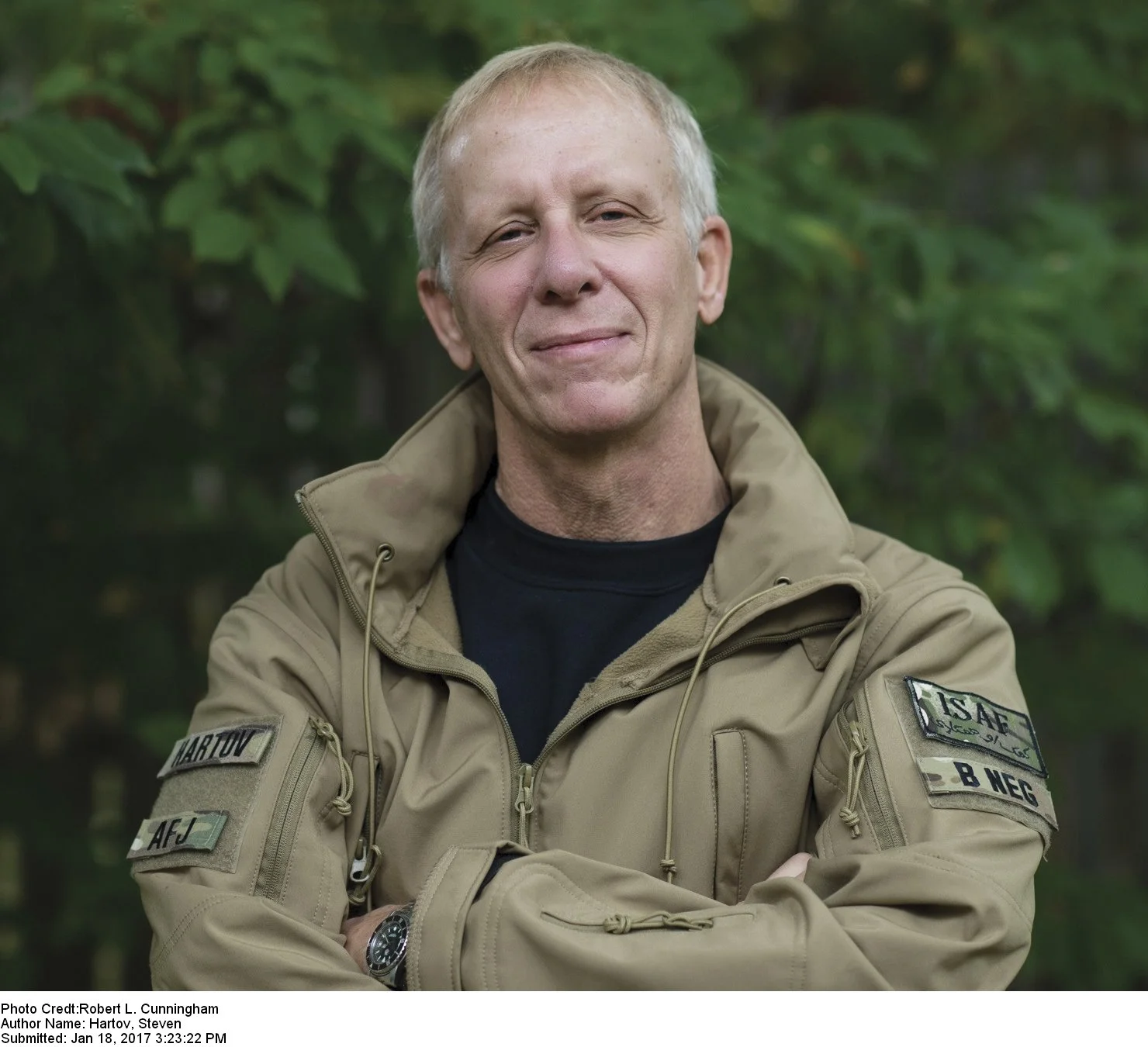
Steven Hartov is the coauthor of the New York Times bestseller In the Company of Heroes, as well as The Night Stalkers and Afghanistan on the Bounce. For six years he served as Editor-in-Chief of Special Operations Report. He has appeared on CNN, MSNBC, CNBC, FOX, and most recently the History Channel's Secret Armies. A former Merchant Marine sailor, Israeli Defense Forces paratrooper and special operator, he is currently a Task Force Commander in the New York Guard. He lives in New Jersey
Connect:
Author website: https://stevenhartov.com/
Facebook: https://www.facebook.com/StevenHartovAuthor
Twitter: https://twitter.com/Steven_Hartov