Spotlight: The Make Out Artist by Sara Ney

Release Date: August 9

From USA TODAY Bestselling Author Sara Ney comes a new series about strong, single girls falling in love: accidentally.

Love finds you when you least expect it.

That’s what my nan always said. Love? I wasn’t looking for it so how will I know when I’ve found it? I’m not romantic like she was—I’m realistic and practical. Quick with my wits and hilarious when I’m in the mood, it’ll take more than a handsome face to win my affection.

Speaking of handsome faces—Elias Cohen is nothing special (no offense); smug, arrogant. Too flirtatious for his own good.

He won't charm me with that crooked smile and dimple in his chin.

When Elias comes knocking on my office door during a house party after I play wingman for a friend, I'm tempted to slam the door in his face. But I don't.

Because If there's one thing I am, it's curious.

And wouldn’t you know it—Elias needs a favor. Begs for one, actually.

He might not be able to make me swoon, but he does need a wingwoman.

Buy on Amazon

Meet Sara Ney:

Sara Ney is the USA Today Bestselling Author of the How to Date a Douchebag series, and is best known for her sexy, laugh-out-loud New Adult romances. Among her favorite vices, she includes: iced latte's, historical architecture and well-placed sarcasm. She lives in the Midwest, collects vintage books, art, loves flea markets, and fancies herself British. For a list of cities/venues Sara will be signing at, or to purchase signed books, please visit her website at www.authorsaraney.com

Connect with Sara Ney:

Newsletter: subscribepage.com/saraney 

Facebook: saraneyauthor

Instagram: saraneyauthor

Book+Main: bit.ly/BookBitesSaraNey

Pinterest: Sara Ney

Goodreads: bit.ly/SaraNeyGoodReads

BookBub: bit.ly/SaraNeyBBauthor

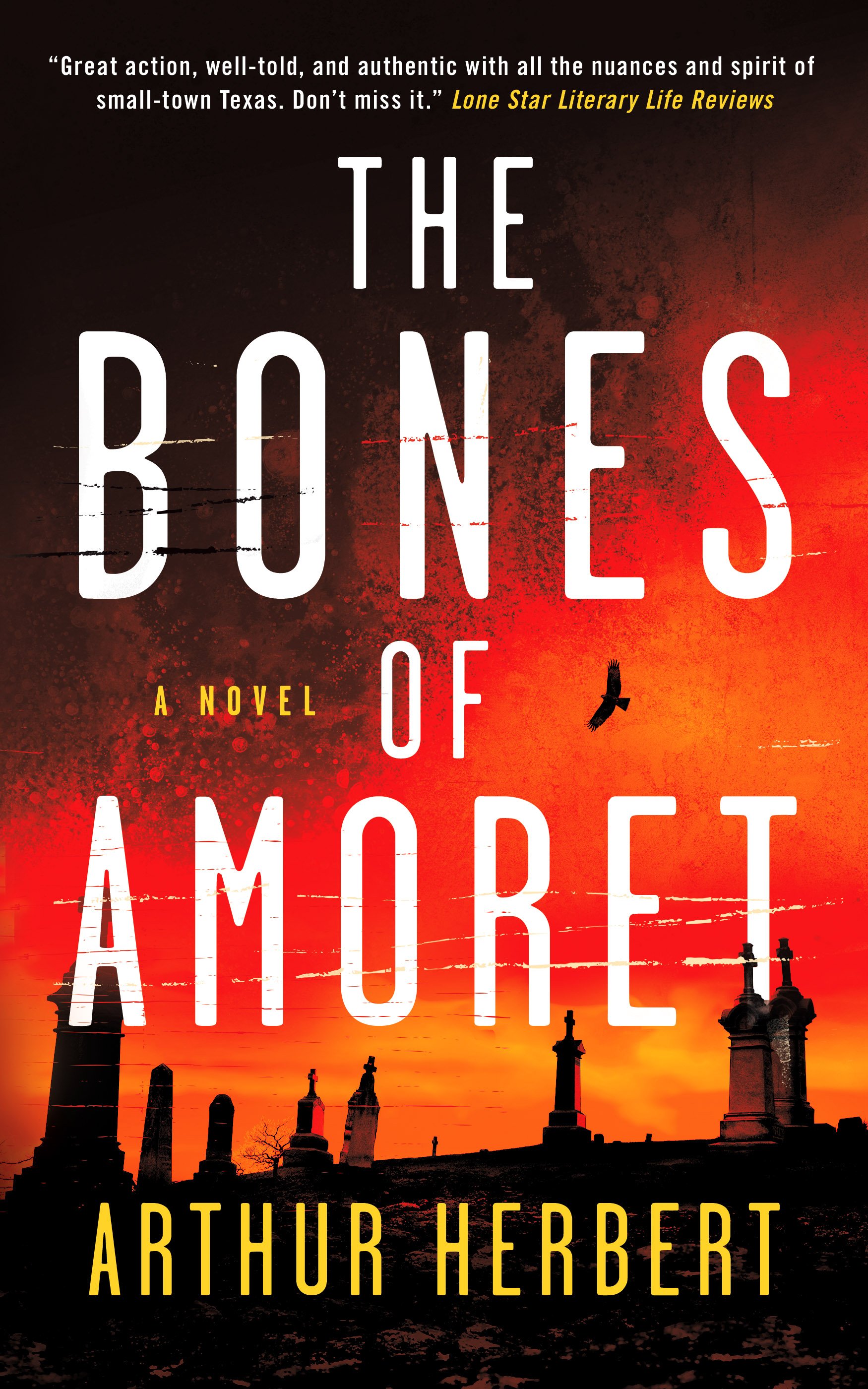
Spotlight: The Bones of Amoret by Arthur Herbert

Mystery

Date Published: April 1, 2022

Publisher: Stitched Smile Publications

In this enigmatic follow up to his critically acclaimed debut novel The Cuts that Cure, Arthur Herbert returns to the Texas-Mexico border with this chilling mystery set amidst a small town’s bloody loss of innocence.

Amoret, Texas, 1982. Life along the border is harsh, but in a world where cultures work together to carve a living from the desert landscape, Blaine Beckett lives a life of isolation. A transplanted Boston intellectual, for twenty years locals have viewed him as a snob, a misanthrope, an outsider. He seems content to stand apart until one night when he vanishes into thin air amid signs of foul play.

Noah Grady, the town doctor, is a charming and popular good ol’ boy. He’s also a keeper of secrets, both the town’s and his own. He watches from afar as the mystery of Blaine’s disappearance unravels and rumors fly. Were the incipient cartels responsible? Was it a local with a grudge? Or did Blaine himself orchestrate his own disappearance? Then the unthinkable happens, and Noah begins to realize he’s considered a suspect.

Paced like a lit fuse and full of dizzying plot twists, The Bones of Amoret is a riveting whodunit that will keep you guessing all the way to its shocking conclusion.

Excerpt

Chapter 1

The day Blaine Beckett went missing, the day that started off the whole sordid, miserable chain reaction of events to follow, started off so peacefully you'd have been forgiven for thinking it was an omen for good things, that God wouldn't allow anything to go wrong on a day that had such a beautiful start to it. It was a Monday and I'd had to clear my clinic schedule to see to the day's work. I rose well before the sun and went about getting dressed and making coffee as quietly as I could to let Angelica and Miguel sleep. 

Before Jimmy Wayne came to pick me up, I checked on the national news, not long enough even to sit down. I turned the volume so low I had to lean in to hear just two feet from the set. It was all over the television that somebody in Chicago had poisoned bunches of batches of Tylenol, killing a handful of people up there and now folks around the country were wetting the bed about it. That was one of the nice things about our little west Texas town back then in ‘82, things like that seemed far away, otherworldly from our home in the high desert hills. 

My dogs trailed me onto the front porch, keeping me company while I waited. The two mutts would have been, let's see, about three years old at the time. Sonny Fitzgerald owned a scrap metal yard in town— later on, that'll come into the story I'm fixing to tell you— and he'd found a couple of pups beneath a clunker's chassis one morning, as bony as the metal skeleton they were huddled under. Their mama was nowhere to be found and the poor things were starving. His first instinct when he heard their pitiful mewling was to put them down right there on the spot, but something made him stop short and call me instead. One I called Rope Tail, and he grew up lovable but dumb. If brains were hog lard you couldn't have used his to grease a big skillet. But his sister, a brindle I named Maybelline, well, she was special. Thirty-eight pounds of grade-A badass and smart as a whip. Rope Tail would go on to disappear one day in '87. Coyotes got him, I suspect. Maybelline, though, lived to a ripe old age. I miss ‘em both, but her more.

Out on the porch, I took in a lungful of the crisp night air. That deep, cleansing breath would have sent me into a coughing fit a few months prior, but it invigorated me that morning since I'd walked away from the cancer-stick habit two months before on my forty-fourth birthday. 

In my rocking chair, I sipped coffee while Rope Tail dozed with his chin on my boot, his cheeks sucking in and billowing out in a sleepy cadence. Off to my right, high in the night sky a ring of stage lights lit up a water tower with the name "AMORET" painted on the tank's gunmetal-gray plates in a looping cursive, like the title sequence in a black and white movie.

It was still dark when Jimmy Wayne Hickerson pulled up to my curb in our custom panel truck. In our teens his features had been more pretty than handsome, with long lashes that made girls swoon. But a lifetime in the desert winds had carved lines in his once-delicate face. Jimmy Wayne was an interesting man. He lived his years convinced the moon landing had been faked but alien abductions were real. 

"Mornin' Doc."

"Mornin'."

"You ready?" 

"I been ready." 

I poured him a coffee to go while he twirled the key chain around his finger, then we loaded up and headed through the empty streets toward Shy Mike's place. We’d put a rebuilt engine in the truck two months before— the old motor couldn’t outrun a fat man— and Jimmy Wayne was still getting to know it, babying it along through the darkness. We'd made that run many times, so I didn't have to remind him to take the long way, skirting the edges where town met the wide expanse of the caldera and the sweep of our headlights picked up scrub brush and boulders.

Say, ma’am, do you have enough tapes for that little recorder of yours? Telling this'll take a while. Really? "Digital"? Can I see it for a second? 

Well, signs and wonders, isn't that something. Man lives to be eighty-four years old, you get to thinking you've seen it all, then something else comes along to prove you wrong.

I have to admit I was surprised when you called from that El Paso newspaper wanting to write something about the fortieth anniversary of all that sadness we had with the Becketts. Lord, forty years. Seems like it was yesterday. 

I guess I can understand why you’d want to talk to me, hip-deep in all that business as I was. Plus, I think it’s fair to say I’ve lived a life more interesting than most. I practiced medicine here in Amoret for forty-two years, even making house calls until around the time they got bin Laden. And I watched the border change from a peaceful hunk of desert where people got along, saying live and let live, into the goddamn war zone it is now.

I know you didn't come here to talk about this, but I got shot down once in Viet Nam when the Huey I was riding in took a round to the rotor. Another time when I was taking a trail to Bien Thoc through what was supposed to be safe territory, I stopped to answer nature's call when three VC passed by within twenty feet of where I was squatting against a tree. There was the time it fell to me to bag up the remains of a Buddhist monk after he immolated himself to protest the war, and I delivered three hundred and sixteen babies into this world. Most of ‘em brown or yellow, but still. Should you have a mind to hear any of those stories after we're through talking about Amoret and the Becketts, just say so. 

Shit, where was I? My mind wanders so. If you really want to write down this story for your paper like you say, you're gonna have to get used to my digressions, which you'll soon enough come to see is another word for my bullshit.

Pulling up to Shy Mike Culverson's trailer, we parked next to an umbrella clothesline and tapped the horn, letting the truck idle to keep the cab warm against the mild October chill. He appeared in the doorway, yawning as he tilted his mesh ball cap back and scratched his shaggy widow's peak. A simple man, Shy Mike was uneducated but smart, unread but capable, and so honest you could play poker with him over the phone. 

Audra, his pear-shaped wife, stood just inside, a fuzzy-at-the-edges grayed-out shape behind the mesh screen door. Squinting against the glare of the headlights, she clutched her terry cloth robe closed at the neck and poked her head out, turtle-like, to hand him a plaid thermos and give him a kiss before waving at Jimmy Wayne and me with a smile. 

Clutching the handrail, Shy Mike threw a long shadow as he eased his way down the three plank steps, lowering his gimp leg with its immobile knee onto the step below before hitching his weight down on his good leg. Despite only being in his late thirties, he hobbled like an old man. It'd been a decade since he had a promising career as a professional bull rider cut short at a rodeo in Broken Bow, Oklahoma, when his spur got tangled in a flank strap as he was bucked off, leaving him tethered to the enraged animal by one heel and turning his knee into a swivel. 

"It was like bein' in the middle of a goddamn blender," he told me afterward as he lay in his hospital bed recuperating from his first surgery. It took only seven seconds for the rodeo clowns to cut him loose— I timed it once, years later when I discovered a video of the ride— but it seemed an eternity watching it in real time. Despite three surgeries the leg never healed right. He was stoic about it, though, I'll give him that. Accepting, even.

We waited patiently while he hoisted himself onto the running board and dropped onto the bench seat next to me. Then he swiveled his bum leg in, fussing with it until he got it situated, like a mother smoothing down her boy’s cowlick for a picture. 

"Mornin', Jimmy Wayne. Doc." We nodded back as he placed a pinch of tobacco in his lip and poured coffee into the thermos’ screw-top cup. 

"Trade you a spit cup for a pinch," Jimmy Wayne said, pointing to a styrofoam cup in the holder. Wordlessly, Shy Mike passed the tin across and both men took turns sipping coffee with one hand and spitting tobacco juice in the community cup with the other. The thought of what that must have tasted like always made me grimace.

"Eleven souls. I got that right?" Shy Mike asked.

"Yup."

"Motel got set up okay?" he asked as he looked out his window at the vastness of the barial stretching off to the dark horizon. This was more to make conversation. We all knew we wouldn't have gotten this far if the motel hadn't been set up okay.

The first of the day's light crept up as Jimmy Wayne pointed the rig due south down a fifty-mile stretch of two-lane asphalt between Marfa and the Rio Grande that was as desolate then as it is now. That piece of the Chihuahua Desert was a bad place to get in trouble— back then, the staties didn't mandate a trooper drive it twice a day looking for folks in distress like they do these days— but that didn't detract from its wild beauty. 

If you had a mind to pull over and get out to walk the chapparal, wandering among the yucca with their delicate white blossoms and the nopal cactus with their fat, fleshy leaves; the spiny sotol bushes, the caprock mesas and limestone shelves and stands of cotton wood trees, you didn't have to go far to realize you were looking at the same view the Comanches had back when. I can't speak for others, but it never failed to give me a reverent feeling. I'd already seen my share of man's inhumanity to man by then in my life— and trust me, I'm going to tell you about more— but that pristine desert landscape always seemed to cancel all that out. At least it did for me. Still does. 

An hour later, the highway ended in a dusty "T" at an isolated spot facing the Rio Grande. Along the shoreline, thick bulrushes framed the pretty green-grey water as it runs whenever the country out here’s been a week or more without rain. While showers are always welcome ‘round these parts, they turn the river water a swollen, ugly brown for a while. But on that morning, there were ripples visible over the gravel sand bars. Long beards of slimy rock moss waved gently in the current, and the sunlight glinted off the water like someone’d spilled a new bag of nickels across the surface.

I'd have liked to take a minute, but my companions weren’t contemplative men. Jimmy Wayne barely slowed the panel truck as he took a left to follow 170 as it paralleled the river, so close we never lost sight of it.

Shortly, we topped a rise and got our first glimpse of the Chisos Mountains squatting low on the horizon, a sight we used as our landmark. Jimmy Wayne checked his mirrors as he decelerated, then pulled onto the shoulder at the highway's crest. He killed the engine and got out to stretch before popping the hood. Softly whistling, he propped it with the folding support rod from the engine compartment's liner. The hot motor ticked as it cooled. 

Shy Mike fetched the binoculars from the glove box and tossed the strap around his neck where they swung like a pendulum as he swiveled and did his little hop-step to reclaim the ground. He exhaled a fog onto the lenses and wiped them with the tail of his shirt as he hobbled around the front of the truck and straddled the solid yellow stripes. 

That spot had a view of the road for a mile and a half in both directions, the reason it’d been chosen. Shy Mike glassed the empty highway, then lowered the binoculars and spat. Wiping his chin with his Carhartt jacket's sleeve, he looked at Jimmy Wayne and me across the open engine compartment and nodded. 

I walked to the shoulder's edge where it dropped off to a short escarpment thick with bristly, crimson-flowered ocotillo. Nature's sounds crept out like they'd been in hiding: the burbling of the river at the end of the declivity, the trilling and chirring of insects in the thick vegetation, the breeze rustling through the cane, the sound of grit when Jimmy Wayne's boots turned on concrete. 

Wetting my lips, I made an "OK" sign with my left hand and tucked my lips over my teeth. Pushing my tongue back, I emitted a commanding whistle toward the river, strong and clear, rising in inflection at the end. It pierced the desert air, cutting across the pale river plain before echoing off a shale bluff a few hundred yards away.

Nothing moved. The scene below us lay still as a portrait for a moment, and I felt a brief rumble of concern before I caught movement to my left. A young Mexican, short and muscular, stood up from behind a dense huddle of creosote bush fifty yards away and shifted his light backpack before waving. His toothy grin shone through a thick beard, causing me to smile. 

He said something over his shoulder, and suddenly the underbrush was alive with activity. Young men and women, all brown-skinned with dirty work clothes and exhausted, pensive faces stood up from hiding places among the desert scrub. I did a quick head count: eleven, not counting my bearded friend Chebo.

"Venga, venga," Chebo urged the group onward, up through the thicket toward the asphalt, twelve miles of hard yards coming to an end. After walking through the night, they looked numb from fear and fatigue. 

They fell in single file behind their guide. Chebo picked his way forward along a serpentine path through the thicket, generating a steady stream of inaudible chatter. 

While most of the group trudged behind Chebo with their heads down and mindful of their footing, the last person in line shuffled along staring in our direction, not looking where she was going. A slight woman, she appeared dazed, and as the rest of the group advanced, she lagged behind with her head up and eyes locked on the truck. Zombie-like, she scuffed her feet forward, arms dangling limply by her sides until she stumbled on the uneven ground and fell to her knees. She managed to get to her feet, but once upright her eyes stayed fixed on the vehicle like a lost sailor who’d suddenly located the North Star. Then, unnoticed by the group, she inexplicably peeled off at a tangent from their path, blazing her own trail through the underbrush on a beeline for the truck. 

Her track took her ten feet from the group's conga line, then fifteen, then twenty. The brambles on her path became thicker. She tried to push through, eyes still up and unwavering as she willed herself forward, throwing one foot in front of the other with a shambling, Frankenstein gait. 

The thorny vines clawed and scratched at her, yet she still churned forward robotically until eventually the underbrush won out. When the scrub became an impassable wall, she seemed to realize her predicament, but by that point her exhausted body and mind failed her. Unable to go forward, too fatigued to turn back, she went limp, without even the reserves to call for help, the sharp vines suspending her like a marionette. 

I shouted at her, "¡No se muevea, no se muevea! ¡Le voy a ayudar!" Chebo had almost reached the highway’s asphalt when he heard me, and for the first time turned to see the straggler. I waved him off and made my way down the slope, then when the thorny scrub got too thick, faced backwards and folded my arms to push through to reach her. 

Up close she seemed brittle, with buck teeth and wiry hair, pipe cleaner arms and sandals held together by duct tape. As I stripped away the brambles, her scratched face and glassy eyes drifted toward me, then turned back to rest on the matted spikey runners, unable to help me help her. I felt like I was releasing a rabbit from a snare. 

Once I had her free, I hoisted her and pulled her in close to shield her bony frame as best I could, then waded backward up the slope as thorns clawed at me. Eventually the spiked vines thinned, and I could face forward again before taking the last few steps onto the pavement at a trot and gently depositing her on her feet. She stood stock still for a few moments, then shambled in the direction of the truck once again without acknowledging me. I followed, picking thorns from my hands and sucking at the worst of the scratches.

The rest of the immigrants surrounded Jimmy Wayne at the back of the truck. He rolled up the cargo bay's sliding door and gestured with a smile toward two large coolers bungeed to the floor. "Tenemos comida y agua aqui amigos. No se preocupen, todo va a estar bien." Shy Mike continued watching the highway for any last-minute approaching vehicles.

Chebo approached me with a look of concern, thrusting his chin in the young girl's direction. “She okay?”

I shrugged. "Dunno yet, she's pretty loopy right now. Probably just dehydrated. I'll give her a good once-over at the motel."

"That's going to have to wait," Chebo said. "I need you to come with me back onto the trail a few miles." He reached into the cargo bay where we kept supplies and rummaged.

"I thought there were eleven today?"

Without looking back at me, he said, "There were. Are."

"So what's going on?"

"I’ll tell you on the way." He pulled two bottles of water, some candy bars, then a collapsible stretcher from the stack of supplies. "Trust me, we need to get moving."

I shrugged. "Fair enough.” I called out to Shy Mike and Jimmy Wayne as they loaded up the group, “Chebo says me and him gotta head back up the trail for something. Y'all get these folks to the motel. Do me a favor and really push the fluids on that señorita I had to fish outta the thicket, would you? Once y'all dropped everybody off and got 'em settled, head back in this direction and wait for us right here."

They nodded and turned away as Chebo and I set off back into that lawless landscape.

Forty-five minutes later, we stood over the object of Chebo's concern. At the bottom of a limestone bluff on a broad wash of gravel lay an unconscious Mexican. With a thin beard and shaved head, he sported a tattoo of a spider web on the left side of his scalp that, under normal circumstances, would have made him appear menacing. At that moment, though, with his lips cracked and tongue swollen, his blistered face appeared vulnerable, almost pathetic. The severity of his sunburn made his age difficult to guess, but I put him in his mid-twenties.

The man's slight frame gave the illusion the massive pack on his back wore him rather than the other way around. I put him at about one hundred forty pounds, while the enormous pack must have weighed sixty. I didn't see any water on him.

It looked clear what had happened. Too much weight. Not enough water. Too much desert.

Shaking my head, I squatted and unzipped the pack's top compartment, knowing what I'd find. Under the nylon flap, crammed to the gills, lay packet after packet of white powder, bound in cellophane and duct-taped into kilos. 

Buy on Amazon | Audible

About the Author

Arthur Herbert was born and raised in small town Texas. He worked on offshore oil rigs, as a bartender, a landscaper at a trailer park, and as a social worker before going to medical school. For the last eighteen years, he’s worked as a trauma and burn surgeon, operating on all ages of injured patients. He continues to run a thriving practice in New Orleans where he lives with his wife Amy and their dogs.

Connect:

Website: https://www.arthurherbertwriter.com/

Facebook: https://www.facebook.com/arthurherbertwriter/

Twitter: @herbertwriter

Bookbub: https://www.bookbub.com/authors/arthur-herbert

Goodreads: https://www.goodreads.com/author/show/21331258.Arthur_Herbert

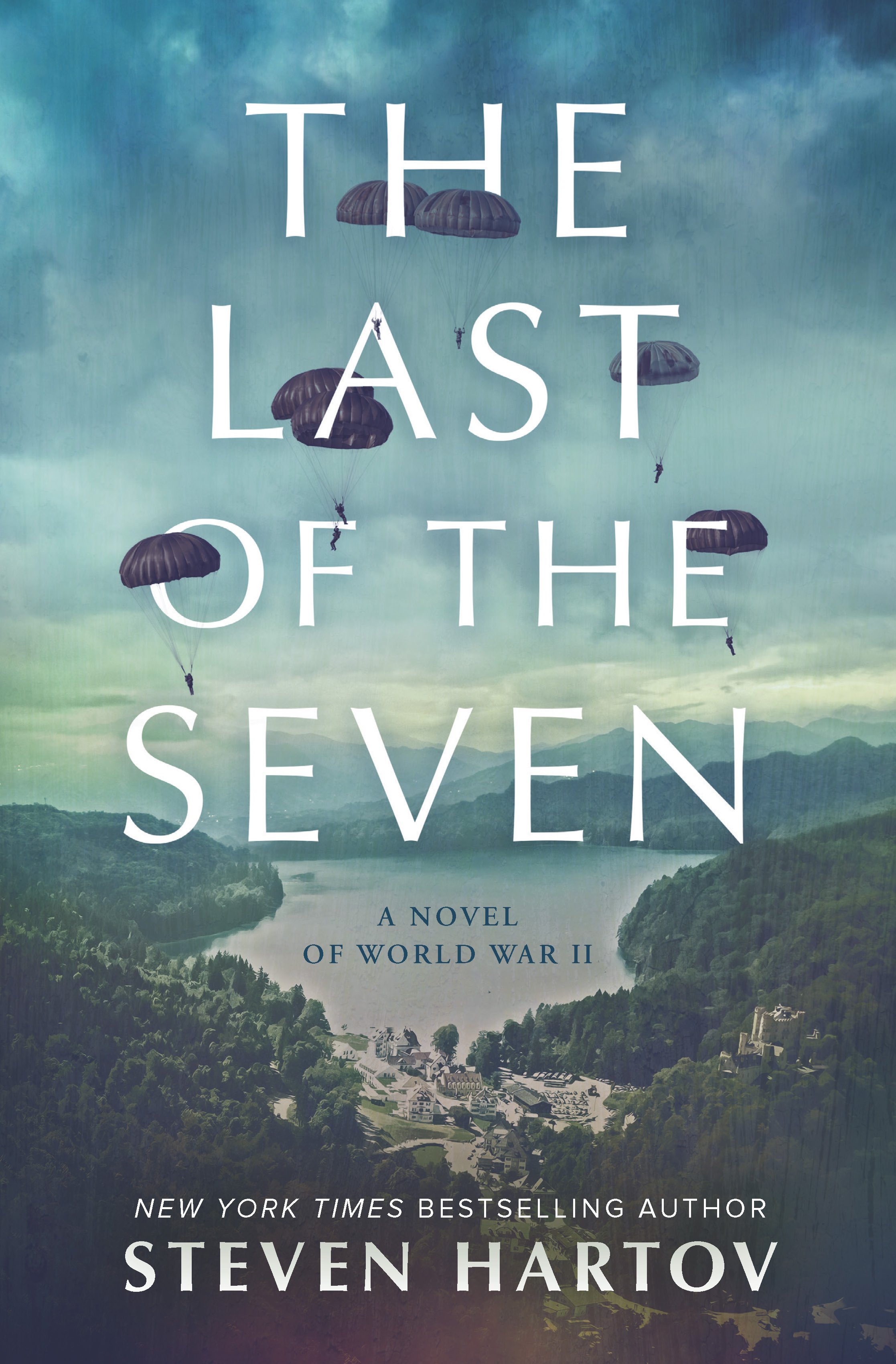
Spotlight: The Last of the Seven: A Novel of World War II by Steven Hartov

A spellbinding novel of World War II based on the little-known history of the “X Troop” – a team of European Jews who escaped the Continent only to join the British Army and return home to exact their revenge on Hitler's military.

A lone soldier wearing a German uniform stumbles into a British military camp in the North African desert with an incredible story to tell. He is the only survivor of an undercover operation meant to infiltrate a Nazi base, trading on the soldiers’ perfect fluency in German. For this man is not British born but instead a German Jew seeking revenge for the deaths of his family back home in Berlin.

As the Allies advance into Europe, the young lieutenant is brought to Sicily to recover, where he’s recruited by a British major to join to newly formed “X Troop,” a commando unit composed of German and Austrian Jews, training for a top-secret mission at a nearby camp in the Sicilian hills. They are all “lost boys,” driven not by patriotism but by vengeance.

Drawing on meticulous research into this unique group of soldiers, The Seventh Commando is a lyrical, propulsive historical novel perfect for readers of Mark Sullivan, Robert Harris, and Alan Furst.

Excerpt

CHAPTER ONE

North Africa, Spring 1943

In the Sahara, the sun could make a man bleed.

It was hard to believe at first, especially if you’d ever trekked a frigid winter landscape somewhere, boots slogging through alpine snow, limbs shivering and aching bone deep. It was a challenge to imagine it, such a murderous sun, when December memory recalled teeth chattering like a Morse code key, toes and fingers numbed and raw, eyebrows stiff with frost, till all at once that blessed star emerged from charcoal clouds to save the day.

The sun was a holy thing then. The breath of God on your frozen face.

Ah, but in the vastness of that empty desert, when spring fell prey to cruel summer, when the cloudless sky was nothing but a silver mirror, the sand an iron griddle, and there was not a tree or cave or cactus to throw a shadow’s sliver. Nowhere to run from the sun. It was then that heaven’s jewel became a hunting thing, its furnace eye unblinking, merciless, and pounding.

You could shade your skull with a cap, drape your blistered neck with burlap, but still you had to see your path as your squinting eyes filled with flies who’d found the only liquid in the land. The lancing light bounced off the dunes to slowly broil your face, lips turned plaster white and split, and the oils of your nose and cheeks fried patches there like poultry on a spit. And then, the crow’s-feet wrinkles at the corners of your bleary vision turned to brittle parchment, until at last they cracked, and the most unnatural happened…

The man across the dunes was weeping tears of brine and blood. But they were not of sorrow or self-pity, for all of his emotions had hollowed out so many weeks ago. They were simply the last vestiges of all the fluid he had left, squeezed from the ducts by that relentless sun.

He was small there in the distance, and nearly weightless now, though from the way he moved it seemed he wore a yoke of iron. He was no more than an upthrust child’s thumb against the umber sands, shimmering in the steaming light of the fata morgana, an illusion where horizon met the sky.

He wore a Bedouin burnoose, tight about his oily blond curls and rough against his bristled jaw. His German staff sergeant’s tunic was girded with white salt lines of evaporated sweat, a single bandolier of ammunition, and the lanyard of a camel skin water bladder, now shriveled like an ancient’s scrotum, nothing left. One Feldwebel rank was on his collar, his Afrika Korps palm-tree shoulder patch was bleached into a ghost, and in one pocket were two lizard tails he’d chewed from time to time, though all the meat was spent. The right waist of his tunic was punched through with a bullet hole, its fringes black with dried blood, and in the left thigh of his trousers was another one just like it, the reason for his crooked limp.

In his dangling right hand, below a ragged sleeve, he clutched a German MP40 Schmeisser machine pistol, barrel down, its leather strap dragging through the sand. His left hand held nothing, the nut-brown fingers capped with broken nails with which he’d tried and failed to dig some water from the heart of a dying oasis. His breaths rattled like an asthmatic’s, yet he came on, another half an hour, another mile.

A pair of British soldiers from Montgomery’s Eighth Army watched him. They knelt behind a berm of sandbags, Tommy helmets buckled tight, sleeves rolled up and neat, shorts revealing sun-browned thighs above knee socks and tanker’s boots. They were alone, the western guards of a garrison south of Medenine, Tunisia, and they raised their bayoneted Enfield rifles to bear down on the stranger, like twins who often read each other’s minds.

At twenty feet the German sergeant stopped, unmoving, only breathing. The Cockney Tommy on the left aimed the rifle at his chest.

“Drop the bloody Schmeisser.”

The German jolted, as if surprised to hear a voice aside from his own mutterings to himself, unsure if these two Brits were real or cruel mirage. Yet he obeyed, as after all he knew it didn’t matter. The machine pistol was choked with grit and only the first shell would have fired. He opened his fingers and let the gun slip, like the hand of a dying lover, and it fell to the sand and was still.

The Tommy on the right said, “Hände hoch.” Hands up. He was a Scot and it came out as “Handerr hook.”

The German tried, but he couldn’t raise his arms higher than his waist, and his leather palms fluttered there above the sand like a maestro urging his musicians to play the passage pianissimo. His cracked lips formed a trembling “O,” though no sound emerged, and he mouthed Water, and then again—a goldfish with its face pressed to the glass of an aquarium. The Scot, keeping his Enfield trained, pulled a tin canteen from his battle harness.

“Don’t go near him, Robbie,” warned the Tommy on the left.

The Scot pitched the water bottle, cricket-style, where it pinged against a rock before the German’s boots. But the man could hardly bend his wounded leg and leaned in half a fencer’s lunge, snatching the canteen two-handed. He unscrewed the cap and brought it, shaking, to his mouth, and raised his face to heaven as the water gushed into his swollen gullet and dribbled from his filthy beard. His body trembled, and he looked at the two men and said, in nearly perfect British English, “I am not a German.”

The Tommies glanced at one another, then back at their intruder.

“You don’t say, Klaus?” the Cockney said to him.

“Looks like a bleedin’ Jerry to me, Harry,” the Scot growled to his partner.

“He’s bleedin’ all right, mate,” said Harry sideways. “Got a couple of nicks.”

“Nicks?” Robbie snorted. “Coupla hefty caliber holes. Can hardly see `em for the flies.”

Cockney Harry craned his neck to peer beyond the German’s head.

“You all alone, mate?”

“Six others,” the German managed in a brittle whisper.

“Don’t see ’em.”

“All dead.”

“Right,” said Robbie. “And where’d ye come from then?”

The German dropped the canteen. His fingers wouldn’t hold it.

“Borj el-Khadra, by way of Tobruk.”

“Bollocks,” Harry spat. “That’s three hundred miles.” He thrust his buckled chin above the sea of endless dunes. “Across that.”

For a long moment, the trio regarded one another like drunkards sizing up opponents for a brawl. The Tommies watched the German’s hands, for they hadn’t searched him yet, while for his part he struggled to stay upright. Cockney Harry gestured at Robbie the Scot, but only with his head.

“Fire the Very pistol, Robbie. Green flare, not red. Let’s have the captain up here for a chat.”

Aside from Robbie’s flare, which arced into the silver sky and fell to earth somewhere, the trio stayed immobile until at last a throaty engine loomed. A four-wheeled open command car appeared from the north, its peeling fuselage bristling with petrol jerrycans, pickaxes, and Bren light machine guns snouted at the sky. It spewed a cloud of dust as it hove to and an officer dismounted, his captain’s cap stained with sweat, Webley pistol lanyarded to a holster. His left hand tapped a swagger stick against his muscled calf while his right fingers smoothed a short mustache. His large driver followed close, hefting a Thompson submachine gun.

The captain ambled up and stopped, his bloodshot eyes squinting at the strange tableau. Robbie the Scot turned and dipped his helmet brim, but Harry kept his rifle trained, and there were no salutes.

“What’s all this then, lads?” the captain said.

“Captured us an Afrika Korps infiltrator, sir,” said Harry.

“Sneaky desert serpent,” Robbie sneered.

“Good show then.” The captain nodded and scanned the prisoner head to foot. “Right. Summon a firing party.”

Harry turned and looked at his commander.

“Execution, sir?”

“Affirmative, Corporal.” The captain flicked his stick toward a distant rise. “And let’s stake his corpse on that hill. Perhaps it shall keep the other vultures at bay.”

“Yessir,” said the captain’s driver, and he turned back for the car to muster up a firing squad.

The captain wasn’t barbarous, but more than worn and weary, and his men were not quite sure if he was serious or bluffing. In the past few weeks, despite the routing of the Germans in the westward push for Tunisia, spies of every kind had probed his lines, including one Bedouin woman. They were often followed by marauding Stuka fighter-bombers. He’d lost four men, most painfully his major whom he’d buried and replaced, and had a fifth now dying in a tent, legless and weeping for his mother. So much, he thought, for Erwin Rommel’s “Krieg ohne Hass,” war without hate.

“I am not a German.” The intruder spoke again, and his voice spasmed with the effort.

The captain raised his chin. His driver stopped and turned. The prisoner’s accent was British, yet with a certain Berlin curl.

“That’s quite a claim,” the captain said, “given your costume.”

“He told us that shite too, sir,” said Robbie.

“Says he hoofed it from Borj el-Khadra,” Harry said. “By way of Tobruk, no less.”

The captain raised a palm to hush his men and squinted at the prisoner.

“What are you, then?”

The prisoner tried to swallow. The water hadn’t been enough. It would never be enough. His body quaked in feverish ripples now, his ragged clothing fluttering like gosling feathers. It was the proximity of rescue, now turned to sudden death, coupled with his famish, thirst, and wounds.

“SIG,” he said, tunneling in his delirium for the words. “Combined Operations.”

The captain raised an eyebrow. Harry asked him, “What’s ess-eye-gee, sir?”

“Special Interrogation Group.” The captain stroked his mustache corners. “Top secret commando unit, attached to LRDG and SAS. Mostly German Jews, but they were all killed at Tobruk, and that was many months ago.”

“Not I,” the prisoner croaked. His right hand reached into his tunic. The captain fumbled for his Webley and the Tommies’ Enfields stiffened, as the prisoner fetched a pair of British identification disks, one green, one amber, like autumn leaves on a threadbare lanyard, and they fell against his chest.

The captain glanced at them, and at the hollow bearded face again.

“Tobruk, you say. And where’ve you been since then…allegedly?”

“Captured. Escaped a month ago, or two, perhaps, I think.”

“You think.” The captain closed his fists and put them to his garrison belt. “And why, pray tell, if you were in this uniform, were you not executed as a spy? Those are Hitler’s orders, after all.”

“Because I had tea with Erwin Rommel,” the prisoner said, yet without a hint of irony that the German field marshal would have thusly intervened.

“Had a pint meself with Churchill just last week,” the captain’s driver quipped. The Tommies laughed, but the captain didn’t. There was something in the prisoner’s eyes—a sincerity of madness, or truth.

“What’s your name and rank?” he asked.

“Froelich, Bernard, second lieutenant.” He pronounced his given name as “Bern-udd” and his rank as “left-tenant.” Then he added, “Six seven two, four five seven.”

The captain produced a small pad and pencil from his tunic pocket—ink was useless in the desert. He wrote the details down, tore the page off and flicked it over his shoulder for the driver, his eyes never leaving the desperate gleaming blue ones there before him. They were bleeding from the ducts, but he’d seen that once or twice before.

“Sergeant Stafford,” he ordered, “take this to the wireless tent and have Binks get onto Cairo. Tell them we’ll need our answer double quick.”

The driver sped off amidst a cloud of dust, but his return was far from quick. A grueling fifteen minutes passed, while the prisoner teetered on his feet. He could no longer keep his head erect, and he fought to stay awake and straight. He told himself he’d stood this way before, for hours in formations, and he dredged up images of bucolic pleasures, the Danube and the Rhine, and even Galilee. He longed for rain and felt its kisses on his face, while rivulets of something else crawled down his beard and touched the corners of his mouth. But he tasted only brine, and then the armored car returned.

He raised his chin as the driver handed back the paper to the captain, who perused it, then spoke again.

“Lieutenant Froelich, if that’s you,” he said, “do you remember your last passwords?”

“I shall try,” the prisoner whispered as he stumbled through his memory, unsure if he could find the thing to save him from a bullet.

“If I said Rothmans cigarettes,” the captain posed, “what would you say?”

The prisoner’s sunburned brow creased deeply like a cutlass scar.

“I’d tell you I don’t like them, sir…that I fancy Players Navy Cut instead.”

The captain nodded, and offered his first thin smile of the week.

“That is correct.”

And Froelich slumped to his knees in the sand, a collapsed marionette, strings cut. And then he slipped from consciousness and toppled forward, knuckles in the desert, his palms turned up to the sun he hated.

“Fetch a stretcher, lads,” the captain said. “It’s him. He’s the last of them. He’s the seventh.”

Excerpted from My Last of the Seven @ 2022 by Steven Hartov, used with permission by Hanover Square Press.

Buy on Amazon | Audible | Bookshop.org

About the Author:

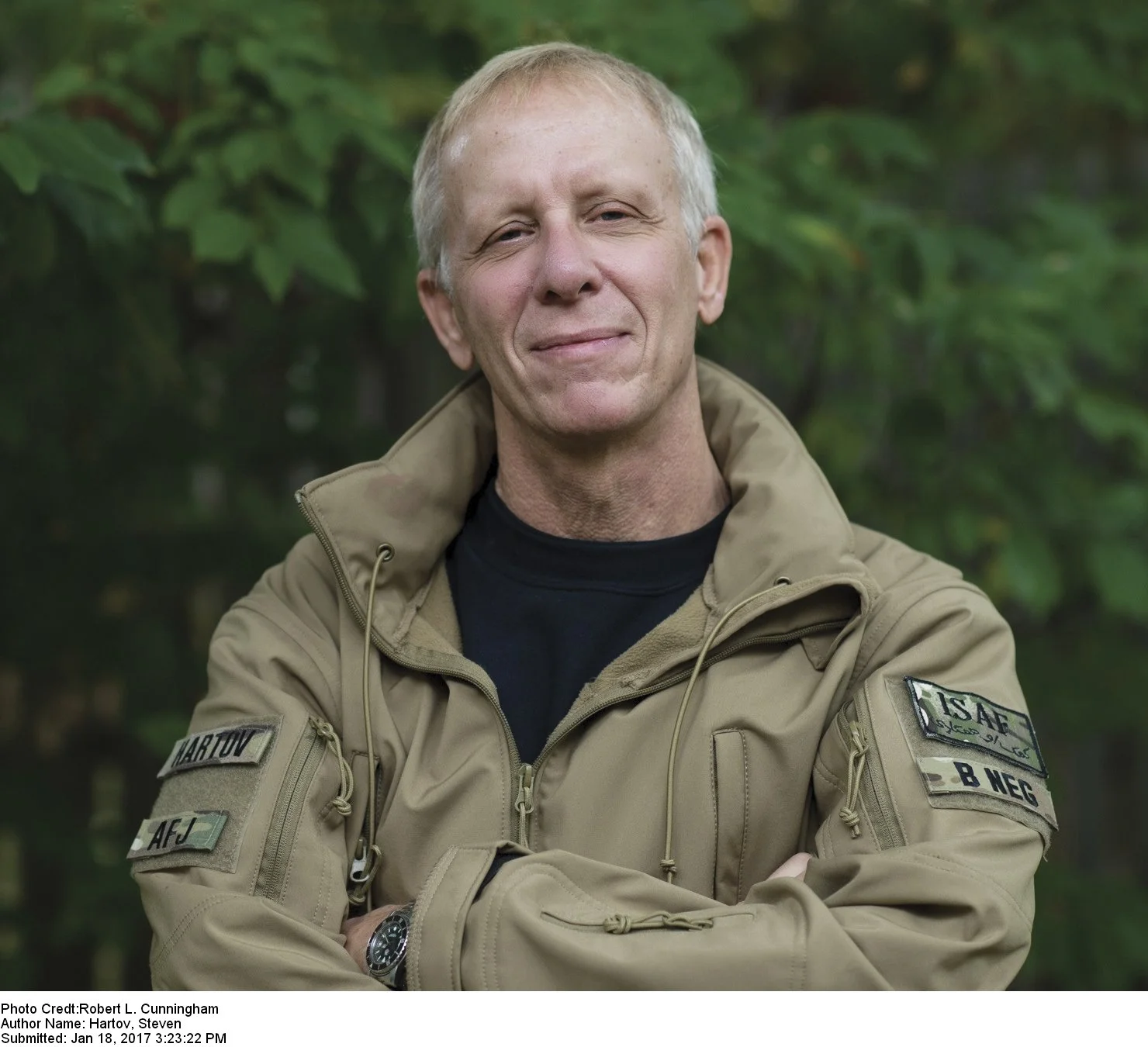
Steven Hartov is the coauthor of the New York Times bestseller In the Company of Heroes, as well as The Night Stalkers and Afghanistan on the Bounce. For six years he served as Editor-in-Chief of Special Operations Report. He has appeared on CNN, MSNBC, CNBC, FOX, and most recently the History Channel's Secret Armies. A former Merchant Marine sailor, Israeli Defense Forces paratrooper and special operator, he is currently a Task Force Commander in the New York Guard. He lives in New Jersey

Connect:

Author website: https://stevenhartov.com/ 

Facebook: https://www.facebook.com/StevenHartovAuthor 

Twitter: https://twitter.com/Steven_Hartov 

Instagram: https://www.instagram.com/stevenhartov_author/ 

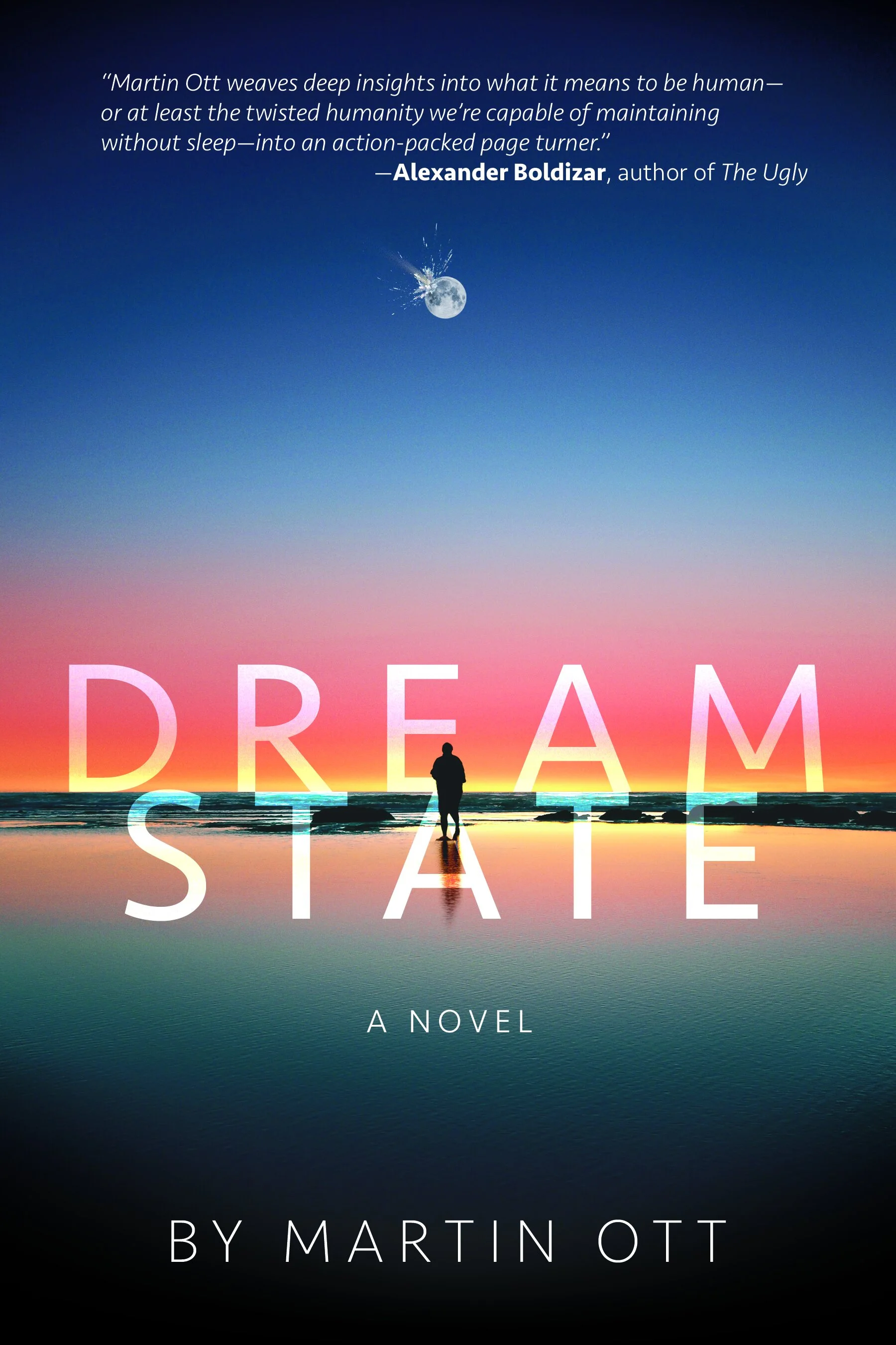
Spotlight: Dream State by Martin Ott

Picture a paradise island off the coast of Belize with one village, one tourist resort and a US Navy SEALS base. All are home to a cast of fascinating, colourful characters – some with dark secrets. Add a boisterous Hollywood wedding party arriving at the resort and niggling tensions start to erupt. But worse is soon to come. That night an unknown projectile hits the moon, knocking it off its orbit and disrupting the normal ebb and flow of the tides. The whole world is plunged into chaos as perpetual insomnia takes hold, and here on Copeland Caye the effect is devastating. Join three of the island’s relative newcomers in their struggle for survival as lack of sleep throws inhibitions to the wind and each new day sees the body count mount.

Buy on Amazon

About the Author

Martin Ott is the author of ten books of poetry and fiction. His first two poetry collections won the De Novo and Sandeen Prizes. His work has appeared in more than 300 magazines and 20 anthologies. A former US Army interrogator and longtime LA resident, Ott develops for TV and film in between other writing projects.

Spotlight: Mr. Grier and the Governess by Sophie Barnes

The Brazen Beauties, Book 2

Regency Romance

Date Published: July 26th 2022

He’s the dutiful guardian…

She’s the breath of fresh air he needs…

Olivia Poole knows her time for marriage has passed, so she accepts the position of governess to Mr. Grier’s ward. However, she cannot reject the vow she once made her sister – that she would live her life to the fullest. Armed with a list they created together, she determines to honor her promise. But being a governess and an adventuress isn’t so easy. Least of all when the only man she would ever consider for her last challenge happens to be her employer.

Although Grayson Grier mourns the loss of his rakish days, he is determined to do right by his ward. But when he meets Miss Poole, the prim and proper governess seeking employment, something about her begs to be challenged. Ignoring his better judgment for once, Grayson hires her on the spot – a decision destined to tempt him at every turn. For what he did not anticipate was her list, or the fact that his name would be on it. Right next to kissing…

Buy on Amazon | Bookshop.org

About the Author

USA TODAY bestselling author Sophie Barnes spent her youth traveling with her parents to wonderful places all around the world. She's lived in five different countries, on three different continents, and speaks Danish, English, French, Spanish, and Romanian with varying degrees of fluency. But, most impressive of all, she's been married to the same man three times—in three different countries and in three different dresses.

When she's not busy dreaming up her next romance novel, Sophie enjoys spending time with her family, swimming, cooking, gardening, watching romantic comedies and, of course, reading.

Connect:

Website: http://www.sophiebarnes.com

Twitter: https://twitter.com/BarnesSophie

Facebook: https://www.facebook.com/AuthorSophieBarnes

Instagram: https://www.instagram.com/sophiebarnesromancewriter/

Bookbub: https://www.bookbub.com/profile/sophie-barnes

Amazon Profile: https://www.amazon.com/Sophie-Barnes/e/B0079A1N8W

BookBuzz: https://book-buzz.net/book/mr-grier-and-the-governess-by-sophie-barnes

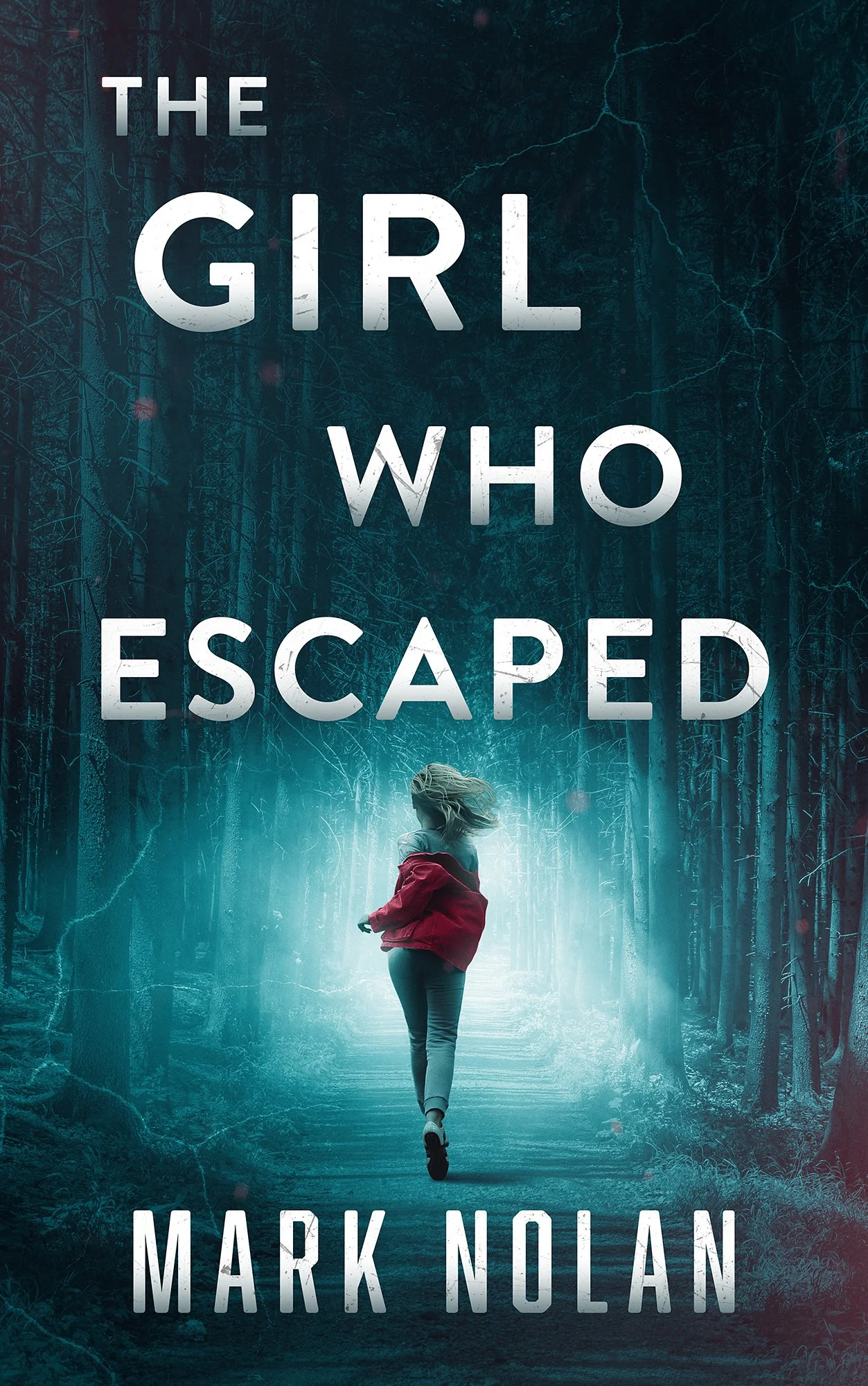
Spotlight: The Girl Who Escaped by Mark Nolan

Crime Thriller

Published: July 29, 2022.

One month ago, four college girls were abducted. Three were brutally murdered. One girl escaped.

Angie Taylor was traumatized and shocked speechless.

The police think she killed her friends, and then had a mental breakdown.

Her psychiatrist believes she has an emotionally unstable personality disorder.

Can she ever speak up and describe the killer’s face to a police sketch artist?

Is the murderer stalking her right now, eager to finish what he started?

Everyone in the city is on edge, fearing the worst, not sure what to believe.

A visit from a determined FBI agent shakes things up and raises the stakes. FBI Special Agent Brenda Reynolds of the VSRT must investigate whether the mysterious silent girl is a victim, a killer, or has gone insane.

Buy on Amazon

About the Author

Mark Nolan is an Amazon Bestselling Author and Kindle Unlimited All-Star. His latest book is titled The Girl Who Escaped.

Connect:

Website: http://www.marknolan.com

Facebook: https://www.facebook.com/MarkNolanAuthor

Twitter: https://twitter.com/marknolan

Goodreads: https://www.goodreads.com/book/show/61403758-the-girl-who-escaped