Spotlight: Ice Burn by L.A. Cotton

Release Date: January 10

From USA Today and Wall Street Journal bestselling author of the Rixon Raider series comes a brand new sports romance series. Lakeshore U, where hockey is religion, and the players are gods. Are you ready to fall in love with a Laker?

When Dayna Benson moves home, she doesn’t expect to feel so torn. On the one hand, she’s glad to be back in Dupont Beach. But it means parting ways with her boyfriend and facing ghosts she thought she’d left behind.

Enter Aiden Dumfries.

Arrogant. Angry. With enough attitude to freeze over Lake Erie, he’s determined not to let anyone help him.

When he finds himself exiled to the small coastal town after a scandal that could ruin his hockey career before it gets started, his plans for summer break are dashed.

He’s Lakeshore U’s bad boy on the ice. She’s sunshine, smiles, and something that feels a lot like hope.

But can Dayna melt Aiden’s heart?

Or will she end up burned?

* Ice Burn is a standalone introductory novel set in the Lakeshore U series.

Buy on Amazon | Audible

About the Author

USA Today and Wall Street Journal bestselling author of over forty mature young adult and new adult novels, LA COTTON is happiest writing the kind of books she loves to read: addictive stories full of teenage angst, tension, twists and turns.

Home is a small town in the middle of England where she currently juggles being a full-time writer with being a mother/referee to two little people. In her spare time (and when she’s not camped out in front of the laptop) you’ll most likely find LA immersed in a book, escaping the chaos that is life. 

Connect with L.A. Cotton:

https://www.lacotton.com 

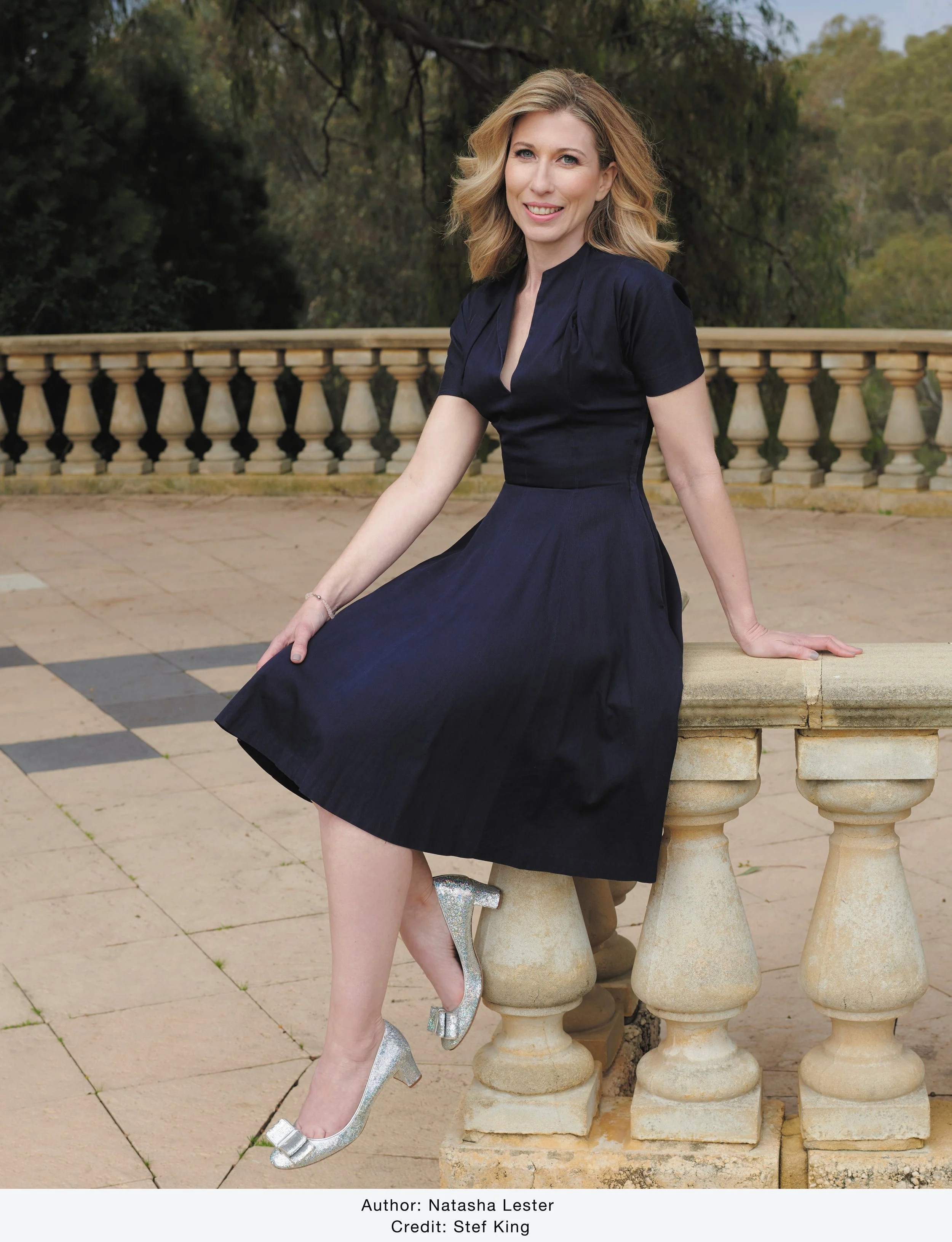
Spotlight: The Three Lives of Alix St. Pierre by Natasha Lester

Alix St. Pierre. An unforgettable name for an unforgettable woman. She grew up surrounded by Hollywood glamor, but, as an orphan, never truly felt part of that world. In 1943, with WWII raging and men headed overseas to fight, she lands a publicity job to recruit women into the workforce. Her skills—persuasion, daring, quick-witted under pressure—catch the attention of the U.S. government and she finds herself with an even bigger assignment: sent to Switzerland as a spy. Soon Alix is on the precipice of something big, very big. But how far can she trust her German informant…?

After an Allied victory that didn’t come nearly soon enough, Alix moves to Paris, ready to immerse herself in a new position as director of publicity for the yet-to-be-launched House of Dior. In the glamorous halls of the French fashion house, she can nearly forget everything she lost and the dangerous secret she carries. But when a figure from the war reappears and threatens to destroy her future, Alix realizes that only she can right the wrongs of the past …and finally find justice.

Buy on Amazon | Audible | Bookshop.org

About the Author

Natasha Lester worked as a marketing executive for L’Oreal before penning the New York Times and internationally bestselling novel The Paris Orphan . She is also the author of the USA Today bestseller The Paris Seamstress as well as several other historical fiction novels including The Riviera House , Her Mother’s Secret and A Kiss from Mr. Fitzgerald .

When she’s not writing, she loves collecting vintage fashion, traveling, reading, practicing yoga and playing with her three children. Natasha lives in Perth, Western Australia.

Connect with her on:

Instagram: @natashalesterauthor

Facebook : @NatashaLesterAuthor

YouTube : Natasha Lester

Website: NatashaLester.com

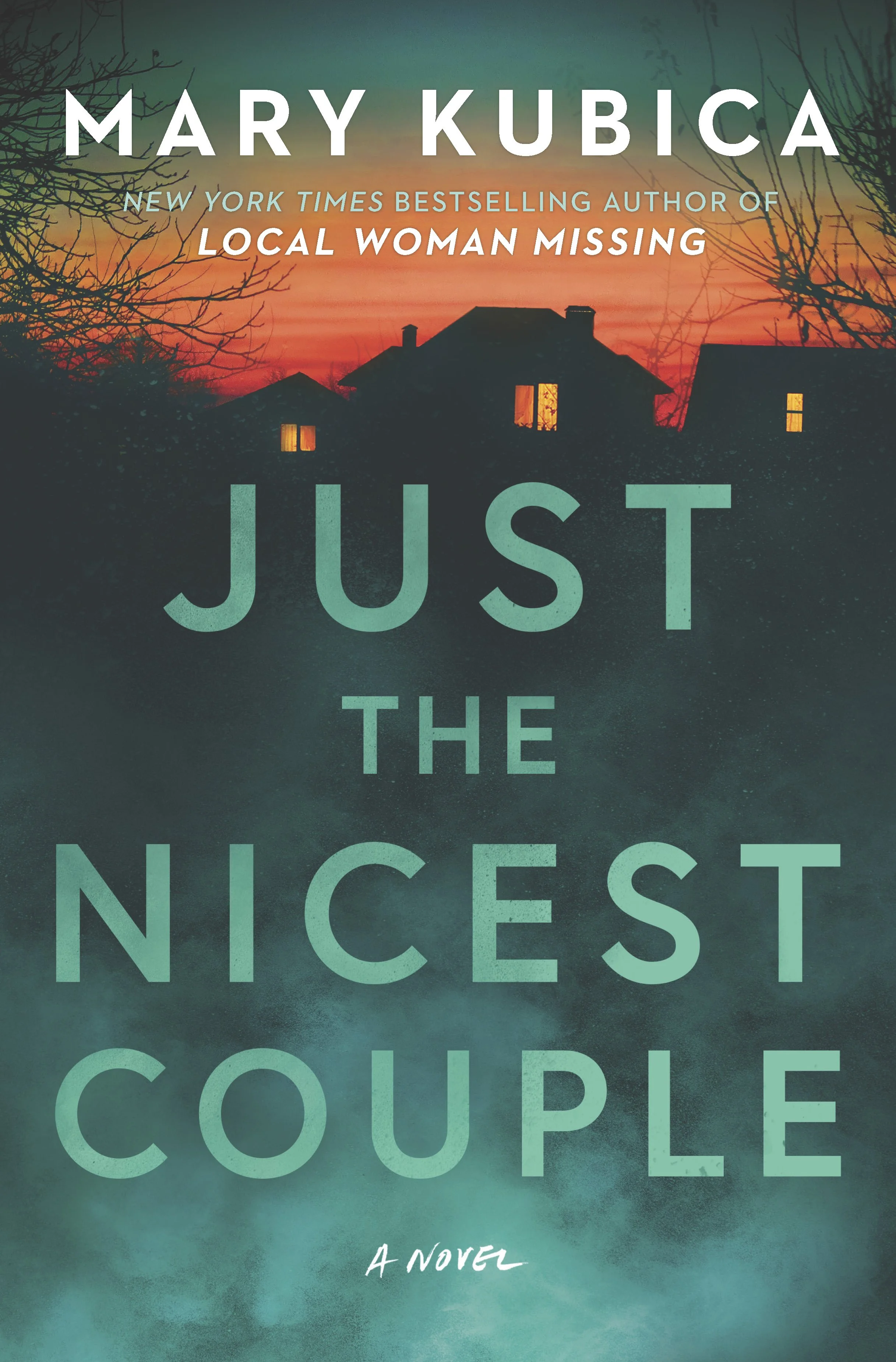
Spotlight: Just the Nicest Couple by Mary Kubica

Fiction / Thrillers / Domestic

320 pages

About the Book:

A husband’s disappearance links two couples in this twisty thriller from New York Times bestselling author Mary Kubica

Jake Hayes is missing. This much is certain. At first, his wife, Nina, thinks he is blowing off steam at a friend’s house after their heated fight the night before. But then a day goes by. Two days. Five. And Jake is still nowhere to be found.

Lily Scott, Nina’s friend and coworker, thinks she may have been the last to see Jake before he went missing. After Lily confesses everything to her husband, Christian, the two decide that nobody can find out what happened leading up to Jake’s disappearance, especially not Nina. But Nina is out there looking for her husband, and she won’t stop until the truth is discovered.

Excerpt

PROLOGUE

I gasp and stagger backward. My hand goes to my mouth, bear- ing down.

My brain screams at me to run. Run.

I can’t at first. Shock and fear hold me captive. They keep me from moving, like a ship that’s dropped anchor. I’m moored to this spot, my eyes gaping in disbelief. My breath quickens and I feel the flailing of my heartbeat in my neck, my throat and in my ears.

Run, my brain screams at me. Go. Fucking run.

There is movement on the ground before me. The sound that comes with it is something heathen and raging, and some part of me knows that if I don’t go now, I may never leave this place alive.

I turn away. It’s instantaneous. One minute I’m unmoving and the next I’m moving so fast that the world comes at me in vague shapes and colors, streaks of brown and blue and green. I barely feel the movement of my legs and my feet as I run. I don’t feel the impact of my shoes colliding with the earth, moving quickly across it. I don’t look back, though I want more than anything to steal a look to know that I’m alone. That I’m not being followed. But I don’t look. It’s too risky. Looking back would cost precious seconds that I don’t know that I have. If I do, those seconds could be my last.

Sounds come, but I’m so disoriented that I don’t know where they come from. Is it only my pulse, the rush of blood in my ears?

Or is someone there?

I feel something tangible against my hair and then my spine. My back arches. I jerk away, pitching forward, landing hard on my hands and knees.

The world stops moving.

I have only two thoughts in that moment: staying alive, and that this isn’t the way it was supposed to happen.

Christian

Lily is sitting on the leather chair in the family room when I come in. Her back is to me. I see her from behind, just her long brown hair spilling down the back of the chair. She stares toward the TV on the opposite wall, but the TV is off. It’s just a black box, and in it, I see a murky reflection of Lily on the screen, though I can’t tell if her eyes are open or shut.

“Hey,” I say, coming in through the garage door, closing it quietly and stepping out of my shoes. I set my phone and keys on the counter, and then ask, “How was your day?”

It’s getting dark in the house. Out the window, the sun is about to set. Lily hasn’t bothered with the lights, and so the in- side of the house is colorless and gray. We face east. Any pretty sunset is the other way. You can’t see it from here, if there even is one to see.

Lily says nothing back. She must have fallen asleep, sitting upright in the chair. It wouldn’t be the first time. She’s been extremely tired lately. The pregnancy is getting the best of her, not to mention that she’s on her feet teaching all day. These two things in combination exhaust her. It used to be that Lily would be in the kitchen, cooking dinner when I got home, but these last few weeks, she comes home from work ready to drop. I don’t mind that she’s not cooking. I’ve never been the kind of person to need a home-cooked meal after work, but that’s the way Lily was raised. Her mother did it for her father, and so she thinks she should do it for me. She’s been apologetic that she hasn’t had it in her to cook dinner, but she’s been queasy, too, and the last thing she needs to be doing is cooking for me. I called from the car and ordered takeout already; it will be here any minute.

I step quietly into the family room. I come around to the other side of Lily to face her. Lily isn’t asleep like I thought. Her eyes are open but her expression is blank. Her skin looks gray, washed-out like the room, and I blame the poor lighting.

Lily’s head turns. She looks up at me as if in slow motion.

“Hey,” I say again, gently, smiling. “You okay? Did I wake you?”

I flip on a side table light, and she winces from the bright- ness of it, her eyes taking time to adjust. I apologize for it, realizing that her pale face had nothing to do with the lack of light.

In the warmth of the lamp’s glow, I see that Lily’s hair is wet. She wears maroon-colored joggers and a sweatshirt. She’s showered and changed since coming home, which is more than she usually does. Usually she falls flat on the couch and doesn’t leave until it’s time to go to bed.

I drop to my knees in front of her. I reach forward and run a hand the length of her hair. “You look exhausted, babe. Do you want to just go to bed? I can help you up. Takeout should be here soon. I’ll bring it up to the room for you when it gets here.”

Lily blinks three times, as if to clear the fog. She finds her voice. It’s husky at first, dry, like after a day of shouting at a football game, which is not that different than a day of teach- ing rowdy high school kids math. “No,” she says, shaking her head, “I’m fine. Just tired. It was a long day.”

“You sure? I wouldn’t mind dinner in bed myself.” I had a long day too, but it doesn’t seem right to compare them when only one of us has another human growing inside of them.

“That sounds messy,” she says.

“I promise I’ll be neat.”

Lily smiles and my heart melts. I love it when she smiles at me. “When are you ever neat?”

“Never,” I say, feeling better if she can still poke fun at me.

I’ve done my research on pregnancy and childbirth. I’ve read that the fatigue women feel during the first trimester is maybe the most tired they’ll feel in their whole lives. Growing a human is exhausting. Caring for one is too, but we’re not there yet.

“You need anything?” I ask, and she shakes her head.

Takeout comes. I convince Lily to come sit on the couch with me, where we both fit. We watch TV and, as we do, I ask her about her day and she asks me about mine. She’s quieter than usual tonight. I do most of the talking. I’m a market research analyst, while Lily teaches high school algebra. We met in college over of our shared love of math. When we tell people that, it makes them laugh. We’re math nerds.

When it’s time for bed, Lily goes up to the room before me. From downstairs, I hear the sink run as she washes up. I clean up from dinner. I throw the takeout containers in the trash. There is a package waiting on the front porch. I step outside to get it, where the night is dark, though the sky is clear. It must be a new moon.

Lily is standing at the top of the stairs when I come back in. She’s there in the upstairs hall, standing in the dark, backlit by the bedroom light. Gone are the maroon sweats she wore ear- lier. She has on my flannel shirt now. Her legs are bare, one foot balanced on the other. Her hair is pulled back, her face still wet from washing it.

“Don’t forget to lock the door,” she says down over the rail- ing, patting her face dry with a towel.

I wouldn’t have forgotten to lock the door. I never do. It’s not like Lily to remind me. I turn away from her, making sure the storm door is shut and locked, and then I push the front door closed and lock the dead bolt too.

Our house sits on a large lot. It’s old on the outside, but has a completely revamped, modern interior. It boasts things like a wraparound porch, beamed ceilings, a brick fireplace—which Lily fell in love with the first time she laid eyes on the house, and so I knew I couldn’t say no despite the price—as well as the more modern amenities of a subzero fridge, stainless steel appliances, heated floors and a large soaker tub that I was more enthusiastic about. The house is aesthetically pleasing to say the least, with an enormous amount of curb appeal. It practically broke the bank to buy, but felt worth it at the time, even if it meant being poor for a while.

In the backyard, the river runs along the far edge of the prop- erty, bound by a public hiking and biking trail. We were worried about a lack of privacy when we first moved in, because of the trail. The trail brought pedestrians to us. Strangers. People just passing by. For most of the year, it’s not a problem. The leaves on the trees provide plenty of privacy. It’s only when they fall that we’re more exposed, but the views of the river are worth it for that small sacrifice.

“Done,” I tell her about the locks, and she asks then if I set the alarm. We’ve lived here years and hardly ever set the alarm. I’m taken aback that she would ask.

“Is everything okay?” I ask.

Lily says, “Yes, fine.” She says that we have an alarm. We pay for it. We might as well use it. She isn’t wrong—it’s just that she’s never wanted to before.

I set the alarm. I make my way around the first floor, turning off lights. It takes a minute. When I’m done, I climb the stairs for the bedroom. Lily has the lights off in the room now. She stands at the window in the dark, with her back to the door.

She’s splitting the blinds apart with her fingers and is looking out into the dark night.

I come quietly into the room. I sidle up behind Lily, setting my hand on the small of her back and asking, “What are you looking at?” as I lean forward to set my chin on her shoulder, to see what she sees.

Suddenly Lily reels back, away from the window. She drops the blinds. They clamor shut. I’ve scared her. Instinctively, her hands rise up in self-defense, as if to strike me.

I pull back, ducking before I get hit. “Whoa there, Rocky,” I say, reaching for her arms.

Lily’s hands and arms remain motionless, suspended in air.

“Shit, sorry,” she says, knowing how close she came to im- pact. The realization startles us both.

“What was that?” I ask as I gently lower Lily’s arms. Lily isn’t usually so jumpy. I’ve never seen that kind of reaction from her.

She says, “I didn’t know it was you.”

“Who did you think it was?” I ask, as a joke. She and I are the only ones here.

Lily doesn’t answer directly. Instead she says, “I didn’t hear you come up the stairs. I thought you were still downstairs.”

That doesn’t explain it.

“What are you looking at?” I ask again, gazing past her for the window.

“I thought I heard something outside,” she says.

“Like what?”

She says that she doesn’t know. Just something. We stand, quiet, listening. It’s silent at first, but then I hear the voices of kids rising up from somewhere outside. They’re laughing, and I know there are teenagers clowning around on the trail again. It wouldn’t be the first time. They never do anything too bad, though we’ve found cigarette butts and empty bottles of booze. I don’t get mad about it. I was a stupid teenager once. I did worse.

I go to the bed. I pull the blankets back. “It’s just dumb kids,

Lily. There’s nothing to be afraid of. Come to bed,” I say, but, even as she turns away from the window and slips under the sheets with me, I sense Lily’s hesitation. She’s not so sure.

Excerpted from Just the Nicest Couple @ 2023 by Mary Kyrychenko, used with permission by Park Row Books.

Buy on Amazon | Audible

About the Author:

Mary Kubica is a New York Times bestselling author of thrillers including The Good Girl, The Other Mrs.,  and Local Woman Missing. Her books have been translated into over thirty languages and have sold over two million copies worldwide. She’s been described as “a helluva storyteller” (Kirkus) and “a writer of vice-like control” (Chicago Tribune), and her novels have been praised as “hypnotic” (People) and “illuminating” (L.A. Times). She lives outside of Chicago with her husband and children.

Connect:

Author website: https://marykubica.com/ 

Facebook: https://www.facebook.com/MaryKubicaAuthor 

Twitter: https://twitter.com/marykubica 

Instagram: https://www.instagram.com/marykubica 

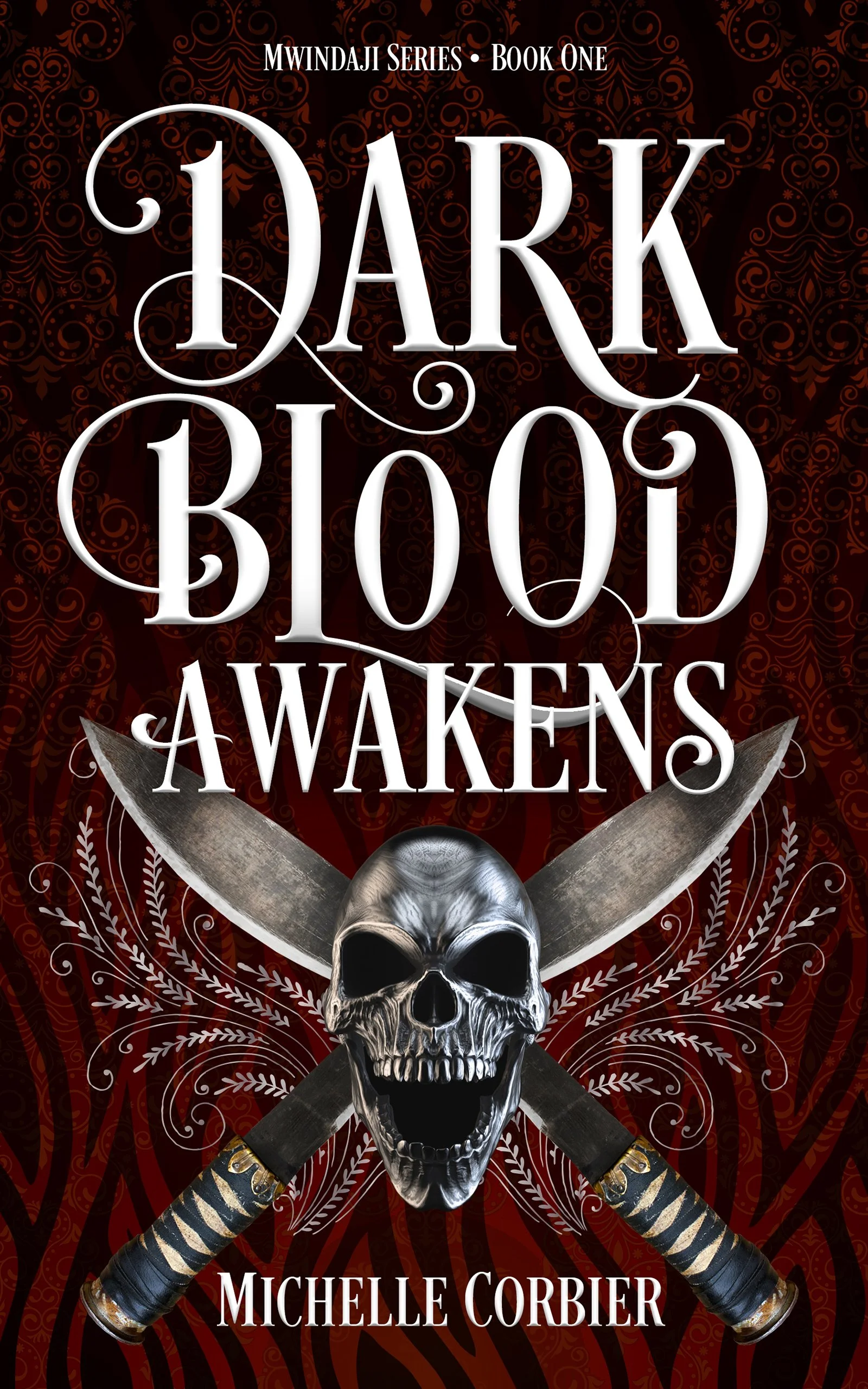
Spotlight: Dark Blood Awakens by Michelle Corbier

Genre: Urban Fantasy

Publication date: January 31, 2023

Dark Blood Awakens is the first book in the series weaving African mythology into urban fantasy.

Traveling around the country with her family of mwindaji, hunters, Makeda’s nursing skills come in handy when the group must discover the connection between a one-thousand-year-old vampire and a rural Kentucky hospital.

A recent catastrophic event awakens her long dormant zauber, sorceress, abilities. In Kentucky, disturbing visions and telepathic messages haunt her investigation. While working on the hospital surgical floor, she uncovers a secret people will kill to maintain. Torn between exterminating monsters and her oath to protect patients, she must reclaim her sorcery and defeat an ancient vampire before more people die—starting with those dearest to her.

Excerpt

The poorly lit gray walls lacked any décor. At the end of the long hallway stood two imposing doors. Makeda proceeded forward as noises from the hospital lobby drifted behind. Tile floors punctuated her steps, magnifying the sound in her ears. 

A scent of mahogany drifted from the impressive doors. No label identified the room.  She decided to peek inside but discovered it was locked. Damn. 

After surveying the entrance, she determined the hospital probably used the space for conferences. Locked doors created mystique—and Makeda craved secrets. 

With her eyes closed, she touched the massive doors and inhaled their mahogany essence. In seconds, a sensation of moroseness washed over her. Like she was in a dream, her body felt tossed about as if in a cyclone. A new astringent odor met her nostrils. Makeda became queasy, and her mouth dry. Suddenly, a scene flashed into her mind—no a memory. 

Transported back to the jewel of the Caribbean, Makeda recalled disembarking in the capital city of Port-au-Prince. That January, she had traveled to Haiti to help with the humanitarian effort following the earthquake. Overwhelmed by the suffering she witnessed, Makeda committed to remaining in the country for a full month—guilty about not staying longer. 

Her high school French proved useless because most of her patients spoke Creole. One patient in particular touched her heart. A frail older woman named Nadege. The elderly woman suffered multiple injuries during the quake. The most serious was a head wound from falling debris. Despite her age and trauma, the octogenarian survived. 

Through an interpreter, Makeda spoke daily with Nadege, encouraged by the woman’s progress. A language barrier couldn’t impede their affection for each other. Their last encounter, though, had been unusual.

“How are you today?” she had asked, tucking the older woman’s thick braids under a head scarf.

Mèsi pitit mwen,” Nadege had said, bringing Makeda’s hands to her heart.

She knelt beside the cot. “Don’t thank me. I’m glad you’re better.”

Clouded lenses fixed upon her. “Ou se yon pitit dou. Ou se yon bon mambo.” 

Makeda waited for the interpreter, who for some reason hesitated. 

“Is there a problem?” she had asked.

Nadege craned her head off the pillow, also regarding the interpreter. 

For probably the millionth time, Makeda wished she had learned Creole. Listening to the two women converse, she deduced the problem involved the word mambo. As the discussion proceeded, she noticed her patient become distressed. 

On a shaky elbow, Nadege pointed a reed-thin finger at the interpreter. Then she gestured toward Makeda. 

“She says you’re a good nurse,” the interpreter had said, lowering her gaze. 

Nadege relaxed back upon her pillows, apparently satisfied.

Dubious about the translation, Makeda had no time to dwell upon it. She kissed Nadege’s wrinkled cheeks. 

A crinkled charcoal face beamed back at her, as Nadege’s arthritic hands caressed her cheeks. “Beni ou, se pou Bondye Gid ou. Asire w ke ou sèvi ak pouvwa ou pou bon.” 

“She says may God bless you.” 

When Makeda glanced over at the interpreter, the woman stared at her feet.

Even without understanding Creole, Makeda had realized Nadege said more than the interpreter relayed, but what could she do? Still, the event had bothered her. Before she left Port-au-Prince, she asked another interpreter what mambo meant. He confided it meant healer, or witch.  

Standing before the massive conference doors, Makeda wondered what Nadege had said. To her disappointment, the following day her elderly patient had been transferred to a different section of the hospital. Despite searching, she never saw Nadege again.

“Hello.” 

Makeda’s stomach bounced up into her throat. She spun around and found a towering man with a deadpan, impassive face gazing at the doors. 

He spoke in a flat bass voice. “What are you doing here?” 

While recovering her composure, Makeda pointed at the conference room. “I was appreciating these beautiful doors. What type of wood is this?” 

“Mahogany. They are beautiful, and expensive.” After a moment admiring the doors, his gaze shifted back toward her.

Her shoulders tensed as Makeda realized their isolation from the rest of the hospital. An odor itched her nose. It wasn’t the wood, but for the moment she couldn’t place it. She studied the stranger. 

His lanky arms were too long for his torso, almost marfanoid. With his pale face and disjointed features, she considered the possibility he was a vampire. But it was daytime. They were inside though, and away from sunlight. Possible. 

Yewande had taught her about other monsters, koleo and biloko. Maybe not as prevalent as werewolves and vampires, but as deadly. Time to leave.

“I should get back to work.” She maneuvered around him, hustling toward the lobby. Using the gift shop windows, she checked to see if he pursued. 

His gaze followed, but he remained in front of the massive conference room doors.

Witch or a healer. Had Nadege

“Hey.”

Makeda grabbed the hand that landed on her shoulder and twisted the wrist. A second later, she glanced at the person’s face. “Michael.”

Buy on Amazon

About the Author

Born in Illinois and raised in San Diego, CA and Charleston, SC, Michelle Corbier grew up around military bases. She obtained my biology degree from UC Santa Cruz and a medical degree from Michigan State University College of Human Medicine. As a Pediatrician with over 25 years in medicine, Michelle transformed her passion for writing into a second career.

Michelle Corbier is a member of Crime Writers of Color, Capitol Crimes and Sisters in Crime. The genres of her creative outlet are mysteries, paranormal, suspense and thrillers. The first book in her mystery series premiered in May 2022. The mystery series sequel will be available soon in addition to the first book in her urban fantasy series Mwindaji premiering on January 31, 2023. 

Connect: 

Website: https://MichelleCorbier.com

Amazon: https://www.amazon.com/author/michellecorbier

Twitter: Michelle Corbier (@mwindajis) / Twitter

TikTok: @MrsDoctorwrites

Bookbub: Michelle Corbier Books - BookBub

Goodreads: https://www.goodreads.com/amazoncomauthormichellecorbier

Sign up for the Mwindaji newsletter and receive information on paranormal and horror fiction, in addition to writing resources. 

https://lp.constantcontactpages.com/su/TkwoHcV/mwindaji

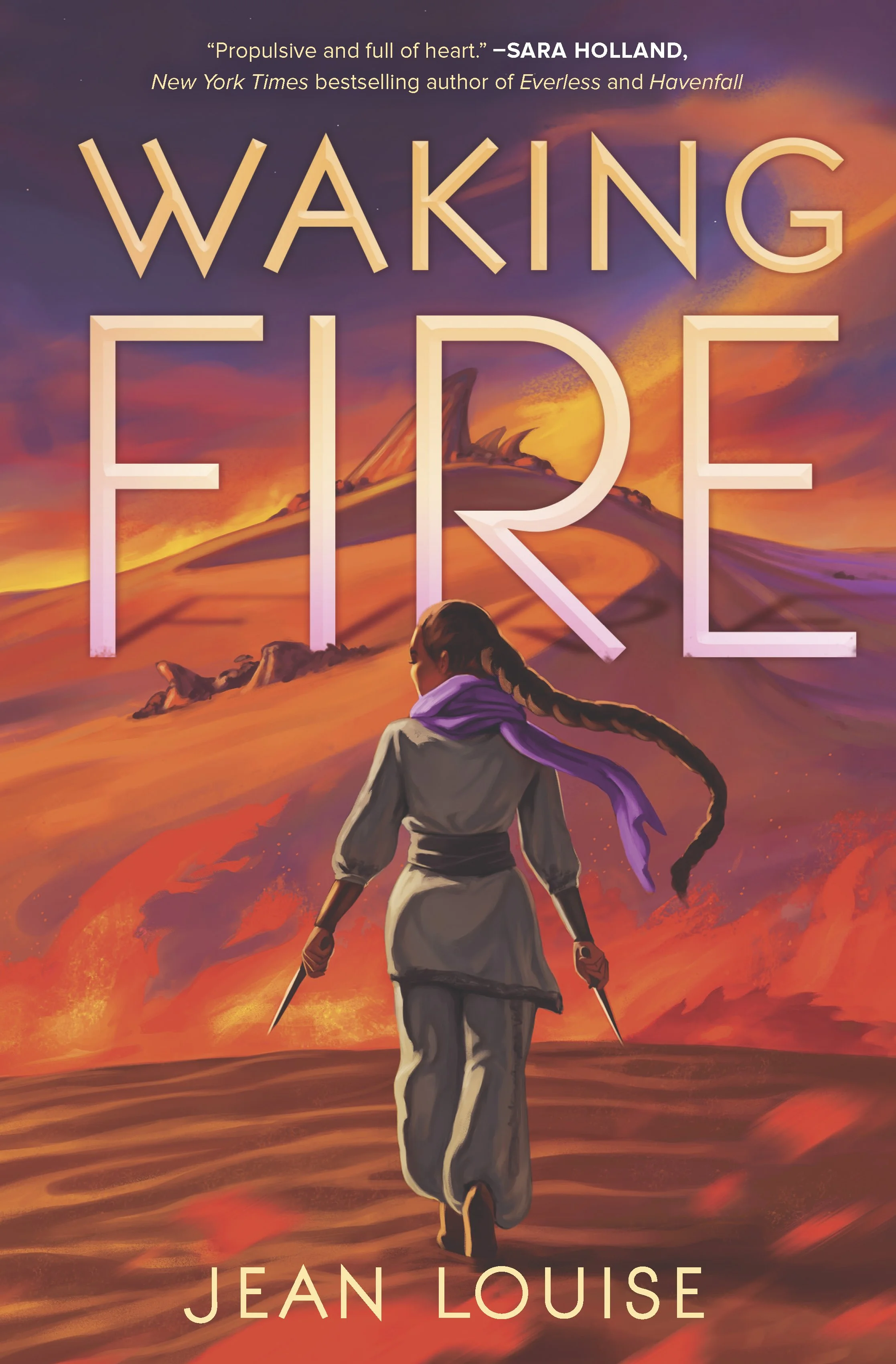
Spotlight: Waking Fire by Jean Louise

This incendiary YA fantasy debut follows a girl who will stop at nothing to save her village after it’s discovered by a dangerous warlord and his army of undead monsters. Perfect for fans of A Song of Wraiths and Ruin.

Naira Khoum has only known life in Lagusa, a quiet village at the desert’s end. But to the rest of the world, Lagusa is a myth, its location shrouded in secrecy. While war rages to the north led by power-hungry Sothpike and his army of undead monsters called Dambi, Naira’s people live in peace.

Until the impossible happens—Lagusa is attacked by a Mistress sent to do Sothpike’s bidding with a hoard of Dambi under her control. The Mistress is looking for something, and she’s willing to let her Dambi destroy Lagusa to get it.

Desperate to protect her home, Naira convinces her twin brother Nez and handsome refugee Kal to join the newly formed resistance with her. Together, they’ll have to figure out what the Mistress wants—before there’s nothing left of Lagusa to save.

Excerpt

CHAPTER ONE

“FIVE SILVERS FOR TWO KUFFAS OF RICE?” I SHAKE MY head at the exorbitant price and back away from the grain merchant’s stall. “My mother would kill me. I’ll give you two silvers.”

The merchant’s eyes widen in shock. “Two silvers? I can’t do that. My children have to eat too!” He holds out the sack of rice. “I’ll give it to you for four.” When I don’t immediately agree to his offer, he shakes the bag. “The market’s closing. You won’t find a better deal anywhere else. Here, take it.”

He’s right that my options are limited. The stall my mother usually purchases grain from has already closed and most of the other merchants are putting away their wares and board-ing up their stalls. But four silvers is still too much.

“Two and a half.”

The merchant grimaces as if my counteroffer hurts him. “Three, and I won’t go any lower.”

I can tell he’s finished haggling, so I have no choice but to agree. “Fine.”

While he fastens a rope around the opening of the sack, I fish out three silver rubes from the leather money pouch tied around my waist. Omma’s not going to be happy. She sent me to the market to buy spices and rice for dinner when the sun was six hands from the western horizon, but I took so long picking out incense at my favorite shop that by the time I got around to the errand my mother sent me on, the market was shutting down for the evening.

I hand the merchant the money and he passes me the sack of rice.

“Thank you for your business, samida,” he says with a smile. “See you again!”

The merchant bows and I roll my eyes as I return the ges-ture. I’ll never come back to his stall even if he were the last grain merchant in all of Lagusa. We both know he’s ripped me off, and his satisfied grin makes me scowl even more.

I only have three silver rubes and four coppers left to buy the rest of the ingredients on Omma’s shopping list: cumin, ground red chilis, honey, and dried orange peels. The chilis will be the most expensive, so I’ll buy them first and then see what I can get with whatever rubes are left.

Even though the market’s closing, the roads squeezed be-tween stalls and mud-brick buildings where one buys spices and cloth, jewels and swords, livestock and produce are still busy enough that I can’t run to the next open spice shop. The remaining merchants and customers haggle over prices while dirty children hold out their hands for scraps and coins. The savory aroma of charred meat cooking on a grill makes my stomach grumble as I pass the crowded food stalls, but that’s quickly replaced by the flowery scents coming from up head. Perfumed air engulfs me as I cross Honey Street: the place where those who can afford it go to soak their bodies in cleansing oils and fragranced water.

I find an open spice shop with a bowl of ground chilis right out front. I motion to the owner, but she ignores me, her eyes on something farther up the road.

“Excuse me, samida,” I say, trying to get her attention. “I’d like—”

The owner shoos me away with a wave of her hand with-out even giving me a glance. Annoyed, I follow her gaze to see what could be so important.

A few stalls down, a plume of black smoke rises above the open market.

“Is that a fire?”

The woman nods. “I think so.”

As we watch the pillar of smoke grow, more and more people gather in the street, their eyes transfixed on the dark clouds bisecting the sky.

“It’s those Haltayi,” a man next to me says, a sneer in his voice. “They brought in one of those mangy desert animals, what do you call it?”

“A maugrab?”

“Yeah, the damn thing went berserk. There was some kind of scuffle and a lantern got knocked over and set their tent on fire.”

I stand on my toes to peer over the heads of those in front of me, but it’s no use. I can’t see anything except the smoke. “What happened to the maugrab?”

The man shrugs. “Burned to death, I guess. There’s no way it could have survived those flames.”

A frenzied roar fills the streets, quieting the crowd with its intensity. The maugrab isn’t dead yet.

I’ve always felt sorry for maugrabs—they’re sickly creatures that the Haltayi nomads capture out on the plains beyond the village and charge parents a few rubes to let their children tug on their matted manes or ride on their bony backs. Selling maugrab rides is one of the few ways Haltayi make money to buy supplies so that they can survive the Rocky Plains, but the maugrabs always look so sad, so beaten, as if the rope that keeps them tied to a stake in the ground is sapping all of the life out of them.

I can’t turn my back on a creature in pain, not if there’s something I can do to help. I forget the orders from my mother to not dally and push my way through the crowd to-ward the fire.

The smoke thickens as I get closer, stinging my eyes and making me cough, but I trudge ahead. I finally burst through the crowd and see the Haltayi nomads tossing buckets of water onto the flames, which rage like a beacon in the night. Mer-chants with stalls on either side of the fire are clearing out their wares while using wet cloths to beat away the flames that lick their wooden structures.

The maugrab roars again. A wall of flames separates the animal from safety. Through the fire, I catch glimpses of the poor beast, its mouth open wide, its heavy paws pacing back and forth. Its short snout contains massive, sharp teeth, and anxious muscles ripple beneath the rust-colored fur covering its broad shoulders and hindquarters. Waves of heat prevent anyone from getting too close and helping.

Someone has to do something, or that maugrab is going to die.

Dropping my purchases on the ground, I run toward one of the stalls and climb on top of the structure, my feet sink-ing into the cloth awning. A merchant grabs at me, yelling for me to get down. I kick his hands away and jump onto the next stall, then the next, until I’m on top of the stall closest to the crackling flames.

I can hear more people hollering for me to come back, but I ignore them. Looking down, all I see is fire and smoke. The sides of the tent have burned away but the crates and furni-ture that lined the walls are still on fire. What remains of the top of the tent is in flames, but the section closest to me has already burned away. I’m about to turn back—the foolishness of my actions has finally caught up with me—when I catch sight of the maugrab through the haze.

I look into the maugrab’s eyes, and I see that it wants to live. There are so many people standing around, watching, some of them crying, but no one’s doing anything to help. The maugrab’s going to die unless I do something.

I have to act fast if I’m going to save the maugrab. Luckily the roof of this stall is made of wooden planks and not fabric. I cover my face with my arms, grit my teeth, and pray to the gods that I land on the other side of the fire and not within the flames.

A gasp erupts from the crowd as I leap over the flames. The heat briefly singes my skin before I hit the ground with a thud. My pants are on fire, the hungry blaze eating the thin cloth. I beat out the flames with my hands and get on my hands and knees.

The only sound is the roaring fire, and acrid smoke coats my lungs with every breath. I’ve never felt such heat and I’m instantly drenched in sweat. It’s difficult to see, so I crawl to where I last saw the maugrab and cry out with relief when my hand brushes a furry paw.

The maugrab is lying on the ground, its breaths shallow. I climb to my feet and tug on the beast’s rough mane.

“Come on,” I say between coughs. “Get up!”

Slowly, the maugrab gets on all fours and I rub the sleek reddish-brown fur on its powerful shoulders.

“There’s only one way out of here,” I tell the animal, point-ing at the top of a stall, barely visible over the wall of flames. “And I can’t make the jump. Can you do it?”

The maugrab starts forward but is held back by the rope around its neck tied to a stake in the ground. I make quick work of the knots, and the maugrab shakes its mane and roars when it’s free.

I climb on the beast’s back and grab hold of its mane, my mind racing with prayers to the gods that I can actually pull this off. With a powerful lurch, the maugrab leaps and clears the fire, landing on top of the wooden stall with a skid and digging its claws into the wood to stop us from sliding off.

A cheer rises up among the crowd. I’m grinning, reckless but triumphant.

“You did it,” I tell the maugrab.

The rickety stall wobbles beneath us and the maugrab jumps onto the ground as the roof crashes down.

We’re immediately surrounded by onlookers, many of them clapping me on the back and congratulating me as I slide off the maugrab. A Haltayi woman runs up and wraps her arms around the animal’s neck, as a Haltayi man bows deeply be-fore me. “Thanking you, samida,” he says in his thick accent.

My cheeks flush from the attention and I return the bow. Before I can get caught up in all the smiles and excitement, the structure that enclosed the maugrab finally collapses. Swirls of fiery ash and smoke ride the gust of wind released by the falling structure before descending on the crowd. Cries ring out as hot embers fall on bare skin, and I’m jostled aside by elbows as those around me slap at the little fires clinging to their clothes.

Coughing and stumbling, I move aside to clear a path for more buckets of water to douse the flames and find myself shoved into an alley. I take a moment to collect myself, my heart still racing, when I realize I tossed the expensive rice aside to save the maugrab. I still need to buy everything else on Omma’s list, but with the market in such disarray and with most of the shops already closed, I don’t know if that’s pos-sible. And now that all the excitement has waned, exhaustion has taken over, and I just want to go home.

I wipe the sweat from my face with the hem of my scarf and groan when I see the streaks of black on the light blue fabric. Maybe if I explain to Omma what happened with the maugrab, she won’t be disappointed that I didn’t buy any of the things she asked for and why I returned in such a state.

Deciding I’d rather be scolded by Omma than deal with the market again, I head down the alley, toward the main road that will take me home. I pass boxes of refuse filled with rotting vegetables, discarded sacks of mealy grain, and rolled-up rugs with frayed edges and covered in stains. I’m halfway through the alley when I hear a group of voices coming from the shadows on my left.

“You’re such an idiot!” a girl yells and I stop in my tracks. She’s shrouded in shadows, but I don’t need to see the girl to know who’s yelling.

Hamala Mugabe is the last person I’d want to meet in a dark alley.

Not because I’m scared of her. But because she makes my blood boil.

At school, Hamala seems to get all her pleasure picking on younger students, and anyone who tries to stop her gets it worse. I’ve had no choice but to step in a few times to de-fend someone against her bullying and that’s made me one of Hamala’s top targets. Now, every time we encounter each other, we’re both on guard, waiting for the other to strike so that we have an excuse to strike back. It’s as if a lifelong bond has formed between us: one that pits one girl against the other, always in conflict, resolution residing in the strength of our fists.

“By the Fires, I swear I ought to bash your head in,” Hamala continues. “It was supposed to be a quick grab. We had the hard part—we were the distraction! All you had to do was sneak in, steal his purse, and sneak out, and you couldn’t even do that.”

So now Hamala’s stealing too. I thought I had reached the limit of how much I could loathe another person, but  Hamala always finds a way to push me. She doesn’t even need the money—everyone knows the Mugabe family has plenty. She only gets away with terrorizing others because her fam-ily always buys her way out of trouble.

The last thing I feel like doing right now is confronting her, so I try to sneak by. But I can’t help overhearing their con-versation as I pass the darkened alcove where they’re hiding.

“How was I supposed to know that maugrab was there?” another girl whines. She sounds like Jalaan, one of Hamala’s lackeys. “You know I’m scared of those things, and you said the tent was empty!”

I pause midstep, one foot barely touching the ground. They can’t be talking about what I think they’re talking about, can they? Did Hamala and her goons try to steal from the Haltayi, who are some of the poorest people in the village? Stealing from them is like snatching a beggar’s cup of change.

“You’re blaming me for this mess?” Hamala says, her voice menacing.

“Well,” a third girl chimes in, “no one told you to start a fire.”

I stiffen in shock, my eyes wide. My feet are rooted to the ground. I knew Hamala was dangerous, but now she’s gone too far. So many people lost their livelihoods in the fire, not to mention the Haltayi losing their tent. And that poor mau-grab would have died if I hadn’t jumped in to save it.

I have to confront her. If I don’t, no one will know what she’s done, and then there’ll be nothing preventing her from doing something even worse next time.

Behind me, the market is emptying as the last fires are dampened. A group of watchguards inspect the smoldering remains of the maugrab’s tent while a few stall owners lin-ger, many of them distraught over the damage. Hamala did this—she caused all of this destruction.

“You’ve gone too far this time, Hamala,” I say, stepping into the brightest section of the alley. “Picking on kids in the schoolyard is one thing, but stealing from Haltayi? Arson? Ei-ther you turn yourself in, or I will.”

Slowly, as if she is the hunter and I am the prey, Hamala emerges from the shadows with three of her friends behind her.

“You bitch,” she growls as she moves in front of me. Her lackeys stand behind me, blocking the only other exit. I wish I had my twin brother, Nez, with me to make this fight more even. But then again, he’s always telling me not to fight. “I’m getting so tired of seeing your ugly face. Everywhere I go, there’s Naira Khoum sticking her nose in places where it doesn’t belong.”

I don’t clench my fists even though I want to. But if Hamala takes a swing at me, I’ll have no choice but to defend myself and deal with Nez’s disappointment later.

“If you weren’t always causing trouble, I wouldn’t be here. I’d be home right now eating dinner. It’s because of the fire you set that I’m here among all this garbage trying to con-vince you to do the right thing.”

Hamala puffs out her chest. “Did you call me garbage?”

My stomach sinks. I should have known trying to reason with her would be a waste of time. She twists everything I say into an insult.

“I think she called all of us garbage,” Jalaan says from be-hind.

A fight is coming—a big one. I can feel it in the charged air between us, hear it in the way Jalaan and the others snicker nastily behind me, see it in Hamala’s clenched fists. I turn to the side so that I can keep my eyes on Hamala and the others.

Hamala curls her lip in a menacing snarl and looks down at me. “I think so too. And I know exactly what to do to someone who calls me names and can’t keep her nose out of my business.”

Hamala reaches out to shove me, but I’m too quick. I knock her arms aside and plant my foot squarely in her stomach, kicking the air out of her lungs and sending her flying back-ward. She lands sprawled out on the ground, stunned. The other girls look at each other, not sure what to do, waiting for their leader to guide them, but Hamala can barely talk. Tears run down her cheeks, catching the dust that clouds the air from her fall.

“Get her!” Hamala wheezes at last.

The next thing I know, the other girls are on top of me, pulling my hair, trying to scratch my face and knock me to the ground. One yanks me by the arm while another tries to kick my feet out from beneath me.

I have no choice but to fight back. My father started train-ing me in combat as soon as I was big enough to hold a sword, so I try to end this fight quickly. I punch the tallest one in the chest, knocking her breathless, and grab the arm of an-other girl and twist it behind her back. She whimpers in pain.

By now, Hamala has recovered her breath and is standing. She charges, knocking me and the whimpering girl to the ground. I push the girl off me and try to get on my feet, but Hamala kicks me in the stomach once, twice, three times. I can’t breathe, my abdomen throbs with pain, and I lie on my side gasping for air. Then Hamala grabs my arms, wraps her legs around my waist, and holds me down. I thrash around in an attempt to free myself, but her grip is tight.

Hamala yells out something to her lackeys, but I’m so fo-cused on our struggle that I barely register what she’s saying.

She yells again: “Do it! Do it now!”

I glance at the other girls, afraid because whatever she has planned, it’s going to hurt. I only catch a glimpse of the heavy rock in Jalaan’s hand right before she cracks me in the head with it.

The entire side of my face explodes with pain and my head lolls to the side. Hamala releases me from her grip with a laugh. I crumple to the ground, dizzy and nauseous, and touch shaking fingers to my forehead. They come away bloody.

Hamala kneels in front of me and grabs the collar of my tunic, bringing us face-to-face. She’s so close I can see the crust in the corners of her eyes.

“This is what happens when you keep getting in my way, Khoum.” She shoves me and I fall against a broken pot, the jagged edges scraping my back.

“You think she’s learned her lesson?” Hamala asks the oth-ers. She turns to me. “Well, you little snitch, did you?”

I can barely see straight, stabbing pains radiate throughout my skull, and I feel like I’m going to retch. But I still can’t let Hamala win.

I spit in her face and she jumps back in disgust.

“You rotten bitch!”

Hamala snatches the rock from Jalaan and towers over me.

I’m trying to get up, get out of the way of what I know is coming next, but I can’t seem to get my balance. The giant rears her hand back. I notice a dark spot on the rock and it occurs to me That’s my blood—and then the world goes black.

Excerpted from Waking Fire. Copyright © 2023 by Jean Louise. Published by Inkyard Press.

Buy on Amazon | Audible

About the Author

Originally from Cleveland, Ohio, Jean Louise currently lives in Queens, New York, with her cat Martha. When she’s not writing, she can be found with her nose buried in a graphic novel or taking down bad guys in her favorite video games. She received an MFA in Writing for Children from The New School. This is her debut novel.

@WriteJeanLouise

Connect:

Author Website: https://jeanlouisewrites.com/

Twitter: @writejeanlouise

Instagram: @writejeanlouise

Spotlight: The Maverick Cowboy: A Sweet Grumpy Sunshine Romance by Macie St James

(Cupid Ridge Dude Ranch, #1)
Publication date: January 6th 2023
Genres: Adult, Contemporary, Romance, Western

Synopsis:

He’s slow to trust. She can’t seem to keep a secret. Can they overcome their differences to find their happily ever after?

Joshua Ludington is slow to trust. After being betrayed by the woman he loved, he vowed to take a hiatus from dating. But when Lucie Cooper drives onto his family ranch, he finds the beautiful chef hard to resist.

Lucie Cooper is at Cupid Ridge Inn to do a job. They need an interim chef for their dude ranch guests, and she’s determined to fill that position. When she runs into handsome cowboy Joshua Ludington, at first she’s excited to show off her cooking skills. Soon, though, it becomes apparent that what she’s feeling for him goes beyond gratitude for the job.

Although Lucie knows Joshua has been burned, she’s determined to show this handsome cowboy that he can count on her. But Lucie is notoriously bad at keeping secrets, and working for the Ludingtons means keeping things quiet. She means well, but she might just destroy her new relationship before it gets off the ground.

The Cupid Ridge Dude Ranch series is a sweet, clean contemporary western romance series filled with swoon-worthy cowboys in a small-town setting.

Excerpt

Lucie stepped into the doorway, taking in the scene in front of her, her eyebrows arching at what she saw.

A man. His back was to her. He wore a T-shirt, a pair of jeans, and what looked like an apron tied at the waist and neck in messy knots. He wasn’t dancing as much as wiggling around awkwardly while he belted out the chorus.

The biggest surprise of all? The guy could sing.

“Excuse me,” she said.

He kept singing. He hadn’t heard her. The music wasn’t that loud, so he must be so caught up in the song, he’d lost track of his surroundings.

“Excuse me!”

She practically shouted that, and it did the trick. With a loud thud that made her jump, he turned to face her. He’d been holding a pan above the stove burner—she saw it on top of one of the raised burners—but she only had a second to register it because her gaze was immediately drawn to that face. 

That face. She knew that face. Joshua Ludington. 

There wasn’t a girl in school who didn’t have a crush on one of the Ludington brothers, but Joshua was the quiet one. He didn’t tend to get as much notice. She’d noticed him, of course, but he’d been two years ahead of her in school. 

Not that he would’ve given her a second look, anyway. In high school, she started dating Clayton Mills, who worked on the Knott family ranch. None of the Ludington brothers would speak to her while she was dating Clayton, despite the fact she was still friends with their only sister. 

He looked at her curiously. “You were that cheerleader girl.” 

Her mouth fell open. That cheerleader girl? Was that what he knew her as? 

Okay, so maybe she hadn’t become a lawyer like Clayton, and she certainly wasn’t handed a family business to run like the Ludingtons and Knotts. But she’d accomplished some things of her own since graduation. 

Buy on Amazon | Bookshop.org

About the Author
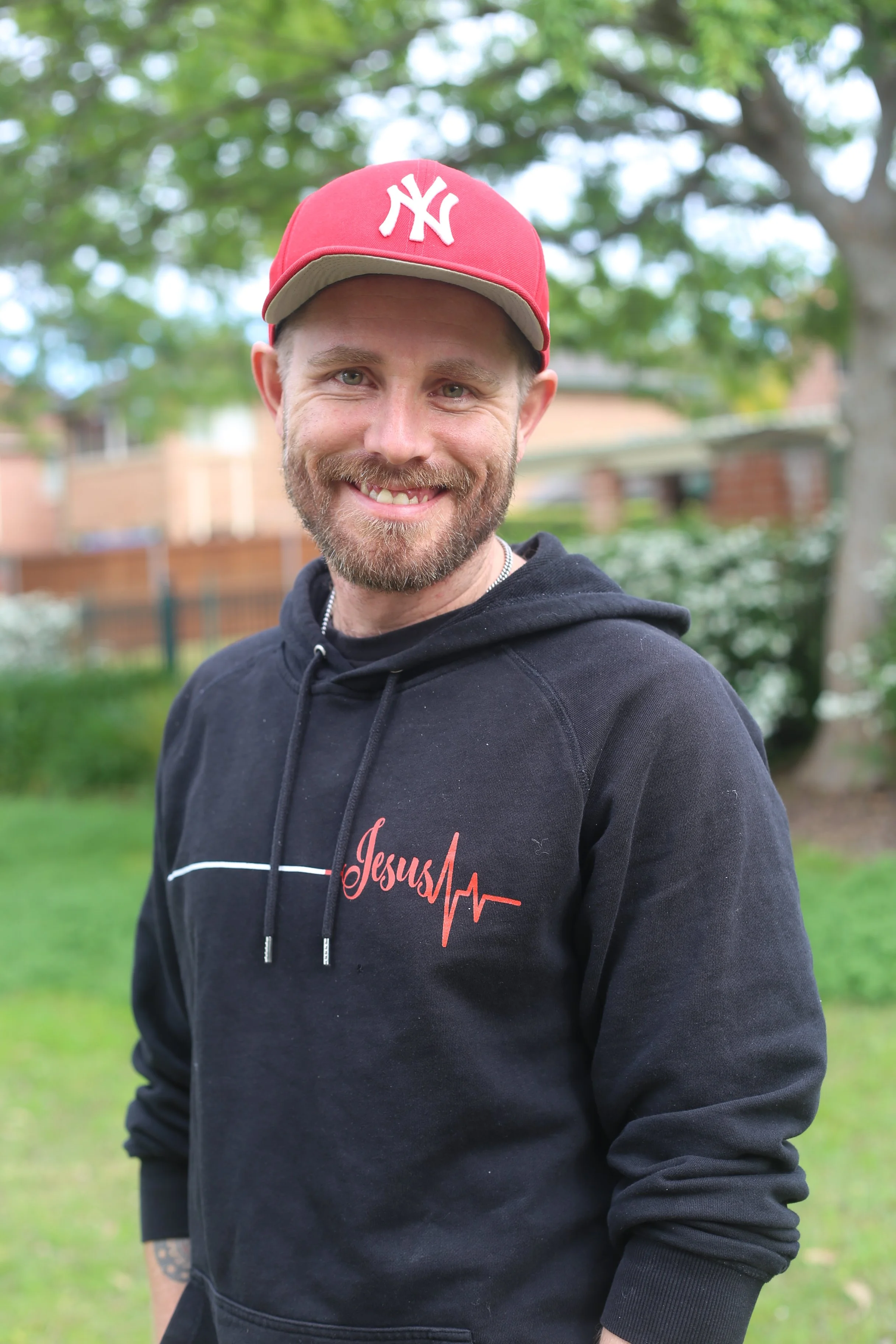
USA Today Bestselling author Macie St. James has written most of her life. After earning a degree in mass communications, she worked in public relations and technology for the government. She spent a full decade as a content writer before realizing her dream of being a full-time novelist. She lives in Nashville with her husband and dog, a spaniel mix.

Visit Macie’s webpage at MacieStJames.com. Sign up for her newsletter and receive a free e-book of The Coolheaded Cowboy, the prequel to the Cupid Ridge Dude Ranch series.

Connect:

https://maciestjames.com/

https://www.instagram.com/maciestjames/

https://amzn.to/3Iqg2QM

https://www.bookbub.com/authors/macie-st-james

https://www.tiktok.com/@maciestjamesauthor
https://www.facebook.com/maciestjames/

https://www.goodreads.com/author/show/20106479.Macie_St_James