Genre: Mystery, Thriller, Crime Fiction
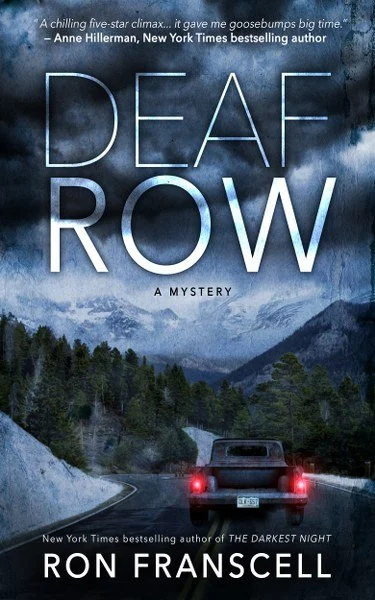
Retired from a big-city homicide beat to a small Colorado mountain town, ex-detective Woodrow "Mountain" Bell yearns only to fade away. He's failed in so many ways as a father, a husband, friend, and cop that it might be too late for a meaningful life. When he stumbles across a long-forgotten, unsolved child murder, his first impulse is to let it lie ... but he can't. He's drawn into the macabre mystery when he realizes the killer might still be near. Without help from ambivalent local cops, Bell must overcome the obstacles of time, age, and a lack of police resources by calling upon the unique skills of the end-of-the-road codgers he meets for coffee every morning—a club of old guys who call themselves Deaf Row. Soon, this mottled crew finds itself on a collision course with a serial butcher.
DEAF ROW is more than a tense mystery novel, more than an unnerving psychological thriller drawn from Ron Franscell's career as a bestselling true-crime writer and journalist. It is also a novel of men pushing back against time and death, trying not to disappear entirely. DEAF ROW is a moving, occasionally humorous, portrait of flawed people caught in a web of pain and regret. And although you might think you know where this ghastly case is headed, the climax will blindside you.
Excerpt
from CHAPTER 2
A sign in the window read, “Tommyknockers Diner … Wireless Since 1899.”
As usual, Bell arrived late on that chilly Monday morning, a freckle past seven. He’d stayed awake late, haunted by Luther Nelson and the unsettling scene at the Old Miners Home. Now, he craved steak and eggs—and answers.
“You’re late, Woodrow,” said Cotton Minahan, the old fire chief. “Day’s damn near done. We’re all morning people here.”
Bell growled as he sloughed off his heavy leather coat and draped it over his usual chair beside Father Bert.
“Yeah, well, I hate morning people,” Bell grumbled. “And mornings. And people.”
The morning began, as it did any day Father Bert was there, with a blessing. Frankly, it always pushed the limits of priestly propriety. Most Catholics believe a prayer is a direct and intimate conversation with God, and the person praying—particularly if he’s a priest—must show the appropriate respect for the Almighty. Humor is taboo. But Father Bert Clancy, who had a history of nonconformity that the Archbishop privately might have called “blurry blasphemy,” tended to include his secular friends and their foibles in his conversations. The Pope wouldn’t approve, but the Pope didn’t live in Midnight.
So, the old priest crossed himself and bowed his head:
“God, please grant us the senility to forget the people who never liked us, the good fortune to run into the ones who did, and the eyesight to tell the difference. Through Christ our Lord. Amen.”
Deaf Row’s non-Catholics waved their fingers wildly across their chests like spastics. Some of the guys had been there since Fancy O’Neil, the waitress, put the first pot of coffee on at six a.m. Hell, they competed fiercely to be the first one at the door when it was unlocked. To a bunch of old guys who no longer noticed they were no longer noticed, being first at anything was a monumental triumph. Old men settle for small victories.
They called themselves Deaf Row. They were an irregular crew of old men who held fast to the little-boy tradition of naming their club, which, in this case, was just a small-town coffee klatsch.
On any given morning (except Sunday) seven or eight old guys gathered at a table in Tommyknockers’ front window to fabulate, debate and cuss about all the things that occupy old men: death, politics, colonoscopies, guns, women, cars, sex, loss, the senselessness of designer coffee, mortality, how time moves more quickly now, Viagra, missed opportunities in life, prostates, the diverse flavors of Metamucil, and fishing. Or something really deep and important, such as the relative stamina of car batteries, which might be a metaphor for what keeps old men alive when they don’t really want to talk about what keeps old men alive.
These were the kind of guys who never once wore cufflinks. Most struggled with the pervasive notion that nobody in a small town ever did much worth doing. Their little lives in their little town left little mark.
So when Bell arrived, the regular crew, minus Doc William Frederick Ely, was there. “Bones”—as everyone called him—was a retired GP who’d doctored Midnight for more than fifty years and bragged about circumcising every mayor since 1979. The table was already steaming through its regular fourth pot and arguing its regular nonsense. Today, that happened to be an argument over the fragility of mountains.
“Them are real mountains,” said Minahan, who “retired” shortly after he was ticketed for drunk fire-truck racing. He pointed at an Alaska 1998 calendar that had never been taken down from Tommyknockers’ cluttered wall for more than twenty years. But when he wasn’t being a smartass, he was a dumbass.
“They look all sharp and wild,” Minahan insisted. “Not like these pussy mountains in Colorado. People have wore ’em down.”
Dan Coogan snorted. He was the retired editor of the town’s weekly newspaper, the semi-conscious Midnight Sun, where he still wrote a local history column every week. He also had only one vocal cord and sounded a lot like Andy Devine when he talked.
“People don’t wear down mountains!”
The obstinate Cotton Minahan dug in.
“Well, in the old days they did!”
“Minahan, you’re the most unnecessary genius in the world,” Coogan squeaked back. “You’re the Einstein of total unnecessariness. It’s high time the world celebrated you.”
Buy on Amazon | Audible | Bookshop.org
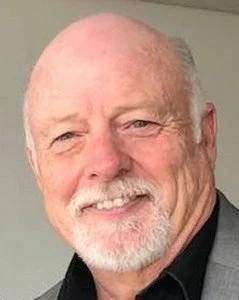
About the Author