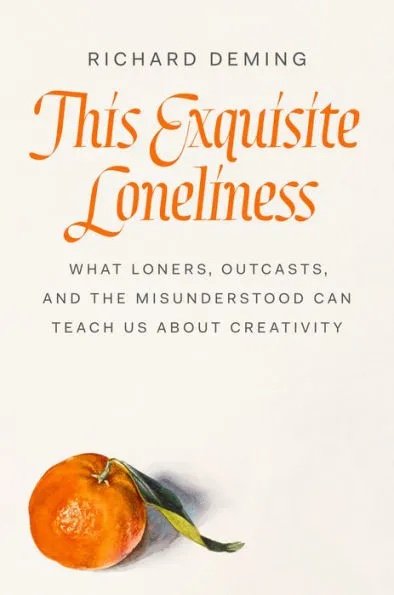
Spotlight: This Exquisite Loneliness: What Loners, Outcasts, and the Misunderstood Can Teach Us About Creativity by Richard Deming

At an unprecedented rate, loneliness is moving around the globe—from self-isolating technology and political division to community decay and social fragmentation—and yet it is not a feeling to which we readily admit. It is stigmatized, freighted with shame and fear, and easy to dismiss as mere emotional neediness. But what if instead of shying away from loneliness, we embraced it as something we can learn from and as something that will draw us closer to one another?

In This Exquisite Loneliness, Richard Deming turns an eye toward that unwelcome feeling, both in his own experiences and the lives of six groundbreaking figures, to find the context of loneliness and to see what some people have done to navigate this profound sense of discomfort. Within the back stories to Melanie Klein’s contributions to psychoanalysis, Zora Neale Hurston’s literary and ethnographic writing, the philosophical essays of Walter Benjamin, Walker Evans’s photography of urban alienation, Egon Schiele’s revolutionary artwork and Rod Serling’s uncanny narratives in The Twilight Zone, Deming explores how loneliness has served as fuel for an intense creative desire that has forged some of the most original and innovative art and writing of the twentieth century.

This singular meditation on loneliness reveals how we might transform the pain of emotional isolation and become more connected to others and more at home with our often unquiet selves.

Excerpt

From Chapter Four: The Art of Being Invisible

During the worst period of my active addiction, I was a black-out drinker because I wanted to make myself disappear. The loneliness that I have wrestled with since I was a little kid stood at the core of my substance abuse. Where Zora Neale Hurston found visions as a means to navigate the pain of loneliness, I found instead drugs and alcohol. Even before the drinking, I had come to feel that I was a ghost haunting my own life. Looking into a mirror was like seeing a shadowy figure pass by an empty window at midnight, and the drinking and the drugs were a way to either propel myself through that emptiness or to slip inside it, as if stepping into that mirror. 

Many nights during some of my worst, most vulnerable times, I roamed the streets of Boston with a flask of Jack Daniels tucked in my coat sleeve, asking random strangers what time it was. I never asked more than that, never tried to prompt a conversation—it was a form of existential sonar. I sent out waves that people bounced back to me, proving, at least provisionally, that I did exist. Other nights I might sit in the apartment and call random phone numbers.

 “Is Paul there?” I would ask, pleasantly, my tongue slushing the last word around in my mouth like a sloppy peppermint. I didn’t actually know anyone named Paul, but, of course, that wasn’t the point. 

“There’s no one by that name here,” or, more pointedly, “fuck off,” the voice that answered would explain.  Sometimes a Paul would in fact come on the line and I would have to sputter out that I must have had the wrong name. No call lasted more than thirty seconds. I would repeat this process several times in succession, and then I would drink myself into oblivion. 

The pattern was clear: a need for connection, no matter how anemic; a frustration with the transience of that unsatisfying connection; a retreat into a state of radical, profound disconnection between myself and a world that I thought had no interest in me, i.e. blackout drunkenness. That, as became clear to me, as I am reminded all the time, was not sustainable. In the years of my sobriety, I’ve sought out new methods for understanding and reframing that recurring feeling of being outside-it-all.  If I had to live with loneliness, I wanted to, needed to discover what it had to teach me. 

What I have learned about loneliness from Walter Benjamin is, in part, that it can actually heighten one’s sense of attention. Feeling outside of things can offer a widened perspective on what surrounds us all the time. If we try to burrow into the hidden lives of things, for instance, rather than hide out, or pretend to be asleep, or get drunk or high, there’s a chance of uncovering a sheer volume of meaningfulness. That insight can create some sense of connection between a person and his or her or their surroundings, a tether to hold onto, even when it feels like we’re hurtling ever outward. If loneliness is ultimately an affliction of perception, then the task is to find ways to work with perspective. 

+++

 During my nightly journeying across Berlin, from time to time came rushing back to me those evenings years before when, drunk and high, I had stumbled through the streets of Boston, milling around the then shabby (and now stringently gentrified) Kenmore Square, lying in the shadow of Fenway. I’d slip (without ID) into the Rat, the rough-hewn punk/new wave club, hustle past the homeless encampment under the Bowker Overpass, maybe pausing to score some pills or hash, then head up to Tower Records. There were clear differences between these experiences of loneliness, however. In Berlin, later in life, after years of sobriety, I could still feel that keen pang of wanting to belong as I drifted along, but instead of dulled and blurred, objects and people became distinct, vivid, even in their distance.  I felt as if I was seeing the city—the lights, the cars, the people using small spoons to make tight circles in their espresso cups.  It appeared to me with sudden acuity, as if everything was a vehicle for meaningfulness not despite but because of its ordinariness.

Once, just past 1 AM on a brisk night at the end of March, I sat in a fairly empty subway train barreling through the heart of Berlin.  There were small pockets of people, but mostly, here and there, solo riders such as myself. I looked to my left and saw a nattily dressed businessman asleep, his left eye half-open and lolling up and down. The light on the roof of the car flickered and I turned toward a young woman wearing combat boots, her face covered in piercings, talking to a small brown dog at her feet. 

Blumen, Blumen,” she was saying to the terrier mix, the word for “flowers,” as she dipped her head and stroked the animal’s chin. For a moment, I imagined calling out women’s names, one after another, until she turned her head in acknowledgment. At a stop in Kreuzberg, the more bohemian part of the city, I got off and passed a ground-floor apartment with its wide window opened onto the street. On a table inside sat lemons sitting in a bowl full of water and wafts of cigarette smoke drifting into the folds of the curtains. A few blocks on, in an American-style diner, sat two gray-haired women eating toast and jam, a neon sign trembling above them.

I had no specific place to go, so I just kept walking, and looking. It was while walking the streets of that same city that Walter Benjamin arrived at the conclusion: “Solitude appeared to me as the only fit state of man.” Berlin, Boston, Columbus, London, Buffalo, Cuernavaca, New York, Singapore:  I think of all the cities I have walked deep into the night, all by myself. At night, in the corners, there’s the same thrum of loneliness. Perhaps it isn’t that urban spaces, when empty, create a feeling of palpable absence, but rather, when they are empty, we can catch the hum of the feelings of abandonment and isolation that crisscross like power lines below the paved surfaces and concrete. 

In the mid-1970s, Robert Weiss, a sociologist then on the faculty of Harvard’s Medical School, posited that there are six key social needs that, if unmet, in part or altogether, can lead to feelings of loneliness.  They are attachment; nurturance; a sense of ongoing, dependable relationships; counsel in intense, emotional situations; and a reassurance of one’s value or worth. If we combine what Benjamin and Weiss have said, perhaps the key to navigating loneliness is to look at spaces, and people, the way an artist does—not as beautiful, but as rewarding attention with significance.  The path to that feeling of a sense of worth can come from this: being the one who sees the everyday meaningfulness in that which is perpetually overlooked due to the intensity and buzz of life in a city, no matter its size.  

Buy on Amazon Kindle | Audible | Hardcover | Bookshop.org

About the Author

Richard Deming's first collection of poems, LET'S NOT CALL IT CONSEQUENCE (Shearsman Books, 2008), won the Norma Farber Award from the Poetry Society of America and was a finalist for the Connecticut Book Award. He is also the author of Listening on All Sides: Towards an Emersonian Ethics of Reading. In 2012, he was awarded the Berlin Prize by the American Academy in Berlin. He is currently Director of Creative Writing at Yale University.

Visit Richard at his website: https://www.richarddemingbooks.com/
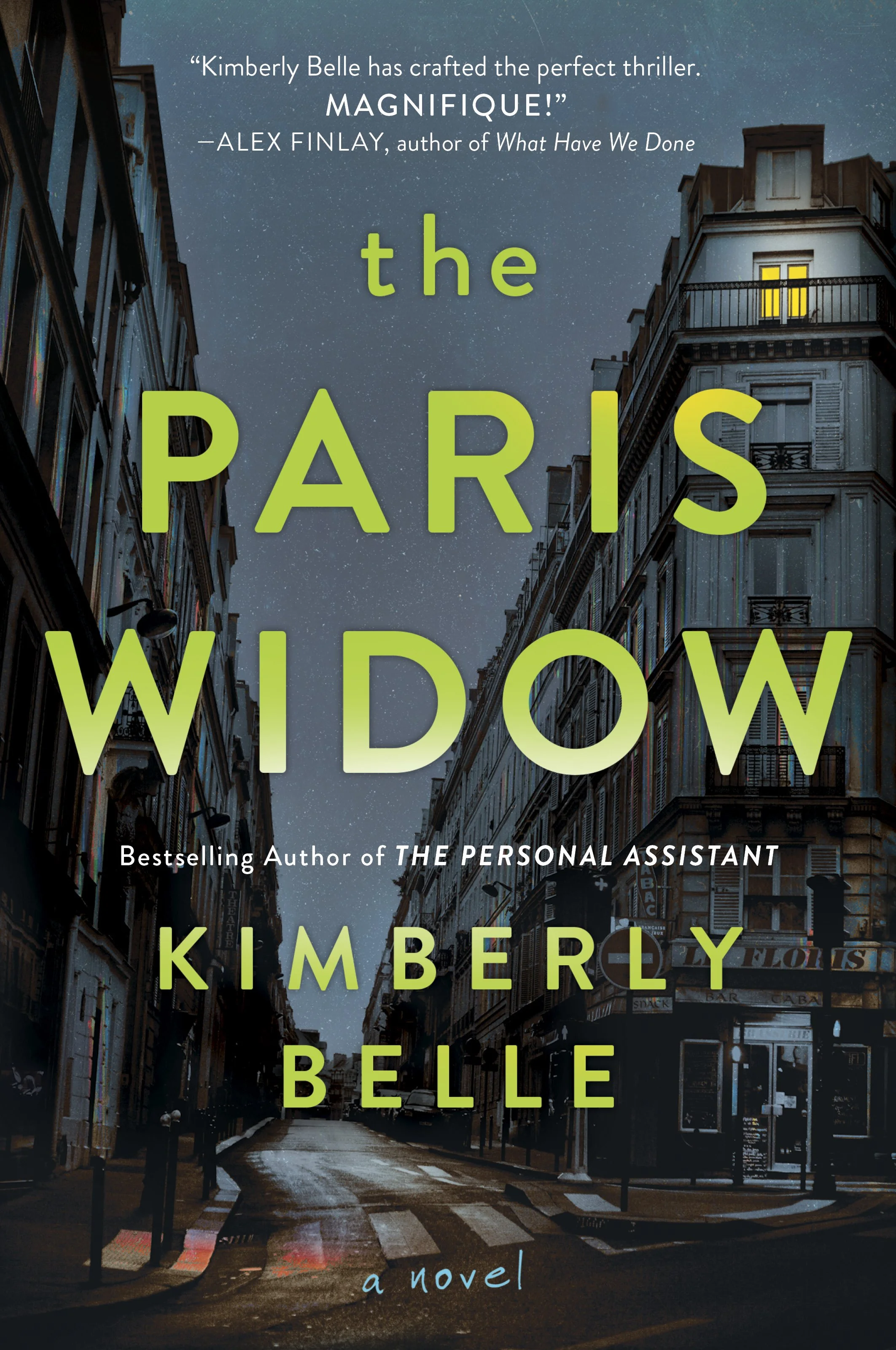
Spotlight: The Paris Widow by Kimberly Belle

Publication Date: June 11, 2024

Publisher: Harlequin Trade Publishing / Park Row Books

From USA Today bestselling author Kimberly Belle comes a deliciously twisty new thriller following a married couple vacationing in Paris whose trip takes a dark turn when the husband goes missing, dredging up secrets from both of their pasts, perfect for fans of THE PARIS APARTMENT.

When Stella met Adam, she felt like she finally landed a nice, normal guy – a welcome change from her previous boyfriend and her precarious jetsetter lifestyle with him. She loves knowing she can always depend on Adam, which is why when he goes missing during a random explosion in Paris, she panics. Right after what is assumed to be a terrorist attack, she’s interviewed live on TV by reporters, begging anyone who knows anything about her husband’s whereabouts to come forward and is quickly dubbed “The Paris Widow.”

As the French police investigate, it’s revealed that Adam was on their radar as a dealer in the black market for priceless antiquities, making deals with very high-profile and dangerous clients. Reeling from this news and growing suspicions about her husband, Stella can’t shake the feeling that she’s being followed. And with Adam assumed dead, she realizes that whoever was responsible for the bombing will come after her next. Everything – and everyone -- that Stella has tried to keep in her duplicitous past might be her only means of survival and finding out what really happened to Adam.

An irresistible and fast-paced read set in some of Europe’s most inviting locales, THE PARIS WIDOW explores how sinister secrets of the past stay with us – no matter how far we travel.

Excerpt

Prologue

Nice, France

What seems to us as bitter trials are often blessings in disguise.

—Oscar Wilde

At Nice’s Côte d’Azur Airport, the pretty woman coming down the jetway looked like every other bleary-eyed traveler. Rum­pled T-shirt over jeans with an indeterminate stain on the right thigh, hair shoved into a messy ponytail mussed from the head­rest. A backpack was slung over her right shoulder, weighed down with items that weren’t technically hers but looked like they could be. She’d sorted through them on the seven-hour flight, just long enough to make the contents feel familiar.

“Don’t lose it,” the Turkish man said when he hung it on her arm, and she hadn’t.

The jetway dumped her into the terminal, and she trailed behind a family of five, past gates stretched out like spider legs, along the wall of windows offering a blinding view of the sparkling Mediterranean, a turquoise so bright it burned her eyes. The backpack bounced against her shoulder bone, and her heart gave a quiet, little jingle.

She made it through passport control without issue, thanks to her careful selection of the agent behind the glass. A man, first and foremost. Not too old or too young, not too hand­some. A five to her solid eight—or so she’d been told by more than one man. This one must have agreed because he stamped her passport with an appreciative nod. French men were like that. One smile from a woman out of their league, and they melted like a cream-filled bonbon.

She thanked him and slid her passport into her pocket.

In it were stamps to every country in Europe and the Americas, from her crisscrosses over every continent in­cluding Antarctica, from her detours to bask on the famous beaches of Asia, Australia, the South Seas. More than once, she’d had to renew the booklet long before it expired because she’d run out of empty spots for customs agents to stamp. She was particularly proud of that, and of how she could look any way you wanted her to look, be anyone you needed her to be. Today she was playing the role of American Tourist On A Budget.

At baggage claim, she slid the backpack down an aching shoulder and checked the time on her cell. Just under six hours for this little errand, plenty of time assuming she didn’t hit any unexpected roadblocks. If she didn’t get held up at customs, if the taxi line wasn’t too long, if traffic on the A8 wasn’t too awful, which it would be because getting in and out of Monte Carlo was always a nightmare at this time of year. If if if. If she missed the flight to London, she was screwed.

A buzzer sounded, and the baggage carousel rumbled to a slow spin.

At least she didn’t look any more miserable than the people milling around her, their faces long with jet lag. She caught snippets of conversation in foreign tongues, German, Ital­ian, Arabic, French, and she didn’t need a translator to know they were bitching about the wait. The French were never in a hurry, and they were always striking about something. She wondered what it could be this time.

Thirty-eight eternal minutes later, the carousel spit out her suitcase. She hauled it from the band with a grunt, plopped the heavy backpack on top and followed the stream of tour­ists to the exit.

Walk with purpose. Look the customs agent in the eye. Smile, the fleeting kind with your lips closed, not too big or too cocky. Act breezy like you’ve got nothing to prove or to hide. By now she knew all the tricks.

The customs agent she was paired with was much too young for her liking, his limbs still lanky with the leftovers of pu­berty, which meant he had something to prove to the clus­ter of more senior agents lingering behind him. She ignored their watchful gazes, taking in his shiny forehead, the way it was dotted with pimples, and dammit, he was going to be a problem.

He held up a hand, the universal sign for halt. “Avez-vous quelque chose à déclarer?”

Her fingers curled around the suitcase handle, clamping down. She gave him an apologetic smile. “Sorry, but I don’t speak French.”

That part was the truth, at least. She didn’t speak it, at least not well and not unless she absolutely had to. And her rudi­mentary French wasn’t necessary just yet.

But she understood him well enough, and she definitely knew that last word. He was asking if she had something to declare.

The agent gestured to her suitcase. “Please, may I take a look in your luggage?” His English was heavy with accent, his lips slick with spit, but at least he was polite about it.

She gave a pointed look at the exit a few feet away. On the other side of the motion-activated doors, a line of people leaned against a glass-and-steel railing, fists full of balloons and colorful bouquets. With her free hand, she wriggled her fingers in a wave, even though she didn’t know a single one of them.

She looked back at the agent with another smile. “Is that really necessary? My flight was delayed, and I’m kind of in a hurry. My friends out there have been waiting for hours.”

Calm. Reasonable. Not breaking the slightest sweat.

The skin of his forehead creased in a frown. “This means you have nothing to declare?”

“Only that a saleslady lied to my face about a dress I bought being wrinkle resistant.”

She laughed, but the agent’s face remained as stony as ever.

He beckoned her toward an area behind him, a short hall­way lined with metal tables. “S’il vous plait. The second table.”

Still, she didn’t move. The doors slid open, and she flung an­other glance at the people lined up outside. So close yet so far.

As if he could read her mind, the agent took a calculated step to his left, standing between her and the exit. He swept an insistent arm through the air, giving her little choice. The cluster of agents were paying more attention now.

She huffed a sigh. Straightened her shoulders and gave her bag a hard tug. “Okay, but fair warning. I’m on the tail end of a three-week vacation here, which means everything in my suitcase is basically a giant pile of dirty laundry.”

Again, the truth. Miami to Atlanta to LA to Tokyo to Dubai to Nice, a blur of endless hours with crummy movies and soggy airplane food, of loud, smelly men who drank vodka for breakfast, of kids marching up and down the aisles while everybody else was trying to sleep. What she was wearing was the cleanest thing she had left, and she was still thousands of miles from home.

She let go of the handle, and the suitcase spun and wobbled, whacking the metal leg of the table with a hard clang. Let him lug the heavy thing onto the inspection table himself.

She stood with crossed arms and watched him spread her suitcase open on the table. She wasn’t lying about the laundry or that stupid dress, which currently looked like a crumpled paper bag. He picked through her dirty jeans and rumpled T-shirts, rifled through blouses and skirts. When he got to the wad of dirty underwear, he clapped the suitcase shut.

“See?” she said. “Just a bunch of dirty clothes.”

“And your other bag?”

The backpack dangling from her shoulder, an ugly Tumi knockoff. Her stomach dropped, but she made sure to hold his gaze.

“Nothing in here, either. No meat, no cheese, no forgot­ten fruit. I promise.”

She’d done that once, let an old apple sink to the bottom of her bag for a hyped-up beagle to sniff out, and she paid for it with a forty-five minute wait at a scorching Chilean airport. It was a mistake she wouldn’t make again.

Madame, please. Do not make me ask you again.”

The little shit really said it. He really called her madame. This kid who was barely out of high school was making her feel old and decrepit, while in the same breath speaking to her like she was a child. His words were as infuriating as they were alarming. She hooked a thumb under the backpack’s strap, but she didn’t let it go.

And yet what choice did she have? She couldn’t run, not with those senior agents watching. Not with this pubescent kid and his long, grasshopper limbs. He’d catch her in a hot second.

She told herself there was nothing to find. That’s what the Turkish man had promised her with a wink and a smile, that nobody would ever know. He swore she’d cruise right on through customs. And she had, many, many times.

As she slid the backpack from her arm with another dra­matic sigh, she hoped like hell he wasn’t lying. “Please hurry.”

The agent took the bag from her fingers and emptied it out on the table. He took out the paperback and crinkled maga­zines, the half-eaten bag of nuts with the Japanese label, the wallet and the zippered pouch stuffed with well-used cosmet­ics that had never once touched her face. He lined the items up, one after the other, until the contents formed a long, neat row on the shiny metal surface. The backpack hung in his hand, deflated and empty.

She lifted a brow: See?

But then he did something she wasn’t expecting. He turned the backpack upside down, just…upended the thing in the air. Crumbs rained onto the table. A faded receipt fluttered to the ground.

And there it was, a dull but discernible scraping sound, a sudden weight tugging at the muscles in his arm, like some­thing inside the backpack shifted.

But nothing else fell out. There were no internal pockets.

“What was that?”

“What was what?” With a clanging heart, she pointed to the stuff on the table. “Can I put that back now? I really have to go.”

The agent stared at her through a long, weighted silence, like a held breath.

Hers.

He slapped the backpack to the table, and she cringed when he shoved a hand in deep, all the way up to his elbow. He felt around the sides and the bottom, sweeping his fingers around the cheap polyester lining. She saw when he made contact with the source of the noise by the way his face changed.

The muscles in her stomach tightened. “Excuse me, this is ridiculous. Give it back.”

The agent didn’t let go of the backpack. He reached in his other hand, and now there was another terrifying sound—of fabric, being ripped apart at the seams.

“Hey,” she said, lunging for the backpack.

He twisted, blocking her with his body.

A few breathless seconds later he pulled it out, a small, flat object that had been sewn into the backpack lining. Small enough to fit in the palm of his hand. Almost like he’d been looking for it.

“What is this?” he said, holding it in the air between them.

“That’s a book.” It was the only thing she could think of to say, and it wasn’t just any book. It was a gold-illuminated manu­script by a revered fourteenth-century Persian poet, one of the earliest copies from the estate of an Islamic art collector who died in Germany last year. Like most of the items in his collec­tion, this one did not technically belong to him.

“I can see it’s a book. Where did you get it?”

Her face went hot, and she had to steady herself on the metal table—the same one he was settling the book gently on top of. He turned the gold-leafed paper with careful fin­gers, and her mind whirled. Should she plead jet lag? Cry or pretend to faint?

“I’ve never seen it before in my life.”

This, finally, was the truth. Today was the first time she’d seen the book with her own eyes.

The agent looked up from the Arabic symbols on the page, and she didn’t miss the gotcha gleam in his eyes. The way his shiny forehead had gone even shinier now, a million new pin­pricks of satisfied sweat. His gaze flitted over her shoulder, and she understood the gesture perfectly.

He was summoning backup.

She was wondering about French prison conditions.

His smile was like ice water on her skin. “Madame, I must insist you come with me.”

Excerpted from THE PARIS WIDOW by Kimberly Belle. Copyright © 2024 by Kimberly Belle. Published by Park Row Books, an imprint of HarperCollins.

Buy on Amazon Kindle | Audible | Hardcover | Paperback | Bookshop.org

About the Author

Kimberly Belle worked in marketing and nonprofit fundraising before turning to writing fiction. A graduate of Agnes Scott College, Kimberly lived for over a decade in the Netherlands and currently divides her time between Atlanta and Amsterdam. She is the bestselling author of The Marriage Lie, Three Days Missing, Dear Wife, as well as The Last Breath, The Ones We Trust, Stranger in the Lake, My Darling Husband, and The Personal Assistant.

Connect:

Author website: https://www.kimberlybellebooks.com/ 

GoodReads: https://www.goodreads.com/kimberlybelle 

Twitter: https://twitter.com/KimberlySBelle 

Instagram: https://www.instagram.com/kimberlysbelle/

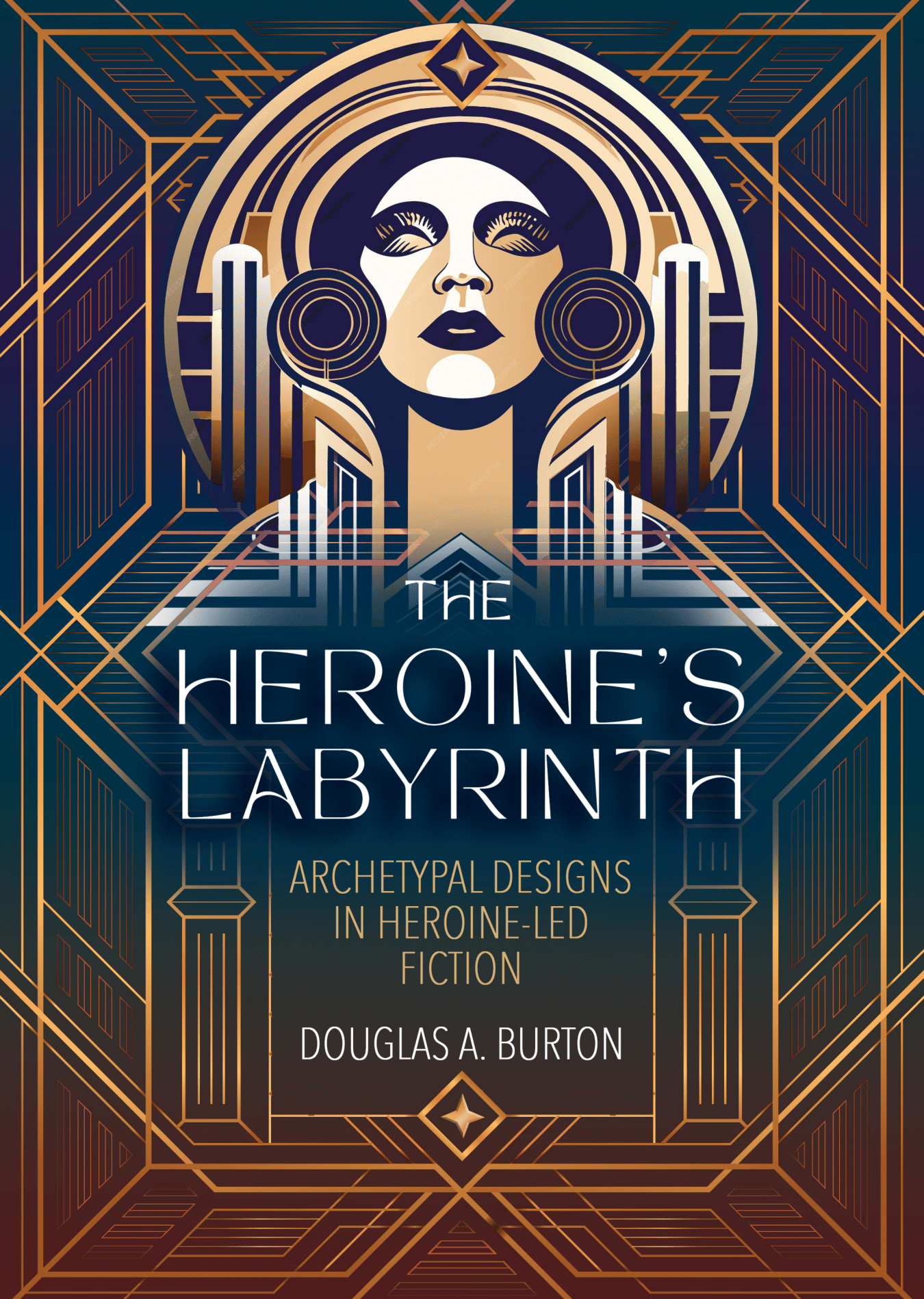
Spotlight: The Heroine’s Labyrinth by Douglas A. Burton

Publication date: March 24th 2024
Genres: Non-fiction

Synopsis:

For decades, the hero’s journey has had a major influence on storytelling and story structure. Now, Douglas A. Burton presents a groundbreaking new paradigm for writers everywhere. Sourced entirely from heroine-led fiction—a stunning new narrative form takes shape with familiar archetypes in a never before seen outline. Burton adds something original and fascinating to the world of storytelling. Discover the dynamism of story, conflict, character development, archetypes, and heroism in an entirely new light. From myth to literature, from TV to film, The Heroine’s Labyrinth explores recurrent themes and patterns modeled by heroic women in fiction. The labyrinth model has the potential to turn conventional understanding of story structure upside down.

Inside, you’ll encounter 18 archetypal designs that form a distinctive narrative arc, each one rich with profound insights and powerful new perspectives. Discover how stories are constructed through powerful archetypes such as the Masked Minotaur, the Sacred Fire, the Beast as Ally, the Poisoned Apple, and more. Novelists, screenwriters, RPG gamers, and memoirists will gain waves of creative inspiration while reading The Heroine’s Labyrinth. You won’t be able to put it down.

Excerpt

The Heroine’s Labyrinth is a book for writers—novelists, screenwriters, role players, memoirists—anyone who loves and cares about storytelling. The narrative concepts within this book are not variations of the hero’s journey; they are not a response to any criticism of heroines, nor are they prescriptive notions of my own design. The heroine’s labyrinth is a model of the archetypal power that exists now, has always existed, and will continue to exist for as long as there’s still a heroine to write about.

In 2018, I was deep into writing my first novel, Far Away Bird. The historical fiction novel centered around the real life of Empress Theodora. Her tale included historical and biographical details that any novelist needed to follow to capture the truth and essence of her character. However, to help me organize Empress Theodora’s story into a workable structure, like many writers, I turned to the hero’s journey. But midway through the novel, I came to the most frustrating conclusion possible—that the life of my beloved empress and leading heroine did not follow the hero’s journey. As a full believer in the hero’s journey, this was a devastating realization. So, begrudgingly, I did what seemed to be the next and most logical step in the writing process.

I searched for the feminine equivalent of the hero’s journey.

In The Art of Storytelling: From Parents to Professionals, Professor Hannah B. Harvey presents a lecture on fairy tales, where she discusses the origins and mythology of Little Red Riding Hood. The common ingredients for the story are an innocent girl, a masculine beast in disguise, and an attempt by the beast to eat the girl. Professor Harvey explains that Little Red Riding Hood is actually a fable about budding womanhood and a cautionary tale about the life choices of a young heroine. I immediately realized that this scenario had vast archetypal power because of its recurrent themes throughout a broad spectrum of stories. Suddenly, we spot Little Red Riding Hood reborn as Dorothy Gale, Buffy the Vampire Slayer, Clarice Starling, or Bella Swan. But the Little Red Riding Hood tropes and scenarios didn’t appear anywhere in the hero’s journey. Therefore, Professor Harvey’s interpretation and analysis gave me the exact framework for the narrative model I searched for—a heroine with a thousand faces. 

I decided to reorganize all my notes on heroines—not as a derivative of the hero’s journey, not as a criticism of heroines, but as a distinctive stand-alone monomyth found in stories. What I found changed my perspective and understanding of our countless heroines. And so, my desire to unlock the heroine’s secrets led me to write the one book I’d never found while writing my own heroine-centric novel. 

The copious notes I collected during those years became the foundation of this book. If it helped me, then it can help you. The Heroine’s Labyrinth is the final result of a life-long passion for storytelling, a personal fascination with archetypes, and an unexpected labor of love in understanding the journey of heroic women in our collective works of fiction. And dear writers, I can’t wait to share it all with you. 

The Heroine’s Labyrinth differs from other books on the topic because of five storytelling guidelines.

1. The heroine is always sovereign, regardless of portrayal, historical period, or restrictive circumstances. 

2. The primary focus is on the art of writing and storytelling. 

3. The archetypal patterns and themes must be distinct and recurrent in heroine-centric stories. 

4. We’ll approach story structure as intuitive, semi-sequential, and flexible rather than formulaic, linear, and fixed. 

5. The heroine’s labyrinth does not invalidate nor diminish the hero’s journey. 

The combination of these five guidelines delivers a distinctive and original take on heroine-centric stories and the art of storytelling. Many books that studied heroines veered away from the craft of writing. Other books approached feminine stories critically, perhaps discussing heroines more as they should be. However, as you’ll see, heroines as they are and, more importantly, heroines as they have always been are far more powerful, inspiring, and memorable. 

Joseph Campbell himself said, “For the symbols of mythology are not manufactured; they cannot be ordered, invented, or permanently suppressed. They are spontaneous productions of the psyche, and each bears within it, undamaged, the germ power of its source.” 

In other words, we cannot devise by preference what the heroine does on her own. As writers, we cannot tell the heroine what to do, how to act, or which virtues to model. Instead, we must listen, observe, and learn from her actions and choices. There is a constant heroine across culture and history, through myth and story, and she brings unique solutions and timeless archetypal wisdom to life’s challenges. The heroine’s story is our story. Her struggles are our struggles. And the wisdom she gains, she gains for us all.

Buy on Amazon Kindle | Paperback | Bookshop.org

About the Author

Douglas A. Burton is a novelist and storyteller whose various works emphasize heroic women in fiction. Burton’s debut historical novel, Far Away Bird, brought Byzantine Empress Theodora to life through an intimate biographical account. The novel collected numerous awards including gold medals for the IBPA’s Best New Voice in Fiction, Readers’ Favorite Historical Personage, and eLit’s Best Historical Fiction eBook. Far Away Bird was also a finalist for the Montaigne Medal (Eric Hoffer Book Award) and Screencraft’s Cinematic Book competition. Burton’s newest book, The Heroine’s Labyrinth, is a nonfiction writing craft book that offers a paradigm shift for story structure. Presented as a distinctive counterpart to the well-trodden hero’s journey, Burton explores the unique narrative arc and archetypal designs that recur in heroine-led fiction. He currently lives in Austin, TX with his wonderful wife, Crystal, and two energetic boys, Jacob and Lucas. 

Connect:

https://douglasaburton.com/
https://www.facebook.com/douglasaburtonauthor/

https://x.com/douglasaburton

https://www.goodreads.com/author/show/19627491.Douglas_A_Burton

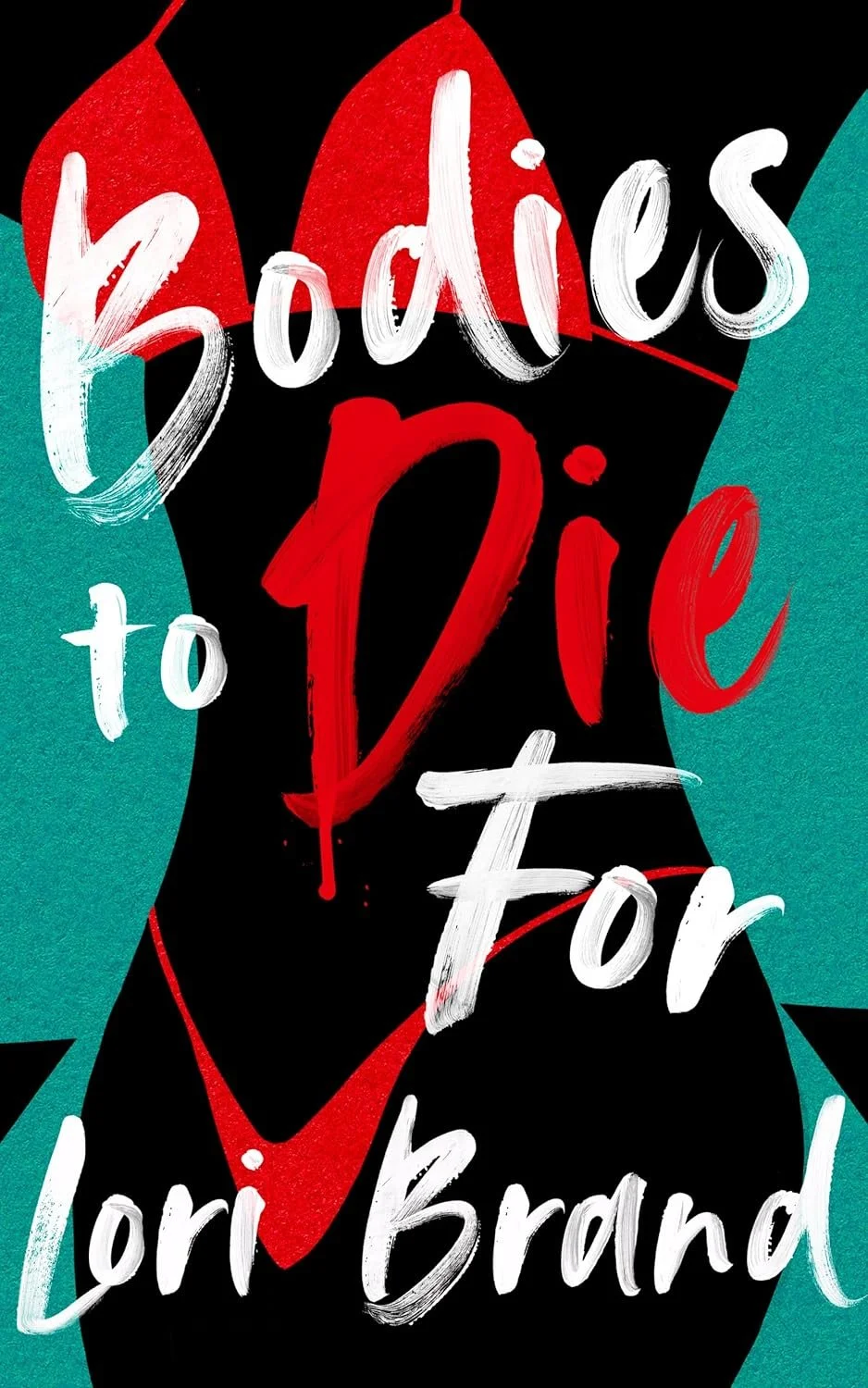
Spotlight: Bodies to Die For by Lori Brand

Perfect for fans of You Shouldn't Have Come Here and None of This Is TrueBodies to Die For is a brilliant psychological thriller that will have readers wondering whether the perfect body really is worth dying for ... 

Popular fitness influencer Gemma has transformed herself from a Before into an After, complete with washboard abs, thriving business, and gorgeous husband. But social media can be deceiving. Offline, the cutthroat world of bikini bodybuilding may just eat her alive. That's if she's not first devoured by the secret nemesis that lurks beneath her polished surface, waiting to destroy her.

Software engineer Ashley is fat and frustrated. Frustrated with failed diets. With a world that wants her to shrink. With biased doctors, online trolls, and even her own mother. Until Ashley falls in with a mysterious and radical sect of Fat Activists who are fighting back ... by any means necessary. She's never felt so alive, so full of purpose. She'll do whatever it takes to ride this high, destroy Diet Culture, and win the approval of her charismatic leader.

But when Gemma's toughest rival turns up dead, and more fitness girls fall like dominoes, it's beginning to look like the body image war has gone too far.

With breakneck pace and keen insights, Bodies to Die For takes a hard look at social media, the $70 billion diet industry, and the war on women's bodies--the wars we wage with each other, and with ourselves.

Excerpt

The ceiling is dripping. That’s what the guest called down. 

Dale now stood in the bathroom of 651, gazing up to where a dark stain was forming. Fat water droplets collected in its belly, periodically splatting to the earth, like jumpers. 

“Someone must have left the water on upstairs,” the guest offered. Dale’s headache, camped at the base of his skull since morning, spread out and set up satellites at his temples. 

Gemma. That was the guest in the room above. Dale knew this because in the last twenty-four hours, she had lost her room key twice, misplaced the bottoms of her crystal-encrusted bikini, and run through the hotel lobby in a skimpy robe to flag down a police officer. She was one of the many crazy Olympia contestants. 

For the second year in a row, the bodybuilding show was taking place at the Orange County Convention Center in Orlando, Florida. It was one of his hotel’s biggest events, booking over five hundred guest rooms, as well as several conference rooms for check-ins, makeup, hair, and tanning. And it wasn’t just the full house that made the Olympia so profitable. The spa was packed with competitors seeking massages and manicures. The restaurant was jammed with sponsors devouring steaks and martinis. 

Despite the Olympia being a boon to business, it was the source of many a headache for Dale. There were screaming matches between the competitors and their significant others, between the competitors and their teammates, between the competitors and the staff—really, just the competitors at the staff. These bodybuilders were a rather high-strung breed. Maybe they just needed carbs? 

Then there were the mounds of hotel linens stained orange by spray tan. The smells: perfume layered over body odor spritzed with protein farts. And medical crises, everything from panic attacks to heart palpitations to seizures. The whole hair-raising affair dragged on for six long days.

But if last year’s event had given Dale headaches, this year’s was giving him a full-blown, face-numbing migraine. Earlier today, there was a Fat Activist protest against one of the contest’s main sponsors, REIGN. Somehow, while the police were rounding up the protesters, a few broke loose and went rogue. They were now at large, somewhere in Dale’s hotel. diet culture sluts had been scrawled on a wall in black five-feet-high permanent marker. So, as Dale stood in the bathroom of 651, he figured, why not a flood?

Dale looked at his watch. Tonight’s Finals were about to start. That meant Gemma likely left the water on at least thirty minutes ago. Dale knew from experience that thirty minutes of running water could result in thousands of dollars’ worth of damage. He assured the guest he would take care of the dripping and took the stairs, two at a time, to the seventh floor. By the time he arrived outside 751, he was out of breath and sweating. 

That was another thing about this show, it always highlighted how out of shape he was. Just this morning, he found himself in one of the elevators, the stench of Egg McMuffin on his breath, belly hanging over his khakis, standing next to a male Physique competitor. The man’s body fat was so low that the veins on his arms protruded like bloated earthworms after a storm. The man was holding a gallon-size jug of water and dressed in athletic shorts and a tank top, likely on his way to the gym. He eyed Dale’s McDonald’s coffee, laden with artificial creamer, suspiciously. Dale simply nodded good morning and promised himself, yet again, that he was going to start hitting the gym just as soon as this show was over.

Before knocking on 751’s door, Dale took a moment to collect his breath and straighten himself. He tucked in his shirt and smoothed his hair. Wiped his sweaty hands on his pants, leaving faint wet streaks on the fabric. Once righted, he banged on the door. “Hotel maintenance. Open up, please.” 

There was no answer. He stood still, listening. He could hear the shower running inside. 

Again, he banged. “Hotel maintenance. We’ve had a report of leaking water downstairs.” Again, there was no response.

After a few moments, Dale slipped his master key card from his pocket and ran it across the lock. Three green lights appeared, making a happy, chirpy sound. Dale pushed the door inward. 

The beige carpet was saturated. Small currents eddied on top, reflecting light from the open bathroom ahead.

“Hotel maintenance,” he said. Above him, the air conditioner kicked on, making the hair on his forearms stand up. 

Slowly, Dale stepped forward, his feet squishing into the carpet. Water worked its way through his shoes and dampened his socks. He continued, putting one soggy foot in front of the other, toward the sound of the running water. As he got closer, something that looked like a yellow ribbon began to snake its way out of the bathroom, floating. 

His eyes adjusted, and he realized it wasn’t a ribbon at all, but a hank of blonde hair. It continued its bobbing path, and Dale saw that it ended not in a hunk of human flesh, but in a comb. He had seen enough female competitors carrying ziplock bags of hair around the hotel to recognize it as a hair extension. 

“Hello?” Dale asked, his voice now small and hollow. He instinctively knew there would be no reply.

With the back of his neck prickling, Dale continued toward the rectangle of light spilling from the mouth of the bathroom. When there were no steps left to take, he took a deep breath and steeled himself for what was inside. 

And there it was. Like he knew it would be. Floating facedown in the tub before him was a body. The back of its head bashed in and matted with blood.

Buy on Amazon Kindle | Audible | Hardcover | Paperback | Bookshop.org

About the Author

Lori Brand is a lifting enthusiast, group fitness instructor, yoga teacher, and software quality engineer. In past lives, she’s been a gymnast, dancer, Playboy model, and bodybuilder. Her time in the body wars trenches led to her realization that getting strong, rather than shrinking, is the way out. In an effort to spread the word, she’s had articles published in STRONG Fitness Magazine, T-Nation, Inside Fitness Magazine, D’FYNE Fitness Magazine, and more. Bodies to Die For is her first novel.

Spotlight: Against the Run of Play by Kiru Taye

(Viva City FC Books, #2)
Publication date: May 28th 2024
Genres: Adult, Contemporary, Romance, Sports

Synopsis:

Step into the thrilling world of professional footballers in the Viva City FC Books series!

Soccer player and reformed bad boy, Asher Uzodimma, is struggling through a challenging season. Due to a string of injuries, he finds himself relegated to the bench during crucial games as his team battles for promotion into the league’s top division. Frustrated, he falls back on some old habits and escapes to find solace where he encounters the vibrant Vivi. She has zero interest in celebrities. Yet, spending only two days with her brings a sense of calm and stability back into his life. She possesses all the qualities he never realised he desired in a woman, and his yearning to be in her presence grows stronger with each passing day. Nevertheless, when he finally learns her full identity, she quickly becomes the last woman anyone wants for him.

Vivacious and fun-loving Vivi Osondu is currently in seclusion after the highly publicised end to her turbulent relationship. She needs a break to reevaluate her life and dedicate time to self-reflection. Meeting Asher brings back her laughter, which had been missing for months, and each time she lays eyes on him, her stomach fills with a delightful sense of excitement. However, he’s part of the famous crowd, and she’s made a conscious decision to steer clear of that world, so she chooses to walk away. But Asher is determined to turn the game around both on and off the pitch, against the run of play.

Excerpt

I see a flash of colour—fuchsia—and turn instinctively towards it. But I lose it in the crowd. 

My heart is racing, my skin hot. Could it be her? Vivi. Is she here? 

“Mum, I think I spotted someone I need to speak to. Do you mind?” I say. 

“No. It’s okay. I need to use the ladies anyway. I’ll meet you back at the table.” 

“Okay.” I direct her towards the signs for the ladies and keep glancing around. But I can’t see anyone wearing the bright purple/red colour I spotted earlier. Then I head down the corridor leading to the foyer, thinking she might have gone outside. 

My heart stops as I halt. Then it slams into my chest. 

A Black woman stands in the foyer talking on her phone. Her back is to me but I recognised her figure, her voice. 

Vivi is here. I don’t know how it’s possible. I mean, I know she lives in London and she works as a sportswriter. But to be here at this very moment feels like serendipity. Like destiny. 

My senses heighten and my vision clarifies. I was buzzing when I arrived. But now it feels like I’ve been struck by lightning as I feel an energy surge. It feels like that first night I saw her in the sports bar. I zoom in on her. 

She is in an off-shoulder ruffle collar boho maxi dress that shows off the glowing skin of her shoulders and arms and skims her curves. It’s sexy without being vulgar. Her strappy stilettos match her purse tucked under her arm. 

Her hair is different. In Zanzibar, her hair had loose curls and streaks of colour. This looks too dark, long, and straight and almost to her butt. Perhaps a wig or weave, just like my sisters wear sometimes. 

Her voice is a melody that draws me closer and I can’t resist the pull. I walk past the people around me as if they are obstacles and challenges I must conquer to reach my goal—Vivi. Adrenaline charges over me. I’m on the field in a crucial match and I’m running toward the goal line to score before the final whistle. 

As if she senses me, she swivels and I know I’m not dreaming because her face lights up with a beautiful smile. Warmth and ecstasy spreads through me. I want to touch her smooth skin, to kiss her full lips a shade darker than her dress. Her irises are a mesmerising bronze. There are layers of colours on her eyelids and cheeks, contouring her face. It’s more makeup than she had on the island. 

But I recognise the woman underneath. I remember the natural tone of her skin first thing in the morning. The softness of her curves against me. Every cell in my body wants to be connected to her.

Buy on Amazon

About the Author

Kiru is the award winning author of His Treasure. She writes sensual and passionate multicultural romance stories set mostly in Africa. When she's not writing you can find her either immersed in a good book or catching up with friends and family. She currently lives in the South of England with her husband and three children.

Subscribe to her newsletter for book news and giveaways: http://www.kirutaye.com

Connect:

https://x.com/KiruTaye

https://www.kirutaye.com/

https://www.facebook.com/AuthorKiruTaye/

https://www.youtube.com/user/kirutaye

https://www.instagram.com/kirutaye/

https://www.goodreads.com/author/show/5242699.Kiru_Taye

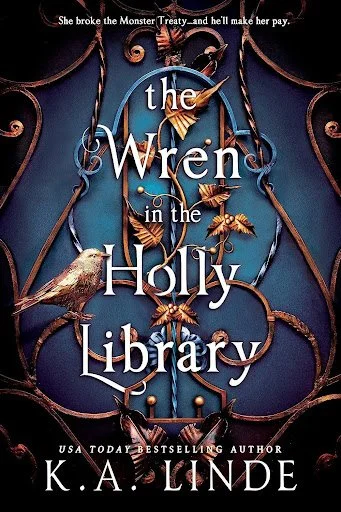
Spotlight: The Wren in the Holly Library by K.A. Linde

Release Date: June 4 

Can you love the dark when you know what it hides?

Some things aren’t supposed to exist outside of our imagination.

Thirteen years ago, monsters emerged from the shadows and plunged Kierse’s world into a cataclysmic war of near-total destruction. The New York City she knew so well collapsed practically overnight.

In the wake of that carnage, the Monster Treaty was created. A truce...of sorts.

But tonight, Kierse—a gifted and fearless thief—will break that treaty. She’ll enter the Holly Library...not knowing it’s the home of a monster.

He’s charming. Quietly alluring. Terrifying. But he knows talent when he sees it; it’s just a matter of finding her price.

Now she’s locked into a dangerous bargain with a creature unlike any other. She’ll sacrifice her freedom. She’ll offer her skills. Together, they’ll put their own futures at risk.

But he’s been playing a game across centuries—and once she joins in, there will be

no escape...

Buy on Amazon Kindle | Audible | Hardcover | Paperback | Bookshop.org

Meet K.A. Linde:

K.A. Linde is the USA Today bestselling author of both romance and fantasy novels. She has a Masters degree in political science from the University of Georgia, was a head campaign worker for the 2012 presidential campaign at the University of North Carolina at Chapel Hill, and served as the head coach of the Duke University dance team. She loves reading fantasy novels, traveling to far-off destinations, and dancing in her spare time.

She currently lives in Lubbock, Texas, with her husband, son, and super-adorable puppy.

Keep up with K.A. Linde and subscribe to her newsletter: https://www.kalinde.com/subscribe/

To learn more about K.A. Linde & her books, visit here!

Connect with K.A. Linde: https://www.kalinde.com/contact/