Spotlight: Edge of the World by Alden Jones

These lively essays by luminary writers offer a queer perspective on how people experience  other cultures and how other cultures receive queer people. This anthology of essays includes the perspectives of gay, lesbian, bisexual, queer, and trans American authors from multiple ethnic identities, showcasing the travel writing of both established and emerging authors ac​​ross a wide age spectrum to address these central questions. Contributors include Alexander Chee, Edmund White, Daisy Hernández, Putsata Reang, Alex Marzano-Lesnevich, Denne Michele Norris, Garrard Conley, Andrew Ellis Evans, Nicole Shawan Junior, Raluca Albu, KB Brookins, Genevieve Hudson, Zoë Sprankle, Sara Orozco, and Calvin Gimpelevich. Their essays take the reader to different areas of the world including Spain, Ukraine, Florida, New York City, Mexico, Cambodia, Russia, Senegal, Berlin, and more.

Excerpt

Edited by Alden Jones 

We Find Each Other 

A Prelude

How and why do queer people travel? We travel to find each other. To escape the places and people who reject us. Because somewhere, on a faraway beach, a party is being planned. Because we are displaced by violence or war. For the thrill of something new. To pursue an education. For love. To heal a broken heart. Because of some mysterious instinct to move and move and move. All the reasons human beings travel.

At a cocktail party in Los Angeles in 2016, I began a conversation with a fellow travel writer that became this book. We were at the party to toast Raphael Kadushin’s retirement from the University of Wisconsin Press, where Raphy had built a unique list of gay and lesbian travel literature — the only such collection I was aware of. He had acquired my own travel memoir, The Blind Masseuse, a few months after a writers’ conference at which I’d discovered a table stacked with gay and lesbian travelogues, anthologies, and place-based memoirs and boldly announced to him that my book belonged at his table. Raphy was a magazine travel writer in addition to being an editor. He’d acquired and in some cases edited books such as Queer Frontiers: Millennial Geographies, Genders, and Generations; Something to Declare: Good Lesbian Travel Writing; Wonderlands: Good Gay Travel Writing; and Big Trips: More Good Gay Travel Writing, and he’d done this during a time when “queer travel writing” was so specialized a genre that few publishers believed a readership for it existed.

More room has been made for queer stories in publishing since the first gay and lesbian travel writing anthologies appeared. It was logical in the early 2000s to divide anthologies by “gay” and “lesbian,” as these early collections were sorted. It made sense that purchasers of these anthologies might be looking for stories of same-sex romance set abroad: Before the internet, queer readers searched for stories of queer love and sex anywhere and everywhere, and if a story was billed as gay, there’d better be something gay about it. LGBTQ+ lit is no longer in the margins. Queer travel literature is in a position to forge new ground.

At the cocktail party, I posed a musing question: What if we didn’t sort out these collections by gender and queer subidentity? What would we discover about travel writing if we considered it more expansively, through the lens of being queer? Why doesn’t an inclusive anthology of queer-themed travel writing exist yet?

The conversation lasted the rest of the weekend, because I couldn’t stop thinking about it, and everyone I ran the idea by also wanted answers. What themes could surprise us in a queer-forward travel collection? What did it mean to be queer and moving through the world? To get my answer, I’d have to pose the question to some queer thinkers and request their answers in the form of travel tales. I set out to create this book.

I became a travel writer because I was interested in what the genre could do that it wasn’t already doing. (Also because in the ’90s, when I was starting out as a writer, it was possible to make actual money writing for travel sections and magazines. Those were the days.) As a genre, travel writing has not always made room for all the ways human beings travel; it has tended to focus on pleasure and leisure, the lure of the exotic, and brief escapes. In Edge of the World, we offer some escape stories in that tradition. Travel writing should exist as entertainment, as microvacation. In Edge of the World it exists in the form of luminary Edmund White reminiscing about his years of visiting the gay mecca of Key West, and Texan KB Brookins inviting us along on a road trip to Mérida, Mexico, for a feel-good Pride. Of course, travel isn’t always festive and fun, and danger presents itself to queer travelers in particular ways. As Sara Orozco discovers on a spontaneous trip to a gay bar in 1985, being gay and cavalier about the rules of an unfamiliar place might cause you to end up in handcuffs. Sara is not the only writer here who comes face-to- face with homophobia in the form of the law; in New Orleans, stopped for the alleged crime of kissing their girlfriend in public, Alex Marzano-Lesnevich must weigh how important it is to assert their legal rights to the officer shining his flashlight in their eyes. An emotional spectrum exists between those highs and lows.

Once I began to collect these essays, refrains arose — some expected, others more revelatory. There is dancing in Edge of the World. A recurring quest for a queer utopia.  Returning to a foreign locale years after a first visit to confront how much both you and the place have changed. The push and pull of parental love. How many of us long for our original home, even when we’ve traveled far away from it for a specific reason. There are scenes in this book that seem almost to be doubles, repetitions, one writer’s experience mirrored by another’s. Travel has a tendency to conjure self-knowledge and bring it to the surface, and the best travel writing reflects this. I hope, in addition to exploring the expansive queer experience, that this collection asks not only what it means to be queer and moving through the world, but also what a queer perspective can do to expand or test the parameters of travel writing.

Queer communities do not generally form at home. More often, queerness sends us searching.

And we find each other. That is what we do.

Buy on Amazon Kindle | Paperback | Bookshop.org

About the Author

Alden Jones is an award-winning author and educator whose travel writing has appeared in Best American Travel Writing 2000, the inaugural volume of the series, and named “Notable” in Best American Travel Writing 2005 and 2011. Her most recent book is Lambda Literary Award-finalist The Wanting Was a Wilderness (Fiction Advocate, 2020). Her travel memoir, The Blind Masseuse: A Traveler’s Memoir from Costa Rica to Cambodia (University of Wisconsin Press, 2013) was longlisted for the PEN/Diamonstein-Spielvogel Award, named a top travel book by Publishers Weekly, and recommended by National Geographic as a book to celebrate Pride. She is also the author of the story collection Unaccompanied Minors (New American Press, 2014), a Lambda Literary Award nominee and finalist for the Edmund White Award for Debut LGBT Fiction. Her stories and essays have appeared in the Boston Globe, New York Magazine, The Cut, Agni, Prairie Schooner, The Iowa Review, The Rumpus, BOMB, and GO Magazine. She is Writer-in-Residence at Emerson College, teaching creative writing and queer literature, and a core faculty member of the Newport MFA at Salve Regina University. She is the recent winner of a Whiting Fellowship for travel to Cambodia and Vietnam, where her novel-in-progress is partially set.

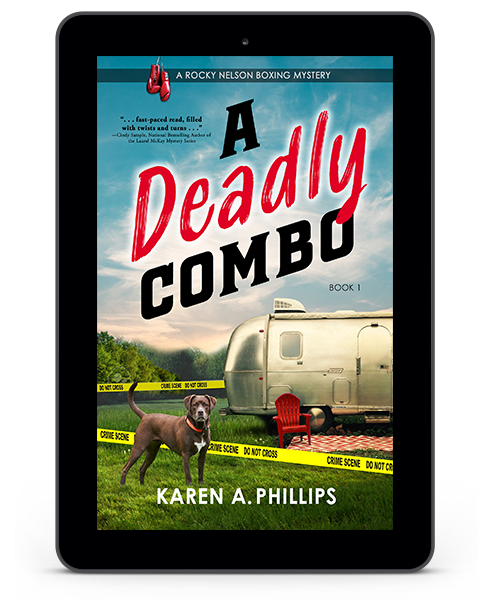
Spotlight: A Deadly Combo by Karen A. Phillips

Genre: Cozy Mystery 

Sisters Rocky and Bridget are enjoying each other’s company at a vintage trailerfest until they stumble over a corpse. The dead guy is none other than the local trailer restorer Bridget was overheard threatening to kill. Mounting evidence leads police to focus on Bridget as a person of interest. Desperate to prove her sister innocent of murder, Rocky dons her own deerstalker cap and goes sleuthing until she runs into police detective Thompson who warns her off his case in no uncertain terms. But Rocky is tenacious if not stubborn. Combined with a 78-year-old father who becomes her sidekick, Rocky uses her courage and skills learned in boxing lessons to protect her family and keep from becoming the killer’s next victim.

Excerpt

The exterior lamp cast a dim amber glow over the deck where Opal had stood earlier that day. Moths flew against the light, their suicidal efforts creating a luminescent haze.

I had decided to return to Wes’s property, desperate to find some clue as to where he hid his money. I was convinced finding the money would lead me to the killer. Even though my visit with Dad had gleaned nothing, at least I was now somewhat familiar with the lay of the land. I gained access from the farthest corner where I found a stretch of barbed wire fencing. A weathered NO TRESPASSING sign dangled. I carefully pushed the wire down and stepped over, avoiding the sharp barbs. I approached the house from the back, moving from tree to tree until I found a large oak where I could observe yet remain unseen. I hid behind the thick trunk and waited. The full moon cast everything into shades of blue. The carcasses of trailers amidst the trees created a grim and forbidding landscape. Somewhere an owl hooted, and another answered.

The kitchen light was on, and I assumed Opal was home. From my vantage point, I couldn’t tell if her car was in the garage, nor could I see if any vehicles were parked in front of the house. After a time, the sliding glass door opened, and two people stepped out onto the deck. I craned my neck to get a better look, but unfortunately, my view was partially blocked by shrubbery and branches. I only had a partial view of the deck and the stairs.

At that moment, my nose tickled, and I sneezed into the crook of my arm, in an attempt to dampen the sound.

Duke woofed, then got up and shook himself, the chain jangling. He went to the deck railing, dragging the chain behind him over the wooden boards. He put his nose through the slats and sniffed.

I froze.

The couple didn’t seem to notice. They stood close together and after a few minutes, parted.

I strained to hear what they were saying, but their voices were muffled. I changed my position and stepped on a stout twig, breaking it, the sound as loud as a firecracker.

Duke growled.

“Something . . . there,” said Opal.

The man muttered an answer.

“He doesn’t growl at nothing,” Opal said, loud enough to hear. “I’ll get a flashlight.”

The man descended the stairs.

The sliding door opened and closed. “Catch,” Opal said. “I’m letting Duke off his chain. He’ll find whatever’s out there.”

My heart jumped to my throat. I frantically looked for somewhere to hide.

A tarp covered an object sitting low to the ground. Most likely a boat. Whatever it was, it was the nearest hiding place.

The beam of the flashlight played over the terrain, too close for comfort. I dropped to the dirt and scrambled on all fours under the tarp. Acorns and pinecones bit into my palms. Cobwebs brushed against my face. I stifled a scream. I pulled myself into a tight ball and waited while images of spiders, ticks, and other creepy crawlers, filled my head. Mold and decay assaulted my senses. I breathed through my mouth. When the beam from the flashlight found the tarp, I squeezed my eyes shut. Please, please, keep going. Move on, I begged silently.

Duke rooted around, sniffing the ground in excitement, then whined.

“Ugh,” said the man.

I opened my eyes to see something black, the size of a cat, disappear under a trailer. The white stripe registered too late in my brain to react. Skunk!

Buy on Amazon

About the Author

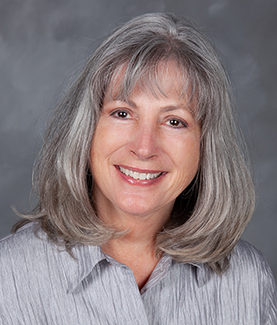
Karen A. Phillips enjoys writing mysteries, MG/YA fantasy, and poetry. She resides in Northern California, and is a proud member of Sisters In Crime and Willamette Writers.

. . . and yes, she does take boxing lessons.

Visit her at KarenAPhillips.com.

Website * Facebook * Instagram * Bluesky * Bookbub * Amazon * Goodreads

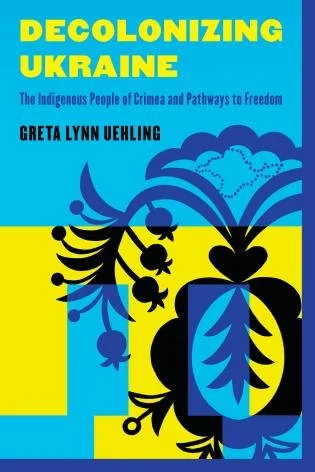
Spotlight: Decolonizing Ukraine by Greta Lynn Uehling

In this ground-breaking book, distinguished anthropologist Greta Lynn Uehling illuminates the untold stories of Russia’s occupation of Crimea from 2014 to the present, revealing the traumas of colonization, foreign occupation, and population displacement. Drawing upon extensive fieldwork in Ukraine, including over 90 personal interviews, Uehling brings her readers into the lives of people who opposed Russia’s Crimean operation, many of whom fled for government-controlled Ukraine. Via the narratives of people who traversed perilous geographies and world-altering events, Uehling traces the development of a new sense of social cohesion that encompasses diverse ethnic and religious groups. The result is a compelling story—one of resilience, transformation, and ultimately, the unwavering pursuit of freedom and autonomy for Ukraine, regardless of ethnicity or race. Decolonizing Ukraine: The Indigenous People of Crimea and Pathways to Freedom demonstrates how understanding Crimea is essential to understanding Ukraine – and the war with Russia – today.

Buy on Amazon Kindle | Hardcover | Paperback | Bookshop.org

About the Author

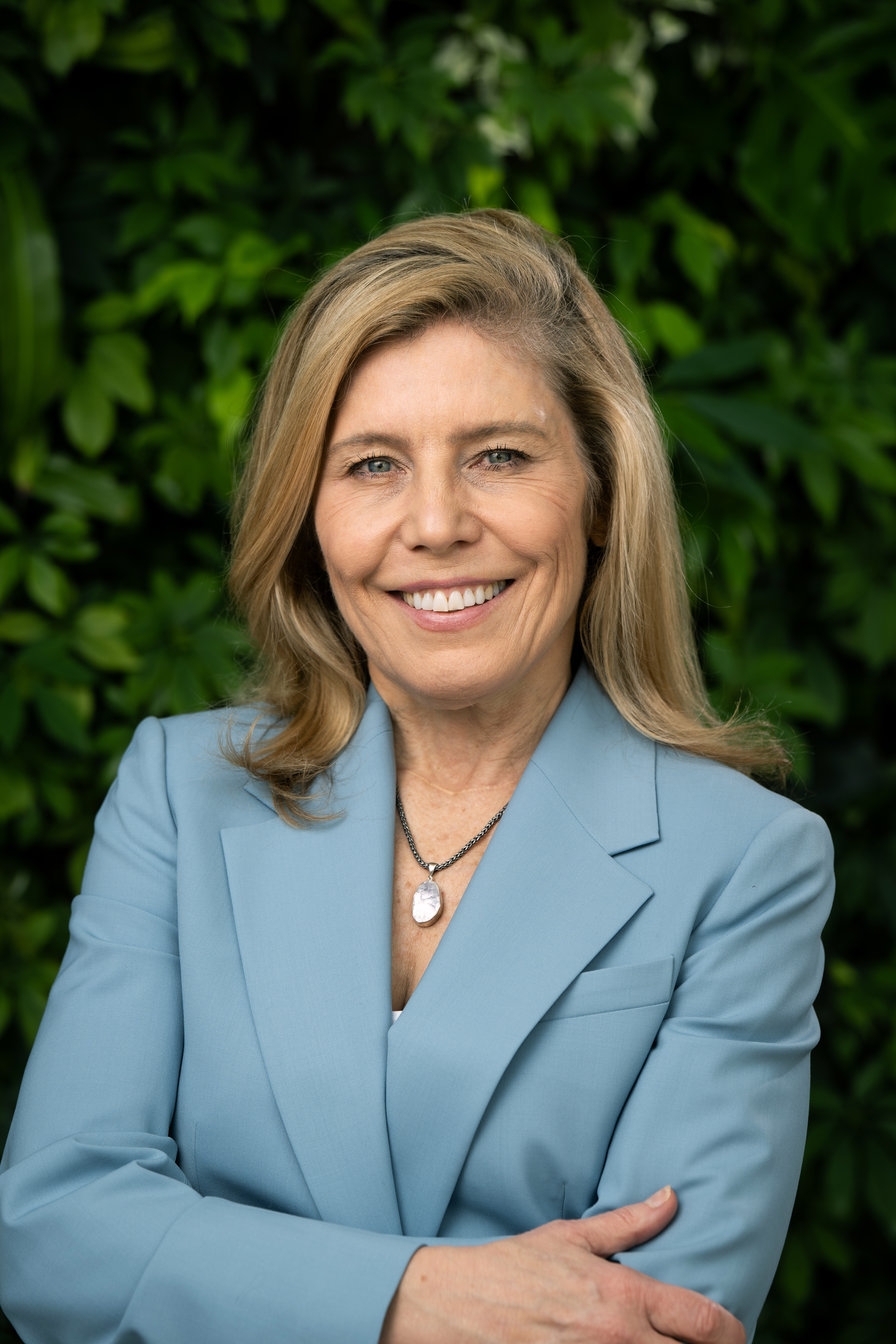
Greta Uehling is a cultural anthropologist and Teaching Professor at the University of Michigan, whose work explores how war reshapes social worlds. Her books include Everyday War: The Conflict over Donbas, Ukraine—winner of Harvard’s Davis Prize—Decolonizing Ukraine (2025), and the widely acclaimed Beyond Memory, which brought to light the testimonies of survivors of the 1944 deportation of the Crimean Tatars. A former Fulbright Scholar in Ukraine, she is also a Faculty Associate with the Center for Russian, East European, and Eurasian Studies.

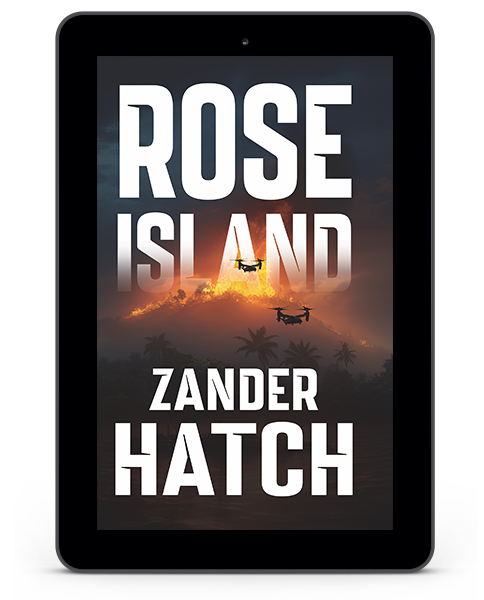
Spotlight: Rose Island by Zander Hatch

Genre: Military Action Thriller

Uncover the Secrets. Survive the Island.

In the high-octane realm of military thrillers, Rose Island stands out with its masterful blend of espionage and covert warfare. Set against the backdrop of a forgotten Cold War bastion that harbors earth-shattering secrets, former Marine turned clandestine operator Jake Harper is drawn back into action when a top-secret rescue mission calls him to an island erased from every map—a place steeped in mystery and guarded by deadly forces.

Charged with leading a special operations team amidst the threat of a looming hurricane, Harper and his team, with their unwavering courage and resilience, must navigate the treacherous mysteries of Rose Island. As they unearth hidden bunkers and tangled alliances, each revelation plunges them deeper into a whirlpool of political intrigue and betrayal. The island, a forgotten relic of Cold War experiments, holds secrets that some will kill to protect.

Their mission escalates in complexity when they cross paths with a renegade unit of mercenaries with connections to enigmatic international powers. These well-trained, heavily armed adversaries are resolute in their intent to exploit the island's secrets for their own sinister ends.

With time running out, their mission evolves from a covert infiltration to a desperate fight for survival. Harper's resolve is tested as past emotional entanglements with a team member add layers of complexity to his leadership. As the storm bears down, they face the natural elements and a formidable enemy in a climactic showdown that promises to blend their fates with the island's dark history.

Dive into Rose Island, where survival clashes with the ghosts of history, crafting a narrative so tense and gripping that it will leave readers breathless until the last page is turned.

Buy on Amazon | Bookshop.org

About the Author 

Zander Hatch, a US Marine veteran, blends his extensive military experience with a talent for storytelling to create thrilling, authentic narratives. Drawing from global deployments, Hatch's writing in Rose Island offers an immersive experience in tactical expertise and unyielding suspense. Dive into his books for a gripping journey through the realms of action and adventure, where courage meets the climax of military strategy.

Website * Instagram * Amazon * Goodreads

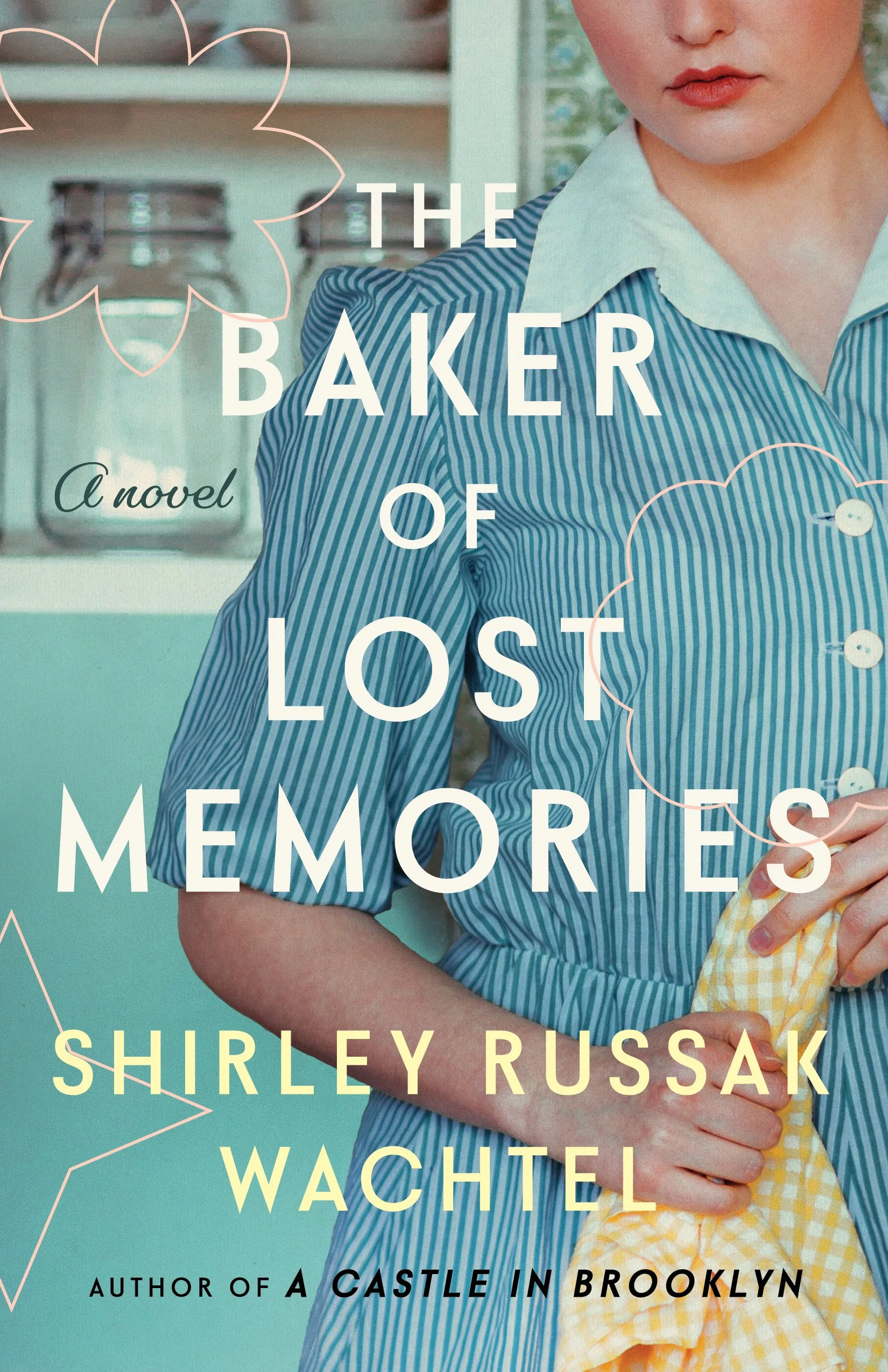
Spotlight: The Baker of Lost Memories by Shirley Russak Wachtel

From the author of A Castle in Brooklyn comes an epic novel spanning decades about the broken bonds of family, memories of war, and redemption and hope in the face of heartbreaking loss.

Growing up in 1960s Brooklyn, Lena wants to be a baker just like her mother was back in Poland prior to World War II. But questions about those days, and about a sister Lena never even knew, are ignored with solemn silence. It’s as if everything her parents left behind was a subject never to be broached.

The one person in whom Lena can confide is her best friend, Pearl. When she suddenly disappears from Lena’s life, Lena forges ahead: college, love and marriage with a wonderful man, the dream of owning a bakery becoming a reality, and the hope that someday Pearl will return to share in Lena’s happiness—and to be there for her during the unexpected losses to come.

Only when Lena discovers the depth of her parents’ anguish, and a startling truth about her own past, can they rebuild a family and overcome the heart-wrenching memories that have torn them apart.

Excerpt

Text copyright © 2025 by Shirley Russak Wahtel, Published by Little A

“Brooklyn Girl’s Bake Shoppe,” he read, turning over the card with pink lettering in his hand. “That’s a good name. You were born in Brooklyn.”

“That was Luke’s idea. He liked the sound of it,” mumbled Lena, barely glancing his way. She was still thinking of her mother’s lukewarm response to the business venture. No matter what Lena did, no matter how many accomplishments she had, it seemed like she could do no good in her mother’s eyes. It hadn’t been her idea to work in a bakery, much less own one. She preferred to bake as a hobby, the occasional challah for the Sabbath or some sugar cookies as an after-dinner treat. Knowing how much effort the project would entail, how as a business owner she would rarely have a day off from work, never a quiet moment to herself to watch a movie or lean against the windowsill, feeling the sun on her neck as she sat reading a book, she was hesitant. No, in the back of her mind there would always be the bakery, pondering how much of a profit they had made during the week or worrying about running out of the month’s inventory for sugar. She knew this, and yet she had agreed, taken the savings, her parents’ savings, invested it all as a down payment, not for the home it was intended for, but for a business. A business she never really wanted.

And still she allowed it. She did it, took all the risks, even though something inside her told her that the bakery was doomed to fail. She did it. She did it all for Luke. And maybe a little for her mother too.

“You won’t say it, will you?” she reacted, feeling both her voice and her blood pressure rise. Lena thrust her hand into the glass showcase.

“Mommy, try one of these.” Lena pulled out a tray of chocolate rugelach and, forgetting about the tissue paper, plucked one out.

“Here,” she repeated as she felt her hand trembling, “try one. I know they’re your favorite.”

Lena felt her mother’s eyes on her as she hesitated before, with two fingers, Anya took the delicacy. A thought came to her. She must think me a crazy person now, and maybe, at that moment, she was.

Anya nibbled the crisp edge of the rugelach before popping it into her mouth. When she finished chewing, she licked the chocolate crumbs off her fingers.

“It’s delicious,” she said, but her expression remained the same. Indifferent.

“Do you see?” said Lena, conscious that her voice was higher than she’d like. “I can bake. I can bake every bit as well as you. Every bit as well.” She stopped, unwilling to cross the line. But her parents already knew; she could tell by the quick glances they exchanged. She could tell by the sadness that now veiled their eyes. Josef released a mournful sigh before speaking.

“Lena, don’t you know you are everything to us? Don’t you know that Mommy and me, we are both very proud of you?”

Seeing the tears come to her father’s eyes triggered something in Lena so strong that she had to run to the back of the bakery as she felt the sobs rise from deep within her, exploding to the surface. She hoped that her parents wouldn’t follow, wouldn’t tell her she was being too emotional, just an immature, stupid girl.

Once more Lena found herself yearning for him to tell her that she was smart, capable, even beautiful. She needed Luke to assuage her fears, to affirm that, yes, all her dreams would come true. That she was better than all the rest.

Buy on Amazon Kindle | Audible | Hardcover | Paperback | Bookshop.org

About the Author

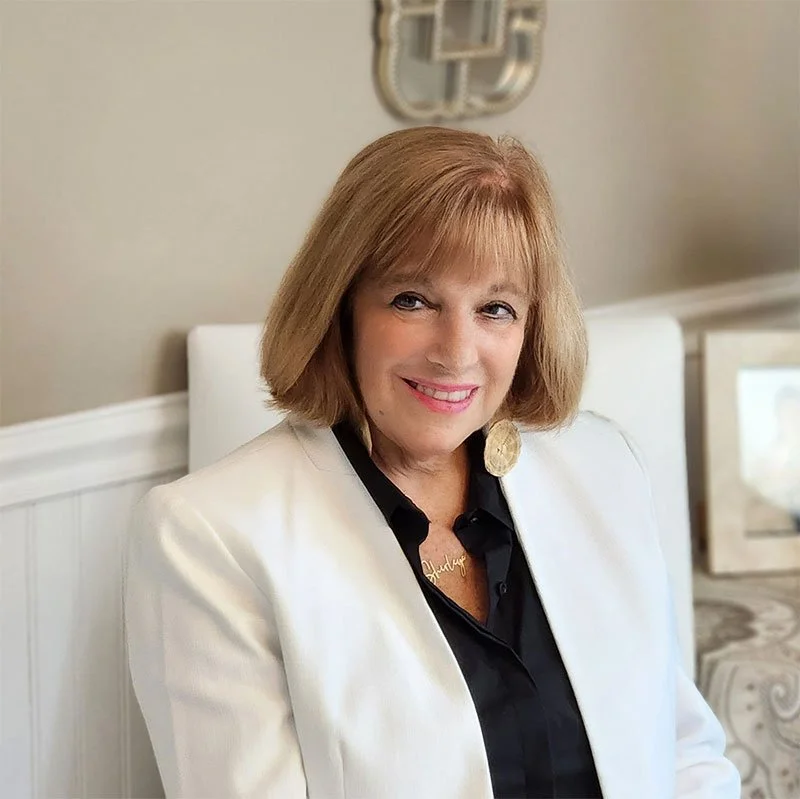
Shirley Russak Wachtel is the author of A Castle in Brooklyn. She is the daughter of Holocaust survivors and was born and raised in Brooklyn, New York. Shirley holds a doctor of letters degree from Drew University and for the past thirty-five years has taught English literature at Middlesex College in Edison, New Jersey. Her podcast, EXTRAordinary People, features inspiring individuals who have overcome obstacles to make a difference. The mother of three grown sons and grandmother to three precocious granddaughters, she currently resides in East Brunswick, New Jersey, with her husband, Arthur. For more information, visit www.shirleywachtel.com.

Spotlight: Bat Eater and Other Names for Cora Zeng by Kylie Lee Baker

Publication Date: April 29, 2025

Publisher: Harlequin Trade Publishing / MIRA

This unsettling adult debut from Kylie Lee Baker follows a biracial crime scene cleaner who’s haunted by both her inner trauma and hungry ghosts as she's entangled in a series of murders in New York City's Chinatown. Parasite meets The Only Good Indians in this sharp novel that explores harsh social edges through the lens of the horror genre.

Cora Zeng is a crime scene cleaner in New York City’s Chinatown, washing away the remains of brutal murders and suicides. But none of that seems so terrible when she’s already witnessed the most horrific thing possible: in the early months of 2020, her sister Delilah was pushed in front of a train as Cora stood next to her. Before fleeing the scene, the murderer whispered two words: bat eater.

So the bloody messes don’t really bother Cora—she’s more bothered by the possible germs on the subway railing, the bare hands of a stranger, the hidden viruses in every corner. And by the strange spots in her eyes and that food keeps going missing in her apartment. Of course, ever since Delilah was killed in front of her, Cora can’t be sure what anxiety is real and what’s in her head. She can barely keep herself together as it is.

She pushes away all feelings, ignoring the bite marks that appear on her coffee table, ignoring the advice of her aunt to burn joss paper and other paper replicas of items to send to the dead and to prepare for the Hungry Ghost Festival, when the gates of hell open. Ignores the dread in her stomach as she and her weird coworkers keep finding bat carcasses at their crime scene cleanups. Ignores the scary fact that all their recent cleanups have been the bodies of Asian women.

But as Cora will soon learn, you can’t just ignore hungry ghosts.

Excerpt

ONE 

April 2020 

East Broadway station bleeds when it rains, water rushing down from cracks in the secret darkness of the ceiling. Someone should probably fix that, but it’s the end of the world, and New York has bigger problems than a soggy train station that no one should be inside of anyway. No one takes the subway at the end of the world. No one except Cora and Delilah Zeng. 

Delilah wanders too close to the edge of the platform and Cora grabs her arm, tugging her away from the abyss of the tracks that unlatches its jaws, waiting. But Delilah settles safely behind the yellow line and the darkness clenches its teeth. 

Outside the wet mouth of the station, New York is empty. The China Virus, as they call it, has cleared the streets. News stations flash through footage of China—bodies in garbage bags, guards and tanks protecting the city lines, sobbing doctors waving their last goodbyes from packed trains, families who just want to fucking live but are trapped in the plague city for the Greater Good. 

On the other side of the world, New York is so empty it echoes. You can scream and the ghost of your voice will carry for blocks and blocks. The sound of footsteps lasts forever, the low hum of streetlights a warm undercurrent that was always there, waiting, but no one could hear it until now. Delilah says it’s unnerving, but Cora likes the quiet, likes how much bigger the city feels, likes that the little lights from people’s apartment windows are the only hint of their existence, no one anything more than a bright little square in the sky. 

What she doesn’t like is that she can’t find any toilet paper at the end of the world. 

Apparently, people do strange things when they’re scared of dying, and one of them is hoarding toilet paper. Cora and Delilah have been out for an hour trying to find some and finally managed to grab a four-pack of one-ply in Chinatown, which is better than nothing but not by much. 

They had to walk in the rain because they couldn’t get an Uber. No one wants Chinese girls in their car, and they’re not the kind of Chinese that can afford their own car in a city where it isn’t necessary. But now that they have the precious paper, they’d rather not walk home in the rain and end up with a sodden mess in their arms. 

“The train isn’t coming,” Cora says. She feels certain of this. She feels certain about a lot of things she can’t explain, the way some people are certain that God exists. Some thoughts just cross her mind and sink their teeth in. Besides, the screen overhead that’s supposed to tell them when the next train arrives has said DELAYS for the last ten minutes. 

“It’s coming,” Delilah says, checking her phone, then tucking it away when droplets from the leaky roof splatter onto the screen. Delilah is also certain about many things, but for different reasons. Delilah chooses the things she wants to believe, while Cora’s thoughts are bear traps snapping closed around her ankles. 

Sometimes Cora thinks Delilah is more of a dream than a sister, a camera flash of pretty lights in every color that you can never look at directly. She wraps herself up in pale pink and wispy silk and flower hair clips; she wears different rings on each finger that all have a special meaning; she is Alice in Wonderland who has stumbled out of a rabbit hole and somehow arrived in New York from a world much more kind and lovely than this one. 

Cora hugs the toilet paper to her chest and peers into the silent train tunnel. She can’t see even a whisper of light from the other side. The darkness closes in like a wall. The train cannot be coming because trains can’t break through walls. 

Or maybe Cora just doesn’t want to go home, because going home with Delilah means remembering that there is a world outside of this leaky station. 

There is their dad in China, just a province away from the epicenter of body bags. And there is the man who emptied his garbage over their heads from his window and called them Chinks on the walk here. And there is the big question of What Comes Next? Because another side effect of the end of the world is getting laid off. 

Cora used to work the front desk at the Met, which wasn’t exactly what an art history degree was designed for and certainly didn’t justify the debt. But it was relevant enough to her studies that for a few months it stopped shame from creeping in like black mold and coating her lungs in her sleep. But no one needs museums at the end of the world, so no one needs Cora. 

Delilah answered emails and scheduled photo shoots for a local fashion magazine that went belly-up as soon as someone whispered the word pandemic, and suddenly there were two art history majors, twenty-four and twenty-six, with work experience in dead industries and New York City rent to pay. Now the money is gone and there are no careers to show for it and the worst part is that they had a chance, they had a Nai Nai who paid for half their tuition because she thought America was for dreams. They didn’t have to wait tables or strip or sell Adderall to pay for college but they somehow messed it up anyway, and Cora thinks that’s worse than having no chance at all. She thinks a lot of other things about herself too, but she lets those thoughts go quickly, snaps her hands away from them like they’re a hot pan that will burn her skin. 

Cora thinks this is all Delilah’s fault but won’t say it out loud because that’s another one of her thoughts that no one wants to hear. It’s a little bit her own fault as well, for not having her own dreams. If there was anything Cora actually wanted besides existing comfortably, she would have known what to study in college, wouldn’t have had to chase after Delilah. 

But not everyone has dreams. Some people just are, the way that trees and rocks and rivers are just there without a reason, the rest of the world moving around them. 

Cora thinks that the water dripping down the wall looks oddly dark, more so than the usual sludge of the city, and maybe it has a reddish tinge, like the city has slit its own wrists and is dying in this empty station. But she knows better than to say this out loud, because everything looks dirty to her, and Cora Zeng thinking something is dirty doesn’t mean the average human agrees—at least, that’s what everyone tells her. 

“Maybe I’ll work at a housekeeping company,” Cora says, half to herself and half to the echoing tunnel, but Delilah answers anyway. 

“You know that’s a bad idea,” she says. 

Cora shrugs. Objectively, she understands that if you scrub yourself raw with steel wool one singular time, no one likes it when you clean anything for the rest of your life. But things still need to be cleaned even if Delilah doesn’t like it, and Cora thinks there are worse things than leaning a little bit into the crazy parts of you. Isn’t that what artists do, after all? Isn’t that the kind of person Delilah likes? The tortured artist types who smoke indoors and paint with their own blood and feces. 

“Mama cleaned toilets for rich white people because she had no choice,” Delilah says. “You have a college degree and that’s what you want to do?” 

Cora doesn’t answer at first because Mama means Delilah’s mom, so Cora doesn’t see why her thoughts on Cora’s life should matter. Cora doesn’t have a Mama. She has a Mom, a white lady from Wisconsin who probably hired someone else’s mama to clean her toilet. 

Cora quite likes cleaning toilets, but this is another thing she knows she shouldn’t say out loud. Instead, she says, “What I want is to make rent this month.” 

Legally, Cora’s fairly certain they can’t be evicted during the pandemic, but she doesn’t want to piss off their landlord, the man who sniffs their mail and saves security camera footage of Delilah entering the building. He price-gouges them for a crappy fourth-floor walkup in the East Village with a radiator that vomits a gallon of brown water onto their floor in the winter and a marching band of pipes banging in the walls, but somehow Cora doubts they’ll find anything better without jobs. 

Delilah smiles with half her mouth, her gaze distant like Cora is telling her a fairy tale. “I’ve been burning lemongrass for money energy,” Delilah says. “We’ll be fine.” This is another thing Delilah just knows

Cora hates the smell of lemongrass. The scent coats her throat, wakes her up at night feeling like she’s drowning in oil. But she doesn’t know if the oils are a Chinese thing or just a Delilah thing, and she hates accidentally acting like a white girl around Delilah. Whenever she does, Delilah gives her this look, like she’s remembered who Cora really is, and changes the subject. 

“The train is late,” Cora says instead of acknowledging the lemongrass. “I don’t think it’s coming.” 

“It’s coming, Cee,” Delilah says. 

“I read that they reduced service since no one’s taking the train these days,” Cora says. “What if it doesn’t stop here anymore?” 

“It’s coming,” Delilah says. “It’s not like we have a choice except waiting here anyway.” 

Cora’s mind flashes with the image of both their skeletons standing at the station, waiting for a train that never comes, while the world crumbles around them. They could walk— they only live in the East Village—but Delilah is made of sugar and her makeup melts off in the rain and her umbrella is too small and she said no, so that’s the end of it. Delilah is not Cora’s boss, she’s not physically intimidating, and she has no blackmail to hold over her, but Cora knows the only choice is to do what Delilah says. When you’re drowning and someone grabs your hand, you don’t ask them where they’re taking you. 

A quiet breeze sighs through the tunnel, a dying exhale. It blows back Delilah’s bangs and Cora notices that Delilah has penciled in her eyebrows perfectly, even though it’s raining and they only went out to the store to buy toilet paper. Something about the sharp arch of her left eyebrow in particular triggers a thought that Cora doesn’t want to think, but it bites down all the same. 

Sometimes, Cora thinks she hates her sister. 

It’s strange how hate and love can so quietly exist at the same time. They are moon phases, one silently growing until one day all that’s left is darkness. It’s not something that Delilah says or does, really. Cora is used to her small annoyances. 

It’s that Delilah is a daydream and standing next to her makes Cora feel real. 

Cora has pores full of sweat and oil, socks with stains on the bottom, a stomach that sloshes audibly after she eats. Delilah is a pretty arrangement of refracted light who doesn’t have to worry about those things. Cora wanted to be like her for a very long time, because who doesn’t want to transcend their disgusting body and become Delilah Zeng, incorporeal, eternal? But Cora’s not so sure anymore. 

Cora peers into the tunnel. We are going to be stuck here forever, Cora thinks, knows. 

But then the sound begins, a rising symphony to Cora’s ears. The ground begins to rumble, puddles shivering. 

“Finally,” Delilah says, pocketing her phone. “See? I told you.” 

Cora nods because Delilah did tell her and sometimes Delilah is right. The things Cora thinks she knows are too often just bad dreams bleeding into her waking hours. 

Far away, the headlights become visible in the darkness. A tiny mouth of white light. 

“Cee,” Delilah says. Her tone is too delicate, and it makes coldness curl around Cora’s heart. Delilah tosses words out easily, dandelion parachutes carried about by the wind. But these words have weight. 

Delilah toys with her bracelet—a jade bangle from their Auntie Zeng, the character for hope on the gold band. Cora has a matching one, shoved in a drawer somewhere, except the plate says love, at least that’s what Cora thinks. She’s not very good at reading Chinese. 

“I’m thinking of going to see Dad,” Delilah says. 

The mouth of light at the end of the tunnel has expanded into a door of brilliant white, and Cora waits because this cannot be all. Dad lives in Changsha, has lived there ever since America became too much for him, except it’s always been too much for Cora too and she has nowhere to run away to, her father hasn’t given her the words she needs. Delilah has visited him twice in the last five years, so this news isn’t enough to make Delilah’s voice sound so tight, so nervous. 

“I think I might stay there awhile,” Delilah says, looking away. “Now that I’m out of work, it seems like a good time to get things settled before the pandemic blows over.” 

Cora stares at the side of Delilah’s head because her sister won’t meet her gaze. Cora isn’t stupid, she knows what this is a “good time” for. Delilah started talking about being a model in China last year. Cora doesn’t know if the odds are better in China and she doubts Delilah knows either. All she knows is that Delilah tried for all of three months to make a career of modeling in New York until that dream fizzled out, smoke spiraling from it, and Delilah stopped trying because everything is disposable to her, right down to her dreams. 

Cora always thought this particular dream would be too expensive, too logistically complicated for Delilah to actually follow through on. Worst-case scenario, they’d plan a three-week vacation to China that would turn into a week and a half when Delilah lost interest and started fighting with Dad again. The idea of flying during a pandemic feels like a death sentence, but Cora has already resigned herself to hunting down some N95 respirators just so Delilah could give her modeling dream an honest try. 

Because even if Delilah tends to extinguish her own dreams too fast, Cora believes in them for all of their brief, brilliant lives. If Cora ever found a dream of her own, she would nurture it in soft soil, measure out each drop of water, each sunbeam, give it a chance to become. So Cora will not squash her sister’s dreams, not for anything. 

“I’ll just put my half of the rent on my credit card until I find work,” Delilah says, “so you won’t need a new roommate.” 

Then Cora understands, all at once, like a knife slipped between her ribs, that Delilah isn’t inviting Cora to come with her. 

Of course she isn’t. Delilah has a mama who speaks Mandarin to her, so Delilah’s Chinese is good enough to live in China. But Cora’s isn’t. Delilah would have to do everything for her, go everywhere with her because she knows Cora would cry just trying to check out at the supermarket. Delilah could do it for her, but she doesn’t want to. 

Cora suddenly feels like a child who has wandered too far into a cave. The echoes become ghosts and the darkness wraps in tight ribbons around your throat and you call for a mom who will never come. 

Cora’s hands shake, fingers pressing holes into the plastic wrap of the toilet paper, her whole body vibrating with the sheer unfairness of it all. You can’t string someone along their whole life and then just leave them alone one day holding your toilet paper in a soggy train station. 

“Or you could stay with your aunt?” Delilah says. “Then you wouldn’t have to worry about rent. It would be better for both of us, I think.” 

Auntie Lois, she means. Mom’s sister, whose house smells like a magazine, who makes Cora kneel in a confessional booth until she can name all her sins. Delilah has decided that this is Cora’s life, and Delilah is the one who makes decisions. 

Delilah keeps talking, but Cora can’t hear her. The world rumbles as the train draws closer. The white light is too bright now, too sharp behind Delilah, and it illuminates her silhouette, carves her into the wet darkness. Delilah has a beautiful silhouette, the kind that men would have painted hundreds of years ago. Cora thinks about the Girl with a Pearl Earring, and the Mona Lisa, and all the beautiful women immortalized in oil paint, and wonders if they said cruel things too, if their words had mattered at all or just the roundness of their eyes and softness of their cheeks, if beautiful people are allowed to break your heart and get away with it. 

The man appears in a flash of a black hoodie and blue surgical mask. 

He says two words, and even though the train is rushing closer, a roaring wave about to knock them off their feet, those two words are perfectly clear, sharp as if carved into Cora’s skin. 

Bat eater. 

Cora has heard those words a lot the past two months. The end of the world began at a wet market in Wuhan, they say, with a sick bat. Cora has never once eaten a bat, but it has somehow become common knowledge that Chinese people eat bats just to start plagues. 

Cora only glances at the man’s face for a moment before her gaze snaps to his pale hand clamped around Delilah’s skinny arm like a white spider, crunching the polyester of her pink raincoat. Lots of men grab Delilah because she is the kind of girl that men want to devour. Cora thinks the man will try to kiss Delilah, or force her up the stairs and into a cab, or a thousand things better than what actually happens next. 

Because he doesn’t pull her close. He pushes her away. 

Delilah stumbles over the yellow line, ankle twisting, and when she crashes down there’s no ground to meet her, just the yawning chasm of the train tracks. 

The first car hits her face. 

All at once, Cora’s skin is scorched with something viscous and salty. Brakes scream and blue sparks fly and the wind blasts her hair back, the liquid rushing across her throat, under her shirt. Her first thought is that the train has splashed her in some sort of track sludge, and for half a second that is the worst thought in the entire world. The toilet paper falls from Cora’s arms and splashes into a puddle when it hits the ground and There goes the whole point of the trip, she thinks. 

Delilah does not stand up. The train is a rushing blur of silver, a solid wall of hot air and screeching metal and Delilah is on the ground, her skirt pooling out around her. Get up, Delilah, Cora thinks, because train station floors are rainforests of bacteria tracked in from so many millions of shoes, because the puddle beneath her can’t be just rainwater—it looks oddly dark, almost black, spreading fast like a hole opening up in the floor. Cora steps closer and it almost, almost looks like Delilah is leaning over the ledge, peering over the lip of the platform. 

But Delilah ends just above her shoulders. 

Her throat is a jagged line, torn flaps of skin and sharp bone and the pulsing O of her open trachea. Blood runs unstopped from her throat, swirling together with the rainwater of the rotting train station, and soon the whole platform is bleeding, weeping red water into the crack between the platform and the train, feeding the darkness. Cora is screaming, a raw sound that begins somewhere deep inside her rib cage and tears its way up her throat and becomes a hurricane, a knife-sharp cry, the last sound that many women ever make. 

But there’s no one to hear it because New York is a dead body, because no one rides the subway at the end of the world. No one but Cora Zeng.

Buy on Amazon Kindle | Audible | Hardcover | Bookshop.org

About the Author

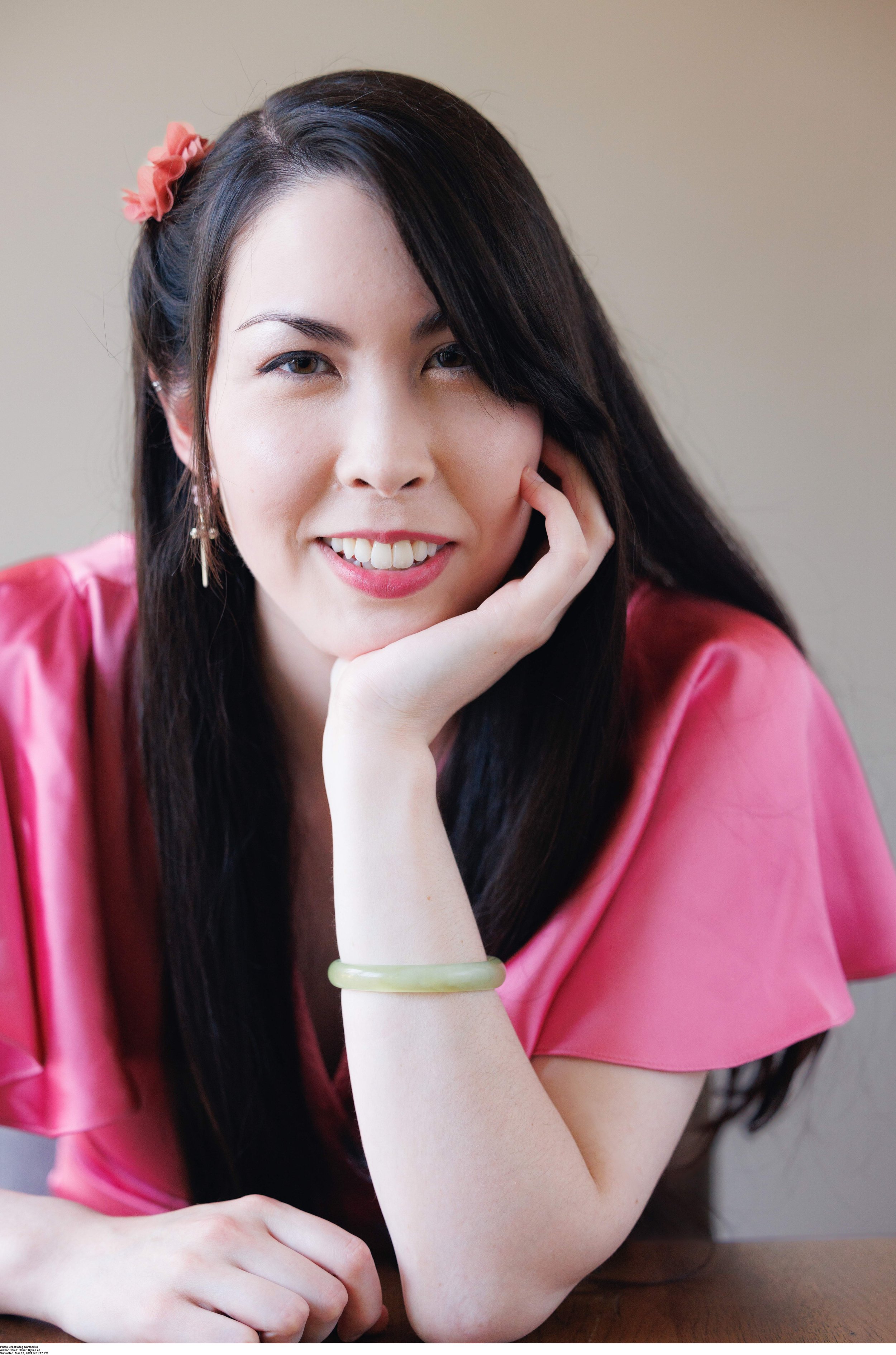
Kylie Lee Baker is the Sunday Times bestselling author of The Keeper of Night duology, The Scarlet Alchemist duology, and the forthcoming adult horror Bat Eater. She grew up in Boston and has since lived in Atlanta, Salamanca, and Seoul. Her writing is informed by her heritage (Japanese, Chinese, and Irish), as well as her experiences living abroad as both a student and teacher. She has a BA in creative writing and Spanish from Emory University and a master of library and information science degree from Simmons University.

Author Website: https://www.kylieleebaker.com/ 

Instagram: https://www.instagram.com/kylieleebaker/ 

X/Twitter: https://twitter.com/KylieYamashiro 

Goodreads: https://www.goodreads.com/author/show/20095503.Kylie_Lee_Baker