Writing a Murder Mystery: 10 Motives for Murder featuring JC Gatlin

After revealing “Who Done It,” the most important piece of the puzzle in a good murder mystery is “Why Done It.” The Antagonist’s reason to commit murder and hide it must be creative, make sense and be ultimately satisfying to your reader. So, it got me thinking: What are some basic motives for murder?

Here’s the list I started. Feel free to comment and add to the list.

TEN MOTIVES FOR MURDER

1. To hide a secret. This is the most obvious motive. The Victim stumbles upon the Antagonist’s closely guarded secret, and he kills her so she won’t reveal it.

  • A father, scared of losing his daughter’s love if she ever finds out that she was adopted, murders the child’s biological mother when she suddenly reappears in their lives.

2. Greed. The Antagonist wants the victim’s fortune, property or something else of value… and is willing to kill to get his hands on it.

  • The Femme Fatale murders her wealthy, old lover with a heart condition after he names her in his last will and testament.

3. Revenge. The Antagonist wants to even the score for some past wrong doing (which is often detailed in the prologue) and the victim pays the price.

  • The successful computer geek attends his high school reunion and kills the formal popular cheerleader who made fun of him some twenty years ago
  • The successful computer geek murders the red-headed dance teacher who looks eerily similar to that hateful cheerleader who made fun of him in high school

4. Obsession, Frustration & Hate. Have you hugged a sociopath today? This is a great opportunity to expose your Antagonist’s prejudices and/or deep-seeded obsessions.

  • A deeply religious mother murders her son’s college professor because of something taught at school.
  • The shy, awkward boy in the back of class has been sending notes to the popular girl in his Chemistry class. Unfortunately. when she rebukes his advances, he lashes out by killing her.
  • After a lifetime of seething jealousy, the unemployed, divorced, broke older brother finally murders his successful, wealthy, happily married with a beautiful home and three beautiful kids, younger brother.

5. Love, Sex & Jealousy. Maybe this should be motive #1. At least it seems like it in real life if you watch any of the murder investigation documentaries on cable television. Does it even need an example? Pick a love triangle and you’ve got a motive.

  • The Traveling Salesman’s pregnant wife is found dead after he tells his college-aged girlfriend won’t end his marriage.

6. Crime of Passion.  Your Antagonist’s anger gets the best of him, and he snaps in a fit of rage. Generally, everyone is shocked by his actions, as he seems like the last person on the planet who’d ever commit such a heinous murder. Often the Antagonist doesn’t remember what happened, as he was out of his head at the time.

  • A father becomes so enraged at his wife for ripping the family apart when she tells him that she’s leaving him for her personal trainer that he shoots their two children dead before turning the gun on himself. Neighbors couldn’t believe it; he was such a normal, quiet Family Man.

7. Psychosis & Mental Disorders. The Antagonist is detached from society (maybe even humanity) and does something unthinkable, generally for reasons that are just in his head.

  • A mother, who believes voices are instructing her to do bad things, drowns her children 

8. To protect personal status. Your Antagonist is very threatened by the Victim’s success, talents or attention, and commits murder to balance the scales.

  • An incensed, corporate ladder-climber murders her competition for a high-profile, high-paying position.
  • An aging rock star — who is now humiliating reduced to opening act for a new, popular, younger pop star  — plots a stage mishap to get the young phenom out of the way.

9. To protect a loved one. You would do anything for your kids, including murder if someone was hurting one of them. Well, so would your Antagonist. And sometimes loved ones moves beyond family, or even people.

  • A father kills a teacher who was abusing his child
  • An over-protective mother murders the high school student who has been mercilessly bullying her son
  • A deer hunter and wildlife enthusiast murders the CEO of logging company that is decimating his forest. 

10. Empathy or Sympathy. The Antagonist doesn’t have malicious intent; in fact, he’s acting (or believes) in the Victim’s best interest. .

  • The Caregiver gives the ailing, elderly patient a heavy sleeping potion so she slips quietly away in the night.
  • A nursing student helps a dying cancer patient commit suicide so that he can die with dignity.

*  *  *  *  *  *

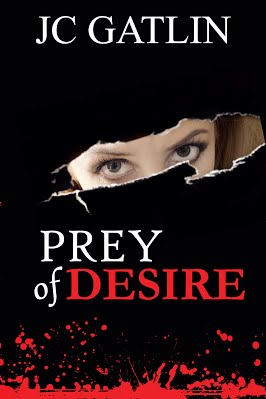
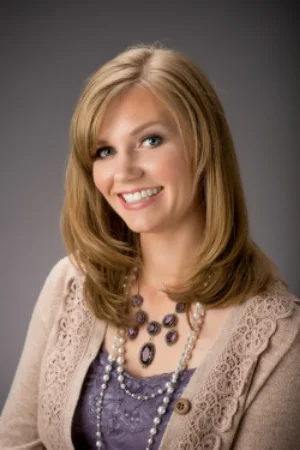
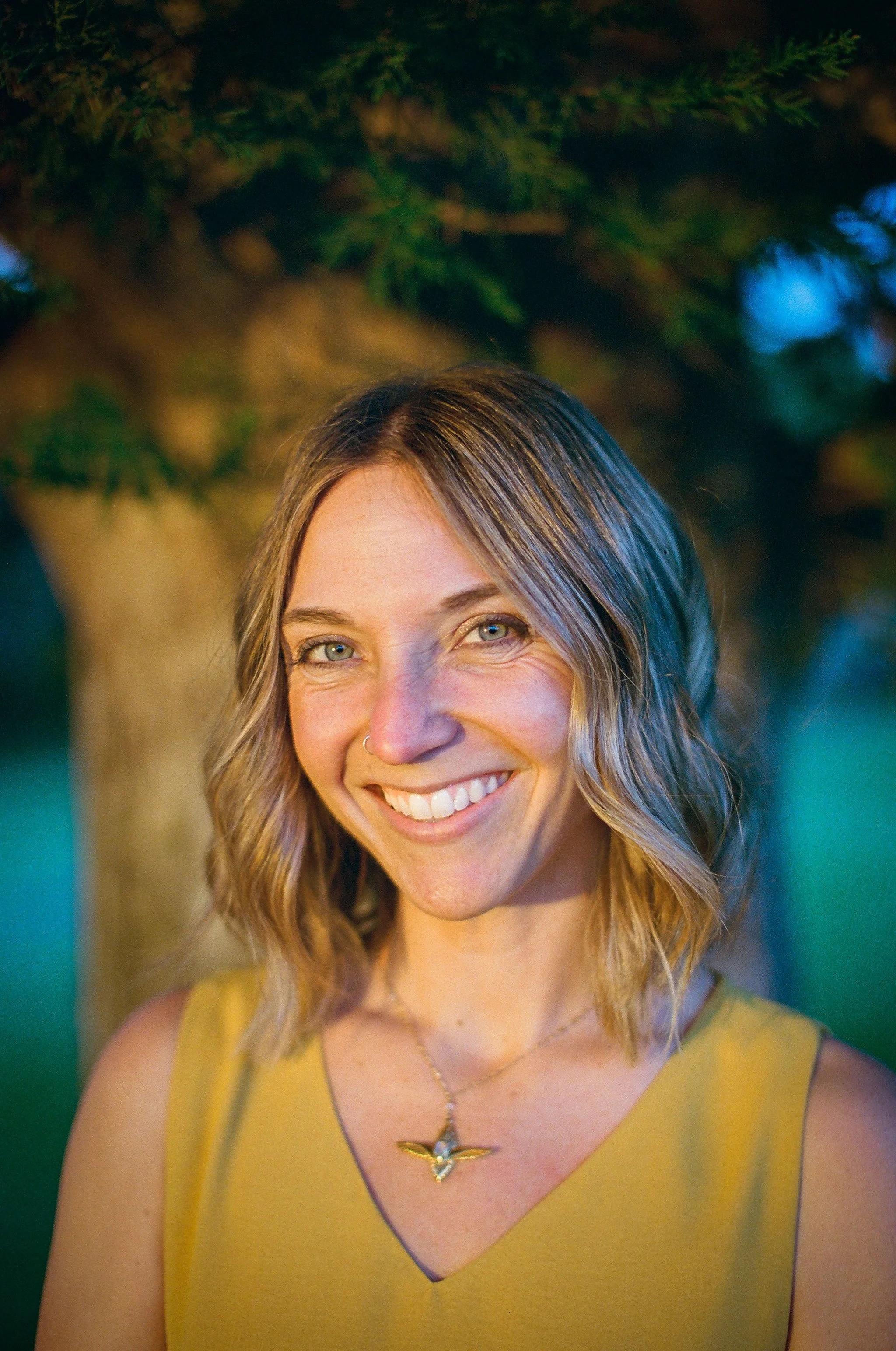
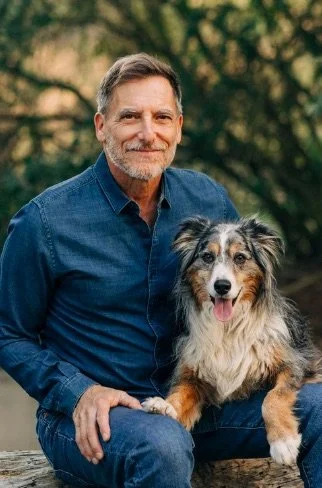
JC Gatlin lives in Tampa, Florida. He’s written two mystery-suspense novels: The Designated Survivor and Prey of Desire. He also maintains a blog about the art of spinning a nail-biting, edge-of-your-seat mysteries at www.jcgatlin.com.

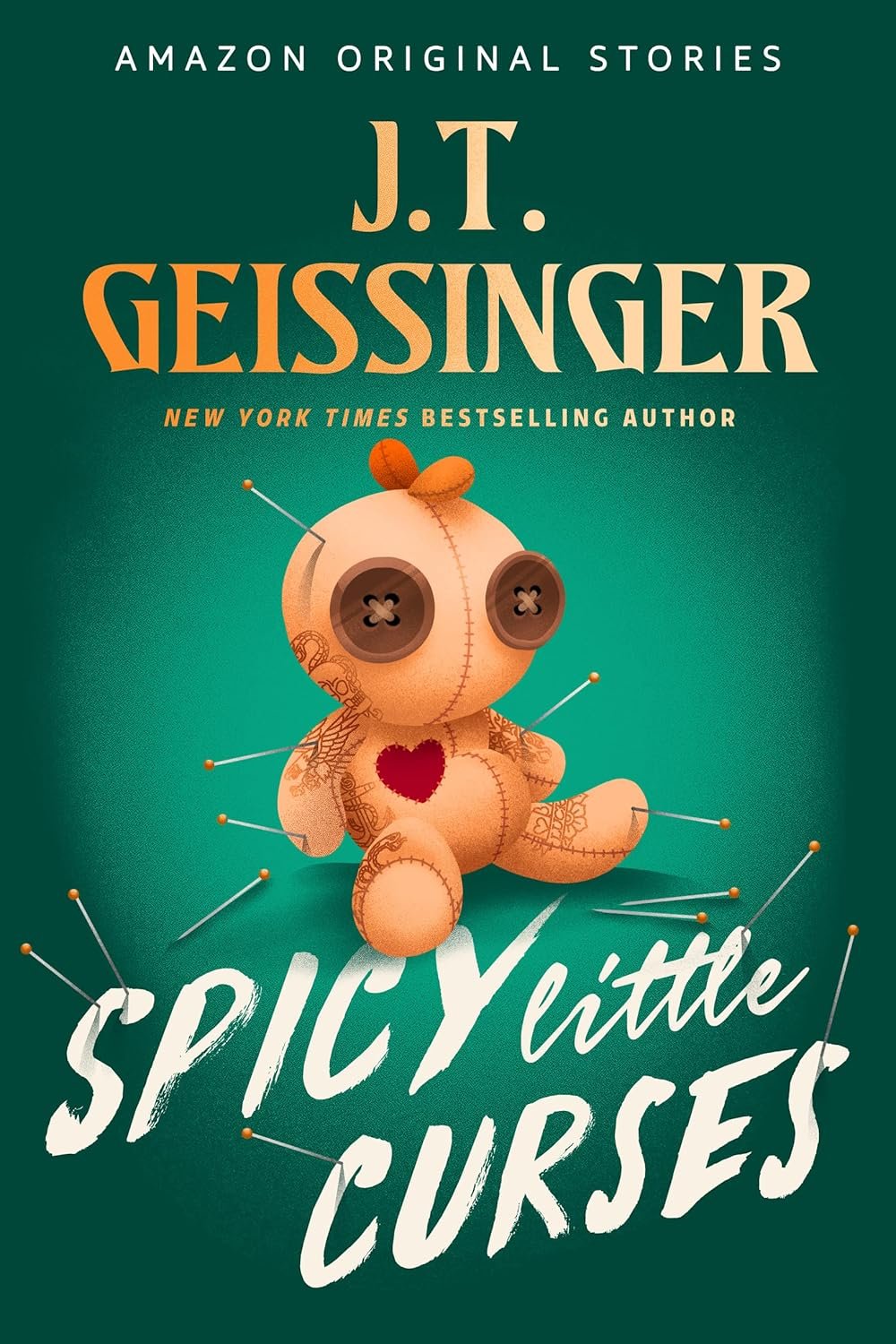
They said the disappearance of two high school students over 25 years ago was mystery that couldn't be solved. 

No one ever said it shouldn't be. 

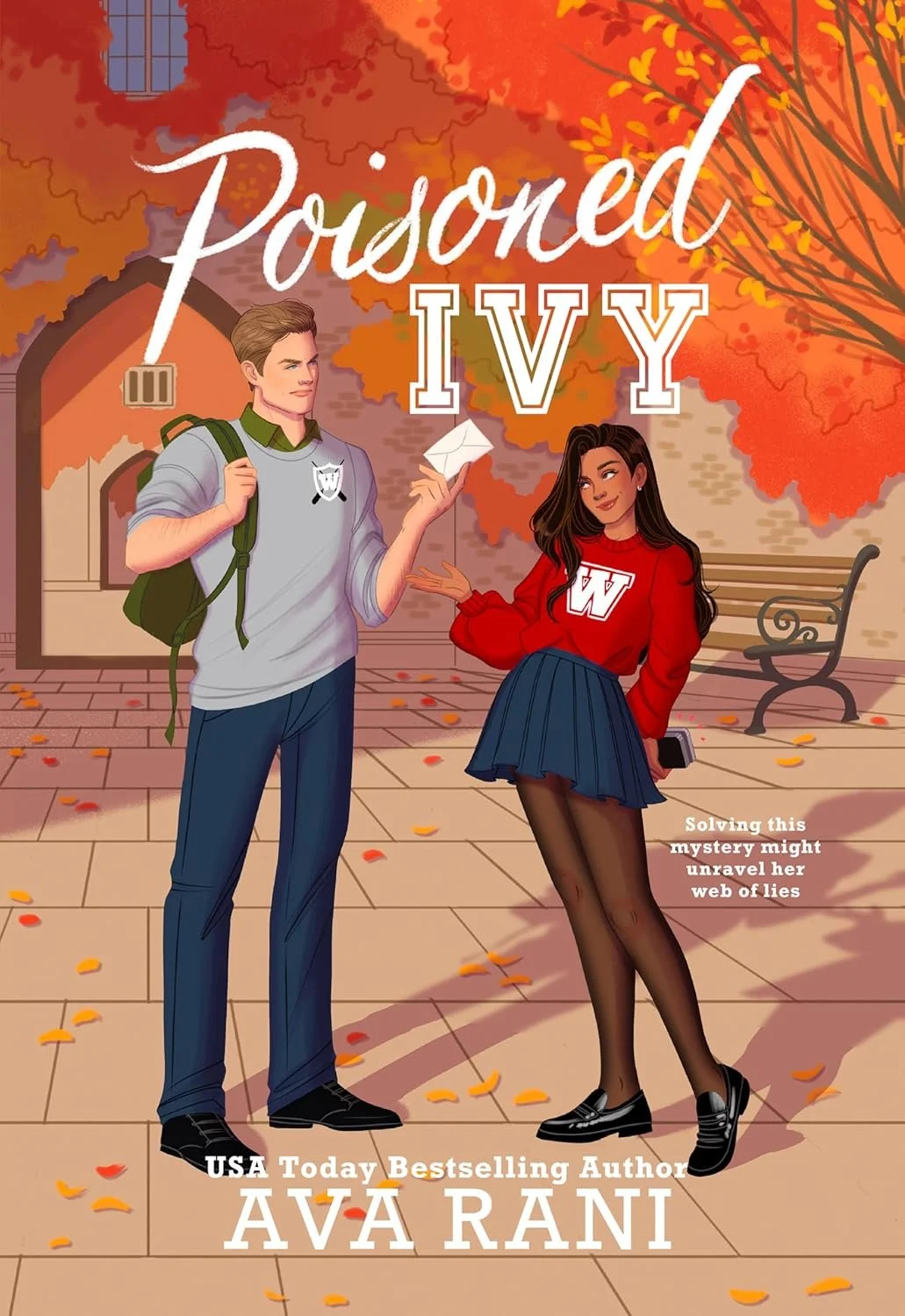
Following the abrupt end of a relationship, college student Kimberly Bradford finds comfort in the friendship with her over-the-top neighbor, Mallory. And, Mallory encourages her to get back out there. She would of course if it weren't for the thrilling little love notes and gifts she's been receiving . 

Kim thinks they're from her ex-fiancee, not realizing he's been murdered. Worse, whoever is sending her all the extra attention is not only in her inner-circle, but has a connection to that unsolved murder some 25 years ago. That connection puts her life in danger, and exposes secrets better left buried around her closest friends and family.

Website | Facebook | Goodreads

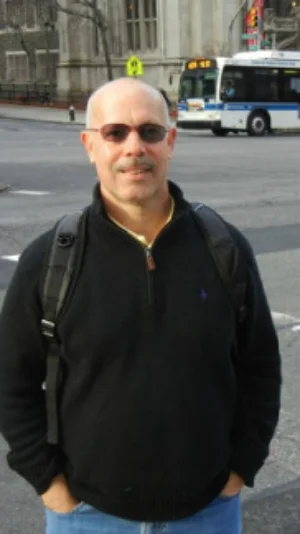
Q & A with Author Mike Domino

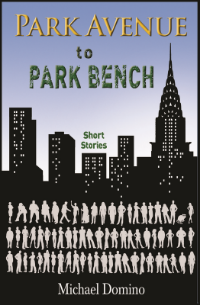
Prior to Park Avenue to Park Bench, you’ve written poetry. Have you shifted entirely to stories and essays?

One day it occurred to me that my poems and prose were, in fact, stories in miniature.  I felt that I had cut my teeth as a writer of poems and decided that I would experiment lengthening my observations into longer pieces. There is no doubt that poetry helped me as a writer of longer stories and essays, mainly by being able to express my thoughts with the least amount of words and in a “poetic” style. I feel fortunate that my evolution as an author occurred this way.

What helps you keep writing?

Writing is the one activity that takes me out of myself more than anything else I do. In many ways, writing is a spiritual experience for me and, when I write, I feel most connected to nature and humanity. I have yet to discover anything more satisfying than holding a finished book in my hands for the first time. When a person combines words that originate from his or her own mind it’s, to me, one of the highest art forms.  A writer’s combination of words and ideas are as unique to the world as every human personality and experience.

What authors have had the greatest impact on your style?

Concerning my style, I was compelled to allow my own unique style to evolve and therefore made a personal pledge that I would just keep writing until I felt comfortable that my voice had evolved into a style that I could truly call my own.  I did not want to copy or "be like " other writers.  For better of for worse, I restrained myself from reading “ How to Write Books “ or go deeply into the works of other poets and short story writers.   After a few years, I began reading extensively again, and what I learned was that much of my artistic self discovery had been experienced by other writers such as Bukowski, Vidal, Tolstoy, Emerson, Celine and Cervantes; just to name a few.  More than having an impact on my style, I believe that they validated the direction and path I had discovered by following my own heart and conscience into the world of words.

Have you stayed in touch with any of the people you’ve written about in your book? How are they doing?

Manhattan is the world’s biggest small town. Some of the people I write about are on the fringes of society and are now either incarcerated, sick, or have passed away.  Since I walk the city, I sometimes bump into people I’ve written about. Usually, they are more interested in telling me new stories about their lives than rehashing the past. So, we talk and I continue on my way into the city — my muse — which offers a bounty of information for new material. All of my characters will be with me for the rest of my life. They become part of my fabric as a man and a writer.  Others are good friends and we stay in regular phone contact or meet for meals at interesting restaurants in the city once in a while.

How has your career before writing influenced your material?

In business I bought and sold plastic scrap. I always thought that my job was more like art, which just happened to be a business.  It took a tremendous amount of creativity to devise ways to recycle old plastics into new and usable products. Decades of training my mind in the world of plastics scrap trading made the transition to creative writing almost seem natural.  In addition, I was always writing letters and did my company’s advertising, public relations, and graphic design-- which to me is all about art and creative thinking--just like writing.

What are you working on now?

I’m working on an outline for my first novel. I recently had an interesting experience that inspired me during a drive around Bear Mountain State Park, about an hour’s drive from Manhattan. I decided to veer off track and see if I could get a glimpse of the infamous Sing Sing Prison located in Ossining New York. I always have my camera handy and I began taking pictures of the draconian fortress. I guess I got too close and a guard rushed out and almost confiscated my camera; he gave me a stern lecture before sending me on my way. I felt lucky he didn't take me inside!  That experience led me to do further research about Sing Sing Prison, which then sparked my imagination and I could feel the creative writing juices begin to flow up the Hudson (up the river to the big house) and toward a story idea. I’m hoping this will be a good story for my first novel. I'm very excited about it and I’ve shared the idea with my writer friends, focus group and editor and they all seem to want to hear more, which is a good sign.

Before you go, for those who are reading about you for the first time, what is something that you want readers to take away with them about you?

Overall, for readers to know me is to know my characters.  I believe that people who have the least to offer in terms of material wealth have the most to offer in terms of spiritual riches.  Plainly put, since they have nothing else to give, they give of themselves, and in my case they offer me the gift of their stories; unguarded by conventions; emotional, social and material fences that many people erect and protect themselves with.

To know me as an Author is to know Hal S., Ricky Glasses and Lenny, in my stories.  Also, as a writer in evolution, it was important to let down my own fences and reveal my personal struggles, insecurities, hopes and wishes.  This was a big break through for me. I needed to write honest and true foremost and not to please an audience for commercial reasons.


Short story writer and poet Michael Domino has lived in New York City for 10 years, and has lived and worked within a 50-mile radius of Manhattan Island for most of his life. Captivated and sometimes overwhelmed by The City, he has come to know that the essence of Manhattan life is contained within its people – from all income brackets, all living situations, and all ages to all backgrounds, personalities, and circumstances. Michael published three books of short stories and a novella. His latest book of short stories is Park Avenue to Park Bench

You can reach Michael at: www.MichaelDominowriter.com

Making the World a Better Place by Daphne Michaels

Daphne Michaels 7.jpg

I have always strived to live by the age-old wisdom that we must come together to make the world a better place - that anything we can do to help the world and those who live in it is not just “nice,” but mandatory. I believe that we must each give in our own way and to the best of our ability. We must support one another in being the best we can be so that we can offer our best to the world. As a writer, I am most grateful for those who have supported me in being my best and offering my best to the world. 

While it been said that it takes a village to raise a child — and as a mother I know this is true — as it turns out, it also takes a village to do just about anything meaningful in life. Becoming a published author is no exception. From friends and associates who offer moral support to finding the right people to help with editing, publishing, marketing and promotion, I have learned that it takes a small village to be a writer — especially one with a message.

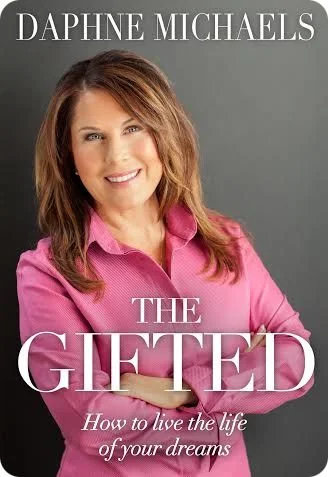
Making the world a better place through written messages takes a village — and why shouldn’t it? What I have learned most through writing my new book, The Gifted: How to Live the Life of Your Dreams is that all messages that make the world a better place are shared messages held by the heart of a village. In my case this includes my friends, supporters, editor, book designers, marketing gurus, publishing wizard, publicity angels and readers. The magic and buzz comes from the village … from each and every person saying “yes” to the message and offering their best to let it be heard.


Daphne Michaels is an author, speaker and licensed psychotherapist whose institute has helped hundreds of women and men transform their lives through the "gifts" every human being is born with. Daphne began her own journey of transformation at a young age, pursued it fearlessly, and later studied formally in the fields of social science, human services and integral psychology. The Gifted: How to Live the Life of Your Dreams launches both Daphne Michaels Books and The Gifted series, whose goal it is to share with the widest audience possible the principles that guide the Daphne Michaels Institute. Daphne's earlier book, Light of Our Times, featured her conversations with such international figures in the fields of spirituality and personal development as Ram Dass, Julia Cameron, Dr. Masaru Emoto, and Thomas Moore.

Visit her website at www.daphnemichaels.com


In The Gifted: How to Live the Life of Your Dreams author, speaker and licensed psychotherapist Daphne Michaels celebrates the nine gifts that are our birthright, guiding readers in how to recognize and use them to transform their lives.  In her author's preface, Michaels reveals how her own journey of life transformation began when she was young and realized that human existence wore two conflicting faces--one of love and joy, and one of fear and despair. She decided then to commit her life to reconciling these two visions because she knew that, irreconcilable though they seemed, together these two faces held the secret to living a life of endless possibility and authentic happiness. Her personal journey and formal education in social science, human services and integral psychology led to the founding of the Daphne Michaels Institute, which has helped hundreds of men and women design the lives of their dreams.

In The Gifted Michaels shows us that the first three “gifts” we must recognize and embrace within us if we are to re-design our lives are Awareness, Potential and Stillness. These three allow us to identify and use the remaining six with a life-changing power:  Disharmony, Harmony, Ease, Clarity, Freedom and Engagement.  Each of these six relies on the “essential three” for its own power to change our lives, and each has its own gifts--its “children.” By approaching the nine gifts with real-world metaphors, Michaels answers in easily understood ways what for many readers have been lingering questions about personal transformation—such as how it works, what kind of commitment it takes, and why, if we’re committed, real transformation becomes inevitable—and addresses obstacles that readers may have encountered in the past in trying to reach in life a happiness every human deserves.

While the human universe’s face of love is celebrated in The Gifted, so is the face of fear that haunted a young girl decades ago. As Michaels shows us in her book, even Disharmony—the “quagmire” of life born of the human ego’s fear, defenses, delusions and despair—is a gift, too, and one as important as the others if we know how to see it clearly and use it. Once we understand Disharmony, we are ready to understand the real purpose of Harmony in our lives. Disharmony does not need to rule us.  It is ours to use as we design the lives of our dreams. 

The final gift in The Gifted, Michaels tells us, is the gift of Engagement. Engagement—with the universe and with ourselves—allows us to use all of the other gifts with more power and joy than we ever imagined possible.

That mountaintop decision never left me. It drove my life’s work and over the years led me to understand that there are gifts – nine of them, in fact – that we are all born with but rarely experience in their full glory and potential. These gifts – which make each and every one of us “The Gifted” of this book’s title – are the keys to living lives of endless possibilities and, in turn, achieving an authentic happiness that cannot be lost. They are, in other words, the keys to achieving the life of our dreams.

Ten Things You Didn't Know About "The Duke's Obsession" by Frances Fowlkes

Ten Things You Didn’t Know About “The Duke’s Obsession”

1.       My hero, Edward, is named after Edward Cullen in the “Twilight” series. It is my little homage to “Twilight” and the obsession I had with the story when I first started writing my character. Actually, obsession is an understatement. I have Robert Pattinson’s autograph. Framed.

2.       Edward is a secondary character in my very first book that will remain under my bed indefinitely. I enjoyed writing Edward’s character so much, I thought he deserved a book of his own. 

3.       Daphne’s original name was not Farrington, but Gale. I changed it after my critique partner said “Daphne Gale” sounded too much like “Dorothy Gale” from “The Wizard of Oz”. After searching through early American surnames, I came across Farrington and the rest is history. (Oh, see what I did there---get it, history, I write historicals…yeah.)

4.       Although it is not released as a series, characters from “The Duke’s Obsession” are set to be in my next and future novels. Lord Colwyn, a gentleman in attendance at the country party at Thornhaven, is the hero of my next book, “Miss Winters Proposes”.

5.       Daphne’s obsession with numbers stemmed from my hatred of them. Mathematics and I do not mix, so I thought it would be fun, and a little bit of a challenge, to write a character who is my scholastic opposite.

6.       The scene in Fanny’s Confectionary/Treat Shop was added in the second to last round of edits. It was suggested by my editors to beef up the romantic tension between Edward and Daphne. I think it is quite possibly my favorite scene between the two. I giggle (and thank my editors) every time I read it.

7.       Thornhaven is actually the name of a housing development by my house. I liked the name so much, I stole it. (And I did it again in “Miss Winters Proposes”).

8.       I didn’t intend on leaving the title “The Duke’s Obsession”. I originally came up with the title on a whim for a contest, thinking it would change when it got published. After all, every other author told me it would be changed by the publisher. Why would mine be any different? Guess what? I kept the original title. And I’m happy I did. It fits.

9.       I have never read Thomas Paine’s “The Rights of Man”. I didn’t even know what the book was about until I did a search on American political treatises. I have, however, read “Kubla Khan”. It was required reading for my college English class. Well, so was “The Rights of Man” but a college student only has so many hours and “Kubla Khan” just sounded more interesting. Priorities, my friends. Priorities.

10.   It took over three years to write “The Duke’s Obsession”. It has undergone extensive edits and some serious growing pains, but in the end, it was worth every last minute. I hope you enjoy the book!


Frances Fowlkes lives in South Carolina with her high school sweetheart, three red-headed sons, and a spoiled standard poodle. When not writing about ardent heroes or strong-willed heroines, she enjoys spending time with her family, playing with makeup, and planning her next vacation.


7425401_orig.jpg

London 1818

An American Heiress Who Must Swallow Her Pride

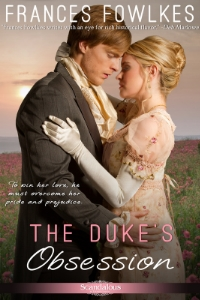
Miss Daphne Farrington despises three things: England’s dreary weather, the grimy streets of London, and most especially the English aristocracy. Despite her misgivings, she must persuade the very English Duke of Waverly to save her family shipping business. If only she could ignore the way he makes her pulse race whenever she’s near him.

A Duke Who Must Overcome Her Prejudice

Edward Lacey, the Duke of Waverly, is convinced that the lovely Miss Farrington, with her penchant for numbers, is the woman he’d like to make his Duchess. But unless he can convince her that not all English lords are callous, calculating rakes, a dark secret will ruin his chance at happiness.

Website Blog | Facebook Twitter Goodreads | Amazon Barnes and Noble

5 Things I Can’t Write Without by Taylor Jenkins Reid

1.) Iced Tea

I’m not a coffee drinker but I desperately need the caffeine. Enter: Lipton.

2.) Scrivener

I wrote my first book in Microsoft Word but by the second draft of my second book, I realized I needed something tailored more for what I was doing. My only complaint is that Scrivener can’t guess what word I really mean when I type gibberish.

3.) Gchat

I work from home — a lonely endeavor. Having window boxes open to talk to my friends across the country and my husband across town means I can have “water cooler” talks from home.

4.) Friday Night Lights

When I’m writing a first draft of a novel, I have to be imaginative, emotional, logical, and compassionate every day for hours on end. Marathoning television is my way of rehearsing. I may wake up feeling uninterested or uninteresting, but after two episodes of a show like Friday Night Lights or The Good Wife, I’m excited and inspired to tell good stories with great characters.

5.) My Dog

He keeps my cold feet warm underneath my desk.


Taylor Jenkins Reid is an author and essayist from Acton, Massachusetts.  She graduated from Emerson College with a degree in Media Studies.  Her first novel,Forever, Interrupted, was named one of the “11 Debuts We Love” by Kirkus Reviews.  She lives in Los Angeles with her husband, Alex, and her dog, Rabbit.  You can follow her on Twitter @TJenkinsReid.


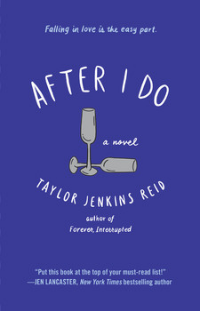
When Lauren and Ryan’s marriage reaches the breaking point, they come up with an unconventional plan. They decide to take a year off in the hopes of finding a way to fall in love again. One year apart, and only one rule: they cannot contact each other. Aside from that, anything goes.

Lauren embarks on a journey of self-discovery, quickly finding that her friends and family have their own ideas about the meaning of marriage. These influences, as well as her own healing process and the challenges of living apart from Ryan, begin to change Lauren’s ideas about monogamy and marriage. She starts to question: When you can have romance without loyalty and commitment without marriage, when love and lust are no longer tied together, what do you value? What are you willing to fight for?

This is a love story about what happens when the love fades. It’s about staying in love, seizing love, forsaking love, and committing to love with everything you’ve got. And above all, After I Do is the story of a couple caught up in an old game—and searching for a new road to happily ever after.

A Classic Story (I Am Pilgrim) by Terry Hayes

This was years ago. I was sitting in a nondescript office in Melbourne, Australia, when the door opened. Raymond Chandler, the American noir novelist and screenwriter, once said “when in doubt have a man come through the door with a gun in his hand”.

This was no killer. He was in his 30s, a little overweight maybe but he carried it well, with a shock of curly black hair, a ready smile and probably a fair bit of Greek somewhere in his background. He was a doctor.

I was on the opposite side of the social and professional divide – eight years younger than him, I had spent my entire working life as a reptile of the press. It would be churlish not to admit that the job had been very good to me – when I was twenty-one the newspaper group I was working for had sent me to New York as a foreign correspondent, I had traveled the world, I had covered a lot of big stories. More importantly, they are good people in journalism.

Now I had returned to Australia and was working as a writer and producer of a top-rating radio program. You meet a lot of people in that trade and one of them, a book publisher, had set up the meeting.

Apparently, the doctor had directed a movie. As part of his lifelong interest in film-making he had also read a book by the great American movie critic, Pauline Kael. I think it was I Lost it at the Movies but I could be wrong. Did I mention this was a long time ago?

Ms Kael said in the forward that from her observation, journalists often made the best screenwriters. Certainly she had some reason to believe it: Ben Hecht, who worked on seventy scripts – including Some Like it HotFront PageGone With the Wind and Scarface – had started out as an ink-stained wretch on the Chicago Journal. He was nominated six times for the Oscar and won twice. Then there was I.A.L. Diamond who studied journalism at Columbia in New York, wrote almost thirty scripts, got three Academy Award nominations and one won. Or Charlie Bracket who wrote Sunset Boulevard – a movie so good he could have thrown in his hand then – but went on to write dozens more and won four Oscars for his trouble.

Anyway, having read this by Ms Kael, the doctor thought it was a good idea to meet reptiles whenever he got the chance. A few days later I accompanied him to a house in the Melbourne suburbs to look at the movie he had made. It was a work in progress and he seemed to be editing it in a bedroom. Or maybe it was the lounge-room. All I know is that it sure wasn’t luxurious.

We watched the movie, in black and white on a small TV screen, with whole chunks missing and a lot of the dialogue too muffled to hear. At the end, he asked me what I thought. I wasn’t skilled in the ways of Hollywood then so I didn’t know that the standard strategy in such circumstances was to say: “I loved the music. It’s an incredible score, who did it?” If you ever make a movie, be very wary if people praise the music.

But, even then, I was a quick study I guess. “Very interesting,” I replied. “How do you feel about it?”

He told me that he believed he had achieved somewhere less than twenty-five per cent of his ambition for the film. It was obviously a very confronting thing to admit but he said it without rancor or bitterness – just as a matter of fact. I found myself coming to like him very much.

It often surprises me how people who are standing on the very brink of something frequently fail to recognize it. Thomas Watson, the legendary head of IBM – the company that launched so much of the computer industry – is supposed to have said “I think there is a world market for maybe five computers”.

So it was in the Melbourne suburbs that afternoon. There was this young, fresh-faced actor who had the starring role in the movie but I can’t say I saw anything special in him. I’m pretty sure the doctor did – however I certainly didn’t sit upright in my chair and think that a star was being born, that I should remember the moment and record it for posterity. All I had was a headache from straining to follow the footage.

A couple of months later, the doctor asked if I wanted to work on the script of a new movie with him. The pay was – well, let’s just say there was no way I could afford to give up my day job.

So, I started work at the radio station at 5am, finished at lunchtime and worked all afternoon on the so-called screenplay with the doctor. I do remember – as clear as if it was yesterday – the moment panic hit.

Because the doctor had made a movie, I was working to the theory that he knew most of what was necessary to write one. You know – drama, dialogue, structure, character and all that stuff. We were sitting in my apartment, lost in a story-telling labyrinth as usual, when it suddenly occurred to me that my collaborator might not know much more about this screenwriting racket than I did. In other words, a case – at best – of the legally blind leading the totally blind.

I was so shocked by this thought, so conscious of the ice-cold water sweeping my legs from under me, that I put the idea to him directly. We have spoken of this many times since and I don’t feel I am betraying any confidences. He gave one of his winning smiles and readily agreed that it was probably true. Oh, Jesus.

That started – to put it mildly – a flurry of wild activity. I have always been a voracious reader and a willing explorer so I began an inquiry – a research project, if you will – into the nature of story-telling and the underlying principles of drama. It continues to this day and will probably do so until – as we said in one of the movies we wrote – “my life fades and the vision dims”.

That exploration quickly led me to read an interview with George Lucas, the creator of Star Wars, in which he said that a great deal of his inspiration had come from a book called The Hero With A Thousand Faces by Joseph Campbell.

Campbell was an American university professor and an expert on mythology. Basically, his book argued that in many different guises, across many different cultures, the classic hero story followed the same pattern –

A man was born in unusual circumstances, went on an epic journey, was tested almost to the point of death, found the inner resources to triumph and achieved something of great benefit to his community. The hero story spoke to something very deep inside of all of us all, Campbell said, no matter what the man was called – Moses, Jesus, King Arthur, Jason of the Argonauts, Frodo Baggins. Or Luke Skywalker.

I figured if it was good enough for George Lucas, it was good enough for me. I read the book and then I read it again. So did the doctor. In the midst of all this, his movie was released. It was called Mad Max, the doctor’s name was George Miller and the fresh-faced kid who had made no lasting impression on me was Mel Gibson.

George and I continued to work on our writing, tried to learn as much as we could about drama and story-telling, and never forgot Mr Campbell’s work. Eventually we finished a script, full of weird characters and some pretty good narration and high-energy action sequences. It was brilliantly directed too, I might add.

The movie was Mad Max 2/The Road Warrior – the wasteland by way of Joseph Campbell, if you will.

Working with George and Doug Mitchell, I co-produced and wrote more movies, including Dead Calm, and did the same on a number of mini-series: The Dismissal, Bodyline, Vietnam and Bangkok Hilton to name a few.

After several years, I ended up going to Los Angeles and George went on to make a string of fine movies and win just about every industry accolade, including the Oscar.

In Hollywood I wrote – or co-wrote – the screenplay for a lot of movies. Paybackwith Mel-what’s-his-name, From Hell with Johnny Depp, Vertical Limit with Chris O’Donnell and many others that never got made or on which I did un-credited re-writing: Flightplan with Jodie Foster, Reign of Fire with Matthew McConaughey,Cliffhanger with Stallone and so on.

But it’s one of the strange quirks of Hollywood, as far as writers are concerned, that the more they earn the unhappier they seem to become. To quote Chandler again: “Hollywood is wonderful. Anyone who doesn’t like it is either crazy or sober.”

I had always wanted to be a novelist and, after fifteen years or more in LA, I started to think seriously about it. As a reader, highly-crafted thrillers and spy novels had always been my thing – if you ask me, John LeCarré is one of the best writers in the world – and that was where my imagination started to take me. Then, late one night just before falling asleep, I had a great idea.

Something has to be mentioned here. Quite a few years ago there was an American guy – I can’t remember his name, it doesn’t matter – who invented a line of men and women’s underpants fitted with panels of charcoal granules. Charcoal, apparently, is very good at absorbing certain gases and his idea was that his underwear would be a major hit with people suffering from flatulence.

I only mention this to illustrate that not all “Eureka!” moments are, in fact, a good idea. Often, there is an excellent reason why something has never been thought of before.

The idea which had occurred to me was to write a gripping spy thriller which would take the main character – and, by extension, the reader – on the classic hero journey of Jason, Frodo and Luke. He would be a solitary man, a person born in unusual circumstances, who would go on an epic adventure. He would, of course, almost be broken like a butterfly on a wheel, somehow find the strength within himself to triumph and – in doing so – render a great service to his country or the world.

To my knowledge, nobody had ever combined those elements before. After all those years, Joseph Campbell had walked back in to my life.

Try as I might, and as often as I thought of charcoal-filled underpants, I still couldn’t get the idea out of my head. When something like that happens to a person in my business, there’s usually only one thing you can do – write it.

It took a long time and was a far more complex undertaking than I could ever have anticipated. When I started I had two parents and one sibling. By the time I finished they had all passed away.

Now the book is edited and about to be published around the world, starting in England and Australia. I Am Pilgrim it is called – seven hundred pages – an epic story in every sense of the word. Is it any good? I don’t know, there are times I am certain I have created the literary equivalent of those American underpants and on other occasions I feel quietly proud of it. But it doesn’t matter what I think now – the public and readers in any number of countries will make their own decision.

But I do have my hopes. Mostly, I hope it moves and inspires people and even changes somebody’s life. That can happen some times with a book – I know from personal experience.

As things turned out, some years ago I was standing on a set in Los Angeles watching a movie I had written being filmed. It’s a slow and tedious process – staring at paint drying is riveting by comparison – and the producer wandered over to have a chat.

She was obviously upset and I asked her what was wrong. She said she was spending a lot of time visiting a friend of hers who was dying – the woman only had a few days left to live.

“Anyone I know?” I asked.

“Pauline Kael,” she said.

I told her about the events in Melbourne all those years ago and how I had come to be involved in movies and asked, when she saw Ms Kael next, if she wouldn’t mind passing the story on and thanking her.

The next day the producer said she had done as I asked and reported: “She said what a wonderful thing it was to have written something which had such an effect on somebody’s life and career.”

I didn’t mention her in the acknowledgments of my book but I suppose in a wayPilgrim is dedicated to her.

Thank you, Pauline and yes – what a wonderful thing indeed.


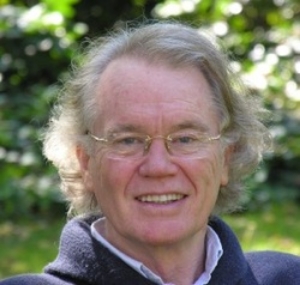
Terry Hayes is the award-winning writer and producer of numerous movies, including Payback, Road Warrior, and Bangkok Hilton (featuring Nicole Kidman). He lives in Switzerland with his wife, Kristen, and their four children.


This astonishing debut espionage thriller depicts the collision course between two geniuses, one a tortured hero and one a determined terrorist, in a breakneck story reminiscent of John le Carré and Robert Ludlum at their finest.

PILGRIM is the code name for a world class and legendary secret agent. His adversary is a man known only to the reader as the Saracen. As a young boy, the Saracen barely sees his dissident father beheaded in a Saudi Arabian public square. But the event marks him for life and creates a burning desire to destroy the special relationship between the US and the Kingdom. Everything in the Saracen’s life from this moment forward will be in service to jihad.

At the novel’s opening, we find ourselves in a seedy hotel near Ground Zero. A woman lies face down in a pool of acid, features melted off her face, teeth missing, fingerprints gone. The room has been sprayed down with DNA-eradicating antiseptic spray. All the techniques are pulled directly from Pilgrim's book, a cult classic of forensic science written under a pen name.

In offering the NYPD some casual assistance with the case, Pilgrim gets pulled back into the intelligence underground. What follows is a thriller that jockeys between astonishingly detailed character study and breakneck globetrotting. The author shifts effortlessly from Pilgrim’s hidden life of leisure in Paris to the Saracen’s squalid warrior life in Afghanistan, from the hallways of an exclusive Swiss bank to the laboratories of a nefarious biotech facility in Syria.

The inevitable encounter between Pilgrim and the Saracen will come in Turkey, around the murder of a wealthy American, in a thrilling, twisting, beautifully orchestrated finale.