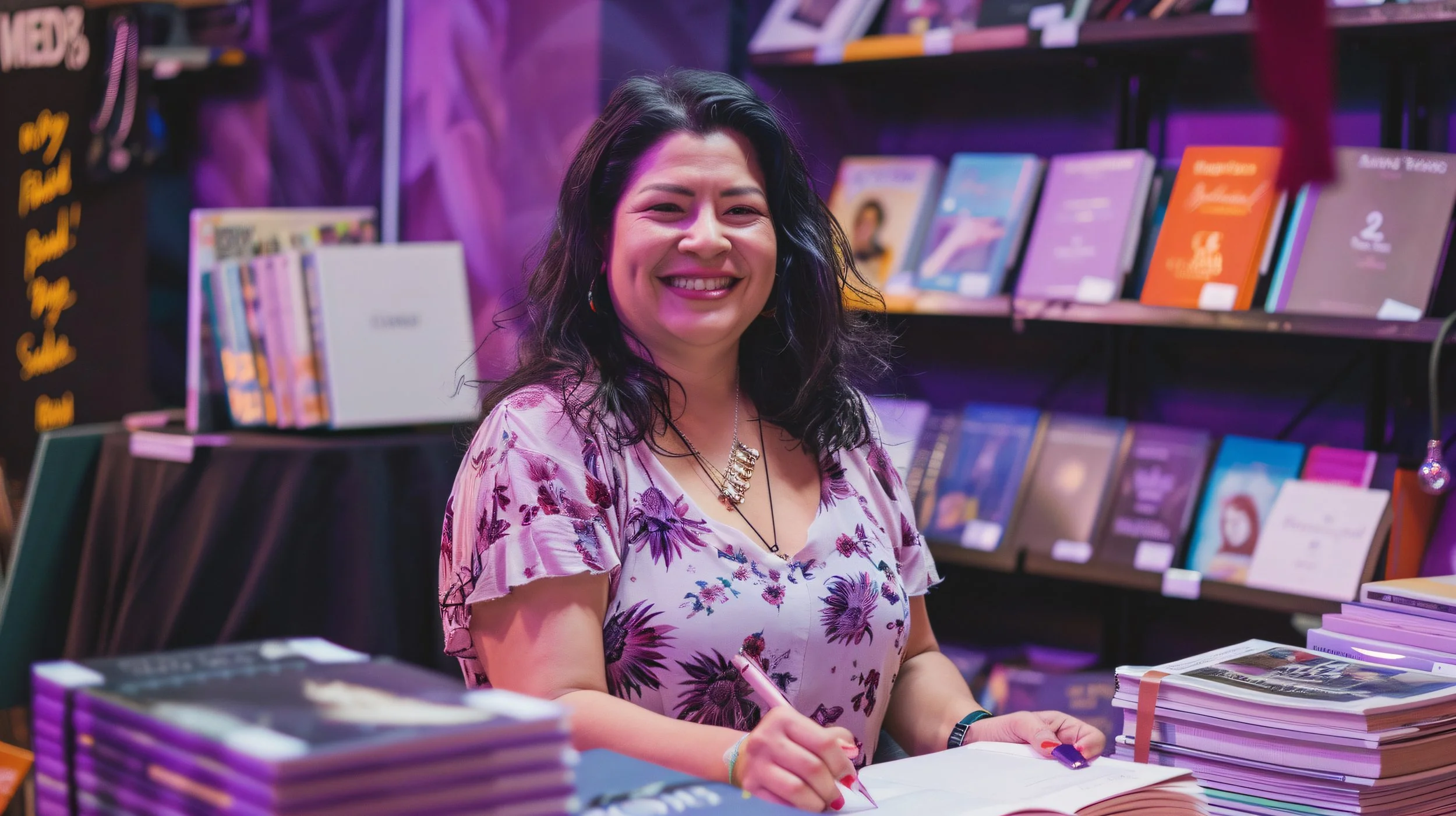
Is It Really Hard To Write Historicals by Alison McMahan

Here's something I hear all the time: "I could never write historical. Too much work! All that research. How do you do it?"

And my answer always is: "Contemporary. I could never write it. Too much work! You have to make everything up. For historical, I need to know something, I look it up."

There's truth to both statements, of course. Both genres have to make stuff up. Both genres have to do research. But I do think writing about a period where you can look everything up can be a lot easier.

For example, describing a character's clothing. Luckily for me, when I was writing The Saffron Crocus, my historical mystery-romance set in 1643 Venice, there was art.
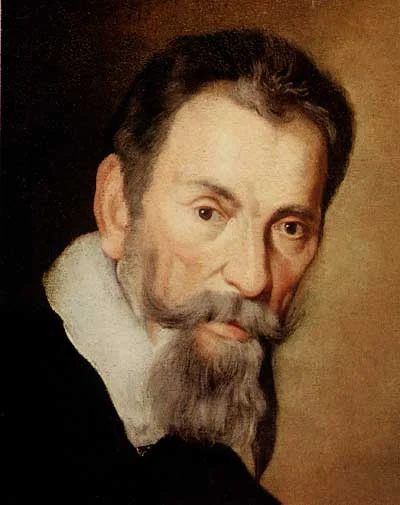
Although much of the art was religious or allegorical, most of the painters used live models, so I could look at faces and bodies and get a visual start on a character. And I could use the clothing in portraits to dress my characters.
http://en.wikipedia.org/wiki/Claudio_Monteverdi#/media/File:Bernardo_Strozzi_-_Claudio_Monteverdi_(c.1630).jpg

For example, Bernardo Strozzi's portrait of Monteverdi was painted in 1640, just three years before the events of The Saffron Crocus take place. I spent quite a lot of time staring into those slightly mismatched eyes while I listened to recordings of his music and came up with ways to incorporate him as a character into the story.

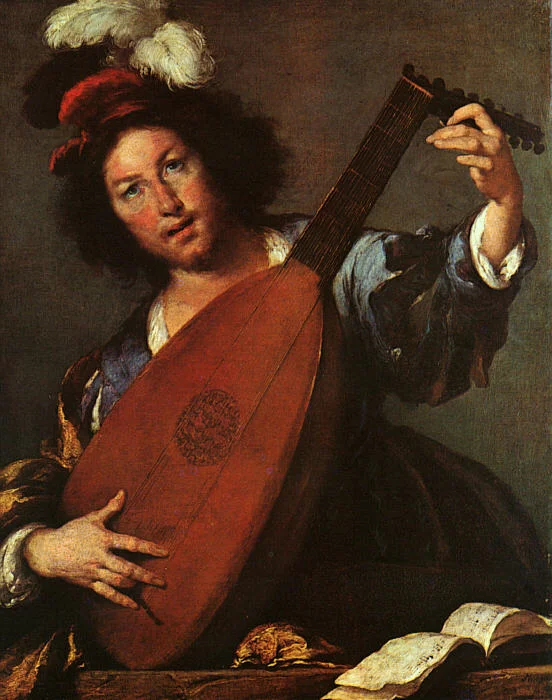
http://www.wikiart.org/en/bernardo-strozzi/lute-player-1635

I modeled the character of Domenico on Strozzi's Lute Player. Not just the face and the clothes, but also the general character, a boy who has just turned into a man and is something of a dandy. It's hard to look at this painting and take the young man's ability to play the lute seriously. So in the story Domenico is wealthy and has good taste but he plays the lute like a hobbyist. Not like someone who devotes their life to music, as some of the other characters do.

In those two instances the paintings gave me a character whole, but often I had to cobble together information from various sources, including more than one painting, in order to put together a character. For the figure of Margherita, I looked at many paintings of St. Cecilia, including one by Bernardo Strozzi:
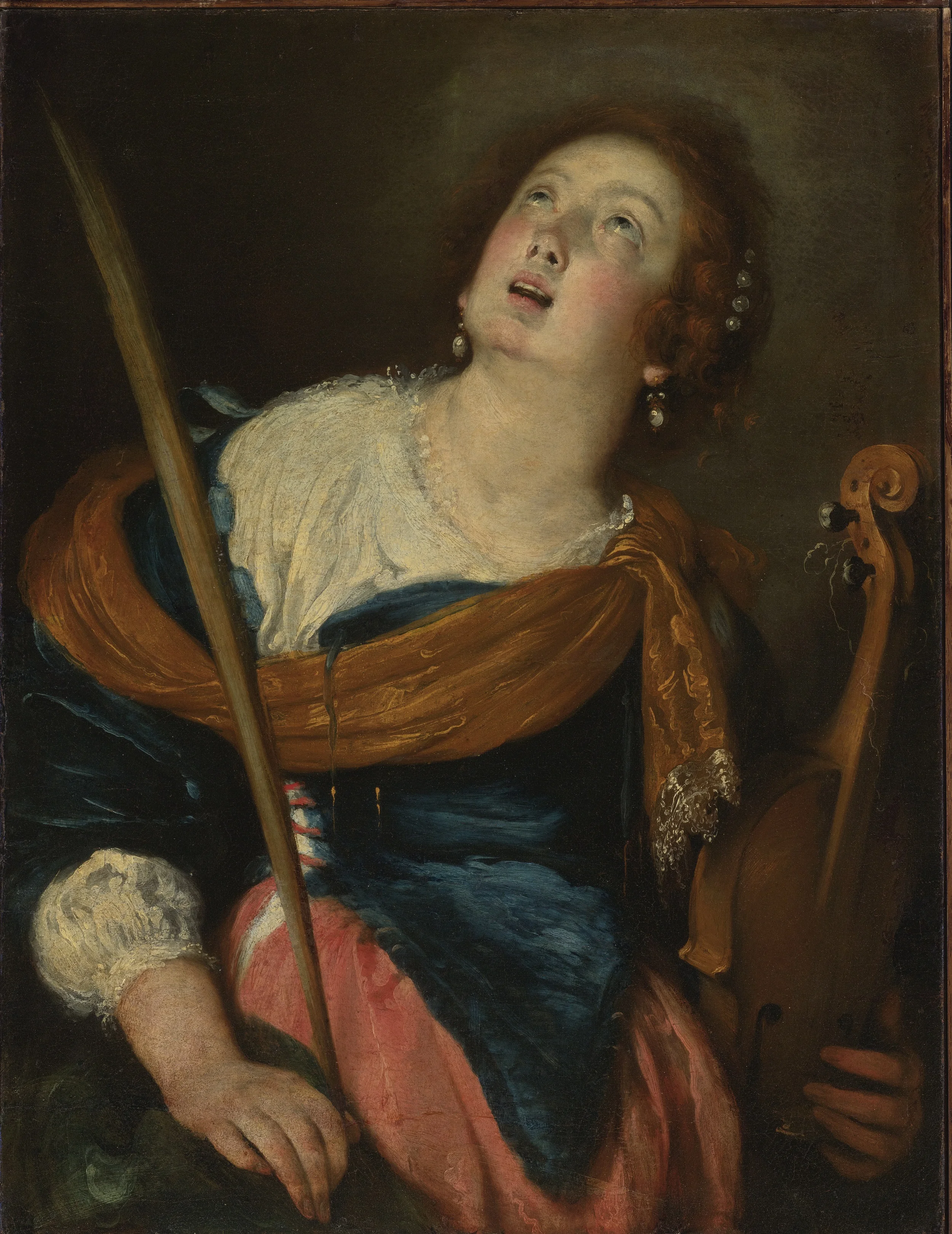
http://c300221.r21.cf1.rackcdn.com/bernardo-strozzi-1581-1644-saint-cecilia-1349404334_b.jpg

For Margherita, I was also inspired by his portrait of Judith with the head of Holofernes:

https://judith2you.files.wordpress.com/2013/04/judith-bernardo-strozzi.jpg
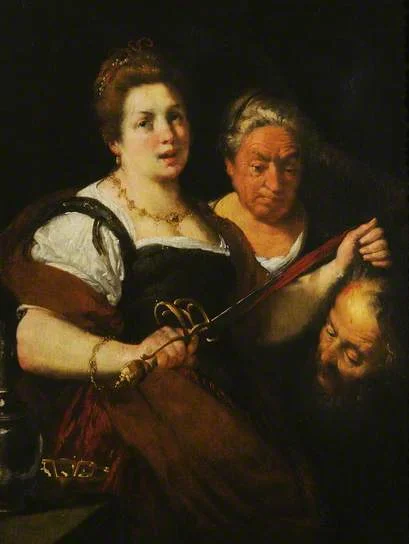
In both images I was struck by the women's expressions. St. Cecilia is transported by some heavenly inspiration, as Margherita could be when she was singing. Judith confronts the viewer directly, even though her servant isn't too sure about this. I felt that summed up Margherita's abilities to survive and flourish no matter what life threw at her.

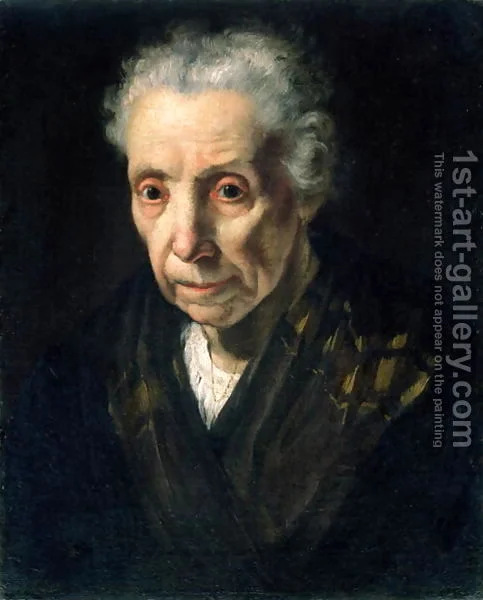
I named a supporting character Cecilia, after my recently-deceased mother-in-law and because the 17th century in Venice worshipped that saint. But for her appearance I used another portrait of Strozzi's, a sweet old woman with a stare that dares you to confront the truth about yourself:

http://www.wikigallery.org/wiki/painting_234976/Bernardo-Strozzi/Head-of-an-Old-Woman
5.jpg

After using so many of Bernardo Strozzi's paintings as sources of information and inspiration, I felt I had to put him in the book too. He is an "off-screen" character in the book, in that the main characters hide out in his studio while he is away, but we never meet him directly.

Who was Bernardo Strozzi? He lived from 1581 to 1644, so the year my story takes place was the last year of his life. By then he was one of the most influential painters of the 17th century, especially in Genoa and Venice.

He became a Capuchin monk but took a leave of absence (over two decades long!) to care for his mother and sister. After his sister married and his mother died the order insisted he return, but Strozzi left Genoa and went to Venice instead, where he had a large workshop.

About Alison McMahan

Alison McMahan chased footage for her documentaries through jungles in Honduras and Cambodia, favelas in Brazil and racetracks in the U.S. She brings the same sense of adventure to her award-winning books of historical mystery and romantic adventure for teens and adults. Her latest publication is The Saffron Crocus, a historical mystery for young. Murder, Mystery & Music in 17th Century Venice.

She loves hearing from readers!

You can connect with Alison via: Saffron Crocus | AlisonMcMahanAuthor.com | AlisonMcMahan.com | Facebook | Twitter 

Goodreads Pinterest  | Google+ | Instagram  | Tumblr

About The Saffron Crocus
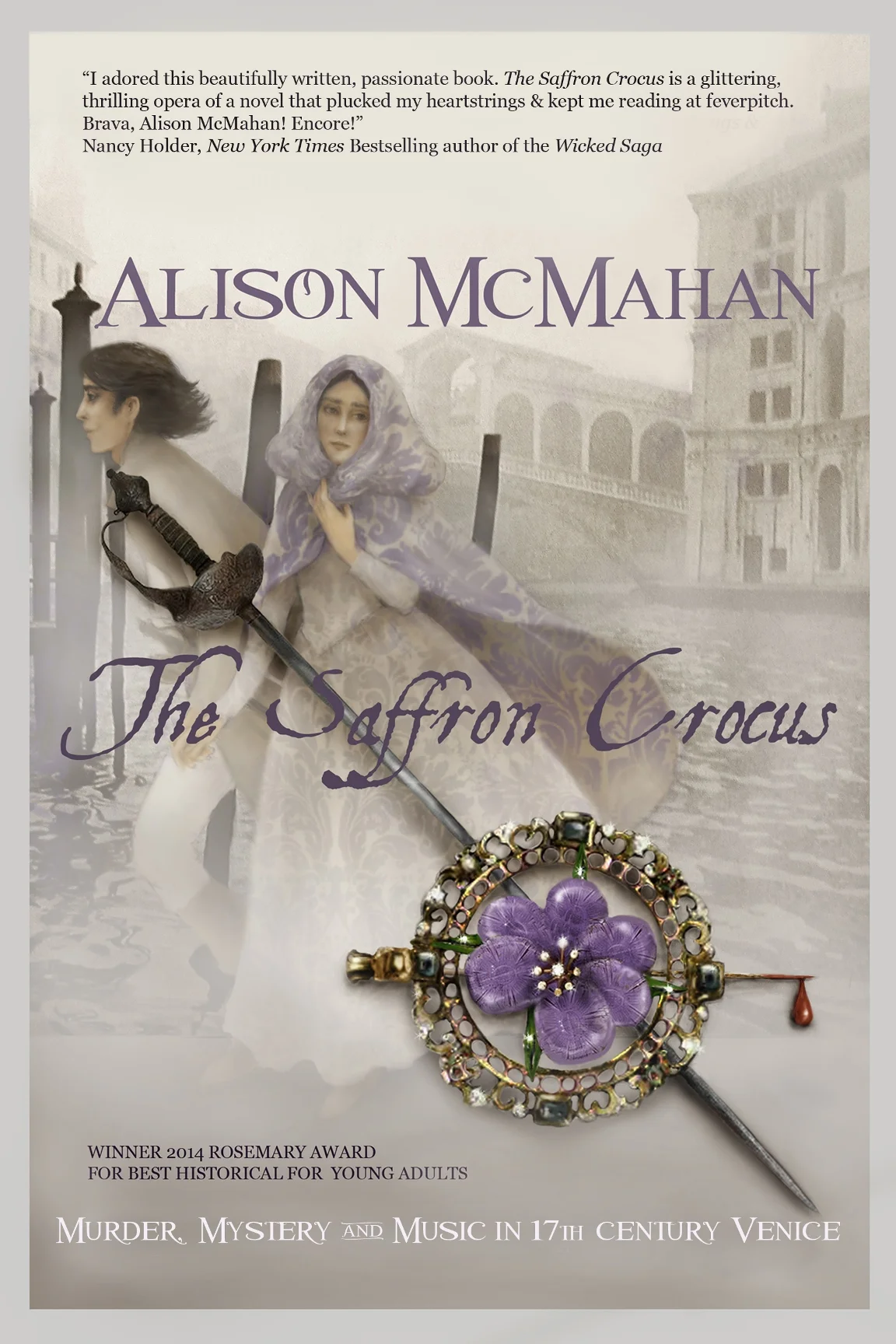
Murder, Mystery & Music in 17th Century Venice.

Venice, 1643. Isabella, fifteen, longs to sing in Monteverdi’s Choir, but only boys (and castrati) can do that. Her singing teacher, Margherita, introduces her to a new wonder: opera! Then Isabella finds Margherita murdered. Now people keep trying to kill Margherita’s handsome rogue of a son, Rafaele.

Was Margherita killed so someone could steal her saffron business? Or was it a disgruntled lover, as Margherita—unbeknownst to Isabella—was one of Venice’s wealthiest courtesans?

Or will Isabella and Rafaele find the answer deep in Margherita’s past, buried in the Jewish Ghetto?

Isabella has to solve the mystery of the Saffron Crocus before Rafaele hangs for a murder he didn’t commit, though she fears the truth will drive her and the man she loves irrevocably apart.

amazon
barnes and noble

Based on a True Story by Jaimie Hope

When I began writing The Road That Leads To Home the first thing I knew about it was that I wanted to base it on a true story, my own. I had already written and published my autobiography so I figured writing a book that was only based on one life experience would be easier. As it turned out, I was wrong.

J would imagine that most authors who write “Based on a true story” books do so of events that already happened. I was actually living in my event when I decided I wanted to write about it. Of course, this meant I had no clue how it would all end. That added some adventure for me. The adventure stopped on June 21, 2007. However, the book wasn’t even half done in my mind.

From the beginning, I saw The Road That Leads To Home as being a novella. It wasn’t supposed to be the full story, just a glimpse into the character’s lives. Once I knew how it was going to end, which was far different that I saw it in my head, I struggled with when to end the book. I was tempted keep it upbeat for a few more chapters, but decided against in the end.

The one complaint I get most often is that people would have liked the story to have been longer. Up until I wrote the last chapter I was having a lot of fun with it, but you know what they say, all good things must end. Extending the story even one more chapter would have done nothing to advance the plot. In fact, it would have just added fluff.

Take heart, the Rhea sisters will be back in Book 2 of The Sara Rhea Chronicles in 2016. Stay tuned for updates on a release date.

About Jaimie Hope

Jaimie Hope was born November 3, 1976, in New York. It wasn't until high school, where she joined the newspaper staff, that she decided she wanted to be a writer. After graduation, the author went to college and received an Associate's degree in 1999. In 2002, she moved to Florida where she was an active volunteer in the local historical society and the Deltona Regional Library. In 2006, she moved back to New York where she released her first Children's book, The Adventures of Baby Jaimie. She followed it with a Young Adult novel, Bless The Broken Road. She also published her autobiography, Roll With It. She is planning to re-release book one of her New Adult Romance/Paranormal trilogy, The Sara Rhea Chronicles: The Road That Leads To Home and a new Children's Book series, along with releasing all her other self-published titles under her new publishing company, Back To Basics Publishing and Author Services in the fall of 2014.

Connect with Jaime via: Website | FacebookTwitter | Linkedin | Pinterest

About the Road that Leads to Home


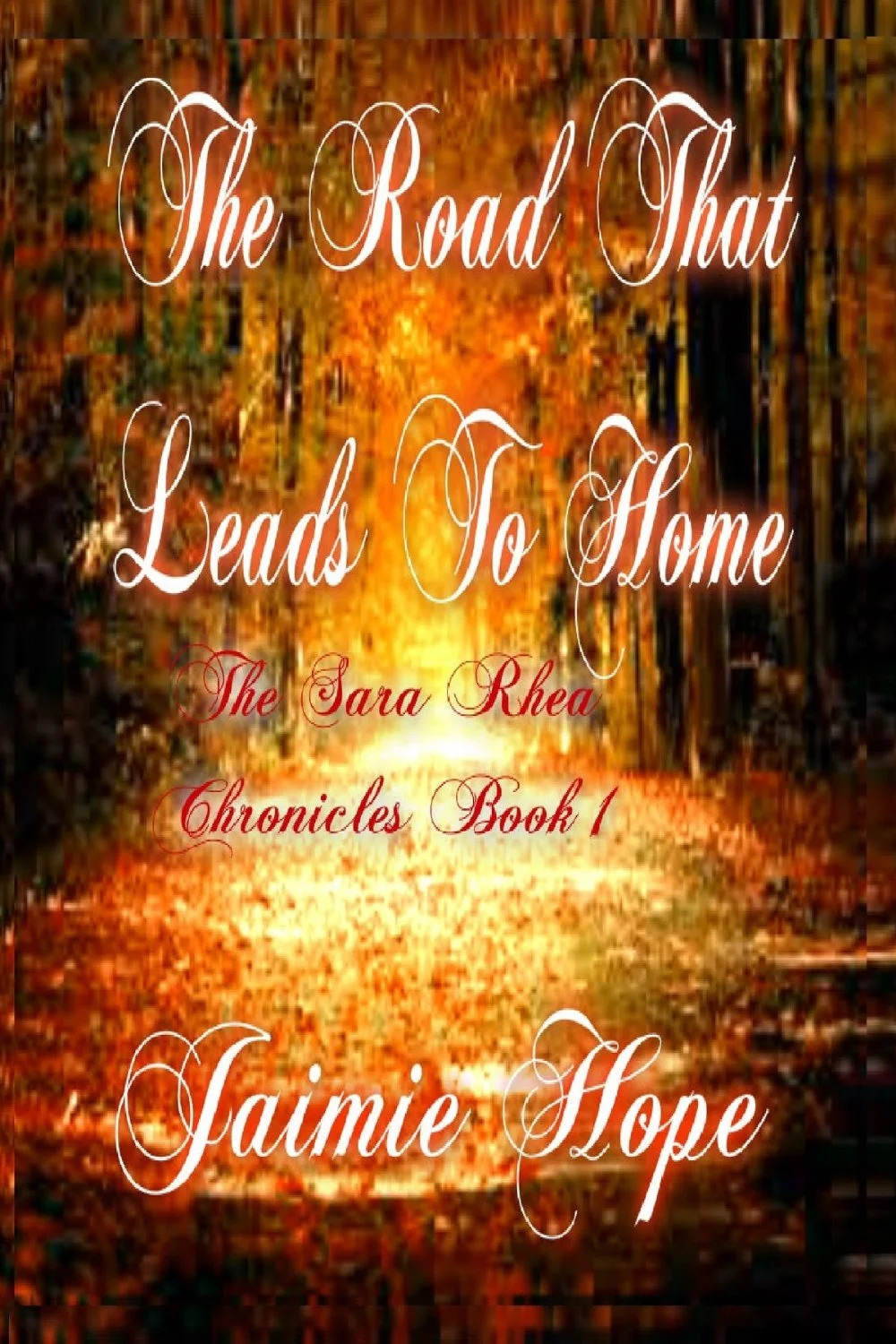
Sara's life was going along peacefully until she got the early morning phone call that changed everything. Now she finds herself heading back where she began, home. Not only does she have to deal with a difficult older sister and helping to keep the family's inn afloat, Sara has to work alongside her high school sweetheart who still looks as gorgeous as ever and her feelings that she saw all this coming. Her dreams and nightmares seem to come true right before her eyes. It has to all be a coincidence, doesn't it?

amazon
barnes and noble

Q&A with Lynne Graham

Tell us a bit more about the relationship between Prince Jaul and Chrissie Whitaker.

It’s such a shock for Chrissie when her husband – a Prince no less – returns to claim her and his heirs after the awful way her father – and in her mind initially – he  treated her. And they both have to learn that the people who were married two years ago are not necessarily the people they are today. But the one thing that binds them together, stronger even than their children, is that the love they once had for each other is still there. 

What are the three ingredients for the perfect romance novel?

Passion, commitment, and love. 

What was the moment when you realized you wanted to be a writer?

I realized that I wanted to be a writer at the age of 5. I was hidden away, writing stories about cats and dogs. The stories had become about people by the time I was a teenager. But I was a great reader of fairytales when I was a child. For me they were the first—and some of the best—romances. 

Who would you cast as Prince Jaul and Chrissie if the book were to be made into a movie? Why?

For Chrissie it would have to be Emilia Clarke who plays Daenerys Targaryen in Game of Thrones. Her white blonde hair makes her perfect for Chrissie. And for Jaul, it would have to be Joe Manganiello. Surely there is no explanation needed for that! 

You have sold more than 26 million books worldwide. What do you think is the secret to your success?

Passionate heroes and heroines that you can recognize, that you can identify with. But above all that, I just try to tell a good story with a happy ending. 

About Lynne Graham

LYNNE GRAHAM’S first book was published in 1987. Today she is the bestselling Mills and Boon Presents author with sales of 26 million books worldwide. Born of Irish/Scottish parentage, Lynne Graham has lived in Northern Ireland all her life. She has one brother. She grew up in a seaside village and now lives in a country house surrounded by a woodland garden, which is wonderfully private. Lynne first met her husband when she was 14. They married after she completed a degree at Edinburgh University. Lynne wrote her first book at 15 and it was rejected everywhere. She started writing again when she was at home with her first child. It took several attempts before she sold her first book and the delight of seeing that first book for sale in the local newsagents has never been forgotten. www.lyneegraham.com

People Live Inside Us by Sharman Russell

People live inside us. Sometimes we talk to these people, and sometimes they answer back. Sometimes they are simply a presence, almost a dream, living in the darkness of the body. Sometimes they are four hundred years old, sun-blistered, whip-thin, speaking the Spanish dialect of sixteenth-century Seville—which would be the case with the real-life conquistador Álvar Núñez Cabeza de Vaca, a man who has intrigued me for decades, whose story I have read over and over, whom I have written about again and again, and who finally set up camp in my frontal lobe, roasting fish and roots, sketching maps in the sand, praying, scheming, surviving—as indomitable as a gust of wind, sea, and salt.
 
In 1528, Cabeza de Vaca was the Spanish treasurer of the Pánfilo de Narváez expedition which sailed into Tampa Bay, Florida with four ships, four hundred men, ten women, and eighty horses. Led by the incompetent Narváez, the men marched inland, got lost, built barges, limped along the Gulf of Mexico coastline, and shipwrecked near present-day Galveston Island. Almost everyone died. Among the diverse tribes of Texas, however, Cabeza de Vaca found new employment as a slave, healer, and trader. For eight years, naked and hungry, he was stripped of his identity and past. Finally he and three other former conquistadors began to walk west to the outposts of New Spain. They became known as the Children of the Sun, strangers who could heal the sick and raise the dead in an extraordinary traveling medicine man show that was orchestrated and accompanied by thousands of Native American followers. In northwestern Mexico, the Children of the Sun met up with Spanish slave hunters who promptly captured these followers and sent Cabeza de Vaca and his companions on to Mexico City and eventually back to Spain. In 1542, Cabeza de Vaca published his story as a report to the king of Spain, the first European description of the New World, rich with anthropological detail and a final plea to meet the natives “with kindness, the only certain way.”
 
For over four hundred years, we have interpreted the journey of Cabeza de Vaca—in numerous translations of his report to the king of Spain, in fictional accounts, and in film. For some of us, he is the first American adventure-hero telling the first American tale. He is our Odysseus, saint and sinner, mystic and conqueror rolled into one. From the perspective of Native America, he is part of a great and terrible transformation, their world overturned by new diseases and technologies.  First Contact. The “Old” and “New” meet in this story, and nothing is ever the same.
 
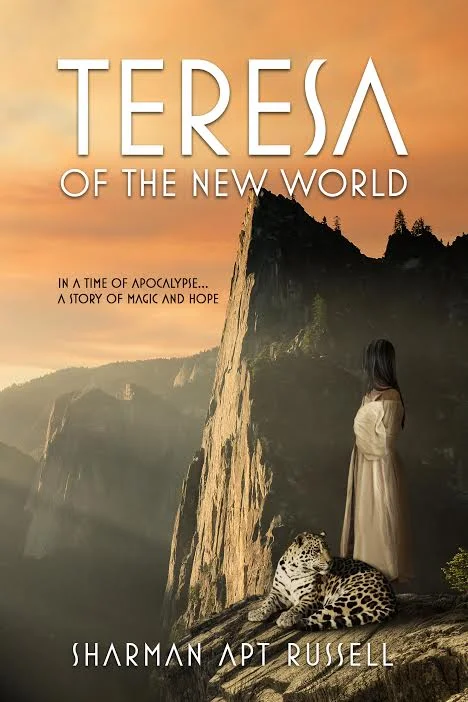
My new young adult novel Teresa of the New World is the culmination of my long-time fascination with Cabeza de Vaca, whom I first wrote about in 1996 in the collection of essays When the Land was Young: Reflections on American Archaeology.  Earlier, I had written about him in a literary adult novel, a manuscript I eventually abandoned, compressing most of its 300 pages into the first 40 pages of a book for young adults. In this new version, the sixteenth century of the American Southwest is a dreamscape of shape-shifters and loss and beauty. As the daughter of Cabeza de Vaca and a Capoque mother, Teresa is betrayed by her hero-father, sent to live as a kitchen servant in the household of a Spanish official, and alienated from the magic she knew as a child when she could listen to plants and animals and sink into the trickster earth. Plague stalks the land. Measles decimates native villages. And Teresa goes on her own journey, befriending a Spanish war horse and were-jaguar as she struggles to reclaim her power and sense of self.
 
But what surprised me is this: just as the book was being printed, when my publisher asked if I wanted a dedication page, I emailed back—as though this were an afterthought—yes, “To my father.” It had taken me thirty years to write this book and as long to see how much I am Teresa and how much my father is Cabeza de Vaca--which is really a statement about the un in my unconscious.  Or maybe, stranger, I am Cabeza de Vaca and my father, that young, heroic test pilot from Kansas, is Teresa. And really, strangest still, I am neither Teresa nor Cabeza de Vaca; instead they are people who live inside me. They have their own life, even as they have enriched mine.

About Sharman Russell

Sharman Apt Russell has lived in Southwestern deserts almost all her life and continues to be refreshed and amazed by the magic and beauty of this landscape. She has published over a dozen books translated into a dozen languages, including fiction and nonfiction. She teaches graduate writing classes at Western New Mexico University in Silver City, New Mexico and Antioch University in Los Angeles, California and has thrice served as the PEN West judge for their annual children’s literature award. Her own awards include a Rockefeller Fellowship, the Mountains and Plains Booksellers Award, a Pushcart Prize, and the Henry Joseph Jackson Award.

For more information visit Sharman Russell’s website. You can also find her on Facebook and Goodreads.

About Teresa of the New World

From the bestselling author of An Obsession with Butterflies comes a magical story of America in the time of the conquistadors.

In 1528, the real-life conquistador Cabeza de Vaca shipwrecked in the New World where he lived for eight years as a slave, trader, and shaman. In this lyrical weaving of history and myth, the adventurer takes his young daughter Teresa from her home in Texas to walk westward into the setting sun, their travels accompanied by miracles–visions and prophecies. But when Teresa reaches the outposts of New Spain, life is not what her father had promised.

As a kitchen servant in the household of a Spanish official, Teresa grows up estranged from the magic she knew as a child, when she could speak to the earth and listen to animals. When a new epidemic of measles devastates the area, the sixteen-year-old sets off on her own journey, befriending a Mayan were-jaguar who cannot control his shape-shifting and a warhorse abandoned by his Spanish owner. Now Teresa moves through a land stalked by Plague: smallpox as well as measles, typhus, and scarlet fever.

Soon it becomes clear that Teresa and her friends are being manipulated and driven by forces they do not understand. To save herself and others, Teresa will find herself listening again to the earth, sinking underground, swimming through limestone and fossil, opening to the power of root and stone. As she searches for her place in the New World, she will travel farther and deeper than she had ever imagined.

Rich in historical detail and scope, Teresa of the New World takes you into the dreamscape of the sixteenth-century American Southwest.

amazon
barnes and noble

Top Ten Reasons to read Under the Spotlight by Angie Stanton

Top Ten Reasons to read Under the Spotlight

10.  Peter, Adam and Garrett all together

9.      Stolen cars

8.      Garrett Jamieson finally gets his due

7.      Unexpected death of a character

6.      Chicago

5.      Garrett goes to jail

4.      Christmas in July at a recording studio

3.      Emergency room visit

2.      Steven Hunter and the Graphic Angels make a memorable appearance

1.      Garrett meets his match in Riley Parks

About Angie Stanton

Angie Stanton never planned on writing books—she wanted to be a Rockette. However, growing up in rural America with her brothers’ 4-H pigs as pets, she found that dance didn’t quite work out. Instead, she became an avid daydreamer. After years of perfecting stories in her head, she began to write them down, and the rest is history. When not writing, she loves watching natural disaster movies, going to Broadway musicals, and dipping French fries in chocolate shakes.

Connect with Angie via: Blog | Twitter | Facebook | Author Goodreads | Instagram

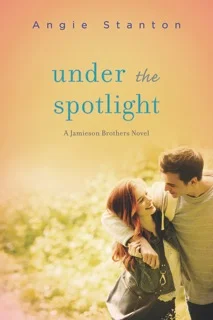
About Under the Spotlight

After an embarrassing stint on a reality-TV music competition years ago, Riley vowed never to sing again. Now she's behind the scenes, working at the prestigious Sound Sync recording studio, and life is looking up. But then Garrett Jamieson, the oldest brother in the famous Jamieson brothers band, crashes into her world.

Garrett has hit rock bottom, and he is desperate to reinvent himself. After calling in a few favors, he ends up working at Sound Sync to learn the ropes of record producing from the industry's best. And he can't believe his luck when he discovers that Riley has been keeping a secret—she is an amazing singer. By producing her album, he's sure to top the record charts again. But Garrett is forced to use every trick in his arsenal to persuade the sassy girl to record.

Riley refuses to sing—or even entertain the thought of it—and sparks fly as Garrett finally meets his match. But in the heat of the moment, one stolen kiss changes everything. Will Riley be the first person to finally rein Garrett in, or will Garrett succeed in getting Riley back under the spotlight?

amazon
barnes and noble

Q&A with Tina Leonard, author of Heart of a Bull Rider

With more than 70 books and special projects to your name, how do you create such original storylines and characters time after time?

I love to write! And I love to create.  It honestly makes me happy! I can’t imagine not writing—I love getting to know readers and other authors, and the adventure is endlessly meaningful to me. So the creative process gets charged by making new friends and constantly admiring my writing sisters’ works. If I ever get a little rundown, I head to the beach for two days. It works! 

You’re known for ‘sexy hunks with attitude and heroines with plenty of sass.’ Do you consider this sass to be a part of your own personality as well?

When I read this question to my husband, he exclaimed, “Yes!” Women are supposed to be intelligent and fun and sassy. We’d be boring if we weren’t!

You have bull riders as the subject of quite a few of your romance novels. What draws you to this profession?

My teen years were spent in a town where there was a large FFA group. I never wanted to date the football players; I was much more interested in the FFA boys. Many of them were my friends. Several of the guys tried their hand at bull riding. I have a black-and-white photo of one of my boyfriends on a bull in mid-jump.  This was before PBR was huge and all the fun that goes along with it now. It was just small-town guys giving it their best shot. I admired that. But I’ve written about just as many other fields, too, like military heroes. Both my dads were in the military, and all my uncles. I was born on a military base. All my heroes work hard, no matter their profession—my heroes are tough and stubborn, but they’re always chivalrous!

What inspired you to create the story of the long-lost twins in HEART OF A BULL RIDER?

I thought it would be fun to see what would happen if two completely diverse worlds collided. What would they have in common?  Would they be able to relate to each other at all?  I liked the idea of the inherent conflict.  They had a lot to learn from each other, and about themselves.

What upcoming books or projects do you currently have underway?

I’ve just finished a Hell’s Outlaw trilogy for Random House Loveswept, which is releasing in May, and am starting a trilogy for Diversion Books about a magic wedding dress, and lots of small-town angst and drama.  And sex.  My heroes and heroines fight their attraction to each other, but great chemistry is hard to override.

About Tina Leonard

USA Today Bestselling and award-winning author Tina Leonard has sold over 3 million copies of her titles. She has made the USA Today Bestseller, Waldenbooks, Bookscan, and Ingrambook lists, and has written and contracted 71 books and special projects. She is best known for her sparkling sense of humor, endearing communities, snappy dialogue, and memorable characters that include sexy hunks with attitude and heroines with plenty of sass. For more information, visit www.tinaleonard.com or follow her on Twitter: @Tina_Leonard.