Bad Boy Inspiration by Shana Galen

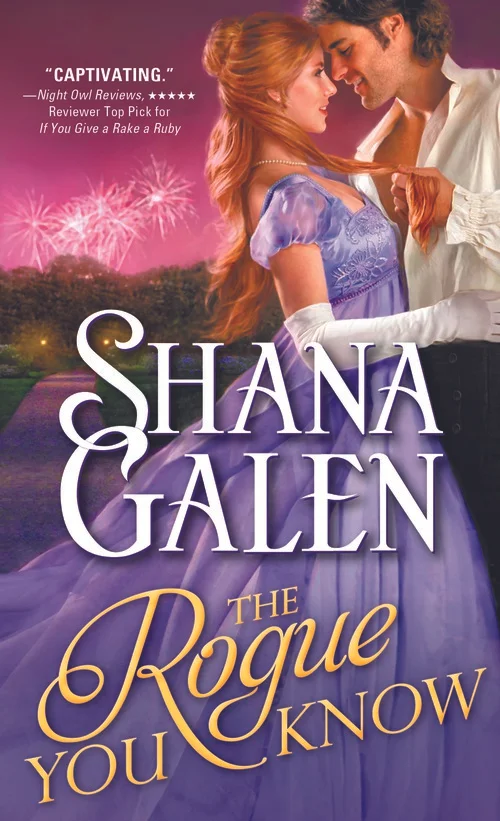
When we think about Regency England, we tend to think of the balls, the carriages, the gowns. We forget that for every duke or marquess, there were hundreds of thieves and pickpockets living in the slums of the city. Covent Garden was an area of London with plenty of rookeries, and the thieves who lived there often banded together because there’s protection in numbers. My fictional gang called the Covent Garden Cubs is made up of the leader Satin, his second-in-command Beezle, and an assortment of pickpockets and house-breakers with names like Gap, Racer, and Stub. The gang also has one girl, Marlowe, and I wrote about her in Earls Just Want to Have Fun. Her best friend in the gang in Gideon, and he’s the hero in The Rogue You Know. Gideon is the ultimate bad boy who can cheat, lie, and steal with the best of them. He was orphaned at a young age and had no choice but to steal to survive. Now Gideon wants a different life for himself, and if he can just complete one last job, he’ll have it…or die trying.
 
When writing about my bad boy hero, I had plenty of inspiration.

1)       Flynn Rider from Tangled

Yes, I know Flynn is animated, but he is the main inspiration for Gideon. Like the Disney bad boy, Gideon is charming, funny, and self-deprecating. Flynn makes no apologies for his lifestyle, and while he may try to hide his sensitive side, his love for Rapunzel brings it out.

2)       George Gordon Byron, Baron Byron

Byron was a poet, nobleman, and ultimate bad boy. Described as “mad, bad, and dangerous to know,” Byron titillated the Regency world. He generated enormous debts, had numerous affairs and liaisons, and ultimately died young and tragically abroad. A bad boy with the heart of a romantic is always an inspiration.

3)       Danny in Grease

We’ve all seen Grease so many times we forget that Travolta’s character was really a bad boy. He’s dangerous for Sandy’s reputation and just plain dangerous, period. But like any bad boy we love, love wins Danny over and he’s willing to change to be with the woman who means everything.

4)       Patrick in 10 Things I Hate About You

I love a bad boy who sets out to corrupt the good girl and then is corrupted by her instead. Heath Ledger is fabulous as the new kid in school who agrees to date the heroine…for a fee. “How do I loathe thee? Let me count the ways.” The banter between Patrick and Kat makes this bad boy movie memorable.

5)       Nick Gentry in Worth Any Price by Lisa Kleypas

While Gideon may be on the wrong side of the law and Nick Gentry a Bow Street Runner, Nick definitely serves as an inspiration. He’s a man with a dark past and much to hide, but Charlotte is able to peel away the layers one by one. Her love for him, and his for her, redeems this bad boy and makes us love him all the more.
I enjoyed taking inspiration from each of these bad boys and creating the character of Gideon. He may be a thief and a rogue, but he is also capable of deep love. And that’s what my books are about—characters for whom love changes everything.
 
Who are your favorite redeemed rogues?

About the Book

She's beyond his reach...

Gideon Harrow has spent his life in London's dark underworld-and he wants out. A thief and a con, he plans one last heist to finally win his freedom. But when everything goes wrong, he finds himself at the tender mercies of one of Society's most untouchable women-Lady Susanna Derring.
...and out of her depth.

Susanna has spent her life in London's glittering ton, under the thumb of a domineering mother-and she wants out. When a wickedly charming rogue lands at her feet, she jumps at the chance to experience life before it's too late. But as she descends into London's underworld, she finds that nothing- not even Gideon-is as it seems. As excitement turns to danger, Susanna must decide what price she's willing to pay...for the love of a reformed thief.


Buy the Book

amazon
barnes and noble

About the Author

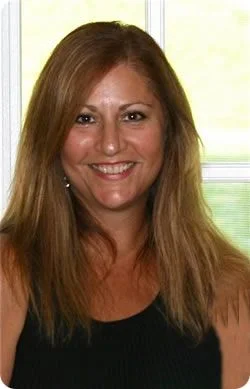
Shana Galen is the bestselling author of passionate Regency romps, including the RT Reviewers' Choice The Making of a Gentleman. Kirkus says of her books, "The road to happily-ever-after is intense, conflicted, suspenseful and fun," and RT Book Reviews calls her books "lighthearted yet poignant, humorous yet touching." She taught English at the middle and high school level off and on for eleven years. Most of those years were spent working in Houston's inner city. Now she writes full time. She's happily married and has a daughter who is most definitely a romance heroine in the making. Shana loves to hear from readers, so send her an email or see what she's up to daily on Facebook and Twitter. Stop by her website | Facebook | Twitter | Goodreads

What Circle Dance Means to Me by Lynne & Valerie Constantine

When my sister and I first agreed to collaborate on a story, we constructed one similar to what we loved to read at the time—stories about women, their emotional lives, and the choices they make in life.  Our first characters were three sisters—beautiful, blonde, rich, and American.  The story was a struggle and we realized that we were not writing about what we knew or even about what spoke to us—but rather to what was popular and interesting at the time.

We talked about the fact that there were very few stories about the Greek American experience.  While similar to other ethnic stories—there are unique aspects to being Greek that we felt needed to be shared.  Growing up in a close, tight-knit, community, surrounded by families that had been friends for generations, there was much to be enjoyed about the experience.  Being second generation Greek Americans, our loyalties were very much in the American camp.  There was a sense of rebellion and wrestling against the tight constraints our grandmother, and to a lesser extent our mother, tried to put on us.  The admonition to marry inside the Greek community fell on deaf ears for all three of my siblings as well as myself.  We all married wonderful people who brought their own unique heritage and traditions into the tapestry of our lives.  Circle Dance is a reminder to them as well—to embrace their beginnings and to never forget that we all come from someplace else.  Before writing Circle Dance,  we didn’t give much thought to what our grandparents and their own parents had sacrificed in order to improve their lives in a new country.  Sophia, the wise grandmother, reflects on this fact during a time of crisis in the lives of the Parsenis family:

Sophia was proud of her family in this time of uncertainty and apprehension.  They had drawn together around Nick and Eleni, supporting them with their prayers and their presence.  She was thankful to be alive to see the fruits of the teaching she and Andreas had tried to instill in their children and grandchildren.  Sophia’s own mother, Vasiliki, had not been so fortunate.  By the time Sophia and Andreas could afford to make the long voyage back to Greece, Vasiliki was dead.  She never saw her daughter’s children.  It was only now that her own children and grandchildren were grown that Sophia fully appreciated just how much her mother had missed.  Perhaps she was too busy as a young woman to give it much thought or perhaps it was too painful to dwell upon in those days when there was nothing she could do to remedy it anyway.  But now she realized the emptiness that she and all the other immigrants left in the souls of parents who knew they would very likely never again set eyes on their offspring, their parenting abruptly terminated and ended forever.  Her mother had never challenged her decision to leave for America and never, she now realized, allowed her to see the sorrow she felt at her departure.  They were brave, these parents who were left behind alone and childless, and they were openhanded in their unstinting generosity to let go.

Looking back to my childhood I now realize that I took for granted the privilege of knowing first-hand my grandmother—fresh from the Greek soil—her Greek accent and customs intact.  It tied me closely to my roots and cemented forever my connection to Greece and things Greek.  My own children,  only half Greek feel no such connection.  I have to build for them, layer by layer, an understanding of the importance of knowing your heritage and of being tied to something that came before.  Circle Dance is my legacy to them—a view into a world they will never literally enter—but one in which they can vicariously enjoy.  May they taste the home-baked bread my Yiayia so lovingly prepared—the butter melting into its warm folds—sugar sprinkled on top.   It is my hope that in these pages, they will one day discover the wonderful traditions and customs that are rooted in their genetic makeup—that they will hear the voices of their ancestors.  I hope they might one day desire to return to the country of their origin and appreciate its beauty and splendor.  Whatever their response— of one thing they can be assured—Circle Dance was a true labor of love for my sister and me.  I hope they will pass it along to their children one day and that the legacy will continue.

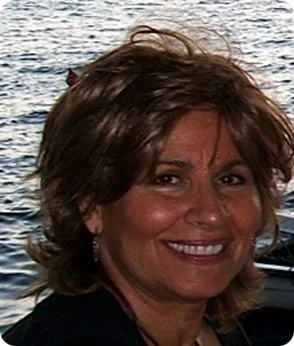
Lynne Constantine is a coffee drinking, twitter addicted, fiction writer always working on her next book. She is the co-author of CIRCLE DANCE, a family saga written with her sister, as well as the author of several short stories. She is the managing partner of a social media consulting firm & gives talks on the role of social media in publishing. She is a contributing editor to The Big Thrill magazine published by International Thriller Writers (ITW). She likes to run her plots by Tucker, her golden retriever, who rarely disagrees with her.

She recently finished her first thriller, and a second book with her sister. Lynne is now working on a third women’s fiction collaboration with her sister. In her spare time the loves going to the beach, spending time with her family, and reading, reading, reading.

Connect with Lynne via her Website | Facebook | Twitter | Goodreads

Valerie Constantine was born in Baltimore, Maryland.  She has always loved books and spent too many nights reading by the light of her bedside lamp until 3 a.m.  (Those were the days when she was able to stay up that late.)  She graduated from Nancy Drew to Shakespeare and went on to study at the University of Maryland where she received a degree in English Literature. She is a contributing editor to The Big Thrill magazine and has also worked with St. John’s College as chair of their Meet The Authors Program. She is an active community volunteer working with a Washington, D.C. organization that fights human trafficking and also as president of Assistance League of the Chesapeake, a philanthropic organization that helps and supports children in need. In her spare time she reads, kayaks and travels.  Valerie lives in Annapolis, Maryland with her husband and Zorba, their brilliant King Charles Cavalier.

Connect with Valeria via her Website | Facebook | Twitter

About the Book

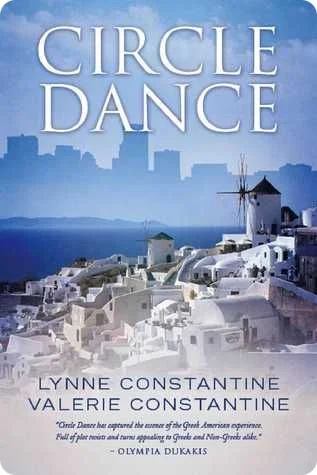
Young, smart and beautiful with everything figured out – or so they thought. Born into a prosperous Greek American family, sisters Nicole and Theodora have achieved the perfect balance between the old world rich in Greek tradition and the freedom of life in America. 

Nicole’s world spins out of control when she falls for a married senator who shares her heritage and her dreams. The decisions she makes will affect the happiness of those closest to her and will define the woman she is to become. 

As Theodora struggles to succeed at her marriage, she seeks the wisdom and council of her beloved Greek grandmother who has been happily married for over half a century. Ultimately she must come to terms with the reality of her own life and take responsibility for the role she has played in deceiving herself. 

As the dramatic plot unfolds, the two young women must confront deceit and betrayal and their own shortcomings—while they struggle to preserve the values they cherish. 

Set in Baltimore, Annapolis and the tiny island of Ikaria, Greece, Circle Dance provides a view into the lives of a dynamic family that has successfully achieved the American dream without abandoning the customs and traditions handed down through their Greek heritage.

Book Excerpt

A black casket, shiny and ornate, sat upon the altar, and pallbearers in dark suits quietly led the mourners to their seats as the church continued to fill.  The chanter’s hypnotic singing droned on.  It was a muggy one hundred and five degrees, but inside the dark sanctuary, cut off and remote from the outside world, it was cool and still.  The air in the Annunciation Cathedral was heavily mingled with the sweet scent of carnations and the burning sting of incense.  Rays of sunlight, muted by tall stained glass windows, cast uneven shadows on the walls of the church.  From the huge pipe organ flowed the somber strains of a Byzantine lament.

"Kyrie Eleison, Kyrie Eleison.”  In automatic response, Sophia Zaharis, seated in the front pew, crossed herself.  He was too young, she thought sadly, her eyes never leaving the coffin.  An accident, they said—unexpected, tragic.  She reflected on another funeral, which had taken place more than sixty years ago on the small island of Ikaria in Greece where she grew up.  She could still see the smiling face of her father as he held her little brother’s hand and waved to them from the fishing boat.  She unconsciously reached into the small pocket on the inside of her purse and fingered the frayed and worn photograph.  Her father had been just thirty-six years old; her brother, with dark curls spilling over his collar and smiling eyes, a mere seven.  And then the accident.  She shuddered, flooded with feelings of grief and pain that were undiminished with time.  It was a blow from which her mother never recovered and Sophia understood that she, too, was affected by the double loss in ways more profound than she knew.  She had married Andreas and left Greece a few short years later to come to America.  Perhaps that was the hardest thing of all—to leave her mother an ocean away, alone and mourning.  There is something wrong in the order of nature when a parent buries a child, even if that child is an adult, she thought, lifting her eyes to the casket once again.  

Andreas, as if reading her mind, put his arm around her shoulder, holding her close to his side, and she felt a warm suffusion of gratitude move through her body.  She was thankful for this kind, strong man who had never let her down, whose love she trusted implicitly.  They had begun a new life in America and the years had been good to them, long years filled with memorable times and children of their own.  Today, however, they were paying their last respects to a man whose life was cut short.  He would miss so much.  She thought about all the family milestones and celebrations still to come.  If it were up to her, no sorrow would ever touch her children, but no matter how hard she tried to protect them, in the end, all she could do was be there to comfort them, just as her mother had been there for her.

The Greek Orthodox priest appeared from behind the lattice-carved wooden screen dressed in his vestments, and, carrying a large gold-encrusted Bible, turned to face the congregation. She still couldn't believe he was dead.  So much had happened in one short year.  She closed her eyes and thought back to that perfect last summer in Ikaria.

Buy the Book

amazon
barnes and noble

Ten Things You Didn’t Know about The Secret Letters by Abby Bardi

  1. The novel had two previous working titles: Oxygen on the Moon and Falling Water.
  2. The town in the novel, Patapsco Mills, Maryland, looks a lot like historic Ellicott City, Maryland.
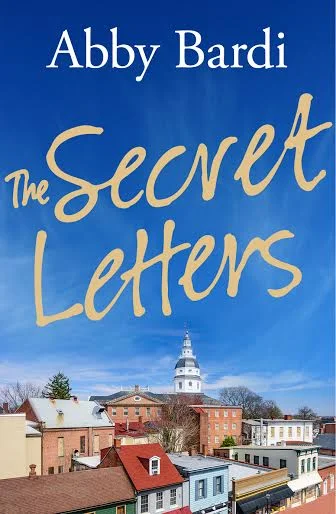
  3. But the picture on the cover is actually somewhere in Annapolis. 
  4. All the characters in the novel are completely fictitious, but I do really know a guy who lives in a tent in the woods.
  5. Julie’s restaurant is also completely fictitious, but the Chelsea Grill is based on a real restaurant on Main Street that no one ever went to. It was called Only the Best but its employees used to call it Lonely the Best.
  6. The awful thing that happens in the novel is based on something that really happened in Ellicott City, but I can’t tell you what it is (spoiler).
  7. The Barlows’ house is on a blind curve where their parked cars are constantly mangled by passing drunk drivers. Coincidentally, I live on a curve like that, too.
  8. There really is a housing development in Ellicott City called Bright Meadows. 
  9. The drink Pam invents is based on a real drink that was served at a restaurant I worked at in the 1970s. The drink was called a Climb Every Mounds Bar and had a little piece of candy on top.
  10. I’ve tried making some of Julie’s recipes and they’re pretty good. Maybe she’s working on a cookbook!

Abby Bardi is the author of THE BOOK OF FRED and THE SECRET LETTERS. She grew up in Chicago, went to college in California, then spent a decade teaching English in Japan and England. She currently teaches at a college in Maryland and lives in historic Ellicott City with her husband and dog.

Connect with Abby via Website | Facebook | Twitter | Goodreads

About the Book

When thirty-seven-year-old slacker-chef Julie Barlow's mother dies, her older sister Pam finds a cache of old letters from someone who appears to be their mother's former lover. The date stamped on the letters combined with a difficult relationship with her father leads Julie to conclude that the letters' author was a Native American man named J. Fallingwater who must have been her real father.

Inspired by her new identity, Julie uses her small inheritance to make her dream come true: she opens a restaurant called Falling Water that is an immediate success, and life seems to be looking up. Her sister Norma is pressuring everyone to sell their mother's house, and her brother Ricky is a loveable drunk who has yet to learn responsibility, but the family seems to be turning a corner.

Then tragedy strikes, and Julie and her siblings have to stick together more than ever before. With all the secrets and setbacks, will Julie lose everything she has worked so hard for?

Book Excerpt

The casket was a double-wide, with painted flowers on the side like a circus wagon. Pam said it looked like hippies had scrawled on it with crayons while tripping.

“She’s at peace now,” one of our idiot cousins said to someone I half-recognized from when my mother used to drag us to West Virginia, where she was born. “Just a bunch of goddamn hillbillies in the Mountain State,” she always said, like she was Martha Stewart.

“Shut up,” Pam muttered in the cousin’s general direction, smiling like she was saying something nice. I hoped she planned to provide snark during the funeral, since I didn’t know how I would make it through otherwise. My other sister Norma was in the front pew sobbing. We were keeping our distance from her, not because of anything in particular, but because we always stayed out of her way if we could. It didn’t pay to try to comfort her, since anything you said would be the wrong thing.

The casket was closed, thank God. Our mother had left strict instructions about this and everything else when she was still conscious. Even while dying, she was a control freak, and amazingly vain for someone who weighed just shy of 400 pounds, even with terminal cancer. “You’re beautiful,” we always said to her in a Hollywood voice, “don’t ever change.” She knew we were just messing with her, but she always smiled and patted her hair.

“That’s a hell of a casket,” I said.

“Sure is purty.” Pam’s eyes were red. I hadn’t looked in a mirror since early morning when I’d slathered on eye makeup, but I’d been crying all day, too, and probably looked like a slutty raccoon. “Is Timmy here yet?”

“Haven’t seen him. It’s so crowded.” I scanned the room.

“Did any of these weirdos actually know her?”

“I don’t know. I bet those fat guys were football players at her high school.” I wiped my eyes, though I knew it was a bad idea, smear-wise.

“Oh, there he is.” Pam pointed to the back of the room and I spotted our older brother. He was wearing a dark suit that made him look like a Mafia don, talking to some blond guy. She tried waving, but he didn’t notice. His eyes were on the casket. He hadn’t seen our mother in almost a year, and I was sure it was hard for him to believe she was gone. Tough shit for him, I thought. He could have come here when it would have made a difference. Now it didn’t matter to anyone what he did.

“Is The Asshole coming?” I asked, referring to our father.

“No, he says he has a schedule conflict.”

“Probably golf. You’d think he could at least manage to show up for this.”

“At least he’s clean and sober.”

“So he says. He’s probably still banging down Zombies at strip clubs.”

“Try not to be bitter, Julie. It’s unattractive.”

“Bitter? You think I’m bitter?”

As the minister cut in and began to read the eulogy my mother had probably written for him, my mind started wandering like I was in grade school waiting for the bell to ring. I tried to concentrate, but I couldn’t. Every so often I’d tune back in and hear things that weren’t true. Her devotion to other people. Her service to the community. Her wonderful family life—I could just about hear her voice coming out of the guy’s mouth. I didn’t know where she found him, since she never went to church. I figured he was an actor she hired to play a minister, and made a mental note to mention this to Pam.

As he droned on in his phony actor voice, I closed my eyes and imagined walking through the woods on the hill behind our house. Most of it was gone now, bulldozed to make room for the townhouse development just over the ridge. I made a path through the old trees, and the dogs ran in circles around me. Ahead of me was the pond, though in real life it wasn’t there any more either, except for the hints that sometimes bubbled up in people’s driveways. I was going to dangle my bare feet in the water. I could hide there all day, and no one would know where I was. Then I would run back through the trees to our house, with the dogs behind me, and my mother would be there, and Frank, and Donny.

When I opened my eyes the minister was gone, and some cousin who hadn’t seen my mother in years was reading from a wrinkled piece of paper. She was stumbling over the words, maybe because it was Mom’s loopy handwriting, or maybe she couldn’t read. It was Mom’s life story minus all the bad parts and made going to high school in East Baltimore, meeting The Asshole, and having five children with him sound like an E! True Hollywood Story. Norma was born six months after the wedding, and it didn’t take a mathematician to figure out the facts, but the cousin glossed over that, and the ugly divorce, and finished with the happy ending, my mother finding true love with Frank and then having little Ricky. Ricky, on my left, burst into loud sobs. I put my arm around him and he cried onto my shoulder. I could smell he’d been drinking again. I would have pulled him onto my lap like I used to, but he was a big boy now. When I looked at him with his tattoos, dreadlocks, and piercings, I still saw that cute little blond guy and felt how much we had loved him. We still loved him that much, but it was complicated.

Pam leaned across me and held his hand. “You’ll be fine, sweetie,” she whispered to him, though we were pretty sure he wouldn’t.

amazon
barnes and noble

Long-Distance Relationship with a Cowboy: Yea or Neigh? by Mia Hopkins

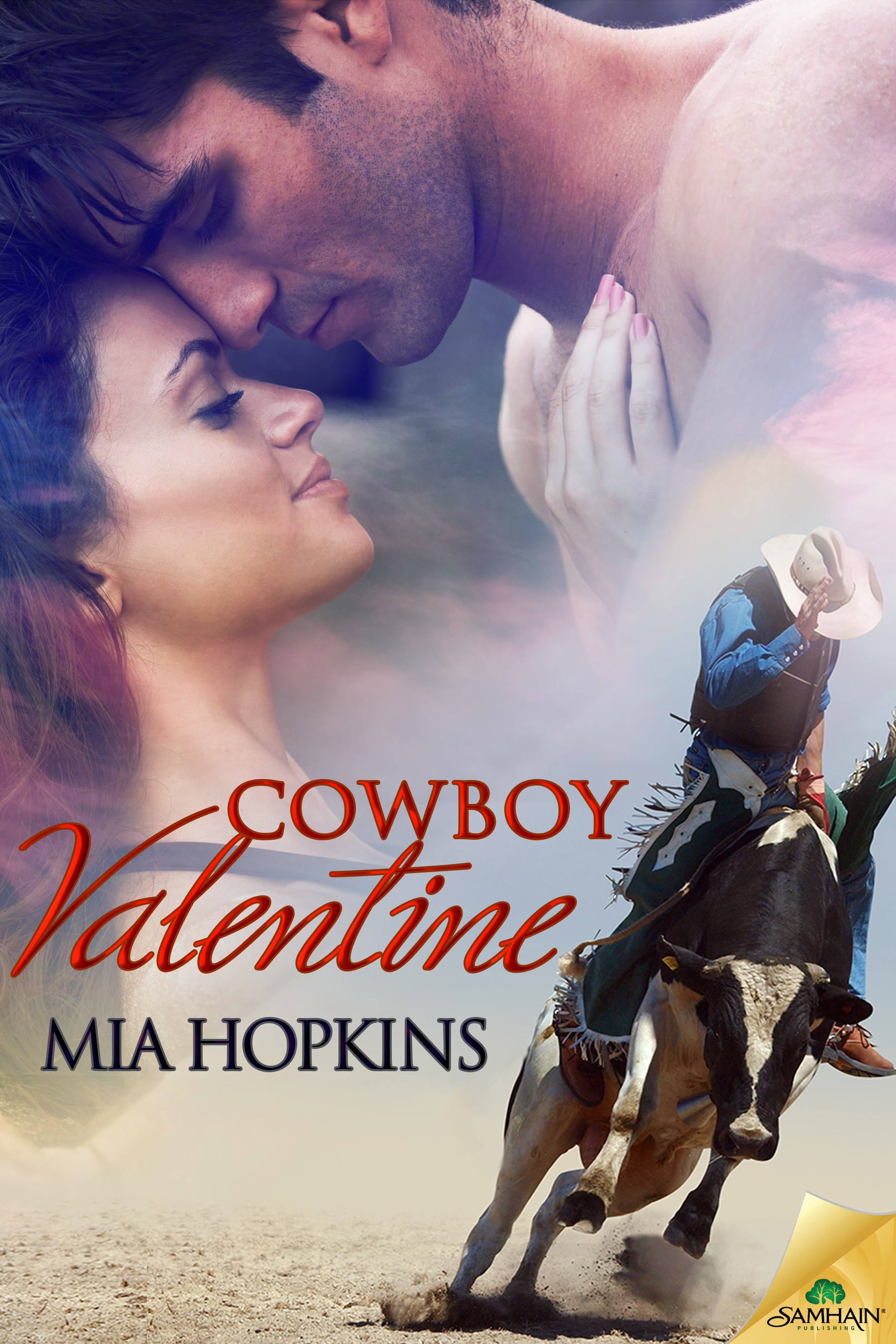
Hi everyone! Mia here. Thanks for having me as a guest today. My debut book, the novella Cowboy Valentine, is about a high school honor student and the wild, sexy summer she spends with her cowboy crush before leaving for college.

Even though she’s only 18, my heroine Cora Gomez is smart, determined, and mature. Raised by her grandmother in a small town in California’s rural Central Valley, Cora has worked hard to earn her full-ride scholarship to an Ivy League university on the East Coast.

However, just before she leaves, she gets tangled up (in the very best way) with Caleb MacKinnon, the handsome son of a local rancher. He’s gorgeous and everything she’s ever wanted, but she’s made a promise to herself…no long-distance relationships. Now’s not the time to be pining away for boys—especially cowboys.

Which got me thinking…are long-distance relationships really as bad as everyone says they are?

When I was 22, I left the United States to teach English in Japan. A couple of weeks before my flight, a longtime friend and I decided to start a romantic relationship. It was really awful timing. I left for a city 6,000 miles away, and we embarked on a foolhardy long-distance relationship.

This was before the time of reliable Internet, so we connected through long, handwritten letters and weekly pay phone calls. Neither of us had much money, so plane tickets were out of the question. When Christmas rolled around (just another work day in Japan), I received a small box in the mail. It was a string of twinkle lights and a letter from my boyfriend. I cried as I put up the lights. I missed him so much.

The following year, I found a job in the U.S. and moved back home. My boyfriend and I got married before the year was through. Now I have a box of love letters that I’ll cherish forever. My husband and I joke that not even the Pacific Ocean can keep us apart.

While writing Cowboy Valentine, I revisited all the doubts and fears I had at the start of that long-distance relationship. Long distance is definitely not for everyone. It shines a light on every potential crack and flaw in a relationship. Then, like a crucible, it puts a couple’s weaknesses to the test. You begin to worry that you only get along because you see each other so infrequently. You begin to wonder whether you’re holding each other back.

But when it work, it really works! That crucible is a wondrous place to learn about each other. And like Alan Jackson sings, “Love can walk through fire without blinking.”

To find out how Cora and Caleb survive their crucible, please check out Cowboy Valentine. It’s my first book, and I am thrilled to share it with you.

Thanks for reading!

Mia Hopkins writes lush romances starring fun, sexy characters who love to get down and dirty. She’s a sucker for working class heroes, brainy heroines and wisecracking best friends.

When she’s not lost in a story, Mia spends her time cooking, gardening, traveling, volunteering and looking for her keys. In a past life, she was a classroom teacher and still has a pretty good "teacher voice" and "teacher stare." She lives in the heart of Los Angeles with her roguish husband and two waggish dogs.

Connect with Mia via  Website | Twitter  | Facebook | Pinterest | Google+

About the Book

Forget chocolate and flowers. This homegrown honey is all the sweetness he craves.

Small-town life is nothing but a waiting room for eighteen-year-old honor student Corazón Gomez. Work and school leave little time for love, but with a full-ride Ivy League scholarship and a one-way ticket out of the boondocks, who needs it?

The answer appears on Valentine’s Day when her old cowboy crush ambles into the ice cream parlor where she works, inviting her to go on a late-night ride in his truck. For the first time she wavers between staying on the straight and narrow, and going off-road with the handsome heartbreaker.

After four years working on ranches all over the country, Caleb MacKinnon is back on the family farm helping out his mom and brothers while his father fights cancer. The one bright spot: smart, funny, and wickedly sexy Cora.

From the start, they both know this blazing-hot love affair can’t last. But when autumn comes and Cora has to leave for the East Coast, Caleb must find a solution to keep himself—and his heart—from falling apart.

amazon
barnes and noble

The Book That Scares You by Martin Ott

Writers are neurotic about their books, at every level of their careers. Underdays, my fifth book, and second poetry collection that won an award, is no exception. This book, more than all the others combined, makes me feel vulnerable and antsy due to the way I created it. Today, I’m holding the physical copy from University of Notre Dame Press for the first time, but afraid to open it and start reading.  

My first book of poetry Captive, from C&R Press, was created over more than a decade with many different drafts and names for the manuscript. Underdays, in comparison, was written at a feverish clip over a six month period, taking the scraps of poems I’d written before and placing a new layer on top of it in an attempt to make sense of everything wrong that was going on in my life. And there was plenty of it.

In the spring of 2011, all of the wheels came off the bus of my life at once. I moved out of the house away from my wife and children in an intense and stressful separation gave me intense headaches so severe I thought a knife had formed inside my skull. Meanwhile, a bout of whooping cough from a business trip in Mexico City for a global company triggered a chain of health problems that ended in my inability to juggle the normal 12 hours days I’d worked before, and culminated in my entire department being outsourced. Finally, my mother, who’d stopped talking to me, was dying but none of us knew it yet as her health was beginning to decline from a cancer that would be discovered just weeks before her death.

I tried, desperately, to find my own center in the whirlwind surrounding me. One of the things that saved me was writing the manuscript for Underdays. It was therapy. Half the manuscript was new: a combination of introspective poems, persona poems of disturbed men, and political poetry. The other half came from me reworking failed drafts of previous poems, trying to make sense of my past as a way to find a road to my future. I explored a cursive voice in my poetry, sometimes a second voice from my subconscious, at other times snippets from books and songs that had meaning in my past. The result is a manuscript that jolts me every time I read it, afraid that I’ve opened the doors so that everyone can see down into my well of darkness and depression.

The first review of the book just posted online from Spellbound Book Reviews. Here’s an excerpt: “Underdays is a terrifyingly beautiful collection of poems. Some of the poems will reach inside the deepest part of you and rip you apart while others will put you back together and mend you.” I’m grateful that there was redemption for the reader in this case as this book feels very much a part of my own healing process. However, I know that there are dark thoughts and deeds intermixed throughout the book, the muck of life that threatens to bury you if you let it.

This type of charged material in the hands of masterful poets (e.g. Berryman’s Dream Songs,Plath’s Ariel, or Lorca’s Poet in New York) can be transcendent. The subject matter felt unsafe to me while I was writing Underdays. I explored my time in the Army as an interrogator, politics, my own fears and failings in life, rough relationships, bad men, mistakes of all kinds. This journey felt necessary and bigger than myself. My biggest fear, though, is that my craft may not have been up to the task, that people will read this book and think less of me because of the darkness I expose.

Each time I’ve read the manuscript to Underdays, I’ve been overwhelmed with emotions. This time is different. This book I hold in my hands is not about the past. I am a different man than I was several years ago with a new wife, strengthened relationship with my kids and family, and a career with a surprising amount of work/life balance. We all have our underdays, moments that feel too heavy to carry. Every interaction with another human is a risk of sorts, every page turned a window that opens both ways. It’s time for me to open this book and not be afraid.  

A former U.S. Army interrogator, Martin Ott is the author of six books of poetry and fiction, including the poetry book Underdays, Sandeen Prize winner, University of Notre Dame Press and the forthcoming short story collection Interrogations, Fomite Press. Website: www.martinottwriter.com. Twitter: @ottpops. Blog: http://writeliving.wordpress.com/

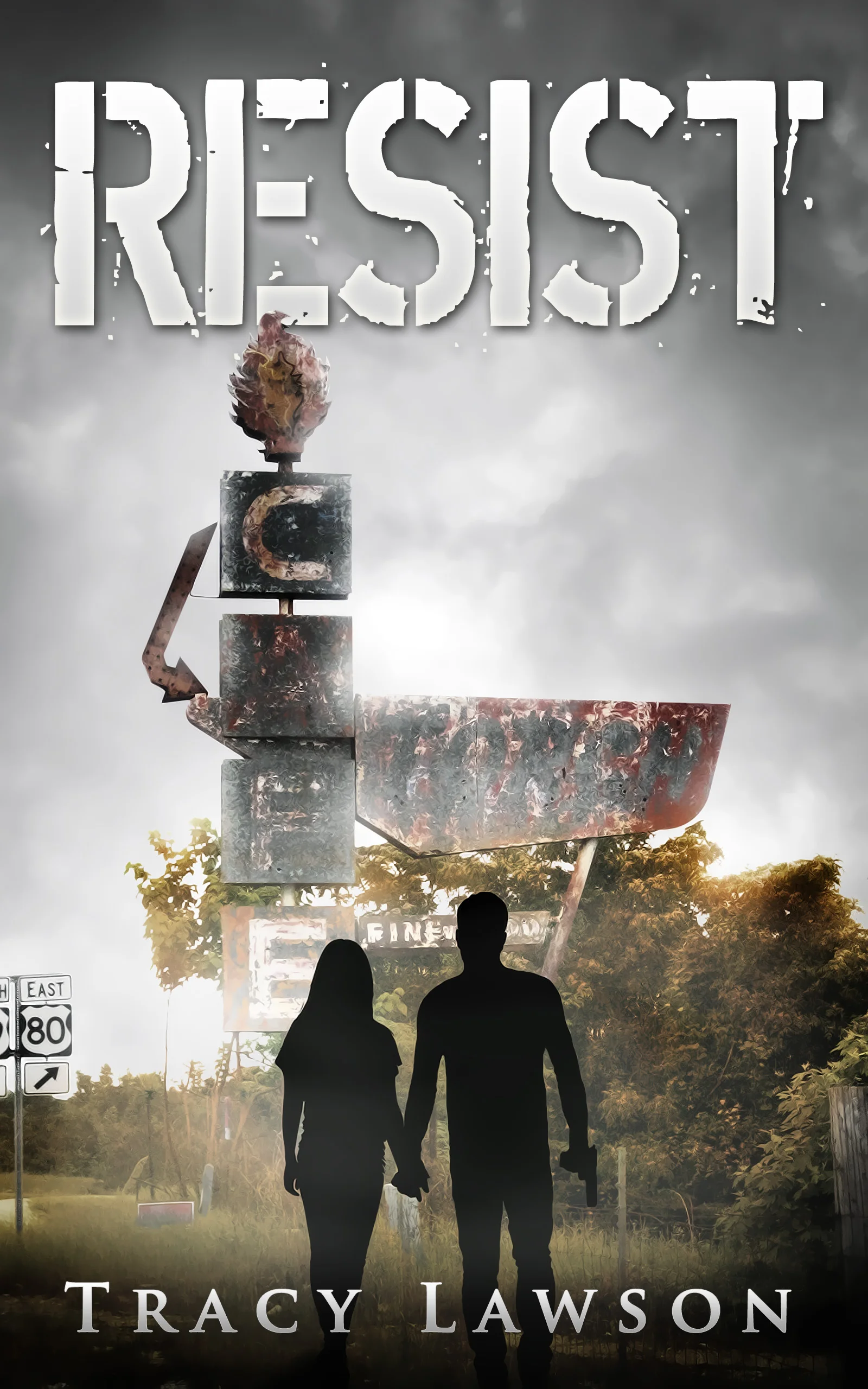
Q&A with Tracy Lawson

Can you give us a brief summary of Resist?

QUICK SUMMARY OF COUNTERACT: 

The Resistance Series takes place in a near-future version of the United States. The powerful Office of Civilian Safety and Defense has enacted a long list of Civilian Restrictions designed to keep the people safe from frequent terrorist attacks, but it hasn’t worked: as the story opens, the threat of a chemical weapons attack is literally hanging over everyone’s heads.

Careen takes the OCSD’s offered antidote, but the side effects cause her to hallucinate. Her erratic behavior attracts the attention of a young law enforcement officer, who mistakenly pegs her as a dissident. Careen doesn’t realize the antidote is causing her confusion…until she runs out on the day of the anticipated attack.

Tommy, recuperating from injuries sustained in a recent auto accident, is unaware that there’s a link between that accident, which killed his parents, and the chemical weapons attack that threatens him now. When he discovers that working out before he takes his dose of the antidote helps him feel more like himself, he defies the rules to regain his strength and his sanity. On the day of the attack, he meets Careen, who just might be the girl of his dreams, and tries to save her by sharing his last dose of the antidote, even though doing so could potentially hasten his own death. 

What Careen and Tommy learn about the true nature of the terrorist threat spurs them to take action; their decisions lead them to run afoul of local law enforcement, team up with an underground resistance group, and ultimately take their quest for the truth to the highest reaches of the United States government.

QUICK SUMMARY OF RESIST:

In Resist, the second volume in the Resistance Series, Tommy and Careen are no longer naïve, frightened teenagers who believe the Office of Civilian Safety and Defense can protect them from terrorist attacks. They’ve discovered the OCSD’s miracle antidote’s true purpose: to create a population bereft of free will, incapable of defying the tyrannical OCSD. They join the Resistance, but on their first mission, things spin out of control and soon they’re on the run, dodging the quadrant marshals in a headlong dash for the Resistance’s secret headquarters.
Being part of the Resistance presents them with new challenges. Not everyone working for change will prove trustworthy, and plans to spark revolution go awry with consequences greater than they could’ve imagined. Tommy and Careen’s relationship is tested when their philosophical differences and the pressures of interpersonal rivalries and jealousy put a strain on their romance. Can they make time for each other while trying to start a revolution?

What was the inspiration behind The Resistance Series?

I was mentoring a friend of my daughter’s when the initial idea for Counteract came about. Chase is a pretty sharp guy and an excellent writer—and when he was in high school I had a lot of fun working with him and editing some of his short stories. We had finished working on a story about baseball, a broken nose, and a broken heart, and were ready to start something new, when he suggested we write scenes in response to the prompt: “What if everyone were on LSD and all thoughts were communal?” It was certainly thought provoking! Chase created the characters Tommy and Eduardo, I created Careen, and right away, we knew we were onto something. Obviously, the story morphed and changed a lot before it became the finished version of Counteract—but that was how it all began.

Did you always plan to write another book in the series?

I let my husband read the first draft of Counteract when I was about a third of the way through the original outline. He was enthusiastic and supportive and suggested developing a story line that could be carried forward if I chose to make Counteract the first in a series. 

I liked the idea of doing more than one book about Tommy and Careen, and as I wrote the rest of the first draft, I pinpointed elements of the story I’d need to develop and expand to pave the way for a series.

How do the characters of Tommy and Careen develop in Resist?

Tommy and Careen are law-abiding citizens until they accidentally discover that the Office of Civilian Safety and Defense lied about the terrorist attack and why it mandated the use of the Counteractive System of Defense drug. They go from being accepting and compliant to impulsively joining a rebel group that’s working to overthrow the oppressive government agency, without having a chance to think about what they’re doing and why. 

They’ve only known each other for a week, and their relationship has progressed far too quickly—they became a team, then a couple, without really getting to know each other, and soon they realize they don’t have much in common. 

Tommy’s all for the physical aspects of revolution, and is eager to learn about guns and explosives. Careen finds kindred spirits among the older leaders of the group, who are committed to sway the public’s allegiance away from the OCSD by waging a war of information. Her pacifistic approach clashes with his need to prove himself on the field of battle, and further complicates their partnership. 

What do you enjoy about this series that cannot be found in any of your other books? 

The Resistance Series is my first published fiction. My other book, Fips, Bots, Doggeries, and More, is based on a journal kept by my great-great-great grandfather during his family’s 1838 horse and wagon trip from Cincinnati to New York City. 

I did a ton of research before writing that book, and amassed two filing cabinet drawers full of information related to the 22-page journal! During the publication process, I nearly went crazy double-checking all my facts and citations, and by the time the book went to print, I never wanted to see another footnote. Fiction? Yes, please! 

Now that I’ve had a little break from footnotes, I’m enjoying writing another nonfiction history book. I’m planning to merge my two favorite genres and write some YA historical fiction sometime after I finish the Resistance Series. 

The main characters in The Resistance Series are Tommy and Careen. Where did you find your inspiration for them?  

My characters are a little bit of me, and little bits of people around me, but as I spend time with them in the context of the story, they become less like people in the real world; I don’t stop developing them until they are individuals: unique and unlike anyone else.

Chase created Tommy, and at first I wasn’t as close to him as I was Careen. That changed as I wrote more scenes for Tommy—especially the scene when he and Careen meet. His reactions and his choices came from inside me; before long, he was unique and independent of any outside influence. 

How does the Office of Civilian Safety and Defense (OCSD) differ from other dystopian governments in young adult series like The Hunger Games and Divergent? 

In the Resistance Series, there has been no rebellion, no cataclysmic event. The dystopian world in which they live has been created by fear, engineered by an enemy masquerading as a protector.

The Office of Civilian Safety and Defense was created to protect against the rampant terrorism that has affected the nation for the better part of the twenty-first century. Little by little, the OCSD usurped power from the traditional three branches of the US government. 

The OCSD’s long list of Civilian Restrictions was designed to maximize safety and security. Most people don’t consider themselves oppressed or fettered by their lack of freedom. Teenagers like Tommy and Careen don’t know things were ever different. They can’t remember a time when teenagers learned how to drive and went on dates to malls and movie theaters. 

What elements test the relationship between Tommy and Careen in Resist

Tommy and Careen had only each other to rely on in Counteract, and their relationship progressed quickly—perhaps a little too quickly. 
Now they’ve joined the Resistance, and they’re part of a community for the first time. They have a hard time adjusting to the constant scrutiny, and Tommy laments about how their relationship seemed a lot less complicated when they were alone.   

Their philosophical differences about how to fight the OCSD drive a wedge between them, and interpersonal rivalries and jealousy test their budding relationship. 

What do you hope readers take away from this book? 

First and foremost, I want readers enjoy the story! I hope they relate to Tommy and Careen, and look forward to reading the next installment in the series. 

Books for young adults often reflect the reader’s need to question authority and rebel against the rules set down by older generations; the Resistance Series looks at what can happen when people surrender our civil liberties in exchange for the promise of safety and security. 

I hope readers understand that protagonists in dystopian books are often branded as outcasts or rebels because they question the restrictive rules of their societies—and that individuals who change the world rarely do so by going along with the herd.

What kind of research did you do for the series? 

Please don’t call the police if you see what’s in my browser history! I’ve Googled the effects of various controlled substances, different types of explosives, and interrogation techniques. 

I learned to shoot a handgun so that my characters’ first experiences with weapons would be authentic. At first it was scary, but now I enjoy going to the target range. I’m no Annie Oakley yet, but I’m at least as good as Scarlett O’Hara, who once saucily told Rhett Butler, “I can shoot straight, if I don’t have to shoot too far.” 

 What made you want to write books for young readers? 

I love reading YA, and I taught dance classes for twenty years before I got serious about writing. I spent a lot of time around my students, my daughter, and her friends, so it seemed natural to write for a teen audience.

How long did it take you to write Resist?  

I wrote Resist in a little over a year. It went a lot faster than Counteract (which took almost three years) because I knew the characters well and had planned ways to continue the story into the second book. 

Do you have any interesting writing quirks? 

I like to write with pen and paper—preferably outside. I sit quietly until one of the characters starts to speak, and then I write down what they say. Some days I’ll scribble for pages and pages, and when I look at the clock I’ll be surprised how much time has flown by! I usually let those pages sit for at least a few hours, sometimes a few days, before I transcribe them into the computer, and that’s where the scenes really begin to take shape. 

As far as writing snacks go, I’m partial to sunflower seeds and Diet Dr Pepper!

What does your family think of your writing? 

My family has been very supportive. My husband knows how to urge me on when I get discouraged, and my daughter says I’m a better choreographer now that I’ve become an author. I guess writing helped me refine how to advance a story through dance. 

I haven’t shared much about what happens in Resist with my family. My five teenaged nieces can’t wait to read it, and I can’t wait to hear what they think!

Tell us where we can find your book and more information about you.  

My books are available on Amazon.com in paperback and Kindle, and on Barnes & Noble’s online store. If you live near Columbus, Ohio, you can buy signed copies of my books at three independent stores: The Book Loft of German Village, Mary B’s, and Urban Emporium.

You can get the behind-the-scenes scoop on all things Resistance Series, see book trailers, and check out my blog at http://counteractbook.com. You can also find me on Twitter @TracySLawson and on Instagram as TracyLawsonAuthor.

About Tracy Lawson

Tracy knew she wanted to be a writer from the time she could read. She grew up in Cincinnati, Ohio and attended Princeton High School. While in a student there, she turned her writing efforts toward journalism. She was an editor for the school newspaper, news director for the Princeton Instructional Television station, and also worked as a reporter and feature writer for the Suburban Press weekly newspaper.

She graduated summa cum laude from Ohio University in 1988, with a Bachelor of Science in Communications degree.

After working for a time in advertising and as an investigative analyst for the Florida Board of Bar Examiners, Tracy settled into a career in the performing arts, teaching dance and choreographing musicals.

Tracy has had a long-time interest in her family’s history and genealogy, and she never lost the desire to write.

In 1990, her parents gave her a special Christmas present. It was a journal written by her great-great-great grandfather, Henry Rogers.  He, his wife, Maria, and her parents traveled on a horse-drawn wagon from Cincinnati to Philadelphia, then on to Trenton, New Jersey, during the summer of 1838. The purpose of this working trip was to observe working mills so they could improve the family milling business, and also visit relatives in Ohio and New Jersey.  During this trip, Henry kept a journal of what he observed along the way. Tracy enjoyed reading it, and became curious about many of the places Henry and his entourage visited.

After making most of the same trip herself by automobile–along with her young daughter–during the summers of 2003 and 2004, and keeping her own journal, Tracy was inspired to compare and share information about both trips–taken over a century and a half apart–in her first published book, Fips, Bots, Doggeries, and More: Explorations of Henry Rogers’ 1838 Journal of Travel from Southwestern Ohio to New York City.

Tracy’s coming of age novel, Counteract, is slated for release on August 6, 2014–which just also happens to be her birthday! The sequel, Resist, is nearly done, and she’s starting to think about the third volume in the series.

Tracy lives in Dallas with her husband, daughter, and three spoiled cats.

About Resist


This book asks, “What if the government controlled every aspect of your life?” Resist, continues the fast-paced dystopian series. After Tommy and Careen’s plan to rescue a group of dissenters imprisoned by the Office of Civilian Safety and Defense spins out of control, Tommy and Careen are on the run, dodging the quadrant marshals in a headlong dash for the remote mountain headquarters of the Resistance. There they meet more members of the rebel group—not all of whom can be trusted. This book will appeal to YA and fans of dystopian thrillers such as ‘The Hunger Games.’


Buy the Book

amazon