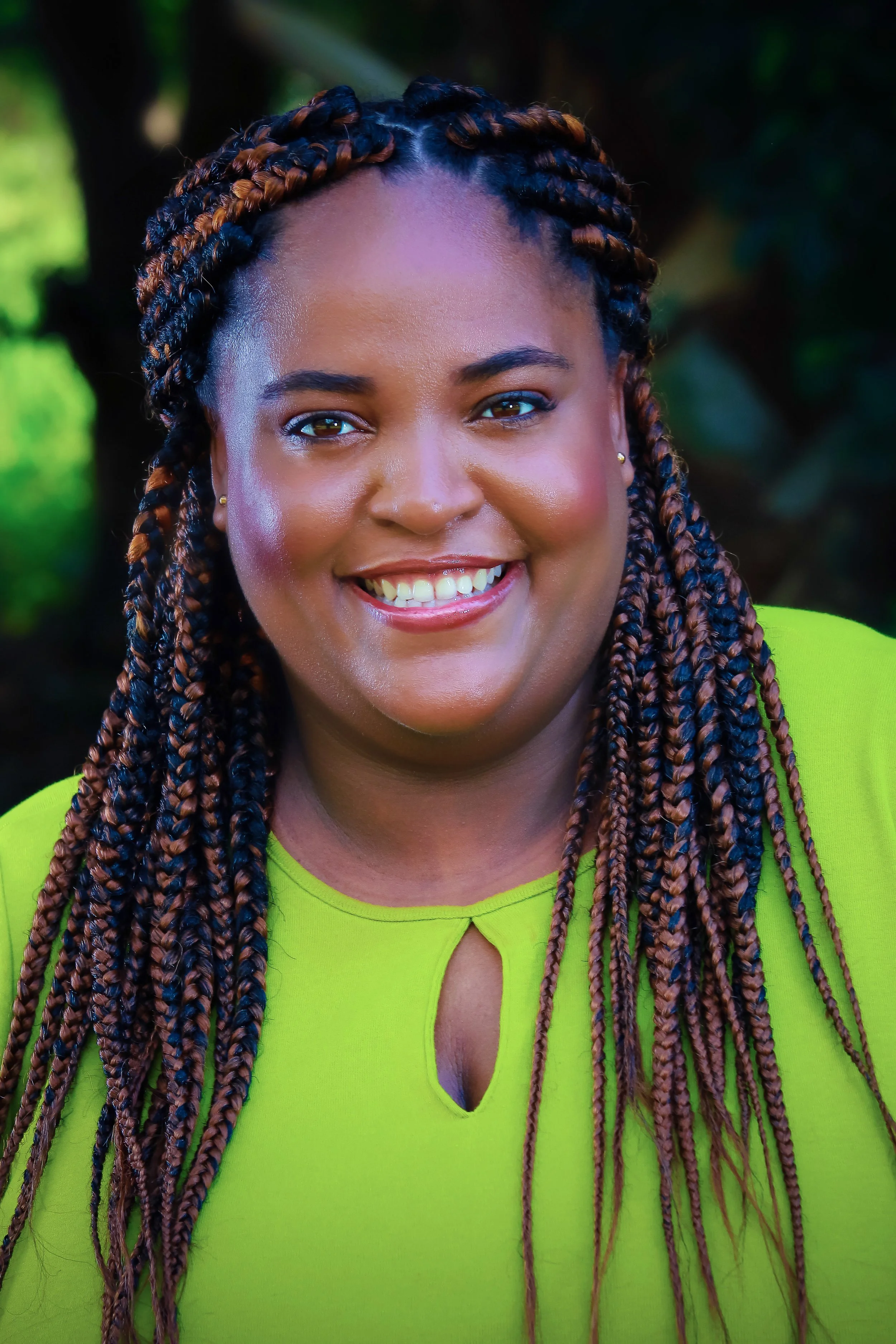
Q&A with Liz Lazarus, Free of Malice

Can you share with readers a little bit about your latest book? 

FREE OF MALICE is a psychological thriller – fiction, but loosely based on a real-life experience. Set in Atlanta, the main character Laura Holland, a rising journalist, endures a night of terror when she is attacked in her home. Although she fights off the would-be rapist, his parting words are a threat to return. Laura undergoes therapy to recover from the trauma, learning about a relatively new technique called EMDR (Eye Movement Desensitization and Reprocessing) used for PTSD patients. But just when the reader feels a sense of where this book is headed—the story of a woman healing—the plot veers in a new direction. Though Laura did not own a gun at the time, she wishes she could have shot her attacker as he fled. When she learns that her actions might not have been deemed self-defense, her journalistic instincts are kindled. Laura decides to write a hypothetical legal case, which plays out the events of that night had she shot and killed her assailant. She enlists the help of a young, black attorney, Thomas Bennett. Though Thomas proves to be clever in the rules of the criminal justice system, his striking resemblance to her attacker does not go unnoticed. As the two work together to develop the case, Laura’s discomfort escalates, particularly when Thomas seems to know more about that night than he should. Could he possibly be her assailant or is Laura being hyper-vigilant? Reality and fiction soon merge as her real life drama begins to mirror the fiction she’s trying to create.

When and why did you begin writing?

Like the main character, I was attacked by a stranger in my home in the middle of the night. In order to heal, I started to write about how I was feeling and what had changed in my life. At the time, I didn’t know about EMDR therapy to heal from trauma, so used writing as a catharsis. Also like the main character, all I had for self-defense was a can of Mace. After the attack, I said to my brother-in-law, if I had owned a gun, I would have shot the guy as he left. My brother-in-law countered that I was fortunate I didn’t—as shooting a fleeing criminal might not have been a clear case of self-defense. That idea sparked my interest in learning about the criminal justice system and inspired me to write the hypothetical case portrayed in the book. The ending, which I won’t spoil, was prompted by a question from my mother. Once you’ve finished the book, write to me at liz@lizlazarus.com and I’ll tell you more about that.

Do you work to an outline or plot sketch, or do you prefer to let a general idea guide your writing?

FREE OF MALICE takes place over 6 months, from June to December. As strange as it may sound, I didn’t write the book in order. Like most authors, I outlined the story so I had the sequence of events laid out. Then, because I’m a fairly visual person, I used a huge wall calendar to outline the six months in which the book took place, listing all the events that occurred which helped me arrange the story and also allowed me to circle back to clues I had dropped in earlier chapters. And though I don’t have a law degree and am not a trained therapist, I had the great fortune to consult with a criminal defense lawyer (Alison Frutoz) and a certified EMDR therapist (Karen McCarty) to be sure those portions of the book were accurate.  Spoiler alert – don’t read the calendar too closely on my blog—might give away some clues!
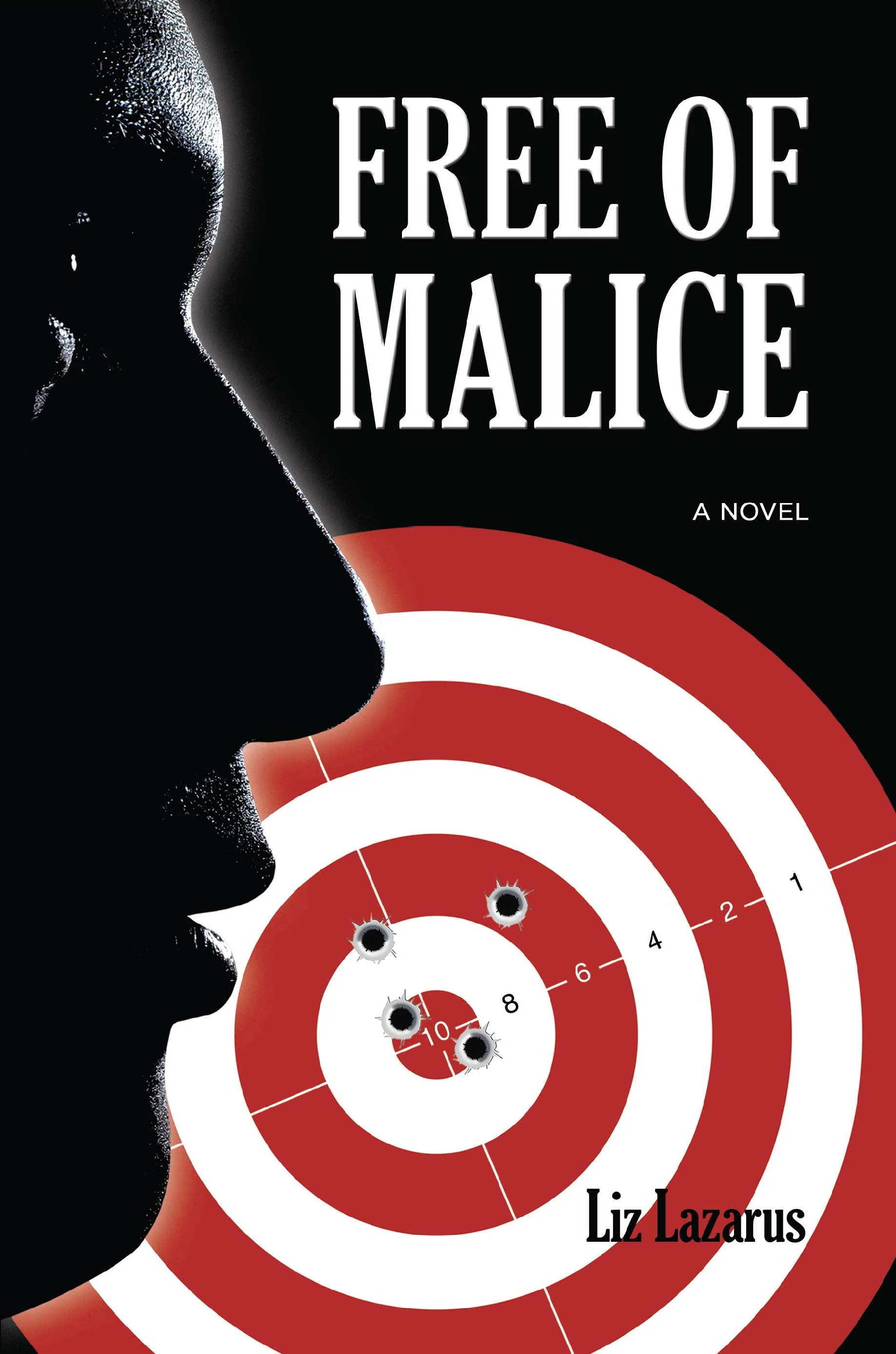
Purchase on Amazon | Barnes and Noble

How do you market your books?

We are doing traditional media outreach and also social media with FB, Twitter and Instagram. I’ve found that sharing some Advance Copies with Goodreads members has been a wonderful experience – nearly everyone has been really receptive to being an early reviewer and I’m making some great friends along the way. One really fun activity we’ve started is reaching out to the Atlanta locations in the book and asking if they want to join in the promotion. So far, we are planning activities with Red Martini bar, Davio’s, Eddie’s Attic, Sandy Springs Gun Club and Range, Fat Matts and have more to come.

What advice would you give to aspiring authors?

I postponed writing this book for many years to pursue other opportunities—I moved to Paris, got my MBA from Northwestern and got my pilot’s license. But this book kept nagging me to write it so I finally relented. I would tell other authors, if you have the calling, listen to it.

Also, at some point along the way, I said I’ll never …

  • Cut 30,000 words from my book
  • Change the tense from third to first person
  • Add a new character
  • Change the title (it was SWEET SAM, seriously, isn’t FREE OF MALICE so much better?!)
  • Let my mother read it
  • Let my fiancé read it

But I did.

If nothing else, this book has taught me to be patient and flexible . . . and it’s a better creation because of the “never-s” that I unshackled. My advice to aspiring authors is to be open and accepting of input that will make your work of art even better.

Tell us more about one of your main characters. What makes him or her unique?

Thomas Bennett, the criminal defense attorney character who consults with my protagonist, Laura Holland, is an interesting guy. Do we love him or hate him? Do we trust him or suspect him? And why is he doing pro-bono work for a journalist – what’s in it for him? At one point, Laura says, “he sounded sincere, but there was this little nagging voice inside of me—aren’t most psychopaths also charmers?” My editor, Jan Risher, may have said it best, “This book is not a traditional whodunit. The author pulled off a tough balance of having me both suspect yet somehow root for the lead male character.”

My best friend from college, Thomas Barnette (not a psychopath, by the way), was my inspiration for the lawyer character. Among other things, he is a musician and, as an added bonus, his song, Let Me Breathe from the CD which I co-produced is the theme song for my book.

You can listen to the song on my website: http://www.freeofmalice.com/music-let-me-breathe.htm


If your book was made into a movie, who would you cast? 

For Laura, the lead female, I have always thought about Jennifer Garner or Jessica Alba. For Chris, the husband, Ben Affleck or Josh Duhamel. (Alas, when I wrote the book, Jennifer & Ben were still together—it would have been so neat to have them be the lead couple.) For Barbara, the therapist, Linda Evans or Barbra Streisand. And, for Thomas, well either the real Thomas Barnette or an aspiring African American actor (say that fast 5 times!). What’s your vote?

If there was one thing you could do to change the world, what would it be?

Ensure no person was ever homeless or hungry. If I win the lottery or this book makes me millions (pause, dream a bit, back to reality), I’d focus on only that. Today, I volunteer for a charity called Second Helpings—we pick up and transport food that would otherwise be thrown away from grocery stores (expiring that day) to local food shelters. It’s my small part towards the larger goal.

Tell us something unique about you.

I can land an airplane but can’t drive a stick shift!

About the Author

Liz Lazarus is an engineer, career business woman, private pilot, and consultant - nothing that necessarily says author. But this book literally kept nagging her to write it, so she finally relented. Loosely based on personal experience and a series of ‘what if’ questions, FREE OF MALICE traces the after effects of a foiled attack; a woman healing, and grappling with the legal system to acknowledge her right to self-defense. Liz is a native Georgian, born in Valdosta and now living in Atlanta with her fiancé, Richard, and their very spoiled orange tabby named Buckwheat.

Connect with Liz: Website | Blog | Facebook | Twitter | Goodreads | Pinterest
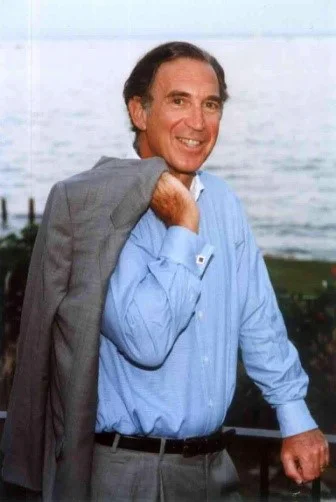
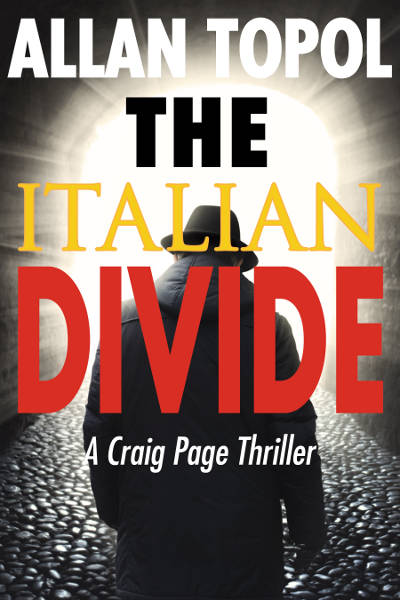
Q&A with Allan Topol, The Italian Divide

How and why did you first start working on The Italian Divide

Several years ago, my wife and I took a trip to Italy—purely vacation. I had no intention of writing a novel about Italy. However, I became enamored with this exotic country and intrigued by its politics, its regional differences, and the economic problems that it faced.  I decided then to write a novel using Italy as the backdrop.  As a result, I did extensive research in the US, both on the internet and in the library. Then I made several more trips to Italy to develop the factual background and make sure all of the site descriptions were accurate.

What was your inspiration for this story in particular? For Craig’s story and character in general?

Craig Page is my fantasy character. Living in Washington, I have gotten to know a number of people working in US intelligence agencies as well as the intelligence agencies of foreign governments. While I have worked as a lawyer and written novels, I have fantasized about being a top secret agent myself. In developing Craig Page, I had an opportunity to bring those fantasies into play and to create a character who doesn’t tolerate bureaucrats; doesn’t suffer fools; and is willing to take risks to accomplish his objectives. Craig is also someone who has a sense of fairness and justice. The Italian banker murdered at the beginning of the book was Craig’s friend and the financial benefactor for Craig’s racing. Craig is determined to find out who was responsible for this banker’s death.

Much of The Italian Divide’s plot involves international banking. What gave you the idea to combine an international spy novel with this specific topic, which many readers might not know too much about?

I happened to read in a newspaper article about Chinese investors taking over some Italian banks which were vulnerable financially. I thought this was an intriguing fact and could be worked into a novel because the Chinese are in fact attempting to gain a foothold in various parts of the world, including Western Europe. I recognized there were some risks utilizing international banking because readers might not know much about this subject. However, I thought it would be good to inform readers while keeping the banking discussion quite short and clear so that it did not confuse readers, but merely inform them.

Purchase on Amazon | Barnes and Noble

Purchase on Amazon | Barnes and Noble

Similarly, I wanted to inform and educate my readers about the political situation in Italy and specifically about the differences and conflicts between the north and the south in Italy. Those differences and conflicts are real. The country was not unified until 1861 and the differences persist.  Again, I wanted to educate and inform my readers while not taking away from the story. After all, The Italian Divide is meant to be a fast moving, entertaining suspense story, and I have been careful to avoid letting it get bogged down in factual details.

I have also been careful to make certain that The Italian Divide, while it is the fifth novel involving Craig Page and Elizabeth Crowder, is also very much a stand-alone book. The reader will not have to have read any earlier book in order to fully understand this one.

The novel takes place in a bunch of locations all over the world – Italy, China, and the USA. How many of these places have you actually visited?

I have visited all of the places in the novel. I have eaten in all of the restaurants and drank all of the wines. My objective in the book is to describe those places with sufficient detail so that the reader will feel as if he or she is there, and at the same time not have too much description that slows down the flow of the novel.

The book reads very cinematically. Do you write like that on purpose, or is that just the way it comes out?

People have always told me that my books read very cinematically, including producers and agents in Hollywood with whom I am working to try to get some of the books developed into movies or television series. I don’t write that way on purpose. It’s just my style of writing.

Are there any other genres of writing you’ve wanted to try, or are you a thriller mystery writer through and through?

While I am a thriller writer, I view myself as writing in a special niche of that genre. Specifically, I am writing a geo-political thriller which weaves in history and current affairs. As a result, my books are not the standard thriller mystery books. They all have this strong international component.  

When did you know you wanted to be a writer? How did you get into it?

I’ve always wanted to be a writer from the time I was in high school and college. I didn’t take any writing courses, but I did have a writing tutor in college. I was fortunate when I wrote my first novel to find an editor at William Morrow who liked the book and was interested in publishing it.   

What are you currently reading?

Books on history and current events involving particularly Russia, which I am planning to use for a future novel. 

Can you tell us anything about your next project?

After the commercial success of The Washington Lawyer, I decided to write a sequel to that book. However, I wanted it to be sufficiently different, so I took Kelly Cameron, a young FBI agent, who had only a cameo role in The Washington Lawyer, and made her into the protagonist of my next novel.

What’s one thing you want readers to take away from The Italian Divide?

I would like them to take away an understanding of the history, current political situation, and economic risks that confront this wonderful and exotic country of Italy.

About the Author

Allan Topol The Italian Divide is Topol’s 12th novel of international intrigue; Spy Dance and Enemy My Enemy, were national best sellers. His novels have been translated into Japanese, Portuguese and Hebrew. One was optioned and three are in development for movies. More recently, his books had focused on his Craig Page series, including The Argentine Triangle, The Russian Endgame, Spanish Revenge and China Gambit.
 
In addition to his fiction writing, Allan Topol co-authored a two-volume legal treatise titled Superfund Law and Procedure. A graduate of Yale Law School, he is a partner in a major Washington law firm, and an avid wine collector, he has traveled extensively, researching dramatic locations for his novels. He wrote a weekly column for Military.com and has published articles in numerous periodicals including the New York Times, Washington Post, and Yale Law Journal. He also has blogged for Huffington Post. For more information, visit www.allantopol.com.


Q&A with Anne Mather, A Forbidden Temptation

What’s your favorite love story? Fiction or non-fiction.

I have dozens of favourite love stories, but GREEN DARKNESS and KATHERINE by Anya Seton are high on my list.

Is anything in A Forbidden Temptation based on real life experiences or purely all imagination?

No, A FORBIDDEN TEMPTATION is not based on any real life experiences, but I can say that the Northumbrian Coast is one of the most beautiful coastlines in the UK and incidentally, I do believe in ghosts.

You get a brilliant phrase/idea/thought at an inappropriate time (while driving, drifting off to sleep/in the shower). What do you do?

I always make a note of any ideas I have, and in consequence I have a notebook full of them!

What’s your favorite line from any movie?

I love the film, DIRTY DANCING, and there are many lines from that script I could nominate, not least the most famous 'nobody puts Baby in the corner.'

If you were to create a slogan for your life, what would it be?

The only slogan for life I believe is Charles Darwin's 'IT IS NOT THE STRONGEST OF THE SPECIES THAT SURVIVES, NOR THE MOST INTELLIGENT, BUT THE ONE MOST RESPONSIVE TO CHANGE'.

If you could live anywhere on this planet, and take everything that you love with you, where would you choose to live? Tell us about your choice.

I love where I live now, and although I enjoy travelling and seeing different places, I wouldn't choose to live anywhere else.

What was your favorite scene to write in A Forbidden Temptation? Why?

I think one of my favourite scenes was when Sean was confronted by Lisa's ghost.  I really wanted Sean to meet his match.

What did you find most useful in learning to write?  What was least useful or most destructive?

I don't remember having to learn to write.  I started scribbling in exercise books as soon as I could write and my stories grew as I did.  There's nothing destructive about writing.  It's the best job in the world.

What are five words that describe your writing process? 

Time, time, discipline, discipline, satisfaction.

What are you working on now? What is your next project?

I'm in the process of writing my next book for Harlequin Presents.  I'm also working on an ebook, SILENT ECHO,  that is coming out with Kindle later this year.

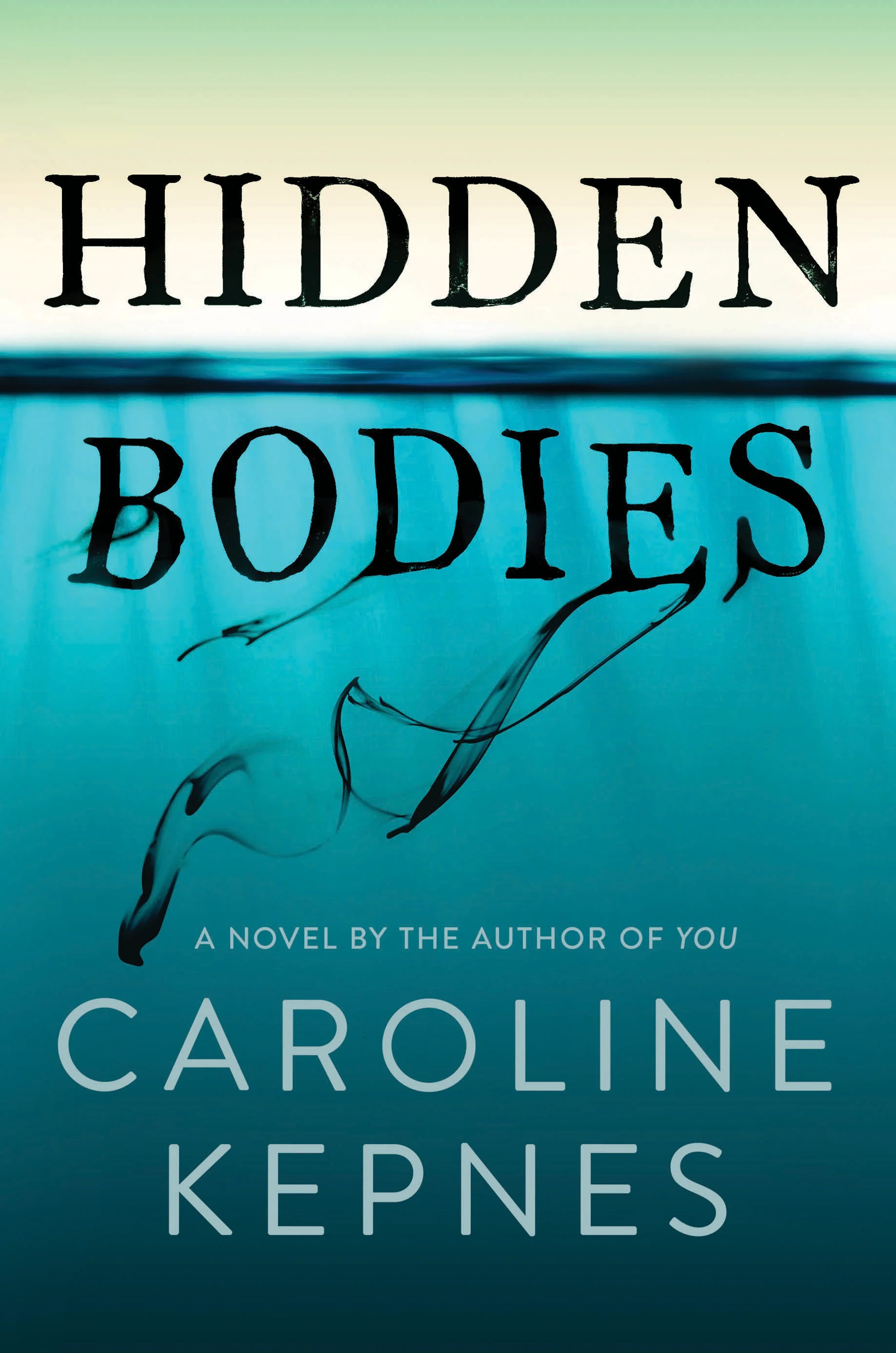
The Inspiration for Joe Goldberg by Caroline Kepnes

When someone asks about my inspiration for Joe Goldberg, I always pause.

There are always three ways for me to answer this question. There is the personal truth about my life. I lost my father in November of 2012. He was a powerful force in my life. His voice and his contagious passion for all creations in literature and TV, song and film, Tolkien and Led Zeppelin, Stephen King and Sex and the City. He was a huge influence. Towards the end, when cancer was winning, he was on YouTube, finding new bands, raising his voice in song, going to Monterey Pop.

Someone like that slips away, and there is a hole in your world. Anyone who’s ever lost anyone knows about this. You try to remember the basic rules of life, which is, first and foremost, as my dad always said, that it’s for the living. My mom was right when she said that I should write something. (Moms: Why do they get to be right so much?) And I wanted to pour myself into something new, a creative adventure. I wanted to keep that passion for the arts alive, thriving in my mind, in my work. This is where Joe was, from inception, someone who loved his books and his movies, someone who felt it all.

The other answer to this question is more analytical, about my passion for cultural shifts, the way my heart beats when I read about some new study on how social media impacts our brains, our hearts, the impossibility of knowing how children will be different from growing up with iPads.

It’s timeless and timely because every generation deals with social evolution. But you know, when it’s your world, at your time, it’s yours.

Purchase on Amazon and Barnes and Noble

Purchase on Amazon and Barnes and Noble

Here I was, participating more and more in social media. I quit smoking and it was comforting to hear so much encouragement online. I was a journalist and now it wasn’t enough to write an article. You had to tweet it. Social media was important in every domain of my life. I was aware of the dark side, the limitations of a Like-it-or-Don’t-Like approach to interaction, a disintegration of grey areas.

I was also enamored with the beauty of all this connection. You talk to people online you wouldn’t see in the real world.

And then again, I was shattered by the price we pay for that connection. It robs us of reunions. The mystery produced by distance. You go to your high school reunion, you don’t learn anything. You knew that guy had those kids. You knew she cut her hair. We don’t drift apart. We stalk. We keep tabs.

Social media is of course good and bad, like any rich territory for the world of a novel. I wanted to explore modern communication through Beck and Joe, someone who is deeply invested in social media, to her detriment, and someone who is antisocial, to his detriment.

And in the end, there is the simple, overwhelming truth of what I always set out to do when I write. To activate empathy, in both of us, you and me, and that doesn’t mean that you love Joe or hate Joe, it only means that you’re experiencing life from his perspective.

About Caroline Kepnes

Caroline Kepnes is a native of Cape Cod and the author of many published short stories. She has covered pop culture for Entertainment Weekly, Tiger Beat, E! Online, and Yahoo. She has also written for television shows, including 7th Heaven and The Secret Life of the American Teenager. Her directorial debut short film, Miles Away, premiered at the Woods Hole Film Festival. Caroline is a Brown University graduate now residing in Los Angeles in the same building that the Hillside Strangler once called home. She spends a lot of time on Cape Cod.

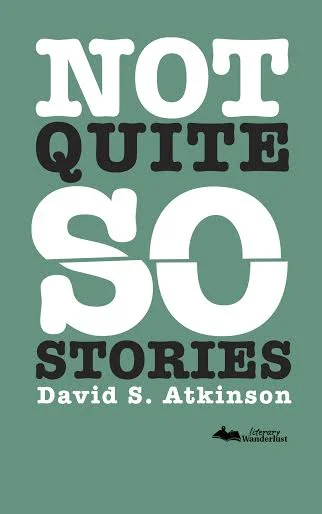
Where the Weirdness Comes From by David S. Atkinson

When you like to slip absurd elements into stories like I do in Not Quite so Stories, the first question people seem interested in asking is where I get all the weird ideas. It's one of my favorite questions, but it's also one of the hardest to answer completely. Like I think good weird fun should, everything comes from a different place.

To pick a story from the collection, "Cents of Wonder Rhymes With Orange" originates from a brochure I saw when I was somewhere around seven. My parents used to take long road trips throughout the Western states: the Dakotas, Wyoming, Colorado, California, and so on. On those trips, my sister and I were always raiding the racks of tourist trap brochures in hopes of talking our parents into stopping. We didn't usually have much success.

One I remember clearly we picked up somewhere near Wall Drug. It advertised a mystery house, a place where the laws of physics did not apply. The pamphlet suggested all kinds of weirdness, but I specifically remember a claim of a room where objects rolled uphill.

Now, I'm sure I knew even then that it was most likely a trick. Surely the room was constructed in such a way as to appear that downhill was actually up, an optical illusion. Still, what was wrong with that? It would have been cool. The idea of a place where such things actually happened intrigued me even more.

Of course, I didn't get to go.

Still, I remember that brochure even all these years later. My brain latched onto it and never let go. While I was working on this collection, my mind went back to that. I started thinking of that downhill/uphill rolling room. More interestingly to me now, I started thinking of all the different reactions people had to it. It was supposed to invoke a sense of wonder, but too many people let the wonder drain out of life…or drive it out deliberately. I decided to start playing around with that.

"Cents of Wonder Rhymes With Orange" is the result of that. The other stories each have similar, though widely different backstories.

About the Author

David S. Atkinson is the author of "Not Quite so Stories" ("Literary Wanderlust" 2016), "The Garden of Good and Evil Pancakes" (2015 National Indie Excellence Awards finalist in humor), and "Bones Buried in the Dirt" (2014 Next Generation Indie Book Awards finalist, First Novel <80K). His writing appears in "Bartleby Snopes," "Grey Sparrow Journal," "Atticus Review," and others. His writing website is http://davidsatkinsonwriting.com/ and he spends his non-literary time working as a patent attorney in Denver.

Connect with David: Website | Facebook | Twitter | Goodreads

Q&A with Laurie Woodward

Who or what inspired you to be an author?

I have always created imagined worlds in my mind writing poetry and short stories from the time I was in elementary school. I knew that something inside of me flowed through words. I’d loved to read and used to think of authors as these magical people that had words that just sizzled from their fingertips. But then I saw a book titled, The Weekend Novelist at Barnes and Noble. I picked it up and began leafing through the pages. Here was a step-by-step instruction manual on novel writing. I doubted myself at first but then the idea of seeing the stories I dream is come alive on the page took root. So I began the exercises and one page at a time I created Forest Secrets. It was rough, and not ready for the world so I put it away. Wrote Artania 1. Artania 2. Dean and JoJo. That’s when I remembered that  first story and got out the old files and began revising.  When people call me author I feel like that unique part of me, my inner voice is being recognized. And it feels wonderful.

Growing up, our biggest inspirations were our teachers. What do you love about teaching?

I love that moment of a-ha from students, when the spark becomes a flame. When a child who had been saying, “I can’t,” does the impossible. I love the warmth we share in my  classroom, the community. I love feeling like my life has meaning because I have helped set a child on an easier path.

You were involved in a collaboration involving the subject of anti-bullying, what advice do you have for teaching facing the same issues in their classrooms? What would you say to students and parents? Empower and trust children to make good choices. Given the right tools, children are very powerful. I’ve seen kids from diverse backgrounds come together in support of eachother. I’ve had students from gang families, foster care, and abusive homes volunteer as friend mediators. Tell them they have the power to make change if only they seek win-win solutions.

What inspired The Artania Chronicles? Is there a takeaway that you want young readers to have after reading?

I want children to realize that we all have a magical place inside of us, our creative self, that is absolutely unique. No one can draw, write, dance, sing, or swing a baseball bat exactly the same as another. But everyone can rejoice in their own talent.  Every time a human sketches, sculpts, or paints a beautiful being is birthed in Artania but when children turn away from their true selves it gives power to an evil race of beings.

Being an educator & writer for a younger audience, with kids being influenced by technology, do you find it hard for kids to want to pick up a book?

Not at all! Kids seem to know that there is something unique about reading that technology cannot match. And they get pretty proud when others see them reading big books.

Do you see yourself expanding into other genres?

I collaborated with naturalist Dean Bernal on his adult memoir, an amazing experience where I felt like I was the young man swimming with a wild dolphin. I’ve also dabbled in play writing. In addition to writing the Artania fantasy series I recently started a YA novel. My science fiction short story won an award in the L. Ron Hubbard’s Writers of the Future contest.

If you were only allowed one book, what would it be and why?

Stranger in a Strange Land because I love its optimism.

What advice would you have for aspiring writers?

Read. A lot. Write. A lot. Know that like everything it takes time. Don’t worry about fame and fortune.  Find joy in the process and the journey will be pretty freaking amazing.

About the Author

Laurie Woodward is a school teacher and the author of the fantasy books: The Artania Chronicles. Her Artania: The Pharaohs’ Cry is the first children’s book in the series. Laurie is also a collaborator on the award-winning Dean and JoJo anti-bullying DVD Resolutions. The European published version of Dean and JoJo for which she was the ghost writer was translated by Jochen Lehner who has also translated books for the Dalai Lama and Deepak Chopra, In addition to writing, Ms. Woodward is an award winning peace consultant who helps other educators teach children how to stop bullying, avoid arguments, and maintain healthy friendships. Laurie writes her novels in the coastal towns of California.

Connect with Laurie: Website | Facebook | Twitter | Pinterest | Linkedin