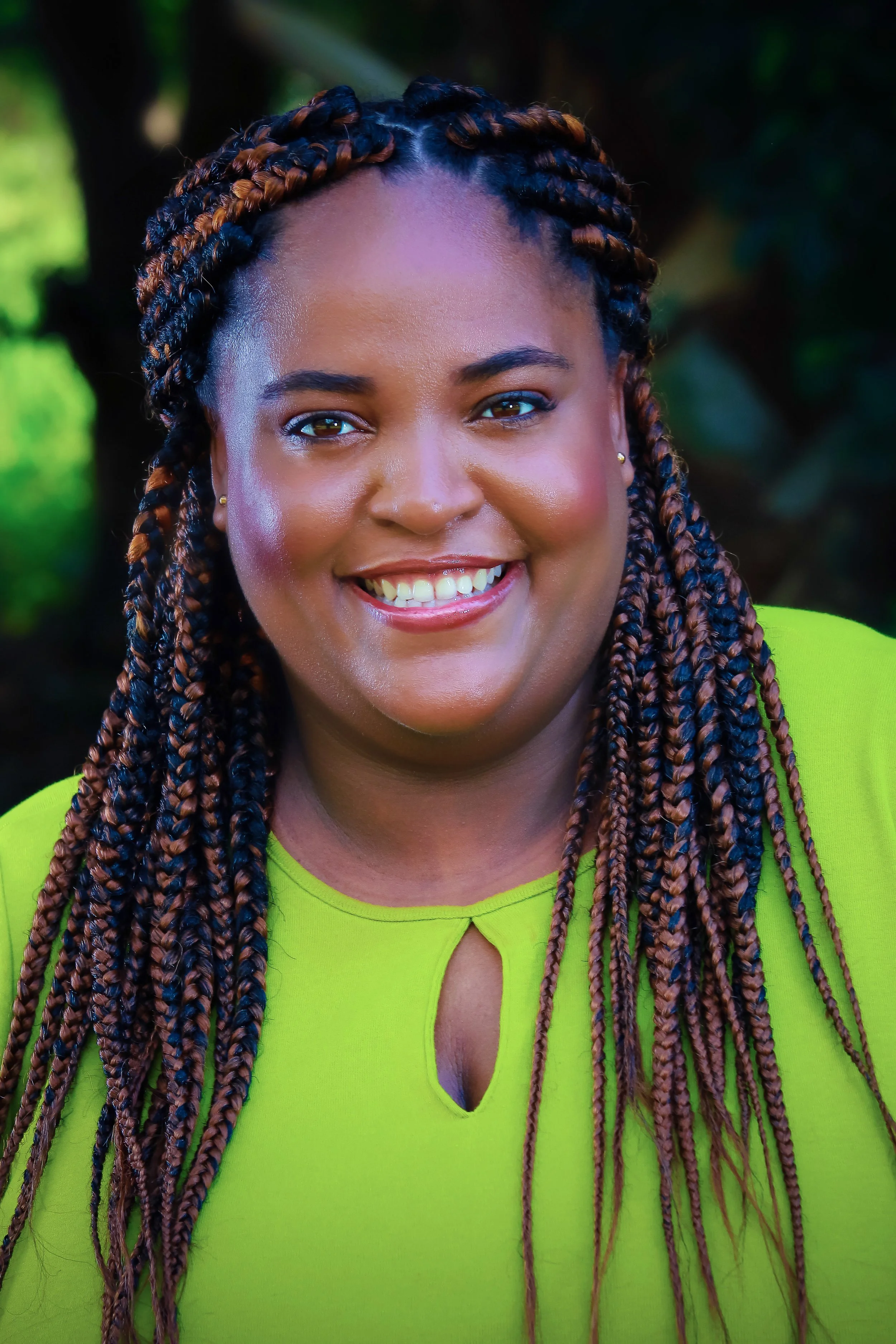
Q&A with Tiffany Reisz, Her Halloween Treat

How did you come up with the relationship between Joey and Chris?

I have a lovely Twitter friend who used to live in Hawaii and she’s in love with actor Chris Evans especially when he’s wearing a beard. She posts a lot of sexy Chris Evans pictures and gifs and in one picture he’s wearing flannel and looking like your ultimate HGTV sexy handyman fantasy. It wasn’t too hard to come up with the sort of woman who’d fall for a guy like that.

What is your favorite part about writing for Men at Work?

Hard to say because I had so much fun writing every single book. I think the most fun I had was with the supporting characters. In HER HALLOWEEN TREAT, Joey’s best friend is a co-worker named Kira who keeps her encouraged and entertained. In HER NAUGHTY HOLIDAY, I had a blast writing Erick’s snarky 17-year-old daughter who is playing matchmaker for her boss and her dad. And in ONE HOT DECEMBER the heroine’s neighbor is Mrs. Scheinberg, a feisty 88-year-old woman who can’t stop giving my heroine and hero very good advice. Writing the funny best friend or wacky neighbor never stops being fun. 

Your Harlequin Blaze novels seem to be either around Halloween or Christmas, which one is your favorite?

The entire trilogy is set around the holidays. In HER HALLOWEEN TREAT it’s Halloween. In HER NAUGHTY HOLIDAY it’s Thanksgiving. And in ONE HOT DECEMBER it’s Hanukkah and Christmas. Christmas is my favorite holiday because it’s when all my family gets together. I’m a vegetarian so Thanksgiving is kind of wasted on me. And Halloween is great but when you have as many fillings as I do, you tend to avoid candy.  

What was the first book that made you cry?

I picked up a copy of THROUGH A GLASS DARKLY by Karleen Koen when I was on vacation with my parents in Virginia when I was, oh, 14 or 15, I think. I probably got the book because it had a pretty cover and was very long, and I liked to read big books since I thought that impressed people. I devoured the book in just a few days and remember weeping onto the pages when Roger dies. That was the first historical romance I’d ever read and loved and Roger was the first bisexual character I think I’d ever encountered in fiction. I adored the book and still have that giant purple hardcover at my parents’ house. 

How long do you spend researching before beginning a book?

I didn’t do any research for the Men at Work books. My father has been a contractor/handyman type all his life so I knew a lot about the work the guys do. I usually research as I write. Too many writers use intensive research to put off the actual writing. Write and research simultaneously and then you can pinpoint exactly what you need to research and save yourself time and trouble. 

How do you select the names of your characters?

Names are hard. You want to get them just right and I’ve been known to “Find and Replace” on a draft when a name just isn’t working. I’ll try several out until I find one that works. 

If you didn’t write, what would you do for work?

I’d probably die. But before I was a writer, I worked in a bunch of bookstores. I could easily go back to working in a bookstore tomorrow. 

Do you believe in writer’s block?

I’ll quote Steve Martin here—“ Writer's block is a fancy term made up by whiners so they can have an excuse to drink alcohol.”

What is your favorite thing about fall? 

How happy it makes my husband. That and long-sleeved shirts. I’m a big fan of long-sleeved shirts. 

Are you excited for Halloween? If so, do you have a favorite scary story?  

I’m excited for Halloween decorating. In fact, I already did it. Favorite scary story? Probably “The Haunted House” from the original SCARY STORIES TO TELL IN THE DARK. I was in a school play version of that story. I had one line and that line was just a scream. I do a very good scream. 
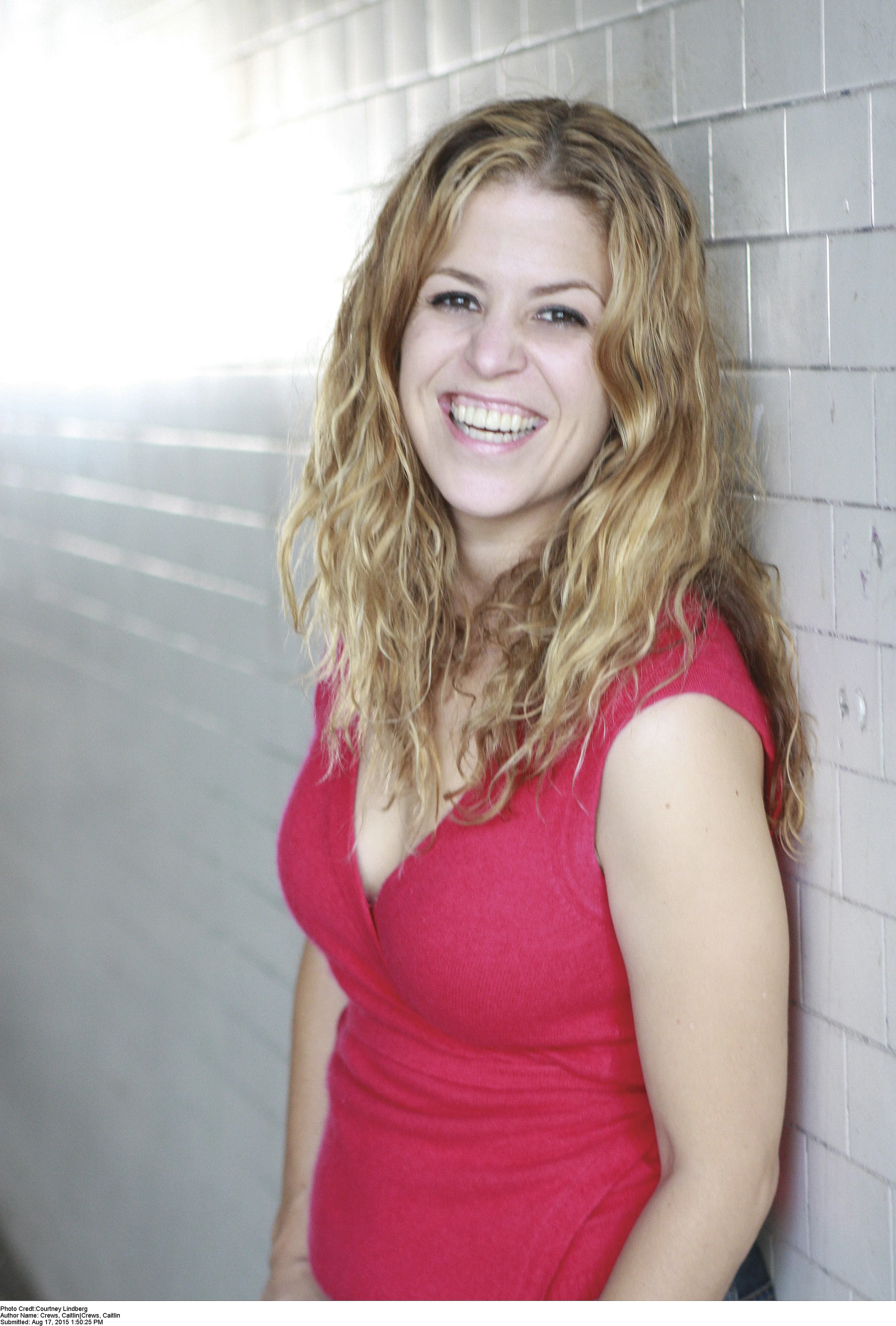
Q&A with Caitlin Crews, The Return of the Di Sione Wife

How did you come up with the relationship between Dario and Anais?

The Return of the Di Sione Wife is actually a part of a continuity, which means I was given a little brief on Dario and Anais’s relationship when I started.  I knew that they were married, estranged, and had a child—but it was up to me to infuse all of that with angst and emotion!  (The fun part, in other words!)

What is your favorite part about writing for The Billionaire’s Legacy?

I really loved my characters and my book, but the really great thing was that the incomparable Sharon Kendrick was writing my hero’s estranged twin brother at the same time.  That meant we spent a lot of time discussing our delicious heroes, and sent each other any mentions of them in our books, so we could make sure to maintain the tone and story between both books.  It was so much fun!

Do you prefer to write classic romance or heroes and heroines?

I don’t know what this question means.  I love all kinds of romance.  I love getting to immerse myself in the love stories of complicated people.  I love learning all their secrets and figuring out the unique keys to their hearts.  Writing romance isn’t just fun, it’s deeply rewarding!

What was the first book that made you cry?

I’m pretty sure it was Misty of Chincoteague. ☺

How long do you spend researching before beginning a book?

I prefer to jump in and get a feel for the characters and their dynamic.  Once I have that, it’s a lot easier to research different things and see where that takes me.  But the central relationship is the key.  It’s what everything else hinges on.  I could research for years, but if the reader doesn’t invest in the romantic relationship between the main characters, the book is a failure no matter how in-depth and annotated my thoughts on the scenery are.

How do you select the names of your characters?

Sometimes they just come, fully named.  Other times I think they have one name and halfway through the book it turns out they have another one.  Don’t tell anyone, but I’ve also written whole books and known the characters’ names were wrong.  But I couldn’t figure out the right one!  Books are strange.  Sometimes they have minds of their own. ☺

If you didn’t write, what would you do for work?

I shudder to think.

Do you believe in writer’s block?

I don’t.  You’re always going to hit walls in your productivity and creativity.  That’s the nature of things.  Whether that’s because of external issues or internal ones based on the writing, there’s no escaping them.  Writing is hard.  Living life as a creative professional is hard.  But at the end of the day, writing isn’t just my passion.  It’s my job.  If I worked at a big company I couldn’t call in and announce I’d hit a block and wouldn’t be in until it passed.  (I mean, I could.  But I’d expect to be fired.)  If the block is there because of external issues, I think you grit your teeth and try to angrily get the words down, because when you look back, all you’ll see are words, not your feelings while writing them.  If the problem is that the book is broken?  Well.  85% of the time it’s that I don’t know the characters well enough or I haven’t quite captured their voice.  Taking a day or so to think and read and try to come at things a different way is key.  But eventually you have to sit down and write, even if you hate it.  I always tell myself to just tell the story.  And when I concentrate on that, things seem to fall into place.

What is your favorite thing about fall?

EVERYTHING.  Especially cozy sweaters and cute boots!

Are you excited for Halloween? If so, do you have a favorite scary story?  

I like Halloween, though I don’t participate.  I like seeing all the little kids out in the dark in their cute costumes!


Q&A with Cat Schield, The Black Sheep’s Secret Child

How did you come up with the relationship between Savannah and Trent?  

I always start with the conflict. And nothing says trouble like two brothers involved with the same girl. 

What is your favorite part about writing for Billionaires and Babies?

Is there anything more adorable than alpha men with babies? The first meeting between Trent and his son is adorable. I absolutely love Dylan. He’s a charmer.

Many of your books feature children, is family important to you?

Family is everything. But for me it’s not always about those you’re related to. I think it’s about those people who stick with you through thick and thin.

What was the first book that made you cry?

Black Gold by Marguerite Henry

How long do you spend researching before beginning a book?  

I usually jump right in without much research. For me the fun of writing the story is immersing myself in the details of the world. And I do a lot of research. Much of it never shows up in the book because I tend to run wild finding out about things. For The Black Sheep’s Secret Child I spent a fair amount of time learning about record labels and how many of them have struggled in the digital age.

How do you select the names of your characters?

I whip out my favorite baby book and flip through the pages until something seems right. In the case of the Club T’s books, I needed 3 men with “T” names. So I have Trent Caldwell, Nate Tucker and Kyle Tailor. 

If you didn’t write, what would you do for work?

I think I’d take up creating marketing materials for authors. Book covers. Book trailers. I have a blast working on my own stuff.

Do you believe in writer’s block?

No. Some books are painfully hard to write. I think a lot of writers have avoidance tendencies. I’m always choosing between sitting down to the computer and pushing through a challenging scene or watching yet another HGTV show. Often HGTV wins.

What is your favorite thing about fall?  

Fall in Minnesota is such a beautiful time of year. The trees burst into glorious colors. The days are warm. The nights are cool. It smells like campfires and dry leaves.

Are you excited for Halloween?

If so, do you have a favorite scary story? I love Halloween. The pumpkin carving. Handing out candy. My daughter is 17 and too old for me to take trick or treating and I miss it. There’s something magical about helping her pick out a costume and walking the neighborhood and seeing all the fantastic decorations. No favorite scary story, but I do love going through a haunted house. Creepy!

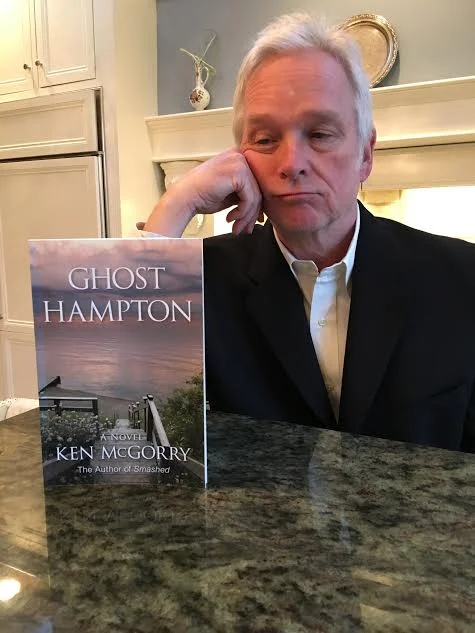
How Ghost Hampton Was Born by Ken McGorry

My wife and I were driving down a shady residential lane in Westhampton Beach, Long Island, one summer day a few years ago when she gestured at a nicely restored old colonial house. As we passed, she said, “I know the man who bought that house. He says it’s haunted.” Oh, really? “Yes. And they told him it was once a brothel.”

This was a few years ago. I was shopping my first novel, Smashed, and also looking for a new project. By the time we got out of the car, I had my title: Ghost Hampton.

A college professor of mine once told us English majors that you only title your work after you’ve written it -- so you know what it’s about. But now it was too late. I was in love with my title and would have to work backwards! Soon enough, I had a climax in mind: a troubled man trapped in an old house with some vicious, deadly supernatural being.

How trapped? Well his wheelchair battery had given out.

What’s he doing in a wheelchair? …Have to get back to you on that.

Where are his friends? He has none.

Family? Just an estranged daughter who wants nothing to do with him.

How did he get in this house? Uhmm…

Why does he have no friends? Err…

I had plenty of work ahead of me. For one thing, I had to move my setting away from the village where my wife and I have a little summer place. Bridgehampton looked good – situated in the middle of the posh Hamptons, but a place with lots of history and a surprisingly small off-season population of 3,000 locals. I’d need to fictionalize the place while creating a memorable cast of year-round characters. And I needed an “inciting incident.”

For my protagonist Lyle Hall and me, that incident coalesced around perhaps Bridgehampton’s most noteworthy landmark: its century-old memorial to those who lost their lives in America’s wars. The big old block of granite, which is real, stands in the middle of the village’s main intersection. That’s what Lyle Hall plows into, driving his Hummer too fast and trying to avoid a sweet old lady who’s blundered into his path. She does not survive. Lyle does, just barely, and when he emerges from coma we see he’s become a pariah in the eyes of an unsympathetic local population. And there’s something more: He can now hear and see disturbing things no one else can. Like the strange whispers that emanate from an abandoned old mansion known to all as “Old Vic.” The whisperers want Lyle Hall.

Knowing You’re Dying Can Be Murder: A Peek at My New Novel, ‘Sick to Death’

I spent the better part of 2015 writing a novel titled Sick to Death. I spent much of 2016 editing it, having some pros edit it even more, and praying to the literary gods the damn thing sells. 

Sick to Death is your average, everyday tale about a group of terminally ill individuals who become serial killers to make their city a safer place to live. And die. 

Call it a beach read. 

Craig Clevenger, author of The Contortionist’s Handbook and Dermaphoria, says, “Sick to Death is a tour de force dark comedy.”  

For those of you sick enough to want to take a peek, here is the opening from Chapter 1:

Everyone in the subway car gasped when the man with the shaved head slid off his seat and crumpled to the floor.

Everyone except Gage. He just leaned back with his head resting against the window, tapping the ivory handle of his walnut walking cane. As the train rattled around a curve beneath the heart of Philly, Gage ignored the panic and commotion, keeping his eyes on the supine skinhead and on the woman who was now frantically administering CPR to bring him back into the world.  

The woman’s rescue efforts were futile. Gage knew this. He knew there was no coming back from the two hundred milligrams of sodium cyanide currently coursing through the skinhead’s body. How the cyanide made its way into the body, well, Gage knew that, too. And if all went well, he’d remain the only one who knew. And all usually went well. Gage was quite good at cyanide.

And ricin.

And arsenic.

Unfortunately, Gage was also quite adept at Gemcitabine.

And Oxaliplatin.

And Irinotecan.

Unless you’re an oncologist or the patient of one, you’ve probably never heard of those last three.  
Over the previous six months, there was only one thing Gage had become more efficient at than killing… and that was dying.

But for now let’s keep things positive and focus on the former. 

The skinhead was the second person Gage had murdered in three weeks. 

It had been a slow month. 

Sick to Death is available as a paperback and as a Kindle ebook on Amazon.   

About the Author

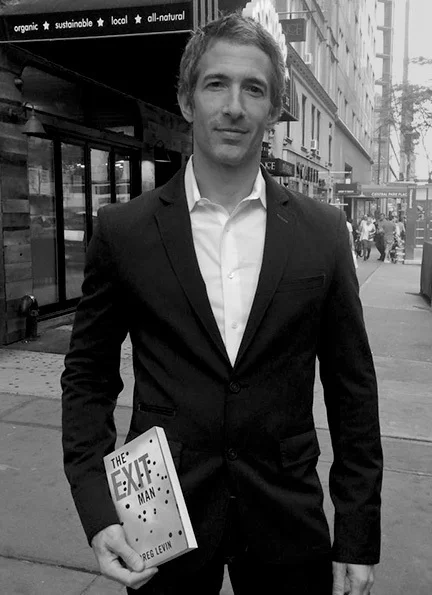
Greg’s first novel… meh, nobody but Greg really cares about his first novel.

His second novel, The Exit Man, was optioned by HBO for development into a TV series and won a 2015 Independent Publishers Award (a.k.a., an “IPPY”), earning a silver medal for Best Adult Fiction Ebook.

Greg’s third novel, Sick to Death, is out now and is being hailed by critics everywhere as one of the top three books he has ever written. Author Craig Clevenger (The Contortionist’s Handbook) calls Sick to Death “a tour de force dark comedy.”

Greg resides with his wife, daughter and two cats in Austin, Texas, where he reportedly is wanted by local authorities for refusing to say “y’all” or do the two-step. He is currently working on his fourth novel.

Visit him at http://www.greglevin.com


Q&A with Jenna Harte

What is the hardest part of your writing process? 

My biggest challenge is that my first drafts are pretty weak and I worry I won’t be able to fix them. Especially in romances, the snap and crackle required between characters is usually nonexistent in my first draft. I’m also weak on descriptions (setting and facial). So during revision, I spend a lot of time going through my thesauruses to find the right words to express what I see in my head.
How do you develop your characters? Are any of them like you or people you know? 

Like my weak scenes and descriptions in early drafts, my characters are often flat when I first start writing. They deepen during the writing process. That means, they’re not really based on anyone in particular. However, Tess Valentine in the Valentine mysteries likes old R&B music and chocolate, as do I. And she’s not very tall. Neither are two of the characters in the Southern Heat series. I’m not very tall either. Technically, I’m short.

You are both traditionally and self-published. How did you decide what route to take for your books? 

For the most part, the decision to self-publish the Valentine Mysteries came from an inability to get an agent to take a chance on the concept. Several liked the first book, but pushed me to sell it as a stand-alone romance. I always knew I wanted to do a mystery series featuring a romantic couple. I knew I couldn’t be alone in that, but agents and publishers are sensitive to book stores, and no one felt it fit well into the mystery-lane, and romances don’t usually continue with the same couple. I’ve started to see some change in this, but at this point, with five books and a novella, and a sixth book in the conception stage, it will remain self-published. 

For Southern Heat, a series of interesting events happened. The first was that I had this old romance sitting on my hard drive (it was so old it mentions dial-up Internet). I thought would be a fit for a Harlequin line, but at the time they only took snail-mailed manuscripts, so it sat. But then a few years ago, I noticed an online pitch contest with Harlequin Blaze and thought, what the heck, and entered. I won one of the five spots, which lead to a request for the first three chapters. The problem was, the book was far from done, so I spent the next few weeks getting it finished and revised. Harlequin then asked for the full manuscript, and then it sat for nearly two years. I finally got an agent, who was able to get a response (no), but she helped me beef up the story and sold it a few months later, as a series. 

Both traditional and self-publishing have their positives and negatives. What many new authors don’t get is that it doesn’t matter what route you use, marketing is the key success in writing.

The Southern Heat series is a departure from your mysteries. What made you decide to write them? 

The first book, Drawn to Her, I wrote so long ago, I’m not sure where the idea came from. When the Harlequin pitch contest came about, I decided to try and sell it. To be honest, I’m not much a contemporary romance reader. I usually prefer romantic mystery or suspense. So this series is quite an anomaly for me. When it became a three book deal, I already had ideas for the other two stories, one of which has a bit of suspense. Moving forward, my ideas are for the Valentines, a traditional cozy, and possibly a paranormal.

What authors or books do you enjoy reading? 

I’m a huge J.D. Robb fan (married couple solving mysteries). I also like Sandra Brown and Linda Howard...mostly their older stuff, but I haven’t had a lot of time for pleasure reading, which is why I’m not caught up on new books. I like to listen to audio books when I run, and Linda Howard is good for that. Bella Andre’s Billionaire stories have been good in audiobook too.

What is next for your writing? 

I just sent final copy edits back on Meant to Be, book two in the Southern Heat series and I hope to have book three, Wed to You, finished in the next couple of weeks (it’s due July 1). I’ve promised Valentine fans a new book this fall, so I’ll be working on the sixth full-length Valentine mystery. After that, I have a traditional cozy mystery I’ve already started that I plan to complete, and hope my agent will like enough to sell.