Q&A with Sharon Kendrick, The Sheikh's Bought Wife

What is your favorite part about writing The Sheikh’s Bought Wife?

I felt very fortunate with this particular story because it almost seemed to write itself.  Both characters came to me fully formed and were eager to tell their story.  I must add that this does not happen very often!

What was challenging about writing this book?

The challenging part was in making an outrageous and misogynistic hero come good at the end.  Also, it was crucial to the story that Jane really did fall in love with Zayed, because he is the kind of man she despises.  But then she gets to know him…

How would you describe the relationship between Zayed and Jane?

I would describe Zayed and Jane’s relationship as tempestuous.  He is a playboy and she is a prude.  He loves sex and she’s never had sex.  They are both distrustful around each other but then the layers begin to get peeled away and what you are left with is a red-hot love-affair which was never intended to happen.

How did you come up with their names? Do they mean anything specific?

Character names are very important to me and this book was no different in that respect.  One of the meanings of Zayed is “in abundance” and I thought that was very appropriate because he certainly has lots of things in abundance….sex appeal, money & land, for starters.  The one things he’s never had is love.

Jane was chosen specifically because the heroine is plain – but of course, by the end of the book we discover that she is the most beautiful woman in the world in the eyes of her Sheikh!

How long do you spend researching before beginning a book?

I sometimes spend weeks mulling over an idea and once it has grown I try to add to it.  I go and watch films and read books and magazines. Whichever country I use (or invent) for the story, I then try to immerse myself in it.  Often, I use only a fraction of the things I’ve researched but the knowledge I’ve gained helps inform my writing.

How long does it typically take for you to write a book?

I write four books for Harlequin every year, for the best-selling Presents imprint.

If you didn’t write, what would you do for work?

I would be a potter!  I absolutely love working with clay.

When did you first realize that you wanted to be writer?

When I was about seven years old my teachers always used to read my stories out loud.  I discovered that writing was the thing I was best at – and, even better – I loved it.  I still do.

What is your favorite thing about writing romance?

I love creating characters and conflict and inventing a different world every time I write a book.  Bringing two warring lovers together for a dramatic and mutually satisfying ending to their story is a great feeling.  

What book are you currently reading right now?

I’m reading THIS MUST BE THE PLACE, by Maggie O’ Farrell – who is the most superb writer and comes from Ireland (where my mother was born).  I am also reading ITALIAN IN 30 DAYS, because I’m supposed to be learning the language at evening class.  I’m not very good but I try! 

Q&A with Rachel Harris

Describe yourself in five words or less.

Silly, hopeful, romantic, and loyal.

What do you like to do when you aren't writing?

When I’m not writing, I’m a homeschool mom (my main job and passion in life), so you can usually find me with a book in hand and cuddled with my children. Or in my SUV driving the streets of Houston to one of their extracurriculars and hoping like heck Google Maps knows where it’s going ;) Family time is very important to me and our days are hectic and full. If I’m not doing any of the above, I’ll be in drinking wine with my husband or in the bathtub reading a good romance (a yummy candle is a must!).

A la Twitter style, please describe your book in 140 characters or less. 

Love hides in the most surprising places: right under your nose, and sometimes, in the nanny's tour bus bunk #FallingForYourBestFriend #Oops

What types of scenes are your most favorite to write? 

I’ve recently discovered that I LOVE writing scenes where the heroine is slightly tipsy lol. It’s so much fun to see how my characters act, what they think, and definitely the things they say, where their guards are down and their confidence is high. Hilarious settings and situations are a definite plus! 

How long have you been writing, and what (or who) inspired you to start?

In some ways, I’ve always been a writer, but I never finished a story or ever considered it a potential career until about seven years ago. My husband bought me the Twilight books and I fell back in love with reading—and I read so much and talked my husband’s ear off so much that he suggested I try writing a book, too. It was summer break for our home school and my girls were very young, so I thought I’d give it a shot. I threw myself into research, studied my favorite books and read every blog post on writing from my favorite authors, and by August of 2010, I started what would later become The Fine Art of Pretending, one of my YA contemporary romances. I finished that by Thanksgiving, started My Super Sweet Sixteenth Century by January, and that book released the following year. In 2012, my fabulous editor at Entangled suggested I try writing an adult romance for a new imprint that she was launching, and I’ve been having a blast writing both ever since.

Is anything in your book based on real life experiences or purely all imagination?

Every book I write has some borrowed real life experience, and every character I create has a piece of me. Hannah’s love of silly made-up songs is totally me (I even put in one of my children’s favorites about muffins in the book, ha!), and I used my own memories with my kids for all things nanny. But the biggest experience that I borrowed for the book is probably a particularly epic moment that happens after Deacon and Hannah’s first kiss! I won’t spoil anything by giving it away, but let’s just say what happens after that is a hodge-podge of TWO epic/embarrassing moments that happened in my own life. Hey, what good is it being an author if you can’t write-in your most mortifying moments to share with the world, right?? LOL

Q&A with Christie Barth

If you had a theme song, what would it be?

“I’m in Love with a Wonderful Guy” from the musical South Pacific.

Name one thing you won’t leave home without.

Lipstick. Seriously. Even to go to the gym. Even when I used to leave at 5 a.m. to drive for 8 hours across the desert to get to college (while my BFF made fun of me all the way), I’d be fully made up. You never know who you might run into. Looking good makes me feel good. Oh, and the brighter color, the better!

If you could trade places with anyone for just one day, who would you be?

The Duchess of Cambridge. Because in actuality, I don’t want to have my most important contribution in life to be birthing an heir. But I do want to wear a tiara for a day and have someone at my beck and call. I think it’d be fabulous. Or at least, the clothes would be….

A la Twitter style, please describe your book in 140 characters or less.

Sexy. Sassy. Funny. Heartfelt. You'll fall in love with the characters while watching them do it. True love makes everything better.

What types of scenes are your most favorite to write?

I love, love, love the flirt scenes. If I could write a book that is 100% witty banter and zero drama, I’d be thrilled. Oh, wait. I also love bromance scenes. The depth of friendship (or, in my next series, Bad Boys Gone Good, actual brotherly love) that shines through ordinary exchanges can be so magical and heartwarming.

Tell us all about your main characters—who are they? What makes them tick? Most importantly, what one thing would they need to have with them if stranded on a desert isle? ;)


Summer lives in the moment – to a crazy extent. It’d be a spoiler to tell you why, but let’s just say she has a reason to appreciate every second more than the average person. She’d need to take an absolutely fabulous sun dress to the island. Riley is uber-careful, thanks to a horrific experience in high school with his best friends. He’s willing to try lots of things, from climbing glaciers to scuba-diving, but only after taking every possible precaution and calculating every possible bad outcome. So he’d probably take water purification tablets. Unless he knew that Summer would be on the island with him. Then he’d take condoms.

Where did the inspiration for this book come from? Here’s the flat out truth – I was more than a little tipsy when the idea for my Naked Men series originated. I was at a wine tasting at Fleming’s Steakhouse (twenty-five wines in two hours – hence the tipsiness!). The idea of a series revolving around five guys who share a blog seemed like a winner. Okay, lots of hysterical things seemed like a winner that night, but this one really had legs. Like the wine (that’s a joke only for wine snobs, but I promise they’ll be ROFL over it). Obviously the guys all had to be different. I still have the paper with the original scribbled ideas: the jock, the jerk, the manwhore, the smooth talker, the big business tycoon. Then I drank more cabernet. You know – to celebrate having an awesome idea!

So the next day – after much water was consumed – I had to figure out how to turn a fun idea into a book. Because five guys typing a blog post on their laptops is, in fact, not a viable idea. The incredibly talented Sue Grafton said, “Ideas are easy. It's the execution of ideas that really separates the sheep from the goats.” Now, I’m not sure what makes being a sheep that much better than a goat, seeing as how I could eat goat cheese all day long. But you get the point. The hard part is the execution.

There had to be drama (don’t worry – there is lots of sex, too). So I turned the five guys into high school friends who survived a near-fatal accident. The three days they spent struggling to survive turned them into the men who became my heroes. It turned Riley Ness, the hero of Trying It All, into a safety-obsessed NTSB agent.

Is anything in your book based on real life experiences or purely all imagination?

They say ‘write what you know’. And I did that. I used to be an actress, and I wrote a backstage romance. I used to be a wedding planner, so I wrote a four book wedding planning series. But I’m on book #24 now – readers would be bored to tears if I kept writing only what I know.

Do you have any advice to give to aspiring writers?

OMG, yes – you almost can’t shut me up when I get near an aspiring writer! Treat it like a job, not a hobby. You’ve had your entire life to write your first book – but your publisher may want your second book in only four months. You need to set that discipline now. Remember the old saying ‘dress for the job you want, not the job you have’? Well, write for the job you want. Write as though you already have three contracts. Set a daily or weekly word count and force yourself to stick to it. You can still have fun, but you need to take writing seriously to turn it into a career. If you watch Twitter and Facebook, most romance authors are writing 6-7 days a week. Despite illness, kid drama, broken air-conditioning, you name it. The words do not write themselves.

Can you tell us about your upcoming book?

My next release after Trying It All  is Bad For Her, book 1 in the Bad Boys Gone Good series.  Three big city, bad boy brothers hiding from their mobster pasts struggle to fit into a small town but danger follows, putting their new futures - and their new relationships - at risk. There is a lot of sexy fun to be had with WITSEC (not that the US Marshals service puts it that way) and fish out of water scenarios…not to mention the angst of lying to everyone you know about everything 24/7. That, um, complicates a burgeoning romantic relationship, I promise you!

Q&A with Maria K. Alexander

How did you come up with the concept and the characters for the story?

This is the third book in my award-winning Tangled Hearts series. Each book is a stand-alone story focusing on different members of the DiFrancesco family. I created the family when I wrote my very first book (the one under my bed ☺). The heroine from that unpublished book is best friends with Kate DiFrancesco, who is the spirited heroine from Untangle My Heart, the first book in the series. I like to think of the series as a nod to my Italian background. The stories are rich in tradition, many of which are part of my own Italian upbringing. Nick DiFrancesco, the hero from Awaken My Heart, is the oldest DiFrancesco and his story is my favorite to date. I’ve loved his character from the start and thoroughly enjoyed writing his happily-ever-after! Nick is recently divorced from a popular girl he dated on and off in high school. She was popular, shallow, obnoxious…basically everything Ashely (the heroine from Awaken) isn’t…which is why she’s perfect for Nick!

Name three things on your desk right now.

Coffee cup, to do list, The Pocket Book of Positives (we can all use a lift each day!)

What do you like to do when you aren't writing?

Reading, baking, Jazzercise, relaxing at the shore (beach), watching a movie with my family

A la Twitter style, please describe your book in 140 characters or less.

Can she right a wrong & chance losing her heart to the man she deceived? AWAKEN MY HEART #TBR #mustread http://bit.ly/2p55aLA

What are you favorite types of stories to read?

Reunion/second chance at love, friends to lovers

What 5 things should readers know about you?

I’m goal-oriented, driven, a perfectionist, think cake is an acceptable breakfast food, played the piano from 3rd to 12th grade.

Can you tell us about your upcoming book?

It’s a second-chance at love romance set in Philadelphia. Detective Nick DiFrancesco is down on his luck. His drug-trafficking case went cold, his kids blame him for his divorce, and he’s one step-away from moving in with his parents to save money. When he runs into Ashley O’Neil, a girl he had an affair with over fourteen years ago, he’s reminded of their steamy night together and wants to see her again. Little does he know she’s kept a secret from him—one that impacts him where it counts most…family. But when a lead in his case puts him in Ashley’s path, they’ll need to set aside their painful past in order to fight for justice and risk it all for love.

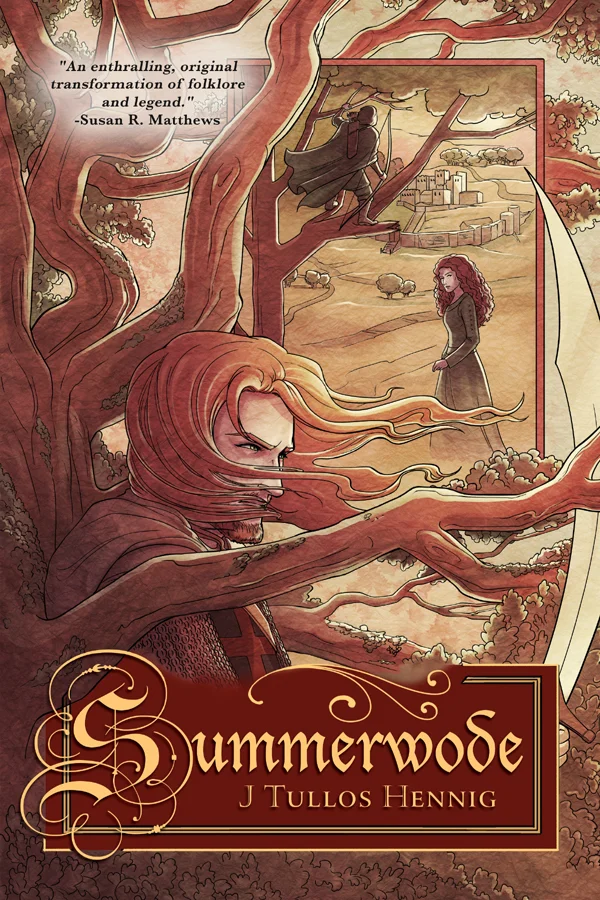
Transforming Old Friends by J Tullos Hennig

Have you noticed the trend? Fairy tales retold. Yet another blockbuster comic remake. Well-loved franchises trotted out, either to success or despair—or both. Book covers featuring the same tropes, the same poses, and the same cover models.

Retellings, always present and always a safe bet, are lately beyond pervasive. Be it book or movie, its seems a requirement: be tied-in, redone, revamped, or jumpstarted from extant material. Forgive my sounding like a crotchety old fart, but there are entirely too many reboots these days.

Now, before you take me to task for a strange—even arsy—statement from an author who’s amidst publishing a series based on the legends of Robin Hood... well, let’s consider the whys. (And I do hope you’ll allow me a teensy pass in the fact that I first wrote ‘my’ Robin over 35 years ago.)

One could argue everything is a reboot; after all, there are only so many plots/ narratives/ what-have-you within the realm of Story. Yet it follows, almost exponentially, (and yes, yours truly had a mathematician friend check me on this because, well, math) how an infinite number of ways exist in which that finite number of plots can be duplicated, mashed-up, and expounded upon. Especially considering that each artist has their own lens through which to consider the infinite.

Which makes it rather incomprehensible that the same ol’-same ol’ keeps getting dragged out and flung about.  Yeah, I know. Sure things are the best of bets...

But are they, really?

Because when you take that risk and that 30-1 longshot comes in, it comes in big. And it’s usually something that everyone rolled their eyes about, and swore would never catch on. Something unique, even in the annals of So Many Plots.

And often the enduring success of such a longshot comes down to two things: respect for the source, and voice.

First, voice. Hidden voices in particular. These can inform the story: the PoV of an extraordinary character, the author’s own distinctive experience, loving and empathetic research; wherever and whatever the source, voice is what can render a story familiar and hum-drum... or startling and unique on an almost cellular level. In particular it’s the marginalised voice that can twist the tail of any trope, make it reveal things ancient and unseen. It can reveal neglected perspectives long untold. Or silenced.

For example:

Why does Cinderella stay in that abusive home? Historically she likely had little choice... but why make it a virtue that she smiles and takes it until some man rescues her? Maybe she’s decides to become an herbalist and specialise in mind-altering substances...

Sherlock Holmes is a character straight from Victorian England... or is he? What if he was in the 21st century and a self-admitted high-functioning sociopath, with mobile phone at his hip and Watson blogging their adventures on social media?

Why does Robin Hood stay in the forest with a bunch of rowdy men, yet swear by the Lady? Perhaps he’s a lover of men, personification of a woodland god, and devotee of an ancient goddess.

(Yes, it’s a fair cop; that last one is my series. ;)  )

And these are only a few examples from Western European legend. There’s also a wealth of underserved but vital cultures and perspectives that could crowd this page to bursting—yet are too often left unheard; dismissed, or painted with a perspective that doesn’t truly reflect their ways or beliefs.

This brings us to respect. When reimagining an old warhorse of a legend, you owe it to Story to not only respect, but love its cultural legacy and its purpose. You have to question whether flipping it over and wringing it inside out is appropriate, and when you do reimagine it, the onus is on you to shape it to the best of your ability into a vital and valuable continuation. Because that Story has a voice, just as you do, and it matters. And trust me, not everyone will agree that you have been respectful even if you think you have. We all have our own voices and our own varied experience... but any time an author flings Story into the wind of readership—particularly a familiar, well-loved one, there are consequences fair and foul.

Much easier—less risky—to just go ahead and rehash that skim-the-surface trope, right?

But perhaps that is also disrespectful. Not only to the power of legend, which often must morph and grow—be heard—or diminish... but also to your own craft.

No one said this was easy. To (very) roughly paraphrase Ursula K. LeGuin, we aren’t selling deodorant.

So. Instead of the same ol’, tired ol’, perhaps we, as readers and writers, need to stop hedging our bets. Go for those long shots: invest in different voices, disturbing voices, support viewpoints and characters foreign to our own perceptions. Walk away from surface-scratchy retellings that just repeat our own inner monologues and present scant motivation for us to think outside our own safe box. We must require—and provide—more rich investment of time and heart-space, more underserved viewpoints, more cultures we perhaps mightn’t easily comprehend. Perhaps one of the best ways to start this conversation is by allowing familiar characters to manoeuvre us unto unfamiliar territory.

And, always, honour old friends whilst allowing them to transform into new ones we didn’t realise we had.

It’s what I’ve done my best to accomplish with the Wode books. And let me put it out there, right now: I would love for you, dear readers and followers of What Is That Book About?, to provide me with some examples of extraordinary re-imaginings. Let’s compare lists.

About the Book

The Summer King has come to the Wode...

Yet to which oath, head or heart, shall he hold?

Once known as the Templar assassin Guy de Gisbourne, dispossessed noble Gamelyn Boundys has come to Sherwood Forest with conflicted oaths. One is of duty: demanding he tame the forest’s druidic secrets and bring them back to his Templar Masters. The other oath is of heat and heart: given to the outlaw Robyn Hood, avatar of the Horned Lord, and the Maiden Marion, embodiment of the Lady Huntress. The three of them—Summerlord, Winter King, and Maiden of the Spring—are bound by yet another promise, that of fate: to wield the covenant of the Shire Wode and the power of the Ceugant, the magical trine of all worlds. In this last, also, is Gamelyn conflicted; spectres of sacrifice and death haunt him.

Uneasy oaths begin a collision course when not only Gamelyn, but Robyn and Marion are summoned to the siege of Nottingham by the Queen. Her promise is that Gamelyn will regain his noble family’s honour of Tickhill, and the outlaws of the Shire Wode will have a royal pardon.

But King Richard has returned to England, and the price of his mercy might well be more than any of them can afford...

About the Author

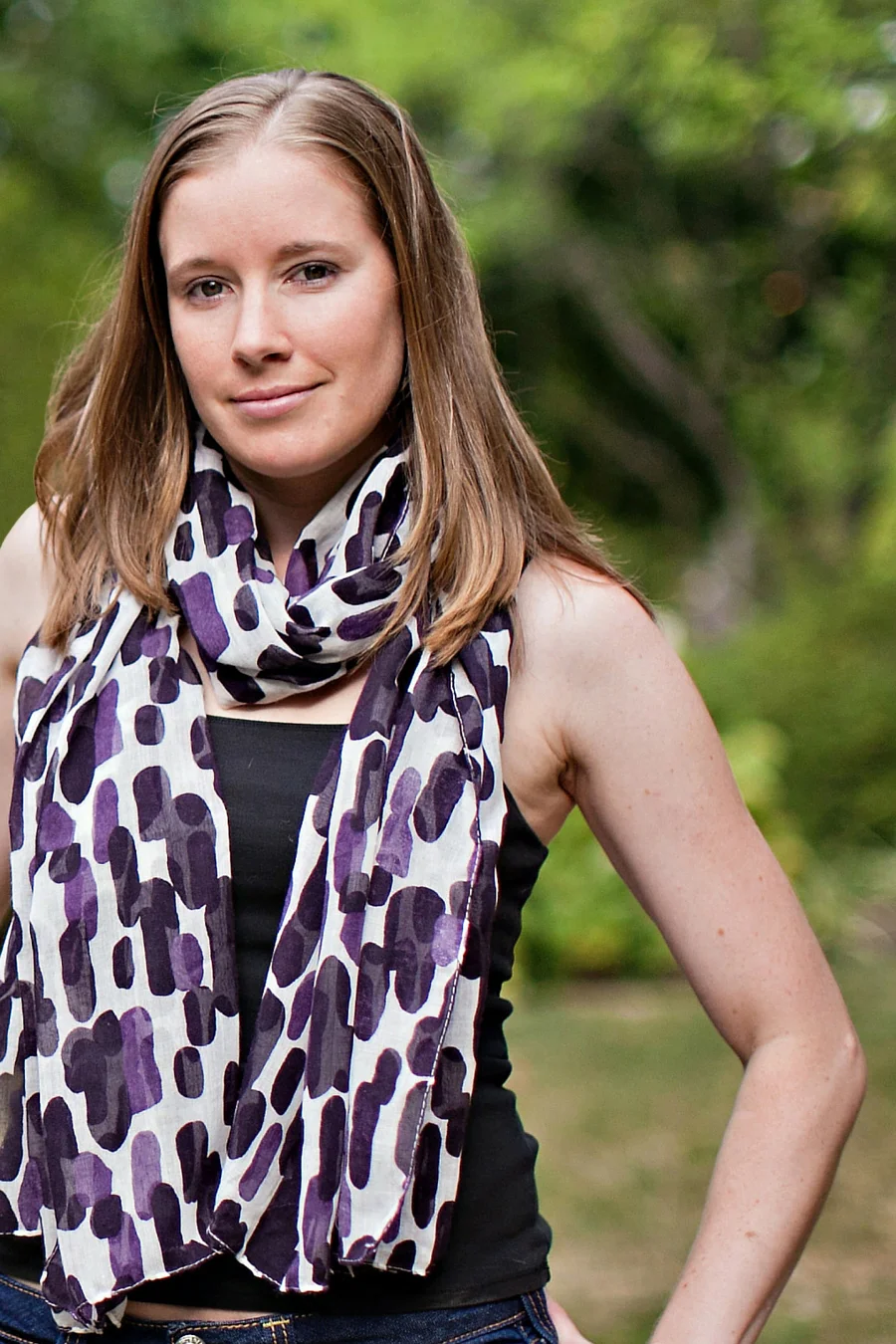
J Tullos Hennig has always possessed inveterate fascination in the myths and histories of other worlds and times. Despite having maintained a few professions in this world—equestrian, dancer, teacher, artist—Jen has never successfully managed to not be a writer. Ever.

Her most recent work is a darkly magical & award-winning historical fantasy series re-imagining the legends of Robin Hood, in which both pagan and queer viewpoints are given respectful voice.

JTH Website Musings blog (You can subscribe to my newsletter at either the Musing blog or main site—you’ll receive the first and earliest notification on all updates and news, plus a gift: several short stories seldom seen in the wild.) Bookbub Goodreads The Wode Facebook Page JTH’s profile on Facebook Twitter: @JTullosHennig

Q&A with Jenni Walsh, Becoming Bonnie

What inspired you to be a writer?

I’ve always loved being creative, which led me to spending ten years as an advertising copywriter. The ad business can be pretty regulated. It’s commonplace for a project to look night and day from where it began, after the client has his/her way with it. Writing a novel was a bit of a creative release, where I could write for myself. Until, of course, my editor entered the process, haha, but we shared a very similar vision for the book.

If you could collaborate with any author past or present, who would it be?

This is really hard. There are many authors who would be amazing, but honestly, I’d love to write a book with my critique partner, Carolyn Menke, at some point in time. She’d probably know what I’m thinking before I think it ☺


If you could have been the original author of any book, what would it have been and why?

Anything written by Ruta Sepetys. Her books ooze emotion.

When people talk about the infamous duo Bonnie & Clyde, we seldom hear much about Bonnie. Your upcoming debut, Becoming Bonnie, tells us the untold story about her. Tell us about it.

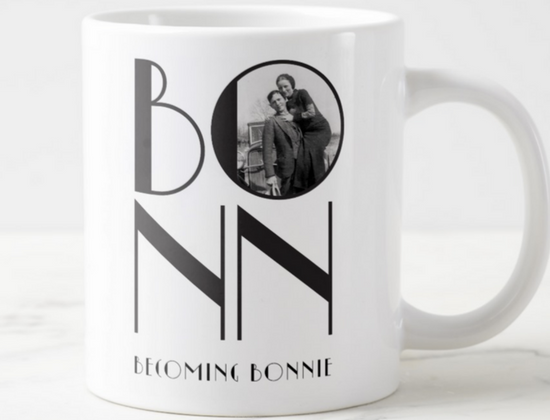
Becoming Bonnie is the story of how Bonnie becomes the Bonnie of Bonnie and Clyde. The novel begins with her as Bonnelyn, a fictional name I dreamed up to depict her as a wholesome, church-going gal. By the novel’s end, she’s Bonnie, half of the infamous Bonnie and Clyde duo.

That transformation is the crux of the story, taking a young girl who was promised the American dream but who was instead given the Great Depression. The circumstances, hurdles, and obstacles she faces all lead to the pinnacle moment where she falls for a convicted felon—and turns to crime herself.

Interestingly enough, this story isn’t the one I first sought to tell. Driven by my desire to write the story of an iconic figure, I first began writing my own version of Bonnie and Clyde’s 1930s crime spree. I quickly put on the brakes, realizing I first needed readers to understand who Bonnie really was. What made her tick? What was her background? Why was she so loyal to Clyde Barrow? So I put what I’d written aside, hoping to one day use it in a sequel, and started over, going back five years to tell Bonnie Parker’s origin story, which also allowed me to drop Bonnie into a 1920s speakeasy in the middle of a foxtrot. Now that was a good time.

It’s always great to find authors that feature strong female characters. Your debut, as well as your upcoming children books, will emphasize that. Is that something intended? If not, how do you feel about the importance of strong female characters represented in a
story?

My forthcoming middle grade nonfiction series, Brave Like Me, will feature women who, at a young age, accomplished daring feats of perseverance and bravery. I’m kicking off the series with two books, one about Bethany Hamilton and the second about Malala Yousafzai. It’s actually because of Becoming Bonnie that I was considered for this series, which was a dream project between my agent and an editor at Scholastic. When they were trying to think of an author who could tackle the project, my name came up because of Bonnie’s biographical (yet fictional) story. I jumped at the chance to depict these strong female characters.

Are you currently working on anything that you can share?

Yes! Though Becoming Bonnie is a complete story, I’m excited to be working on follow-up, Being Bonnie, which picks up where Becoming Bonnie leaves off, focusing heavily on Bonnie and Clyde’s crime spree.

What advice can you give to someone who wants to become a writer?

Read, a lot! Other historical fiction novelists often inspire me.

About Becoming Bonnie:

From debut historical novelist Jenni L. Walsh comes the untold story of how wholesome Bonnelyn Parker became half of the infamous Bonnie and Clyde duo.

he summer of 1927 might be the height of the Roaring Twenties, but Bonnelyn Parker is more likely to belt out a church hymn than sling drinks at an illicit juice joint. She’s a sharp girl with plans to overcome her family's poverty, provide for herself, and maybe someday marry her boyfriend, Roy Thornton. But when Roy springs a proposal on her and financial woes jeopardize her ambitions, Bonnelyn finds salvation in an unlikely place: Dallas's newest speakeasy, Doc's.

Living the life of a moll at night, Bonnie remains a wholesome girl by day, engaged to Roy, attending school and working toward a steady future. When Roy discovers her secret life, and embraces it—perhaps too much, especially when it comes to booze and gambling—Bonnie tries to make the pieces fit. Maybe she can have it all: the American Dream, the husband, and the intoxicating allure of jazz music. What she doesn't know is that her life—like her country—is headed for a crash.

She’s about to meet Clyde Barrow.

Few details are known about Bonnie's life prior to meeting her infamous partner. In Becoming Bonnie, Jenni L. Walsh shows a young woman promised the American dream and given the Great Depression, and offers a compelling account of why she fell so hard for a convicted felon—and turned to crime herself.

Buy on Amazon | Barnes and Noble

About the Author

Jenni L. Walsh spent her early years chasing around cats, dogs, and chickens in Philadelphia's countryside, before dividing time between a soccer field and a classroom at Villanova University. She put her marketing degree to good use as an advertising copywriter, zip-code hopping with her husband to DC, NYC, NJ, and not surprisingly, back to Philly. There, Jenni's passion for words continued, adding author to her resume. She now balances her laptop with a kid on each hip, and a four-legged child at her feet. Becoming Bonnie is her first novel.

Please learn more about Jenni and her books at jennilwalsh.com.

Connect: Twitter | Facebook | Goodreads