Top 10 Dream Vacation Spots by J. Keller Ford

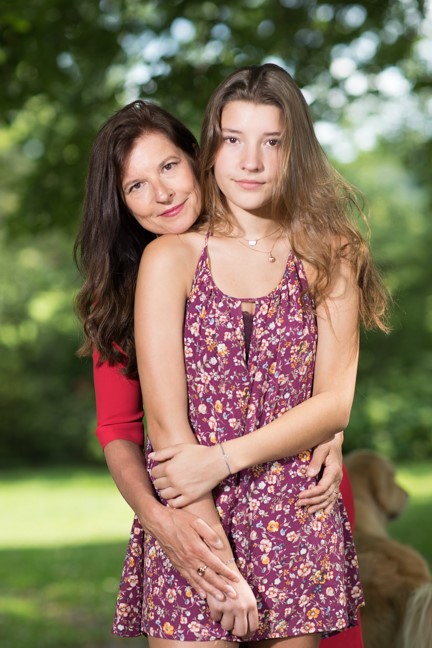
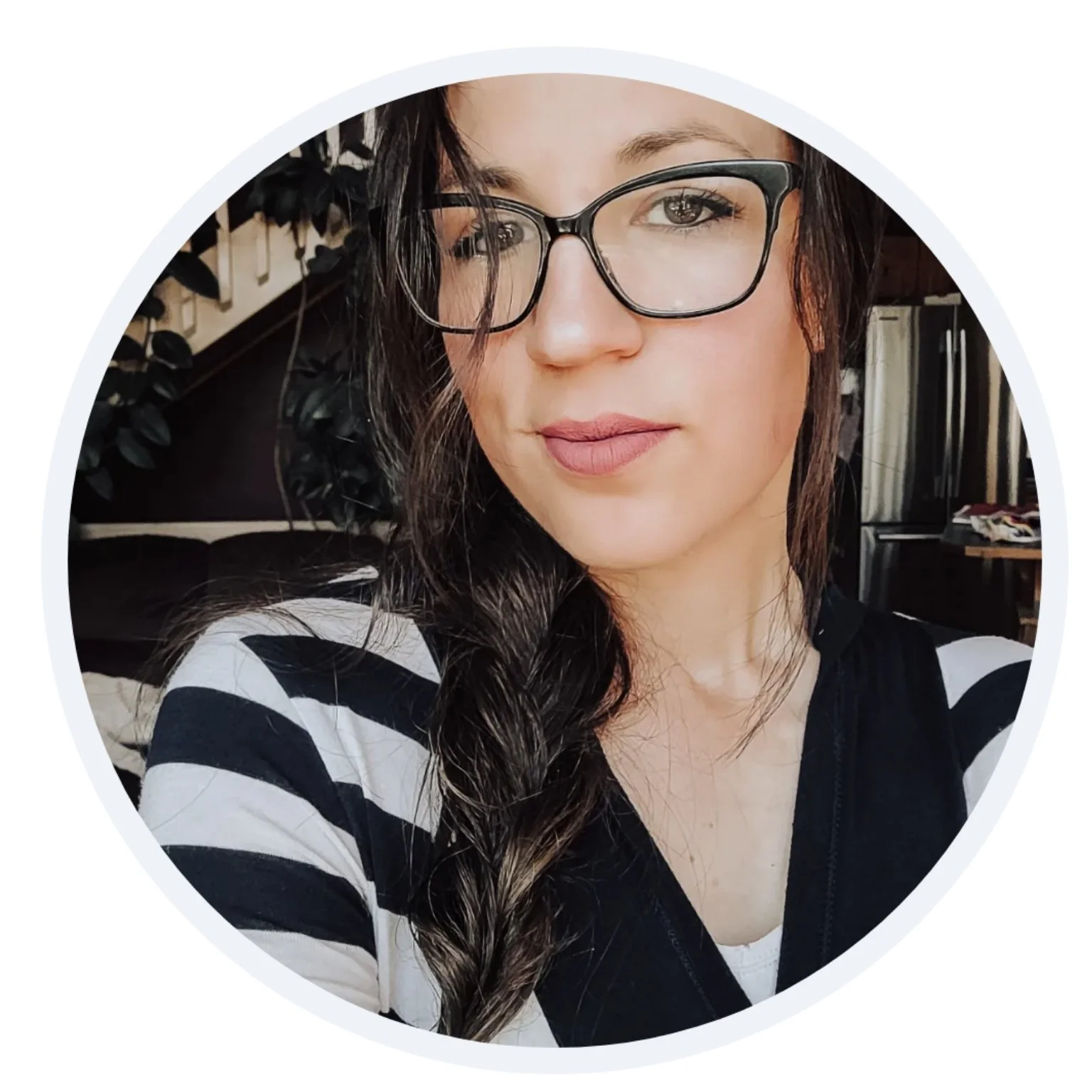
J. Keller Ford.jpg

I love to travel. There are so many places in the world I want to see, but whenever anyone asks me what I’d like to see most, these seem to top my list every time, especially #1.  Of course, if money weren’t an issue, pack me up with my pups and my hubby and set me on a cruise around the world with stops in every port possible. But, seeing as I currently live on a very tight budget, I’ll settle for these glorious getaways. Who wants to go with me?  Pack your suitcases and let’s go!

  1. New England in the Fall (who doesn’t love seeing the leaves change colors?)

  2. The Grand Canyon (photographs can’t do it justice)

  3. Ireland (all of it)

  4. Scotland (all of it)

  5. New Zealand (I want to stay in a hobbit house soooo bad!!)

  6. Alaska Cruise

  7. Italy (all of it)

  8. Bora Bora

  9. Amsterdam

  10. London

Q&A with Alex Lidell, Air and Ash

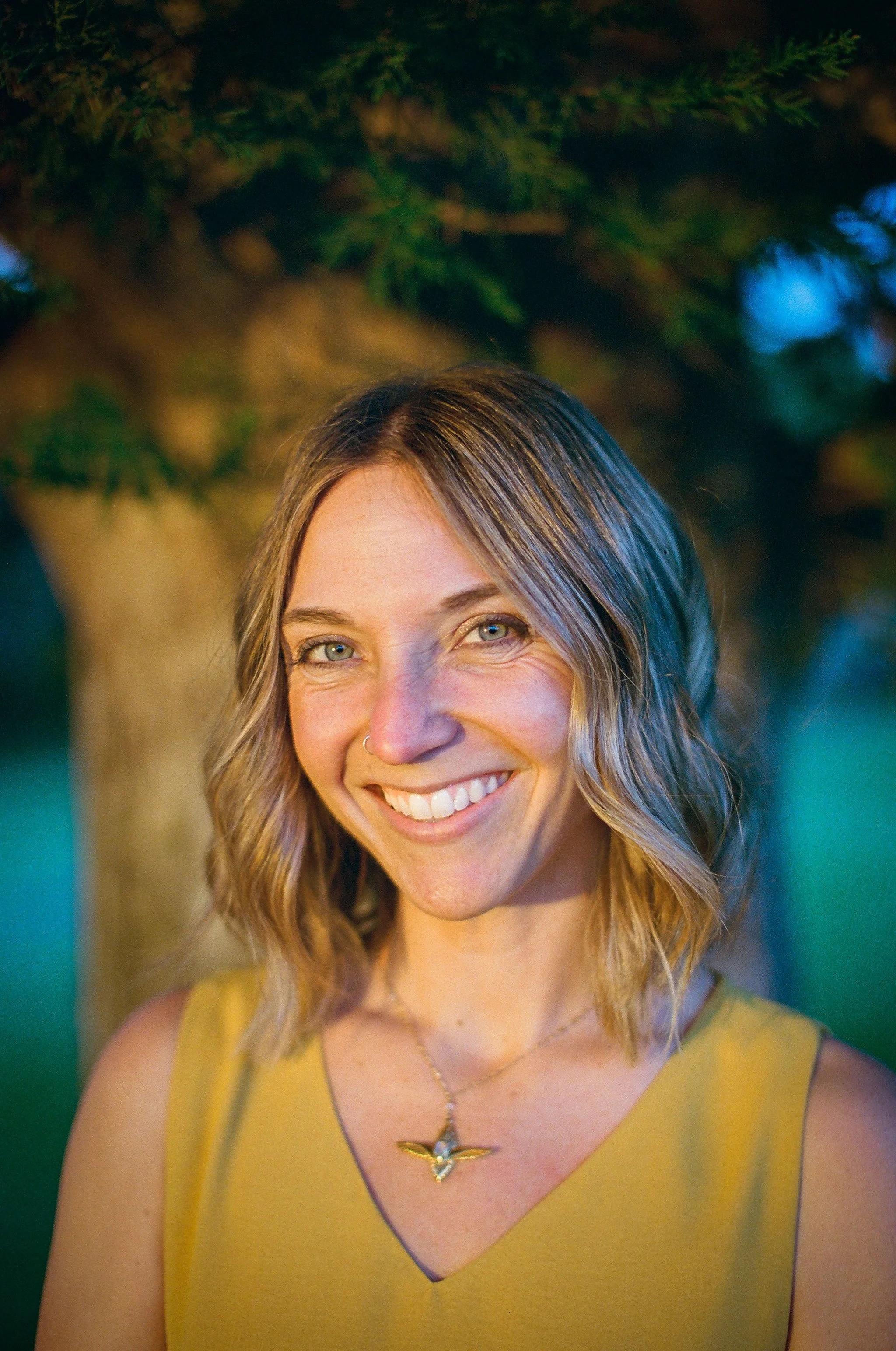
Author Headshot (1).jpg

Was a possible audiobook recording something you were conscious of while writing? 

At the time I was writing AIR AND ASH, no.  But now that I am on the third book in the series, having heard Kaitlin narrate AIR AND ASH, I do hear the characters speaking in her voice as I write.

How did you select your narrator?

I listed to sample reels of many narrators and then invited Kaitlin to audition.  I really like the range of emotions and undertones she has within each character’s voice.

How closely did you work with your narrator before and during the recording process? Did you give them any pronunciation tips or special insight into the characters? 

Very closely!  I was really shy about sending her an audio file of my voice pronouncing some words, but it worked :)  We also have a shared google doc with character descriptions and we spent some time on the phone “auditioning” character voices.  It was one of my favorite parts of the process and the reason I SO love working with Kaitlin.

Are you an audiobook listener? What about the audiobook format appeals to you? 

I’m a HUGE listener.  I fell in love with audiobooks listening to Master and Commander, where the narrator helped me understand some of the technical seamanship. My favorite narrator (aside from Kaitlin of course!) is Jennifer Ikeda

What do you say to those who view listening to audiobooks as “cheating” or as inferior to “real reading”?

I say Safety First! When I get into a book, I can’t pull away from it - so I end up walking down the street, reading my phone (yeah, i’m one of those horrible people).  With audiobooks I can walk and listen!

In your opinion, what are the pros and cons of writing a stand-alone novel vs. writing a series? 

I think YA fantasy fans are often comfortable with a series - I know I am - and expect it.  Other genres have different fan bases.  From an author perspective, a series lets me tell more complex overall stories, but makes logistics difficult.  IE in book one, the distance between A and B might not matter so I say “umm, half a day by horse, sure, why not”.  And then in book 3 it becomes vitally important that it take a WEEK to get from A to B,... and I have to somehow deal :)

Do you have any tips for authors going through the process of turning their books into audiobooks?

Talk to your narrator and make sure you click as professionals. I really lucked out with Kaitlin because of her excitement level and flexibility - but some people prefer to have more “distance”.  It was a match with Kaitlin herself, not just her voice, that finally closed the deal for me

What’s next for you?

WAR AND WIND (Tides 2) comes out in audio in December.  SEA AND SAND (Tides 3) comes out in print/ebook in January!

Q&A with Pia de Jong, author of Saving Charlotte

Photo Credit: Chris Lane

Photo Credit: Chris Lane

When your daughter was just two weeks old, she was diagnosed with a rare form of leukemia. You rejected all suggestions of any treatment, of which the most common was chemotherapy, and instead made the decision to wait and see. Was this approach consistent with your personality up until that point or did you surprise yourself?

I did surprise myself, especially because I was so certain about what to do. There was no doubt in my mind, no negotiating, no second thoughts. I just knew I had to have her home with me. I had learned to trust my intuition when I became a mother, though. Like all new mothers, I was bombarded with rules: when to wean your child, where and how to sleep, when to introduce food, etc. I had decided to follow my instincts regarding my kids. But then I often discussed those decisions and doubts with friends. This was different.

What material did you draw on when writing Saving Charlotte? Did you keep a journal or write notes during that year at home with Charlotte?

I wrote down notes, whenever I could, although not with the intent to write a book, since I was not a writer then. They were to help me remember her as she was then. Some sentences I wrote:
The hairs on her neck are damp. They smell like raisins.
Her smile flutters like a butterfly’s wings just before taking off.
A dove on the windowsill scared me with his staring eyes when I woke up. Then he tried to convince me he meant well.
I want to jump in the blue lakes on her skin and emerge without being scared.
Woke up frightened. At two in the afternoon, when walking home, Jurriaan found a caterpillar. It fit perfectly in his hand.

You quit your job when Charlotte was diagnosed. Once she recovered, what was it like to reenter the world and what changes did you see in yourself afterward?

I took me quite some time to reenter the world. I had grown accustomed to being in my cocoon, my small world where all that mattered were details. Outside, the rest of the world seemed unfamiliar. Too big to comprehend. I had no interest in other people or things. It took me a long while to venture outside. I had changed from an extrovert to an introvert.

How did Charlotte’s diagnosis impact and change your family, and how do you think it’s shaped your current relationship with her?

Our family became even closer than we already were. I had become a storyteller in that year. I made up one after another, and my children loved it. They still remember them. When in 2012 we left the Netherlands to live in the USA, we relived that closeness. How we were all in uncharted waters, and had to rely on each other. Charlotte has always been very close and trusting of me. She still is.
 
What did you learn about the Dutch medical system throughout Charlotte’s illness? How do you think your experience would have been different if it had happened in the United States?

momanddaughteryellowsling.jpeg.jpg

I feel very fortunate that my doctor supported our decision not to treat Charlotte. He realized that giving chemotherapy to her could have unintended consequences that were perhaps worse than the disease. The result is that we felt relieved of a burden of pressure. Some parents want to do everything they can: see every doctor in the field, raise money for experimental drugs. It is difficult to say how different my experience would have been if we lived in the United States. Doctors in both countries have established protocols for patients like Charlotte. They try to postpone treatment. Her oncologist agreed with and accepted our decision to not do anything at all.
 

What advice do you have for parents who find that they need to become health advocates for their children?

It takes a village to help a sick child. Try to be the mayor of that village. Conduct the orchestra of physicians, nurses, psychologists, etc. Take charge. No one else will do it the way you will.

Why You Need Integrity to Write Children’s Literature and Why Julie’s Cat Is Evil by Galia Oz

Galia Oz photo by Eric Sultan-1-7764.jpg

Creating a living and breathing story and building a complete, convincing, three-dimensional world around it; portraying rounded and thought-out characters; writing without it seeming like you are trying too hard; writing a story that seems to have always existed but never put to paper. 

How does one do that? My first answer: I have no idea. I can recognize beauty when I see it, but I don’t believe in a magic formula. I only know how to try to write well. My second answer: You need to have talent to write well, but that’s not enough; you must have integrity.

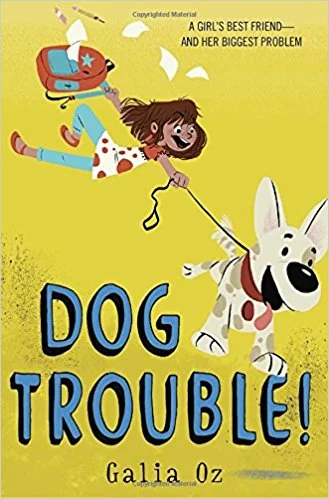
About ten years ago, I published a short children’s book in Israel about a group of kids, written entirely from the perspective of Julie, the owner of Shakshuka, a little dog with big adventures. The book quickly became a series that has sold 150,000 copies thus far, and has been translated and published in France, Spain and Brazil. The first three books in the series were recently published in the United States as one book, under the title Dog Trouble.

 I'm not sure I was able to do half of the things I mentioned in the first paragraph. If only... At any rate, I hope I write with integrity. In other words, the protagonists of my books are not perfect in any way: Julie is jealous of the new popular girl who recently arrived at her school; insecure Effie is jealous of almost everybody; cynical Brody mocks Adam's stutter; Danny is a bit violent at first, although the conflict between him and the other children takes on more a sophisticated form later in the series; and even the cat adopted by Julie’s is described as ‘a really evil cat.’

And yet Julie and her friends are brimming with joie de vivre and drive, and a sense of confidence that allows them to be playful and inventive and imaginative. They thrive in an imperfect world with evil cats – which means they can come to terms with problems that don’t necessarily have an immediate solution.

True, there is also hostility. Many times, hostility exists alongside with love. Anyone who thinks it is possible to raise children in an environment free of hostility or conflict is simply lying to themselves. You cannot spare children pain; you can only spare them literary representations of it.

Here, I return to the second answer I gave to the question: Integrity. Integrity is vital not only for a writer who hopes to establish a three-dimensional reality in his writing but also for the children reading it. Otherwise, in the name of political correctness, children are told that someone who behaves well will always be rewarded, that the wicked are always punished, and that the rejected will without a doubt have some sort of curative experience. 
There is no limit to the manipulative practices of well-intentioned adults in children's literature. There is an underlying desire to “improve” the child, to socialize him, to impart a life lesson, to hide and protect him from the real world.

The point is children have an inbuilt lie detector. When you try to sell them a sermon dressed as a story, they shut down emotionally. They may enjoy the plot, but the moral will pass right over their heads.

In short, children understand nuance. They are able to empathize with complex characters rather than with saintly, stock characters. Simplistic messages and manipulation are an insult to their intelligence. When children are exposed to quality literature, they are likely to grow up to read quality literature. And most importantly: beauty has value in and of itself, and children, just like everyone else, have the right to enjoy it. Just as they have the right to read of evil cats without someone jumping to their defense.

About the Book

Dog Trouble!.jpg

Readers who have graduated from Junie B. Jones and Ivy & Bean will fall head over heels for feisty Julie and her troublesome new dog. 
 
Julie has only had her dog for two weeks, but she is already causing all sorts of problems. For starters, she is missing! Julie suspects the school bully Danny must be behind it. But it will take some detective work, the help of Julie’s friends, and maybe even her munchkin twin brothers to bring her new pet home.

Wonderfully sassy and endlessly entertaining, the escapades of Julie and her dog are just beginning!

Julie’s adventures have sold across the globe and been translated into five languages. Popular filmmaker and children’s author Galia Oz effortlessly captures the love of a girl and her dog.

Buy on Amazon | Barnes and Noble


About Galia

Galia Oz was born in Kibbutz Hulda, Israel, in 1964. She studied film and Television in Tel Aviv University 1984-87.

Her award winning series of 5 books titled DOG TROUBLE was published in France, Spain and Brazil – and recently in the US by CROWN BOOKS Random House. The series is a steady seller in Israel for over 10 years (selling over 150,000 copies).

Oz has directed several documentaries, all screened in international film festivals, and in Israeli leading television channels.

Over the years, Galia Oz has been meeting thousands of readers in Israeli elementary schools, and taught creative writing and classic children's literature to kids in public libraries.

Galia Oz is married and has two kids, a dog and a cat, and they all live in Ramat Hasharon, just outside Tel-Aviv.

New Species in The Dragonrider Legacy – What new creatures can we expect? by Nicole Conway

Nicole-Conway-298x300.jpg

Because a significant portion of this series takes place in Luntharda, there will be a LOT of new creatures and beasts introduced, as well as reappearances of some old favorites from the first. Here’s a quick look at some of what’s in store for readers just in SAVAGE …

FAUNDRA – We saw a few glimpses of them in The Dragonrider Chronicles, but they will play a much more significant role in this series. Since the elves are now at peace with their jungle home again, they are utilizing faundra once again. They use these majestic, elk-like creatures as mounts, as well as farming them for their meat. In size, they are taller than a horse but with a much shorter body length. The males have a set of long, regal white horns that are often worn by gray elf royalty.

SNAGWOLVES – The “scrunt” from Lady in the Water was such an impactful villain to me, and he was part of the inspiration behind these jackal-like predators from Luntharda. They have leafy-looking pelts that mimic the jungle floor so they can stalk their prey. Usually hunting in large packs of around twenty, they use their numbers to deter larger predators from attacking them. Their greatest weapons are their toothy jaws, which clamp down much like an alligator’s with incredible force. Once bitten, it’s nearly impossible to escape their grip.

SURTEK – A lone predator of Luntharda, this monster lives primarily in the trees and hunts by night. Despite its size, the surtek can move with incredible speed and agility – which it uses to stalk its prey of choice, shrikes. Gray elves fear this creature for its stealth, speed, and unsettling ability to electrocute its prey using a pair of bony, protruding pincers around its mouth. The pincers also have inward facing teeth that are angled inward so that the more a prey object struggles, the more stuck it becomes. Definitely not something you’d want to stumble across on your own!

And of course, DRAGONS – Can’t leave them out, can I? Once again, we will see lots from the dragons that call the sea cliffs of Maldobar their natural home. In size, they are typically twelve to thirteen feet tall. The dominant male, called a king drake, may grow to twenty feet. In the wild, they primarily eat fish and small game animals. Newly hatched dragons weight about fifteen pounds and remain at the nest to be fed and guarded by their mother. They remain close to her even after they learn to fly, which occurs about 3 months after they hatch. Female hatchlings will generally remain with the mothers longer than the males, who strike out on their own to compete for a social standing in their flock. They come in a wide variety of colors and temperaments, although the dragonriders prefer bold colors and patterns and aggressive, stoic personalities for their mounts!
Q&A with Lilly Atlas, Acer

profile.jpeg

Tell us about the process of turning your book into an audiobook.

The first time was a bit daunting because I didn’t have a clue what I was doing, what the experience would be like, or if turning my book into an audiobook was a good financial decision. After some research, it looked like ACX would be the best option. I listed the first book in the series, Striker, on ACX and received a bunch of interviews. Noah was my clear favorite, and thankfully he’s a pro at this and was very patient and helpful with a total newbie. Now that we’re on to the fourth and fifth books, the process is easy and we have a great working relationship.

How did you select your narrator?

I chose Noah for the first book through ACX’s audition process. Striker received quite a few auditions and Noah’s was the clear favorite. After working with him and having a fantastic experience, I decided to use him and his partner Erin for the rest of the series. Having the duet narration really takes the storytelling to another level.

How closely did you work with your narrator before and during the recording process? Did you give them any pronunciation tips or special insight into the characters?

Before each book, I provide basic character sketches for any new characters. I highlight the way the character looks, attitudes, accents, and anything I think will help them bring the character to life. So far, Erin and Noah have done an fantastic job of making my visions a reality. Throughout recording, they will upload a chunk of chapters at a time to ACX and I’ll review and approve them.

Were there any real life inspirations behind your writing?

The entire series takes place in the desert in Arizona. The town is fictional, but descriptions of the desert are based on real experiences. My husband is in the Navy and we were stationed with the Marines in Twentynine Palms CA for a few years. It doesn’t get much more desert than Twentynine Palms, at least not here in the US.

Is there a particular part of this story that you feel is more resonating in the audiobook performance than in the book format?

There are a few parts of the story that are quite emotionally charged. Erin and Noah do an amazing job of capturing the range of emotions the characters go through. That’s one of the things I love about audiobooks. You can really feel the story coming to life and experience it in a way that is very different from reading alone.

What gets you out of a writing slump? What about a reading slump?

Thankfully, I have yet to experience a true writing slump. There are times when I struggle through a scene or chapter. Either I’m not happy with the way it’s moving from my head to the computer, or I’m a bit stuck with what I want to say. I’ve found that as long as I write something, even if it ends up being complete junk, it helps me push through. Later, when my mind is fresh and I’ve stepped way from it, I come back and edit the scene until I’m satisfied.

In your opinion, what are the pros and cons of writing a stand-alone novel vs. writing a series?

So far I’ve only written in a series. I recently plotted out a book that I thought was going to be a stand alone, but as I developed the secondary characters, ideas began flowing for their stories as well. Guess that means it’s going to end up being a series instead of a stand alone!

What bits of advice would you give to aspiring authors?

Hire a professional editor and really try to learn from them. Since I started this process, I’ve learned so much about writing, editing, marketing, business management, publishing, and the list goes on. What’s been extremely valuable, is all the lessons, tips, and tricks I’ve learned from my editors. I try to internalize everything they tell me and use it in subsequent books. It can be a bit daunting at first, especially the part where you sometimes have to put away your pride and take some criticism you may not agree with, but it’s a worthwhile learning experience every time.

Do you have any tips for authors going through the process of turning their books into audiobooks?

Spend some time going through the auditions. You want to think about pacing, accent, do you like the way they do male and female parts if it’s just one narrator. There are a number of things to take into account. But don’t go crazy! For me, it was really a gut feeling about who I thought would portray my characters the best. Also, don’t be intimidated by ACX. Once you have the process under your belt once, it’s much easier. There is a book called the Audiobook Book that really helps walk you through the process of audiobook creation. It’s very helpful.

What’s next for you?

In terms of audiobooks, Erin and Noah have the next two books in the series, Hook and Lucky, in their queue, so they are forthcoming. Right now, I’m writing the last book in the No Prisoners MC series. Then, it’s on to a new series!