Q&A with Jess Montgomery, author of The Widows

A1I4wxsNIYL._US230_.jpg

How did you find the idea for THE WIDOWS?

As I was planning a trip to visit our younger daughter for her birthday weekend at Ohio University, in Athens County, Ohio, I ran across a tourism website for Vinton County (just southwest of Athens County), which featured Maude Collins, Ohio’s true first female sheriff in 1925 after her husband was killed in the line of duty while writing a speeding ticket. Inspired by Maude’s story, my imagination sparked Lily Ross. In her case, her husband’s tragic death is not so clear cut. Lily’s sheriff husband Daniel is murdered in the line of duty.


THE WIDOWS is centered on Lily Ross’s quest to find out who murdered her husband, but is told from the point of view of two narrators. Can you tell us more about that?

At first, I wrote only from Lily’s point of view. But she has a specific view of her husband, Daniel, and is missing (at first) vital information that helps her eventually discover not only his murderer but also a more complete view of who he is.

So, I experimented with writing from the murderer’s point of view—which I quickly abandoned, though it gave me insight into the murderer’s motive, so the effort wasn’t wasted. Then I tried writing from Daniel’s point of view—a life-flashing-before-his-eyes approach. That felt forced, but again, the effort wasn’t wasted as I grew to understand Daniel—his motives, personality, faults, point of view.

From those experimental bits of writing (probably 150 pages in all!), another character emerged—Marvena Whitcomb, Daniel’s childhood friend. She is a foil to, yet also an unlikely ally for, Lily. Marvena is a widow whose common law husband died in a mining accident, and a unionizer.

THE WIDOWS is told from the points of view of these two women, who together solve the mystery of who killed Daniel.


THE WIDOWS is set in 1920s Appalachia. What did you like about this setting, in terms of both place and time, and what were some of the positives as well as challenges in creating this backdrop?

The inspiration for THE WIDOWS required the time period and setting. Though it is still relatively rare for women to work as sheriffs or as officers in a sheriff’s department, it was startlingly unusual in the 1920s. My guess is that it was also expedient and practical in the real-life situation—Maude had experience as her husband’s jail matron and knew how the system worked, and was already living in the sheriff’s house. In a bigger county, with multiple full-time deputy officers, one of the deputies would have most likely filled in for the sheriff. The remoteness and small population, and the small office, with only a sheriff, a jail matron, and as-needed part-time deputies, contributed to Maude (and Lily) being asked to serve as sheriff.

I do think it is interesting to note, though, that in real life, Maude ran as sheriff in her own right in 1926—and won in a landslide!

My family of origin is from Appalachia, albeit a different part of the region, going back as many generations as can be accounted for. So, I delighted in tapping into those roots to weave in threads of my heritage and the rich Appalachian culture—dialect, foods, crafts, attitudes, music.

I also very much liked writing about a setting that “1920s” usually doesn’t bring to mind. So often, we think of glitz, glam, sparkly cities, and flapper girls as the first images that come to mind about the 1920s. All of that is great—but what about rural life in the 1920s? I was fascinated to explore that.

However, that made research a challenge—particularly about day-to-day life in rural areas of the 1920s. The details would very much depend on which part of the country a person was living in at the time.

The positive aspect is that the region of Appalachia in which THE WIDOWS is set has a rich history that pulls in so many issues that challenged (and in some cases, still challenges) the larger culture--women’s rights, workers’ rights in conflict with management, coal mining, unionization, and moonshining—to name just a few. I’m delighted that I have a wealth of material to draw on for future titles in the Kinship Mystery Series!


One of the minor characters—Marvena’s young daughter Frankie—loves to sing, and you include a few scenes in which her singing is featured. Can you tell us more about that?

I grew up hearing, learning and singing Appalachian ballads, which often center around all sorts of drama—love won and lost, tragedies, and yes, murder. So including a ballad is part of my homage to that aspect of my inspiration for THE WIDOWS.

I also grew up with many old-time gospel songs. My favorite—mournful as it is—is “Precious Memories.” Such songs often give voice to grief in difficult times when it would otherwise be hard to express those emotions. It was realistic to include a few such songs, and also showed emotions of the community at large as the drama unfolded.


The Kinship Tree is an unusual spot in THE WIDOWS—a conjoined tree of three species, alongside the Kinship River. Why did you include this spot in the novel?

Conjoined trees are rare—especially of three species. I wanted to include such a tree, both for the symbolism of fates and lives intertwined, and because such a rare tree adds a note of mystery to the entire setting and world of THE WIDOWS.


Anything else you’d like to add?

Thank you for having me! I hope readers will enjoy THE WIDOWS—the journey that Lily and Marvena take together to both solving the mystery of Daniel’s death and coming to terms with their relationship and community. I also hope book groups will enjoy THE WIDOWS. I’m grateful that my publisher, Minotaur Books, developed a set of readers’ group/book club questions, which I’ve linked to on my website, www.jessmontgomeryauthor.com
Q&A with Erin McDermott

"When did you first begin writing?"

  I began writing in 3rd grade while watching my brother's Little League games. I would just sit in a corner and write. The books I wrote were inspired by "Little House on the Prairie," by Laura Ingalls Wilder. I would sit and write about my life in the houses I lived in, just as she wrote about her life in her diaries.

"When did you decide to first publish a book?"

  I always loved writing, but the idea of publishing a book seemed like an impossible dream. I never thought I'd finish a book, never mind actually publish something. It wasn't until I was working a job that I really didn't enjoy that I decided to set to my dreams and complete a book. Then my first book was born, Captive Rebel.

What inspired you to write Captive Rebel?

   Actually, I had a dream. It was a vivid dream and I needed to get it down on paper. In one night I wrote 10,000 words. Then, I didn't look at that story again. Not until after my job in New York City when I finally decided to begin pursuing my dreams.

What advice would you give to those who are trying to write a book?

   I once read somewhere that writing is like building a sand castle. The first draft is you filling a sandbox with, well, sand! It's messy, it's unstructured, but it's something to work with. Knowing the first draft is going to be sloppy is the only way to finish the book. Once you finish a book your goal seems more realistic and the edits will come on easy. The edits are you building the sand castle in that scenario, by the way.

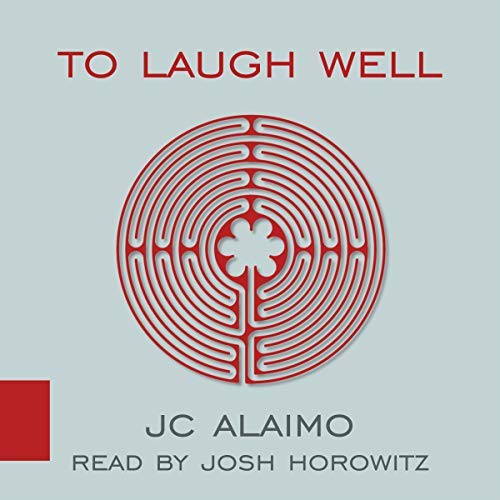
Q&A with JC Alaimo, To Laugh Well

How did you select your narrator?

I had a specific sound in mind for this book, so I combed through a number of narrator samples before coming across Josh’s. It was perfect, so I reached out to him once I posted the book on ACX and asked him to audition.

Did you give them any pronunciation tips or special insight into the characters?

I tried to give him as much background information as possible - where the characters were from, what kind of personality they revealed throughout the course of the book. If the book made reference to an accent, I wanted to be sure he knew it up front.

How do you manage to avoid burn-out? What do you do to maintain your enthusiasm for writing?

I came up with the general arc for this book after writing a short story with Alex and Nick as characters years ago. But I didn’t start writing the novel until much later. I kept writing short stories and character sketches until I felt confident enough to revisit the idea of the book. By the time I felt ready for it, so much had been built-up that the story seemed to tell itself. It had enough of a life of its own that I never experienced burn-out. I committed to writing just a small bit every day, and the story itself drove the process.

Is there a particular part of this story that you feel is more resonating in the audiobook performance than in the book format?

There’s several parts where this seems true, and I think that’s really due to the excellence of Josh’s performance. The protagonist, Alex, generally resists emotion, positive or negative. As a result, moments of profound suffering are displayed in brief sentences. I think if you’re reading the book at a quick pace, you might miss these moments. But if you’re listening to Josh’s narration, I think you get the significance of these bits, because his voice delivers the weight of them.

Were there any real life inspirations behind your writing?

This question has come up quite a bit, I think because it’s a work of realistic fiction. There were absolutely real life inspirations, but it’s not an autobiographical story. It’s an aggregate of the experiences I’ve had with college life. Whether those experiences were my own, those I’d witnessed, or born from imagination, I think, ends up being somewhat irrelevant. In the end, I tried to write it in the most authentic way I could, and my hope is that it hit on some bit of truth.

What bits of advice would you give to aspiring authors?

I think it’s important to write everyday, but it’s also important not to write a book for the sole purpose of publishing a book. My advice is write the small things, whether it’s a story or a moment or a character description, and give the book a go once it presents itself.

Guest Post: Kirsten Fullmer, The Hometown Series

Kirsten.jpg

I may live and work in a forty-foot trailer, referred to as an RV, but I don’t consider my home a recreational vehicle just because it’s self-contained, and has wheels. My home is spectacularly well thought out, cozy, and complete with everything we need. (washer/dryer, fireplace, even a dishwasher!) So what does my house have to do with my writing? Everything! When I conceptualized Smithville, the small-town setting for the Hometown Series, I didn’t realize that I was creating a hometown for myself.

My husband, Steve, and I, travel for his job with our little dog, Bingo. We usually live in one place for three to six months, then hitch back up and head to the next job. Even though Steve has a job waiting when we get there, the moves are sometimes stressful, but always interesting. I have to put aside my work, pack up all my do-dads, crafts projects, dishes, and plants. We maneuver our home through storms, narrow mountain roads, lost RV park reservations, and traffic. Steve has to start over with a new crew on a different site. Sometimes it seems that only Bingo truly enjoys all aspects of the journey. We do get to meet a lot of great traveling folks, as well as weekend campers, and we see loads of beautiful countryside. Sometimes we even manage to slip a stay on the beach into a move.

I do miss having my own yard and garden, friends nearby, and of course I wish my kids and grandkids were close enough to pop in for Sunday dinner. I miss knowing for sure which way is east. (Am I the only map loving person who is bothered that the GPS is upside down half the time?) To be honest, I even miss running into someone I know at Wal-Mart when I look a mess. But I love being with my husband, and I enjoy meeting new people and seeing new places, so it works out. I even wrote a stand alone novel based on my husband’s work and the lifestyle we lead!

I grew up in a small town, number six of eight children, and I’d describe myself as caring but opinionated, self-sufficient, and very attached to my husband. Maybe that’s because when we travel, we depend on each other. I’ve been writing full time for five years and I’m hooked. My stories take time and effort to mold and shape, but the characters are my companions, my traveling friends. If that means I’m wacko or quirky, all the better! I collect input for my books from my husband and grown kids. I discuss story lines with them, and ask them to read and reread my drafts, helping me create characters and situations that feel real, and that are entertaining. I couldn’t do it without them.

I had written three of the books in the Hometown Series before it occurred to me that, in Smithville, I had created a place for my heart to live. Smithville is filled with people going about their daily lives, dealing with their personal issues, irrational fears, and hard-won accomplishments. They can be silly, flustered, selfish and unaware, as well as resilient and clever, that’s what makes it feel real. It’s a place I’d like to call home.

In book one of the Hometown Series, Tara, who grew up in Smithville, is working to overcome childhood trauma. She learns to loosen up and overcome her control freak nature. (I may, or may not struggle with this, haha) Her loving grandmother, Winnie, is partly my own mother and bits of both of my grandmothers. In book two, Julia comes to Smithville expecting to hide away after a debilitating illness, but colorful characters like Becky and Bobby draw her out and build her confidence. This one was written from the heart after I spent a few rough years healing from my own illness. In book three Lizzie moves to Smithville to live out the dream of owning her own alpaca farm, as well as escape her overbearing mother. (I do love alpacas!) Through friendship, laughter, and Smithville craziness, Lizzie finds illumination where she least expects it. In book four (a Holiday romance) Gloria struggles to overcome her past reputation, one that small towns don’t easily forget, but her kindness hasn’t gone unnoticed. (If you’ve ever had everyone in town know your business, you understand!) And in book five, the one I’m currently writing, Katherine returns to Smithville, after years away, to open a vintage RV glamping park, and is forced to face her first love, as well as her lost naiveté. (I have no idea where the glamping idea came from!) Of course my leading ladies fall for an imperfectly delicious man along the way. I suppose that each of these women, their friendships, and their healing processes, are a part of me looking for resolution to my own upsets and disappointments, in a place surrounded by camaraderie and fun.

I hope you will join me in Smithville, and get to know and love the people there like I do. Bingo and I will be waiting for you in the fifth-wheel parked just outside of town.

Q&A with Snowball

cover.png
cover1.png

Let's talk about the title of your book. I'll say quite provocative but when you turn the page, there is a story that deserves to be heard. There's no wrong answer to this question but curiosity. Why'd you name it that?

The title reflects two things.  For a number of years, I thought that was my name.  They were words that were often spoken by staff in regards to children in care.  They would precede much of what they had to say to myself and others, and were reflective of the complete contempt that they had for us.  There were no niceties involved in the way we were treated, and the use of expletives, alongside the casual violence, was used to drive their messages home.  Secondly, it is just a means of articulating the feeling that came from many of the encounters that I describe. In many ways it minimizes the impacts through humor, but there comes a time and place where maybe that approach is pertinent on a personal level.  I personally quite like the title. I think it is challenging in many ways, because it potentially offends, but also amuses. However, if the title offends and the contents don't, then maybe people need to be asking themselves why, because the title is the least of the issues when you delve into the content.


Your book deals with personal experiences with the childcare system. What compelled you to share your story?

The issue for me was one of addressing the sometime judgmental attitudes that pervade in society, in relation to care experienced children and adults.  We are still, in my opinion, viewed as some sort of nefarious sub-culture, that society should somehow, for its own safety, be extremely cautious of. We are not.  We are normal, educated, productive people. We are as much part of society as those brought up in traditional family settings, whatever that is, and we should not be expected to justify ourselves, or explain away our upbringings, in order to satisfy the curious or the intimidated.  We did not fail society. Society failed us. Society should be begging for our forgiveness, not the other way around.


We often hear about stories of abuse, neglect and alike. Who's to blame? What are your thoughts on a solution?

The question of who is to blame is not a complex one, but is perhaps best answered in reverse.  The people who are not to blame are the victims, and victim blaming is a sign of complicity in my opinion.  Perpetrators are to blame, negligent authorities are to blame, lack of oversight and scrutiny is to blame, complicity through either deed or silence is to blame, lack of care is to blame, there are many things that are to blame, but it is never the victims.  Society in the UK has always struggled valuing children in my opinion, and it has never valued a child in care. It still fails to value a child in care, in the same way it might value its own, the difference now is that it is much more aware of the corporate responsibility that it has, even if, as is the case in many private care homes, the driver is financial gain, rather than unconditional care of the child.


For those who didn't have a voice or felt no one would listen, what do you recommend for them to do to help themselves feel heard?

There is no generic answer to that one.  It is really a case of what works for them as an individual.  I made a formal complaint to the police in regards to historical abuses that were perpetrated against me, and they are currently under investigation.  I also wrote the book as a permanent record, and potential learning tool for others. For others there is counselling, and there are even initiatives across Facebook and Twitter that are specifically aimed at care leavers. Amanda Knowles MBE runs an annual event called Your Life, Your Story (YLYS)which is specifically designed for bringing care leavers together in a supportive environment, where they can share their experiences, whilst also using the creative medium of writing to explore shared experiences.  This is where my book was actually born, and it has been a very successful and rewarding event.


How long were you in the system? 

Effectively I was in the system for roughly 16 years.  I had been the victim of some substantial physical harm within the home environment as a baby, and committed to hospital for numerous surgeries, reconstructions and rehabilitation.  From there I went directly into care, and my journey began in earnest.


For those who have experienced abuse, is there a support system in place to help them deal with their experience?

I think that as with all areas of support these days, there is a severe lack of funding and initiative, but it is better than it was.  When I left the system there was absolutely nothing. You reached your 16th birthday, and they started to make plans for their abdication of responsibility.  There then quickly came a time when they effectively gave you breakfast, dropped you off at a bedsit, and that was you finished with as far as they were concerned.  There was no support structure, no help, no assimilation into a society that they had effectively excluded you from, you were just abandoned to either stand or fall, and they didn’t care which.


Your story is one to be told. What impression or takeaway would you like to leave upon readers?

If anything it is twofold.  Firstly, when we look at the statistics for such things as homelessness, unemployment, prison admissions, mental health suffering, drug addictions and many other 'ailments of society', there is a high correlation between sufferers in those areas and previous experience within the childcare system.  That tells me that we are getting something wrong in the childcare system, and society needs to take responsibility for that, and the solutions to it, rather than victim blaming as a means of abdicating responsibility for its own failings. Secondly, and perhaps more importantly, I want to ensure that society never switches off to the fact that this could be, and is going on under its noses right now.  I have been to conferences and heard first hand from sufferers. People need to step away from the 'that was then, and this is now, mentality. It is happening today, it's just a little bit harder to hide, that’s all. Predators need to be a little bit smarter, but they are still active, and our children are still suffering.


Thank you for sharing your story. 

My pleasure, and I hope you enjoy the book.

You can purchase this book on Amazon

Q&A with Jennifer Alsever, Venus Shining

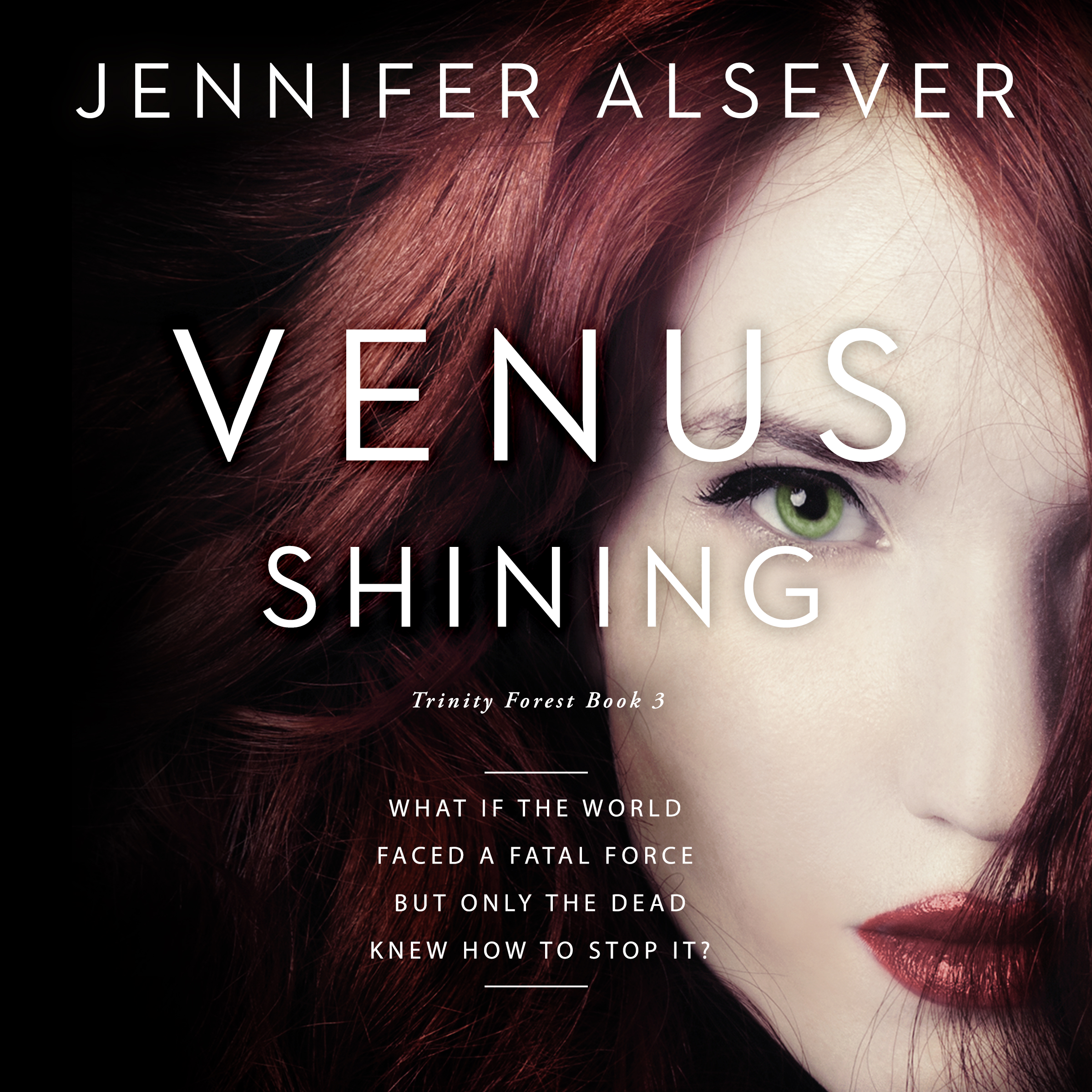
Venus Shining_audio.jpg

Tell us about the process of turning your book into an audiobook.

As an avid audiobook fan, I knew when I finished my trilogy that I wanted my books to be an audiobook. But finding the right voice was going to be key. I went into ACX, Audible’s back-end system for authors, and I listened to dozens of sample narrators until I found Moira Todd, an actress in Oregon. I wrote her an email and said, ‘You are Ember!’ She had a gorgeous voice, youthful with the perfect amount of snark and authenticity plus, I didn’t know it at the time, but she could sing. Working with Moira has been a dream, as she sent me samples along the way, and I ate the chapters up as we went.

Was a possible audiobook recording something you were conscious of while writing?

No. While I was writing, I was conscious only of the voice on the page. I was fully engrossed in the logistics of the writing and pacing and ensuring readers could see what I saw in my mind’s eye.

How did you select your narrator?

I listened to Moira’s sample on ACX, the backend of Audible, and loved her voice. She had a youthful voice that exhibited the kind of intellect, angst, snark, strength and sweetness of my main character Ember. When I heard her audition, I emailed her saying “You are Ember!”

How closely did you work with your narrator before and during the recording process?

Moira gave me periodic updates on her editing and chapters as she finished them. We collaborated, but really, Moira just nailed it with no revision requests on my part.

Did you give them any pronunciation tips or special insight into the characters?

I didn’t give her insight into characters-- nothing more than what was on the page. I gave her some pronunciation tips when asked, places and names and some weird Egyptian words.

Were there any real life inspirations behind your writing?

I drew on my experiences walking around the real-life town of Leadville and the scenery of the Colorado mountains where I live, plus took nuggets of scenery from my past visits to Utah, California and L.A. I also peppered in small bits and pieces of real stories from people gathered and heard over the years. To get into the teen head, I invited a group of seniors at a local high school for pizza when I was writing the book, and I listened to them talk. I got a lot of good perspective and a few nuggets of stories from them. They were so generous with their stories and time. I wouldn’t have been able to do it without them. The general plot, too, is taken from real-life theories from crazy websites about the Annunaki, energy vortexes and Egyptian mysticism. I did a lot of research and drew on interviews with people who had experienced what Ember did-- mainly a friend who lost her parents as a teen.

How do you manage to avoid burn-out? What do you do to maintain your enthusiasm for writing?

When I get stuck, I give myself time and space to do something else. I hike, read, ski, watch smart TV shows or I write other things. I don’t feel like I honestly can get burned from writing. I was obsessed with my story and it just flowed out of my fingers. It’s my most favorite thing, outside of my family and friends.

Are you an audiobook listener? What about the audiobook format appeals to you?

I am an audiobook listener for sure. As a slow reader, I love listening to a book while I get other things done, whether it’s chores around the house, a long drive or a hike. I am very picky about the narrator of the books I consume, and the voice can make it or break it for me. I’d listened to enough YA books that had similar voices or tones I liked, and I knew Moira would be perfect for my series. She had a voice I personally could enjoy hearing for hours.

Is there a particular part of this story that you feel is more resonating in the audiobook performance than in the book format?

Ember is a singer-song writer, and so that was a challenge for me to write lyrics to songs. Some of the lyrics had a loose tune in my head but not really. It was so fun to hear Moira take the lyrics, make a song and then sing it in the audio recording. She has a beautiful singing voice.

What do you say to those who view listening to audiobooks as “cheating” or as inferior to “real reading”?

I say a story is a story, heard or read. People say they don’t have time to read. So if listening is an easier way to dive into a imaginary story without sitting in front a screen, then go for it.

In your opinion, what are the pros and cons of writing a stand-alone novel vs. writing a series?

Pros of a series: You have more time to develop a storyline and a character, and you can fall more deeply into that world. People can binge your books just like they can binge watch TV.

Pros of standalone: You’re done with one and can dig into another entirely new idea next.

Cons of a series: Some people hate series and so maybe they read one book and may grumble about having to read another two to find out all the answers. It’s harder to market the other books in the series because they’re a continuation of the story so you end up having to tout your first book over and over, when you really might be proud of the writing or the story in the second and third too.

Cons of standalone: Sometimes, it can be hard to get everything you want in the book and it feels rushed. As a reader and an author, you’re sad to leave those characters behind and close the book to move on to the next idea.

Have any of your characters ever appeared in your dreams?

The genesis of my book came from a dream. I was running through a forest, but I wasn’t myself. I was someone else. I came to a gate, went inside and met three of my characters, Tre, Lilly and Zoe, and after spending time there, they whispered how I could never go home, despite the world spinning forward on the outside.

When I woke up, I told my son about the dream because it was so vivid and striking to me, and he told me to turn it into a novel. So I did.