Q&A with Nancy Jooyoun Kim, The Last Story of Mina Lee

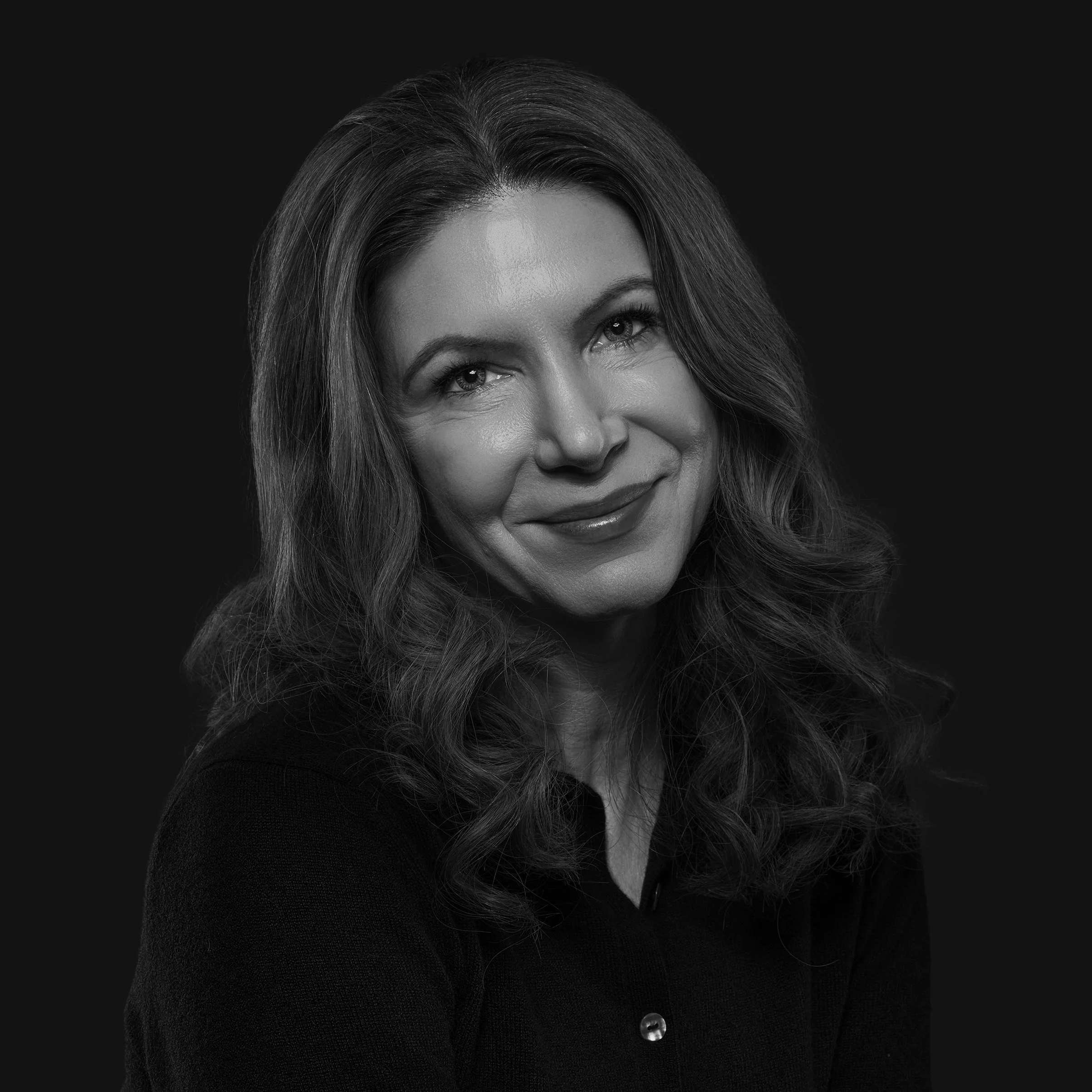
Nancy Jooyoun Kim_AndriaLo.jpg

What was your inspiration for writing The Last Story of Mina Lee?

I wanted to write a story that I had never seen before, a story that explored the complicated interdependence between an immigrant mother and her American-born daughter, the ways in which they love, need, and sometimes resent each other. For example, as the only child of an immigrant single mother, the protagonist Margot loves her mother more than anyone in this world. She needs her. But at the same time, she resents how, growing up, she has to work at her mother’s store over the weekends and during school breaks. She resents how her mother refuses to talk much about her past, and Margot’s father, her origins as well. I also wanted to write a story that centered women, in particular marginalized women, and show how they not only live but lead extraordinary lives. Although this novel begins with a tragic ending for Mina, she is nonetheless very much the hero and the heart of this story—a woman who took risks and created change, a life for herself in surprising and unconventional ways.

Did you have to do any research during the writing process?

I didn’t need to do much research while writing this book because I’m very much a product of the communities that I write about. I might’ve asked friends or people I know some questions about Korea and Korean culture, but it was all very casual.

Korean food is mentioned throughout your book.  Was this done intentionally? 

As Margot tries to figure out what happened to her mother on the night of her death, she experiences Koreatown as an adult for the first time in her life. As she goes out to eat at Korean restaurants with her friend Miguel and spends time in her mother’s apartment by herself, Margot realizes that food was not only a way for her mother to show love; it was a way of teaching Margot how to nourish and take care of herself in a world that is often harsh.

How important is Korean food in your life and what is your favorite Korean meal?

I always say that “Korean food” is just “food” for me. It’s very much a part of who I am, and was perhaps, as it is in many immigrant families, one of the principal ways my mother showed me love. I don’t have a favorite Korean dish because I love so many of them depending on the occasion, the weather, the mood. But some of my favorite banchan (side dishes) include yangnyeom gejang (spicy raw crab), myeongnanjeot (fermented pollock roe), and kkaenip (pickled perilla leaves). All I need is one of those and a bowl of rice.

What was your favorite food-related scene to write and why?

There are so many food scenes, moments, and images that I love in this book. But the most memorable food scene for me is about three-quarters through the novel—after Mina and her friend Mrs. Baek reunite after over twenty years apart. They go to a restaurant and have soondubu jjigae together. I love the delicacy, the tenderness of this scene, how each of these two characters is attempting to rekindle and navigate this friendship with the guardedness that comes from being hurt and heartbroken so much. Mina also realizes that despite how strong and supportive Mrs. Baek has always been, Mrs. Baek needs Mina and friendship just like everyone else. Mina played and can play a large role in Mrs. Baek’s life and her survival too.

Which character in the book do you relate to the most?

I like to believe that I am both all of my characters and none of them at the same time. But I’m closest to Margot in age and certainly I know the challenges of being the daughter of an immigrant single mother. I also know how difficult it can be in your twenties. That was actually a terrible time for me because I found myself being pulled, or pulling myself in so many different directions. But I had to make all those mistakes to get to where I am today. I’m glad that decade is over!

Even though the Korean War technically ended in 1953, major turmoil still exists today between the North and South. How has Korea's past and present situation directly impacted your life?

Both sides of my family come from what is now North Korea. As children, my parents fled the north during the war. So at the age of 13, my father left his home in advance of his mother and siblings, not knowing that a permanent border would forever keep them apart. For his entire life, he never knew what had happened to them, if they survived the war or if they continued to live behind the border, a border that continues to divide not only a culture and country but real families whose lives and identities have been shattered.

There were so many painful things, worries and regrets, traumas, that my father and mother did not talk about when I was growing up. Silence was a form of protecting us, and themselves. But the silences in my family also left me with a lack of understanding of my parents, just as Margot never quite knows her mother’s story, even if the reader does. It’s these silences that I’m attempting to capture and write through and out of in my work. I think one of the beauties of fiction is how it can bring together the impossible in one story. For me, the conversations that would and could never happen in my life happen in this book.

"Movement for her mother was essentially an experience of loss that Margot, American-born, could never imagine.  And Yet, Margot herself had inherited the same anxiety about driving fast, particularly on freeways.  She thought too much about the experience of speed itself, its danger, rather than getting somewhere at last."  Can you speak to the experience of movement for both women?

What I really love about the structure, the dual narrative, of this book is that we experience how both Margot and Mina, are at turning points in their lives; they are both thrust into new narratives about themselves, new ways of being alive. For example, the book begins for Margot with the death of her mother which forces her to question who she is without her. (Who is Margot if she is not someone’s daughter?) While the book begins for Mina when she enters the United States in order to start a new life after the death of her husband and daughter. (Who is she now without being someone’s mother or wife?) Both of them are in mourning, mourning the dead as well as their past identities and lives. They are both terrifyingly unmoored and free to reinvent themselves. What story should they each tell now about who they are? So movement is very much tied to identity in this book.

Why did Margot resist embracing her past so much?  

It’s important to note that Margot never experiences the Mina that we, as readers, see, know, and love throughout this book. Margot never witnesses her mother fall in love. She never knows the full story of why she had fled to America. Although her mother clearly makes so many sacrifices for her, Margot views her mother as often harsh, secretive, inaccessible. For this reason and in the context of a society that often doesn’t fully embrace other cultures, as an adult, Margot resents her mother; she is ashamed of what her mother represents because she has internalized some of the mainstream views, even xenophobia and racism against her. She judges her mother by the standards of the larger culture: “Why didn’t her mother learn to speak English?” Of course, this is only until her mother dies, which opens up the opportunity to finally get to know her mother, not only as a mother, but as a woman with an extraordinary story and life.

What is the number one take away you want your readers to leave with after finishing Mina's story? 

I hope this books sparks conversation about the mysteries, the secrets, and the silences within our own families. I hope this story encourages readers to ask the questions they’ve always wanted ask of the people whom they love the most. I hope we risk discomfort more.

At one point, she said that "the fear of hell kept her alive." How much did religion play a role in Mina's life?  

Religion and places of worship play an important role in immigrant communities, often serving as resource centers where people find each other and themselves. For Mina, church is a place where she can simply insert herself every Sunday and feel as if she belongs through sermon and song. For the most part, she doesn’t involve herself too much socially in the church, but she finds solace once in a week in the crowd.

Do you have plans for another novel? If so, can you share with us any details?

Yes, of course! I’m writing my next novel which also takes place near Los Angeles’ Koreatown and centers on the life of a Korean American family still grieving the mysterious death of the mother five years ago. Since I live in California where the housing crisis is very real and ongoing, the book explores issues of gentrification and homelessness through the lens of an immigrant family, struggling in their own ways to belong.

Guest Post: Dan Mayland, author of The Doctor of Aleppo

81hlOWPilgL._US230_.jpg

We all know about the fragility of normal. The death of a loved one. Job cuts. Waking up one day to find you’re in the midst of a global pandemic. But if you’re like me, sometimes it’s hard to truly appreciate how fragile normal is until after things fall apart.

Such is the case with the family at the heart of my novel The Doctor of Aleppo.

I began writing the book back in 2016 as the war in Syria was raging. Because I’d traveled extensively to the wider region and was analyzing the war in what was to become a professional capacity, I was following events closely. Beyond being heartbroken by what was happening, I was struck by the sense that the same struggle we see in the US between people who are drawn to pluralism and tolerance, people who are fearful of “the other”, and people who would take advantage of that struggle, was the essence of what was occurring in Syria. I also thought that, even though the war might seem distant to many here in the US, it was a story that could happen to any of us in the sense that all our lives are fragile.

And so I set about trying to wrap a mystery and a love story around a novel that would lend a bit of insight into what’s happening in Syria—and yet still resonate with readers regardless of where one happens to live on this earth. Four years later, we have The Doctor of Aleppo.  

About the Author

Dan Mayland is an author and professional geopolitical forecaster, helping nonprofit, private, and government organizations navigate a changing world. His Mark Sava spy series and his latest novel, The Doctor of Aleppo, were informed by his experiences in the Caspian region and Middle East. Raised in New Jersey, Mayland now lives in Pennsylvania with his wife and two children, in an old stone farmhouse he and his wife have restored. More information about Dan and his books can be found at danmayland.com.

41s4YI8-nWL._SX311_BO1204203200_.jpg

About  The Doctor of Aleppo

Hardcover: 450 pages

Publisher: Blackstone Publishing; Unabridged edition (August 11, 2020)

In the ancient Silk Road city of Aleppo, a young American woman is sucked into the Syrian civil war engulfing the city. Relentlessly pursued by a Javert-like secret police officer, her only refuge is the rebel hospital run by a renowned surgeon.

In The Doctor of Aleppo, Dan Mayland, author of the bestselling Mark Sava spy novel series, pairs a thriller writer’s sensibilities with a gripping account of good people cruelly trapped in somebody else’s war.

Grab your copy on Amazon | Audible | Barnes and Noble

Q&A with Ciara Geraghty, Rules of the Road

CG, photo credit Doreen Kilfeather79025_2019-04-09_1632.jpg

What message do you hope readers take away from Rules of the Road?

First and foremost, I hope they enjoy it. My mantra for writing is ‘A good tale, well told’. I don’t write fables or books with morals to be endured and lessons to be learned. I write about people and the messiness of their lives. Because, as everyone knows, life is messy. And complex. And complicated. I want my readers to read one of my books and maybe come away feeling less alone. That is the comfort I take from books as a reader, when I come across characters I can relate to.

What's the story behind the story of how you came to write it?

Female friendship and solidarity have always been very important to me. I wanted to examine the importance of female friendship, the impact it has, the difference it makes. When I was writing the book, we had two referendums in Ireland - marriage equality and access to abortion and both were passed with resounding majorities. While my book does not deal with these specific issues, it is a book about personal autonomy, bodily autonomy, a woman’s right to choose.  My subject matter suddenly felt very relevant and positive and hopeful. While the book has a dark heart - Iris, one of my main characters, is determined to end her life in a clinic in Switzerland - I always meant for the book to be ultimately uplifting and life-affirming; a love song sung by women. 

During the writing of the book, my father was dying of dementia. I found the writing of Eugene - Terry’s father in ‘Rules’ who has dementia - a very cathartic experience. This is one of the great things about writing; it helps me make sense of the world and the way I feel about it.

Do you have any specific writing rituals (outfit, snacks, pen,music, etc)?

Well, I’d love to get all ‘writery’ and say that I repair to a tall tower where I wander around in a caftan and smoke cigarettes from long, slender cigarette holders and wait for the MUSE to arrive…..Now, wouldn’t that be grand!

But, no.

Instead, I write at home, in the attic, at a desk, with a laptop. How pedestrian is that? I will say that, for me, the most important part of the process is getting my butt into the seat at the desk. The chair is an all-singing, all-dancing display of ergonomic engineering (it’s got wheels!) and this is important because one thing is for sure; I’m going to be sitting on it for a LONG time. Caftan and cigarette holders are optional (and rarely employed) but the rule I absolutely insist on is never, UNDER ANY CIRCUMSTANCES, wait for the MUSE to arrive. I just steel myself and start writing. Even when I don’t want to. Especially when I don’t want to. Otherwise I’ll convince myself that the words have all dried up and the cupboard is bare.
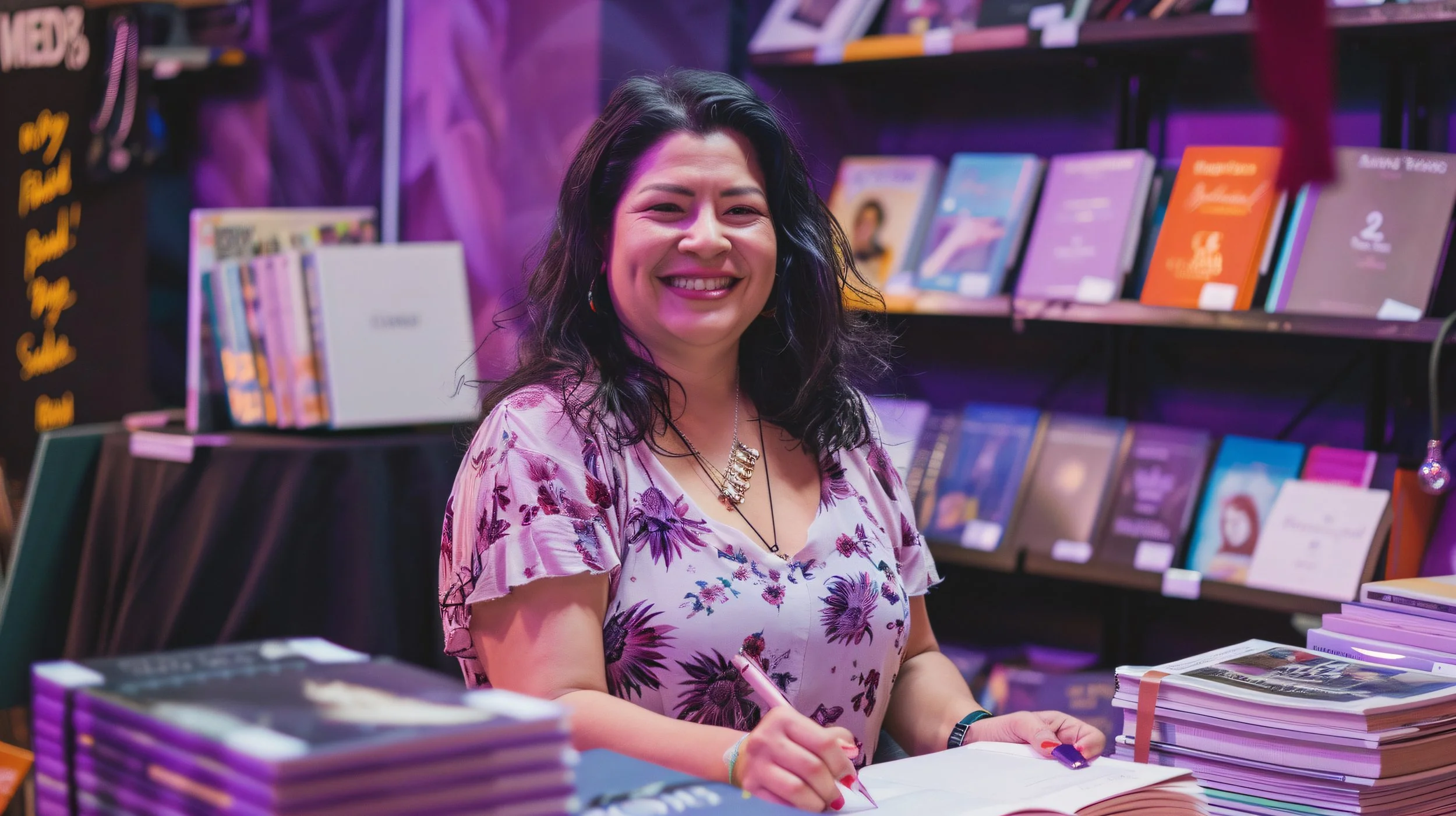
Which character do you most relate to in this novel and why?

There are certain traits that I have in common with aspects of both Terry and Iris. Like Iris, I am a year-round sea swimmer. Like Terry, I am a mother who is coming to terms with the fact that some of her children are - technically - grown-ups. I have lived with both of these characters for the past four years and love them both equally, for different reasons. I’d say I relate more to Terry because Iris, for the most part, has it all figured out. She is a woman who knows what she wants and then goes right ahead and gets it. Terry is less certain, she is still feeling her way through her life. She tries so hard to be all things to all people, to the detriment of her own sense of self. As a woman writer who is also a daughter, a mother, a wife, a friend, I relate to this aspect of Terry. I imagine many women these days do. It is the great burden of being a woman, as well as being one of our great strengths.

What is your bucket-list trip?

In the current climate, even thinking about a bucket-list trip feels a bit revolutionary. Or like a plot in a science-fiction novel. However, I can reveal that tomorrow, I’m off to Kerry (in the south west of Ireland) for a week. For anyone who has never been to Kerry, I advise you to put it on your bucket-list immediately. Because of the mountains - the highest in Ireland - and the winds that rush in from the Atlantic ocean, rain is a frequent visitor there. BUT - because of the rain, the vegetation is vivid and lush and almost tropical, with the influence of the Gulf Stream. The place is falling down with ancient castles, monasteries, fairy forts and islands (including Skellig Michael for the Star Wars fans amongst you). The Atlantic may be ‘fresh’ (this is Irish for ‘biting cold’) but the waters are crystal clear and the sand is fine and white and an excellent exfoliator of skin. Afterwards, in the pub where you’re eating a bowl of seafood chowder and struggling to eavesdrop on the locals (the accent is as thick as an Aran jumper), you’ll suddenly realise you’re tingling all over. This could be your blood, doing its best to resume normal circulation after the icy immersion in the sea. Or it could be something else. Something a little more other-worldly. The magic of Kerry, rushing through your body, seeping into your bones, engaging every sense you’ve ever had. And a few you didn’t even know you had. Can you tell I’m looking forward to getting away?

Q&A with Susan Mallery, The Friendship List

Susan Mallery.jpg

Where did the inspiration for The Friendship List’s plot come from?

The inspiration for The Friendship List came from a reader—but I don’t think it’s exactly the story the reader was asking for. A couple years ago, a reader suggested I write a story about empty nesters, a couple whose children had grown up and were moving out. I considered the idea, but it didn’t immediately sing for me.

Then, while washing dishes—which is when I often get ideas—I thought to myself, “What if it isn’t a couple, but a single mom? And what if she had her baby really young, like in high school? She would be in her midthirties when her kid went to college. What would that be like?”

That’s the spark that led to Ellen, a single mom who had her son when she was a senior in high school. Since then, she has put his needs first, always, to the point where she hasn’t dated really at all in her adult life. When her son was little, she worked her butt off to raise him and go to college to become a math teacher.

The story starts as Ellen overhears her son telling a friend he can’t go away to college because his mom doesn’t have a life without him. They’re a team, and she needs him. Ellen is horrified that she’s holding him back, and she knows she has to do something drastic to convince him that it’s safe for him to follow his dreams.

Unity, Ellen’s best friend for as long as they both can remember, is a young widow, still mourning the death of her husband three years ago. She’s stuck in her grief, and reluctant to change that because getting over her grief might mean really letting go of the love of her life forever. But for Ellen’s sake, Unity comes up with the friendship list—a series of challenges designed to shake up their lives.

One way or another, this will be a summer that will change them forever. The Friendship List is a celebration of friendship. I know authors aren’t supposed to have favorite books, but I have to admit, this is one of my favorite things that I’ve ever written—certainly the funniest. Every day, I couldn’t wait to get to my desk, excited to write that day’s fun scene. It was pure joy from page 1 to The End, and I hope you’ll love it, too.

Who is your favorite character in this novel and why?

I love both of the friends, but Ellen probably squeaks out a narrow win over Unity simply because her journey was so much fun. Think about it—she had her kid when she was seventeen years old, and from that moment on, her life revolved around him so she missed out on the things most people experience in their twenties. Dating, parties, bar-hopping. She was home studying and taking care of her kid.

And in fact, he’s the impetus for her to change, as well, because she  sees  that what’s best for him now is for her to let go, to get a life of her own. When she realizes all that she’s been missing, she dives in with her whole heart and body, with such enthusiasm that she had me laughing every day. Suddenly she wants to try everything all at once. Love, love, love, love her.

Of the challenges in the book, which was the most fun to write about? Why?

Oh, that’s a tough one! I don’t know if I want to tell you my favorite-favorite because it might be too much of a spoiler. So instead, I’ll tell you one of my other favorites, which is more of a teaser than a spoiler. 😊 One of Ellen’s challenges is to wear clothes that fit, instead of her normal habit of wearing clothes that are at least three sizes too large for her. Baggy is her comfort zone. The first time she wears an outfit that shows the shape of her body, her pal Keith can’t help looking at her in a whole new way. Here’s a clip:

He stared at her in confusion. Something was different with Ellen, he thought, trying to figure out what it was.

He cataloged her appearance. Her long hair was pulled back in a ponytail, just like always. She had on makeup maybe, which was a surprise, but made her eyes looked bluer than usual. As for what she was wearing, it was just some shirt thing and pants that stopped just below her knee. Nothing out of the ordinary except—

He swore silently. The clothes fit. For once they weren’t swirling around her, the extra fabric concealing every part of her body. He could see the shape of her waist and her hips, the outline of her thighs. And breasts. Ellen had breasts!

He realized he was staring and forced his gaze away. Of course she had breasts. Women had breasts. Ellen’s were no big deal. Only he’d never noticed them before and he didn’t want to see them now.

What is your idea of a good personal challenge for yourself?

The challenges in The Friendship List are meant to push the women out of their comfort zone and be a little intimidating for them, so my personal challenge will have to do the same. Hmm… Oh! How about a plunging V neckline? Cleavage makes me really self-conscious, but I admire women who can proudly show off their curves.

I’m nervous just thinking about it!

Do your characters tell you their stories a bit at a time or all at once? Do they ever pull you in unexpected directions changing up the plot you originally planned?

Yes, yes, and yes. It depends on the story. Very rarely, a story will come to me fully formed. Daughters of the Bride was like that. A gift book. That almost never happens. Usually, I get a spark of an idea. I write up some notes, then set it aside. If I’m still thinking about it, I know it has potential. I get a lot of ideas that never go anywhere. They might make fine stories for someone else, but if they’re not tugging at me, I let them go.

I’m on the extreme-plotter end of the plotter/pantser spectrum. (For those who don’t know, a plotter is a writer who plots the story in advance. A pantser is a writer who flies by the seat of her pants, without knowing where the story is going.) I generally work out story problems during my plotting process, which makes me feel free to relax and sink into the story while I’m writing.

When I get into the flow of a book, the characters do take over and sometimes they do surprise me. When they take me in a direction I didn’t expect, I have to step back to look at the big picture to adjust. I never try to force a character to do something that doesn’t feel right for him or her. Every decision must be motivated.

In The Friendship List, Unity threw me for a loop early on. I knew she was still in love with her late husband, but until I wrote a particular scene, I didn’t realize just how broken she still was. I did have to make some very serious adjustments to her road to a happy ending. And in the end, as I brought her out of that darkness, I cried. So satisfying!

Do you have pets? How do the animals you have now or have had in the past influence writing animals into your stories?

Yes, I have three pets. Two ragdoll cats, siblings Alex and Lucy, and a miniature poodle named Kelli. I love animals of all kinds. I’m a big supporter of Seattle Humane and the amazing work they do for animals in and around Seattle.

Animals play a big role in my books. When they have a part in the story, they are genuine characters because I believe, like humans, each animal has its own unique quirks and personality traits. The book I’m working on right now will be the first book in my new series, Wishing Tree—Christmas romances—and there are two dogs in the book who I adore. Bella is a Great Dane who loves to play dress-up in cute canine ensembles, and who is intimidated by a dachshund named Burt. The first Wishing Tree romance will be out in 2021.

Is there a genre of books that you have not written yet but might contemplate writing in the future? What might that be?

I recently toyed with the idea of writing a thriller. I even did quite a bit of research on Bitcoin, which was going to be a big subplot. I decided against the thriller, but research is never wasted—one of the characters in The Friendship List became a Bitcoin millionaire, and then a regular-money millionaire. Plus, I'm kind of proud of myself—it took me two weeks of research to be able to understand crypto-currency, but I'm now I'm at least cocktail-party level literate. 😊

What was the first book you sold/published and how did you celebrate when you received the acceptance letter from the publisher?

The first book I sold was a historical romance called Frontier Flame. A few months after that, I sold a book to (then Silhouette) Special Edition. Both books came out the same month, so the first time I was published was with two books. It was very heady! Of course, before that and after that I had many story ideas rejected. Even now, although infrequently, one of my ideas can be rejected. It happened recently. Still stings, but not as badly.

I celebrated my first sale by calling all of my writer friends and squealing over the phone, and then by going out for a nice dinner with my husband.

What do you love to do when not writing? 

I love hanging out with my friends—and I miss that right now because of the coronavirus. Friendship is one of the most fundamental relationships in a woman’s life. You might argue “in a man’s life, too,” but from what I’ve observed, most men don’t have the same visceral need for community that women do. My husband once told me, “You’re all I need.” Which is sweet and romantic and probably true. I love him dearly, more than any other human being on the planet, but I need friends, too. My friends are the family I chose, and I nurture those relationships in every way I can.

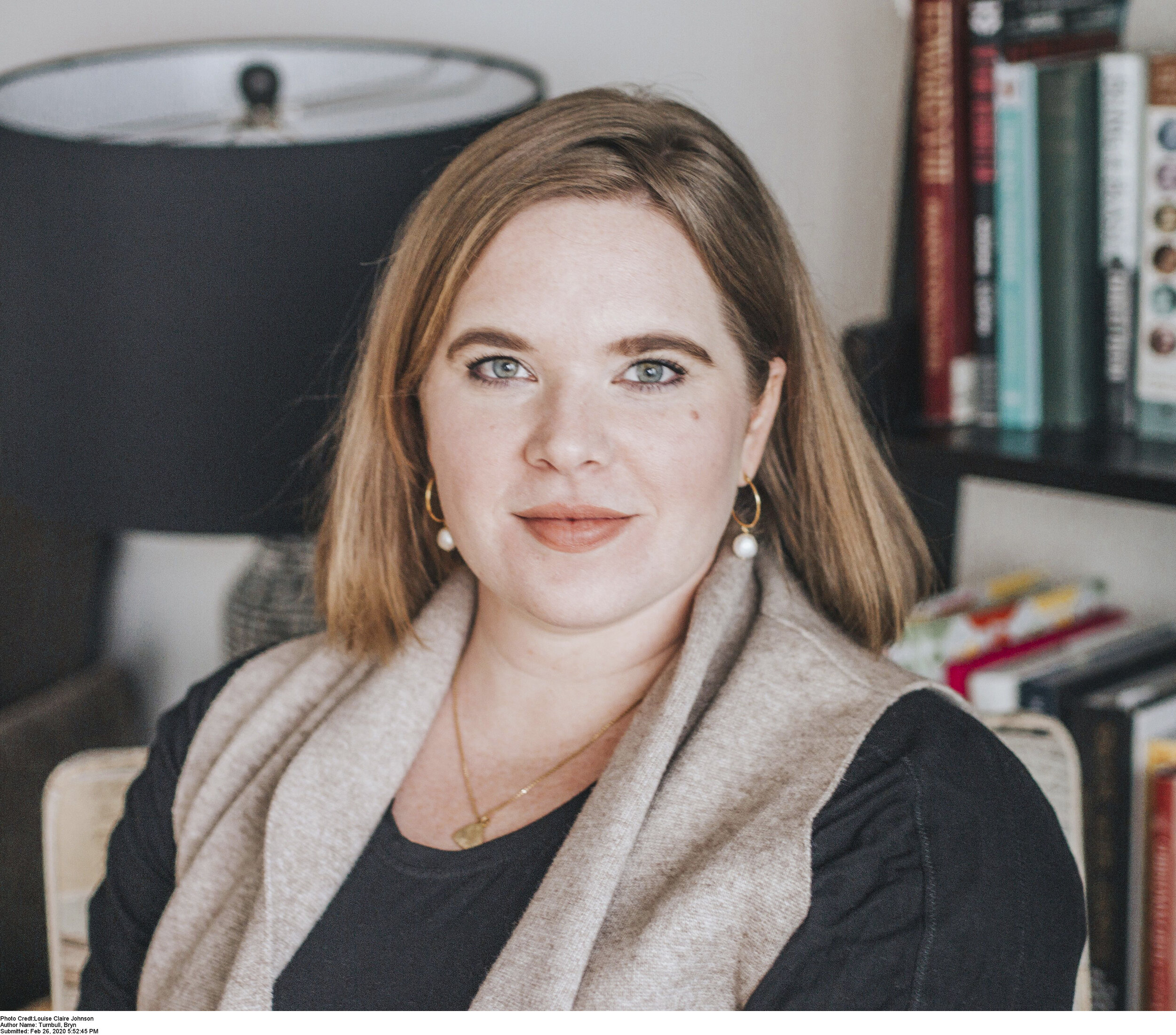
Q&A with Bryn Turnbull, The Woman Before Wallis

Bryn Turnbull (c) Louise Claire Johnson.jpg

Everyone knows the story of Edward and Wallis. What drew you to Thelma’s story instead?

Thelma’s affair with Edward is only aspect of her story: she was on the periphery not only of the abdication crisis, but also the biggest custody battle in US history to date. She was something of a Kardashian in her day – famous for being famous – but she was also strong-willed, and willing to stand up for those she loved. Other people have written beautifully about Wallis and Edward, but Thelma’s story deserved to be told on its own merits.

This novel contains the real-life stories of real life people – some of whom have living descendants. How did you balance the drive to tell a good story against the historical record in terms of character development?

It’s a tricky balance to strike, but at the end of the day my job is to tell a good story, taking as much historical fact into consideration as I can without sacrificing the plot. I spent a lot of time researching the people who make up my book: luckily, Thelma and Gloria wrote a memoir, and we have plenty of letters, biographies, and recordings of Edward VIII and Wallis Simpson, so by the time I started actually writing, I had a very good sense of who they were. Wallis in particular leapt out of the pen, and I think that’s because she’s left such a legacy behind. I certainly hope that they would see themselves in the characters I’ve created, but at the end of the day these are fictional representations.

How did you find Thelma’s story?

I’d long been interested in the abdication crisis, and had read biographies of Wallis Simpson before, but I’d never really picked up on Thelma’s story until I watched W.E., a movie directed by Madonna about Wallis and Edward’s relationship. In the film, we see Wallis and Thelma have that conversation where Thelma asks Wallis to “take care” of Edward for her while she’s travelling, and I remember thinking it was such a strange request to make of a friend – even one as close as Wallis was to Thelma. After the movie ended I found myself down a bit of a Wikipedia rabbit hole, where I discovered her connection to the Gloria Vanderbilt trial, and recognized that this was a story that ought to be told.

One of the major relationships in this novel is between Gloria and Nada. Why was it important to you to show a relationship between two women in the 1930s?

Their relationship is historical fact: it would have been disingenuous to omit it from the book. I truly believe that Gloria loved Nada, and had they lived in a different time period their story would have ended quite differently. What’s more interesting to me is the fact that their relationship was permitted because of social privilege – and when Gloria lost that privilege, their relationship fell apart.

How does Gloria’s experience as a queer woman shape Thelma’s actions?

To me, THE WOMAN BEFORE WALLIS is a love story – but it’s not a royal romance. While the abdication crisis looms large over Thelma’s life, this is a book about the love between sisters: Thelma supported her sister in a day and age when being gay was seen as unacceptable – except, as Gloria points out, in the highest echelons of society. In the history books, Thelma has often been dismissed as a lesser socialite, but when it comes down to it, she was a deeply principled woman, and her experience as an ally spoke to me.

After spending so long with his character, how do you feel about Edward VIII and his decision to abdicate?

I think Edward VIII would have found an excuse to abdicate, regardless of whether Wallis Simpson had come into his life or not. He was a fundamentally weak man, and would have made a fundamentally weak king – and while in my novel I have him talk to Thelma about the sort of king he wants to be, I don’t think he ever intended on taking up his crown. If it hadn’t been Wallis, he would have found another excuse to abdicate.

That said, Thelma was genuinely in love with him. It was important for me to find a way into that love, and to be able to portray him with some compassion.

Edward VIII and Wallis Simpson are known to have been Nazi sympathizers. Why don’t you address this in your book?

I don’t address it for three reasons. First, Thelma and Edward’s relationship ended in 1934. Hitler only became chancellor in 1933, so while he would have been a topic of conversation around the dinner table, he wouldn’t have been the main topic of conversation. Second, Thelma was not a political person. One of the biggest complaints the government levied against Wallis Simpson was her political activism – in fact, when it became clear Edward wouldn’t give Wallis up, there was a movement within government to invite Thelma back to England because she wasn’t seen as someone who would interfere in politics the way Wallis did. Finally, the sad fact is that many members of Britain’s upper crust had extreme right-wing leanings in the 1930s, and many were generally supportive of Hitler’s policies. At the time, socialism was seen as a far greater threat than fascism, particularly because the General Strike of 1926 had been so successful in disrupting industrial production. Oswald Mosley’s British Union of Fascists had 50,000 members at the height of its popularity in the 1930s.

In the end, I find it incredibly interesting that history shook out in such a way that Britain had the king it needed during the war. Could you imagine what would have happened if George VI hadn’t been on the throne during the Blitz?

Do you think Wallis intended to replace Thelma?

I don’t think she did. Whatever else has been written about her – and there has been a lot written about her – Wallis was an extremely ambitious social climber. I believe that Wallis was genuinely trying to keep Edward’s eye from straying, for Thelma’s sake, but when it became clear that his affection had transferred to her, she didn’t feel too much guilt in taking advantage of the situation.

She certainly didn’t intend to marry Edward – that much is clear. In 2011, Anne Sebba published a biography of Wallis Simpson which contains previously unpublished letters between Wallis and Ernest Simpson – she wrote to him until the end of her life, and expressed regret at having ended their marriage. I believe that Wallis had hoped to take advantage of Edward’s attraction to make new friends and move in the highest social circle in Britain. She genuinely believed that Edward would tire of her before too long – when he didn’t, I think she was as surprised as anyone else.

What did you enjoy most about researching this book?

I wasn’t on any fixed timeline to complete this book, so I was able to spend two full years researching – just researching! – the time period. I particularly enjoyed researching the fashion of the 1930s– the attention to detail is incredible, especially for someone who had Thelma’s budget. I was able to access a lot of newspaper articles about the Vanderbilt trial at the New York Public Library, which really helped me understand the frenzy that the trial had created. A photographer actually did try to rappel down the side of the courthouse to get a picture of the proceedings! The trial reached newspapers in Pakistan! I went to London and walked Thelma’s neighbourhood – while Duke’s Arlington townhouse is no longer there, I visited her home in Mayfair and had drinks in the Ritz.

My favourite research moment, though, was finding Edward’s plane, and while I wish I’d had the right place to put it in the manuscript, it did help me come to an understanding of who he was as a person. One of his planes is at the Vintage Wings museum in Gatineau, Quebec, and I was able to visit it: it’s a beautiful little biplane with an open cockpit and a closed cabin for passengers. The plane itself looks like a Rolls Royce, with beautiful a chrome and indigo body and burgundy leather interior: but the best part of it is that Edward had a small generator installed on one of the wings so that he could power a wireless radio. While that sounds like a good idea, Vintage Wings was kind enough to take me up in a plane of a similar vintage, and I was struck by how unbelievably loud it was up in the air. Even with headphones on, it would have been extremely difficult to hear anything on a wireless.

I think this really sums up who Edward was. He was so concerned with his image – with looking and feeling like a modern royal – that he forgot to take into account the practicalities of the situation.

Q&A with Nichole Severn, Midnight Abduction

3_Nichole Severn_author photo.jpg

The Tactical Crime Division is a specialized unit of the FBI. Did you do any research before writing about this type of fast-paced, high-adrenaline lifestyle?  

A: I’ve written a few FBI characters throughout my career (one of my favorite kinds of novels to write!), but for Midnight Abduction, I really had to look into missing persons statistics and break that data down into manageable chunks.

As an agent trained in missing persons, my heroine has to know the probabilities of a parent being involved in the abduction (or someone the child knew), the child’s daily habits, schedule, and so much more than age, weight, height and a recent photo. It’s unbelievable how the smallest detail could contribute to her bringing home a missing child, and how quickly evidence can change the course of an entire investigation.

I also found the more attention I put into reviewing actual missing persons from the FBI’s website, the more conflict and mystery I was able to add to this book.

The Tactical Crime Division series includes four books written by four different authors; what was it like to collaborate with other authors and how did you decide who got to write each storyline?

A: Thankfully deciding who wrote which book was completely up to our editors, but collaborating with three other authors really was a huge change of pace for me. Up to this point, I’ve been in control of every minute detail throughout my books and have never had to rely on another author for the story I’m writing. 

But the TCD series features multiple points of view in each book, including main characters from the other three. I’d say the most difficult part of working together was just trying to get each other’s characters right. We didn’t want to overstep, make these side characters do something out of character or get the details of their past wrong, but every author involved in the series was great about answering questions and updating our shared series bible. 

Can you share a recent book you have read that you would like to recommend?

A: I’ve just finished Loreth Anne White’s IN THE DARK and could not put it down! The use of setting to add to the psychological mystery she’s created was so well done, I’m still thinking about it weeks later.