Q&A with Greg Fields, Through the Waters and the Wild

PLACEHOLDER_image2.jpg

Congratulations on your new novel, Through the Waters and the Wild! Tell us what the book is about.

Greg Fields: Coursing through several decades, Through the Waters and the Wild spans the farmlands of Ireland, the Irish Civil War, the corridors of power in Washington, DC, and the interior landscapes against which we all seek to craft identity and meaning. With well-drawn, complex characters, a strong narrative arc, and a poetic sense of place, Through the Waters and the Wild not only takes readers on an epic journey, but addresses the timeless questions, “Where shall I go now? What shall I do?”

Through the Waters and the Wild picks up where your last book, Arc of the Comet, left off but can also work as a stand-alone. Why did you decide to return to Conor’s story and what will fans of your first novel be most excited by?

Fields: Conor’s story was nowhere near closure at the end of Arc of the Comet.  That was, in fact, the point of it, that there are no final, neat, tidy resolutions and that we all need to continue defining who and what we are.  It made sense to carry Conor’s journey forward and to explore how he reacted to the losses he experienced.  He’s a different person now – bruised, more cautious, less given to the passions and spontaneity that marked his earlier years.  He’s become more like the rest of us.

What made you decide to feature the Irish culture and Ireland prominently in your books?

Fields: I believe that there’s no such thing as complete fiction. Much of Conor Finnegan’s career as described in the book reflects my own experiences, especially his experiences overseas in international development. My grandfather emigrated from Ireland, as did Liam Finnegan, but Liam’s story is not my grandfather’s. Still, I was inspired by the courage of leaving everything behind, the conscious choice to abandon the only world one has ever known.  

Exile and redemption are some of the recurring themes in the novel. But what do you hope readers take away most from your writing?

Fields: Most of my writing revolves around the central questions that I believe each of us must constantly ask ourselves. I would hope readers would come away with at least a recognition of those questions in their own context. But what matters, and what’s subtly stressed throughout both novels, is that the answers to these questions are not nearly as important as the asking of them. When we fail to ask ourselves those questions, we cease to be truly alive.

You once had a memorable and fateful encounter with a big literary inspiration of yours, Pat Conroy, who quickly became a fan of your words after you recited a few lines for him. What was it about the meeting that inspired you to become a writer yourself? 

Fields: I had written fiction for years, but the demands of a career always pushed that pursuit to the corner. A chance meeting with Pat Conroy as I was developing Arc of the Comet changed all that. Pat saw something in my writing that I did not know was there, and from that point I committed myself to giving every chance to prove the possibility that I might actually be a writer.   

My wife, knowing how I loved Conroy’s work, surprised me with tickets to one of his talks and the VIP reception afterward. Knowing absolutely no one at the reception, I headed to the hors d’oeuvres table. Pat approached me from behind, put his hand on my shoulder and said, “We’ve not met.  I’m Pat Conroy.” Something intuitive there, and we ended up talking one-on-one for nearly 20 minutes while the other guests circled around and glared at me. Pat was gracious, and we learned that we shared the same birthday, the same literary influences, and the same jump shot on the basketball court. He asked me to recite some of my work, and I was able to do so, after which he got quite serious and said that he wanted to read what I had. We corresponded, and Pat Conroy made me a writer. I’ve told this story many times, in greater detail, as an homage to my generation’s brightest literary life, and a man I came to love.

What’s next for you? Will you be writing another book around Conor’s story?

Fields:  I’m working on the next novel.  I can’t completely abandon Finnegan, but I think his story has run his course.  He’ll make a few cameo appearances in a narrative centering on fresh characters.  But the questions, the themes, will be similar to what’s come before, even though they’ll be pursued through different eyes.

About the Author

Greg Fields is the author of Arc of the Comet, a lyrical, evocative examination of promise, potential and loss, published by Koehler Books in October 2017. Arc of the Comet explores universal themes in a precise, lyrical style inspired by the work of Niall Williams, Colm Toibin and the best of Pat Conroy, who had offered a jacket quote for the book shortly before his death. The book has been nominated for the Cabell First Novelist Award, the Sue Kaufman First Fiction Prize and the Kindle Book of the Year in Literary Fiction. He is also the co-author with Maya Ajmera of Invisible Children: Reimagining International Development from the Grassroots. He has won recognition for his written work in presenting the plight of marginalized young people through his tenure at the Global Fund for Children, and has had articles published in the Harvard International Review, as well as numerous periodicals, including The Washington Post and the Minneapolis Star-Tribune. His short nonfiction has appeared in The Door Is A Jar and Gettysburg Review literary reviews. Greg holds degrees from Rutgers College and the University of Notre Dame. He lives with his wife Lynn and their son Michael in Manassas, Virginia. For more information, please visit www.gregfields.net or connect with him on Instagram and Facebook.

Q&A with Teri Smith-Pickens, The Irrational Fear Cure in Four Miraculous Steps

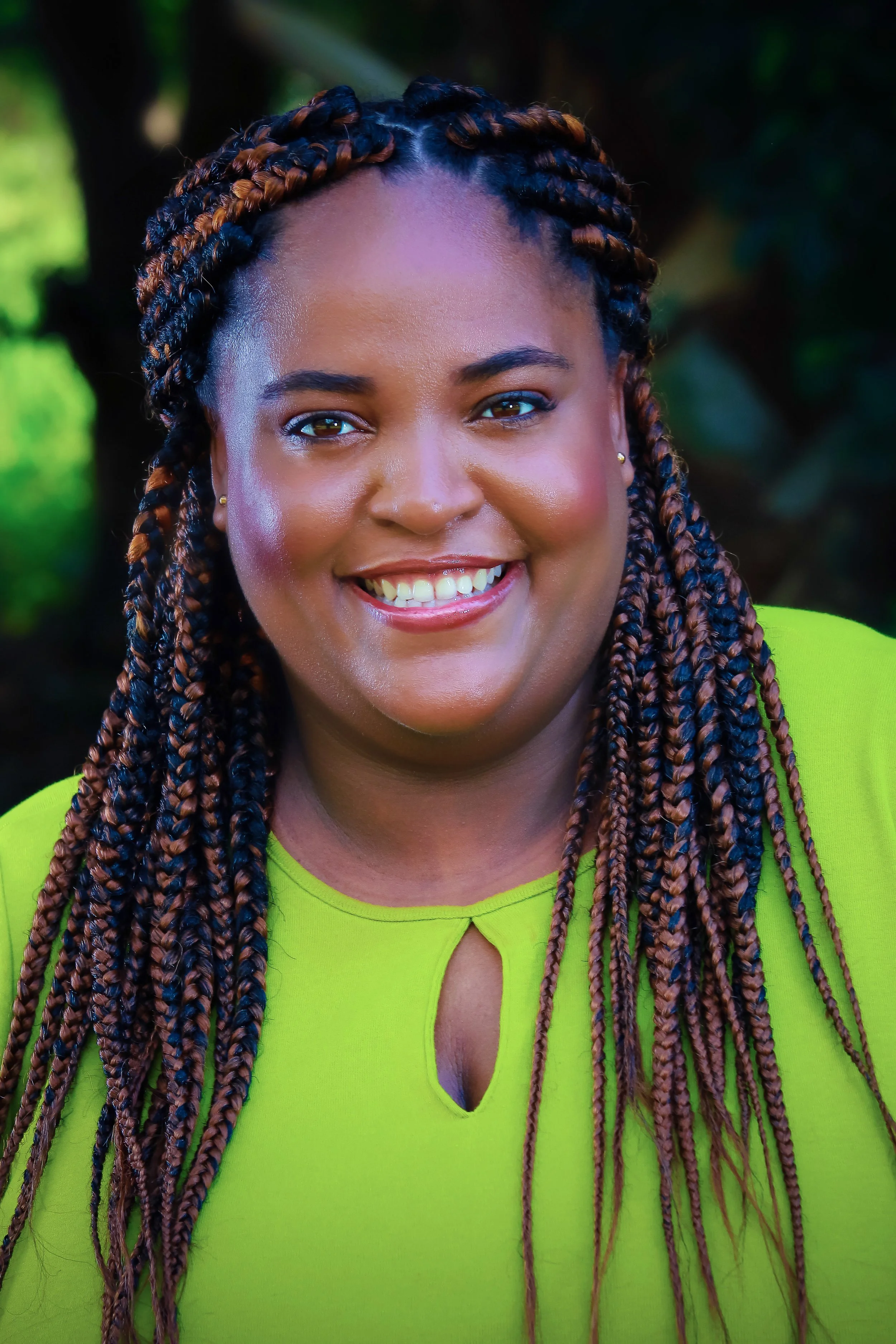
TeriSmithPickens.jpg

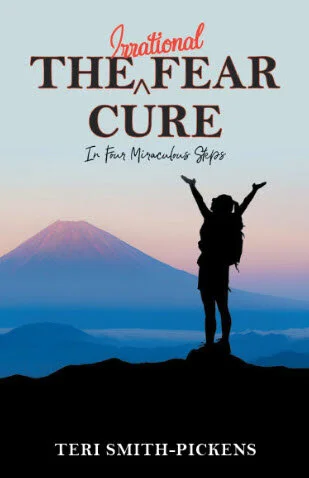
Your book is titled The Irrational Fear Cure in Four Miraculous Steps. With so many people suffering from various anxieties today, is it truly possible to cure our fears?

Absolutely! It is the same concept used in psychotherapy when a client has anxiety which is debilitating and disrupts their functioning. It is a signal of something they fear, and Cognitive Behavioral Therapy is used to change the person’s mindset to new and better thinking.

You interviewed 200 people to demonstrate fears and anxiety for your book. What primary insight did you take away from talking with those people?
That we all suffer from different levels of anxiety, which is a signal of something feared, usually a threat to survival, which impacts our mental health. People refuse to acknowledge being mentally ill, or to admit to symptoms that are debilitating to their functioning.

How do you think the COVID-19 pandemic is worsening peoples’ anxieties?

We ‘all’ live in Survival Mode, caused by childhood fears gone awry, which causes our thinking to be fear-based and irrational. Now, when you superimpose a rational event like (Covid 19) onto this mental state, it causes an exponentially increased level of anxiety.

What is your number one piece of advice for people suffering from irrational fears?

Talk to someone about the negative thoughts in your head, otherwise you will continue to feed the fear and trigger the irrational parts of your brain which causes your decisions to be impulsive and not well thought out; when you talk to someone you name and arrest the fear so it stops growing and is less frightening.

You make it clear in your book that most irrational fear stems from something that occurred in childhood. Do you have special advice for parents to help their children avoid internalizing a fear that will cause anxiety as an adult?

Absolutely, be vigilant & aggressively protect your young child from all fears until they have developed the ability to reason. Don’t trust their care to others during this primal period. Avoid unsupervised or inadvertent exposure to stuff their minds can’t process, and which ends up in their “implicit” memory, setting their Fight/Flight/Freeze response on autopilot, where it later becomes irrational.

Your book also discusses the importance of three-fold development for well-being – the body, mind and spirit, with the spirit being the most important factor. Why do you think so many people today leave out the spiritual aspect, and what impact does that have?

Buy on Amazon

Buy on Amazon

They are missing their Spiritual anchor which anchors them to something bigger than them. In childhood our anchor is our parents/guardians which later gives way to a belief in God, but when fear is experienced before reasoning comes, it shuts off trust and we go to Survival Mode by depending only on ourselves. This is the psychological mask we wear to cover our authentic self which suffered pain/hurt. If we couldn’t trust our parent/guardians to protect us from our fears, we are not going to trust a God we can’t see.

Does someone have to follow a spiritual life / faith life to benefit from your book?

This is a tough question because the answer to getting rid of Fear is Faith, which is spiritual. They can use the tools to lessen their fears without God, for example, using psychotherapy, but they will not have “the cure”; they will simply continue exchanging one obsessive compulsive behavior for another, to feel like they can stay in their own skin. Only Faith gives the permanent anchor, which is Spiritual.

Ultimately, what do you hope readers take away from your book?

As a species, we must understand the imperative of protecting children from their fears to avoid living in fear-based Survival Mode, and to decrease the annual incidence of suicide for those who just can’t negotiate this “dark night of the soul”.

How and where can readers purchase The Irrational Fear Cure?

The book is available at regular bookstores like, Amazon, Barnes and Nobel, etc. and on my website, www.thefearcure.com

Is there anything else you’d like to tell us about the book?

Don’t use human reasoning when reading this book, look to your own symptoms that will tell you that something is wrong – look at what you have tried so far and see if it worked.

Author J.J. DiBenedetto's Top 10 favorite books/authors

J.J. DiBenedetto_379x400.jpg

1. “Winter’s Tale” by Mark Helprin. I think it’s possibly the best novel of the last 50 years. The language is just heartbreakingly beautiful.

2. The Chronicles of Thomas Covenant by Stephen R. Donaldson. This series is heavy going, but it’s an incredible story and well worth the effort. If I have to pick one book out of the trilogy, it would be book 2, “The Illearth War”

3. Dune by Frank Herbert. One of the all-time classic science fiction novels.

4. “Hogfather” by Terry Pratchett. There are too many books in the Discworld series to count them as one entry on the list, so if I have to pick one, it’s the Discworld version of a Christmas story, featuring the Hogfather (who rides on a sleigh pulled by wild boars and leaves you pudding if you’re good and bloody bones if you’re bad), the tooth fairy, the God of Hangovers, DEATH, and DEATH’s granddaughter Susan.

5. “Rayne & Delilah’s Midnite Matinee” by Jeff Zentner. This is the newest book on my list. I’m a 51 year old man, and I’m not ashamed to admit that it made me cry. Twice. In public.

6. “The Saga of Pliocene Exile” by Julian May. A fun, sprawling, epic science fiction tale featuring aliens, time travel, psychic powers, romance, huge battles, doomed lovers, and way too much more to list here. Totally worth your time.

7. “E” by Matt Beaumont. An epistolary novel, told in the form of emails, all about the goings-on at a London ad agency in 1999. It’s absolutely hilarious.

8. “Attachments” by Rainbow Rowell. Another epistolary novel, and a love story between a newspaper movie critic and the IT guy whose job it is to monitor employee emails to make sure they’re following all the company rules.

9. “The Hunting of the Snark” by Lewis Carroll. It’s one of my life goals to memorize the whole thing. I’m not remotely close yet.

10. “Mr. Smith and the Roach” by, well, me. It’s the story of a retired NYC homicide detective and his new roommate, a six-foot-tall talking cockroach, who team up to solve the mysteries of who stole Mr. Smith’s pension, and who created the Roach.

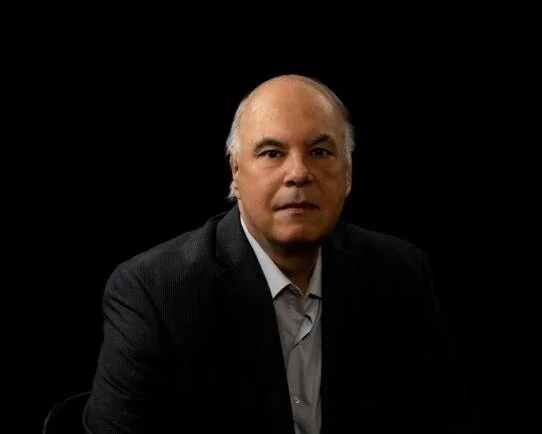
Where Do Characters Come From and Why? by Robert McCaw

Often when I fall in love with a book or a movie, it’s because some unique character sparks my imagination, which leads me to wonder how and why the author conceived them. Consider Michael Connolly’s Harry Bosch or Renée Ballard, Barry Eisler’s John Rain, and Delia Owens’s Kya Clark. I’d love to interview these authors and delve into the origins of these fictional favorites to learn to what degree they are imaginary or not.  Another question I often ask myself is why the author incorporated a particular character at all.  The answer is usually evident for main actors in a story but can be more subtle and elusive for secondary players.

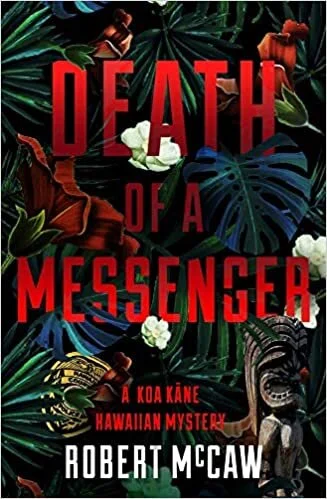
These questions make me think of the sources for my own characters. Take, for example, Death of a Messenger, the first book in the Koa Kāne Hawaiian Mystery series to be republished with new material in January 2021. I’ll use four characters as examples—Hook Hao, a police informant, Jimmy Hikorea, an archeologist, Zeke Brown, the Hawaii County prosecutor, and last but not least, Koa Kāne, the protagonist. None of them are real people, but only one is purely fictional.

Hook Hao, my seven-foot commercial fisherman and auctioneer, is almost real. I first saw him in the 1980s at the Suisan fish market in Hilo, HI, where he ran the daily fish auction. The scene where I first introduce him is as factual and as accurate as my memory could recall. From there, I made up his fictional backstory and role in the mysteries unfold at the heart of Death of a Messenger. Hook isn’t just a fascinating persona in the book. His position auctioneering near the Hilo docks creates a nexus of contact with a diverse array of people, from sailors to fishermen to local clientele.  He thus becomes a perfect conduit for secrets, making him valuable as a police informant. Hook also serves another purpose. As a native Hawaiian, he is brimming with Hawaiian lore, adding insights into the history and culture of the island’s people.
Jimmy Hikorea, a federal archeologist, on the other hand, is entirely imaginary. Because the novel delves into the unique lives and mysterious disappearance of the Hawaiian adze tool makers, I needed a voice to relate aspects that history.  As a former marine who lost both legs and normal vocal abilities in a friendly-fire accident, Jimmy navigates life from his wheelchair and speaks with an artificial squeak. As one might imagine, he has great antipathy for the Army he deems responsible for his injuries and so is in constant conflict with the story’s military characters.

Zeke Brown, the Hawaii County prosecutor, is a composite character. In my many years as a defense attorney in various government and enforcement proceedings, both civil and criminal, I met many prosecutors, federal agents, and other persons in law enforcement. Many of these situations were adversarial, and thus of necessity, I studied their tactics and interpreted their mindsets. Zeke borrows his mannerisms, attitude, language, and tactical approach from the many varied local, state, and federal law enforcers I encountered over my legal career. Moreover, Zeke serves to further several plot lines in the story. Contrary to some popular fiction, detectives pursuing significant cases do, in fact, work in partnership with prosecutors. The preparation and securing of search and arrest warrants are common examples. Zeke also serves to counterbalance the overly political police chief to whom chief detective Koa Kāne reports.

Finally, there is Koa Kāne, the detective protagonist. As a semi-autobiographical character, we share more than a few qualities. Both of us served in the military, neither of us cares much for politicians, and both are confirmed foodies. We are also devoted to our professions, deeply respectful of women, and have a generally positive outlook on life. Although neither of us is perfect, unlike Koa, I did not kill my father’s nemesis in a wild teenage rage! That back story of Koa’s enduring remorse explains his unwavering determination to pursue justice. I am also not of Hawaiian heritage, but I created Koa as a native Hawaiian character to share my fascination and respect for the Hawaiian people, history, culture, and language.

These characters reappear in the other books of the Koa Kāne Hawaiian mystery series. So, if I’ve piqued your interest just a little, check out Off the Grid and Fire and Vengeance, available now on Amazon and other booksellers, and Treachery Times Two, to be published in January 2022.

Robert McCaw is the author of Fire and Vengeance, Off the Grid, and Death of a Messenger. McCaw grew up in a military family, traveling the world. He is a graduate of Georgetown University, served as a U.S. Army lieutenant, and earned a law degree from the University of Virginia. He was a partner in a major international law firm in Washington, D.C. and New York City, representing major Wall Street clients in complex civil and criminal cases. Having lived on the Big Island of Hawaii, McCaw imbues his writing of the Islands with his more than 20-year love affair with this Pacific paradise. He now lives in New York City with his wife, Calli.

Behind A Frenzy of Sparks by Kristin Fields

Kristin's Pic.jpg

A FRENZY OF SPARKS was inspired by a true family event: I have an uncle who overdosed before his eighteenth birthday. Even though he died years before I was born, it was too painful for my family to talk about. I didn't know much about him, though I worried, growing up, that whatever had caused his addiction, was in me too, a fear that followed me until I was much older. 

Shortly after publishing my first novel, A LILY IN THE LIGHT, it hit me that this was the story I was meant to tell next – to finally uncover this unexplored history. 

For the first time, I spoke directly to my father about his childhood. We scheduled Saturday morning interviews, which he took very seriously. I had questions about his neighborhood, family, things he did for fun, local legends, the shops they visited, much of which shaped the novel’s setting, though at the time, it was less about historical accuracy and more about curiosity. It’s a special thing to imagine your parents as children. 

Our first call lasted four hours. My father was close to Gia’s age at the time, but ultimately, A FRENZY OF SPARKS is fiction, told through the perspective of a girl on the cusp of adulthood. I borrowed from my own experience and frustration with the expectations projected on Italian American girls: do well in school, help your mother, grow up, get married, have children, maybe be a teacher. Those are all fine things to do, but I felt, from an early age, that I wanted something different. 

Gia is the closest character I’ve written to myself. She is young and naive, but fearlessly observant and intune to the moods of others. She feels a deep connection to nature and the natural world despite living so close to New York City, a fact that sets her apart from her family. More than anything, she wants to do good in a world that isn’t quite open to her yet. 

Years ago, I taught high school in Rockaway and moved to Howard Beach for a shorter commute. I lived off a canal that flooded when the tide was high at full moon. I used to watch the planes take off from JFK in the park where Gia and her cousins set off fireworks, but the funny thing is, my apartment was right around the block from the house my father grew up in. We joked that I must've been drawn there, but it never felt like a coincidence. It was part of the story, past and present and fiction, a dot on the journey to understand a past that shaped me, and prepared me to tell Gia’s story long before I knew it was in me.  

My father described reading A FRENZY OF SPARKS as the surprise of walking around the block and bumping into someone he hadn’t seen for a long time. Gia reminds him of me.

Infinite Stakes—Where Fact and Fiction Merge into ‘Faction’ by John Rhodes

1604682509815blob.jpg

The title of my novel Infinite Stakes comes from Winston Churchill’s description of the Battle of Britain in 1940 —“the odds were great; our margins small; the stakes infinite.”  In this battle, which lasted from July until September, 1940, Hitler’s Luftwaffe air force attempted to destroy the British RAF air force, so that Nazi Germany could invade England across the English Channel. 

Infinite Stakes is a sequel to my novel Breaking Point (also from a Churchill quotation) and describes the climatic day of the battle when Hitler sent hundreds of bombers against England to no avail, but suffered grievous losses.

I placed my imaginary protagonist, Eleanor, a 22-year-old mathematician, inside RAF Fighter Command Headquarters, where she observed the battle with Churchill and other commanders. The events of the day played out exactly as they did in history—the ‘facts’—but we see them through Eleanor’s eyes—the ‘fiction.’ She is a senior intelligence officer, a self-taught expert in fighter strategies and tactics; we see her explaining the battle to Churchill and his reactions.

Buy on Amazon

Buy on Amazon

My purpose in all of this was to escape from a dry historical narrative and instead to offer a more dramatic ‘real time’ version of history, a more welcoming introduction to the subject matter. That gave me the wiggle room to tell the story, but it also created the obligation to be true and fair—for example, to put dialog in Churchill’s mouth that he really might have said.

I have an enormous respect for the women of that era. World War II was a pivot point in history: women entered it in their traditional domestic homemaker, caregiving mother, subordinated wife categories, and emerged as independent and self-supporting. Eleanor enters my novels thinking of herself as a failure, not as a brilliant mathematician holding her own in a male-dominated world: she sees herself as a failure because she is already 22 and has not yet found a suitable husband. But, as the story evolves, she too evolves, and emerges with the confidence and accomplishment of a ‘Rosie the Riveter:’ her own person.

Just as the people in a ‘faction’ book must act and think like the ‘real’ people really did, the situations and places and things around them must also be authentic. I have a fighter pilot in a Spitfire; his ability to maneuver is limited to the technical specifications of Spitfires which are no better than the aircraft he is fighting. In ‘faction’ he must make the best of what he’s got; in ‘fiction’ his aircraft could suddenly be more powerful and in ‘fantasy’ he could swap his Spitfire for an F-16.

I sometimes wonder if docudramas and other ways of playing with facts help or hinder our understanding of people and events. Some people in 1938 really thought that Martians were invading New Jersey as they listened to Orson Welles’ War of the Worlds radio program, and some people today believe that Queen Elizabeth really did say the things she is given to say in The Crown.

On balance I would rather that people have heard of the Battle of Britain than not; if my ‘faction’ introduces them to this fascinating and important piece of history, so be it.

About the Author

John Rhodes is the Author of Breaking Point and Infinite Stakes; Remy is just a good ole boy who appears as the character ‘Charlie’