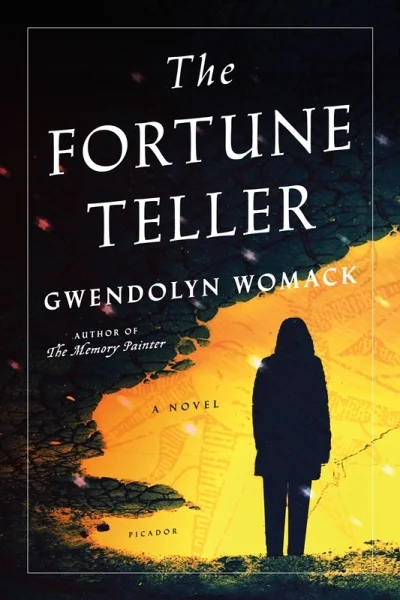
Cover Reveal: The Fortune Teller by Gwendolyn Womack

FROM THE AWARD-WINNING AUTHOR OF THE MEMORY PAINTER COMES A SWEEPING AND SUSPENSEFUL TALE OF ROMANCE, FATE, AND FORTUNE.

Semele Cohen appraises antiquities for an exclusive Manhattan auction house, specializing in deciphering ancient texts. And when she discovers a manuscript written in the time of Cleopatra, she knows it will be the find of her career. Its author tells the story of a priceless tarot deck, now lost to history, but as Semele delves further she realizes the manuscript is more than it seems. Both a memoir and a prophecy, it appears to be the work of a powerful seer, describing devastating wars and natural disasters in detail thousands of years before they occurred.

The more she reads, the more the manuscript begins to affect Semele’s life. But what happened to the cards? As the mystery of her connection to the manuscript deepens, Semele can’t shake the feeling that she’s being followed. Only one person can help her make sense of it all: her client, Theo Brossard. Yet Theo is arrogant and elusive, concealing secrets of his own, and there’s more to Semele’s desire to speak with him than she would like to admit. Can Semele even trust him?

The auction date is swiftly approaching, and someone wants to interfere—someone who knows the cards exist, and that the Brossard manuscript is tied to her. Semele realizes it’s up to her to stop them: the manuscript holds the key to a two-thousand-year-old secret, a secret someone will do anything to possess.

About the Author

Originally from Houston, Texas, Gwendolyn Womack studied theater at the University of Alaska, Fairbanks. She holds an MFA in Directing Theatre, Video and Cinema from California Institute of the Arts. Her first novel, The Memory Painter, was an RWA PRISM award winner in the Time Travel/Steampunk category and a finalist for Best First Novel. She now resides in Los Angeles with her husband and her son.

For more information, please visit Gwendolyn Womack’s website. You can also find her on FacebookTwitter, and Goodreads.

Excerpt: The Earl by Katharine Ashe

How does a bookish lady bring an arrogant lord to his knees? Entice him to Scotland, strip him of titles and riches, and make him prove what sort of man he truly is.

Opposites…

Handsome, wealthy, and sublimely confident, Colin Gray, the new Earl of Egremoor, has vowed to unmask the rabble-rousing pamphleteer, Lady Justice, the thorn in England’s paw. And he’ll stop at nothing.

Attract.

Smart, big-hearted, and passionately dedicated to her work, Lady Justice longs to teach her nemesis a lesson in humility. But her sister is missing, and a perilous journey with her archrival into unknown territory just might turn fierce enemies into lovers.

Excerpt

Zenobia was at her writing desk, quill between fingers more accustomed to pen than sewing needle,    spectacles perched on the bridge of her nose, and head bent to her latest pamphlet when, in an ominous  voice, Franklin announced, “The Earl of Egremoor.”

Twitching a blank sheet over her work, she arose.

There in her parlor doorway he stood, dwarfing her footman. Color from the brisk day without dusted his cheekbones, but otherwise he was exactly as he had been in Edinburgh months earlier: elegant, understated, and utterly perfect. From his cravat carved of Italian marble to his boots that shone like the blade of a sword, there was no hue that jarred or angle that displeased. Motionless and severe and entirely focused on her, he was a strong, magnificent creature of impeccable noble blood surveying her like a hawk hunting from far above and judging her paltry prey.

An unnerving silence stretched across the room. That he did not speak at once buoyed her courage; he must be at least as unhappy as she with this meeting.

“You needn’t have come,” she finally said. “I would have been content with a letter from your secretary.”

It could not be a smile causing the slight shadow about his mouth. This man did not smile. He bowed gorgeously, however, without excess or flourish but with glorious control. The hat and riding crop still in his grasp were props to reveal the sinews and long fingers of his hands, and they made it clear that he did not intend a lengthy call.

“Good day, my lady.” His voice was as smooth and deep as it had been in Scotland in the spring when he had barely spoken to her despite their attendance at the same wedding. “I trust you are well?”

“Oh, please,” she said crisply. “You don’t care if I am well or not. And I don’t care for empty social conventions, so let us dispense with small talk. I have heard about your father’s death and I am very sorry. You have my sincere sympathy.”

“Do I?” He moved into the parlor and she had the most disturbing impulse to seize a fireplace poker and brandish it. But he halted in the middle of the room.

“Yes, you do,” she said. “So now you may go.”

Something sharp flashed in his eyes and she felt it in her stomach like a little shock.

“I have only just arrived,” he said.

“And that is really about all of this call I can bear,” she said. “Good day, my lord.”

“Emily.”

He said it unremarkably. But the sound of her name upon his tongue did something horrible to her insides: it twisted them into a knot of very old and unwanted pain.

“I go by Zenobia,” she said before he could continue. “For several months now.”

“I see.” He advanced another step.

“Halt.” She thrust out her palm. His eyes were the most beautiful shade of blue, so dark, and so familiar. At one time she had thought that the warmest smile in the world rested in those eyes. “I have offered my sympathies and said good-day, and truly I meant both.” She was not, after all, a woman to fall to pieces over a pair of dark eyes. “Please go.”

“I cannot yet.” His jaw was just as Clarice and Shauna rhapsodized: taut and handsome and at this moment engaged in an intriguing little dance of muscular tension. “I must say something first.”

She frowned and tried not to stare at the flexing muscle. “Say it, and then leave.”

His shoulders seemed to set even more firmly in place. “My lady,” he said in quite a fearsome voice, “will you do me the honor of becoming my bride?”

For all of his experience in cowing people he wished to cow, Colin had never actually seen the color drain from a person’s face as swiftly and entirely as it now did from Emily’s. If he needed confirmation that she had dreaded this moment, here it was in the parchment white of her cheeks and brow. Even her lips paled—admirable lips, pink and shapely and formed to suggest laughter rather than the astonishment that parted them now. Her eyes widened too, brilliant emerald behind lenses of gold-rimmed spectacles. Her chin was a pixie’s, not soft and rounded but slightly sharp, and her features fine. Her hair had not changed in twenty years, except that now the pale wisps were confined in a simple queue rather than tangled with pine needles and mismatched ribbons. Dressed soberly in muted blue, she was the portrait of a reclusive maiden and clearly astonished, and he had never so powerfully wanted an interview to end quickly.

“You have got to be jesting,” she said into the thick silence.

“I do not jest.”

“Well then, you have gone mad.”

“On the contrary.”

“Oh.” A delicate V darted the bridge of her nose above the gold wire. “You are required to offer for me, aren’t you? By the terms of your father’s will.”

She was intelligent and perceptive, and forthright in a manner that would embarrass most other women. She hadn’t a care for what others thought of her. She never had.

“I am,” he said because he had always been honest with her. Except once.

“You needn’t have come here. You might have written to my father at Willows Hall.”

“The will specified the manner in which I was to make the offer.”

“Did it? How loathsome of your father.”

“I am—”

He found the unprecedented need to clear his throat. “I am also required to await your response.”

“This could not be more idiotic, could it? No, I won’t marry you. Now you can leave.” She turned to her desk, then looked over her shoulder, her lashes spread wide. “You are not actually required to marry me in order to inherit Maryport Court, are you? That could not possibly be legal. The estate is entailed.”

He actually felt his spine stiffen, the vertebrae aligning in a perfect column.

“Why?” He should leave. Immediately. Before he said something he would regret. “If I were, would your answer differ?”

“Of course not.” She paused and alarm sparked in the candid emeralds. “Is it the case?”

“No.” But the requirement that he marry her in order to maintain control of extensive unentailed properties in the West Country, as well as his mother’s jewels, was. “You are correct. The estate is bound to the title.”

“That must be a relief for you,” she said, turning her back to him again and sitting before a small writing table. “I would not have wished you to be separated from all you hold dear.” She reached for a pen. “I imagine the stipulation, even as it is, could not be held up to law. You might have contested it.”

“I chose not to.” To protect the privacy of their parents’ agreement. To protect his privacy. And hers.

“Well, now your devotion to duty is satisfied.” She dipped the pen in ink. “Good day.”

A hard, hot discomfort settled between his ribs. He was unaccustomed to being dismissed. And, for all that he had not looked forward to this meeting, he had not wanted it to go quite like this.

“Good-bye, Emily,” he said to her straight shoulders and glossy hair.

She did not reply or even lift her head. He turned to the door and for the last time walked away from the girl who had once been his best—his only—friend.

About the Author

Katharine Ashe is the award-winning author of historical romances that reviewers call “intensely lush” and “sensationally intelligent,” including How to Be a Proper Lady, an Amazon Editors’ Choice for the 10 Best Books of the Year in Romance, and My Lady, My Lord and How to Marry a Highlander, 2015 and 2014 finalists for the prestigious RITA® Award of the Romance Writers of America. Her books are recommended by Publishers Weekly, Women’s World Magazine, Booklist, Library Journal, Kirkus Reviews, Barnes & Noble, and many others, and translated into languages across the world.

Katharine lives in the wonderfully warm Southeast with her beloved husband, son, dog, and a garden she likes to call romantic rather than unkempt. A professor of European History, she writes fiction because she thinks modern readers deserve grand adventures and breathtaking sensuality too. For more about Katharine’s books, please visit www.KatharineAshe.com or write to her at PO Box 51702, Durham, NC 27717.

Connect: Website | Facebook | Twitter | Pinterest | Instagram | Newsletter | Goodreads 

Excerpt: Her Unexpected Engagement by Kyra Jacobs

Sometimes you’ve got to fake it ‘til you make it…

Stephanie Fitzpatrick wanted out of the spotlight after her pro-golfer husband was caught on camera cheating. But when she returns to Michigan for a job interview and some much-needed R&R, a fib told by her well-meaning sister has her looking for a temporary fiancé, or she can kiss her new start good-bye.

Desperate to hide the truth, she goes to the one man who can help—her former best friend.

Miles Masterson is relieved to see the Checkerberry Inn beginning to thrive once more. Not only does it ease his mind about his grandmother’s financial future, but also about his decision to finally escape town. But then one all grown up and sexy as hell friend from the past shows up needing rescue. Now the temptation to change the “temporary” arrangement into something more is making it harder to think about leaving.

Each book in the Checkerberry Inn series is a standalone, full-length story that can be enjoyed out of order.

Excerpt

Miles hung up, then dropped back into his office chair and scanned the space around him. This office had been his second home since graduation. It was where he’d cut his teeth on finances, played accountant, payroll clerk, marketing coordinator—you name it, if it had to do with anything other than manual labor here at the inn, he’d done it. And now, at long last, that was finally all about to change.

It wasn’t that he disliked the inn, or hated working for his grandmother. But the profits had been slim to none too often in the past, and keeping the old beauty afloat during the post 9/11 economic slump had taken its toll on him. And on Ruby. Every day she got a little older, a little more frail. But Brent was the responsible grandson, and he was on her payroll now as well. That meant the responsibility of watching out for their beloved Ruby could now officially be handed off, and no one would be able to misinterpret Miles’s overprotective ways for her anymore.

He suddenly felt a great weight lifted from his shoulders. He stood, drew in a deep breath, and made an executive decision to cut out of work early. For years he’d put his time in and then some. To say he’d earned a little comp time would be an understatement.

Besides, what would Ruby do if he left early—fire him?

With a smile on his face and feeling lighter than he had in years, Miles headed for the hall. Halfway to the lobby, a ping sounded from his phone. An email was in his inbox, the subject Techworks Info. He opened it with a flick of his thumb, rounded the corner, and caught his foot on an unexpected object. Unable to stop his forward momentum, Miles tripped over a pile of gaudy pink luggage and landed painfully on his right side. His cell went skidding down the hall as a startled squeak rang out from the luggage’s owner.

“Oh my gosh, I’m so sorry! I stopped to adjust my grip and suddenly you were there and…and, well, there just wasn’t enough time to react.”

An outstretched hand came into his peripheral vision. With a grimace, Miles pushed himself into a sitting position. This was just one out of a hundred—no, a thousand—things he wouldn’t miss when he left the inn: awkward encounters with flighty guests. He took a deep breath and looked toward the responsible party, ready to lie that it was quite all right and he was just fine. But then his gaze locked onto a ball cap-wearing, heart-shaped face with auburn brows drawn together above dark, oversized sunglasses.

Recognition hit him like a freight train. No cap or sunglasses in the world could keep him from recognizing his childhood best friend. The one girl who’d unknowingly set the bar for all those who came after, and set it so high that Miles had given up trying to find someone able to reach it.

“Stephanie?”

About the Author

Kyra Jacobs is an extroverted introvert who writes of love, humor and mystery in the Midwest and beyond. When this Hoosier native isn’t pounding out scenes for her next book, she’s likely outside, elbow-deep in snapdragons or spending quality time with her sports-loving family. Kyra also loves to read, tries to golf, and is an avid college football fan.

Connect: Website | Facebook | Twitter | Goodreads | Newsletter

Excerpt: Rules for a Rogue by Christy Carlyle

From the USA Today bestselling author of ONE DANGEROUS DESIRE comes a sparkling new series about a rogue who must learn how to follow the rules and a woman who wants to break all of them, perfect for fans of Maya Rodale and Lorraine Heath.

Kit Ruthven's Rules (for Rogues)

#1 Love freely but guard your heart, no matter how tempting the invader.

#2 Embrace temptation, indulge your sensual impulses, and never apologize.

#3 Scorn rules and do as you please. You are a rogue, after all.

Following the rules never brought anything but misery for Christopher “Kit” Ruthven. After rebelling against his controlling father and leaving the family’s Ruthven Rules etiquette book empire behind, Kit has been breaking every one imaginable for the past six years. He’s enjoyed London’s sensual pleasures and secured his reputation as a Rogue, but he’s failed to achieve success. When he inherits his father’s publishing business, Kit is forced back into the life he never wanted. Worse, he must face Ophelia Marsden, the woman he jilted but never forgot.

After losing her father and refusing a loveless marriage proposal, Ophelia has learned to rely on herself. To maintain the family home and support her younger brother, she tutors young girls in deportment and decorum. But her pupils would be scandalized if they knew their imminently proper teacher was also the author of a guidebook encouraging ladies to embrace their independence and overthrow outdated notions of etiquette like the Ruthven Rules.

As Kit rediscovers the life, and the woman, he left behind, Ophelia must choose between the practicalities she never truly believed in, or the love she’s never been able to extinguish.

Excerpt

Before Ophelia could gather her sister and head back to the kitchen, a knock sounded at the front door. Juliet clutched her notebook to her chest and bolted back into the library.

Slipping Guidelines behind her back with one hand, Ophelia grasped the doorknob with the other. She schooled her features into a pleasant expression in case it was Mrs. Raybourn or, heaven forbid, Mr. Raybourn, in need of more reassurance their girls weren’t on the high road to ruin because of the book no one knew she’d written.

When she pulled the door open, all the breath whooshed from her body.

Their visitor wasn’t any member of the Raybourn family.

“Kit Ruthven.”

“You remember me, then?” He grinned as he loomed on the threshold, his shoulders nearly as wide as the frame. Eyes bright and intense, he took her in from head to toe, and then let his gaze settle on her mouth. When he finally looked into her eyes, the cocksure tilt of his grin had softened. She read a wariness in his gaze that matched her own.

She’d spent years trying to forget those dark, deep-set eyes.

“I remember you.” Her book slipped, skidding across her backside and clattering to the floor as her throat tightened on sentiments she’d been waiting years to express. None of them would come. Not a single word. Instead, in outright rebellion, her whole body did its best to melt into a boneless puddle. Gritting her teeth, Phee fought the urge to swoon or, worse, rush into his long, muscled arms.

“I’m relieved to hear it.” He had the audacity to kick his grin into a smile, a rakish slash that cut deep divots into his clean-shaven cheeks. Then he took a step through her door. “I worried that—”

“No.” She lifted a hand to stop him. Looking at the man was difficult enough. Hearing his voice—deeper now but achingly familiar—was too much. If he came closer, she might give in to some rogue impulse. And that wouldn’t do. That wouldn’t do at all.

Ophelia swallowed hard. She needed a moment to gather her wits. To rebuild her walls.

“You dropped something.” He moved toward her, so close his sleeve brushed hers.

She lowered her hand to avoid touching him and jerked back when he bent to retrieve her book, watching as he turned the volume to read its title.

“Miss Gilroy’s Guidelines for Young Ladies. How intriguing. Looks as though Ruthven Publishing has some competition.”

Seeing him again was worse than she’d imagined. And she had imagined this moment aplenty. Far too many times. Not just on her infrequent jaunts to London but most days since they’d parted. The man had lingered in her thoughts, despite every effort to expel him.

Taking a shaky breath, she braced herself and faced him.

He’d always been tall. When they were children, she’d looked up to him. Literally. But he’d never used his size to bully others. More often he’d born teasing about his physique. Ungainly, his father had called him, and Kit repeated the word when referring to himself.

Now he offered no apologetic hunch in his stance. He didn’t cross his arms to narrow his body. More than embracing his size, he wielded his generous dimensions with a virile grace that made Phee’s mouth water. He stood with his long legs planted wide, shoulders thrown back. His chest was so broad that she itched to touch it.

Stop being a ninny, she chided herself. The most essential observation was that he did not look like a man who’d pined for her. Not a hint of guilt shadowed his gaze.

He thrust his hands behind his back, and the buttons above his waistcoat strained against the fabric on either side, as if the muscles beneath were too sizable to contain. Phee’s gaze riveted to the spot, waiting to see which would win—the pearly buttons or the dove gray fabric. When sense finally wound its way into her boggled mind, she glanced up into gilded brown eyes. He was the winner, judging by the satisfied smirk cresting his mouth.

Kit stood too near, close enough for her to smell his scent. A familiar green, like fresh-cut grass, but mingled now with an aromatic spice. Each breath held his spice scent heightened by the warmth of his body. The heat of him radiated against her chest.

His eyes were too intense, too hungry. He perused her brazenly, studying the hem of her outdated gown before his gaze roved up her legs, paused at her waist, lingered on her bosom, and caught for a moment on her lips. Finally, he met her eyes, and his mouth flicked up in a shameless grin.

She looked anywhere but at his eyes. On his neck, she noted the scar from a childhood adventure in the blackberry briar. Then she got stuck admiring his hair. Apparently his scandalous London lifestyle—if the rumors she’d heard were true—called for allowing his jet black hair to grow long and ripple in careless waves. Strands licked at his neck, curled up near his shoulders.

Time had been truly unfair. The years hadn’t weathered Kit at all. If anything, his features were sharper and more appealing. His Roman nose contrasted with the sensual fullness of his lips and those high Ruthven cheekbones. And his eyes. Gold and amber and chocolate hues chased each other around a pinwheel, all shadowed by enviably thick ebony lashes. One theater reviewer had written of the “power of his penetrating gaze.”

Ophelia only knew he’d once been able to see straight to her heart.

Retreating from his magnetic pull, she dipped her head and stared at his polished black boots, the neatly tailored cuffs of his trousers. Black as pitch, his clothing reminded her why he was here. He’d come to the village to bury his father. He was no doubt as eager to return to London as she was to close her eyes and make the too tempting sight of him disappear. But why had he come to her home?

“My condolences to you and your sisters,” she offered, and almost added Mr. Ruthven. That’s what everyone in the village would call him now, and they would expect him to live up to the name. Just as his father had.

“You didn’t attend the funeral.”

“Would your father have wished me to?” They both knew Kit’s father had never welcomed her presence in his life. She didn’t bother mentioning that Ruthven’s rule book explicitly instructed ladies to avoid funerals.

He shrugged. “I only know what I wished.”

There it was. The heart of all that had passed between them spelled out in six words. Kit had never doubted what he wanted—freedom, fame as a playwright, financial success on his own terms. Unfortunately, she’d never made it high enough on his list.

“Forgive me for missing your father’s funeral. I promise to call on your sisters soon.” Ophelia slid the door toward him, forcing him to retreat as she eased it closed. “Thank you for your visit.”

Pushing his sizable booted foot forward, he wedged it between the door and its frame. “I don’t think we can count this as a visit until you invite me in.”

About the Author

Fueled by Pacific Northwest coffee and inspired by multiple viewings of every British costume drama she can get her hands on, Christy Carlyle writes sensual historical romance set in the Victorian era. She loves heroes who struggle against all odds and heroines who are ahead of their time. A former teacher with a degree in history, she finds there’s nothing better than being able to combine her love of the past with a die-hard belief in happy endings

Connect:   Website | Facebook | Twitter | Goodreads

Excerpt: Bishop's Queen by Cristin Harber

“I can’t shake the feeling that somebody’s watching me.”

One second Ella Leighton’s life was normal—the next, not so much. A social media maven who made her living saving sea turtles, the decision to join a reality TV show was a good one for the cause. But for her… the adjustment wasn’t easy.

Her publicist used phrases like online personality. An overnight celebrity. Everyone explained that was why she couldn’t shake the feeling. But none of their excuses could explain the letters. The pictures. And then her stalker crossed the line, triggering the demand for security.

Bishop O’Kane didn’t expect to come face-to-face with his ex-girlfriend when Titan sent him on bodyguard duty. The woman he once loved, the same one he walked away from years ago, was now his responsibility. Opposites in every way, they couldn’t be more different, but maybe they had never needed each other more.

With the FBI falling short in their investigation, the Titan team must rally around the woman with millions of followers, protecting her from her own as Bishop and Ella forge a path of second chances and forgiveness, unburying the past in order to survive.

About the Author

Cristin Harber is a New York Times and USA Today bestselling romance author. She writes sexy, steamy romantic suspense and military romance. Readers voted her onto Amazon’s Top Picks for Debut Romance Authors in 2013, and her debut Titan series was both a #1 romantic suspense and #1 military romance bestseller.

Connect: Website | Facebook | Twitter | Goodreads

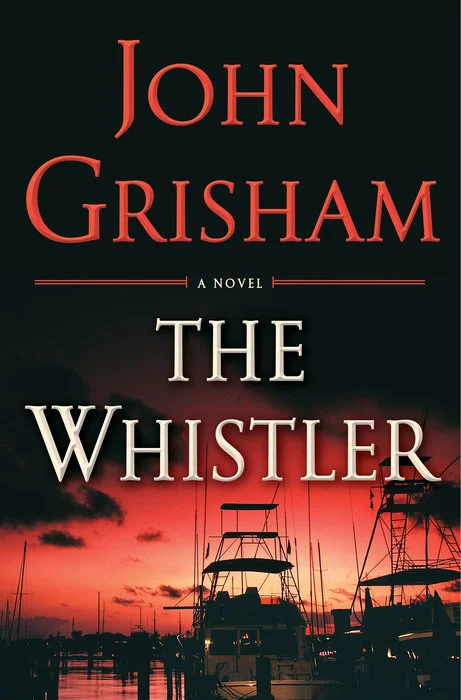
Spotlight: The Whistler by John Grisham

From John Grisham, America’s #1 bestselling author, comes the most electrifying novel of the year, a high-stakes thrill ride through the darkest corners of the Sunshine State.

We expect our judges to be honest and wise. Their integrity and impartiality are the bedrock of the entire judicial system. We trust them to ensure fair trials, to protect the rights of all litigants, to punish those who do wrong, and to oversee the orderly and efficient flow of justice.
     But what happens when a judge bends the law or takes a bribe? It’s rare, but it happens.
     Lacy Stoltz is an investigator for the Florida Board on Judicial Conduct. She is a lawyer, not a cop, and it is her job to respond to complaints dealing with judicial misconduct. After nine years with the Board, she knows that most problems are caused by incompetence, not corruption. 
     But a corruption case eventually crosses her desk. A previously disbarred lawyer is back in business with a new identity. He now goes by the name Greg Myers, and he claims to know of a Florida judge who has stolen more money than all other crooked judges combined. And not just crooked judges in Florida. All judges, from all states, and throughout U.S. history.
     What’s the source of the ill-gotten gains? It seems the judge was secretly involved with the construction of a large casino on Native American land. The Coast Mafia financed the casino and is now helping itself to a sizable skim of each month’s cash. The judge is getting a cut and looking the other way. It’s a sweet deal: Everyone is making money.
     But now Greg wants to put a stop to it. His only client is a person who knows the truth and wants to blow the whistle and collect millions under Florida law. Greg files a complaint with the Board on Judicial Conduct, and the case is assigned to Lacy Stoltz, who immediately suspects that this one could be dangerous.
     Dangerous is one thing. Deadly is something else.

Excerpt

1

The satellite radio was playing soft jazz, a compromise. Lacy, the owner of the Prius and thus the radio, loathed rap almost as much as Hugo, her passenger, loathed contemporary country. They had failed to agree on sports talk, public radio, golden oldies, adult comedy, and the BBC, without getting near bluegrass, CNN, opera, or a hundred other stations. Out of frustration on her part and fatigue on his, they both threw in the towel early and settled on soft jazz. Soft, so Hugo’s deep and lengthy nap would not be disturbed. Soft, because Lacy didn’t care much for jazz either. It was another give-and-take of sorts, one of many that had sustained their teamwork over the years. He slept and she drove and both were content.

Before the Great Recession, the Board on Judicial Conduct had access to a small pool of state-owned Hondas, all with four doors and white paint and low mileage. With budget cuts, though, those disappeared. Lacy, Hugo, and countless other public employees in Florida were now expected to use their own vehicles for the state’s work, reimbursed at fifty cents a mile. Hugo, with four kids and a hefty mortgage, drove an ancient Bronco that could barely make it to the office, let alone a road trip. And so he slept.

Lacy enjoyed the quiet. She handled most of her cases alone, as did her colleagues. Deeper cuts had decimated the office, and the BJC was down to its last six investigators. Seven, in a state of twenty million people, with a thousand judges sitting in six hundred courtrooms and processing a half a million cases a year. Lacy was forever grateful that almost all judges were honest, hardworking people committed to justice and equality. Otherwise, she would have left long ago. The small number of bad apples kept her busy fifty hours a week.

She gently touched the signal switch and slowed on the exit ramp. When the car rolled to a stop, Hugo lurched forward as if wide awake and ready for the day. “Where are we?” he asked.

“Almost there. Twenty minutes. Time for you to roll to your right and snore at the window.”

“Sorry. Was I snoring?”

“You always snore, at least according to your wife.”

“Well, in my defense, I was walking the floor at three this morning with her latest child. I think it’s a girl. What’s her name?”

“Wife or daughter?”

“Ha‑ha.”

The lovely and ever-pregnant Verna kept few secrets when it came to her husband. It was her calling to keep his ego in check and it was no small task. In another life, Hugo had been a football star in high school, then the top-rated signee in his class at Florida State, and the first freshman to crack the starting lineup. He’d been a tailback, both bruising and dazzling, for three and a half games anyway, until they carried him off on a stretcher with a jammed vertebra in his upper spine. He vowed to make a comeback. His mother said no. He graduated with honors and went to law school. His glory days were fading fast, but he would always carry some of the swagger possessed by all-Americans. He couldn’t help it.

“Twenty minutes, huh?” he grunted.

“Sure, or not. If you like, I’ll just leave you in the car with the motor running and you can sleep all day.”

 He rolled to his right, closed his eyes, and said, “I want a new partner.”

“That’s an idea, but the problem is nobody else will have you.”

“And one with a bigger car.”

“It gets fifty miles a gallon.”

He grunted again, grew still, then twitched, jerked, mumbled, and sat straight up. He rubbed his eyes and said, “What are we listening to?”

“We had this conversation a long time ago, when we left Tallahassee, just as you were beginning to hibernate.”

“I offered to drive, as I recall.”

“Yes, with one eye open. It meant so much. How’s Pippin?”

“She cries a lot. Usually, and I say this from vast experience, when a newborn cries it’s for a reason. Food, water, diaper, momma--whatever. Not this one. She squawks for the hell of it. You don’t know what you’re missing.”

“If you’ll recall, I’ve actually walked the floors with Pippin on two occasions.”

“Yes, and God bless you. Can you come over tonight?”

“Anytime. She’s number four. You guys thought about birth control?”

“We are beginning to have that conversation. And now that we’re on the subject, how’s your sex life?”

“Sorry. My mistake.” At thirty-six Lacy was single and attractive, and her sex life was a rich source of whispered curiosity around the office.

They were going east toward the Atlantic Ocean. St. Augustine was eight miles ahead. Lacy finally turned off the radio when Hugo asked, “And you’ve been here before?”

“Yes, a few years back. Then boyfriend and I spent a week on the beach in a friend’s condo.”

“A lot of sex?”

“Here we go again. Is your mind always in the gutter?”

“Well, come to think of it, the answer has to be yes. Plus, you need to understand that Pippin is now a month old, which means that Verna and I have not had normal relations in at least three months. I still maintain, at least to myself, that she cut me off three weeks too early, but it’s sort of a moot point. Can’t really go back and catch up, you know? So things are fairly ramped up in my corner; not sure she feels the same way. Three rug rats and a newborn do serious damage to that intimacy thing.”

“I’ll never know.”

He tried to focus on the highway for a mile or two, then his eyelids grew heavy and he began to nod. She glanced at him and smiled. In her nine years with the Board, she and Hugo had worked a dozen cases together. They made a nice team and trusted each other, and both knew that any bad behavior by him, and there had been none to date, would immediately be reported to Verna. Lacy worked with Hugo, but she gossiped and shopped with Verna.

St. Augustine was billed as the oldest city in America, the very spot where Ponce de León landed and began exploring. Long on history and heavy on tourism, it was a lovely town with historic buildings and thick Spanish moss dripping from ancient oaks. As they entered its outskirts, the traffic slowed and tour buses stopped. To the right and in the distance, an old cathedral towered above the town. Lacy remembered it all very well. The week with the old boyfriend had been a disaster, but she had fond memories of St. Augustine.

One of many disasters.

“And who is this mysterious deep throat we are supposed to meet?” Hugo asked, rubbing his eyes once again, now determined to stay awake.

“Don’t know yet, but his code name is Randy.”

“Okay, and please remind me why we are tag teaming a secret meeting with a man using an alias who has yet to file a formal complaint against one of our esteemed judges.”

“I can’t explain. But I’ve talked to him three times on the phone and he sounds, uh, rather earnest.”

“Great. When was the last time you talked to a complaining party who didn’t sound, uh, rather earnest?”

“Stick with me, okay? Michael said go, and we’re here.” Michael was the director, their boss.

“Of course. No clue as to the alleged unethical conduct?”

“Oh yes. Randy said it was big.”

“Gee, never heard that before.”

They turned onto King Street and poked along with the downtown traffic. It was mid-July, still the high season in north Florida, and tourists in shorts and sandals drifted along the sidewalks, apparently going nowhere. Lacy parked on a side street and they joined the tourists. They found a coffee shop and killed half an hour flipping through glossy real estate brochures. At noon, as instructed, they walked into Luca’s Grill and got a table for three. They ordered iced tea and waited. Thirty minutes passed with no sign of Randy, so they ordered sandwiches. Fries on the side for Hugo, fruit for Lacy. Eating as slowly as possible, they kept an eye on the door and waited.

As lawyers, they valued their time. As investigators, they had learned patience. The two roles were often in conflict.

At 2:00 p.m., they gave up and returned to the car, as smothering as a sauna. As Lacy turned the key, her cell phone rattled. Caller unknown. She grabbed it and said, “Yes.”

A male voice said, “I asked you to come alone.” It was Randy.

“I suppose you have the right to ask. We were supposed to meet at noon, for lunch.”

A pause, then, “I’m at the Municipal Marina, at the end of King Street, three blocks away. Tell your buddy to get lost and we’ll talk.”

“Look, Randy, I’m not a cop and I don’t do cloak-and-dagger very well. I’ll meet you, say hello and all that, but if I don’t have your real name within sixty seconds then I’m leaving.”

“Fair enough.”

She canceled the call and mumbled, “Fair enough.”

The marina was busy with pleasure craft and a few fishing boats coming and going. A long pontoon was unloading a gaggle of noisy tourists. A restaurant with a patio at the water’s edge was still doing a brisk business. Crews on charter boats were spraying decks and sprucing things up for tomorrow’s charters.

Lacy walked along the central pier, looking for the face of a man she’d never met. Ahead, standing next to a fuel pump, an aging beach bum gave a slight, awkward wave and nodded. She returned the nod and kept walking. He was about sixty, with too much gray hair flowing from under a Panama hat. Shorts, sandals, a gaudy floral-print shirt, the typical bronze, leathery skin of someone who spent far too much time in the sun. His eyes were covered by aviator shades. With a smile he stepped forward and said, “You must be Lacy Stoltz.”

She took his hand and said, “Yes, and you are?”

“Name’s Ramsey Mix. A pleasure to meet you.”

“A pleasure. We were supposed to meet at noon.”

“My apologies. Had a bit of boat trouble.” He nodded down the pier to a large powerboat moored at the end of the dock. It wasn’t the longest boat in the harbor at that moment, but it was close. “Can we talk there?” he asked.

“On the boat?”

“Sure. It’s much more private.”

Crawling onto a boat with a complete stranger struck her as a bad idea and she hesitated. Before she could answer, Mix asked, “Who’s the black guy?” He was looking in the direction of King Street. Lacy turned and saw Hugo casually following a pack of tourists nearing the marina.

“He’s my colleague,” she said.

“Sort of a bodyguard?”

“I don’t need a bodyguard, Mr. Mix. We’re not armed, but my friend there could pitch you into the water in about two seconds.”

“Let’s hope that won’t be necessary. I come in peace.”

“That’s good to hear. I’ll get on the boat only if it stays where it is. If the engines start, then our meeting is over.”

“Fair enough.”

She followed him along the pier, past a row of sailboats that looked as though they had not seen the open sea in months, and to his boat, cleverly named Conspirator. He stepped on board and offered a hand to help her. On the deck, under a canvas awning, there was a small wooden table with four folding chairs. He waved at it and said, “Welcome aboard. Have a seat.”

Lacy took quick stock of her surroundings. Without sitting, she said, “Are we alone?”

“Well, not entirely. I have a friend who enjoys boating with me. Name is Carlita. Would you like to meet her?”

“Only if she’s important to your story.”

“She is not.” Mix was looking at the marina, where Hugo was leaning on a rail. Hugo waved, as if to say, “I’m watching everything.” Mix waved back and said, “Can I ask you something?”

“Sure,” Lacy said.

“Is it safe to assume that whatever I’m about to tell you will be rehashed with Mr. Hatch in short order?”

“He’s my colleague. We work together on some cases, maybe this one. How do you know his name?”

“I happen to own a computer. Checked out the website. BJC really should update it.”

“I know. Budget cuts.”

“His name vaguely rings a bell.”

“He had a brief career as a football player at Florida State.”

“Maybe that’s it. I’m a Gator fan myself.”

Lacy refused to respond to this. It was so typical of the South, where folks attached themselves to college football teams with a fanaticism she’d always found irksome.

Mix said, “So he’ll know everything?”

“Yes.”

“Call him over. I’ll get us something to drink.”

2

Carlita served drinks from a wooden tray--diet sodas for Lacy and Hugo, a bottle of beer for Mix. She was a pretty Hispanic lady, at least twenty years his junior, and she seemed pleased to have guests, especially another woman.

Lacy made a note on her legal pad and said, “A quick question. The phone you used fifteen minutes ago had a different number than the phone you used last week.”

“Is that a question?” Mix replied.

“It’s close enough.”

“Okay. I use a lot of prepaid phones. And I move around all the time. I’m assuming the number I have for you is a cell phone issued by your employer, correct?”

“That’s right. We don’t use personal phones for state business, so my number is not likely to change.”

“That’ll make it simpler, I guess. My phones change by the month, sometimes by the week.”

So far, in their first five minutes together, everything Mix said had only opened the door for more questions. Lacy was still miffed at being stood up for lunch, and she didn’t like the first impression he made. She said, “Okay, Mr. Mix, at this point Hugo and I go silent. You start talking. Tell us your story, and if it has huge gaps that require us to fish around and stumble in the dark, then we’ll get bored and go home. You were coy enough on the phone to lure me here. Start talking.”

Mix looked at Hugo with a smile and asked, “She always this blunt?”

Hugo, unsmiling, nodded yes. He folded his hands on the table and waited. Lacy put down her pen.

Mix swallowed a mouthful of beer and began: “I practiced law for thirty years in Pensacola. Small firm--we usually had five or six lawyers. Back in the day we did well and life was good. One of my early clients was a developer, a real high roller who built condos, subdivisions, hotels, strip malls, the typical Florida stuff that goes up overnight. I never trusted the guy but he was making so much money I finally took the bait. He got me in some deals, small slices here and there, and for a while it all worked. I started dreaming of getting rich, which, in Florida anyway, can lead to serious trouble. My friend was cooking the books and taking on way too much debt, stuff I didn’t know about. Turns out there were some bogus loans, bogus everything, really, and the FBI came in with one of its patented RICO cluster bombs and indicted half of Pensacola, me included. A lot of folks got burned--developers, bankers, realtors, lawyers, and other shysters. You probably didn’t hear about it because you investigate judges, not lawyers. Anyway, I flipped, sang like a choirboy, got a deal, pled to one count of mail fraud, and spent sixteen months in a federal camp. Lost my license and made a lot of enemies. Now I lie low. I applied for reinstatement and got my license back. I have one client these days, and he’s the guy we’ll talk about from now on. Questions?” From the empty chair, he retrieved an unmarked file and handed it to Lacy. “Here’s the scoop on me. Newspaper articles, my plea agreement, all the stuff you might need. I’m legit, or as legit an any ex-con can be, and every word I’m saying is true.”

Excerpted from The Whistler by John Grisham. Copyright © 2016 by John Grisham. All rights reserved. No part of this excerpt may be reproduced or reprinted without permission in writing from the publisher.


About the Author

Long before his name became synonymous with the modern legal thriller, John Grisham was working 60-70 hours a week at a small Southaven, Mississippi law practice, squeezing in time before going to the office and during courtroom recesses to work on his hobby—writing his first novel.

Born on February 8, 1955 in Jonesboro, Arkansas, to a construction worker and a homemaker, John Grisham as a child dreamed of being a professional baseball player. Realizing he didn’t have the right stuff for a pro career, he shifted gears and majored in accounting at Mississippi State University. After graduating from law school at Ole Miss in 1981, he went on to practice law for nearly a decade in Southaven, specializing in criminal defense and personal injury litigation. In 1983, he was elected to the state House of Representatives and served until 1990.

One day at the DeSoto County courthouse, Grisham overheard the harrowing testimony of a twelve-year-old rape victim and was inspired to start a novel exploring what would have happened if the girl’s father had murdered her assailants. Getting up at 5 a.m. every day to get in several hours of writing time before heading off to work, Grisham spent three years on A Time to Kill and finished it in 1987. Initially rejected by many publishers, it was eventually bought by Wynwood Press, who gave it a modest 5,000 copy printing and published it in June 1988.

That might have put an end to Grisham’s hobby. However, he had already begun his next book, and it would quickly turn that hobby into a new full-time career—and spark one of publishing’s greatest success stories. The day after Grisham completed A Time to Kill, he began work on another novel, the story of a hotshot young attorney lured to an apparently perfect law firm that was not what it appeared. When he sold the film rights to The Firm to Paramount Pictures for $600,000, Grisham suddenly became a hot property among publishers, and book rights were bought by Doubleday. Spending 47 weeks on The New York Times bestseller list, The Firm became the bestselling novel of 1991.

The successes of The Pelican Brief, which hit number one on the New York Times bestseller list, and The Client, which debuted at number one, confirmed Grisham’s reputation as the master of the legal thriller. Grisham’s success even renewed interest in A Time to Kill, which was republished in hardcover by Doubleday and then in paperback by Dell. This time around, it was a bestseller.


Since first publishing A Time to Kill in 1988, Grisham has written one novel a year (his other books are The Firm, The Pelican Brief, The Client, The Chamber, The Rainmaker, The Runaway Jury, The Partner, The Street Lawyer, The Testament, The Brethren, A Painted House, Skipping Christmas, The Summons, The King of Torts, Bleachers, The Last Juror, The Broker, Playing for Pizza, and The Appeal) and all of them have become international bestsellers. There are currently over 225 million John Grisham books in print worldwide, which have been translated into 29 languages. Nine of his novels have been turned into films (The Firm, The Pelican Brief, The Client, A Time to Kill, The Rainmaker, The Chamber, A Painted House, The Runaway Jury, and Skipping Christmas), as was an original screenplay, The Gingerbread Man. The Innocent Man (October 2006) marked his first foray into non-fiction.

Grisham lives with his wife Renee and their two children Ty and Shea. The family splits their time between their Victorian home on a farm in Mississippi and a plantation near Charlottesville, VA.

Grisham took time off from writing for several months in 1996 to return, after a five-year hiatus, to the courtroom. He was honoring a commitment made before he had retired from the law to become a full-time writer: representing the family of a railroad brakeman killed when he was pinned between two cars. Preparing his case with the same passion and dedication as his books’ protagonists, Grisham successfully argued his clients’ case, earning them a jury award of $683,500—the biggest verdict of his career.

When he’s not writing, Grisham devotes time to charitable causes, including most recently his Rebuild The Coast Fund, which raised 8.8 million dollars for Gulf Coast relief in the wake of Hurricane Katrina. He also keeps up with his greatest passion: baseball. The man who dreamed of being a professional baseball player now serves as the local Little League commissioner. The six ballfields he built on his property have played host to over 350 kids on 26 Little League teams.

Connect: Website | Facebook