Spotlight: Baby on the Bad Boy’s Doorstep by Victoria James

Baby on the Bad Boy’s Doorstep
Victoria James
Published by: Entangled Bliss
Publication date: February 12th 2018
Genres: Adult, Contemporary, Romance

Connor O’Leary knows nothing about babies, families, or good women, yet he’s up to his ears in all three. Coming to Shadow Creek, Montana was meant to be a new start for this former oil rigger, but he had no idea that fresh beginning would include a baby on his doorstep and a hot nanny he can’t stop thinking about. Diapers, feedings, and late nights soothing his little bundle of surprise were definitely not on his itinerary.

The last thing Haley Thomson expected to see is the reclusive Connor with a baby in his arms. Before she knows it, she’s volunteered as nanny—temporarily. Helping out with baby Rosie is a dream come true and fills a space in her heart she believed will never be filled. But falling for Rosie’s hot and sexy bachelor daddy is not on her to-do list…but boy would she ever like it to be…

Goodreads / Amazon / Barnes & Noble / iBooks / Kobo

EXCERPT:

She stopped crying and opened her eyes, and he swore to God in that moment, when her large blue eyes latched onto his, when he felt a jolt of recognition run through his body, that this was his kid.

Except she was scarier than him, especially as her mouth opened wider and she let out a roar that would scare the crap out of a bear. What the hell was he going to do? Jack. Jack knew about babies—he had two.

He grabbed his phone and called his friend. “Yeah?”

“I have a situation,” he managed to choke out.

“Take a cab.”

“No, you idiot, I’m not wasted, I’m at home. You need to get over here. Now.”

He heard grumbling, muttering, and then finally, “Be there in ten.”

“Wait. Bring baby things.”

“What?”

“Baby things. Like, whatever a baby would need to, you know…live.”

“Oh man, this is starting to sound really bad.”

He hung up the phone and looked down at the baby. His daughter. Or Tess Junior, as the name on the birth certificate stated. He was going to have to change that when he applied for paternity. If he applied. If she was his.


Author Bio:

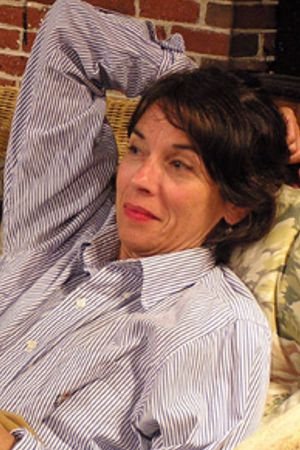
Victoria James is a New York Times and USA Today bestselling author of contemporary romance.

Victoria always knew she wanted to be a writer and in grade five, she penned her first story, bound it (with staples and a cardboard cover) and did all the illustrations herself. Luckily, this book will never see the light of day again.

In high school she fell in love with historical romance and then contemporary romance. After graduating University with an English Literature degree, Victoria pursued a degree in Interior Design and then opened her own business. After her first child, Victoria knew it was time to fulfill her dream of writing romantic fiction.

Victoria is a hopeless romantic who is living her dream, penning happily-ever-after's for her characters in between managing kids and the family business. Writing on a laptop in the middle of the country in a rambling old Victorian house would be ideal, but she's quite content living in suburbia with her husband, their two young children, and very bad cat.

Sign up for Victoria's Newsletter to stay up to date on upcoming releases and exclusive giveaways, follow her blog for daily antics and insight into her daily life, and get to know her on twitter and Facebook. She loves hearing from readers! www.victoriajames.ca

Website / Goodreads / Facebook / Twitter


GIVEAWAY!
a Rafflecopter giveaway

XBTBanner1

Spotlight: Rattlesnake Hill by Leslie Wheeler

It’s November in the Berkshires, a dreary time of dwindling light when the tourists have fled along with the last gasp of fall foliage. So when a stranger shows up in the sleepy hilltown of New Nottingham and starts asking questions, the locals don’t exactly roll out the welcome wagon.

            Bostonian Kathryn Stinson is on a deeply personal quest to solve a family mystery: the identity of a nameless beauty in an old photograph an ancestor brought with him to California over a century ago. But, as Kathryn quickly discovers, the hills possess a host of dark secrets – both ancient and new – that can only be revealed at the price of danger and even death.

Her suspicious neighbors on Rattlesnake Hill become openly hostile when Kathryn starts seeking answers to a more recent mystery: the murder of Diana Farley, who once occupied the house Kathryn is now renting. Was it Diana’s husband, who killed her to keep her from divorcing him, or her lover, Earl Barker, a backwoods charmer and leading member of a wild clan known for their violent tempers?

When Kathryn plunges into a passionate affair with Earl, she puts herself on a collision course with past and present. She must find out if Earl killed Diana, or risk becoming a victim herself.

Excerpt

Chapter 1

Three families lived on Rattlesnake Hill when I was a girl. At the top of the hill you had the Whittemores. They were rich folks from New York City. They built a big, brick house and spent the summers there. That mansion seemed like paradise to us Judds. We’d look up at it from our farm and pretend we were just a few rungs below the Pearly Gates. Beyond the Whittemores, you had the Barkers. They were a different sort. Backsliders, we called ’em, because everyone agreed they’d fallen from grace long ago. They lived on the wild back side of the hill, among the timber rattlesnakes. They made money off those snakes in the early days. They’d bring the tails to the town treasurer for a reward of two pennies a tail. Folks said it was the rattlesnake venom in their blood gave ’em such violent tempers.

−Recollections of Emily Goodale

“Whaddya think?” Brandy Russo asked, as they wrapped up the tour of the house on Rattlesnake Hill.

“It’s nice, but . . .” Kathryn didn’t want to sound too eager, lest the realtor jack up the rent. Also, the house seemed almost too good to be true. There must be a catch somewhere.

“Look what you’re getting,” Brandy barged on. “Charming shingle-style contemporary on eighteen secluded acres. Three bedrooms. One and one-half baths. Large, fully equipped kitchen. Separate dining room. Spacious living room. At $1000 a month this place is a steal.”

It was a bargain all right, but Kathryn wasn’t quite ready to commit. “I’m surprised no one’s snatched it up already.”

Brandy coughed. “A family had it for the summer and through the leaf-peeping season. But once the foliage was gone, they split. As for skiers, forget it. Gordon Farley—he’s the owner—won’t rent to them.”

“Why not?”

“Tenants-from-hell. Come in droves, track snow onto lovely hardwood floors like these.” Brandy tapped a pegged oak floorboard with the stubbed toe of her high heel. “Party all night and nearly set the house on fire fiddling with that.” She jabbed a bitten-down nail at the white enameled Scandinavian wood stove that stood on a slate hearth in the living room. “Leave a ton of trash behind, too. Whereas someone like you,” her voice switched to a soft purr, “is an ideal tenant. Single but mature. No kids, no pets.”

“I . . . um . . . have a cat.”

“One little kitty won’t bother Gordon,” Brandy backpedaled. “Not with the menagerie he talked about having here. One week it was quail, the next, llamas, then buffalo.”

Kathryn smiled. “Sounds like a frustrated zookeeper.”

“More like a gentleman farmer with time on his hands and money to burn.”

A sour note crept into Brandy’s voice. Did it reflect the attitude of a struggling local toward a wealthy outsider? Kathryn had only spent a few hours with Brandy, yet already she sensed a grittiness born of adversity.

Brandy appeared to be several years older than Kathryn; late thirties or early forties. She might have been pretty once, but now her dirty blonde hair hung lank and lusterless, and fault-lines showed in her face despite a heavy coat of make-up. Her breath and clothes reeked of nicotine, the rank odor Kathryn associated with dirty dishes and despair.

“What’d you say you’re gonna do while you’re here?” Brandy asked.

“Research.”

“This have to do with your job?”

“Actually not. My ancestors lived in New Nottingham over a hundred years ago, and I want to find out more about them.”

“A hundred years ago—wow!” Brandy’s glazed expression belied her enthusiasm. “But you’ve got a paying job, don’t you?”

Kathryn nodded. “I’m the curator of prints and photographs at a small private library in Boston. I’m able to take time off, because the building’s being renovated, and the collection I oversee is in storage. So there’s not much for me to do right now. Still, I plan on keeping in touch with my boss. How’s the internet connection here?”

“Fine,” Brandy said quickly.

“There’s Wi-Fi?”

“The village doesn’t have cable yet, but I’m sure it’ll happen any day now.”

“DSL?”

“Dial-up. There’s Wi-Fi in Great Barrington, though, and it’s only a twenty-minute drive away.”

Hmm. Maybe this was the catch she’d worried about. “What about cell reception?”

Brandy cleared her throat. “You won’t get a signal here, but I’ve heard there are hotspots further up the hill. Besides, convenient as it is, technology can be a huge distraction. I think you’ll find that the less of it you have, the more you’ll accomplish while you’re here. Oh, I almost forgot.” Brandy’s eyes gleamed like a gambler’s about to play her ace-in-the-hole. She swept across the room, heels clicking on the already extolled hardwood floor. With a dramatic flourish, she flung back heavy curtains revealing a panoramic sliding glass door.

The land behind the house sloped down to a pond, fringed by tawny cattails and embedded in the rocky earth like a large shard of antique glass. Beyond the pond, stubbled fields gave way to woods. Deciduous trees, bare of leaves and dun-colored except where bittersweet had caught the branches in an orange stranglehold, formed the front line of the woods’ advance. Behind them stood tall sentinel pines. The sky glowed an iridescent red-orange, as if a distant city were on fire. Magnificent.

A loud crack shattered the stillness. Kathryn clutched her heart. “What was that?”

“Probably a car backfiring down the road.” Brandy waved a hand dismissively.
The noise repeated: Boom, boom, boom! “Sounds like gunshots.”

“Maybe. But don’t worry. It’s just some guy doing a little target practice.”
“Does that happen a lot around here?” Much as she liked the house, she had no intention of putting herself in someone’s line of fire. This was a bigger negative than the lack of Wi-Fi and cell reception.

“Oh, no. And never near houses. They always go way off in the woods.”

“You’re sure?”

Brandy looked Kathryn in the eye. “Would I lie to you?”

Not lie outright—just not tell the whole truth.

“So listen, there are a few more places I could show you, but why waste your time? They’re nowhere as nice as this house. How about it?” Brandy thrust her face in Kathryn’s.

Resisting the hard sell, Kathryn took a step backward. “Okay if I take another look around by myself?”

“Not at all.” Brandy jerked the curtain pull, and the vivid tableau vanished. “I’ll wait for you in the car.”

Alone, Kathryn relaxed. She roamed the shadowy rooms with their curtained windows. The house was nothing like the Tudor mansion bordering the Beverly Hills Country Club, where she’d lived until her parents’ divorce when she was four. Nor was it like her second Eden, her great-aunt’s house on Diamond Head, where she’d spent the only happy times of her childhood. Still, she had the odd sense of being back in paradise.

She returned to the red room upstairs Brandy told her had served as a study. She’d wanted a red room when she was young, imagining it would be like waking up in a valentine. Her grandmother had talked her out of it. “You paint your room red, you’ll end up loony like your mother.” Her great-aunt, on the other hand, would have loved this room and the entire house with its pond and flaming sunset view. A sharp pang sliced through her.

The trip to New Nottingham in the Berkshire Hills of Western Massachusetts had been Aunt Kit’s idea. Ever since Kathryn could remember, Aunt Kit had wanted to learn the identity of their family’s Dark Lady, a beautiful, nameless woman in an old photograph an ancestor had brought with him to California. Long-distance inquiries proving fruitless, she finally decided a visit to the village was necessary and invited Kathryn to accompany her. “It will be wonderful seeing you after such a long time,” she said over the phone. “I’m so happy you’re willing to join me on a quest that’s always ranked high on my bucket list.”

They planned the trip for last summer, but that spring Aunt Kit died suddenly of a heart attack. She bequeathed the photograph, along with relevant correspondence, and the sum of fifty thousand dollars to Kathryn. The photograph sat on Kathryn’s dresser, while she debated whether to pursue the quest alone. At first, it seemed quixotic; she’d only accepted the invitation out of a desire to please her beloved aunt. But the more she looked at the photograph, the more she understood Aunt Kit’s fascination with it. “There’s a story here,” her aunt had often said. “A story that’s waiting to be told.”

She might have added, “A story with special meaning for you,” because that’s what Kathryn had come to believe. At some point, her aunt’s pet project had become hers. Now, standing in the valentine room of this house in the village where her ancestors once lived, she seemed to hover on the brink of discovery. As if she were poised at the tip of a high diving board, waiting to take the plunge, giddy with a mixture of excitement and fear.

Buy on Amazon | Barnes and Noble

About the Author

An award-winning author of books about American history and biographies, Leslie Wheeler has written three Miranda Lewis “living history” mysteries: Murder at Plimoth Plantation, Murder at Gettysburg, and Murder at Spouters Point. Her mystery short stories have appeared in numerous anthologies including Day of the Dark, Stories of Eclipse, and the Best New England Crime Stories series, published by Level Best Books, where she was a co-editor/publisher for six years. A member of Mystery Writers of America and Sisters in Crime, she is Speakers Bureau Coordinator for the New England Chapter of SinC. Leslie divides her time between Cambridge, Massachusetts and the Berkshires, where she does much of her writing in a house overlooking a pond.

Connect: Website | Facebook | Twitter: @Leslie_Wheeler | Goodreads

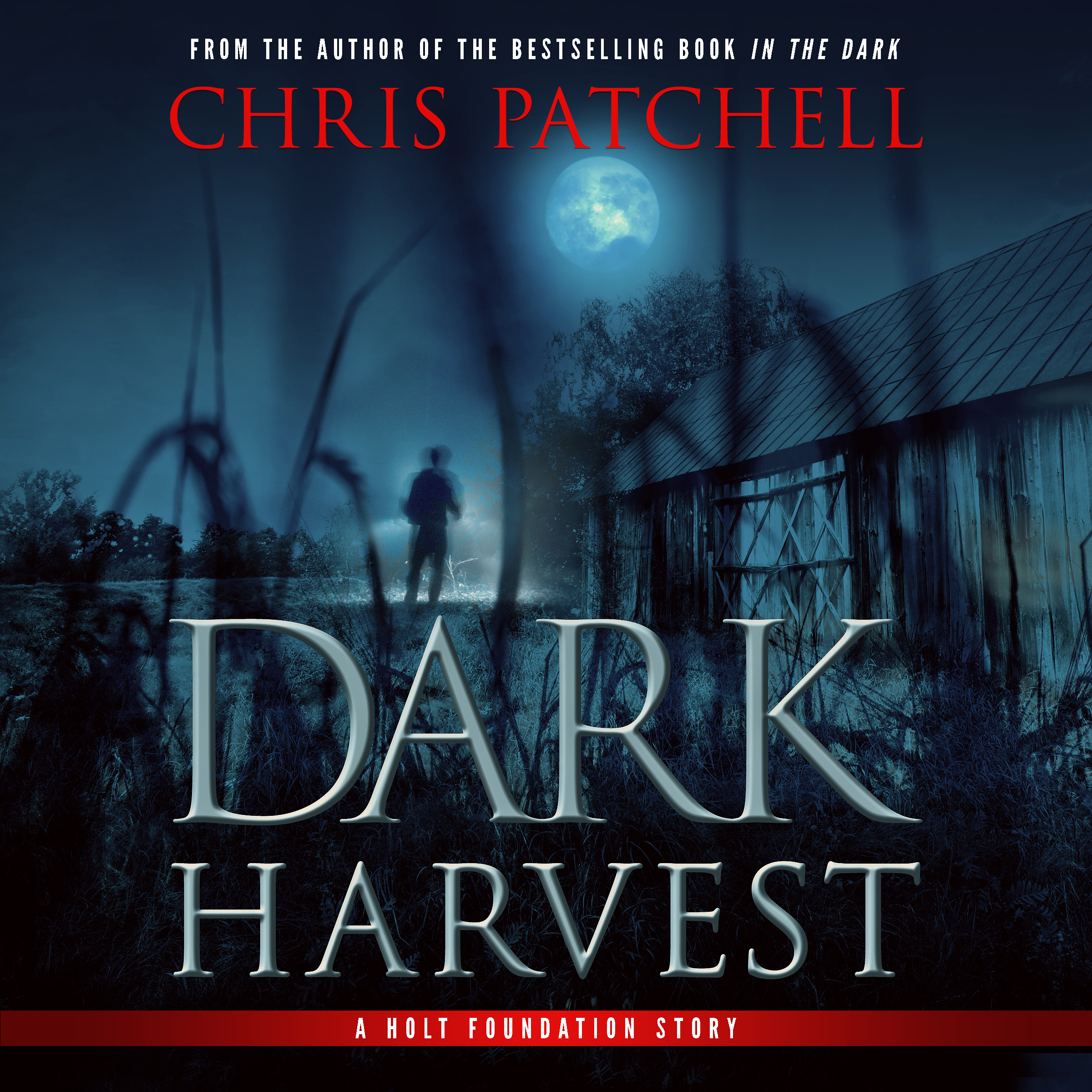
Spotlight & Audio Excerpt: Dark Harvest by Chris Patchell and narrated by Lisa Stathoplos and Corey Gagne

Becky Kincaid ventures out in the middle of a snowstorm to buy a car seat for her unborn baby and never makes it home. When a second pregnant woman disappears, Marissa Rooney and the team at the Holt Foundation fear a sinister motive lurks behind the crimes.

Lead investigator Seth Crawford desperately searches for the thread that binds the two cases together, knowing that if he fails, another woman will soon be gone. While Seth hunts for clues, a madman has Marissa in his sights and she carries a secret that could tear her whole world apart.

Can Seth stop the killer before he reaps his...dark harvest?

Excerpt

Audio Excerpt

Buy on Audible

About the Author: Chris Patchell

Chris Patchell is the bestselling author of In the Dark, Dark Harvest, and the Indie Reader Discovery Award winning novel Deadly Lies. Having recently left her long-time career in tech to pursue her passion for writing full-time, Chris pens gritty suspense novels set in the Pacific Northwest, where she lives with her family and two neurotic dogs.

WebsiteTwitterFacebookInstagram

About the Narrator: Lisa Stathoplos

Lisa Stathoplos has been a professional actor working onstage, in film and commercial VO work for many years as well as narrating books and performing in Audiodramas for Audible.com and Hachette Audio. Most recently, Lisa played Nina Locke in Joe Hill and Gabriel Rodriguez’ epic multiple Audie award-winning 13-hour audio drama of their wildly popular graphic novel LOCKE AND KEY produced by Pocket Universe Productions’ AudioComics division and Finalrune Productions for Audible Studios.

About the Narrator: Corey Gagne

Corey Gagne is an audiobook narrator, stage, and voice actor from Portland, Maine. Corey trained at Mountview Theater Conservatory (now Mountview Academy) in London, England, and has appeared on stage in London, New York, Philadelphia, Austin, and Portland. His work as an audiobook narrator includes Inci by Mike Resnick and Tina Gower, The Constable's Tale by Donald Smith, the Sin du Jour series by Matt Wallace, The Goblin Crown by Robert Hewitt Wolfe, The Twilight of the Gods Series by Christopher G. Nuttall, The Black Wolves of Boston by Wen Spencer, The Builders by Daniel Polanski, and Dark Harvest and In the Dark by Chris Patchell.

Spotlight: The Sandman by Lars Kepler

The #1 internationally best-selling thriller from the author of The Hypnotist tells the chilling story of a manipulative serial killer and the two brilliant police agents who must try to beat him at his own game.

Late one night, outside Stockholm, Mikael Kohler-Frost is found wandering. Thirteen years earlier, he went missing along with his younger sister. They were long thought to have been victims of Sweden’s most notorious serial killer, Jurek Walter, now serving a life sentence in a maximum security psychiatric hospital. Now Mikael tells the police that his sister is still alive and being held by someone he knows only as the Sandman. Years ago, Detective Inspector Joona Linna made an excruciating personal sacrifice to ensure Jurek’s capture. He is keenly aware of what this killer is capable of, and now he is certain that Jurek has an accomplice. He knows that any chance of rescuing Mikael’s sister depends on getting Jurek to talk, and that the only agent capable of this is Inspector Saga Bauer, a twenty-seven-year-old prodigy. She will have to go under deep cover in the psychiatric ward where Jurek is imprisoned, and she will have to find a way to get to the psychopath before it’s too late–and before he gets inside her head.

Buy on Amazon | Barnes and Noble

About the Author

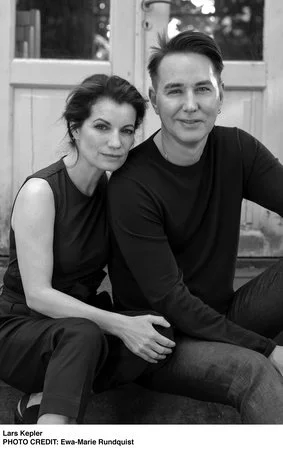
LARS KEPLER is the pseudonym of the critically acclaimed husband and wife team Alexandra Coelho Ahndoril and Alexander Ahndoril. Their internationally best-selling Joona Linna series has sold more than ten million copies in forty languages. The Ahndorils were both established writers before they adopted the pen name Lars Kepler, and have each published several acclaimed novels. They live in Stockholm, Sweden. Translated by Neil Smith.

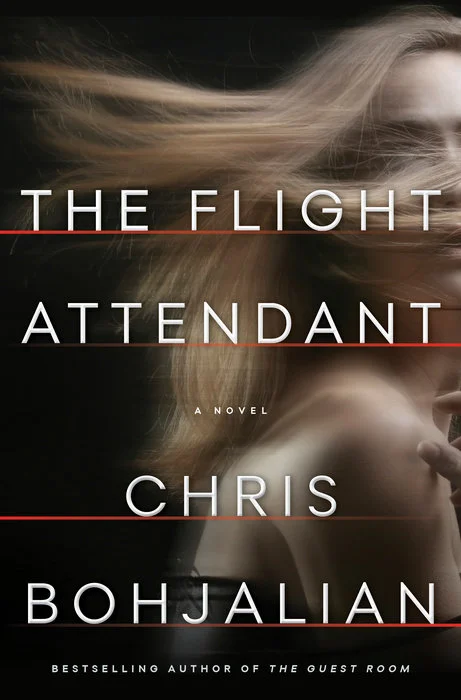
Read an excerpt from The Flight Attendant by Chris Bohjalian

From the New York Times bestselling author of The Guest Room, a powerful story about the ways an entire life can change in one night: A flight attendant wakes up in the wrong hotel, in the wrong bed, with a dead man – and no idea what happened.

Cassandra Bowden is no stranger to hungover mornings. She’s a binge drinker, her job with the airline making it easy to find adventure, and the occasional blackouts seem to be inevitable. She lives with them, and the accompanying self-loathing. When she awakes in a Dubai hotel room, she tries to piece the previous night back together, counting the minutes until she has to catch her crew shuttle to the airport. She quietly slides out of bed, careful not to aggravate her already pounding head, and looks at the man she spent the night with. She sees his dark hair. His utter stillness. And blood, a slick, still wet pool on the crisp white sheets. Afraid to call the police – she’s a single woman alone in a hotel room far from home – Cassie begins to lie. She lies as she joins the other flight attendants and pilots in the van. She lies on the way to Paris as she works the first class cabin. She lies to the FBI agents in New York who meet her at the gate. Soon it’s too late to come clean-or face the truth about what really happened back in Dubai. Could she have killed him? If not, who did? 

Set amid the captivating world of those whose lives unfold at forty thousand feet, The Flight Attendant unveils a spellbinding story of memory, of the giddy pleasures of alcohol and the devastating consequences of addiction, and of murder far from home.

Excerpt

1

She was aware first of the scent of the hotel shampoo, a Middle Eastern aroma reminiscent of anise, and then—when she opened her eyes—the way the light from the window was different from the light in the rooms in the hotel where the crew usually stayed. The morning sun was oozing through one slender line from the ceiling to the floor where the drapes, plush as they were, didn’t quite meet and blanching a strip of carpet. She blinked, not against the light but against the thumping spikes of pain behind her eyes. She needed water, but it would take a tsunami to avert the hangover that awaited. She needed Advil, but she feared the red pills that she popped like M&M’s at moments like this were distant. They were in the medicine bag in her own hotel room. In her own hotel.

And this definitely wasn’t her hotel. It was his. Had she come back here? Apparently she had. She was sure she had left. She thought she had returned to the airline’s considerably more modest accommodations. At least that had been her plan. After all, she had a plane to catch this morning.

Her mind slowly began to tackle the questions she would need to answer when she rolled over, the principal one being the most prosaic: what time was it? It seemed that the clock was on his side of the bed, because it wasn’t on hers. On her nightstand was the phone and a china tray with date and sugar cookies and three perfectly cubed Turkish delight candies, each skewered with a toothpick-sized silver spear. Time mattered, because she had to be in the lobby of the correct hotel—her hotel—with the rest of the crew by eleven fifteen, to climb with them all into the shuttle to the airport and then the flight to Paris. Everything else, including how she was going to find the courage inside her to swing her legs over the side of the bed and sit up—a task that, given how she felt, would demand the fearlessness of an Olympic gymnast—was secondary. She breathed in slowly and deeply through her nose, the noise a soft whistle, this time inhaling a smell more pronounced than the anise: sex. Yes, the room was rich with the unmistakable scent of a luxury hotel shampoo, but she could also smell herself and she could smell him, the evidential secretions from the night before. He was still there, an absolutely silent sleeper, and she would see him once she rolled over. Once she sat up.

God, if only she’d brought him back to her room. But at dinner he had slipped her a room key, telling her he would be back by nine and to please be waiting for him there. She had. His room was a suite. It was massive, impeccably decorated and bigger than her apartment in Manhattan. The coffee table in the living room was inlaid with mother-of-pearl, the wood polished to the point that it reflected the light like a full moon. There was a bottle of Scotch in the bar—this was a real bar, not a minibar or campus fridge with a couple cans of Coke Zero on the lone shelf—that might cost more than the monthly maintenance on her apartment back in New York.

She closed her eyes against the shame, the disgust. She tried to remind herself that this was just who she was—how she was—and to ratchet down at least a little bit the self-loathing. Hadn’t they had fun last night? Of course they had. At least she presumed they had. When she had first opened her eyes, she had hoped for a moment that she had only been passed-out drunk, but no, it was clear that she had been blackout drunk. Again. The difference was not semantics. She experienced both. Passed-out drunk was more humiliating when it happened: she was the woman with her face half buried in the throw pillows on the couch, oblivious to the party moving on without her. Blackout drunk was more embarrassing the next morning, when she woke up in strange beds with strange men, and not a clue how she’d gotten there. She could recall this hotel room and this man, and that was a good sign, but clearly there were chasm-like gaps in her memory. The last thing she could recall was leaving. In her memory, she was dressed and she was exiting this suite, and he was in one of those marvelous hotel room robes, black and white zebra stripes on the exterior, terrycloth on the inside, and joking about the broken bottle of Stoli they had yet to clean up. He’d mumbled that he would deal with it—the spilled vodka, the dagger-like shards—in the morning.

And yet here she was. Back in his bed.

She sighed slowly, carefully, so as not to exacerbate her looming headache. Finally she lifted her head and felt a wave of nausea as the room spun. Instantly she sank back into the pillow’s voluptuous, downy welcome.

On the plane, he had been wearing cologne, something woody she liked and he had told her was Russian. He loved the Russians, he said. Yes, he was an American, a southern boy, he joked, but he was descended from Russians and felt he still had a Russian soul. Pushkin. Eugene Onegin. Something about the gleamings of an empty heart. The Russians poured money into his hedge fund, he beamed—and it was a beam, not a boast, it was so childlike—and the crazy oligarchs were like uncles to him. They were like teddy bears, not Russian bears, in his hands.

She couldn’t smell the cologne now, and then she remembered showering with him. It was a large, elegant shower of black-and-white-striped marble, including a marble bench, where he had sat down and pulled her onto his lap as he washed her hair with that anise shampoo.

His name was Alexander Sokolov, and he was probably seven or eight years her junior: early thirties, she guessed. He liked to be called Alex because he said Al sounded too American. In a perfect world, he confessed, he would be called Alexander because that sounded Russian. But when he started work, his bosses had suggested he stick with Alex: it was internationally neutral, which was important given the amount of time he spent overseas. He had grown up in Virginia, though he had no trace of a southern accent at all, and lived now on Manhattan’s Upper West Side, running a fund at Unisphere Asset Management. He was a math geek, which he said was the secret to his success and why his fund delivered the sorts of returns that kept everyone on both sides of the Atlantic so happy. It was evident that he enjoyed the work, though he insisted that in reality there were few things duller than managing other people’s money, and so mostly he wanted to talk about what she did. Her war stories. He was utterly fascinated.

He had been in 2C on the flight to Dubai and he hadn’t slept much on the plane—if at all. He had worked on his laptop, he had watched movies, and he had flirted with her. He had gotten to know her much better than she had gotten to know him. Before landing, they’d agreed they’d each take a catnap and then rendezvous for dinner. They were going to meet in his hotel lobby. They’d both known that dinner would be mere foreplay. She rolled his name over again in her mind one more time before bracing herself to turn over and face the whitecap breakers of pain. To face him. One more time she thought of how much arak she had drunk last night. One hundred and twenty proof. The clear liquid becoming the color of watery milk once they added the ice. And then there was the vodka, the Stolichnaya his friend had brought later that night. She’d drunk arak before; she drank it whenever she flew into Beirut, Istanbul, or Dubai. But had she ever drunk this much? She told herself no, but she was kidding herself. She had. Of course she had. One of these days she was going to get busted by the airline; one of these days she was going to fly too close to the sun and fail a drug test, and that would be the beginning of the end. It would be the beginning of the end of everything. She would be following the trail her father had hewn, and she knew where that ended.

No, it wasn’t her father’s trail, precisely, because he was male and she was female. She knew the truth of men and women and booze: it rarely ended well for either gender, but it was the women who wound up raped.

She sighed. It was too bad the airline didn’t fly into Riyadh. The hotel minibars in Saudi didn’t even have alcohol. She’d have to wear an ankle-length abaya. She wouldn’t be out alone, ever, so she wouldn’t be out picking up men, ever. Meeting them in their hotel lobbies. Ever.

She thought she might have been fine right now if Alex hadn’t taken that call from his friend and had them get dressed. The woman—and Cassie believed that her name was Miranda, but even if this hadn’t been one of her blackout benders, her memory this morning was still pretty damn foggy—had phoned just after they’d emerged from the shower, clean and postcoital and still a little drunk, and said she was going to stop by the hotel room for a nightcap. Cassie thought she was somehow involved in the hedge fund, too, and was going to be in the same meetings with Alex tomorrow. She may also have had something to do with Dubai real estate, but Cassie wasn’t sure where she had gotten this idea.

When Miranda arrived at the suite, it was clear that she and Alex really had very little history together, and were actually meeting for the first time. And yet they had a past that transcended work: it seemed they had mutual friends and business connections in the construction that was everywhere in this science fiction–like city by the sea. She was his age, with dark almond eyes and deep auburn hair that she had pulled back into an impeccable French twist. She was wearing baggy black slacks and an elegant but modest red and black tunic. And she sure as hell could hold her booze. The three of them had sat in the suite’s sumptuous living room for perhaps an hour, maybe a little longer, as they drained the vodka Miranda had brought. It crossed Cassie’s mind that this was some sort of planned threesome, and while she wasn’t about to initiate it herself, she knew she’d be game if either Alex or Miranda did. Something about the moment—the booze, the banter, the suite—had her aroused once again. Alex and Miranda were in chairs on opposite sides of that exquisite coffee table and she was alone on the couch, and somehow the fact that the three of them were a few feet apart made the moment feel even more heated. But, in the end, this wasn’t about a threesome. Miranda left, giving both her and Alex only air kisses beside their cheeks before Alex shut the door behind her. Still, Miranda couldn’t even have reached the elevator down some distant corridor before Alex was stripping off her clothes, then his, and they were making love again, this time in the bedroom on that magnificent king with the massive headboard that was shaped like an Arabian arch.

But then she had gotten dressed. She had. She knew she had. She was going to return to the airline’s hotel. Hadn’t she said good-bye to him at the entrance to his suite? Hadn’t she even gotten as far as the elevator, wherever it was, on his floor?

Maybe. Maybe not.

It really didn’t matter, because clearly she had come back to his room and climbed back into his bed.

Assuming, of course, that she had even really left. Maybe she was remembering the walk alone from the restaurant to his hotel room after dinner, when Alex had said he had a brief meeting with an investor. He’d told her he wanted her waiting for him naked in his room. She’d obliged.

And now here she was, naked again.

Finally she took a breath, cringing against the spikes behind her eyes, and turned 180 degrees in the bed to face Alex.

And there he was. For a split second, her mind registered only the idea that something was wrong. It may have been the body’s utter stillness, but it may also have been the way she could sense the amphibian cold. But then she saw the blood. She saw the great crimson stain on the pillow, and a slick, still wet pool on the crisp white sheets. He was flat on his back. She saw his neck, the yawning red trench from one side of his jaw to the other, and how the blood had geysered onto his chest and up against the bottom of his chin, smothering the black stubble like honey.

Reflexively, despite the pain, she threw off the sheet and leapt from the bed, retreating into those drapes against the window. It was while standing there, her arms wrapped around her chest like a straitjacket, that she noticed there was blood on her, too. It was in her hair and on her shoulder. It was on her hands. (Later, when she was in the elevator, she would surmise that the only reason she hadn’t screamed was self-preservation. Given the way her head was pulsating, the sound of her own desperate, panicked shriek might have killed her.)

Had she ever seen so much blood? Not from a human. A deer, maybe, back when she was a kid in Kentucky. But not a person. Never.

On the other side of the body, on the far side of the bed, was the clock. It was digital. It read 9:51. She had not quite ninety minutes to be in the lobby of another hotel and ready to leave for the airport and the flight back to Paris and then, tomorrow, home to JFK.

Her back against the drapes, she slid first into a baseball catcher’s pose and then onto the floor. She tried to focus, to make decisions. Her mind only slowed when she spotted the swath of broken glass on the floor, a constellation on the carpet between the foot of the bed and the elegant credenza inside which was the TV. Once upon a time, it had been the bottle of Stoli that Miranda had brought; now it was mostly slivers and triangular fragments that were almost pretty, though the neck was still attached to the shoulder and the shoulder was a jagged edge. And then, when she realized what that might mean, she felt the nausea rising up inside her. She raced to the bathroom with her hands on her mouth, as if her fingers really had any chance—any chance at all—of damming such a gravity-defying waterfall, and made it the toilet. But just barely.

Excerpted from The Flight Attendant by Chris Bohjalian. Copyright © 2018 by Chris Bohjalian. All rights reserved. No part of this excerpt may be reproduced or reprinted without permission in writing from the publisher.

Buy on Amazon | Barnes and Noble

About the Author

CHRIS BOHJALIAN is the author of twenty books, including The Guest Room; Close Your Eyes, Hold Hands; The Sandcastle Girls; Skeletons at the Feast; The Double Bind; and Midwives which was a number one New York Times bestseller and a selection of Oprah’s Book Club. Chris’s work has been translated into more than thirty languages, and three novels have become movies (Secrets of Eden, Midwives, and Past the Bleachers). Chris lives in Vermont and can be found at www.chrisbohjalian.com or on Facebook, Instagram, Twitter, Litsy, and Goodreads.

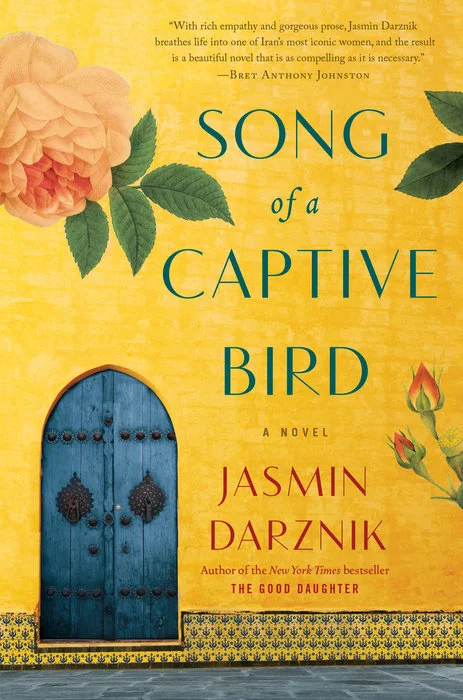
Read an excerpt from Song of a Captive Bird by Jasmin Darznik

A spellbinding debut novel about the trailblazing Iranian poet Forugh Farrokhzad, who defied society’s expectations to find her voice and her destiny
 
“Remember the flight, for the bird is mortal.”
 
All through her childhood in Tehran, Forugh Farrokhzad is told that Persian daughters should be quiet and modest. She is taught only to obey, but she always finds ways to rebel—gossiping with her sister among the fragrant roses of her mother’s walled garden, venturing to the forbidden rooftop to roughhouse with her three brothers, writing poems to impress her strict, disapproving father, and sneaking out to flirt with a teenage paramour over café glacé. During the summer of 1950, Forugh’s passion for poetry takes flight—and tradition seeks to clip her wings.
 
Forced into a suffocating marriage, Forugh runs away and falls into an affair that fuels her desire to write and to achieve freedom and independence. Forugh’s poems are considered both scandalous and brilliant; she is heralded by some as a national treasure, vilified by others as a demon influenced by the West. She perseveres, finding love with a notorious filmmaker and living by her own rules—at enormous cost. But the power of her writing only grows stronger amid the upheaval of the Iranian revolution.
 
Inspired by Forugh Farrokhzad’s verse, letters, films, and interviews—and including original translations of her poems—this haunting novel uses the lens of fiction to capture the tenacity, spirit, and conflicting desires of a brave woman who represents the birth of feminism in Iran—and who continues to inspire generations of women around the world.

Excerpt

1.

There’s a street where

the boys who were once in love with me,

the boys with tousled hair and lanky legs,

still think about the innocent girl

who was carried away by the wind one night.

—from “Reborn”

It was the end of my girlhood, though I didn’t know it yet. If I’d realized what would happen there, would I have followed my mother into that room in the Bottom of the City? If I’d guessed the purpose of our visit, would I have turned to run before my mother struck the brass knocker against the door? I doubt it. I was sixteen years old and by anyone’s account already a troublemaker, but in those moments that my sister and I stood under the clear blue sky of Tehran’s winter, I understood nothing about what would soon happen to me and I was much too frightened to break free.

My mother, sister, and I had set out from the house in the morning, wearing veils. This was strange and should have given me pause. My sister and I never wore veils, and the only time my mother veiled herself was at home when she prayed. She had a light cotton veil—white with pale-pink rosebuds—she wore for her prayers. The garments she handed my sister Puran and me that day were altogether different: black, heavy chadors I usually only saw old women wear.

“Put them on,” she ordered.

We must be visiting a shrine to atone for my sins; this was the only explanation I could think of for why my mother insisted we cover ourselves up. I pulled the chador over my head and then stood studying my reflection. The girl in the mirror was thin, with pale skin and thick bangs that refused to lie flat under the veil.

I watched as Puran drew the garment over her head. She looked tiny with her body draped in the fabric and only a triangle open for her face. There were dark half-moons of sleeplessness under her eyes and, just beneath her left eye, a bruise.

So she’s been punished, too, I thought.

“Don’t step in the joob!” my mother called out as my sister and I jumped clear of the icy waterways that ran down the center of the street. A few blocks from the house, we passed the first of many hawkers and peddlers. His two swaybacked donkeys were laden with pomegranates, melons, eggplants, and an assortment of crockery and cooking tools. When we neared Avenue Pahlavi, my mother hailed a droshky, a small horse-drawn buggy topped with a black canopy.

We made a tight fit, the three of us, pressed together in the back seat. My mother drew her veil across her face, then leaned forward to speak to the driver. He looked at her curiously. “Are you sure you want to go there?” I heard him say. He looked very uncomfortable. “Begging your pardon, but it’s no place for ladies such as yourself.” My mother said something I couldn’t hear. The driver tightened his necktie with one hand, took up his whip with the other, and with that the horse lurched into the street.

“Where are we going?” I whispered, nudging my sister gently a few times, but she wouldn’t look at me. She just sank back farther into her seat, staring miserably at her hands.

It was morning, just after ten o’clock, and the streets were crowded with people, many of them women on their way to the bazaar for the day’s provisions. At the bakery the line snaked around the building and into an alleyway. Men carried trays of flatbread on their heads; a boy hustled down the street with two huge earthenware jugs. We traveled in silence, turning off from the main thoroughfare and onto a street I didn’t recognize. The wheels of the droshky creaked and groaned and all the landmarks I knew disappeared until nothing was familiar. After perhaps another mile or so, we eventually passed a railway station. Here the sharp clap of the horse’s hooves against the concrete gave way to the soft thud of packed dirt, which was how I knew we were now in the southern section of Tehran, the city’s poorest district.

The streets turned shabby and each corner we passed, each mosque, each row of houses and shops, seemed dingier than the one before. Whole families crowded around dung fires, rubbing their hands over the flames to keep warm. At the doors of a mosque, mothers stood with babies strapped to their chests, begging for alms as their children played at their skirts. Men slumped along the walls of the houses, while older children milled about barefoot in the streets.

Beggars, puddles, rubbish, stray dogs—I couldn’t tear my eyes from any of it. Nobody I knew ever came here. I wanted to see everything. I wanted to understand.

“Tsss!” my mother hissed. “Don’t stare like that!” She tugged at me and pulled me back.

At an intersection, we came to an abrupt halt while a man led two donkeys through the street. All the houses had mud walls and sloping tin rooftops, and the roads were rutted with bumps. This area was called the Bottom of the City, but it wasn’t until much later that I’d learn that name.

“Are you sure you’ll be all right, madam?” said the driver when the buggy jerked to a stop. My mother seemed nervous, but she nodded and quietly handed him the fare.

As I stepped from the coach and into the lane, a strange odor assailed me—a mixture of mud, manure, and smoke. All at once I felt clammy and weak-kneed, and I reached for my sister’s elbow to steady myself. From the end of an alley came the sharp barking of dogs, and black plumes rose from the rooftops, smudging the bright January sky.

I followed my mother and sister a few paces, then stopped and planted my hands on my waist. “Why are we here? Where are we going?” I asked.

“It’s a clinic,” my mother answered. She spoke quietly, and now she, too, avoided my eyes. “For God’s sake, just hurry up.”

I was still confused, but I relaxed a little. The pain in my arm had worsened in the night, and my lower lip was swollen and throbbing. I’d be grateful for some pills to ease the soreness.

I gathered my veil around me, clasped it more tightly under my chin, and then followed my mother and sister down the lane. When we reached the last building, my mother gripped the edge of her veil with her teeth to free her hands and reached for the brass knocker. She banged on the door. She banged again. After a moment it opened a crack.

The vestibule was full of women. They stood in pairs and in groups, older women and several very young ones, from one end of the wall to the other. They waited with their heads tipped down, biting their lips and staring at the floor. No one spoke.

A worn, faded carpet had been strung up from the ceiling as a makeshift partition between the vestibule and the rest of the building. After some minutes, a girl of sixteen or seventeen drew back the carpet and led us down the corridor and into a cramped chamber lit by two small kerosene lamps. The air inside was laced with a strong, bitter scent—ammonia, I guessed. I squinted and scanned the room. There was a square window set high up in the wall and barred with a metal grate. Against one wall stood a table draped with a white cotton sheet. I glimpsed a washbasin in the farthest corner, etched with brown lines. The walls were bare, but as my eyes adjusted to the darkness, I saw that on one side of the room a crack reached from the floor to the ceiling in a single long, jagged line.

I glanced at my sister, but she still wouldn’t meet my eyes. Was it then, in that moment, that I began to understand why we’d come to this place, or, rather, why I had been brought here? Perhaps—but by this time it was already too late. The door opened and a stout older woman entered. She had a sharp chin and she wore her hair parted in the middle and pulled into a low bun. She shut the door, issued a quick greeting, and looked from me to my sister and then to our mother.

“Which one?” she asked.

My mother nodded in my direction.

I watched helplessly as my mother and sister were ushered away. The younger woman stayed behind, standing with her arms clasped together in front of her. “Sit,” the older woman ordered once they’d left, motioning to the table. I obeyed.

“Take off your underpants and then lie down,” she said. With my mother and sister gone, her voice was suddenly harsh.

“My underpants?”

She nodded.

I shook my head. “I won’t!”

The two women exchanged a look. That look—I’d never forget it and my own fear in witnessing it. I tried to stand, but before my feet reached the ground, the younger woman had already stepped forward. She was slight, slender as a reed, but her grip was astonishingly strong. She shoved me backward and, in what felt like a practiced gesture, jerked my legs up onto the table, dug her elbow into my chest, and cupped her hand firmly over my mouth.

“Lie still!” the older woman told me. She pushed up her sleeves and drew in a deep breath. She yanked my underpants down to my ankles and then placed one hand on each of my knees to force my legs open.

Whatever else I’d later forget about these next minutes, or only pretend to forget, I can say I fought her—and hard. I pushed myself up onto my elbows and kicked my legs, but the younger girl only bore deeper into my chest with one elbow and then cupped a hand over my mouth to stifle my screams, and the older one held me by my ankles.

“Lie still!” they told me, this time together.

Working quickly, the older woman forced my knees apart again, thrust two fingers inside me, and hooked them in the shape of a “C.” I jerked my legs back and kicked her, this time much harder. And that’s when it happened, in that instant when I tried to free myself. All of a sudden I felt a tearing pain, quick and deep, and I sucked in my breath.

The woman drew her fingers from me and wiped them briskly with a cloth. Something gave her pause, and a deep crease sprang up between her eyes. “You’re a stupid girl,” she said, looking into my eyes for the first time since she’d entered the room. “I told you to lie still, but you wouldn’t and now see what you’ve done.” She shook her head and then pitched the cloth into a wastebasket behind the table.

“The curtain of skin is intact,” she told my mother when she’d returned. “Your daughter is still a virgin.”

I held my breath, too scared to say a word.

“Thanks be to God,” my mother said, lifting her hands to the sky and murmuring a quick prayer. “And the certificate?”

“Of course,” the woman answered breezily as she made for the door. “I’ll sign it for you myself, khanoom.”

“I had no choice,” my sister sobbed afterward, when the others had left and it was just the two of us in the room. She buried her face in her hands. “Mother made me show her the letters Parviz wrote you. She turned up at the movie theater, you know, while you were alone with him. She must have guessed you were up to something, Forugh, because when we got home she made me do it. I had no choice, I swear. . . .”

She looked so pitiful with her tear-swollen eyes and her flushed cheeks. I could easily imagine how my mother had hounded her, and it made me miserable to see the bruise that had bloomed under her left eye since last night. I didn’t blame her for showing our mother my letters from Parviz, not really anyway, but on that day in the Bottom of the City I couldn’t muster a single word with which to answer my sister’s pleas for forgiveness. And I certainly couldn’t tell her this: When I stood to dress after the virginity test, my legs were shaking so hard and my head was so dizzy that I doubled over, and in that instant my eyes drifted to the wastebasket in the corner. What I saw there plunged my heart into my belly. A stripe of red on a white cotton cloth. My virginal blood.

For a long time I was afraid to tell anyone about what happened to me or even to let myself think about it at all, but I can tell you now that day was the end of my girlhood and the true beginning of my life. It always will be.

Excerpted from Song of a Captive Bird by Jasmin Darznik. Copyright © 2018 by Jasmin Darznik. All rights reserved. No part of this excerpt may be reproduced or reprinted without permission in writing from the publisher.

Buy on Amazon | Barnes and Noble

About the Author

Jasmin Darznik was born in Tehran, Iran, and moved to America when she was five years old. She is the author of the New York Times bestseller The Good Daughter: A Memoir of My Mother’s Hidden Life. Her work has been published in thirteen countries and recognized by the Steinbeck Fellows Program, the Corporation of Yaddo, and the William Saroyan International Prize. Her stories and essays have been published in The New York Times, The Washington Post, the Los Angeles Times, and elsewhere. She holds an MFA in fiction from Bennington College and a Ph.D. in English from Princeton University. Now a professor of literature and creative writing at California College of the Arts, she lives in Northern California with her family.