Spotlight: Faith in Love by C.M. Albert

Faith in Love
C.M. Albert
(Arden’s Glen Romance, #1)
Publication date: August 1st 2018
Genres: Adult, Contemporary, Romance

Full of grief and jaded by love, corporate philanthropist Egan MacGuire is given two options by his boss: take a leave of absence or kiss his job goodbye. A road trip with a friend is just the distraction Egan needs to figure out how to get his life back on track.

Celeste St. Angelo left the bright lights and big city for the mountains of North Carolina to open the next phase of her flourishing Angel Therapy business, a healing and wellness center. With the grand opening looming she has no time for distractions, especially love.

When divine timing sparks an unexpected romance, will Egan and Celeste be able to leave their troubled pasts behind and find the courage to have a little faith in love?

Goodreads / Amazon / Barnes & Noble / Kobo

Grab our copy for FREE for a limited time only!
PLUS!! Book 2 – Proof of Love – is on sale for 99¢!

EXCERPT:

He went to the kitchen and washed out their wine glasses, placing them in the drying rack. He grabbed two large Mason jars and filled them with water, then headed back to the great room. “Mind if I light your fire?” Egan asked.

Celeste burst out laughing. He hadn’t realized what was so funny until she said, “I bet you say that to all the girls!”

Egan grinned, his mouth turning up at one side. “I don’t usually ask . . . it just happens naturally.”

Celeste rolled her eyes, a smile still lighting them from within. Damn. If Egan could only make her smile like that all the time.

He loved the serious side of Celeste, but he loved her funny, lighter side even more. He’d never met anyone he could laugh with and cry in front of whom he also wanted to grab by the waist and dip into a serious kiss. God, that mouth. He would be dreaming about it tonight. He could feel himself staring, so he shook his head to clear it. He flipped on the switch for the gas fireplace, watching it spring to life. He settled back down on the couch next to Celeste. This time, he sat a little closer. He turned toward her, adjusting his leg, and brushed hers in the process. He felt the electricity shoot through his gut and straight into his heart. He wanted to hug her, protect her, and slide inside of her, all at the same time.

“What?” Celeste asked, using a small hand to gently turn his face toward hers. “You have such an intense look on your face right now. I don’t know what you’re thinking.”

“But you know what I’m feeling, don’t you?” Egan couldn’t stop himself if he’d wanted. He leaned his head to the side and melted his cheek into the softness of her hand. It felt so right there, cradling his strong jawline. He knew his five o’clock shadow would feel scratchy against the incredible smoothness of her skin. He couldn’t help but wonder how that hand would feel tracing down his chest and over his abs. How it would feel to have it smooth over the muscles in his thighs. His groin tightened at the thought of her fingers trailing over him, touching him, taking him. He leaned his head back against the couch and groaned.

“Perhaps this isn’t the best idea, Celeste,” he whispered.

“It’s definitely not a good idea, Egan.” But instead of pulling back, she leaned further into him, settling into the crook of his shoulder as she rested her head against his chest. “You smell so good. What are you wearing?”

Egan wrapped an arm around her shoulder, pulling her closer. “Um, soap?”

Celeste took in a deep breath again. “That cannot be just soap.”

“Soap and the natural scent God gave me.”

“Mmm,” she replied. “Lucky you.”

“Well, I don’t exactly sit around smelling myself, Celeste.”

“Yeah, that would be awkward.” She smiled when she looked at him, sitting up a little straighter on her feet, which she had tucked beneath her.

Her eyes were dark, but more. Flecks of amber kissed the brown that swirled around in her irises. He could lose himself in those eyes. Hell, I’m lost already. Who am I kidding?

She leaned forward, her eyes never leaving his. They were inches apart, and Egan had to clutch his fingers in a fist to stop himself from devouring her.

“Celeste,” he moaned, “if you start this, I might not be able to stop.”

“If I start this, I wouldn’t want you to stop,” she whispered.

Author Bio:

USA Today Best Selling Author C.M. Albert writes heartwarming romances that are both "sexy and flirty, sweet and dirty"! Her writing infuses a healthy blend of humor, inspiration, and romance. She's a sucker for a good villain, but is a die-hard believer in everlasting love. In her spare time, she and her husband wrangle their two kids and enjoy spending time outdoors. When not writing or kid wrangling, C.M. Albert is also a Certified Medical Reiki Master, chocolate chip cookie aficionado, kindness ambassador, and seeker of naps.

Website / Goodreads / Facebook / Twitter / Instagram


GIVEAWAY!
a Rafflecopter giveaway

XBTBanner1

Spotlight: Hiro Loves Kite by Lauren Nicolle Taylor

Hiro Loves Kite
Lauren Nicolle Taylor
(Paper Stars #2)
Published by: Clean Teen Publishing
Publication date: August 27th 2018
Genres: Historical, Young Adult

We offer our wounds and scars. Understanding that’s part of what makes us beautiful.

Nora finally has her beloved sister Frankie back but that’s just the beginning of their struggles. She must now become Kite. A stronger, more independent version of herself. A King. A guardian.

And Kettle has Kite’s heart. She gives it freely. But as he holds it, dear and close like a lost treasure, something holds him back: A feeling that he doesn’t deserve good things. A looming shadow that threatens to separate them. Kettle must accept that he is also Hiro: A Japanese American with every right to happiness and freedom.

Because Hiro loves Kite. And Kite won’t wait forever for him to tell her.

But they’re standing on icy ground. As the leverage they had on Kite’s abusive father wavers and life on the street affects Frankie’s health, the challenges threaten to break their bond.

Snow is gathering at the station doors and doubts are piling high. They must rely on each other. Believe in the magic that got them this far. If they don’t, it’s not just their future in jeopardy but the fates of all the street kids in their care. All the Kings.

Goodreads / Amazon / Barnes & Noble / iBooks / Kobo

EXCERPT:

Frankie Comes Home…

Paying for a hot dog in pennies and dimes is embarrassing. Being two pennies short and having the hot dog stand guy take pity on us was completely humiliating. We’re skinny. I just hope the Kings haven’t eaten everything we had stored away.

Without Kin and Keeps, there’s been a little more to go around. My shoulders sag. Now there are more mouths to feed. My fingers scrape the insides of my pockets, searching for a coin that maybe got snagged in the seams. If I turn them inside out, I really will look like a street urchin. I’m the pirate who opens the treasure chest, finds he’s been beat, and opens it again just to rub it in. I snort.

We wait for a large crowd to head for the subway and melt in. Frankie’s eyes are as wide as a sliced moon as we weave and duck. Eyes on each other, hands gripped tightly.

Kite pushes Frankie’s head under the turnstile as I pay with our last coin. She presses her back into me. The smell of faint perfume, the last of her old life, and salt, the new, coming from her hair. As I reach around her to push the stile, a two for one, her breath catches. I let my hand rest on her waist for a second. Let myself imagine we’re a couple on our way home from a shopping trip, and then it falls like so many un-granted wishes into a fountain.

Leaning close to her ear so she can hear me, I hold my breath, thinking inhaling any more of her sweetness may actually kill me. “Ready?”

She nods. Her cheek brushing my lips.

We take our route to the secret door. To the home we now share like kids playing house, only far too real.

Frankie, to her credit, rolls with the punches. Punch one: Hot dogs instead of roast beef and gravy for dinner. Punch Two: Cheating our way through the subway. Punch Three… I knock on the King’s door, and Krow answers. He looks us up and down, slick and distrustful for a moment, then breaks into a grin. “Kettle! Kite!” he shouts. “Kettle and Kite are home.” He stares at my hands. When he sees there’s no food—only a suitcase—he quickly looks away. But there’s no hiding his disappointment.

Frankie squeezes her way through the doorway into the vast, abandoned subway tunnel. My home. My refuge. And now hers. Blinking, she stands on her tiptoes. Lip in teeth. “Holy hell!” she shouts, and several Kings look her way.

Kite flushes pink, then taps her sister’s shoulder. “Frankie!” she chastises. “Language.”

We step inside, and Frankie swings her head from side to side. “I mean tank you, holy hell.”

We both chuckle, eyes connecting over the top of her head.

Punch three: “This is where we’re going to be staying for a while,” Kite’s voice chases after a galloping Frankie as she jumps from bed to bed. She is the spokes of a traveling star. She is the light you can’t catch.

Frankie doesn’t hear her, and Kite runs to catch her sister. I drag the case inside, plonk it on Kin’s bed. Now Kite’s to share with her sister.

Finally, Frankie stops running and presses a palm to her chest as she wheezes. Kite rushes to her, and she puts both hands on her sister’s shoulders. “Are you okay?”

Punch four is for me, and I feel it sock me right in the guts. As I watch them, I know. Like really know that I would do anything to help them. They are instantly and permanently part of this family. And it scares me.

Author Bio:

Lauren is the bestselling author of THE WOODLANDS SERIES and the award-winning YA novel NORA & KETTLE (Gold medal Winner for Multicultural fiction, Independent Publishers Book Awards 2017).

She has a Health Science degree and an honors degree in Obstetrics and Gynecology. A full time writer, hapa and artist, Lauren lives in the tucked away, Adelaide hills with her husband and three children.

Website / Goodreads / Facebook / Twitter


GIVEAWAY!
a Rafflecopter giveaway

XBTBanner1

Spotlight: Better Late Than Never by Kimberla Lawson Roby

In this stunning conclusion to the New York Times bestselling Reverend Curtis Black series, Curtis's secret past returns in an unwelcome--but ultimately healing--visit.

Rev. Curtis Black is no stranger to scandal. Throughout the decades, he has done much in the public eye, both good and evil. But what most people don't realize is that Curtis has been hiding a horrific childhood that has affected him in countless, unspeakable ways.

His buried past resurfaces when his estranged sister becomes alarmingly ill and his youngest child, twelve-year-old Curtina, becomes the kind of problem daughter whom he never imagined she could be. This is only the beginning.

The horror of Curtis's childhood secrets, as well as Curtina's wild and rebellious behavior, takes a critical toll on Curtis and the entire Black family. All the public scandals they've experienced over the years now seem like child's play compared to the turmoil they are facing in private. Who could have known that the deepest wounds would come from within?

Buy on Amazon | Barnes and Noble

About the Author

Kimberla Lawson Roby is the New York Times bestselling author of the highly acclaimed Curtis Black Series. She lives with her husband in Rockford, Illinois.

Connect: Website | Facebook | Twitter | Instagram

Spotlight: Our Stories, Our Voices: 21 YA Authors Get Real About Injustice, Empowerment, and Growing Up Female in America

From Amy Reed, Ellen Hopkins, Amber Smith, Sandhya Menon, and more of your favorite YA authors comes an anthology of essays that explore the diverse experiences of injustice, empowerment, and growing up female in America.

This collection of twenty-one essays from major YA authors—including award-winning and bestselling writers—touches on a powerful range of topics related to growing up female in today’s America, and the intersection with race, religion, and ethnicity. Sure to inspire hope and solidarity to anyone who reads it, Our Stories, Our Voices belongs on every young woman’s shelf.

This anthology features essays from Martha Brockenbrough, Jaye Robin Brown, Sona Charaipotra, Brandy Colbert, Somaiya Daud, Christine Day, Alexandra Duncan, Ilene Wong (I.W.) Gregorio, Maurene Goo. Ellen Hopkins, Stephanie Kuehnert, Nina LaCour, Anna-Marie LcLemore, Sandhya Menon, Hannah Moskowitz, Julie Murphy, Aisha Saeed, Jenny Torres Sanchez, Amber Smith, and Tracy Walker.

Buy on Amazon | Barnes and Noble

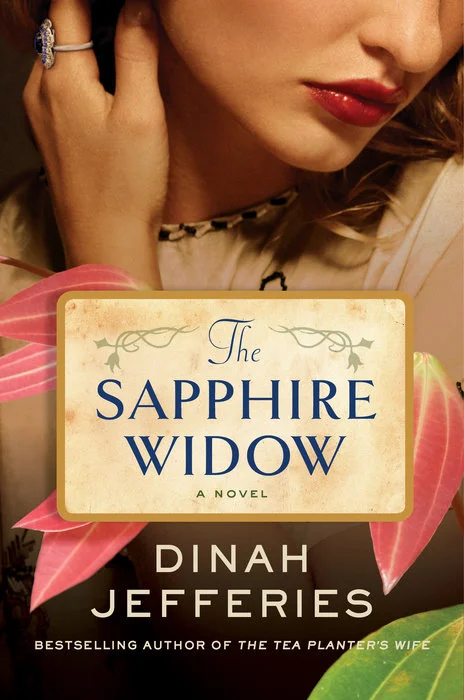
Spotlight: The Sapphire Widow by Dinah Jefferies

A sweeping, breathtaking story of love and betrayal from the internationally bestselling author of The Tea Planter’s Wife

Ceylon, 1935. Louisa Reeve, the daughter of a successful British gem trader, and her husband Elliot, a charming, thrill-seeking businessman, seem like the couple who have it all. Except what they long for more than anything: a child.
     While Louisa struggles with miscarriages, Elliot is increasingly absent, spending much of his time at a nearby cinnamon plantation, overlooking the Indian ocean. After his sudden death, Louisa is left alone to solve the mystery he left behind. Revisiting the plantation at Cinnamon Hills, she finds herself unexpectedly drawn towards the owner, Leo, a rugged outdoors man with a checkered past. The plantation casts a spell, but all is not as it seems. And when Elliot’s shocking betrayal is revealed, Louisa has only Leo to turn to . . .

Excerpt

1
Ceylon 1935
A cinnamon plantation 

His slight build makes it difficult to tell his age, but sitting under the hanging branches of the banyan tree he looks lonely and, as sunlight filters through the glossy leaves, it dances on his thin limbs. This boy, more wood sprite than child of flesh and blood, is the kind of child a mother longs to wrap her arms around. He selects a pebble and, with a furrowed brow, concentrates, then throws it to see how far it will go. Satisfied it’s flown farther than the one before, he clambers to his feet and walks around the little rhododendron-enclosed clearing, scuffing his sandals in the twigs and leaves that crackle and splinter beneath him. 

He listens to owls ruffling their feathers and shifting in the tree, watches a striped squirrel race up a tree trunk, and then he sniffs the air--citronella, burnt earth, the aroma of cinnamon, and a tang of salty ocean he can almost taste. He picks a pale apricot blossom and buries his nose in its soft, fruity fragrance. This one is for his mother. 

He watches a scarlet basker flitting from one leaf to another and wishes he had brought his book of insects with him. He’s never seen this one before except in the book, along with other dragonflies, damselflies and butterflies. He knows there are thousands of them in Ceylon--this place his mother calls a pearl.

As a fresh breeze blows he feels it on his arms and his skin tingles. It’s the best place in the world, this glittering sun-sparkled forest, and he eagerly awaits a walk with his mother, in the evening when it’s cooler. She finds the heat of the day tiresome, but he knows all the shady places and there’s always somewhere cool to hide. But then a change comes over him and a trace of sadness darkens his face. Although he’s content playing alone, something in him longs for more, and he shivers from an uncomfortable feeling of guilt.

The moment passes.

When he walks with his mother, her scent wraps around him, and he enjoys calling out the names of birds for her to laugh in pretend amazement that he knows so many of them. His mother doesn’t laugh enough, though it’s hardly surprising, he thinks, given their circumstances. That’s the phrase he hears all the time: “given our circumstances,” it’s probably not a good idea. Or, “given our circumstances,” perhaps we’d better not.

He has climbed almost to the top of the hill now, his favorite wide-open place. Here he can see for miles and if he half closes his eyes he can almost feel the ocean. He imagines the cool waves breaking over his burning skin; sees himself running on the beach as fast as he can with the wind blowing in his too-long hair; pictures the fishermen in the early evening before the sky turns pink and the sea turns lilac.

He’s startled by a rustle coming from the trees and stands still to listen. It’s probably a toque monkey, he thinks, or one of the langurs with the very long tails. You mustn’t try to befriend or feed toque macaques, his mother says. If you feed them they think you are subordinate. It means they think you are lower than they are. Sub-or-din-ate. Subordinate would be bad. Nobody wants to be less important, do they? 

2

Ceylon, December 23, 1935

The 300-year-old walled town of galle

It had been sweltering in the mid-eighties during the day and even now, at seven in the evening, it was still at least seventy-five degrees. Louisa Reeve’s bias-cut gown in silver satin-silk had been made up in Colombo and copied from a dress she’d spotted in American Vogue. By the time the magazine reached her it was months out of date, but still, you did what you could. Galle tailors, though solidly reliable, were not modern, and everything they ran up turned a bit too Sinhalese in the execution, but in Colombo some of the tailors could copy anything. As she stood at five foot nine, the elegant flowing femininity of the style suited her and certainly made a change from the linen shirt and comfortable trousers she usually wore to ride her bicycle.

Elliot came up behind her and wrapped her in a hug.

“Happy?” he whispered in her ear, before running his fingers through her hair.

“Hey, I’ve just spent ages on that.” She had softened her wayward blond curls into finger waves, with an imitation-sapphire clip on one side.

“Are you feeling okay?” Elliot said, his eyes serious and concerned.

She reached for his hand. “I’m feeling fine, though I was thinking of Julia earlier.”

“Really?” 

She nodded. “I’m fine.”

“Good. It’s going to be a wonderful Christmas and you look ravishing.” He turned to leave. “If you really are all right . . . I’ll just check on the wine.”

“Are you still planning to sail on Boxing Day?”

“I think so. Just for a few hours. You don’t mind? Jeremy has a spanking-new dinghy and we’re trying out a new-fangled trapezing harness too. He’s had it made up by a local on plans sent over from England. Perfect for racing, I’m told.” 

He brushed past her on his way to the door and, as she caught the trace of cedar cologne from his skin, she smiled and watched his retreating back in the mirror. Even after twelve years of marriage she thought him still a truly handsome man, with short curly brown hair, lively green eyes and a charm that drew the world to him. He never had to try too hard. Friendship came quickly and easily to him and there was always a buzz when he was around. She had friends too, though it took her longer to get to know people and she didn’t have Elliot’s direct way. She loved working people out though, trying to understand what made them tick and, for her, once she made a friend, it was usually a friend for life. 

She leaned out of the top-floor window and gazed at the blue sky and the shimmering turquoise seas surrounding Galle. The present tilted and the moment she had named her daughter, Julia, rushed back. Standing in this very spot, she’d held her for one precious hour until tears had blinded her vision. When had she died? Before or during the birth itself? To be born without life. What did it mean? These were the questions still haunting her. Just one more day and Julia would have been christened at the Anglican All Saints’ Church--the very place she and Elliot had been married and she herself had been christened.

Even now, over two years later, the past claimed her and, guilt-ridden, she felt there should have been something she could have done, or not done. She closed her eyes and pictured a heady sun-drenched day. Julia playing on the beach with the dogs, Tommy, Bouncer and Zip, the runt of the litter, all of them coated in glittering sand, damp from the sea and smelling of salt, and her little girl shrieking with laughter. She pictured her collecting shells and running, running and tripping over her feet in haste, desperate to show off her precious bounty, only to forget about it moments later. And then, oh so real, she imagined gathering her daughter in her arms after her bath, smelling the trace of baby shampoo in her hair, all apple and mint.

She sucked in her breath and, allowing the dream to retreat, returned to the present.

All that remained for her to do was to ensure the staff were in place and none of the flowers were wilting. She walked out onto the veranda, took a match and a taper, and then lit the external oil lamps and the citronella candles to repel mosquitoes. On the tips of her toes, she checked a lampshade where a red-vented bulbul had made its nest, and made sure the lightbulb had been removed. She heard the tchreek tchreek of the parent bird as it kept watch. “It’s all right, little one,” she whispered. “The bulb won’t be replaced until your chicks have flown away.” The garden surrounded the veranda, where the pink hibiscus blooms scattered in the breeze, and she loved to sit and listen to the dawn chorus while everything glowed in the early sunshine. 

She went back indoors to the living room, glancing up at the eighteenth-century wooden beams of the grand colonial house, where concealed lamps spread a golden sheen. She’d painted the room herself in orange and the door frames in turquoise: a look that startled some, addicted as they were to the regulation cream colonial walls, but she adored the brightness. Two dark-wood ceiling fans rotated the air and in one corner an indoor palm patterned the high wall with shadows. “I Only Have Eyes for You” was playing on the gramophone.

Their home at ground level housed the kitchen, the part-time housekeeper’s room, the main living areas and the offices. The guest bedrooms and two bathrooms were located on the next floor, along with Louisa’s sewing room. Then on the top floor there was her and Elliot’s bedroom, their bathroom, plus an airy private living room, a sun-filled peaceful space opening out on to a roof terrace. At the back of the garden another building housed the servants’ quarters, though some lived locally in Galle itself.

A little later and, as the last of the guests arrived, Louisa and Elliot were standing together in the main entrance hall to greet them. She glanced up at the skylight, through which acres of sun streamed during the day. The plantation shutters at the bank of windows fronting the house had been left open, though the windows themselves remained closed against insects. She hoped that from outside the glittering lights cast a welcoming warmth. She wanted all their guests to be happy on this glorious shining evening, and a bubble of excitement ran through her.

One of Elliot’s friends arrived. Jeremy Pike was the son of a well-to‑do rubber planter and had known Elliot back in Colombo. A well-dressed, neatly mustached man, he often spent a few days at the family’s summer residence in Galle and he and Elliot were frequent sailing partners, though Louisa had never gotten to know him well. He was what they called a man’s man. After him an elderly couple, friends of her father, started commiserating about the oppressive heat when, behind them, she spotted a tea-planter couple getting out of a Daimler. 

“Ah,” Elliot said. “That’s good. The Hoopers have come.”

Louisa watched the slight figure of a dark-haired woman in a violet dress walk slowly to the door with her tall husband. The woman was very pretty with hair that seemed to fall naturally in ringlets, and eyes a perfect match to the color of her dress. She carried a baby wrapped in a lacy shawl and when she stumbled slightly the elderly ayah following behind reached out a steadying hand. The man placed his arm around the young woman’s shoulders and Louisa thought how protective he seemed. 

Elliot stepped forward to welcome them, a broad smile on his face. “Laurence and Gwendolyn, how lovely that you made it.” 

Louisa stretched out her hand to the man and then his wife passed the baby to the ayah before coming to Louisa for a kiss on the cheek. “I’m so happy to see you again,” she said.

Louisa smiled. “It’s been months since we met up in Colombo.” 

“Tea at the Galle Face Hotel, wasn’t it? I loved looking out across the ocean and imagining Galle itself in the distance. And now here we are.” 

“You hadn’t had the baby yet, then.”

Gwen shook her head. “Gosh, no. It really has been too long.”

“Well, I’m more than happy you’re here now. What do you think of Galle?”

“I love it. I was here once before, when I first moved to Ceylon, but it’s been ages. The town is so sleepy, I can’t wait to explore tomorrow morning.”

“Would you let me show you around?”

Gwen nodded. “If you have time?”

“Lots of time, and I know the place like the back of my hand.”

“You’ve lived here all your life, haven’t you?”

“Except when I was at boarding school in England. I spend an awful lot of time cycling around. As you’ve probably noticed, we’re on a promontory and totally enclosed by the sea wall on three sides, so it’s very safe.” 

“I’d love to see it properly.”

“Then that’s settled. You must be staying at the New Oriental Hotel here in town?”

Gwen nodded.

“Then I shall call for you. Shall we say eight? Early is best before it gets too hot and sticky.”

“Terrific. This is a little break for us. My mother is over from England and she’s looking after our son, Hugh, but we’ll be back in time for Christmas Eve dinner.” She smiled up at her husband, who began to speak, but Elliot interrupted.

“What say you, Laurence . . . to a shot of a rather good malt?” 

As Laurence nodded his agreement Elliot clapped him on the back. “We’ll leave you two women to it,” he said with a wink at Laurence and then quickly touched Louisa on the hand. “That okay with you?”

She gave him a look that the others couldn’t see, and hoped he wouldn’t drink too much. But no, surely the gambling, and heavy drinking, were firmly in the past. Then she turned and smiled at Gwen. “What’s your baby called?” she asked.

“Alice. She’s six weeks old today, so too young to leave behind.” She glanced around.

“Let me point you in the direction of a room where you can leave Alice to sleep.”

While Gwen and the ayah settled the baby, Louisa wandered through the house. As she mingled with her guests, she sniffed air laced with a trace of lemon polish and the fresh scent of blossom from the pongam tree in the garden. She’d displayed swathes of its branches dotted around the house in large floor-standing ceramic vases. Early to bloom this year, the small flowers were pale purple and a favorite of hers.

She had invited some of her father’s friends, as well as her own, and had included many of the merchants from around the citadel that was Galle. A few were now on the veranda, wearing their best clothes, and gathering close to the citronella candles. The sound of their laughter trickled through to the hall. The nice thing about Galle was the way at least some of the British mingled with the Muslims, the Buddhists, the Burghers and the Hindus. It was a genuinely multinational, multi-faith place. There were lots of other lovely things too, like the enchanting maze of straight and narrow backstreets where she knew everybody by name, the smell of fresh ginger or mint tea on a sparkling morning, and the many goats, cows and lizards she encountered on her walks. She’d enjoy showing it all to Gwen.

Excerpted from The Sapphire Widow by Dinah Jefferies. Copyright © 2018 by Dinah Jefferies. All rights reserved. No part of this excerpt may be reproduced or reprinted without permission in writing from the publisher.

Buy on Amazon | Barnes and Noble

About the Author

DINAH JEFFERIES was born in Malaysia and moved to England at the age of nine. She now lives in Gloucestershire.

Spotlight: The Drama Teacher by Koren Zailckas

By the New York Times bestselling author of Mother, Mother and Smashed comes a propulsive new thriller: the story of a desperate and devious woman who will do anything to give her family a better life

Gracie Mueller is a proud mother of two and devoted wife, living with her husband Randy in upstate New York. Her life is complicated by the usual tedium and stressors—young children, marriage, money—and she’s settled down comfortably enough. But when Randy’s failing career as a real estate agent makes finances tight, their home goes into foreclosure, and Gracie feels she has no choice but to return to the creatively illegal and high-stakes lifestyle of her past in order to keep all that she’s worked so hard to have. Gracie, underneath all that’s marked her life as average, has a lot to hide about where she’s from, who she is, and who she’s been. And when things inevitably begin to spin out of her control, more questions about the truth of her past are raised, including all the ones she never meant to, or even knew to, ask. 
 
Written with the style, energy, and penetrating insight that made her memoir Smashed a phenomenon, Koren Zailckas’s next novel confirms her growing reputation as a psychological novelist that can stand up to the best of them.

Excerpt

Chapter One

The desk clerk walked behind me with purpose, adjusting the name tag on his lapel.

Poor casting, I thought when I saw his reflection in a mirrored alcove. His expression seemed to be aiming for stern, but his pimpled chin gave him a look of teen angst. If I’d seen him looking as cheesed-off anywhere but there--at the Odell Resort and Spa, described by Forbes as “a modern chateau nestled at the foot of the Catskill Mountains”--I would have guessed he’d failed maths or been friend-zoned by a girl.

“Hi there. Ma’am?” He was so square, you could wage a game of chess on him, and I reckoned he had the sort of bohemian parents that were a regional trend. Some failing authority figure had left him with no other course of rebellion. When sex, drugs, and a vegetarian diet are the norm, only steady employment has shock value.

“Looking for something?”

“Mum-eee.” Kitty pulled the belt of my white cotton robe. My hair was swept over my left breast, where the hotel’s logo should have been.

“Darling, please don’t tug.”

The robe, a gift from my first husband, Oz, was my last bastion of luxury. A few years earlier, it had been my Christmas present. It was the last thing Oz gave me before he was indicted for fraud.

Fitz, who was five going on thirty, echoed: “Kitty. Mum said don’t tug.”

I had planned that afternoon for Fitz in particular. He’d had his first ever swim in Cannes, surrounded by superyachts, but he’d grown sadly accustomed to the Catskill Community Pool, where the deck chairs are spattered with bird shite.

“You’re so very kind,” I told the clerk. “We’re meeting friends.”

In general, I could count on my accent to give me an air of refinement.

Back in my native Britain, people heard culture clash when I spoke. The British associated my cut-glass accent with grasping or some variant: putting on airs. I’d grown up striving for the upper classes’ attention to h’s and t’s, but fell into the dirty habit of elongating my vowels so that I might fit in with my working-class mates.

But in the States, there was only one type of English accent. Upstate New Yorkers assumed I was educated and worldly, cleverer than they were. Shopkeepers praised my pronunciations (“vitamins” or “oregano”) as though I were a rare, exotic vocalist. The other mums at Fitz’s play-school treated us as though we ate cucumber sandwiches for tea and hoarded money offshore.

But this young man seemed impervious to my BBC English. “I can look up your friend’s room number at the front desk.”

I pored over my mobile’s blank screen, pretending I’d received a new message. “Oh. It appears our friends have been waiting by the pool for thirty minutes. Shall we go meet them, Kit? Fitz?”

Just then, my phone legitimately vibrated. It was my current “husband,” Randy, calling from Florida.

I gestured to the clerk: One minute, sorry.

“Hiya, Randy, you all right?’

“--cie. Hi. Can you hear--e?” His voice was breaking up. Either a result of the looming mountains or the resort’s thick walls.

I slowed the children near an ebony sideboard and watched them shuffle travel brochures at twice the speed it took me to return them to their proper piles.

“I hear you. But it’s not a brilliant time. We’re late meeting friends.”

“Where?” he asked, a question that was shorthand for: How much will it cost?

I turned my back to Fitz. “The YMCA,” I said softly.

“How’s it going with your Social Security number?”

The question always hit me like a punch to the solar plexus.

“Look, Mummy! A choo-choo!” Kitty said. Leaflets for a railway museum rained like war propaganda across the lobby’s pristine floor.

“Going well.” I laid a hand on Fitz’s elbow--stopping him seconds before he wiped his nose on a silk sofa arm.

“So you got it?” Randy asked.

“Getting it.”

“I just don’t understand why it’s taking so long. Or why you didn’t request a social when you applied for your visa.”

“It was an oversight.”

Two years ago, I’d applied for the green card that would have entitled me to a social, but the letter that arrived from the Department of Homeland Security informed me that the documentation I’d submitted was incorrect. Rather than going back to Britain, I’d faked an immigration interview at Twenty-Six Federal Plaza on a day when I knew Randy had a real-estate closing. I took a bus to Manhattan, treated myself to a steak at Mark Joseph, and returned to Catskill, six hours later, with a story that held him over until a forgery-mill website delivered my novelty resident card. I’d waited until the morning after his bachelor party to show it to him, rightfully suspecting he’d be too hungover to notice the smeary blotches under the laminate.

The phony green card wasn’t even the biggest lie I had brought into our marriage. On paper at least, I was still married to Oz, because filing for divorce would have created a paper trail, and police wanted me for my role in his bogus property deals.

Randy, still on the phone, shifted into estate agent mode: “Gracie, you need your own credit line. Now. That way, if we need to borrow money, no one will know we missed a few mortgage payments.”

“A few? You said last month was the first time.”

He lowered his voice. “Gotta go. A lead just walked in.”

I hung up, herded the children through the sliding-glass doors, and slammed headfirst into the day’s crippling humidity. It was 2010, the hottest summer on record in New York. The gray sky, unexpectedly bright, seared my eyes. Waves of hot exhaust rippled across the parking lot.

Fitz urged Kitty to hold on to his back and run in tandem. “Come on! Be my jet pack!”

“Careful,” I warned, as the game almost always ended in skinned knees.

“We are being careful,” Fitz said with a look that accused me of needless drama.

The pool gate squealed on its hinges, and a few women rubbernecked at the sound.

I had never put much stock in vanity, but I wondered what those freshly waxed and mud-bathed ladies saw when they look at me.

Had they met me at Guildhall, my dramatic arts college, they would have seen a loosely defiant young woman with a burst nest of ginger curls and an attitude that said drinking cider on wet lawns was just as educational as reciting Shakespeare. I sang in a twee pop band and rolled immaculate joints. My fashion choices were daring and my mates even more so: hot pants and kimono, with a crusty, bisexual chap from the Royal College on my arm. I wouldn’t say strangers instantly noticed when my younger self walked into a room, but I had a certain heady trifecta: ambition, charisma, and a fair bit of luck.

By my early thirties, Fitz was in a fashionable sling across my chest and dreams of acting in the West End were a distant memory. But even then, I’d retained an air of sophisticated rebellion. I wore Peter Pan collars with black leather miniskirts. I peppered my speech with French and obscenities. I could act at ease in fifteen-bedroom country houses and even help Oz woo investors for Turkish condominiums he didn’t own.

Then of course, there was the indictment and the separation, and my mid-thirties found me in America, “married” to Randy, a top-earning Realtor. Too old to play the ingénue, I took on the role of the pampered housewife instead. Randy supported me by flipping houses, leasing out his income properties and closing on two or three real estate deals every week. And I lived a life of relative leisure, organizing menus and playdates, collecting Le Creuset cookware and Jo Malone perfumes, getting pregnant with Kitty. Then, just when I didn’t lack for anything, the real estate market collapsed, and life demanded austerity measures.

If anyone noticed me that day at The Odell, it was apt to be in pity, not awe. Having quit the salon, my hair was reaching red-gray. Without a gym membership, my body was slackening at the midriff and hips, widening and collapsing like a carnival tent after the fun’s over and the punters have gone home.

I panned the poolside, taking in our chaise options. There were no friends expecting us, of course. I’d planned on letting Fitz down gently, with a little white lie about how something came up: car troubles, stomach illness, someone had drunk a bad juice box or stuck their finger too far up their nose. “Caleb’s mum texted.”

That said, I had neglected to pack a lunch, so it was well worth making myself friendly.

Near the shallow end, there was a pensioner who looked promisingly lonely. She was sipping cucumber water in an Indian-style dupatta, wearing her wealth like the facelift scars around her ears. I paused in front of her and pretended a deep yawn, which she mirrored with subconscious empathy. But then, she glanced at Kit and Fitz with a look of child-hatred, so I carried on down the line of chairs, searching.

We walked by a toddler who was clutching a tennis ball as she trailed her Caribbean nanny. “Do you want to be in the shade?” the woman asked, loudly dragging a chair.

We passed a trophy wife who was describing her lunch to another: “I had the noodle bowl, and it was ah-mazing. Instead of pork, I had them throw in an egg and a whole bunch of veggies.”

There, I thought.

On the far side of the kiddie pool, a pair of yummy mummies discussed their children’s class assignments for the coming school year while a third woman, on the periphery, pretended not to eavesdrop.

“Who does Izzy have again?” one woman asked. “Ah well. All the third-grade teachers are a win-win. I heard Layla’s in that class too. And Willow. Oh, and Ollie Guerra. His parents just bought the Dylan house.”

When the onlooker’s phone chimed, she quit spying and rifled through her hideous charity tote bag, which was printed with the slogan kindness is always in fashion.

I nudged the children closer and sat as near to her as possible without seeming too keen. Leaving an empty sun lounger between us, I watched her divide her attention between her mobile and the supervision of an Asian girl in pink goggles that matched her pineapple-print suit. She was wearing the sort of expensive-looking Panama hat that Manhattanites wore when they came up for the weekend. But I caught a whiff of something gauche and suburban as well: her over-baked tan looked sprayed on, whereas the city mothers kept their skin liberal-pasty.

She was proud, not scolding, when she unknotted a bit of hair from her child’s earlobe: “Those earrings are probably not good pool earrings. Because they’re grandma’s pearls. Do you know what I mean?”

I set to work, delicately removing Kitty’s dress. No sudden movements. Nothing attention-seeking. Just enough motion to make the woman gradually aware of me.

Goggles in hand, Fitz galloped toward the pool.

“Walk, please,” I called. Then, to Kitty: “I’d like you to wear this hat so your lovely face doesn’t burn.”

“I don’t want a hat!”

In my peripheral vision, my mark pecked away at her phone with a manicured index finger.

I sighed a little louder than necessary. “Last time we were here, you sizzled, Sausage. I felt like the worst mummy of all time.”

The woman glanced up, making me wonder which part of what I said had captured her interest. A sense of superiority, maybe. Women are moths to the flame of others’ failures.

“Your mommy’s right,” she told Kitty. “Last year, at Long Beach Island, I sent my Gabby to the beach in pigtails and forgot to sunscreen the part. Her scalp blistered. She looked like she’d had hair-transplant surgery.”

“Is it all right to shift over?” I asked, already moving my bag to the empty chaise between us.

“Sure,” she said in a falsetto I liked. It had a girlish lack of authority.

“Cheers. The glare is blinding.”

Up close, I studied her designer swimming costume. It had a plunging neckline and complicated cutouts on either side of her pencil-line waist. She was reed-thin, with arms that weighed more in fuzz than actual meat. I wondered if she was body dysmorphia‑ed--a dinghy who thought herself a barge.

I took off my dress without making my usual efforts to hold in my stomach. Mine weren’t abdominals, they were abominables.

“Summer always makes me nostalgic for the twenties,” I said.

“You couldn’t pay me to be twenty again.” She began to frown, then glossed it over with the poor impression of a smile.

“I meant the 1920s. I would have worn those required leg coverings quite happily.”

She began to protest--“Oh please”--but lost conviction.

I slapped an invisible mosquito. “So many mozzies.” Accent as understated as a football chant.

She smiled and named a brand of natural repellent made from clove and catnip.

“Back in Britain, natural insecticides include a gin and tonic before dinner.”

“Right. You’re English.” A look of micro-rage flickered over her face. “I should have picked up on your accent. Haa-aah. I must be dazed from my massage.”

Her daughter scurried over, dripping water and pleading: “Now can we have ice cream?”

“We’ll order lunch first. OK?” She shrugged as if discounting herself.

Privately, I wondered whether it was more difficult to say no to an adopted child. Her girl was Chinese. She looked Jewish or Italian.

“How did you manage a massage with that adorable little one?” I asked.

“It’s a weekly tradition. I come up from Woodstock with my girlfriend Abigail--”

“Oh, you know Abigail Brown?”

“No, Abigail Wheeler. Do you know her?”

I shook my head. I didn’t know a soul in Woodstock. I just wanted to suggest we traveled in the same circles.

“Abigail and I buy season passes every year. She watches the girls by the pool while I have a massage or a facial. Then I return the favor and watch her little girl, Chloe. It keeps us sane.”

“She’s at the spa now?”

“She was earlier. She had to leave early today.”

“What a brilliant system. I think the last massage I had was prenatal.” I gestured toward the kiddie pool, where Fitz was half-submerged and Kitty, holding the metal railing, was making kicking splashes. “She’s mine. Kitty. She’s two. And Fitz, over there, is five.”

“Those are names you don’t hear often.”

“Kitty’s short for Katherine.”

“Kitty. That’s cute.” She made an awkward purring sound, then reached for her dinging phone.

“I’m Gracie. Mueller. By the way.”

But I had electronic competition. She was preoccupied with something: an app, or a text or a gif of a cat playing snooker.

Excerpted from The Drama Teacher by Koren Zailckas. Copyright © 2018 by Koren Zailckas. All rights reserved. No part of this excerpt may be reproduced or reprinted without permission in writing from the publisher.

Buy on Amazon | Barnes and Noble

About the Author

Koren Zailckas is the author of the internationally bestselling memoir Smashed: Story of a Drunken Girlhood and has contributed writing to The Guardian, US News & World Report, Glamour, Jane, and Seventeen. She currently lives with her family in the Catskill Mountains of New York. To learn more, visit korenzailckas.com.