Spotlight: Coming Home by Judith Keim
/
Looking for your next read? Browse through our featured books that include exclusives, promotions and excerpts.
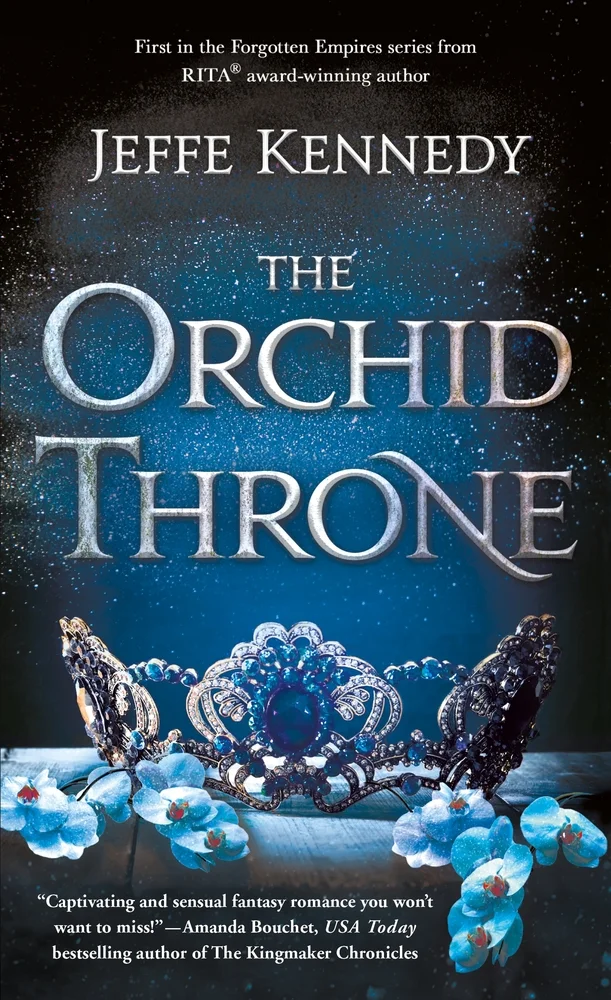
In the Forgotten Empires magic is forbidden, dreams are destiny, and love is the greatest power of all…
A PRISONER OF FATE
As Queen of the island kingdom of Calanthe, Lia will do anything to keep her people free—and her secrets safe—from the mad tyrant who rules the mainland. Guided by a magic ring of her father’s, Lia plays the political game with the cronies the emperor sends to her island. In her heart, she knows that it’s up to her to save herself from her fate as the emperor’s bride. But in her dreams, she sees a man, one with the power to build a better world—a man whose spirit is as strong, and whose passion is as fierce as her own…
A PRINCE AMONG MEN
Conrí, former Crown Prince of Oriel, has built an army to overthrow the emperor. But he needs the fabled Abiding Ring to succeed. The ring that Lia holds so dear to her heart. When the two banished rulers meet face to face, neither can deny the flames of rebellion that flicker in their eyes—nor the fires of desire that draw them together. But in this broken world of shattered kingdoms, can they ever really trust each other? Can their fiery alliance defeat the shadows of evil that threaten to engulf their hearts and souls?
Jeffe Kennedy is an award-winning, best-selling author who writes fantasy with romantic elements and contemporary romance. She serves on the Board of Directors for SFWA as a Director at Large. Her recent works include the high fantasy trilogy from Rebel Base books, The Chronicles of Dasnaria, in the same world as her award-winning fantasy series The Twelve Kingdoms and The Uncharted Realms. She is a hybrid author, and also self-publishes a romantic fantasy series, Sorcerous Moons. Her books have won the RT Reviewers’ Choice Best Fantasy Romance of 2015, been named Best Book of June 2014, and won RWA’s prestigious RITA® Award in 2017. The newest novella in The Uncharted Realms, The Dragons of Summer, is also a RITA finalist in 2019.She lives in Santa Fe, New Mexico, with two Maine coon cats, plentiful free-range lizards and a very handsome Doctor of Oriental Medicine.Jeffe can be found online at her website: JeffeKennedy.com, every Sunday at the SFF Seven blog, on Facebook, on Goodreads and on Twitter @jeffekennedy.
The next book in the new lush Scottish historical series from USA Today bestselling author, May McGoldrick.
A REBEL AT HEART
Maisie Murray’s sweet, docile exterior masks the courageous spirit of a firebrand determined to champion women’s suffrage with like-minded friends. But fighting for her principles has swept her directly into harm’s way—and into the arms of a man she cannot resist.
A WARRIOR BY BLOOD
A trained officer with the Royal Highland Regiment, Niall Campbell has spent his life serving the Crown. Battle-weary and searching for peace, he nothing to do with trouble—until he meets Maisie. But unless Niall and Maisie can find a way to stand up to the destructive forces that threaten to divide them, long-buried secrets and political schemes are destined to stand in the way of the glorious love they’ve found…
Authors Nikoo and Jim McGoldrick (writing as May McGoldrick) weave emotionally satisfying tales of love and danger. Publishing under the names of May McGoldrick and Jan Coffey, these authors have written more than thirty novels and works of nonfiction for Penguin Random House, Mira, HarperCollins, Entangled, and Heinemann. Nikoo, an engineer, also conducts frequent workshops on writing and publishing and serves as a Resident Author. Jim holds a Ph.D. in Medieval and Renaissance literature and teaches English in northwestern Connecticut. They are the authors of Much ado about Highlanders, Taming the Highlander, and Tempest in the Highlands with SMP Swerve.
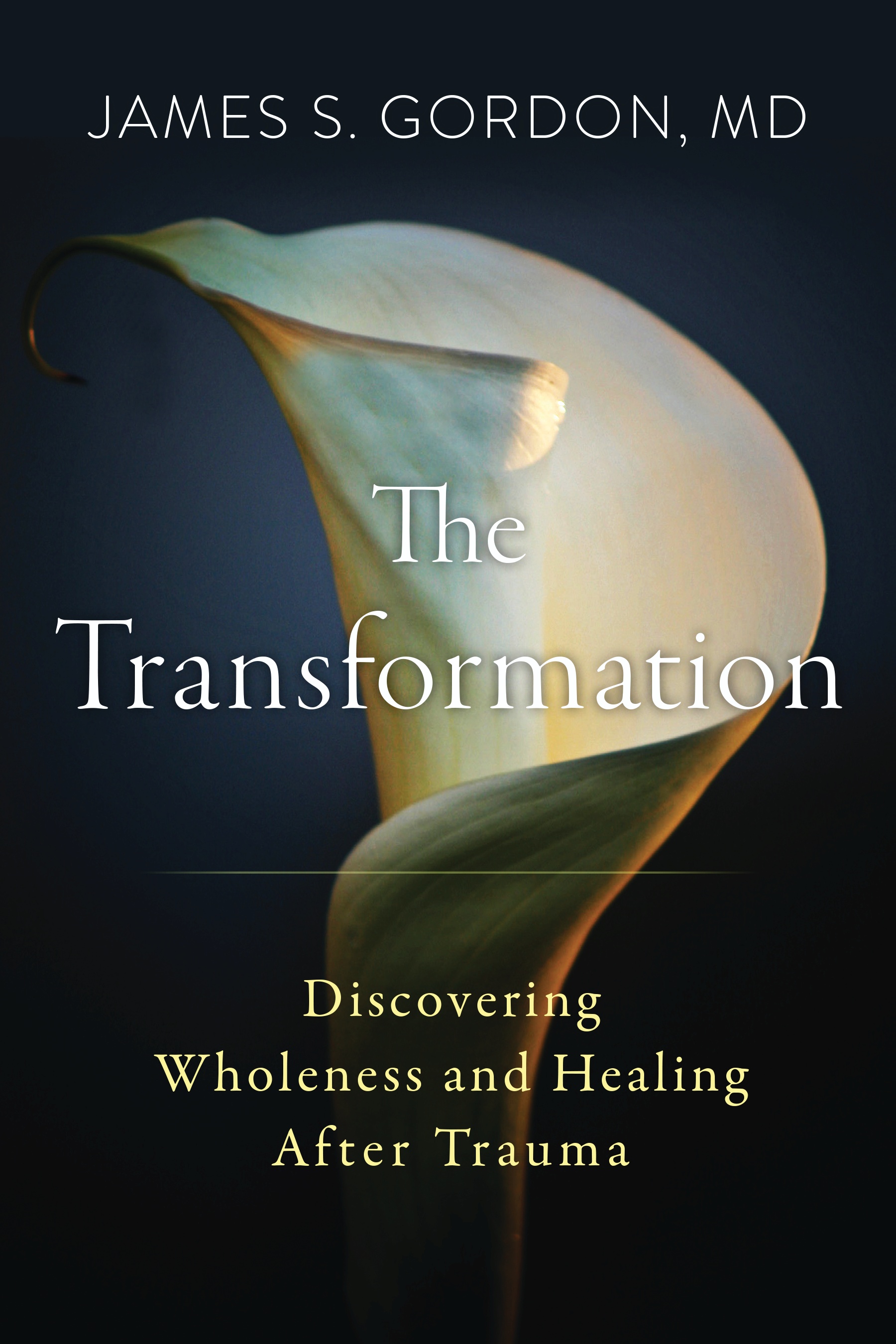
The Transformation represents the culmination of Dr. Gordon’s fifty years as a mind-body medicine pioneer and an advocate of integrative approaches to overcoming psychological trauma and stress.
Based on the basic understanding that trauma will come to all of us sooner or later, Dr. Gordon teaches readers that each of us has the capacity to heal ourselves. Outlining a proven, step-by-step method, he demonstrates how to reverse the damage caused by trauma and to restore hope.
Offering inspirational stories, eye-opening research, and innovative prescriptive support, the book makes accessible for the first time the methods that Dr. Gordon—with the help of his faculty of 160, and 6,000 trained clinicians, educators, and community leaders—has developed and used to relieve the suffering of hundreds of thousands of adults and children around the world.
In his role as the founder and executive director of The Center for Mind-Body Medicine (CMBM), Dr. Gordon and his faculty have brought this program to populations as diverse as refugees from wars in the Balkans, the Middle East, and Africa; firefighters, U.S. military personnel, veterans and their families; school shooting survivors; and Native Americans—as well as stressed out professionals, stay-at-home mothers, inner-city children, White House officials, health professionals and medical students, and people struggling with severe emotional and physical illnesses.
Excerpted from THE TRANSFORMATION by James S. Gordon, MD. Reprinted with permission of HarperOne, an imprint of HarperCollins Publishers. Copyright 2019
Reader’s Digest used to tell us each month that “laughter is the best medicine.” Drawing on folk wisdom, the Digest was reminding us that laughter could help us through the ordinary, daily unhappiness that might come into our lives.
In 1976, Norman Cousins, the revered editor of the Saturday Review, wrote a piece that signaled the arrival of laughter in the precincts of science. It was called “Anatomy of an Illness (as Perceived by the Patient)” and appeared in the New England Journal of Medicine, the United States’ most prestigious medical publication.
When the best conventional care failed to improve his ankylosing spondylitis—a crippling autoimmune spinal arthritis—Cousins took matters into his own hands. He checked himself out of the hospital and into a hotel, took megadoses of anti-inflammatory vitamin C, and watched long hours of Marx Brothers movies and TV sitcoms. He laughed and kept on laughing. He noticed that as he did, his pain diminished. He felt stronger and better. As good an observer as any of his first-rate doctors, he developed his own dose-response curve: ten minutes of belly laughter gave him two hours of pain-free sleep. Soon enough, he became more mobile.
Once the healing power of laughter was on the medical map, researchers began to systematically explore its stress-reducing, health-promoting, pain-relieving potential. Laughter has now been shown to decrease stress levels and improve mood in cancer patients receiving chemotherapy, to decrease hostility in patients in mental hospitals, and to lower heart rate and blood pressure and enhance mood and performance in generally healthy IT professionals. In numerous experiments, people with every imaginable diagnosis have reduced their pain by laughing.
Laughter stimulates the dome-shaped diaphragmatic muscle that separates our chest from our abdomen, as well as our abdominal, back, leg, and facial muscles. After we laugh for a few minutes, these muscles relax. Then our blood pressure and stress hormone levels decrease; pain-relieving and mood-elevating endorphins increase, as do levels of calming serotonin and energizing dopamine. Our immune functioning—probably a factor in Cousins’s eventual recovery—improves. If we are diabetic, our blood sugar goes down. Laughter is good exercise. It’s definitely healthy. And it’s first-rate for relieving stress.
Laughter also has a transforming power that transcends physiological enhancement and stress reduction. Laughter can break the spell of the fixed, counterproductive, self-condemning thinking that is so pervasive and so devastating to us after we’ve been traumatized. It can free us from the feelings of victimization that may shadow our lives and blind us to each moment’s pleasures and the future’s possibilities.
The wisdom traditions of the East extend laughter’s lessons. Zen Buddhism surprises us with thunderclaps of laughter to wake us from mental habits that have brought unnecessary, self-inflicted suffering. Sufi stories do the same job but more slyly. Over the years, I watched as my acupuncture and meditation teacher Shyam, himself a consummate joker, punctured the self-protectiveness, pomposities, and posturing that kept his patients and students—including, of course, me—from being at ease and natural, joyous in each moment of our lives. The stories he told from India, China, and the Middle East brought the point home: seriousness is a disease. Sorrow is real and to be honored, but obsessively dwelling on losses and pain only adds to our sickness. Laughter at ourselves and all our circumstances is our healing birthright.
A story I first heard from Shyam about the Three Laughing Monks is apropos. It is said that long ago, there were three monks who walked the length and breadth of China, laughing great, belly-shaking laughs as they went. They brought joy to each village they visited, laughing as they entered, laughing for the hours or days they stayed, and laughing as they left. No words. And it’s said that after a while everyone in the villages—the poorest and most put-upon and also the most privileged and pompous—got the message. They, too, lost their pained seriousness, laughed with the monks, and found relief and joy.
One day, after many years, one of the monks died. The two remaining monks continued to laugh. This time when villagers asked why, they responded, “We are laughing because we have always wondered who would die first, and he did and therefore he won. We’re laughing at his victory and our defeat, and with memories of all the good times we have had together.” Still, the villagers were sad for their loss.
Then came the funeral. The dead monk had asked that he not be bathed, as was customary, or have his clothes changed. He had told his brother monks that he was never unclean, because laughter had kept all impurities from him. They respected his wishes, put his still-clothed, unwashed body on a pile of wood, and lit it.
As the flames rose, there were sudden loud, banging noises. The living monks realized that their brother, knowing he was going to die, had hidden fireworks in his clothes. They laughed and laughed and laughed. “You have defeated us a second time and made a joke even of death.” Now they laughed even louder. And it is said that the whole village began to laugh with them.
This is the laughter that shakes off all concerns, all worries, all holding on to anything that troubles our mind or heart, anything that keeps us from fully living in the present moment.
Researchers and clinicians may lack the total commitment to laughter of the three monks, but they are beginning to explore and make use of its power. Working together in various institutions, they’ve developed a variety of therapeutic protocols that may include interactions with clowns and instruction in performing stand-up comedy.
“Laughter yoga,” which has most often been studied, combines inspirational talks, hand clapping, arm swinging, chanting “ho, ho” and “ha, ha,” deep breathing, and brief periods of intentional laughter; it often concludes with positive statements about happiness.
I agree that funny movies and jokes and games of all kinds can be useful tools to pry us loose from crippling seriousness. Still, I prefer to begin with a simple, direct approach: three to five minutes of straight-out,straight-ahead, intentional belly laughter. It’s very easy to learn and easy to practice. I’ll teach it to you.
I do it with patients individually or in groups, when the atmosphere is thick with smothering self-importance or self-defeating, progress-impeding self-pity. It’s not a panacea, a cure-all. But, again and again, I’ve seen it get energetic juices flowing, rebalance agitation-driven minds, melt trauma-frozen bodies, dispel clouds of doubt and doom, and let in the light of Hope. This laughter needs to begin with effort. It must force its way through forests of self-consciousness and self-pity, crack physical and emotional walls erected by remembered hurt and present pain.
Once you decide to do it, the process is simple. You stand with your knees slightly bent, arms loose, and begin, forcing the laughter up from your belly, feeling it contract, pushing out the sounds—barks, chuckles, giggles. You keep going, summoning the will and energy to churn sound up and out. Start with three or four minutes and increase when you feel more is needed.
You can laugh anytime you feel yourself tightening up with tension, pumping yourself up with self-importance, or freezing with fear. And the more intense those feelings are, the more shut-down and self-righteous, the more pained and lost and hopeless you are, the more important laughter is. Then laughter may even be lifesaving. After a few minutes of forced laughter, effort may dissolve, and the laughter itself may take charge. Now each unwilled, involuntary, body-shaking, belly-aching jolt provokes the next in a waterfall of laughter.
Laughter can be contagious. Other people will want to laugh with you.
And after laughing, as you become relaxed and less serious, you may find that people relate to you differently. Sensing the change in you, they may greet you or smile at you on the street. And you may find that you’re happy to see them and that you enjoy the warmth of this new connection.
Don’t take my word for any of this. Do the experiment with daily laughter and see.
James S. Gordon, MD, a psychiatrist, is the author of The Transformation: Discovering Wholeness and Healing After Trauma from which this article is excerpted.
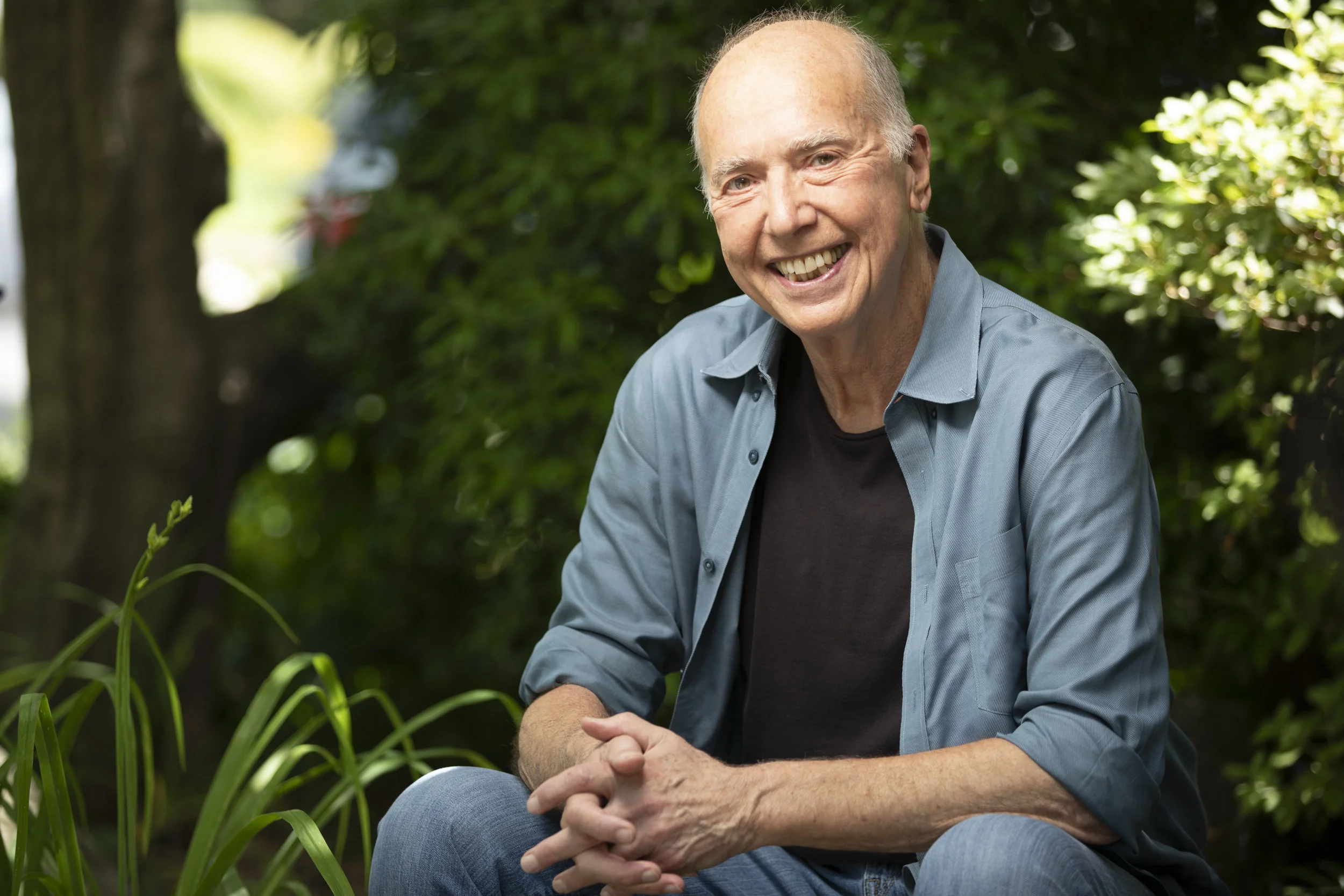
Dr. James Gordon is the author of The Transformation: Discovering Wholeness and Healing After Trauma (HarperOne; September 2019). He is the founder and executive director of the nonprofit Center for Mind-Body Medicine in Washington, D.C. Dr. Gordon is a Harvard-trained psychiatrist, former researcher at the National Institute of Mental Health and, Chair of the White House Commission on Complementary and Alternative Medicine Policy, and a clinical professor of Psychiatry and Family Medicine at Georgetown Medical School. He authored or edited ten previous books, including Unstuck: Your Guide to the Seven-stage Journey Out of Depression. He has written often for numerous popular publications including The New York Times, The Washington Post, The Atlantic, and The Guardian, as well as in professional journals. He has served as an expert for such outlets as 60 Minutes, the Today show, Good Morning America, CBS Sunday Morning, Nightline, CNN, MSNBC, NPR and many others. For more information, please visit https://jamesgordonmd.com and follow the author on Facebook, Instagram and Twitter.
Olivia Berg’s charity, Christmas from the Heart, has helped generations of families in need in Pine River, Washington, but this year might be the end of the road. Hightower Enterprises, one of their biggest donors since way back when Olivia’s grandmother ran the charity, has been taken over by Ebenezer Scrooge the Second, aka CFO Guy Hightower, and he’s declared there will be no more money coming to Christmas from the Heart.
Guy is simply being practical. Hightower Enterprises needs to tighten its belt, and when you don’t have money to spare, you don’t have money to share. You’d think even the pushy Olivia Berg could understand that.
With charitable donations dwindling, Olivia’s Christmas budget depends on Hightower’s contribution. She’s focused her whole life on helping this small town, even putting her love life on hold to support her mission.
When Guy’s Maserati breaks down at the edge of the Cascade foothills, he’s relieved to be rescued by a pretty young woman who drives him to the nearby town of Pine River. Until he realizes his rescuer is none other than Olivia Berg. What’s a Scrooge to do? Plug his nose and eat fruitcake and hope she doesn’t learn his true identity before he can get out of town. What could go wrong?
The scenery on Highway 2 was travel magazine worthy. Guy had seen enough of the world to know heaven when he saw it, and Western Washington with its lush trees, sparkling waters and mountains was, indeed, heaven. Not a bad detour if you had to take one.
Guy roared through Monroe, then Sultan and Skyway, racing past forests and rivers, pastures, and barns. The snow was really starting to come down. He’d have to stop and chain up once he reached the pass.
Three miles past Gold Bar his steering lost power, turning the car from a smooth driving, purring tiger to a rhino. He checked the dash and saw his alternator light was on. What was this? He pulled over, got out and opened the hood and looked under it to discover that his serpentine belt had broken. No notice, sudden as a heart attack.
Except for that squeal. He’d heard it earlier, too, but hadn’t paid attention.
He had no choice but to pay attention now. Guy may not have been an expert on cars but he did know that without that belt, he was going nowhere.
Frowning, he pulled his cell phone out of his North Face jacket. He hoped he wouldn’t have to wait long for his towing service to get to him. Who knew where they could tow him. Would he find a garage anywhere that would have a belt for an Italian sports car?
No cell reception. Oh, yeah, it just got better and better.
“Great,” he muttered. He’d just had this baby tuned up a couple months back. He shouldn’t be stuck here in the middle of nowhere. Why had he paid extra at the foreign car dealership for all those maintenance checks if they weren’t going to check and maintain everything?
There was nothing for it. He’d have to walk back to town and find a phone.
He slammed the hood shut, pulled his boots out of the trunk and put them on, still frowning. He liked snow, he was fit enough to walk ten miles if he had to. He just didn’t want to. He wanted to reach his destination. Thanks to whatever Gremlins had hopped in his engine along the way that probably wasn’t happening today.
He was just starting his trudge to town when an older model Honda Civic passed him and then stopped. It backed up and the passenger side window slid down. “Looks like you’ve got car troubles. Would you like a lift?” offered the driver.
Hadn’t this woman’s dad ever told her never to pick up strangers? If she was his sister he’d sure rip her a new one for stopping to let some man in her car, even in a blizzard. She had green eyes, curly hair the color of honey and plump, little kiss-me lips. Any crazy would climb right in and do who knew what to her.
Guy wasn’t crazy, but he was pissed, and in no mood to make polite conversation.
“That’s okay, I’m fine,” he said, and continued to trudge on.
Freezing his ass off. Okay, maybe he was crazy.
Except, pissed as he was, he’d generate more than enough steam to keep warm.
She sure was cute though.
She coasted along beside him, backwards. “Not that you don’t look fit enough to walk, but it’s a ways in either direction. Cell phone reception can be spotty.”
He’d already discovered that.
“Maybe you’re afraid of girls?” she teased.
Not this girl. She had a smile like a magnet. Did he really want to walk back to Gold Bar?
He got in. “Thanks. I appreciate the lift.”
“Where are you headed?”
“Idaho. Christmas with the family.” Step-family.
“Oh, my. You took the long way.”
“I had to stop in Arlington and pick up something for my mom.”
She nodded and smiled, obviously impressed by what a good son he was. Was this woman always so trusting?
He felt compelled to ask, “You don’t always go around picking up strangers, do you?”
“Oh, no.” She smiled. Man, those lips.
“That’s good. Cause you never know what kind of crazies are out there.”
“You didn’t look like one.”
“Ted Bundy probably didn’t either. Ever hear of him?” Okay, that sounded creepy.
Her smile faltered momentarily.
“I promise I’m not a serial killer,” he said in an effort to uncreep himself.
The smile returned full force. “I didn’t think so. I’m a good judge of character.”
“Yeah?” Suddenly he was feeling a little less pissed.
“Oh, yes,” she said with a nod that made the curls bounce.
He was a sucker for curly hair. You hardly ever saw women with real curly hair anymore. Why was that?
“And what makes you such a good judge of character?” he teased. She smelled like peppermint. He wondered if this little cutie was taken. Hard to tell since she was wearing gloves. There had to be a ring on that left hand. She looked about thirty, and by their thirties hotties like this one were never single. Or if they were they came with baggage.
“I deal with a lot of people. You get so you know.”
“Yeah? What do you do?” Coffee shop waitress, perhaps? Judging by the car she was driving, nothing that paid much.
“I run a non-profit.”
Oh, no. One of those. A person out to help others … using someone else’s money, of course. The memory of his unpleasant encounter with Olivia Berg arrived on the scene, irritating as jock itch. He could feel his jaw tightening.
This woman isn’t Olivia Berg. Don’t take your irritation out on her. “What’s the name of your organization?” he asked, the very image of diplomatic courtesy.
“Christmas from the Heart.”
“Christmas from…?” Oh, no. This wasn’t happening. This was some sick dream.
“Have you heard of it?”
“Uh, yeah.” The last thing he wanted was to be captive in a car with this woman. “Hey, any place you can drop me where there’s a phone will be great.” In fact, let me get out of this car right here, right now.
“I can do better than that. We’re not far from Pine River where I live,” she said. “We’ve got a garage there and Morris Bentley is an excellent mechanic. They can tow your car and have it fixed in no time.”
The sooner the better.
“My name’s Olivia Berg. My friends call me Livi.”
He would not qualify for friendship once she learned who he was. As far as this woman was concerned he was the devil incarnate.
She gave him an encouraging glance. And your name is?
Oh, boy. He could feel the sweat sneaking out of his pores. He’d been perfectly justified in cutting loose her little charity. He had no cause to feel guilty. None. But there she was smiling at him like they were on the road to friendship. Little Olivia Berg, the great judge of character. And here he was, feeling like Scrooge in front of a firing squad. With no blindfold.
Even though he had nothing to be ashamed of he couldn’t seem to spit out his name. Lie.
“Joe.” Yeah, Joe. Good, old everyman Joe.
Her expression asked, “Joe What?”
Joe…Joe… Why was this woman so pushy?
A truck rolled past, sending up a rooster tail of snow. “Ford,” he added. “Joe Ford.”
“Nice to meet you, Joe.”
She wouldn’t be saying that if she knew who he was.
Best-selling author Sheila Roberts has seen her books published in a dozen different languages and made into movies for both the Hallmark and Lifetime channels. She’s happily married and lives in the Pacific Northwest. When she’s not hanging out with girlfriends, speaking to women’s groups or going dancing with her husband she can be found writing about those things near and dear to women’s hearts: family, friends, and chocolate.
Website → http://www.sheilasplace.com
Twitter →https://twitter.com/_Sheila_Roberts
Facebook → https://www.facebook.com/funwithsheila/
Goodreads → https://tinyurl.com/y34aruj8
Latest Book Reviews
Author Spotlight
Kids Reviews
Book Chat
Writing Tips