Spotlight: The Ten Thousand Doors of January by Alix E. Harrow

In the early 1900s, a young woman embarks on a fantastical journey of self-discovery after finding a mysterious book in this captivating and lyrical debut.

In a sprawling mansion filled with peculiar treasures, January Scaller is a curiosity herself. As the ward of the wealthy Mr. Locke, she feels little different from the artifacts that decorate the halls: carefully maintained, largely ignored, and utterly out of place.

Then she finds a strange book. A book that carries the scent of other worlds, and tells a tale of secret doors, of love, adventure and danger. Each page turn reveals impossible truths about the world and January discovers a story increasingly entwined with her own.

Lush and richly imagined, a tale of impossible journeys, unforgettable love, and the enduring power of stories awaits in Alix E. Harrow’s spellbinding debut–step inside and discover its magic.

Buy on Amazon | Audible | Barnes and Noble

About the Author

Alix E. Harrow is an ex-historian with lots of opinions and excessive library fines, currently living in Kentucky with her husband and their semi-feral children. She won a Hugo for her short fiction, and has been nominated for the Nebula, Locus, and World Fantasy awards. Find her at @AlixEHarrow on Twitter.

Spotlight: Missing Person by Sarah Lotz

From acclaimed thriller writer Sarah Lotz, hailed by Stephen King as “vastly entertaining,” a new novel about a group of amateur detectives infiltrated by the sadistic killer whose crimes they’re investigating.

Reclusive bookseller Shaun Ryan has always believed that his uncle Teddy died in a car accident twenty years ago. Then he learns the truth: Teddy fled his home in Catholic, deeply conservative County Wicklow, Ireland, for New York and hasn’t been heard from since. None of Shaun’s relatives will reveal why they lied about his uncle’s death or why they want Shaun to leave the whole affair alone.

But Shaun has a burning need to find out the truth. His search is unsuccessful until he’s contacted by Chris Guzman, a woman who runs a website dedicated to matching missing-persons cases with unidentified bodies. Chris and her team of cold-case obsessives suspect that Shaun is looking for the “Boy in the Dress,” one victim in a series of gay men murdered by the same killer.

But who are these internet fanatics really, and how do they know so much about a case that has stumped police for decades? Soon armchair sleuths and professional investigators are on a collision course with a sadistic serial killer who’s gotten away with his crimes for far too long – and now they’re in his sights.

Buy on Amazon | Audible | Barnes and Noble

About the Author

Sarah Lotz is a novelist and screenwriter with a fondness for the macabre. She is the author of Day Four and The Three, and lives in Cape Town with her family and other animals.

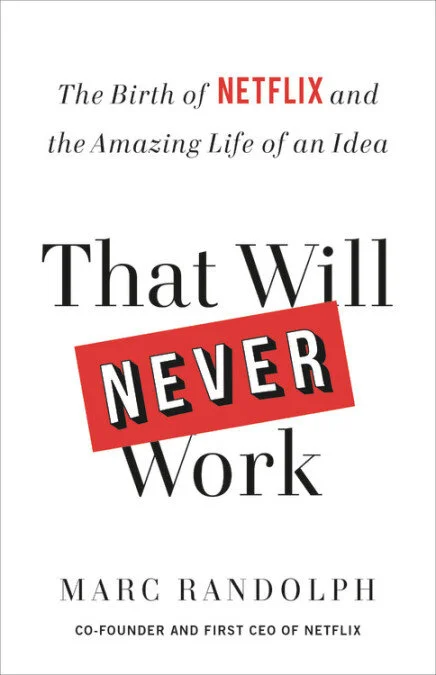
Spotlight: Add to Wishlist That Will Never Work: The Birth of Netflix and the Amazing Life of an Idea by Marc Randolph

In the tradition of Phil Knight’s Shoe Dog comes the incredible untold story of how Netflix went from concept to company-all revealed by co-founder and first CEO Marc Randolph.

Once upon a time, brick-and-mortar video stores were king. Late fees were ubiquitous, video-streaming unheard was of, and widespread DVD adoption seemed about as imminent as flying cars. Indeed, these were the widely accepted laws of the land in 1997, when Marc Randolph had an idea. It was a simple thought-leveraging the internet to rent movies-and was just one of many more and far worse proposals, like personalized baseball bats and a shampoo delivery service, that Randolph would pitch to his business partner, Reed Hastings, on their commute to work each morning.

But Hastings was intrigued, and the pair-with Hastings as the primary investor and Randolph as the CEO-founded a company. Now with over 150 million subscribers, Netflix’s triumph feels inevitable, but the twenty first century’s most disruptive start up began with few believers and calamity at every turn. From having to pitch his own mother on being an early investor, to the motel conference room that served as a first office, to server crashes on launch day, to the now-infamous meeting when Netflix brass pitched Blockbuster to acquire them, Marc Randolph’s transformational journey exemplifies how anyone with grit, gut instincts and determination can change the world-even with an idea that many think will never work.

What emerges,though, isn’t just the inside story of one of the world’s most iconic companies. Full of counter-intuitive concepts and written in binge-worthy prose, it answers some of our most fundamental questions about taking that leap of faith in business or in life: How do you begin? How do you weather disappointment and failure? How do you deal with success? What evenissuccess?

From idea generation to team building to knowing when it’s time to let go,That Will Never Workis not only the ultimate follow-your-dreams parable, but also one of the most dramatic and insightful entrepreneurial stories of our time.

Buy on Amazon | Audiobook | Barnes and Noble

About the Author

Marc Randolph is a veteran Silicon Valley entrepreneur, advisor and investor. Marc was co-founder of Netflix, serving as their founding CEO, as the executive producer of their web site, and as a member of their board of directors.

Although best known for starting Netflix, Marc’s career as an entrepreneur spans more than four decades.  He’s founded or co-founded more than half a dozen other successful start-ups, mentored rising entrepreneurs including the co-founders of Looker Data which was recently sold to Google for $2.6B, and invested in numerous successful tech ventures.

He is a frequent speaker at industry events, works extensively with young entrepreneur programs, sits on the board of the environmental advocacy group 1% for the Planet, and chairs the National Outdoor Leadership School’s Board of Trustees.

Spotlight: Love on Lexington Avenue by Lauren Layne

From New York Times bestselling author Lauren Layne comes the second delightfully charming installment in the Central Park Pact series, following a young widow whose newfound cynicism about love is challenged by a sexy, rough-around-the-edges contractor.

There are no good men left in New York City. At least that’s Claire Hayes’s conviction after finding out her late husband was not the man she thought he was. Determined to rid her home of anything that reminds her of her cheating husband, Claire sets out to redesign her boring, beige Upper East Side brownstone and make it something all her own. But what starts out as a simple renovation becomes a lot more complicated when she meets her bad-tempered contractor Scott Turner.

Scott bluntly makes it known to Claire that he only took on her house for a change of pace from the corporate offices and swanky hotels he’s been building lately, and he doesn’t hesitate to add that he has no patience for a pampered, damaged princess with a penchant for pink. But when long workdays turn into even longer nights, their mutual wariness morphs into something more complicated—a grudging respect, and maybe even attraction...

Filled with laugh-out-loud scenes that blend perfectly with the touching friendships Layne brings to life on the page, this “hugely entertaining” (USA TODAY) novel is perfect for fans of Lauren Weisberger.

Buy on Amazon | Audible | Barnes and Noble

About the Author

Lauren Layne is the New York Times and USA TODAY bestselling author of more than two dozen romantic comedies. Her books have sold over a million copies in nine languages. Lauren’s work has been featured in Publishers Weekly, Glamour, The Wall Street Journal, and Inside Edition. She is based in New York City.

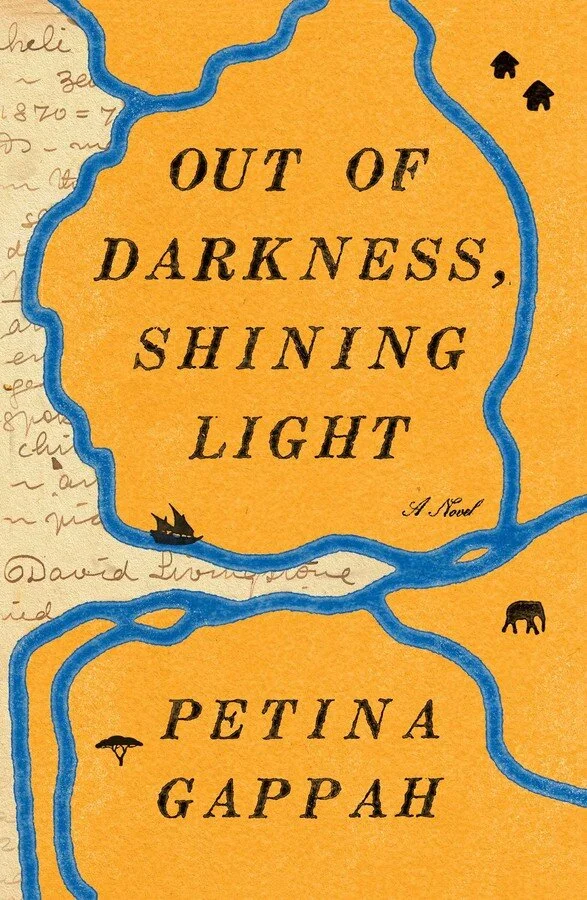
Spotlight: Out of Darkness, Shining Light by Petina Gappah

“This is how we carried out of Africa the poor broken body of Bwana Daudi, the Doctor, David Livingstone, so that he could be borne across the sea and buried in his own land.” So begins Petina Gappah's powerful novel of exploration and adventure in nineteenth-century Africa—the captivating story of the loyal men and women who carried explorer and missionary Dr. Livingstone's body, his papers and maps, fifteen hundred miles across the continent of Africa, so his remains could be returned home to England and his work preserved there. Narrated by Halima, the doctor's sharp-tongued cook, and Jacob Wainwright, a rigidly pious freed slave, this is a story that encompasses all of the hypocrisy of slavery and colonization—the hypocrisy at the core of the human heart—while celebrating resilience, loyalty, and love.

Buy on Amazon | Audible | Barnes and Noble

About the Author

Petina Gappah is an award-winning and widely translated Zimbabwean writer. She is the author of two novels, Out of Darkness, Shining Light, The Book of Memory, and two short story collections, Rotten Row and An Elegy for Easterly. Her work has also been published in, among others, The New Yorker, Der Spiegel, The Financial Times, and the Africa Report. For many years, Petina worked as an international trade lawyer at the highest levels of diplomacy in Geneva where she advised more than seventy developing countries from Africa, Asia, the Caribbean and Latin America on trade law and policy. Petina has also been a DAAD Writing Fellow in Berlin, an Open Society Fellow and a Livingstone Scholar at Cambridge University. She has law degrees from Cambridge, Graz University in Austria, and the University of Zimbabwe. She currently lives in Harare.

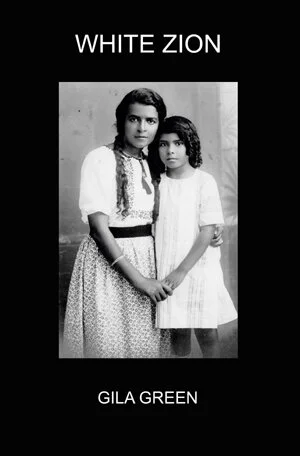
Spotlight: White Zion by Gila Green

White Zion takes readers into the worlds of 19th century Yemen, pre-State Israel, modern Israe,l and modern Canada. You will hear the voices of a young boy marveling at Israel's first air force on his own roof, the cry of a newly married woman helpless to defend herself against her new husband's desires, the anger of the heroine's uncle as he reveals startling secrets about his marriage and the fall-out after generations of war.

Excerpt

“Rivka!”

All three of them jumped at father’s customary bark. Father wears the clothing of his socialist political party, Mapai. Loyal Mapainiks wear khaki from head to toe, Shabbat and weekdays. He always adds his dusty gray hat to this uniform, never a kippah. Assaf thought he had gone to work.

“Do you know what happened to me today?” Father growls. “I was expecting my promotion. Went in early. That promotion was for me. In my hand.”

Three sets of eyes stare down at the cold stone floor. Even at seven, Adi knows better than to look up. His cereal-covered spoon hangs between his fingers. Now the dysa will be cold.

“Do you know what they did? The mamzerim! Do you know what they did? They brought in this Russian Jew, some Ashkenazi from Russia. He doesn’t know the first thing. The first thing he does not know. They gave him the position and then they asked me, me who has been working, no, slaving for a decade and a half for them, an honest to God slave I have been, they asked me to teach him the ropes. Can you believe that?”

Father’s black eyes are exploding like the small pieces of shrapnel bursting on Ben Yehuda Street. Sharp and jagged. He is clean-shaven and he has smooth spotless desk-job hands. He glares at his wife. Finally she looks up.

“Well, that’s your party,” she spits at him in Arabic. “Your party whose behinds, you kiss day and night. What do you think? You’re a token, Avraham. You know? One Kurdi, one Parsi, one Moroccai and one Temani. You went up a little, but no more. You’ll never go up more. That’s your party,” she repeats.

Assaf can see her shoulders tense, and he knows her feet are ready. His own toes twitch inside his shoes.

“Silence!” Avraham snarls and lunges for her at the same time.

But she is too fast for him, too prepared. She dives into the next room and quickly hops onto the balcony; her most common escape route. The brothers hear her pounding feet on the stone path that leads to the green iron gate at the end of the garden. Soon she will be cursing her husband over fresh doughy saluf dipped in hilbeh with her girlfriend, Mazal. Mazal feels sorry for her.

Father returns from the balcony. He is breathing heavily. He is young, healthy and has never smoked, but luckily for his wife he was never a good runner. Tears spill onto the floor and Assaf remembers his little brother, Adi.

“Don’t worry. I will stay here until Ima gets back. I won’t leave you alone. Come Adi, finish the dysa.”

“It’s cold now.”

“I will heat it up for you outside on the fire. Come.”

I knew that in the center of their living room stood a kerosene heater, called a primos. My father told me it had been their only source of heat until they bought an oven, but by then he’d become a soldier. Besides, kerosene was rationed along with all other necessary supplies in Jerusalem.

“He is not alone. He has school now, no time to heat baby food. Get to work. You’ll be late. What will you be later on, the way you are about studies?”

“I don’t want to go anyhow. I hate it. Why do you want me to go so much? You just said the Ashkenazim didn’t give you the job you wanted. Why do you push me toward them?”

“You will learn something there, that’s why. What do the Temanim learn at school? They have nothing. The teachers don’t know much more than the students. Go.”

He said this last word in a tone that made my father understand; if he doesn’t get going his father will simply start barking unstoppably like the wild dog they kept tied outside in the back of the garden to scare the Arabs away. That was before the war, before the Arabs in the near-by villages fled, abandoning their homes seemingly overnight.

Adi grabs his brother’s arm, but Assaf shakes it off gently and goes. It is finally spring, maybe he can start cleaning up people’s yards and save enough money to buy a bicycle.

“Hey Assaf! You’re late, too? I will walk with you until my school. My mother didn’t want to let me go today. She heard too much bombing in the night. It’s quieter now, so I begged her to let me go, otherwise, she’d have me feeding chickens and searching for wild herbs and grasses in the fields all day. I hear on kibbutzim they have real fruits and vegetables, maybe we should go there.”

It was Moshiko, his best friend. He was half skipping half flying down the narrow sidewalk, with a worn-out siddur under one arm and a small piece of newspaper stuffed into his front pocket. Inside was flat brown pita stuffed with hard-boiled egg. Assaf notices it and realizes that he has nothing for lunch again.

“B’emet? You beg to go to school. I wish I could go to your school. I swear if that teacher twists my ear today I will grow up to burn his house down.”

“Misken you are. To gehenom with those white Jews, worse than the Arabs. Don’t worry. Next year you will be bar mitzvah, after that you can leave that awful place and come with the rest of us to school. Your father won’t be able to control you after thirteen. Besides, we’re going to make money. I’m learning how to fix engines. Motorcycles, cars, anything. I’ll teach you.”

“You’ll teach me,” Assaf repeats. “Baseder, my friend.”

My grandmother had probably returned from Mazal’s tiny kitchen. Perhaps she’d be putting on her cleaning-lady clothes, a dreadfully patched blue skirt and matching top.

A bomb exploded, but Moshiko and Assaf walked on. It wasn’t close enough to stop and look for cover. The ground did not jump beneath their feet. Not yet.

“Hey? There’s one of our small planes. Do you think they will let me practice on the engines a little? Use their tools?” Moshiko asked.

“We can ask them. My house has become the new Jewish border of Jerusalem,” Assaf answers. He does not try to disguise his pride.

“Your father, he doesn’t care about the airport?”

“They promised to pay him after the war. You should have seen how they leveled the field. Chik chak. Nothing for them. They share everything with us. Come over later and see.”

They arrive at the corner where Moshiko turns off; for Assaf there is another kilometer and a half to go.

Father does not return home that night. Although it has never happened before, no one glances at the heavy iron gate or mentions his name.

“Go up to the roof and give some fresh eggs to the soldiers.”

That’s all Mother says the entire evening while she boils wild grass in the week’s water ration. They will use whatever water is left in the pot for the dirty dishes, which they assemble and clean in one bucket and the remaining drops for the toilet.

Assaf does not go up to the roof until Moshiko arrives. A red-headed soldier shows the boys an airplane engine. The cigarette smoke fills the air and coffee flows on the roof endlessly, like the British soldiers on their Sunday marches under the Occupation.

“Hey, your eyes are red, ata baseder?” Chaim asks Assaf. He is one of the soldiers in charge of the airport.

“It’s just the smoke,” he answers, half grinning.

“Here, have a piece of chocolate.”

His hand was warm. Assaf feels him slip a square of chocolate into the pocket of his tight faded jacket. Moshiko’s head was buried in an airplane engine, but Assaf promised himself he would share the rare treat with him later.

As dawn breaks, the chickens wake the boys as usual and Assaf is the first to force himself out of bed and head for the washroom. They are the only ones on the street with an indoor toilet and bath. The rest of the crowded road uses outhouses and the public bathhouse once a week.

Another day passes with no sign of Father. Mother’s face relaxes a little. Maybe he has disappeared like the British patrols and their vicious dogs that never drooled on their polished black boots.

After school, the boys help Mother. They slice hard prickly sabras, the only fruit growing wild in Jerusalem. There is a knock at the iron gate.

“A policeman came. It’s your father. He’s in the hospital,” Mother tells them when she returns down the stone path. The only hospital is run by nuns.

“His leg is broken; shrapnel from a bomb. He was so furious when he left here about the promotion. He probably just galloped off to work like a donkey and thought himself invisible in the center of town, in the middle of a war.”

Mother could have been discussing the squashed juke she found on the bottom of her shapeless shoe in the morning, or the time Mazal accidentally tore the wedding dress she had preserved all the way from Yemen for her seven daughters. She could never be sentimental about a wedding dress, even one that was not her own.

An explosion erupts in Assaf’s mind and he remembers the bomb that exploded the day before on his way to school.

“You have to go to the hospital to visit him after school tomorrow,” she continues quietly.

The sound of the bomb is still in-between the boy’s ears. It had not seemed threateningly close. Sometimes only one landed and then there was time before another one. Time enough to get to a bomb shelter. Sometimes many landed one after the other and there wasn’t much time. The friends had dug their hands deeper into their pockets and suddenly their shoulders were touching, but they kept on walking. Assaf wondered if he should save money for a bicycle, which would lengthen the life of his shoes or if he should buy shoes he could run fast in.

Buy on Amazon | Barnes and Noble

About the Author

Gila Green is an Israel-based Canadian author of four novels: No Entry, the first in a young adult, environmental series that explores the dangers of elephant poaching in South Africa's Kruger National Park; White Zion, Passport Control, and King of the Class. She has published two dozen short stories and writes often about immigration, alienation, and dislocation. Gila is an EFL college lecturer and a manuscript editor. She lives between Jerusalem and Tel Aviv with her five children, her husband, and her dog. Gila is proud to expand Jewish literature in White Zion to include more Jews from Arabic-speaking countries. She does most of her writing in a converted bomb shelter overlooking the Judaean Hills, which were once the heart of the Kingdom of Judah.