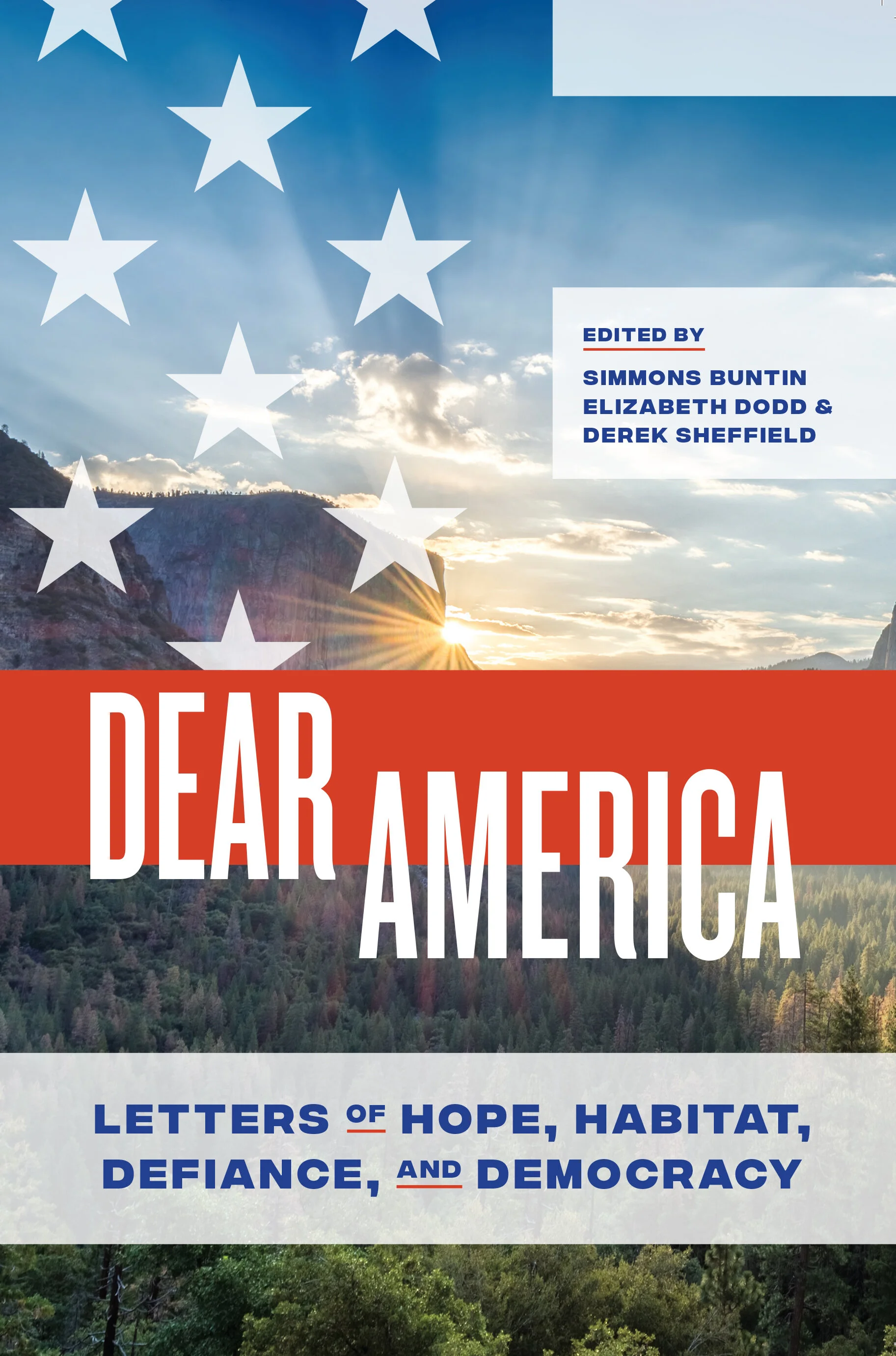
Spotlight: Dear America: Letters of Hope, Habitat, Defiance, and Democracy by Simmons Buntin (Editor), Elizabeth Dodd (Editor) and Derek Sheffield (Editor)

America is at a crossroads. Can we find a common ground?

An eclectic anthology of passionate letters to America during a time when politics and perspectives collide

Since the 2106 presidential election, America has been barrelling headfirst toward a crossroads. Conflicting political and social perspectives reflect a need to collectively define our moral imperatives, clarify cultural values, and inspire meaningful change. In that patriotic spirit, hundreds of writers, poets, artists, scientists, and political and community leaders have come together sharing their impassioned letters to America in a project envisioned and published by the online journal Terrain.org—the “Letters to America” series.

More than 130 works, all calls to action for common ground and conflict resolution with a focus on the environment and social justice, are collected in Dear America. Taken as a whole, the work is a diverse clarion call of literary reactions to the nation’s challenges as we approach future political elections (especially the one coming this November).

The book includes impassioned letters from experts, artists, and leaders such as Seth Abramson, Ellen Bass, Jericho Brown, Francisco Cantú, Kurt Caswell, Victoria Chang, Camille T. Dungy, Tarfia Faizullah, Blas Falconer, Attorney General Bob Ferguson, David Gessner, Katrina Goldsaito, Kimiko Hahn, Brenda Hillman, Jane Hirschfield, Linda Hogan, Pam Houston, Robin Wall Kimmerer, Karen An-hwei Lee, Christopher Merrill, Kathryn Miles, Kathleen Dean Moore, Aimee Nezhukumatathil, Naomi Shihab Nye, Elena Passarello, Dean Rader, Scott Russell Sanders, Lauret Savoy, Gary Soto, Pete Souza, Kim Stafford, Sandra Steingraber, Arthur Sze, Scott Warren, Debbie Weingarten, Christian Wiman, Robert Wrigley, and others.

“The voices in this essential anthology are anything but silent. Indeed, they are voices of hope, habitat, defiance, and, most importantly, democracy. Lend your ears, and then your own voice.” — Simmons Buntin, editor

Dear America encourages readers to come to a common resolution about the environment and social injustice going on in America through words of literature and art.

 Excerpt

California wildfires, climate change

Science Under Fire

Anita Desikan

Dear America,

Long before I became a scientist, I worked behind the counter of a pharmacy in San Diego. It was fall 2007, and the Witch Creek Fire had erupted across the region. Fanned by the powerful Santa Ana winds, the fire forced hundreds of thousands of people to evacuate their homes. I worked close to one of the affected regions, and on the day after the city ordered mass evacuations, one of the first customers I served told me their house had burned down—and their medications with it. Another told me they had evacuated and could not return home—they only had the clothes on their backs. Over and over I heard similar stories. I nearly broke into tears. But I took comfort helping fill their prescriptions, providing them with a needed service.

In San Diego, it is not earthquakes that we fear but fires. It was once a well-established fact that fire season occurred only in late summer or fall. But climate change has shifted that. Wildfires are now a yearlong potential horror, and they grow increasingly destructive. Every year, more people lose their homes; more people breathe in that terrible concoction of soot that leaves you gasping, wheezing, out of breath. The higher frequency of catastrophic wildfires in California has certainly been noticed by insurance companies, which are starting to hike prices or cancel homeowners insurance outright.

As a public health researcher with a keen interest in air pollution, science policy, and environmental justice, one of the most impactful lessons I have learned is that science has the power to improve both public health and the environment. When the best available science is incorporated into policymaking, it can deliver powerful benefits to the health and safety of our people and environment. So it was with a certain amount of horror that I witnessed the Trump administration turn its antiscience political machinations toward California’s incessant wildfire threat.

At first, the administration only wanted to spin wildfire tragedies as a way to bolster Trump’s own agenda. In August 2018 the Carr and Mendocino fires raged across Northern California—some of the worst wildfires ever experienced by the state. In the middle of this crisis, rath-er than speaking words of condolence, President Trump tweeted a message of hate toward environmental safeguards, blaming them for the severity of the fire by allegedly restricting access to water for firefighting purposes. And in this “tweet-to-policy” administration, Commerce Secretary Wilbur Ross decided to take the president up on his words. Ross ordered the National Oceanic and Atmospheric Administration (noaa) to sideline water-management procedures supported by the best available science. Specifically, NOAA’s Fisheries division was ordered to go against its own mission statement of regulating activities that might harm threatened or endangered aquatic species like salmon and instead divert water for firefighting efforts. Reality was thrown asunder—firefighters and state officials kept declaring in no uncertain terms that the state of California has enough water to fight these fires and the pain and suffering of my fellow Californians were milked in orderto declare war on endangered fish species like the Chinook salmon. In November 2018 the Camp Fire struck, ravaging the town of Paradise and causing over a thousand people to go missing. This time Trump placed the blame solely on California’s poor forest management (in actuality, the U.S. government owns and manages a majority of California’s forests) and threatened to cut off federal funding for firefighting efforts altogether.

But here’s a part of the story you may not know: in December of that year, Trump quietly issued an executive order that once again challenged the science underlying the wildfire threat. Apparently, the Trump administration believes that the best way to fix California’s wildfire problem is through logging. No joke. The executive order declared that, in order to prevent future wildfires like those that had struck California, the Department of Interior and the Department of Agriculture must harvest more than four billion board feet of timber that will then be put up for sale—an increase of 31 percent from 2017. While it is true that

increased logging may help quell a small percentage of the fires that occur near homes, it can do little to halt large-scale wildfires or stop thefires that are fueled by nonloggable but flammable plants, like chaparralshrub brush. It is hard to foresee with certainty the ecological impacts of the increase in logging, as it is dependent on how federal agencies implement the executive order. However, since market conditions of timber sales are required to be considered during the process, the most robust scientific evidence on how to safely and sustainably reduce trees that pose a fire hazard risk has the real possibility of being sidelined in favor of timber sales.

These actions by the Trump administration are downright dangerous because they mask the real problem at hand: climate change. Scientific research tells us that climate change acts as a threat multiplier by decreasing rainfall and increasing the temperature in the western United States (i.e., it can make California into a tinderbox). Since 1972, wildfires in California have grown 500 percent larger thanks mostly to climate change. In essence, global warming acts like a dose response curve—for every degree of warming, larger and more frequent fires will result. Scientists and political officials from across the West have urged federal officials to adopt evidence-based measures to reduce the threat of wildfires, including cutting greenhouse gas emissions linked to climate change. But the Trump administration pursues few if any actions to prevent climate change, and the Union of Concerned Scientists, where I work now, has documented numerous cases in which federal scientists were directly censored or felt no choice but to censor themselves on the topic of climate change.

I became a public health researcher to use science to find evidence-based ways to improve the lives of others. I can’t help but think back to that day at the pharmacy when I listened to my neighbors’ stories about the wildfire that had threatened or consumed their homes. I believe that they, like all Americans, would have wanted proven, science-based policies in place that could have reduced the threat of fires.I doubt they would have supported policies that take away water from endangered fish or cut down large swaths of the forest as distractions from the very real existence of climate change. This is why I find the administration’s denials—and silencing—of the science so unsettling. We rely on science because it is the best method we have available to protect the health and safety of people, and of this land we call our home.

 Sincerely,

Anita Desikan

Buy on Amazon | Barnes and Noble

About the Editors

Terrain.org is a nonprofit literary magazine published online since 1997 that searches for the interface—the integration—among the built and natural environments that might be called the soul of place. The works published by Terrain.org ultimately examine the physical realm around us, and how those environments influence us and each other physically, mentally, emotionally, and spiritually.

Simmons Buntin, is editor-in-chief of Terrain.org He has authored 2 books of poetry, Riverfall,and  Bloom, and also Unsprawl: Remixing Spaces as Places (co-authored with Ken Pirie). He has published poetry, essays, and technical articles in publications as varied as Edible Baja Arizona, North American Review, Kyoto Journal, and Bulletin of Science, Technology, and Society. He has a master’s degree in urban and regional planning from the University of Colorado, Denver, and an MFA in creative writing from the University of Arizona. Simmons lives in Tucson, Arizona.

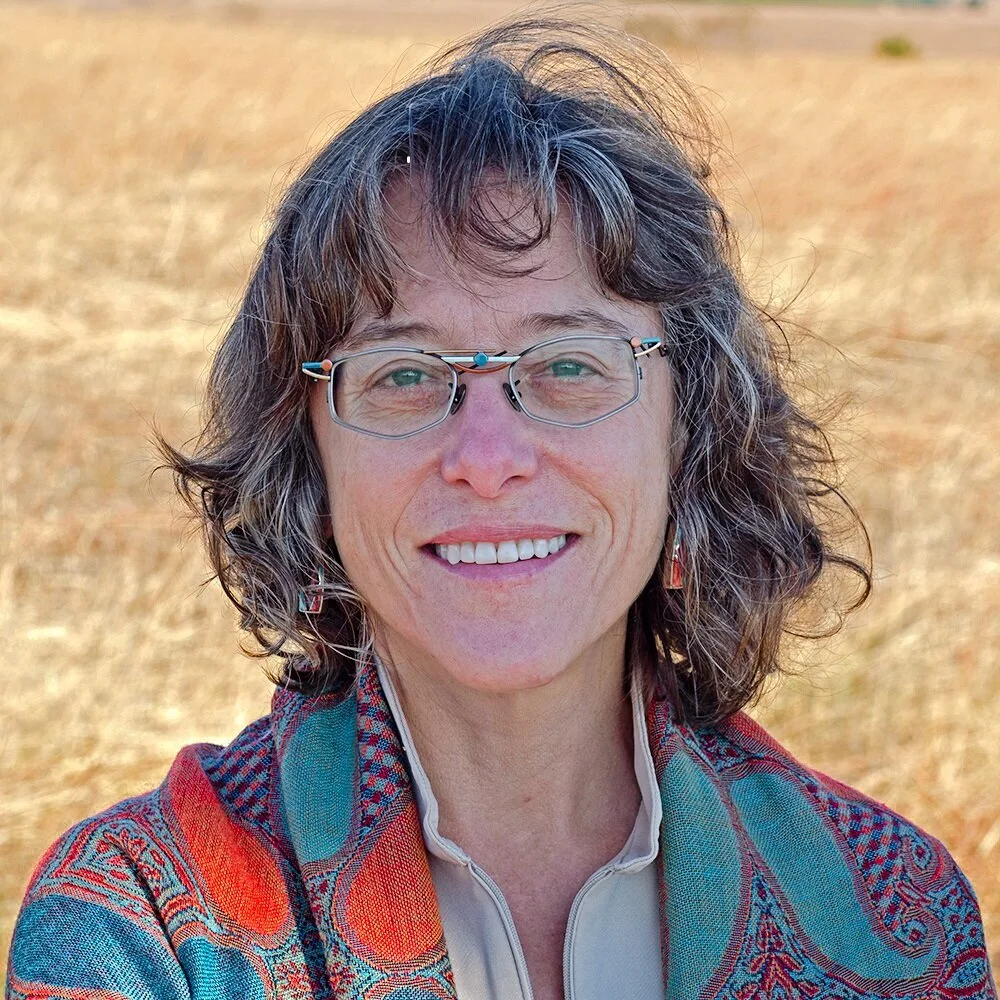
Elizabeth Dodd is a poet and nonfiction writer. Her newest book, Horizon’s Lens: My Time on the Turning World, was published by the University of Nebraska Press in 2012. For over two decades she has lived in eastern Kansas in the Flint Hills region, where she is an award-winning professor of creative writing and literature at Kansas State University.

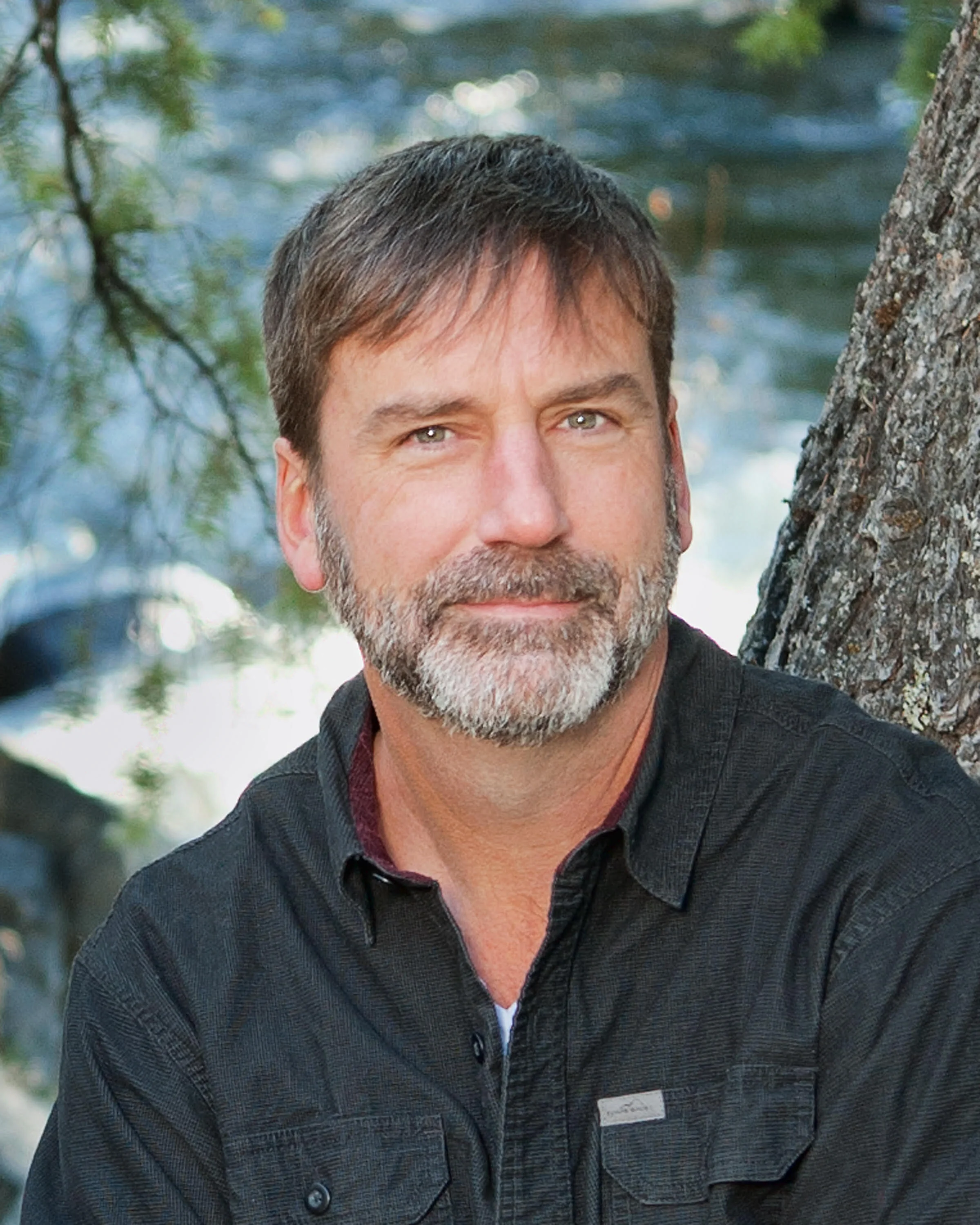
Derek Sheffield has presented widely at conferences around the West on the interaction between science and poetry. His own work often explores this topic and has appeared in Orion, Wilderness, Poetry, The Georgia Review, The Southern Review, Ecotone, Alaska Quarterly Review, and Southern Humanities Review, and several anthologies, including New Poets of the American West, The Ecopoetry Anthology, Nature and Environmental Writing: A Guide and Anthology, and The World Is Charged: Poetic Engagements with Gerard Manley Hopkins. Since 2003, he has been a professor of English at Wenatchee Valley College in central Washington.

Connect:

Facebook:  @terrainorg

Instagram:  @terrain_org

Twitter: @terrainorg
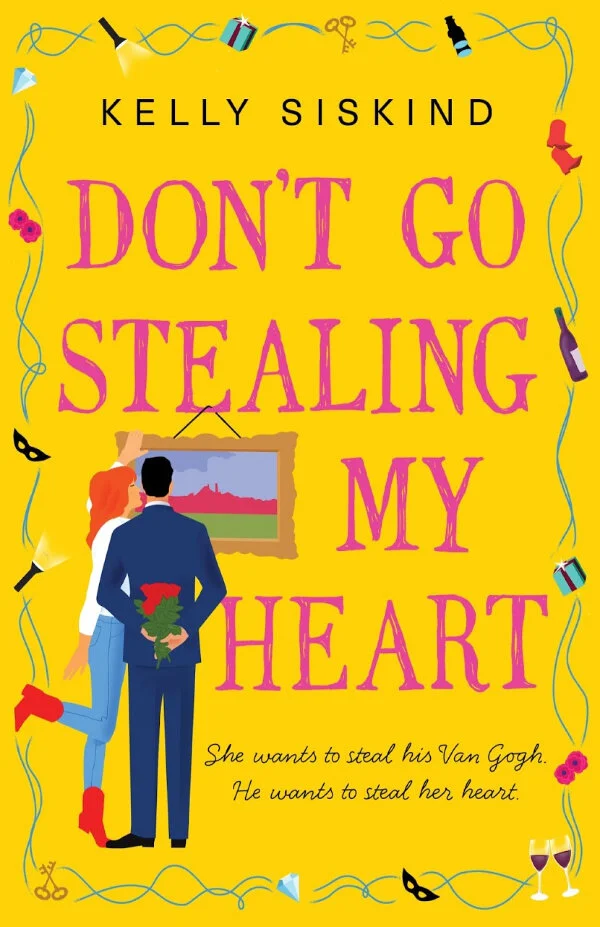
Spotlight: Don't Go Stealing My Heart by Kelly Siskind
She wants to steal his Van Gogh. He wants to steal her heart.

Some people would call Clementine Abernathy a criminal. She considers herself a modern day Robin Hood, who steals from the rich and gives to the poor. Not exactly on the up-and-up, but she knows what it's like to lose everything. Her latest heist involves swiping a priceless Van Gogh from its owner, who's supposed to be an egotistical trust-fund brat.

Turns out Jack David is a sexy, kind-hearted man...and Clementine is in trouble. Falling for her mark would make her the World's Dumbest Conwoman, but Jack is charmingly persistent, always singing sweet songs in her ear.

And that earth-shattering kiss? She never stood a chance.

Now she's imagining a fresh start with this dashing man, but that means telling Jack about her past. And other nefarious sorts are after the same painting. Too soon, Clementine learns what it means to risk it all for love.

Buy on Amazon | Barnes and Noble

About the Author

A small-town girl at heart, Kelly moved from the city to enjoy the charm of northern Ontario. When she’s not out hiking with her husband or home devouring books, you can find her, notepad in hand, scribbling down one of the many plot bunnies bouncing around in her head.

Her novels have been published internationally.

Website: https://www.kellysiskind.com/

Facebook: https://www.facebook.com/authorKellySiskind/

Twitter: https://twitter.com/KellySiskind

Instagram: https://www.instagram.com/kellysiskind/

Goodreads: https://bit.ly/3alcDxS 

Pinterest: https://www.pinterest.ca/kellysiskind/

Amazon: https://amzn.to/34SkWjq

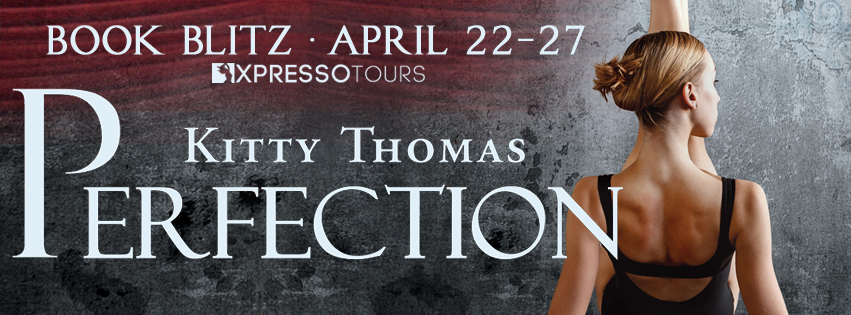
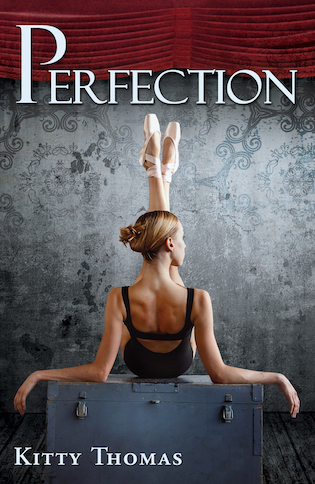
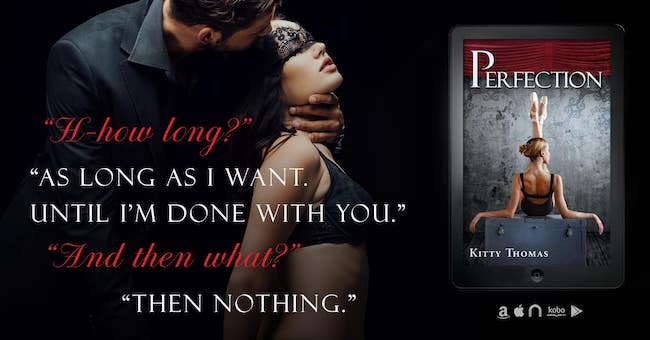
Spotlight: Perfection by Kitty Thomas

Perfection
Kitty Thomas
Publication date: April 8th 2020
Genres: Adult, Contemporary, Dark Romance, Romance

Everyone thought I was married to the perfect man. But if Conall Walsh were perfect, I wouldn’t have killed him.

I thought I got away with it until I received an anonymous note at the ballet company I dance for:

You were a very bad girl. If you don’t want me to report what I know about last night, meet me at the old opera house after rehearsal. I will tell you the price of my silence when you arrive. If you speak of this or bring anyone with you… no deal.

But his price isn’t money. It’s me.

THIS IS A STANDALONE contemporary dark romance.

Goodreads / Amazon / Barnes & Noble / iBooks / Kobo / Google Play

EXCERPT:

SCENE ONE:

There’s a crackling sound and then a booming male voice magnified over a speaker.

“I neither need nor want your money, Ms. Lane” It’s a smooth, rich baritone. But I can’t tell if the voice belongs to someone old or young. And I don’t recognize it.

“Do you know he beat me? He threatened to kill me. What was I supposed to do? He practically owned this city. Do you know how much power he had? What other choice did I have?” I shout into the mostly empty theater.

“Do you know how much power I have?” he counters.

Obviously a lot if he can get into this building and have electricity running in it. “I don’t deserve prison,” I say.

“Murder is a serious crime.” His tone is similar to the one you’d hear in the principal’s office after being caught vandalizing a dumpster behind the school.

“Please…” I feel the hysteria bubbling over as my gaze continues to dart around the cavernous theater, trying to find where he’s hiding, what perch he observes me from. “Please…” I say again… “You said you’d tell me your price. How much? Please. I’ll pay you anything.”

“No, Ms. Lane. Not money. I have plenty of that. The price of my silence is your obedience.”

The stillness that follows this announcement is so complete you could hear a pin drop on the black dance tarp. What the hell does that mean?

“Empty out your dance bag in the center of the stage and spread out all the contents,” he says.

I freeze at that. There’s a gun in my dance bag. I’m not that stupid, that I’d just go meet some mysterious blackmailer without going home to get a weapon first. I mean, come on.

“I want to remind you that we aren’t in a 1940’s noir film. I have a phone on me at all times, and I will use it to report you if you hesitate again.”

I take a deep breath. My hands are visibly shaking as I empty out the dance bag, arranging the contents, carefully concealing the gun in a dance sweater.

“What are you hiding from me?” the voice asks again.

I look around the otherwise empty theater, trying desperately to find the source of that voice.

“N-nothing!”

“Do you want to go to prison, Cassia?”

His use of my first name startles me. It feels too familiar in spite of everything.

The voice continues. “No. Lies. I want to see what you’re hiding.”

I don’t know how I thought I would get away with this. Did I think he’d just show up and confront me in some straight forward face-to-face way? Did I think he’d let me see him? Did I think I’d have a clear shot, and he’d just stand politely still while I put a bullet in him?

What the hell was I thinking?

“Last chance to save yourself,” he says, his patience running out.

I feel like I’ll hyperventilate as I unwrap the gun from the sweater and lay it out on the brightly lit stage. I flinch and look around me as if he’ll somehow swoop down, materialize on top of me, and rip me apart for daring to try to defend myself.

He chuckles. “Were you planning to build a body count? Gotten a taste for it, have you?”

“N-no,” I stammer.

“No, Sir,” he corrects. “I expect a basic level of formality and etiquette when we’re in this space together.”

Everything inside me freezes at this. When we’re in this space together.


Author Bio:

KITTY THOMAS writes dark stories that play with power and have unconventional HEAs. She began publishing in early 2010 with her bestselling COMFORT FOOD and is considered one of the original authors of the dark romance subgenre.

To find out FIRST when a new book comes out, subscribe to Kitty's New Release List: KITTYTHOMAS.COM

Website / Goodreads / Twitter / Book+Main Bites / Bookbub


GIVEAWAY!
a Rafflecopter giveaway

XBTBanner1

Spotlight: The Long Way Home by D.L. Norris


Biographical Fiction, Drama
Published: February 2020
Publisher: Outskirts Press

 photo add-to-goodreads-button_zpsc7b3c634.png

The Long Way Home is a compelling work of fiction set in 1950s Madison County, Nebraska.

At the heart of the story is Maggie Davis, a middle-aged widow and recent heiress to a grand Victorian manor. The stately home, which Maggie shares with her spirited nine-year-old daughter Jenna, also serves as a bed and breakfast to a once regular, but now transitory, clientele.

The kitchen table is the epicenter of lively, often contentious, dialogue where no topics are off-limits. An outspoken neighbor and routine visitor delights in keeping everyone on guard with her opinionated tirades but is frequently reigned in by an elderly, equally forthright family member who has recently become a permanent dweller at the manor.

Maggie finds herself struggling with the painful memories of her husband’s tragic death, as well as the stirrings in her heart associated with a new house guest. A scandalous scheme to swindle her out of her property rides on the heels of a sudden, unexpected death, pointing to a member of the family as a suspect. Set against an intriguing backdrop of family secrets, scandal, love, and humor, the story culminates with an emotional twist.


About the Author

D.L. Norris is a notable author and motivational speaker who has written numerous short stories and articles on health, emotional wellness, family, and cultural history. Norris’s novel, The Long Way Home, captures in colorful, humorous style the actual events and cultural mindsets surrounding her Scandinavian family and personal life experiences. Norris’s expressive writing style quickly engages her readers and encourages them to sit back and enjoy a nostalgic, magical journey. She and her husband are happily retired in the beautiful Pacific Northwest, where she continues a passion for writing.

Contact Links


Purchase Links


RABT Book Tours & PR

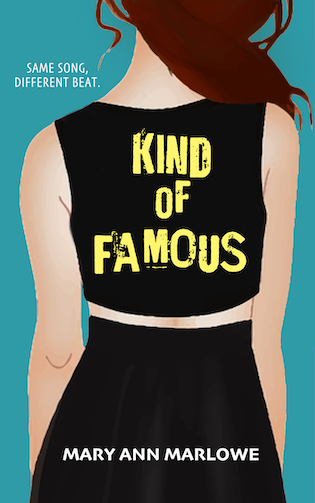
Spotlight: Kind of Famous by Mary Ann Marlowe


Kind of Famous
Mary Ann Marlowe
Publication date: April 7th 2020
Genres: Adult, Contemporary, Romance

Layla Beckett has a secret. For the past ten years, she’s run the most trafficked fan site on the Internet for her favorite band—under an alias, naturally. When she lands a job at the prestigious New York City music magazine The Rock Paper, she’s suddenly thrust into the world she’s only observed from the cheap seats. Now that she’s brushing elbows with sexy guitarists and hot frontmen, she wants to play it cool and keep her superfan status on the down low. Although she’s dying to gush on her forum, posting her insider adventures online could expose her real-life identity and blow her cover.

And that’s all before one of those sexy musicians becomes a fan of her.

From the minute he meets Layla, Shane Morgan’s heart beats a heavy metal rhythm, but his head is full of doubt. Since only the most hardcore fans could pick the drummer out of a lineup, he’s resigned to groupies using him to get closer to the more famous guitarists. But he doesn’t want to be Layla’s passthrough.

As Layla gets to know the real people behind the music, she’s drawn to the less-than-flashy drummer’s sweet charms, fascinating mind, and banging hot body, but she worries about his insecurities. She needs to convince Shane she’s moved beyond fandom before he discovers her online history and loses all faith in her intentions.

But the Internet is forever, and secrets have a way of getting out.

Goodreads / Amazon / Barnes & Noble / iBooks / Kobo

EXCERPT:

The moon shone bright, but Shane’s eyes remained dark as the deepest ocean. He blinked twice and ran his thumb down my cheek to my chin. I confess that I’d had some illicit fantasies about the guys in the band, but I’d never felt the one-two punch to the gut that I got when his hand slid around the back of my neck and he pulled me forward to press his lips against mine.

He drew back, slowly enough that his lips continued to touch mine for a lingering moment, and I opened my eyes before he did. He looked like he’d tasted ice cream for the first time and wanted to savor it. My mind reeled with questions, and I had this crazy thought that I wished he were more famous so I’d have read something about him on the Internet before, so I’d know who he was and what I might be getting myself into.

If he were like Adam, I’d know to grab hold of him and never let go. If he were like Noah, I wouldn’t want to give him the time of day.

But those lips.

A tiny smile lit his face. “Should I apologize again?”

With that, I threw caution to the wind and twisted both hands into his T-shirt. He laughed when I pulled him back into a less hesitant kiss, but his laughter stopped when my tongue brushed his, and he spun us around so he could press me up against the metal door behind us.

It had been a long time since I’d been physical with a man. Way too long.

Shane’s lips teased mine, and I felt like I’d lived in a desert my whole life, never knowing that water existed. Suddenly I’d fallen into a deep pool. It might turn out to be an oasis, or I might drown, and I didn’t care. My fingers traced his cheek, then brushed his neck, and his body responded in shivers. He lifted the edge of my shirt and explored my lower back, creeping up my spine until he reached my bra.

I’d lost track of where we were. Everything was him. His mouth on mine. His hands on me. His skin. His . . . I gasped. He pressed harder into me, and I ground back, need flaring inside me.

He took the first step away. “Layla.” The fact that his voice came out ragged and breathless only made me want to tear his shirt off and spend the next ten hours licking every inch of him while he said my name.

Author Bio:

Some Kind of Magic is Mary Ann Marlowe's first novel. When not writing, she works by day as a computer programmer/DBA. She spent ten years as a university-level French professor, and her resume includes stints as an au pair in Calais, a hotel intern in Paris, a German tutor, a college radio disc jockey, and a webmaster for several online musician fandoms, plus she has a second-degree black belt. She has lived in twelve states and three countries and loves to travel. She now lives in central Virginia where she is hard at work on her second novel. She loves to hear from readers and can be reached through her website at www.maryannmarlowe.com, on Facebook, www.facebook.com/marlowemaryann/, and at twitter.com/maryannmarlowe.

Website / Goodreads / Facebook / Twitter / Instagram


GIVEAWAY!
a Rafflecopter giveaway

XBTBanner1

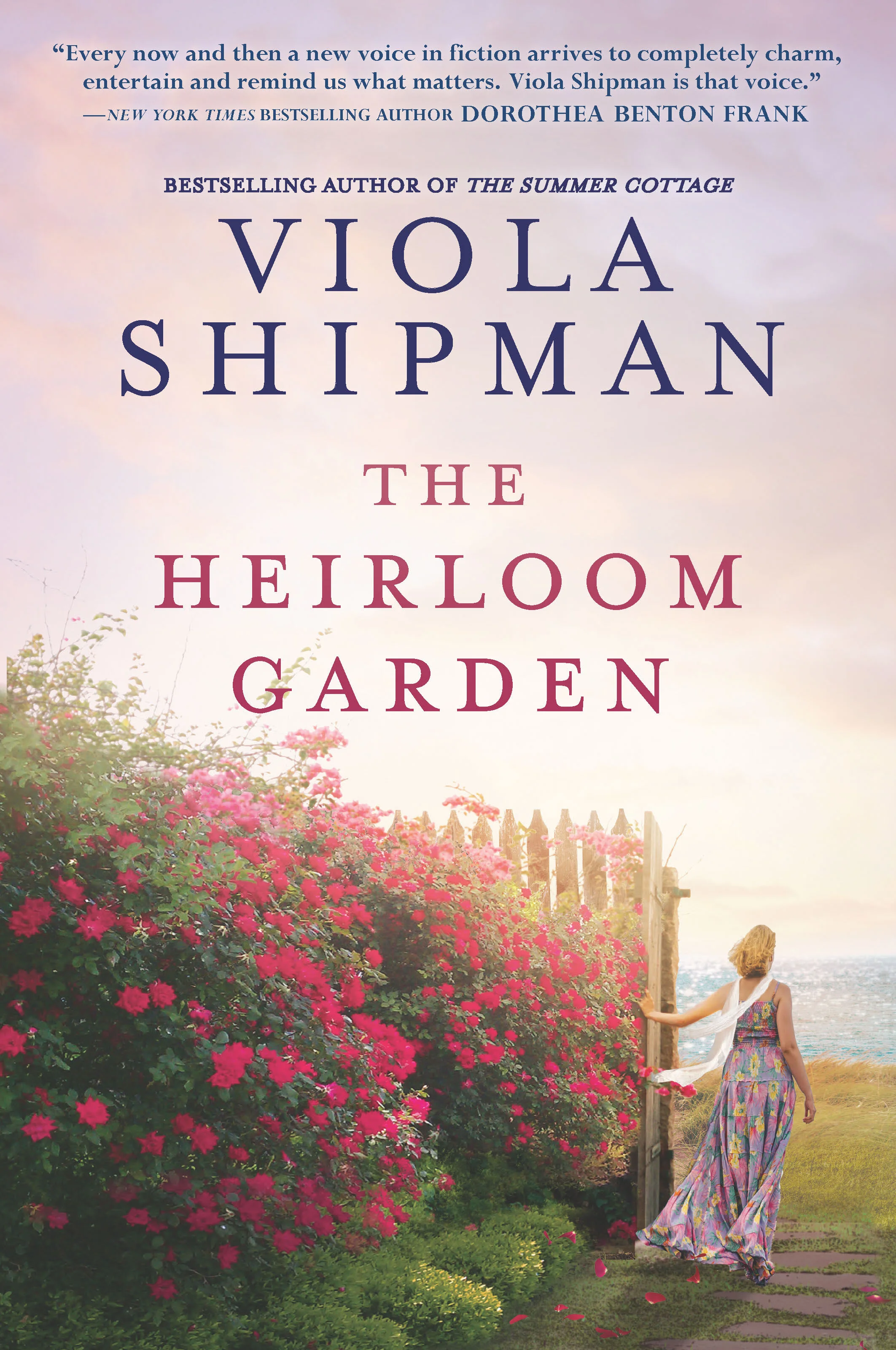
Spotlight: The Heirloom Garden by Viola Shipman

In this heartwarming and feel-good novel filled with echoes of Dorothea Benton Frank, Debbie Macomber and Elizabeth Berg, two women separated by a generation but equally scarred by war find hope, meaning – and each other – through a garden of heirloom flowers.

Iris Maynard lost her husband in World War II, her daughter to loneliness and, finally, her reason to live. Walled off from the world for decades behind a towering fence surrounding her home and gardens, the former botanist has built a new family...of flowers. Iris propagates her own daylilies and roses while tending to an heirloom garden filled with starts – and memories – of her own mother, grandmother, husband and daughter.

When Abby Peterson moves to Grand Haven, Michigan, with her family – a husband traumatized during his service in the Iraq War and a young daughter searching for stability – they find themselves next door to Iris, and are slowly drawn into her reclusive neighbour's life where, united by loss and a love of flowers, Iris and Abby slowly unearth their secrets to each other. Eventually, the two teach one another that the earth grounds us all, gardens are a grand healer, and as flowers bloom so do our hopes and dreams.

Excerpt

Iris

LATE SUMMER 1944

We are an army, too.

I stop, lean against my hoe and watch the other women working the earth. We are all dressed in the same outfits—overalls and sunhats—all in uniforms just like our husbands and sons overseas.

Fighting for the same cause, just in different ways.

A soft summer breeze wafts down Lake Avenue in Grand Haven, Michigan, gently rustling rows of tomatoes, carrots, lettuce, beets and peas. I analyze my tiny plot of earth at the end of my boots in our neighborhood’s little Victory Garden, admiring the simple beauty of the red arteries running through the Swiss chard’s bright green leaves and the kale-like leaves sprouting from the bulbs of kohlrabi. I smile with satisfaction at their bounty and my own ingenuity. I had suggested our little Victory Garden utilize these vegetables, since they are easy-to-grow staples.

“Easier to grow without weeds.” 

I look up, and Betty Wiggins is standing before me.

If you put a gray wig on Winston Churchill, I think, you’d have Betty Wiggins, the self-appointed commander of our Victory Garden.

“Just thinking,” I say.

“You can do that at home,” she says with a frown.

I pick up my hoe and dig at a weed. “Yes, Betty.”

She stares at me, before eyeing the front of my overalls. “Nice rose,” Betty says, her frown drooping even farther. “Do we think we’re Vivien Leigh today?”

“No, ma’am,” I say. “Just wanted to lift my spirits.”

“Lift them at home,” she says, a glower on her face. Her eyes stop on the hyacinth brooch I have pinned on my overalls and then move ever so slowly to the Bakelite daisy earrings on my earlobes.

I look at Betty, hoping she might understand I need to be enveloped by things that make me feel safe, happy and warm, but she walks away with a “Hrumph!”

I hear stifled laughter. I look over to see my friend Shirley mimicking Betty’s ample behind and lumbering gait. The women around her titter.

“Do we think we’re Vivien Leigh today?” Shirley mimics in Betty’s baritone. “She wishes.”

“Stop it,” I say.

“It’s true, Iris,” Shirley continues in a Shakespearian whisper. “The back ends of the horses in Gone with the Wind are prettier than Betty.”

“She’s right,” I say. “I’m not paying enough attention today.”

I suddenly grab the rose I had plucked from my garden this morning and tucked into the front pocket of my overalls, and I toss it into the air. Shirley leaps, stomping a tomato plant in front of her, and grabs the rose midair.

“Stop it,” she says. “Don’t you listen to her.”

She sniffs the rose before tucking the peach-colored petals into my pocket again. 

“Nice catch,” I say.

“Remember?” Shirley asks with a wink.

The sunlight glints through leaves and limbs of the thick oaks and pretty sugar maples that line the small plot that once served as our cottage association’s baseball diamond in our beachfront park. I am standing roughly where third base used to be, the place I first locked eyes with my husband, Jonathan. He had caught a towering pop fly right in front of the makeshift bleachers and tossed it to me after making the catch.

“Wasn’t the sunlight that blinded me,” he had said with a wink. “It was your beauty.”

I thought he was full of beans, but Shirley gave him my number. I was home from college at Michigan State for the summer, he was still in high school, and the last thing I needed was a boyfriend, much less one younger than I was. But I can still remember his face in the sunlight, his perfect skin and a light fuzz on his cheeks that were the color of a summer peach.

In the light, soft white floaties dance in the air like miniature clouds. I follow their flight. My daughter, Mary, is holding a handful of dandelions and blowing their seeds into the air.

For one brief moment, my mind is as clear as the sky. There is no war, only summer, and a little girl playing.

“You know more about plants than anybody here,” Shirley continues, knocking me from my thoughts. “You should be in charge here, not Betty. You’re the one that had us grow all these strange plants.”

“Flowers,” I say. “Not plants. My specialty is really flowers.”

“Oh, don’t be such a fuddy-duddy, Iris,” Shirley says. “You’re the only woman I know who went to college. You should be using that flower degree.”

“It’s botany. Actually, plant biology with a specialty in botanical gardens and nurseries,” I say. I stop, feeling guilty. “I need to be at home,” I say, changing course. “I need to be here.”

Shirley stops hoeing and looks at me, her eyes blazing. She 

glances around to ensure the coast is clear and then whispers, “Snap your cap, Iris. I know you think that’s what you should be saying and doing, but we all know better.” She stares at me for a long time. “The war will be over soon. These war gardens will go away, too. What are you going to do with the rest of your life? Use your brain. That’s why God gave it to you.” She grins. “I mean, your own garden looks like a lab experiment.” She stops and laughs. “You’re not only wearing one of your own flowers, you’re even named after one! It’s in your genes.”

I smile. Shirley is right. I have been obsessed with flowers for as long as I can remember. My Grandma Myrtle was a gifted gardener as was my mom, Violet. I had wanted to name my own daughter after a flower to keep that legacy, but that seemed downright crazy to most folks. We lived next door to Grandma in cottages with adjoining gardens for years, houses my grandfather and father worked themselves to an early grave to pay off, and now they were all gone, and I rented my grandma’s house to a family whose son was in the coast guard.

But my garden was now filled with their legacy. Nearly every perennial I possessed originally began in my mom and grandma’s gardens. My grandma taught me to garden on her little piece of heaven in Highland Park overlooking Lake Michigan. And much of my childhood was spent with my mom and grandma in their cottage gardens, the daylilies and bee balm towering over my head. When it got too hot, I would lie on the cool ground in the middle of my grandma’s woodland hydrangeas, my back pressed against her old black mutt, Midnight, and we’d listen to the bees and hummingbirds buzzing overhead. My grandma would grab my leg when I was fast asleep and pretend that I was a weed she was plucking. “That’s why you have to weed,” she’d say with a laugh, tugging on my ankle as I giggled. “They’ll pop up anywhere.”

My mom and I would walk her gardens, and she’d always say the same thing as she watered and weeded, deadheaded and cut 

flowers for arrangements. “The world is filled with too much ugliness—death, war, poverty, people just being plain mean to one another. But these flowers remind us there’s beauty all around us, if we just slow down to nurture and appreciate it.”

Grandma Myrtle would take her pruners and point around her gardens. “Just look around, Iris. The daisies remind you to be happy. The hydrangeas inspire us to be colorful. The lilacs urge us to breathe deeply. The pansies reflect our own images back at us. The hollyhocks show us how to stand tall in this world. And the roses—oh, the roses!—they prove that beauty is always present even amongst the thorns.”

The perfumed scent of the rose in my pocket lingers in front of my nose, and I pluck it free and raise it to my eyes.

My beautiful Jonathan rose.

I’d been unable to sleep the past few years or so, and—to keep my mind occupied—I’d been hybridizing roses and daylilies, cross-pollinating different varieties, experimenting to get new colors or lusher foliage. I had read about a peace rose that was to be introduced in America—a rose to celebrate the Nazis leaving France, which was just occurring—and I sought to re-create my own version to celebrate my husband’s return home. It was a beautiful mix of white, pink, yellow and red roses, which had resulted in a perfect peach.

I remember Jon again, as a young man, before war, and I try to refocus my mind on the little patch of Victory Garden before me, willing myself not to cry. My mind wanders yet again to my own.

My home garden is marked by stakes of my experiments, flags denoting what flowers I have mixed with others. And Shirley says my dining room looks like the hosiery aisle at Woolworths. Since the war, no one throws anything away, so I use my old nylons to capture my flowers’ seeds. I tie them around my daylily stalks and after they bloom, I break off the stem, capture and count the seeds, which I plant in my little greenhouse. I track how many grow. If I’m pleased with a result, I continue. If I’m not, I give them away to my neighbors.

I fill my Big Chief tablets like a banker fills his ledger:

1943-Yellow Crosses

Little Bo Beep = June Bug x Beautiful Morning

(12 seeds/5 planted)

Purple Plum = Magnifique x Moon over Zanadu

(8 seeds/4 planted)

I shut my eyes and can see my daylilies and roses in bloom. Shirley once asked me how I had the patience to wait three years to see how many of my lilies actually bloomed. I looked at her and said, “Hope.”

And it’s true: we have no idea how things are going to turn out. All we can do is hope that something beautiful will spring to life at any time.

I open my eyes and look at Shirley. She is right about the war. She is right about my life. But that life seems like a world away, just like my husband.

“Mommy! Mommy!”

Mary races up, holding her handful of dandelions with white tops.

“What do you have?” I ask.

“Just a bunch of weeds.”

I stop, lean against my hoe and look at my daughter. In the summer sunlight, her eyes are the same violet color as Elizabeth Taylor’s in National Velvet.

“Those aren’t weeds,” I say.

“Yes, they are!” Mary says. She puts her hands on her hips. With her father gone, she has become a different person. She is openly defiant and much too independent for a girl of six. “Teacher said so.”

I lean down until I’m in front of her face. “Technically, yes, 

but we can’t just label something that easily.” I take a dandelion from her hand. “What color are these when they bloom?”

“Yellow,” she says.

“And what do you do with them?” I ask.

“I make chains out of them, I put them in my hair, I tuck them behind my ears…” she says, her excitement making her sound out of breath.

“Exactly,” I say. “And what do we do with them now, after they’ve bloomed?”

“Make wishes,” she says. Mary holds up her bouquet of dandelions and blows as hard as she can, sending white floaties into the air.

“What did you wish for?” I ask.

“That Daddy would come home today,” she says.

“Good wish,” I say. “Want to help me garden?”

“I don’t want to get my hands dirty!”

“But you were just on the ground playing with your friends,” I say. “Ring-around-the-rosy.”

Mary puts her hands on her hips.

“Mrs. Roosevelt has a Victory Garden,” I say.

She looks at me and stands even taller, hooking her thumbs behind the straps of her overalls, which are just like mine.

“I don’t want to get dirty,” she says again.

“Don’t you want to do it for your father?” I ask. “He’s at war, keeping us safe. This Victory Garden is helping to feed our neighbors.”

Mary leans toward me, her eyes blazing. “War is dumb.” She stops. “Gardens are dumb.” She stops. I know she wants to say something she will regret, but she is considering her options. Then she glares at me and yells, “Fathead!”

Before I can react, Mary takes off, sprinting across the lot, jumping over plants as if she’s a hurdler. “Mary!” I yell. “Come back here!”

“She’s a handful,” Shirley clucks. “Reminds me of someone.” 

“Gee, thanks,” I say.

Mary rejoins her friends, jumping back into the circle to play ring-around-the-rosy, turning around to look at me on occasion, her violet eyes already filled with remorse.

Ring-around-the-rosy,

A pocket full of posies,

Ashes! Ashes!

We all fall down.

“I hate that game,” I say to Shirley. “It’s about the plague.”

I return to hoeing, lost in the dirt, moving in sync with my army of gardeners, when I hear, “I’m sorry, Mommy.”

I look up, and Mary is before me, her chin quivering, lashes wet, fat tears vibrating in the rims of her eyes. “I didn’t mean to call you a fathead. I didn’t mean to get into a rhubarb with you.”

Fathead. Rhubarb. Where is she picking up this language already?

From behind her back, she produces another bouquet of dandelions that have gone to seed.

“I accept your apology,” I say. “Thank you.”

“Make a wish,” she says.

I shut my eyes and blow. As I inhale, the scent of my Jonathan rose fills my senses. The rumble of a car engine shatters the silence. A door slams, followed by another, and I open my eyes. The silhouettes of two men appear on the perimeter of the field, as foreboding as the old oaks. I notice the wind suddenly calm and the plants stop rustling at the exact same moment all of the women stop working. A curious hum begins to build as the men walk with a purpose between the rows of plants. The women lean away from the men as they approach, almost as if the wind had regained momentum. Row by row, each woman drops her hoe and shuts her eyes, mouthing a silent prayer.

Please not me. Please not me.

The footsteps grow closer. I shut my eyes. 

Please not me. Please not me.

When I open them, our minister is standing before me, a man beside him, both of their faces solemn.

“Iris,” Rev. Doolan says softly.

“Ma’am,” the other man says, holding out a Western Union telegram.

The world begins to spin. Shirley appears at my side, and she wraps her arms around me.

Mrs. Maynard,

The Secretary of War desires me to express his deepest regrets that your husband, First Lieutenant Jonathan Maynard, has been killed…

“No!” Shirley shouts. “Iris! Somebody help!”

The last thing I see before I fall to the ground are a million white puffs of dandelion floating in the air, the wind carrying them toward heaven.

Excerpted from The Heirloom Garden by Viola Shipman, Copyright © 2020 by Viola Shipman. Published by Graydon House Books.

Buy on Amazon | Audible | Barnes and Noble

About the Author

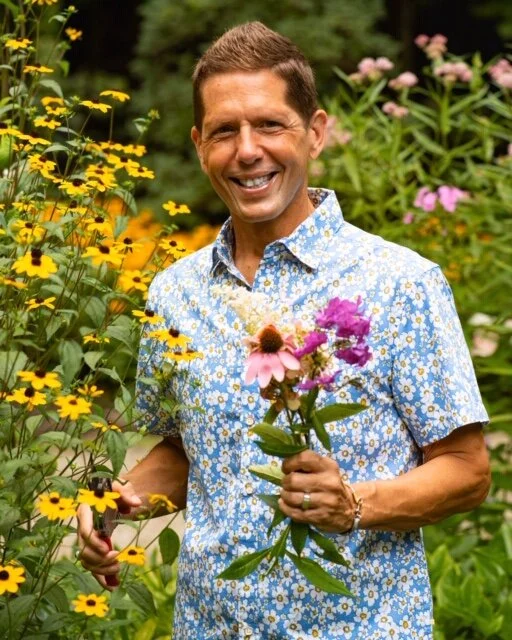
Viola Shipman is the pen name for Wade Rouse, a popular, award-winning memoirist. Rouse chose his grandmother's name, Viola Shipman, to honor the woman whose heirlooms and family stories inspire his writing. Rouse is the author of The Summer Cottage, as well as The Charm Bracelet and The Hope Chest which have been translated into more than a dozen languages and become international bestsellers. He lives in Saugatuck, Michigan and Palm Springs, California, and has written for People, Coastal Living, Good Housekeeping, and Taste of Home, along with other publications, and is a contributor to All Things Considered.

Author Website: https://www.violashipman.com/

TWITTER: @viola_shipman

FB: @authorviolashipman

Insta: @viola_shipman

Goodreads: https://www.goodreads.com/author/show/14056193.Viola_Shipman