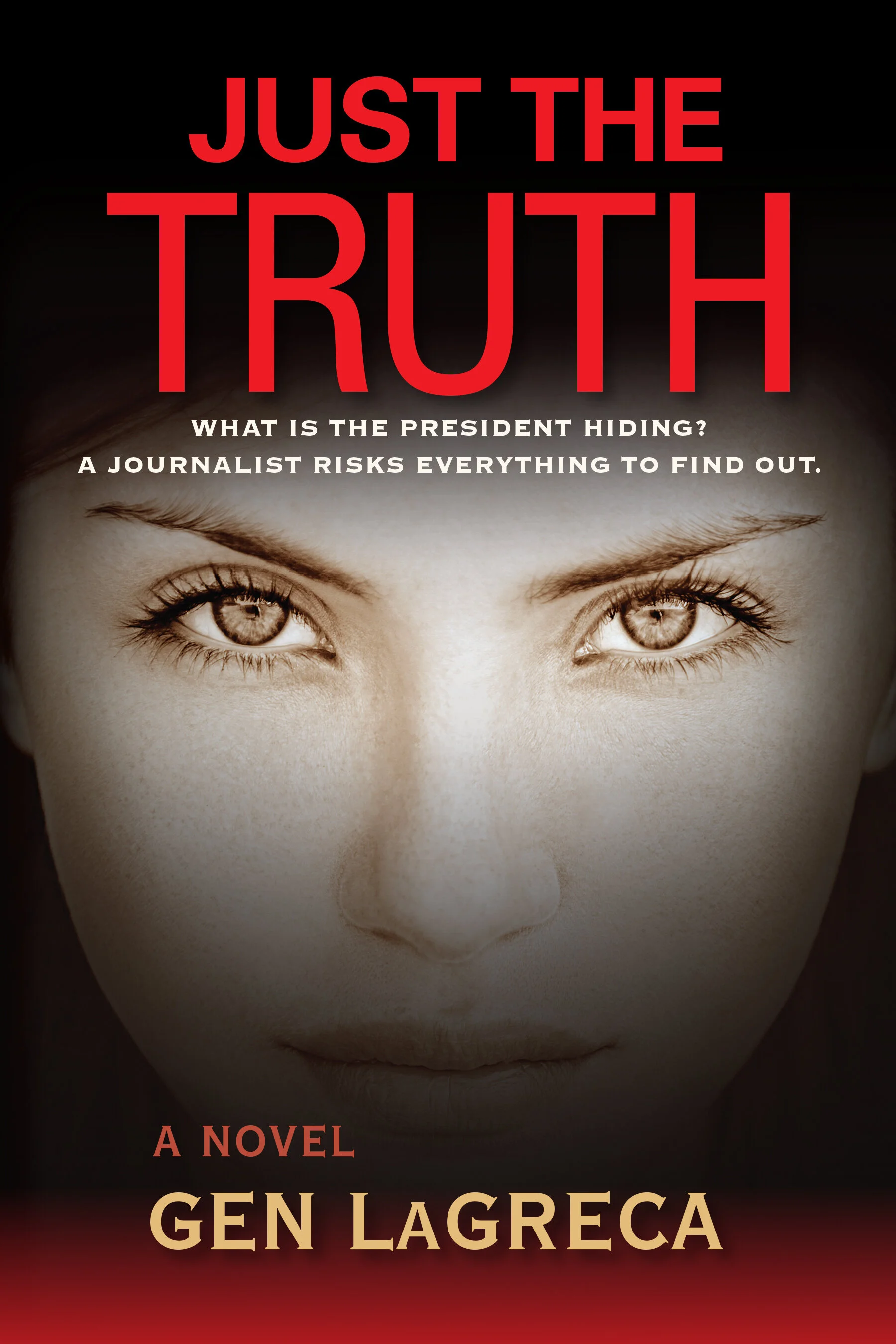
Spotlight: Just the Truth by Gen LaGreca

A newswoman battles powerful institutions, economic temptations, and social backlash to keep her commitment to the truth in a crumbling “free press.”

100 years after women were granted the right to vote and in the era of “fake news,” author Gen LaGreca has written a relevant political thriller, Just the Truth, about a woman with unwavering integrity fighting against the overpowering institutional and economic pressures compromising journalism, as she uncovers suspicious circumstances that just might manipulate an upcoming election. 

In Just the Truth, the businesses of Laura’s family-run corporation, Taninger Enterprises, are the subject of covert political retribution by public officials who abuse their power and the public trust by targeting political enemies. The Taninger family faces pressure to discourage Laura from investigating the president and his administration. Will the family members be pragmatic, try to avoid controversy, and cover up a huge scandal, or will they defend Laura? How can businesspersons and private citizens stand up to intimidation from powerful officials and partisan groups wishing to silence their views? 

Excerpt

Copyright © 2019 by Genevieve LaGreca. All rights reserved.

Cover by Watson Graphics

Available in paperback and ebook editions

Just the Truth

ISBN paperback: 978-0-97445795-6

This book is a work of fiction. Names, characters, places, and events are either products of the author’s imagination or are used fictitiously. Any resemblance to actual events, locales, or persons is purely coincidental.

Publisher’s email: service@wingedvictorypress.com

Prologue

His teacher had told him to stop asking so many questions. They disrupted the class, she’d said. Although he asked them in earnest, and she tried her best to reply, his questions too often pushed the bounds of her knowledge. She squirmed, and the children laughed. The little schoolhouse he attended in rural Virginia eventually became like a shoe that no longer fit the growing footprint of Julius Taninger’s intellectual curiosity.

At age ten, he’d decided he’d had enough of the place. Instead of going to school, he worked on his family’s small farm. On days when his chores were light, he walked the four miles of dirt road to town, where he borrowed books from the library of a local lawyer who took kindly to him. Julius devoured the titles he’d selected and returned them promptly, without so much as a smudge on any page, never wearing out the books—or his welcome. In 1948, with the country still recovering from the Second World War and his family nearly destitute, he read the histories of nations, the tomes of philosophers, and the classics in literature. These books lured him away from the dull landscape in which he chopped wood, fed hogs, and planted crops, toward a fresh canvas on which to paint his future.

At age fifteen, his fascination with the printed word drew him to the office of the town’s newspaper. He made himself useful by sweeping floors, emptying trash, filing papers, and doing other odd jobs without asking for or receiving any pay. The boss noticed his initiative and taught him how to set type and operate the press, which earned him a small salary. Soon he was contributing articles and making more money. After a hurricane struck the town, he set off another storm with his investigative reporting into a no-bid contract approved by the mayor for debris removal. He discovered that the contractor had a checkered past and the mayor was getting a kickback to ignore it. He also found that the mayor’s real talent lay in smearing anyone he perceived as an enemy. After the mayor and his friends launched a campaign to discredit the young reporter—“He’s a fool kid,” “He’s looking for attention,” “He just wants to make trouble,” “He lies”—no one believed Julius’s story. When the town turned against Julius, the editor pressured him to retract his accusations. When he refused, the editor fired him. Vindication came a year later when more evidence was uncovered, and the mayor and others involved in the scheme were tried and sent to jail. This experience spurred Julius’s drive to have his own paper—one that would never compromise the truth.

At age twenty, Julius Taninger’s footprint grew larger. He moved to Washington, DC, where he obtained a loan to buy his first newspaper, a struggling broadsheet named The Pulse of the People. He changed the name to Taninger News. The owner had a motto, which he never stated to his readers but shared with the young buyer: Capture the crowd at any price. Remembering how his former community had formed a gang of sorts that tried to crush him when he was a young reporter, he realized that his passions lay in capturing something else. He changed the motto to: Find the truth wherever it hides. Instead of keeping his slogan to himself as a marketing scheme, he printed it on the front page as a declaration.

Within a decade, he had increased the paper’s circulation to a national readership of millions, transforming his modest local daily into one of the highest-ranking newspapers in the country. He broadened the newspaper’s scope by adding top-notch reporters and correspondents in key cities around the country and the world. When he acquired thousands of acres of timberland in Canada, along with paper mills, power plants, and a fleet of ships to transport megatons of newsprint to his giant, never-still printing presses in Washington, DC, he developed a corporate empire spanning two countries. In subsequent years, he ventured into sports and entertainment and had a building erected to house his growing company’s headquarters. His holdings expanded to include television stations and a professional football team. Taninger News became part of a larger corporation, Taninger Enterprises.

Julius Taninger was tall, handsome, and rich. His quiet self-confidence gave the appearance of calm, except for restless gray eyes like two steely perpetual-motion machines that took in everything and missed nothing. His straight black hair fell of its own will across his forehead as the only part of him not subject to rigorous self-control. He was the town’s most striking bachelor, but no woman wanted him. His reputation for making enemies of the city’s most influential people kept the women away.

He kept his office on the newsroom floor, at the epicenter of the daily hurricane of activities that spewed the news, while the office suite designed for him on the top floor of his building sat idle.

When one of his major corporate advertisers was caught in a scandal, and his editor asked him if they should cover the story or ignore it, Julius replied, “Run it.”

When a powerful businessman-turned-politician tried to buy advertising space for his companies in exchange for favorable coverage of his political adventures, Julius replied, “We put our advertising columns up for sale, but we never sell editorial pages.”

When a small newspaper in Philadelphia was shut down by a new law spearheaded by a local politician to silence his enemies, Julius financed the publisher’s battle through the court system to get the law declared unconstitutional. He won.

When the president of the United States, in the heat of a reelection campaign, sent an aide to implore Julius to end his newspaper’s relentless attacks on the incumbent, and in exchange Taninger News would receive priority access to his administration and exclusive interviews with him, Julius replied, “No deal.”

When his fiery editorials excoriated the local mayor for proposing regulations and taxes harmful to business, Taninger Enterprises became victim to a truckers’ strike and a plant fire. After doing his own investigation, Julius discovered that the mayor was covertly driving the actions as retribution against a political enemy. The mayor feigned ignorance, claiming that coincidences happen. One actually did, and it was not to his honor’s liking. Julius had finally found a woman who admired him for the very qualities that scared off other prospects. She was the mayor’s daughter. To the indignation of her father, they eloped.

Julius refused invitations to the parties, golf games, and country clubs of the city’s social elite. He kept a chair's length away from the fangs and claws of the powerful, whom he oftentimes lashed in editorials printed in his newspaper. He signed those pieces with his iconic initials, affixed like a dare under his column: JT. Everyone called him JT, even his wife and the son and grandchildren they were to have.

His business and his life were inseparable. Other men would take their families on vacations—JT took his family along on business trips. Sharing the excitement and fascination for his work was JT’s version of family values. He took his son and later his grandchildren to corporate meetings with him, on trips to explore his vast properties, and on tours through his plants, explaining the business to them. When they grew up, they joined Taninger Enterprises.

Sometimes JT could be spotted by the newsstand outside his office building, where he found a quiet satisfaction in observing customers buy Taninger News and in seeing the stack of his newspapers dwindle on the shelf. Once, a father and child walked up to the newsstand while JT was there. The man took a copy of Taninger News from the stack. It had a photograph on the front page of the president of the United States with the leaders of the Senate and House of Representatives. As the customer paid for his purchase, his daughter, who looked to be about five years old, noticed the tall stranger watching them.

She pointed at the stack of papers and asked him, “What does a newspaper do?”

With the glower of a teacher reacting to delinquent students, JT gestured at the photograph of the nation’s leaders on the front page and replied, “It watches these rascals and keeps them in line.”

The years never softened Julius Taninger; instead, they hardened even more his crusty patina. Competitors feared him. Politicians smeared him. His wife revered him. As his son and grandchildren grew up in changing times and joined the business, they tolerated him, except for one granddaughter, who adored him. When other family members accused her of being just like her grandfather, they meant it as a criticism, but she took it as a compliment. Her name was Laura Taninger.

Buy on Amazon | Barnes and Noble

About the Author
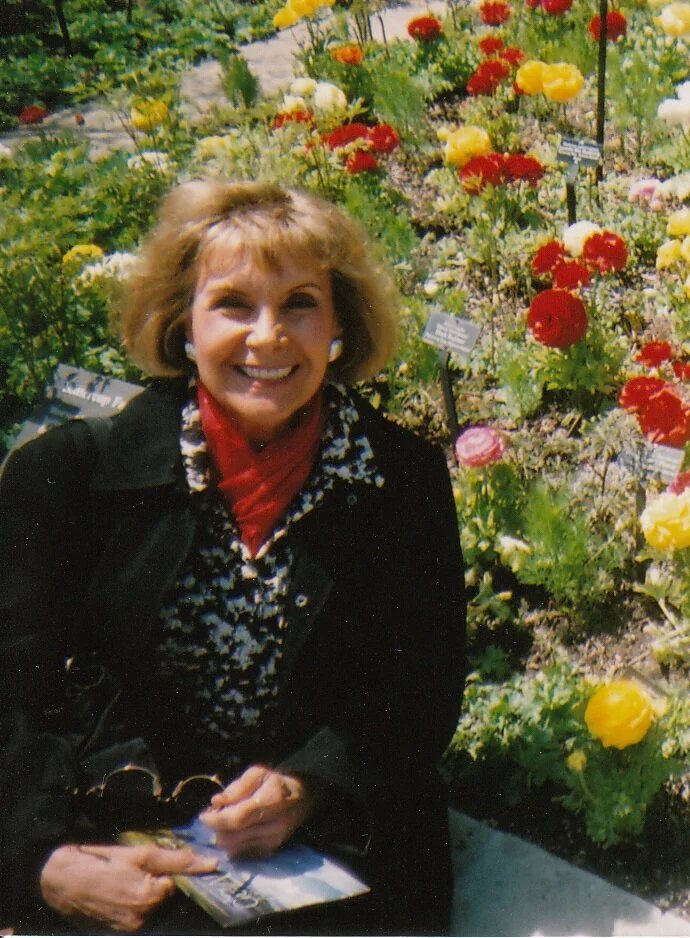
Genevieve (Gen) LaGreca writes novels with innovative plots, strong romance, and themes that glorify individual freedom and independence. She has written novels of all different genres including historical, mystery and romance fiction as well as short stories. She is one of the successful new indie authors whose novels have topped the charts in the popular ebook format. Her three previously published novels, Noble Vision, A Dream of Daring, and Fugitive From Asteron have been Amazon Kindle Best Sellers and won 11 book awards.

Connect:

Website: https://wingedvictorypress.com

Facebook: https://www.facebook.com/profile.php?id=100010793046485 

LinkedIn: https://www.linkedin.com/in/gen-lagreca-5374684a/ 

Blog: http://genlagreca.blogspot.com 

Spotlight: The Right to Remain Silent by Anya Summers

The Right to Remain Silent
Anya Summers
(Crescent City Kings #3)
Published by: Blushing Books Publications
Publication date: April 23rd 2020
Genres: Adult, Contemporary, Romance

He never expects to find her there…

Officer Quinten Blackthorne is working undercover to bring the Rudnikov Mob Empire to its knees. He never expects to find his best friend’s baby sister, Becca, in the center of a powder keg situation at the infamous mobster’s home. With her life on the line, he does the only thing he can think of to save her – he pretends that she’s his fiancée, who knows nothing of his clandestine activities with the criminal enterprise, and stands as her stalwart protector.

Forced into marriage…

But Quinten never expects the mob boss to force them into marriage at gunpoint as a test of loyalty. Not to mention, the idea of her belonging to him isn’t unappealing, nor is he as averse to the prospect as he lets on. Becca, with her sweet curves and take no prisoners attitude, fascinates him, stirs him, and leaves him craving her submission. Yet his past is fraught with broken dreams and death, so he uses his friendship with her brother as a shield against his yearning to claim her as his own.

Resistance is futile…

However, circumstances soon compel Becca and Quinten to become the most unlikely allies in a deadly game of deception. Now they must depend on one another for survival. As they race to unlock the keys to breaking the case, will Quinten be able to maintain his hands-off policy with Becca? Or will he surrender to the earth-shattering passion and turn their marriage of convenience into the real deal?

Publisher’s Note: This steamy friends to lovers romance contains elements of power exchange. While it’s the third in the Crescent City Kings series, it can be enjoyed independently.

Goodreads / Amazon / Barnes & Noble / iBooks / Kobo

PLUS! Book 1 is only 99¢ for a limited time!
Amazon / Barnes & Noble / iBooks / Kobo

EXCERPT:

Becca searched for a potential exit. Guards were stationed in groups of two at doorways and stairwells, each guy more terrifying than the next, with hard faces that probably wouldn’t blink if she was shot dead where she stood. The further into the mansion she trod, the more Becca felt like she was heading to her own funeral. Bile threatened in the back of her throat. She hated that a part of her was impressed by the interior of the home because of the artwork on display. The paintings and sculptures were museum quality. If she wasn’t mistaken, they passed an original Renoir.

The heels of Becca’s black leather boots clicked against the hardwood flooring. Her heart thumped in time with those clicks, like a ticking clock winding down to zero. Konrad and company ushered her up a grand staircase that made the one in Gone with the Wind look cheap and insignificant. At the top, they steered her to the right, down a wide hall with glossy hardwood floors and high ceilings.

When they reached the end of the hall, the two henchmen who had joined them opened a pair of double doors that must have belonged to a Buddhist temple at one time. Becca’s clasped hands shook as she entered what amounted to a sitting room parlor with an enormous ivory marble hearth. The fire inside intended to ward off the chilly night couldn’t make the cold terror in her bones dissipate. Every piece of furniture and décor in the parlor spoke of wealth. There was a Louis XIV desk in one corner. But the room held all the warmth of a mausoleum.

“Have a seat. The boss will be with you shortly,” Konrad indicated in a bullish tone and pointed toward the chocolate Chesterfield sofas while his buddies shut the doors with a resounding thud and sealed them all inside. Sealed Becca inside. She assessed the room. Floor-to-ceiling inlaid shelves held first editions behind panes of glass. There was a vase on a pedestal that looked to be from the Ming Dynasty, or was at least an excellent reproduction. She studied her surroundings for a potential avenue of escape. The only way out would be to jump from the large crenelated windows. Two stories up, she could break something—like her neck. Only three guards were present in the room, odds that weren’t great, but left her a fighting chance.

Konrad shifted his hand to the butt of his gun until she finally complied with his order. Even if she escaped past Konrad and his two buddies, jumped out the window and didn’t break anything when she landed, the boatload of guards stationed over the grounds were far too numerous to outrun. The odds were not in her favor in making it to the gate and beyond for help.

Becca said a silent prayer at the echoing clomp of multiple footsteps approaching. Her anxiety ratcheted up to cataclysmic levels.

The double doors swung inward. Becca wasn’t sure what she’d been expecting, but it wasn’t a relatively trim man with salt and pepper hair, dressed in gray tweed slacks and a button up navy cardigan sweater over his ivory dress shirt. He looked much more like a history professor than a criminal mastermind—at least, until you looked into his eyes. They were cold, devoid of any humanity or warmth, and calculating. Rudnikov assessed her from head to toe as she rose. That stare made her feel underdressed in her jeans and Kelly-green chenille sweater. A sense of helplessness invaded her soul. The uncertainty infused by doubt that she would live through the next hour.

Rudnikov didn’t travel alone. He had four of his paid thugs guarding him. Becca skimmed her gaze over them. They were all similar in manner and form to Konrad, as if they had come off an assembly line. But it was the last man her gaze landed on who brought her up short. She kept her jaw from dropping to the floor, but just barely.

Quinten Blackthorne was a member of Anton Rudnikov’s mob team? What the hell?

Author Bio:

Born in St. Louis, Missouri, Anya grew up listening to Cardinals baseball and reading anything she could get her hands on. She remembers her mother saying if only she would read the right type of books instead binging her way through the romance aisles at the bookstore, she’d have been a doctor. While Anya never did get that doctorate, she graduated cum laude from the University of Missouri-St. Louis with an M.A. in History.

Anya is a bestselling and award-winning author published in multiple fiction genres. She also writes urban fantasy, paranormal romance, and contemporary romance under the name Maggie Mae Gallagher. A total geek at her core, when she is not writing, she adores attending the latest comic con or spending time with her family. She currently lives in the Midwest with her two furry felines.

Website / Goodreads / Facebook / Twitter / Instagram / Bookbub / Newsletter / Amazon


GIVEAWAY!
a Rafflecopter giveaway

XBTBanner1

Spotlight: Red Sky Over Hawaii by Sara Ackerman

9780778309673_TS_PRD.jpg

For fans of Chanel Cleeton and Beatriz Williams, RED SKY OVER HAWAII is historical women's fiction set in the islands during WWII. It's the story of a woman who has to put her safety and her heart on the line when she becomes the unexpected guardian of a misfit group and decides to hide with them in a secret home in the forest on Kilauea Volcano.

The attack on Pearl Harbor changes everything for Lana Hitchcock. Arriving home on the Big Island too late to reconcile with her estranged father, all she can do is untangle the clues of his legacy, which lead to a secret property in the forest on Kilauea Volcano. America has been drawn into WWII, and amid rumors of impending invasion, the army places the islands under martial law. When they start taking away neighbors as possible sympathizers, Lana finds herself suddenly guardian to two girls, as well as accomplice to an old family friend who is Japanese, along with his son. In a heartbeat, she makes the decision to go into hiding with them all.

The hideaway house is not what Lana expected, revealing its secrets slowly, and things become even more complicated by the interest of Major Grant Bailey, a soldier from the nearby internment camp. Lana is drawn to him, too, but needs to protect her little group. With a little help from the magic on the volcano, Lana finds she can open her bruised heart to the children--and maybe to Grant.

A lush and evocative novel about doing what is right against the odds, following your heart, and what makes a family.

Excerpt

THE ROAD

December 8, 1941

WITH EVERY MILE CLOSER TO VOLCANO, THE FOG thickened, until they were driving through a forest of white gauze with the occasional branch showing through. Lana considered turning the truck around no less than forty-six times. Going back to Hilo would have been the prudent thing to do, but this was not a time for prudence. Of that she was sure. She slowed the Chevy to a crawl and checked the rearview mirror. The cage with the geese was now invisible, and she could barely make out the dog’s big black spots.

Maybe the fog would be to their advantage.

“I don’t like it here at all,” said Coco, who was smashed up next to Lana, scrawny arms folded in protest. The child had to almost yell to be heard above the chug of the motor.

Lana grabbed a blanket from the floor. “Put this over you. It should help.”

Coco shook her head. “I’m not cold. I want to go home. Can you please take us back?”

Goose bumps had formed up and down her limbs, but she was so stubborn that she had refused to put on a jacket. True, Hilo was insufferably hot, but where they were headed—four thousand feet up the mountain—the air was cold and damp and flimsy.

It had been over ten years since Lana had set foot at Kı¯lauea. Never would she have guessed to be returning under these circumstances.

Marie chimed in. “We can’t go back now, sis. And anyway, there’s no one to go back to at the moment.”

Poor Coco trembled. Lana wished she could hug the girl and tell her everything was going to be okay. But that would be a lie. Things were liable to get a whole lot worse before they got any better.

“Sorry, honey. I wish things were different, but right now you two are my priority. Once we get to the house, we can make a plan,” Lana said.

“But you don’t even know where it is,” Coco whined.

“I have a good idea.”

More like a vague notion.

“What if we don’t find it by dark? Are they going to shoot us?” Coco said.

Marie put her arm around Coco and pulled her in. “Turn off that little overactive imagination of yours. No one is going to shoot us,” she said, but threw a questioning glance Lana’s way.

“We’ll be fine,” Lana said, wishing she believed that.

The girls were not the real problem here. Of greater concern was what they had hidden in the back of the truck. Curfew was six o’clock, but people had been ordered to stay off the roads unless their travel was essential to the war. Lana hadn’t told the girls that. Driving up here was a huge risk, but she had invented a story she hoped and prayed would let them get through if anyone stopped them. The thought of a checkpoint caused her palms to break out in sweat, despite the icy air blowing in through the cracks in the floorboard.

On a good day, the road from Hilo to Volcano would take about an hour and a half. Today was not a good day. Every so often they hit a rut the size of a whiskey barrel that bounced her head straight into the roof. The continuous drizzle of the rain forest had undermined all attempts at smooth roads here. At times the ride was reminiscent of the plane ride from Honolulu. Exactly two days ago, but felt more like a lifetime.

Lana’s main worry was what they would encounter once in the vicinity of the national park entrance. With the Kı¯lauea military camp nearby, there were bound to be soldiers and roadblocks in the area. She had so many questions for her father and felt a mixed ache of sadness and resentment that he was not here to answer them. How were you so sure the Japanese were coming? Why the volcano, of all places? How are we going to survive up here? Why didn’t you call me sooner?

Coco seemed to settle down, leaning her nut-brown ringlets against her sister’s shoulder and closing her eyes. There was something comforting in the roar of the engine and the jostle of the truck. With the whiteout it was hard to tell where they were, but by all estimates they should be arriving soon.

Lana was dreaming of a cup of hot coffee when Coco sat upright and said, “I have to go tinkle.”

“Tinkle?” Lana asked.

Marie said, “She means she has to go to the bathroom.”

They drove until they found a grassy shoulder, and Lana pulled the truck aside, though they could have stopped in the middle of the road. They had met only one other vehicle the whole way, a police car that fortunately had passed by.

The rain had let up, and they all climbed out. It was like walking through a cloud, and the air smelled metallic and faintly lemony from the eucalyptus that lined the road. Lana went to check on Sailor. The dog stood up and whined, yanking on the rope around her neck, straining to be pet. Poor thing was drenched and shaking. Lana had wanted to leave her behind with a neighbor, but Coco had put up such a fuss, throwing herself onto her bed and wailing and punching the pillow, that Lana relented. Caring for the girls would be hard enough, but a hundred-and-twenty-pound dog?

“Just a bathroom stop. Is everyone okay back here?” she asked in a hushed voice. Two low grunts came from under the tarp. “We should be there soon. Remember, be still and don’t make a sound if we stop again.”

As if on cue, one of the hidden passengers started a coughing fit, shaking the whole tarp. She wondered how wise it was to subject him to this long and chilly ride, and if it might be the death of him. But the alternative was worse.

“Deep breaths…you can do it,” Lana said.

Coco showed up and hopped onto the back tire. “I think we should put Sailor inside with us. She looks miserable.”

“Whose lap do you propose she sits on?” Lana said.

Sailor was as tall as a small horse, but half as wide.

“I can sit in the back of the truck and she can come up here, then,” Coco said in all seriousness.

“Not in those clothes you won’t. We don’t need you catching pneumonia on us.”

They started off again, and ten seconds down the road, Sailor started howling at the top of her lungs. Lana felt herself on the verge of unraveling. The last thing they needed was one extra ounce of attention. The whole idea of coming up here was preposterous when she thought about it. At the time it had seemed like a good idea, but now she wondered at her sanity.

“What is wrong with that dog?” Lana said, annoyed.

Coco turned around, and Lana felt her hot breath against her arm. In the smallest of voices, she said, “Sailor is scared.”

Lana felt her heart crack. “Oh, honey, we’re all a bit scared.

It’s perfectly normal under the circumstances. But I promise you this—I will do everything in my power to keep you out of harm’s way.”

“But you hardly know us,” Coco said.

“My father knew you, and you knew him, right?” Lana said. “And remember, if anyone asks, we tell them our story.”

They had rehearsed it many times already, but with kids one could never be sure. Not that Lana had much experience with kids. With none of her own and no nieces or nephews in the islands, she felt the lack palpably, smack in the center of her chest. There had been a time when she saw children in her future, but that dream had come and gone and left her sitting on the curb with a jarful of tears.

Her mind immediately went to Buck. Strange how your future with a person could veer so far off course from how you’d originally pictured it. How the one person you swore you would have and hold could end up wreaking havoc on your heart instead. She blinked the thought away.

As they neared Volcano, the fog remained like a curtain, but the air around them brightened. Lana knew from all her time up here as a young girl that the trees got smaller as the elevation rose, and the terrain changed from towering eucalyptus and fields of yellow-and-white ginger to a more cindery terrain covered with red-blossomed ‘ohi‘a trees, and prehistoriclooking ha¯pu’u ferns and the crawling uluhe. At one time in her life, this had been one of her happiest places. Coco reached for the letter on the dashboard and began reading it for the fourth time. “Coco Hitchcock. It sounds funny.” The paper was already getting worn.

Marie swiped it out of her hands. “You’re going to ruin that. Give it to me.”

Where Coco was whip thin and dark and spirited—a nice way of putting it—Marie was blonde and full-bodied and sweet as coconut taffy. But Lana could tell even Marie’s patience was wearing thin.

“Mrs. Hitchcock said we need to memorize our new names or we’ll be shot.”

Lana said as calmly as she could, “I never said anything of the sort. And, Coco, you have to get used to calling me Aunt Lana for now. Both of you do.”

“And stop talking about getting shot,” Marie added, rolling her eyes.

If they could all just hold it together a little bit longer.

There was sweat pooling between her breasts and behind her kneecaps. Lying was not her strong suit, and she was hoping that, by some strange miracle, they could sail on through without anyone stopping them. She rolled her window down a couple of inches for a burst of fresh air. “We’re just about here. So if we get stopped, let me do the talking. Speak only if someone asks you a direct question, okay?”

Neither girl said anything; they both just nodded. Lana could almost see the fear condensing on the windshield. And pretty soon little Coco started sniffling. Lana would have said something to comfort her, but her mind was void of words. Next the sniffles turned into heaving sobs big enough to break the poor girl in half. Marie rubbed her hand up and down Coco’s back in a warm, smooth circle.

“You can cry when we get there, but no tears now,” she said.

Tears and snot were smeared across Coco’s face in one big shiny layer. “But they might kill Mama and Papa.” Her face was pinched and twisted into such anguish that Lana had to fight back a sob of her own.

Excerpted from Red Sky Over Hawaii by Sara Ackerman, Copyright © 2020 by Sara Sckerman. Published by MIRA Books. 

Buy on Amazon | Audible | Barnes and Noble

About the Author

Sara Ackerman_Credit Tracy Wright-Corvo.jpg

Sara Ackerman is the USA Today bestselling author of The Lieutenant's Nurse and Island of Sweet Pies and Soldiers. Born and raised in Hawaii, she studied journalism and earned graduate degrees in psychology and Chinese medicine. She blames Hawaii for her addiction to writing, and sees no end to its untapped stories. When she's not writing or teaching, you'll find her in the mountains or in the ocean. She currently lives on the Big Island with her boyfriend and a houseful of bossy animals. Find out more about Sara and her books at www.ackermanbooks.com and follow her on Instagram @saraackermanbooks and on FB @ackermanbooks.

Connect:

Author Website

Facebook: @ackermanbooks

Twitter: @AckermanBooks

Instagram: @saraackermanbooks

Pinterest

Spotlight: One Hot Texas Summer by Nicole Flockton

One Hot Texas Summer
Nicole Flockton
(Prentice Brothers of Sweet Ridge #1)
Published by: Tule Publishing
Publication date: May 26th 2020
Genres: Adult, Contemporary, Romance

She’s been fooled before by sweet words and hot kisses

Kelly Turner loves being a florist, and being asked to take the lead on the new site for the town’s festival is an honor. If only she didn’t have to work closely with the town player, Tate Prentice. After being burned once by a serial cheater, her inconvenient attraction toward Tate needs to be nipped in the bud.

Tate Prentice’s focus is on ensuring his father recovers fully from his stroke and making sure the family’s peach farm continues to thrive. When his brother nominates the farm to be the satellite site for the festival, he’s less than impressed. The only good thing is he’ll be working with Kelly – even though he knows she’ll never give him a second glance, not with his reputation.

The more time Kelly spends with Tate, the more she sees the man behind the reputation. Can she trust her instincts, or will her heart be broken once again?

Goodreads / Amazon / Barnes & Noble / iBooks / Kobo

EXCERPT:

Outside, the sounds of summer surrounded them. Crick- ets trilled, calling for company. A light veil of humidity hung in the air, not quite stifling yet. Come July and August, humidity would be heavy and unpleasant. Hopefully, Mother Nature would play nice for Founders’ Day and make the days and evenings pleasant.

“Where did you park your car?” he asked.

“Behind the shop.”

“Okay.” Tate headed in that direction, aware that he still had his arm around Kelly’s shoulders. Interesting. Why hadn’t she shaken him off? Not that he was complaining. She fit snugly, and he could get used to it.

A second later, she took a step to the right and his arm slipped to his side. The universe liked to give and then take away from him pretty quickly.

“You don’t have to walk me to my car, Tate. I’m a big girl and can get there by myself. The town is safe.”

He shoved his hands in his pocket to stop from reaching for her again. “I’m aware of that, but Dad would box my ears if he knew I’d let you walk alone after spending the evening with you.”

“Ahh, the gentlemanly gestures. It’s kind of sad they’re dying out.”

“You sound like you don’t want that to happen. You do know you just told me I didn’t have to do one of those gentlemanly gestures with dinner.”

She shrugged. “I have mixed feelings. I’ve been on my own for a long time. I’m an independent business owner. I’m in charge of my own life. And I love that, but when I listen to Mom talk about the early days of her and Dad’s courtship, it kind of makes me sad that some of those traditions are being lost. Some days, I’d like to experience it, and other days I don’t.”

Tate itched to rest his arm on her lower back as they walked down the darkened alley by her shop. Would this be one of those gestures she wanted? He compromised and raised his hand to her lower back, not touching but close enough that he could if she needed it. “I’m sure in time a balance will be struck that will please everyone.”

“I hope so,” she murmured as they stopped by her car, unlocking it. The flashing lights brightened the night for a heartbeat.

Deciding to risk it, he leaned around her and opened the door for her. “I had a really nice evening tonight, Kel. Thanks for asking me to join you.”

She looked up at him, the action bringing her face closer to his. In the muted glow from the only light in the parking lot, he caught the way her tongue darted out to moisten her lips. Tate bit back a groan. Memories from earlier in the day when he’d been tempted to kiss her in his kitchen slammed into him. His blood heated and his lower body tightened in his jeans.

He didn’t miss the increase in her breathing. “Kel?” he asked, sure of what he wanted but not wanting to assume she wanted the same thing.

“Tate,” she whispered and swayed a fraction toward him.

He rested his hand on her hip and lowered his head, keeping his eyes open. If she pulled back, he would give her space. Only she raised her face and their lips met.


Author Bio:

USA Today Bestselling author Nicole Flockton writes sexy contemporary romances, seducing you one kiss at a time as you turn the pages. Nicole likes nothing better than taking characters and creating unique situations where they fight to find their true love.

On her first school report her teacher noted "Nicole likes to tell her own stories". It wasn’t until after the birth of her first child and after having fun on a romance community forum that she finally decided to take the plunge and write a book.

Apart from writing Nicole is busy looking after her very own hero – her wonderfully supportive husband, and two fabulous kids. She also enjoys watching sports and, of course, reading.

Website / Goodreads / Facebook / Twitter / Instagram / Amazon / Newsletter


GIVEAWAY!
a Rafflecopter giveaway

XBTBanner1

Audio Spotlight: Innocence on Trial by Rick Bowers and Eleanor Caudill

Innocence On Trial Banner.jpg

Genre: Legal Thriller

Release date: Feb. 5, 2020

Synopsis: Seeking a high profile case to jet-fuel her career and striving to strike a blow for justice, attorney Laura Tobias sets out to clear a man she believes was wrongfully imprisoned for murder, ten years before. The young lawyer, a rising star with the Council Against Wrongful Convictions, is the last hope for inmate Eddie Nash, serving life without parole at the infamous Attica Correctional Facility in upstate New York.

 Attica, one of the last of the classic "big houses", is still haunted by the 1971 inmate revolt and police siege that left dozens of prisoners and hostages dead. Appealing the cast in federal court and unraveling the facts, Laura uncovers evidence that Eddie was framed by the police for murder - the brutal hanging of a troubled young woman in the remote upstate town of Eden.

Realizing that the real "hangman of Eden" may still be at large, Laura also finds herself being stalked. Are the police out to stop her from exposing their frame-up? Is the real killer seeking to keep her from reopening the investigation? 

Teaming up with noted innocence investigator Charles Steel, she gets a lead on evidence that could clear her client and point to the real killer. With a new trial moving forward, Laura must find the truth and prevail in court, without becoming the next victim.

Excerot

Buy on AmazonAudible

About the Author: Rick Bowers

bowers_rick.jpg

Rick Bowers is an award-winning author and journalist specializing in the quest for social justice and equal rights. Rick has written three books, penned a PBS documentary and directed an oral history project that gathered thousands of first-hand accounts of the civil rights movement. Rick's work has also been honored with the prestigious Peabody Award, Emmy Award and Webby Award.

Rick recently debuted as a fiction writer with the release Innocence on Trial -- a legal thriller about an idealistic young lawyer seeking to exonerate a wrongfully convicted man. Finding that her client was framed by the police, attorney Laura Tobias also finds herself being stalked. Are the police seeking to keep her from exposing their frame-up? Or is the real killer trying to stop her from re-opening the case?

Bowers' non-fiction book Spies of Mississippi (National Geographic, 2010) exposed the secret, state-run spy network dedicated to preserving segregation in 1950s and '60s. Spies of Mississippi transported readers into a world of infiltrators and informants working to undercut civil rights organizations in the deep South at the height of the civil rights movement. The state spies framed civil rights leaders, jailed activists, threatened sympathizers and funded white supremacist organizations with tax dollars. Working with filmmaker Dawn Porter, Bowers also penned the PBS/Independent Lens documentary version of  Spies of Mississippi, which won numerous awards for its hard hitting treatment of the topic. Bowers' book Superman vs. the Ku Klux Klan (National Geographic 2012) revealed how the Man of Steel exposed the men of hate to a generation of children. The book details how the producers of the Adventures of Superman radio serial pitted the iconic superhero against a thinly veiled version of the KKK to five million children radio listeners in 1946, winning widespread praise from civic leaders and the press and humiliating the actual Klan. Superman vs. the KKK is now in development as a feature film by Paper Chase Films in L.A.

In addition to writing books and making films, Bowers also conceptualized and directed "Voices of Civil Rights," a ground-breaking oral-history project that collected thousands of first-hand accounts of the small acts of courage that powered the civil rights movement.  This priceless treasure trove of 21,000 recollections, letters, essays, audio tracks, videos and photographs is now archived at the Library of Congress and the Museum of African American History and Culture in Washington D.C. A collaboration of AARP, the Library of Congress, the Leadership Conference on Civil Rights and History Channel, Voices produced best-selling books and award-winning documentaries. The Voices of Civil Rights documentary won the prestigious Emmy and Peabody awards.

He has also appeared on a wide range of media outlets, including PBS, NPR, CBS, the History Channel and Discovery Network.

Prior to working on books, films and multi-media projects, Bowers worked as a newspaper reporter and editor for more than 15 years, reporting for the "Patriot Ledger "of Quincy, Massachusetts, the "Miami Herald, "and "USA Today." His articles have been published in many of the most prestigious publications in the country, including the "Washington Post," "Chicago Tribune," " Philadelphia Inquirer," and "TIME." He also worked as a director/vice president of creative initiatives for AARP, conceptualizing and directing far-reaching projects on important social issues.

About the Narrator: Eleanor Caudill

I am a voice over, theatre, and commercial actress. I have a strong and confident speaking voice and a penchant for identifying the subtleties and nuance within varying reading materials. I have a passion for reading and that passion is multiplied when sharing a story with others. It would be my honor to tell your story.

WebsiteFacebookInstagram

Cover Reveal: Eagles in Flight by Ramcy Diek

Eagles in Flight
Ramcy Diek
Published by: Acorn Publishing
Publication date: August 25th 2020
Genres: Adult, Contemporary, Romance

Emma’s life changes the day Ruben Templeton walks in and asks her out on a date. Over dinner, she’s a little disappointed when his best friend, Jesse Kimball, joins them. Jesse is a senator’s son who just announced his candidacy for mayor.
Twenty-seven-year-old Emma is surprised, but excited when it’s Jesse who calls her the next day instead of Ruben.

Jesse introduces Emma to a life with mansions, expensive cars, cocktail dresses, and status. It doesn’t take long for him to sweep her off her feet. He’s handsome and charming, making her feel like the center of his universe.

When Emma receives devastating news, Jesse asks her to marry him. From the moment she agrees, their relationship starts to deteriorate. Desperate to understand why her new husband is so cold and distant, she reaches out to him, only to be met by anger.
Hurt and confused, Emma turns to Ruben for advice.

Ruben suggests they give each other space for a few weeks. Weeks she can use to help him locate his younger brother Axel, who has gone missing. Emma agrees, and soon finds herself on a road trip across the country.

Will Emma and Jesse’s temporary separation clear the distance between them, or will she find love in the arms of another man?

Add to Goodreads


Author Bio:

A long time ago, I fell in love with the United States while traveling around in an Oldsmobile station-wagon with my husband. We are both born and raised in the Netherlands.
Together, we eventually found our way to the Pacific Northwest, built up a business, and raised our two boys into amazing young adults with their own careers. During this time, I also made a slow transition from reader to writer of many different stories.

My multiple award winning debut novel "Storm at Keizer Manor" sets the bar high for my second novel, Eagles in Flight.
All my books are stand alone novels in different genres. You might be in for a surprise, or a disappointment.

Website / Goodreads / Facebook / Twitter / Instagram / Bookbub / Newsletter


XBTBanner1