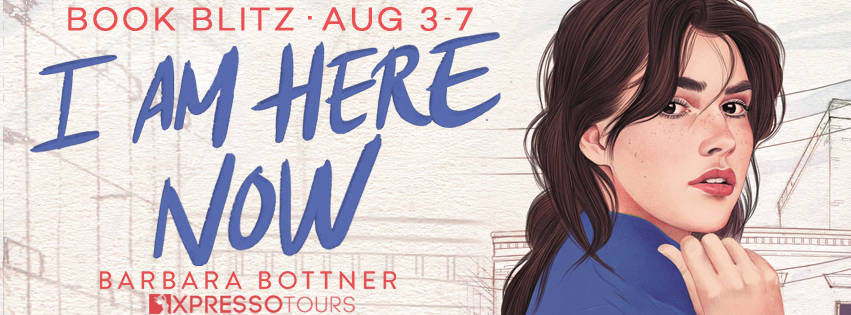
Spotlight: I Am Here Now by Barbara Bottner

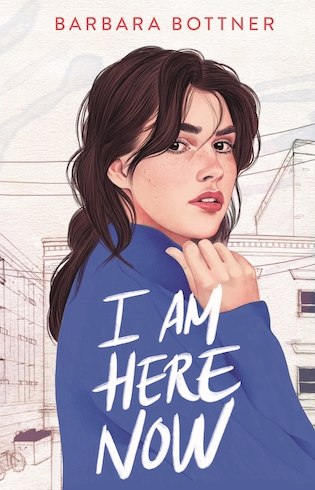
I Am Here Now
Barbara Bottner
Published by: Macmillan
Publication date: August 4th 2020
Genres: Coming of Age, Young Adult

Set in the 1960s, Barbara Bottner’s I Am Here Now is a beautiful novel in verse about one artist’s coming of age. It’s a heartbreaking, powerful and inspiring depiction of what it’s like to shatter your life—and piece it all back together.

You can’t trust Life to give you decent parents, or beautiful eyes, a fine French accent or an outstanding flair for fashion. No, Life does what it wants. It’s sneaky as a thief.

Maisie’s first day of High school should be exciting, but all she wants is to escape.

Her world is lonely and chaotic, with an abusive mother and a father who’s rarely there to help.

So when Maisie, who finds refuge in her art, meets the spirited Rachel and her mother, a painter, she catches a glimpse of a very different world—one full of life, creativity, and love—and latches on.

But as she discovers her strengths through Rachel’s family, Maisie, increasingly desperate, finds herself risking new friendships, and the very future she’s searching for.

Goodreads / Amazon / Barnes & Noble / iBooks / Kobo

EXCERPT:

THE CITY

The tiny fire escape is our private spot.

My dad says he’s sorry he’s gone so often.

Do I remember when I was six

and he took me into the city?

I wore a red coat, red shoes,

and perfect white leather gloves

embroidered with tiny blue buds.

I recall watching the road into New York:

billboards, telephone lines, bridges,

muddy sky.

The parking garage man said,

“So you’re the boss man’s little lady

I’ve heard so much about?”

The elevator man, Jimmy,

knew my name!

My dad’s corner office had the most windows,

the biggest desk, too.

My father bragged, “Your daddy runs this joint!”

From his window, as it got dark,

we could see Manhattan laid out in front of us

like a glittering tablecloth.

How could I not remember?

It was a perfect day,

until he turned the key in our front door.

Mother was waiting.

We were in for it.

A breeze pushes the fumes against my face.

He snuffs out a butt, then lights another,

says, “Look, kid, smoking’s a dirty habit.

I’m going to quit soon.”

“Teach me to smoke!” I say.

His eyebrows meet above his nose,

and as the tip of the cigarette burns,

it sends smoke into the clear night

like a signal.

Maybe, across the Harlem River

someone will see it,

realize we are signaling: Help!

“Let me try it, please? I want to be like you!”

“No, you don’t! Not now, not ever.”

“But, Dad, at least I should know

what I’ll be missing for the rest of my life.”

He smiles so wide, I can see his molars.

“Well, you’ll never know about the future,”

he says, ominously.

I grab his arm.

“Tell me the truth.

Are you thinking of leaving?”

“Leaving what?”

“Dad!”

“What?”

“Us! Please! Please don’t leave!

You can’t. I mean it!

She hates me.”

“Calm down, Maisie,” he says.

My voice crackles.

“I’m just telling you, if you go,

she’ll put me in the ground.”

He ruffles my hair

as if I am being amusing.

I want to scream.

“You think I’m a rotten kid, too?”

“You’re a great kid, Maisie.”

“I’m trying to reform, Dad.”

“Maisie, honey,

I like you exactly the way you are:

spirited, smart, your own person.”

“Being my own person

is treacherous,” I say.

He turns to me.

“Are you working me over?” he asks.

I know not to answer.

“Okay, you poor kid, one puff.

I’ll give you one shot at it

but you have to do exactly what I say.

You have to learn how to inhale, okay?”

I do have to learn how to inhale.

How to breathe,

as if I belong here on the earth.

I look at his face,

think how I’m glad that he breaks the rules.

He says we’re alike.

That must be why I’m the way I am,

as my grandma likes to say,

always flirting with disaster,

as if disaster were my middle name.

“When you smoke,

you take in the deepest breath

as if you have to last underwater

without air.

Then, you keep it in

as long as you possibly can.”

“But you don’t do that, Dad.”

“I’ve been smoking a long time, kid.

Ready?” he says, and lights a fresh one.

I sit up tall under the stars,

put my feet on the bench,

straighten my back

so I can always remember

this moment, me and my dad,

on the same wavelength.

Me, trying to figure out

if he wants to protect me

while he’s teaching me to smoke.

How about telling me about school?”

He sighs, offers the cigarette.

“It has its moments,” I say,

and close my lips around the tobacco,

inhale really, really deeply.

I am about to show him the bruises

I still have on my arm,

but then the smoke curls in my chest,

which immediately wants to explode.

“Hold it in,” he commands.

“Don’t let it out.”

Finally my mouth opens

because I’m coughing and gasping.

It feels like some kind of torture.

The taste is nasty.

“It’s awful!” I cough.

“It tastes horrible, feels horrible.”

I’m practically crying.

“So disgusting! How could you?!”

My dad laughs.

“Well, now you never have to do it again!”

I dash inside, refuse to speak to him

for the rest of the night.

“I’m done with you, Dad!”

He laughs!

Later he knocks on my door,

takes my hand.

“Between you and me,

if anything ever happened—

not that it will—in the leaving department,

wherever I’d go,

you’d be coming with me, kid.

I promise.”

I throw my arms around him.

Later I will drift off wondering

how much warning he’d give me.

And what about my brother?

Author Bio:

Barbara Bottner has written about 50 books for children of all ages. In May, her first YA novel in free verse, I Am Here Now is coming out from Macmillan (Imprint) She's written a NY Times Bestseller, as well as staffed prime time sit-com, sold screenplays, published essays and short stories in both national and literary magazines and reviewed children's books for both the NY and LA Sunday Book Review. Many of her works have been multiply translated and animated, and adapted for short plays. When she was an animator, she won "Best Film For TV" from the Annecy International Animation Festival. When very young, she briefly appeared on stage and in Europe with La Mama Plexus and in television movies. She teaches writing for children privately but won The Distinguished University Teaching Award from The New School For Social Research. Her papers are collected in the Arne Nixon Center for Children's Literature at Fresno State.

Former students include: Lane Smith, Robin Preiss Glaser, Peggy Rathmann, Bruce Degen, Barney Saltsburg and Antoinette Portis.

She feels blessed to have a passion that seems to stick with her no matter how the larger world goes out of control.

Website / Goodreads / Instagram


GIVEAWAY!
a Rafflecopter giveaway

XBTBanner1

Spotlight: August Fog by A.L. Goulden

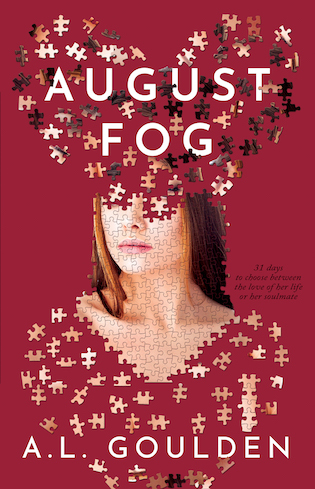
August Fog
A.L. Goulden
(August Fog, #1)
Publication date: August 1st 2020
Genres: Adult, Contemporary, Romance, Women’s Fiction

Monica Waters has 31 days to choose between the love of her life or her soulmate. Juggling an unglamorous Hollywood career and a clumsy injury with an endless cocktail of antidepressants and dull daily routines, Monica moves through her thirties in a fog, avoiding the pain of her damaged marriage, broken body, and fragile mind.

Until he comes along.

When emerging artist Quinn Matthews moves next door, just coping with the downward spiral of life is no longer feasible. Their powerful connection ignites a relationship that will tip the boundaries of their perfectly balanced lives, sparking a mutual obsession and life-altering affair.

Monica tosses her prescriptions, striving to be free of their control, but with each passing summer day, dangerous secrets seep into their quiet suburban life, inching toward disaster. Sometimes the truth is hidden for a reason.

“This is a contemporary tale of a woman’s struggle to navigate love and mental illness, while defining where and how she will land on her own feet.” –Independent Reader

“A raw and honest look at the ugly secrets behind a flawed marriage and the stigmas of depression.”

Goodreads / Amazon

EXCERPT:

They meet

Fusion can happen when two objects reach an extreme heat. When the blood boils, the same can be said of hearts. The connection can excite and ache and torment, yet the demise of will goes unnoticed when the thrill renders an addictive high. Monica Waters once loved getting high, both literally and figuratively, but outgrew the juvenile practice of artistic inspiration. She had responsibilities now, like a mortgage and an admirable career… and a husband.

Antidepressants helped too.

When Los Angeles soared past eighty-five degrees in April the unsettling promise of perpetual summer ignited tension across freeways. Monica shielded anxiety with music and a fun car. Bob Marley had eased an hour-long commute, also known as Thursday, delivering her to the sanctuary of home until she slammed the brakes.

A yellow Nissan blocked the driveway with no owner in sight. Her best friend owned the same vehicle but not with New York plates so she glared next door. Sharing a driveway with Rebecca’s bohemian flophouse had reached its limit.

Monica wedged her BMW into an ivy-covered carport at an awkward angle and pried herself out, trying not to scratch her paint against the fence. She mumbled a few obscenities when she couldn’t get leverage to slam the door but squeezed past the filthy SUV, smoothing her long chestnut hair. The tall Japanese-style gate that led to her bonsai garden greeted with Zen and wafts of jasmine.

That’s when she saw him.

On the wooden staircase that wound up to Rebecca’s converted attic was a man that shifted everything into slow motion. A man, that for a second at least, she would follow anywhere. Her reaction defied rational explanation. The guy wearing jeans and t-shirt carried a box but even his muscular build was common in this town. Still, he had a gentle force of gravity tugging like a current.

The back of his shaved head lacked noticeable character, but his climb was hypnotic. She stopped breathing while her heart pounded at an alarming speed. A beautiful tattoo engulfed his entire right arm with gnarled branches and scattered leaves of an old tree. It rooted around the box and swayed like a breeze as he moved.

When the gate slipped from her fingers, the slam jolted her from the daze and he turned. She inspected her purse and fumbled with her keys even when he paused near the top of the stairs, waiting for attention. She rushed to her back door but couldn’t resist the draw of his stare.

His eyes were crystal blue and pensive under a low-slung heavy brow. He stood confident like carved hardwood left unpolished with ample lips, a strong jaw, and a rugged nose, but didn’t come off as arrogant or boring. Her stomach twisted at his asymmetrical smile.

He was beautiful.

Flushed, she returned a tight grin and nod before barreling into her laundry room. “Who’s the guy next door?” she asked, dropping her stuff on the counter next to the deep sink.

Alex, still sweaty from work, gave her a quick kiss, which was followed by the smacks of a powerful dog tail to her thigh. Her husband’s own shaved head and brawny build still resembled an action hero but his gray eyes lacked the dangerous edge that once made him magnetic.

“You mean the Kelly Slater look-alike?” He laughed. “Rebecca’s renting out the upstairs to some artist. She says he’s bi-coastal… whatever that means. Pretty sure he’s gay.”

“What makes you say that?”

“Did you see what he drives?”

She cocked her head. “So.”

“So? That’s what Robin drives.” He flashed his hands.

“That might be the dumbest thing ever said. Did he look at you too long or something?” “Hey, I’ve got no problem if he’s gay. He can look all he wants. I’m just saying.” Alex flexed his arms and inspected himself.

“Just because Rebecca’s a lesbian doesn’t mean everyone she’s around is gay.” Monica reached to pet their rambunctious Lab Pointer mix, Lacey. “I just hate that she and Julie split. I miss her.”

“Me too. I wish she won the house but Rebecca could afford it.”

“Then why’s she renting out rooms?” Her words had that petulant tone she hated with an unwarranted volume.

“I don’t know,” he said, flicking the counter. “It’s not like we have control over our neighbors.” He shuffled towards the bathroom, stripping for his shower along the way. She watched, remembering when that used to send her running after him, but now he hopped around in his socks and underwear looking more child-like than sexy.

In her ballerina flats, Monica was two inches shy of six feet and two years shy of forty. Her curvy size fourteen worked in Hollywood, the land of size zeros. Sometimes she resented being a giant next to tiny, beautiful people because it equated invisibility, but she faked smiles in the back of every crew photo despite the obscurity of an editing career.

She bent to give Lacey attention and propped the back door open while Mr. Bi-coastal moved from his vehicle to the yard. The redwood fence obscured his face but a childhood crush on Yul Brynner embedded an allure to a nice shaved head. Staring like a lech though erased dignity, so she mustered the nerve to make an introduction.

She stepped outside but an eruption of vicious barking made her yelp. Two enormous Rottweilers flanked the middle landing on the staircase, flinging drool over the fence. Lacey ducked behind Monica in fear.

“No. No barking!” Mr. Bi-coastal bounded up the stairs. “I’m so sorry,” he said, setting another box down. “I promise I’ll keep them quiet. They’re friendly, I swear.” He drew an X over his heart like a seven-year-old but his intense expression was all grown-ass-man.

“It’s alright.” She swallowed hard. “My husband had lovable Rotts growing up.” Spitting out her marital status made her fidget but his shoulders relaxed. “My name’s Monica.”

“I’m Quinn.” He leaned against the railing that hovered above as if to shake her hand. “Did you guys just drive across the country?”
“Yeah.” He squatted to pet them and she noticed his left arm didn’t have visible tattoos.

“This is Sadie and Max. Once they know you, they’ll stop barking.”
She moved closer, pretending to care about this new pet relationship despite growls with

each step. “They’re just protective of you.” “Lucky me.”

She tried not to stare at the unicorn but artists wore gangly and pale with pride, escaping food and sun for months. This man nurtured his body.

“Beautiful dogs.”

Alex stood behind her, wet from the shower in just basketball shorts, but the lack of a Q-tip or something equally inappropriate was boggling.

Quinn straightened. “I was just telling your wife they’re friendly.”

Alex climbed the fence to engage their slobbery faces up-close and flaunt an arm tattoo of a Rott named Bosco. Monica was new to living with dogs but presumed they couldn’t recognize the image of devotion in permanent ink. This king-of-the-castle act was for Quinn.

“Nice tat,” he said, squatting for a closer look.

An immediate tit-for-tat and subtle competition developed between them but Monica found herself comparing odd qualities while they bonded over dogs. The pitch of their voices aligned and laughter became punctuation. Their attributes mimicked one another but Alex’s head was larger while Quinn ate leaner and worked out. They could pass as brothers but something about Quinn upset her.

He was too close.

The two historical homes sat less than seven feet apart, thanks to the lack of building restrictions in the 1920s. That proximity, which had sparked numerous noise complaints, didn’t seem to bother Alex now, tickling those beefy dog faces.

“Rebecca said you’re only here part-time.” Alex stepped off the fence and crossed his arms.

“I’m just starting to show my work here.” He hesitated as if he wasn’t sure he wanted to share more. “My agent thought it was wise, so I’ll be back and forth a lot.”

She hated the two adorable little creases that formed next to his eyes when he smiled. They were marks of experience. Marks of a life lived.

“We should let you get settled,” Alex said, motioning towards the box still sitting on the landing.

Quinn nodded. “It was nice meeting you guys.”

“Absolutely.” She cringed at her valley-girl tone and bizarre wave given to dogs with inherently sad eyes. She beelined for their bedroom hoping to erase that weird encounter from memory.

Author Bio:

Author of the “most realistic, often hilarious, and wonderfully romantic” (Rosie Malezer, international best- selling author) Chasing Swells returns with another emotionally charged and complicated love story about a Hollywood editor struggling with depression who meets her soulmate while she's married to her high-school sweetheart. This unique trilogy takes you through one woman's mid-life crisis as she stumbles and falls apart before realizing she's the only one who can put her pieces back together.

Website / Goodreads / Facebook / Instagram / Newsletter / Bookbub / Youtube / Pinterest


GIVEAWAY!
a Rafflecopter giveaway

XBTBanner1

Spotlight: The Good Samaritan by Melynda Price

The Good Samaritan
Melynda Price
Publication date: July 30th 2020
Genres: Adult, Thriller

“Only through death, can one truly experience life…”
~The Good Samaritan

With dreams of becoming an Emergency physician, resident Dr. Emma Rhodes has struggled to overcome the tragedy of her past. She’s moving on with her life and reinventing herself despite the guilt that still haunts her. Emma’s goals are finally within her grasp, and the fresh start she’s worked so hard for is hers for the taking. Or is it?

Shot in the line of duty, Detective Sawyer Gerrard owes Dr. Rhodes his life. A budding friendship with the doctor quickly ignites into a complicated relationship when a series of murders leads him to believe she’s being targeted by a serial killer. When the Good Samaritan claims yet another victim, the investigation takes a dangerous turn. The killer knows Emma’s secret and he’s toying with Sawyer, pulling them into a deadly game of cat and mouse where there’s only one rule: nothing is as it seems…

Goodreads / Amazon

EXCERPT:

“That’s one of the victims?”

Closing the file, he set it aside. “She was his first one. That we know of. I want to warn you that these interviews are going to get personal. But with any luck, we’ll find a thread that will help us catch this guy.”

A shadow of concern crossed her face, but it was gone so fast he almost missed it. Emma had secrets she wasn’t going to part with easily.

“Can you tell me about you past boyfriends? Men you’ve dated? I need first and last names. Phone numbers if you still have them.” He flipped the tablet to a clean page, set the pen on it, and pushed it across the table.

Something painful flashed in her verdant eyes, her expression locking down. “There isn’t anyone.” She slid the tablet back to him.

She’d told him she wasn’t dating right now, but never? Not possible. But why hide it? No way she had no one to put on that list.

“Everyone has someone in their past, Emma. You haven’t been living in a convent for the past twenty-six years. This is important—”

She exhaled a sigh, grabbed the tablet back, and scribbled a name on it before pushing it toward him. “This isn’t going to help you.”

“How do you know that?”

“Because he’s dead.”

Good thing Sawyer was experienced in masking his emotions because Emma just surprised the hell out of him. It explained a lot. Why she didn’t date, why she buried herself in her work. She was obviously still in love with the guy. He’d known there was more to it than simply being busy with her residency. And now her virgin status took on a whole new meaning. These were all questions he was dying to know the answer to, but in this context, he had no business asking. He felt like a prick for being jealous of a ghost and stuffed the emotion before it could take root. “All right, so no boyfriends. What about the hopefuls? Guys that have been interested in you?”

She shrugged.

Well, that was clear as mud. “What about Blake Weston?” he prodded.

Her gaze snapped up and locked on his. “Blake’s my boss.”

“I’m not sure how that excludes him from the list.”

“He knows how I feel about mixing my personal life with my professional one. I’ve been very clear with him. I don’t date the people I work with.”

Her tone was clipped, as if he’d offended her by even suggesting she’d mix business with pleasure. It still didn’t mean shit, though. Blake Weston had a thing for Emma. Anyone with eyes in their goddamn head could see that. He wrote Blake’s name down then met her eyes with a waiting stare. “Anyone else?”

She returned it, non-pulsed, and didn’t miss a beat when she replied, “Not unless you want to put yourself on that list.”

Author Bio:

Melynda Price is a bestselling and award-winning author of contemporary romance. Her Against the Cage series has finaled in many awards such as the RONE, USA Today BBA, Golden Quill, National Readers’ Choice, and New England Readers’ Choice.

What Price enjoys most about writing is the chance to make her readers fall in love, over and over again. She cites the greatest challenge of writing is making the unbelievable believable, while taking her characters to the limit with stories full of passion and unique twists and turns. Salting stories with undertones of history whenever possible, Price adds immeasurable depth to her well-crafted books. She currently lives in Northern Minnesota with her husband and two children where she has plenty of snow-filled days to curl up in front of the fireplace with her Chihuahua and a hot cup of coffee to write.

Website / Goodreads / Twitter / Instagram / Bookbub / Amazon


GIVEAWAY!
a Rafflecopter giveaway

XBTBanner1

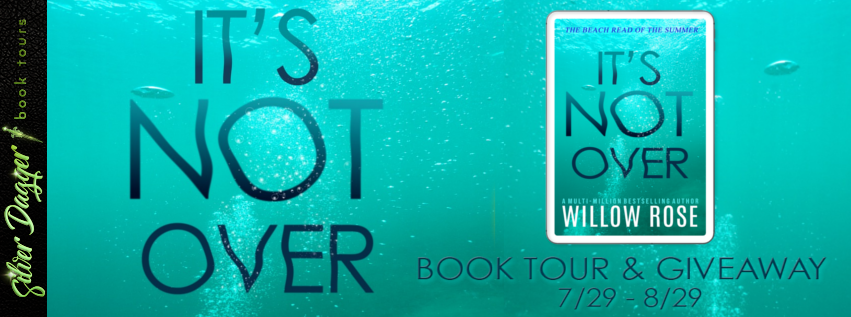
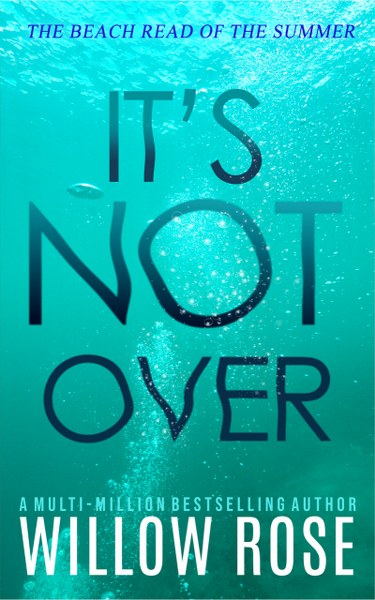
Spotlight: It's Not Over by Willow Rose


It's Not Over 
Eva Rae Thomas Mystery Book 6 
by Willow Rose 
Genre: Mystery, Thriller 


Former FBI-profiler Eva Rae Thomas is back in a heart-pounding novel of suspense. It’s so shocking it’ll have you sleeping with your lights on. 

Peter and Mary Marshall went on a vacation with their son and daughter but returned without their children. They went missing from their hotel room one night while the couple was downstairs in the restaurant for dinner. 

They never saw them again. 

Ten years later, the Marshalls have put the murder of their children behind them, moved to a different state, and had another child, a son. 

When he disappears during a vacation trip to Florida, the parents are suddenly in the limelight again. Public opinion seems to be that this can be no coincidence. These things don’t happen twice to the same people, do they? 

Former FBI-profiler, Eva Rae Thomas is doing well in her life, and things are calm until an FBI agent suddenly shows up, asking for her help with the case of the missing child. 

The kidnapper seems to have a message for Eva Rae since she was the one who supposedly solved the case ten years ago. 

As she digs into the disappearance of the boy, racing to save the child’s life, she realizes this psychopathic killer lurking in the shadows has unfinished business, and he’s not stopping till his debt is paid in full. 

IT’S NOT OVER is the sixth book in the Eva Rae Thomas Mystery Series. 


Check out the rest of the series here! 


The Eva Rae Thomas Mystery Series 


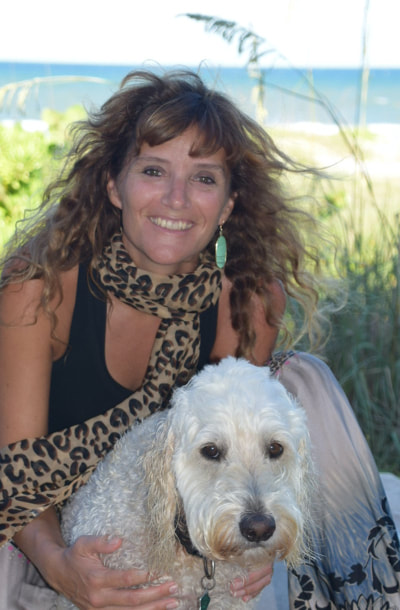
The Queen of Scream aka Willow Rose is a #1 Amazon Best-selling Author and an Amazon ALL-star Author of more than 60 novels.

She writes Mystery, Thriller, Paranormal, Romance, Suspense, Horror, Supernatural thrillers, and Fantasy.

Willow's books are fast-paced, nail-biting pageturners with twists you won't see coming. Several of her books have reached the Kindle top 10 of ALL books in the US, UK, and Canada. She has sold more than three million books.

Willow lives on Florida's Space Coast with her husband and two daughters. When she is not writing or reading, you will find her surfing and watch the dolphins play in the waves of the Atlantic Ocean. 


$50 Amazon 

Follow the tour HERE for special content and a giveaway! 


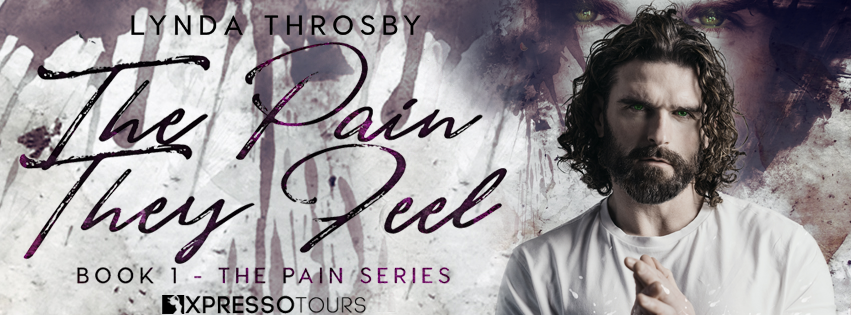
Cover Reveal: The Pain They Feel by Lynda Throsby

The Pain they Feel
Lynda Throsby
(The Pain Series, #1)
Publication date: August 12th 2020
Genres: Adult, Psychological, Romance, Thriller

Blaine has never stopped thinking about her. All those years ago when he saved her life, they had a connection. He didn’t know as a ten-year-old what that was, but those blue eyes of hers have helped him throughout his life, coming to mind during his darkest moments. He only hoped he would one day see her again.

He knew he wasn’t normal, whatever normal was. Though he didn’t physically feel pain, he suffered years of abuse with his mama telling him he was a freak. This made him think about pain to the point of obsession.

Needing to understand the pain they feel.

Primrose has never stopped thinking about the boy with the greenest eyes and the messiest black hair. Her knight in shining armor, the boy who saved her life when she was young.

She’d suffered two major losses in her life before she was eight years old. Living with a sister who hated her and made her life hell, the only solace she found was when she was sketching and painting the boy with the greenest eyes.

She knew they had a connection but didn’t understand it. She hoped she would one day see him again.

Goodreads / Amazon / Barnes & Noble


Author Bio:

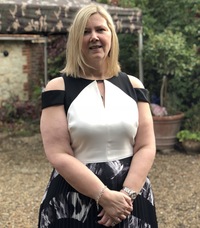
Lynda lives in Cheshire in the UK. She runs a successful financial business with her husband.
As a young teenager Lynda used to read horror books with a love for everything Stephen King and James Herbert. She has always wanted to write and even wrote horror stories at age 13/14. A little later she started reading Jackie Collins and Jilly Cooper and has always had a love of books. This then exploded with Twilight and Fifty Shades as it did with most people, oh, and the introduction of E-Readers.
In her spare time, she has a season ticket for Manchester City Football Club and goes to all the home games. Loves going to concerts and the theatre. She goes to the cinema at least once a week. Then when the weather is nice you can see her gliding down the road on her Harley Davidson 1200T motorbike.
Travelling is also high on the agenda and her dream is to visit every state in the USA.
She would love to hear from you.

Website / Goodreads / Facebook / Twitter / Instagram


XBTBanner1

Spotlight: Rules of the Road by Ciara Geraghty

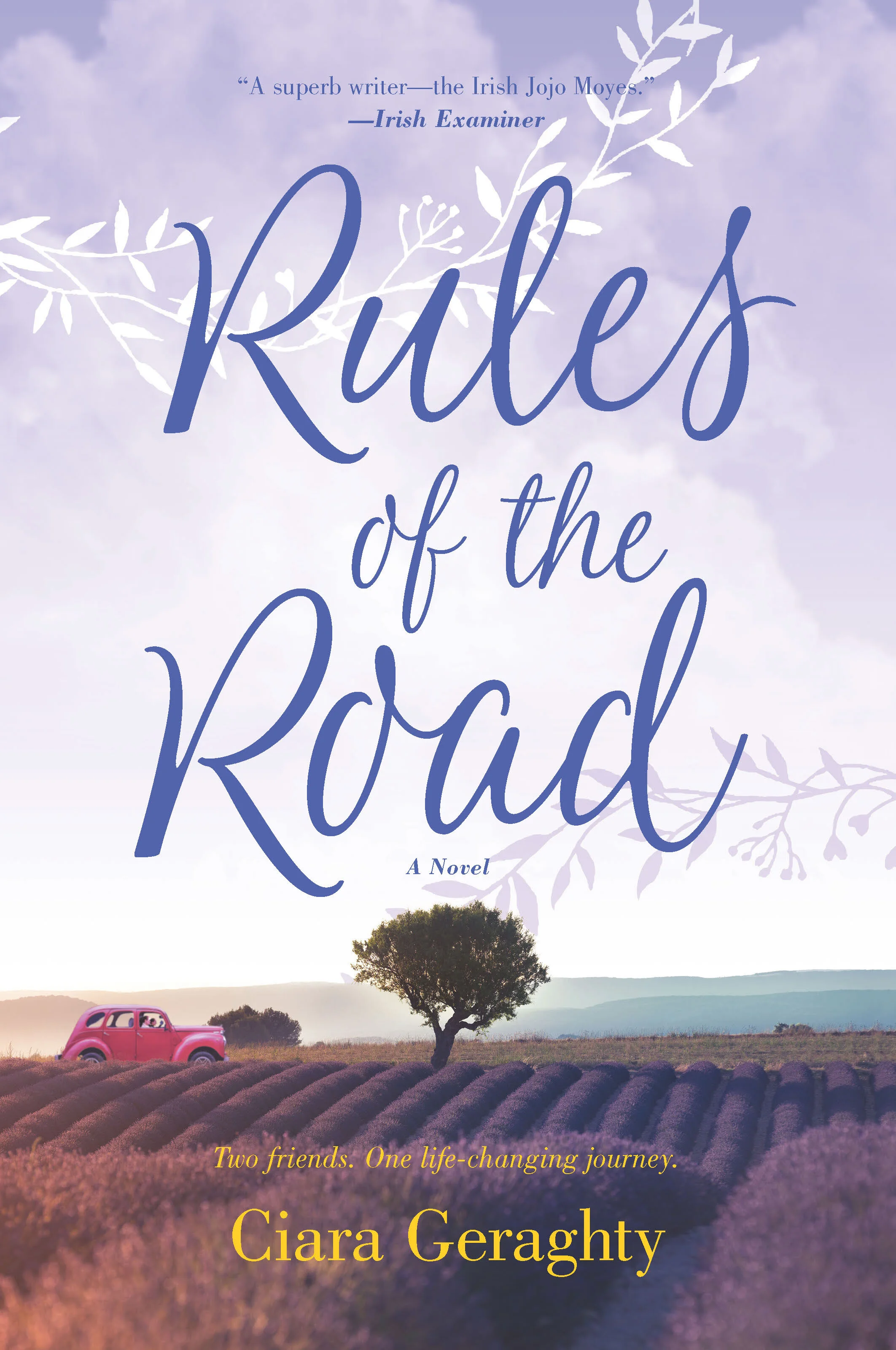
9780778309710_TS_PRD.jpg

In this emotional, life-affirming novel, two women embark on an extraordinary road trip and discover the transformative power of female friendship--perfect for fans of JoJo Moyes and Gail Honeyman.

The simple fact of the matter is that Iris loves life. Maybe she's forgotten that. Sometimes that happens, doesn't it? To the best of us? All I have to do is remind her of that one simple fact.

When Iris Armstrong goes missing, her best friend Terry—wife, mother and all-around worrier—is convinced something bad has happened. And when she finds her glamorous, feisty friend, she's right: Iris is setting out on a bucket-list journey that she plans to make her last. She tells Terry there’s no changing her mind, but Terry is determined to show her that life is still worth living.

The only way for Terry to stop Iris is to join her—on a road trip that will take them on a life-changing adventure. Along the way, somehow what should be the worst six days of Terry’s life turn into the best. Told in an irresistible voice and bursting with heart, Rules of the Road is a powerful testament to the importance of human connection and a moving celebration of life in all its unexpected twists and turns.

Excerpt

Iris Armstrong is missing.

That is to say, she is not where she is supposed to be. I am trying not to worry. After all, Iris is a grown woman and can take care of herself better than most.

It’s true to say that I am a worrier. Ask my girls. Ask my husband. They’ll tell you that I’d worry if I had nothing to worry about. Which is, of course, an exaggeration, although I suppose it’s true to say that, if I had nothing to worry about, I might feel that I had overlooked something.

Iris is the type of woman who tells you what she intends to do and then goes ahead and does it. Today is her birthday. Her fifty-eighth.

“People see birthdays as an opportunity to tell women they look great for their age,” Iris says when I suggested that we celebrate it.

It’s true that Iris looks great for her age. I don’t say that.

Instead, I say, “We should celebrate nonetheless.”

“I’ll celebrate by doing the swan. Or the downwardfacing dog. Something animalistic,” said Iris after she told me about the yoga retreat she had booked herself into.

“But you hate yoga,” I said.

“I thought you’d be delighted. You’re always telling me how good yoga is for people with MS.”

My plan today was to visit Dad, then ring the yoga retreat in Wicklow to let them know I’m driving down with a birthday cake for Iris. So they’ll know it’s her birthday. Iris won’t want a fuss of course, but everyone should have cake on their birthday.

But when I arrive at Sunnyside Nursing Home, my father is sitting in the reception area with one of the managers. On the floor beside his chair is his old suitcase, perhaps a little shabby around the edges now but functional all the same. A week, the manager says. That’s how long it will take for the exterminators to do what they need to do, apparently. Vermin, he calls them, by which I presume he means rats, because if it was just mice, he’d say mice, wouldn’t he?

My father lives in a rat-infested old folks’ home where he colors in between the lines and loses at bingo and sings songs and waits for my mother to come back from the shops soon.

“I can transfer your father to one of our other facilities, if you’d prefer,” the manager offers.

“No, I’ll take him,” I say. It’s the least I can do. I thought I could look after him myself, at home, like my mother did for years. I thought I could cope. Six months I lasted. Before I had to put him into Sunnyside.

I put Dad’s suitcase into the boot beside the birthday cake. I’ve used blue icing for the sea, gray for the rocks where I’ve perched an icing stick figure which is supposed to be Iris, who swims at High Rock every day of the year. Even in November. Even in February. She swims like it’s July. Every day. I think she’ll get a kick out of the cake. It took me ages to finish it. Much longer than the recipe book suggested. Brendan says it’s because I’m too careful. The cake does not look like it’s been made by someone who is too careful. There is a precarious slant to it, as if it’s been subjected to adverse weather conditions.

I belt Dad into the passenger seat. “Where is your mother?” he asks.

“She’ll be back from the shops soon,” I say. I’ve stopped telling him that she’s dead. He gets too upset, every time. The grief on his face is so fresh, so vivid, it feels like my grief, all over again, and I have to look away, close my eyes, dig my nails into the fleshy part of my hands.

I get into the car, turn over the engine.

“Signal your intent,” Dad says, in that automatic way he does when he recites the rules of the road. He remembers all of them. There must be some cordoned-off areas in your brain where dementia cannot reach.

I indicate as instructed, then ring the yoga retreat before driving off.

But Iris is not there. She never arrived.

In fact, according to the receptionist who speaks in the calm tones of someone who practices yoga every day, there is no record of a booking for an Iris Armstrong.

Iris told me not to ring her mobile this week. It would be turned off.

I ring her mobile. It’s turned off.

I drive to Iris’s cottage in Feltrim. The curtains are drawn across every window. It looks just the way it should: like the house of a woman who has gone away. I pull into the driveway that used to accommodate her ancient Jaguar. Her sight came back almost immediately after the accident, and the only damage was to the lamppost that Iris crashed into, but her consultant couldn’t guarantee that it wouldn’t happen again. Iris says she doesn’t miss the car, but she asked me if I would hand over the keys to the man who bought it off her. She said she had a meeting she couldn’t get out of.

“It’s just a car,” she said, “and the local taxi driver looks like Daniel Craig. And he doesn’t talk during sex, and knows every rat run in the city.”

“I’ll just be a minute, Dad,” I tell him, opening my car door.

“Take your time, love,” he says. He never used to call me love.

The grass in the front garden has benefited from a recent mow. I stand at the front door, ring the bell. Nobody answers. I cast about the garden. It’s May. The cherry blossom tree, whose branches last week were swollen with buds, is now a riot of pale pink flowers. The delicacy of their beauty is disarming, but also sad, how soon the petals will be discarded, strewn across the grass in a week or so, like wet and muddy confetti in a church courtyard long after the bride and groom have left.

I rap on the door even though I’m almost positive Iris isn’t inside.

Where is she?

I ring the Alzheimer’s Society, ask to be put through to Iris’s office, but the receptionist tells me what I already know. That Iris is away on a week’s holiday.

“Is that you, Terry?” she asks and there is confusion in her voice; she is wondering why I don’t already know this.

“Eh, yes, Rita, sorry, don’t mind me, I forgot.”

Suddenly I am flooded with the notion that Iris is inside the house. She has fallen. That must be it. She has fallen and is unconscious at the foot of the stairs. She might have been there for ages. Days maybe. This worry is a galvanizing one. Not all worries fall into this category. Some render me speechless. Or stationary. The wooden door at the entrance to the side passage is locked, so I haul the wheelie bin over, grip the sides of it, and hoist myself onto the lid. People think height is an advantage, but I have never found mine—five feet ten inches, or 1.778 meters, I should say— to be so. Imperial or metric, the fact is I am too tall to be kneeling on the lid of a wheelie bin. I am a myriad of arms and elbows and knees. It’s difficult to know where to put everything.

I grip the top of the door, sort of haul myself over the top, graze my knee against the wall, and hesitate, but only for a moment, before lowering myself down as far as I can before letting go, landing in a heap in the side passage. I should be fitter than this. The girls are always on at me to take up this or that. Swimming or running or Pilates. Get you out of the house. Get you doing something.

The shed in Iris’s back garden has been treated to a clearout; inside, garden tools hang on hooks along one wall, the hose coiled neatly in a corner and the half-empty paint tins—sealed shut with rust years ago—are gone. It’s true that I advised her to dispose of them—carefully—given the fire hazard they presented. Still, I can’t believe that she actually went ahead and did it.

Even the small window on the gable wall of the shed is no longer a mesh of web. Through it, I see a square of pale blue sky.

The spare key is in an upside-down plant pot in the shed, in spite of my concerns about the danger of lax security about the homestead.

I return to the driveway and check on Dad. He is still there, still in the front passenger seat, singing along to the Frank Sinatra CD I put on for him. Strangers in the Night.

I unlock the front door. The house feels empty. There is a stillness.

“Iris?” My voice is loud in the quiet, my breath catching the dust motes, so that they lift and swirl in the dead air.

I walk through the hallway, towards the kitchen. The walls are cluttered with black-and-white photographs in wooden frames. A face in each, mostly elderly. All of them have passed through the Alzheimer’s Society and when they do, Iris asks if she can take their photograph.

My father’s photograph hangs at the end of the hallway. There is a light in his eyes that might be the sunlight glancing through the front door. A trace of his handsomeness still there across the fine bones of his face framed by the neat helmet of his white hair, thicker then.

He looks happy. No, it’s more than that. He looks present. “Iris?”

The kitchen door moans when I open it. A squirt of WD-40 on the hinges would remedy that.

A chemical, lemon smell. If I didn’t know any better, I would suspect a cleaning product. The surfaces are clear. Bare. So too is the kitchen table, which is where Iris spreads her books, her piles of paperwork, sometimes the contents of her handbag when she is hunting for something. The table is solid oak. I have eaten here many times, and have rarely seen its surface. It would benefit from a sand and varnish.

In the sitting room, the curtains are drawn and the cushions on the couch look as though they’ve been plumped, a look which would be unremarkable in my house, but is immediately noticeable in Iris’s. Iris loves that couch. She sometimes sleeps on it. I know that because I called in once, early in the morning. She wasn’t expecting me. Iris is the only person in the world I would call into without ringing first. She put on the kettle when I arrived. Made a pot of strong coffee. It was the end of Dad’s first week in the home.

She said she’d fallen asleep on the couch, when she saw me looking at the blankets and pillows strewn across it. She said she’d fallen asleep watching The Exorcist.

But I don’t think that’s why she slept on the couch. I think it’s to do with the stairs. Sometimes I see her, at the Alzheimer’s offices, negotiating the stairs with her crutches. The sticks, she calls them. She hates waiting for the lift. And she makes it look easy, climbing the stairs. But it can’t be easy, can it?

Besides, who falls asleep watching The Exorcist?

“Iris?” I hear an edge of panic in my voice. It’s not that anything is wrong exactly. Or out of place.

Except that’s it. There’s nothing out of place. Everything has been put away.

I walk up the stairs. More photographs on the landing, the bedroom doors all closed. I knock on the door of Iris’s bedroom. “Iris?” There is no answer. I open the door. The room is dark. I make out the silhouette of Iris’s bed and, as my eyes adapt to the compromised light, I see that the bed has been stripped, the pillows arranged in two neat stacks by the headboard. There are no books on the nightstand. Maybe she took them with her. To the yoga retreat.

But she is not at the yoga retreat.

Panic is like a taste at the back of my throat. The wardrobe door, which usually hangs open in protest at the melee of clothing inside, is shut. The floorboards creak beneath my weight. I stretch my hand out, reach for the handle, and then sort of yank it open as if I am not frightened of what might be inside.

There is nothing inside. In the draft, empty hangers sway against each other, making a melancholy sound. I close the door and open the drawers of the tallboy on the other side of the room.

Empty. All of them.

In the bathroom there is no toothbrush lying on its side on the edge of the sink, spooling a puddle of toothpaste. There are no damp towels draped across the rim of the bath. The potted plants—which flourish here in the steam—are gone.

I hear a car horn blaring, and rush into the spare room, which Iris uses as her home office. Jerk open the blinds, peer at the driveway below. My car is still there. And so is Dad. I see his mouth moving as he sings along. I rap at the window, but he doesn’t look up. When I turn around, I notice a row of black bin bags, neatly tied at the top with twine, leaning against the far wall. They are tagged, with the name of Iris’s local charity shop.

Now panic travels from my mouth down my throat into my chest, expands there until it’s difficult to breathe. I try to visualize my breath, as Dr. Martin suggests. Try to see the shape it takes in a brown paper bag when I breathe into one.

I pull Iris’s chair out from under her desk, lower myself onto it. Even the paper clips have been tidied into an old earring box. I pick up two paper clips and attach them together. Good to have something to do with my hands. I reach for a third when I hear a high plink that nearly lifts me out of the chair. I think it came from Iris’s laptop, closed on the desk. An incoming mail or a Tweet or something. I should turn it off. It’s a fire hazard. A plugged-in computer. I lift the lid of the laptop. On the screen, what looks like a booking form. An Irish Ferries booking form. On top of the keyboard are two white envelopes, warm to the touch. Iris’s large, flamboyant handwriting is unmistakable on both.

One reads Vera Armstrong. Her mother’s name. The second envelope is addressed to me.

Excerpted from Rules of the Road by Ciara Geraghty, Copyright © 2019 by Ciara Geraghty. Published by Park Row Books.

Buy on Amazon | Audible | Barnes and Noble

About the Author
CG, photo credit Doreen Kilfeather79025_2019-04-09_1632.jpg

Ciara Geraghty was born and raised in Dublin. She started writing in her thirties and hasn’t looked back. She has three children and one husband and they have recently adopted a dog who, alongside their youngest daughter, is in charge of pretty much everything.

Connect:

Author Website: http://www.ciarageraghty.com/

Twitter: @ciarageraghty

Facebook: @CiaraGeraghtyBooks

Instagram: @ciara.geraghty.books