Spotlight: Blackmail by Amelia Wilde

Publication date: August 2nd 2022
Genres: Adult, Contemporary, Romance

Bristol Anderson will do anything to protect her younger siblings. Even if it means embezzling from the company where she’s a temp. No one will find out. And the wealthy owner of the investment firm will never notice.

Except Will LeBlanc doesn’t miss a thing.

He could call the police, but he has more interesting plans for her. In the copy room. On the conference table. Under his desk.

The coldhearted venture capitalist will make her pay back every last cent.

Buy on Amazon

About the Author

Amelia Wilde is a USA TODAY bestselling author of steamy contemporary romance and loves it a little too much. She lives in Michigan with her husband and daughters. She spends most of her time typing furiously on an iPad and appreciating the natural splendor of her home state from where she likes it best: inside.

Amelia is a USA Today best selling author from northern Michigan. Be her friend!

Connect:
https://awilderomance.com/
https://twitter.com/awilderomance
https://www.facebook.com/awilderomance
https://www.instagram.com/awilderomance/
https://www.amazon.com/Amelia-Wilde/e/B01C38CNJ2
https://www.bookbub.com/authors/amelia-wilde
https://www.goodreads.com/author/show/14671616.Amelia_Wilde

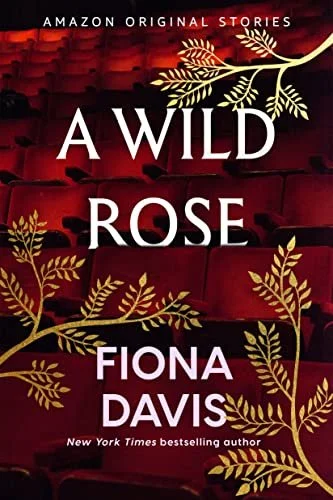
Spotlight: A Wild Rose by Fiona Davis

World-renowned pianist Gloria Banderas is at the height of her career when a curious ailment forces her to cancel a sold-out performance at Carnegie Hall. The same day, she befriends one of the many free-spirited artists inhabiting the warren of apartments above the theater. With her career and marriage at a standstill, Gloria moves into an empty studio and convalesces among the poets, photographers, and dancers who eke out a living with total dedication to their art. As a return to her old routine beckons, Gloria must decide which parts of her life are worth fighting for.

Fiona Davis’s A Wild Rose is part of A Point in Time, a transporting collection of stories about the pivotal moments, past and present, that change lives. Read or listen to each immersive story in a single sitting.

Excerpt

The first time she’d touched a piano was at the age of five, when a teacher had played “To a Wild Rose”—a spare, romantic piece—on the school’s battered upright piano. Gloria had been drawn to the instrument’s gleaming white keys, like oversize teeth, and repeated the melody perfectly, with an innate understanding of the intervals between the notes. After hearing of the feat from her teacher, Gloria’s parents had rushed out and bought a piano for their house in Westchester. Her father had lifted the lid and shown her the instrument’s insides, how you pressed on a key, which through a Rube Goldberg–type contraption activated a lever that caused a hammer to hit a metal string that sounded out a note.

As an adult, she could bring an audience to tears with quiet restraint, or shock them into silence with her octaves as she sliced up the keyboard. Critics became delirious when they tried to describe her playing: “ravishing,” “bursting with grace and power.” One gushed that she put the men to shame with her muscular approach. She owned her talent fully, like the best of the men, but that meant that many in the industry considered her conceited, unladylike. If her career took a nosedive, she’d find little sympathy. She’d be exposed to the elements, and the change in circumstances would only add more stress to her marriage.

Adrienne and William were still waiting for an answer.

She had told only the doctor and the psychiatrist about the problem, thinking that if she confided in anyone else, it would make it real. “It’s nothing, really.”

“Go on, you can tell us,” said William.

Gloria had already drained her glass of whiskey. Adrienne rose and poured her another, and it seemed right, somehow, to be sitting in this room with a woman in a tutu and a skinny man in a windbreaker. A majority of the creative types she’d encountered were competitive and judgmental—not surprising considering how difficult it was to win a seat in a symphony or land a show at an art gallery—but these two were simply curious. It was like she was Alice in Wonderland, but instead of going down a hole, she’d risen up an elevator and found herself in a strange land.

She held out her right hand. “My fingers won’t behave. They bend in, these two.”

Adrienne and William exchanged a look. “You play tomorrow, right?” William said. He checked his watch. “Today, I mean.” Even though she’d told him only her first name, he knew exactly who she was, what this meant.

Unfortunately, there were no pieces written for an eight-fingered pianist.

“What do the doctors say?” asked Adrienne, taking the seat next to her and patting her on the knee.

“That it’s all in my head.”

At this, William brightened. “Ah, the yips! That’s what you have.”

“You’re not supposed to say that out loud,” said Adrienne sternly. She looked back at Gloria. “Poor Sam Snead. Golfer. Got the yips and was never the same again.”

A barrel of thunder made Gloria jump. A rainstorm had kicked up, the lightning illuminating the buildings outside the windows like a black-and-white movie. “I should go.” It would be a wet, dark walk to her hotel, but it didn’t really matter anymore.

Adrienne and William exchanged another look. “You can stay next door.”

“I have to get back.” But the booze was making her head spin, and she was so exhausted. “Where next door, exactly?” The studio was smaller than Adrienne’s, but with the same high ceiling and loft, and a grand piano placed in the very center of the room. The air smelled of metal and must, a far cry from the rose-scented suite at the Plaza, where Gloria’s luggage sat, unopened. Even the fanciest hotels failed to interest Gloria these days. Why bother getting excited by the view of a city skyline, or luxuriating in a claw-foot bathtub, knowing they were transient pleasures? There was no point in getting attached to places or people, not in her line of work. The lethargy from traversing multiple time zones, compressing days into hours like an accordion, was her only constant. “There’s a bed up the stairs,” said Adrienne. “The bathroom’s outside, down the hall.”

After they left, she tossed her coat on the floor, climbed up to the loft, and fell asleep dreaming of Tchaikovsky holding his head and weeping as he conducted an orchestra of swans. 

Buy on Amazon | Audible

About the Author

Fiona Davis is the New York Times bestselling author of six historical novels, including The Magnolia Palace and The Lions of Fifth Avenue. Her books have been chosen as One Book, One Community reads, and her articles have been published in the Wall Street Journal and O, the Oprah Magazine.

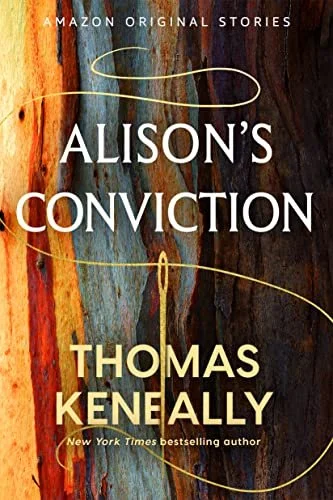
Spotlight: Alison's Conviction by Thomas Keneally

When Alison Strange receives a debt claim she can’t afford to pay from the Australian government’s unemployment office, she’s caught completely off-balance. As she wrestles with a slippery bureaucracy, her history-loving grandfather bolsters her resolve with the story of their ancestor John Strange, an English cobbler who was banished to Australia for his part in a political movement. Drawing inspiration from John’s life, Alison finds her own unique way to demand a future that’s fair for all.

Thomas Keneally’s Alison’s Conviction is part of A Point in Time, a transporting collection of stories about the pivotal moments, past and present, that change lives. Read or listen to each immersive story in a single sitting.

Excerpt

Alison Strange was a clever girl of whom it was known by her mother, her grandfather, and her teachers that she could not face tests of knowledge. Her mother had been told by psychologists that she would never go to university because the business of analyzing what lecturers and tutors meant by their instructions would utterly panic and exhaust her, and basically send her into fits of Tourette’s, into writhings and repeated meaningless sounds like begging. Tourette’s was frequently found in autism cases, a doctor had said. Alison could learn anything if she was interested, but not under any demand that she should know it. She was self-taught, therefore, and her own motivation to know things was the only but powerful machine for her learning. She had, on her own terms, been to the university of Google, just for a start. She had an account that enabled her to read journal articles of all kinds and randomly.

When she was in early high school and the question of convicts arose, she raised her hand and told a teacher, Miss Lambros, that she had a convict ancestor, and she had a date for him too. His ship had arrived in 1821—it was the sort of thing she retained—and his crime was, according to Granrob, stealing shoes. The first Mr. Strange, a convict and shoe thief, settled in Bathurst and opened a shop and a tannery like any settler, and became a constable.

Alison’s chief enemy, Blair Taranto, a beefy child capable of marshaling the laughter of an entire class, had intruded into this conversation, as Alison knew he very likely would.

When Miss Lambros first asked what Alison’s forebear had been transported for, Alison heard Taranto say, breathy with self-amusement, “For being a dead set dropkick.” Taranto is not the main issue of this tale, but when she had given a book report at assembly on Norton Juster’s The Phantom Tollbooth, he had tried to put her off by contorting his face and jerking in imitation of one of her “attacks,” as people called them.

Because of that boy and his easily set-off admirers, she accepted that the world would choose to be as unkind to her as Taranto was. She had in her keeping, though, and held close by her, the essential elements and people. Particularly her mother, Sally Strange, and her grandfather Granrob, as she had eccentrically named him when she was a babe. “Typical of you as a baby, Aly,” he had once said when drinking wine, when he would often tell stories of her infancy, and how different she was from what he called “plain kids.”

“Only you could have come up with that combination of sounds and made a poor sod like me get a special name. I mean, it’s not two easy sounds for a little kid to put together.”

He seemed very proud of her for having managed that, and his warm opinion of her made her think that the Blair Tarantos of her life, as much as they would always be with her, were always somehow wrong, and in a strange sort of way she was willing to endure them. 

Buy on Amazon | Audible

About the Author

Thomas Keneally is the New York Times bestselling author of more than thirty novels, including The Daughters of Mars, The Chant of Jimmie Blacksmith, and Schindler’s List, which was made into an Academy Award–winning film. Among his many awards are the Booker Prize, Los Angeles Times Book Prize, Mondello International Prize, Trebbia Award, and more. He lives in Australia with his family.

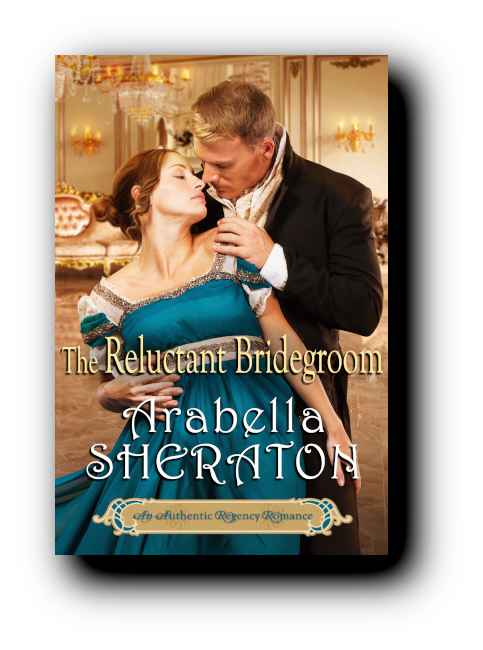
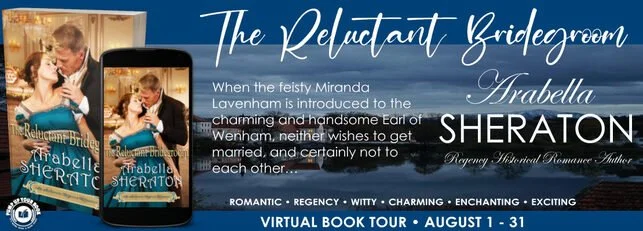
Spotlight: The Reluctant Bridegroom by Arabella Sheraton

Publisher: Bublish

Pages: 208

Genre: Regency Historical Romance

A traditional Regency romance about the vagaries of the heart in a delightful romantic comedy! The handsome Earl of Wenham has no intention of marrying any time soon. His sister Almeria points out to Hugo that he owes it to the title and the estates to marry and produce an heir. Failure to do so means the entire lot devolves upon his second cousin, the Honourable Felix Barstowe. She also reminds him that their father had promised an old friend, Lord Lavenham, that his son should marry Lord Lavenham's daughter, Miranda. Out of respect for his father's dying promise (which he had never taken seriously), the earl sets off for Lavenham House. He is stranded by snow a few miles away from his destination and takes refuge in a local inn. He meets up with a heavily veiled, mysterious young woman, who, by her confidences to him, he realises is the elusive Miranda. To his shocking surprise, the feisty Miranda declares she will not have anything to do with someone whom she declares, "is possibly so fat and gouty, that he needs to have a wife found for him." In fact, she would rather run away with a childhood friend. Intrigued, the earl makes it his business to get to know Miranda better by inviting her to stay in London with his sister. Unfortunately, this strategy annoys his dandyish cousin Felix Barstowe who is determined that the young and healthy earl should not marry and cheat him out of his birthright. Will Felix succeed in a dastardly plan to murder his cousin? A must-read for fans of Regency romance!

Book Excerpt:

“You have the most incredible gall, your lordship,” said the termagant, folding her arms and tapping one foot impatiently.

“Aren’t you going to show me the Dutch miniatures,” he asked, pasting his most charming and humble smile onto his face. “In case your aunt asks me how I liked them.”

The boyish grin that usually melted the stoniest of female hearts had no effect at all on his hostess. Miranda made an angry sound and strode into the gallery. She flung both arms outwards in a dramatic gesture.

“There!” she snapped. “Take your pick and make up whatever opinion you like since you’re not only an accomplished liar but a fraud as well.”

Hugo recoiled from the little spitfire in front of him.

And Father and Almeria thought she would be the perfect wife for me? I think not.

Hugo felt a strong desire to shake Miss Miranda Lavenham until her teeth rattled for her infernal impudence, but that was not the way a gentleman, and definitely not how the Earl of Wenham behaved. Miss Lavenham was clearly unschooled in the niceties of correct social behaviour, given her unseemly display of emotion upon setting eyes on him earlier. No society lady in London would ever reveal by a shred of discomposure that things were not as she had expected them to be.

Serves her right. She deserves to have her nose put out of joint.

Hugo put on a haughty expression, enjoying his triumph even before he had spoken. If anyone was a liar, it was Miranda.

“I can assure you, Miss Lavenham, or should I say Miss Clarice Smith, that unlike you I am no fabricator of stories. The names I gave you—Charles St. John—are just two of my given names whereas I wonder if Clarice or Smith feature anywhere on your birth certificate.”

She looked away from him, her guilt staining her cheeks.

“Oh, all right,” she conceded in a grudging tone. “But you lied to me when I first met you.”

He shook his head. “No, I did not lie.”

“Yes, you did. You could have said last night that you were the Earl of Wenham. You could have saved me the mortification and shock I felt when I discovered just a short while ago that the man I met last night was, in fact, the Earl of Wenham.”

“And if I had said so, how would you have reacted?” he demanded. “You had made an elaborate plan with Fred that collapsed because he got drunk on brandy mixed with laudanum for his toothache. You came all the way to the inn in the freezing cold, late at night. You were so set on your chosen path that to say I was the earl at that moment would have been a terrible shock for you. More than the shock you received just now.”

Then the insult to his identity, courtesy of Miss Lavenham’s vivid and wildly selective imagination, sprang to mind.

He pointed an accusing finger at her. “Oh yes! How could I forget? You seriously misrepresented me. You told Fred I was old and gouty and had to have a wife found for me because I was incapable of getting one on my own. Fred called me an old nincompoop.”

She glared at him again. “He only called you that because he didn’t know who the Earl of Wenham really was, and besides, I told Fred you were old and gouty.”

He gave a scornful snort. “You should make sure of your facts, Miss Lavenham, before you go about insulting people behind their backs. I am none of those unflattering terms, and I am quite capable of choosing my own wife, thank you very much.”

She said nothing, just continued to look daggers at him.

“You should apologise to me, Miss Lavenham. I have not insulted you to your face, but you have insulted me to mine.”

She tossed her head in a particularly contemptuous way, as if nothing he had just said mattered a jot to her. Apologies were not part of Miss Miranda Lavenham’s vocabulary. For two pins, Hugo could have stalked out of the house and back to the inn, packed his things and his sick valet into his curricle, and driven back to London, never to see this annoying female ever again. In fact, never again would be far too soon.

However, he had promised Almeria he would try his best to be polite. He held onto his temper with an iron grip, suppressing the renewed urge to shake Miranda very hard. It was not surprising she was still single. Any man in his right mind would run a mile after five minutes in her company. Spoiled and selfish were understatements.

He was not sorry for her after all. She deserved to be immured in the countryside to protect any hapless soul, ignorant of her true nature, from proposing and thereby condemning himself to a life of matrimonial misery.

Then she gave another pert toss of her head, this time accompanied by a sniff of disdain. “Then why are you here if you are so capable of choosing your own wife?”

He stared at her. “Don’t you know? I am here because your father sent me numerous invitations which I ignored, and then he wrote to my sister and dredged up this stupid pact between our parents.”

Miranda put her hands on her hips. Her expression challenged him.

“You’re not much of your own man if you allowed your sister and my father to bully you into coming here to make me an offer I will refuse.”

Hugo almost exploded with annoyance. There were no limits to this woman’s impudence.

“Out of respect for your father, and mine, and to please my sister and, no, I would not offer for you if you were the last female on earth because you are a complete shrew!”

Her affronted expression indicated that his words, instantly regretted, had struck home. However, she shrugged off the insult.

“You humiliated me in front of my father and my aunt.”

He raised his shoulders in a questioning gesture. “Did I? I wonder if you are capable of embarrassment after your provoking display when I met you in the drawing room. You acted like an overindulged little brat who couldn’t get her own way.”

He wagged a reprimanding finger at her. “Your father seems to tolerate your eccentricities rather well, as does your aunt. Perhaps you are able to get your way more often than you led me to believe. You certainly misled Fred Hodges into almost tarnishing his good name and perhaps that of his parents by forcing him to embark on a stupid scheme to elope. What would your own family have thought? But I suppose you never considered those consequences.”

Miranda clenched her fists and glared at him even more fiercely. “Fred has always loved me, from the time we were children. He said he’d do anything for me. He promised and a promise is sacred. He is the kind of friend who keeps his promises.”

“Love you?” Hugo burst out laughing. “I hate to contradict you, but I fear I must. Miss Lavenham, you live in a world of fantasy, and perhaps your mindset comes from reading too much of Lord Byron’s overly lyrical and sentimental poetry.”

She stared at him with stony eyes. “Who told you that?”

He stared back at her, his expression equally cold.

“Fred, who very definitely does not love you, does not want to marry you, and who thinks you are a nag, which is exactly what I think you are.”

Miranda’s lips trembled as his barbs hit home again. “Fred would never say that. He loves me.”

Hugo gave an exaggerated sigh and shook his head. “No, he told me most plainly that he likes you very well and loves you as a sister but would not want to be forced into a life with you because he wants to do things a squire’s son does, and you would make him read poetry books instead.”

“But he agreed to run away with me!”

“He agreed out of loyalty to you as a friend, not out of love. You bullied him into submission, and he is such a faithful fellow that even though he had a terrible toothache, he went along with your elaborate plans.”

She walked away from him, further into the picture gallery.

“Anyway, Miss Lavenham, you told me last night you don’t love Fred, and you were willing to marry a perfect stranger—me—in order to escape the evil Earl of Wenham, also me.”

She made an indifferent gesture with one hand, as if the subject bored her. “What does it matter, your lordship? You are not interested in me and I am not interested in you. You do not want to propose to me and I do not want to hear one anyway. But my father sincerely believes you will make me an offer. We are at an impasse.”

Hugo followed her. “In that respect you are right. Five minutes of conversation with Lord Lavenham has convinced me that nothing will dislodge the ridiculous notion he has of the two of us fulfilling this old promise.”

She swung round to face him. “All that nonsense about being nice to you and letting my father and aunt think something would happen, and then things just drifting into nothing…”

She gave a small angry sob. Hugo was positive she was not crying out of sadness, but more from anger and chagrin at having her plans to elope overturned.

“Now you’re here, and Father will get his hopes up, and I will be a monstrous daughter to let him down because I will not accept your hand in marriage.”

Hugo fished a handkerchief out of his pocket and handed it to her. She took it silently and blew her nose in a very unladylike fashion. Then she slipped it into her sleeve with a muttered promise to launder it for him. Hugo began to feel guilty at what appeared to be signs of true distress. Perhaps he had hurt her by saying Fred did not love her. His remark about not marrying her if she were the last female on earth was also beneath him. Females always wanted to hear proposals, no matter how often they said not. An apology seemed in order.

“Forgive me, Miss Lavenham. I apologise for putting you into such a predicament. I promise you I will not make you an offer of marriage. I am also sorry about what I said…you being the last female…and all that.”

She looked up at him, with tears glistening on the ends of the longest, darkest lashes he had ever seen. In fact, despite her blotchy complexion from crying and nose reddened with blowing it, she was not entirely unattractive.

He gazed at her. Almeria would be the perfect person to take her in hand. He cocked his head to one side, inspecting her properly for the first time.

Get rid of the dowdy clothing, cut her hair in one of those new smart crops just come into fashion, dress her properly, and Miss Lavenham and her fortune might well find a willing suitor. A touch of town bronze and she would be perfect to launch into the Marriage Mart.

“Really?” A smile peeped out and transformed her face. “Do you promise?”

He laughed. “Not now and not ever!”

Buy on Amazon

About the Author

Arabella Sheraton grew up on a diet of Jane Austen, the Bronte sisters, and many other writers of that period. From Jane Austen to Georgette Heyer, Arabella has found both enjoyment and inspiration in sparkling, witty Regency novels. She also loves history and generally finds the past more fascinating than the future. Arabella wrote her first Regency romance to entertain her aged mom who loved the genre. Arabella is honoured to share the adventures of her heroes and heroines with readers.

You can visit her website at https://regencyromances.webs.com or connect with her on Twitter and Facebook.

Her latest book is the regency historical fiction, The Reluctant Bridegroom.

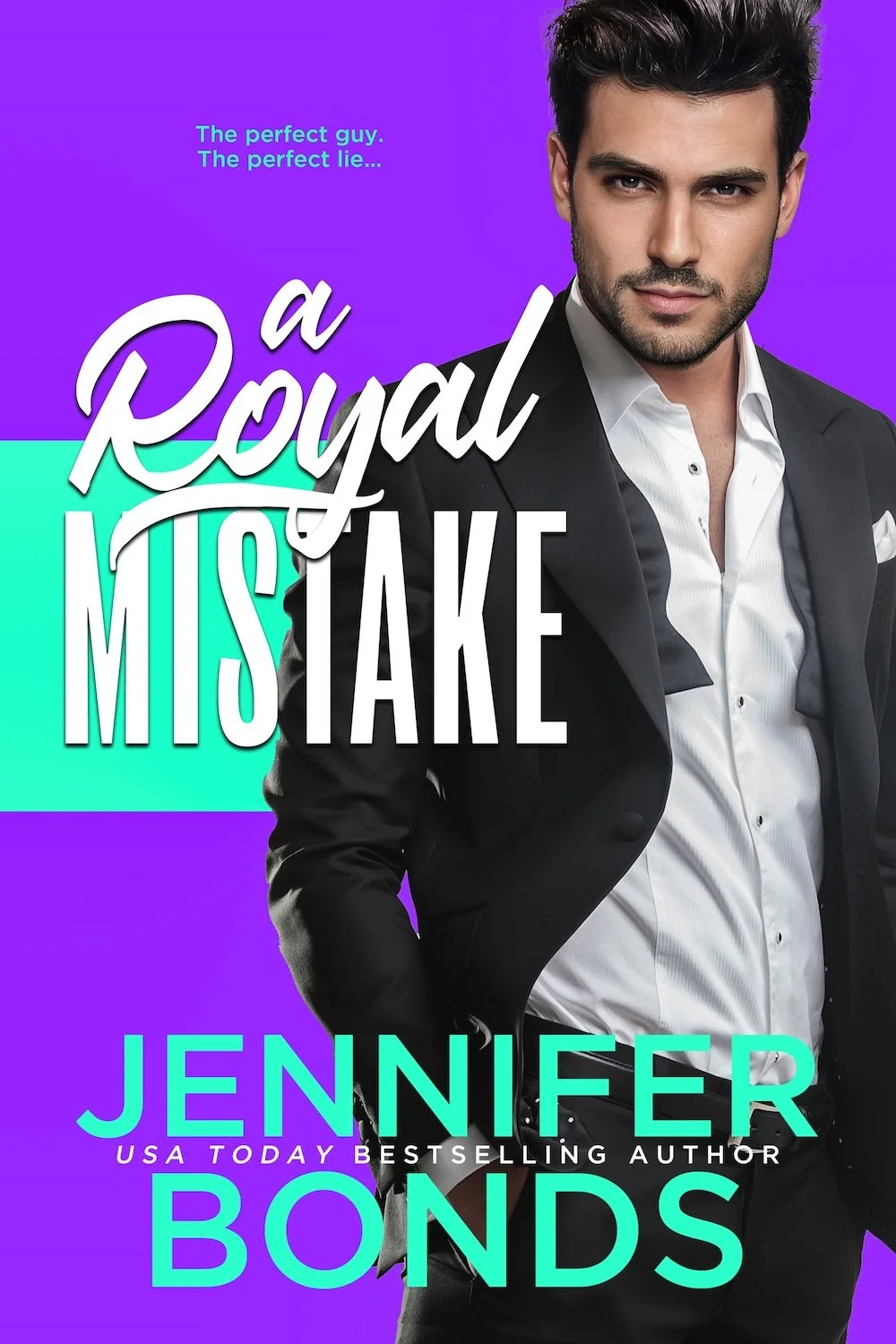
Spotlight: A Royal Mistake by Jennifer Bonds

(Royally Engaged, #3)
Publication date: August 2nd 2022
Genres: Adult, Comedy, Contemporary, Romance

Princess Philippa Stanley is over being the perfect royal.

The world’s got bigger problems than the color of her nail polish, but the tabloids insist on detailing her every royal faux pas. Like her bold new hairstyle and missing pantyhose. Freaking pantyhose. Things that don’t matter to anyone. Except her parents.

Their Majesties are desperate for her to settle down. So desperate they invite a dozen overzealous bachelors to compete for her hand in marriage. Now she’s living her own nightmare version of The Bachelorette: Royal Edition with suitors ambushing her at every turn.

No way is she participating in this farce of a courtship, but when her father makes her an offer she can’t refuse—take part in exchange for access to her trust fund—it’s the only way to get the money she needs to start her own charitable foundation.

Fine. She’ll play the game. There’s zero chance she’ll fall in love until she crashes into a sexy, down-to-earth philanthropist who can help her launch her charity and drive off the unwanted suitors. It’s like she’s met the perfect guy.

But what if he’s really the perfect lie?

What can you expect in A ROYAL MISTAKE?
✓ Awkward meet-cute

✓ Royal in disguise

✓ Virgin heroine

✓ Friends-to-Lovers

✓ Sexy, slow burn RomCom

Excerpt

“You’re a vision,” Henry said, slipping an arm around Pippa’s back just as his dance instructors had taught him. He hadn’t grown up in the palace, but he’d been groomed for high society, and he wouldn’t embarrass her with impropriety.

Not tonight, anyway.

“And you’re late.” She flashed him a reproachful look as a new waltz started. “I’d just about given up on you.”

“I had a bit of trouble with security.” He held her gaze as they moved around the dance floor. “It seems my invitation was not, shall we say, authentic.”

Pippa threw her head back and laughed, her smile as wide and brilliant as he’d ever seen it. His blood thrummed with excitement. It was the most glorious smile he’d ever seen, and he’d do whatever it took to earn it again.

“And yet, here you are,” she said, a note of admiration in her voice. “How did you get past security? Did you sneak in?”

Was it his imagination, or did she sound a bit too enthused by the idea?

“Noting that exciting, I’m afraid. Your brother put in a good word for me.” He winked at her. “I suppose I should just be glad Sarah wasn’t the one guarding the door. Something tells me she wouldn’t have budged an inch.”

“You’re probably right,” she agreed, a mischievous glint in her eye. “But I’m sure you would’ve figured it out. You don’t strike me as the type to give up easily.”

That was true enough. He sure as hell hadn’t given up on boarding school, even when he’d missed his family so badly it became a physical ache in his chest. He hadn’t given up on VDRI, not even after his first mission abroad had been a complete disaster. And he wouldn’t give up now. Not when he needed Liam’s partnership to keep the organization afloat. He prided himself on being the kind of man who pushed through, who found solutions where others saw only problems. Maybe that was why he’d been drawn to Pippa.

Over the last two and a half weeks, he’d come to see the potential her family refused to acknowledge.

And it wasn’t just because she was beautiful, although it sure as hell didn’t hurt.

She was sweet and funny and driven, three things he very much admired, even if this dance was as far as things would go. He tightened his grip on her hand as the pace of the dance increased, guiding her across the floor with practiced steps.

“You’re quite a skilled dancer,” she said, chest rising and falling in rapid succession.

“You sound surprised.”

“I am.” A sheepish smile tugged at the corner of her full lips. “I doubt ballroom dancing is a required skill in your line of work.”

“It’s a handy skill to have when you’re soliciting charitable donations from the high society crowd.” He grinned. “Besides, I have a number of skills you haven’t seen yet.”

“Is that so?” She looked up at him from under her lashes. Her dark eyes reflected the bright lights of the ballroom and her flushed cheeks hinted at more than just physical exertion. “And what if I wanted to see some of these skills up close and personal?”

Scheisse. Was she flirting with him? He should put an end to it now. It didn’t matter if they had sizzling chemistry. There was no future. She’d made it clear she wasn’t looking to settle down and he would not throw away his anonymity—throw away everything he’d worked for—just to find out if there could be something more between them. Besides, it would never work. He preferred privacy and solitude, and she lived in the spotlight. They might have common interests, but that wasn’t enough. Not by a long shot.

“Hmm?” Pippa pressed, that mischievous glint back in her eye.

“I imagine we could come to an arrangement.”

“We already have an arrangement,” she said innocently. “Perhaps it’s time we consider amending it.”

Buy on Amazon

About the Author

Jennifer Bonds is the USA Today bestselling author of sizzling contemporary romance with sassy heroines, sexy alphas, and a whole lot of mischief. She’s a sucker for enemies-to-lovers stories, laugh-out-loud banter, and over-the-top grand gestures. Jennifer lives in Pennsylvania, where her overactive imagination and weakness for reality TV keep life interesting. She's lucky enough to live with her own real-life hero, two adorable (and sometimes crazy) children, and one rambunctious K9. Loves Buffy, Mexican food, a solid Netflix binge, the Winchester brothers, cupcakes, and all things zombie. Sings off-key.

Connect:

https://jenniferbonds.com/

https://twitter.com/jbondswrites

https://www.instagram.com/jbondswrites/

https://www.facebook.com/jbondswrites

https://www.goodreads.com/author/show/13650425.Jennifer_Bonds

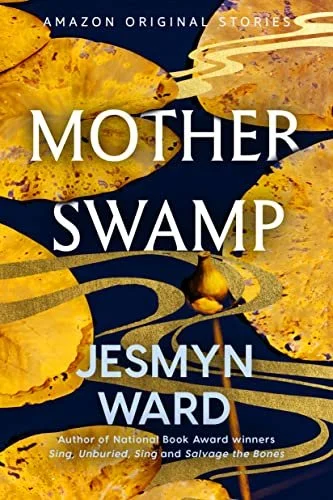
Spotlight: Mother Swamp by Jesmyn Ward

Publisher: Amazon Original Stories

Afice is the last of nine generations of women who have survived enslavement, sickness, and hunger. Alone at age seventeen, she sets out through the Louisiana swamps to follow the trail of her ancestors and hear their songs anew. On this journey, Afice must decide how to honor her ancestors while embracing her own future.

Jesmyn Ward’s Mother Swamp is part of A Point in Time, a transporting collection of stories about the pivotal moments, past and present, that change lives. Read or listen to each immersive story in a single sitting.

Excerpt

I watch the sky, night after night. Sometimes, I think I see my grandmother, and all the mothers before her, traveling the shatter of stars across the darkness, swimming along that great river of light. In the day, I squint against the sun beyond the swamp’s wide-reaching branches, beyond the clouds. I trace messages in the tops of the trees as they twist and shake and nod. I put my ear to their trunks and hear them, after many days of rain, singing as they pull water up, up, to their great green crowns. Sometimes, when there are storms, they break and scatter branches over the mouth of my burrow, my home, the cave that First Mother dug out of hard river clay.

“Bend,” my mother told me.

“Look low,” her mother told her.

“Keep down,” Sixth Mother told her.

“Smother the fire,” Fifth Mother said.

“Hand over the smoke pipe,” Fourth Mother whispered. 

“Hide,” said mother to daughters, through the years. “Hide.”

My neck pulls, my jaw tightens the girdle of my head, but I have spent my life looking up. The stars’ current glitters. I roll my shoulders straight, tighten my pack on my back. Follow the mothers’ trail across the miles. Nine generations have hidden here in this swamp. Nine generations have walked these paths across bayous, across rivers, across forests to meet our future.

The first of us stole herself away from the sugarcane fields in the west. First Mother dove into a writhing river, clung to logs rolling downstream, and swam for a day and a night before crossing a great lake to land here, on the shores of this swamp, this sodden bayou that stretches over all horizons. She climbed from the water, black with mud, and knew that this place, alligator ridden, riven with knock-kneed roots, trees wreathed in vines, would shelter her. She searched for a month before finding a patch of high river bluff: this is where she dug the burrow.

“I knew this place would mother,” she said.

Every time the moon turned red and bobbed over the tops of the trees, First Mother would tell the story of the place she’d run from. A place flattened and mud beaten by pale enslavers. They called it a plantation, said it was a farm. We called it a work camp, knew it for a death camp. They stole dark people like us. Chained us and set us to chopping and hauling and digging in the fields from before sunrise to late at night. There were great buildings erected to cover ever-burning fires and squat pots that boiled pulped plants to sugar.

“Sweeter than honey,” First Mother said. “The taste of it burned.”

The people starved, she said, while them that said they owned them lived in high-ceilinged white houses; wore white, delicate clothing; ate sugar until they turned fat and waxy with it. Grubs gorging on rot. They were superior, they said. Supreme, they said. Blessed by spirit to squat on this land, claim it, kill the families and communities of darker people some called Biloxi, some called Houma, some called Natchez, some called Chahta, who had lived here always, forever: they were blessed, they said, to drive those they couldn’t kill deeper into this water-soaked, hush-green place. Blessed by spirit to work First Mother’s people to walking skeletons, they said. Blessed to burn crosses in the cheeks of First Mother’s people who tried to run. Blessed to put iron collars with spikes on them they found troublesome. Blessed to bind with balls and chains them that rankled at the lash. Blessed to turn the dogs on them that twisted against the shackles of never-ending days, of hungry, hollow, hot nights.

Even the ones that ran starved, First Mother said, measuring half rations from pilfered corn and flour and rice and salt meat. And more often than not, she told First Daughter, They was caught.

But never us, she said. Never us. 

Buy on Amazon

About the Author
Jesmyn Ward is the author of Where the Line Bleeds, Salvage the Bones, and Sing, Unburied, Sing. She is a twice-over recipient of the National Book Award, first in 2011 and again in 2017. In 2016 she was selected for the Strauss Living Award, and in 2018 she was awarded a MacArthur Fellowship. Visit her website at www.jesmynwardauthor.com.