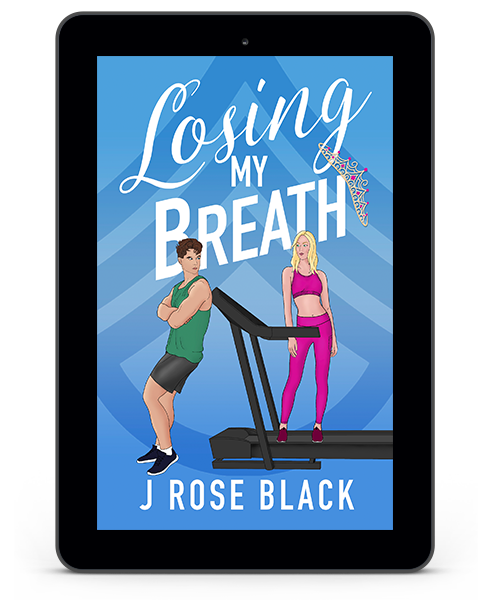
Spotlight: Losing My Breath by J Rose Black

Genre: Contemporary Romance

A Marine never says die.

Neither does his princess.

Battle lines are drawn when sheltered debutante Meridian Daly moves across the hall from grumpy former special forces Marine Callan Brand. Situated a bit closer than advertised to 'crime alley', Meridian’s neighbor finds himself grudgingly guarding the pampered princess out of habit. But with her sharp wit and killer curves, he can’t help but surrender to temptation…

When their relationship evolves from casual courtship to something more, Callan finds that Meridian's already discovered his closely-guarded secret. But can he let go of his pride, and tell her the whole truth of who he is and what he’s done—in the name of honor and country?

As Callan’s scars start to reveal themselves, his life spirals beyond the careful control that's helped him survive—and kept those he cares about safe.

From him.

But this tough-in-a-tiara princess won't back down, even in Callan’s darkest hours. And Meridian just might prove to be more tenacious than a never-say-die Marine!

Excerpt

“You’re following me.” Callan placed the dumbbells on the mat and straightened.

His neighbor rolled her eyes as she stood. “I happen to work out every Tuesday and Thursday at this time.” She flipped her long ponytail over her shoulder. “This is the first time I’ve seen you here.” She pointed at him with her water bottle.

Nice of her to offer. He grabbed the beverage, uncapped it, and took a nice long drink. “Thanks,” he said, and handed it back.

She glared. “Are you this big of a jerk to everyone here, or do I get some special treatment for living across the hall from you?”

“I thought you were offering it to me. It’s bad manners to point,” he said with a chuckle.

“You’re lecturing me on manners? The guy who can’t even introduce himself?” The frown on her face wasn’t even close to cross. She was clearly too good-natured for her own sake, and—if their interactions were any indication—she was also far too naïve. She shouldn’t be in a place like this. Maybe locked in some ivory princess tower, guarded by a monster.

Prissy Neighbor huffed as she stepped around him. She bent down, in those short running shorts with the open sides—to whip a pair of fifteen-pound dumbbells off the rack.

He sighed. Yet another one I’ll need to keep an eye on. Trouble will find her. I have zero doubts about that. The only question is: How bad will it be when it does?

He grimaced. It’s like she doesn’t even live in the same world. Where dark and twisted people exist, killing and preying on the weak. Innocents. She hefted one weight up to her shoulder, turning the grip as she went. But she slung the other dumbbell—engaging back muscles and using momentum to help propel the heavy weight.

She’s mad at me. So she’ll end up injuring herself. He shook his head and crossed his arms over his chest. “Your form is wrong.”

She met his gaze in the mirror. Sweat dripping from her temples like the rain on that day . .

His eyes drifted to his own reflection. A hard-assed former Marine glared back. She turned her back to him and repeated the awkward movement.

He sighed. “You should lower the weight and go slower. You’re slinging the dumbbell and not getting the full benefit of the effort.”

Prissy Neighbor pivoted and faced the mirror again. He could see her brain processing the information. Her first instinct, the stubborn side of her, stuck out her chin and glared, again, at his reflection. But her more reasonable side must have won out. She put the dumbbell back on the rack—with a loud clatter. Then she repeated the hammer-curl movement with the lower weight.

“You’ll get better results if—”

“What now?” She planted her free hand on her hip. Her lip curled into a snarl.

What do you know? She has some fight in her after all. “I can show you,” he offered.

She flipped the weight to her free hand, then met his gaze. One light-colored eyebrow rose. Another wave of heat flared in his abdomen.

He moved behind her, sliding his fingers along her tricep toward her forearm. He lifted the weight from her hand and set it beside her, then held her wrist in a straight line out from her shoulder. “Hold, right there.”

Warmth radiated from her skin in waves. Her pulse beneath his fingertips. The telltale flutter in her neck. Life. It mattered, was precious. And could be taken away in an instant. The urge to remain there, connected to another human being, stirred an ache in his chest. Her hair smells like strawberries and coconuts.

He fitted one palm against the back of her hand; the other held on to her elbow. “This isolates the bicep.” He helped her complete the movement without a weight.

“One one thousand, two one thousand, three one thousand.” Her knuckles tapped her shoulder. “Now down in one fluid movement.”

He helped her repeat it once more before retrieving the weight at her feet. She performed eight full reps, then switched hands. She met his gaze in the mirror as she executed the same movement—working the other bicep. He gave her a slight nod, and his reflection added an even smaller smile.

After finishing sixteen reps, she lifted one side of her mouth. “Thanks, Umbrella Guy.”

Buy on Amazon

About the Author

J. Rose Black weaves stories about obsession, redemption, and the transcendental power of love. From her early days writing fanfiction for a passionate following of international readers, to crafting novels with her own characters, Rose has always been drawn to broody protectors and plucky, nononsense women ready to fight for what they believe in. 

When Rose isn’t deeply immersed in her latest manuscript, she’s working in cyber security and thwarting the next generation of internet bad guys. Out of the office, she’s #Shipping with friends over her favorite, swoon-worthy couples, heading to the gym to battle the great evil that is Unmovable Baby Weight, or complaining about her husband’s addiction to 3D printing. Also: nagging her children to eat something other than cheese. 

To learn more about Rose’s stories and the characters and worlds visited in this book, check out her website: jroseblack.com 

Website * Facebook * Twitter * Instagram * Bookbub * Amazon * Goodreads
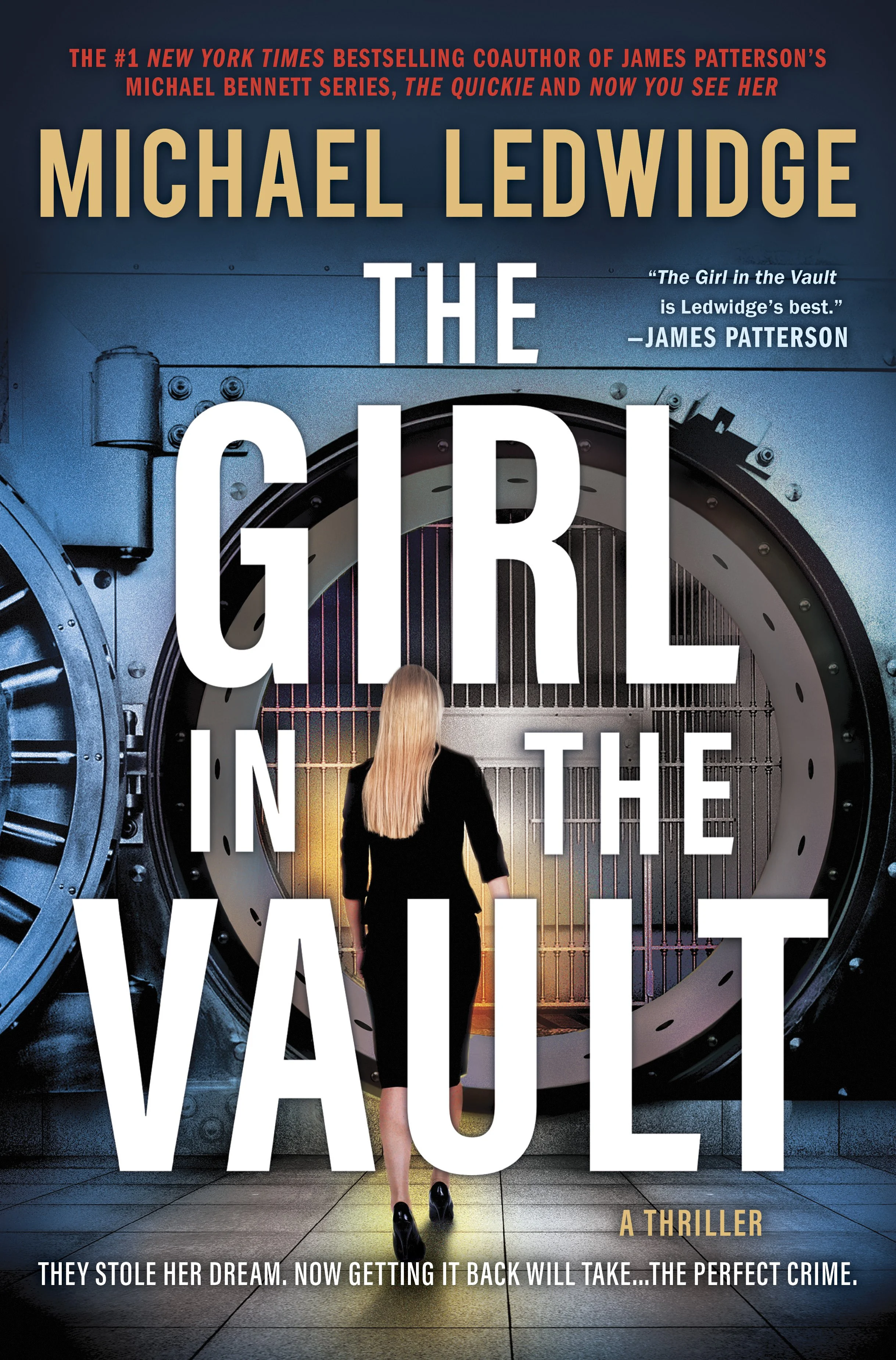
Spotlight: The Girl in the Vault: A Thriller by Michael Ledwidge

They stole her dream. Now getting it back will take the perfect crime.

It’s summer in New York City and Faye Walker has it all. She’s not only scored one of the most highly coveted internships in all of Wall Street, she’s also just met the head-over-heels love of her life. With her natural-born gift for numbers and a work ethic that knows no bounds, Faye is a shoo-in for a full-time position at the illustrious merchant bank Greene Brothers Hale. Then, just as she awaits her offer and her signing bonus, a treacherous betrayal arrives to shatter Faye’s plans and her young life.

But what her high finance masters-of-the-universe bosses don’t know is that Faye isn’t like any of the other interns. Having made her way past her humble small-town beginnings, for Faye, going back is not an option. That’s why Faye now has a new plan. One that involves Swiss watch timing, nerves of steel and ten million dollars in cold hard Wall Street cash.

Excerpt

PART ONE: SUMMER IN THE CITY

In New York City near the southwest corner of 63rd Street and Madison Avenue, there is a restaurant called Stella’s and when everything started, I was sitting in one of its coveted lime-green velvet booths.

It was coming on ten at night, and I was drinking a lemongrass daiquiri. In all my years on the planet up to that point, I’d never touched lemongrass or daiquiris. Until that summer. That summer it seemed like it’s all I drank.

“Should I get you ladies started on a new one?” asked our waiter.

Our waiter was named Tommy, and he was a fortysomething Italian guy with slicked back hair who had the vaguely menacing solemn look of a Sopranos extra. But intimidating demeanor aside, he was always exceptionally nice to us. And when I say us, I mean my work cubicle mate, Priscilla Hutton, who was sitting across from me.

Priscilla and Tommy were actually old pals as she had been partying here at Stella’s since her Birch Wathen Lenox private high school days.

I did some high school partying myself back in my small town in Kentucky. Just never at a place that had nine-thousand-dollar bottles of champagne on the menu and a VIP room described in New York magazine as “Hollywood East.”

“The answer to that is yes, Tommy,” Priscilla said. “My friend and I need two fresh jolts stat. If that’s okay with you, Faye.”

Sometimes I wonder about that question. I wonder about what would have happened if I’d gone back to my apartment instead of accepting.

Or even more importantly, about what wouldn’t have.

“I’m game if you are,” I said, smiling.

The second drink order surprised me. We usually had only one polite drink at the end of the week here, down the street from our job, and then parted ways.

It was part of our unspoken deal. I hooked up Priscilla by handling all of our incredibly high-pressure work stuff, and Priscilla hooked me up by letting me hang out with her a little.

Even though I was totally carrying her, it was a good deal on both ends because Priscilla was gorgeous and rich and knew everyone in New York. She’d actually been in society pages like Avenue magazine ever since high school, each time tan and perfect in an effortlessly stylish outfit that she just threw on after a day spent surfing or skiing or at the spa.

Priscilla was also one of those people who had that voice, that eastern establishment rich person voice, that some call Transatlantic or Boston Brahmin or Locust Valley lockjaw. Not a ton of it, not a pretentious amount, just a sophisticated hint, an elegant tinge, just enough.

It made her sound like a young Lauren Bacall or Bette Davis or someone. I loved just listening to her. It made you feel a little special just to hear her confide in you, as if only for a few moments, you were in the privileged people club, too.

I really didn’t even know why Priscilla had applied for, let alone accepted, our summer internship. It was extremely hard work, and she was kind of a ditz, so why not just take the Instagram influencer route? I often wondered.

I think it had something to do with her father’s business, some defense contractor aerospace company in Connecticut that made airplane parts. Maybe she needed some finance experience to become an executive there? Not that she had told me any of this, but I did have internet access.

She even pretended to be my friend. She shared fashion advice with me, which was a sorely needed lesson. And she also told me all these incredible stories about her days in prep school and Yale and Palm Beach and the Hamptons.

At least at the office. When she was in the mood.

“But another?” I said as Tommy left. “That’s okay, Priscilla. I know you have things to do. I should be going.”

“No, not yet. I owe you big time, Kemosabe. If you hadn’t remembered to recheck the Westland account for me before it went to the treasury team, that Aiken would have dragged me up the stairs of the boiler room by the scruff of my neck.”

It was true. She had screwed up big time. One of our biggest hedge fund clients wanted $130 million wired into their Cayman account, but Priscilla had boneheadedly put in the account numbers of a completely different fund instead. Getting a number wrong here and there wasn’t a problem. Sending money into another fund’s account was. If it had gone through, the money could have instantly disappeared without a trace with no way to unwind it, and our client could have been out $130 million.

“Oh, that,” I said. “Don’t mention it. Anytime. I was looking for something to do anyway.”

That’s when Priscilla looked at me, and we both completely lost it.

Oh, we laughed then all right. Practically until the lemongrass came from our nostrils.

Looking for something to do, I thought, shaking my aching head.

That was a phrase I used way back in the normal life I led before I accepted the summer internship at the venerated Wall Street private investment bank, Greene Brothers Hale, nearly three months before.

Our musty-smelling windowless basement office a few blocks down Madison Avenue really did look like a boiler room or maybe something out of a Dickens poorhouse. Only with computers and phones on our cheap desks instead of dusty ledger books.

And out of these electronic torture devices, all day—for pretty much twelve hours straight from eighty-seven different pissed-off, stressed-out directions at once—came numbers.

The stress and anger directed our way was due to the fact that the numbers represented money. Profoundly massive amounts of money from hedge funds or institutional investors or just really, really rich people. This money either needed to be placed into our bank’s fat cat VIP client accounts or taken out of them and sent other places, places like the Cayman Islands or Switzerland.

You’d think this given task was simple enough like we were mere bank tellers, just moving around much larger sums.

But you would be wrong.

Each incoming or outgoing bank transfer had to be placed in its proper slot. Each one processed through a verification process wrapped in an amount of red tape to make your eyes bleed. Emails with these numbers had to go to the proper people for due diligence verifications. All in the proper order. Yesterday. Or else.

It was the volume of the orders. It was staggering. The air traffic controllers out at Kennedy airport had less to juggle.

Or maybe it was the unhinged wrath of the psychopathic traders and other finance people on the upper floors of our building who kept calling down to see if the transfers had cleared.

Where the hell was the money? they wanted to know. What the hell was wrong with us? Did they actually have to f-ing come down there?

Every morning when I sat down and looked at my newly filled inbox of waiting orders, I thought about the Greek hero, Sisyphus, cursed to eternally roll his rock up that hill.

In envy.

Was he a summer Wall Street intern, too? I would wonder.

And did I mention all of this labor and misery was being extracted from me gratis?

That was the kicker. Since it was an unpaid internship, we were only doing it for the possibility of maybe getting a full-time entry level job as a junior investment analyst.

My skin was being flayed for free.

As I sat there that Friday, attempting to cool my smoking brain with rum and lemongrass syrup, I couldn’t help feeling like I’d been duped.

Because I thought I was going to be a swashbuckling Wall Street pirate.

Instead, I’d been shanghaied and thrown into the slave galley to row.

Excerpted from The Girl in the Vault. Copyright © 2023 by Michael Ledwidge. Published by Hanover Square Press, an imprint of HarperCollins.

Buy on Amazon | Audible | Bookshop.org

About the Author

MICHAEL LEDWIDGE is the writer of seventeen novels, the last dozen being New York Times bestsellers cowritten with one of the world’s bestselling authors, James Patterson. With twenty million copies in print, their Michael Bennett series is the highest-selling New York City detective series of all time. One of their novels, Zoo, became a three-season CBS television series. He lives in Connecticut.

Connect:

Website: https://www.michaelledwidge.com/ 

Facebook: https://www.facebook.com/OfficialMichaelLedwidge/ 

Instagram: https://www.instagram.com/mike.ledwidge/ 

Goodreads: https://www.goodreads.com/author/show/8213.Michael_Ledwidge

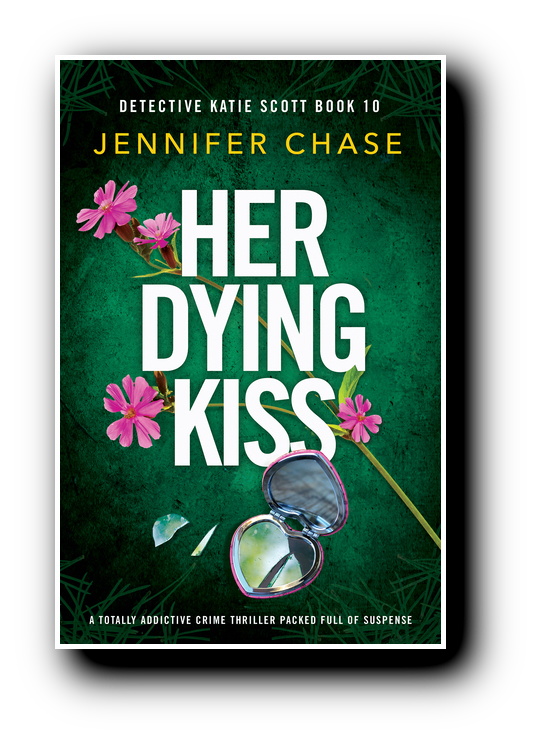
Spotlight: Her Dying Kiss by Jennifer Chase

Publisher: Bookouture

Publication Date: July 17, 2023

Pages: 370

Genre: Crime Fiction/Thriller

She wakes to the dawn light streaming through the window and rolls over to whisper good morning to her fiancé. But panic floods her veins. His side of the bed is empty and cold. Blood trails towards the open door. All trace of him is gone…

It’s been one month since Detective Katie Scott’s fiancé, Chad, went missing without a trace. Devastated Katie is still working tirelessly day and night to track down the love of her life, barely sleeping and chasing every new lead. But now the case has gone cold.

When the body of beautiful Gina Hartfield is discovered among the pine needles in a clearing on Lookout Ridge, Katie swallows her own pain and knows she must focus on finding Gina’s killer. The young woman was found with a pink velvet blindfold shading the hollows where her eyes had been removed. Katie is certain she is chasing a sadistic individual who will soon take another life…

But the autopsy reveals Gina’s body was washed before being abandoned, leaving no trace of evidence behind. And with no witnesses to Gina’s disappearance, the women of Pine Valley are terrified to go out alone.

Desperately combing the crime scene, when Katie sees a newspaper article about her previous cases pinned to a nearby tree, she is certain Gina’s murder is personal. Then tire tracks found in the forest are matched to a truck seen following Chad in the days leading up to his disappearance. Katie’s blood runs cold.

Is there a link between Chad’s disappearance and Gina’s brutal murder, or is the killer playing a twisted game with Katie? Can she find out the truth before they take another life?

Excerpt:

Chapter One

One Month Later

Tuesday 1130 hours

There was a dead body, which was the focus of the synchronized police search. A deceased woman had been found by the utility company during their routine check and maintenance of the meters along the roadway. The body was efficiently wrapped in a large piece of dark brown burlap that had been rolled several times leaving only her head exposed. If not looking closely you would misinterpret the body dump for some type of discarded rug.

The victim was a brunette woman with long, perfectly combed hair with the strands resting on the burlap. At first, it seemed she was relaxed and had merely gone to sleep when, in fact, there were pink velvet pieces of fabric covering her eyes, as if shading her view of something.

John Blackburn, Pine Valley Sheriff’s Department’s forensic supervisor, kneeled down and carefully lifted one of the pieces of velvet, revealing the dark empty socket the eyeball had once occupied. The eye had been cleanly detached. It gave the body a more macabre appearance than the usual fixed eye stares of the dead.

John’s face was deeply sad and his mouth was turned down as he prepared to take a few more photos to document the scene before the medical examiner’s office took possession.

He carefully circled the body, taking the appropriate photographs—overall, medium range, then close-up—before collecting any evidence he could find. The young woman looked to be resting as the late afternoon sunshine cast down on her face. Her complexion, pale and ashen, appeared to be scrubbed clean, giving her a waxy doll-like exterior. There were no evident signs of makeup, dirt or blood on her face.

The south district area of Pine Valley was known for several warehouses that had been empty now for more than six months after a manufacturing company had vacated to a newer and more modern facility in an adjacent town. The front area to the one where the body had been found was overgrown, the weeds a few feet tall and garbage strewn around from where it had fallen out of an overturned, rusted-out dumpster. The dreary grey building looked more like emergency bunkers from a long time ago than a plant that had recently manufactured automotive parts.

Parked along the cracked driveway leading to the loading docks were several police cruisers, county vehicles and the forensic van. The main area of interest was near one of the loading bays. There were numerous cones and flags around, marking various pieces of evidence for photography documentation. The emergency personnel monitored the area and were conducting grid searches and making sure that no one was in or around the area that wasn’t supposed to be there, in addition to searching for more potential evidence. Everyone moved with precision and unity for the common goal of maintaining the crime scene.

“What do you think, John?” asked Detective McGaven. His towering height made him noticeable from a distance. His badge and gun were attached to his belt. “Is it the same as the other at Lookout Ridge?”

John walked up to the detective and nodded slowly. “We won’t know for sure until the body is unrolled and examined under controlled conditions, and I can run some tests… but, the signature appears to be similar if not the same, with the removed eyes.”

McGaven scratched his head, still observing the latest victim. His thoughts returned to his partner, Detective Katie Scott, and how he wished she were there examining the crime scene. Her perspective, instincts, and experience over the past year and half had been more than exemplary—her methods sometimes bordering on unorthodox, but always getting results. He had left several messages for her in hopes that she would open communications and ultimately return to work. His expression was solemn. It was as if a part of him was missing without her. He wanted to go to her house, but respected her need for privacy at this difficult time.

“Wish Katie was here?” said John watching the detective closely.

McGaven looked at the forensic supervisor and nodded. “How’d you know?”

“I feel it too. It seems strange not having her here.” He gazed around the area as if he expected to see Katie appear.

“Anything new with this scene?”

John shook his head. “Not that I can see right now. But we’ll know more soon.”

McGaven was disappointed, but knew that John would do everything he could to find any evidence. The last thing the detective wanted was for these homicides to go cold. He turned away and saw Detective Hamilton speaking with the utility workers. It wasn’t his optimum partnership, but he respected the detective and would overlook personality differences to make it work. “Thanks, John,” he said as he walked away, moving carefully around the area, looking for possible entrances and exit locations of the killer.

A young blonde woman with short hair was bent over taking a tire impression with a type of dental stone, waiting for it to harden. She looked up when McGaven approached. “Hi, Detective,” she said and smiled.

“How’s it going, Eva?”

“Good. This is my third impression. Two were consistent to each other and this one is different and definitely older. It’s probably not the killer’s, but John said we needed to be thorough.”

McGaven nodded. “I agree. If this crime scene is connected to the other one at Lookout Ridge, then we need the evidence to tie them together.”

“Ten-four,” she said and continued her task.

McGaven saw that Hamilton was speaking with the officers first on the scene so he took the opportunity to check out around the building. Everything was extremely overgrown, looking more as though it had been abandoned for years, not months. The weeds were extremely tall and had folded over due to their height and weight. There was an area where pallets, recyclable materials, and miscellaneous pieces of metal equipment had been stacked in the deserted area.

Still walking carefully, he was trying not to step on something potentially hazardous or possibly evidence-oriented. The further he walked the quieter it became—the voices around the crime scene seemed to settle to a low hum as he studied the back area. The sun was high and beat down on him making perspiration trickle down his back. He kept walking, but nothing appeared out of the ordinary. He thought about what Katie would do—he had been with her at many crime scenes and knew she would try to get a sense of the area, to look for places where the killer might have been.

The back of the building looked much like the front except more weather-beaten. The grey paint faded in areas and the windows on the second floor were dirty with some broken out. He observed the inconsistencies of the exterior of the building. Even though there wasn’t any graffiti to deface the area, the elements had caused rough and weathered places resembling an industrial mosaic appearance.

As he perused the area, he noticed a trail where weeds had been trampled, not by animals, but by something bigger. A person. Stopping in his tracks, he systematically scanned the area. There were no other signs indicating disruption to the weeds, so he cautiously moved forward. He spotted some paper or a piece of garbage rolled up tightly and wedged into the crevice of an exterior vent. It could have been easily missed or even dismissed, but something in McGaven’s gut made him take notice. He was going to alert John and Eva in order to have them search and document the area, but his instinct drove him to verify the origins of the paper first after quickly taking a photo of it with his cell phone.

Taking two more steps to meet up with the wall, he retrieved his gloves and slipped them on, and then carefully touched the paper. Leaning in, McGaven noticed that it appeared to be consistent to ordinary computer paper that had something printed on it. It wasn’t weathered and the printing was dark and readable. In fact, the paper appeared to be recent.

McGaven gently unrolled the paper. The condition and edges were as if it had been placed recently – there were no folds or fragile areas. As he continued to unroll it, he saw it was an article most likely printed from the internet. To his shock, the title read: Pine Valley Detectives Solve Three Murders in Coldwater Creek.

McGaven took a step back—his senses were now heightened as he glanced around, surmising that the killer had placed this article for them to find.

Why?

Was it the killer’s calling card? Was he taunting the police?

Was there another article hidden at the previous crime scene at Lookout Ridge they had missed?

The article concerned the last case that he and Katie had worked in a neighboring town. All the details flowed through his mind. It had been tough and dangerous. He carefully replaced the paper where he had found it and hurried to alert John.

Buy on Amazon | Audible | Bookshop.org

About the Author

Jennifer Chase is a multi award-winning and USA Today Best Selling crime fiction author, as well as a consulting criminologist. Jennifer holds a bachelor degree in police forensics and a master's degree in criminology & criminal justice. These academic pursuits developed out of her curiosity about the criminal mind as well as from her own experience with a violent psychopath, providing Jennifer with deep personal investment in every story she tells. In addition, she holds certifications in serial crime and criminal profiling. 

Connect: Website | BookBub | Twitter | Facebook | Instagram | Goodreads

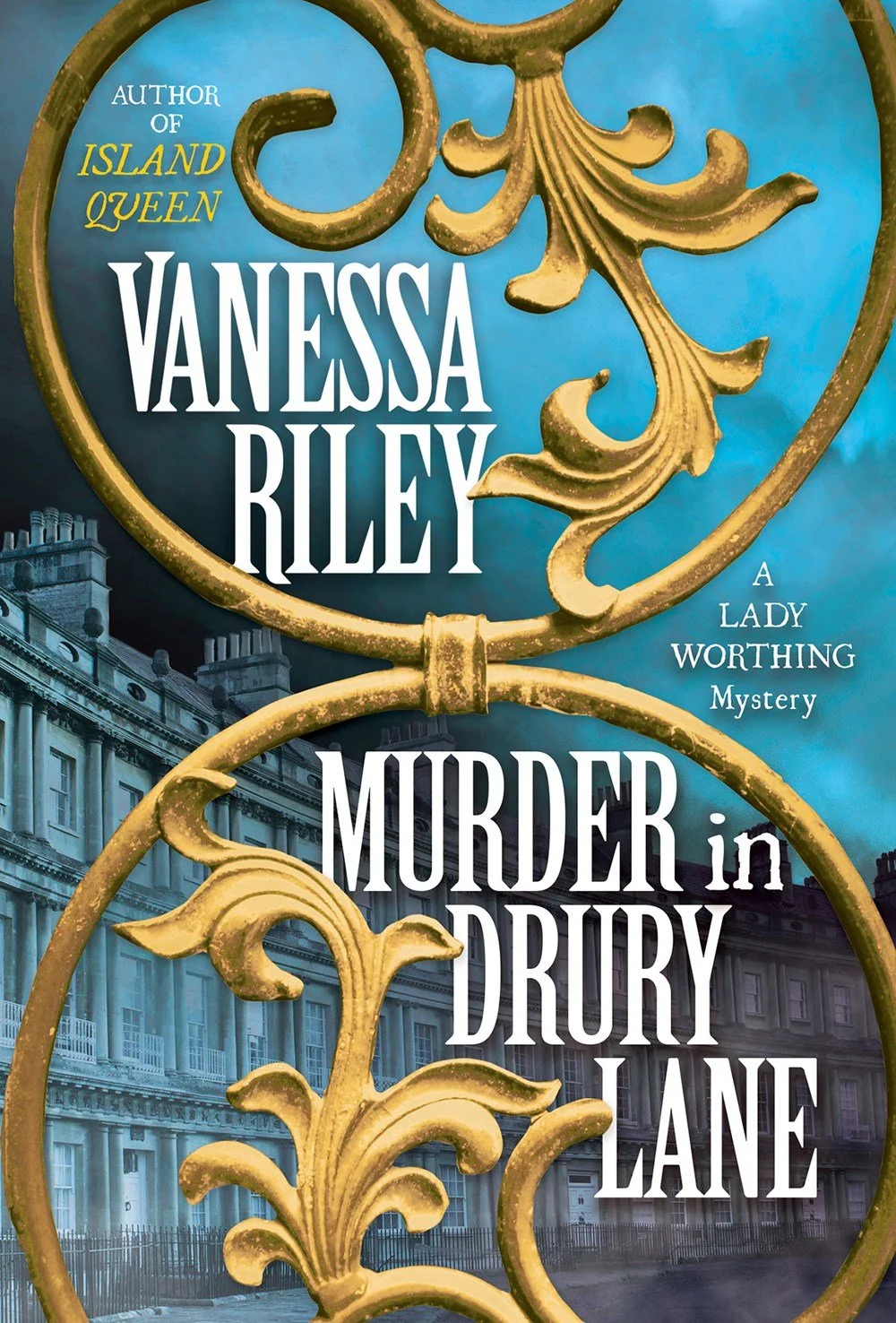
Spotlight: Murder in Drury Lane by Vanessa Riley

Portraying the true diversity of the Regency-era and the hidden intrigue of England’s abolitionist movement, this vibrant, inclusive new historical mystery from acclaimed author Vanessa Riley features an engaging heroine with an independent streak, a notorious past, and a decided talent for sleuthing…

Pressed into a union of convenience, Lady Abigail Worthing knew better than to expect love. Her marriage to an absent lord does at least provide some comforts, including a box at the Drury Lane theater, owned by the playwright Richard Brinsley Sheridan. Abigail has always found respite at the theater, away from the ton’s judgmental stares and the risks of her own secret work to help the cause of abolition—and her fears that someone from her past wants her permanently silenced. But on one June evening everything collides, and the performance takes an unwelcome turn . . .

Onstage, a woman emits a scream of genuine terror. A man has been found dead in the prop room, stabbed through the heart. Abigail’s neighbor, Stapleton Henderson, is also in attendance, and the two rush backstage. The magistrate, keen to avoid bringing more attention to the case and making Lady Worthing more of a target, asks Abigail not to investigate. But she cannot resist, especially when the usually curmudgeonly Henderson offers his assistance.

Abigail soon discovers a tangled drama that rivals anything brought to the stage, involving gambling debts, a beautiful actress with a parade of suitors, and the very future of the Drury Lane theatre. For Abigail, the case is complicated still further, for one suspect is a leading advocate for the cause dearest to her heart—the abolition of slavery within the British empire. Uncovering the truth always comes at a price. But this time, it may be far higher than she wishes to pay.

Buy on Amazon | Audiobook | Bookshop.org

About the Author

Vanessa Riley is an award-winning author of historical romance, mystery, and fiction featuring realistic multicultural communities and powerful persons of color. Her works have been reviewed by the Washington Post, Entertainment Weekly, NPR, Publisher Weekly, and the New York Times. Riley, of Southern, Irish, and Trini background, was named the 2023 Georgia Author of the Year Awards Literary Fiction Winner for Sister Mother Warrior. Riley holds a doctorate in mechanical engineering and an MS in industrial engineering and engineering management from Stanford University. She also earned a BS and MS in mechanical engineering from Penn State University. Riley's research skills have helped NASA, GM, Hewlett Packard, and several startups. Yet, her love of history (Caribbean, Georgian, and Regency) and lattes overwhelmed her passion for math and has led to the publication of over twenty titles. A frequent speaker at literary, women's, and STEM events, she lives in Atlanta, Georgia with her military husband and teenage daughter.

Connect on her website.

Spotlight: Hollow Voices by Michelle Corbier

Release date: November 6, 2023

Dr. Julia Toussaint is recovering after the death of her son when she catches her psychiatrist in a lie. Now, she doubts many things from her past, particularly surrounding the death of the woman who murdered her son. 

Julia starts over in a new city with a narcissistic boss with his own dark secrets. Suddenly, the past catches up with her when a police officer blackmails her. In a fight for her sanity, Julia struggles to protect the people she loves. 

Time is crucial and Julia must remember what happened after Evens died because the decisions she makes will have fatal consequences.

Excerpt:

“You’ll feel better if you share. I’ll understand.”

So hard to resist. I wanted to tell someone. Release my thoughts. My mouth opened, ready to explain those desires and needs. “Sometimes—”

A ringtone blared in the dense air. 

Dr. Griffith raced to her desk. “Wait a minute. Let me turn my phone off.” 

Like dawn cresting over a dark horizon, an awareness grew in my mind. In a brief moment of clarity, I recognized an incongruity. “Why is your phone on? You said phones weren’t allowed in the office.”

“I’m a physician. I have to be available for my patients.”

“Do you see patients in the hospital?”

“No.”

“Do you make house calls?”

“Julia—”

“Why was your phone on?” I stood up.

“You’re exaggerating the significance of a call.”

“No, I’m not.”

“Remember when we discussed your paranoia? You believed people were following you. I’m not recording our conversations.”

“Let me see your phone. Do you have a recording app on it?”

“No, I don’t.”

“Let me see.”

“You have to learn trust. This is a test. Believe me.”

“Believe you?” In slow motion I scanned the entire room. “Give me back my tapes.” I stepped forward. 

She interposed herself between me and the desk.  

“Julia, you’re regressing. If this continues, I’ll have to notify your office, and the state medical board. Your behavior is becoming threatening—a risk for working with children.”

I threw my head back to better view her. 

Her narrowed eyes returned my gaze. Her lips pressed together and disappeared, like a lizard.

Seconds later my shoulders slumped, and I retreated toward the recliner. 

A smile teased at the edge of her mouth. “Much better.”

Herding me toward the door, she said, “This was fine for today, but next time, I want to move forward. We have to work on trust. Record your thoughts on the audio tapes, and we’ll listen to them together. And remember to take your medications. If you deviate from the treatment plan, you’re not ready to return to work.” 

Her skeletal hand rested on my shoulder—a lifeless fragment of humanity. I didn’t bother moving it away. Those hands wouldn’t touch me again. 

The threat in her voice strengthened my resolve. For a moment I had visualized a hint of truth. Without responding, I entered the lobby where Camile waited.

Dr. Griffith lied. She was hiding something. 

Did it concern my urges, those impulses? I didn’t know—yet. But I would uncover the truth. Rediscover my secrets. I had to. My sanity depended upon it. 

Buy on Amazon

About the Author

Born in Illinois, as a military dependent, Michelle moved between San Diego, California and Charleston, South Carolina. She enrolled at the University of California Santa Cruz before attending Michigan State University where she completed a Pediatric residency program. After over twenty years in clinical medicine, Michelle now works as a medical consultant. As a member of Crime Writers of Color, Sisters in Crime and Capitol Crimes, her writing interests cover many genres—mystery, paranormal, and thrillers. If not writing, you can find her outside gardening or bicycling.

Connect:

Website: www.MichelleCorbier.com

Newsletter: https://lp.constantcontactpages.com/su/paEPQ3x/MrsDoctorWrites

Instagram: Michelle Corbier (@mrsdoctorwrites) • Instagram photos and videos

Bookbub: Michelle Corbier Books - BookBub

Amazon Author page: https://www.amazon.com/author/michellecorbier

Spotlight: The Wishing Bridge: A Sparkling Christmas Novel by Viola Shipman

On Sale: November 7, 2023

Publisher: Graydon House

Once the hottest mergers and acquisitions executive in the company, Henrietta Wegner can see the ambitious and impossibly young up-and-comers gunning for her job. When Henri's boss makes it clear she'll be starting the New Year unemployed unless she can close a big deal before the holidays, Henri impulsively tells him that she can convince her aging parents to sell Wegner's--their iconic Frankenmuth, Michigan, Christmas store--to a massive, soulless corporation. It's the kind of deal cool, corporate Henri has built her career on.

Home for the holidays has typically meant a perfunctory twenty-four-hour visit for Henri, then back to Detroit as fast as her car will drive her. So turning up at the Wegner's offices in early December raises some eyebrows: from her delighted, if puzzled, parents to her suspicious brother and curious childhood friends. But as Henri fields impatient texts from her boss while reconnecting with the magic of the store and warmth of her hometown, what sounded great in the boardroom begins to lose its luster in real life. She's running out of time to pull the trigger on what could be the greatest success of her career...or the most awkward family holiday of her life.

With unabashed winter charm, The Wishing Bridge sparkles with the humor and heart fans of Kristy Woodson Harvey, Nancy Thayer and Jenny Colgan love most.

Excerpt

December 7

I hit the brakes, my car fishtailing on the slippery road. I come to a stop just inches from the car before me.

Ah, the hazards of winter in Michigan and Detroit drivers who think snow is a reason to hit the gas.

I cock my head and see an accident just a few cars in front of me. A man is out of his car, screaming into the window of the car he hit.

Merry Christmas!

I take a breath, sip my coffee—which miraculously didn’t spill—hit my blinker and wait to merge into the next lane.

That’s when I notice it: the abandoned house I drive by every day to work.

There are many abandoned homes in many forgotten neighborhoods in this proud city whose shoulders were slumped by the mortgage crisis, layoffs in the auto industry and never-ending winters that used to be as brutal and mind-numbing as a Detroit Lions football season. Neighborhoods stand like ghost towns, and, in winter, they look even sadder, the grass dead, the green gone, broken glass shimmering in the sun before the snow arrives to cover their remains.

This particular home is a three-story redbrick beauty that looks like a castle. The windows are broken, the walls are collapsing and yet the wooden staircase—visible to the world— remains intact. I slow down just enough every day to admire the finials, worn and shining from the hands that have polished them over the years.

There is a line of shattered windows just above the ground, and as you pass by, you catch a glimmer of red in the basement. Coming the opposite way, you swear you can see a man smiling.

I stopped years ago to investigate. I parked, careful to avoid nails, and wound my way in high heels through the weeds to the broken window. I knelt and peeked into the basement.

Santa!

A plastic molded Santa smiled at me. It was a vintage mold—like the one my grandparents centered in the middle of a wreath on their front door every year—of a cheery Santa with red cheeks, blue eyes, green gloves, holding a candy cane tied in a golden bow.

I scanned the basement. Boxes were still stacked everywhere.

Tubs were marked Christmas!

In the corner of the basement sat a sign overrun with cobwebs that read Santa’s Toy Shop!

December 1975

“They’re here! They’re here!”

My voice echoed through my grandparents’ house. I ran to the front door, grabbed the first catalog, which seemed to weigh nearly as much as I did, and tottered down the steep basement stairs. Back up I went to retrieve the next one from Mr. Haley, the postman, who looked exactly like Captain Kangaroo.

“Don’t move!” I said, disappearing and returning moments later.

Then back down the stairs I scrambled once again.

Mr. Haley laughed when I returned the final time, out of breath.

“Last one,” he said. “Oh, and a bunch of Christmas cards for your grandmother.”

I bent over, panting, as if I’d just done wind sprints on the track.

“Tired?” he asked.

I shook my head. “No! Think of what Santa carries! Not to mention what you carry every day!”

“You got me there,” he said. “Here’s the cards. I’ll see you tomorrow. Merry Christmas!”

I watched him trudge through the freshly fallen snow, just enough to dust the world in white. If there’s one thing we never had to worry about in our town of Frankenmuth, it was a white Christmas. My dad said it was one of the gifts of living in a Christmas wonderland.

“Merry Christmas, Mr. Haley!” I yelled, my breath coming out in puffs.

I shut the door, tossed the cards on the telephone desk sitting in the foyer and hightailed it back down to the basement.

I looked at the catalogs where I’d set them on the shag carpet and ran around them in a happy circle doing a little jig.

I turned on the electric fireplace. It was so cool, fake brick, and it just faded into the Z-BRICK walls. The flames seemed

to dance, even though they weren’t real.

I went over to the card table where my grandparents played games—bridge, canasta, hearts—and I grabbed my marker from a cup.

The red one.

The one I used every year.

The one Santa would recognize.

I took a seat on the orange shag and arranged the catalogs in a semicircle around me: the Christmas catalogs from JCPenney and Monkey Wards, and my favorite, the Sears Wish Book.

The catalogs were heavy and thick, big as the Buick my grandpa drove. They were brand-new and all mine. I began to f lip through the crisp pages, turning quickly to the ones that showed all the toys, clothes and games I wanted for Christmas.

I was lost for hours in the pages, dreaming, hoping, wishing. “Yes, yes, yes!” I said, my marker in constant motion.

“Are you using a red marker so Santa will see?”

I looked up, and my dad was standing over me. He was tall, hair as fair as mine. He had just gotten off work. He was an accountant at a car dealership, and he never seemed happy when he got home from work.

Until he came down to my grandparents’ basement.

“Of course!” I said. “Finn gets green. I use red!”

“So what do you want Santa to bring you this year?”

I patted the carpet, and my dad took a seat next to me. I began showing him all the things I’d marked in the wish catalogs.

“I want this eight-room dollhouse, and, oh! this Shaun Cassidy phono with sing-along microphone and this battery-operated sewing machine! It’s the first ever like this!” I stopped, took a deep breath and continued, “And this dress, and this Raggedy Ann doll, but—” I stopped again, flipping through pages as quickly as I could “—more than anything I want this game called Simon. It’s computer controlled, Daddy! It’s like Simon Says, and you have to be really fast, and…”

“Slow down,” he said, rubbing my back. “And what about your brother?”

“What about him?”

“What does he want?”

“He’ll want all the stupid stuff boys like,” I said. “Stars Wars figurines, an erector set, a Nerf rocket and probably a drum set.”

My father winced at the last suggestion.

“Maybe a scooter instead,” my dad suggested. “What do you think?”

“Good idea, Daddy.” I placed my hands over my ears.

He laughed and stood up.

“Hey?” I asked. “What do you want for Christmas?”

My dad headed over to the workshop he had on the other side of the basement. We lived in a small ranch house on the other side of town that didn’t have a basement, much less any extra room. My grandparents let my father convert this space a few years ago so he could pursue a second career and his true passion: Christmas.

“You know what I want,” he said with a smile.

My dad picked up a sign and turned it my way. It was a handcarved wooden sign that read Frohe Weihnachten! Frankenmuth is a Bavarian town filled with all things German: a wooden bridge flowing over a charming river, a glockenspiel that—on the hour—played the Westminster chimes followed by an entire show complete with dancing figurines, a cheese haus and competing chicken-and-noodle restaurants. I was named Henrietta, my father Jakob, my brother, Finn. Only my mother, Debbie, escaped the German name game with the very American moniker.

“What’s this mean, Henri?” my dad asked.

“Merry Christmas,” I said.

“And what do I want?”

“Christmas all year long.”

“Exactly,” he said. “Just like you. Except as a grown-up.” He looked at his sign. “That’s my Christmas wish.”

For a long time, everyone thought this was just a hobby of my father’s, sort of like other dads tinkered on car engines, went fishing or coached baseball. For an even longer time, people thought my dad was nuts.

Why would a man spend all of his time creating Christmas signs in July, or designing ornaments in March?

They didn’t know my dad.

They didn’t how serious he was, that he often worked until three in the morning from October through December and countless weekends the rest of the year.

“You have a good job, Jakob,” friends would tell him. “Don’t ruin your life over some silly notion.”

But my mom and grandparents believed in him just as much as I believed in Santa.

I watched my father work. As he did, he began to whistle Christmas tunes.

The world was finally catching up with my father’s dream.

He was now creating window displays for two of the biggest stores in town: Shepherd Woolen Mill and Koch’s Country Store.

Excerpted from The Wishing Bridge. Copyright © 2023 by Viola Shipman. Published by Graydon House, an imprint of HarperCollins.

Buy on Amazon | Audible | Bookshop.org

About the Author

VIOLA SHIPMAN is the pen name for internationally bestselling LGBTQIA author Wade Rouse. Wade is the author of fifteen books, which have been translated into 21 languages and sold over a million copies around the world. Wade writes under his grandmother’s name, Viola Shipman, to honor the working poor Ozarks seamstress whose sacrifices changed his family’s life and whose memory inspires his fiction.

Wade’s books have been selected multiple times as Must-Reads by NBC’s Today Show, Michigan Notable Books of the Year and Indie Next Picks. He lives in Michigan and California, and hosts Wine & Words with Wade, A Literary Happy Hour, every Thursday.

Connect:

Author Website 

Twitter: @Viola_Shipman

Facebook: Author Viola Shipman

Instagram: @Viola_Shipman

Goodreads