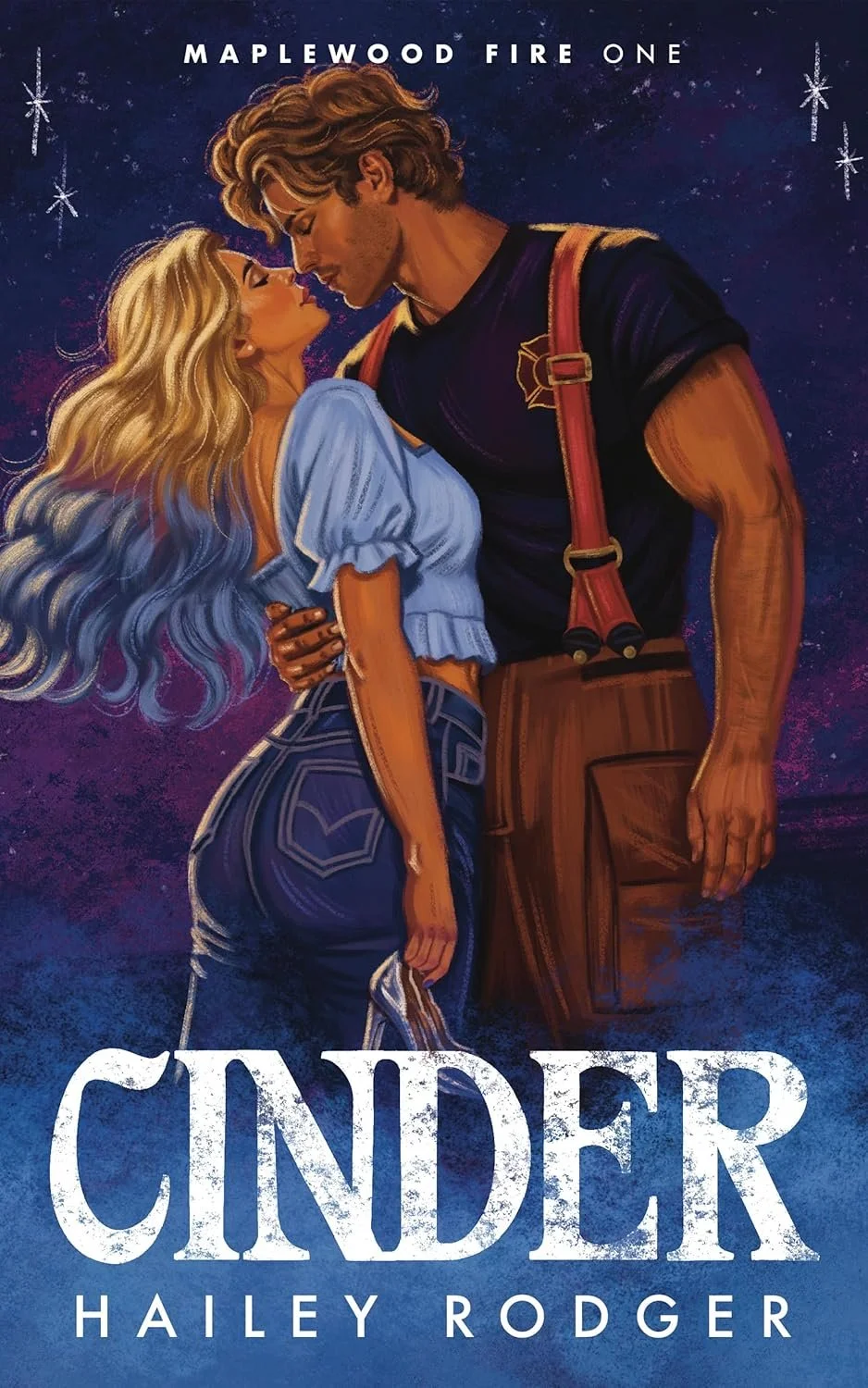
Spotlight: Heart Like a Cowboy by Delores Fossen

Publication Date: November 28, 2023

Publisher: Canary Street Press

He’s Emerald Creek’s hottest cowboy—and the one man she shouldn’t want

On the surface, Egan Donnelly is hometown hero material—top gun, commanding an elite fighter training squadron and ranching royalty. Inside, he feels like a fraud, convinced he’s responsible for his best friend’s death. At least he won't let himself succumb to the heat between him and Jack’s widow, Alana. Yet. Now that she’s making regular trips to his ranch to care for his dad, that vow is getting harder to keep.

Alana Davidson isn’t just grieving her husband’s loss, she’s feeling betrayed over his secret infidelity. Wanting Egan makes things even more complicated. As a nutritionist, she can help Egan’s dad recover from his health scare, but it’s not so easy to get her own heart back on track. Because despite shared guilt and family pressure, she’s falling fast, and Egan is right there with her…

Excerpt

CHAPTER ONE

That whole deal about bad news coming in threes? Well, it was a crock. Lieutenant Colonel Egan Don- nelly now had proof of it.

First, there’d been the unexpected visitor, AKA the messenger, who’d started the whole bad-news ball rolling. That’d teach him to open his frickin’ door before he’d even finished his frickin’ coffee.

Then, there was the so-called celebration that would stir up the worst of his past and serve it up to him on a silver platter. Or rather on a disposable paper plate, anyway.

Then, a letter from his ex, which he figured was never a good sign. Who the heck actually wanted to hear from their cheating ex? Not him, that was for sure.

Those were the three things—count them: one, two, three—that was supposed to have been the final tally of bad crap even if for only a day, but apparently the creator of that old saying had no credibility what- soever. Then again, Egan had known firsthand that bad news didn’t have limited quantities.

Or expiration dates.

Now he was faced with ironclad confirmation that those other three things were piddly-ass drops in the proverbial bucket compared to bad-news number four.

And now, everything in his world was crashing and burning.

Again.

Thirty Minutes Earlier

In the dream, Lieutenant Colonel Egan Donnelly saved his best friend’s life. In the dream, the explosion didn’t happen. It didn’t blast through the scorched, airless night. Didn’t tear apart the transport vehicle.

Didn’t leave blood on the bleached sand.

Didn’t kill.

In the dream, Egan was the hero that so many people proclaimed he was. He made just the right decisions to save everyone, including Jack. Especially Jack.

Egan didn’t fight tooth and nail to come out of this dream—unlike the ones that were basically a blow-by-blow account of what had actually happened that god-awful night nearly three years ago. Those dreams were pits of the darkest level of hell where everything spun and bashed, stomping him down deeper and deeper into the real nightmare. Those dreams he fought.

Had to.

Because Egan had learned the hard way if he let those dreams play out, then it was a damn hard struggle to come back from them. Heck, he was still trying to come back from them.

Despite wanting to linger in this particular dream where he got to play hero, it didn’t happen, thanks to his phone dinging with a text. He frowned, noticing that it was barely six in the morning. Texts at this hour usually were not good. Considering that all three of his siblings were on active duty, not good could be really bad.

He saw his father’s name on the screen, and the worry instantly tightened Egan’s gut. His dad had just turned sixty so while he wasn’t in the “one foot in the grave” stage, he wasn’t the proverbial spring chicken, either. Added to that, his dad still ran the day-to-day operation of Saddlebrook, the family’s ranch in Emerald Creek, Texas. The ranch that’d been in the Donnelly family for over a hundred years and had grown and grown and grown with each succeeding generation. All that growth required hours of upkeep and work.

Found this when I was going through some old photo albums, his dad had texted.

What the heck? That gut tightness eased up, some, when Egan saw it was a slightly off-center image taken in front of the main barn on the ranch. His dad had obviously used his phone to take a picture of the old photo. Emphasis on old.

It was a shot that his grandmother, Effie, had snapped thirty years ago on Egan’s eighth birthday. His brother, Cal, would have been six. His sister, Remi, a two-year-old toddler, and his other brother, Blue, was just four. Stairsteps, people called them, since they’d all been born just two years apart.

In the photo, his dad, looking lean, fit and young, was in the center, flanked by Egan and Remi on the right, and Cal and Blue on the left. Remi and Blue were both grinning big toothy grins. Cal and Egan weren’t. Probably because they’d been old enough to understand that life as they’d known it was over.

Their lives hadn’t exactly gone to hell in a handbasket, but this particular shot had been taken only a couple of weeks after their mother had died from cancer. A long agonizing death that had left their dad the widower of four young kids. Still, his dad was eking out a smile in the picture, and he’d managed to gather all four of them in his outstretched arms.

Bittersweet times.

That’s when their mom’s mom, Grammy Effie, had come to Saddlebrook for what was supposed to have been a couple of months, until his dad got his footing. Effie was still living on the ranch thirty years later and had obviously put down roots as deep as his father’s.

Egan was wondering what had prompted his dad to go digging through old family albums when his phone dinged again. It was another text from his dad, another photo. It was an image that Egan also knew well, and he mentally referred to it as the start of phase two of his life.

The first phase had been with a loving mother that sadly he now couldn’t even remember. That had ended with her death. Phase two had begun when his dad had gotten remarried four years later to a young fresh-faced Captain Audrey Granger, who’d then been stationed at the very base in San Antonio where Egan was now. It was an hour’s commute to the ranch that Audrey had diligently made.

For a while, anyway.

In this shot, his dad and new bride dressed in blue were in the center, and both were flashing giddy smiles. Ditto for Remi and Blue. Again, no smiles for Cal and Egan since they’d been ten and twelve respectively and were no doubt holding back on the glee to see how life with their stepmom would all play out.

It hadn’t played out especially well.

But then, it also hadn’t hit anywhere near the “hell in a handbasket” mark, either.

If there’d been a family photo taken just two years later, though, Audrey probably wouldn’t have been in it. By then, she’d been in Germany. Or maybe England. Instead of an hour commute, she’d come “home” to the ranch a couple of times a year. Then, as her career had blossomed, the visits had gotten further and further apart. These days, Brigadier General Audrey Donnelly only came home on Christmas. If that.

Egan sent his dad a thumbs-up emoji to let him know he’d seen the pictures, and he was considering an actual reply to ask if all was well, but his alarm went off. He got up, mentally going through his schedule for the day. As the commander of the Fighter Training Squadron at Randolph AFB, Texas, there’d be the usual paperwork, going over some stats for the pilots in training, and then in the afternoon, he’d get to do one of the things he loved most.

Fly.

Of course, it would be under the guise of a training mission in the T-38C Talon jet, not the F-16 that Egan used to pilot, but it would still give him that hit of adrenaline. Still give him the reminder of why he’d first joined the Navy and then had transferred to the Air Force so he could continue to stay in the cockpit.

Egan showered, put on his flight suit, read through his emails on his phone and was about halfway through his first cup of coffee when his doorbell rang. He had the same reaction to it as he had the earlier text. A punch of dread that something was wrong. It wasn’t even seven o’clock yet and hardly the time for visitors. Especially since he lived in base housing and therefore wasn’t on the traditional beaten path for friends or family to just drop by.

Frowning, he went to the door. And Egan frowned some more when he looked through the peephole at the visitor on his porch. A woman with pulled back dark blond hair and vivid green eyes. At first glance, he thought it was his ex-wife, Colleen, someone he definitely didn’t want to see, but this was a slightly younger, taller version of the woman who’d left him for another man.

Alana Davidson, Colleen’s sister.

“Yes, I know it’s early,” Alana sighed and said loud enough for him to hear while she looked directly at the peephole. “Sorry about that.”

Wondering what the heck this was all about, he opened the door and got an immediate blast of heat. Texas in June started out hot as hell and got even hotter. Today was apparently no exception. He also got another immediate blast of concern because there was nothing about Alana’s expression that indicated this was a social visit.

Then again, Alana and he never had social visits.

Never.

Just too much old baggage, old wounds and old everything else between them. Ironic, since she’d been married to his best friend. Now, she was his dead best friend’s widow and bore that strong resemblance to his cheating ex-wife who’d left him just days before Jack’s death.

Egan was no doubt an unwelcome sight for her, too. He was the man who’d not only failed to keep her husband alive, but he was also the reason Jack had been in that transport vehicle in the first place.

So, yeah, old baggage galore.

“Sorry,” Alana repeated, looking up at him. Not looking at him for long, though. Like their avoidance of social visits, they didn’t do a lot of eye contact, either. “But I have an appointment at the base hospital in an hour, and I wanted to catch you before you went into work.”

“The hospital?” he automatically questioned.

She waved it off, clearly picking up on his concern that something might be medically wrong with her. “I’m consulting with a colleague on a chief master sergeant who’s being medically retired and moving to Emerald Creek. I’ll be working with the chief to come up with some lifestyle changes.”

Alana made that seem like her norm, and maybe it was. She was a dietitian, and because as Jack’s widow she still had a military ID card so she wouldn’t have had any trouble getting onto the base. Added to that, Emerald Creek was a haven for retirees and veterans since it was so close to three large military installations. There were almost as many combat boots as cowboy boots in Emerald Creek.

“How’d you know where I live?” he asked.

“I got your address from your grandmother.” She glanced over her shoulder at the street of houses. “I occasionally have consults here, but it’s the first time I’ve been to this part of the base.”

Yeah, his particular house wasn’t near the hospital, commissary or base exchange store where Alana would be more apt to go. Added to that, Jack had never been stationed here, which meant Alana had never lived here, either.

“Full disclosure,” she said the moment he shut the door. “You aren’t going to like any of what I have to say.”

Now it was Egan who sighed and braced himself for Alana to finally do something he’d expected her to do for three years. Scream and yell at him for allowing Jack to die. But there was no raised voice or obvious surge of anger. Instead, she took out a piece of paper from her sizeable handbag and thrust it at him.

“It’s a mock-up of a flyer that Jack’s mom intends to have printed up and sent to everyone in her known universe,” Alana explained.

At first glance, he saw that the edges of the flyer had little pictures of barbecue grills, fireworks, the American flag and military insignia. Egan intended to just scan it to get the gist of what it was about, but the scanning came to a stumbling slow crawl as he tried to take in what he was reading.

“Join us for a Life Celebration for Major Jack Connor Davidson, July Fourth, at the Emerald Creek City Park. It’ll be an afternoon of food, festivities and remembrance as a celebratory memorial painting for Jack will be unveiled by our own Top Gun hometown hero, Lieutenant Colonel Egan Donnelly.”

Well, hell. Both sentences were full-on gut punches and thick gobs of emotional baggage. Memorial. Life celebration. Remembrances. The icing on that gob was the last part.

Top Gun hometown hero.

Egan was, indeed, a former Top Gun. He’d won the competition a dozen years ago when he’d been a navy lieutenant flying F-16s. The hometown part was accurate, too, since he’d been born and raised in Emerald Creek, but that hero was the biggest of big-assed lies.

“I can’t go,” Egan heard himself say once he’d managed to clear the lump in his throat.

She nodded as if that were the exact answer she’d expected. “I’m guessing you’ll be on duty?”

He’d make damn sure he was, but wasn’t it ironic that the memorial celebration would fall on the one weekend of the month he usually went home to help his dad on the family ranch? Maybe Jack’s mom knew that, or maybe the woman just believed that such an event would be a good fit for the Fourth of July.

It wasn’t.

Barbecue, hot dogs, beer and such didn’t go well with the crapload of memories something like that would stir. He didn’t need a memorial or a life celebration to remember Jack. Egan remembered him daily, hourly even, and after three years, the grief and guilt hadn’t lost any steam.

“I’ll let Tilly know you can’t be there,” Alana said, referring to Jack’s mother. “She’s mentioned contacting your stepmom to see if she could be there for the unveiling.”

“Good luck with that,” he muttered, and Alana’s sound of agreement confirmed that she understood it was a long shot.

What would likely end up happening was that his brother Cal would get roped into doing the “honors.” He’d known Jack, and Cal’s need to do the right thing would have him stepping in.

“The last time I ran into Tilly, she didn’t want to discuss anything involving Jack’s death,” Egan recalled.

Alana nodded. “That’s still true. Nothing about how he died, et cetera. She only wants to chat about the things he did when he was alive.”

“So, why do a memorial painting?” Egan wanted to know.

“I’m not sure, but it’s possible the painting will be another life celebration deal that she’ll want hung in some prominent part of town like city hall or the library. In other words, maybe the painting will have nothing to do with Jack even being in the military.

Tilly was proud of him,” she quickly added. “But she’s never fully wrapped her mind around losing him.”

That made sense. The one time he’d tried to talk to her about Jack’s death, she’d shut him down. As if not talking about his death would somehow breathe some life back into him.

“There’s one more thing,” Alana went on, and this time she took a pale yellow envelope from her purse and handed it to him. “It’s a letter from Colleen.”

Egan had already reached for it but yanked back his hand as if the envelope were a coiled rattler ready to sink its fangs into his flesh. The mention of his ex-wife tended to do that. Memories of Colleen didn’t fall into the “hell on steroids” category like Jack’s. More like the “don’t let the door hit your cheating ass” category. Colleen had obviously liked that direction just fine since she hadn’t spoken a word to him since the divorce.

He glanced at the envelope, scowled. “A letter? Is it some kind of twelve-step deal about making amends or something?” he asked.

Alana shook her head. “No, I think it’s a living will of sorts.”

That erased his scowl. “Is Colleen dying?”

“Not that I know of, but she apparently decided she wanted to make her last wishes known. She sent letters for me, our aunt and your dad. I have his if you want to give it to him.”

Egan reached out again to stop her from retrieving it, and Alana used the opportunity to put the letter for him in his hand. “I don’t want this,” he insisted.

“Totally understand. I read mine,” she admitted. “Along with spelling out her end-of-life wishes—cremation, no funeral, no headstone—she wants us to have some sister time, like a vacation or something.”

Egan had no idea how much contact Alana and Colleen had with each other these days, but it was possible when Colleen had walked out on him, she’d also walked out on Alana. He thought he detected some animosity in Alana’s tone and expression.

He went straight to the trash can in the adjoining kitchen and tossed the envelope on top of the oozing heap of the sticky chicken rice bowl that had been at least a week past its prime when he’d dumped it the night before.

“I’m not interested in wife time with her,” he muttered, knowing he sounded bitter and hating that he still was.

Unlike what he was still going through with Jack, though, his grief and anger with Colleen had trickled down to almost nothing. Almost. He now just considered her a mistake and was glad she was out of his life. Some days, he could even hope that she was happy with the Mr. Wonderful artist that she’d left him for.

When he turned back to Alana, he saw she had watched the letter trashing, and she was now combing those jeweled green eyes over his face as if trying to suss out what was going on in his head. Egan decided to diffuse that with a question that fell into the polite small talk that would have happened had this been a normal visit.

“Uh, how are you doing?” he asked. On the surface, that didn’t seem to be a safe area of conversation since it could lead to that screaming rant over his huge part in her husband’s death. But Egan realized he would welcome the rant.

Because he deserved it.

Alana took a deep breath. “Well, despite nearly everyone in town deciding I should live out the rest of my life as a widow, I’ve started dating again.”

That got his attention. Not because he hadn’t known about the town’s feelings. And not because he believed she shouldn’t have a second chance at romance. But Egan had thought she didn’t want such a chance, that she was still as buried in the past as he was. Apparently not.

“I’m only doing virtual dating for now,” she went on, not sounding especially thrilled with that. “Last week, I had a virtual date with a guy who has six goats and eleven chickens in his one-bedroom apartment in Houston.”

Egan didn’t especially want to smile, but he did, anyway. “Sounds like a prize catch. You’d never have to buy eggs again. Or fertilizer.”

She shrugged. “He was a prize compared to the one I had the week before. Within the first minute of conversation, he wanted to know the circumference of my nipples.” Alana stopped, her eyes widening as if she hadn’t expected to share that.

Egan smiled again, but this one was forced. He hadn’t wanted Alana to think he was shocked or offended, though he was indeed shocked. He’d never considered nipple size one way or another.

He’d especially never considered anything about Alana’s nipples.

And he hated that was now in his head. That kind of stuff could mess with things that already had a shaky status quo.

“Dating at thirty-five isn’t as much a ‘fish in the sea’ situation as it is more of a, uh, well, swamp,” Alana explained. “Think scaly critters, slithery, that sort of thing, with the potential and hope that some actual fish lingering about will eventually come out of hiding.”

That didn’t sound appealing at all, but then he hadn’t had to hit any of the dating sites. He could thank the eternal string of matchmakers for that. Unlike the widowed Alana, apparently everyone thought a divorced guy in his thirties shouldn’t be solo. Especially a guy who’d had his “heart broken” when his wife had walked out on him right before his best friend had been killed.

“How about you?” she asked, clearly aiming for a change of subject and her own shot at small talk. “Have you jumped into dating waters?”

He shook his head. “Too busy.”

She broke their unwritten rule by locking her gaze with his for a second or two. “Yeah. Busy,” she repeated. And it sounded as if that were code for a whole bunch of things. For instance, wounded. Damaged. Guarded. Guilty.

All of the above applied to him.

It was hard for Egan to think about his happiness when he’d robbed Jack of his. Busy, though, was a much safer term for it.

“Well, I gotta go,” Alana said when the silence turned awkward, as it always did between them. “I’ll let Tilly know you won’t be at the life celebration so she can find someone else to do the unveiling.”

Egan frowned when a thought occurred to him. “She won’t ask you to do it, will she?” Because he couldn’t imagine that it’d be any easier for Alana than it would be for him.

“No.” Another sigh went with that. “Tilly still has me firmly in the ‘grieving widow’ category, which apparently will preclude me from lifting a veil on a painting and doing other things such as dating or appearing too happy when I’m in public.”

He wanted to ask, Aren’t you still a grieving widow? But that would go well beyond small talk. It could lead to an actual conversation that would drag feelings and emotions to the surface. No way did he want to deal with that.

Obviously, Alana wasn’t on board for such a chat, either, because she headed for the door, giving him a forced smile and a quick glance before she left and went to her car. Egan watched her, doling out his own forced smile and what had to be a stupid-looking wave.

Since he didn’t want to stand around and think about this visit, Colleen’s trashed letter—or Alana’s nipples—he grabbed his flight cap and keys so he could go to his truck. He barely made it a step, though, before his phone dinged with another text.

Great. Another photo trip down memory lane.

But it wasn’t.

It was his father’s name on the screen, but there was no picture. Only six words that sent Egan’s heart to his knees.

Get to Emerald Creek Hospital now.

Excerpted from Heart Like a Cowboy by Delores Fossen. Copyright © 2023 by Delores Fossen. Published by arrangement with Harlequin Books S.A.

Buy on Amazon | Audible | Bookshop.org

About the Author

USA Today bestselling author, Delores Fossen, has sold over 125 novels with millions of copies of her books in print worldwide. She's received the Booksellers' Best Award, the Romantic Times Reviewers' Choice Award and was a finalist for the prestigious Rita ®. In addition, she's had nearly a hundred short stories and articles published in national magazines. You can contact the author through her webpage at www.deloresfossen.com

Author Website

Facebook: @Delores Fossen

Twitter: @dfossen

Instagram: @deloresfossen
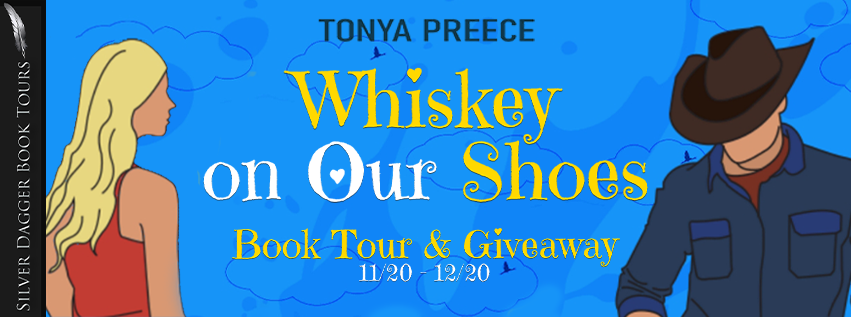
Spotlight: Whiskey on Our Shoes by Tonya Preece

Genre: Contemporary New Adult Romance

Eva dodges the fans, media, and gossip that follow her supermodel mom and rock star family members by wearing disguises. After an aimless gap year, she struggles to figure out what she wants from life. She moves in with her famous guitar god brother in Austin while he recovers from a drunken stage stunt accident and tries to stay sober. When a hot Texas cowboy named Alex takes Eva by surprise, she risks her safety and security of anonymity by letting him into her unconventional life.

Alex is captivated by Eva and promises to protect her privacy. Yet he has a secret of his own—the fling he had with an older woman is fraught with scandalous potential for him and now Eva. He broke free of that mistake months ago, or so he thought. As things heat up with Eva, his old flame returns and won’t leave him alone.

Just when Alex thinks he has the reins on the situation, his ex teams up with a gossip reporter hell-bent on invading Eva’s privacy. The resulting exposé, with a sly spin on a recent encounter with his ex, is Alex’s worst nightmare, and Eva’s unsure what to believe. Can she face the world with Alex at her side or will she return into hiding?

Excerpt

Checking that the wig hides all my blonde hair, I ask Mom, “Who am I today?”

Her head whips around, and she gasps. “I almost forgot. How about…Bella?”

“Works for me.” I slide on a pair of oversized sunglasses, and she puts on a floppy, wide-brimmed hat.

She’s told me before how being spotted in public doesn’t concern her unless there’s a chance of me getting drawn into the attention. On the few occasions I’ve shown up in snapshots with the celebs in our family, I looked slightly different each time, thanks to various disguises. And in those rare photos, I’m in the background, facing away from the camera.

Managers and salespeople create a subtle barrier between us and other shoppers, but my goal is to be invisible to them as well. Not so easy when they give us the royal treatment behind the scenes. I trust they won’t take pictures or video, but a lot of my energy’s spent pretending to be someone else. I’m rusty at avoiding curious stares. It’s more exhausting than I remembered.

As Mom browses from display to display, I find it easier to stay engrossed in a game on my phone. Staring at the screen, my face is shielded by the tresses of the brunette wig.

“Earth to Bella.” Mom waves a hand in front of my eyes. “Isn’t it cute?”

I glance at the summer dress she’s holding. “Yeah, it’s nice,” I say, and my gaze falls right back to my phone. She must not notice my lack of excitement and moves on to another dress, chattering non-stop.

“Ooh, Bella, check this out.” “Hey, Bella, I could see you in this.” “Bella, do you like this dress?” She won’t stop, and I have an absurd sense of not being me anymore. How the hell should I know what Bella likes?

The next time Mom calls me Bella, I wince and squeeze my eyes shut.

“Are you okay?” Mom touches my arm.

“I’m not feeling well.” I press my fingers to my temples.

She guides me into a curtained dressing room. “Try not to puke or faint or anything.” She lingers by the entry, eying me warily. “Are you good now?”

“I will be. You should keep shopping. I just need a minute.” I sit on a bench in the small space.

“Maybe you’re dehydrated. I’ll have someone bring you a drink.”

I close my eyes and lean on the wall, craving the freedom I’ve enjoyed without Mom.

My heart sinks, though. I love Mom, and I’ve missed her, but is this what Lor means when he talks about me finding independence?

“Excuse me, miss, are you Bella?” someone says.

I open the curtain. There’s a lady, mid-twenties, offering me a bottle of water. Grateful, I take it, and she has an eager, starstruck look in her eyes.

“It must be cool to hang out with Sloane Silver, huh? How do you know her?”

“She’s a friend of my mom’s.” I take a long, cold drink.

“Wow, where’re you from?”

Cornered, I mutter the first thing to pop into my head. “I’m from Budapest.”

Her eyebrows rise, probably from disbelief since I don’t have an accent.

Oops. I stand. Time to leave.

The lady moves aside, and Mom’s standing there, the color drained from her face. She stares in my direction, her eyes glazed over.

I approach her. “What’s wrong?”

She startles and snaps out of whatever made her look like she’d seen a ghost. “Oh, nothing.” Her gaze flits to the lady. “We’re good here. Thanks for your help.”

The lady makes herself scarce as Mom shoos me back into the dressing room and closes the curtain.

“Eva, what made you think of…that place?” Mom whispers.

“What place? Oh, Budapest?” I shrug. “It came to mind because of the postcard. The one in Lor’s living room.” I note the clenching of her jaw as she turns away. “Does the postcard mean something? When I asked Lor, he wouldn’t say.”

“If he didn’t tell you, it must be private.” She faces me again, with a tight smile. “You’ve hardly shopped for yourself today, and I want to buy you something. Try these on.” She hangs the dresses she’s holding on a hook in the dressing room.

I absentmindedly flip through them, waiting for her to leave before I strip.

“Ev—Bella,” she whispers. “Why are you checking price tags?”

I shrug. “I guess it helps me decide if something’s worth it or not.”

“Worth it?” She eyes me, head to toe, like I’m a stranger. And I do feel strange. Maybe she doesn’t know me anymore. Do I even know myself?

Buy on Amazon | Bookshop.org

About the Author

Tonya Preece writes romance and contemporary young adult fiction and incorporates music into all her books in one way or another. She lives near Austin, TX where she’s a small business manager for a forensic engineering firm. She and her husband enjoy traveling, live music, wine, and spoiling their fur babies.

As an active SCBWI member since 2015, Tonya has volunteered for several conferences and has served as a critique group facilitator. She joined the Writer’s League of Texas and The Author’s Guild in 2021. She served as the 2022 WriteOnCon Financial Administrator and Critique Boutique Coordinator.

Tonya’s 2022 debut, Whiskey on Our Shoes, was selected for the 2019 #WriteMentor program. One of her YA novels, CLOSER TO THE FLAME, earned her a 2020 scholarship/mentorship with Austin SCBWI and was a finalist at the 2018 Houston SCBWI conference.

An avid consumer of written stories, Tonya reads and/or listens to an average of 75 books a year. Some of her favorite YA authors include Jeff Zentner, Julie Buxbaum, Sarah Dessen, and Robin Benway. In adult romance – Kate Clayborn, Christina Lauren, Helena Hunting, Emily Henry, and Abby Jimenez. Series she tries to keep up to date on: Rhys Bowen’s Royal Spyness and Janet Evanovich’s Stephanie Plum. Recent mainstream faves are Where the Crawdads Sing by Delia Owens and Daisy Jones & the Six by Taylor Jenkins Reid.

Five Fun Facts about Tonya that aren’t reading or writing related:

1. She volunteers at a local food pantry, where she’s enjoyed serving weekly since 2017. 

2. Her travel bucket list includes Italy, Ireland, and Bora Bora. Australia would be awesome, too!

3. She loves ziplining, indoor skydiving, and rollercoasters.

4. She’s a fan of bands like With Confidence, Broadside, All Time Low, State Champs, Sleeping with Sirens, and As It Is.

5. 5. In her free time, she can be found indulging a jigsaw puzzle habit and/or binging shows like Outer Banks, Never Have I Ever, Downton Abbey, Bridgerton, Good Girls, Veronica Mars, and iZombie.

Website * Facebook * Twitter * Instagram * Bookbub * Amazon * Goodreads

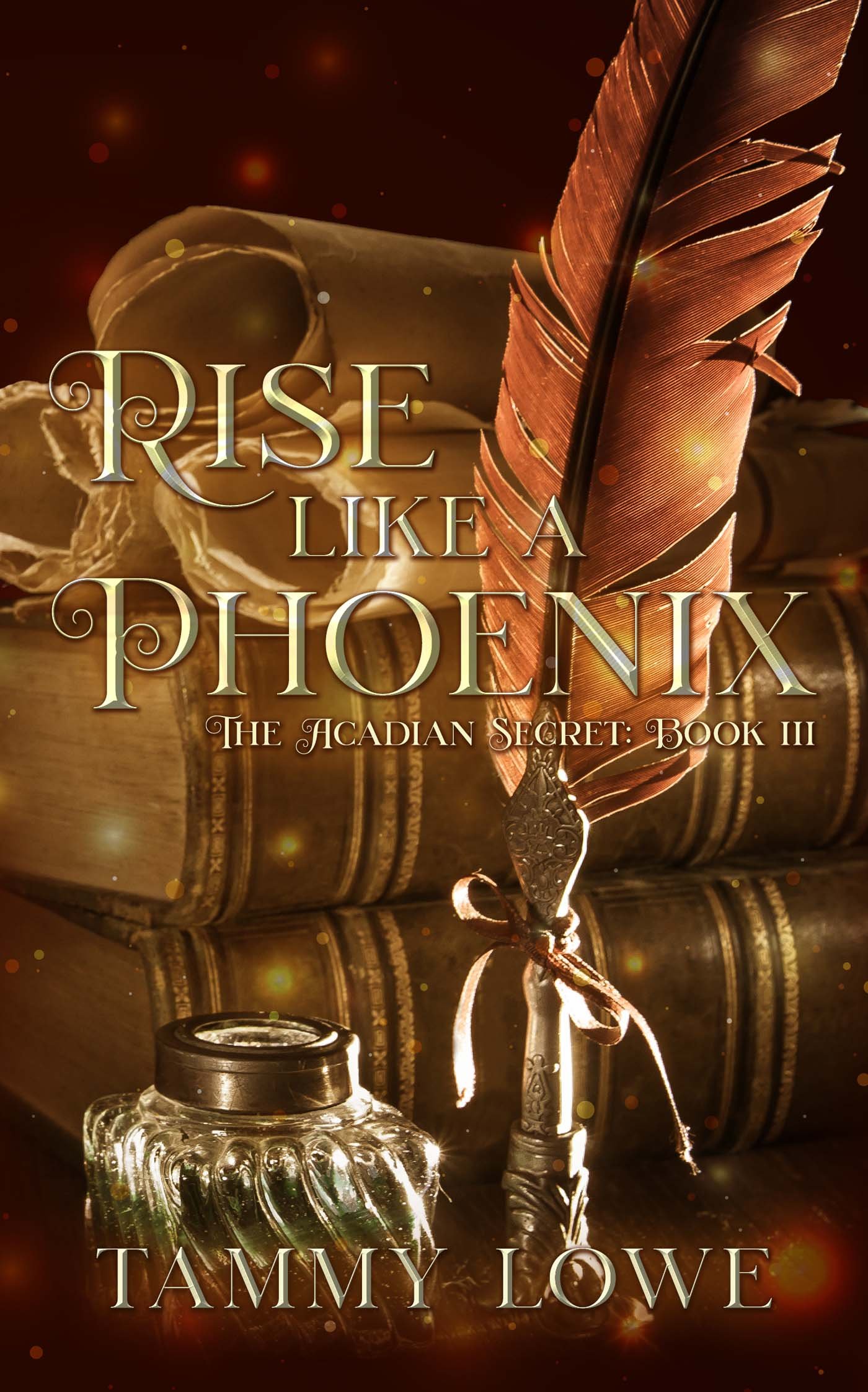
Spotlight: Rise Like a Phoenix by Tammy Lowe

(The Acadian Secret, #3)

Publication date: November 22nd 2023

Genres: Time-Travel, Young Adult

Synopsis:

When Elisabeth London travels back in time to the 14th century, she is transported to a world straight out of the pages of a fairy-tale. Swept away by the adventure and romance, Elisabeth follows her heart—and Aquarius—into this whole new world.

But Elisabeth soon learns her father has discovered where (or rather when) she is. He’s sent a bounty-hunter to bring her home. Although a million questions buzz through her mind, there’s one thing she’s certain of—her parents will never let her hang out in the 14th century with a guy she met in Ancient Rome.

With her heart at stake, can Elisabeth avoid the bounty-hunter and find a way to stay in this fairy-tale world?

Or is her love-life about to take a rather grim twist?

Find out in Elisabeth London’s timeless story of love, danger, and adventure.

Excerpt

When Crooked Nose punched, David blocked. Then, with a quick elbow movement, he smacked the man’s face with the end of the rope before stepping back. The effect was rather comical.

Crooked threw another punch.

David pounced, wrapping the rope around the man’s wrist. Yanking the tied arm back made him double over. His eyes turned cold and hard. “Who sent you?”

The man’s breath sawed in and out. “You’ve no idea whose daughter you’ve run away with, do you?”

He pulled Crooked’s arm straight back some more. “Enlighten me.”

“Make her tell you,” he hissed.

David swallowed a lump in his throat. “She hides nothing from me.” He then snapped the man’s arm at the elbow, and grabbed Elisabeth’s hand, pulling her to a run.

Her breath hitched, and the colorful bouquet of wildflowers dropped.

“By the gods!” David led the way through a field of grazing sheep, toward a grove of trees. “Your father is here?”

“No…” She shook her head in denial. “No, he can’t be…can he?”

“You tell me!”

Elisabeth let out an uncontrollable whimper.

If Dad found out she was time-traveling—she was so grounded.

Buy on Amazon | Bookshop.org

About the Author

An adventurer at heart, Tammy has explored ruins in Rome, Pompeii, and Istanbul (Constantinople) with historians and archaeologists.

She’s slept in the tower of a 15th century castle in Scotland, climbed down the cramped tunnels of Egyptian pyramids, scaled the Sydney Harbour Bridge, sailed on a tiny raft down the Yulong River in rural China, dined at a Bedouin camp in the Arabian Desert, and escaped from head-hunters in the South Pacific.

I suppose one could say her own childhood wish of time traveling adventures came true…in a roundabout way.

Connect:

https://www.tammylowe.com/

https://www.instagram.com/itsmetammylowe/

https://www.goodreads.com/author/show/6248364.Tammy_Lowe

Spotlight: A True Account by Katherine Howe

From the #1 New York Times bestselling author Katherine Howe comes a daring first-hand account of one young woman's unbelievable adventure as one of the most terrifying sea rovers of all time.

In Boston, as the Golden Age of Piracy comes to a bloody close, Hannah Masury – bound out to service at a waterfront inn since childhood – is ready to take her life into her own hands. When a man is hanged for piracy in the town square and whispers of a treasure in the Caribbean spread, Hannah is forced to flee for her life, disguising herself as a cabin boy in the pitiless crew of the notorious pirate Edward "Ned" Low. To earn the freedom to choose a path for herself, Hannah must hunt down the treasure and change the tides.

Meanwhile, professor Marian Beresford pieces Hannah’s story together in 1930, seeing her own lack of freedom reflected back at her as she watches Hannah's transformation. At the center of Hannah Masury’s account, however, lies a centuries-old mystery that Marian is determined to solve, just as Hannah may have been determined to take it to her grave.

A True Account tells the unforgettable story of two women in different worlds, both shattering the rules of their own society and daring to risk everything to go out on their own account.

Buy on Amazon | Audible | Bookshop.org

About the Author

Katherine Howe is a New York Times bestselling and award-winning historian and novelist. Her most recent books are A True Account: Hannah Masury's Sojourn Amongst the Pyrates, Written by Herself, and Astor: The Rise and Fall of an American Fortune, co-authored with Anderson Cooper. Her edited volume The Penguin Book of Pirates is forthcoming from Penguin Classics on April 30, 2024. She lives and sails in New England with her family, where she is at work on her next novel. To learn more please visit: www.katherinehowe.com

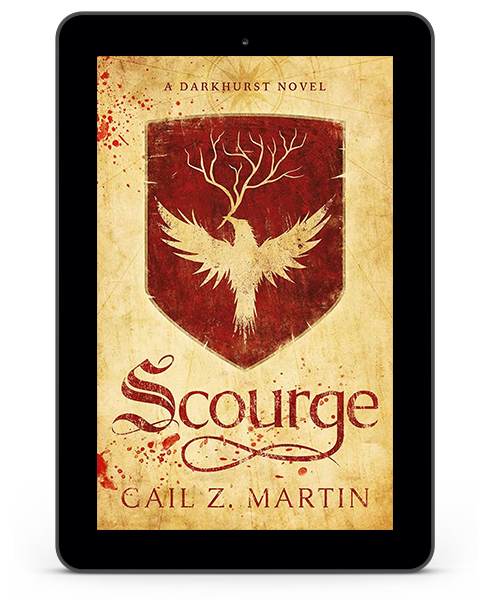
Spotlight: Scourge by Gail Z. Martin

Genre: Dark Epic Fantasy Adventure

Three undertaker brothers fight the monsters who killed their family—and uncover a plot larger and far more dangerous than they ever imagined.

In a city beset by monsters, three brothers must find out who is controlling the abominations. The city-state of Ravenwood is wealthy, powerful, and corrupt. Merchant princes and guild masters wager fortunes to outmaneuver League rivals for the king’s favor and advantageous trading terms. Lord Mayor Ellor Machison wields assassins, blood witches, and forbidden magic to ensure that his powerful patrons get what they want, no matter the cost.

Corran, Rigan, and Kell Valmonde are guild undertakers left to run their family’s business when guards murdered their father and monsters killed their mother. Their grave magic enables them to help souls pass to the After and banish vengeful spirits. Rigan’s magic is unusually strong and enables him to hear the confessions of the dead, the secrets that would otherwise be taken to the grave.

When the toll exacted by monsters and brutal guards hits close to home, and ghosts expose the hidden sins of powerful men, Corran, Rigan, and Kell become targets in a deadly game and face a choice: obey the guild or fight back and risk everything.

Scourge is a fast-paced, action-packed, monster-filled fantasy adventure with non-stop twists and turns, loyal brothers, found family, forbidden magic, vengeful ghosts, high-stakes intrigue, and dangerous secrets set in a vibrantly visualized world.

Excerpt

Chapter One

A heavy iron candleholder slammed against the wall, just missing Corran Valmonde’s head.

“Son of a bitch!”

“Try not to make her mad, Corran.”

Rigan Valmonde knelt on the worn floor, drawing a sigil in charcoal, moving as quickly as he dared. Not quickly enough; a piece of firewood spun from the hearth and flew across the room, slamming him in the shoulder hard enough to make him grunt in pain.

“Keep her off me!” he snapped, repairing the smudge in the soot line. Sloppy symbols meant sloppy magic, and that could get someone killed.

“I would if I could see her.” Corran stepped away from the wall, raising his iron sword, putting himself between the fireplace and his brother. His breath misted in the unnaturally cold room and moisture condensed on the wavy glass of the only window.

“Watch where you step.” Rigan worked on the second sigil, widdershins from the soot marking, this one daubed in ochre. “I don’t want to have to do this again.”

A small ceramic bowl careened from the mantle, and, for an instant, Rigan glimpsed a young woman in a blood-soaked dress, one hand clutching her heavily pregnant belly. The other hand slipped right through the bowl, even as the dish hurtled at Rigan’s head. Rigan dove to one side and the bowl smashed against the opposite wall. At the same time, Corran’s sword slashed down through the specter. A howl of rage filled the air as the ghost dissipated.

You have no right to be in my home. The dead woman’s voice echoed in Rigan’s mind.

Get out of my head.

You are a confessor. Hear me!

Not while you’re trying to kill my brother.

“You’d better hurry.” Corran slowly turned, watching for the ghost.

“I can’t rush the ritual.” Rigan tried to shut out the ghost’s voice, focusing on the complex chalk sigil. He reached into a pouch and drew a thin curved line of salt, aconite, and powdered amanita, connecting the first sigil to the second, and the second to the third and fourth, working his way to drawing a complete warded circle.

The ghost materialized without warning on the other side of the line, thrusting a thin arm toward Rigan, her long fingers crabbed into claws, old blood beneath her torn nails. She opened a gash on Rigan’s cheek as he stumbled backward, grabbed a handful of the salt mixture and threw it. The apparition vanished with a wail.

“Corran!” Rigan’s warning came a breath too late as the ghost appeared right behind his brother, and took a swipe with her sharp, filthy nails, clawing Corran’s left shoulder.

He wronged me. He let me die, let my baby die— The voice shrieked in Rigan’s mind.

“Draw the damn signs!” Corran yelled. “I’ll handle her.” He wheeled, and before the blood- smeared ghost could strike again, the tip of his iron blade caught her in the chest. Her image dissipated like smoke, with a shriek that echoed from the walls.

Avenge me.

Sorry, lady, Rigan thought as he reached for a pot of pigment. I’m stuck listening to dead people’s dirty little secrets and last regrets, but I just bury people. Take your complaints up with the gods.

“Last one.” Rigan marked the rune in blue woad. The condensation on the window turned to frost, and he shivered. The ghost flickered, insubstantial but still identifiable as the young woman who had died bringing her stillborn child into the world. Her blood still stained the floor in the center of the warded circle and held her to this world as surely as her grief.

Wind whipped through the room, and would have scattered the salt and aconite line if Rigan had not daubed the mixture onto the floor in paste. Fragments of the broken bowl scythed through the air. The iron candle holder sailed across the room; Corran dodged it again, and a shard caught the side of his brother’s head, opening a cut on Rigan’s scalp, sending a warm rush of blood down the side of his face.

The ghost raged on, her anger and grief whipping the air into a whirlwind. I will not leave without justice for myself and my son.

You don’t really have a choice about it, Rigan replied silently and stepped across the warding, careful not to smudge the lines, pulling an iron knife from his belt. He nodded to Corran and together their voices rose as they chanted the burial rite, harmonizing out of long practice, the words of the Old Language as familiar as their own names.

The ghostly woman’s image flickered again, solid enough now that Rigan could see the streaks of blood on her pale arms and make out the pattern of her dress. She appeared right next to him, close enough that his shoulder bumped against her chest, and her mouth brushed his ear.

’Twas not nature that killed me. My faithless husband let us bleed because he thought the child was not his own.

The ghost vanished, compelled to reappear in the center of the circle, standing on the blood-stained floor. Rigan extended his trembling right hand and called to the magic, drawing on the old, familiar currents of power. The circle and runes flared with light. The sigils burned in red, white, blue, and black, with the salt-aconite lines a golden glow between them.

Corran and Rigan’s voices rose as the glow grew steadily brighter, and the ghost raged all the harder against the power that held her, thinning the line between this world and the next, opening a door and forcing her through it.

One heartbeat she was present; in the next she was gone, though her screams continued to echo.

Rigan and Corran kept on chanting, finishing the rite as the circle’s glow faded and the sigils dulled to mere pigment once more. Rigan lowered his palm and dispelled the magic, then blew out a deep breath.

“That was not supposed to happen.” Corran’s scowl deepened as he looked around the room, taking in the shattered bowl and the dented candle holder. He flinched, noticing Rigan’s wounds now that the immediate danger had passed.

“You’re hurt.”

Rigan shrugged. “Not as bad as you are.” He wiped blood from his face with his sleeve, then bent to gather the ritual materials.

“She confessed to you?” Corran bent to help his brother, wincing at the movement.

“Yeah. And she had her reasons,” Rigan replied. He looked at Corran, frowning at the blood that soaked his shirt. “We’ll need to wash and bind your wounds when we get back to the shop.”

“Let’s get out of here.”

They packed up their gear, but Corran did not sheath his iron sword until they were ready to step outside. A small crowd had gathered, no doubt drawn by the shrieks and thuds and the flares of light through the cracked, dirty window.

“Nothing to see here, folks,” Corran said, exhaustion clear in his voice. “We’re just the undertakers.”

Once they were convinced the excitement was over, the onlookers dispersed, leaving one man standing to the side. He looked up anxiously as Rigan and Corran approached him.

“Is it done? Is she gone?” For an instant, eagerness shone too clearly in his eyes. Then his posture shifted, shoulders hunching, gaze dropping, and mask slipped back into place. “I mean, is she at rest? After all she’s been through?”

Before Corran could answer, Rigan grabbed the man by the collar, pulled him around the corner into an alley and threw him up against the wall. “You can stop the grieving widower act,” he growled. Out of the corner of his eye, he saw Corran standing guard at the mouth of the alley, gripping his sword.

“I don’t know what you’re talking about!” The denial did not reach the man’s eyes.

“You let her bleed out, you let the baby die, because you didn’t think the child was yours.” Rigan’s voice was rough as gravel, pitched low so that only the trembling man could hear him.

“She betrayed me—”

“No.” The word brought the man up short. “No, if she had been lying, her spirit wouldn’t have been trapped here.” Rigan slammed the widower against the wall again to get his attention.

“Rigan—” Corran cautioned.

“Lying spirits don’t get trapped.” Rigan had a tight grip on the man’s shirt, enough that he could feel his body trembling. “Your wife. Your baby. Your fault.” He stepped back and let the man down, then threw him aside to land on the cobblestones.

“The dead are at peace. You’ve got the rest of your life to live with what you did.” With that, he turned on his heel and walked away, as the man choked back a sob.

Corran sheathed his sword. “I really wish you’d stop beating up paying customers,” he grumbled as they turned to walk back to the shop.

“Wish I could. Don’t know how to stop being confessor to the dead, not sure what else to do once I know the dirt,” Rigan replied, an edge of pain and bitterness in his voice.

“So the husband brought us in to clean up his mess?” Corran winced as he walked; the gashes on his arm and back had to be throbbing.

“Yeah.”

“I like it better when the ghosts confess something like where they buried their money,” Corran replied.

“So do I.”

The sign over the front of the shop read Valmonde Undertakers. Around back, in the alley, the sign over the door just said Bodies. Corran led the way, dropping the small rucksack containing their gear just inside the entrance, and cursed under his breath as the strap raked across raw shoulders.

“Sit down,” Rigan said, nodding at an unoccupied mortuary table. He tied his brown hair into a queue before washing his hands in a bucket of fresh water drawn from the pump. “Let me have a look at those wounds.”

Footsteps descended the stairs from the small apartment above.

“You’re back? How bad was it?” Kell, the youngest of the Valmonde brothers, stopped halfway down the stairs. He had Corran’s coloring, taking after their father, with dark blond hair that curled when it grew long. Rigan’s brown hair favored their mother. All three brothers’ blue eyes were the same shade, making the resemblance impossible to overlook.

“Shit.” Kell jumped the last several steps as he saw his brothers’ injuries. He grabbed a bucket of water and scanned a row of powders and elixirs, grabbing bottles and measuring out with a practiced eye and long experience. “I thought you said it was just a banishing.”

“It was supposed to be ‘just’ a banishing,” Rigan said as Corran stripped off his bloody shirt. “But it didn’t go entirely to plan.” He soaked a clean cloth in the bucket Kell held and wrung it out.

“A murder, not a natural death,” Corran said, and his breath hitched as Rigan daubed his wounds. “Another ghost with more power than it should have had.”

Rigan saw Kell appraising Corran’s wounds, glancing at the gashes on Rigan’s face and hairline.

“Mine aren’t as bad,” Rigan said.

“When you’re done with Corran, I’ll take care of them,” Kell said. “So I’m guessing Mama’s magic kicked in again, if you knew about the murder?”

“Yeah,” Rigan replied in a flat voice.

Undertaking, like all the trades in Ravenwood, was a hereditary profession. That it came with its own magic held no surprise; all the trades did. The power and the profession were passed down from one generation to the next. Undertakers could ease a spirit’s transition to the realm beyond, nudge a lost soul onward, or release one held back by unfinished business. Sigils, grave markings, corpse paints, and ritual chants were all part of the job. But none of the other undertakers that Rigan knew had a mama who was part Wanderer. Of the three Valmonde brothers, only Rigan had inherited her ability to hear the confessions of the dead, something not even the temple priests could do. His mother had called it a gift. Most of the time, Rigan regarded it as a burden, sometimes a curse. Usually, it just made things more complicated than they needed to be.

“Hold still,” Rigan chided as Corran winced. “Ghost wounds draw taint.” He wiped away the blood, cleaned the cuts, and then applied ointment from the jar Kell handed him. All three of them knew the routine; they had done this kind of thing far too many times.

“There,” he said, binding up Corran’s arm and shoulder with strips of gauze torn from a clean linen shroud. “That should do it.”

Corran slid off the table to make room for Rigan. While Kell dealt with his brother’s wounds, Corran went to pour them each a whiskey.

“That’s the second time this month we’ve had a spirit go from angry to dangerous,” Corran said, returning with their drinks. He pushed a glass into Rigan’s hand, and set one aside for Kell, who was busy wiping the blood from his brother’s face.

“I’d love to know why.” Rigan tried not to wince as Kell probed his wounds. The deep gash where the pottery shard had sliced his hairline bled more freely than the cut on his cheek. Kell swore under his breath as he tried to staunch the bleeding.

“It’s happening all over Ravenwood, and no one in the Guild seems to know a damn thing about why or what to do about it,” Corran said, knocking his drink back in one shot. “Old Daniels said he’d heard his father talk about the same sort of thing, but that was fifty years ago. So why did the ghosts stop being dangerous then, and what made them start being dangerous now?”

Rigan started to shake his head, but stopped at a glare from Kell, who said, “Hold still.”

He let out a long breath and complied, but his mind raced. Until the last few months, banishings were routine. Violence and tragedy sometimes produced ghosts, but in all the years since Rigan and Corran had been undertakers—first helping their father and uncles and then running the business since the older men had passed away—banishings were usually uneventful.

Make the marks, sing the chant, the ghost goes on and we go home. So what’s changed?

“I’m sick of being handed my ass by things that aren’t even solid,” Rigan grumbled. “If this keeps up, we’ll need to charge more.”

Corran snorted. “Good luck convincing Guild Master Orlo to raise the rates.”

Rigan’s eyes narrowed. “Guild Master Orlo can dodge flying candlesticks and broken pottery. See how he likes it.”

“Once you’ve finished grumbling we’ve got four new bodies to attend to,” Kell said. “One’s a Guild burial and the others are worth a few silvers a piece.” Rigan did not doubt that Kell had negotiated the best fees possible, he always did.

“Nice,” Rigan replied, and for the first time noticed that there were corpses on the other tables in the workshop, covered with sheets. “We can probably have these ready to take to the cemetery in the morning.”

“One of them was killed by a guard,” Kell said, turning his back and keeping his voice carefully neutral.

“Do you know why?” Corran tensed.

“His wife said he protested when the guard doubled the ‘protection’ fee. Guess the guard felt he needed to be taught a lesson.” Bribes were part of everyday life in Ravenwood, and residents generally went along with the hated extortion. Guilds promised to shield their members from the guards’ worst abuses, but in reality, the Guild Masters only intervened in the most extreme cases, fearful of drawing the Lord Mayor’s ire. At least, that had been the excuse when Corran sought justice from the Undertakers’ Guild for their father’s murder, a fatal beating on flimsy charges. Rigan suspected the guards had killed their father because the neighborhood looked up to him, and if he’d decided to speak out in opposition, others might have followed. Even with the passing years, the grief remained sharp, the injustice bitter.

Kell went to wash his hands in a bucket by the door. “Trent came by while you and Corran were out. There’s been another attack, three dead. He wants you to go have a look and take care of the bodies.”

Rigan and Corran exchanged a glance. “What kind of attack?”

Kell sighed. “What kind do you think? Creatures.” He hesitated. “I got the feeling from Trent this was worse than usual.”

“Did Trent say what kind of creatures?” Corran asked, and Rigan picked up on an edge to his brother’s voice.

Kell nodded. “Ghouls.”

Corran swore under his breath and looked away, pushing back old memories. “All right,” he said, not quite managing to hide a shudder. “Let’s go get the bodies before it gets any later. We’re going to have our hands full tonight.”

“Kell and I can go, if you want to start on the ones here,” Rigan offered.

Corran shook his head. “No. I’m not much use as an undertaker if I can’t go get the corpses no matter how they came to an end,” Corran said.

Rigan heard the undercurrent in his tone. Kell glanced at Rigan, who gave a barely perceptible nod, warning Kell to say nothing. Corran’s dealing with the memories the best way he knows how, Rigan thought. I just wish there weren’t so many reminders.

“I’ll prepare the wash and the pigments, and get the shrouds ready,” Kell said. “I’ll have these folks ready for your part of the ritual by the time you get back.” He gestured to the bodies already laid out. “Might have to park the new ones in the cart for a bit and switch out—tables are scarce.”

Corran grimaced. “That’ll help.” He turned to Rigan. “Come on. Let’s get this over with.”

Kell gave them the directions Trent had provided. Corran took up the long poles of the undertaker’s cart, which clattered behind him as they walked. Rigan knew better than to talk to his brother when he was in this kind of mood. At best he could be present, keep Corran from having to deal with the ghouls’ victims alone, and sit up with him afterward.

It’s only been three months since he buried Jora, since we almost had to bury him. The memory’s raw, although he won’t mention it. But Kell and I both hear what he shouts in his sleep. He’s still fighting them in his dreams, and still losing.

Rigan’s memories of that night were bad enough—Trent stumbling to the back door of the shop, carrying Corran, bloody and unconscious; Corran’s too-still body on one of the mortuary tables; Kell praying to Doharmu and any god who would listen to stave off death; Trent, covered in Corran’s blood, telling them how he had found their brother and Jora out in the tavern barn, the ghoul that attacked them already feasting on Jora’s fresh corpse.

Rigan never did understand why Trent had gone to the barn that night, or how he managed to fight off the ghoul. Corran and Jora, no doubt, had slipped away for a tryst, expecting the barn to be safe and private. Corran said little of the attack, and Rigan hoped his brother truly did not remember all the details.

“We’re here.” Corran’s rough voice and expressionless face revealed more than any words.

Ross, the farrier, met them at the door. “I’m sorry to have to call you out,” he said.

“It’s our job,” Corran replied. “I’m just sorry the godsdamned ghouls are back.”

“Not for long,” Ross said under his breath. A glance passed between Corran and Ross. Rigan filed it away to ask Corran about later.

The stench hit Rigan as soon as they entered the barn. Two horses lay gutted in their stalls and partially dismembered. Blood spattered the wooden walls and soaked the sawdust. Flies swarmed on what the ghouls had left behind.

“They’re over here,” Ross said. The bodies of two men and a woman had been tossed aside like discarded bones at a feast. Rigan swallowed down bile. Corran paled, his jaw working as he ground his teeth.

Rigan and Corran knew better than most what remained of a corpse once a ghoul had finished with it. Belly torn open to get to the soft organs; ribs split wide to access the heart. How much of the flesh remained depended on the ghoul’s hunger and whether or not it feasted undisturbed. Given the state these bodies were in—their faces were the only parts left untouched—the ghouls had taken their time. Rigan closed his eyes and took a deep breath, willing himself not to retch.

“What about the creatures?” Corran asked.

“Must have fled when they heard us coming,” Ross said. “We were making plenty of noise.” Ross handed them each a shovel, and took one up himself. “There’s not much left, and what’s there is… loose.”

“Who were they?” Rigan asked, not sure Corran felt up to asking questions.

Ross swallowed hard. “One of the men was my cousin, Tad. The other two were customers. They brought in the two horses late in the day, and my cousin said he’d handle it.”

Rigan heard the guilt in Ross’s tone.

“Guild honors?” Corran asked, finding his voice, and Ross nodded.

Rigan brought the cart into the barn, stopping as close as possible to the mangled corpses. The bodies were likely to fall to pieces as soon as they began shoveling.

“Yeah,” Ross replied, getting past the lump in his throat. “Send them off right.” He shook his head. “They say the monsters are all part of the Balance, like life and death cancel each other out somehow. That’s bullshit, if you ask me.”

The three men bent to their work, trying not to think of the slippery bones and bloody bits as bodies. Carcasses. Like what’s left when the butcher’s done with a hog, or the vultures are finished with a cow, Rigan thought. The barn smelled of blood and entrails, copper and shit. Rigan looked at what they loaded into the cart. Only the skulls made it possible to tell that the remains had once been human.

“I’m sorry about this, but I need to do it—to keep them from rising as ghouls or restless spirits,” Rigan said. He pulled a glass bottle from the bag at the front of the wagon, and carefully removed the stopper, sprinkling the bodies with green vitriol to burn the flesh and prevent the corpses from rising. The acid sizzled, sending up noxious tendrils of smoke. Rigan stoppered the bottle and pulled out a bag of the salt-aconite-amanita mixture, dusting it over the bodies, assuring that the spirits would remain at rest.

Ross nodded. “Better than having them return as one of those… things,” he said, shuddering.

“We’ll have them buried tomorrow,” Corran said as Rigan secured their grisly load.

“That’s more than fair,” Ross agreed. “Corran—you know if I’d had a choice about calling you—”

“It’s our job.” Corran cut off the apology. Ross knew about Jora’s death. That didn’t change the fact that they were the only Guild undertakers in this area of Ravenwood, and Ross was a friend.

“I’ll be by tomorrow afternoon with the money,” Ross said, accompanying them to the door.

“We’ll be done by then,” Corran replied. Rigan went to pick up the cart’s poles, but Corran shook his head and lifted them himself.

Rigan did not argue. Easier for him to haul the wagon; that way he doesn’t have to look at the bodies and remember when Jora’s brother brought her for burial.

Rigan felt for the reassuring bulk of his knife beneath his cloak—a steel blade rather than the iron weapon they used in the banishing rite. No one knew the true nature of the monsters, or why so many more had started appearing in Ravenwood of late. Ghouls weren’t like angry ghosts or restless spirits that could be banished with salt, aconite, and iron. Whatever darkness spawned them and the rest of their monstrous brethren, they were creatures of skin and bone; only beheading would stop them.

Rigan kept his blade sharpened.

Buy on Amazon | Audible

About the Author

Gail Z. Martin writes urban fantasy, epic fantasy, steampunk and more for Solaris Books, Orbit Books, Falstaff Books, SOL Publishing and Darkwind Press. Urban fantasy series include Deadly Curiosities and the Night Vigil (Sons of Darkness). Epic fantasy series include Darkhurst, the Chronicles Of The Necromancer, the Fallen Kings Cycle, the Ascendant Kingdoms Saga, and the Assassins of Landria.

Together with Larry N. Martin, she is the co-author of Iron & Blood, Storm & Fury (both Steampunk/alternate history), the Spells Salt and Steel comedic horror series, the Roaring Twenties monster hunter Joe Mack Shadow Council series, and the Wasteland Marshals near-future post-apocalyptic series. As Morgan Brice, she writes urban fantasy MM paranormal romance, with the Witchbane, Badlands, Treasure Trail, Kings of the Mountain and Fox Hollow series. Gail is also a con-runner for ConTinual, the online, ongoing multi-genre convention that never ends.

Website * Facebook * Twitter * Instagram * Bookbub * Amazon * Goodreads

Spotlight: Elmington by Renee Lehnen

Genre: Social Satirical Fiction

No good deed goes unpunished in a willfully blind, technocratic society.

Gordon Gray, a retired librarian, only wishes to chain smoke, read twentieth-century novels by dead white men, and at the time of his choosing, shuffle off his mortal coil. Everyone from his thanatophobic doctor to his New Age neighbour has an opinion on what Gordon should want and how he should be treated. When his daughter Martha arrives from the West Coast, she finds Gordon disheveled, wheezy, and cantankerous in his squalid bungalow. She remains in Elmington to negotiate with his meddlesome entourage and look after him. Seven months later, Gordon is dead, and Martha is in police custody for the crime of caring unconventionally.

Excerpt

Published by Storeylines Press, 2023

“Open the drapes, Duchess,” Gordon squawked. “See what’s become of your old neighbourhood.”

Martha went to the bay window, pulled the heavy, burgundy curtains across the rod, and squinted into sunshine. When she’d arrived by taxi in the night, the haze of streetlights only vaguely outlined the houses on Roselea Drive. She could see alright now. Across the street stood Falstaff in a Zen garden—a half-timbered Jolly Olde English cottage on steroids surrounded by geometric topiary.

“Who lives there, Dad?” asked Martha, pointing.

“Bean counter,” Gordon wheezed. “A modern-day Bob Cratchit who toils over ledgers for one of the Bay Street banks.”

“Do you know his name?”

“Nope.”

“I’ll bet he can afford a Christmas turkey.”

“Sure,” agreed Gordon. “But he probably prefers a thistle salad. His soul is harder than a dried pea. I’ve only spoken to him once, while he was orchestrating the disgorgement of his belongings from a moving van into that, that… house… and I knew by the way he treated the box carriers that there was no point in pursuing neighbourly friendship.” Gordon waved a liver-spotted hand dismissively, then coughed.

“How about them?” Martha gestured toward the grand Cape Cod style house on their right.

“An advertising exec and his social x-ray wife. Rest in peace, Tom Wolfe. . . .”

“Nice house.”

“Yup. I imagine the happy couple inside it, drinking martinis and mending nets by the hurricane lamp.”

“Are there any kids in the neighbourhood now?”

“A few, though you never see them. They’re ferried about by SUV, school to sports to elocution classes or whatever kids get up to these days. There’s a boy next door, on the left.”

“Do you know his name?”

“Ethan. Like the furniture.”

Martha smiled. Of course, the old man remembered the boy’s name.

“Poor kid will never have a paper route, or play ball hockey, or soap windows on Halloween,” wheezed Gordon. “His mother, Joanne, keeps him on a strict schedule. He’s fourteen, for crying out loud.”

“Who’s crying out loud?”

“I am. On the lad’s behalf. By the way, how’s Joseph?”

“Still incommunicado,” replied Martha, voice faintly forlorn. “His community doesn’t believe in using modern technology—you know, like telephones—and it’s peach season in the Okanagan, so I guess he’s too busy to write or get in touch.”

“His community or his cult?”

“Take your pick.”

Her answer hung in the air while the old man hacked and spat into a Kleenex. She peered through the slanted glass at the home of poor Ethan. The house was reclad in pastel angel stone and stucco and a shiny, black Lincoln Navigator sat on equally black, freshly sealed asphalt.

Her gaze shifted to her father’s front yard. The Corolla had come to rest at an odd angle on the crumbling driveway. No doubt the old man had become a menace to pedestrians, cyclists, and other motorists on the broad streets of Elmington. Since her mother’s death three years prior, weeds had invaded the flower borders and now lamb’s quarter and wild carrot grew among the roses and hostas. The lawn was almost knee-high.

“I’ll mow today,” said Martha.

“You’ll do no such thing,” Gordon countered. “I hired a company to do it. It’s been a wet summer. They’re just behind. Now I’ll thank you for straightening the drapes and bringing me coffee.”

“Okay. Coffee.”

Martha crossed the shag carpet, passed through a short hallway, and entered the kitchen. The linoleum was sticky under foot. Twin dog bowls, one with dusty kibble, the other empty, graced the corner, although her mother’s Pekinese, “Mutsu,” had died several months prior. On the counter, dirty spoons and glasses and cups ringed by evaporating liquids awaited a dishwasher who hadn’t come. Until now. This was the first chore she’d tackle. . . .

While Martha waited for the water to boil, she looked through the window over the sink. The kitchen faced northwest, in shadow for much of the day. However, it wasn’t the dimness of the room she found depressing, but the absence of three graceful spruces that used to mark the property line behind the house. Now a tall, wooden fence, ugly side out, guarded the lot to the rear and a new monster home dwarfed the bungalow.

She leaned against the counter and considered the old man’s circumstances. He was slipping from chronic ill health into advanced decrepitude. Following a weekend conference in Toronto, she’d intended to stay in Elmington for a few days, then fly back to Vancouver for the beginning of the fall term. Plainly that would be impossible. The old man had to be sorted out. At the very least, he needed home care. Better yet, a move to a nursing home, but he’d never agree to that.

The kettle whistled. Martha poured boiling water into the mugs and stirred. The milk in the fridge was curdled sludge. They’d have to drink their coffee black this morning, bracing and hot. She carried the mugs to the living room and set her father’s mug on a tray table piled with books, next to his recliner.

For the first time that morning, he smiled at Martha, revealing a row of yellow teeth that resembled broken doweling. “Thank you, Duchess.”

As a young, socialist firebrand, she’d hated that nickname. Now she didn’t mind it. “You’re welcome, Dad,” replied Martha, returning his smile.

Buy on Amazon | Bookshop.org

About the Author

Renee Lehnen is a registered nurse by profession and a writer by passion. Her short stories have been published in the anthologies "Dark Secrets" and "Murder! Mystery! Mayhem!" In addition, she was the 2019 winner and 2020 runner-up of Stratford Rotary’s short story contest. In 2023, her Victorian romance novel, "What Love Demands", was released by The Wild Rose Press under her pen name, Renata North. Renee lives in Stratford, Ontario with her husband. 

Website * Facebook * Twitter * Instagram * Bookbub * Amazon * Goodreads