Spotlight: Famous Last Words by Claudia Burgoa

From USA Today bestselling author Claudia Burgoa pens a page-turning tale of hard losses and second chances. This angsty romance will destroy readers' hearts and then put them back together again. Prepare to ugly cry like never before!

I shouldn’t be alive. 

I should’ve died in that plane crash.

Instead, I survived. 

Thrived, even. 

After all, I’m a rock star and a billionaire. 

There’s nothing I can’t buy. 

Nothing, except peace. 

And when it all comes crashing down around me… 

The guilt. 

The pain. 

The sorrow.

That’s when she appears. 

The one woman I’m not allowed to love. 

I needed her to fill the void after everything was lost. 

There she was, ready, and grieving too.

Both of us are broken, shattered people. 

So why does she make my heart want to beat again?

I need a new reason to keep breathing.

And I think that reason—is her.

Famous Last Words is a story of pain, forgiveness, and the faint, lingering hope of rekindling a love that once meant everything. 

Buy on Amazon | Audible

About the Author

Claudia is an award-winning, USA Today bestselling author. 

She writes alluring, thrilling stories about complicated women and the men who take their breaths away. Her books are the perfect blend of steamy and heartfelt, filled with emotional characters and explosive chemistry. Her writing takes readers to new heights, providing a variety of tears, laughs, and shocking moments that leave fans on the edge of their seats.

She lives in Denver, Colorado with her husband, her youngest two children, and three fluffy dogs.

When Claudia is not writing, you can find her reading, knitting, or just hanging out with her family. At nights, she likes to binge watch shows or movies with her equally geeky husband. 

Keep up with Claudia Burgoa and subscribe to her newsletter: https://bit.ly/NwsletterCB%20%20

To learn more about Claudia Burgoa & her books, visit here!

Connect with Claudia Burgoa: https://claudiayburgoa.com/wp/contact/

Spotlight: The Berman Murders by Doug Kari

Unraveling the Mojave Desert's Most Mysterious Unsolved Crime

True Crime

Date Published: March 5th 2024

Publisher: Rowman & Littlefield

At daybreak on January 6, 1986, a couple on a camping trip in the Mojave Desert set out for a stroll and never returned. The local sheriff’s office eventually discovered that Barry and Louise Berman had been murdered. As years passed and the double homicide remained unsolved, the Berman case spawned speculation and conjecture. Despite extensive investigation by local and federal authorities, to date there’s never been an arrest made in the case – let alone a conviction. But this doesn’t mean the crime is unsolvable.

After years of investigation, research, and interviews, Kari was able to link the Berman murders to a Cambodian sex crimes and trafficking case involving a former Marine. This is the first book to tell the full story of the Berman murders and uncover the likely suspect.

Excerpt

To Deputy Boyer’s way of thinking, the call from Chili Bob wasn’t cause for alarm. Maybe the missing couple went backpacking into the wilderness, or maybe they hitched a ride into town to buy more supplies. Although the call warranted follow up, it seemed no different from any of the other minor incidents that the sheriff’s office regularly handled. 

From this benign beginning, the case of Barry and Louise Berman would become a years long saga of near misses and dead ends – confounding Boyer and other law enforcement officials and tormenting the missing couple’s family and friends. How did Barry, the heir apparent to the Kahlua liqueur fortune, and Louise, a 1960s wild child turned spiritual seeker, end up dead in the desert – murdered while on a romantic getaway?

Buy on Amazon Kindle | Hardcover | Bookshop.org

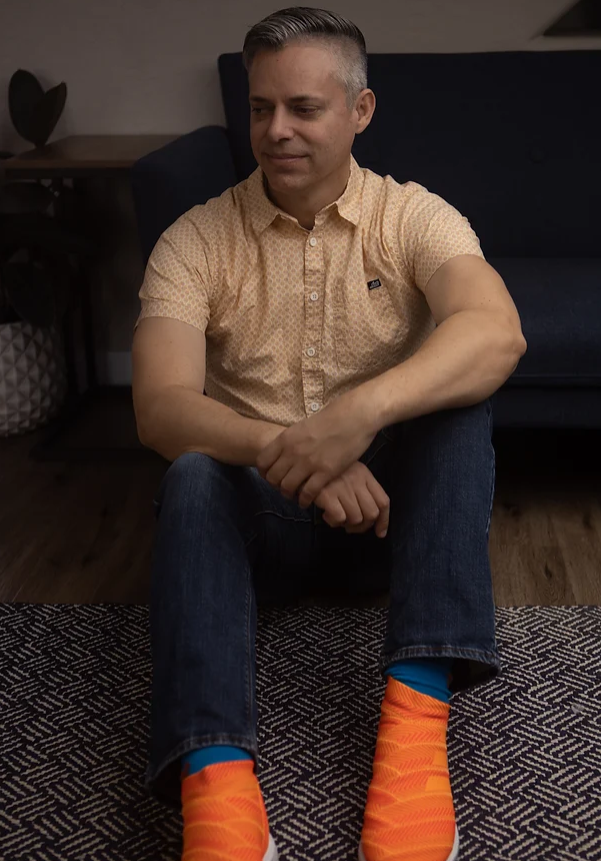
About the Author

Facebook: https://www.facebook.com/DougKariAuthor

Twitter: https://twitter.com/Journada

LinkedIn: https://www.linkedin.com/in/dougkari/

Instagram: https://www.instagram.com/dougkariauthor/

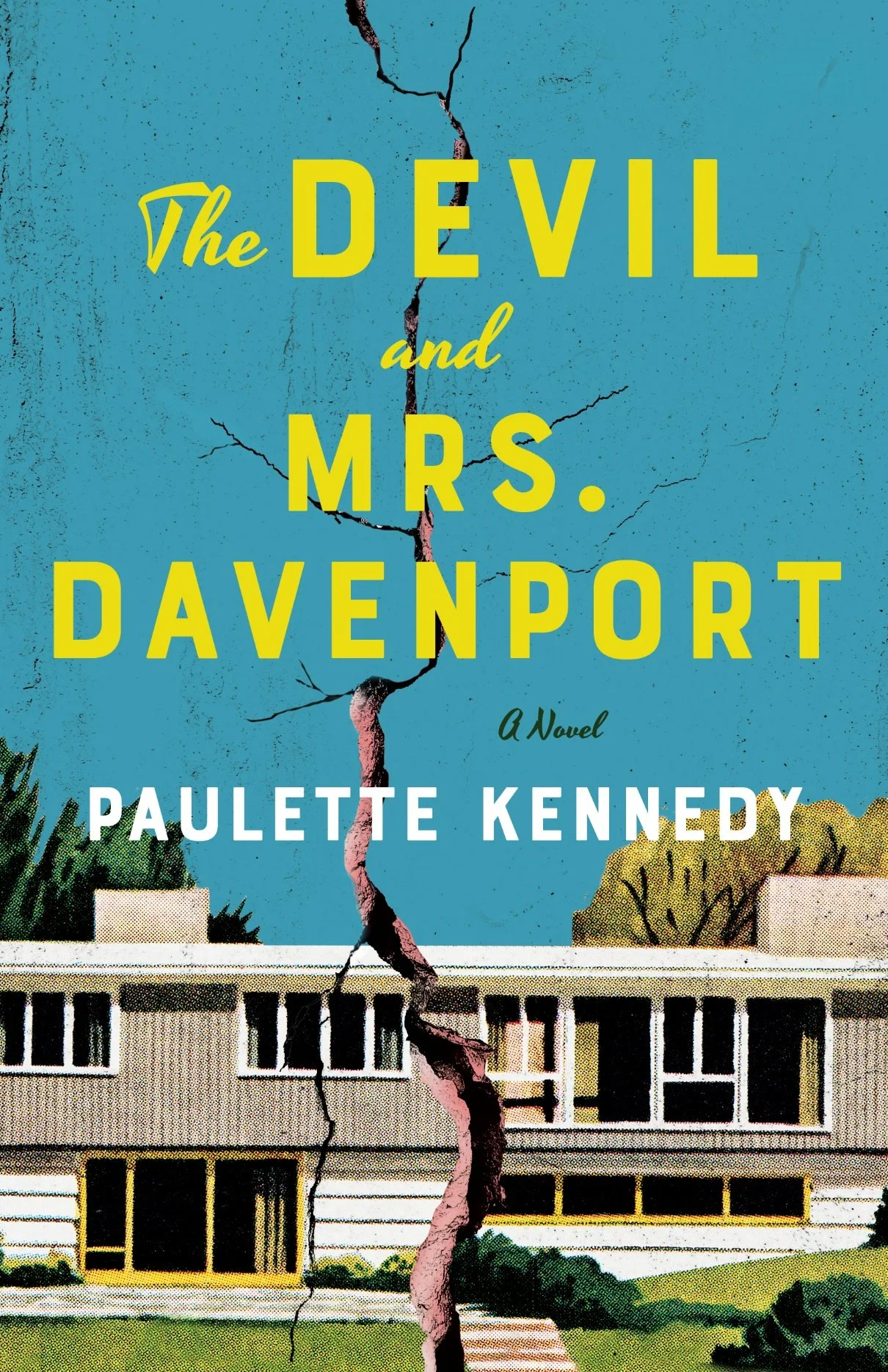
Spotlight: The Devil and Mrs. Davenport by Paulette Kennedy

The first day of autumn brought the fever, and with the fever came the voices.

Missouri, 1955. Loretta Davenport has led an isolated life as a young mother and a wife to Pete, an ambitious assistant professor at a Bible college. They’re the picture of domestic tranquility until a local girl is murdered and Loretta begins receiving messages from beyond. Pete dismisses them as delusions of a fevered female imagination. Loretta knows they’re real―and frightening.

Defying Pete’s demands, Loretta finds an encouraging supporter in parapsychologist Dr. Curtis Hansen. He sees a woman with a rare gift, more blessing than curse. With Dr. Hansen’s help, Loretta’s life opens up to an empowering new purpose. But for Pete, the God-fearing image he’s worked so hard to cultivate is under threat. No longer in control of his dutiful wife, he sees the Devil at work.

As Loretta’s powers grow stronger and the pleading spirits beckon, Pete is determined to deliver his wife from evil. To solve the mysteries of the dead, Loretta must first save herself.

Excerpt

Excerpt from THE DEVIL AND MRS. DAVENPORT by Paulette Kennedy @2024 Published by Lake Union Publishing March 5, 2024.

All Rights Reserved

Loretta stood in front of the police station doors for a long moment. There would be no going back after this. Her fears crowded around her. They might think she was a deluded crackpot. Or worse yet—that she had something to do with Darcy’s murder. If she was arrested, what would Pete and the kids do?

“Are you okay?” Dora asked, nudging Loretta’s elbow. “Shouldn’t we go in now?”

Loretta stiffened. The cold air whisked around them. “Maybe I should talk to a lawyer first.

Just in case they think I had something to do with this.”

Dora frowned. “I know you didn’t.”

“But that won’t matter to them. This looks suspicious, doesn’t it? My coming in here with information out of the blue.”

“But you don’t know that much. Not really. Besides, you’re just a housewife. And you’re meeker than a mouse. No one would ever think you were a murderer.”

Just a housewife. Loretta’s face fell. Dora’s chiding hit close to the bone. It reminded her of the smooth, beautiful girls she’d known in high school, who’d teased her for her hand-knitted sweaters, her homely looks, and her shyness.

“Come on,” Dora pleaded, tugging on Loretta’s coat sleeve. “The worst they’ll do is ask you a few questions, just like they did with me. I lost my sister. She’s never coming back. Please?”

Loretta nodded. “All right. But if things turn and they arrest me, promise me you’ll go to my husband. He works at Bethel University. Peter Davenport. He’ll know what to do.”

“I promise. Now get brave, and let’s go in. It’s freezing out here.”

Dora swung open the door and ushered Loretta inside, following after her. The lobby was too bright—garishly lit with fluorescent lights. A gray-haired woman sat pecking away behind the Lshaped front desk, pince-nez glasses perched on the end of her bulbous nose like an afterthought. She looked up at their entrance. “May I help you?”

Dora stepped forward. “I’m Darcy Hayes’s sister. Dora. Maybe you remember me? I was here in September.”

The secretary, whose name badge read NANCY FOSTER, sucked on her teeth with a hiss and nodded. “Yes. I remember. So sorry. How is your mother doing?”

“Not well. But the reason why we came in is because Mrs. Davenport, this lady right here, has a lead on Darcy’s case.”

“Oh?”

Loretta’s palms itched and sweated. She clenched her fists until she could feel the bite of her nails in her palm. The pain calmed her. Gave her focus. “Yes. I’m Loretta Davenport. I have some new information that might be useful.”

“All right.” Nancy Foster stood, removing her glasses. “I’ll go get a detective. The two of you can wait in that room, over there.” She motioned to a room with a tiny window centered in the door.

“That’s the same room where they talked to me,” Dora said.

Loretta followed Dora into the room, which held a table, three chairs, and a water cooler stacked with paper cone cups. Another door stood opposite the first. The only thing on the wall was a large mirror that reflected Dora’s and Loretta’s images.

“It’s not really a mirror,” Dora whispered. “It’s a one-sided window, so the other cops can see in, and watch.”

“You probably shouldn’t have told me that,” Loretta said. “I’m nervous enough as it is.”

“I watch Dragnet. That’s how I know these things.”

A few moments later, the door on the other side of the room opened. A middle-aged man dressed in plain clothes entered, carrying a manila folder, his shirtsleeves rolled to the elbow. “Richard Eames, Myrna Grove PD. I’m the lead detective on the Hayes case.” He flashed his badge at them, then quickly pocketed it again. “Please sit down, ladies. Can I get you some water?”

“No thank you.” Loretta sat, her spine rigid, her pocketbook balanced on her lap. Dora sat next to her, slouching in the chair as if she had done this a thousand times.

“Nancy said you had a tip for us?”

“I . . . maybe.” Loretta fiddled with the clasp on her bag. Detective Eames didn’t seem the type to suffer fools, and Loretta felt quite foolish being there.

“She does,” Dora said, confidently. “Tell him what you saw, Mrs. Davenport.”

“I know this may sound ridiculous, Detective, but I have had visions about Darcy’s murder.”

Detective Eames tilted his head, raising one bushy, black eyebrow. “Come again?” “Visions.”

There was a long beat of silence. The detective studied her, his eyes boring into hers so intensely she had to look away. “Visions?”

“I . . . I see things. Get impressions. Sometimes they’re only vague feelings—notions. But with Darcy, I’ve had two visions that were so clear I almost felt as if I was there when she died, watching it happen.” Loretta’s fingers tightened on her purse strap. “I’ve been working with a psychologist to understand things more. He can vouch for me. Dr. Curtis Hansen.”

“I see,” the detective said with a slight smirk. “And what did you see in your visions?”

“I saw Darcy, being buried alive. There were two men with her, arguing. I couldn’t make out what they were saying—it was garbled. But one of them was very angry.”

He opened the folder and scratched inside with a pen. “Anything else? What did these men look like?”

“I . . . I couldn’t tell you. I never really saw them. They were only shadowy figures.”

The detective sighed, ceased writing, and leaned back in his chair.

He didn’t believe her. Loretta could see that much. Instead of frustrating her, though, his disbelief emboldened Loretta—made her want to prove herself. She sat up straighter, steeling her voice so it wouldn’t quaver. “I’m the one who called in the tip. The anonymous tip that led to the search party. I knew she was buried near the Finley. Because I could hear the mill and the river . . . in my vision.”

Eames nodded. “Interesting.”

Dora sat up, uncrossing her legs. “She does know things. At Darcy’s vigil, she told my mother about a mobile that hung over Darcy’s crib when she was a baby and described her nursery. She couldn’t have known that. There’s no way.”

Detective Eames sighed wearily. “I’ve seen this type of thing before, Miss Hayes. You’re vulnerable. Grieving. And this woman saw an opportunity. How much have you paid her?”

Loretta’s anger began to simmer, then, like a slow pot boiling. “I have not received one red cent from Dora, or her mother, sir. I wouldn’t take their money, even if they offered it. Dora came to me, wanting my help. That’s why I’m here.”

“Well. I’m a very busy man, Mrs. Davenport.” He steepled his fingers and peered at her. “I don’t have time for witchy nonsense. What you’ve told me today, even if it were true, won’t get us any closer to solving this case.”

“But it will! You’re only looking for one killer, and there are two!” Dora stood, her face blazing. “My sister deserves justice, and the way I see it, you all are just sitting on your asses and not doing a damn thing to solve her murder.”

Detective Eames stood, crossing his arms over his chest. “Please sit down, Miss Hayes. I understand you’re upset, but you must see our side of things. We have limited resources. Our investigation hasn’t turned up anything new. Until we have something concrete, our hands are

tied.”

“I know what you’re really saying. You’re saying my sister doesn’t matter. Well, she matters to me!”

Dora yanked open the door, storming out. Loretta followed her, murmuring an apology to Detective Eames and the stunned secretary. She caught up to Dora outside. She found her crumpled against the wall, beneath the blocky silver letters that read MYRNA GROVE POLICE DEPARTMENT, fists tangled in her hair as she banged her forehead steadily against the bricks. Her breath fogged the frigid air as she wailed. Loretta knelt next to her, gently easing her away from the wall. “Come on now. You’ll hurt yourself, doing that.”

“I don’t care! I don’t care about anything anymore.”

“That’s not true. You care about Darcy.”

“Darcy.”

The girl wilted into Loretta, and Loretta held her, rocking her gently as she cried. “There, there. It’s going to be okay. We’re going to find out what happened to your sister, one way or the other.

I promise.”

Buy on Amazon | Audible | Bookshop.org

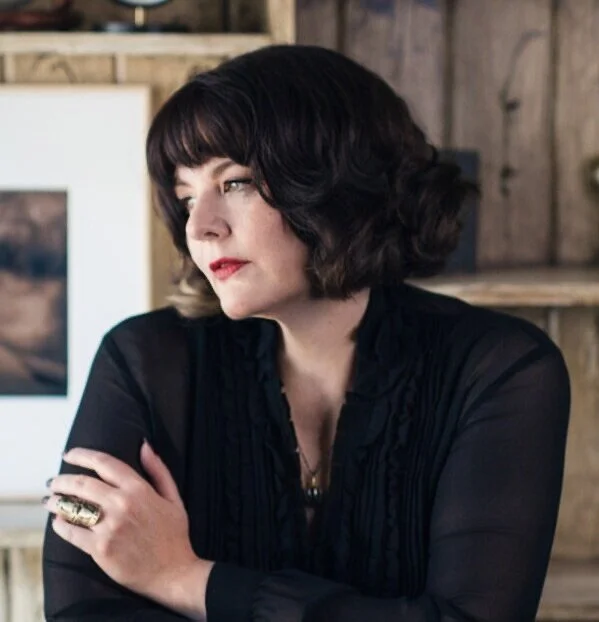
About the Author

Paulette Kennedy is the bestselling author of The Witch of Tin Mountain and  Parting the Veil, which received the prestigious HNS Review Editor’s Choice  Award. She has had a lifelong obsession with the gothic. As a young girl, she spent  her summers among the gravestones in her neighborhood cemetery, imagining all  sorts of romantic stories for the people buried there. After her mother introduced  her to the Brontës as a teenager, her affinity for fog-covered landscapes and  haunted heroines only grew, inspiring her to become a writer. Originally from the  Missouri Ozarks, she now lives with her family and a menagerie of rescue pets in  sunny Southern California, where sometimes, on the very best days, the mountains  are wreathed in fog.  

Paulette’s next release is THE DEVIL AND MRS. DAVENPORT, a mid-century  domestic gothic set in the Missouri Ozarks, about a housewife who develops  psychic abilities after a viral illness, pitched as Shirley Jackson meets Sharp  Objects. Coming March 2024 from Lake Union Publishing.

Spotlight: Still See You Everywhere by Lisa Gardner

From #1 New York Times bestselling author Lisa Gardner comes a harrowing new thriller: Frankie Elkin is an expert at finding the missing persons that the rest of the world has forgotten, but even she couldn’t have anticipated this latest request—to locate the long-lost sister of a female serial killer facing execution in three weeks’ time.

No man truly fears a woman. Not even one who is her father’s daughter.

The case was sensational. Kaylee Pierson had confessed from the very beginning, waived all appeals. She had called herself “death,” but people called her the devil. Despite the media’s chronicling of her tragic circumstances—the childhood spent with a violent father—no one could find sympathy for “the Beautiful Butcher” who had led eighteen men home from bars before viciously slitting their throats.

Now, with only twenty-one days left to live, Pierson has finally received a lead on the whereabouts of the sister who was kidnapped over a decade ago, and she needs Frankie’s help to find her. The Beautiful Butcher’s offer:

When was the last time your search ended with finding the living?

Unable to resist the chance for a rescue, Frankie takes on Pierson’s request. Twelve years ago, five-year old Leilani went missing in Hawaii. The main suspect? Pierson’s tech mogul ex-boyfriend, Sanders MacManus. Now, on a remote island in the middle of the Pacific—the site of MacManus’s latest vanity project—fresh evidence has appeared. In order to learn the truth and possibly save a young woman’s life, Frankie must go undercover at the isolated base camp. Her challenge: A dozen strangers. Countless dangerous secrets. Zero means of calling for help. And then the storm rolls in…

Buy on Amazon | Audible | Bookshop.org

Spotlight: The Forger and the Duke by Misty Urban

(Ladies Least Likely, #2)
Publication date: March 5th 2024
Genres: Adult, Historical, Romance

Synopsis:

In 1776 London, orphaned vicar’s daughter Amaranthe Illingworth supports her small household with her skills as a copyist, but her quiet routine is shattered the day three children show up at her door seeking aid from her brother, their tutor. Behind them storms in Malden Grey, would-be barrister and their erstwhile guardian, who accuses Amaranthe of kidnapping the young Duke of Hunsdon and his siblings.

The former duke’s illegitimate son, Malden Grey has learned to live by his wits, and he’s told he’ll advance to the bar if he takes a proper wife. As she helps him restore order at Hunsdon House, Amaranthe seems a likely candidate—if only Mal can unearth the truth behind the rumors that she’s been forging, and selling, priceless medieval manuscripts. Amaranthe, in the meantime, needs to stay on her guard lest the charming Malden Grey steal her heart at the same time she’s hoping to borrow from his library a priceless book that could make her fortune.

But when Mal’s foray into Amaranthe’s past yields a discovery that will change both of their destinies, they’ll have to fight together to clear their names and stake out a future together—if either has a future at all.

Excerpt

She set the portrait gently in its place. Mal battled the impulse to take those cool, capable fingers and press them against his aching head.

“And where is your mother now?” Her steady, fathomless gaze rested on him.

“She died when I was young.” Dear Lord, he was becoming sentimental. He pushed the weakness aside. “You are coming to know a great deal about us, Miss Illingworth, and I know very little about you.”

Her eyes crinkled as she smiled widely, and Mal cast about for breath. “We have not even been properly introduced.”

“Malden Grey of Bristol, aspiring to the bar.” He held out his hand.

“Malden,” she said, and a silken quality in her voice made him shudder, as did the slide of her fingers as she placed them in his. 

“You haven’t told me your name.” His voice roughed his chest.

“Miss Amaranthe Illingworth of St. Cleer, Cornwall. My father was very fond of classical antiquity, so he chose a Greek name for me.” She held the volume of housekeeper’s accounts close to her chest, like a shield.

He sat back. She appeared completely unconcerned to learn he was a bastard, the status he wore like a brand on his forehead, marking him as less than, as lacking.

She rose, and he scrambled to his feet. Very neatly she placed her glass on the shelf beneath the decanter. Her eyes traced the figurines above, all of them representing mythological half-women with breasts prominently displayed.

“They’re not mine,” Mal said.

That small, maddening smile quirked her lips again. “No, they are young Hunsdon’s now, I imagine. I’ve seen this and worse among some of the medieval marginalia I’ve copied, Mr. Grey. You wouldn’t believe some of the grotesques those monks could dream up. I suppose it comes from being locked away day after day with no company but other men.”

That was his problem as well, Mal decided. Too much time in the company of other men. That was why she riled his senses so potently.

He moved around the desk toward her as she stepped away. “I can drive you tomorrow. When you make inquiries about hiring servants. What time shall I bring the carriage round?”

She hesitated, and her face went studiously blank. A slither across the back of his neck told him this was the expression she assumed when she was withholding something. He was beginning to recognize it.

“Eyde made up a room for me here,” she said. “Do you mind?”

“Of course not. There are dozens of rooms.” Or so he thought. Hunsdon House was not his, as nothing about the Hunsdon estate was to be his—not even the family name—and so he’d never let much of it occupy his attention. 

Mal wondered which room Miss Illingworth would select for her own. Did she see her silk-smooth skin as best set off by the draperies in the Blue Room? Would she choose the Oriental patterns of the Jade Room? Or would she, like an empress of old, demand the royal purple? He imagined her nearby in the house going about her nightly routine, taking down her hair, drawing off her prim robe, perhaps splashing water onto her face that would run down that softly stern neck to the collarbones hidden beneath her gown and—

He’d best stop imagining Miss Illingworth at her ablutions. He was about to embarrass himself.

“Till tomorrow then, Miss Illingworth.” Had she said he could call her Amaranthe? He wanted to roll the name over his tongue. It was exotic, yet robust. A name with command and presence, much like the woman.

Good Lord! That brandy had turned his wits. He was behaving like a moonstruck calf. No, worse.

“Till tomorrow,” she said softly, and her gaze held his. The flickering candlelight brought out violet shadows in her eyes, and all the air left Mal’s body. He wanted to be found worthy of that calm, assessing gaze. 

There was no way she would ever find him worthy.

The door shut behind her, and Mal smacked a hand to his head to clear it. He’d best bring himself in order. They had business to conduct. Problems to solve.

She had secrets he wanted very much to discover.

He had gotten his first good look at Miss Amaranthe Illingworth. He wanted a second. And a third.

Buy on Amazon Kindle | Paperback | Bookshop.org

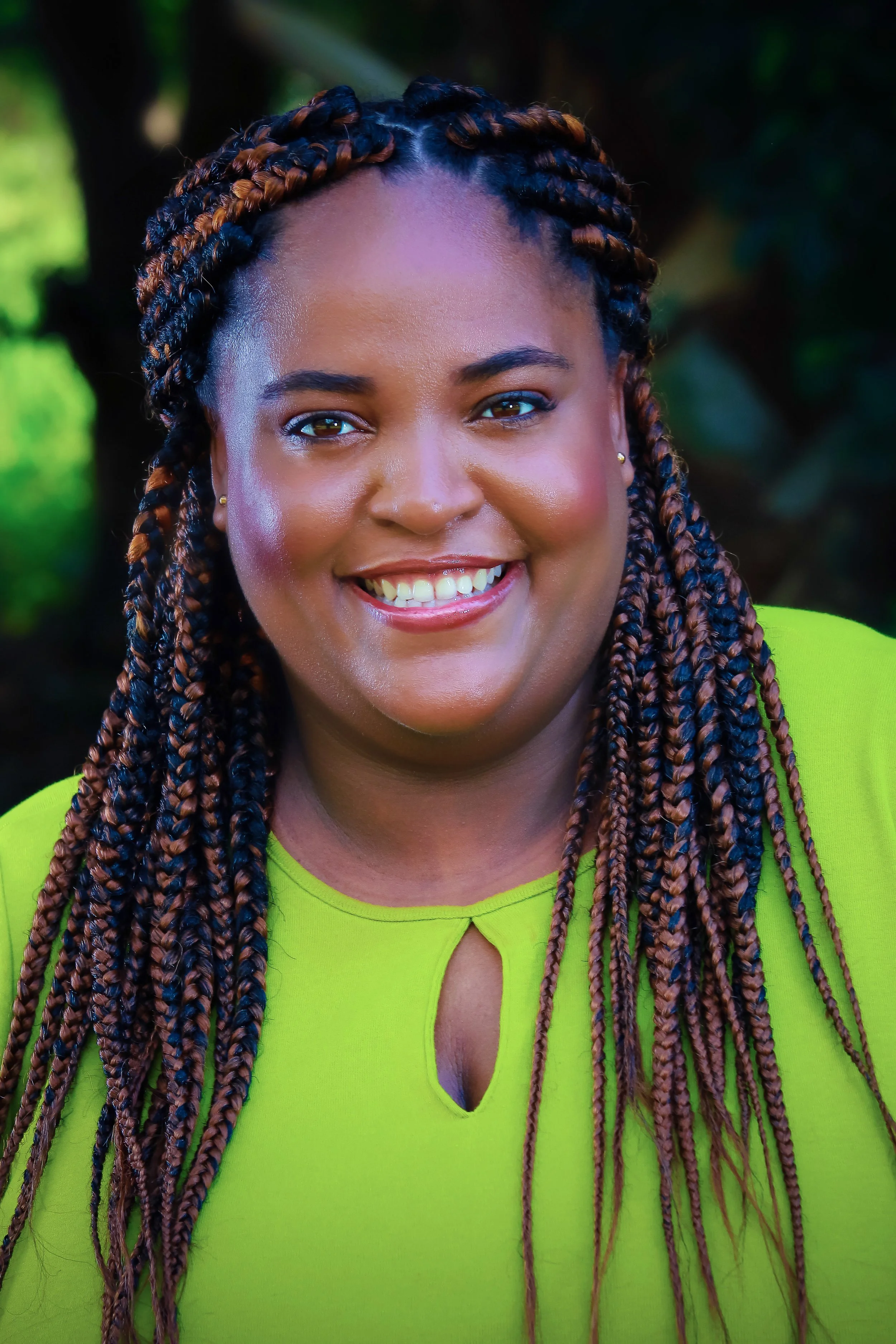
About the Author

Misty Urban is a medieval scholar, freelance editor, and college professor who likes to write stories about misbehaving women who find adventure and romance. She holds an MFA and Ph.D. from Cornell University and lives in the Midwest in a little town on a big river.

Connect:

https://mistyurban.com/

https://www.instagram.com/authormistyurban/

https://www.facebook.com/authormistyurban/

https://www.goodreads.com/author/show/3169900.Misty_Urban

Spotlight: Flat Water by Jeremy Broyles

On a road trip to Flat Water, the home he fled years before, Monty Marinnis must confront the complex and painful loss that drove him away and now demands his family. 

Called back to California for his sister’s wedding, Monty’s journey from the Midwest to the California Coast is also a journey through memory, one complicated by the presence of his adoring, but increasingly frustrated wife Charlotte, from whom Monty has concealed the horrifying details of his family’s fracture and how he remains haunted by what he witnessed as a teenager. The Marinnis family lost their eldest son in a shocking attack, while Monty watched, helpless. Since that day, he has been obsessed with finding an answer to a question that has why do bad things happen to some people but not others? Why were they selected to suffer? 

In Flat Water, Monty will be confronted by brutal truths that rise like sharks from the depths. Faced with such realities, Monty will have to choose between acceptance and self-destruction. 

Excerpt

From Flat Water by Jeremy Broyles (Mint Hill Books, 2023)

Tiger

The gagging stink of the beached carcass blows inland on the choking easterly wind carrying the scent of briny, turned meat. The sagging gray whale, all thirty tons of her, leaks fathoms of viscera and uncoiling intestines from the belly splitting under her own crushing, grounded weight. Her kind had left the land eons ago, and their design meant they could never come back; the cradling water supported what the witless sand could not. She must have died during the night and come to shore with the tide where she waited for Max and Monty to find her and look after her as the ebbing water left her in their care. But what could they, clever apes though they were, do for a dead whale dumped on their beach? They did the only thing that seemed prudent. They went and got their mother.

“Goddamnit,” she says, hands on hips, hair a deep brown of old-growth woods blustering in the wind and the awful particulate matter lifted from the great melting body and sown into the land and those who walked it. “This is the third one this month. What the hell is going on?” She asks the question of no one; her stare, squinted but unflinching, holds fast to the whale and not her three children at her side. “No wounds on her. She wasn’t preyed upon. Not that there’s anything in the ocean that would have dared try. Look at her. I’ll bet entire pods of orcas gave her all the room she wanted. But here she is dead all the same.”

Maggie cries like the beginning of rain—so silent you could miss it if not for the touch of water. She sweeps her eyes dry with the backs of her hands and snorts a sharp, unenviable breath through her nose that undoubtedly fills her head with the smell of juiced blubber. And merciless god what a smell it is. Cheesy and fetid, yolky and uncooked. Monty believes it is the last smell he will ever know as it seasons his soft palate, his sinuses, salting the earth as it goes so no scent can bloom again. It is a smell he will smell in dreams through the ethers of sleep and the throes of rapid eye movement.

“They’re saying it’s probably a strain of morbillivirus that got into a host and then got passed around the pod,” Max says. “At least that’s what happened a bit further north around Big Sur.” He stands nearest their mother while Monty holds his little sister with his right arm over her shoulders. She tilts her head into him.

“Who is saying that?” There is no accusation in his mother’s voice; she seeks only further clarification for the situation none of them understand.

“Marine biologist types,” Max says with placating palms up and out, gesturing to the godly sixty thousand pounds of dead cetacean flesh going to liquid beneath the decaying sun.

“What if it’s us?” Maggie says from underneath Monty’s arm. “All the plastic we put in the ocean. All the chemicals. What if we’re making them sick?”

“Of course it’s us,” their mother says. Her hounded voice crumbles with the words. “It’s always us.” Her hand flashes open, reaching with a spasm of desperation like the gore-soaked sand has gone to quick under her feet and nothing but the solidity of someone else, anyone else, will save her. 

Max is there.

He misses nothing, and the fingers on his mother’s hand can only just finish their fearful flexing before he takes them all into his own so that the touch between mother and firstborn re-anchors all that has come untethered and set adrift into this new alkaline, poisoned sea. The two of them forge a primal, clutching power that searches like tentacles and cocoons the family entire. This Marinnis ward, built of saltwater and swimming lessons and coloring books and the memory of an umbilical cord daring to strangle her very first baby blue so that she had to scream her throat to a pulpy mess to be the breath for him, courses through Monty like charge through a conduit, and he pushes it from himself and into his sister who takes it up and spins it free again to coil loop after loop around the four of them standing at the grace of something wondrous and rare to the point of impossibility that should still be swimming and singing songs. Not here. Not dead on the beach like this.

“Come on,” says Mother. She has rebuilt her crumbling self into a seawall capable of dashing frothing waves to spray. “Let’s go make some calls.” 

The four of them turn from the Pacific and the gray whale it left behind. They walk together with the same fluid stride shared in their genetics. The magic unwinds, but it does not dissolve. Monty hears it speaking to them. You are not all right, it says. You will be.

Buy on Amazon

About the Author

Jeremy Broyles is an Arizona native, originally from the Cottonwood-Jerome-Sedona high desert. He is a professor with nearly twenty years of experience teaching in higher education, and he currently serves as the creative writing program director at Mesa Community College where he has taught since 2017. His stories have appeared in The MacGuffin, Santa Clara Review, Pigeon Review, Pembroke Magazine, Suburbia Journal, and Reckon Review amongst many others. His novella, What Becomes of Ours, was published in 2014 by ELJ Publications. He is an aging rider of bicycles, a talentless surfer of waves, and a happily mediocre player of guitars.