Spotlight: The Underdogs by Isaac Kan

Contemporary Fiction

Date Published: 9/26/24

The Underdogs was inspired by my time building a tech startup during the golden era of San Francisco, when Uber and Lyft were just getting started and battling it out. It’s a coming-of-age, immigrant story following a set of characters who are all trying to create a better future for themselves, for society, and escape their pasts.

Readers have shared that this story reminds them of The Prestige. Two geniuses, who came from nothing, competing against each other in a market that preys upon those who also come from nothing. Others have reflected on the story as a cautionary tale that stands the test of time — How “the few, the chosen” may end up taking advantage of the very same people who they grew up with.

Buy on Amazon Kindle | Hardcover | Paperback | Bookshop.org

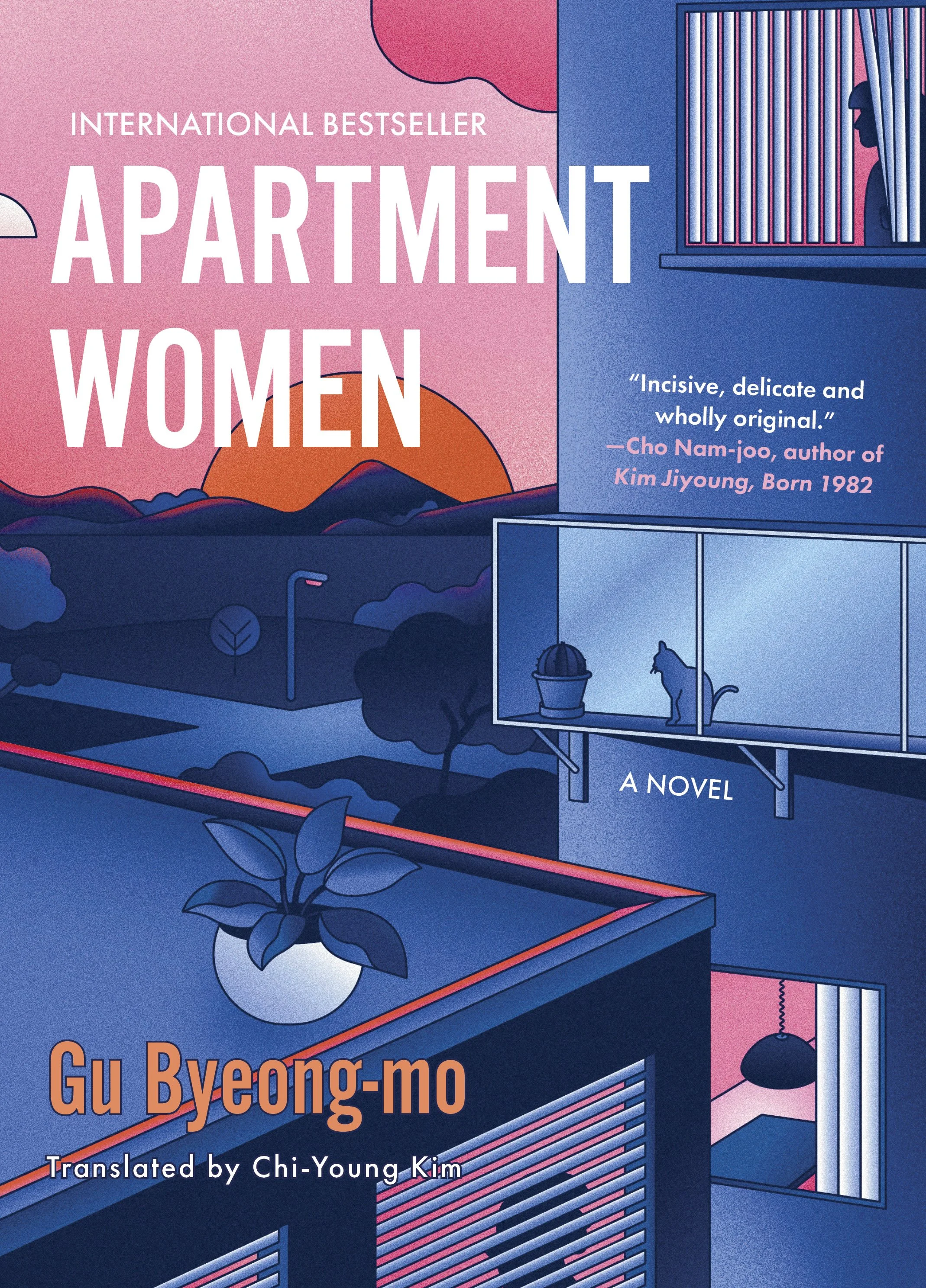
Spotlight: Apartment Women by Gu Byeong-Mo

Publication Date: December 3, 2024

Publisher: Hanover Square Press

From the New York Times Notable author of The Old Woman with the Knife, comes a bracingly original story of family, marriage, the cultural expectations of motherhood, about four women whose lives intersect in dramatic and unexpected ways at a government-run apartment complex outside Seoul

When Yojin moves with her husband and daughter into the Dream Future Pilot Communal Apartments, she’s ready for a fresh start. Located on the outskirts of Seoul, the experimental community is a government initiative designed to boost the national birth rate. Like her neighbors, Yojin has agreed to have at least two more children over the next ten years.

Yet, from the day she arrives, Yojin feels uneasy about the community spirit thrust upon her. Her concerns grow as communal child care begins and the other parents begin to show their true colors. Apartment Women traces the lives of four women in the apartments, all with different aspirations and beliefs. Will they find a way to live peacefully? Or are the cultural expectations around parenthood stacked against them from the start?

A trenchant social novel from an award-winning author, Apartment Women incisively illuminates the unspoken imbalance of women’s parenting labor, challenging the age-old assumption that “it takes a village” to raise a child.

Excerpt

The recycling truck kicked up pieces of cardboard and dust as it drove off. Soda cans and bottle caps that had fallen off the back tumbled along the ground. Danhui’s hands became sticky as she picked up the trash and put it in the sack. 

After she cleaned up the recycling, she broomed the dust into a metal dustpan, dumped it into a trash bag, and headed up to the third floor. She could hear the baby’s cries from the bottom of the stairs.

“Hyonae-ssi, are you there? Hyonae-ssi? Sounds like Darim’s crying?” 

She heard rustling as the crying settled, then the front door swung open. Exhausted, her eyes bloodshot, Jo Hyonae came outside holding Darim. She looked as desperate as a trembling drop of water clinging to the faucet. “Yes, what is it?” Hyonae’s voice was hoarse. 

“Were you sleeping all this time? You don’t look like you got any rest!” “What’s going on so early in the morning?” 

“Oh, Hyonae-ssi! You sent Sangnak-ssi down by himself the other day when we were all meeting the new family, and you haven’t shown your face since. It’s not early, everyone’s gone off to work and it’s already nine! I thought I told you the recycling truck comes at eight on Mondays.” 

Hyonae shifted Darim to her other arm and scratched her tousled head. “I had to pull an allnighter again. I’m happy to take it on next time.” 

This woman was the complete opposite of the new tenant Euno, who had come out to see if he could help when he heard the truck. Even though his family was still unpacking and settling in, Euno had come anyway and hovered about, asking if there was anything he could do, while Danhui and Gyowon waved him off, declining any assistance. What Danhui did want, although she refrained from asking, was for him to go pound on Hyonae’s door and wake her up. All this time Danhui had nodded and smiled sympathetically when Hyonae claimed to be too worn out from work to offer a hand; though she knew it wasn’t that big of a deal, Danhui had been waiting for a chance to have a serious talk with that self-centered Hyonae to make sure her neighbor knew she couldn’t walk all over her. 

“Now you’re making me feel like I’m in the wrong here,” Danhui protested. “I’m not trying to imply that the work is hard. The workers collecting the recyclables are the ones doing the heavy lifting, and all we need to do is gather everything in one place so things don’t go flying around everywhere.” 

“Right, that’s why I’m saying I can be the one to handle it next time.” 

Danhui wanted to believe that Hyonae wasn’t purposely shirking her duties, but irresponsibility and laziness seemed something of a second nature to Hyonae. Even if Hyonae herself didn’t care, it was exhausting for the rest of them to have to deal with her. 

“You know that’s not the issue. Doing communal work together is what makes it meaningful. Like I said before, if someone does it on their own this week and someone else handles it on their own the next week, it gets tricky and the system falls apart. Even if we made a schedule of whose turn it is to do what, there are always going to be times when we can’t follow it. That’s why everyone needs to come out and do this together. We can be flexible when someone has an unavoidable conflict. But if you can’t do the bare minimum, how will we be able to live together in harmony?” 

This was when Darim, whose lips had been trembling during Danhui’s speech, burst into tears again, and Hyonae took that opportunity to cut her neighbor off. “Well, I need to nurse her right now.” 

Danhui let out a sigh as she glanced over Hyonae’s slender shoulders into her apartment—the rumpled baby blankets, an open bag of sliced bread, toys strewn across the floor, clothes thrown every which way. “Sure. Text me later once Darim’s asleep. I’ll stop by for a second and we can finish talking.”

Danhui headed back downstairs, telling herself she shouldn’t be irritated by Hyonae, who, as always, had merely given a curt nod to put an end to their conversation. 

It wasn’t a shock that Hyonae was exhausted—Danhui herself had experienced this fatigue when her two boys were younger, and she wouldn’t have been able to survive those years if the people around her hadn’t been unconditionally accommodating and considerate. You could try your best but not make it out of the apartment on time. Sometimes, no matter how hard you tried to wake up, it felt truly impossible to pry a single eye open, even with a wailing child beside you. Raising children was all about dragging yourself forward. Despite all your maternal love and inner strength, you’d still find yourself marooned from time to time, and you had no choice but to continue on until your last breath. 

Those feelings were normal, but she couldn’t help but be annoyed. Whenever childcare obligations kept Danhui from upholding her side of the communal bargain (like the time she missed a general meeting at her boys’ day care center), she would apologize in a manner appropriate to the magnitude of her act. She would personally deliver a handwritten note—I’m sorry I missed the meeting, my son was sick again—with a fruit basket or a cake box. Then she would bow in apology at the next opportunity and work twice as hard whenever a small task came her way. Even if the others were put out before, they would end up doing her a favor when she needed something; they might push her turn back or let her go first. 

Long before they moved here, back when Jeongmok was a baby, Jaegang had been away on a business trip and the recycling had piled up for three weeks in the utility room of their tiny twenty-four-pyeong apartment. Of course it did; since the baby’s arrival, they had started buying and using more and more personal hygiene products, and all of them had come packaged in plastic. Recycling days were once a week like at most apartment buildings in Seoul, and the residents were supposed to bring their recyclables out between six in the evening on Thursday and five thirty the following morning when the recycling truck arrived. But Jaegang had come home late after work the first week, then returned drunk off his feet from a work dinner the following week, and then had gone overseas for business the third week. 

She had opened the door to the utility room to discover Styrofoam dishes and plastic recyclables piled around the large overflowing polypropylene tote bag in which they carried recycling downstairs; the plastic refuse blocked the path to the washing machine, barring her from entry. If someone were to see the utility room, they would assume she was a hoarder, the kind you saw on the news, or an alcoholic who neglected her child, and she was made miserable by this thought; it felt as though everything she had done earlier in her marriage to live a more environmentally friendly life, which of course had taken attention and effort, had gone down the drain. 

Deciding to handle this problem herself instead of waiting for Jaegang to get home, she carefully slipped sleeping Jeongmok in his baby carrier. She should have done this from the get-go, but she had been trying not to expose Jeongmok to the freezing winter wind, which they’d confront on the seven-minute walk down the long corridor to the elevator and out the front doors to the trash and recycling area. Danhui went out with the bag filled with cardboard boxes and plastic. As she made the second trip with the baby on her back—after all, she only had two hands—other residents and the security guard spotted her and rushed over to help. She gratefully accepted their kindness, though she hadn’t brought Jeongmok to evoke sympathy, but rather because of all the tragedies she heard about on the news, stories of a child falling or suffocating to death during the brief moments their mom washed the dishes or ran to the supermarket just across the street. By her third trip, the security guard and the residents who had been breaking down her boxes and stacking them offered to come up to her apartment to help bring the rest down. 

She had, of course, bowed in gratitude, and later, once she had her wits about her, she found out which units the kind neighbors lived in and brought gifts of tteok and fruit for them and the security guard. After that, her neighbors were naturally happy to help out. This was just one of the many ways a young mother could pay back the inevitable debt she racked up among her neighbors; you just had to show your gratitude. 

But Hyonae didn’t bother doing any of that. It wasn’t that she was incapable; she just didn’t care. As an example, a salesperson hawking red ginseng or health supplements might offer a regular customer a bottle of vitamins for free, and, if that customer had any sense, they would kindly refuse after the first time, appreciating the thought behind the gesture. But Hyonae never even gave out copies of the picture books she illustrated. She claimed to be embarrassed because they weren’t published by a well-known company, and said they were sold as a box set and therefore hard for her to give out only the one she illustrated; still, if she handed out a few books to the neighbors, whose children were all around the same age, she could easily generate some goodwill by showing everyone what kind of work she did and help them understand why she couldn’t fully participate in their day-to-day schedule, but she didn’t put in any effort. Relationships were like joints that creaked without fluid between them, and Danhui’s biggest complaint was that the same people always felt the resulting pain and discomfort. She wasn’t annoyed by the fact that she wasn’t on the receiving end of niceties; she sincerely believed that these small acts were the bare minimum when you lived in an apartment building. 

Even if you weren’t a people person, all you had to do was merely say the right things at the right time. Reflecting on her experience raising two kids, Danhui felt that a mother had to constantly say “sorry” and “thank you” even if she had done nothing wrong. All Hyonae had to do was add just one more sentence; just now, after saying, “I had to pull an allnighter again,” she could have easily added, I’m so sorry. Again, it wasn’t that Danhui wanted Hyonae to prostrate herself, it was just that these were the skills— or rather, the basic courtesy—of maintaining relationships. Intellectually she knew she should forgive Hyonae’s disorganized disposition and not judge her based on her line of work, but her lack of social skills was obvious, sitting as she did in her room, working on projects alone. 

Two days ago, Sangnak had emphasized that Hyonae had fallen asleep after meeting a deadline, which was why she couldn’t come to the welcome party for the new family. He had even brought Darim to the backyard on his own to allow Hyonae to rest. But here she was, up all night again despite her husband’s support. Was she drawing all the pictures in the world, all by herself? Danhui had gone upstairs merely to tell her that they should try to work more effectively together, and Hyonae had cut her off, saying she’d just handle the recycling by herself the next time. Not only was it incredibly unclear when exactly this next time would be, but this disorganized approach would also render a turn-taking system useless and confusing. Maybe someone might think Hyonae was being ostracized over the trivial issue of recycling… 

But it wasn’t trivial. 

Trivial things weren’t so trivial when they piled up, not a corn on the sole of a foot or dust heaped on a forgotten shelf. Danhui just wanted Hyonae to understand this.

Excerpted from APARTMENT WOMEN by Gu Byeong-mo. Copyright © 2018 by Gu Byeong-mo. English translation © 2024 by Chi-Young Kim. Published by Hanover Square Press, an imprint of HarperCollins.

Buy on Amazon Kindle | Audible | Hardcover | Bookshop.org

About the Author

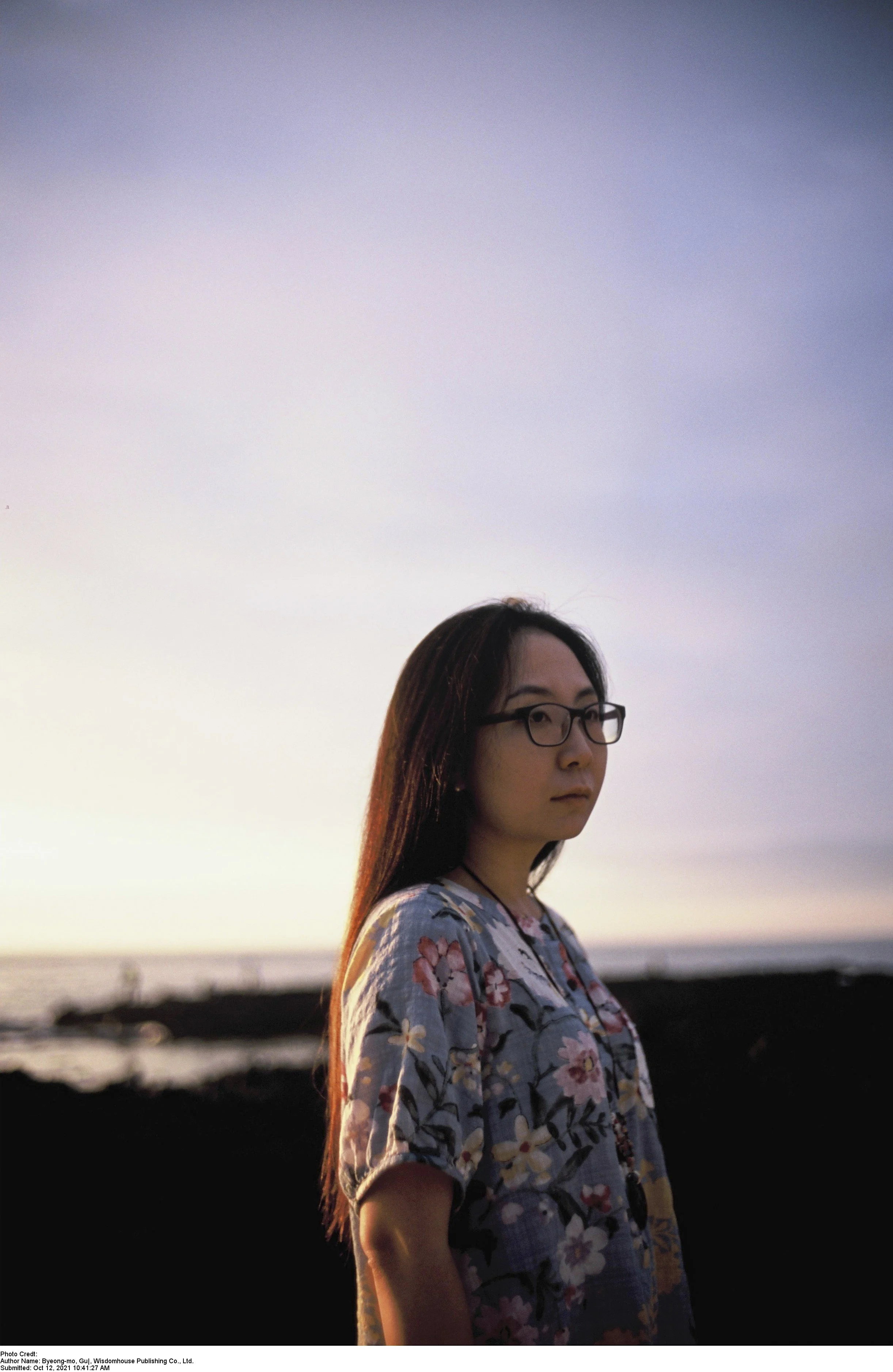
Gu Byeong-mo is an award-winning author. Born in Seoul, South Korea, she now resides in Jinju, South Korea with her family. The Old Woman with the Knife, her first book to be translated into English, was a New York Times Notable Book and an NPR Best Book of the Year.

Chi-Young Kim is an award-winning literary translator and editor who has translated works by You-jeong Jeong, Sun-mi Hwang, Young-ha Kim, Kyung Ran Jo, J.M. Lee, and Kyung-sook Shin, among others.

Spotlight: You Can't Hurt Me by Emma Book

Publication Date: November 5, 2024

Publisher: Hanover Square Press

The Silent Patient meets Rebecca in this twisty debut about the mysterious death of a woman with congenital analgesia, a rare condition where she can't feel any pain – and an obsessive journalist who will stop at nothing to uncover her most dangerous secrets.

Meet Eva, who can’t feel pain, and Anna, who can’t escape it.

Everyone has heard about the case of Eva Reid. Ever since she was born, she’s been immune to physical pain – she can get a paper cut, break a limb, and even give birth without feeling a single thing. Her rare condition has long-captivated reporters and researchers – including Dr. Nate Reid, Eva’s husband and acclaimed scientist renowned for his work in The Pain Laboratory. Also among them is Anna Tate, a ruthless journalist with a dark past of her own.

When Eva is suddenly found dead inside her home, it raises a flurry of questions around the last night of her life – and who might’ve been involved. Anna finds herself growing increasingly obsessed with Eva’s case: her cloistered, painless existence, her promising career as a psychotherapist, and especially her toxic relationship to Dr. Reid, whom she met and married as his former patient. But what other secrets could they be hiding?

When Dr. Reid embarks on the process of writing a book about Eva, Anna makes sure she’s first in line to work on the project with him. As she slowly inserts herself into their home and seeks to uncover what’s fact and what’s fiction, shocking discoveries await her – and not everyone may come out unscathed…

Excerpt

1

7 December 2022, 7:30 p.m. 

I am a ghost in the room tonight. A shadow no one will notice, exactly as it should be. Guests arrive, flowing toward the heat and hum of the glass atrium at the back of the bookshop. Turning my back to them, I retreat farther into the deserted aisles of Anthropology, reach for a slim volume, inhale the flutter of air as my thumb zips through the pages. I wait for that aroma, dry and sweet, biscuits and sawdust to work its usual magic, a sensory hit that never fails to reassure me. Until now. Books used to be an escape. A window to another world that for a short time might alter me in some unfathomable way. But I’ve been too close to them, seen how they can taint and twist the truth. 

I slip into the atrium packed with a hundred or so more guests. It is easy enough to lose myself here, hovering at the back behind a pillar. I’ve been paid to melt away into the ether, but I doubt they’ll be looking out for me. 

So why risk coming along at all, what will it solve? His book is displayed on a table next to me in a tower of carefully spiraled spines, a DNA strand to show every angle. On top a hardback copy is perched upright, his name embossed across the front in glossy black. I imagine teasing out the bottom copy, watching them topple to the floor. The cover is luxuriant, creamy, a lily in one corner. It could be a bereavement card. 

In a way, it is. Loss in fifty shades of vanilla. In those pages resides a version of his wife, Eva, much-loved, much-missed, much-constructed, packaged up for public consumption. The other ghost in the room tonight. 

It is his back I see first as he walks through the crowd. Briefly he turns around and from my vantage point I watch him, this stranger who only three months ago I thought I knew so well. He pauses to chat to someone, draws his fingers through the back of his hair, letting his hand rest at the nape of his neck, something I know he does when he’s tired or anxious. He looks a little older this evening, a little grayer, a scattering of salt at his temples, a silvery haze of stubble at his jawbone. I see now, or is it wishful thinking, how the past few months have punished him too. He is leaner perhaps, his face more angular. His brow bones protrude a little, lending him an almost hawkish glare. 

From my vantage point, I spy an attentive young woman as she approaches him, offering up an open copy of the memoir, the shadow of a smile as they connect. Even from here I can see she is transfixed, caught up in whatever he is telling her, that way he has diverted the conversation and channeling it elsewhere. 

He pauses, bites his lip, and I see something new in his expression, a tentativeness perhaps as he excuses himself from the guest, disappears into his public persona. Slowly he climbs the spiral staircase to a gallery that circles the room and by the time he’s at the top, he has become Dr. Nate Reid, any shade of hesitation vanished. 

Priya, his editor, is already there, smiling down at the crowd. Everything about her is sharp and precise, the cut of her pale silk dress cinched at the waist, the razored line of her dark glossy bob tucked neatly behind each ear. She taps her ring against a champagne flute and the clamor subsides. 

“Hello, everyone. Thanks so much for coming tonight. I’d like to start by saying what a privilege and an honour it has been working on this book.” She turns and raises her glass to him, her hand touching his arm. 

“Nate’s instinct for storytelling is rare and inspiring. Many of us are used to hearing about Dr. Reid as a distinguished neuroscientist and TV personality, so it has been even more impressive to discover his gift for personal writing, his unflinching honesty and extraordinary ability to let the reader in.” 

As she hands it over to him, there’s a peal of applause. Unflinching honesty? Here’s to fantasy fiction. 

He clears his throat and steps toward the balcony edge. “I’d like to return Priya’s compliment and say how deeply satisfying it has been collaborating with her.” He touches her hand. “One silver lining in my journey is that it has brought me here tonight. To be here with so many friends who have given me their unstinting support. In a strange sort of way, it’s like Eva’s last gift to me. I feel very loved.” 

He falters, falls silent for a moment. 

Priya passes him a glass of water and there is a tingling anticipation as the silence stretches. 

“When I started this book, I was overwhelmed. My first thought was, why would anyone do this? Then I realized here is a golden opportunity. My chance to help others in a similar situation. There are more of us around than you’d think.” He looks down at us, as if seeking out other grief-stricken souls in the crowd. “No one can really bear the truth that every minute of our life hangs by a thread. However much we think we can script our own existence and try to ensure nothing bad can ever happen to us, it does and it will.”

His index finger silently strikes the iron balcony rail, in sync with the rhythm of his words. “To each and every one of us. Tonight, tomorrow, at some point. Of course, that’s why memoirs about grief are so popular. They’re a window to a world that one day we’ll all inhabit, if we haven’t already. It’s only a matter of time.” He grips a copy of the book, raising it up. 

“Eva was an extraordinary person, someone who radiated optimism, a hunger for life. As many of you are aware, she was best known as a sculptor, her work was widely regarded. She also made headlines around the world when I first diagnosed her with a rare medical condition, congenital analgesia, the inability to experience pain. But pain is nature’s alarm system helping to protect us, or as C.S. Lewis once put it, ‘God’s megaphone to rouse a deaf world.’ The value of pain is only evident when you see its absence. Which was why Eva was the most fearless person I ever knew, but the most vulnerable too.” 

Guests lean in, heads tilt and crane. One woman tucks loose hair behind her ear in the hope of catching more. That voice. Gentle, well-spoken. Articulate and low. Gravel and smoke. He’s lectured around the world, been interviewed by the New York Times and doorstepped by the Sun. As his reputation grows, his words became quieter, loaded with a particular power. 

A waitress passes with a tray of champagne and reluctantly I shake my head. It’s been five months since I touched a drink. Five months since that night at Algos House. Now I can’t help wondering if everything would have turned out quite as it did if I’d kept a clear head the whole time. I sip on a flute of orange juice, watch as he effortlessly ramps up his performance. 

“I wanted to examine how you carry on after something like this, how to accept the horror of it. To come back home one evening and discover, in an instant, that my wife had died. How do you begin to make sense of it?” 

How indeed. 

“Death is the great leveler, even for those who appear to be invincible.” He pauses, eyes shining. “Because it shows us who we really are, and reveals how much we truly love the person we have lost. Here’s to Eva. Tonight is for you.” 

He raises his glass as a tide of rapturous applause swells. It takes a moment or two, as the clapping subsides, to identify another noise in the crowd. A shriek. Like a contagion it spreads through the room, palpable and urgent. 

“Murderer! We know what you did!” 

I swallow hard. There are ripples of movement close to the door, security staff swarm, a scuffle ensues. “Justice for my sister!” she shouts, saying something else inaudible before she is bundled outside and removed from the event, leaving the crowd murmuring in her wake. I know I should leave but I’m frozen to the spot. 

Back up at the gallery, Priya steps steadily in front of him. “Well, I guess grief affects us all in different ways,” she says. “And hopefully Nate’s book will offer comfort and understanding to anyone who’s suffered great loss. As a publisher, I couldn’t ask for more. Nate’s on his way down now to sign copies so do buy one and see what all the fuss is about.” 

He appears, unphased, unflustered, his enigmatic reserve intact. There is nothing like the fury of a scorned woman to add intrigue, allure even. Priya knows this, so does he. Scandal swirls around him, somehow raising his stock rather than dimming it. I watch as he works the room. 

“Well, that was all highly entertaining, wasn’t it?” says a woman next to me, her breath ripe with wine and crisps. “Who was she?” 

“I’m not sure,” I lie. “Eva’s sister, I guess?” 

“Ah, the disgruntled sibling desperate for the true story to be told. Delicious.” She regards me for a moment and there’s a flicker of recognition in her eyes. 

She seems familiar, but I can’t quite place her. “Maybe a bit misery memoir for my liking,” she says, her tone conspiratorial. “But a great idea. Whoever got him to do it was completely on the money. Even more so if the sister doesn’t like it. I’m Jane. Jane Burton by the way. Mail On Sunday. And you?” 

I should have known; the over-highlighted hair and green quilt jacket are a giveaway. She swooshes the bubbles around her mouth and studies me as if I’m a puzzle to be solved. There’s that familiar glint in her eyes that I have grown to recognize down the years, a precise and very familiar brand of curiosity, watching from the sidelines, prying, insinuating, picking away. It’s part of the job, until it becomes part of you. 

“So you’re covering the book,” I ask. 

“Yes, we ran first serial last Sunday. Triumph over tragedy, the usual.” She shrugs lightly. “Still, if you cry, you buy, they say.” She smiles briefly, moves in a little closer so I can see a smear of fuchsia lipstick on her front tooth. I’m repelled by something in her that feels too close to home. I shudder slightly, step away from her, but she inches closer, as if we’re both coconspirators. 

“Good-looking, isn’t he? In that rather obvious way.” She crooks her head to one side, her eyes slide over him. 

“I guess, I hadn’t really noticed.” 

“What a horrible thing to happen. I don’t think you ever get over something like that, do you?” 

“I hear he’s doing pretty well.” 

“I wonder if he wrote it all himself?” Her steady look unnerves me. “A lot of them get help these days, don’t they?” 

“I wouldn’t know. If they choose to have a ghostwriter, it’s usually kept a secret.” A flush prickles my neck and spreads upward. 

I make my excuses and head for the exit, via Memoir & Autobiography for old time’s sake. The siren-call of those glittering lives on display spilling all—fame, grief, misery and addiction. “Read all about me, me, me,” they seem to echo, screaming for attention. I walk to the end of the aisle and stop in my tracks. There he is with Priya, standing just yards away. 

Something in me deflates, and I know that it’s all over. He talks quietly, rapidly, and Priya nods in affirmation, her head dipped. 

They carry on, deep in conversation. As I walk briskly past them toward the door, he looks up and our eyes lock. Priya reaches for his arm, but he pushes her away, starts toward me as I turn to the exit. 

“Wait,” he shouts after me. But I don’t turn back. I have spent too long under his skin and now it’s time to burrow out. I won’t be another acolyte like Priya. I don’t deserve Eva’s fate. 

I take off my heels, stuff them into my bag and start to run. Away from him. Still, I hear his voice, urgent and cracked, calling my name. I turn a corner and break into a sprint, my bare soles slap the cold wet pavement. Keep going, I tell myself, my breath ragged, my lungs burning. Only two questions keep circling. 

What did you do to Eva? 

What could you do to me?

Excerpted from YOU CAN’T HURT ME by Emma Cook, Copyright © 2024 by Emma Cook. Published by Hanover Square Press, an imprint of HarperCollins.

Buy on Amazon Kindle | Audible | Hardcover | Paperback | Bookshop.org

About the Author

Emma Cook has been an editor at the Guardian for 16 years, commissioning on Guardian Weekend, editing her own section Do Something and now assistant editor and travel editor on the Observer magazine. She has written for a range of titles including the Guardian, the Independent, the Times, the Daily Telegraph, ES Magazine, Elle and Psychologies. She is an alumna of the Faber Academy's six-month Writing A Novel course, and You Can't Hurt Me is her debut novel.

Connect:

Author Website

Instagram

Twitter (X)

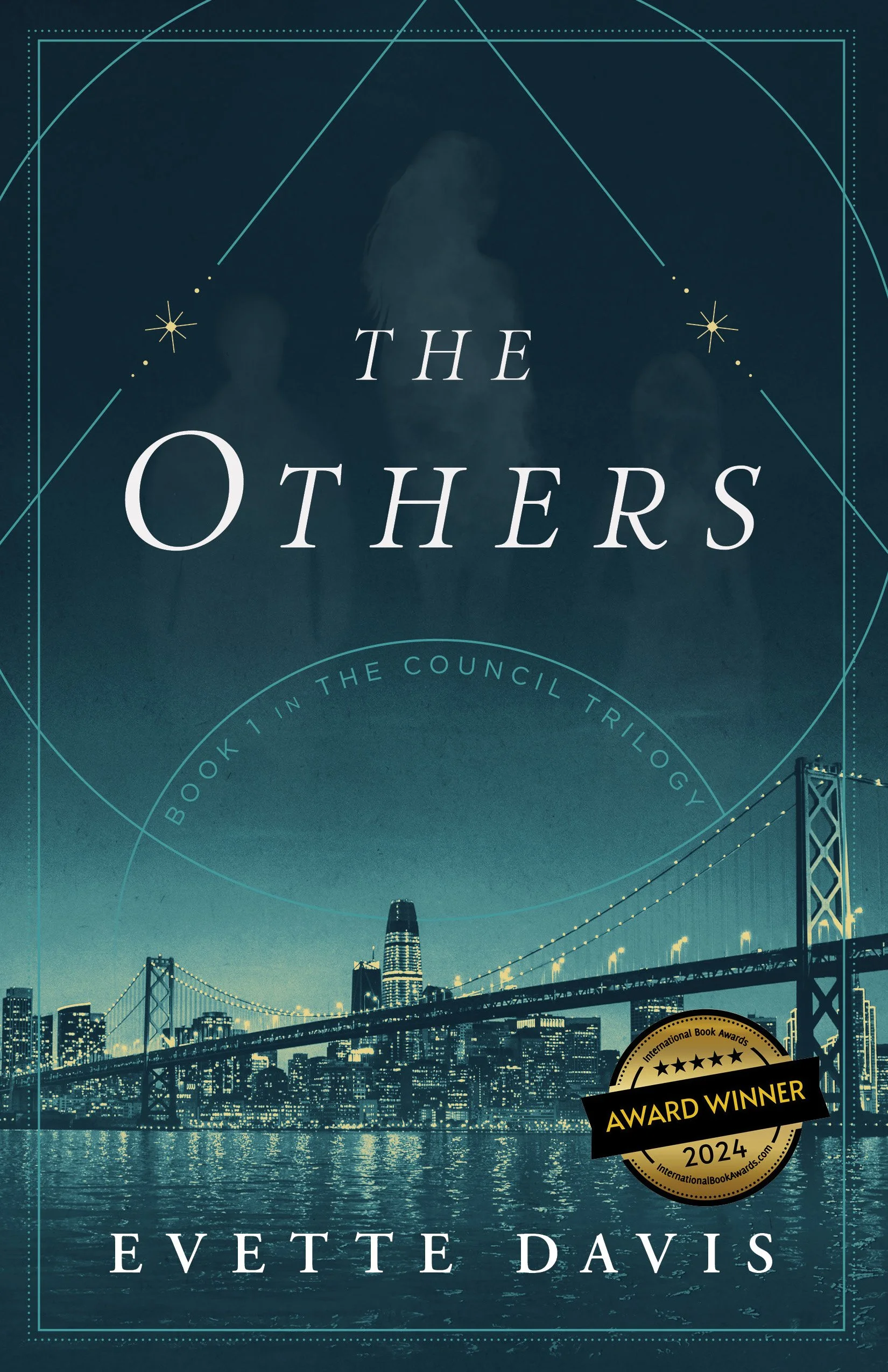
Spotlight: The Others by Evette Davis

Olivia Shepherd is a political consultant with a secret: She possesses empathic abilities, the power to sense the emotions of those around her. Keen to keep her supernatural gifts hidden, Olivia's world is upended when Elsa, an ancient time-walker, appears in her kitchen, unveiling a destiny she never knew she had. As Olivia delves deeper into the hidden world of the "Others" who lurk beneath San Francisco's foggy streets, she finds herself drawn into the clandestine organization, the Council, and Gabriel Laurent, the enigmatic leader of a realm where vampires, witches, fairies and demons navigate a delicate balance of power. Caught between her burgeoning abilities, her new role within the Council, and her blossoming romance with the centuries-old vampire William, Olivia must confront shocking revelations about her own past and embrace the true extent of her powers.

Buy on Amazon Kindle | Paperback | Bookshop.org

About the Author

Evette Davis is most recently the author of “48 States,” which Kirkus named one of the Best Indie Books of 2022. The book was also a quarter-finalist for the BookLife Prize 2023 and longlisted in the 2023 Indie Book Awards. Learn more: www.evettedavis.com.

Spotlight: Eye of the Nomad by Umberto Nardolicci

A young prince begins his quest for purpose in this epic first installment in the War of Fear Historical Fiction Trilogy

Genre: Historical Fiction 

#1 New Release in Historical Asian Fiction

Based on actual events surrounding Genghis Khan's death squad of special operators, known as The Mangoday, this historic saga immerses the reader in a spellbinding tale of life, love, and revenge that will leave you breathless...

Book I, Eye of the Nomad, so begins the legend of Yasotay, a gifted young prince whose search for purpose takes a dramatic turn saving an illiterate nomad from captivity. He embarks on a hero's journey far from home to learn the true meaning of life. Murder, kidnapping, and revenge soon find Yasotay in a thrilling race against time to save someone he loves from a fate worse than death.

Author Umberto Nardolicci takes the reader to the 12th-century Eurasian Steppe in this heart-pounding tale of adventure.

Excerpt

Jin, Capital of Zhongdu, late spring, 1165 CE 

Feet spread shoulder-length apart, Emperor Shizong, dark-haired and clean-cut, peered down at the ornate stick in the grip of his delicate, privileged hands. “I am intrigued by this…this child and his potential,” proclaimed Shizong, appearing relaxed and focused on playing his game of chuiwan. The eyes of the sixty or so guests in attendance were glued to the emperor’s every move. The tip of Shizong’s tongue slightly protruded from the left corner of his mouth as he concentrated on aligning the f at end of his stick with the wooden ball at his feet. He was comfortable performing in front of a crowd. His next move was to strike the ball toward the hole in the lawn, two-and-a-half paces away, all the while trying to converse with Master Chang, which was proving to be a challenge for the priest.

“It’s all very interesting, my emperor,” responded Chang, mildly irritated by the lapses in their conversation. This silly game is a distraction; why did he call me here? “My emperor, I am still unsure how you see this child relating to our efforts?” Chang’s formal, deep-red daopao robes, tied at his lean waist by a black dadai belt, and his simple black hat topped with a round, silver pin made him appear positively priestly. Chang was shadowed by his watchful and silent lead assistant, Master Gao, who was nearly identical in appearance and stance. The priest maintained a respectful tone and a pleasing smile with the emperor, but the beleaguered look on his usually kind face betrayed his frustration. 

“He’s an amazing young man,” said Shizong. Noticing Chang’s irritation, a wry smile formed on the emperor’s face, whose prickly whiskers ran around his mouth and down to his chin. He mumbled something as if he were talking to himself. Focusing on the immediate challenge, he lightly struck the ball with his jewel-encrusted stick. The perfectly round wooden ball, not much bigger than a walnut, rolled toward the hole in the lawn six chi away. The eyes of everyone in attendance were fixated on the ball as it moved across the well-manicured grass toward the impeccably cut round hole, measuring just under a half chi in diameter and depth. 

“Go…IN…,” playfully exclaimed the emperor. A smile spread from his pursed lips into a broad grin as the ball approached the hole. The emperor quickly stepped forward in unison as the ball spilled into the hole, making a hollow, cavernous noise as it hit the bottom of the wooden cup. Light applause erupted in the south garden from the guests gathered to watch their emperor play chuiwan with the elegant Lady Shimo. Only those in his favor were allowed the privilege of observing today’s game in the blistering sun. Te midday shadows sheltered small portions of the south garden, giving shade to just a fortunate few. Today’s parade of gentry, arrayed in their colorful hanfu, comprised almost all the fashionable elite of the 12th-century Jin Empire. 

“I think he’s adorable,” purred Lady Shimo, the emperor’s kittenish courtesan whose floral-red, exquisitely designed hanfu hung down in the back, making her look as if she had a tail. “I asked him about the Buddha, and his answer was, was…precious.” Then, the pretty paramour, whose apple-red cheeks and plump round bottom had won the emperor’s favor, brought her stick back and struck her ball toward the same hole.

“See, I think the fair lady is infatuated with the young boy, and I think you will be too, Chang,” said the emperor as he admired Lady Shimo’s sultry body move sprightly with the roll of her ball directly into the hole at his feet. “Nice shot!” exclaimed the emperor with a playful grin that showed his pearly white teeth. All those in attendance, while subdued, did show their appreciation with nods, hand gestures, and verbal displays of approval.

“You will see, Master Chang, you will see!” chided the emperor as he retrieved his ball from the hole. “Have you ever played chuiwan?” he asked the priest. “It originated hundreds of years ago; I think it was called buda in the Tang Dynasty…it’s great fun!”

“I look forward to meeting him, my Emperor,” replied the venerated Master Chang, who was one of the North’s seven most respected and venerated Taoist priests. As a disciple of the most revered Master Wang Chong, he was no ordinary priest. “And no, my Emperor, I have never had the pleasure of playing chuiwan.” 

“That’s three hits for you and four for me, Wulu. You always win,” Lady Shimo teased in a playful voice. Hearing her use his intimate name, never used in public, made his cheeks flush just a little. The emperor handed his ornate stick to one of the eunuch assistants among the crowd of those waiting to serve him. Eunuchs attended to his every need, from consoling him on military machinations to wiping his nether region. They were a valued commodity within the imperial palace. 

“Oh, here he is now!” exclaimed Lady Shimo loudly, her baby face bubbling and body bouncing while she excitedly clapped her hands in a light and rapid fashion. 

Princess Jia and her son Yasotay entered the sun-soaked south lawn through the Moon Gate, a large circular opening in the garden wall covered in tangled green vines and adorned with hundreds of little white flowers. It was one of the main entrances to the emperor’s residence. A woman, who appeared to be somewhat older than the princess, followed two paces behind the pair, a governess to the young boy. 

Princess Jia was radiant in her flowing, floor-length, deep royal blue silk hanfu. The gold-colored piping around its edges matched the intricately folded gold sash around her middle. Her delicate footwear, also gold with royal blue stitching, rounded out the stunning and well-planned presentation of the twenty-year-old princess as she walked through the Moon Gate. With every intricate detail of her beautiful face, thin lips, large brown eyes, and attire fashioned 

to present a very delicate, refined, and contrived look, her natural beauty was almost obscured. 

“Princess Jia and young Yasotay, I would like to introduce you to Master Chang,” said the emperor. 

“It is my pleasure to meet you, Princess Jia, and certainly you, young Yasotay!” greeted Chang. “I have already heard so much about you.”

While he deeply bowed, a small pair of round hazel eyes, those of the five-year-old child’s, calmly held Chang’s gaze. The child’s face had been dusted with a thin coat of white powder, making his eyes and their startling hazel hue stand out. Dressed in a plain cream tunic with a blood-red sash around his middle to match his silk trousers, the young boy responded, “It is also an honor to meet you, Master Chang.” 

Princess Jia, reflexively fussing with and straightening the bottom of Yasotay’s jacket, noticed the prized dragon figurine held tightly in the boy’s hand. Princess Jia hissed and whispered in an aggravated tone, “Yasotay, give me that.” The green figurine seemed enormous compared to his tiny hands. The boy refused, tightened his hold, and looked to his governess instead. Mana held out her hand and smiled kindly at him with warm eyes, and Yasotay handed the dragon over. Chang looked on at this exchange and smiled.

“Good, now we’ll show what this young boy can do. Let’s see,” the emperor paused, thinking, “What can I ask him?” Cupping the palm of his hand under his chin with his fingers on his cheek, he was thinking intently, getting straight to the task at hand. Yasotay looked to Mana, and she responded with a slight affirmative nod and another warm, encouraging smile. The young man turned his attention back to the emperor and Master Chang. 

“I have one,” proclaimed the emperor to Master Chang. “I have a question for young Yasotay, which will honor you and your interest in ethical matters.” Chang bowed in appreciation. Ten, the emperor looked directly at Yasotay and said, “I would like you to recite section seventy-four of the Tao Te Ching.”

“Stand up straight and answer the question!” ordered Princess Jia to her son, who was already standing perfectly straight. 

Yasotay took one small step forward and began to speak, “If men are not afraid to die, it is of no avail to threaten them with death. If men constantly fear dying, and breaking the law means a man will be killed, who will dare break the law? The official executioner kills. Substituting him is like substituting the master carpenter who carves; you can do so, but one rarely escapes harm.”

“Very well said. Well done, young man!” responded Chang with a broad smile, mildly surprised that this child, whose appearance and doll-like performance conjured thoughts of a trained monkey, could articulate so clearly from the great works of Master Lao Tzu. 

“But do you know what it means?” asked Chang in a jocular tone bordering on sarcasm.

“All creatures fear death,” said Yasotay matter-of-factly. “Master Lao knows that each of us fghts our own internal war of fear. Once cornered by death, both man and beast do but one of two things: fight with fury or cower in fear!” The young man paused for a moment in thought. “Plagues, wars, and famine make death a daily reminder; people lose faith…they cower. Master Lao was speaking to those in authority, those leaders who choose to kill deviants, and others who disobey the law. Leaders must be careful not to create too much fear within those they lead, lest they become immune to death as a deterrent, which makes them more inclined to strike out in response. Teir yearning for a supreme god and the hope for something or someplace better renews faith! Therefore, the belief in a god is both useful and difficult when managing the affairs of state.” 

His young voice changed tempo when he expressed the afterthought, “The closing point, referencing the master carpenter and the executioner, merely argues that those trained and conditioned for killing are best kept to their calling.”

Chang’s long, clean-shaven face began to change color, turning visibly red. His visions of a trained monkey were long gone. Not sure what to say, mouth gaping wide, totally surprised, he instinctively responded, “Yes, well, I agree, interesting, and thank you for that!”

“He’s a bit of a know-it-all,” proclaimed the emperor, breaking up the awkward moment. “But I believe that if you are building this library of all known knowledge, as you put it, to discover some supreme singular…”

“My Emperor!” interrupted Chang, speaking over him. One of the eunuchs drew his breath in loudly at this breach of protocol. No one ever interrupts the emperor. 

“Yes, I know, Chang, secrecy and all, but someone like young Yasotay here could be a valuable addition to our efforts.” The emperor did the signature twirl of his chin whiskers with the side of his left index finger. 

“Your staff seems less than satisfactory for this effort! Have you considered bringing on others?” asked the emperor, giving Yasotay an affectionate pat on the back while extending a dubious glance at the less-than-satisfactory Gao. The emperor’s slight was received loud and clear by Chang’s principal assistant, who just stood there, silently observing their interactions. His teal-colored daopao, typical Taoist attire, was aged and slightly faded but with perfect folds and creases. 

“Yes, Emperor, I understand your point,” said Chang with a nod, not actually comprehending the point or even thinking about an answer. Still, the bewildered look on his face revealed much. Chang was struggling to understand what he had just witnessed with this child. 

“He is still too young,” said Princess Jia hesitantly. “The emperor must be talking about once he is of age for such things.”

“Yes, obviously, Jia, I’m not looking to pull the baby from the breast,” the emperor conceded. After expressing an odd look of surprise and confusion with his brow furrowed, he continued, “It seems that for now, Master Chang will have to rely on understudies who are hopefully smart enough to understand what we are handsomely paying to collect.” Then, as an additional intentional insult, the emperor mocked Chang, whispering, “…and, more importantly, for what purpose we labor.” 

“How old is he, four or five?” asked Chang incredulously.

“He was five just two weeks ago,” said Princess Jia.

“Five years old!” Chang hesitated for a moment to bring his emotions under control. “Young Yasotay is many years away, and I would certainly welcome him when the time comes, Emperor…I deeply apologize for any misunderstanding.” Chang’s long face softened. “But if there is nothing further, I must take my leave.” Chang bowed deeply and awaited the emperor’s dismissal. The emperor feigned a nod of assent and quickly turned away, which told the priest, You are fine, leave. Chang bowed for the last time toward Princess Jia and Yasotay. Then, giving the boy one long, last look, he slipped out quietly with his shadow, Gao, trailing closely behind.

“I had heard of this child, but I wasn’t expecting THAT,” whispered Gao to Chang, dumbfounded, as they walked quickly through the Moon Gate and out of earshot from the gathering.

“What was that?” Chang exclaimed in a low, exasperated tone, seemingly speaking to himself. “That child spoke as if he possessed the intellect of an ageless master! His tone and the confidence in his voice sounded more like those of a very mature and learned person!” 

“Who is he?” asked Gao, whose low tone and mannerisms seemed to replicate Chang’s, just in a younger version.

“He is the second cousin to the emperor, Princess Jia being the emperor’s first cousin.” 

“Who is his father?” asked Gao, “that child looks different!”

“I don’t know.” Chang’s eyes narrowed, his brow furrowed in confusion. “Princess Jia’s husband died soon after she was wed. All I know is she left Zhongdu for the port city of Pingzhou after her husband’s death and returned a year later with his child.” 

“His facial features look a little odd,” added Gao, “he almost looks foreign.” 

Chang ignored this comment. “That had to be some sort of trick,” mused Chang out loud. “I could swear I’ve read a similar opinion of Master Lao’s work.”

“Are you saying he memorized some obscure commentary on section seventy-four of the Tao Te Ching?” asked Gao. “Who would do that?”

“I don’t know what I’m saying. Maybe the emperor gave him the question in advance,” said Chang. The priest hesitated momentarily, then continued, “Gao, I want you to talk to our friends and find out as much as you can about this child prodigy. Who his father is, his history, everything.”

“Yes, Master Chang, I will attend to it!” 

“What of the emperor breaking protocol and mentioning our project in public?” asked Gao.

“What of it?” replied Chang sharply. “He can tell what we do to everyone if he likes.”

“I don’t trust those around him! Tey latch on to him like parasites stealing crumbs from the sides of his mouth,” said Gao.

“Those fools know what we do, but it doesn’t matter. It doesn’t change anything!”

Buy on Amazon Kindle | Audible | Hardcover | Paperback | Bookshop.org

About the Author 

Born in upstate New York, Umberto Nardolicci is a computer engineer and businessman. After completing service with the US Navy in 1986, he worked as an engineering consultant at Johns Hopkins University, Applied Physics Laboratory in the Advanced Systems Design Group. He received his degree in Computer Science and Information Systems from the State University of New York (ESC) and, after some brief independent consulting “gigs,” co-founded Systems Made Simple (SMS) in 1991. He managed daily operations and P&L responsibilities within SMS for 20 years as Chairman of the Board, President, and principal founder. During his tenure, SMS evolved from a ‘garage startup’ to an industry-leading Federal Health IT Company with employees nationwide and over 350 million in sales. SMS achieved INC 5000 honors six years running, with INC 500 honors in two of those years until its “Entrepreneurial American Dream” sale to Lockheed Martin in the Fall of 2014.

During his five-year forced sabbatical from Health IT, he focused his full-time efforts on writing War of Fear. He put a great deal of research into this effort, which actually spans over 40 years, and began with his initial foray into martial arts and the teachings of Eastern philosophies.

Nardolicci is a disabled veteran, like his father and one of his two sons. He also has numerous relatives and friends who are veterans or currently serving in the military. He is committed to supporting veteran organizations such as the Wound Warrior, Tunnels2Towers, Nardmoor, and the DAV.

Website * Facebook * Instagram * Amazon * Goodreads

Spotlight: Dreams That Bind Us by Irene Lawless

(Romancing The Keys, #3)

Publication date: November 26th 2024

Genres: Adult, Contemporary, Romance

What does it mean when you’re tormented by sensual dreams night after night? When you wake aching for your lover’s touch?

Anna Kingsley spends her days crafting custom furniture for Key West’s top galleries and hiding from her psychic talents. Tortured on a nightly basis, she is visited by a mystery man who invades her dreams and sends her soaring to new heights with his touch.

James Armstrong, a billionaire real estate mogul, arrives in Key West to fulfill his deceased mother’s life-long dream. He left New York to open a five-star resort in her memory. But he never expects to be haunted by dreams of a beauty with turquoise eyes.

When Anna and James crash into one another at a local coffee shop, they realize their dream lovers are real. But when Anna runs, James becomes obsessed with tracking her down. He’ll stop at nothing to possess her and make their dreams a reality.

Excerpt

James jack-knifed in the bed, his hands reaching for the woman who always seemed to hover just out of his reach. He found nothing but air.

Sucking in a deep breath, he slumped against his pillow and groaned, grinding his palms into his eyes. It happened every night now: an amazingly erotic dream of a mystery woman with curly, blonde hair and eyes the shade of mesmerizing teal, similar to the waters surrounding the island. He could barely see her face, as if she were standing in a fog. But it was the silky locks and hypnotic gaze that always drew him in.

His hand wrapped around his rock-hard cock and squeezed, hissing at the sensation. The dreams had started when he'd moved to Key West months ago, yanking him awake and leaving him aching for more. Hell, he hadn't been this horny since he was eighteen years old, and it was for a woman who didn't exist.

He padded to the bathroom and braced against the cool porcelain counter, staring at his reflection. There were dark circles under his eyes now, probably from the lack of sleep, and he really needed to shave. He ran a hand over his bristly chin and grimaced. He'd grown lazy since he left New York.

If she were alive, his mother wouldn’t be pleased. She would remind him that, “you never get a second chance to make a first impression.” A pang of heartache hit at the thought. It had been six months and it still wasn't any easier. She’d passed quickly from a stroke in her sleep, so she hadn't suffered. Now the misery was all his because he never had a chance to say goodbye.

If only he had made the time.

He huffed out a sigh and drummed his fingers on the sink. It was time to get his life back in order and somehow figure out how to get that intoxicating figment of a woman out of his head.

If that was even possible.

Buy on Amazon

About the Author

I fell in love with the romance genre in my teens and truly enjoy developing well-rounded romance stories that tug at the heart. When I'm not writing, I'm usually out on a hike or have a coffee and book in hand.

You can sign up for my newsletter or reach me at my website www.irenelawless.com.

Connect:

https://irenelawless.com/

https://www.facebook.com/irene.lawless.750

https://www.instagram.com/irenelawlessauthor/?hl=en

https://www.bookbub.com/authors/irene-lawless

https://www.goodreads.com/author/show/20549818.Irene_Lawless