Spotlight: A Grave Deception by Connie Berry

Now married to Detective Inspector Tom Mallory, Kate is adjusting to life in Long Barston when she’s pulled into a chilling case: an unearthed grave filled with priceless artifacts—and a body no one expected to be so intact. When tests reveal the medieval woman was murdered while pregnant, the case takes a dark turn. And when a second, very modern body appears—staged with eerie symbolism—it’s clear someone doesn’t want the past unearthed.

Kate’s hunt for answers will lead her through ancient documents, long-buried secrets, and the unfinished research of a long-dead historian. Can she piece it all together before more lives are lost?

Perfect for fans of Louise Penny and Elly Griffiths, Berry delivers smart, layered mysteries steeped in British charm, scholarly rivalries, and the ghosts of history.

Excerpt

Thursday, June 19 

Long Barston, Suffolk 

The body was discovered on an afternoon in early May when the bluebells were in bloom and the sky was the color of sapphires. I read about it the next day in the East Anglian Daily Times. “Archaeological Discovery of the Century!” was the headline. Now, a little more than a month later, I pulled up that original article on my computer: 

Last Wednesday, excavations beneath the ruins of St. Margaret’s Church, Egemere Close, revealed a previously unknown vault containing a lead coffin sealed with beeswax. Within the coffin, the team of archaeologists from the CMBA, the Centre for Medieval British Archaeology in Norwich, found the well-preserved body of a woman, entombed sometime in the early fourteenth century. Her remains had been wrapped in a fine linen shroud impregnated with a resinous substance, resulting in adipocere, or grave wax, a natural process that preserved the tissues and organs in such detail it was possible to determine the colour of her irises. They were blue. 

I took a drink of my coffee, contemplating death and grief and the strange turns life sometimes takes. A woman dies and seven hundred years later I’m involved. The Centre for Medieval British Archaeology had asked us, meaning my colleague, Ivor, and me, to examine the grave goods, which consisted of two silver pennies; a collection of personal objects, including an unusual wrist cuff adorned with twelve small human heads of silver with blue glass eyes—the Twelve Apostles?—and a large, single pearl wrapped in a leather pouch, which had protected the nacre, the shiny, iridescent material known as mother-of-pearl, from deterioration. 

The number and quality of grave goods indicated the woman had been wealthy, perhaps of noble birth, but the fact that items of such value had been interred with the young woman at all was unusual, as the practice had pretty much died out by the eleventh century. Were they mementos, like burying a child with a stuffed toy or a whisky lover with a bottle of his favorite single malt, or was there some deeper meaning? 

The answer to that question wasn’t our concern. Our job would be to date the objects, assess their values, outline a plan for preservation, and suggest methods of display. Naturally, we’d jumped at the chance. Ivor had done similar work in the past, but nothing with the notoriety of a miraculously preserved body. 

It was a quiet morning at The Cabinet of Curiosities. Through the multi-paned shop window I watched Mr. Cox, the greengrocer across the street, setting out heads of glossy green lettuces and bunches of what looked like round red radishes. Ivor Tweedy, owner of the fine antiques and antiquities shop on Long Barston’s High Street, hadn’t yet emerged from his flat above the showroom, although I could hear him moving about. I’d gotten an early start, leaving my husband, Tom, at home to finish his breakfast and log on for a video conference with DCI Annabelle Scott, his counterpart in the Norfolk Constabulary. 

I took another sip of coffee, which was cooling, and clicked on the second article, a follow-up interview published several weeks later with Dr. Simon Sinclair, head of the CMBA and a professor in the archaeology department at the University of East Anglia. In the weeks following the initial discovery of the body, a consulting bioarchaeologist from University College London had made several stunning discoveries. 

“It was a once-in-a-lifetime experience,” Sinclair said in answer to a question about his personal response to the discovery. “At first, we assumed the body must be relatively modern. The skin, where unstained by the resinous wrapping cloth, was still pink. Apart from the brain, the internal organs showed remarkably little deterioration. Liquid blood was found in her chest cavity.” When asked about the cause of death, Sinclair said, “CT scans and 3D reconstructions of the skeleton revealed deep cuts on the woman’s sternum, inflicted by a sharp object, most likely a knife or dagger. Her lungs and heart had been pierced, killing her quickly. And she’ d been pregnant, the perfectly formed fetus having reached the point of viability.” 

The article ended with the description of a small ceremony in which the bodies of the mother and child were reburied in the crypt beneath the south transept of the church, the place where they had originally lain. 

I felt a pang of grief for this unknown woman, murdered with her unborn child. Someone had loved her. And someone had wanted her dead. 

Sunlight streamed through the shop window, illuminating a collection of small Roman marbles, mostly busts of strikingly modern-looking individuals who’d lived during the Republican period when art was often startlingly realistic. Ivor had entered them in an upcoming auction of Roman antiquities. Who had they been, these long-ago luminaries, important enough to memorialize in stone? Their names had long been forgotten—like the woman in the grave. At least the village had a name—Egemere Close—although nothing was left of it now except the partial shell of the church and a few tumbledown stone walls. According to Ivor, the village had been abandoned in 1349 after the Black Death killed all but a handful of its citizens. The remains of Egemere Close lay in a field eighteen miles northwest of Long Barston, near the village of Hartwell, on the grounds of Ravenswyck Court, the estate of the commercial packaging entrepreneur Alex Belcourt. 

“Good morning, Kate. Up and at ’em early, I see.”

I turned to see Ivor trotting down the stairs. He was wearing a natty gray suit and a red velvet smoking cap with an elaborate gold tassel, the kind worn by Victorian men to keep their hair from smelling of tobacco smoke. 

I tried not to laugh. “What’s up with the hat?” 

“Come the day, come the hat.” 

What that meant, I hadn’t a clue.

Buy on Amazon Kindle | Hardcover | Paperback | Audible | Bookshop.org

About the Author

Connie Berry is the author of the Kate Hamilton Mysteries, set in the UK and featuring an American antiques dealer with a gift for solving crimes. Like her protagonist, Connie was raised by antiques dealers who instilled in her a passion for history, fine art, and travel. During college she studied at the University of Freiburg in Germany and St. Clare's College, Oxford, where she fell under the spell of the British Isles. In 2019 Connie won the IPPY Gold Medal for Mystery and was a finalist for the Agatha Award’s Best Debut. She’s a member of Mystery Writers of America and is on the board of the Guppies and her local Sisters in Crime chapter. Besides reading and writing mysteries, Connie loves history, foreign travel, cute animals, and all things British. She lives in Ohio with her husband and adorable Shih Tzu, Emmie.

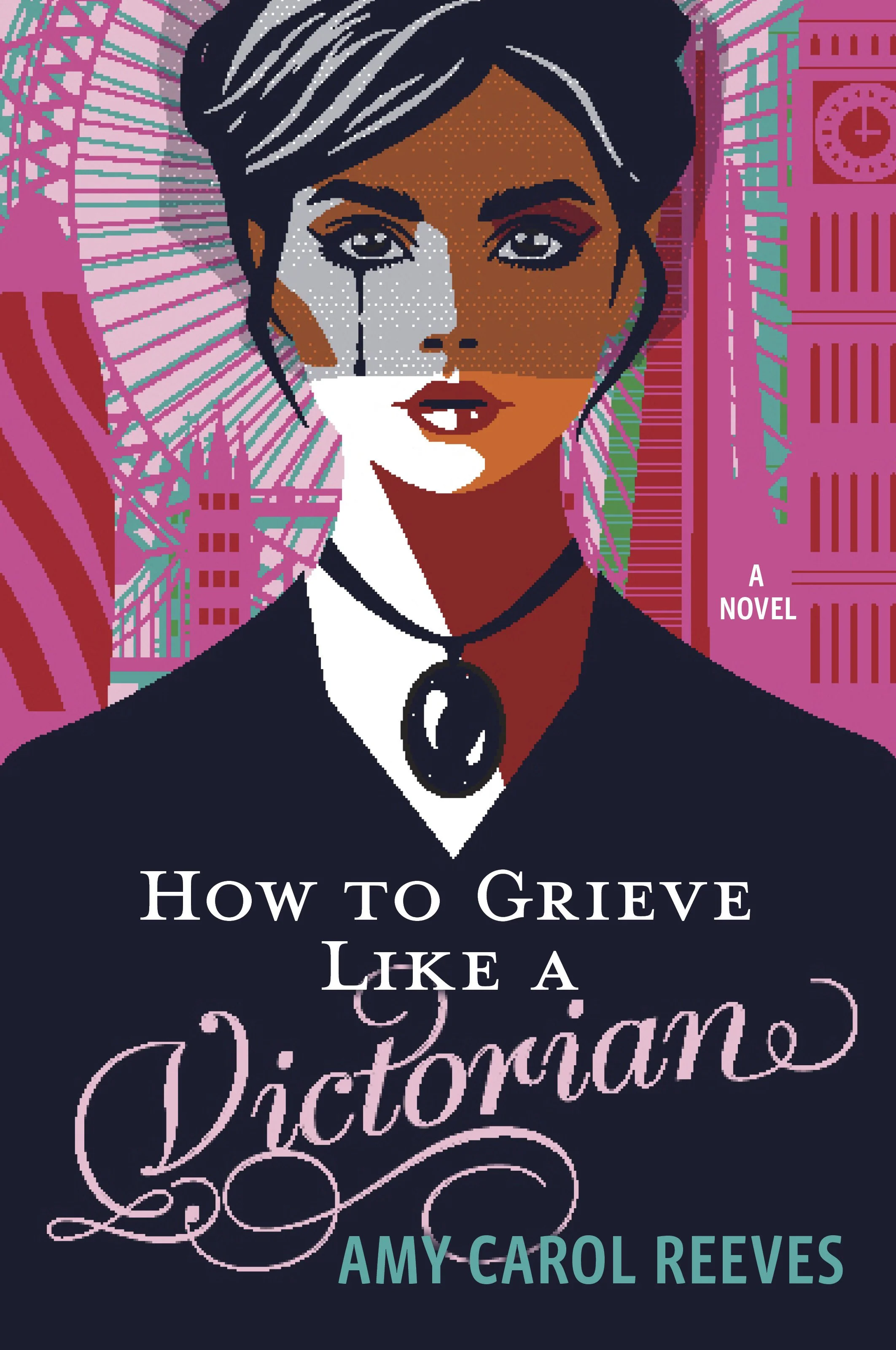
Spotlight: How to Grieve Like a Victorian by Amy Carol Reeves

Katherine Center meets REALLY GOOD, ACTUALLY in a clever and poignant novel about an English Professor who grieves the sudden loss of her husband the Victorian way, by wearing widow’s weeds and escaping to London, where she unexpectedly discovers there’s still love, life, and burlesque to be had.

Dr. Lizzie Wells, a professor of British Literature and bestselling author, is grieving her husband the Victorian way. She keeps a lock of his hair in a choker around her neck and dons widows weeds–and notifies her colleagues and students that she will accept only paper letters instead of email.

But then she’s offered a trip to London for escape and healing, where she befriends fellow bestselling novelist AD Hemmings. Rakish and handsome, Hemmings pushes her out of her comfort zone. She attends a Victorian-style séance, gets pulled onstage at a burlesque bar, and sight-sees with her young son.

All the while, back in South Carolina, her late husband’s best friend and lawyer, Henry, peels back the layers of a family secret her mother-in-law is desperate to keep hidden. Cross-Atlantic ‘family business’ updates turn into regular FaceTime hangouts and their friendship evolves into something more. Lizzie fears she’s falling in love with him…

Struggling with conflicting feelings, Lizzie travels to Brontë country where in the windswept moors she comes to peace with grief, joy, and all the in-betweens.

Think: If Emily Henry wrote about a young widow in the vein of Really Good, Actually (irreverent, hot-mess heroine) and Lessons in Chemistry (female academic thrust into a commercial space; struggling as a single mom) with a warm-blanket romantic HEA, and loads of snark.

Excerpt

OUT OF OFFICE REPLY—

Thank you for contacting me. However, for an undetermined time period, I will only be corresponding through letters. (Yes, the kind with paper.) Thank you for understanding.

Dr. Lizzie Wells

Professor of Victorian Literature—Willoughby

College

Author of The Heathcliff Saga

she/her

After typing the message, I drum my fingers on my desk, contemplating the elegant stack of black-and-gold-rimmed stationery pages and envelopes in front of me. They seem appropriate for a recent widow like me, and I’m grateful for the niche Etsy shop specializing in antique stationery.

No more emails.

The thought of not reading or answering campus emails from hateful asshats like Bill Rhodes, chair of philosophy, feels like a giant fucking albatross has slid from my shoulders, feathers cluttering the floor of my coffee-stained office carpet.

Since Philip’s sudden death last month, I’ve learned I don’t have much headspace other than to parent and grieve. And I’ve barely time to parent. Heathcliff ate a Pop-Tart for breakfast this morning. A chocolate Pop-Tart, not even a fruit one. I couldn’t summon the energy to cook his regular oatmeal.

What am I going to do?

I look up at the signed Heathcliff Saga movie poster on the wall behind my desk and stare into the glassy blue eyes of teen heartthrob Everett Dane. He sneers rakishly, dark hair tousled over his forehead, rumpled shirtsleeves open to reveal the top of his Greek-god chest. He played the role well.

When Hollywood optioned film rights for my Twilight-y young adult version of Wuthering Heights—written during sleepless nights breastfeeding Heathcliff—Philip had been so proud. He took me out to a too-expensive restaurant, the kind where the servers wear crisp, ironed white dress shirts and say ridiculous things like the wine has “hints of leather and tobacco.” We split a bottle of cabernet over a large platter of roasted duck and asparagus. We even splurged on the overpriced cranberry tartlets; the cranberries, of course, were “raised in organic, sun-kissed hills near Asheville.” After dinner, we walked through a nearby pocket park. The evening sky glowed rose-hued beyond the sprawling Carolina oaks; Philip skillfully skipped rocks across a tiny, landscaped pond as we talked about a future where we could pay off student loans and take our long-postponed trip to Paris.

My email dings, and I jump, blinking away tears.

Against my better judgment, I check the message.

Ugh.

Brad McGregor.

Hey Miss Wells,

I’m really struggling with P and P. I mean I thought this chick lit was like more straightforward. But geez . . . why do they have to write so many letters? Can I like have extra credit or something if I don’t pass the Final?

Thks

B

My blood pressure rises a little bit every time I have to deal with Brad McGregor. The dean’s son needs one more English credit to graduate on time, so he enrolled in my spring Jane Austen seminar because it was the only literature class over before his “epic” Cancún vacation funded by his dad’s bloated administrative salary. His sense of entitlement has no end. He makes little effort to disguise his distaste for my class. He addresses me as “Miss” instead of “Dr.” And last, but not least, he’s Willoughby College’s most notorious man-slut; last year he cheated on one of my brightest students, Kayla, with her dorm RA. (Kayla sobbed during my office hours after she found out.)

I log out of my email, close my laptop, pull out one of my new stationery pages and a black fountain pen, and begin a furious response to Brad. A soft rap on my door, and my department chair, Patrick, enters, steam wafting from the top of his Edgar Allan Poe mug.

“Letters only?”

“This first one is going to Brad McGregor.”

“He’s the worst.” Patrick groans and takes a sip of coffee as he slumps in the worn leather armchair opposite my desk. “I had him in American lit last semester. He came to class smelling like weed, called Edith Wharton a frigid old spinster, and I’m pretty sure he slept with my TA.”

I see red as I stare down at my angry letter.

Patrick’s quiet. Although my age, thirty-nine, he sports a graying beard. He strokes it for a few seconds as he considers me worriedly. He’s trying not to look at my new black blouse with ruffled wrist sleeves and black pencil skirt. I might have gone on a widow shopping spree for black clothes in the days after Philip’s death. Patrick doesn’t need to know about the small silver bird keepsake urn containing Philip’s ashes in my leather satchel. That might make me too peculiar.

He clears his throat awkwardly and gazes into his coffee.

“You doing okay, Lizzie? I mean . . . I know you’re just back from leave, but you can take more time . . .” I wave my hand dismissively. “Everything will be worse if I don’t work. It will be all-day pajamas, and tears, and bingeing Outlander episodes.”

“Well, if there’s anything I can do for you—watch Heathcliff, send takeout . . . If there’s anything I can do to lighten your load, just let me know. I’ve already taken you off the Curriculum Management Committee and the Committee Oversight Committee.”

“Thanks,” I mutter, bewildered, as always, at how my studies of Brontë and Dickens novels prepared me for such gripping daily tasks.

I shift the topic away from me and my ongoing sadness. “Did you have your meeting with the provost today?”

He gives me the dismal summary of this month’s meeting. Each monthly provost report becomes a little more doomsday than the one before, and the jumpy junior faculty start sending out résumés to community colleges and local high schools. In our department, we just lost a fairly new full-time hire to a neighboring new technical school. (Teaching business writing is more lucrative . . . she’d said. I had no counterargument.) Now the tiny English department is just me, Patrick, a small army of adjuncts, and our MAGA-supporting administrative assistant, Sandra. (Every time I pass her desk, I try not to look at the framed illustration of Jesus sitting on a bench by the White House.)

“But it looks like Willoughby will stay open for at least another year?” I ask.

He shrugs. “Let’s just say I’m keeping my résumé updated.” He glances up at Everett Dane’s searing blue eyes. “You, on the other hand, will have plenty of options should the ship sink.”

It’s true. Although The Heathcliff Saga hadn’t exactly made me rich, as the only faculty member to appear in People magazine, I’m a reluctant darling to a struggling institution. And plenty of other schools will take me if we close.

After he leaves, I finish penning my letter to Brad. I worry it’s a bit too harsh, so I slip it into my bag. I can always revise later.

I take a late lunch outside, numb after the latest Fiscal Oversight Committee meeting, where the provost announced proudly that she was siphoning off 90 percent of the humanities department budgets for an Admissions Advancement Task Force. Her lipstick-rimmed Cheshire-cat grin stretched wider, looking directly at me as she said it. Everyone waited breathlessly for me, the committee chair, to retort. Instead, in front of all thirty faculty and ten administrators, I pulled my favorite lavender-scented ChapStick from my sweater pocket next to Philip’s miniature keepsake bird urn. I applied it thoroughly and carefully amid the silence, snapped the cap back on, and said nothing just to show how few fucks I give anymore.

Alone, in the campus garden, I sit on a mossy stone bench in the shade of an oak. Bees hum loudly through the blue flag irises and bulblike pink blossoms of the small magnolia near me. I open my Tupperware dish of macaroni casserole. As a Midwest transplant, I’m always amazed at Southerners’ culinary zest for the grieving. I have about twelve macaroni casseroles and five lasagnas in my freezer. Heathcliff can’t digest dairy, so I’ll be eating these myself in the forthcoming weeks.

Even in the shade, my armpits sweat in this Carolina May heat. Still, I’d choose this over my windowless office any day. Through the garden gate, I see Bill Rhodes storming into the administration building—no doubt to unload on the president about me and Patrick. I can’t care. No one will ever option film rights for his latest book—Metaphysical Intellectualism in Neoclassical England.

Last fall was such a bright star for me when The Heathcliff Saga film premiered and my book spent several weeks on the New York Times bestseller list. Writing that book six years ago, postpartum, kept me sane. I gave everyone A’s that semester. With the hormone shifts, lack of sleep each night and an insatiable Heathcliff hanging off my breast, I’d escape into my alternative Wuthering Heights world. In my book, Emily Brontë’s love-triangled teenagers learn that Heathcliff inherited warlock powers from a distant Yorkshire ancestor. My Linwood is less milquetoast than the original character. He bastardizes ancient Fae supernatural powers from the moorlands and starts a spell war with Heathcliff. Cathy, caught in the middle, asks Nelly Dean to train her in the supernatural arts. She teams up with Heathcliff, helping him purge Linwood’s magical darkness for good. There’s lots of teen angst, desperate kissing, and disengaged parents. The adults churn butter and argue with no idea their teens could destroy Great Britain with their dark fairy arts war.

My literary agent, Sarah, took me on and sold the book in two days. I loved my editor, my only complaint being that he wanted to change the title from The Cathy Saga to The Heathcliff Saga. I groused. After all, I wanted my heroine to be the book’s star. But he said “Cathy” wasn’t distinct enough—it sounded like the comic-strip character—and he wanted my Heathcliff to be the new Edward Cullen.

Then I thought about my forthcoming advance check and gave in. The timing couldn’t have been better. Over the next few years, film rights sold, then foreign rights in Spain, Germany, and Japan. By the time the movie came out last year and I had my red-carpet moment, Willoughby’s president offered me immediate tenure and a promotion.

Putting the lid on my Tupperware, I scroll fondly through my Instagram page. Thanks to the movie, I have about 100,000 followers, and I pick up a few hundred more every time one of the stars tags me. My last Instagram post was a repost of Everett Dane’s pic of him hugging me at the premier after-party: “Love this woman! Brainiest person I’ve ever known.”

I’m suddenly back in that moment, slight champagne buzz, surrounded by the glamorous and Botoxed. I wore a rented teal Vera Wang and teetered on strappy gold Jimmy Choos; I was in this young British heartthrob’s arms, and yet I locked eyes with Philip, standing just beyond the photo’s edge. With his soft, sandy blond hair and glasses, my shy lawyer husband never seemed more mine than in that moment. He wasn’t a crier—ever. It’s a weird Southern guy thing. But his eyes shined happy tears. There was no professional or personal jealousy there; it was pure celebration of me, of us—of how profoundly lucky we were to have each other and that moment.

My phone dings.

Mirabel: Hi Elizabeth, you’ve been on my mind so much. Lunch tomorrow? My treat☺

I groan.

My Steel Magnolia, passive-aggressivemother-in-law has been trying to get me out to lunch since the funeral. Lunch. I stare down at my Tupperware of mostly uneaten macaroni. Apparently, the grieving have to eat.

There’s been a persistency in her texts.

Something’s off.

And I just can’t even with her because it will make me think of that night—Philip

was leaving her house when his car ran off the road.

There was the call from him, just before the accident. The voicemail he left: My god, Lizzie, we have to talk.

The spongy casserole feels like a lump in my stomach. I’d rather face ten meetings with Bill Rhodes than think about that night and all the factors involved: rain, lightning, deer, emotional shock, the million random sparks that might have made Philip’s 2017 black Camry slide off the road between Summerville and our home in Columbia, South Carolina. But painful as it might be, I need to know what happened at her home to upset Philip. Mirabel’s been acting cagey, and I’ll have to tread carefully.

My mother-in-law loves her azalea gardens, her large home, the Methodist Women’s League. She likes lipsticks and Talbots dresses.

Unfortunately, the one thing Mirabel doesn’t like (besides me) is the truth.

Excerpted from How to Grieve Like a Victorian by Amy Carol Reeves. © 2025 by Amy Carol Reeves, used with permission from Canary Street Press, an imprint of HarperCollins.

Buy on Amazon Kindle | Paperback | Audible | Bookshop.org

About the Author

AMY CAROL REEVES has a PhD in nineteenth-century British literature and finds joy in teaching classes and writing. She's published several academic articles as well as a young adult book trilogy about the Jack the Ripper murders in Victorian London. She lives in a quirky old house in Indianapolis with her three children. www.amycarolreeves.com

Connect:

Website: https://www.amycarolreeves.com/ 

Instagram: https://www.instagram.com/amycarolreeves/ 

Facebook: https://www.facebook.com/AmyCarolReeves?ref_type=bookmark 

Spotlight: The Time Hop Coffee Shop by Phaedra Patrick

Greta Perks was once the shining star of the iconic Maple Gold coffee commercials, everyone’s favorite TV wife and mom. Now fame has faded, that once-glittering career a distant memory. Her marriage is on the rocks, her teenage daughter is distant, and she can’t even book any acting jobs.

When Greta stumbles upon a mysterious coffee shop serving a magical brew, she wishes for the perfect life in those past Maple Gold commercials. Next thing she knows, she’s waking up in the idyllic town of Mapleville, where the sun always shines and the aroma of freshly brewed coffee and second chances fill the air. Given the opportunity to live the life she dreamed, Greta is determined to rewrite her own script. But can life ever be like a coffee commercial? And what will happen when Greta has to choose between perfection and real life, with no turning back?

Excerpt

2005

MAPLE GOLD COFFEE COMMERCIAL SCRIPT

VOICEOVER: ‘Maple Gold is here for endings and new beginnings . . .’

The scene opens with a young woman, Greta, standing on the pavement, waving as a car pulls away. She’s holding a small cardboard box.

GRETA (WHISPERING): ‘Bye Mum.’

She turns to face a pretty white house, straightens her back and smiles bravely. She’s ready to enter a new phase of her life—moving into her first home.

The front door is ajar, and she enters a hallway, then a sitting room. We can see there are more, bigger boxes sitting around the place, sealed and ready to unpack.

VOICEOVER: ‘It’s here for the good times and the even better ones . . .’

Greta looks apprehensive but takes a moment to take in her new surroundings. She switches on the kettle and opens a cupboard, disappointed to find it empty.

She spies her name written on the side of the box she carried in and opens it. Inside is her old teddy bear and a jar of Maple Gold coffee, a gift from her mum. Greta takes the jar out, becoming misty-eyed as she makes herself a cup of coffee. Wrapping her fingers around the cup helps her to feel more at home.

The doorbell rings, and she opens the door to find a group of her new neighbors gathered outside. They present Greta with flowers and another jar of coffee as a welcome present. It’s Maple Gold, of course.

They all laugh, and she invites them inside for coffee.

A CAPPELLA GROUP (SINGING): ‘You’re always at home with Maple Gold.’

Chapter  1

Present Day

GRETA PERKS LOVED three things in life more than anything—her family, the thrill of performing, and a fine cup of coffee. When she could combine all three, it was as satisfying as a frothy cappuccino on a cold day. But recently, a happy home life and sparkling career seemed to be slipping through her fingers.

‘I wish you could stay longer,’ she said, glancing between her husband, Jim, and their daughter, Lottie, as coffee cups clattered in the background. ‘Tonight’s important to me.’

She’d volunteered to be the guest speaker at Brewtique’s monthly Coffee Lover’s Night Out, talking about her acting career. It had been a while since she’d last performed in public, and her nerves were jumping around like frogs in a pond.

Jim offered her a smile. ‘I wish we could, too. But I promised Lottie I’d get her back to school.’ He passed Greta a shopping bag like it was a peace offering. ‘Just brought a few things you might need . . .’

‘Talent show rehearsal,’ Lottie muttered, not looking up from her phone. ‘Total waste of time.’

Greta and Jim shared a glance, a silent understanding of the challenges of raising a fifteen-year-old together while living apart.

 ‘A talent show? Sounds fun.’ Greta gave Lottie’s arm a quick reassuring rub. ‘What are you doing? A show tune, or a monologue? Perhaps even a Shakespeare sonnet?’

Lottie shrugged a disinterested shoulder.

Greta’s spirits dipped a little. ‘Well, whatever you do, I bet you’ll be great,’ she said.

‘We’ll grab a burger afterward, then I’ll drop her back at your place.’ Jim opened his mouth slightly, as if wanting to say something more. ‘Stay safe returning to your car tonight, okay?’

Greta nodded, hoping for a word of encouragement, perhaps a ‘good luck,’ ‘break a leg,’ or even a quick hug. But Lottie was already heading toward the door.

Jim’s fingers lightly brushed Greta’s arm, but didn’t linger.

Then he turned and followed their daughter outside.

Through the window, Greta watched as her family dashed across the road without her. She smiled brightly and waved, even though her stomach was twisting.

Drop her back at your place.’ The words stung like a paper cut. 

She and Jim were over four months into a trial separation, with just a few weeks left until their self-imposed New Year’s Eve deadline. At that point they’d agreed to make a final call on the future of their marriage.

It didn’t seem as clear-cut as Greta had hoped. What had once felt like a simple decision—to try to rebuild their marriage or let it go—now felt tangled with uncertainty. After almost twenty years together, was she still in love with Jim? Was he still in love with her?

Greta peeked inside the bag, her mood lifting when she saw Jim had brought her herbal throat lozenges, a new notebook, and a spare pen.

Outside, the wet, grey pavement was the same color as the inky November sky, and she suddenly craved a rich mocha.

 Greta turned to face the room. In half an hour, the place would hopefully be buzzing with people. She was determined to deliver an entertaining talk, even if it wasn’t exactly her kind of coffee shop.

She preferred cozy spaces where she could curl up with a good book, sipping coffee from mugs the size of plant pots. The type of place that served homemade rocky road and had a corner dedicated to board games.

Brewtique, on the other hand, had industrial-style light- bulbs and blackboards showcasing quirky concoctions, such as rhubarb and custard lattes. A pink neon coffee cup on the wall cast an eerie pink glow on her face. The spindly branches of a Christmas tree on the counter looked like they’d been pecked by crows.

Her long-time agent, Nora, had applauded Greta for spotting Brewtique’s Facebook post asking for local speakers. ‘Putting yourself forward shows brilliant initiative, darling. Well-done,’ Nora had gushed. ‘You never know who might be in the audience. Any exposure could help give your career a little boost. Plus, it’s a great way to plug your acting classes.’ 

A boost? Greta knew her career needed a defibrillator. If one human year equals seven dog years, the same rule definitely applied to actors out of the spotlight. She felt like her career had been on pause for too long, and she was ready to hit Play again.

Greta missed the camaraderie on set, filming the iconic Maple Gold coffee commercials she’d starred in with Jim and Lot- tie a decade ago. Nothing compared to the soar of her senses when the director called, ‘Action,’ and everything clicked into place. She longed to find that spark again, not just for herself, but in the hope of pulling her family back together again.

If Greta was honest, she also missed the attention. Champagne on ice in a silver bucket, fans queuing around the block for her autograph, and the occasional limousine whisking her to grand events had been cherries on top of the cake. Those memories felt almost unreal now, as if they belonged to someone else.

The students she’d coached since then seemed to enjoy her acting classes, but it wasn’t the same. Guiding nervous amateurs through voice projection techniques or stage presence didn’t give her the same buzz as stepping in front of a camera or an audience. Hopefully, tonight would rekindle some of that feeling, proof she still had something to offer.

The sound of dropped cutlery pulled her out of her thoughts. Greta turned to see Brewtique’s owner, Josie, rushing around, a dusting of flour in her hair. Meanwhile, her young pink-haired assistant, Maisie, dawdled in a corner, glued to her phone.

‘Need a hand with anything?’ Greta called out.

‘Oh gosh, no.’ Josie shook her head frantically. ‘You’re the talent. I’m just running a bit late with everything . . .’

‘Are you sure? I’ve already prepped for my talk.’

Josie bit her lip, tempted. ‘Well . . . setting up the refreshment table would be helpful, while I get changed. I’ve just popped fresh brownies in the oven. Maisie knows to keep an eye on them.’ She gave Greta a pointed look. ‘She’s new here.’

‘Sure,’ Greta said, catching her drift. ‘Leave it to me.’

Greta set out coffee cups with vigor, arranged cookies on plates, and laid out napkins. Her pulse quickened when she saw the time. ‘Maisie!’ she called out. ‘We need to hurry. There’s only fifteen minutes left until showtime.’

The young woman barely raised her eyes. ‘Didn’t your family once star in some coffee ads or something?’ she asked. ‘One day, I’ll get discovered like that. Want to see my latest TikTok audition?’ She held out her phone.

‘Yes, we starred in them.’ Greta briskly polished a spoon on her apron. ‘I’ll look at your clip later. Now, please check all  the glasses. Some of these are scratched, and Josie said you’re in charge of the brownies...’

When Josie reappeared wearing fresh clothes, she glanced out of the window and sighed. ‘Looks like we’ve got a smaller crowd than usual.’

‘How many are you expecting?’ Greta asked, joining her. ‘Six or seven. I’ve just checked my messages and had quite a few cancellations. Christmas is coming, and it’s the Strictly Salsa final on TV tonight.’

Greta chewed her lip. Disappointment was part of an actor’s life—the rejections, the scathing reviews, and the occasional inappropriate behavior from a director she’d once respected. She hadn’t expected a theatre-sized crowd, but six?

‘An intimate gathering,’ she said with a nod. ‘I’ll make it work.’

Josie welcomed the guests inside. When they were settled down around tables with coffee and cake, she launched into her introduction.

‘Welcome to the monthly Brewtique Coffee Lover’s Night Out. We’ve been fortunate to hear some incredible stories from our speakers this year—conquering Mount Everest, training guide dogs for the blind, and a brain surgeon who worked in war-torn countries. And tonight we’ve got the former star of the Maple Gold coffee commercials. Let’s bid a warm welcome to our special guest, Greta Perks.’

No pressure, Greta thought, smiling brightly as she stepped forward.

‘G . . . good evening, everyone,’ she started, feeling woefully out of practice. ‘Thanks for coming.

‘I’m going to tell you a story about how I became the face of the Maple Gold coffee commercials. Yes, for ten years, I was the lady who made you believe coffee could make your life perfect.’

 A few chuckles rang out, and Greta soon found her flow. She paced up and down, commanding the little coffee shop as if starring in a West End theatre production.

‘Did you know that Maple Gold was born in 1950, as a humble roastery in the back streets of London? Over the years, it became a household name, beloved for its delicious blends and vintage appeal.’ She leaned in, as if sharing a secret. ‘And who wouldn’t want to live in Mapleville, the idyllic town from the commercials? The sun always shone, the grass was emerald green, and the whole town thrived on cups of Maple Gold.’

She took out her phone and played the jingle.

When you wake at sunrise, 

and open your eyes.

You’re ready to start your day, the Maple Gold way.

You’re always at home with Maple Gold.

From the faraway looks on a few faces, it seemed like nostalgia was working.

‘I locked eyes with my love interest, Jim, when he painted my garden fence in the commercial, and things went a bit further off-camera,’ Greta said with a wink. ‘We got married and then had Lottie, our own little star. We were such a happy family, on-screen and off . . .’

She paused as a twinge of sadness crept in, like how bitter- ness stays on the tongue after an espresso. A screech of metal chair legs against wooden floorboards made her flinch.

A woman in the audience called out, uninvited. ‘Are you guys still working?’

Greta blinked, the question taking her by surprise. ‘Yes, everything’s going wonderfully,’ she said, feeling guilty at embellishing the truth. ‘Jim’s still gracing the stage and screen,

 Lottie’s currently rehearsing for a school Christmas talent show, and as for me . . . well . . . I run some excellent acting classes, if anyone is interested?’

A few seconds of silence followed before more questions flew at her like arrows.

‘How’s Lottie?’ 

‘Where’s Jim?’

‘How do you feel about Maple Gold replacing you with a different family?’

‘Does Lottie resent you putting her on-screen at such a young age?’

‘Those are some great, um, deep questions,’ Greta said with a swallow. She grabbed her notes, hurriedly trying to recover her thread. ‘I think my talk will cover most of them . . . Now, where was I?’

Then, suddenly, the shrill scream of the smoke alarm pierced the moment. Greta jumped and spun around to see smoke billowing from the oven.

Josie shouted out over the bleeping alarm. ‘Maisie. Did you forget about the brownies?’

Maisie’s head snapped up, her eyes widening when she noticed the grey clouds. ‘Oops.’

A flurry of activity broke out.

Maisie darted behind the counter and yanked open the oven door, waving her arms as the grey smoke curled out. ‘It’s fine. Totally under control.’

Josie grabbed her oven gloves and pulled out the tray. The burnt brownies looked like steaming lumps of coal, and she tossed them into the sink.

Greta rushed over to help, spinning on the tap so the brownies spat and sizzled. She threw open the front door to let in some fresh air, then grabbed a tea towel and wafted it in front of the smoke alarm until it stopped. ‘Is everyone okay?’ she called out.

 An elderly couple had already put on their coats and scuttled outside. The remaining four guests had drifted toward the buffet table, their focus now on cake rather than conversation. Greta followed them, trying to salvage what was left of the evening.

One man wrapped cake into a napkin and slipped it into his pocket. A couple of women wearing matching blue anoraks conversed loudly.

‘I didn’t recognize Greta at first, did you? She’s put on quite a bit of weight,’ one said.

‘I know. Age isn’t kind to some ladies,’ her friend replied. ‘Ahem.’ Greta stood beside them and picked up a cookie.

‘I’m forty-five and proud of it,’ she said, biting it into it. ‘Worth every extra pound, don’t you think?’

The women paused with their cakes suspended mid-air, before nodding sheepishly.

Greta attempted to spark interest in her acting classes, but the attention was elsewhere, mostly on the kitchen, which looked like it had been trampled by a herd of buffalo.

She joined Josie at the door, wearily bidding goodnight to the guests as they filtered out.

‘Sorry everything didn’t go to plan. I can’t thank you enough,’ Josie said. She handed Greta a brown envelope containing her small fee. ‘I’m not sure I’m cut out to run a coffee shop . . .’

Greta mustered a tired smile. After tonight, she felt the same way about performing in public.

She said goodnight, then called Lottie while trudging to her car, leaving a message on her voicemail. ‘Hi, sweetheart. I’ll be home soon. Hope your rehearsal went well.’

Rain pelted down, and Greta hunched her shoulders against the cold. The streets were empty and quiet, and icy droplets snaked down her neck, making her shiver. In the dark, she noticed a hunched figure approaching, and Jim’s warning about staying safe echoed in her mind. She tried to swerve, but the person bumped her arm.

Startled, Greta dropped her car keys and stooped to pick them up. When she looked up, a woman in a long, dark coat stood over her. Her face was part hidden by a voluminous hood, and long tendrils of her damp white hair hung down. With a quick muttered apology, the stranger handed a piece of paper to Greta and hurried across the road.

As she stood up, Greta’s heart thudded in her chest. Under the dim street lamp, she uncurled her fingers and glanced at the flyer. It was probably just a pizza menu, but the vintage-style design caught her eye. It featured an illustration of a white rabbit and the words ‘Looking for the Perfect Blend?’ Beneath it was an image of a jar with the label ‘Drink Me.’

She gripped the flyer tighter, unsure what it was even promoting. A strange feeling of curiosity rippled through her body. Looking for the perfect blend? In her life, she most certainly was.

She climbed into her car and tossed the flyer onto the passenger seat. Sitting there for a moment, she flopped her head against the steering wheel as the evening’s events raced through her mind. Was she ever going to get her life back on track?

With a deep sigh, Greta turned the key in the ignition and waited for the engine to rumble to life. The light from the street lamps twinkled orange in the raindrops on the wind- screen, and she released the handbrake.

It was probably just a trick of the light, but as Greta pulled off the car park, she could have sworn the white rabbit on the flyer gave her a wink.

From The Time Hop Coffee Shop by Phaedra Patrick. Copyright © 2025 by Phaedra Patrick. Published by Park Row Books, an imprint of HarperCollins.

Buy on Amazon Kindle | Hardcover | Paperback | Audible | Bookshop.org

About the Author

Phaedra Patrick is the bestselling author of several novels, including The Curious Charms of Arthur Pepper, which has been translated into twenty-five languages worldwide. Her second novel, Rise and Shine Benedict Stone, was made into a Hallmark movie. An award-winning short story writer, she previously studied art and marketing and has worked as a stained glass artist, film festival organizer and communications manager. Phaedra lives in Saddleworth, UK, with her family.

Author Website: https://www.phaedra-patrick.com/ 

X: https://x.com/phaedrapatrick

Instagram:  https://www.instagram.com/phaedrapatrick/   

GoodReads: https://www.goodreads.com/author/show/14203653.Phaedra_Patrick 

Facebook: https://www.facebook.com/phaedrapatrick

Spotlight: First Class Fling by Kaylene Winter

Release Date: December 5

AVAILABLE IN KINDLE UNLIMITED

Love wasn’t on the menu…He served it anyway.

My family staged an intervention and called it a vacation.

Barcelona was supposed to fix me.

No work. No noise. No more sixteen-hour days ending with me in an empty bed, alone.

I agreed because fighting back took more energy than I had.

Then he sat beside me in first class.

A voice like Rioja, dark, smooth, slow to finish.

Eyes focused on mine when I should have looked away.

A stranger who felt like the beginning of something I forgot I wanted.

By the time the sun came up, I wanted more.

The moment I sat down, I knew exactly who she was.

Rosa Delgado. The chef. The legend. The woman behind the meals I still dream about.

She’s everything I imagined.

Worn out. Walled in. Still somehow shining.

I thought love was over for me.

Now I’m wondering if this flight is the beginning of a whole new chapter.

First Class Fling is a quick, addictive escape filled with heat, heart, and a connection too strong to leave behind at baggage claim.

Buy on Amazon

Meet Kaylene Winter:

Kaylene Winter is an Amazon best-selling author of steamy, contemporary romance.

Each character-driven novel is filled with snappy dialogue, pop-culture references and enough steam to make you fan yourself. Kaylene weaves authenticity, emotion and angst into a turbulent rollercoaster ride of love, passion and soul-searing romance always ending with a delicious HEA.

Kaylene lives in Seattle with her amazing Irish husband and gorgeous Siberian Husky. She loves creating art of all kinds.

Keep up with Kaylene and subscribe to her newsletter: https://kaylenewinter.com/newsletter/

To learn more about Kaylene Winter & her books, visit here!

Connect with Kaylene Winter: https://kaylenewinter.com/contact/

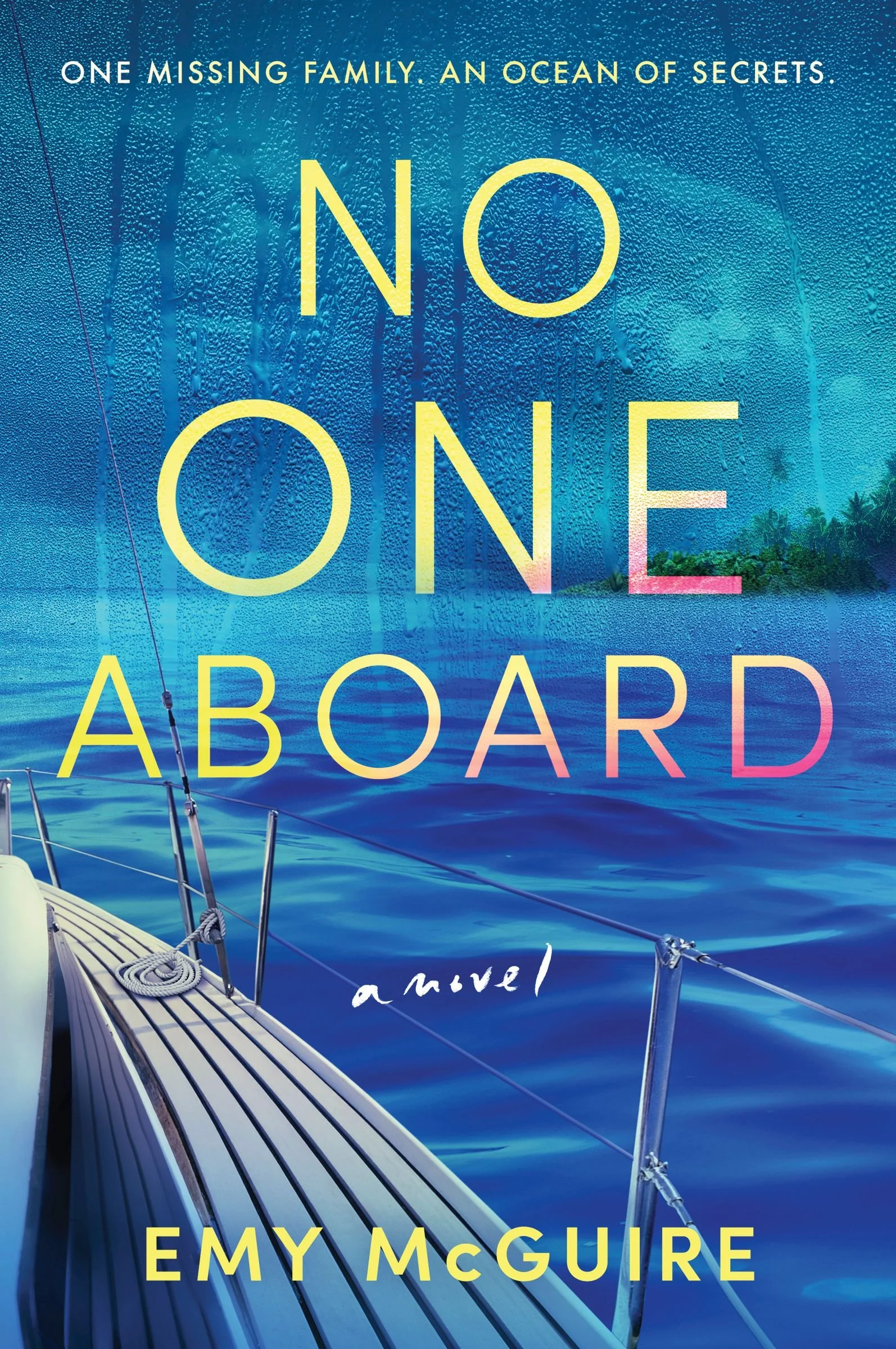
Spotlight: No One Aboard by Emy McGuire

The White Lotus meets Laura Dave’s The Last Thing He Told Me in this debut domestic mystery about a luxury sailboat found floating adrift in the ocean and the secrets of the missing family who set sail aboard it weeks before.

At the start of summer, billionaire couple Francis and Lila Cameron set off on their private luxury sailboat to celebrate the high school graduation of their two beloved children.

Three weeks later, the Camerons have not been heard from, the captain hasn’t responded to radio calls, and the sailboat is found floating off the coast of Florida.

Empty.

Where are the Camerons? What happened on their trip? And what secrets does the beautiful boat hold?

Set over the course of their vacation and in the aftermath of the sailboat’s discovery, No One Aboard asks who is more dangerous to a family: a stormy ocean or each other?

Excerpt

Chapter 1

Jerry Baugh

Jerry Baugh didn’t see the ship. He didn’t notice the red warning on the screen. He was, in fact, cozied up in the cockpit of his Dyer 29 lobster boat, feet propped between the rungs of the helm and hands stacked on his belly.

Jerry’s day of deep-sea fishing had been successful—a sailfish bill, broken at the hilt, currently stuck out of his bomber jacket pocket—and he was thinking about whether the meat should be marinated in lemon juice or just plain old butter.

He was too distracted to detect the boat in his path—white and gleaming, suspended between the black water of the Atlantic and the starless, moonless sky with the same sinister beauty of an iceberg.

Or a ghost.

When the boat alarm went off, Jerry jolted in his seat, sending his Bass Pro Shops cap tumbling down his chest. A single drop of sailfish blood had, at some point, fallen onto the face of his watch, which read nine minutes after midnight.

He detangled his feet from the helm and peered at the radar. He was heading two hundred and fifty-eight degrees toward Hallandale Marina. The strange white sailboat blocked his way.

Jerry switched off the autopilot and eased the throttle to slow down, his heart thumping soundly in his chest. If the alarm hadn’t sounded, he might have shipwrecked them both.

This sent a surge of anger through him. Why hadn’t the captain of the sailboat moved out of his way? Sheila 2.0 wasn’t subtle, her engine making an ugly chewing noise not unlike a trash compactor. They should have heard her coming.

Jerry allowed his boat to chug closer before he killed the engine and processed what on the devil’s blue sea he was looking at.

It was a sailboat, yes, but not like the rust-laced ones that docked near Sheila 2.0 in the Hallandale Marina.

This boat was mesmerizing.

It had twin aluminum masts, a wood-finished deck, and sunbathing mattresses laid out on the chart house. The body of the boat was a blinding white, smooth, curvaceous. The cap rails were teak and coated with a glittering crust of sea salt. No one had cleaned them in some time. Cursive lettering on the side spelled out the boat’s name.

The Old Eileen

Jerry stared, a bit starstruck. Boats like Sheila 2.0 were made to choke marine diesel oil and seawater until they finally died twitching in a harbor like a waterlogged beetle on its back.

Boats like The Old Eileen were made to be beautiful.

Jerry found his radio, hooked to his waistband, and cleared his throat before speaking into it.

“Eileen, Eileen, Eileen, this is Sheila, Sheila, Sheila, over.”

He waited.

There was a time when Jerry was younger (and a good bit stupider) that he wanted to buy a sailboat instead of a motorboat. It was romantic, the idea of harnessing the wind to travel the world. But in the end, it was those same winds that terrified him. Wind could overpower him, seize control of the boat and bend its course. Jerry would have had to accept that possibility. He would have had to bare his throat to the mercy of the sea.

A mercy, he had come to understand, that did not exist.

“Eileen, Eileen, Eileen!” Jerry repeated into the radio.

They must be asleep. Jerry leaned forward and sounded his horn—five short blasts to signal danger. He waited for the radio to crackle to life, for a silver-spooned captain to sputter apologies, or maybe for an underpaid deckhand to rush up top and get the boat moving once more.

There was only the sound of the luffing, useless sails, and the ever-shifting sea.

Jerry frowned and fiddled with the fish bill in his pocket.

He should leave.

He fumbled in the dark to switch the engine back on. He would report what he’d seen to the coast guard, get the captain in trouble for being so reckless. He’d be back in Florida by dawn.

But Steve . . .

Jerry glanced at his dash where he had taped up a photograph of himself with his younger brother. It was the last picture taken of Steve before he died. Jerry closed his eyes for a moment. He would have traded his boat, his bait, and everything he owned if someone had stopped that night to help Steve.

“Well, shit.” Jerry rubbed at his clavicle and swallowed hard. He would be in and out. Just to make sure all was well.

Jerry moved across the deck, aware of every sound his shuffling feet made. He rummaged through his fishing equipment, eyes never leaving The Old Eileen. His calloused, practiced hands fit right around the harpoon gun, and he felt a measure of reassurance with a weapon in his grasp. He wasn’t scared, he was too old for that, but there was nothing quite like a creaking, old ship on the ocean at night to make a man into a boy again.

He tucked the harpoon gun under one arm and set to work lowering his tiny dinghy. He’d take one moment to wake whoever was on board, then get right back on his boat. Good deed done for the day. Maybe the decade.

Jerry grunted as he climbed up the Eileen’s porthole and over the rail. The deck was empty save for an orange life preserver tied to the stern, the boat’s name written in black on the top and a slogan in italics around the bottom.

Unwind Yachting Co.

Safe to sail in any gale!

With no one in sight, Jerry located the companionway stairs that led down beneath the cockpit and gave one last scan of the deck before going below.

Downstairs, the chart house was neat and captainless, but the ship’s manifest was sitting in the center of the table, open to the first page.

SHIP’S MANIFEST—THE OLD EILEEN

SKIPPER—Captain Francis Ryan Cameron (55)

MATE—MJ Tuckett (67)

CREW—Alejandro Matamoros (54), Nicolás de la Vega (22)

PASSENGERS—Lila Logan Cameron (54), Francis Rylan Cameron (17), Taliea Indigo Cameron (17)

Seven souls. Seven souls aboard The Old Eileen, and not a single one had answered the radio, which lay next to the manifest like an amputated limb. Jerry picked it up and felt an ice-cold trickle of sweat on the back of his neck.

The cord had been cut.

Jerry’s knuckles went white against the harpoon gun. Bad things happen at sea. Storms kill and brothers drown.

But the radio cord hadn’t been severed by the ocean.

Jerry crept through the luxurious salon and to a door that must lead to a cabin. He let his trigger hand slip down for a moment so he could turn his radio to 16—the international maritime emergency channel.

Just in case.

He opened the door to the cabin.

The master bedroom. King-size bed with an indigo comforter and cream sheets. Velvet couch molded to fit the tight corner. A woman’s lipstick lay open on one bedside table, rolling back and forth as the boat rocked.

There was no one there. No sleeping captain, no apologetic deckhands, no life whatsoever. Had they just . . . left?

Jerry checked the next room. This one held two twin beds with identical navy bedspreads. One bed was unmade, with a variety of books scattered at its foot. The bedclothes on the other were tucked in, military-style.

A sketchbook was half hidden by the pillowcase, open to an illustration of some kind of monster.

Jerry mopped his brow with a rag he kept in his shirt pocket, not caring that it had dried sailfish blood caking the edges. He should have motored on by and called the damn guard.

He forced himself to concentrate. He was doing the right thing. The captain could be out cold and in need of help.

There were only a few more rooms.

But the last cabin was just as quiet.

Jerry peeked into the galley and the bilges, running out of places to check.

The heads. Each of the three cabins must have its own personal bathroom, and he hadn’t yet tried any of them. Hands slick with sweat around the harpoon gun, Jerry retraced his steps, checking first in the crew members’ head, then the master suite’s, then back to the room with the twin beds and the drawing of the monster.

He nudged open the last bathroom door and looked inside.

In the mirror, his own ref lection stared back at him, interrupted only by a string of crimson words that had been written on the glass.

A weight dropped anchor inside his stomach, flooding Jerry with a kind of dread he had avoided for thirty years. The harpoon gun slipped from his hands, and he reached for his radio, unable to peel his gaze from the message on the mirror.

Save your Self

The Convey

OPINION: The Ocean Is Our Great Equalizer (why the newest Atlantic disaster seems to

spell K-A-R-M-A for the one percent)

MIKE GRADY

The Camerons—a family of four headed by television darling Lila Logan and business tycoon Francis Cameron—have been reported missing after their multimillion-dollar sailing yacht turned up eighty miles offshore without a single person onboard early in the morning of June 9. Authorities and reporters have leaped into extensive action. The Atlantic has already been tempestuous at the beginning of this year’s hurricane season. Potential upcoming storms have given the search a dangerous time component in an investigation reminiscent of the Titan, the infamous submersible that imploded with five passengers aboard on its way to see the Titanic wreck. The world had plenty to say about the Titan and its affluent victims, and this latest oceanic mystery has the potential to play out the same. Francis and Lila Cameron both had modest childhoods, but thanks to the entertainment industry, the business world, and the good old American dream, they have skyrocketed into the fraction of Americans who own multiple homes (Palm Beach villa, LA bungalow, and a sleek Aspen chalet, if anyone’s wondering), not to mention the multimillion-dollar sailing yacht that came up empty in the early hours of yesterday morning. While I’m not necessarily here to say that the Atlantic Ocean is doing a better job than God or taxes to rid us of the elite, I do want to pose a big-picture question while authorities are sussing out the how did this happen? and where did they go? Of it all. My question instead to you, dear reader, is this: Why the Camerons?

Excerpted from No One Aboard by Emy McGuire, Copyright © 2025 by Emy McGuire. Published by Graydon House.

Buy on Amazon Kindle | Paperback | Audible | Bookshop.org

About the Author

EMY MCGUIRE holds a bachelor’s degree in theatre/creative writing from New College of Florida. She has toured nationally in the Edgar Allan Poe Show, sailed from Rome to Antigua, and written everything from ocean thrillers to pirate musicals. She lives in Colorado.

Connect:

Author website: https://www.emymcguire.com/

Instagram: https://www.instagram.com/emy_mcguire/

Facebook: https://www.facebook.com/emy.mcguire/

TikTok: https://www.tiktok.com/@emymcguire?lang=en 

Twitter: https://x.com/AuthorEmy

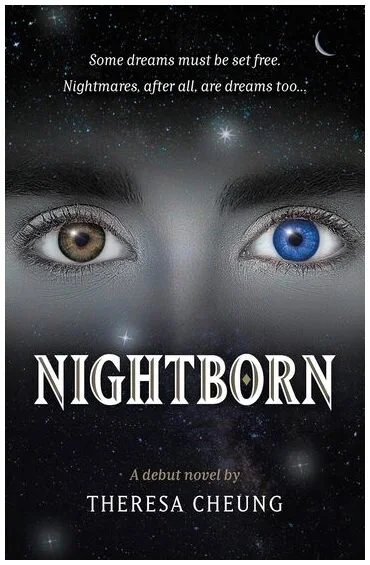
Spotlight: NightBorn by Theresa Cheung

Publisher: Collective Ink

Publication Date: October 7, 2025

Genre: Paranormal Thriller

What if the line between your waking life and your darkest dreams disappeared forever?

Alice Sinclair, a driven psychology professor, is about to find out. When thousands of people begin experiencing terrifying, vivid nightmares ... all centered around her, Alice’s quiet academic life is shattered. Haunted by the question of why she’s become the subject of these shared dreams, Alice embarks on a desperate search for answers, uncovering a chilling secret: someone - or something - hungry for global power has discovered a way to manipulate consciousness itself. The world is fast becoming a playground for those in control of the dreaming mind.  In a heart-stopping race against time, Alice must navigate a treacherous web of deception, where nothing - and no one - can be trusted, not even herself.

Excerpt

Florida, USA—Sometime soon

Alice saw the wave. It was a beast.

It rose slowly at first, the way a predator prepares to strike—silent, inevitable. It quickly gained speed, swelling into a towering monster, a force of nature, as if the ocean itself had decided to swallow her whole. The wave surged, easily 30 feet high, dark and roaring with a ferocity she could feel in her bones. It moved toward her with the relentlessness of fate.

She turned, panic seizing her as she raced up the beach, her bare feet slipping in the wet sand. The ocean was closing in—the world was closing in on her. Her breath came in jagged gasps, but the wave, too quick, slammed into her, yanking her under.

Her body twisted through the water, eyes stinging, lungs burning, desperate for air, clawing at the debris swirling around her—plastic, broken wood, seaweed, dead fish—but there was no solid ground to cling to. The current pulled her deeper, its grip tightening like cold fingers around her throat.

She gasped for air, choking on the water, the world a dark, crushing void. She couldn’t see. Every nerve in her body screamed for release, but the ocean kept pulling, tumbling her in every direction, turning her body like a puppet with broken strings. She was drowning. No—she was going to die.

Something in her snapped.

Her feet hit something solid. Hard. Stone? She couldn’t tell.

All she knew was that she had to rise. She shoved upward, throwing her weight toward the surface with every ounce of strength she had left. Her body screamed, but she pushed harder, until her head broke through to air. For one split second, she inhaled—but the water dragged her down again, relentless, hungry for her life. She fought the instinct to panic.

She couldn’t let it win. Not today.

Just breathe. Just breathe, Alice. Instinctively she let herself float, stilling her body, letting the sea carry her, accepting the weight of the water around her. She couldn’t fight it anymore—but maybe she didn’t have to.

Her feet found solid ground again. She shoved upward, defiant, gasping as she broke through. Sunlight blinded her.

Alice jerked awake, the sharp taste of salt lingering on her tongue, her body tangled in the sheets. The echo of the wave still thundered in her ears. The sunlight slanted through the bedroom window, blinding. Her pulse thrummed in her neck as if the sea still had its grip on her.

“You’re okay. You’re okay. It was a dream. Just a nightmare.”

What if it wasn’t just a nightmare?

Swinging her legs over the edge of the bed, Alice’s feet hit the cold floor. Had Swiss psychiatrist and dream analysis pioneer, Carl Jung ever felt this unsettled after one of his dreams? Had his own night visions ever made him question his grasp on reality?

Her eyes flickered to the bedside table and her Red Book: the dream journal she’d named after Jung’s own. Ever since she was young, she’d written down her dreams. But this one felt radically different from the rest.

It was too real, though it clearly wasn’t literal. She lived more than an hour from the nearest beach and had never been to it. Was the dream a symbolic glimpse into her own future? A warning? Or something darker, deeper?

It was just a dream. Maybe it was just all the energy she’d poured into teaching Jungian dream analysis spilling out cathartically in a nightmare.

The feeling of drowning clung to her.

She grabbed her journal and scribbled out every detail of the dream. The ocean. The wave. The suffocating terror. Jung had called the act of recording dreams an act of self-analysis—so why did this one feel more like a clear and present danger than an analysis? Was it the forbidden mystery Jung had hinted at in his Red Book—that thin line between genius and insanity where revelation could be found?

Was her obsession with dreams driving her mad?

It was her calling, her passion. Perhaps, as director of the new program in Jungian Studies at the University of Central Florida, she could teach her students what she had dreamt and encourage them to analyze it; maybe it would be cathartic for them and for her.

What if her students were the key to unlocking the deeper meanings of her own dream? She could see herself standing before the class, scrawling on the blackboard, her voice filled with energy as she taught them about using their dreams to peer into possible futures, even to shape reality. Inception—she would reference that for sure, the perfect movie fix to illustrate how the subconscious could manipulate perception and even reality.

What better way to introduce her students to the power of their own dreaming minds?

Alice pushed herself out of bed as the sinking feeling of the dream still clung tight. Blinking rapidly in front of her bedroom mirror, she forced herself to take deep breaths. Her long dark hair framing the mismatched eyes staring right back at her: one blue, one brown. She had always hated this difference. Always hidden it behind a pair of blue lenses.

A perfect illusion of normalcy, her blue lenses. They always worked—ever since she was 14, when her mother had taken her to the ophthalmologist to prevent the cruel teasing at school.

Alice slipped them on, as though the simple act could shield her from her nightmare.

The rhythm of her repeated blinking to help the lenses settle helped bring a semblance of calm.

Something was coming, though; she could feel it. Something was drawing her, pulling her into the unknown. Could she rise above and survive it?

Alice dressed the part for her day ahead and stepped out into the bright light of the day.

Was the drowning nightmare a message? A warning? And if so, a warning about what?

– Excerpted from NightBorn by Theresa Cheung, Collective Ink, 2025. Reprinted with permission.

Buy on Amazon Kindle | Paperback | Bookshop.org

About the Author

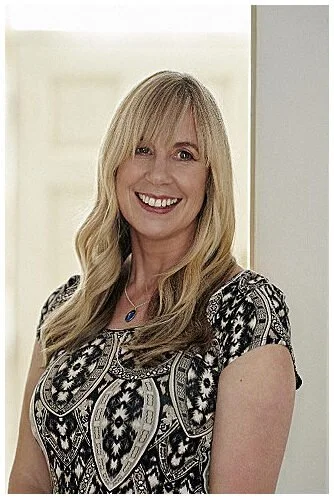
Theresa Cheung is an internationally bestselling author and public speaker. She has been writing about spirituality, dreams and the paranormal for the past 25 years, and was listed by Watkins Mind Body and Spirit magazine as one of the 100 most spiritually influential living people in 2023. She has a degree in Theology and English from Kings College, Cambridge University, frequently collaborating with leading scientists and neuroscientists researching consciousness.

Theresa is regularly featured in national newspapers and magazines, and she is a frequent radio, podcast and television guest and ITV: This Morning's regular dream decoding expert. She hosts her own popular spiritual podcast called White Shores and weekly live UK Health Radio Show: The Healing Power of Your Dreams.

You can visit her website at www.theresacheung.com or connect with her on X, Facebook, Instagram or Goodreads.