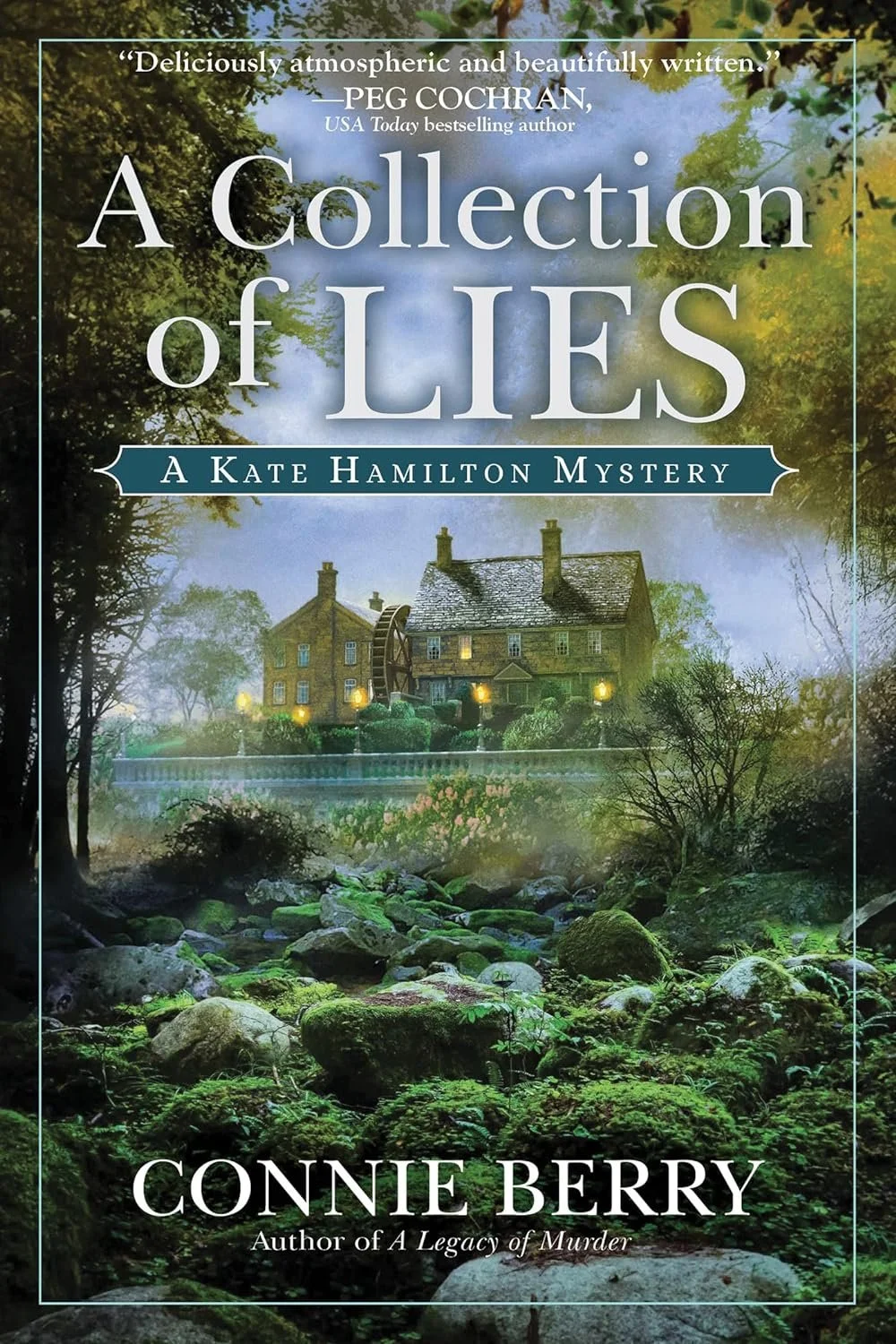
Spotlight: A Grave Deception by Connie Berry
/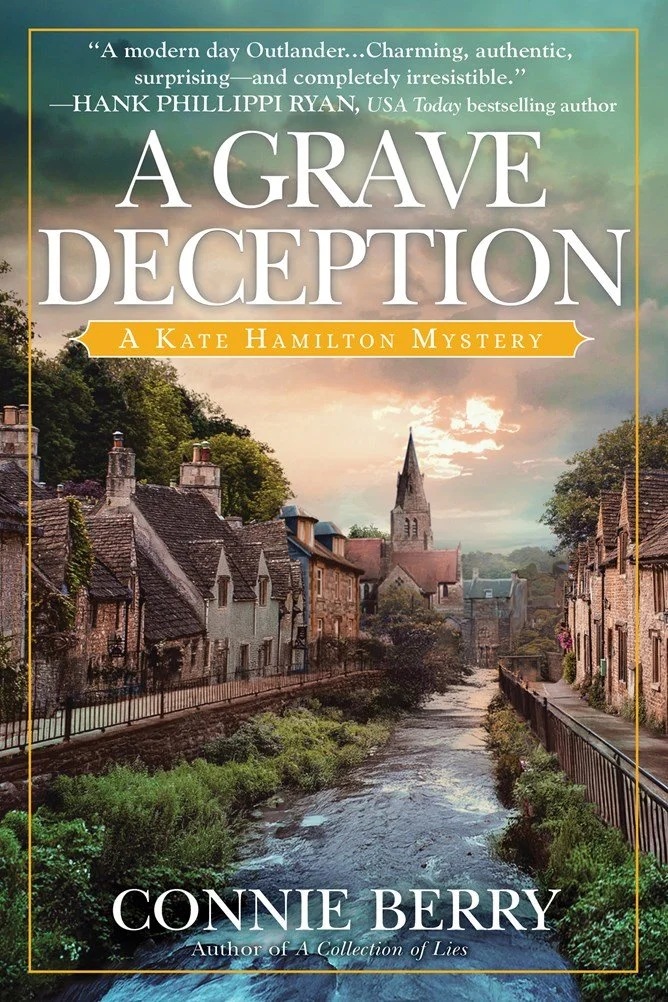
Now married to Detective Inspector Tom Mallory, Kate is adjusting to life in Long Barston when she’s pulled into a chilling case: an unearthed grave filled with priceless artifacts—and a body no one expected to be so intact. When tests reveal the medieval woman was murdered while pregnant, the case takes a dark turn. And when a second, very modern body appears—staged with eerie symbolism—it’s clear someone doesn’t want the past unearthed.
Kate’s hunt for answers will lead her through ancient documents, long-buried secrets, and the unfinished research of a long-dead historian. Can she piece it all together before more lives are lost?
Perfect for fans of Louise Penny and Elly Griffiths, Berry delivers smart, layered mysteries steeped in British charm, scholarly rivalries, and the ghosts of history.
Excerpt
Thursday, June 19
Long Barston, Suffolk
The body was discovered on an afternoon in early May when the bluebells were in bloom and the sky was the color of sapphires. I read about it the next day in the East Anglian Daily Times. “Archaeological Discovery of the Century!” was the headline. Now, a little more than a month later, I pulled up that original article on my computer:
Last Wednesday, excavations beneath the ruins of St. Margaret’s Church, Egemere Close, revealed a previously unknown vault containing a lead coffin sealed with beeswax. Within the coffin, the team of archaeologists from the CMBA, the Centre for Medieval British Archaeology in Norwich, found the well-preserved body of a woman, entombed sometime in the early fourteenth century. Her remains had been wrapped in a fine linen shroud impregnated with a resinous substance, resulting in adipocere, or grave wax, a natural process that preserved the tissues and organs in such detail it was possible to determine the colour of her irises. They were blue.
I took a drink of my coffee, contemplating death and grief and the strange turns life sometimes takes. A woman dies and seven hundred years later I’m involved. The Centre for Medieval British Archaeology had asked us, meaning my colleague, Ivor, and me, to examine the grave goods, which consisted of two silver pennies; a collection of personal objects, including an unusual wrist cuff adorned with twelve small human heads of silver with blue glass eyes—the Twelve Apostles?—and a large, single pearl wrapped in a leather pouch, which had protected the nacre, the shiny, iridescent material known as mother-of-pearl, from deterioration.
The number and quality of grave goods indicated the woman had been wealthy, perhaps of noble birth, but the fact that items of such value had been interred with the young woman at all was unusual, as the practice had pretty much died out by the eleventh century. Were they mementos, like burying a child with a stuffed toy or a whisky lover with a bottle of his favorite single malt, or was there some deeper meaning?
The answer to that question wasn’t our concern. Our job would be to date the objects, assess their values, outline a plan for preservation, and suggest methods of display. Naturally, we’d jumped at the chance. Ivor had done similar work in the past, but nothing with the notoriety of a miraculously preserved body.
It was a quiet morning at The Cabinet of Curiosities. Through the multi-paned shop window I watched Mr. Cox, the greengrocer across the street, setting out heads of glossy green lettuces and bunches of what looked like round red radishes. Ivor Tweedy, owner of the fine antiques and antiquities shop on Long Barston’s High Street, hadn’t yet emerged from his flat above the showroom, although I could hear him moving about. I’d gotten an early start, leaving my husband, Tom, at home to finish his breakfast and log on for a video conference with DCI Annabelle Scott, his counterpart in the Norfolk Constabulary.
I took another sip of coffee, which was cooling, and clicked on the second article, a follow-up interview published several weeks later with Dr. Simon Sinclair, head of the CMBA and a professor in the archaeology department at the University of East Anglia. In the weeks following the initial discovery of the body, a consulting bioarchaeologist from University College London had made several stunning discoveries.
“It was a once-in-a-lifetime experience,” Sinclair said in answer to a question about his personal response to the discovery. “At first, we assumed the body must be relatively modern. The skin, where unstained by the resinous wrapping cloth, was still pink. Apart from the brain, the internal organs showed remarkably little deterioration. Liquid blood was found in her chest cavity.” When asked about the cause of death, Sinclair said, “CT scans and 3D reconstructions of the skeleton revealed deep cuts on the woman’s sternum, inflicted by a sharp object, most likely a knife or dagger. Her lungs and heart had been pierced, killing her quickly. And she’ d been pregnant, the perfectly formed fetus having reached the point of viability.”
The article ended with the description of a small ceremony in which the bodies of the mother and child were reburied in the crypt beneath the south transept of the church, the place where they had originally lain.
I felt a pang of grief for this unknown woman, murdered with her unborn child. Someone had loved her. And someone had wanted her dead.
Sunlight streamed through the shop window, illuminating a collection of small Roman marbles, mostly busts of strikingly modern-looking individuals who’d lived during the Republican period when art was often startlingly realistic. Ivor had entered them in an upcoming auction of Roman antiquities. Who had they been, these long-ago luminaries, important enough to memorialize in stone? Their names had long been forgotten—like the woman in the grave. At least the village had a name—Egemere Close—although nothing was left of it now except the partial shell of the church and a few tumbledown stone walls. According to Ivor, the village had been abandoned in 1349 after the Black Death killed all but a handful of its citizens. The remains of Egemere Close lay in a field eighteen miles northwest of Long Barston, near the village of Hartwell, on the grounds of Ravenswyck Court, the estate of the commercial packaging entrepreneur Alex Belcourt.
“Good morning, Kate. Up and at ’em early, I see.”
I turned to see Ivor trotting down the stairs. He was wearing a natty gray suit and a red velvet smoking cap with an elaborate gold tassel, the kind worn by Victorian men to keep their hair from smelling of tobacco smoke.
I tried not to laugh. “What’s up with the hat?”
“Come the day, come the hat.”
What that meant, I hadn’t a clue.
Buy on Amazon Kindle | Hardcover | Paperback | Audible | Bookshop.org

About the Author
Connie Berry is the author of the Kate Hamilton Mysteries, set in the UK and featuring an American antiques dealer with a gift for solving crimes. Like her protagonist, Connie was raised by antiques dealers who instilled in her a passion for history, fine art, and travel. During college she studied at the University of Freiburg in Germany and St. Clare's College, Oxford, where she fell under the spell of the British Isles. In 2019 Connie won the IPPY Gold Medal for Mystery and was a finalist for the Agatha Award’s Best Debut. She’s a member of Mystery Writers of America and is on the board of the Guppies and her local Sisters in Crime chapter. Besides reading and writing mysteries, Connie loves history, foreign travel, cute animals, and all things British. She lives in Ohio with her husband and adorable Shih Tzu, Emmie.